
Analysis
Micron’s $24 Billion Singapore Gambit: 9 Reasons This Mega-Investment Signals the Next Phase of the AI Semiconductor Revolution


SINGAPORE – In a move that recalibrates the global semiconductor map, Micron Technology’s CEO, Sanjay Mehrotra, alongside Singapore’s Deputy Prime Minister Gan Kim Yong, broke ground today on one of the most consequential industrial projects of this decade. The announcement, made on January 27, 2026, commits $24 billion over the next ten years to construct a pioneering, double-story wafer fabrication facility (fab) and expand critical cleanroom space on the island nation.
This isn’t merely another chip factory. In an era defined by artificial intelligence, geopolitical fracture, and acute supply chain anxiety, Micron’s colossal wager on Singapore is a masterclass in strategic foresight. It brings the company’s total investment in its Singapore hub to over $60 billion, cementing the city-state’s status as a linchpin in the tech supply chain. While headlines focus on the eye-popping dollar figure, the deeper story lies in the multifaceted calculation behind it—a blend of engineering audacity, geopolitical pragmatism, and a clear-eyed bet that memory will be the unsung, indispensable engine of the AI boom.
Here are nine reasons why Micron’s Singapore gambit is a definitive signal of the AI semiconductor revolution’s next, more complex phase.
1. The Scale: Why $24 Billion Over a Decade Changes Everything
In semiconductor manufacturing, scale is strategy. A $24 billion commitment is not an incremental upgrade; it is a statement of domain ambition. To contextualize, this single investment is equivalent to nearly half of Micron’s entire market capitalization just five years ago. Spread over a decade, it represents a sustained capital expenditure (capex) intensity that few competitors can match, signaling a long-game play for market leadership beyond cyclical downturns.
The capital will flow into a next-generation facility designed for the mass production of NAND flash memory, the storage backbone for everything from AI data centers to next-generation consumer devices. According to Micron’s latest investor presentation, the project will incrementally increase the company’s global NAND wafer supply starting in the second half of 2028. In an industry plagued by acute memory shortages since the AI acceleration began in late 2022, this capacity is not speculative—it is pre-ordained demand. As Bloomberg Intelligence analysts noted in a recent report, the AI-driven demand for high-performance storage is structurally outpacing supply, with deficits projected well into 2027. This investment is Micron’s direct answer to that equation, aiming to capture a dominant share of the high-margin memory required for AI training and inference.
2. Singapore’s First Double-Story Wafer Fab: Engineering Breakthrough or Necessity?
The most technically striking aspect of the announcement is Singapore’s first double-story wafer fab. In an industry where cleanrooms require immense, vibration-free, single-level spaces, building vertically is a profound engineering challenge. Is this a vanity project? Far from it. It is a necessity born of Singapore’s acute land constraints. With a total land area of just 734 square kilometers, the nation cannot afford the sprawling, single-level “megafabs” seen in Texas or Taiwan.
The vertical design is a testament to advanced construction and contamination control technology. It reflects a deep partnership with Singapore’s economic development board, which has likely provided significant incentives and infrastructural support to make the unprecedented design feasible. As The Straits Times reported from the groundbreaking, the design allows for a 40% more efficient use of land while centralizing utilities and support systems. The risk is non-trivial—any contamination or logistical flaw in a multi-story production environment could be catastrophic. But the payoff is a blueprint for sustainable, high-tech manufacturing in dense urban states, potentially setting a new global standard.
3. 1,600 New Jobs and a Talent Pipeline for the AI Era
Beyond steel and silicon, this is an investment in gray matter. The project will create approximately 1,600 new high-skilled jobs in fields like process engineering, advanced robotics, and data science. In the global war for semiconductor talent, this is a significant troop deployment. But perhaps more critical is the long-term pipeline it fosters.
Micron’s expansion is perfectly synchronized with Singapore’s National AI Strategy 2.0, which explicitly prioritizes building deep talent in frontier technologies. The company has existing partnerships with institutions like the National University of Singapore (NUS) and Nanyang Technological University (NTU) for co-developed curricula and research. This new fab will serve as a live classroom and R&D testbed. As Deputy Prime Minister Gan emphasized in his remarks, the goal is to cultivate a homegrown core of specialists who can drive innovation for decades, reducing reliance on expatriate talent and embedding Micron’s operations deeper into Singapore’s intellectual fabric.
4. Bolstering the Global NAND Supply Chain Amid Acute Shortages
The timing is strategically impeccable. The AI revolution has triggered a parallel surge in demand for advanced NAND flash memory. AI models are not just hungry for compute (GPUs) and bandwidth (High Bandwidth Memory); they are voracious consumers of fast, durable storage for the colossal datasets they train on. Traditional supply chain forecasts have been rendered obsolete.
TrendForce analysts confirmed in a January 2026 research note that NAND flash bit demand for AI servers is projected to grow at a compound annual growth rate (CAGR) of over 25% through 2030. Micron’s Singapore expansion, alongside its new HBM facility in Japan, represents a two-pronged strategy to dominate the entire AI memory stack. By situating this NAND capacity in Singapore—a logistics and trade hub with unparalleled connectivity—Micron ensures its products can flow efficiently to downstream packaging and module partners in Southeast Asia and to global data center customers. This move directly alleviates a critical bottleneck in the AI supply chain, providing resilience against the kind of shortages that have hobbled tech giants in recent years.
5. Perfect Alignment with Singapore’s National AI and Semiconductor Strategy
Micron’s move is not happening in a vacuum; it is a symphony composed in harmony with its host nation’s ambitions. Singapore’s strategy has been clear for years: to move beyond being a mere packaging and testing hub and establish itself as a global leader in strategic, high-value segments of the semiconductor value chain. The Economic Development Board (EDB) has been meticulously courting investments in areas like specialty semiconductors, advanced packaging, and now, leading-edge memory fabrication.
This $24 billion investment is the crown jewel of that effort. It validates Singapore’s value proposition: geopolitical neutrality, ironclad intellectual property protection, world-class infrastructure, and a stable, business-friendly government. As Channel NewsAsia documented, the government has committed to co-investing in supporting infrastructure, from sustainable water and energy systems to the specialized construction required. For Singapore, securing this fab is about economic security and technological sovereignty, ensuring it remains an indispensable node in the global tech ecosystem.
6. CEO Sanjay Mehrotra’s Vision: Memory as the Unsung Hero of AI
The vision driving this bet comes directly from the top. In numerous interviews, including a recent sit-down with the Financial Times, CEO Sanjay Mehrotra has consistently articulated a thesis: while GPUs get the glamour, advanced memory is the unsung hero that determines the ultimate performance, efficiency, and cost of AI systems. He argues we are moving from the “CPU-centric” to the “data-centric” computing era, where memory hierarchy is paramount.
This Singapore fab is the physical manifestation of that belief. It is designed to produce the high-density, high-endurance NAND required for AI data centers. When combined with Micron’s HBM production, the company is positioning itself as a full-spectrum AI memory provider. Mehrotra’s calculated bet is that as AI models grow from trillions to quadrillions of parameters, the industry’s hunger for advanced, specialized memory will become insatiable. This $24 billion Singapore capex is his answer to that future demand, a move that could distance Micron from competitors SK Hynix and Samsung who are making their own, but geographically concentrated, investments.
7. Geopolitical Safe Harbor in an Era of U.S.-China Tech Tensions
In today’s fragmented world, geography is fate. Micron’s significant manufacturing footprint in the United States (supported by CHIPS Act funding) and now this mega-expansion in Singapore, creates a powerful and resilient geographic diversification. Singapore stands as a geopolitical safe harbor—a U.S.-allied nation with strong, stable relations with China and the broader ASEAN region.
This is a critical hedge. Following the U.S. Commerce Department’s export controls on advanced semiconductors to China, and China’s subsequent retaliatory actions against some U.S. firms, the risks of concentrated production in any single geopolitical zone are stark. Singapore offers a neutral, rules-based platform from which to serve a global customer base, including China (within allowable limits), without the same degree of political risk. As noted in a Reuters analysis of Asian tech investments, multinationals are increasingly adopting a “China+1 plus Singapore” strategy for their most critical operations. Micron’s expanded footprint is a textbook case of this new corporate statecraft.
8. What This Means for Investors and the Broader Memory Market
For investors, this announcement is a double-edged sword to be evaluated with care. The sheer capex intensity—$24 billion over ten years—will pressure free cash flow in the near term. However, it also signals management’s supreme confidence in long-term demand and its commitment to gaining market share. The move could trigger a new capital expenditure arms race in the memory sector, potentially squeezing margins for smaller players who cannot keep up.
The table below illustrates the transformative impact on Micron’s Singapore footprint:
| Metric | Pre-Investment (End of 2025) | Post-Investment (Projected 2030+) |
|---|---|---|
| Total Investment in SG | ~$36 billion | > $60 billion |
| Wafer Fab Capacity | Significant NAND production | Massive, leading-edge NAND scale |
| Facility Type | Traditional single-level fabs | Includes first-in-SG double-story fab |
| Primary Focus | Broad-based memory, some HBM support | AI-optimized NAND & synergies with HBM |
| Employment | ~8,000 direct employees | ~9,600+ direct employees |
Analysts from Morgan Stanley suggested in a recent client memo that the investment should be seen as “offensive capex” aimed at securing a top-tier cost structure and technology leadership for the next AI-driven upcycle. For the broader market, it assures that NAND supply will eventually catch up to AI demand, but it also raises the stakes, potentially leading to industry consolidation around the two or three players capable of such investments.
9. The Bigger Picture: How Micron is Future-Proofing the AI Boom
Ultimately, the Singapore gambit is a move to future-proof Micron for the next decade of AI. We are transitioning from the initial, proof-of-concept phase of AI to the phase of mass deployment and industrialization. This requires not just more chips, but a re-architected, more resilient, and geographically diversified supply chain.
Micron is building that architecture in real-time: HBM in Japan for the ultra-fast bandwidth needed alongside GPUs, and now, cutting-edge NAND in Singapore for the vast, persistent storage that holds the world’s data. The synergies between its existing HBM facility and this new NAND fab—in logistics, process technology learning, and customer partnerships—create a powerful virtuous cycle. It positions Singapore not as an outpost, but as a comprehensive AI memory hub.
The risks remain: the long timeline (production starts 2H 2028), execution complexity of the double-story fab, and the ever-present volatility of memory markets. Yet, by placing this bet now, Micron is not just building a factory; it is laying the foundation for the AI infrastructure upon which the global digital economy will rely. It is a declaration that the revolution will be remembered—and memorized.
Conclusion: A Calculated Wager on the Fabric of the Future
Groundbreakings are rituals of optimism. Today’s ceremony in Singapore, however, felt less like a leap of faith and more like a calculated wager on an inescapable future—one built on data, powered by AI, and fundamentally dependent on advanced memory. Micron’s $24 billion Singapore investment is a multi-dimensional chess move, addressing technological, geopolitical, and supply chain imperatives in one stroke.
It reinforces a crucial lesson for policymakers and business leaders worldwide: in the age of AI, sovereignty and resilience are not just about logic chips. The foundational layers of the stack—memory and storage—are equally strategic. Singapore, with this masterstroke, has secured its role as a custodian of one of those critical layers. For Micron, the path is now clear: execute flawlessly on this vision, and it may well become the quiet powerhouse behind the roar of the AI age. The semiconductor revolution’s next phase will be written, in no small part, on the wafers produced in this ambitious, double-story fab rising from the heart of Southeast Asia.



Buried inside the IMF’s latest Pakistan country report is a dependency that receives far less attention than headline GDP or inflation numbers, but arguably carries more immediate risk for millions of households: Pakistan’s economy is structurally exposed to whatever happens next in the Gulf.
The Numbers That Matter
Pakistan receives annual remittances amounting to roughly 9 percent of GDP, of which 55 percent originate from Gulf Cooperation Council countries, according to the IMF’s May 2026 country report. That single funding channel is one of the largest and most stable sources of foreign exchange available to the country — larger, in most years, than export revenue growth or foreign direct investment inflows combined.
The IMF’s own language is unambiguous about the risk this concentration creates: a significant disruption to GCC economies, or a forced return of migrant workers, could weigh heavily on these flows — a major source of financing for both household consumption and Pakistan’s broader balance of payments.
Why This Risk Is Live, Not Theoretical
This is not an abstract stress-test scenario. The Strait of Hormuz disruption, detailed extensively elsewhere in this series, has placed the entire Gulf region’s economic stability under genuine pressure for the first time in years. Should the conflict escalate further or trigger a broader regional economic slowdown, the transmission channel to Pakistan is direct and fast: fewer construction projects and reduced hiring across the GCC translates almost immediately into lower remittance flows from the millions of Pakistani workers employed there.
Capital Flows Are Already Reacting
The IMF has flagged early evidence that this dynamic is not purely hypothetical. Deteriorating global financial conditions have already resulted in capital outflows from Pakistan, which are likely to intensify further if the regional crisis extends, with the Fund specifically noting that access to short-term commercial financing — largely sourced from GCC banks — could also be affected if risk sentiment deteriorates further across the region.
This creates a double exposure that is easy to overlook in headline coverage: Pakistan depends on the Gulf both for the remittance income that supports household consumption, and for the short-term commercial bank financing that helps bridge its external funding gaps between IMF disbursements.
The State Bank’s Reserve Buffer
Pakistan’s own policy response has been to build reserves as a shock absorber. The State Bank of Pakistan has been projecting reserves to continue rising to roughly $18 billion by June 2026 on the back of planned inflows, a level implying that expected capital inflows currently exceed any current account shortfall — but only as long as Pakistan remains within an active IMF programme and maintains access to external funding on favourable terms.
The risk scenario flagged by policy researchers is specific: if monetary easing is mismanaged and confidence in Pakistan’s reform path falters, capital inflows could slow or reverse at the same time imports surge, opening an external funding gap that would draw down reserves and pressure the rupee — a scenario made materially more likely by any Gulf-region shock large enough to simultaneously dent remittances and tighten GCC bank lending.
How much of Pakistan’s remittances come from the Gulf?
Roughly 55% of Pakistan’s remittances — which fund about 9% of GDP — originate from Gulf Cooperation Council countries, making Pakistan’s balance of payments directly exposed to any economic disruption or capital-flow tightening in the Gulf region.
The Agricultural Wildcard
A related, more immediate risk sits in the agricultural supply chain. The IMF notes that disrupted DAP fertiliser supply chains linked to regional tensions could affect the Kharif planting season in June-July, with knock-on effects for food import prices — a second, more direct channel through which Gulf and broader Middle East instability could hit Pakistani households, independent of the remittance and capital-flow risks.
The Policy Takeaway
Pakistan’s economic stabilisation narrative in 2026 — a rebuilding KSE-100, falling inflation, a completed EFF review, covered in depth in our companion article — is real, but it rests on a foundation more exposed to Gulf regional stability than most headline coverage acknowledges. For policymakers in Islamabad, and for the Pakistani diaspora sending capital home each month, the Strait of Hormuz situation is not a distant geopolitical story. It is, in a very direct sense, a domestic economic risk factor.
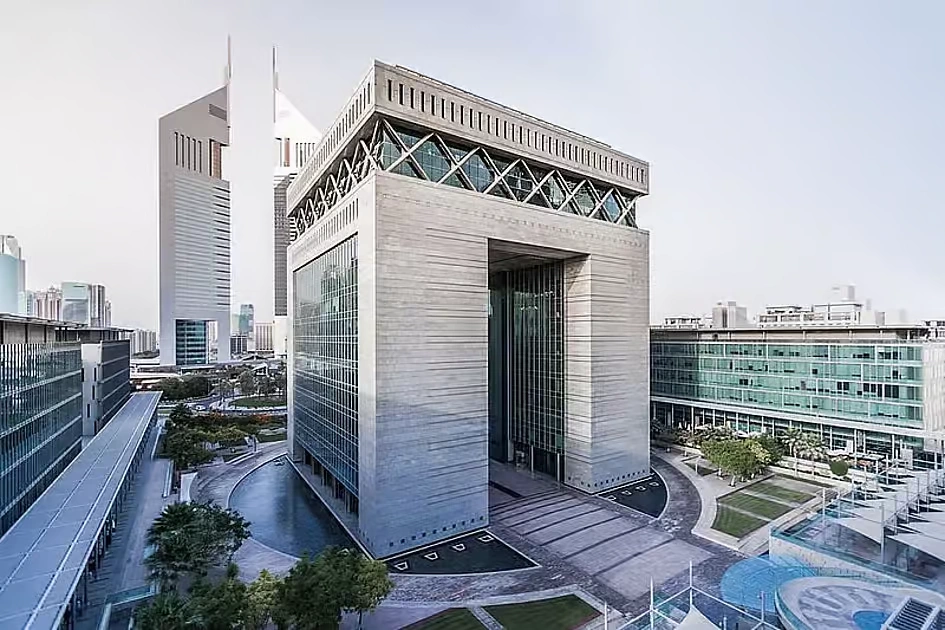
Dubai has climbed to its highest position ever on one of finance’s most closely watched rankings, and the achievement is no accident — it is the direct output of a decade-long, numerically explicit government strategy that few other financial centres have attempted to execute with this level of precision.
The Ranking Itself
The Dubai International Financial Centre has recorded its highest-ever position on the Global Financial Centres Index at seventh place worldwide, the highest ranking ever achieved by any financial centre across the Middle East, Africa and South Asia region, and the only MEASA-region centre to feature in the global top 20 — underscoring both its regional dominance and genuine global competitiveness.
The D33 Strategy Behind the Number
The ranking is explicitly tied to Dubai’s own stated ambitions. The GFCI result is described as pivotal to Dubai’s goal of becoming one of the world’s top four financial centres by 2033, in line with the Dubai Economic Agenda, or D33, which targets a doubling of the emirate’s economy over the decade. Separately, Dubai Chambers has confirmed the plan targets cumulative economic output of AED 32 trillion, or roughly $8.7 trillion, over the decade, supported by 100 transformative projects centred on trade expansion, digital innovation and sustainable growth.
The Underlying Economic Engine
The financial-centre ambitions are backed by genuine current-quarter growth. Dubai’s economy reached AED 232 billion in first-quarter 2026 GDP, a 2.4 percent year-on-year increase, with the finance, construction, healthcare, wholesale and retail trade, and real estate sectors all contributing to the broad-based expansion. Middle East Briefing separately projects the wider UAE economy will expand around 5 percent in 2026, with local banks positioned to increase lending both domestically — supporting SMEs, consumers and project finance — and across borders into markets like Saudi Arabia, where UAE banks’ comparatively lower interbank rates create an arbitrage opportunity.
Real Money Behind the Ranking
The GFCI climb is being validated by tangible transaction volume rather than sentiment alone. Weekly UAE business tracking shows a steady drumbeat of institutional activity: Sharjah Islamic Bank reported AED 803.9 million in net profit, up 15.3 percent, ADI Chain secured a $50 million investment to build sovereign digital infrastructure, and Capital.com reported $1.1 trillion in second-quarter trading volume routed through the jurisdiction. Separately, UAE and Saudi banks are projected to lead GCC credit growth in 2026, reinforcing Dubai and Abu Dhabi’s combined position as the region’s default financial gateway.
Why This Matters for Pakistan and South Asia
Dubai’s ascent as a financial hub carries direct relevance for Pakistan, where — as detailed in our companion coverage of Pakistan’s remittance exposure — roughly 55 percent of the country’s substantial remittance inflows originate from the Gulf Cooperation Council. A deepening, increasingly sophisticated DIFC-anchored financial ecosystem in Dubai means more efficient, lower-cost channels for that capital, alongside growing opportunities for Pakistani and South Asian firms to access GCC-sourced project finance and cross-border credit as UAE banks expand lending beyond their domestic market.
What is Dubai’s global financial centre ranking in 2026?
Dubai’s DIFC recorded its highest-ever ranking on the Global Financial Centres Index at 7th place worldwide in 2026 — the highest ever achieved by any Middle East, Africa or South Asia financial centre — as part of its stated goal to become a top-four global financial hub by 2033.
The Risk Beneath the Growth Story
Not every signal points to unambiguous strength. AGBI’s own reporting notes that UAE banks’ second-quarter results are likely to show weaker profits, slower lending and narrower margins, even as analysts characterise the underlying sector as fundamentally resilient — a reminder that Dubai’s financial-hub ambitions are being pursued against a genuinely more difficult regional operating environment shaped by the Strait of Hormuz disruption and broader Gulf security concerns, not in isolation from them.
The Bottom Line
Dubai’s climb to seventh in the GFCI rankings is less a one-off achievement than a measurable checkpoint on an explicitly numbered, decade-long strategic roadmap — one increasingly backed by real GDP growth, credit expansion, and institutional trading volume rather than ambition alone.
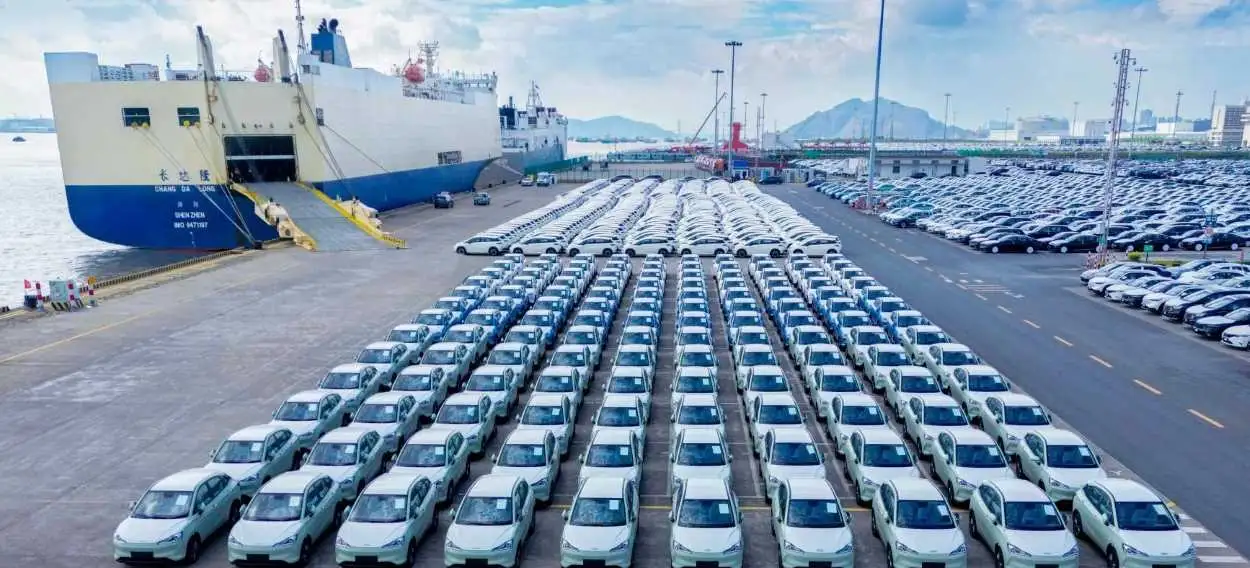
China’s monthly car exports surpassed one million units for the first time in June 2026, according to trade data released alongside the country’s second-quarter GDP figures, while overall imports rose 36% year-over-year to a five-year high even as Beijing cut monthly crude imports to near decade lows, down 41.3% from a year earlier (CNN). The result: China’s trade surplus widened to $125.62 billion in June alone.
The Uncovered Mechanism: Oil Shock as Green-Tech Accelerant
Most coverage has treated China’s electric vehicle and battery export surge as a story purely about domestic manufacturing subsidy and industrial policy. What has received far less attention is the direct causal link to the Iran war: the oil crisis has itself boosted global demand for Chinese clean-energy technology, as energy importers around the world accelerate efforts to reduce fossil-fuel reliance precisely when oil prices are most volatile (CNN). In other words, the same Strait of Hormuz disruption that is damaging Pakistan’s current account and pushing UK inflation higher is simultaneously functioning as a demand accelerant for Chinese EV exports — a direct transmission mechanism linking two of this year’s biggest global stories that is rarely discussed together.
The EU Is Already Losing Patience
China’s widening trade surplus is compounding tensions with the European Union, which has repeatedly criticised Beijing for flooding its market with subsidised industrial exports, a dynamic that predates this year’s conflict but has intensified as Chinese manufacturers redirect capacity toward markets less willing or able to erect the tariff barriers the United States has deployed (CNN; IndexBox).
Why This Is Also a Southeast Asia and Pakistan Story
Malaysia’s own export strength this year has been built substantially on its role in the semiconductor and electronics supply chain feeding the broader AI and green-tech manufacturing boom, meaning Kuala Lumpur benefits indirectly from the same dynamics driving China’s export surge, rather than competing head-on in finished vehicles (The Rakyat Post). Pakistan’s position is more exposed: as a market with its own nascent auto and manufacturing base and limited tariff leverage against Chinese imports, a sustained surge in low-cost Chinese EV and battery exports risks crowding out domestic industrial development at precisely the moment Islamabad is trying to broaden its export base beyond textiles under IMF-monitored reform targets.
The Domestic Trade-Off Beijing Is Managing
China’s export strength is masking, not solving, its domestic consumption weakness. Retail sales rose just 1% year-over-year in June, and analysts including Natixis’s Alicia Garcia-Herrero describe an economy where growth “all about exports” is “really quite unsustainable, to be frank” (CNN). Beijing’s newly released five-year plan to lift annual retail sales toward $9 trillion by 2030 is a direct policy response to this imbalance, but the export engine currently doing the heavy lifting for headline GDP is the same one generating friction with trading partners.
What to Watch
The July Politburo meeting is expected to signal the composition of any new stimulus. A consumption-focused package would ease, over time, the export dependence generating trade friction; an infrastructure-heavy package would likely deepen it, with direct consequences for how aggressively Chinese EV and battery exports continue to expand into markets across Southeast Asia, South Asia and Europe over the second half of 2026.

Pakistan’s Remittance Lifeline: Why Gulf Exposure Is a Hidden Risk

Dubai’s Rise to the World’s 7th Financial Hub: Inside the D33 Push

China EV Exports Hit Record High in 2026

UK’s “National Contributions Tax” Explained: Burnham-Era Reform 2026

Russia’s Strange Problem in 2026: Its Currency Is Too Strong

Section 301 Forced Labor Tariffs 2026: 60 Countries Affected

UK National Contributions Tax: Burnham’s Radical Tax Plan

Global Central Bank Divergence 2026: Why the Fed, BoE, BoJ, and PBoC Are All Moving Differently

Japan’s Bond Market Just Cracked. It Could Take the Rest of the World’s Debt With It

Malaysia’s Ringgit Is Holding Up. Economists Say the Real Test Is Still Coming

Climate Finance Delivery 2026: Trillion‑Dollar Promise Still Unmet

AI Impact on Wages 2026: Productivity Soars, Paychecks Stagnate

SpaceX IPO 2026: $2 Trillion AI Bubble, OpenAI & Anthropic — What Investors Must Know

China Economy 2026: Property Crisis, AI Investment & Export Surplus Explained

Top 15 Stocks for Investment in 2026 in PSX: Your Complete Guide to Pakistan’s Best Investment Opportunities
Top 15 Stocks for Investment in 2026 in PSX: Your Complete Guide to Pakistan’s Best Investment Opportunities

Debunking IMF Program Myths: Reconfiguring Engagement for True National Ownership in a Volatile World

Top 10 Mutual Fund Managers in Pakistan for Investment in 2026: A Comprehensive Guide for Optimal Returns

What the U.S. Attack on Venezuela Could Mean for Oil and Canadian Crude Exports: The Economic Impact

China’s 50% Domestic Equipment Rule: The Semiconductor Mandate Reshaping Global Tech

15 Most Lucrative Sectors for Investment in Pakistan: A 2025 Data-Driven Analysis

Pakistan’s Export Goldmine: 10 Game-Changing Markets Where Pakistani Businesses Are Winning Big in 2025
15 Most Lucrative Sectors for Investment in Pakistan: A 2025 Data-Driven Analysis
15 Most Lucrative Sectors for Investment in Pakistan: A 2025 Data-Driven Analysis

Pakistan’s Economic Outlook 2025: Between Stabilization and the Shadow of Stagnation
Pakistan’s Economic Outlook 2025: Between Stabilization and the Shadow of Stagnation

China’s Property Woes Could Last Until 2030—Despite Beijing’s Best Censorship Efforts
China’s Property Woes Could Last Until 2030—Despite Beijing’s Best Censorship Efforts
-
 Markets & Finance7 months ago
Top 15 Stocks for Investment in 2026 in PSX: Your Complete Guide to Pakistan’s Best Investment Opportunities
-
Markets & Finance7 months ago
Top 15 Stocks for Investment in 2026 in PSX: Your Complete Guide to Pakistan’s Best Investment Opportunities
-
 Analysis6 months ago
Debunking IMF Program Myths: Reconfiguring Engagement for True National Ownership in a Volatile World
-
 Investment6 months ago
Top 10 Mutual Fund Managers in Pakistan for Investment in 2026: A Comprehensive Guide for Optimal Returns
-
 Global Economy7 months ago
What the U.S. Attack on Venezuela Could Mean for Oil and Canadian Crude Exports: The Economic Impact
-
 Asia7 months ago
China’s 50% Domestic Equipment Rule: The Semiconductor Mandate Reshaping Global Tech
-
 AI7 months ago
15 Most Lucrative Sectors for Investment in Pakistan: A 2025 Data-Driven Analysis
-
 Exports7 months ago
Pakistan’s Export Goldmine: 10 Game-Changing Markets Where Pakistani Businesses Are Winning Big in 2025