
Global Economy
Pakistan’s Economic Outlook 2025: Between Stabilization and the Shadow of Stagnation

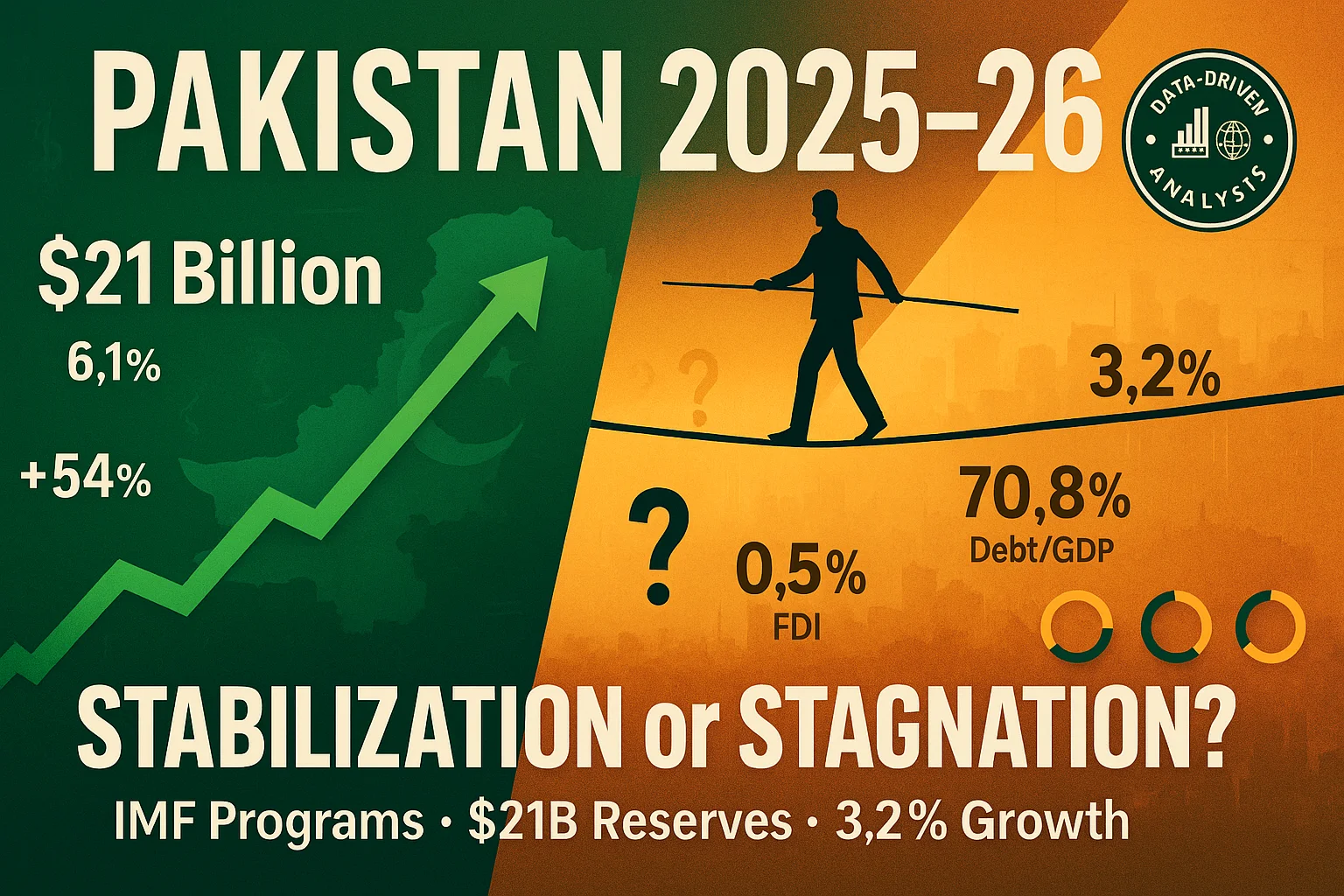
Can Pakistan finally break its bailout addiction, or is 2025 just another chapter in a recurring crisis?
Pakistan’s economy shows stabilization with $21B reserves and 6% inflation, but 3.2% growth barely exceeds population. Analyzing IMF programs, debt dynamics, and 2026 prospects for investors and policymakers.
The International Monetary Fund’s latest disbursement of $1.2 billion to Pakistan in December 2025 represents far more than a routine financial transaction. It’s a barometer of a nation caught between tentative stabilization and the persistent gravitational pull of economic inertia. Pakistan achieved a primary surplus of 1.3 percent of GDP in fiscal year 2025, in line with IMF targets, marking genuine fiscal progress. Yet beneath this achievement lies an uncomfortable truth: growth projections inch from 2.6% in FY25 to just 3.2% by FY26—barely matching population growth for a country of 240.5 million people.
This isn’t recovery. It’s containment.
For investors, policymakers, and Pakistan’s burgeoning middle class, 2025 presents a watershed moment. The immediate crisis of 2023—when foreign reserves plummeted to dangerously low levels and default fears paralyzed markets—has receded. But the challenge now is profoundly different: translating stabilization into sustained, inclusive growth that creates jobs and opportunities at scale.
The Stabilization Mirage: Real Progress or Borrowed Time?
Pakistan’s economic metrics tell a story of contradictions. On one hand, foreign exchange reserves surged to $21.1 billion as of December 2025, the highest level since March 2022. The rupee has shown unexpected resilience, with a 15.4 percent real effective appreciation in FY25 signaling currency stability after years of depreciation. The Pakistan Stock Exchange’s KSE-100 index has been nothing short of spectacular, climbing 54.70% year-over-year to reach 170,830 points, making it one of Asia’s strongest-performing equity markets.
These aren’t trivial achievements. Remittances hit a record $31.2 billion during the first ten months of fiscal year 2025, rising 30.9% year-over-year, with Saudi Arabia emerging as the top source. Inflation eased to 6.1% in November 2025 from a one-year high of 6.2% in October, a dramatic decline from the 23.4% average of the previous year.
“Pakistan’s economic outlook for 2025-2026 shows stabilization after crisis, with foreign reserves reaching $21 billion and inflation declining to 6.1%. However, GDP growth of 3.2% barely exceeds population growth, while 70.8% debt-to-GDP ratio and weak 0.5% FDI signal persistent challenges. The country must implement structural reforms to transition from containment to genuine inclusive growth.”
Yet dig deeper, and fragility persists. Foreign direct investment remains subdued at just 0.5-0.6% of GDP—levels that reflect continuing investor skepticism about Pakistan’s business environment. Unemployment is projected to fall only modestly from 8.3% to 7.5%, revealing weak job creation capacity. The country’s public debt reached Rs80.52 trillion (70.8% of GDP) by end-June 2025, up from Rs71.24 trillion the previous year—an increase of Rs9.3 trillion in a single year.
Consider what this means: Pakistan is running faster just to stay in place. Per capita income of $1,677 combined with 3.2% growth against 2% population growth translates to barely 1% improvement in living standards annually. For a nation where around 45% of the population lives below the poverty line according to a June 2025 World Bank report, this trajectory offers little hope.
The Debt Trap: Pakistan’s Fiscal Straitjacket
Here’s the brutal arithmetic constraining Pakistan’s future: nearly half of projected FY26 outlays—Rs7.5 trillion out of Rs17.4 trillion—is earmarked for debt servicing, equaling 77% of net federal revenues. This leaves Pakistan in what economists call “fiscal capture”—a situation where debt service crowds out virtually all productive spending.
Compare this globally. India, with debt around 82% of GDP, devotes 25-30% of central revenues to interest; Brazil spends roughly 20-25% with 88% debt-to-GDP. Pakistan’s debt servicing burden rivals Argentina’s, a country synonymous with fiscal distress. The difference? Pakistan borrows in currencies it cannot print, at interest rates it cannot control, making it acutely vulnerable to global financial shocks.
The IMF projects some relief, with public debt expected to decline from 70.8% to 60.8% of GDP by FY28 under continued fiscal consolidation. But this depends on maintaining primary surpluses of 2-2.5% of GDP annually—an extraordinary political challenge requiring sustained austerity in a democracy where 45% of citizens live in poverty.
What makes Pakistan’s debt particularly concerning isn’t just its size but its cost. Pakistan recorded a quarterly decline of Rs1.37 trillion in public debt in September 2025, the first since December 2019, achieved through early repayments of expensive debt. Yet the underlying structure remains precarious: domestic debt accounts for nearly half of GDP, keeping interest costs elevated, while external debt fell to 26% of GDP in FY25 from 31% two years earlier—progress, but from dangerously high levels.
The IMF Paradox: Lifeline or Dependency Trap?
Pakistan is operating under two simultaneous IMF programs: a 37-month Extended Fund Facility focused on economic stabilization and a Resilience and Sustainability Facility addressing climate vulnerabilities. Together, these have disbursed around $3.3 billion, with the latest reviews unlocking another $1.2 billion.
This marks Pakistan’s 25th IMF program since joining in 1950—a statistic that speaks volumes about the country’s inability to break its boom-bust cycle. Each program stabilizes the economy temporarily, but structural reforms remain incomplete. Tax collection as a percentage of GDP languishes around 10-11%, one of the lowest globally. Energy sector circular debt continues to accumulate despite repeated restructuring attempts. State-owned enterprises hemorrhage billions in losses annually.
The IMF’s 2025 Governance and Corruption Diagnostic Assessment found Pakistan’s economy loses an estimated 5-6.5% of GDP to corruption through “elite capture,” where influential groups shape policy for their benefit. This isn’t just morally troubling—it’s economically catastrophic. When market distortions and policy capture persist, private investment remains suppressed, foreign investors stay away, and productive capacity stagnates.
Yet paradoxically, the IMF program is working—at least on paper. The fiscal discipline it enforces has stabilized the currency, rebuilt reserves, and restored some international credibility. The question isn’t whether the IMF program is effective; it’s whether Pakistan can internalize these disciplines once external oversight ends.
2026 Prospects: Three Scenarios
Base Case: Muddle-Through Stabilization (60% probability)
Under current policies, Pakistan limps forward with 3-3.5% growth, just ahead of population expansion. The IMF program continues through 2027, providing external anchor and financing. The budget deficit narrows from -6.8% to -4.0% of GDP, with a primary surplus rising to 2.5%. Inflation stabilizes in the 5-7% range. Foreign reserves gradually build toward $25-28 billion by end-2026, providing 3.5-4 months of import cover.
This scenario delivers stability but not transformation. Living standards improve marginally. Job creation remains weak. Brain drain continues as educated Pakistanis seek opportunities abroad. The country avoids crisis but doesn’t achieve escape velocity. Think of it as economic purgatory—not hell, but certainly not heaven.
Upside Case: Reform Breakthrough (25% probability)
Imagine Pakistan actually implements long-delayed structural reforms. Tax-to-GDP ratio increases 2-3 percentage points through base broadening and digitalization. Major state-owned enterprises undergo genuine privatization, not cosmetic restructuring. Energy sector reforms sustainably reduce circular debt. The Special Investment Facilitation Council delivers $5-7 billion in Gulf investments, particularly in agriculture, IT, and mining.
In this scenario, growth accelerates to 4.5-5% by late 2026. Foreign direct investment doubles to 1-1.2% of GDP. The stock market rally continues, with the KSE-100 reaching 200,000 points. Pakistan begins attracting portfolio flows as international investors recognize improved fundamentals. Manufacturing competitiveness improves as energy costs decline.
What makes this plausible? Pakistan has demonstrated capacity for reform under pressure. The recent debt prepayment and fiscal consolidation show technical competence exists. The question is political will. Coalition governments prioritizing short-term survival over long-term transformation make sustained reform unlikely, but not impossible.
Downside Case: External Shock Relapse (15% probability)
Global commodity price spikes, particularly oil, blow out the current account. Regional geopolitical tensions escalate, disrupting trade and investor confidence. Political instability undermines policy continuity. Climate shocks—floods or droughts—require expensive emergency spending, blowing fiscal targets.
In this scenario, the current account deficit widens beyond 1% of GDP. Reserves deplete rapidly. The rupee comes under severe pressure. Inflation rebounds to double digits. The stock market corrects 30-40%. Pakistan returns to IMF mid-program for emergency adjustment, triggering another painful stabilization cycle.
This isn’t alarmist speculation—it’s Pakistan’s historical pattern. The country has faced similar setbacks repeatedly. What’s changed is improved reserve buffers and a more disciplined fiscal stance provide better shock absorption than in past cycles. But vulnerabilities remain acute.
The 2026 Inflection Point: What Must Happen
For Pakistan to transition from stabilization to genuine growth in 2026, five critical factors must align:
Revenue mobilization breakthroughs. Pakistan cannot sustain itself on 10-11% tax-to-GDP. Broadening the tax base, improving compliance, and rationalizing exemptions must deliver at least 1-1.5 percentage points of GDP in additional revenues. This isn’t technically difficult—digitalization and data integration can dramatically improve collection. It’s politically difficult because it requires taxing privileged sectors that have historically evaded their obligations.
Energy sector resolution. Circular debt and high electricity costs strangle industrial competitiveness. Pakistan’s electricity tariffs are among the highest in South Asia, making manufacturing globally uncompetitive. Addressing this requires politically painful decisions: rationalizing capacity payments to independent power producers, reducing transmission losses, improving recovery rates, and possibly renegotiating contracts. Without this, Pakistan cannot compete in global manufacturing.
Investment climate transformation. Why does Pakistan attract only 0.5% of GDP in FDI while Bangladesh draws 1.5% and Vietnam 6%? The answer: bureaucratic red tape, policy unpredictability, weak contract enforcement, and infrastructure deficits. Creating genuine one-stop investment facilitation, reducing regulatory approvals from months to weeks, and providing policy certainty would unlock billions in investment.
Export competitiveness revival. Pakistan’s exports have stagnated around $30-32 billion annually for years while regional peers have surged. Vietnam’s exports exceeded $370 billion in 2024; Bangladesh, despite political turmoil, maintains $45-50 billion. Pakistan needs export-led growth, requiring currency competitiveness, trade facilitation, value chain integration, and quality upgrading. The textile sector alone could double exports with better policy support.
Human capital investment. With 64% of the population under age 30, Pakistan possesses a demographic dividend that could propel growth—or become a demographic disaster if unmanaged. This requires massive investment in education, vocational training, and healthcare. Currently, education spending hovers around 2% of GDP, among the world’s lowest. Doubling this, with reforms ensuring quality, would transform long-term potential.
The Corruption Challenge: Elite Capture and Growth
The IMF’s corruption diagnostic reveals something Pakistan has long known but rarely confronted systematically: 5-6.5% of GDP is lost annually to corruption through elite capture. This isn’t petty bribery—it’s systemic policy distortion where powerful groups extract rents through protective regulations, subsidized inputs, tax exemptions, and procurement manipulation.
Consider the energy sector. Independent power producers negotiated extraordinarily favorable contracts in the 1990s and 2000s, guaranteeing dollar returns regardless of demand. These “capacity payments” now drain billions annually, creating circular debt that cascades through the economy. Why do these contracts persist? Because the beneficiaries have political influence to block reform.
Or examine tax exemptions. Pakistan grants hundreds of billions in tax expenditures annually—concessions to specific sectors, mostly benefiting large, connected businesses. A 2024 analysis found rationalizing just 30% of these exemptions could raise 1.5% of GDP in additional revenue. Yet reform stalls because beneficiaries lobby intensively against rationalization.
Breaking elite capture requires more than anti-corruption campaigns; it demands institutional reform: transparent procurement systems, merit-based bureaucracy, independent regulators, and genuine competition policy. The IMF diagnostic is helpful precisely because it shifts the conversation from moralistic hand-wringing to concrete institutional diagnostics.
Climate and Resilience: The Overlooked Variable
Here’s what makes Pakistan’s outlook uniquely precarious: climate vulnerability. The 2025 monsoon floods affected almost 7 million people and caused an estimated 0.6% of GDP in damage. This follows the catastrophic 2022 floods that inundated one-third of the country, causing $30 billion in damages.
Pakistan ranks among the world’s most climate-vulnerable nations despite contributing negligible global emissions. Rising temperatures threaten agricultural productivity in a country where agriculture employs 40% of the workforce. Glacier melt in the north creates water scarcity risks for irrigation-dependent farming. Extreme weather events—floods, droughts, heatwaves—are increasing in frequency and intensity.
The IMF’s Resilience and Sustainability Facility, providing $200 million in the latest disbursement, addresses this directly. But Pakistan needs far more comprehensive climate adaptation: improved water storage and irrigation systems, disaster-resilient infrastructure, agricultural diversification, and early warning systems. The World Bank estimates Pakistan requires $8-10 billion annually in climate adaptation investments through 2030.
Climate isn’t just an environmental issue—it’s a macroeconomic variable that can blow apart fiscal plans, devastate agricultural output, and trigger massive humanitarian emergencies requiring expensive relief. Any serious 2026 outlook must account for climate risk.
The Regional Context: Where Pakistan Stands
Pakistan doesn’t compete in isolation. Its South Asian neighbors offer instructive contrasts. India, despite comparable governance challenges, maintains 6-7% growth through a larger domestic market, more diversified economy, and deeper capital markets. Bangladesh, having graduated from least-developed status, sustains 5-6% growth driven by garment exports and steady policy continuity.
Even Sri Lanka, having endured debt default and political crisis in 2022, is stabilizing faster than expected. Its reform program, while painful, has restored some fiscal credibility and attracted investment interest.
Pakistan’s advantages are real: a large, young population; strategic location between South Asia, Central Asia, and the Middle East; reasonable infrastructure; and a substantial diaspora providing remittances and potential investment. Its disadvantages are equally real: political instability, security challenges, weak institutions, and policy inconsistency.
The critical question: can Pakistan leverage its advantages while addressing its weaknesses? Historical evidence suggests caution. Pakistan has squandered similar opportunities repeatedly. But circumstances have changed. The regional security environment has stabilized somewhat. China’s Belt and Road infrastructure provides connectivity options. Gulf states, particularly Saudi Arabia and UAE, show investment interest. Global firms seeking China+1 diversification could include Pakistan.
The window exists. Whether Pakistan can seize it depends on choices made in 2025-26.
What This Means for Stakeholders
For investors: Pakistan offers asymmetric opportunities with commensurate risks. The stock market’s 50%+ returns in 2025 reflect compressed valuations catching up to improved fundamentals. Banking, cement, energy, and consumer sectors show promise. But political and policy risks remain elevated. Diversification is essential. Consider Pakistan as a 5-10% portfolio allocation, not a concentrated bet.
For businesses: Pakistan’s 240 million person market and low per-capita income suggest massive consumption growth potential as incomes rise. But doing business requires patient capital, local partnerships, and willingness to navigate bureaucracy. Sectors with demonstrated success—textiles, IT services, food processing—offer proven paths. Emerging sectors like renewable energy, e-commerce, and fintech show potential but require regulatory navigation.
For policymakers: The 2025-26 period represents a narrow window for transformative reform. Stabilization creates space for politically difficult decisions—but that space won’t last forever. Prioritize revenue mobilization, energy sector restructuring, investment climate improvement, and export competitiveness. Most critically, build institutional capacity that outlasts any single government. Pakistan’s problem isn’t lack of plans—it’s lack of implementation and sustainability.
For citizens: Understand that stabilization isn’t prosperity. Demand more than fiscal metrics; demand job creation, service delivery, education access, and corruption accountability. Pakistan’s youth represent its greatest asset—but only if provided opportunities to contribute productively. Brain drain isn’t inevitable; it’s a policy choice reflecting failure to create domestic opportunity.
The Verdict: Cautious Optimism Grounded in Reality
So where does this leave Pakistan in 2025, looking toward 2026? In a place simultaneously better and more fragile than simple metrics suggest.
The stabilization is real. Pakistan has stepped back from the 2023 precipice. Reserves are rebuilding, inflation has declined, fiscal discipline has improved, and market confidence has partially returned. These aren’t trivial achievements—they required painful adjustment and represent genuine progress.
But stabilization isn’t transformation. Growth barely outpacing population expansion doesn’t create jobs at scale. Debt servicing consuming half the budget leaves no fiscal space for development. Foreign investment at 0.5% of GDP signals ongoing skepticism. Poverty affecting 45% of citizens demands far more aggressive inclusive growth.
The choice Pakistan faces isn’t between crisis and prosperity—it’s between muddling through and breakthrough. Muddling through means 3-3.5% growth indefinitely, stable but stagnant, avoiding disaster but not achieving potential. Breakthrough means accelerating to 5-6% sustained growth through genuine reform, creating millions of jobs, dramatically reducing poverty, and fulfilling Pakistan’s considerable potential.
Which path materializes depends on choices made in 2025-26. The external environment is reasonably favorable—global growth continues, commodity prices are manageable, Gulf investment interest exists, and IMF support provides buffer. The domestic environment is more uncertain—political stability is fragile, coalition dynamics complicate reform, and vested interests resist change.
History suggests skepticism. Pakistan has disappointed repeatedly, choosing expedience over reform, short-term survival over long-term strategy. But history also shows capacity for surprise. Pakistan has demonstrated resilience through extraordinary challenges. The question isn’t capability—it’s will.
For 2026, expect continued stabilization with modest growth acceleration if reforms progress. The base case of 3.2-3.5% growth, 5-6% inflation, $25-28 billion reserves, and gradual debt-to-GDP improvement is achievable and likely. Whether Pakistan breaks through to 5%+ sustained growth depends on policy courage—expanding the tax base, restructuring energy, improving business climate, and prioritizing exports.
The immediate crisis has passed. The chronic challenges remain. Pakistan’s economic outlook for 2025-26 is neither euphoric nor catastrophic—it’s cautiously optimistic, grounded in real progress but acutely aware of formidable obstacles ahead.
The country stands at a crossroads. One path leads to continued muddling—stable but mediocre, avoiding crisis but not achieving potential. The other leads to genuine transformation—politically difficult but economically transformative. Which path Pakistan takes will define not just 2026, but the trajectory of the next decade.
The data is mixed. The potential is real. The choice is Pakistan’s.
Sources Referenced:
- International Monetary Fund (IMF) reports and projections
- State Bank of Pakistan data
- World Bank Pakistan assessments
- Trading Economics statistical data
- Ministry of Finance debt sustainability analysis
- Pakistan Stock Exchange performance metrics
- Multiple authoritative economic research institutions


Analysis
OnlyFans’ $3bn Succession Gamble: A Valuation Discount, a Fintech Pivot, and the AI Spectre Haunting the Creator Economy

London. When Leonid Radvinsky, the reclusive, Ukrainian-born billionaire who quietly built one of the internet’s most improbable cash machines, died of cancer last month at 43, the fate of his empire—a digital bazaar of intimacy worth over $7 billion in annual transactions—was suddenly thrust into a glaringly uncertain light.
Now, we have the first chapter of what comes next. In a move that speaks less to a triumphant exit and more to a pragmatic posthumous recalibration, OnlyFans is finalizing a deal to sell a minority stake of less than 20% to San Francisco-based Architect Capital, valuing the British company at over $3 billion.
The narrative for casual observers is simple: a founder dies, and a lucrative stake sale ensues. But for the FT/Economist reader—those tracking the collision of high finance, the stigmatized economy, and the future of digital labor—the real story is far more nuanced. This is a story about valuation compression, the shifting sands of the $214 billion creator economy, and a strategic fintech gambit that could redefine what OnlyFans actually is.
The Radvinsky Calculus: Why the Price Tag Fell From $8bn to $3bn
Let’s be surgically precise: OnlyFans is not a normal business. It is a staggeringly profitable one. In 2024, with a skeletal staff of just 46 employees, Fenix International (OnlyFans’ parent) generated $1.4 billion in revenue and a pre-tax profit of $684 million—a net margin of roughly 37% that would make most Silicon Valley unicorns weep with envy. On paper, this is a valuation darling. Yet, as late as 2025, Radvinsky had been shopping a 60% majority stake with aspirations of an $8 billion valuation or a $5.5 billion enterprise value that included a hefty $2 billion debt package.
So why the markdown?
The answer is a textbook case of the “vice discount” (also known as the “stigma penalty”). OnlyFans remains, at its core, synonymous with adult content. This singular association creates a structural ceiling on its valuation. Traditional institutional investors—sovereign wealth funds, major pension managers, and blue-chip private equity—operate under strict Environmental, Social, and Governance (ESG) mandates and reputational constraints that make owning a pornography platform, no matter how profitable, a non-starter.
Moreover, the dependency on the Visa/Mastercard duopoly looms like the sword of Damocles. Both card networks classify adult platforms as “high-risk merchants,” a designation that imposes elevated fees and, more importantly, the constant threat of being de-platformed from the global financial rails with little notice.
Faced with these headwinds and the fresh uncertainty of the founder’s passing, the Radvinsky family trust—now led by his widow, Katie, who is overseeing the sale—has pivoted from a controlling exit to a minority liquidity event. This keeps control within the trust while injecting external capital and, critically, new expertise into the boardroom.
Architect Capital’s Fintech Gambit: Banking the Unbanked Creators
This is where the deal transcends a simple equity swap and becomes a corporate metamorphosis. Architect Capital is not just a financier; it is effectively a strategic partner with a specific mandate: fintech.
Reports indicate the deal is contingent on Architect working with OnlyFans to develop new financial services and products for its 4.6 million creators. This is not a gimmick; it is an economic necessity. A significant portion of OnlyFans’ top earners are sex workers who face widespread discrimination in the traditional banking sector. Accounts are frozen, loans are denied, and mortgages are unattainable, regardless of how high the tax-paid income is.
For Architect, a firm known for tackling businesses in regulatory gray zones, this is the alpha play. By building a fintech stack—perhaps offering creator-specific banking, debit cards with instant payout options, or even micro-loans against future earnings—OnlyFans can deepen its “take rate” beyond the 20% subscription cut and, crucially, lock in its top talent.
This pivot is also a deliberate move toward mainstreaming the platform. As reported by Expert.ru, OnlyFans’ long-term plan includes a potential IPO in 2028 and a concerted effort to shift its public image toward “wellness” verticals like fitness and nutrition. A robust, regulated financial services arm attached to a platform with millions of high-earning “solopreneurs” is a narrative that Goldman Sachs or Morgan Stanley could actually sell to the public markets.
The Elephant in the Server Room: The AI Threat and Fanvue’s 150% Growth
For all the talk of fintech and $3 billion valuations, there is an existential threat gnawing at the edges of the human intimacy economy: Artificial Intelligence.
While OnlyFans is navigating estate trusts and banking regulations, a competitor called Fanvue is growing at 150% year-over-year. Sacra estimates Fanvue hit $100 million in Annual Recurring Revenue (ARR) in 2025, driven in large part by its aggressive embrace of AI-generated creators. Unlike OnlyFans, which mandates that AI content must resemble a verified human creator, Fanvue has become the de facto home for fully synthetic personas. With a fresh $22 million Series A round in its pocket and a partnership with voice-cloning giant ElevenLabs, Fanvue is automating the parasocial relationships that OnlyFans monetizes.
The economic efficiency is terrifying for human creators. A single operator can now manage a portfolio of AI influencers, generating income without the logistical friction of real photoshoots or the emotional labor of engaging with fans. If Fanvue’s ARR hits $500 million by 2028 (well within its trajectory), the “human creator premium” that OnlyFans relies on may begin to erode, further compressing its future valuation multiples.
Coda: The Path to 2028
The $3 billion valuation for a 20% stake is not a failure; it is a foundation. It represents a 21.6x multiple on last year’s pre-tax profits—a figure that, while compressed by tech standards, is an astronomical premium for a “vice” asset in a jittery 2026 market.
The real test for the family trust and Architect Capital will be execution. Can they successfully navigate the regulatory minefield to become a credible neobank for creators? Can they pivot the brand sufficiently before an IPO to close the valuation gap? Or will the relentless, synthetic march of AI render the human touch—the very currency of OnlyFans—an overpriced luxury?
The market is betting $3 billion that for the next five years at least, the answer is “Yes.” The rest of us will be watching to see if they can outrun the algorithm.
Analysis
The Trump Coin and Lessons from the Ostrogoths: How a Gold Offering Reveals the Limits of Presidential Power Over America’s Money
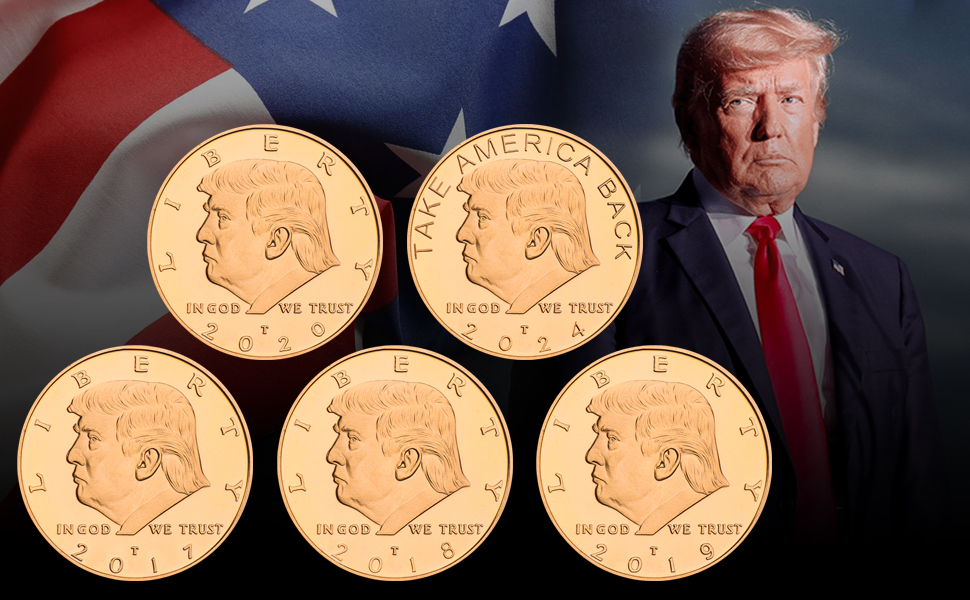
By the time the U.S. Mint strikes the first 24-karat gold Trump commemorative coin later this year, the great American tradition of keeping living politicians off the nation’s money will have been quietly, but spectacularly, circumvented.
Approved unanimously on March 19, 2026, by the Trump-appointed Commission of Fine Arts, the coin is ostensibly a celebration of the nation’s 250th anniversary. Yet, it serves a secondary, more visceral purpose for its chief architect: projecting executive dominance. The design is unapologetically aggressive. The obverse features President Donald Trump leaning intensely over the Resolute Desk, fists clenched, with the word “LIBERTY” arcing above his head and the dual dates “1776–2026” flanking him. The reverse bears a bald eagle, talons braced, ready to take flight.
Predictably, the political theater has been deafening. Critics have decried the coin as monarchic symbolism, pointing out that since the days of George Washington, the republic has fiercely guarded its currency against the vanity of living rulers. Defenders hail it as a masterstroke of patriotic fundraising and commemorative artistry.
But beneath the partisan noise lies a profound economic irony. In the grand sweep of monetary history, a leader plastering his face on ceremonial gold does not signal absolute control over a nation’s wealth. Quite the opposite. As we look back to the shifting empires of late antiquity, such numismatic pageantry usually reveals the exact opposite: a leader attempting to mask the uncomfortable reality of his limited sovereignty.
To understand the true weight of the 2026 Trump gold coin, one must look not to the halls of the Federal Reserve, but to the 6th-century courts of the Ostrogothic kings of Italy.
The Loophole of Vanity: 31 U.S.C. § 5112
To grasp the limits of the President’s monetary power, one must first look at the legal acrobatics required to mint the coin in the first place.
Federal law strictly forbids the portrait of a living person on circulating U.S. currency—a tradition born from the Founding Fathers’ revulsion for the coinage of King George III. To bypass this, the administration utilized the authorities granted under 31 U.S.C. § 5112, specifically the Treasury’s broad discretion to issue gold bullion and commemorative coins that do not enter general circulation.
While the coin bears a nominal face value of $1, it is a piece of bullion, not a medium of exchange. You cannot buy a coffee with it; it will not alter the M2 money supply; it will not shift the consumer price index.
Herein lies the central paradox of the Trump Semiquincentennial coin:
- The Facade of Power: It utilizes the highest-purity gold and the official imprimatur of the United States Mint to project executive authority.
- The Reality of Policy: The actual levers of the American economy—interest rates, quantitative easing, and the health of the fiat dollar—remain stubbornly out of the Oval Office’s direct control, residing instead with the independent Federal Reserve.
This dynamic—where a ruler uses localized, symbolic coinage to project a sovereignty he does not fully possess over the broader economic system—is not a modern invention. It is a historical hallmark of limited power.
Echoes from Ravenna: The Ostrogothic Parallel
When the Western Roman Empire collapsed in the late 5th century, Italy fell under the dominion of the Ostrogoths. The most famous of their rulers, Theodoric the Great, commanded the peninsula with formidable military might from his capital in Ravenna. He was, for all practical purposes, the king of Italy.
Yet, when you examine Ostrogothic coinage from this era, a fascinating picture of deference and limitation emerges.
Despite his military supremacy, Theodoric understood that the true center of global economic gravity lay to the east, in Constantinople. The Byzantine Emperor controlled the solidus—the gold standard of the Mediterranean world. If Theodoric wanted his kingdom to participate in international trade, he had to play by Byzantine monetary rules.
Consequently, the Ostrogoths minted gold and silver coins that were essentially counterfeits of Byzantine money. They bore the portrait of the reigning Eastern Emperor (such as Anastasius or Justinian), not the Ostrogothic king. Theodoric restricted his own branding to a modest monogram, and later kings, like Theodahad, only dared to place their full portraits on the bronze follis—the low-value base metal used for buying bread in local markets, entirely decoupled from international high finance.
The lesson from the Ostrogoths is clear, and widely recognized in peer-reviewed numismatic scholarship: controlling the territory is not the same as controlling the currency. The Ostrogoths used their local mints to project an image of continuity and authority to their immediate subjects, but they bowed to the monetary hegemony of the true empire.
The Byzantine Emperor of Modern Finance
Today, the “Constantinople” of the global economy is not a rival nation, but the institutional apparatus of the fiat dollar system—chiefly, the Federal Reserve and the global bond market.
President Trump has frequently chafed against this reality. Throughout his political career, he has sought to blur the lines of Fed independence, occasionally demanding lower interest rates or criticizing the Fed Chair with a ferocity normally reserved for political rivals. Yet, the institutional firewalls have largely held. The President cannot unilaterally dictate the cost of capital. He cannot force the world to buy U.S. Treasuries.
Thus, the 24-karat commemorative coin acts as his modern bronze follis.
It is a stunning piece of metal, but it is ultimately a domestic token. It satisfies a base of political supporters and projects an aura of monarchic permanence, just as Theodahad’s portrait did in the markets of Rome. But it does not challenge the underlying hegemony of the independent central banking system. The global markets, the sovereign wealth funds, and the algorithmic trading desks—the modern equivalents of the Byzantine merchants—will ignore the gold coin entirely. They will continue to trade in the invisible, digital fiat dollars over which the President exercises only indirect influence.
The Illusion of Monetary Sovereignty
What, then, does the “Trump coin” tell us about the current state of American executive power?
First, it highlights a growing preference for the aesthetics of power over the mechanics of governance. Minting a gold coin with one’s face on it is a frictionless exercise in executive privilege. Reining in a multi-trillion-dollar deficit, negotiating complex trade pacts, or carefully managing a soft economic landing are laborious, constrained, and often unrewarding tasks.
Second, it reveals the resilience of America’s financial architecture. That the President must resort to a commemorative loophole—utilizing a non-circulating bullion designation to bypass the strictures of circulating fiat—is a testament to the fact that the core of America’s money remains insulated from populist whim.
Consider the implications for dollar hegemony:
- Global Confidence: International investors rely on the U.S. dollar precisely because it is not subject to the immediate, emotional control of the executive branch.
- Institutional Friction: The outcry over the coin, while loud, proves that democratic norms regarding the separation of leader and state apparatus are still fiercely defended in the public square.
- The Paradox of Gold: By choosing gold—the traditional refuge of those who distrust government fiat—the administration inadvertently highlights its own lack of faith in the very paper currency it is sworn to manage.
Conclusion: The Weight of Empty Gold
The Roman historian Cassius Dio once observed that you can judge the health of a republic by the faces on its coins. When the republic falls, the faces of magistrates are replaced by the faces of autocrats.
But history is rarely that simple. The Ostrogothic kings of the 6th century put their faces on bronze because they lacked the power to control the gold. In March 2026, an American president has put his face on gold because he lacks the power to control the fiat.
The Semiquincentennial Trump coin is destined to be a remarkable collector’s item, a flashpoint in the culture wars, and a brilliant piece of political marketing. But when historians look back on the numismatics of the 2020s, they will not see a president who conquered the American monetary system. They will see a leader who, much like the kings of late antiquity, had to settle for a brilliant, golden simulacrum of power, while the true economic empire hummed along, indifferent and out of reach.
FAQ: Understanding the 2026 Commemorative Coin and U.S. Monetary Policy
Is it legal for a living U.S. President to be on a coin? Yes, but only under specific circumstances. By law (31 U.S.C. § 5112), living persons cannot be depicted on circulating currency (like standard pennies, quarters, or paper bills). However, the U.S. Mint has the authority to produce non-circulating bullion and commemorative coins. The 2026 Trump coin exploits this loophole as a non-circulating commemorative piece.
Does the U.S. President control the value of the dollar? No. While presidential policies (like tariffs, taxation, and government spending) affect the broader economy, the direct control of the U.S. money supply and interest rates rests with the Federal Reserve, an independent central bank. The President appoints the Fed Chair, but cannot legally dictate the bank’s day-to-day monetary policy.
What is the historical significance of the Ostrogothic coinage parallel? In the 6th century, Ostrogothic kings in Italy minted gold coins bearing the face of the Byzantine Emperor, while reserving their own portraits for lower-value bronze coins. This demonstrated that while they held local, symbolic power, true economic sovereignty belonged to the Byzantine Empire. The 2026 Trump coin operates similarly: it offers localized symbolic prestige, but the actual “engine” of the U.S. economy remains under the control of the independent Federal Reserve.
Can I spend the 24-karat Trump coin at a store? Technically, the coin has a legal face value of $1. However, because it is minted from 24-karat gold, its intrinsic metal value and numismatic collector value far exceed its $1 face value. It is meant to be collected and held as an asset or piece of memorabilia, not used in daily commercial transactions.
Investing 101
Gaming Giant’s Bold Gamble: Why Investors are Devouring Risky EA Debt Amid Geopolitical Crosscurrents
Investors are aggressively snapping up debt for Electronic Arts’ historic $55bn take-private, signaling resilient credit markets despite geopolitical tensions and AI disruption. Explore the EA LBO’s financial engineering, cost savings, and the appetite for risky video game financing in 2026.
Introduction: The Unyielding Allure of High-Yield
The world of high finance rarely pauses for breath, even as geopolitical headwinds gather and technological disruption reshapes industries. Yet, the recent $55 billion take-private of video game titan Electronic Arts (EA) has delivered a masterclass in market resilience, demonstrating an almost insatiable investor appetite for leveraged debt—even when tied to a complex, globally-infused transaction. Led by Saudi Arabia’s Public Investment Fund (PIF), Silver Lake, and Affinity Partners, this landmark deal, poised to redefine the gaming M&A landscape, has seen its $18-20 billion debt package met with overwhelming demand, proving that the pursuit of yield often eclipses lingering doubts.
This isn’t merely another private equity mega-deal; it’s a bellwether for global credit markets in early 2026. JPMorgan-led bond deals, designed to finance one of the largest leveraged buyouts in history, have drawn over $25 billion in orders, far surpassing their target size. This aggressive investor embrace of what many consider risky debt, particularly given the backdrop of Middle East tensions and concerns over AI’s impact on software, underscores a fascinating dichotomy: a cautious macroeconomic outlook juxtaposed with an audacious hunt for returns in stable, cash-generative assets. The question isn’t just how this was financed, but why investors dove in with such conviction, and what it signals for the year ahead.
The Anatomy of a Mega-Buyout: EA’s Financial Engineering
At an enterprise value of approximately $55 billion, the Electronic Arts take-private deal stands as the largest leveraged buyout on record, eclipsing the 2007 TXU Energy privatization. The financing structure is a finely tuned orchestration of equity and debt, designed to maximize returns for the acquiring consortium while appealing to a broad spectrum of debt investors.
Equity & Debt Breakdown
The EA $55bn LBO is funded through a combination of substantial equity and a significant debt tranche:
- Equity Component: Approximately $36 billion, largely comprising cash contributions from the consortium partners, including the rollover of PIF’s existing 9.9% stake in EA. PIF is set to own a substantial majority, approximately 93.4%, with Silver Lake holding 5.5% and Affinity Partners 1.1%.
- Debt Package: A substantial $18-20 billion debt package, fully committed by a JPMorgan-led syndicate of banks. This makes it the largest LBO debt financing post-Global Financial Crisis.
Unpacking the Debt Tranches: Demand & Pricing
The sheer scale of demand for this EA acquisition financing has been striking. The initial $18 billion debt offering, which included both secured and unsecured tranches, quickly swelled to over $25 billion in investor orders. This oversubscription highlights a strong market appetite for gaming-backed paper.
Key components of the debt include:
- Leveraged Loans: A cross-border loan deal totaling $5.75 billion launched on March 16, 2026, comprising a $4 billion U.S. dollar loan and a €1.531 billion ($1.75 billion) euro tranche.
- Pricing: Term Loan Bs (TLBs) were guided at 350-375 basis points over SOFR/Euribor, with a 0% floor and a 98.5 Original Issue Discount (OID). This discounted pricing suggests lenders were baking in some risk, yet the demand remained robust.
- Secured & Unsecured Bonds: The financing also features an upsized $3.25 billion term loan A, an additional $6.5 billion of other dollar and euro secured debt, and $2.5 billion of unsecured debt. While specific high-yield bond pricing hasn’t been detailed, market intelligence suggests secured debt at approximately 6.25-7.25% and unsecured north of 8.75%, reflective of the leverage profile.
The Deleveraging Path: Justifying a 6x+ Debt/EBITDA
Moody’s projects that EA’s gross debt will increase twelve-fold from $1.5 billion, pushing pro forma leverage (total debt to EBITDA) to around eight times at closing. Such high leverage ratios typically raise red flags, but the consortium’s pitch centers on EA’s robust cash flows and significant projected cost savings.
Three Pillars Justifying the Leverage
- Stable Cash Flows from Core Franchises: EA boasts an enviable portfolio of consistently profitable franchises, including FIFA (now EA Sports FC), Madden NFL, Apex Legends, and The Sims. These titles generate predictable, recurring revenue streams, particularly through live service models and annual updates, which underpin the company’s financial stability—a critical factor for debt investors.
- Strategic Cost Savings & Operational Efficiencies: The new owners have outlined an aggressive plan for $700 million in projected annual cost savings. This includes:
- R&D Optimization: $263 million from reclassifying R&D expenses for major titles like Battlefield 6 and Skate as one-time costs, now that they are live and generating revenue.
- Portfolio Review: $100 million from a strategic review of the game portfolio.
- AI Tool Integration: $100 million from leveraging AI tools for development and operations.
- Organizational Streamlining: $170 million from broader organizational efficiencies.
- Public Company Cost Removal: $30 million saved by no longer incurring costs associated with being a public entity.
These add-backs significantly bolster adjusted EBITDA figures, making the debt package appear more manageable to prospective lenders. Moody’s expects leverage to decrease to five times by 2029.
- Untapped Growth Potential in Private Ownership: Freed from quarterly earnings pressure, EA’s management can pursue longer-term strategic initiatives and R&D without the immediate scrutiny of public markets. This is particularly appealing for a company operating in an industry prone to rapid innovation and large, multi-year development cycles. The consortium’s diverse networks across gaming, entertainment, and sports are expected to create opportunities to “blend physical and digital experiences, enhance fan engagement, and drive growth on a global stage”.
Geopolitical Currents and the Appetite for Risky Debt
The influx of capital into the Electronic Arts bond deals is particularly noteworthy given the complex geopolitical backdrop of early 2026. Global markets are navigating sustained tensions in the Middle East, the specter of trade tariffs, and the disruptive force of artificial intelligence. Yet, these factors have not deterred investors from snapping up debt to finance Electronic Arts’ $55bn take-private.
The Saudi PIF Factor: Geopolitical Implications
The prominent role of Saudi Arabia’s Public Investment Fund (PIF) as the lead equity investor introduces a significant geopolitical dimension. The PIF, managing over $925 billion in assets, views this acquisition as a strategic move to establish Saudi Arabia as a global hub for games and sports, aligning with its “Vision 2030” diversification efforts. PIF’s deep pockets and long-term investment horizon offer stability often attractive to private equity deals.
However, the involvement of a sovereign wealth fund, particularly one with ties to Jared Kushner’s Affinity Partners, has not been without scrutiny. Concerns about national security risks, foreign access to consumer data, and control over American technology (including AI) have been voiced by organizations like the Communications Workers of America (CWA), who urged federal regulators to scrutinize the deal. Despite these geopolitical and regulatory considerations, the debt market demonstrated a remarkable willingness to participate. This indicates that the perceived financial stability and growth prospects of EA outweighed concerns tied to the source of equity capital.
AI Disruption and Market Confidence
The gaming industry, like many sectors, faces potential disruption from AI. Yet, EA itself projects $100 million in cost savings from AI tools, signaling a strategic embrace rather than fear of the technology. This forward-looking approach to AI, coupled with the inherent stability of established gaming franchises, likely contributed to investor confidence. In a volatile environment, proven entertainment IP acts as a relatively safe harbor.
The successful placement of this jumbo financing also suggests that while some sectors (like software) have seen “broader risk-off sentiment” due to AI uncertainty, the market distinguishes between general software and robust, content-driven interactive entertainment.
Broader Implications for Gaming M&A and Private Equity
The EA LBO is more than an isolated transaction; it’s a powerful signal for the broader M&A landscape and the future of private equity.
A Return to Mega-LBOs?
After a period where massive leveraged buyouts fell out of favor post-Global Financial Crisis, the EA deal marks a definitive comeback. It “waves the green flag on sponsors resuming mega-deal transactions,” indicating that easing borrowing costs and renewed boardroom confidence are aligning to facilitate large-cap M&A. The success of this deal, especially the oversubscription of its debt tranches, could embolden other private equity firms to pursue similar-sized targets in industries with reliable cash flows. This is crucial for private-equity debt appetite in 2026.
Creative Independence Post-Delisting
While private ownership offers freedom from public market pressures, it also introduces questions about creative independence. Historically, private equity has been associated with aggressive cost-cutting and a focus on short-term profits. For a creative industry like gaming, this can be a double-edged sword. While the stated goal is to “accelerate innovation and growth”, some within EA have expressed concern about potential workforce reductions and increased monetization post-acquisition. The challenge for the new owners will be to balance financial optimization with the nurturing of creative talent and IP development crucial for long-term success.
What it Means for 2027: Scenarios and Ripple Effects
As the EA $55bn take-private moves towards its expected close in Q1 FY27 (June 2026), its ripple effects will be closely watched by analysts and investors alike.
- Post-Deal EA Strategy: Under private ownership, expect EA to double down on its most successful franchises and potentially explore new growth vectors less scrutinized by quarterly reports. Strategic investments in areas like mobile gaming, esports, and potentially new IP development could accelerate. The projected cost savings will likely be reinvested to fuel growth or rapidly deleverage.
- Valuation Multiples: The deal itself sets a new benchmark for valuations in the gaming sector, particularly for companies with strong IP and predictable revenue streams. This could influence future M&A activities involving peers like Activision Blizzard (though now part of Microsoft) or Take-Two Interactive, raising their perceived floor valuations.
- Credit Market Confidence: The overwhelming investor demand for EA’s debt signals a powerful confidence in the leveraged finance markets, particularly for well-understood, resilient businesses. If EA successfully executes its deleveraging and growth strategy post-buyout, it will further validate the market’s willingness to finance large, complex LBOs, even amidst global uncertainty. This could pave the way for more “risky debt” deals tied to stable, high-quality assets.
- Geopolitical Influence in Tech: The PIF’s leading role solidifies the trend of sovereign wealth funds actively participating in global technology and entertainment sectors. This influence will continue to shape discussions around regulatory oversight, national interests, and the evolving landscape of global capital flows.
The investors snapping up debt to finance Electronic Arts’ $55bn take-private aren’t just betting on a video game company; they’re wagering on the enduring power of stable cash flows, strategic cost management, and a robust credit market willing to absorb risk for attractive yields. In a world grappling with uncertainty, the virtual battlefields of EA’s franchises offer a surprisingly solid ground for real-world financial gains.

Singapore Firms Press Ahead in US Market Despite Trump Tariffs

The IMF’s High-Voltage Mandate: How Pakistan’s FY27 Power Subsidy Cut Will Rewire Its Economy

How US Debt, Gold Chaos, and a Stalled Middle East Are Rewriting the Rules of Investing

Top 15 Stocks for Investment in 2026 in PSX: Your Complete Guide to Pakistan’s Best Investment Opportunities
Top 15 Stocks for Investment in 2026 in PSX: Your Complete Guide to Pakistan’s Best Investment Opportunities

Debunking IMF Program Myths: Reconfiguring Engagement for True National Ownership in a Volatile World
-
 Markets & Finance4 months ago
Top 15 Stocks for Investment in 2026 in PSX: Your Complete Guide to Pakistan’s Best Investment Opportunities
-
Markets & Finance4 months ago
Top 15 Stocks for Investment in 2026 in PSX: Your Complete Guide to Pakistan’s Best Investment Opportunities
-
 Analysis3 months ago
Debunking IMF Program Myths: Reconfiguring Engagement for True National Ownership in a Volatile World
-

 Global Economy5 months ago
What the U.S. Attack on Venezuela Could Mean for Oil and Canadian Crude Exports: The Economic Impact
-

 Investment4 months ago
Top 10 Mutual Fund Managers in Pakistan for Investment in 2026: A Comprehensive Guide for Optimal Returns
-

 Asia5 months ago
China’s 50% Domestic Equipment Rule: The Semiconductor Mandate Reshaping Global Tech
-

 AI5 months ago
15 Most Lucrative Sectors for Investment in Pakistan: A 2025 Data-Driven Analysis
-

 Exports5 months ago
Pakistan’s Export Goldmine: 10 Game-Changing Markets Where Pakistani Businesses Are Winning Big in 2025
Pingback: Pakistan's Startup Revival: How Hybrid Financing Drove a $74 Million Surge in 2025 - The Economy
Pingback: Pakistan's Startup Revival: How Hybrid Financing Drove a $74 Million Surge in 2025 - The Economy
Pingback: K-Electric Tariff Cut Sparks $2B Arbitration Crisis - The Economy
Pingback: K-Electric Tariff Cut Sparks $2B Arbitration Crisis - The Economy