
Auto
Fuel Crisis Ignites E-Bike Revolution in Bangladesh: How Geopolitical Shock Is Reshaping Dhaka’s Streets and the Future of Mobility

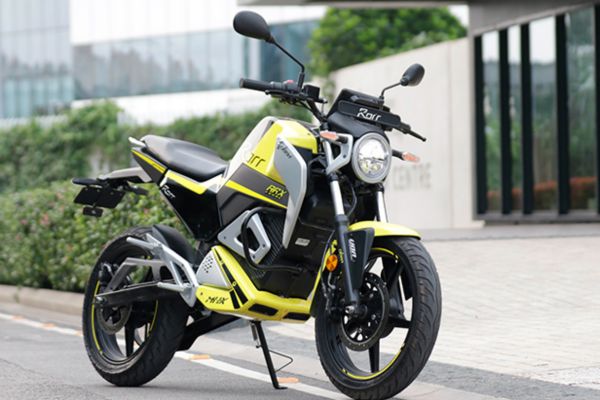
Mohammad Emrul Kayes is not the kind of man who makes impulsive purchases. A Supreme Court lawyer with a polished practice in Dhaka and a car parked in his driveway, he had little obvious reason to walk into a Runner Motors showroom last month. He was not replacing his car. He was not chasing a trend. He was, quite simply, exhausted — exhausted by the ritual humiliation of queuing for petrol in a city that had run headlong into the geopolitical consequences of a war being fought three thousand miles away.
“For me, it was about solving everyday hassles I face while buying fuel,” Kayes explained after making his purchase — a Runner-distributed Yadea e-bike, priced well above the average Dhaka commuter’s budget. “The e-bike changed that. It’s quick, simple, and stress-free.” His frustration is shared by millions: since US-Israeli airstrikes on Iran began on February 28, 2026, triggering Tehran’s closure of the Strait of Hormuz and what the International Energy Agency has called the “greatest global energy security challenge in history”, Bangladesh’s already fragile fuel supply chain has buckled under the weight of a 2-litre rationing limit, long queues at petrol stations, and spiralling prices.
What followed was not a policy announcement or a government initiative. It was a marketplace revolt — quiet, swift, and profoundly revealing. Fuel crisis drives e-bike demand in Bangladesh in a way that no government subsidy or climate pledge has managed to do in years of trying.
A Sales Surge That Defies the Cycle
The numbers are unambiguous. Monthly e-bike sales in Bangladesh had been growing at a steady 10–15% annually for three years — a respectable, if unspectacular, trajectory for a market dominated by 6.5 million registered fossil-fuel motorcycles. Then March 2026 arrived.
Industry data shows that e-bike sales surged from an average of 800–1,000 units per month to approximately 2,200 units in March alone — a jump of over 100% in a single month. Market insiders project that figure could reach 3,000 units if present conditions persist. In a country where e-bikes account for barely 2–3% of the total motorcycle market, these numbers represent something far more significant than a seasonal blip.
Runner Group, which distributes 12 models of Yadea-branded e-bikes priced between Tk 90,000 and Tk 315,000, has seen demand surge across its entire range. Nazrul Islam, the company’s managing director, did not mince words about the opportunity. “E-bikes offer a clear advantage,” he said, emphasising that households with rooftop solar panels could charge and run EVs for years at minimal cost — a pointed contrast with vehicles dependent on imported petroleum whose supply chains are now hostage to geopolitics.
Walton, Bangladesh’s homegrown electronics giant, reported perhaps the most dramatic spike. “In March, when fuel shortages intensified at refilling stations, demand jumped by as much as 85 percent,” said Md Touhidur Rahman Rad, chief business officer at Walton Digi-Tech Industries Limited. The company’s TAKYON e-bike range — covering seven models — offers 80 to 130 kilometres of range on a single charge, a figure that comfortably covers the daily commute of most Dhaka professionals. Pran-RFL Group, which markets its RYDO brand, reported a 60% sales increase. Kamruzzaman Kamal, the group’s marketing director, stressed the need for a balanced policy framework — noting that high import duties on components raise production costs for local assemblers, even as cheaper finished imports from China create downward pricing pressure.
The Financial Express reported that in some cases, specific models have seen 200–300% growth in sales, with buyers calculating that the annual operating cost of a traditional petrol motorcycle — roughly Tk 50,000 — dwarfs the approximately Tk 4,000 a year in electricity costs for an equivalent e-bike. That is a lifetime cost differential that no amount of marketing could have communicated as effectively as an empty petrol station.
The Geopolitical Fault Line Beneath Dhaka’s Streets
To understand why Bangladesh is so acutely exposed to a conflict beginning at the Strait of Hormuz, one must understand its energy architecture. Bangladesh relies on imports for approximately 95% of its energy needs, making it one of the most import-dependent economies in South Asia. The country has no meaningful strategic petroleum reserve, limited pipeline infrastructure, and a foreign exchange position that was already under strain before Brent crude surged past $100 — then $116 — per barrel.
The World Economic Forum’s analysis of the conflict’s economic architecture is stark: more than 80% of oil and LNG shipped through the Strait of Hormuz in 2024 went to Asian markets. The asymmetry, as the Forum noted, is brutal — the US, which initiated the conflict, imports relatively little oil through Hormuz. Its Asian partners absorb an overwhelming share of the burden. The Asian Development Bank put it plainly: smaller energy-importing economies, including Pakistan, Sri Lanka, and Bangladesh, are likely to experience the strongest macroeconomic effects, with higher oil prices transmitting rapidly into inflation and exchange rate pressures through widening current account deficits.
Bangladesh’s response has been a combination of administrative rationing (the 2-litre fuel limit), university closures, and military deployment to guard oil depots — measures that have prevented the worst, while failing to address the structural vulnerability that made them necessary in the first place. The Council on Foreign Relations noted in March that Bangladesh faces a high likelihood of street protests if shortages persist. Against this backdrop, the turn to e-bikes is not merely a consumer preference — it is an act of economic self-defence.
Bangladesh Is Not Alone: The South Asian EV Pivot
The pattern is visible across the region. Pakistan, grappling with its own acute fuel shortages and Prime Minister Shehbaz Sharif’s emergency austerity measures — a four-day working week, school closures — has seen parallel momentum in its electric two-wheeler segment, driven by a government e-bike scheme that has distributed tens of thousands of units in Punjab province and a population desperate for fuel-independent commuting. Sri Lanka, which navigated a catastrophic fuel crisis in 2022, has sustained elevated e-bike interest ever since, offering a cautionary lesson in what happens when import-dependent nations ignore structural energy vulnerability until it becomes existential.
Bangladesh’s e-bike sales surge in 2026 must be read against this regional backdrop: a South Asia in which geopolitical shock is doing the work that policy nudges failed to accomplish, compressing years of projected EV adoption into a matter of weeks.
The Economics of the Quiet Revolution
There is a tendency, in coverage of EV transitions, to reduce the story to environmental moralism. This is both accurate and incomplete. The Bangladesh electric motorcycle market growth story is, at its core, a story about rational economics — amplified to urgency by a crisis.
Consider the lifecycle arithmetic. A petrol motorcycle in Bangladesh costs approximately Tk 50,000 per year to run, a figure that will rise further as global oil markets remain disrupted. An equivalent e-bike costs around Tk 4,000 annually in electricity — a saving of Tk 46,000 per year, or enough to repay a significant portion of the vehicle’s purchase price within two to three years. For a country where motorcycle financing often carries interest rates of 15–25%, the lower running cost is not merely attractive — it is transformative for household budgets.
Then there is the foreign exchange dimension, which economists in Dhaka have begun to highlight with new urgency. Every litre of petrol that Bangladesh does not import is a dollar of foreign reserves preserved. As the taka faces pressure from a widening current account deficit driven by elevated energy import costs, the macroeconomic case for EV adoption is no longer theoretical. It is measurable, monthly, in the central bank’s reserve figures.
Nazrul Islam of Runner Group was pointing at precisely this when he noted that solar-charged e-bikes could operate for years with minimal cost — the implication being that a household with rooftop solar effectively decouples its mobility costs from global oil markets entirely. Bangladesh’s renewable energy capacity, while still modest as a share of the national grid, is growing — and the prospect of solar-to-EV charging loops represents a genuine structural hedge against future Hormuz-style disruptions.
The key economic advantages of e-bike adoption in Bangladesh’s current context:
- Annual fuel cost reduction of Tk 46,000 per vehicle compared to petrol equivalents
- Foreign exchange savings from reduced petroleum imports at a moment of acute reserve pressure
- Lower maintenance costs: e-bikes have fewer moving parts, no engine oil changes, and simpler servicing requirements
- Range sufficiency: 80–130 km per charge covers the vast majority of urban and peri-urban commutes
- Solar integration potential: rooftop solar can eliminate charging costs for a growing segment of users
Dhaka’s Congestion Problem and the Two-Wheeler Opportunity
Anyone who has spent time in Dhaka understands the city’s particular urban mobility nightmare. With a population density among the highest in the world and a public transit system that has historically struggled to keep pace with demand, the two-wheeler has long been the pragmatic choice for millions of commuters — nimble, affordable, and indifferent to the gridlock that defeats buses and cars alike.
The EV transition in Bangladesh’s fuel shortage context adds a new dimension to this calculus. E-bikes, particularly smaller models in the 80–100 km range category, are already winning converts among young professionals, women commuters, and gig economy workers for whom fuel cost predictability is as important as purchase price. The Business Standard reported that women riders in particular are drawn to e-bikes for their controlled speeds and ease of use — a demographic shift that could significantly broaden the market’s social base.
For Dhaka specifically, an accelerated e-bike adoption curve offers a triple dividend: lower emissions in a city already choking on vehicular pollution, reduced fuel import dependency at the national level, and potential congestion relief as more nimble, silent two-wheelers replace louder, idling petrol bikes at intersections. None of these benefits is automatic — they require supporting infrastructure — but the demand signal now exists in a way it did not six months ago.
The Policy Gap: From Demand Signal to Structural Shift
Here is where optimism must give way to rigour. The e-bike adoption Dhaka is currently witnessing is crisis-driven — which means it is also potentially reversible. If oil prices stabilise, if Hormuz reopens to normal traffic, if the fuel queues dissolve, a significant portion of the newly converted may drift back to petrol. For the current surge to represent a permanent inflection point rather than a panic purchase, policy must close the gap between market momentum and structural transformation.
[As Bangladesh eyes its 2035 NDC targets], the stakes are high. The country’s Third Nationally Determined Contribution (NDC 3.0) under the Paris Agreement targets a 21.77% reduction in transport sector emissions, with electrification of 30% of passenger cars and 25% of Dhaka buses by 2035, alongside broader goals of 30% EV penetration by 2030. Bangladesh’s NDC 3.0, available via the UNFCCC, represents an ambitious architecture — but one that is currently being undermined by contradictory fiscal policy.
Kamruzzaman Kamal of Pran-RFL identified the central tension precisely: high import duties on e-bike components raise costs for local assemblers, while cheaper, fully-built Chinese imports undercut their pricing. The result is a market dominated by Chinese brands — Yadea and Revoo together account for a large majority of sales — with limited domestic value addition. Imports from China alone are estimated at around Tk 3 billion annually, according to the Financial Express, underscoring Beijing’s growing footprint in Bangladesh’s emerging electric mobility ecosystem.
The critical policy gaps that must be addressed:
- Charging infrastructure: Bangladesh has almost no public EV charging network outside Dhaka. Without it, range anxiety will cap adoption at urban elites with home charging access.
- Import duty rationalisation: Current duties on components disadvantage local assembly, while inconsistent treatment of fully-built units creates market distortion.
- Manufacturing policy: There is currently no dedicated manufacturing policy for e-bikes, discouraging deeper domestic value addition.
- Battery standards: The transition from lead-acid to lithium-ion batteries — mandated from December 2025 — requires quality certification frameworks that remain underdeveloped.
- Solid-state battery readiness: As Chinese manufacturers begin commercialising next-generation solid-state batteries with 200+ km ranges and faster charging, Bangladesh’s regulatory framework needs to anticipate rather than react.
- Financing access: Motorcycle loans remain classified as high-risk by most Bangladeshi banks, limiting e-bike adoption among gig workers and lower-income commuters who would benefit most.
The Chinese Technology Dimension
It would be incomplete to analyse Bangladesh’s electric bike Bangladesh fuel crisis moment without acknowledging the role of Chinese manufacturing in making it possible. The dramatic fall in lithium-ion battery costs over the past decade — driven overwhelmingly by Chinese industrial policy — has brought e-bike prices into range for a much broader segment of Bangladeshi consumers than was conceivable five years ago.
Runner’s Yadea partnership, Walton’s TAKYON range drawing on Chinese component supply chains, and the broader ecosystem of 30-odd importers operating in the market all depend on this foundation. The Financial Express noted that with improved battery technologies, some models now offer ranges up to 200 km — a specification that, even recently, would have seemed implausibly ambitious for a Bangladeshi-priced product.
This Chinese technology dependence is a double-edged dynamic. On one side, it has democratised e-bike access in ways that pure domestic innovation could not have achieved at this speed. On the other, it creates supply chain vulnerability — particularly significant given that China has moved to restrict petroleum product exports in response to the same Hormuz crisis, according to the Atlantic Council, and its broader geopolitical posture toward Southeast and South Asia is far from predictable.
For Bangladesh, the strategic implication is clear: use the current demand surge as an industrial policy moment. The window exists to move from pure import dependency toward CKD assembly and, ultimately, toward genuine domestic manufacturing in batteries, motors, and controllers — the components that define an EV’s value chain. RFL Group’s existing capacity of 5,000 units per month is a starting point, not a ceiling.
Lessons for the Global South
Bangladesh’s experience in March 2026 offers an unusually clean natural experiment for development economists and energy policy analysts: what happens when a geopolitical shock removes fuel availability as a given, and the consumer market is given a working alternative?
The answer, at least in Dhaka’s preliminary data, is that adoption accelerates far faster than most supply-side projections anticipated. This has implications well beyond Bangladesh. Nigeria, Pakistan, Egypt, Sri Lanka, the Philippines — each a large, import-dependent, two-wheeler-dominant economy with nascent EV markets — are watching a version of their own potential future play out on Dhaka’s streets.
The World Bank’s work on sustainable transport in developing economies has long noted that the combination of high fuel import costs, urban congestion, and growing middle-class mobility demand creates a structural opening for electric two-wheelers in emerging markets. What Bangladesh’s 2026 moment demonstrates is that the demand, when activated by a sufficiently acute shock, exists and is real — the binding constraint is on the supply and policy side, not the consumer side.
For international investors, the Bangladesh electric motorcycle market growth trajectory — from 700 monthly units in 2024 to a potential 3,000 by mid-2026, against a backdrop of 6.5 million registered petrol motorcycles — represents an addressable market in the early stages of a structural shift. The e-bike sales surge Bangladesh 2026 has generated is, in this reading, not a crisis anomaly but an early disclosure of a durable trend.
The Road Ahead: From Panic to Policy
Mohammad Emrul Kayes’s e-bike sits in his driveway alongside his car, a quiet symbol of something larger than personal convenience. He did not abandon the internal combustion engine out of idealism. He made a rational calculation under conditions of scarcity — and in doing so, joined tens of thousands of Bangladeshis who are collectively, and largely unremarked, rewriting the economics of urban mobility in one of the world’s most densely populated countries.
The fuel crisis that drove him to that showroom will, at some point, ease. Iranian-Hormuz diplomacy may eventually restore something like normal shipping flows; oil prices at $116 per barrel cannot persist indefinitely without demand destruction and supply response. But the habits formed in a crisis have a way of outlasting the crisis itself. The household that has experienced Tk 4,000 annual running costs will not easily return to Tk 50,000. The commuter who has navigated Dhaka traffic in the silence of an electric motor will not easily miss the noise and the queue.
Bangladesh’s policymakers have, for the first time in years, a genuine demand signal to build upon. The EV transition Bangladesh’s fuel shortage has catalysed is not a gift — it is a window. It will close if charging infrastructure remains absent, if import duties remain incoherent, if manufacturing policy continues to lag. But it is open now, briefly and powerfully, in a way it has never been before.
The question is not whether Bangladesh’s streets will electrify. The question is whether Bangladesh’s policymakers will be nimble enough to turn a panic purchase into a permanent pivot — and whether Dhaka will emerge from this crisis as a model for the rest of the Global South, or as a cautionary tale about the cost of hesitation.
The e-bikes are already on the road. The policy needs to catch up.
Key Recommendations for Bangladesh’s EV Transition
For policymakers:
- Establish a national public EV charging network in Dhaka within 18 months, with clear targets for expansion to divisional cities by 2028.
- Rationalise import duty structure to distinguish between CKD (parts) and CBU (finished) imports, with a clear road map favouring domestic assembly.
- Issue a dedicated e-bike manufacturing policy with investment incentives for battery and motor production.
- Create a dedicated motorcycle loan facility through state banks, targeting gig workers and low-income commuters.
For industry:
- Accelerate investment in after-sales service networks outside Dhaka — the market’s next frontier.
- Prioritise partnerships with solar home system providers to enable solar-to-EV charging loops for rural and peri-urban users.
- Engage NBR proactively on battery certification standards to prevent the 2025 lead-acid phase-out from creating a compliance vacuum.
For international partners:
- The World Bank, ADB, and bilateral development finance institutions should treat Bangladesh’s current e-bike momentum as a leverage moment for green transport financing.
- Climate finance under Bangladesh’s NDC 3.0 conditional targets should explicitly include charging infrastructure and domestic battery manufacturing as eligible categories.


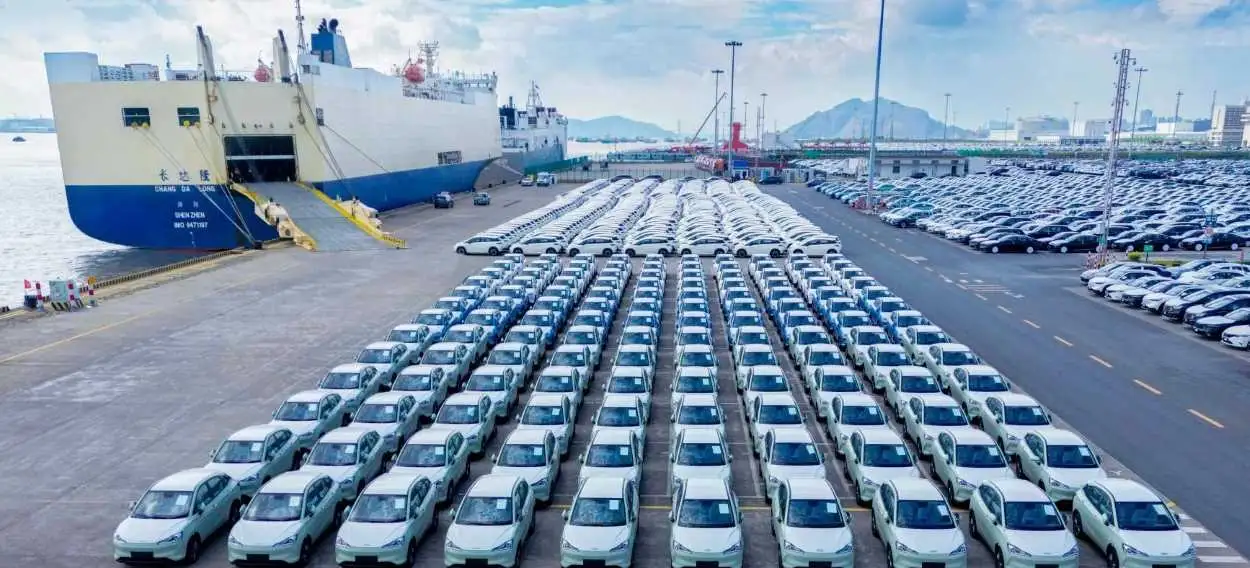
China’s monthly car exports surpassed one million units for the first time in June 2026, according to trade data released alongside the country’s second-quarter GDP figures, while overall imports rose 36% year-over-year to a five-year high even as Beijing cut monthly crude imports to near decade lows, down 41.3% from a year earlier (CNN). The result: China’s trade surplus widened to $125.62 billion in June alone.
The Uncovered Mechanism: Oil Shock as Green-Tech Accelerant
Most coverage has treated China’s electric vehicle and battery export surge as a story purely about domestic manufacturing subsidy and industrial policy. What has received far less attention is the direct causal link to the Iran war: the oil crisis has itself boosted global demand for Chinese clean-energy technology, as energy importers around the world accelerate efforts to reduce fossil-fuel reliance precisely when oil prices are most volatile (CNN). In other words, the same Strait of Hormuz disruption that is damaging Pakistan’s current account and pushing UK inflation higher is simultaneously functioning as a demand accelerant for Chinese EV exports — a direct transmission mechanism linking two of this year’s biggest global stories that is rarely discussed together.
The EU Is Already Losing Patience
China’s widening trade surplus is compounding tensions with the European Union, which has repeatedly criticised Beijing for flooding its market with subsidised industrial exports, a dynamic that predates this year’s conflict but has intensified as Chinese manufacturers redirect capacity toward markets less willing or able to erect the tariff barriers the United States has deployed (CNN; IndexBox).
Why This Is Also a Southeast Asia and Pakistan Story
Malaysia’s own export strength this year has been built substantially on its role in the semiconductor and electronics supply chain feeding the broader AI and green-tech manufacturing boom, meaning Kuala Lumpur benefits indirectly from the same dynamics driving China’s export surge, rather than competing head-on in finished vehicles (The Rakyat Post). Pakistan’s position is more exposed: as a market with its own nascent auto and manufacturing base and limited tariff leverage against Chinese imports, a sustained surge in low-cost Chinese EV and battery exports risks crowding out domestic industrial development at precisely the moment Islamabad is trying to broaden its export base beyond textiles under IMF-monitored reform targets.
The Domestic Trade-Off Beijing Is Managing
China’s export strength is masking, not solving, its domestic consumption weakness. Retail sales rose just 1% year-over-year in June, and analysts including Natixis’s Alicia Garcia-Herrero describe an economy where growth “all about exports” is “really quite unsustainable, to be frank” (CNN). Beijing’s newly released five-year plan to lift annual retail sales toward $9 trillion by 2030 is a direct policy response to this imbalance, but the export engine currently doing the heavy lifting for headline GDP is the same one generating friction with trading partners.
What to Watch
The July Politburo meeting is expected to signal the composition of any new stimulus. A consumption-focused package would ease, over time, the export dependence generating trade friction; an infrastructure-heavy package would likely deepen it, with direct consequences for how aggressively Chinese EV and battery exports continue to expand into markets across Southeast Asia, South Asia and Europe over the second half of 2026.

Hyundai Motor Group is about to own Boston Dynamics outright. According to South Korea’s Maeil Business Newspaper, the automaker plans to pay $325 million for SoftBank Group’s remaining 9.65% stake in the robotics firm, ending an ownership arrangement that has run since 2021. A board meeting is expected on June 22 to approve the purchase. It’s a tidy transaction by Hyundai’s standards. It’s also the final word on a five-year bet that has quietly become one of the most consequential industrial pivots in the automotive sector.
The timing isn’t incidental. Boston Dynamics’ Atlas humanoid robot began commercial production in January 2026, with every unit already committed to Hyundai’s own factories and Google DeepMind. SoftBank is cashing out just as the asset it’s selling starts to look genuinely valuable — and just as Hyundai prepares to run Boston Dynamics without an outside shareholder watching over the next phase.
This deal didn’t appear out of nowhere. SoftBank Group, under chairman Masayoshi Son, sold Boston Dynamics to Hyundai in a transaction completed in 2021, with Hyundai Motor Group — through Group Executive Chair Euisun Chung and affiliates Hyundai Motor, Kia, Hyundai Mobis and Hyundai Glovis — acquiring an 80% controlling stake for roughly $880 million, a deal that valued the robotics maker at $1.1 billion. Buried in that original agreement was a put option: the right for SoftBank to sell its remaining shares back to Hyundai at a later date, on terms fixed years in advance.
SoftBank has now chosen to exercise it. The report said SoftBank had told Hyundai that it would like to exercise its rights to sell its remaining stake in Boston Dynamics under a put option agreed when it sold Boston Dynamics to Hyundai. Hyundai Motor and SoftBank did not immediately respond to requests for comment when Reuters approached both companies on Friday.
That’s the mechanical story. The more interesting one is what the price implies.
Quick Math: A Valuation That’s Tripled
A $325 million payment for 9.65% of the company implies a Boston Dynamics valuation near $3.4 billion — more than three times the $1.1 billion mark set in 2020. That’s a striking re-rating for a robotics firm that, as recently as two years ago, was still mostly known for viral videos of robots dancing and opening doors. The jump reflects something specific: Atlas has gone from lab demo to factory deployment, and investors — even quasi-investors selling out via a contractual put option — are pricing that shift accordingly.
It gets more dramatic at the edges. Hyundai Glovis’ internal investment in Boston Dynamics last August reportedly implied a valuation closer to 30 trillion Korean won, or roughly $22 billion — a figure that, if accurate, would represent a near 24-fold increase from the 2021 baseline. The $325 million SoftBank exit, by contrast, is calculated off the original deal’s contractual formula, not current market enthusiasm. That gap between contract price and market price is the whole story here.
What Hyundai Is Actually Buying
Strip away the headline number and the deal does three concrete things.
First, it removes the last outside shareholder. Once the transaction closes, Hyundai Motor Group — through Chung and its four affiliates — will own 100% of Boston Dynamics, up from just over 90% today. No more SoftBank board seat, no more minority-shareholder reporting obligations, no more need to coordinate strategic decisions with a partner whose core business (AI infrastructure, chip investment, OpenAI exposure) has nothing to do with industrial robotics.
Second, it closes a chapter that’s been unusually well-traveled even by Silicon Valley standards. Boston Dynamics started life as an MIT spinoff, was bought by Google in 2013, sold to SoftBank in 2017, and then sold again to Hyundai in 2020. At the time of the original Hyundai transaction, SoftBank chairman Masayoshi Son said Boston Dynamics was “at the heart of smart robotics,” adding that SoftBank was pleased to partner with Hyundai to accelerate the company’s commercialisation. Four ownership changes in twelve years is a lot of turbulence for a company whose core engineering talent has remained largely intact throughout.
Third, and most practically, it simplifies governance at exactly the moment Boston Dynamics needs to scale manufacturing rather than research. The company’s enterprise-grade Atlas humanoid entered production at its Boston headquarters in January 2026, with initial deployments scheduled this year at Hyundai’s own Robotics Metaplant Application Center and at Google DeepMind, which is collaborating on the robot’s AI foundation models. Hyundai has also flagged a planned robotics factory — tied to a broader $26 billion U.S. manufacturing investment — capable of producing roughly 30,000 robots annually, expected to come online by 2028.
- 9.65% — SoftBank’s remaining stake being sold
- $325 million — the transaction price
- ~$3.4 billion — implied Boston Dynamics valuation from this deal
- 100% — Hyundai’s ownership of Boston Dynamics once the deal closes
- 30,000 units/year — capacity target for Hyundai’s planned robotics factory
Why a Robotics Bet Is Becoming an Industrial Strategy
How Much Will Hyundai Pay for Boston Dynamics’ Remaining Stake?
Hyundai Motor Group is acquiring SoftBank’s remaining 9.65% stake in Boston Dynamics for $325 million, a figure tied to a put option set in the original 2020 acquisition agreement. The purchase, expected to gain board approval on June 22, would make Boston Dynamics a wholly owned Hyundai subsidiary for the first time.
What’s notable isn’t the deal mechanics — it’s what Hyundai is signaling about its own identity. Car manufacturers buying robotics companies isn’t new. What’s new is a car manufacturer treating a robotics subsidiary as core enough to warrant full consolidation rather than a strategic minority position kept at arm’s length.
Hyundai’s own materials describe Atlas units beginning work at the Metaplant America facility in Savannah, Georgia, doing parts sequencing — repetitive, physically demanding tasks suited to humanoid form factors moving through human-built environments. That’s not a research demo. That’s a line item in a manufacturing budget. The picture is more complicated than “car company diversifies into robots.” It’s closer to a car company concluding that the next decade of competitive advantage in automotive manufacturing runs through humanoid labor, and deciding it doesn’t want a partner’s name on the cap table while it builds that capability.
That conclusion has industry-wide resonance. Tesla’s Optimus program has set an aggressive public timeline that hasn’t yet matched Boston Dynamics’ deployment pace, while Figure AI continues to raise capital around a similar thesis: humanoid robots as general-purpose industrial labor. Hyundai’s full buyout of Boston Dynamics is, among other things, a statement that it intends to compete in that race with an asset it controls outright, not one it shares.
The most immediate effect lands on SoftBank’s balance sheet. Son’s group has been redirecting capital aggressively toward AI infrastructure — most notably its roughly $41 billion commitment tied to OpenAI — and a clean, contractually pre-agreed exit from a non-core industrial asset fits that pattern. $325 million is a rounding error against SoftBank’s broader AI exposure, but it’s a clean one: no negotiation, no valuation dispute, just a put option exercised on schedule.
For Hyundai, the second-order effects are more interesting. Full ownership removes friction from decisions that matter over the next two years — capital allocation toward the 30,000-unit factory, IP licensing terms with Nvidia and Google DeepMind on AI foundation models, and how aggressively Boston Dynamics pursues customers beyond Hyundai’s own plants once 2027 capacity opens up. Boston Dynamics has indicated that all 2026 Atlas production is already committed to Hyundai and DeepMind, with outside customers arriving no earlier than 2027 — a sequencing decision that’s far easier to make without a second shareholder’s interests in the room.
There’s a market-confidence angle too. Hyundai’s stock on Korean exchanges moved higher within a day of the January CES announcement detailing the Atlas production plan, evidence that investors are pricing in optionality on humanoid robotics as a genuine Hyundai growth vector, not a side project. Full consolidation of Boston Dynamics — clean financials, no minority-interest carve-outs — should make that thesis easier for analysts to model going forward.
For component suppliers and automotive-adjacent manufacturers, the relevant detail is structural: Boston Dynamics says the new Atlas was deliberately designed around automotive-supply-chain compatibility, reducing unique parts so that the robot can be built using processes and vendors Hyundai already has in place. That’s a meaningful signal for any supplier currently serving Hyundai’s vehicle lines — robotics may become an adjacent revenue stream rather than a separate procurement universe.
Not everyone treats this as an unambiguous win. The implied valuation jump — from $1.1 billion in 2020 to roughly $3.4 billion in this transaction, and reportedly far higher in Hyundai’s own internal August 2025 mark — invites an obvious question: is Boston Dynamics actually worth that much, or is the number inflated by hype around humanoid robotics broadly, the same enthusiasm currently propping up Tesla’s Optimus narrative and Figure AI’s funding rounds?
Skeptics point out that Atlas’s entire 2026 production run is committed to exactly two customers, both with existing equity or strategic ties to Boston Dynamics. That’s not yet a market validating the product — it’s two related parties buying from themselves. Genuine third-party demand, the kind that would justify a multi-billion-dollar valuation independent of Hyundai’s own balance sheet, won’t be testable until 2027 at the earliest, when Boston Dynamics says it will onboard outside customers.
There’s also a simpler reading available: this is a contractual housekeeping transaction, not a strategic announcement. SoftBank agreed to a put option years ago and is exercising a right it always had, at a price formula set in 2020 — not a price discovered through fresh negotiation reflecting 2026 market conditions. Reading too much industrial strategy into a mechanical buyout, this view holds, risks mistaking routine cap-table cleanup for a grand robotics thesis.
Both readings can be true simultaneously. The transaction is mechanically routine and strategically significant — the put option made the timing inevitable, but Hyundai’s appetite to consolidate fully, rather than let the option lapse or renegotiate terms, says something real about how central robotics has become to its planning.
Strip away the contractual scaffolding and what’s left is a company quietly repositioning itself. Hyundai didn’t set out five years ago to become a humanoid robotics manufacturer with a side business making cars — but the capital allocation, the factory investment, and now the full ownership consolidation all point in that direction without anyone at Hyundai needing to say so directly. SoftBank, for its part, is simply following its own capital toward a bigger AI bet, leaving behind an asset that’s grown more valuable than anyone priced it to be in 2020.
Whether Boston Dynamics is worth $3.4 billion, $22 billion, or something in between will be tested honestly only once Atlas ships to a customer that isn’t also a shareholder. Until then, Hyundai owns the answer outright.

Addis Ababa Bole International Airport is, at its core, a study in industrial friction. Every day, narrow-body workhorses and wide-body giants cycle through the hub, serving as the connective tissue for a continent whose geography has historically punished transit. Now, that efficiency is about to be recalibrated. As the mid-year mark passes in 2026, Ethiopian Airlines—the undisputed heavyweight of African aviation—is preparing to finalize a critical regional jet order, a move that will effectively dictate the pace of connectivity across the continent for the next decade.
The decision, expected within the next three months, isn’t merely a procurement exercise. It is a fundamental declaration of the airline’s “Vision 2035” strategy. For the manufacturers vying for the contract, the stakes are existential in this market. For the passenger, it determines the reliability of transit between secondary African cities. The window is closing, and the choice between the Airbus A220 and the Embraer E2 family will ripple far beyond the tarmac in Addis Ababa.
The Context: A Continent in Transit
To understand why this specific order matters, one must first look at the macroeconomic data provided by IATA regarding African aviation. The continent currently accounts for a fraction of global air traffic, yet it possesses the highest projected growth rate in passenger numbers over the next two decades. Ethiopian Airlines has successfully captured a massive slice of this growth by perfecting the hub-and-spoke model, turning Addis Ababa into a global transit point that rivals the major gulf carriers.
However, a hub is only as strong as its feeder network. The current fleet, reliant on a mixture of De Havilland Dash 8-400 turboprops and older narrow-bodies, faces a capacity gap. High-altitude operations in East Africa demand aircraft that can perform efficiently in “hot and high” conditions—a technical constraint that frequently compromises payload. As Bloomberg has noted in recent industry reporting, the ability to bypass the hub for point-to-point regional travel is becoming a competitive necessity, not a luxury. Ethiopian Airlines is currently managing a delicate balance: maintaining the economies of scale that drive its profitability while preventing the stagnation of secondary routes that are ripe for development.
The Core Development: Choosing the Future Fleet
The upcoming order focuses on the 100-to-130-seat category. This is the “Goldilocks” zone of regional aviation—small enough to operate profitably on thin routes, yet large enough to provide a mainline experience for business travelers. Sources close to the airline indicate that negotiations have entered the final price-and-delivery slot phase.
Why the urgency? The global supply chain logjam in aviation has rendered “off-the-shelf” acquisitions impossible. If an airline wants a delivery slot in 2028 or 2029, they must commit today. The primary contenders present a stark divergence in operational philosophy. The Airbus A220, with its clean-sheet design, offers transcontinental range and best-in-class fuel efficiency, which is vital when operating in markets where fuel costs are volatile. Yet, its maintenance requirements are intensive, requiring a specialized support infrastructure that the airline would need to scale.
Contrast this with the Embraer E195-E2. The Brazilian manufacturer has built its reputation on the “Profit Hunter” moniker, specifically engineering an aircraft that thrives on the shorter, high-frequency segments that dominate Ethiopian’s intra-African network. Embraer’s offering presents a lower barrier to entry for maintenance and pilot transition training. Mesfin Tasew, the Chief Executive Officer, has been notably circumspect, stating only that the decision will rest on “total cost of ownership and network compatibility.” With the fiscal year-end approaching, the leadership is under pressure to lock in a price before the OEMs push delivery slots further into the next decade.
Analytical Layer: The Economics of Regional Connectivity
The choice of a regional jet isn’t just about the hardware; it’s an assertion of the airline’s future network architecture. Why is the regional jet segment so critical for the carrier’s expansion? It allows for the densification of the route map without the financial risk associated with operating larger narrow-bodies like the Boeing 737 MAX or the Airbus A321neo on underperforming routes.
Why is Ethiopian Airlines expanding its regional fleet?
The expansion is driven by the need to capture point-to-point demand across Africa, reducing reliance on the hub-and-spoke model. By deploying 100-to-130-seat regional jets, the airline can increase flight frequency, improve passenger convenience, and lower the unit cost per trip on routes where larger aircraft would fly with empty seats, thereby maximizing asset utilization in high-altitude environments.
This strategy is a hedge against the volatility of the African market. By controlling the regional flow, Ethiopian Airlines essentially controls the pipeline of passengers that eventually feed their long-haul international flights. If the airline opts for the A220, they are betting on long-term route development and transcontinental expansion. If they select the Embraer E2, they are doubling down on the regional dominance that has made them the most profitable carrier on the continent. The decision reflects a deeper structural reality: to maintain its growth, Ethiopian must move from being a connector of continents to a connector of cities.
Implications & Second-Order Effects
The decision will send tremors through the regional aviation supply chain. Should Ethiopian Airlines select one OEM, that manufacturer will effectively gain a near-monopoly on technical support infrastructure in the Horn of Africa. This creates a “lock-in” effect. The secondary effects for local economies are equally significant. Increased connectivity is a prerequisite for the African Continental Free Trade Area (AfCFTA) to succeed. Business travelers require the predictability of daily, direct flights to foster trade; they cannot wait for the sporadic schedules that plague many current regional routes.
Furthermore, consider the implications for the airport ecosystem. A shift toward a heavier, more frequent regional jet fleet requires adjustments in ground handling, gate management, and runway maintenance at Addis Ababa Bole. The investment isn’t limited to the price tag of the planes; it requires a concomitant upgrade in capital expenditure across the airport’s infrastructure. As reported by the World Bank on regional development, logistics remain the single greatest barrier to intra-African trade. By finalizing this order, Ethiopian Airlines is acting less like a private company and more like a quasi-state utility, providing the infrastructure that allows commerce to flow. It is a heavy mantle, but one they have worn effectively for years.
Competing Perspectives: The Case for Caution
There is, however, a dissenting school of thought within the industry. Some analysts argue that Ethiopian Airlines should postpone the purchase, citing the “OEM crisis.” With both Airbus and Embraer struggling to meet production targets, there is a risk that ordering now locks the airline into a delivery schedule that could slip by years, tying up capital in pre-delivery payments for assets that may not arrive when needed.
Critics point to the maintenance burden of modern engines as a potential drag on profitability. The Pratt & Whitney geared turbofan engines, while efficient, have been plagued by premature wear issues. In the harsh, dusty, and high-altitude operating conditions common in African hubs, these engines may require more frequent, costly servicing than in more temperate climates. A more conservative approach—extending the life of the existing fleet or leasing second-hand aircraft—might preserve the cash pile. Yet, inaction has a cost, too. In the aviation business, falling behind on fleet renewal is a form of slow-motion obsolescence. By the time the market stabilizes, the airline would find itself at a severe competitive disadvantage.
The Synthesis
The upcoming decision represents a pivot point in the trajectory of Ethiopian Airlines. It is a choice between aggressive expansion and prudent caution, played out against a backdrop of global supply shortages and regional economic ambition. The airline is not just choosing a piece of metal; it is choosing the speed at which it intends to integrate the African market.
What emerges clearly is that the airline has grown too large to operate as a niche carrier, yet it remains too nimble to succumb to the inertia of a massive, lumbering flag carrier. Whether they choose the range of the A220 or the efficiency of the E2, the path forward is defined by the necessity of scale. In the hyper-competitive skies of 2026, the only capital that matters more than money is time. Ethiopian Airlines is currently racing against the clock, and the next three months will reveal whether they have the runway to reach cruising altitude.

Pakistan Freelancers Tax 2026: Payments, Documentation and Formal Growth

Strait of Hormuz Crisis: What the Latest Tanker Attacks Mean for Oil, Shipping and Global Trade

AI Customer Service in 2026: What’s Working, What’s Failing, and What to Buy

Open a Savings Account Online: How to Actually Earn 10x the National Average Rate

Global Housing Market 2026: Where Prices Rise, Where They Don’t

PSX and KSE-100 Record Highs: An Insider’s Guide to Pakistan Stocks

So Delicious Dessert Recall: Affected Products, FDA Guidelines, and Consumer Action

Pakistan’s Current Account Deficit Narrows Sharply to $98 Million in August 2026

Japan Eyes 3.5% Defense Spending: What It Means for Bonds, Stocks, and the BOJ

PSX & KSE Forecast 2026: Navigating the Latest IMF Reports & World Bank Metrics

Trump Administration’s Crypto Policy: Deregulation and the Future of Digital Assets

Monetary Policy and the Policy Rate

Gold, Silver & Bitcoin Prices Q4 2026: Wealth Management Strategies

Business Insurance for Digital Exports: Protecting Your Company in the AI Era

Top 15 Stocks for Investment in 2026 in PSX: Your Complete Guide to Pakistan’s Best Investment Opportunities
Top 15 Stocks for Investment in 2026 in PSX: Your Complete Guide to Pakistan’s Best Investment Opportunities

Debunking IMF Program Myths: Reconfiguring Engagement for True National Ownership in a Volatile World

Top 10 Mutual Fund Managers in Pakistan for Investment in 2026: A Comprehensive Guide for Optimal Returns

China’s 50% Domestic Equipment Rule: The Semiconductor Mandate Reshaping Global Tech

What the U.S. Attack on Venezuela Could Mean for Oil and Canadian Crude Exports: The Economic Impact

15 Most Lucrative Sectors for Investment in Pakistan: A 2025 Data-Driven Analysis

Pakistan’s Export Goldmine: 10 Game-Changing Markets Where Pakistani Businesses Are Winning Big in 2025
15 Most Lucrative Sectors for Investment in Pakistan: A 2025 Data-Driven Analysis

Pakistan’s Stock Market Renaissance: How 2025’s Hottest Investment Opportunity Is Democratizing Wealth—A Complete Beginner’s Guide
15 Most Lucrative Sectors for Investment in Pakistan: A 2025 Data-Driven Analysis

How to Become an Active Taxpayer on Pakistan’s FBR Active Taxpayer List (ATL) in 2026: A Step-by-Step Guide

Pakistan’s Economic Outlook 2025: Between Stabilization and the Shadow of Stagnation

Best Investments in Pakistan 2026: Top 10 Low-Price Shares and Long-Term Picks for the PSX
-
 Markets & Finance10 months ago
Top 15 Stocks for Investment in 2026 in PSX: Your Complete Guide to Pakistan’s Best Investment Opportunities
-
Markets & Finance10 months ago
Top 15 Stocks for Investment in 2026 in PSX: Your Complete Guide to Pakistan’s Best Investment Opportunities
-
 Analysis9 months ago
Debunking IMF Program Myths: Reconfiguring Engagement for True National Ownership in a Volatile World
-
 Investment9 months ago
Top 10 Mutual Fund Managers in Pakistan for Investment in 2026: A Comprehensive Guide for Optimal Returns
-
 Asia10 months ago
China’s 50% Domestic Equipment Rule: The Semiconductor Mandate Reshaping Global Tech
-
 Global Economy10 months ago
What the U.S. Attack on Venezuela Could Mean for Oil and Canadian Crude Exports: The Economic Impact
-
 AI10 months ago
15 Most Lucrative Sectors for Investment in Pakistan: A 2025 Data-Driven Analysis
-
 Exports10 months ago
Pakistan’s Export Goldmine: 10 Game-Changing Markets Where Pakistani Businesses Are Winning Big in 2025