
Economy & Markets
Malaysia’s Ringgit Is Holding Up. Economists Say the Real Test Is Still Coming


Malaysia’s economy grew 5.4% in the first quarter of 2026, slightly ahead of the official advance estimate of 5.3%, but the print masked a sharp deceleration from the 6.2% growth recorded in the final quarter of 2025, and economists at Bank Negara Malaysia are warning that the more painful effects of the Middle East energy shock are only beginning to surface, according to The Edge Malaysia’s State of the Nation analysis.
Strength Today, Fragility Tomorrow
The first-quarter growth figure was supported by resilient household spending, solid investment activity, and continued strength in electrical and electronic exports, a sector that has anchored Malaysia’s export base for decades. Bank Negara Malaysia governor Datuk Seri Abdul Rasheed Ghaffour told the central bank’s first-quarter briefing that “at this point, the impact of the Middle East conflict on Malaysia is assessed to be contained, as the economy enters this period from a position of strength, supported by strong fundamentals and initial conditions,” according to The Edge Malaysia’s reporting.
That contained assessment comes with an important caveat about timing. Bank Negara estimates that Brent crude prices rose to an average of $102 a barrel within 30 days of the conflict’s outbreak, while shortages in intermediate input and petrochemical products have begun emerging globally, a supply-chain effect that typically takes months to fully filter through to headline economic data rather than showing up immediately.
Why the Ringgit Has Outperformed Its Neighbors
Unlike most of its regional peers, the Malaysian ringgit has held relatively firm against the US dollar in 2026. The Edge Malaysia’s reporting notes that apart from the Chinese renminbi and Singapore dollar, most Southeast Asian currencies, including the Indonesian rupiah, Philippine peso, South Korean won, and Thai baht, have weakened against the greenback year to date. Bank Negara Malaysia has attributed this relative resilience to what it calls the country’s “firm economic prospects and sustained reform momentum,” even amid heightened global risk aversion.
OCBC Bank chief economist Selena Ling offered a more measured read on that resilience, telling The Edge Malaysia that “Malaysia will not be immune to a sudden risk-off sentiment shift, but may be muted by its healthy macro fundamentals,” while separately warning that prolonged risk aversion or a more hawkish US Federal Reserve could still trigger capital outflows from emerging markets broadly, Malaysia included.
Inflation Creeping Toward the Ceiling
Headline inflation in Malaysia rose to 1.6% in the first quarter of 2026, up from 1.3% in the previous quarter, driven partly by higher fuel and electricity prices tied to the global energy shock. Bank Negara now expects inflation to trend toward the upper end of its 1.5% to 2.5% forecast range for the year, according to The Edge Malaysia’s coverage, a modest but notable shift for a central bank that has generally kept price growth well contained by regional standards.
Economist Woon, cited in The Edge Malaysia’s analysis, offered a pointed warning about complacency: “Should supply conditions deteriorate further and the disruption proves prolonged, the drag on growth will grow progressively larger in the second half of 2026,” adding that “dismissing these risks prematurely, simply because 1Q held up well, would be a mistake.” That caution echoes across much of the regional commentary on Southeast Asia’s economic outlook, where strong headline growth figures have repeatedly masked building structural pressure from the energy shock’s slower-moving second-round effects.
Malaysia’s Role in the Regional De-Dollarization Push
Beyond currency defense, Malaysia has positioned itself at the center of Southeast Asia’s broader move toward reducing dollar dependence in regional trade. Bank Negara Malaysia, alongside its founding partners, achieved a milestone on February 9, 2026, when Nexus Global Payments awarded the core contract for its Technical Operator role to a joint venture combining Malaysia’s PayNet and Singapore’s NETS, according to Travel and Tour World’s reporting on the initiative. That joint venture is now responsible for building and managing the cloud-native infrastructure required to process cross-border transactions in under sixty seconds across multiple jurisdictions, positioning Malaysian financial infrastructure firms at the technical heart of a payment system spanning Indonesia, Singapore, Thailand, the Philippines, and Cambodia.
Bilateral local-currency trade corridors have also expanded meaningfully. The Malaysian corridor for non-dollar transactions with Indonesia reached a $2.03 billion equivalent from January to July 2025, part of a broader regional pattern in which Southeast Asian economies are building parallel payment infrastructure that reduces exposure to dollar-driven currency volatility, even as they continue managing near-term FX pressure through conventional central bank tools.
The Second-Half Question
The consensus emerging from Malaysian economic analysis is one of cautious watchfulness rather than alarm. Growth held up in the first quarter, inflation remains within a manageable range, and the ringgit has outperformed regional peers, but nearly every economist quoted in The Edge Malaysia’s coverage frames these as first-half results achieved before the Iran war’s full economic effects have had time to propagate through supply chains, energy costs, and consumer prices. Whether Malaysia’s “position of strength” framing holds through the back half of 2026 depends heavily on factors outside Kuala Lumpur’s control, chiefly, how durable the June peace deal between the US and Iran proves and whether Gulf oil production normalizes on the timeline global energy forecasters currently expect.


A growing effort is underway across financial markets to transform raw AI computing power into a tradeable commodity — a development some are already comparing to the emergence of oil as a globally traded resource. The push reflects how central compute capacity has become to the modern economy, and how badly investors want exposure to it.
From Infrastructure to Asset Class
For years, computing power has been treated purely as infrastructure — something companies build, lease, or rent, but rarely trade as a financial instrument in its own right. That is starting to change as demand for AI training and inference capacity has exploded, creating scarcity dynamics that look increasingly similar to those in traditional commodity markets.
The comparison to oil isn’t accidental. Like crude, computing power is a finite resource with significant production costs, geographically concentrated supply, and demand that touches nearly every sector of the economy. Proponents of commoditizing compute argue that a tradeable market could help allocate scarce GPU capacity more efficiently while giving investors a new way to express views on the pace of AI adoption.
The Mechanics Being Explored
Efforts in this space are looking at structures that would allow compute capacity to be bought, sold, and potentially hedged much like energy contracts — with futures-style instruments tied to access to processing power rather than physical commodities. The idea is still in relatively early stages, but the level of attention it’s drawing from both traditional financial institutions and AI infrastructure providers suggests it’s being taken seriously as a long-term structural shift.
Why It Matters Beyond Wall Street
If compute power does become a standardized, tradeable asset, the implications would stretch well beyond financial markets. Pricing transparency could help smaller AI companies and startups better plan their infrastructure costs, while large-scale data center operators could use new instruments to hedge against demand volatility.
It would also mark a significant evolution in how markets value the AI boom — shifting some of the speculative energy currently concentrated in AI-linked equities toward a more direct, infrastructure-based asset class.
The Road Ahead
Turning any new resource into a liquid, well-functioning commodity market typically takes years of work on standardization, regulation, and trust-building among market participants. But the early momentum behind treating AI compute as “the new oil” signals just how foundational computing power has become to the next phase of the global economy.
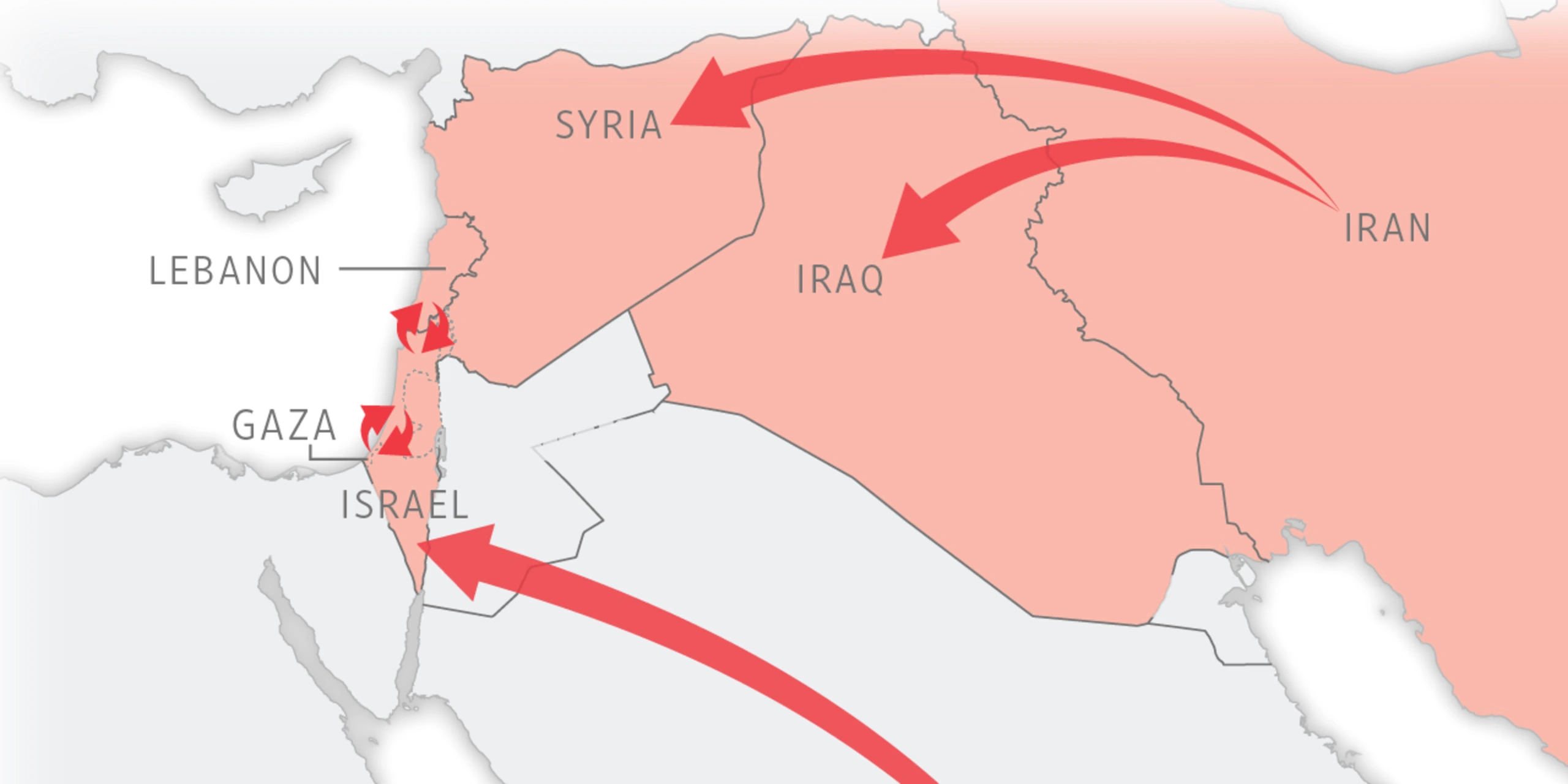
LONDON — At 4:32 a.m. on Monday, June 8, the Brent crude futures curve went vertical. In the space of seven minutes, a barrel of the global benchmark repriced from $105.20 to $114.30 — an 8.7% leap that veteran crude traders at Vitol and Glencore hadn’t witnessed since the opening hours of Russia’s full-scale invasion of Ukraine in February 2022. On the same screens, the VIX index — Wall Street’s fear gauge — spiked above 38, while the Japanese yen and the Swiss franc punched through three-month highs against the dollar. Gold broke $2,560 an ounce. The trigger was not an algorithm gone haywire nor a fat-finger error. It was a verified signal from the Strait of Hormuz.
Iran’s Revolutionary Guard Corps had mined the narrow waterway through which one-fifth of the world’s oil consumption transits, effectively sealing off 17 million barrels per day of crude and condensate flows. The act followed a 72-hour exchange of ballistic missile salvos between Israel and Iranian military installations near Isfahan, and the subsequent sinking of an Iran-bound container vessel by an Israeli submarine. By the time European exchanges opened, the Middle East’s slow-burn conflict had mutated into a full-throated conflagration with immediate, terrifying implications for every asset class on the planet.
What’s unfolding now isn’t simply a regional tragedy. It is a financial amplification event — the kind the Bank for International Settlements has warned about for a decade, in which a geopolitical shock interacts with layers of leverage, derivative concentration, and algorithmic positioning to produce sell-offs that race far ahead of any sober reassessment of fundamentals. The phrase amplification risk has moved from the footnotes of central bank financial stability reports to the central diagnosis of the moment.
The anatomy of an amplification shock
Global financial markets rarely price wars linearly. Instead, they process them through a chain of nonlinear amplifiers. The first amplifier is always energy. The Strait of Hormuz closure instantly removes roughly 18% of global oil supply, a magnitude that dwarfs the 1973 Arab oil embargo. The International Monetary Fund’s June 5 update to its World Economic Outlook — published three days before the maritime mining — had already flagged that a sustained $30-per-barrel oil price shock would subtract 1.2 percentage points from global GDP growth within four quarters. [The report](https://www.imf.org/en/Publications/WEO) now reads like an optimistic scenario. Brent’s settlement on June 8 was $118.60, and options markets were pricing a 25% probability of $150 crude by the August contract expiry, according to data from ICE Futures Europe compiled by Bloomberg.
The second amplifier is the dollar. Every major oil spike since 1990 has initially strengthened the US currency as importers scramble for dollars to pay inflated energy bills and investors seek the safety of US Treasuries. That pattern repeated on June 8 and 9: the DXY index surged 1.9%, crushing emerging-market currencies from the Indian rupee to the South African rand. A stronger dollar, in turn, tightens global financial conditions independently of what central banks do. The BIS Quarterly Review had, as recently as March 2026, mapped the vulnerability of non-bank financial intermediaries that have borrowed heavily in dollars via cross-currency swaps. When the dollar leaps, those positions require fresh collateral — forcing asset sales that feed the very volatility that triggered the margin call. It’s a doom loop the BIS labelled “the most underappreciated transmission channel of geopolitical shocks”.
The third amplifier is algorithmic crowding. Over the past three years, trend-following commodity trading advisers (CTAs) and volatility-targeting strategies have swollen to manage an estimated $900 billion in assets, according to research from J.P. Morgan’s prime brokerage unit. These strategies are pathologically programmed to sell equities and buy volatility when realised price swings breach certain thresholds. On June 8, they did exactly that — indiscriminately. The S&P 500 fell 4.7% by midday in New York, a move that machines magnified while human portfolio managers were still trying to ascertain whether the US Navy’s Fifth Fleet was moving toward the Strait.
Samir Khalaf, a 44-year-old crude oil trader who has worked at Vitol in Geneva since 2007, described the session as “five standard deviations from anything I’ve seen — and I’ve seen Iraq, Libya, and the financial crisis.” Khalaf’s desk handled 11 cargo inquiries in the first hour, three times the norm for a Monday. By 9 a.m. Central European Time, he told colleagues the physical market was “pricing in a six-week closure minimum.” Six weeks is the length of time it would take Saudi Arabia, the UAE, and Iraq to fully redirect crude flows through alternative pipelines — if those pipelines aren’t also targeted.
How the Middle East war rewires the global financial architecture
Beyond the immediate panic lies a more unsettling structural question. What does a prolonged interruption of Hormuz traffic do to the scaffolding of the international financial system? The answer is bleaker than many assume, because the system was not designed to decouple from the Middle East’s energy heartland quickly.
Secondary keyword: geopolitical risk amplification. That term captures how an initial shock — a missile, a mine, a sunken vessel — propagates through portfolios, forcing deleveraging and liquidity hoarding that hurt assets with no direct connection to the conflict. On June 9, that dynamic was visible in the investment-grade corporate bond market, where spreads widened by 32 basis points, the sharpest one-day move since the March 2020 dash for cash. ETF flows revealed heavy redemptions not only from emerging-market debt funds but also from high-yield European credit, a market with virtually zero direct exposure to the Middle East. The World Bank’s latest Global Economic Prospects report had warned in early June that financial contagion from a major geopolitical event could increase the cost of capital for developing economies by as much as 180 basis points within a month. That estimate now looks conservative.
One feature of this contagion deserves close attention: the mispricing of sovereign risk in the Gulf Cooperation Council (GCC) states. For years, investors have treated Qatar, the UAE, and Saudi Arabia as “geopolitical hedges” — oil-rich, dollar-pegged safe havens. But if the Strait of Hormuz remains blocked for more than a few weeks, those same nations lose their primary export route. On June 9, credit default swaps on Saudi Arabia’s five-year sovereign debt widened from 48 to 72 basis points, a move that implies the market has begun to reassess the foundational assumption that Gulf states are insulated from the region’s violence.
People Also Ask: How does the Middle East war affect global stock markets?
An escalation in the Middle East drives up oil prices and volatility, triggering a flight to safe havens such as gold and US Treasuries. Stock markets fall on fears of supply disruptions and higher inflation, with energy-importing nations and interest-rate-sensitive sectors suffering most. Historically, equity markets recover once the immediate supply threat diminishes, but the speed of algorithmic trading now amplifies the initial drawdown.
Yet what distinguishes this episode from, say, the 1990 Gulf War or the 2003 Iraq invasion is the speed of the sell-off and the breadth of the asset classes involved. In 1990, the S&P 500 took 53 trading days to fall 15%. This time, that move required fewer than eight hours. The compression of time frames is partly a function of market structure — ETFs, 0DTE options, automated market makers — but it’s also a reflection of an investor base that has been conditioned to “buy the dip” on every geopolitical scare since Crimea 2014. When the dip keeps deepening, and when the supply shock is real rather than merely feared, the behavioural feedback loop snaps.
Second-order effects: the central bank conundrum
Financial markets may be the most visible arena of disruption, but the second-order effects will unfold inside central bank boardrooms. The eurozone, which imports more than 90% of its oil, faces an acute stagflationary impulse. The European Central Bank had, as recently as its June 4 policy meeting, signalled a pause in its rate-cutting cycle after bringing the deposit rate to 2.75%. A sustained oil price of $120 per barrel would, according to the [OECD’s June 2026 Interim Economic Outlook](https://www.oecd.org/economic-outlook/), add 1.4 percentage points to euro-area headline inflation within six months while slicing 0.6 percentage points from GDP growth. President Christine Lagarde must now choose between tolerating a longer inflation overshoot or tightening into a demand shock — precisely the dilemma that haunted the ECB in 2008 and 2011. Her public remarks on June 9, in which she called for “steadiness and patience,” were parsed by traders as code for a prolonged hold, and the euro fell below $1.04 for the first time since November 2022.
For the US Federal Reserve, the calculus is different but no less treacherous. The United States is now a net energy exporter, meaning the oil shock acts as a transfer from consumers to domestic producers rather than a pure terms-of-trade loss. However, the dollar’s sharp appreciation and the global risk-off cascade have tightened financial conditions by an amount equivalent, by some estimates, to 50 basis points of additional Fed tightening. Chair Jay Powell, who is scheduled to appear before the Senate Banking Committee on June 18, will be pressed to explain whether the Fed can separate the inflationary impulse of higher energy costs from the disinflationary force of a slowing global economy. Markets, for now, have erased all expectations of a July rate cut and are pricing a 30% chance of a quarter-point increase by September.
Emerging markets carry the heaviest burden. Central banks in Turkey, Pakistan, and Egypt convened emergency meetings on June 9. All three raised benchmark rates — Turkey’s by a staggering 400 basis points to 52% — to stem capital outflows and currency depreciation. The Institute of International Finance reported that portfolio outflows from emerging-market equities and bonds reached $28 billion in the first two trading days of the week, the largest such exodus since the taper tantrum of 2013. The human dimension of those numbers is stark: for a country like Pakistan, which spends roughly 40% of its import bill on energy, a $120 oil price and a strengthening dollar could deplete its remaining $8.3 billion in foreign reserves within five months, according to an internal finance ministry note seen by Reuters.
A competing view: this, too, shall pass
Not everyone is convinced the sky is falling. A cohort of strategists and historians argue that financial markets have a long record of overreacting to Middle East conflicts, and that the underlying economic damage is often shallower than the initial price action implies. Lina al-Hassan, chief strategist at EFG Hermes in Dubai, issued a note to clients on June 9 titled “Why We’re Buying the Dip — Cautiously.” She pointed out that in 12 of the last 15 major Middle East military escalations since 1990, the S&P 500 was higher three months after the event than it was on the day of the initial shock. Her analysis, grounded in data from MSCI and Refinitiv, shows that while energy stocks and defence contractors rally, the broader market typically recovers once the Pentagon deploys naval assets that restore some degree of freedom of navigation. By June 9 afternoon, the US Navy had confirmed that the aircraft carrier USS Gerald R. Ford was transiting the Bab el-Mandeb strait, a signal that Washington intends to keep at least one chokepoint open.
Al-Hassan’s argument is not that the situation is benign. “This is a serious crisis,” she told me in a phone call. “But the market’s job is to price probabilities, and the probability that Hormuz stays closed for a period long enough to cause a global recession is still below 40%.” She noted that the Iran-Iraq War of the 1980s, in which both sides attacked tankers and mined the Gulf, never succeeded in fully closing the Strait for more than a few days at a time. The strategic reality, she insists, is that Iran cannot sustain a prolonged closure without devastating its own economy and inviting a military response that would far exceed anything it could withstand.
There is merit in this counterargument. The US Fifth Fleet and its allies have overwhelming naval superiority. Iran’s mining operations are provocation, not an indefinite blockade strategy. And financial markets have indeed developed a remarkable capacity to absorb geopolitical shocks since the Cold War’s end. Still, what troubles even the optimists is the amplification machinery that the BIS and others have documented. In 1990, when Iraq invaded Kuwait, high-frequency trading did not exist, ETFs were a niche product, and the dollar-swap obligations of non-bank financial institutions were a rounding error. Today, those mechanisms can turn a manageable supply disruption into a systemic margin spiral. “The difference between 2026 and 1990,” al-Hassan conceded, “is that the plumbing can now burn the house down before the fire department even arrives.”
The reckoning
The conflict in the Middle East has, in a handful of days, forced global financial markets to confront an uncomfortable truth: the post-Cold War assumption that great-power competition would remain largely contained to cyber and proxy domains has expired. Physical chokepoints matter again. Energy weaponisation is back as a first-order macro variable. And the financial system’s own internal amplifiers — leverage, derivatives, algorithmic crowding — are primed to convert a regional war into a global margin call with breathtaking speed.
This is not 1973, when an oil embargo reshaped the geopolitical order, nor is it 2008, when a credit collapse exposed the hubris of financial engineering. It’s something messier: a hybrid crisis in which a 20th-century-style supply shock is being processed through a 21st-century financial architecture that rewards speed over resilience. The policymakers who must navigate this — from Lagarde and Powell to the governors in Ankara and Islamabad — are operating with fogged-up instruments and constrained mandates. The single number that best captures their dilemma may not be the price of Brent crude or the level of the VIX, but a figure buried in the footnotes of the BIS’s latest data: global dollar-denominated debt held by non-banks outside the United States now stands at $14.9 trillion. When the dollar surges and liquidity vanishes, that number becomes an anvil hanging over the world economy. The Middle East just pulled the cord.
Analysis
Nidec Accounting Fraud: The Pressure Culture That Built Japan’s Biggest Corporate Scandal in a Decade

There’s a comic book on Nidec’s website — or there was, until recently — called “The Man Hotter Than the Sun.“ It chronicles the rise of Shigenobu Nagamori, who founded the world’s largest precision motor company in a shack in Kyoto in 1973 and built it into a global industrial giant supplying Apple, the automotive sector, and half the data centres on earth. Hard work. Relentless ambition. Numbers that never disappointed. It was a very Japanese success story, and it was also, investigators have now concluded, partly a fiction — one sustained for years by managers who inflated profits rather than face the man whose sun, apparently, could not be allowed to set.
What Is the Nidec Accounting Fraud — and How Big Is It?
The Nidec accounting fraud is Japan’s largest corporate accounting scandal in at least a decade. A third-party committee report released in March 2026 found that Nidec Corporation had committed accounting fraud totalling 166.2 billion yen — roughly $1.1 billion — as of 2023. That figure, staggering on its own, is likely the floor. The company has warned it may be forced to book an additional ¥250 billion, or $1.6 billion, in impairment charges as the full cost of the scandal is tallied, with third-party investigators saying they uncovered at least 1,000 separate instances of improper accounting across the group. Seoul Economic DailyBloomberg
The scandal first showed its face not in Kyoto, where Nidec is headquartered, but in Casalmaggiore, a small town in northern Italy’s Po Valley. It was the company’s Italian subsidiary, Nidec FIR International S.R.L., where possible lapses first surfaced in June 2025, forcing Nidec to delay filing its annual financial results. Within months, a Chinese subsidiary was implicated too, and then the scope widened further: investigators found misconduct at operations in Switzerland and across Nidec’s automotive inverter business. financialcontent
On October 28, 2025, the Tokyo Stock Exchange designated Nidec’s stock as a “security on special alert,” citing substantial need for improving the company’s internal management systems. The move sent shares tumbling by their daily 500 yen limit — a drop of roughly 19% in a single session. By the time the formal third-party report landed on February 27, 2026, Chairman Hiroshi Kobe and three other senior executives had resigned. Moody’s downgraded Nidec’s debt rating three levels into junk territory, and the stock was removed from the Nikkei 225 index. CEO Mitsuya Kishida bowed publicly at a press conference and said he would forfeit his salary until October. NIDEC CORPORATIONMy-cpe
The mechanics of the fraud were, in retrospect, classically mundane. Misconduct confirmed at Nidec Group bases included: avoidance of recognising valuation losses on obsolete raw materials and finished goods; improper avoidance of impairment losses based on sales plans with low probability of achievement; inflated inventory values; misreported customs declarations; government grants booked as revenue. Each individual manipulation was modest. Aggregated across dozens of subsidiaries over multiple years, they added up to a billion-dollar lie. NIDEC CORPORATION
How Did Corporate Culture Drive the Fraud?
This is where the story moves from accounting irregularity to structural pathology. The central finding of the independent investigation is not that Nagamori ordered the fraud — investigators found no evidence he personally directed specific manipulations. What they found was more insidious.
The committee blamed founder Shigenobu Nagamori for “excessive pressure to meet performance targets,” particularly profit targets, and found that many business units attempted to meet their goals using creative accounting. In plain terms: managers across Italy, China, and Switzerland were not cooking the books because they were corrupt. They were doing it because the alternative — telling Nagamori, a man who has written books about his rags-to-riches philosophy and whose image once adorned the company’s public website — that the numbers wouldn’t hit, was something the culture simply didn’t allow. MarketScreener
What caused the Nidec accounting fraud? The third-party investigation concluded that Nagamori’s excessive pressure on staff to meet profit targets created a corporate culture in which managers across multiple countries resorted to improper accounting rather than miss their numbers. Investigators documented more than 1,000 separate instances of misconduct spread across the group’s global subsidiaries.
This mechanism — what organisational theorists sometimes call “performance pressure fraud” — is not unique to Japan. But it finds particularly fertile ground in founder-dominated companies, where the founder’s authority has rarely been formally checked and where decades of success have calcified the idea that the numbers are always achievable if you push hard enough. Nagamori had, famously, sent regular messages to senior managers demanding better performance. As far back as September 2021, after handing over the CEO role, he was telling managers that the company faced its biggest-ever business crisis and that they needed to do more to boost performance and the share price. The message, delivered repeatedly across years, wasn’t lost on the people below him. Bloomberg
Oasis Management, the activist fund that holds approximately 6.7% of Nidec, described the problem bluntly in March 2026: “The problem at Nidec lies in a corporate culture that pressured employees into engaging in improper accounting practices for the sake of performance or share price; a lack of ethical judgment among management that effectively tolerated such improper accounting; the failure to establish appropriate checks and balances.” businesswire
What Are the Implications for Nidec and Japan Inc.?
The immediate picture for Nidec itself is grim. CEO Kishida has announced a plan to spend ¥130 billion over five years on measures to prevent recurrence and rebuild the governance system, including the suspension of the company’s once-aggressive acquisition strategy. Business acquisitions had been Nidec’s primary growth engine for three decades — an irony not lost on investors, since it was precisely that acquisition-driven expansion into Italy, China, and Switzerland that created the dispersed, difficult-to-audit subsidiaries where the fraud took root. The Japan Times
Nidec has also cancelled its year-end dividend for the fiscal year ending March 2026, with the company saying it “has no choice” given the investigation’s material impact on its financial closing for past fiscal years. The Securities and Exchange Surveillance Commission has reportedly begun its own probe, adding a regulatory dimension to what is already a reputational and financial catastrophe. NIDEC CORPORATION
The broader signal for Japanese markets is harder to read, but not easily dismissed. Japan’s corporate governance reform drive — accelerated by the Tokyo Stock Exchange’s 2023 push to force companies trading below book value to justify their capital allocation — was already testing the limits of how far founder-controlled companies would actually change. Nidec was, until recently, considered a model of what Japanese manufacturing could become: globally scaled, technically sophisticated, financially driven. The revelation that its financial sophistication was partly illusory lands badly at precisely the moment foreign investors have been warming to Japan’s equity story.
Academic research published in the Asia Pacific Journal of Management in 2025 found that the combination of foreign investor pressure for short-term gains and inadequately independent boards — particularly at companies with concentrated founder ownership — significantly elevates the risk of corporate misconduct in Japanese firms. Nidec fits the profile precisely. Springer
The Counterargument: Was Nagamori Singled Out Unfairly?
Not everyone is persuaded that Nagamori is the villain this narrative requires. Some analysts argue that to pin a systemic governance failure on one individual’s personality is to let the board, the auditors, and the company’s own internal compliance function off the hook entirely.
PwC, Nidec’s auditor, issued a disclaimer of opinion on the company’s fiscal year 2025 consolidated financial statements — an extraordinary step that signals the auditor could not obtain sufficient evidence to form a view. PwC pointed specifically to accounting practices that could have a “significant impact on consolidated financial statements” due to arbitrary adjustments in the timing of asset write-downs. That’s a significant failure of external oversight, and it raises questions about why red flags were not raised earlier in an audit relationship that spans years. mexc
There’s also a legitimate argument that the third-party committee report, while technically independent, was commissioned by Nidec itself — a structural limitation that critics of Japan’s third-party committee system have long flagged. The Japan Federation of Bar Associations guidelines that govern these panels were designed for transparency, but the panels’ independence is fundamentally constrained by the fact that the company in question controls the scope and, ultimately, bears the costs of the investigation. Whether the 1,000-plus instances of misconduct represent the full picture, or merely the portion the investigation was equipped to find, remains an open question.
Still, that caveat doesn’t fundamentally alter the central finding. A culture doesn’t become fraudulent by accident. Someone has to set the temperature.
A Reckoning That Was Always Coming
Nidec’s Culture Transformation Lab — the body launched on February 1, 2026, to “convey the voices of front-line employees directly to management” — has a name that reads less like a corporate initiative and more like an admission. If front-line voices needed a formal laboratory to be heard, the silence before it was built tells you everything about what the organisation had become.
The Nidec accounting fraud is, at one level, a story about a single company and a single founder’s shadow falling too far across the boardroom. At another level, it’s a test case for whether Japan’s governance reforms have teeth. The TSE’s special alert mechanism worked; Moody’s downgrade worked; the independent investigation worked. What didn’t work, for years, was the ordinary internal machinery that is supposed to catch this kind of thing before it reaches $1.1 billion.
That machinery failed because the people operating it were too afraid to make it fail in the other direction.
The comic book about the man hotter than the sun has been quietly removed from Nidec’s website. What’s left is a company trying to figure out how to build something that doesn’t burn everything around it.

Pakistan’s Remittance Lifeline: Why Gulf Exposure Is a Hidden Risk

Dubai’s Rise to the World’s 7th Financial Hub: Inside the D33 Push

China EV Exports Hit Record High in 2026

UK’s “National Contributions Tax” Explained: Burnham-Era Reform 2026

Russia’s Strange Problem in 2026: Its Currency Is Too Strong

Section 301 Forced Labor Tariffs 2026: 60 Countries Affected

UK National Contributions Tax: Burnham’s Radical Tax Plan

Global Central Bank Divergence 2026: Why the Fed, BoE, BoJ, and PBoC Are All Moving Differently

Japan’s Bond Market Just Cracked. It Could Take the Rest of the World’s Debt With It

Malaysia’s Ringgit Is Holding Up. Economists Say the Real Test Is Still Coming

Climate Finance Delivery 2026: Trillion‑Dollar Promise Still Unmet

AI Impact on Wages 2026: Productivity Soars, Paychecks Stagnate

SpaceX IPO 2026: $2 Trillion AI Bubble, OpenAI & Anthropic — What Investors Must Know

China Economy 2026: Property Crisis, AI Investment & Export Surplus Explained

Top 15 Stocks for Investment in 2026 in PSX: Your Complete Guide to Pakistan’s Best Investment Opportunities
Top 15 Stocks for Investment in 2026 in PSX: Your Complete Guide to Pakistan’s Best Investment Opportunities

Debunking IMF Program Myths: Reconfiguring Engagement for True National Ownership in a Volatile World

Top 10 Mutual Fund Managers in Pakistan for Investment in 2026: A Comprehensive Guide for Optimal Returns

What the U.S. Attack on Venezuela Could Mean for Oil and Canadian Crude Exports: The Economic Impact

China’s 50% Domestic Equipment Rule: The Semiconductor Mandate Reshaping Global Tech

15 Most Lucrative Sectors for Investment in Pakistan: A 2025 Data-Driven Analysis

Pakistan’s Export Goldmine: 10 Game-Changing Markets Where Pakistani Businesses Are Winning Big in 2025
15 Most Lucrative Sectors for Investment in Pakistan: A 2025 Data-Driven Analysis
15 Most Lucrative Sectors for Investment in Pakistan: A 2025 Data-Driven Analysis

Pakistan’s Economic Outlook 2025: Between Stabilization and the Shadow of Stagnation
Pakistan’s Economic Outlook 2025: Between Stabilization and the Shadow of Stagnation

China’s Property Woes Could Last Until 2030—Despite Beijing’s Best Censorship Efforts
China’s Property Woes Could Last Until 2030—Despite Beijing’s Best Censorship Efforts
-
 Markets & Finance7 months ago
Top 15 Stocks for Investment in 2026 in PSX: Your Complete Guide to Pakistan’s Best Investment Opportunities
-
Markets & Finance7 months ago
Top 15 Stocks for Investment in 2026 in PSX: Your Complete Guide to Pakistan’s Best Investment Opportunities
-
 Analysis6 months ago
Debunking IMF Program Myths: Reconfiguring Engagement for True National Ownership in a Volatile World
-
 Investment6 months ago
Top 10 Mutual Fund Managers in Pakistan for Investment in 2026: A Comprehensive Guide for Optimal Returns
-
 Global Economy7 months ago
What the U.S. Attack on Venezuela Could Mean for Oil and Canadian Crude Exports: The Economic Impact
-
 Asia7 months ago
China’s 50% Domestic Equipment Rule: The Semiconductor Mandate Reshaping Global Tech
-
 AI7 months ago
15 Most Lucrative Sectors for Investment in Pakistan: A 2025 Data-Driven Analysis
-
 Exports7 months ago
Pakistan’s Export Goldmine: 10 Game-Changing Markets Where Pakistani Businesses Are Winning Big in 2025