
Analysis
Middle East War Amplifies Global Financial Market Risks

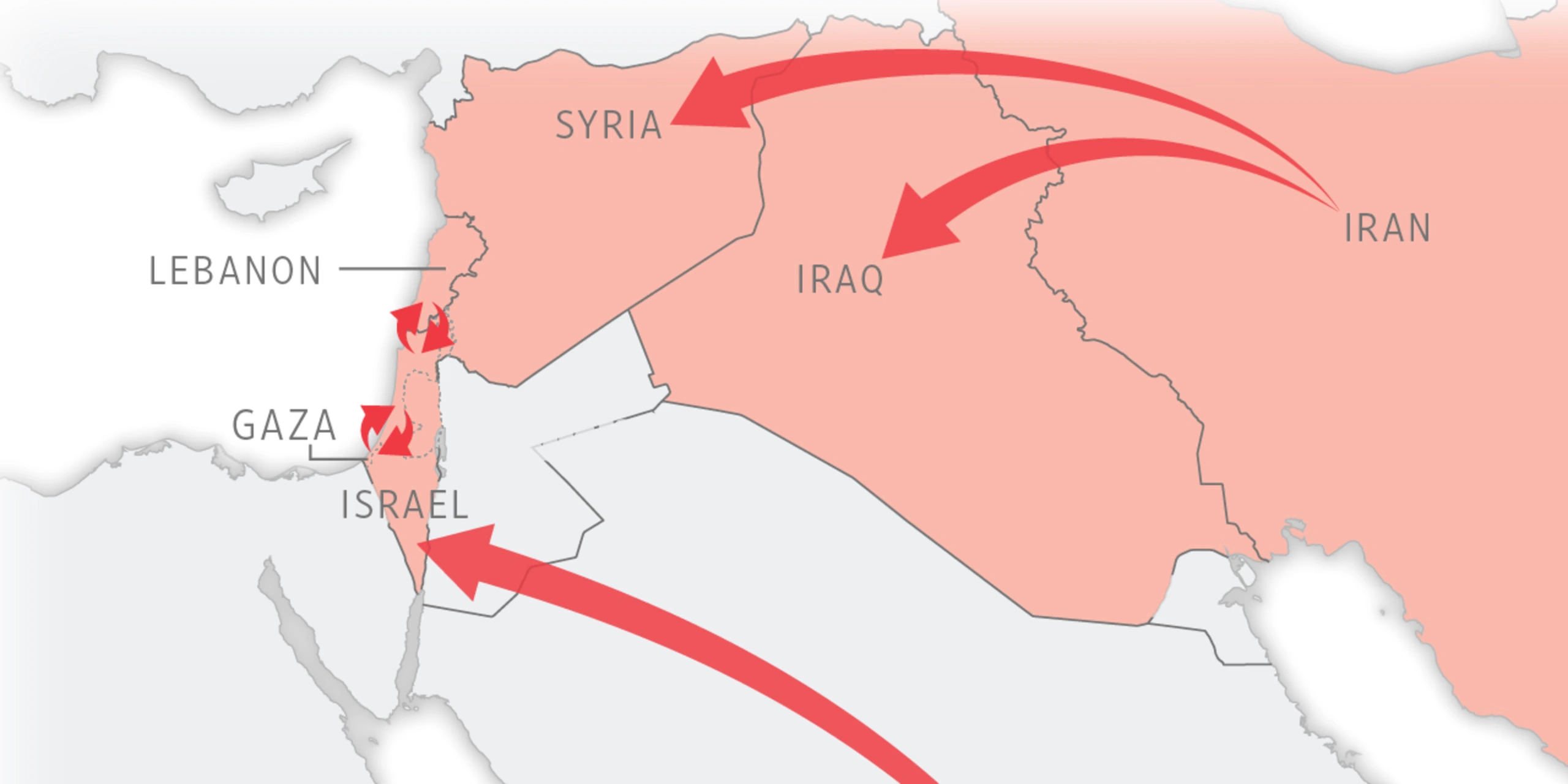
LONDON — At 4:32 a.m. on Monday, June 8, the Brent crude futures curve went vertical. In the space of seven minutes, a barrel of the global benchmark repriced from $105.20 to $114.30 — an 8.7% leap that veteran crude traders at Vitol and Glencore hadn’t witnessed since the opening hours of Russia’s full-scale invasion of Ukraine in February 2022. On the same screens, the VIX index — Wall Street’s fear gauge — spiked above 38, while the Japanese yen and the Swiss franc punched through three-month highs against the dollar. Gold broke $2,560 an ounce. The trigger was not an algorithm gone haywire nor a fat-finger error. It was a verified signal from the Strait of Hormuz.
Iran’s Revolutionary Guard Corps had mined the narrow waterway through which one-fifth of the world’s oil consumption transits, effectively sealing off 17 million barrels per day of crude and condensate flows. The act followed a 72-hour exchange of ballistic missile salvos between Israel and Iranian military installations near Isfahan, and the subsequent sinking of an Iran-bound container vessel by an Israeli submarine. By the time European exchanges opened, the Middle East’s slow-burn conflict had mutated into a full-throated conflagration with immediate, terrifying implications for every asset class on the planet.
What’s unfolding now isn’t simply a regional tragedy. It is a financial amplification event — the kind the Bank for International Settlements has warned about for a decade, in which a geopolitical shock interacts with layers of leverage, derivative concentration, and algorithmic positioning to produce sell-offs that race far ahead of any sober reassessment of fundamentals. The phrase amplification risk has moved from the footnotes of central bank financial stability reports to the central diagnosis of the moment.
The anatomy of an amplification shock
Global financial markets rarely price wars linearly. Instead, they process them through a chain of nonlinear amplifiers. The first amplifier is always energy. The Strait of Hormuz closure instantly removes roughly 18% of global oil supply, a magnitude that dwarfs the 1973 Arab oil embargo. The International Monetary Fund’s June 5 update to its World Economic Outlook — published three days before the maritime mining — had already flagged that a sustained $30-per-barrel oil price shock would subtract 1.2 percentage points from global GDP growth within four quarters. [The report](https://www.imf.org/en/Publications/WEO) now reads like an optimistic scenario. Brent’s settlement on June 8 was $118.60, and options markets were pricing a 25% probability of $150 crude by the August contract expiry, according to data from ICE Futures Europe compiled by Bloomberg.
The second amplifier is the dollar. Every major oil spike since 1990 has initially strengthened the US currency as importers scramble for dollars to pay inflated energy bills and investors seek the safety of US Treasuries. That pattern repeated on June 8 and 9: the DXY index surged 1.9%, crushing emerging-market currencies from the Indian rupee to the South African rand. A stronger dollar, in turn, tightens global financial conditions independently of what central banks do. The BIS Quarterly Review had, as recently as March 2026, mapped the vulnerability of non-bank financial intermediaries that have borrowed heavily in dollars via cross-currency swaps. When the dollar leaps, those positions require fresh collateral — forcing asset sales that feed the very volatility that triggered the margin call. It’s a doom loop the BIS labelled “the most underappreciated transmission channel of geopolitical shocks”.
The third amplifier is algorithmic crowding. Over the past three years, trend-following commodity trading advisers (CTAs) and volatility-targeting strategies have swollen to manage an estimated $900 billion in assets, according to research from J.P. Morgan’s prime brokerage unit. These strategies are pathologically programmed to sell equities and buy volatility when realised price swings breach certain thresholds. On June 8, they did exactly that — indiscriminately. The S&P 500 fell 4.7% by midday in New York, a move that machines magnified while human portfolio managers were still trying to ascertain whether the US Navy’s Fifth Fleet was moving toward the Strait.
Samir Khalaf, a 44-year-old crude oil trader who has worked at Vitol in Geneva since 2007, described the session as “five standard deviations from anything I’ve seen — and I’ve seen Iraq, Libya, and the financial crisis.” Khalaf’s desk handled 11 cargo inquiries in the first hour, three times the norm for a Monday. By 9 a.m. Central European Time, he told colleagues the physical market was “pricing in a six-week closure minimum.” Six weeks is the length of time it would take Saudi Arabia, the UAE, and Iraq to fully redirect crude flows through alternative pipelines — if those pipelines aren’t also targeted.
How the Middle East war rewires the global financial architecture
Beyond the immediate panic lies a more unsettling structural question. What does a prolonged interruption of Hormuz traffic do to the scaffolding of the international financial system? The answer is bleaker than many assume, because the system was not designed to decouple from the Middle East’s energy heartland quickly.
Secondary keyword: geopolitical risk amplification. That term captures how an initial shock — a missile, a mine, a sunken vessel — propagates through portfolios, forcing deleveraging and liquidity hoarding that hurt assets with no direct connection to the conflict. On June 9, that dynamic was visible in the investment-grade corporate bond market, where spreads widened by 32 basis points, the sharpest one-day move since the March 2020 dash for cash. ETF flows revealed heavy redemptions not only from emerging-market debt funds but also from high-yield European credit, a market with virtually zero direct exposure to the Middle East. The World Bank’s latest Global Economic Prospects report had warned in early June that financial contagion from a major geopolitical event could increase the cost of capital for developing economies by as much as 180 basis points within a month. That estimate now looks conservative.
One feature of this contagion deserves close attention: the mispricing of sovereign risk in the Gulf Cooperation Council (GCC) states. For years, investors have treated Qatar, the UAE, and Saudi Arabia as “geopolitical hedges” — oil-rich, dollar-pegged safe havens. But if the Strait of Hormuz remains blocked for more than a few weeks, those same nations lose their primary export route. On June 9, credit default swaps on Saudi Arabia’s five-year sovereign debt widened from 48 to 72 basis points, a move that implies the market has begun to reassess the foundational assumption that Gulf states are insulated from the region’s violence.
People Also Ask: How does the Middle East war affect global stock markets?
An escalation in the Middle East drives up oil prices and volatility, triggering a flight to safe havens such as gold and US Treasuries. Stock markets fall on fears of supply disruptions and higher inflation, with energy-importing nations and interest-rate-sensitive sectors suffering most. Historically, equity markets recover once the immediate supply threat diminishes, but the speed of algorithmic trading now amplifies the initial drawdown.
Yet what distinguishes this episode from, say, the 1990 Gulf War or the 2003 Iraq invasion is the speed of the sell-off and the breadth of the asset classes involved. In 1990, the S&P 500 took 53 trading days to fall 15%. This time, that move required fewer than eight hours. The compression of time frames is partly a function of market structure — ETFs, 0DTE options, automated market makers — but it’s also a reflection of an investor base that has been conditioned to “buy the dip” on every geopolitical scare since Crimea 2014. When the dip keeps deepening, and when the supply shock is real rather than merely feared, the behavioural feedback loop snaps.
Second-order effects: the central bank conundrum
Financial markets may be the most visible arena of disruption, but the second-order effects will unfold inside central bank boardrooms. The eurozone, which imports more than 90% of its oil, faces an acute stagflationary impulse. The European Central Bank had, as recently as its June 4 policy meeting, signalled a pause in its rate-cutting cycle after bringing the deposit rate to 2.75%. A sustained oil price of $120 per barrel would, according to the [OECD’s June 2026 Interim Economic Outlook](https://www.oecd.org/economic-outlook/), add 1.4 percentage points to euro-area headline inflation within six months while slicing 0.6 percentage points from GDP growth. President Christine Lagarde must now choose between tolerating a longer inflation overshoot or tightening into a demand shock — precisely the dilemma that haunted the ECB in 2008 and 2011. Her public remarks on June 9, in which she called for “steadiness and patience,” were parsed by traders as code for a prolonged hold, and the euro fell below $1.04 for the first time since November 2022.
For the US Federal Reserve, the calculus is different but no less treacherous. The United States is now a net energy exporter, meaning the oil shock acts as a transfer from consumers to domestic producers rather than a pure terms-of-trade loss. However, the dollar’s sharp appreciation and the global risk-off cascade have tightened financial conditions by an amount equivalent, by some estimates, to 50 basis points of additional Fed tightening. Chair Jay Powell, who is scheduled to appear before the Senate Banking Committee on June 18, will be pressed to explain whether the Fed can separate the inflationary impulse of higher energy costs from the disinflationary force of a slowing global economy. Markets, for now, have erased all expectations of a July rate cut and are pricing a 30% chance of a quarter-point increase by September.
Emerging markets carry the heaviest burden. Central banks in Turkey, Pakistan, and Egypt convened emergency meetings on June 9. All three raised benchmark rates — Turkey’s by a staggering 400 basis points to 52% — to stem capital outflows and currency depreciation. The Institute of International Finance reported that portfolio outflows from emerging-market equities and bonds reached $28 billion in the first two trading days of the week, the largest such exodus since the taper tantrum of 2013. The human dimension of those numbers is stark: for a country like Pakistan, which spends roughly 40% of its import bill on energy, a $120 oil price and a strengthening dollar could deplete its remaining $8.3 billion in foreign reserves within five months, according to an internal finance ministry note seen by Reuters.
A competing view: this, too, shall pass
Not everyone is convinced the sky is falling. A cohort of strategists and historians argue that financial markets have a long record of overreacting to Middle East conflicts, and that the underlying economic damage is often shallower than the initial price action implies. Lina al-Hassan, chief strategist at EFG Hermes in Dubai, issued a note to clients on June 9 titled “Why We’re Buying the Dip — Cautiously.” She pointed out that in 12 of the last 15 major Middle East military escalations since 1990, the S&P 500 was higher three months after the event than it was on the day of the initial shock. Her analysis, grounded in data from MSCI and Refinitiv, shows that while energy stocks and defence contractors rally, the broader market typically recovers once the Pentagon deploys naval assets that restore some degree of freedom of navigation. By June 9 afternoon, the US Navy had confirmed that the aircraft carrier USS Gerald R. Ford was transiting the Bab el-Mandeb strait, a signal that Washington intends to keep at least one chokepoint open.
Al-Hassan’s argument is not that the situation is benign. “This is a serious crisis,” she told me in a phone call. “But the market’s job is to price probabilities, and the probability that Hormuz stays closed for a period long enough to cause a global recession is still below 40%.” She noted that the Iran-Iraq War of the 1980s, in which both sides attacked tankers and mined the Gulf, never succeeded in fully closing the Strait for more than a few days at a time. The strategic reality, she insists, is that Iran cannot sustain a prolonged closure without devastating its own economy and inviting a military response that would far exceed anything it could withstand.
There is merit in this counterargument. The US Fifth Fleet and its allies have overwhelming naval superiority. Iran’s mining operations are provocation, not an indefinite blockade strategy. And financial markets have indeed developed a remarkable capacity to absorb geopolitical shocks since the Cold War’s end. Still, what troubles even the optimists is the amplification machinery that the BIS and others have documented. In 1990, when Iraq invaded Kuwait, high-frequency trading did not exist, ETFs were a niche product, and the dollar-swap obligations of non-bank financial institutions were a rounding error. Today, those mechanisms can turn a manageable supply disruption into a systemic margin spiral. “The difference between 2026 and 1990,” al-Hassan conceded, “is that the plumbing can now burn the house down before the fire department even arrives.”
The reckoning
The conflict in the Middle East has, in a handful of days, forced global financial markets to confront an uncomfortable truth: the post-Cold War assumption that great-power competition would remain largely contained to cyber and proxy domains has expired. Physical chokepoints matter again. Energy weaponisation is back as a first-order macro variable. And the financial system’s own internal amplifiers — leverage, derivatives, algorithmic crowding — are primed to convert a regional war into a global margin call with breathtaking speed.
This is not 1973, when an oil embargo reshaped the geopolitical order, nor is it 2008, when a credit collapse exposed the hubris of financial engineering. It’s something messier: a hybrid crisis in which a 20th-century-style supply shock is being processed through a 21st-century financial architecture that rewards speed over resilience. The policymakers who must navigate this — from Lagarde and Powell to the governors in Ankara and Islamabad — are operating with fogged-up instruments and constrained mandates. The single number that best captures their dilemma may not be the price of Brent crude or the level of the VIX, but a figure buried in the footnotes of the BIS’s latest data: global dollar-denominated debt held by non-banks outside the United States now stands at $14.9 trillion. When the dollar surges and liquidity vanishes, that number becomes an anvil hanging over the world economy. The Middle East just pulled the cord.


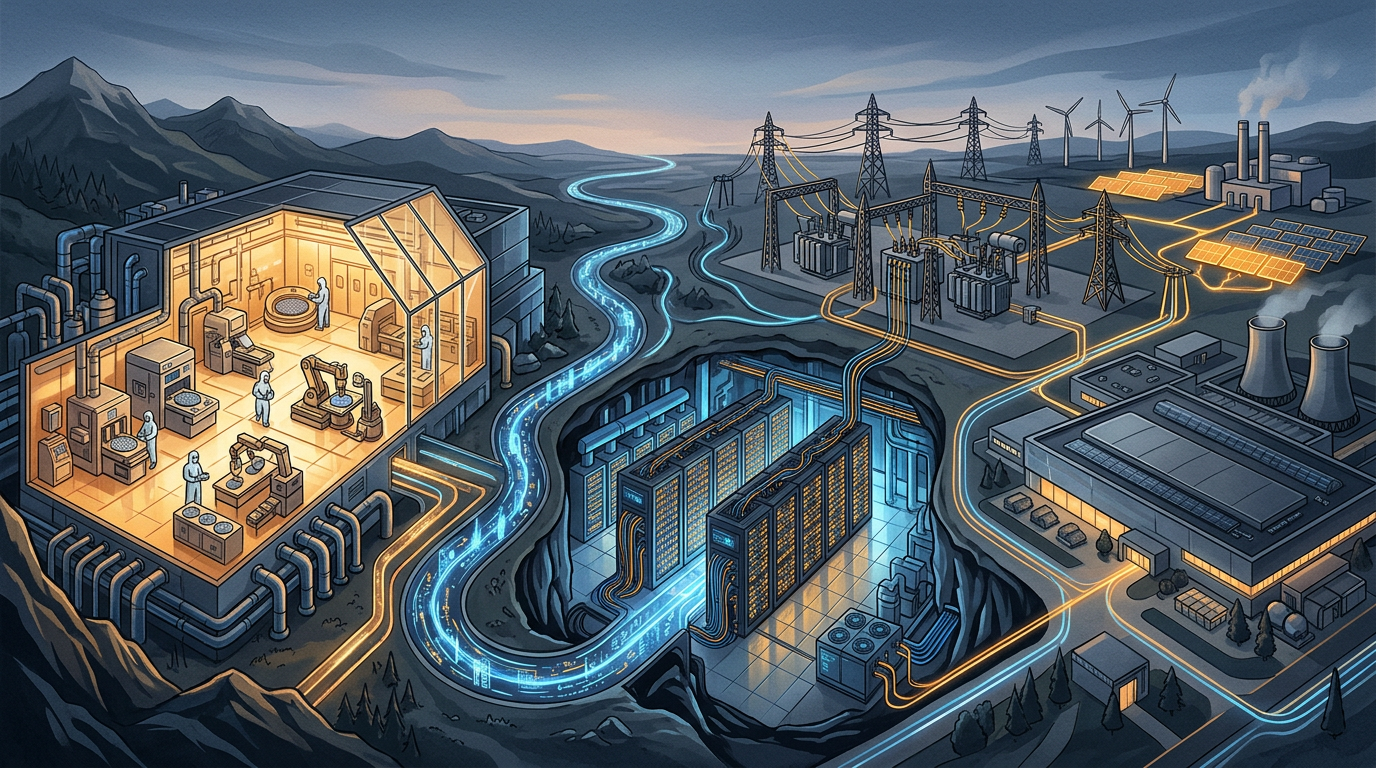
Investing in AI infrastructure—data centers, chips, and power—is particularly critical in 2026. As global economic growth diverges, capital has become far more sensitive to borrowing costs, forcing investors to look past compelling narratives and focus on realistic valuations. Rather than forecasting guaranteed returns, this guide examines key research methodologies and risk factors. According to the IMF’s October 2026 outlook, global growth is projected at 3.1% with inflation at 4.7%, even as its financial stability assessment cautions that underlying market vulnerabilities remain despite apparent resilience.
Key takeaways
- Match each investment decision to its time horizon, currency and ability to withstand losses.
- Separate observable earnings or contractual cash flows from optimistic forecasts.
- Compare diversification, fees, taxes, liquidity and regulatory restrictions before committing capital.
- Track primary institutional evidence and update assumptions when conditions change.
- Readers in Pakistan should consider rupee exposure and availability of regulated investment channels.
Why this matters now
The central question behind AI infrastructure investing 2026 is not merely what may happen next. It is which economic mechanisms could change cash flow, purchasing power or risk. The Bank for International Settlements’ 2026 review describes an economy supported by technological investment but constrained by geopolitical and fiscal pressures. A robust financial plan must therefore survive both a favourable and an adverse scenario.
Follow the investment chain, not just the headline
AI infrastructure spending flows through chips, advanced packaging, servers, networking, cooling, power equipment, real estate and utilities. Revenue can arrive at different times: hardware producers may book orders long before a data-centre tenant earns adequate cash flow from AI services. The BIS identifies AI investment as a support for recent global activity, but capital intensity can create financial fragility. See the primary institutional research.
For practical analysis, separate the baseline, the upside case and the downside case. Document the specific development that would change your assessment. Assess timing: a promising long-term theme may still be inappropriate for cash needed within twelve months.
Semiconductors: strong demand does not erase cycles
Leading-edge manufacturing is capital intensive and technically complex. Constraints in memory, packaging or fabrication can create pricing power, while capacity expansions can later produce oversupply. Compare long-term contracts, customer concentration, inventory and returns on invested capital. A rising revenue line is insufficient if shareholders continually finance new assets.
For practical analysis, separate the baseline, the upside case and the downside case. Document the specific development that would change your assessment. Assess timing: a promising long-term theme may still be inappropriate for cash needed within twelve months.
Data centres and the cost of electricity
AI computing requires secure access to electricity, transmission connections, cooling water where relevant, and backup capacity. The International Energy Agency’s Energy and AI assessment documents the central role of electricity planning. Before evaluating an operator, examine energy contracts, utilization rates, construction delays and whether customers can meet long-term commitments. See the primary institutional research.
For practical analysis, separate the baseline, the upside case and the downside case. Document the specific development that would change your assessment. Assess timing: a promising long-term theme may still be inappropriate for cash needed within twelve months.
Financing and correlated downside
The IMF warns that leveraged AI investments and concentrated exposures could magnify a valuation correction. Capital providers must distinguish contracted cash receipts from optimistic future sales estimates. Watch for circular financing, where investors and customers are economically dependent on each other’s ability to keep spending. See the primary institutional research.
For practical analysis, separate the baseline, the upside case and the downside case. Document the specific development that would change your assessment. Assess timing: a promising long-term theme may still be inappropriate for cash needed within twelve months.
Pakistan’s realistic entry points
Pakistan is unlikely to replicate an advanced-chip fabrication cluster quickly. More plausible routes include enterprise software, cybersecurity, specialised engineering, managed services and targeted power or fibre investments where the economics support them. Any local investment thesis needs reliable energy, regulatory clarity, payment rails and skills rather than the assumption that every AI project is profitable. See the primary institutional research.
For practical analysis, separate the baseline, the upside case and the downside case. Document the specific development that would change your assessment. Assess timing: a promising long-term theme may still be inappropriate for cash needed within twelve months.
Comparison and decision framework
| Question | Stronger evidence | Warning sign |
|---|---|---|
| What drives returns? | Audited cash flows, clear contract or transparent index | Undefined or projected returns |
| What can go wrong? | Explicit scenario and downside analysis | Claims of guaranteed gains |
| Is it affordable to hold? | Low transparent fees and adequate liquidity | Leverage, costly spreads or lockups |
| Is access legitimate? | Appropriate licensing and clear legal rights | Unverified brokers or custody |
| Is the exposure diversified? | Multiple independent sources of return | One company, sector or currency |
What it means for Pakistani savers and investors
A Pakistani reader faces both international investment risk and local purchasing-power risk. For example, a foreign asset can rise in US-dollar terms while the rupee conversion and transaction costs alter the realized local outcome. The opposite can also occur. Record the starting exchange rate, applicable taxes, custody charges and capital-transfer restrictions, and confirm current requirements with the State Bank of Pakistan and the relevant securities regulator. Overseas access should not be assumed universally available.
An emergency reserve, expensive consumer debt and near-term family obligations deserve attention before any speculative allocation. A portfolio that cannot meet a sudden cash requirement may force sales at the worst moment. The objective is not to remove risk—impossible in markets—but to choose risks that fit the investor’s actual liabilities.
Risks, limitations and uncertainty
Institutional forecasts are conditional and can change after policy decisions, commodity shocks, conflict escalation or unexpectedly weak earnings. Historic correlations are not binding promises about future asset performance. The analysis does not provide live stock prices, current investment product quotes, real-time exchange rates or individualized tax advice. Prices, regulations and product eligibility should be checked on the transaction date.
Frequently asked questions
Is this a guaranteed investment opportunity?
No. Every financial asset or strategy involves uncertainty. The existence of a popular investment theme is not evidence that an individual security is fairly priced.
What should beginners examine first?
Understand the product, the financial loss you could tolerate, fees and liquidity. Verify the provider and decide whether the money may be needed soon.
How do interest rates affect the analysis?
They influence financing costs, discount rates, exchange rates and demand. The effect differs by sector, maturity and business balance sheet.
Can Pakistani residents invest in foreign markets?
Access depends on current foreign-exchange, banking, brokerage, securities and tax rules, and on the investor’s individual circumstances. Check current regulations and regulated providers rather than assuming access.
How often should this analysis be refreshed?
Review institutional economic releases monthly and re-evaluate immediately after material earnings, regulatory or policy changes. Avoid reacting mechanically to every daily market movement.
Is diversification enough to prevent losses?
No. Diversification may reduce company-specific risk but cannot eliminate broad market, currency, inflation or systemic risks.
Conclusion
Sound financial decisions begin with verifiable evidence, reasonable valuation, awareness of uncertainty and a plan that survives adverse outcomes. Readers should compare multiple independent sources and avoid letting a compelling headline substitute for due diligence.

Almost every support team is now using AI. Far fewer customers say it solves their problem. That gap is the real story of AI customer service in 2026, and it decides which deployments pay off.
Key Takeaways
- Adoption doubled fast: Salesforce’s May 2026 survey of 3,075 service professionals found AI agent adoption rose from 39% to 66% in a year. getmacha
- Results lag: Only 24% of consumers said their last AI service interaction was fully resolved by AI alone, per an Ada and NewtonX study. getmacha
- Value shows up quickly: 70% of organizations deploying agents saw measurable value within 60 days. agilebrandguide
- Data is the blocker: 72% of service operations professionals call data readiness a major obstacle. agilebrandguide
- Forecast: Gartner expects agentic AI to autonomously resolve 80% of common customer service issues by 2029. raftlabs
What “AI Customer Service” Means Now
The first wave was scripted chatbots. The current wave is agentic AI: systems that interpret open-ended intent, read live customer data and resolve issues across connected systems without following a script. cygnet
The difference is action. A chatbot answers “where’s my order?” An agent checks the order system, issues the refund and updates the CRM.
The Adoption Numbers
| Metric | Figure | Source |
|---|---|---|
| Service orgs using AI agents | 66% (up from 39%) | Salesforce, May 2026 |
| Orgs using at least one form of AI | 85% | Salesforce |
| Teams at mature AI deployment | 10% | Intercom, Jan 2026 |
| Consumers fully resolved by AI alone | 24% | Ada/NewtonX, Mar 2026 |
| Agent use across customer-facing and internal work | 77% | Salesforce |
One caution applies to the headline adoption figures: Salesforce sells AI agents for service, so it has a commercial reason to publish momentum numbers. The Salesforce data is useful, but read it as a vendor’s view. Salesforce’s own service product page promotes the AI Agents Edition report, if you want to see how it frames the findings. getmacha
The Trust Gap
The most important number in this market isn’t adoption. It’s the 24% full-resolution rate. Companies are deploying AI faster than customers are being helped by it.
One compilation of 2026 statistics adds that 64% of customers wish companies would stop using AI in customer service, according to a Lorikeet survey. That’s a single-vendor figure, so use it as a directional signal rather than a settled fact. It still matches what most people have experienced: the bot that can’t escalate, the loop that never reaches a human. coworker
Where AI service typically fails:
- No escalation path: The customer can’t reach a person.
- Stale or fragmented data: The agent can’t see order history or account status.
- Overreach: The agent attempts complex or emotional cases it shouldn’t.
- Hidden AI: Customers feel tricked when they don’t know it’s a bot.
Where It Works
AI customer service performs best on narrow, high-volume, low-emotion requests: order status, password resets, returns and refunds, appointment changes and billing questions. 95% of service professionals say they trust AI for simple requests. Trust drops sharply as complexity rises. agilebrandguide
The ROI Question
Return figures vary widely. One 2026 compilation puts average ROI at $3.50 for every $1 spent, with leading organizations reaching 8x. Treat those as ceilings, not promises. The same compilation also notes 62% of service leaders worry about unpredictable AI costs. Usage-based pricing can erase savings if volume spikes. ringlyringly
A practical ROI model needs four inputs:
- Containment rate: Share of contacts fully resolved without a human
- Cost per contact: Human-handled versus AI-handled
- Quality impact: CSAT and repeat-contact rate, not just deflection
- Total AI cost: Licenses, usage fees, integration and ongoing tuning
Deflection that frustrates customers is a hidden cost. If containment rises while CSAT falls, you’re borrowing against retention.
Platform Landscape
Enterprise buyers commonly compare these platforms: Salesforce Agentforce, IBM watsonx Assistant, Microsoft Copilot Studio, Cognigy and Kore.ai. Each has strengths, so match the platform to your stack: cygnet
| If you already run… | Consider first |
|---|---|
| Salesforce CRM | Agentforce |
| Microsoft 365 and Dynamics | Copilot Studio |
| Heavy voice and contact-center volume | Cognigy |
| Multi-function (support, IT, HR) automation | Kore.ai |
| Regulated or hybrid environments | IBM watsonx Assistant |
This table is a starting framework, not a ranking. Integration depth with your CRM and ticketing systems usually matters more than headline features.
What the Workforce Impact Looks Like
Estimates of job impact are speculative and vary by source. One forecast says Gartner predicts organizations will replace 20% to 30% of service agents with generative AI by 2026. What’s more certain is that roles change: simpler tickets disappear, and humans handle harder, more emotional cases. That requires different training and often different pay structures. raftlabs
A Buyer’s Checklist
Before signing a contract, answer these:
- Data readiness: Is customer data clean, unified and accessible to the agent?
- Escalation design: Can customers reach a human in one step?
- Transparency: Do customers know they’re talking to AI?
- Governance: Who audits agent decisions and refunds?
- Metrics: Are you tracking resolution and CSAT, not only deflection?
- Pricing: What happens to cost when volume doubles?
What’s Next
Salesforce’s research frames the next phase around governance and workforce roles, recommending clear roles for AI architects and data specialists, plus transparent interactions with clear escalation to humans. That advice is sensible regardless of vendor. agilebrandguide
The Bottom Line
AI customer service works when it’s narrow, well-fed with data and honest about its limits. It fails when companies treat it as a headcount-cutting shortcut. With adoption now past 60%, competitive advantage will come less from having AI and more from deploying it without losing customer trust. Start with simple, high-volume requests, measure resolution rather than deflection, and keep a human exit visible.
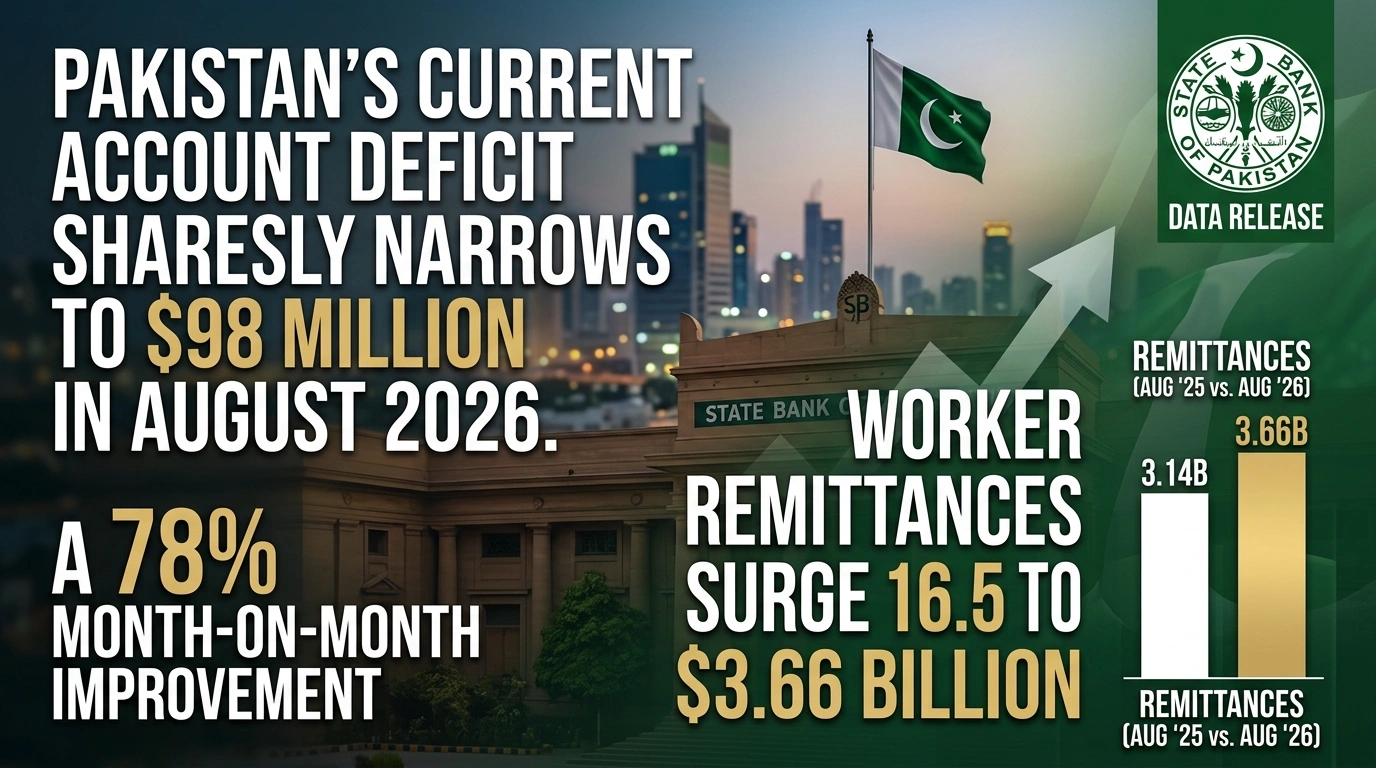
Karachi — Pakistan’s external balance demonstrated significant resilience as the monthly Current Account Deficit (CAD) contracted sharply to $98 million in August 2026, down 78% month-on-month from $445 million recorded in July 2026. Official data released by the State Bank of Pakistan (SBP) highlights that strong worker remittance inflows and steady export growth offset a surging import bill, providing crucial relief to the nation’s balance of payments.
Compared to the same period last year, the monthly shortfall narrowed by 69.7.3% from the $324 million deficit registered in August 2025. Cumulatively, during the first two months of the current fiscal year (2MFY27), Pakistan’s current account deficit stood at $543 million, marking a 36.3% reduction compared to the $853 million deficit incurred in 2MFY26, according to official economic indicators compiled by Dawn News Financial Analysis.
Key Drivers Behind August 2026 External Account Performance
1. Robust Remittance Inflows as the Core Anchor
Overseas Pakistani workers remitted $3.656 billion during August 2026, registering a 16.5% year-on-year (YoY) increase compared to $3.14 billion in August 2025 and a 0.7% month-on-month growth over July’s $3.63 billion.
- Saudi Arabia: Remained the largest contributor, accounting for $873.5 million (+19% YoY).
- United Arab Emirates (UAE): Inflows rose to $749.8 million (+17% YoY).
- United Kingdom & EU: Remittances from the UK totaled $563.7 million (+22% YoY), while European Union corridors dispatched $496 million (+7% MoM).
- United States: Inflows reached $308.9 million (+16% YoY).
Cumulative remittance inflows for 2MFY27 reached $7.29 billion, representing a 14.7% YoY increase from $6.36 billion recorded during the same period in FY26, as reported by Express Tribune Business.
2. Trade Balance and Import-Export Dynamics
- Exports of Goods & Services: Reached $3.33 billion in August 2026, reflecting a 5.0% YoY rise compared to $3.17 billion in August 2025.
- Imports of Goods & Services: Expanded to $6.64 billion, an increase of 8.0% YoY from $6.15 billion in August 2025, driven largely by essential industrial raw materials and energy imports required to support ongoing economic revival.
Macroeconomic Comparison Matrix: Current Account Breakdown
The table below illustrates the shift across key trade and primary income metrics for Pakistan’s balance of payments, as monitored by Trading Economics – Pakistan Balance of Payments:
| Economic Metric | August 2026 | July 2026 | August 2025 | 2MFY27 Cumulative | 2MFY26 Cumulative | YoY Shift (%) |
| Current Account Balance | -$98M | -$445M | -$324M | -$543M | -$853M | -36.3% |
| Worker Remittances | $3.656B | $3.630B | $3.140B | $7.286B | $6.353B | +14.7% |
| Total Exports (Goods & Services) | $3.330B | $3.180B | $3.170B | $6.510B | $6.120B | +6.37% |
| Total Imports (Goods & Services) | $6.640B | $6.520B | $6.150B | $13.160B | $12.380B | +6.30% |
| Foreign Exchange Reserves (Excl. CRR) | $17.280B | $16.900B | $14.520B | $17.280B | $14.520B | +19.0% |
| Net Foreign Direct Investment (FDI) | $315.9M | $185.2M | $175.1M | $501.1M | $342.0M | +46.5% |
Exchange Rate Competitiveness & FDI Momentum
REER and NEER Movements
Alongside the current account update, SBP data revealed that Pakistan’s Real Effective Exchange Rate (REER) index recorded a minor increase of 0.02% MoM, reaching 107.92 in August 2026 compared to 107.89 in July 2026.
Meanwhile, the Nominal Effective Exchange Rate (NEER) index depreciated by 0.79% MoM to 38.02 in August from 38.32 in July. While a REER above 100 indicates mild export price pressure, analysts cited by Reuters Global Markets note that exchange rate stability has helped maintain import predictability without severely penalizing key manufacturing sectors.
Surge in Foreign Direct Investment
Net Foreign Direct Investment (FDI) inflows saw a sharp increase, totaling $315.9 million in August 2026—an 80.4% YoY expansion compared to $175.1 million in August 2025. Key capital inflows targeted energy, telecommunications, and infrastructure projects, underscoring rising investor confidence supported by ongoing fiscal discipline and structural economic reforms monitored by Bloomberg Markets.
Macroeconomic Implications & Policy Outlook
- Foreign Reserve Buffer Expansion: Total SBP-held foreign exchange reserves (excluding CRR/SCRR) expanded to $17.28 billion, an increase of 19% YoY. This build-up strengthens Pakistan’s external liquidity buffer, providing over 2.6 months of import cover.
- Impact on Monetary Policy: The narrowing CAD and stable exchange rate dynamics offer the State Bank of Pakistan headroom to maintain a measured monetary easing cycle, encouraging domestic capital formation without reigniting demand-pull inflation.
- IMF Program Benchmark Compliance: Lower current account vulnerabilities position Pakistan favorably for ongoing review under international financial assistance programs, ensuring sustained access to multilateral funding channels.

AI Infrastructure Investment Strategies for 2026

Pakistan Freelancers Tax 2026: Payments, Documentation and Formal Growth

Strait of Hormuz Crisis: What the Latest Tanker Attacks Mean for Oil, Shipping and Global Trade

AI Customer Service in 2026: What’s Working, What’s Failing, and What to Buy

Open a Savings Account Online: How to Actually Earn 10x the National Average Rate

Global Housing Market 2026: Where Prices Rise, Where They Don’t

PSX and KSE-100 Record Highs: An Insider’s Guide to Pakistan Stocks

So Delicious Dessert Recall: Affected Products, FDA Guidelines, and Consumer Action

Pakistan’s Current Account Deficit Narrows Sharply to $98 Million in August 2026

Japan Eyes 3.5% Defense Spending: What It Means for Bonds, Stocks, and the BOJ

PSX & KSE Forecast 2026: Navigating the Latest IMF Reports & World Bank Metrics

Trump Administration’s Crypto Policy: Deregulation and the Future of Digital Assets

Monetary Policy and the Policy Rate

Gold, Silver & Bitcoin Prices Q4 2026: Wealth Management Strategies

Top 15 Stocks for Investment in 2026 in PSX: Your Complete Guide to Pakistan’s Best Investment Opportunities
Top 15 Stocks for Investment in 2026 in PSX: Your Complete Guide to Pakistan’s Best Investment Opportunities

Debunking IMF Program Myths: Reconfiguring Engagement for True National Ownership in a Volatile World

Top 10 Mutual Fund Managers in Pakistan for Investment in 2026: A Comprehensive Guide for Optimal Returns

China’s 50% Domestic Equipment Rule: The Semiconductor Mandate Reshaping Global Tech

What the U.S. Attack on Venezuela Could Mean for Oil and Canadian Crude Exports: The Economic Impact

15 Most Lucrative Sectors for Investment in Pakistan: A 2025 Data-Driven Analysis

Pakistan’s Export Goldmine: 10 Game-Changing Markets Where Pakistani Businesses Are Winning Big in 2025
15 Most Lucrative Sectors for Investment in Pakistan: A 2025 Data-Driven Analysis

Pakistan’s Stock Market Renaissance: How 2025’s Hottest Investment Opportunity Is Democratizing Wealth—A Complete Beginner’s Guide
15 Most Lucrative Sectors for Investment in Pakistan: A 2025 Data-Driven Analysis

How to Become an Active Taxpayer on Pakistan’s FBR Active Taxpayer List (ATL) in 2026: A Step-by-Step Guide

Pakistan’s Economic Outlook 2025: Between Stabilization and the Shadow of Stagnation

Best Investments in Pakistan 2026: Top 10 Low-Price Shares and Long-Term Picks for the PSX
-
 Markets & Finance10 months ago
Top 15 Stocks for Investment in 2026 in PSX: Your Complete Guide to Pakistan’s Best Investment Opportunities
-
Markets & Finance10 months ago
Top 15 Stocks for Investment in 2026 in PSX: Your Complete Guide to Pakistan’s Best Investment Opportunities
-
 Analysis9 months ago
Debunking IMF Program Myths: Reconfiguring Engagement for True National Ownership in a Volatile World
-
 Investment9 months ago
Top 10 Mutual Fund Managers in Pakistan for Investment in 2026: A Comprehensive Guide for Optimal Returns
-
 Asia10 months ago
China’s 50% Domestic Equipment Rule: The Semiconductor Mandate Reshaping Global Tech
-
 Global Economy10 months ago
What the U.S. Attack on Venezuela Could Mean for Oil and Canadian Crude Exports: The Economic Impact
-
 AI10 months ago
15 Most Lucrative Sectors for Investment in Pakistan: A 2025 Data-Driven Analysis
-
 Exports10 months ago
Pakistan’s Export Goldmine: 10 Game-Changing Markets Where Pakistani Businesses Are Winning Big in 2025