
Geopolitics
Trafigura’s Venezuelan Oil Gambit: When Geopolitics Meets Market Mechanics


How a landmark crude sale from Caracas signals the collision of energy pragmatism, sanctions architecture, and hemispheric power dynamics
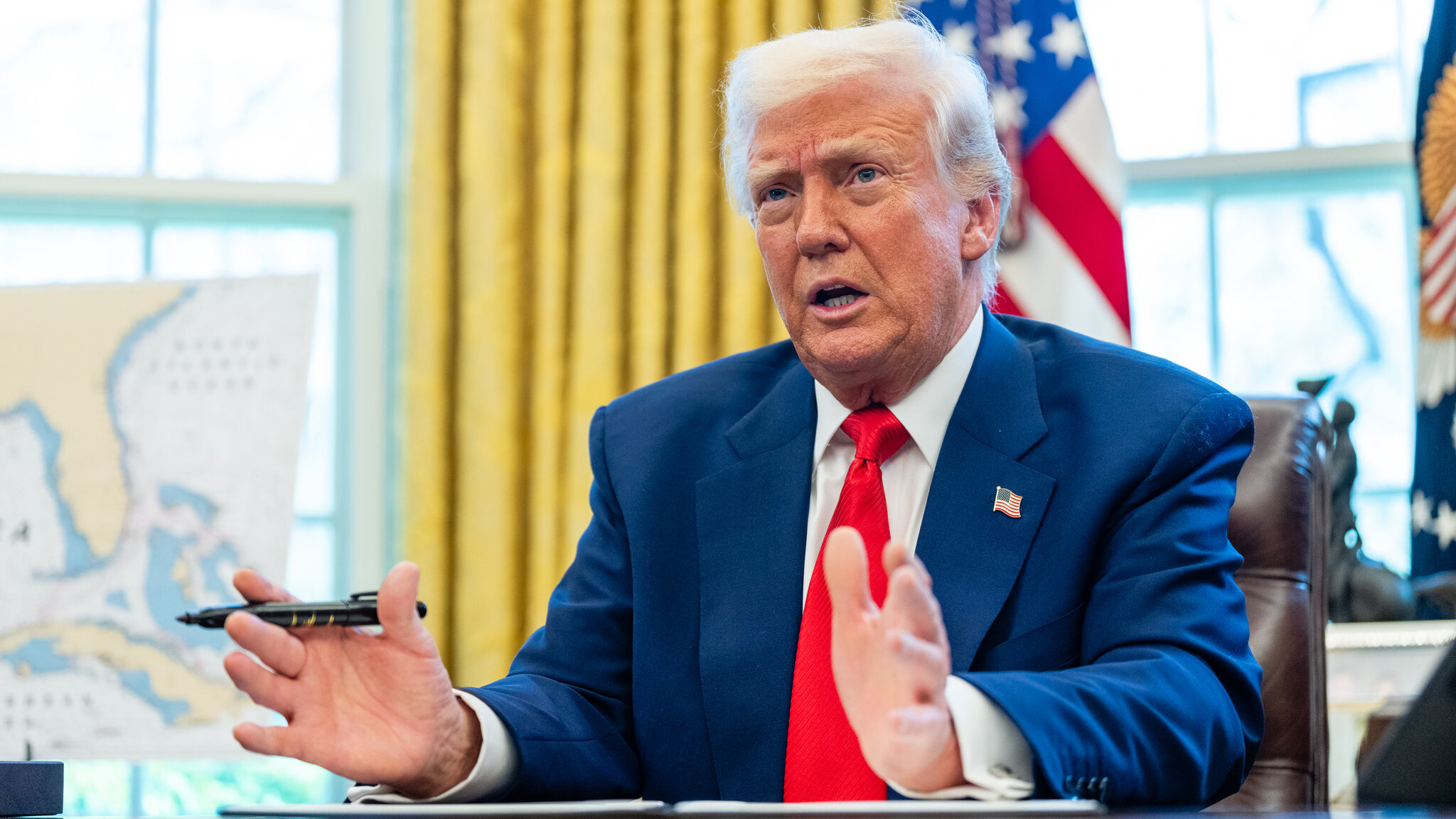
The commodity trading world rarely produces moments of genuine geopolitical significance. Yet when Trafigura Group CEO Richard Holtum stood before President Donald Trump at the White House on January 9, 2026, announcing preparations to load the first Venezuelan crude shipment “within the next week,” he was signaling far more than a routine commercial transaction. This landmark sale represents the most consequential shift in Western Hemisphere energy flows since sanctions severed direct Venezuelan crude trade with the United States seven years ago.
What unfolded in that White House gathering—with nearly 20 industry representatives present—was nothing less than the reconfiguration of Atlantic Basin petroleum markets. The implications ripple across refinery economics in Louisiana and Texas, Canadian heavy crude pricing, geopolitical calculations in Beijing, and the future trajectory of a nation holding the world’s largest proven oil reserves yet producing barely one million barrels daily.
For students of political economy and commodity markets alike, this development offers a masterclass in how commercial incentives, regulatory frameworks, and strategic interests intersect—and occasionally collide.
The Commercial Architecture of an Unprecedented Deal
Trafigura, the world’s third-largest physical commodities trading house behind Vitol and Glencore, has spent decades cultivating expertise in jurisdictional complexity. Operating across 150 countries with revenues exceeding $230 billion annually, the Geneva-based trader has built its reputation on navigating precisely the kind of regulatory labyrinths that Venezuela now presents.
The company’s approach to this Venezuelan engagement reveals sophisticated risk management. According to Reuters, Trafigura and rival Vitol have secured preliminary licenses from the U.S. government authorizing Venezuelan oil imports and exports for an 18-month period. These authorizations, structured through the Treasury Department’s Office of Foreign Assets Control (OFAC), represent a calibrated shift in sanctions enforcement rather than wholesale relief.
The trading houses are not purchasing Venezuelan crude for their own account in the traditional sense. Instead, they’re providing logistical and marketing services at the U.S. government’s request—a crucial legal distinction. This structure allows Washington to maintain nominal control over Venezuelan oil flows and revenue distribution while leveraging private sector expertise in shipping, blending, and market placement.

Industry sources familiar with the arrangements suggest initial shipment volumes in the range of 400,000 to 600,000 barrels per Very Large Crude Carrier (VLCC), with Venezuelan grades including Merey 16, BCF-17, and potentially upgraded Hamaca crude from the Orinoco Belt. These extra-heavy grades, with API gravity below 16 degrees and sulfur content exceeding 2.5%, require specialized refinery configurations—precisely what Gulf Coast facilities were designed to handle.
Venezuela’s Petroleum Paradox: Abundance Without Capacity
The disconnect between Venezuela’s resource endowment and production reality represents one of the starkest industrial collapses in modern energy history. With 303 billion barrels of proven reserves—surpassing even Saudi Arabia’s 267 billion—Venezuela theoretically controls nearly 18% of global recoverable petroleum resources, according to the U.S. Energy Information Administration.
Yet current production hovers around 1.1 million barrels per day, down from 3.5 million bpd achieved in the late 1990s. This represents a 68% decline from peak capacity—a deterioration driven by chronic underinvestment, workforce attrition, infrastructure decay, and the compounding effects of U.S. sanctions imposed since 2019.
Rystad Energy, a leading petroleum research firm, estimates that approximately $53 billion in upstream and infrastructure investment would be required over the next 15 years merely to maintain current production levels. Restoring output to 3 million bpd by 2040—the level Venezuela last sustained in the early 2000s—would require approximately $183 billion in total capital expenditure, or roughly $12 billion annually.
The Orinoco Belt region, containing the densest concentration of reserves, has seen production plummet from 630,000 bpd in November to 540,000 bpd in December 2025, reflecting systemic infrastructure vulnerabilities. Upgraders designed to convert extra-heavy crude into more marketable synthetic grades operate far below capacity or lie completely idle. According to industry assessments, PDVSA’s pipeline network has received virtually no meaningful updates in five decades.
For context, Venezuela’s deteriorated production infrastructure means that even with political stability and sanctions relief, energy analytics firm Kpler projects output could reach only 1.2 million bpd by end-2026—a modest 400,000 bpd increase requiring mid-cycle investment and repairs at facilities like the Petropiar upgrader operated by Chevron.
The Refinery Calculus: Why Gulf Coast Operators Are Paying Attention
Louisiana’s 15 crude oil refineries, accounting for one-sixth of total U.S. refining capacity with processing ability near 3 million barrels daily, were engineered with one primary feedstock in mind: heavy sour crude from Latin America, particularly Venezuela. Most facilities were constructed in the 1960s and 1970s, then retrofitted with advanced coking capacity and corrosion-resistant metallurgy to handle the high-sulfur, low-API gravity crudes that Venezuelan fields produce.
The economics are compelling. Bloomberg analysis indicates that highly complex refiners with substantial coking capacity—including Valero Energy, Marathon Petroleum, Phillips 66, and PBF Energy—can achieve 33% distillate yields versus 30% for medium-complexity plants. Venezuelan Merey crude from the Orinoco Belt, among the highest in sulfur content globally, maximizes the competitive advantage of these specialized facilities.
The U.S. Gulf Coast currently imports approximately 665,000 bpd of heavy crude with API gravity below 22 degrees from sources including Canada (Western Canadian Select), Mexico (Maya), and Middle Eastern producers. Energy Intelligence estimates that U.S. refiners could absorb an additional 200,000 bpd of Venezuelan crude relatively quickly, with potential to increase that figure substantially after equipment adjustments and supply contract renegotiations.
At the start of this century, U.S. refiners were importing approximately 1.2 million bpd of Venezuelan oil—much of it upgraded bitumen. Current infrastructure and refinery configurations could theoretically support a return to those volumes, though logistics, pricing, and regulatory clarity would need to align.
For refiners, Venezuelan crude offers several advantages. First, proximity translates to freight economics: shipping from Venezuelan terminals to Gulf Coast ports requires roughly 5-7 days versus 30-45 days from Middle Eastern sources. Second, Venezuelan grades typically trade at discounts to benchmark crudes, potentially widening crack spreads—the difference between crude costs and refined product values. Third, these heavy grades yield higher proportions of diesel and fuel oil, products currently commanding premium pricing due to renewable diesel conversions reducing traditional distillate supply.
The counterargument, however, involves operational adjustments. Many Gulf Coast refiners have spent the past 15 years optimizing their configurations for the glut of light sweet shale crude produced domestically. Pivoting back toward heavier feedstocks requires time and capital—industry sources suggest 3-6 months per processing unit, with costs potentially exceeding $1 per barrel in margin improvement to justify the investment.
Trafigura’s Strategic Positioning in Complex Markets
What distinguishes Trafigura in this Venezuelan engagement extends beyond balance sheet capacity. The company has cultivated a decades-long specialization in jurisdictionally difficult environments—precisely the combination of political risk, infrastructure constraints, and regulatory complexity that Venezuela epitomizes.
Trafigura’s historical Venezuela operations predate sanctions. Before 2019, the trader was among the most active marketers of Venezuelan crude, establishing relationships with PDVSA and building operational knowledge of loading terminals, crude quality variations, and blending requirements. That institutional memory proves invaluable now.
The company’s approach to compliance has been tested repeatedly. Trafigura has faced scrutiny over operations in sanctioned jurisdictions before, including settlements with the U.S. Department of Justice for bribery allegations related to Brazilian operations and with the Commodity Futures Trading Commission for gasoline market manipulation in Mexico. These experiences have necessitated robust compliance infrastructure—a prerequisite for operating under OFAC licenses where violations carry severe civil and criminal penalties.
Trafigura’s business model—focused on logistics, blending, and market arbitrage rather than production assets—aligns well with the current Venezuelan opportunity. The company can deploy expertise in vessel chartering, crude quality analysis, and customer matching without requiring the massive upstream capital that would deter integrated oil majors.
Competitor Vitol, the world’s largest independent oil trader, brings similar capabilities. Vitol’s participation signals industry-wide assessment that Venezuelan crude flows, under U.S. oversight, present acceptable risk-adjusted returns despite ongoing political uncertainty.
The Sanctions Architecture: Calibrated Control, Not Wholesale Relief
Understanding the current regulatory framework requires precision. The Trump administration has not lifted Venezuelan oil sanctions. Rather, OFAC has issued specific licenses to selected trading houses, creating a controlled channel for Venezuelan crude to reach international markets under explicit conditions.
This represents a dramatic evolution from the sanctions regime imposed in January 2019, when OFAC designated PDVSA for operating in Venezuela’s oil sector pursuant to Executive Order 13850. That designation froze all PDVSA property subject to U.S. jurisdiction and prohibited American entities from transacting with the company without authorization.
Treasury Department statements emphasize that current arrangements aim to “control the marketing and flow of funds in Venezuela so those funds can be used to better the conditions of the Venezuelan people.” This framing positions the U.S. government as de facto revenue manager rather than sanctions enforcer—a subtle but significant shift.
The legal mechanism involves General Licenses and specific licenses issued through OFAC. General License 41, which had authorized Chevron to resume restricted operations since November 2022, was amended in March 2025 requiring the company to wind down operations. Most other specific licenses expired concurrently. The new licenses to Trafigura and Vitol represent a different model: government-directed marketing rather than production partnerships.
The Treasury’s recent actions underscore that enforcement remains vigorous against non-authorized actors. In December 2025, OFAC sanctioned six shipping companies and identified six vessels as blocked property for operating in Venezuela’s oil sector without authorization. These companies were part of the “shadow fleet” that has historically moved Venezuelan crude to China and other buyers at steep discounts.
The sanctions architecture creates market segmentation: licensed traders operating under U.S. oversight versus shadow fleet operators facing interdiction risk. This bifurcation should theoretically compress discounts for licensed flows while maintaining sanctions pressure on regime-linked networks.
Geopolitical Dimensions: Rebalancing Hemispheric Energy Flows
The strategic implications extend far beyond commercial calculations. For decades, China has absorbed the lion’s share of Venezuelan oil exports through opaque arrangements involving state-owned enterprises and lesser-known intermediaries. These flows, estimated at 400,000 bpd in 2025 according to Kpler, often occurred at significant discounts and through non-transparent payment structures linked to debt repayment.
Redirecting Venezuelan crude to U.S. Gulf Coast refiners accomplishes several objectives simultaneously. It provides Washington with leverage over Venezuelan revenue streams, reduces Beijing’s monopsony position in Venezuelan petroleum markets, and offers Gulf Coast refiners access to feedstocks compatible with their infrastructure at potentially attractive pricing.
The timing coincides with broader Trump administration efforts to reshape hemispheric relationships. Following the controversial detention of Venezuelan officials and increased naval presence in Caribbean waters, the Venezuelan oil arrangement represents the economic component of a multi-dimensional strategy toward Caracas.
For Canada, the implications prove more ambiguous. Western Canadian Select (WCS) crude competes directly with Venezuelan heavy grades in Gulf Coast markets. If Venezuelan volumes increase substantially, WCS could face pricing pressure—though Canadian producers might compensate by redirecting flows westward through the expanded Trans Mountain pipeline to Pacific markets serving Asian buyers.
OPEC dynamics add another layer. Venezuela remains an OPEC member despite production far below its quota. Restoration of Venezuelan output, even to 1.5-2 million bpd, would introduce additional heavy crude supply into global markets already experiencing oversupply conditions. Brent crude has been trading near $60 per barrel, with analysts projecting potential pressure toward $50 if Venezuelan production ramps significantly.
The International Energy Agency projects that global oil demand growth will decelerate through 2026, driven by electric vehicle adoption, efficiency improvements, and economic headwinds. In this context, additional Venezuelan supply could pressure prices—benefiting consumers and refiners while challenging higher-cost producers.
Infrastructure Realities: The Time Dimension of Production Recovery
Commodity traders and refinery executives can move relatively quickly. Geopolitics shifts in weeks or months. But petroleum infrastructure operates on a different timeline entirely.
Venezuela’s production capacity deterioration reflects decades of deferred maintenance, equipment failures, workforce departures, and technological obsolescence. Restoring output isn’t a matter of flipping switches—it requires systematic well workovers, pipeline repairs, upgrader rehabilitations, and power system stabilization.
Industry assessments suggest that approximately 300,000 bpd of additional supply could be restored within 2-3 years with limited incremental spending, primarily through well intervention in the Maracaibo Basin and completion of deferred maintenance at existing facilities. This represents the “low-hanging fruit”—production that can be recovered through operational optimization rather than major capital deployment.
Reaching 1.7-1.8 million bpd by 2028 would require substantial upstream capital spending and the restart of idled upgraders in the Orinoco Belt, according to Kpler. Without sweeping institutional reform at PDVSA and new upstream contracts with foreign operators, output exceeding 2 million bpd appears unlikely within this decade.
The investment calculus hinges on political risk assessment. American oil companies—despite White House encouragement—have shown limited appetite for committing billions to Venezuelan operations absent legal framework certainty, property rights clarity, and political stability guarantees. Chevron, currently the only U.S. major with meaningful Venezuelan presence, has tempered expansion plans given regulatory uncertainty.
International operators face additional considerations. Environmental, Social, and Governance (ESG) commitments have become central to institutional investor relations. Venezuelan exposure—given corruption perceptions, human rights concerns, and environmental track records—creates reputational risks that many companies find difficult to justify regardless of commercial returns.
Market Mechanics: Pricing, Logistics, and Competitive Dynamics
The petroleum markets pricing Venezuelan crude provides crucial context. Venezuelan grades trade on a netback basis from Gulf Coast values, with adjustments for quality differentials, freight costs, and risk premiums. Historically, Merey crude traded at discounts of $8-15 per barrel versus West Texas Intermediate benchmark, reflecting its inferior quality and higher processing costs.
Under the new arrangement with U.S. government oversight, several factors should theoretically compress discounts. First, removal of sanctions risk reduces the premium required to compensate buyers for regulatory exposure. Second, official sales channels eliminate the opacity and logistical complications associated with shadow fleet operations. Third, greater volume certainty allows refiners to optimize processing schedules rather than treating Venezuelan crude as opportunistic.
However, Venezuelan crude must still compete with established alternatives. Western Canadian Select typically trades at $15-20 discounts to WTI. Mexican Maya, another heavy sour grade, trades at $3-6 discounts. Middle Eastern grades like Arab Heavy and Basrah Heavy carry their own pricing dynamics based on quality and freight economics.
The logistics dimension proves equally complex. Venezuela’s export infrastructure has deteriorated alongside production capacity. Loading terminals at Jose and Bajo Grande have experienced periodic outages. VLCC (Very Large Crude Carrier) availability fluctuates based on insurance market willingness to cover Venezuelan waters. Blending requirements—mixing extra-heavy crude with diluents to achieve transportable viscosity—add operational complexity and cost.
For Trafigura and Vitol, success requires optimizing each dimension: sourcing crude at competitive prices, securing appropriate tonnage, blending to meet refinery specifications, timing deliveries to match refinery turnaround schedules, and managing counterparty credit risk. These trading houses excel precisely because they’ve built systems to coordinate these moving parts across global supply chains.
Refinery Sector Response: Cautious Interest, Conditional Commitment
Gulf Coast refinery executives express measured enthusiasm tempered by pragmatic concerns. Conversations with industry sources reveal a consistent pattern: interest in Venezuelan crude availability exists, but commitment requires clarity on volume reliability, price competitiveness, and regulatory stability.
Valero Energy, one of the Gulf Coast’s largest independent refiners with significant heavy crude coking capacity, has historical experience processing Venezuelan grades. The company’s complex refineries in Texas and Louisiana could theoretically absorb substantial volumes. Similarly, Marathon Petroleum, Phillips 66, and PBF Energy—all identified by Bloomberg as having advantaged positions—have begun preliminary discussions with traders.
The private calculus involves margin analysis. Refiners model crack spreads—the difference between crude acquisition costs and refined product revenue—under various scenarios. Venezuelan crude must offer sufficient discounts to justify the operational adjustments required to process it relative to current feedstock slates.
One refinery consultant suggested that processing Venezuelan heavy sour could improve margins by more than $1 per barrel for optimally configured facilities—a meaningful improvement in an industry where quarterly earnings often hinge on single-digit margin shifts. However, realizing those economics requires locking in regular supplies and completing equipment modifications.
The other consideration involves alternative destinations. If Venezuelan crude doesn’t offer competitive economics to Gulf Coast refiners, it could flow to Indian or Spanish facilities—both have historical experience with Venezuelan grades and could potentially absorb volumes. This global optionality constrains how aggressively refiners can negotiate, as traders maintain leverage through alternative placement channels.
Forward-Looking Scenarios: Mapping Possible Trajectories
Projecting Venezuelan oil’s trajectory requires scenario planning across multiple dimensions. Consider three plausible pathways:
Scenario One: Controlled Ramp (Most Probable) Venezuelan crude exports to U.S. Gulf Coast increase gradually to 300,000-400,000 bpd by end-2026, facilitated by licensed traders under government oversight. Production reaches 1.2 million bpd through operational optimization without major capital deployment. Revenues flow through supervised channels, with incremental stability allowing limited foreign investment. This scenario implies modest pressure on Canadian heavy crude pricing, marginal tightening of heavy-light differentials, and sustainable if unspectacular commercial returns for trading houses.
Scenario Two: Accelerated Recovery (Optimistic) Political consolidation and institutional reform unlock significant foreign investment. Production accelerates toward 1.7-1.8 million bpd by 2028 as upgraded infrastructure comes online. U.S. and international oil companies commit tens of billions in upstream capital, viewing Venezuelan reserves as strategic long-term assets. In this pathway, Venezuelan crude becomes a major factor in Atlantic Basin markets, materially impacting WCS pricing and potentially displacing Middle Eastern imports. However, this scenario requires sustained political stability—historically elusive in Venezuela.
Scenario Three: Partial Reversal (Bearish) Operational challenges, infrastructure failures, or political instability constrain production recovery. Volumes remain below 1 million bpd despite initial optimism. Sanctions enforcement against non-licensed actors proves inconsistent, allowing shadow fleet operations to continue. Limited revenue transparency and governance failures deter major investment. In this scenario, Venezuelan crude remains a niche supply source rather than transformative market factor, with Trafigura and Vitol managing modest volumes under challenging conditions.
The probability-weighted outcome likely falls between scenarios one and three—meaningful but constrained growth, subject to political volatility and infrastructure limitations that prevent full potential realization.
The Institutional Question: Can PDVSA Be Reformed?
Perhaps the most fundamental uncertainty involves Petróleos de Venezuela (PDVSA) itself. The state oil company, once among Latin America’s premier petroleum enterprises, has become synonymous with mismanagement, corruption, and operational dysfunction.
PDVSA’s decline predates sanctions, as noted by Carole Nakhle, CEO of Crystol Energy: “The collapse predates sanctions. Chronic mismanagement, politicization and underinvestment weakened the industry long before restrictions were imposed.” Sanctions accelerated deterioration but didn’t originate it.
Restructuring PDVSA would require addressing systemic issues: depoliticizing hiring and operations, implementing transparent financial reporting, establishing commercial rather than political decision-making processes, and potentially restructuring approximately $190 billion in outstanding debt obligations owed to creditors including China, Russia, and bondholders.
Without comprehensive institutional reform, foreign companies remain reluctant to commit capital. Joint ventures and service contracts require enforceable legal frameworks and predictable fiscal terms—precisely what Venezuela has lacked for two decades. Some analysts suggest that meaningful recovery might require PDVSA’s effective dismantling and reconstruction from first principles—a politically fraught proposition that successive governments have proven unwilling to undertake.
Broader Implications: Lessons for Energy Geopolitics
This Venezuelan oil saga offers several insights applicable beyond the immediate case:
First, sanctions prove most effective when they change incentive structures rather than simply imposing costs. The current approach—using licensed trading as a control mechanism—represents an evolution from blanket prohibition toward calibrated engagement. Whether this proves more effective at achieving policy objectives remains to be seen.
Second, commodity trading houses occupy a unique position in global energy systems. Their expertise in logistics, risk management, and market arbitrage makes them valuable intermediaries when geopolitical objectives intersect with commercial imperatives. Trafigura and Vitol aren’t merely profit-seekers; they’re providing functionality that governments and national oil companies cannot easily replicate.
Third, infrastructure constraints impose real limits on geopolitical flexibility. Regardless of political developments, Venezuelan production cannot snap back quickly. The physical reality of deteriorated wells, corroded pipelines, and idled upgraders defines what’s possible over relevant timeframes.
Fourth, global oil markets have evolved toward abundance, reducing the strategic leverage that petroleum once provided. With U.S. shale production, Canadian oil sands, Brazilian deepwater, and Guyana offshore fields all contributing supply, Venezuelan barrels matter less than they did when the country produced 3.5 million bpd. This reduces the urgency from both commercial and geopolitical perspectives.
Conclusion: Pragmatism Ascendant, With Caveats
Trafigura’s preparation to load Venezuelan crude represents pragmatism superseding ideology in energy policy—at least provisionally. The arrangement acknowledges that Gulf Coast refiners can utilize Venezuelan heavy crude efficiently, that managed engagement might generate better outcomes than isolation, and that commodity trading expertise can facilitate complex transactions that governments struggle to execute directly.
Yet pragmatism operates within constraints. Infrastructure realities limit how quickly production can recover. Political uncertainties create investment hesitancy. Institutional dysfunction at PDVSA poses ongoing operational challenges. Global supply abundance reduces commercial urgency. These factors collectively suggest that Venezuelan crude will return to international markets, but gradually and conditionally rather than transformatively.
For market observers, several variables warrant monitoring: actual loading volumes versus projections, refinery uptake rates and processing economics, OFAC enforcement consistency against unauthorized actors, and infrastructure investment commitments from international oil companies. These indicators will reveal whether this Venezuelan engagement represents substantive change or merely incremental adjustment at the margins.
The intersection of energy markets and geopolitics rarely produces clean narratives. What unfolds in Venezuela over coming months will test whether commercial incentives can overcome institutional dysfunction, whether controlled engagement proves more effective than isolation, and whether pragmatism in energy policy can be sustained amid inevitable political turbulence.
For now, Trafigura prepares to load crude. Refiners evaluate economics. Policymakers calibrate oversight mechanisms. And the fundamental tension persists: between Venezuela’s immense petroleum potential and its demonstrated inability to realize it. That tension—not any single shipment—defines the Venezuelan oil story. Everything else is execution detail.
The author analyzes commodity markets and energy geopolitics with expertise in petroleum economics, sanctions policy, and hemispheric trade dynamics. Views expressed represent independent analysis informed by premium sources and industry consultation.



On a cold Tuesday morning in central Dublin, the queue outside a new residential development in Clongriffin didn’t consist of speculative investors or overseas institutional funds. Instead, it was filled with young professionals clutching pristine folders of bank statements, employment certificates, and salary clearances. This scene reflects a broader macroeconomic reality now sweeping across the state. Decades after the spectacular collapse of the Celtic Tiger, a new property milestone has arrived, though its structural drivers are fundamentally different from the loose credit environment of 2006.
The latest data reveals an unexpected trend. According to the quarterly analysis published by the Banking and Payments Federation Ireland, mortgage drawdowns for citizens entering the property market for the first time have reached their highest volume since the absolute peak of the mid-2000s property boom.
The picture is more complicated than a simple story of a booming economy. This lending surge occurs alongside a persistent housing shortage, high building material costs, and ECB interest rates that have squeezed borrowing capacity across the continent. Yet, the domestic appetite for residential debt remains strong. Buyers are stretching their financial limits to escape a hyper-inflationary rental market, changing the dynamics of the state’s retail banking sector.
The Core Development
The scale of modern credit expansion becomes clear when looking at the hard metrics of domestic loan issuance. To understand the current trajectory of the first-time buyer mortgage Ireland landscape, one must analyze the raw volume of capital flowing from retail lenders to consumers. In the 12 months leading up to October 24, 2025, licensed credit institutions in Ireland approved a total of 30,503 individual loan applications specifically earmarked for new market entrants. This isn’t just a marginal year-on-year increase. It represents a structural shift that pushed total drawdown values within this single demographic segment to an aggregate of $8.2 billion.
Data compiled by the Central Bank of Ireland indicates that first-time buyers now account for over 60% of all residential mortgage activity by value, effectively crowding out buy-to-let investors and second-time movers. The average loan size for an individual purchaser in Dublin has climbed to $345,000, an all-time record that reflects the steady rise in urban property values.
+-------------------------------------------------------------+
|     IRISH RESIDENTIAL MORTGAGE MARKET SHARE (BY VALUE)      |
+-------------------------------+-----------------------------+
| Market Segment                | Percentage Share            |
+-------------------------------+-----------------------------+
| First-Time Buyers             | 61.5%                       |
| Second-Time / Mover Buyers    | 24.0%                       |
| Residential Buy-to-Let        |  3.5%                       |
| Re-mortgage / Top-up          | 11.0%                       |
+-------------------------------+-----------------------------+
This high level of activity is happening despite a significant reduction in the number of active banks in the country. Following the departure of Ulster Bank and KBC Bank from the domestic market, the remaining three retail institutions—Allied Irish Banks, Bank of Ireland, and Permanent TSB—now manage a highly concentrated lending market.
This corporate concentration has not dampened consumer demand. Instead, the intense competition for market share among these remaining lenders has led to targeted product offerings for buyers who qualify for state assistance. The state’s current economic position, characterized by low unemployment and strong corporate tax receipts from multinational technology hubs, continues to support high consumer demand.
Wages in the professional services, engineering, and technology sectors have risen by an annualized 5.4% over the past year. This wage growth provides a steady stream of qualified applicants who can meet strict institutional lending requirements. Consequently, mortgage approval rates Dublin and surrounding commuter counties like Meath, Kildare, and Wicklow have stayed resilient, even as wider European credit growth slows down.
What is Driving the Surge in Irish First-Time Buyer Mortgages?
Featured Snippet Target: The surge in the first-time buyer mortgage Ireland market is driven by severe rental cost inflation, strong wage growth in corporate sectors, and state interventions like the Help-to-Buy scheme and the First Home Scheme. These factors allow buyers to bypass traditional deposit shortfalls and secure properties despite rising prices.
Policy Intervention and Market Mechanics
The current state of Irish housing market trends cannot be evaluated without considering state programs that alter normal market forces. The current credit expansion is partly driven by two specific policy tools implemented by the Department of Housing: the Help-to-Buy tax rebate scheme and the First Home Scheme equity loan system. These interventions were designed to address the deposit gap for middle-income workers, but they have also supported higher price floors across new housing developments.
       [State Equity Support: First Home Scheme]
                         │
                         ▼
  [Developer Top-Up] ──► [First-Time Buyer] ◄── [Commercial Bank Loan]
                         ▲
                         │
         [Tax Rebate: Help-to-Buy Scheme]
The Help-to-Buy initiative allows buyers to claim back up to $33,000 in income tax paid over the preceding four years to use directly as a property deposit. Meanwhile, the First Home Scheme operates as a shared-equity system, where the state takes up to a 30% stake in a new-build property to bridge the gap between the buyer’s maximum bank loan and the total purchase price. On paper, these initiatives solve the immediate liquidity problem that keeps young professionals trapped in high-rent tenancies.
In practice, however, they provide state-backed capital that matches the Central Bank of Ireland lending rules, which currently cap traditional borrowing at 4.0 times an applicant’s gross annual income. For example, a couple earning a combined salary of $95,000 can borrow a maximum of $380,000 under current macroprudential limits. By layering the tax rebate and the equity loan on top of this base, their total purchasing capacity can clear $480,000.
This dynamic helps explain why prices for new-build homes have risen faster than prices for older, second-hand properties. It also shows that the current high level of lending is closely tied to ongoing government fiscal support.
Downstream Consequences and Second-Order Effects
This long-term accumulation of mortgage debt has significant implications for Ireland’s broader economic stability and demographic trends. As young buyers dedicate a large share of their disposable income to servicing long-term debt, their broader spending patterns are shifting. Economist Dr. Conor O’Toole, writing in an assessment for the Economic and Social Research Institute, noted that households with high debt-to-income ratios are more exposed to external economic shocks, such as global downturns that could impact the country’s multi-national export sector.
Still, the immediate concern is the growing gap within the domestic property landscape. Because state equity programs apply almost exclusively to brand-new houses, first-time buyers are concentrated in specific geographic corridors. This has caused localized price spikes in suburban developments outside Dublin, while older urban properties face different market conditions.
+-------------------------------------------------------------+
|          NEW VS. SECOND-HAND HOUSING PRICE TRAJECTORY       |
+-------------------------------+-----------------------------+
| Property Category             | Annual Price Acceleration   |
+-------------------------------+-----------------------------+
| New-Build Residential Units   | +9.2%                       |
| Second-Hand Urban Apartments  | +3.1%                       |
| Commuter Belt Family Homes    | +7.8%                       |
+-------------------------------+-----------------------------+
The corporate sector is also adjusting to these conditions. Large institutional investors, who previously bought entire apartment complexes to rent out, are scaling back their purchases due to higher global interest rates. This retreat has allowed individual purchasers using affordable housing schemes Ireland to buy units in developments that would have previously been sold to international funds.
What follows, however, is a clear squeeze on supply. Every house bought by a first-time buyer removes a unit from the available supply for a long period, which keeps rental availability near historic lows. The national property registry shows that the turnover rate for residential properties sits at just 2.3% of total housing stock annually, which is well below the European average of 4.5%.
Challenging the Momentum
Is this high level of mortgage activity sustainable, or does it signal growing risks in the market? Many market analysts point to the strict credit assessments required under current lending rules as proof that the market is safe from a 2008-style collapse. Today’s borrowers must undergo rigorous stress testing against potential interest rate increases, and banks maintain much higher capital reserves than they did two decades ago.
The picture is more complicated when we consider structural supply deficits. Some independent analysts argue that current credit volumes are artificially inflated by a lack of alternative options.
               [Structural Supply Gap Overview]

  45,000 ───────────────────────────────── Estimated Annual Demand

  32,000 ═════════════════════════════ actual 2025 Completions

  13,000 ───────────────────────────── Net Annual Deficit
With single-bedroom apartments in Dublin regularly renting for over $2,400 per month, purchasing a home with a monthly mortgage payment of $1,700 can look like a rational financial choice, even at peak property valuations. This means demand may be driven more by high rental costs than by long-term confidence in asset values.
If the country’s multinational employment sector faces a downturn, many households could find themselves exposed. A household that bought a property at the top of the market using maximum state equity support has a limited financial buffer if property values drop or household income falls.
A Complex Equilibrium
The current high level of first-time buyer activity reflects a unique combination of strong domestic employment, targeted state support, and a persistent imbalance between housing supply and demand. This trend is distinct from the speculative, credit-driven bubble of the mid-2000s. Today’s market is shaped by working professionals using structured state programs to secure housing in a high-cost environment.
The central challenge for policymakers is clear. Government programs have successfully helped thousands of buyers enter the property market, but they have also supported high prices in a supply-constrained environment. Until overall housing construction matches structural demand, these record lending volumes will likely reflect the high cost of entry rather than an easy path to homeownership.
The Irish property market remains a complex environment where access to credit is a vital, yet expensive, asset.
The phone calls from American buyers haven’t stopped. Neither have the shipments. For many Singapore-based companies with exposure to the United States, the Trump administration’s 10% baseline tariff — widely feared when it landed in April 2025 — has turned out to be, as more than one founder has privately put it, something they can live with. The margin hit is real. The commitment to the US market is, for now, intact.
This isn’t naivety. Singapore’s business class is too wired into global trade to mistake inconvenience for catastrophe. What the past twelve months have revealed, instead, is a calibrated judgement: that America’s consumer base, its legal predictability, and its sheer scale still make it the world’s most attractive destination, tariff or no tariff.
Why Singapore’s Export Sector Held Up Better Than Expected
When the White House announced its sweeping reciprocal tariffs on April 2, 2025 — quickly dubbed “Liberation Day” — Singapore found itself in an unusual position. The city-state was handed the lowest rate in Southeast Asia: a 10% baseline, compared with 19% to 40% for neighbours like Vietnam, Indonesia, and Cambodia. This was in spite of Singapore holding a free trade agreement with Washington that had been in force since January 2004 — and despite the US actually running a goods trade surplus with Singapore.
That anomaly still rankles in Singapore’s government corridors. According to the US Trade Representative, the US goods trade surplus with Singapore reached $3.6 billion in 2025, up from $1.9 billion in 2024 — a near-doubling that makes the tariff’s rationale increasingly hard to justify on balance-of-payments grounds. In March 2026, Singapore’s trade ministry went public with its dispute of American trade data, arguing the official US figures misrepresent the bilateral picture.
Yet even with the duty in place, Singapore’s companies did something that surprised economists who had modelled for a significant contraction: they adapted and, in many cases, pushed on. The Ministry of Trade and Industry upgraded Singapore’s 2025 GDP forecast to around 4% in November — well above the 1.5% to 2.5% initially pencilled in — citing stronger semiconductor exports driven by the AI boom and unexpected resilience among trading partners. Full-year growth came in at 4.8%.
The US remains Singapore’s second-largest export destination, absorbing roughly 11% of the Republic’s domestic exports in 2024. Companies have not abandoned that relationship. Many have leaned into it harder, viewing tariff disruption elsewhere in Asia as a relative advantage.
A Manageable Levy, But Not a Costless One
How are Singapore companies dealing with US tariffs? The short answer is: largely by absorbing part of the cost, passing some on, and restructuring faster than anyone expected.
A March 2025 survey by the American Chamber of Commerce in Singapore found that most respondents planned to pass tariff-related costs through to US customers, while simultaneously accelerating supply chain diversification. This dual-track response reflects a broader strategic logic: protect the American relationship in the near term while reducing single-market dependency over a longer horizon.
What that looks like on the ground varies by sector. Manufacturers in precision engineering — a bright spot identified by MTI in its August 2025 briefing — have continued ramping up capital investment in AI-related semiconductor production, insulated partly by the global demand surge from data centre buildouts. These firms aren’t debating whether to serve the US market. They’re debating how to remain irreplaceable within it.
The picture is more complicated for smaller companies working with thinner margins. Nomura analysts reported in September 2025 that Singapore exporters were absorbing more than 20% of US tariff costs directly — a real and sustained squeeze. Still, for a 10% levy applied to goods that clear US customs at high average selling prices, the maths often still work. A Singapore med-tech firm shipping precision instruments at $15,000 per unit absorbs a very different blow than, say, a Vietnamese garment exporter facing a 32% rate on $8 t-shirts.
The relevant comparison isn’t between tariff and no-tariff Singapore. It’s between Singapore at 10% and its regional competitors at 19% to 40%. On that basis, the commercial case for the US market hasn’t collapsed. It’s narrowed — which is why the companies still in the game are typically those with the product quality to justify the premium or the brand equity to pass costs through.
The Sectoral Flashpoints: Pharma and Chips
Singapore’s composure at the aggregate level masks genuine alarm in two sectors that define its high-value export identity: pharmaceuticals and semiconductors.
Singapore ships approximately S$4 billion (US$3.1 billion) worth of pharmaceutical products to the United States each year. These are mostly branded drugs — sophisticated, high-value formulations — which faced a threatened 100% tariff unless manufacturers established a physical US manufacturing presence. That threat, announced as part of Trump’s sectoral tariff push, is currently on hold pending negotiations and exemption applications. But it has not disappeared. Deputy Prime Minister and Trade Minister Gan Kim Yong acknowledged in September 2025 that negotiations with Washington over both pharma and semiconductors were ongoing, with an “arrangement to allow us to remain competitive in the US market” still the goal rather than the outcome.
Minister Gan Siow Huang confirmed in October 2025 that a significant number of Singapore-based pharmaceutical firms are pausing US expansion decisions pending tariff clarity — a rational hold on capital allocation, not a signal of retreat. The broader concern, articulated by Gan Kim Yong, is longer-range: that escalating tariffs globally could divert investment away from Singapore toward the United States, draining capital that might otherwise have flowed into the region.
In semiconductors, Singapore’s position is partially protected by the AI-driven global demand spike. The precision engineering cluster saw continued investment ramp-ups through 2025, with MTI noting the “sustained shift towards higher value-added” activity as a structural buffer. Yet Section 232 sectoral tariffs on chips — not yet imposed but actively discussed in Washington — remain a latent risk that keeps Singapore’s trade negotiators in near-permanent engagement with US counterparts.
The Case Against Optimism: What the Bears Are Right About
It would be a misreading of Singapore’s resilience to treat it as vindication of the tariff-and-carry-on school of thought. The firms that are pressing ahead in the US market are, almost uniformly, those with structural advantages that most companies don’t have: high average selling prices, proprietary technology, brand recognition, or an irreplaceable position within a US supply chain.
For smaller Singapore companies — the SMEs that account for roughly two-thirds of the city-state’s workforce — the calculus looks different. EnterpriseSG acknowledged in early 2026 that tariffs would “continue to be a looming concern for a long time,” with sectoral duties on semiconductors and pharmaceuticals a persistent threat and the risk of trade diversion from tariff-hit neighbours an additional drag.
What tariff rate does Singapore face from the United States?
Singapore faces a 10% baseline US tariff — the lowest in Southeast Asia — under the Trump administration’s reciprocal tariff framework, despite a free trade agreement in force since 2004 and a US goods trade surplus of $3.6 billion in 2025. A further increase to 15% under Section 122 was announced in February 2026.
Government support has materialised, but its scope has limits. The Business Adaptation Grant, launched in October 2025, offers up to S$100,000 per company with co-funding required — meaningful for a one-person fintech studio rethinking its US go-to-market, but insufficient to offset the structural cost pressures facing an electronics manufacturer running US$50 million in American revenue. SMEs receive a higher support quantum; the grant’s architects acknowledge it can’t reach every firm.
There is also a timing question. Singapore’s 2025 outperformance was partly a function of front-loading: companies rushed exports in the first half of the year ahead of anticipated tariff escalation, driving a 13% NODX rebound in June that flattered the headline numbers. Strip out front-loading, and the structural growth trajectory is more modest. MTI has already warned that 2026 growth — forecast in the 1% to 3% range — will feel meaningfully different from 2025’s AI-and-front-loading-driven surge.
What follows, however, is not necessarily contraction. It is normalisation under a genuinely higher-tariff world — a world Singapore’s companies are, by now, better equipped to navigate than they were fourteen months ago.
The Structural Bet: Singapore’s Long-Term US Positioning
Singapore’s most consequential strategic response to Trump’s tariff regime has not been lobbying Washington or diversifying away from the US. It’s been doubling down on what makes Singaporean goods hard to replace: quality, reliability, and an institutional environment that American buyers trust.
Prime Minister Lawrence Wong has been careful not to overstate the resolution of US-Singapore trade talks, noting as recently as late 2025 that negotiations were at “a very early stage” on pharmaceuticals. But the underlying posture of Singapore’s business community — captured in a UOB Business Outlook Study from May 2025 — is instructive: eight in ten Singapore companies planned overseas expansion within three years, with North America among the markets specifically flagged by consumer goods and industrial firms despite the tariff environment.
That appetite reflects something the macro data alone can’t show. Many Singapore companies with US exposure have been building American relationships for decades. They know their buyers personally. They’ve invested in US certifications, US-compatible regulatory frameworks, US distribution networks. Walking away from that at a 10% tariff rate would mean writing off infrastructure that cost more than 10% to build.
The more profound question is whether the next generation of Singapore companies — those deciding now where to build their first international footprint — will make the same American bet their predecessors did. The EnterpriseSG data on market diversification is notable: in 2025, the agency helped Singapore companies enter 76 new markets — the broadest footprint in five years. Angola. Fiji. Markets that would have been afterthoughts in 2019.
The US isn’t losing its primacy in Singapore’s commercial imagination. But it is, for the first time in a generation, being weighed against alternatives in a way that feels genuinely open. That shift is subtle. It may also be durable.
There is a version of this story where 10% is, in fact, nothing — where Singapore’s companies absorb a manageable cost, keep their American relationships intact, and emerge from the tariff era with their US market share preserved or even expanded as higher-levied competitors retreat. That version is not impossible. Several major firms are living it.
But the more honest reading of the past twelve months is that Singapore’s business community has proved something more modest and more instructive: not that tariffs don’t matter, but that they don’t automatically determine outcomes. What matters, still, is whether you have something the American market genuinely wants. For companies that do, the levy is a tax on success. For those that don’t, it’s an exit ramp. The US market is sorting Singapore’s exporters, quietly and efficiently, in exactly the way markets always have.
Analysis
OnlyFans’ $3bn Succession Gamble: A Valuation Discount, a Fintech Pivot, and the AI Spectre Haunting the Creator Economy

London. When Leonid Radvinsky, the reclusive, Ukrainian-born billionaire who quietly built one of the internet’s most improbable cash machines, died of cancer last month at 43, the fate of his empire—a digital bazaar of intimacy worth over $7 billion in annual transactions—was suddenly thrust into a glaringly uncertain light.
Now, we have the first chapter of what comes next. In a move that speaks less to a triumphant exit and more to a pragmatic posthumous recalibration, OnlyFans is finalizing a deal to sell a minority stake of less than 20% to San Francisco-based Architect Capital, valuing the British company at over $3 billion.
The narrative for casual observers is simple: a founder dies, and a lucrative stake sale ensues. But for the FT/Economist reader—those tracking the collision of high finance, the stigmatized economy, and the future of digital labor—the real story is far more nuanced. This is a story about valuation compression, the shifting sands of the $214 billion creator economy, and a strategic fintech gambit that could redefine what OnlyFans actually is.
The Radvinsky Calculus: Why the Price Tag Fell From $8bn to $3bn
Let’s be surgically precise: OnlyFans is not a normal business. It is a staggeringly profitable one. In 2024, with a skeletal staff of just 46 employees, Fenix International (OnlyFans’ parent) generated $1.4 billion in revenue and a pre-tax profit of $684 million—a net margin of roughly 37% that would make most Silicon Valley unicorns weep with envy. On paper, this is a valuation darling. Yet, as late as 2025, Radvinsky had been shopping a 60% majority stake with aspirations of an $8 billion valuation or a $5.5 billion enterprise value that included a hefty $2 billion debt package.
So why the markdown?
The answer is a textbook case of the “vice discount” (also known as the “stigma penalty”). OnlyFans remains, at its core, synonymous with adult content. This singular association creates a structural ceiling on its valuation. Traditional institutional investors—sovereign wealth funds, major pension managers, and blue-chip private equity—operate under strict Environmental, Social, and Governance (ESG) mandates and reputational constraints that make owning a pornography platform, no matter how profitable, a non-starter.
Moreover, the dependency on the Visa/Mastercard duopoly looms like the sword of Damocles. Both card networks classify adult platforms as “high-risk merchants,” a designation that imposes elevated fees and, more importantly, the constant threat of being de-platformed from the global financial rails with little notice.
Faced with these headwinds and the fresh uncertainty of the founder’s passing, the Radvinsky family trust—now led by his widow, Katie, who is overseeing the sale—has pivoted from a controlling exit to a minority liquidity event. This keeps control within the trust while injecting external capital and, critically, new expertise into the boardroom.
Architect Capital’s Fintech Gambit: Banking the Unbanked Creators
This is where the deal transcends a simple equity swap and becomes a corporate metamorphosis. Architect Capital is not just a financier; it is effectively a strategic partner with a specific mandate: fintech.
Reports indicate the deal is contingent on Architect working with OnlyFans to develop new financial services and products for its 4.6 million creators. This is not a gimmick; it is an economic necessity. A significant portion of OnlyFans’ top earners are sex workers who face widespread discrimination in the traditional banking sector. Accounts are frozen, loans are denied, and mortgages are unattainable, regardless of how high the tax-paid income is.
For Architect, a firm known for tackling businesses in regulatory gray zones, this is the alpha play. By building a fintech stack—perhaps offering creator-specific banking, debit cards with instant payout options, or even micro-loans against future earnings—OnlyFans can deepen its “take rate” beyond the 20% subscription cut and, crucially, lock in its top talent.
This pivot is also a deliberate move toward mainstreaming the platform. As reported by Expert.ru, OnlyFans’ long-term plan includes a potential IPO in 2028 and a concerted effort to shift its public image toward “wellness” verticals like fitness and nutrition. A robust, regulated financial services arm attached to a platform with millions of high-earning “solopreneurs” is a narrative that Goldman Sachs or Morgan Stanley could actually sell to the public markets.
The Elephant in the Server Room: The AI Threat and Fanvue’s 150% Growth
For all the talk of fintech and $3 billion valuations, there is an existential threat gnawing at the edges of the human intimacy economy: Artificial Intelligence.
While OnlyFans is navigating estate trusts and banking regulations, a competitor called Fanvue is growing at 150% year-over-year. Sacra estimates Fanvue hit $100 million in Annual Recurring Revenue (ARR) in 2025, driven in large part by its aggressive embrace of AI-generated creators. Unlike OnlyFans, which mandates that AI content must resemble a verified human creator, Fanvue has become the de facto home for fully synthetic personas. With a fresh $22 million Series A round in its pocket and a partnership with voice-cloning giant ElevenLabs, Fanvue is automating the parasocial relationships that OnlyFans monetizes.
The economic efficiency is terrifying for human creators. A single operator can now manage a portfolio of AI influencers, generating income without the logistical friction of real photoshoots or the emotional labor of engaging with fans. If Fanvue’s ARR hits $500 million by 2028 (well within its trajectory), the “human creator premium” that OnlyFans relies on may begin to erode, further compressing its future valuation multiples.
Coda: The Path to 2028
The $3 billion valuation for a 20% stake is not a failure; it is a foundation. It represents a 21.6x multiple on last year’s pre-tax profits—a figure that, while compressed by tech standards, is an astronomical premium for a “vice” asset in a jittery 2026 market.
The real test for the family trust and Architect Capital will be execution. Can they successfully navigate the regulatory minefield to become a credible neobank for creators? Can they pivot the brand sufficiently before an IPO to close the valuation gap? Or will the relentless, synthetic march of AI render the human touch—the very currency of OnlyFans—an overpriced luxury?
The market is betting $3 billion that for the next five years at least, the answer is “Yes.” The rest of us will be watching to see if they can outrun the algorithm.

Business Insurance for Digital Exports: Protecting Your Company in the AI Era

Real Estate Crash Predictions 2026: Data-Backed Regional Guide

What is a “Lead-Left” Bank? Unpacking Morgan Stanley’s Role in Anthropic’s Mega-IPO

Is SPY Overvalued in September 2026? Fed Rate Hike Odds & Intrinsic Value

Pakistan’s KSE-100 Nears Record Territory Even as the Trade Gap Persists

US Consumer Sentiment Sinks as Retail Sales Drop

Barclays Q2 2026 Results: Income Beats, Costs Rise 7%

Pakistan’s Remittance Lifeline: Why Gulf Exposure Is a Hidden Risk

Dubai’s Rise to the World’s 7th Financial Hub: Inside the D33 Push

China EV Exports Hit Record High in 2026

UK’s “National Contributions Tax” Explained: Burnham-Era Reform 2026

Russia’s Strange Problem in 2026: Its Currency Is Too Strong

Section 301 Forced Labor Tariffs 2026: 60 Countries Affected

UK National Contributions Tax: Burnham’s Radical Tax Plan

Top 15 Stocks for Investment in 2026 in PSX: Your Complete Guide to Pakistan’s Best Investment Opportunities
Top 15 Stocks for Investment in 2026 in PSX: Your Complete Guide to Pakistan’s Best Investment Opportunities

Debunking IMF Program Myths: Reconfiguring Engagement for True National Ownership in a Volatile World

Top 10 Mutual Fund Managers in Pakistan for Investment in 2026: A Comprehensive Guide for Optimal Returns

What the U.S. Attack on Venezuela Could Mean for Oil and Canadian Crude Exports: The Economic Impact

China’s 50% Domestic Equipment Rule: The Semiconductor Mandate Reshaping Global Tech

15 Most Lucrative Sectors for Investment in Pakistan: A 2025 Data-Driven Analysis

Pakistan’s Export Goldmine: 10 Game-Changing Markets Where Pakistani Businesses Are Winning Big in 2025
15 Most Lucrative Sectors for Investment in Pakistan: A 2025 Data-Driven Analysis
15 Most Lucrative Sectors for Investment in Pakistan: A 2025 Data-Driven Analysis

Pakistan’s Stock Market Renaissance: How 2025’s Hottest Investment Opportunity Is Democratizing Wealth—A Complete Beginner’s Guide

Pakistan’s Economic Outlook 2025: Between Stabilization and the Shadow of Stagnation
Pakistan’s Economic Outlook 2025: Between Stabilization and the Shadow of Stagnation

China’s Property Woes Could Last Until 2030—Despite Beijing’s Best Censorship Efforts
-
 Markets & Finance8 months ago
Top 15 Stocks for Investment in 2026 in PSX: Your Complete Guide to Pakistan’s Best Investment Opportunities
-
Markets & Finance8 months ago
Top 15 Stocks for Investment in 2026 in PSX: Your Complete Guide to Pakistan’s Best Investment Opportunities
-
 Analysis7 months ago
Debunking IMF Program Myths: Reconfiguring Engagement for True National Ownership in a Volatile World
-
 Investment8 months ago
Top 10 Mutual Fund Managers in Pakistan for Investment in 2026: A Comprehensive Guide for Optimal Returns
-
 Global Economy8 months ago
What the U.S. Attack on Venezuela Could Mean for Oil and Canadian Crude Exports: The Economic Impact
-
 Asia8 months ago
China’s 50% Domestic Equipment Rule: The Semiconductor Mandate Reshaping Global Tech
-
 AI9 months ago
15 Most Lucrative Sectors for Investment in Pakistan: A 2025 Data-Driven Analysis
-
 Exports9 months ago
Pakistan’s Export Goldmine: 10 Game-Changing Markets Where Pakistani Businesses Are Winning Big in 2025