
Banks
Trump’s Fed Pick Signals Institutional Reckoning

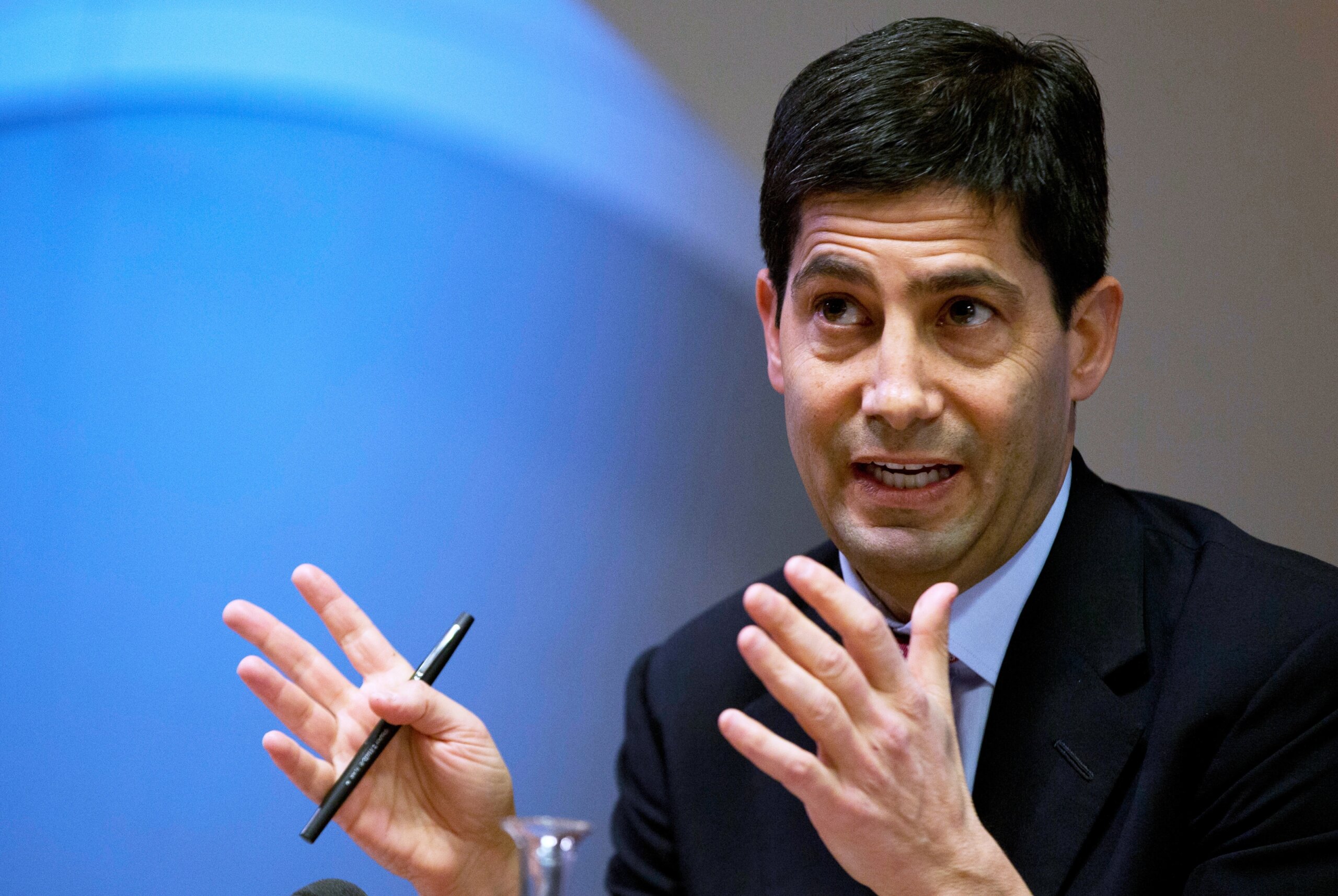
Kevin Warsh’s nomination as chair could spark sweeping changes to the central bank—if he can navigate the political gauntlet ahead
President Donald Trump nominated Kevin Warsh as the next Federal Reserve chair on January 30, ending months of speculation and launching what promises to be one of the most consequential leadership transitions in the central bank’s modern history. The choice of Warsh, a former Fed governor who has publicly called for “regime change” at the institution, signals an impending reconsideration of the Fed’s expanded mandate and operational independence—even as markets rallied on relief that Trump selected a relatively orthodox candidate over potentially more pliable alternatives.
The announcement, delivered via Truth Social with characteristic Trumpian superlatives, positions Warsh to succeed Jerome Powell when his term expires in May. Yet beneath the market’s initial sigh of relief—the dollar surged nearly one percent while gold plummeted almost five percent—lies a more complex and potentially destabilizing dynamic. Warsh arrives at the Fed not as a continuity candidate but as an avowed critic who has spent years arguing that the institution has strayed dangerously from its core mission, expanded its balance sheet recklessly, and lost the credibility necessary to anchor inflation expectations.
“The credibility deficit lies with the incumbents that are at the Fed, in my view,” Warsh declared during a CNBC interview last July, using language rarely directed at the central bank by prospective chairs. This forthright assessment of the institution he now seeks to lead encapsulates the tension at the heart of his nomination: Warsh brings impeccable credentials and crisis-tested experience from his 2006-2011 tenure as a Fed governor during the global financial meltdown, yet he returns as something closer to a reformer than a steward.
The case for overhaul
Warsh’s critique of the Federal Reserve extends well beyond the tactical disagreements over interest rate policy that typically animate debates about monetary management. Instead, he has articulated a fundamental challenge to what he characterizes as “mission creep”—the Fed’s gradual expansion into climate risk assessment, diversity initiatives, and an arsenal of unconventional policy tools that, in his view, have politicized the institution and undermined its independence.
During an April lecture hosted by the Group of Thirty, Warsh argued that “the Fed’s current wounds are largely self-inflicted.” His prescription involves what he has termed a new “Treasury-Fed accord,” invoking the 1951 agreement that liberated the central bank from its obligation to support government bond prices. Such an accord, Warsh contends, would establish clearer boundaries around the Fed’s balance sheet management and restore a division of labor between monetary and fiscal authorities that has eroded over successive crises.
The intellectual coherence of Warsh’s position stands in stark contrast to the political pressures that brought him to this juncture. Trump has berated Powell relentlessly for maintaining rates he considers excessively restrictive, demanded cuts to levels historically associated with economic distress, and even launched a Justice Department criminal investigation into the Fed chair over renovation cost overruns—an episode that shocked senators from both parties and raised profound questions about central bank independence. Trump praised Warsh effusively, predicting he would “go down as one of the GREAT Fed Chairmen, maybe the best,” yet this endorsement comes freighted with expectations that may prove incompatible with the institutional reforms Warsh has long advocated.
The paradox of the hawk turned dove
Warsh built his reputation during his first Fed stint as an inflation hawk who frequently warned of price pressures that never materialized. During the recovery from the 2008 crisis, when unemployment hovered near ten percent, he persistently cautioned about upside inflation risks—a position that, in retrospect, appears to have unnecessarily constrained the Fed’s support for a struggling economy. This history makes his recent evolution toward endorsing rate cuts all the more noteworthy, and potentially suspect.
The transformation appears rooted in Warsh’s conviction that artificial intelligence and deregulation are ushering in a productivity renaissance that will allow faster growth without inflation—a thesis he outlined in a January 2025 Wall Street Journal column arguing that “the Trump administration’s strong deregulatory policies, if implemented, would be disinflationary” and that cuts in government spending would further reduce price pressures. This theoretical framework conveniently aligns with Trump’s political imperatives, raising questions about whether Warsh’s intellectual journey reflects genuine economic analysis or strategic positioning for the role he now seeks.
Markets appear uncertain how to reconcile these competing signals. As reported by Bloomberg, the dollar and short-dated Treasuries rallied on relief that Trump selected Warsh “rather than someone seen as more willing to ignore inflation and slash interest rates,” yet analysts remain skeptical about his newfound accommodation. Deutsche Bank analysts suggested they “do not view him as structurally dovish” despite his recent rhetoric, while University of Michigan economist Justin Wolfers noted that Warsh’s hawkish record represents “exactly not who the president wants,” raising concerns that “deals were made.”
The confirmation crucible
Even assuming Warsh’s nomination survives the Senate Banking Committee—itself far from assured—he faces structural constraints that may frustrate both his reformist ambitions and Trump’s demand for aggressive rate cuts. Interest rate decisions are made not by the chair alone but by the twelve-member Federal Open Market Committee, which includes seven governors and five rotating regional bank presidents. As the Council on Foreign Relations observed, “while the chair presides over the committee, he cannot dictate policy without securing the support of a majority of its members.”
Current committee members have shown little appetite for the dramatic easing Trump envisions. The Fed’s December projections indicated just one quarter-point cut expected in 2026, with policymakers citing inflation that remains stubbornly above the two percent target at 2.7 percent. Warsh would need to build consensus among colleagues, some of whom may view his appointment as a politicization of the central bank, at precisely the moment when his patron demands results that economic conditions may not justify.
The confirmation process itself has become unexpectedly treacherous. Senator Thom Tillis of North Carolina, a crucial Republican vote on the narrowly divided Banking Committee, has vowed to oppose any Fed nominee until the Justice Department probe of Powell is resolved—a probe widely viewed as political retaliation. As NBC News reported, Senate Majority Leader John Thune acknowledged that without Tillis’s support, Warsh could “probably not” win confirmation. Democratic senators, meanwhile, have denounced the nomination as fundamentally compromised, with Senator Elizabeth Warren calling on Republicans to block the pick unless Trump ends his “witch hunts” against Powell and Governor Lisa Cook.
Global reverberations
The implications extend well beyond domestic monetary policy. Warsh’s potential chairmanship arrives at a moment of extraordinary fragility in the international financial architecture. Trump’s erratic foreign policy—including threats against Greenland and sweeping tariff proposals—has already undermined confidence in American institutions. The spectacle of a president openly attempting to bend the Fed to his will, backed by criminal investigations and threats to fire sitting governors, has sent a chilling message to central bankers and finance ministers worldwide about the durability of American commitment to rules-based governance.
Atlantic Council experts noted that “if Warsh wants to cement the Fed’s standing, he will need to act—and be seen to act—as an independent guardian of price stability and full employment.” Yet achieving this will require navigating between Trump’s demands for accommodation and the Fed’s institutional imperative to maintain credibility. The risk is that Warsh becomes neither effective reformer nor trusted independent actor, but rather a chair whose every decision is scrutinized for evidence of political influence—a dynamic that could prove far more corrosive to Fed independence than any specific policy choice.
Markets have begun pricing in these uncertainties. The initial relief that greeted Warsh’s selection has given way to more sober assessments as investors contemplate the path ahead. According to CNBC, precious metals experienced historic volatility, with silver plunging thirty percent in its worst day since 1980—a dramatic unwinding of positions that had accumulated amid fears of Fed politicization and dollar debasement. This suggests markets are betting that Warsh will prove more institutionally conservative than feared, yet they remain vigilant for signs that political pressures will overwhelm technocratic judgment.
The productivity wager
At the core of Warsh’s intellectual framework lies a bet on supply-side transformation. He contends that artificial intelligence, deregulation, and efficiency gains can deliver the holy grail of economic policy: robust growth with subdued inflation. If correct, this would allow the Fed to cut rates while maintaining price stability, satisfying Trump’s political demands without sacrificing the institution’s credibility.
Yet this argument confronts considerable skepticism. The promised productivity boom from previous technological revolutions—personal computers, the internet, mobile computing—took years to materialize in aggregate statistics, and often arrived alongside disruptive transitions that central banks struggled to navigate. Warsh has criticized the Fed’s “bloated balance sheet” and called for significant reductions as reported by Yahoo Finance, but shrinking the balance sheet while simultaneously cutting rates presents technical and communications challenges that could roil markets accustomed to the Powell Fed’s cautious incrementalism.
Moreover, the productivity thesis serves conveniently to reconcile Warsh’s hawkish past with his dovish present, raising questions about whether it represents rigorous analysis or motivated reasoning. If inflation proves more persistent than his framework suggests—whether due to Trump’s tariffs, immigration restrictions, or other supply constraints—Warsh will face an excruciating choice between vindicating his intellectual evolution by staying accommodative or reverting to his inflation-fighting instincts and incurring presidential wrath.
Powell’s shadow
One factor that may complicate Warsh’s transition has received insufficient attention: Jerome Powell could choose to remain on the Board of Governors even after his chairmanship expires. While most chairs have resigned entirely upon losing their leadership role, Powell’s term as a governor extends until early 2028, and there are indications he may stay to serve as a counterweight to political pressure.
Such a scenario would present Warsh with a formidable challenge. Powell commands enormous respect within the institution and global financial community, having navigated the pandemic recession, the subsequent inflation surge, and now Trump’s unprecedented assault on Fed independence with a calm determination that has largely maintained market confidence. His presence on the board as a voting member would serve as a constant reminder of alternative approaches and potentially rally committee members resistant to Warsh’s reforms or susceptible to presidential pressure.
The way forward
Kevin Warsh’s nomination represents a pivotal moment for American economic governance. His potential chairmanship could catalyze an overdue reckoning with the Fed’s expanded mandate, bloated balance sheet, and tendency toward what he views as technocratic overreach. Alternatively, it could mark the beginning of a more politically pliable central bank that subordinates rigorous economic analysis to executive branch preferences—precisely the outcome that central bank independence was designed to prevent.
The most likely path lies somewhere between these extremes. Warsh possesses the credentials and crisis experience to command respect, the intellectual framework to justify policy choices that may diverge from both Trump’s demands and the Powell Fed’s approach, and sufficient political acumen to navigate the treacherous confirmation process ahead. Yet he assumes office at a moment when the Fed’s independence has never been more contested, when inflation remains above target despite three rate cuts, when fiscal deficits are expanding rapidly, and when global economic conditions remain volatile and uncertain.
The ultimate test will be whether Warsh can execute his vision of Fed reform while maintaining the institution’s credibility and independence—or whether the political circumstances of his appointment will overwhelm his reformist intentions, leaving the Federal Reserve neither fish nor fowl but rather an institution fundamentally changed in ways that undermine its effectiveness. For investors, policymakers, and citizens navigating an increasingly uncertain economic landscape, the answer to this question will shape not just interest rates and inflation outcomes, but the very architecture of American economic governance for decades to come.
As markets digest the Warsh nomination and prepare for his confirmation hearings in the spring, one reality has become clear: the Powell era’s studied pragmatism and consensus-driven incrementalism is ending. What replaces it—whether constructive reform or corrosive politicization—remains the most consequential economic policy question of 2026.


Barclays reported second-quarter income of £8.3 billion, up £1.2 billion from a year earlier, and upgraded its full-year 2026 income target even as operating expenses climbed 7% year-on-year — a mixed but ultimately reassuring signal for UK banking-sector health as the country navigates elevated gilt yields and a new premiership.
Income Growth Outpaces a Rise in Costs
Barclays reported second-quarter operating expenses of £4.5 billion, up 7% year-on-year, which the bank attributed to business growth, inflation, and increased investment spending, according to CNBC’s markets coverage. Despite the cost increase, income rose to £8.3 billion, and adjusted earnings per share beat Wall Street consensus, prompting shares to initially react positively before falling more than 7% amid broader market volatility on the results day.
Group Chief Executive C.S. Venkatakrishnan struck a confident tone on the outlook, saying the bank was upgrading its 2026 Group income target to approximately £31.5 billion and remained committed to delivering all financial and distribution targets through 2028, according to the same CNBC report.
Why the Results Matter Beyond Barclays
The results land at a delicate moment for UK financial markets more broadly. Ten-year gilt yields have been trading near 5% amid uncertainty over new Prime Minister Andy Burnham’s fiscal programme, while 30-year yields — sensitive to long-term fiscal credibility — have hovered near multi-year highs. A major UK bank posting income growth and raising its full-year guidance amid that backdrop offers a data point suggesting the underlying corporate and consumer credit environment remains healthier than the gilt market’s elevated risk pricing might suggest on its own.
Context: A Resilient Consumer Backdrop
Barclays’ results also arrive alongside broader UK data that has surprised to the upside. UK retail sales rose 1% in June against expectations for a 0.3% decline, while consumer confidence climbed to a six-month high in July, supported by warmer weather and a spending lift tied to the football World Cup — trends that plausibly support the credit and transaction-fee income underpinning Barclays’ income beat. Annual consumer price inflation, meanwhile, slowed to a 15-month low of 2.6% in June, giving the Bank of England room to hold interest rates steady at its policy meeting this week.
The Cost Pressure Story Isn’t Unique to Barclays
The 7% rise in Barclays’ operating expenses reflects a broader pattern across UK banking: inflation-driven wage costs, continued investment in technology and compliance infrastructure, and the general cost of doing business in a higher-rate environment. How rival UK lenders navigate the same pressures in their own upcoming results will be a key signal of whether Barclays’ income upgrade reflects bank-specific execution strength or a sector-wide tailwind from resilient consumer activity.
What to Watch
Barclays’ upgraded £31.5 billion income target sets a clear benchmark against which the rest of 2026 results will be measured, while the sustainability of the current cost growth rate — set against a Bank of England policy backdrop still calibrated around inflation risk — will determine whether margin expansion continues into 2027. Investors will also be watching how the bank’s guidance holds up if gilt-market volatility around the new government’s fiscal plans intensifies.
Analysis
Global Central Bank Divergence 2026: Why the Fed, BoE, BoJ, and PBoC Are All Moving Differently
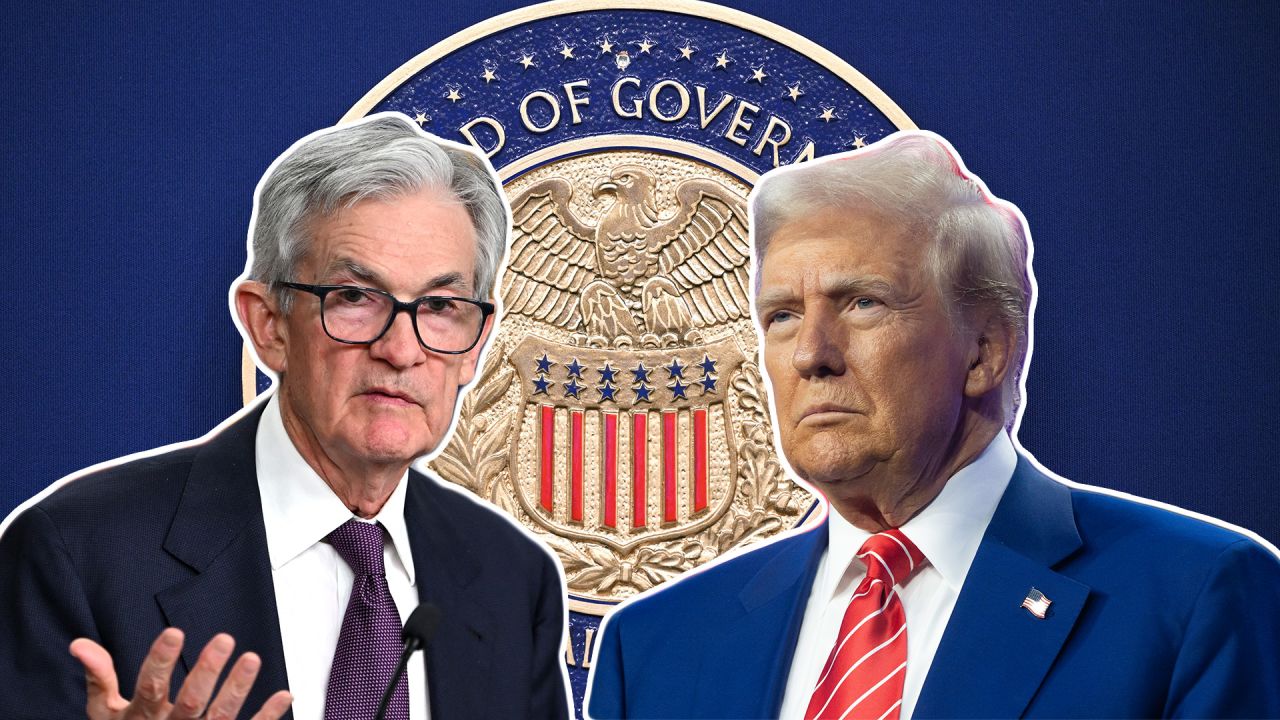
The world’s major central banks are no longer moving in anything resembling lockstep. The Federal Reserve is watching a weakening labor market while weighing energy-driven inflation risk, the Bank of Japan is scaling back bond purchases into a fiscal expansion, the Bank of Russia is cutting rates through sanctions-driven stagnation, and the Bank of England is openly discussing a hike rather than the cuts it signaled just months ago, a divergence in global monetary policy that reflects how unevenly the Iran war’s economic shock has landed across different economies.
The Fed’s Data-Dependent Pivot
Federal Reserve Chairman Kevin Warsh has explicitly asked markets to look to incoming data rather than central bank guidance to map the path for US interest rates, a communication shift that took on new significance after June’s jobs report showed just 57,000 new positions, roughly half the expected pace, according to Yahoo Finance’s markets coverage. Warsh has separately said inflation risks have eased substantially, a combination that has markets betting on a more accommodative Fed even as the central bank has offered no formal commitment ahead of its July 30 decision.
The Bank of England’s Reversal
Few central banks illustrate the scale of the pivot as clearly as the Bank of England. Governor Andrew Bailey said market pricing for two rate cuts this year had looked reasonable before the Iran war lifted inflation risks, according to the Credit Protection Association’s reporting, a statement that effectively closed the door on the easing path the Bank had signaled entering 2026. With UK inflation forecast to climb back toward 3.5% by year end and the base rate held at 3.75%, RSM UK’s analysis suggests a hike, not a cut, is now the more live possibility for the Bank’s July 30 decision, timed to land the same day as the Fed’s own announcement.
Canada and the Bank of Canada’s Cautious Hold
The Bank of Canada has held its policy rate at 2.25% since the spring, balancing a genuinely fragile domestic economy, technically in recession by some measures, against the same energy-driven inflation pressure affecting the UK, according to the central bank’s own announcement. Unlike the Fed or Bank of England, the Bank of Canada’s dilemma is compounded by an unresolved CUSMA trade review, meaning its policy path depends as much on trade negotiation outcomes as on conventional inflation and employment data.
Russia’s Disinflation Campaign, Slowed but Not Abandoned
At the opposite extreme sits the Bank of Russia, which has cut its key rate eight consecutive times since June 2025, from a record 21% down to 14.25% by its June 2026 decision, even as annual inflation remains at 5.6%, well above its 4% target, according to the central bank’s own data. Governor Elvira Nabiullina’s cutting cycle reflects a fundamentally different set of pressures than Western central banks face: a wartime economy where fiscal policy, not conventional demand, drives the inflation picture, and where the central bank’s June cut of just 25 basis points, smaller than the market’s expected 50, signals genuine caution about cutting too fast into persistent pro-inflationary risk from higher domestic energy costs.
Asia’s Split Response
Indonesia and Malaysia illustrate how differently emerging Asian economies are navigating the same global energy shock. Bank Indonesia has held its rate at 4.75% for seven consecutive meetings specifically to defend the rupiah, which has weakened 3.6% year-to-date, according to McKinsey’s regional review, prioritizing currency stability over the growth-supportive easing its 5.61% GDP growth might otherwise justify. Bank Negara Malaysia, by contrast, has benefited from a currency that has held relatively firm, giving it more flexibility, though inflation drifting toward the top of its 1.5% to 2.5% target range, per The Edge Malaysia’s reporting, suggests that flexibility may narrow through the second half of the year.
Japan sits furthest from the rest of the pack. The Bank of Japan has been reducing its own bond purchases even as 10-year Japanese government bond yields have climbed above 2.75%, their highest level since May 2026, according to Trading Economics, a tightening-adjacent move driven as much by concern over Prime Minister Sanae Takaichi’s fiscal expansion plans as by conventional inflation targeting.
China’s Different Problem Entirely
China’s central bank faces a problem none of its peers share: six consecutive quarters of deflation rather than inflation. Societe Generale economist Wei Yao has suggested Chinese bond yields could fall to record lows in 2026 as the People’s Bank of China continues easing, a view consistent with Beijing’s own base case of roughly RMB 1 trillion in additional fiscal stimulus alongside 20 basis points of rate cuts and 50 basis points of reserve requirement ratio cuts, according to Citi Research’s 2026 outlook, cited via Asia Times’ coverage of the Politburo’s domestic demand pivot.
What This Divergence Actually Means
The practical consequence of seven major central banks pursuing seven distinct policy paths is a global capital markets environment where currency volatility, carry trade dynamics, and cross-border capital flows have become considerably harder to forecast using any single macro framework. When Japan’s ultra-low yields anchored global borrowing costs and most Western central banks moved in broad cyclical alignment, currency and rate forecasting rested on relatively stable assumptions about global monetary conditions. That anchor is now gone. Investors positioning across UK gilts, US Treasurys, Japanese government bonds, and emerging Asian debt in the second half of 2026 face a genuinely fragmented policy landscape, one where the same global shock, the Iran war’s energy price spike, has produced hikes, holds, and cuts in near-equal measure depending entirely on each economy’s starting fiscal position, currency exposure, and domestic political constraints.

The Asian Development Bank (ADB) has formally approved a landmark $700mn loan for Pakistan’s insurance sector, signaling an aggressive attempt to fortify the country’s fragile financial architecture against systemic climate and economic shocks. Signed in Islamabad by regional directors, the capital injection arrives at a delicate moment for the South Asian nation. With domestic insurance penetration languishing at historic lows, this massive facility represents more than a simple fiscal cushion. It is a legally binding blueprint designed to restructure how risk is priced, managed, and mitigated across one of the least developed financial markets in Asia.
Pakistan’s macroeconomic situation remains precarious. While recent agreements with the International Monetary Fund have temporarily stabilized foreign exchange reserves, structural vulnerabilities run deep. The country remains exceptionally exposed to environmental catastrophes. The devastating floods of 2022, for instance, caused over $30 billion in economic damage, yet less than 2% of those losses were covered by commercial insurance policies, according to data from the World Bank.
This lack of a domestic safety net forces the federal government to rely heavily on emergency deficit spending, worsening an already critical public debt burden. The domestic insurance sector has historically failed to expand beyond basic corporate coverage and mandatory automotive policies. By injecting capital directly into regulatory reform and market modernization, this new multilateral program intends to build a self-sustaining risk ecosystem that reduces the state’s direct liability when the next inevitable crisis hits.
The Asian Development Bank program is structured around three core pillars managed alongside the Securities and Exchange Commission of Pakistan (SECP). On October 14, 2025, initial program drafts detailed that the initial $300 million tranche will focus immediately on legislative overhauls. This includes updating the Insurance Ordinance of 2000 to align with international risk-based capital models. By forcing domestic firms to maintain capital reserves proportional to their actual underwriting risk, the regulator hopes to weed out insolvent operators and build institutional trust.
The remaining $400 million is tied to developing specialized market infrastructure. A primary objective is the creation of a national catastrophe reinsurance pool, which will distribute large-scale agricultural and infrastructure risks across international markets. Data from the Asian Development Bank reveals that current domestic reinsurance capacity cannot support even 10% of Pakistan’s commercial property assets. This shortfall forces local insurers to pass expensive premiums onto small businesses or avoid writing disaster policies altogether.
Furthermore, the loan introduces strict digital transformation mandates. Under the supervision of SECP Chairman Akif Saeed, domestic insurance companies will be required to build open-API architectures. This technological shift will enable mobile microinsurance platforms to reach rural populations. Currently, over 80% of Pakistan’s agricultural workforce operates entirely outside the formal banking system. Bringing these citizens into the financial fold via digital crop and health insurance is vital for long-term stability.
The capital will also support the modernization of the state-owned National Insurance Company Limited (NICL). Long criticized for administrative inefficiencies, NICL will undergo a complete digital audit to streamline claims processing. The goal is to reduce the average claim settlement time from nine months down to less than thirty days, setting a new operational benchmark for the private sector to follow.
To ensure compliance, the Ministry of Finance will establish a dedicated oversight committee. This body will publish quarterly progress reports on fund utilization, directly matching benchmarks set by the Securities and Exchange Commission of Pakistan. This level of transparency aims to reassure external bondholders that the funds are driving deep structural change rather than merely patching short-term fiscal deficits.
Pakistan Financial Sector Reforms
Moving beyond the immediate mechanics of the loan, the structural intervention reveals a deeper macroeconomic reality. Multilateral lenders are shifting away from general budgetary support toward targeted financial market interventions. The choice to focus heavily on insurance highlights a recognition that traditional banking sector liquidity cannot solve long-term capital scarcity. Without a functioning insurance market, local commercial banks remain hesitant to extend long-term credit for infrastructure or industrial expansion.
Why does Pakistan’s insurance sector require structural reform?
Pakistan’s insurance sector requires structural reform because its penetration rate sits below 1% of GDP, leaving the population exposed to macroeconomic and climate shocks. Outdated regulatory frameworks, low consumer trust, and insufficient capitalization prevent domestic insurers from absorbing large-scale commercial risks or offering viable microinsurance products.
This low penetration rate creates a dangerous loop. Because the domestic market is small, international reinsurers charge a premium to cover Pakistani risks. This keeps insurance costs prohibitively high for small and medium-sized enterprises (SMEs). According to a report by the Organization for Economic Co-operation and Development, economies with insurance penetration rates above 3% recover from economic shocks nearly three times faster than those dependent on ad-hoc state aid.
To contextualize Pakistan’s position relative to its regional peers, the stark divergence in financial depth becomes obvious when looking at insurance penetration across South Asia:
| Country | Insurance Penetration (% of GDP) | Primary Regulatory Model | State-Owned Market Share |
| India | 4.2% | Risk-Based Capital | Moderate (~40%) |
| Sri Lanka | 1.2% | Solvency II Equivalent | Low (~15%) |
| Bangladesh | 0.55% | Fixed Capital | High (~60%) |
| Pakistan | 0.91% | Solvency I (Outdated) | High (~50%) |
The structural overhaul also targets the core asset allocation of Pakistani insurance companies. Historically, domestic insurers have parked up to 85% of their premium reserves in low-yielding government bonds. While this strategy offers safe returns, it deprives the private sector of vital investment capital. The new risk-based capital framework will incentivize insurance firms to diversify their portfolios into corporate debt, venture funds, and green infrastructure bonds, fundamentally altering the flow of liquidity throughout the wider economy.
This portfolio diversification is expected to unlock roughly $1.5 billion in private sector investment over the next five years. By shifting away from sovereign debt, insurance companies will finally begin functioning as true institutional investors. This transition is critical for deepening Pakistan’s capital markets and reducing the corporate sector’s reliance on expensive, short-term commercial bank loans.
The downstream consequences of this capital injection will reshape the landscape of climate risk mitigation finance across South Asia. As climate patterns become increasingly erratic, the financial burden of rebuilding public infrastructure cannot rest solely on the national budget. By establishing a formalized framework for catastrophe bonds and weather-indexed insurance, Pakistan is laying the groundwork for private capital to absorb environmental risks.
For local businesses and agricultural operators, the rollout of inclusive insurance growth initiatives will alter daily operations. Consider a typical farmer in the Punjab region. Under the current system, a single season of erratic monsoon rainfall can result in total financial ruin, forcing the liquidation of assets and long-term poverty. Introducing reliable, low-cost crop insurance creates an economic floor, ensuring that families can purchase seeds and fertilizer for the following season regardless of weather outcomes.
On a macro scale, this shift stabilizes consumer demand and maintains rural purchasing power during downturns. The Financial Stability Board has consistently pointed out that unmitigated environmental risks pose a direct threat to banking stability. When agricultural yields collapse, non-performing loans spike across rural banking networks. By insulating farmers, the insurance sector acts as a shock absorber for the entire financial network.
Furthermore, international credit rating agencies monitor these developments closely. When agencies like Moody’s or Fitch assess Pakistan’s sovereign credit rating, the lack of disaster risk financing has historically acted as a significant negative factor. Demonstrating a structured, well-capitalized insurance mechanism lowers the country’s overall risk profile. Over time, this improvement can lower borrowing costs for both the state and private corporations looking to access international bond markets.
Private equity firms are already taking note of these regulatory changes. Several regional financial technology startups have initiated talks with local partners to launch dedicated insurtech apps. These ventures aim to capitalize on Pakistan’s high mobile penetration rate, transforming insurance from an elite corporate luxury into an accessible, everyday retail product for millions of previously unserved citizens.
Debt-Funded Financial Reforms
While the program’s objectives are ambitious, critics argue that loading another $700 million in foreign-currency debt onto Pakistan’s balance sheet carries profound risks. The country’s external debt obligations already consume a massive portion of its annual tax revenues. Some independent analysts suggest that using dollar-denominated loans to fund long-term domestic institutional adjustments creates a dangerous currency mismatch. If the Pakistani rupee depreciates significantly against the US dollar over the next decade, the cost of servicing this loan could vastly outweigh the economic benefits generated by the insurance sector.
The picture is more complicated when examining institutional capacity. Passing progressive legislation is simple compared to enforcing it across a resistant financial sector. Many smaller, family-owned insurance firms may lack the technical capabilities or capital depth to comply with the new risk-based guidelines. Forcing these entities into rapid compliance or liquidation could lead to market consolidation, reducing competition and leaving consumers with fewer choices and higher premiums.
Furthermore, skeptics point to the historical track record of state-led modernization schemes in Pakistan. Previous attempts to reform public enterprises have frequently stalled due to political interference and bureaucratic inertia. Without sustained political will and total regulatory independence for the SECP, there is a legitimate concern that these funds could be absorbed by administrative overhead rather than driving meaningful market change.
To mitigate these structural risks, external auditors must be given absolute authority to halt tranche releases if specific, pre-negotiated operational milestones are missed. Reliance on internal progress metrics has failed past reform programs, making independent verification a vital prerequisite for this initiative’s long-term success.
The ADB’s $700 million program is an unhedged bet on the transformative power of regulatory modernization. It attempts to address a fundamental structural vulnerability that has left Pakistan’s population and economy exposed to escalating macroeconomic and environmental shocks. Success will not be measured by the speed at which the capital is disbursed, but by whether the SECP can successfully build a competitive, well-capitalized marketplace that earns public trust.
If executed correctly, this initiative will provide Pakistan with the financial shock absorbers necessary to withstand future crises without relying on emergency bailouts. If it fails, it will simply become another line item on an already unsustainable national debt ledger. The coming years will determine whether this capital injection marks the birth of a resilient domestic risk market or stands as a costly reminder of the limits of debt-funded institutional engineering.
Building economic resilience requires structural foundations capable of outlasting temporary political cycles.

Business Insurance for Digital Exports: Protecting Your Company in the AI Era

Real Estate Crash Predictions 2026: Data-Backed Regional Guide

What is a “Lead-Left” Bank? Unpacking Morgan Stanley’s Role in Anthropic’s Mega-IPO

Is SPY Overvalued in September 2026? Fed Rate Hike Odds & Intrinsic Value

Pakistan’s KSE-100 Nears Record Territory Even as the Trade Gap Persists

US Consumer Sentiment Sinks as Retail Sales Drop

Barclays Q2 2026 Results: Income Beats, Costs Rise 7%

Pakistan’s Remittance Lifeline: Why Gulf Exposure Is a Hidden Risk

Dubai’s Rise to the World’s 7th Financial Hub: Inside the D33 Push

China EV Exports Hit Record High in 2026

UK’s “National Contributions Tax” Explained: Burnham-Era Reform 2026

Russia’s Strange Problem in 2026: Its Currency Is Too Strong

Section 301 Forced Labor Tariffs 2026: 60 Countries Affected

UK National Contributions Tax: Burnham’s Radical Tax Plan

Top 15 Stocks for Investment in 2026 in PSX: Your Complete Guide to Pakistan’s Best Investment Opportunities
Top 15 Stocks for Investment in 2026 in PSX: Your Complete Guide to Pakistan’s Best Investment Opportunities

Debunking IMF Program Myths: Reconfiguring Engagement for True National Ownership in a Volatile World

Top 10 Mutual Fund Managers in Pakistan for Investment in 2026: A Comprehensive Guide for Optimal Returns

What the U.S. Attack on Venezuela Could Mean for Oil and Canadian Crude Exports: The Economic Impact

China’s 50% Domestic Equipment Rule: The Semiconductor Mandate Reshaping Global Tech

15 Most Lucrative Sectors for Investment in Pakistan: A 2025 Data-Driven Analysis

Pakistan’s Export Goldmine: 10 Game-Changing Markets Where Pakistani Businesses Are Winning Big in 2025
15 Most Lucrative Sectors for Investment in Pakistan: A 2025 Data-Driven Analysis
15 Most Lucrative Sectors for Investment in Pakistan: A 2025 Data-Driven Analysis

Pakistan’s Stock Market Renaissance: How 2025’s Hottest Investment Opportunity Is Democratizing Wealth—A Complete Beginner’s Guide

Pakistan’s Economic Outlook 2025: Between Stabilization and the Shadow of Stagnation
Pakistan’s Economic Outlook 2025: Between Stabilization and the Shadow of Stagnation

China’s Property Woes Could Last Until 2030—Despite Beijing’s Best Censorship Efforts
-
 Markets & Finance8 months ago
Top 15 Stocks for Investment in 2026 in PSX: Your Complete Guide to Pakistan’s Best Investment Opportunities
-
Markets & Finance8 months ago
Top 15 Stocks for Investment in 2026 in PSX: Your Complete Guide to Pakistan’s Best Investment Opportunities
-
 Analysis7 months ago
Debunking IMF Program Myths: Reconfiguring Engagement for True National Ownership in a Volatile World
-
 Investment8 months ago
Top 10 Mutual Fund Managers in Pakistan for Investment in 2026: A Comprehensive Guide for Optimal Returns
-
 Global Economy8 months ago
What the U.S. Attack on Venezuela Could Mean for Oil and Canadian Crude Exports: The Economic Impact
-
 Asia8 months ago
China’s 50% Domestic Equipment Rule: The Semiconductor Mandate Reshaping Global Tech
-
 AI9 months ago
15 Most Lucrative Sectors for Investment in Pakistan: A 2025 Data-Driven Analysis
-
 Exports9 months ago
Pakistan’s Export Goldmine: 10 Game-Changing Markets Where Pakistani Businesses Are Winning Big in 2025