
Asia
10 Reasons Why Austerity Measures Will Help Boost Pakistan’s Economy: Practices and Prospects

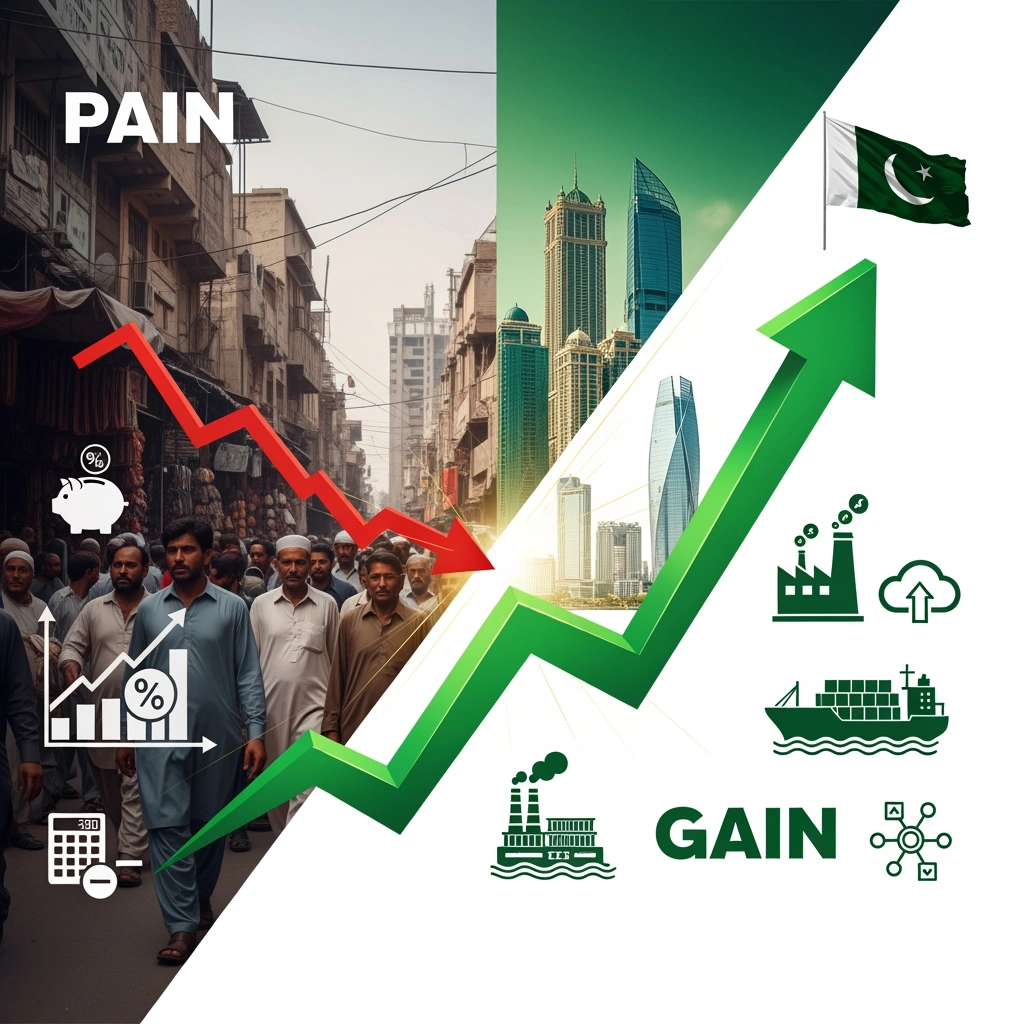
The summer of 2025 marked a quiet turning point for Pakistan’s economy. After years of lurching from one balance-of-payments crisis to another, foreign exchange reserves climbed past $21 billion—their highest level in over a decade. Inflation, which had terrorized households by peaking above 38% in mid-2023, fell to single digits. The rupee stabilized. The International Monetary Fund projected GDP growth of 3.6% for fiscal year 2026, a modest figure by global standards but a meaningful recovery for a country that had teetered on the edge of default just two years earlier.
These improvements did not arrive by accident. They emerged from a painful, politically fraught program of austerity measures Pakistan economy policymakers implemented under the IMF’s $7 billion Extended Fund Facility agreed in September 2024. The government slashed subsidies on fuel and electricity, raised tax revenues through aggressive broadening of the tax net, cut public sector development spending, and imposed discipline on loss-making state-owned enterprises. Civil servants saw hiring freezes. The poor faced higher electricity bills. The middle class watched as government services contracted.
Austerity has always been controversial. Critics argue it deepens recessions, punishes the vulnerable, and serves the interests of international creditors rather than citizens. Pakistan’s streets have echoed with protests against IMF-dictated reforms, and understandably so—when a family’s monthly electricity bill doubles, abstract arguments about fiscal sustainability offer cold comfort. Yet the alternative Pakistan faced was not between austerity and some pain-free path to prosperity. It was between controlled adjustment and uncontrolled collapse: hyperinflation, sovereign default, inability to import essential goods, and the social chaos that accompanies economic disintegration.
This article makes a data-driven case that austerity measures, despite their immediate hardships, represent necessary medicine for Pakistan’s long-term economic health. Drawing on recent evidence from Pakistan’s stabilization program, comparative examples from emerging markets that successfully reformed, and rigorous analysis from institutions like the IMF, World Bank, and leading economic research centers, we examine ten specific mechanisms through which fiscal discipline can catalyze sustainable growth. We acknowledge the real costs, particularly for vulnerable populations, while arguing that well-designed austerity—coupled with social protections and structural reforms—offers Pakistan’s best path from chronic crisis to durable prosperity.
1. Restoring Fiscal Discipline and Reducing Chronic Deficits
Pakistan’s fiscal deficits have plagued economic stability for decades. Between 2008 and 2023, the country ran an average fiscal deficit exceeding 6% of GDP annually, according to World Bank data. This persistent overspending forced the government to borrow continuously, crowding out private investment and creating dangerous debt dynamics. By fiscal year 2023, total public debt had ballooned to approximately 78% of GDP, consuming nearly 40% of federal revenues just to service interest payments.
Austerity measures directly attack this structural imbalance. Pakistan’s FY2025 budget targeted a primary surplus—revenues exceeding non-interest expenditures—for the first time in years, a key IMF program requirement. The government achieved this through spending cuts totaling roughly 1.5% of GDP and revenue mobilization efforts adding another 1% of GDP. The IMF’s October 2025 review confirmed Pakistan met these fiscal targets, marking a decisive break from decades of indiscipline.
The mechanism is straightforward but powerful: lower deficits mean reduced borrowing needs, which frees up capital for productive private-sector investment rather than financing government consumption. When the government stops competing for domestic credit, interest rates can fall, making business expansion more affordable. Pakistan’s policy rate declined from 22% in mid-2024 to 15% by November 2025, partly reflecting improved fiscal credibility.
Critics rightly note that procyclical austerity—cutting spending during recessions—can deepen downturns. Pakistan’s GDP growth did slow to 2.4% in FY2024. Yet the counterfactual matters: without fiscal correction, Pakistan faced imminent default, which would have triggered far more severe contraction, as Argentina experienced in 2001 or Sri Lanka in 2022. The pain of adjustment, while real, remains preferable to the catastrophe of uncontrolled crisis.
2. Breaking the Cycle of External Borrowing and Debt Dependency
For decades, Pakistan has operated in a doom loop: fiscal and current account deficits necessitate foreign borrowing, which creates debt service obligations requiring more borrowing, eventually triggering balance-of-payments crises requiring IMF bailouts. Since 1988, Pakistan has entered 24 IMF programs—a record of serial dependence that signals fundamental policy failure.
Austerity measures target this cycle’s root causes. By reducing fiscal deficits, the government needs less external financing. By allowing the rupee to trade at market-determined rates rather than defending overvalued pegs—another key reform accompanying austerity—imports become less artificially cheap and exports more competitive, narrowing the current account gap. Pakistan’s current account deficit shrank from $17.5 billion in FY2022 to approximately $1 billion in FY2024, according to the State Bank of Pakistan, a dramatic adjustment.
Lower external financing needs translate to reduced vulnerability. When Pakistan can cover import needs from export earnings and remittances rather than borrowed dollars, it escapes the perpetual anxiety about whether the next loan tranche will arrive. Foreign exchange reserves, which had collapsed to barely three weeks of import cover in early 2023, rebuilt to over four months by late 2025—still modest by international standards but representing genuine breathing room.
The World Bank’s October 2025 Pakistan Development Update emphasized this stabilization as prerequisite for any sustainable growth strategy. Breaking free from serial IMF dependence requires enduring fiscal discipline, not because the IMF demands it but because the laws of economics do. Countries that perpetually spend beyond their means eventually face markets’ verdict, and that verdict is invariably harsh.

3. Rebuilding Investor Confidence Through Credible Policy Commitments
Capital is cowardly. It flees uncertainty and gravitates toward predictability. Pakistan’s history of policy reversals—implementing reforms under IMF pressure, then abandoning them once the program ends—has taught investors, both domestic and foreign, to treat Pakistani assets with extreme caution. Foreign direct investment collapsed to $1.9 billion in FY2023, among the lowest in South Asia relative to GDP size.
Austerity measures, particularly when embedded in multi-year IMF programs with regular reviews, signal credible commitment to macroeconomic stability. The September 2024 Extended Fund Facility spans 37 months with quarterly reviews—a structure that makes policy backsliding costly and transparent. This institutional scaffolding helps solve the time-consistency problem that plagues developing country policymaking: governments’ temptation to promise reforms but deliver populism.
Evidence of returning confidence has emerged. The Pakistan Stock Exchange’s KSE-100 index surged over 80% between September 2024 and November 2025, making it one of the world’s best-performing equity markets. Bloomberg reported that foreign portfolio investors returned after years of net outflows. While equity gains partly reflect low starting valuations, they also indicate investors pricing in reduced macroeconomic risk.
More critically, the cost of insuring Pakistan’s sovereign debt against default—measured by credit default swap spreads—declined by over 400 basis points between mid-2023 and late 2025, according to financial data providers. This translates to lower borrowing costs when Pakistan accesses international bond markets, saving taxpayers substantial sums. Fiscal discipline doesn’t just balance budgets; it rebuilds the trust that makes economic activity possible.
4. Forcing Efficiency in Bloated State-Owned Enterprises
Pakistan’s state-owned enterprises have functioned as employment agencies, political patronage machines, and fiscal black holes rather than commercially viable businesses. Pakistan International Airlines, the national power distribution companies, Pakistan Steel Mills, and numerous other SOEs collectively generated losses exceeding $3 billion annually—roughly 1% of GDP—while delivering unreliable services.
Austerity measures force confrontation with this dysfunction. IMF program requirements included ending automatic bailouts, implementing cost-recovery pricing for utilities, and beginning privatization or restructuring of the worst performers. The government raised electricity tariffs toward cost-recovery levels, eliminating subsidies that primarily benefited industrial and commercial users while being financed by regressive taxation. Pakistan Railways began route rationalization, cutting unprofitable services that drained resources.
These reforms generate two benefits. First, direct fiscal savings: every dollar not spent covering PIA losses or subsidizing artificially cheap electricity can fund infrastructure, education, or social protection. Second, efficiency gains: when enterprises face hard budget constraints, managers have incentives to cut waste, improve service, and innovate. Private sector participation, whether through management contracts or ownership transfer, brings commercial discipline.
The political difficulty of SOE reform cannot be understated. State enterprises employ hundreds of thousands; their unions wield considerable power. Yet as the Economist Intelligence Unit noted, Pakistan cannot afford to indefinitely subsidize inefficiency. Countries that successfully reformed SOEs—India in the 1990s, Egypt more recently—demonstrated that public sector downsizing, while painful in transition, releases resources for higher-productivity uses throughout the economy.
5. Broadening the Tax Base and Reducing Distortions
Pakistan’s tax-to-GDP ratio has long ranked among the world’s lowest for countries at its income level—barely 10% in recent years. This reflects not just evasion but fundamental design flaws: a narrow tax base heavily reliant on indirect taxes, widespread exemptions benefiting powerful constituencies, and minimal documentation of economic activity. The result is inadequate revenue for public goods and highly distortionary taxation.
Austerity-linked revenue reforms address these pathologies. The government expanded the tax net, adding hundreds of thousands of retailers and professionals to the income tax rolls through improved documentation systems. Agricultural income, long politically sacrosanct, faced new taxation in Punjab and Sindh provinces. Sales tax exemptions were curtailed. The Federal Board of Revenue increased collections by approximately 30% in FY2025 compared to the previous year, according to government data, though much work remains.
Broader tax bases permit lower rates, reducing distortions. When taxes fall on all economic activity rather than narrow sectors, rates can be moderate while generating adequate revenue. This improves efficiency—resources flow to productive uses rather than tax-minimization schemes. The IMF’s fiscal analysis emphasized that Pakistan’s challenge isn’t high tax rates but narrow coverage: closing loopholes generates more revenue and more fairness than squeezing existing taxpayers harder.
Tax reform also addresses inequality. Pakistan’s current system relies heavily on indirect taxes that burden the poor disproportionately. Shifting toward broader income taxation with progressive rates, while politically difficult, would make the system more equitable. Austerity programs that condition fiscal adjustment on such reforms don’t just reduce deficits—they restructure public finance toward sustainability and fairness.
6. Creating Fiscal Space for Targeted Social Protection
This reason may seem paradoxical: how does spending less create capacity to spend on social programs? The answer lies in composition and sustainability. Pakistan’s pre-austerity budget allocated enormous sums to untargeted subsidies—cheap electricity for wealthy neighborhoods, fuel subsidies benefiting car owners, food subsidies captured by millers and wholesalers. Meanwhile, direct assistance to the poorest remained minimal.
Austerity measures that cut untargeted subsidies while expanding means-tested cash transfers improve both fiscal arithmetic and social outcomes. Pakistan’s Benazir Income Support Programme expanded coverage and benefit levels even as overall spending fell, with disbursements reaching approximately 8 million families by late 2025. Beneficiaries receive quarterly cash payments digitally, reducing leakage and ensuring resources reach intended recipients.
The World Bank has documented that well-designed social safety nets make fiscal adjustment politically sustainable and economically beneficial. When vulnerable households receive direct support, they can maintain consumption despite subsidy cuts, preserving aggregate demand and enabling human capital investment. Children stay in school rather than entering labor markets; families access healthcare; consumption smoothing prevents permanent poverty traps.
Creating durable fiscal space requires breaking the addiction to poorly targeted spending. A dollar saved from subsidizing diesel for commercial transporters can fund five dollars of targeted assistance to the ultra-poor. Austerity that redirects rather than merely cuts transforms public finance from a patronage distribution mechanism into a development tool. This composition shift matters more than aggregate spending levels.
7. Stabilizing the Currency and Controlling Inflation
Pakistan’s inflation crisis of 2022-2023, with consumer prices rising nearly 40% year-over-year at the peak, devastated household purchasing power and eroded savings. Inflation is the cruelest tax, falling hardest on those least able to protect themselves. Its root causes included fiscal deficits monetized by the central bank, energy price shocks, and import compression triggering supply shortages.
Austerity measures attack inflation’s fiscal drivers. When governments finance deficits through central bank borrowing—printing money—the result is predictably inflationary. Reducing fiscal deficits eliminates pressure on the central bank to monetize debt, allowing monetary policy to focus on price stability. Pakistan’s State Bank largely ended government financing in 2024, a key program commitment that enabled credible monetary tightening.
Tighter fiscal policy also reduces aggregate demand pressure on prices. When the government competes less for goods, services, and labor, inflationary pressure subsides. Combined with exchange rate flexibility that prevents imported inflation from accumulating in suppressed form, these policies brought inflation down to 7.2% by October 2025, according to official statistics.
Currency stability followed. The Pakistani rupee, which had depreciated over 60% against the dollar between 2021 and 2023, stabilized around 280-285 rupees per dollar through late 2024 and 2025. This stability reduces business uncertainty, makes import planning feasible, and gradually rebuilds confidence in domestic currency savings. The Financial Times reported that currency stability has been central to Pakistan’s improved economic outlook, enabling businesses to plan and invest.
Lower inflation disproportionately benefits the poor, who hold few inflation hedges and spend large income shares on necessities. Austerity’s contribution to price stability represents perhaps its most immediate pro-poor outcome, even if politically less visible than subsidy cuts.
8. Encouraging Private Sector Investment and Entrepreneurship
Pakistan’s private sector has long operated in the shadows of a bloated public sector that crowds out investment, distorts markets through subsidies and protection, and creates uncertainty through erratic policy. The country’s gross fixed capital formation—investment in productive capacity—has languished below 15% of GDP, far short of the 25-30% typical of rapidly growing Asian economies.
Austerity-driven public sector retrenchment creates space for private initiative. When government withdraws from commercial activities—power distribution, airlines, manufacturing—opportunities open for private operators who can deliver services more efficiently. When fiscal discipline reduces government borrowing from domestic banks, credit flows to businesses rather than financing deficits. When exchange rates reflect market conditions rather than arbitrary pegs, entrepreneurs can plan investments with realistic assumptions.
Early evidence suggests response. The State Bank of Pakistan reported private sector credit growth accelerating to over 10% year-over-year by mid-2025, concentrated in manufacturing, construction, and agriculture. The International Finance Corporation noted increasing interest from foreign investors in Pakistani infrastructure and manufacturing as macroeconomic stability improved.
Entrepreneurship requires predictability. When inflation is stable, currencies don’t collapse, and policies aren’t reversed after elections, the calculus of long-term investment becomes feasible. Pakistan’s tech sector, despite challenges, has demonstrated this potential—companies like Airlift (though later failed), Bykea, and Daraz built businesses predicated on Pakistan’s large, young population. Macroeconomic stability allows such enterprises to scale.
The transition from public-led to private-led growth requires patience. Austerity creates necessary conditions—fiscal space, monetary stability, market-determined prices—but sufficient conditions require complementary reforms: contract enforcement, competition policy, infrastructure investment. Still, no country has achieved sustained growth without a vibrant private sector, and no vibrant private sector emerges amid fiscal chaos.
9. Sending Positive Signals to Multilateral Lenders and Credit Rating Agencies
Pakistan’s creditworthiness, as assessed by rating agencies and international lenders, directly affects borrowing costs and access to global capital markets. Ratings downgrades in 2022-2023 pushed Pakistan to the brink of default, with credit default swap spreads implying over 90% probability of sovereign default within five years. Such assessments become self-fulfilling: when markets price in default, borrowing costs rise prohibitively, making default more likely.
Austerity measures signal serious policy intent to rating agencies and multilateral institutions. When Pakistan met IMF program benchmarks—achieving primary surpluses, raising tax revenues, implementing structural reforms—ratings agencies responded. Moody’s upgraded Pakistan’s outlook from negative to stable in early 2025. Fitch made similar adjustments. These technical changes have real consequences: they expand the investor base willing to hold Pakistani debt and reduce required yields.
Multilateral support extends beyond the IMF. The World Bank approved a $2.2 billion development policy loan in 2025, contingent on reform implementation. The Asian Development Bank increased lending. Such multilateral engagement not only provides financing at below-market rates but also catalyzes private co-financing and signals international community endorsement.
The Atlantic Council’s analysis emphasized that Pakistan’s relationship with international financial institutions, while often politically controversial domestically, provides essential external validation of policy credibility. Markets trust IMF assessments of macroeconomic programs; their approval reduces perceived risk. This isn’t about surrendering sovereignty but recognizing that countries with weak domestic institutions can borrow credibility from strong international ones.
Long-term, Pakistan must build indigenous policy credibility that makes IMF programs unnecessary. Short-term, leveraging multilateral support to reduce borrowing costs saves taxpayer resources and buys time for institutional development.
10. Demonstrating Political Capacity for Difficult Reforms
Perhaps austerity’s most important long-term benefit is intangible: demonstrating that Pakistan’s political system can make and sustain difficult choices in the national interest despite short-term costs. This capacity has been questioned repeatedly as programs begin with fanfare but end in reversal. The currency of political credibility matters as much as fiscal credibility.
Successful implementation of austerity measures signals that civilian governments can govern responsibly even when electorally costly. The political coalition that implemented subsidy cuts, tax increases, and spending restraint in 2024-2025 faced protests and declining poll numbers. Yet they persisted, meeting program benchmarks quarter after quarter. This builds institutional memory and precedent: difficult reforms are possible.
Such demonstrations create path dependence toward good policy. When one government implements painful adjustment and the economy stabilizes, reversing course becomes politically harder—the public can see the connection between discipline and improvement. Opposition parties learn they cannot simply promise free lunches; they must propose credible alternatives. Political competition gradually shifts toward competent management rather than populist outbidding.
International observers watch closely. The Economist noted that Pakistan’s 2024-2025 program implementation represented its most serious reform effort in decades, raising hopes that the country might finally break the boom-bust cycle. If sustained through electoral transitions, these reforms could fundamentally alter Pakistan’s economic trajectory.
State capacity—the government’s ability to formulate and implement policy effectively—doesn’t emerge automatically. It’s built through practice, through navigating politically fraught decisions, through developing bureaucratic competence. Austerity programs, for all their flaws, force governments to build this capacity under international supervision and market pressure.
Austerity in Practice: Lessons from Pakistan’s Recent Reforms
The theoretical case for austerity means little without successful implementation. Pakistan’s 2024-2025 experience offers lessons in both achievements and challenges. The government’s approach combined traditional fiscal consolidation with targeted structural reforms, supported by international financing that smoothed adjustment costs.
Key successes included revenue mobilization exceeding targets. The Federal Board of Revenue implemented automated systems that cross-checked income tax returns against property holdings, bank accounts, and vehicle registrations—simple digitization that dramatically reduced evasion. Tax collection from retailers increased significantly through mandatory integration of point-of-sale systems with FBR databases. These administrative improvements prove that enforcement capacity matters as much as tax rates.
Energy sector reforms made substantial progress. Circular debt—arrears throughout the power sector value chain—had reached approximately $2.5 trillion rupees (over $9 billion) by 2023, requiring continuous fiscal injections. The government imposed cost-recovery tariffs, began privatizing distribution companies, and restructured power purchase agreements with independent producers. Circular debt growth slowed markedly, though eliminating the stock remains a long-term challenge.
Social protection expansion cushioned impacts. Benazir Income Support Programme beneficiaries received increased payments indexed to inflation, while coverage expanded in the poorest districts. Health insurance coverage through Sehat Sahulat expanded to over 100 million people, providing free healthcare at empaneled hospitals. These programs demonstrate that austerity and social protection are complements, not substitutes, when properly designed.
Challenges persist. Tax evasion remains endemic despite improvements; agricultural taxation faces political resistance; provincial governments lag behind federal reforms. State-owned enterprise restructuring proceeds slowly given union opposition and political sensitivities. Implementation capacity varies across provinces and institutions. The IMF’s 2025 review noted that while Pakistan has met fiscal targets, deeper structural reforms require sustained commitment beyond program duration.
Comparative lessons from other countries inform assessment. Egypt’s 2016-2019 IMF program achieved macroeconomic stabilization through similar measures—subsidy cuts, tax increases, exchange rate liberalization—while maintaining social spending. India’s 1991 reforms, though broader than austerity per se, demonstrated that crisis can catalyze transformative change when political leadership commits. Indonesia’s 1997-1998 adjustment, despite severe short-term pain, set foundations for subsequent growth.
The critical lesson: austerity works when embedded in broader reform programs, accompanied by social protection, and sustained beyond initial stabilization. Pakistan’s challenge is ensuring reforms outlast the current IMF program and political cycle.
Future Prospects: From Stabilization to Sustainable Growth
Macroeconomic stabilization, while essential, represents only the first phase of Pakistan’s economic transformation. The country must now transition from crisis management to growth strategy, from external-debt dependence to domestic-resource mobilization, from public-sector dominance to private-sector dynamism.
Pakistan’s medium-term growth potential remains significant despite challenges. The country’s young population—median age around 22 years—offers demographic dividends if human capital investment accelerates. Geographic location between Central Asia, South Asia, and the Middle East provides trade advantages if regional connectivity improves. Agricultural productivity gains remain achievable through better inputs, irrigation management, and value chain development.
Unlocking this potential requires building on austerity’s foundations. Fiscal discipline creates space for infrastructure investment—roads, ports, electricity generation—that raises private sector productivity. Monetary stability enables long-term contracting and financial deepening. Exchange rate flexibility facilitates export competitiveness in labor-intensive manufacturing, where Pakistan has proven comparative advantages in textiles, leather, and increasingly surgical instruments and sports goods.
The digital economy offers particular promise. Pakistan’s IT services exports exceeded $3 billion in FY2024, growing over 20% annually despite macroeconomic turbulence. Companies like Systems Limited, NetSol, and TRG Pakistan demonstrate global competitiveness in software development and business process outsourcing. With improved internet penetration, skills development, and payment system integration, this sector could scale dramatically—Bangladesh’s IT sector provides a relevant model, growing from negligible to over $1.5 billion in exports over 15 years.
Energy security remains critical. Pakistan’s electricity generation relies heavily on imported fossil fuels, creating balance-of-payments vulnerability and pricing challenges. Expanding renewable capacity—particularly solar and wind, where costs have fallen dramatically—can reduce import dependence while lowering long-term energy costs. The World Bank’s energy sector assessment identified this transition as central to sustainable growth.
Human capital investment requires renewed focus. Pakistan’s literacy rate, around 60%, lags South Asian peers. Female labor force participation, below 25%, represents massive untapped potential. Health indicators—maternal mortality, child malnutrition—remain concerning. Reallocating resources from inefficient subsidies toward education and health, enabled by fiscal discipline, could generate high social and economic returns.
Governance reforms complement macroeconomic adjustment. Contract enforcement, property rights protection, regulatory predictability, and anti-corruption efforts determine whether macroeconomic stability translates into investment and growth. Pakistan’s governance indicators have long ranked poorly globally; improvement requires institutional strengthening that extends beyond any single program.
The Economist Intelligence Unit’s medium-term forecast projects Pakistan’s GDP growth averaging 3.5-4.5% through 2028 if reforms continue—modest by Asian standards but sufficient for per capita income gains given population growth slowing. Acceleration toward 6-7% growth would require substantial productivity improvements and investment increases, which depend on sustaining the policy discipline austerity has begun to establish.
Political economy considerations loom large. Pakistan’s reform history shows repeated cycles of adjustment followed by backsliding. Breaking this pattern requires building constituencies for reform—exporters benefiting from competitive exchange rates, consumers enjoying lower inflation, businesses accessing cheaper credit. As these constituencies strengthen, policy reversal becomes politically costlier.
External environment matters significantly. Global interest rate trends affect Pakistan’s borrowing costs; Chinese growth influences demand for Pakistani exports; geopolitical developments in Afghanistan and India shape security expenditures; climate change impacts agricultural productivity. Pakistan cannot control these factors but can build resilience through diversified exports, foreign exchange buffers, and adaptive policies.
The path from stabilization to prosperity remains long and uncertain. Yet austerity measures have provided something Pakistan has lacked for years: a foundation of macroeconomic stability upon which to build. Whether Pakistan capitalizes on this opportunity depends on choices made in coming years—choices to sustain fiscal discipline, deepen structural reforms, invest in people, and integrate into global economy.
Conclusion
The case for austerity measures in Pakistan’s context rests not on ideology but on arithmetic and evidence. A country cannot indefinitely spend beyond its means, accumulate debt unsustainably, run persistent current account deficits, and expect anything but recurring crises. Pakistan’s economic history validates this simple truth: every period of growth has ended in balance-of-payments crisis requiring adjustment, which then creates conditions for recovery until the next cycle of indiscipline.
The ten reasons examined—fiscal consolidation, breaking debt dependency, rebuilding investor confidence, SOE efficiency, tax base expansion, social protection, currency stability, private sector space, international credibility, and demonstrated reform capacity—collectively describe how austerity catalyzes transition from crisis to stability to growth. Each mechanism has theoretical foundation and empirical support from Pakistan’s recent experience and comparative examples.
Acknowledging austerity’s benefits does not require dismissing its costs. Subsidy cuts increase household expenses. Public sector hiring freezes limit job opportunities. Reduced development spending delays infrastructure. These impacts fall unevenly, often hitting vulnerable populations hardest. Critics who emphasize these costs make valid points that demand policy responses—targeted compensation, social safety nets, progressive taxation—not dismissal.
The relevant question is not whether austerity causes pain but whether alternatives exist that achieve stabilization with less suffering. Pakistan’s recent history suggests they do not. The country attempted growth-through-spending strategies repeatedly, most recently in 2020-2022, with predictable results: unsustainable deficits, accelerating inflation, currency collapse, near-default. The path of least resistance—populist spending, subsidies, delayed reforms—leads to catastrophic adjustment imposed by markets rather than managed adjustment guided by policy.
Pakistan’s journey from crisis to sustainable prosperity requires more than austerity. It requires regulatory reform, governance improvements, human capital investment, private sector development, regional integration, and technological upgrading. But austerity creates preconditions for these advances by establishing macroeconomic stability and fiscal credibility. A government perpetually managing currency crises and inflation cannot focus on long-term development; a government that has stabilized the economy can.
The test ahead involves sustaining discipline beyond crisis. Pakistan’s historical pattern shows commitment during IMF programs followed by backsliding after program completion. Breaking this cycle requires institutionalizing reforms—embedding tax compliance systems, locking in energy pricing mechanisms, establishing independent fiscal institutions—that make reversal difficult. It requires building political coalitions around productive investment rather than subsidy distribution.
International examples provide cautious optimism. Countries like South Korea, Indonesia, and more recently Bangladesh and Vietnam faced similar challenges and achieved transformation through sustained reform. Pakistan’s advantages—young population, strategic location, existing industrial base, entrepreneurial talent—match or exceed those of countries that succeeded. The question is political will and institutional capacity to maintain course.
For Pakistani citizens who have endured economic turbulence, austerity measures represent difficult medicine with bitter taste but potentially curative properties. The alternative is not pain-free prosperity but chronic instability and recurring crises that erode living standards, destroy savings, and block opportunity. Choosing hard adjustment today offers hope for stability tomorrow; postponing adjustment guarantees harder adjustment later.
As Pakistan moves through 2026 and beyond, the outcomes of current policies will become clear. If fiscal discipline holds, inflation stays moderate, and growth accelerates toward 4-5% annually, the case for austerity will strengthen. If reforms stall, imbalances re-emerge, and another crisis looms, skeptics will find vindication. The evidence will ultimately settle debates that ideology cannot.
What remains certain is that Pakistan stands at a crossroads. One path leads through continued discipline and structural reform toward economic stability and eventual prosperity. The other leads back to familiar cycles of boom, crisis, adjustment, and repeated dependence. The choice belongs to Pakistan’s leaders and citizens. The stakes—whether the country’s enormous potential is finally realized or remains perpetually deferred—could not be higher.


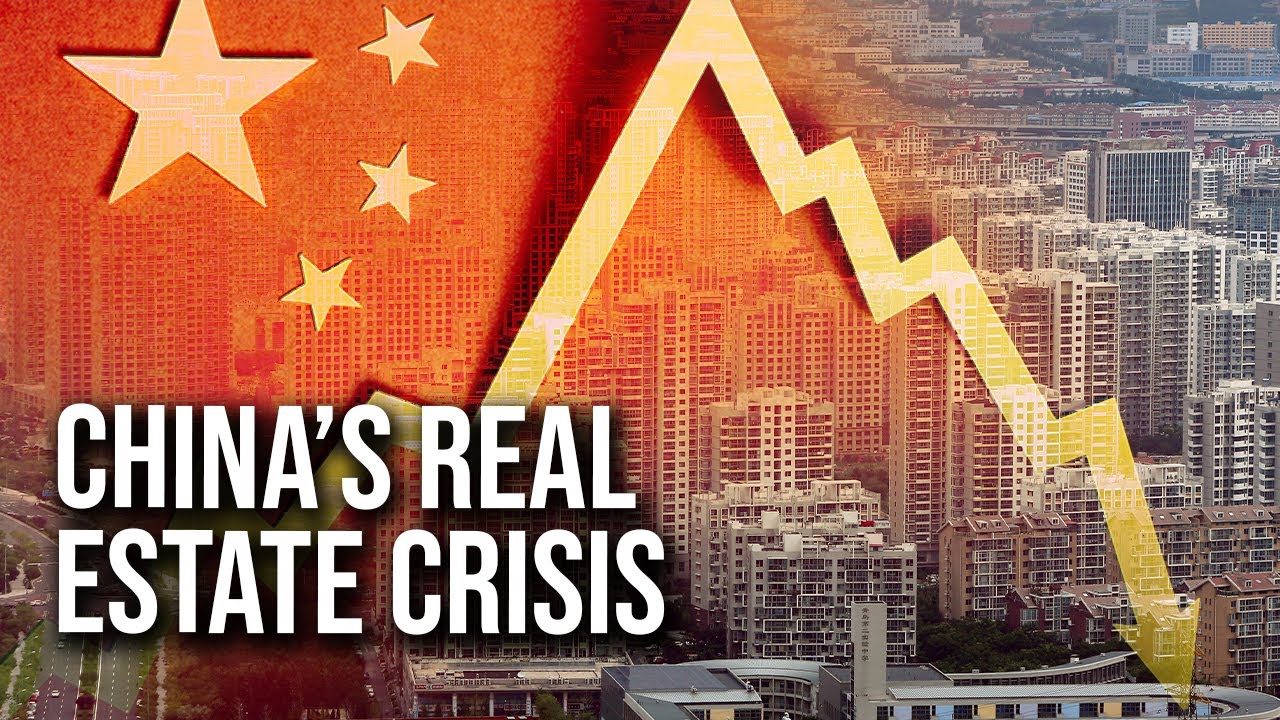
China’s economy in 2026 is a study in contradiction. In its largest cities — Shanghai, Beijing, Guangzhou, Shenzhen — new-home prices have risen for three consecutive months, driven by targeted policy support that is beginning to show traction. Across the remaining hundreds of cities, prices are still falling at a pace that is accelerating, not slowing.
National property investment fell 16.2% year-over-year in the first five months of 2026 — a staggering contraction in a sector that once accounted for roughly a quarter of Chinese GDP. At the same time, China’s technology sector is attracting record capital flows, its export machine is running at full throttle despite global trade tensions, and the People’s Bank of China (PBOC) is quietly implementing some of the most significant monetary architecture reforms in a generation.
China is, in effect, running two economies simultaneously. Understanding which one dominates the other will determine the trajectory of global markets for the next several years.
The Property Sector: A Structural Wound, Not a Cyclical Dip
China’s real estate crisis is entering its fifth year. What began with the 2021 Evergrande collapse has evolved into a sustained structural contraction that is fundamentally reshaping the economic role of property in China’s growth model.
National home prices declined at a faster pace in May 2026 than in April, a sign that market conditions are deteriorating rather than stabilising at the aggregate level. The OECD inventory of unsold homes across China’s lower-tier cities remains enormous — a structural supply overhang that cannot be resolved by demand-side stimulus alone.
The policy response has been asymmetric by design. The central government’s support measures are concentrated in Tier 1 and select Tier 2 cities, where local governments have more fiscal capacity to implement purchase subsidies, down-payment reductions, and mortgage rate cuts. In these markets, the policy appears to be working: new-home prices in China’s first-tier cities rose for the third consecutive month in May.
But first-tier cities account for a small fraction of China’s total housing stock. The vast majority of property — and the vast majority of household wealth — is concentrated in smaller cities where policy support is less effective and price declines are continuing.
The macro consequence is a negative wealth effect that is suppressing consumer confidence and retail spending precisely at the moment China needs domestic demand to compensate for a structurally lower export environment.
The PBOC’s Quiet Revolution
While the property sector weighs on growth, the People’s Bank of China has been implementing a series of significant monetary policy reforms. PBOC Governor Pan Gongsheng announced measures in June 2026 that include:
- Increased use of overnight reverse repo operations, a technical adjustment that improves the PBOC’s ability to manage short-term liquidity conditions with precision
- Narrowing the short-term interest rate corridor, reducing volatility in interbank lending rates and improving monetary policy transmission
- Steps to support the offshore use of the renminbi, accelerating the internationalisation of the Chinese currency as part of China’s longer-term strategy to reduce dependency on the US dollar in global trade and finance
These announcements are significant, but should not be misread as a broad-based monetary stimulus package. The PBOC is reforming its operational framework and improving financial market infrastructure — not firing an economic bazooka. The distinction matters for investors who might expect a China stimulus surge analogous to 2009 or 2015.
For investors, the PBOC’s focus on financial market development and liquidity management signals that policymakers are prioritising long-term stability over short-term growth stimulus. This implies a more gradual recovery trajectory than markets have sometimes assumed.
China’s Export Machine: A Source of Strength and Tension
Against the backdrop of the property slump, China’s export sector is performing exceptionally well. China’s trade surplus has expanded significantly in 2026, driven by:
- Industrial overcapacity in sectors including steel, solar panels, electric vehicles, chemicals, and lithium-ion batteries
- A weaker renminbi that has improved price competitiveness for Chinese exporters in global markets
- Continued strong demand for Chinese manufactured goods from Southeast Asia, Latin America, and Africa — markets that have deepened trade ties with China as US-China trade friction has redirected some Western procurement
China’s strong export growth has sparked significant international pushback. Policymakers across the European Union, the United States, and major emerging markets have expressed concerns about industrial overcapacity and the impact of low-cost Chinese exports on domestic manufacturing industries. The EU has implemented additional tariffs on Chinese electric vehicles, and US tariffs on a broad range of Chinese goods remain elevated following the Trump administration’s tariff regime.
The structural tension: China needs export growth to compensate for weak domestic demand, but its export success is generating the geopolitical friction that could ultimately constrain market access.
China’s AI Pivot: From Property Developer to Tech Powerhouse
The most significant transformation in China’s economic structure in 2026 is not occurring in housing — it is occurring in technology. China’s leadership has made a deliberate and well-resourced pivot toward artificial intelligence, semiconductors, and advanced manufacturing as the new engines of economic growth.
Chinese technology companies including Huawei, Baidu, Alibaba, and ByteDance are investing at scale in AI model development, AI chip design, and AI-integrated enterprise applications. The Chinese government’s industrial policy support for these sectors — through subsidies, preferential financing, and regulatory facilitation — is mobilising capital at a pace that rivals the hyperscaler buildout in the United States.
The strategic motivation is clear: reduce dependency on US semiconductor technology (particularly following US export controls on advanced chips), build sovereign AI capability across defence, governance, and commercial applications, and position Chinese technology companies as global AI leaders in markets outside the Western sphere.
This pivot is creating investment opportunities in Chinese technology equities — though geopolitical risk, regulatory uncertainty, and the US export control regime create complex risk factors that must be weighed carefully by international investors.
The Global Market Implications
China’s two-speed economy creates distinct implications for different asset classes and geographic markets:
Commodities: The property sector contraction is the dominant factor for commodity demand. Steel, copper, cement, and glass — all deeply tied to construction activity — face sustained headwinds from Chinese property weakness. Iron ore prices reflect this dynamic. In contrast, Chinese demand for technology-related commodities (lithium, cobalt, rare earths) remains robust as the EV and battery supply chain continues to scale.
Asian equities: The MSCI Emerging Markets index has significant China weighting, and China’s two-speed dynamics are creating divergence between technology-oriented Chinese equities (performing well) and property/financial sector stocks (underperforming). Country selection and sector allocation matter enormously in the current Chinese equity environment.
Currency markets: The PBOC’s renminbi internationalisation measures represent a long-duration effort to reduce dollar dependence. In the near term, currency management remains a key PBOC tool — managed depreciation to support exporters, with intervention to prevent disorderly moves that could trigger capital outflows.
European and US corporates: Companies with significant China exposure face a bifurcated operating environment — strong demand in technology-related end markets, weak demand in consumer and construction-related segments. Luxury goods, industrials, and materials companies are disproportionately affected by the property sector contraction.
The Policy Outlook: What Comes Next
The Chinese government faces a genuinely difficult policy dilemma. Aggressive fiscal or monetary stimulus risks reigniting the debt dynamics that made the property crisis inevitable in the first place. Insufficient support risks a deeper consumer confidence collapse that could turn a structural slowdown into a sharper cyclical downturn.
The current policy approach — targeted support for Tier 1 property markets, incremental PBOC reforms, and aggressive industrial policy investment in technology sectors — represents a careful balancing act. It is not the big bang stimulus that some investors have anticipated, but it is also not the hands-off approach that would allow a disorderly collapse.
The most likely trajectory: China grows at 4.0%–4.5% in 2026, below its historical average but ahead of the IMF’s revised global growth forecast of 3.1%. The property sector continues to weigh on domestic demand, while exports and technology investment provide partial offsets. The renminbi remains managed, and the PBOC avoids large-scale interest rate cuts that would widen the US-China rate differential and accelerate capital outflows.
The Bottom Line
China’s economy in 2026 is not in crisis, but it is in transition — and the transition is proving slower and more painful than the optimists predicted. The property sector wound is structural, not cyclical. The technology pivot is real but will take years to fully offset the economic weight that property once carried.
For global investors, China remains the world’s second-largest economy and a critical driver of commodity, trade, and technology markets. Ignoring it is not an option. But the analytical frameworks from the 2010s — property-led, infrastructure-driven, credit-fuelled growth — are no longer the right lens through which to assess Chinese economic dynamics in 2026.
The new China story is being written in data centres, EV factories, and AI labs — not in unfinished apartment towers.
FAQs
Q: What is happening with China’s economy in 2026?
A: China is running a two-speed economy. The property sector is contracting sharply — investment fell 16.2% year-over-year in early 2026 — while technology investment, AI spending, and exports are growing. The PBOC is implementing monetary reforms without large-scale stimulus.
Q: Is China’s property market recovering in 2026?
A: Partially and unevenly. New home prices in Tier 1 cities rose for three consecutive months through May 2026, suggesting policy support is gaining traction in the largest markets. Nationally, however, prices declined at a faster pace in May than April, and the recovery remains uneven across regions.
Q: What is China’s GDP growth forecast for 2026?
A: Most forecasters project China’s GDP growth at approximately 4.0%–4.5% in 2026 — below historical averages but above the IMF’s global average of 3.1%. The property sector contraction is the primary drag, partially offset by technology investment and export growth.
Q: How is China’s AI investment affecting global markets?
A: China’s AI and technology pivot is creating strong demand for technology-related commodities (lithium, rare earths), boosting Chinese technology equities, and intensifying competition with US and European AI companies — particularly in markets outside the Western sphere.
Analysis
Nidec Accounting Fraud: The Pressure Culture That Built Japan’s Biggest Corporate Scandal in a Decade

There’s a comic book on Nidec’s website — or there was, until recently — called “The Man Hotter Than the Sun.“ It chronicles the rise of Shigenobu Nagamori, who founded the world’s largest precision motor company in a shack in Kyoto in 1973 and built it into a global industrial giant supplying Apple, the automotive sector, and half the data centres on earth. Hard work. Relentless ambition. Numbers that never disappointed. It was a very Japanese success story, and it was also, investigators have now concluded, partly a fiction — one sustained for years by managers who inflated profits rather than face the man whose sun, apparently, could not be allowed to set.
What Is the Nidec Accounting Fraud — and How Big Is It?
The Nidec accounting fraud is Japan’s largest corporate accounting scandal in at least a decade. A third-party committee report released in March 2026 found that Nidec Corporation had committed accounting fraud totalling 166.2 billion yen — roughly $1.1 billion — as of 2023. That figure, staggering on its own, is likely the floor. The company has warned it may be forced to book an additional ¥250 billion, or $1.6 billion, in impairment charges as the full cost of the scandal is tallied, with third-party investigators saying they uncovered at least 1,000 separate instances of improper accounting across the group. Seoul Economic DailyBloomberg
The scandal first showed its face not in Kyoto, where Nidec is headquartered, but in Casalmaggiore, a small town in northern Italy’s Po Valley. It was the company’s Italian subsidiary, Nidec FIR International S.R.L., where possible lapses first surfaced in June 2025, forcing Nidec to delay filing its annual financial results. Within months, a Chinese subsidiary was implicated too, and then the scope widened further: investigators found misconduct at operations in Switzerland and across Nidec’s automotive inverter business. financialcontent
On October 28, 2025, the Tokyo Stock Exchange designated Nidec’s stock as a “security on special alert,” citing substantial need for improving the company’s internal management systems. The move sent shares tumbling by their daily 500 yen limit — a drop of roughly 19% in a single session. By the time the formal third-party report landed on February 27, 2026, Chairman Hiroshi Kobe and three other senior executives had resigned. Moody’s downgraded Nidec’s debt rating three levels into junk territory, and the stock was removed from the Nikkei 225 index. CEO Mitsuya Kishida bowed publicly at a press conference and said he would forfeit his salary until October. NIDEC CORPORATIONMy-cpe
The mechanics of the fraud were, in retrospect, classically mundane. Misconduct confirmed at Nidec Group bases included: avoidance of recognising valuation losses on obsolete raw materials and finished goods; improper avoidance of impairment losses based on sales plans with low probability of achievement; inflated inventory values; misreported customs declarations; government grants booked as revenue. Each individual manipulation was modest. Aggregated across dozens of subsidiaries over multiple years, they added up to a billion-dollar lie. NIDEC CORPORATION
How Did Corporate Culture Drive the Fraud?
This is where the story moves from accounting irregularity to structural pathology. The central finding of the independent investigation is not that Nagamori ordered the fraud — investigators found no evidence he personally directed specific manipulations. What they found was more insidious.
The committee blamed founder Shigenobu Nagamori for “excessive pressure to meet performance targets,” particularly profit targets, and found that many business units attempted to meet their goals using creative accounting. In plain terms: managers across Italy, China, and Switzerland were not cooking the books because they were corrupt. They were doing it because the alternative — telling Nagamori, a man who has written books about his rags-to-riches philosophy and whose image once adorned the company’s public website — that the numbers wouldn’t hit, was something the culture simply didn’t allow. MarketScreener
What caused the Nidec accounting fraud? The third-party investigation concluded that Nagamori’s excessive pressure on staff to meet profit targets created a corporate culture in which managers across multiple countries resorted to improper accounting rather than miss their numbers. Investigators documented more than 1,000 separate instances of misconduct spread across the group’s global subsidiaries.
This mechanism — what organisational theorists sometimes call “performance pressure fraud” — is not unique to Japan. But it finds particularly fertile ground in founder-dominated companies, where the founder’s authority has rarely been formally checked and where decades of success have calcified the idea that the numbers are always achievable if you push hard enough. Nagamori had, famously, sent regular messages to senior managers demanding better performance. As far back as September 2021, after handing over the CEO role, he was telling managers that the company faced its biggest-ever business crisis and that they needed to do more to boost performance and the share price. The message, delivered repeatedly across years, wasn’t lost on the people below him. Bloomberg
Oasis Management, the activist fund that holds approximately 6.7% of Nidec, described the problem bluntly in March 2026: “The problem at Nidec lies in a corporate culture that pressured employees into engaging in improper accounting practices for the sake of performance or share price; a lack of ethical judgment among management that effectively tolerated such improper accounting; the failure to establish appropriate checks and balances.” businesswire
What Are the Implications for Nidec and Japan Inc.?
The immediate picture for Nidec itself is grim. CEO Kishida has announced a plan to spend ¥130 billion over five years on measures to prevent recurrence and rebuild the governance system, including the suspension of the company’s once-aggressive acquisition strategy. Business acquisitions had been Nidec’s primary growth engine for three decades — an irony not lost on investors, since it was precisely that acquisition-driven expansion into Italy, China, and Switzerland that created the dispersed, difficult-to-audit subsidiaries where the fraud took root. The Japan Times
Nidec has also cancelled its year-end dividend for the fiscal year ending March 2026, with the company saying it “has no choice” given the investigation’s material impact on its financial closing for past fiscal years. The Securities and Exchange Surveillance Commission has reportedly begun its own probe, adding a regulatory dimension to what is already a reputational and financial catastrophe. NIDEC CORPORATION
The broader signal for Japanese markets is harder to read, but not easily dismissed. Japan’s corporate governance reform drive — accelerated by the Tokyo Stock Exchange’s 2023 push to force companies trading below book value to justify their capital allocation — was already testing the limits of how far founder-controlled companies would actually change. Nidec was, until recently, considered a model of what Japanese manufacturing could become: globally scaled, technically sophisticated, financially driven. The revelation that its financial sophistication was partly illusory lands badly at precisely the moment foreign investors have been warming to Japan’s equity story.
Academic research published in the Asia Pacific Journal of Management in 2025 found that the combination of foreign investor pressure for short-term gains and inadequately independent boards — particularly at companies with concentrated founder ownership — significantly elevates the risk of corporate misconduct in Japanese firms. Nidec fits the profile precisely. Springer
The Counterargument: Was Nagamori Singled Out Unfairly?
Not everyone is persuaded that Nagamori is the villain this narrative requires. Some analysts argue that to pin a systemic governance failure on one individual’s personality is to let the board, the auditors, and the company’s own internal compliance function off the hook entirely.
PwC, Nidec’s auditor, issued a disclaimer of opinion on the company’s fiscal year 2025 consolidated financial statements — an extraordinary step that signals the auditor could not obtain sufficient evidence to form a view. PwC pointed specifically to accounting practices that could have a “significant impact on consolidated financial statements” due to arbitrary adjustments in the timing of asset write-downs. That’s a significant failure of external oversight, and it raises questions about why red flags were not raised earlier in an audit relationship that spans years. mexc
There’s also a legitimate argument that the third-party committee report, while technically independent, was commissioned by Nidec itself — a structural limitation that critics of Japan’s third-party committee system have long flagged. The Japan Federation of Bar Associations guidelines that govern these panels were designed for transparency, but the panels’ independence is fundamentally constrained by the fact that the company in question controls the scope and, ultimately, bears the costs of the investigation. Whether the 1,000-plus instances of misconduct represent the full picture, or merely the portion the investigation was equipped to find, remains an open question.
Still, that caveat doesn’t fundamentally alter the central finding. A culture doesn’t become fraudulent by accident. Someone has to set the temperature.
A Reckoning That Was Always Coming
Nidec’s Culture Transformation Lab — the body launched on February 1, 2026, to “convey the voices of front-line employees directly to management” — has a name that reads less like a corporate initiative and more like an admission. If front-line voices needed a formal laboratory to be heard, the silence before it was built tells you everything about what the organisation had become.
The Nidec accounting fraud is, at one level, a story about a single company and a single founder’s shadow falling too far across the boardroom. At another level, it’s a test case for whether Japan’s governance reforms have teeth. The TSE’s special alert mechanism worked; Moody’s downgrade worked; the independent investigation worked. What didn’t work, for years, was the ordinary internal machinery that is supposed to catch this kind of thing before it reaches $1.1 billion.
That machinery failed because the people operating it were too afraid to make it fail in the other direction.
The comic book about the man hotter than the sun has been quietly removed from Nidec’s website. What’s left is a company trying to figure out how to build something that doesn’t burn everything around it.

Mining stocks across Europe came under renewed pressure in the latest trading session, extending a soft patch that has quietly gathered momentum over recent weeks. The tone was not disorderly, but it was decisively negative, with cyclical exposure once again proving sensitive to shifting commodity expectations.
In Dublin, Kenmare Resources stood out on the downside, weighing on the Iseq index after fresh concerns around titanium mineral pricing and operational strain linked to its Mozambique operations. The move reinforced a broader pattern: when sentiment turns against industrial metals, smaller producers tend to absorb the sharpest adjustment.
By mid-session, traders described the market as “directionless but heavy,” with few buyers willing to step in ahead of clearer signals on demand and pricing stability.
The latest weakness in mining equities is unfolding against a backdrop of uneven global growth signals and persistent uncertainty in industrial demand. Markets have been oscillating between brief optimism on infrastructure-led demand and deeper concerns about China’s property sector, which continues to shape global metals consumption.
Currency dynamics are adding another layer of pressure. A firmer US dollar typically weighs on commodities priced in dollars, tightening financial conditions for non-US buyers and feeding through into equity valuations of mining firms.
Research desks across major banks have repeatedly flagged the sensitivity of mining stocks to macro shocks, particularly interest rate expectations and industrial production cycles. Even modest revisions to growth forecasts tend to produce outsized moves in the sector, reflecting its position at the more volatile end of the equity spectrum.
Recent broker commentary has also pointed to renewed caution in European materials equities, citing slower-than-expected demand recovery and elevated input cost structures that continue to compress margins.
1 — European mining stocks under pressure
European mining stocks extend losses on demand concerns
European mining stocks slipped broadly as investors reassessed near-term earnings potential across the sector. The weakness was not confined to a single commodity group, but rather reflected a coordinated pullback in sentiment toward industrial metals and related equities.
Data from European equity markets shows that mining remains among the most cyclical segments of the index universe, often leading both rallies and corrections depending on global demand expectations. Recent trading sessions have reinforced that pattern, with miners underperforming broader industrials as risk appetite faded.
A key driver has been softening expectations around base metals demand, particularly copper and iron ore, where forward pricing has become more sensitive to revisions in Chinese industrial activity forecasts. Even incremental downgrades to growth assumptions have been enough to trigger equity repricing.
Kenmare Resources added a sharper, stock-specific dimension to the broader move. The company, which operates the Moma titanium minerals mine in Mozambique, has faced sustained pressure from weaker ilmenite and zircon pricing, alongside operational and cost-side constraints.
Recent financial disclosures highlighted the strain clearly, with the company reporting a significant deterioration in profitability and moving to conserve cash amid weaker market conditions. Dividend payments were suspended following impairment charges and lower earnings visibility, underscoring the sensitivity of mid-cap miners to commodity cycles.
The reaction in Dublin was swift. As one of the more index-sensitive constituents, Kenmare’s decline had an outsized impact on the Iseq, amplifying the broader negative tone in Irish equities.
The episode also highlights a structural feature of mining indices: concentration risk. When a handful of commodity-linked names dominate index weighting, company-specific stress can quickly translate into index-level moves.
2 — Why mining equities are underperforming
Secondary keyword: Kenmare Resources shares and valuation reset
The pressure on Kenmare Resources shares reflects a wider repricing underway across mid-cap mining equities, where earnings visibility is tightly linked to spot commodity markets and cost discipline.
At the core of the current weakness is a simple mechanism: falling commodity price expectations reduce forward earnings, while higher discount rates compress valuation multiples at the same time. That dual squeeze tends to hit mining equities harder than most other sectors.
A frequently asked question among investors is:
Why are European mining stocks falling?
European mining stocks are falling due to weaker industrial metal price expectations, persistent uncertainty around global demand growth, and a stronger US dollar that reduces commodity pricing support. At the same time, company-specific issues such as rising costs and operational disruptions are intensifying pressure on individual miners, particularly mid-cap producers with concentrated asset exposure.
The timing effect is also important. Commodity markets often stabilise before equities do, because investors wait for confirmation of sustained demand recovery rather than reacting to short-term price moves. This creates a lag where mining equities continue to decline even as some underlying commodities begin to level out.
There is also an ongoing valuation reset. Following the post-pandemic commodity surge, mining equities traded at elevated earnings multiples relative to historical norms. As those expectations normalise, the adjustment process tends to overshoot before stabilising.
In that sense, current price action reflects repricing discipline rather than disorderly selling.
3 — Broader implications for markets and industry
The implications of weaker mining equities extend beyond short-term portfolio performance. In capital-intensive industries like mining, equity valuations play a direct role in shaping investment decisions, project timelines, and dividend policy.
For producers of titanium minerals such as Kenmare, pricing weakness in ilmenite and zircon feeds directly into revenue streams that are already exposed to cyclical industrial demand. When construction and manufacturing activity slows globally, downstream demand for pigments, coatings, and ceramics tends to soften with a lag.
Recent company commentary has pointed to efforts to manage costs and preserve liquidity, reflecting a more defensive operational stance in response to uncertain pricing conditions. That shift is typical of mid-cycle corrections, where producers prioritise balance sheet strength over expansion.
At a macro level, mining equities often serve as an early indicator of industrial demand trends. Prolonged weakness in the sector can signal broader slowdowns in manufacturing activity, particularly in export-oriented European economies.
Currency dynamics add another feedback loop. If commodity prices remain under pressure, they can reinforce US dollar strength, which in turn weighs further on commodity-linked equities. This interaction has historically amplified downturns in the mining cycle.
The key risk from here is duration. Short corrections tend to be absorbed quickly, but extended periods of weak pricing often trigger deeper adjustments in capital allocation across the sector, including delayed investment and tighter shareholder distributions.
4 — Alternative views and counterbalance
Not all market participants interpret the current weakness as the start of a sustained downturn.
Some equity strategists argue that valuations across European mining stocks already reflect a significant portion of near-term downside risk. They point to earlier corrections in materials equities and suggest that balance sheets among major diversified miners remain relatively resilient.
There is also a longer-term structural argument anchored in energy transition demand. Copper, nickel, titanium minerals, and related inputs are expected to play a central role in electrification, infrastructure renewal, and aerospace applications. From this perspective, short-term demand softness may obscure a more durable upward trajectory in structural demand.
Kenmare itself has highlighted signs of stabilisation in certain product lines, particularly zircon, where pricing has shown less volatility than broader industrial metals. That divergence suggests that not all segments of the mining complex are moving in sync.
Still, the counterargument depends heavily on timing. Even structurally positive demand narratives do not prevent near-term equity repricing when earnings weaken. Markets tend to discount recovery, but only once tangible data confirms it.
CLOSING
The latest decline in European mining stocks is less a break in trend than a continuation of a familiar cycle. Commodity expectations soften, earnings forecasts adjust, and equities respond ahead of the macro data that eventually confirms or challenges those expectations.
Kenmare’s performance simply sharpened that adjustment, exposing how quickly sentiment can shift in concentrated, commodity-linked indices like the Iseq.
What matters now is not the direction of a single session, but whether industrial demand stabilises long enough to anchor earnings expectations once again.
Until that happens, mining equities are likely to remain tethered to sentiment as much as fundamentals.

Business Insurance for Digital Exports: Protecting Your Company in the AI Era

Real Estate Crash Predictions 2026: Data-Backed Regional Guide

What is a “Lead-Left” Bank? Unpacking Morgan Stanley’s Role in Anthropic’s Mega-IPO

Is SPY Overvalued in September 2026? Fed Rate Hike Odds & Intrinsic Value

Pakistan’s KSE-100 Nears Record Territory Even as the Trade Gap Persists

US Consumer Sentiment Sinks as Retail Sales Drop

Barclays Q2 2026 Results: Income Beats, Costs Rise 7%

Pakistan’s Remittance Lifeline: Why Gulf Exposure Is a Hidden Risk

Dubai’s Rise to the World’s 7th Financial Hub: Inside the D33 Push

China EV Exports Hit Record High in 2026

UK’s “National Contributions Tax” Explained: Burnham-Era Reform 2026

Russia’s Strange Problem in 2026: Its Currency Is Too Strong

Section 301 Forced Labor Tariffs 2026: 60 Countries Affected

UK National Contributions Tax: Burnham’s Radical Tax Plan

Top 15 Stocks for Investment in 2026 in PSX: Your Complete Guide to Pakistan’s Best Investment Opportunities
Top 15 Stocks for Investment in 2026 in PSX: Your Complete Guide to Pakistan’s Best Investment Opportunities

Debunking IMF Program Myths: Reconfiguring Engagement for True National Ownership in a Volatile World

Top 10 Mutual Fund Managers in Pakistan for Investment in 2026: A Comprehensive Guide for Optimal Returns

What the U.S. Attack on Venezuela Could Mean for Oil and Canadian Crude Exports: The Economic Impact

China’s 50% Domestic Equipment Rule: The Semiconductor Mandate Reshaping Global Tech

15 Most Lucrative Sectors for Investment in Pakistan: A 2025 Data-Driven Analysis

Pakistan’s Export Goldmine: 10 Game-Changing Markets Where Pakistani Businesses Are Winning Big in 2025
15 Most Lucrative Sectors for Investment in Pakistan: A 2025 Data-Driven Analysis
15 Most Lucrative Sectors for Investment in Pakistan: A 2025 Data-Driven Analysis

Pakistan’s Stock Market Renaissance: How 2025’s Hottest Investment Opportunity Is Democratizing Wealth—A Complete Beginner’s Guide

Pakistan’s Economic Outlook 2025: Between Stabilization and the Shadow of Stagnation
Pakistan’s Economic Outlook 2025: Between Stabilization and the Shadow of Stagnation

China’s Property Woes Could Last Until 2030—Despite Beijing’s Best Censorship Efforts
-
 Markets & Finance8 months ago
Top 15 Stocks for Investment in 2026 in PSX: Your Complete Guide to Pakistan’s Best Investment Opportunities
-
Markets & Finance8 months ago
Top 15 Stocks for Investment in 2026 in PSX: Your Complete Guide to Pakistan’s Best Investment Opportunities
-
 Analysis7 months ago
Debunking IMF Program Myths: Reconfiguring Engagement for True National Ownership in a Volatile World
-
 Investment8 months ago
Top 10 Mutual Fund Managers in Pakistan for Investment in 2026: A Comprehensive Guide for Optimal Returns
-
 Global Economy8 months ago
What the U.S. Attack on Venezuela Could Mean for Oil and Canadian Crude Exports: The Economic Impact
-
 Asia8 months ago
China’s 50% Domestic Equipment Rule: The Semiconductor Mandate Reshaping Global Tech
-
 AI9 months ago
15 Most Lucrative Sectors for Investment in Pakistan: A 2025 Data-Driven Analysis
-
 Exports9 months ago
Pakistan’s Export Goldmine: 10 Game-Changing Markets Where Pakistani Businesses Are Winning Big in 2025