
Markets & Finance
Pakistan’s Current Account Slips Back into Deficit: A Fragile Recovery Tested in December 2025

The chai shop owner in Karachi’s Saddar district doesn’t track monthly balance of payments data, but he feels it in his bones. When the rupee weakens and import costs rise, his supplier charges more for tea leaves shipped from Kenya. When remittances surge from his cousin in Dubai, neighborhood purchasing power ticks upward, and his modest business thrives. Pakistan’s external accounts—arcane to most citizens yet fundamental to everyday economic stability—tell a story that reverberates from corporate boardrooms in Lahore to family kitchens in rural Punjab.
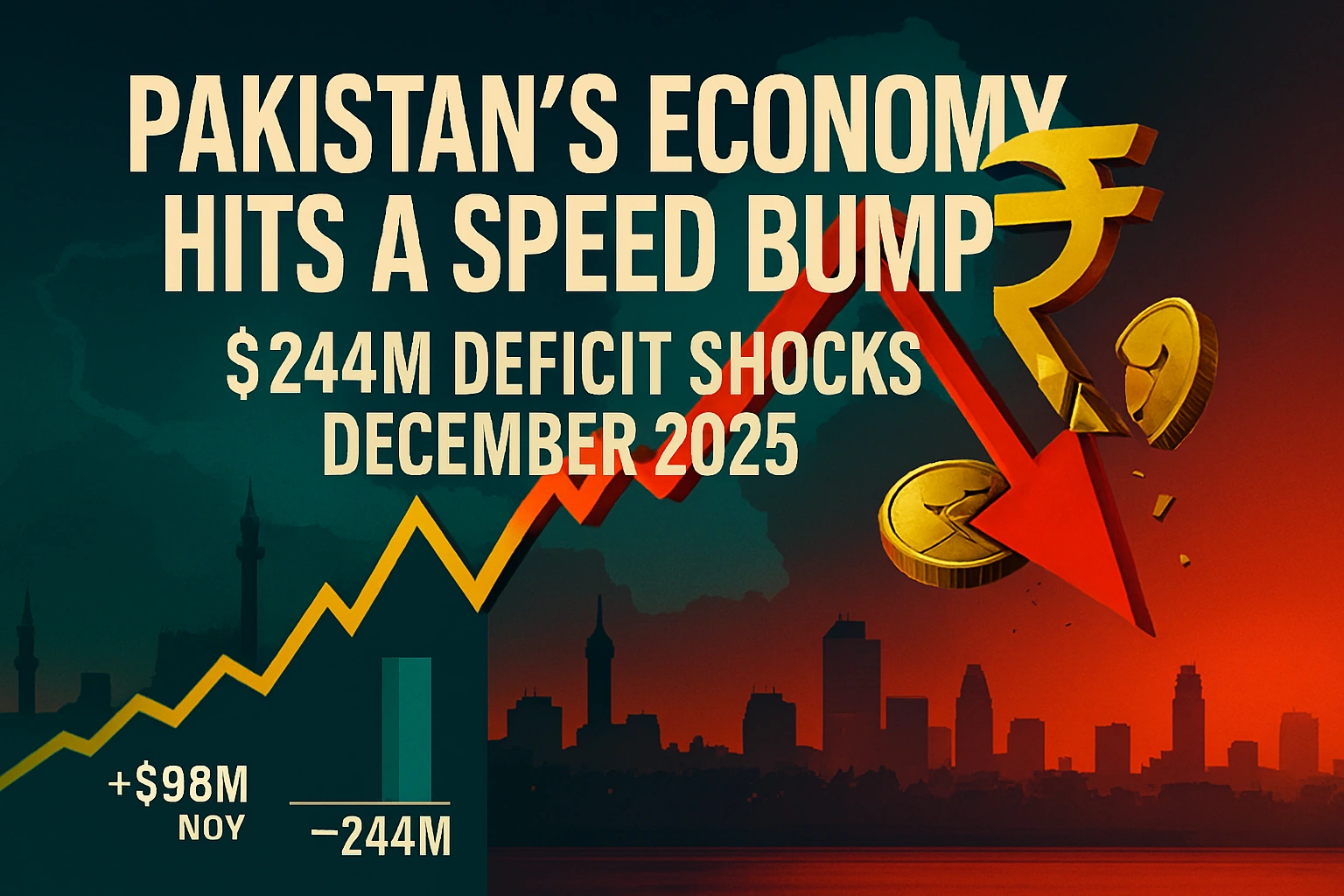
That story took an unexpected turn in December 2025. After eking out a modest $98 million current account surplus in November—a welcome sign that Pakistan’s post-crisis stabilization might be gaining traction—the State Bank of Pakistan (SBP) reported a sharp reversal: a $244 million deficit for December. The swing represents more than just monthly volatility; it encapsulates the fragile, two-steps-forward-one-step-back nature of Pakistan’s economic recovery following the near-meltdown of 2022-2023, when foreign exchange reserves plummeted to barely one month of import cover and default whispers rattled markets from Islamabad to Wall Street.
For context, December 2024 had delivered a comfortable $454 million surplus, making the year-on-year deterioration particularly striking. Yet zoom out further, and Pakistan’s fiscal year 2025 (July 2024–June 2025) still recorded a cumulative current account surplus—the first in years—offering a crucial buffer as the country navigates a $7 billion International Monetary Fund (IMF) Extended Fund Facility program designed to restore macroeconomic stability. December’s deficit, therefore, poses a critical question: Is this a temporary blip driven by seasonal import spikes and one-off factors, or an early warning that Pakistan’s external balance remains precariously dependent on remittance inflows and vulnerable to the slightest uptick in domestic demand or global commodity shocks?
This article dissects the December 2025 current account data with the rigor it demands, placing the numbers within broader historical trends, examining structural drivers from trade composition to energy dependence, comparing Pakistan’s trajectory with peer emerging markets, and assessing what this means for policymakers, investors, and ordinary Pakistanis as the country charts a course through 2026 and beyond.
Unpacking the December 2025 Numbers: Beyond the Headline Deficit
The Monthly Reversal: From Surplus to Shortfall
December’s $244 million deficit marks a $342 million swing from November’s revised $98 million surplus—a substantial shift in a single month for an economy where current account movements are measured in hundreds of millions rather than billions. More tellingly, the year-on-year comparison reveals a $698 million deterioration from December 2024’s $454 million surplus, signaling pressures beyond mere seasonal noise.
Breaking down the current account components clarifies the drivers:
- Trade Balance (Goods): Pakistan’s merchandise trade deficit widened appreciably in December, driven primarily by a surge in imports. Preliminary customs data from the Pakistan Bureau of Statistics suggests imports rose approximately 12-15% month-on-month, reflecting increased petroleum product shipments as winter heating demand spiked, higher machinery imports tied to delayed investment projects, and a restocking of intermediate goods by manufacturers anticipating Lunar New Year supply chain disruptions in China. Exports, while growing year-on-year at a modest 4-6%, failed to keep pace, constrained by energy shortages that intermittently shuttered textile mills—Pakistan’s export backbone—and sluggish demand from key European markets grappling with their own economic headwinds.
- Services Balance: This account remained persistently negative, albeit stable. Pakistan runs structural deficits in freight, transportation, and insurance services, exacerbated by reliance on foreign shipping for both exports and imports. Telecommunications and IT services exports—championed as a growth sector—contributed positively but remain insufficient to offset traditional service account drains.
- Primary Income Account: A chronic source of outflows, this component includes profit repatriation by multinational corporations, debt servicing payments to foreign creditors, and returns on foreign direct investment. December saw elevated outflows, likely tied to quarterly dividend payments by energy sector multinationals and scheduled debt obligations. According to World Bank data, Pakistan’s external debt stock exceeds $100 billion, with debt service ratios remaining elevated despite IMF-supported restructuring efforts.
- Secondary Income (Remittances): The undisputed bright spot. Pakistani workers abroad sent home a record $3.6 billion in December 2025, the highest monthly inflow on record and a 14% increase from December 2024’s $3.16 billion. This surge reflected seasonal patterns (expatriates sending funds for year-end festivities and winter expenses), improved formal banking channels following crackdowns on illegal hundi/hawala networks, and a modest depreciation of the rupee that enhanced the rupee-value of dollar remittances, incentivizing use of official channels. Remittances from Saudi Arabia, the UAE, the UK, and the US—Pakistan’s primary source countries—all posted gains, with Gulf Cooperation Council (GCC) countries alone accounting for nearly 60% of inflows.
Historical Context: FY25 Surplus Versus December Volatility
To appreciate December’s significance, consider Pakistan’s broader current account trajectory. Fiscal year 2023 (FY23, ending June 2023) saw a deficit exceeding $17 billion—over 6% of GDP—as import demand rebounded post-COVID while reserves hemorrhaged. This unsustainable imbalance triggered the 2022-2023 crisis, forcing stringent import controls, emergency IMF negotiations, and painful economic compression.
FY24 witnessed aggressive stabilization: import restrictions, steep interest rate hikes (the SBP’s policy rate peaked at 22% in mid-2023), and currency depreciation that dampened demand. The current account deficit shrank dramatically to approximately $1.2 billion for the full fiscal year—roughly 0.3% of GDP—a swing of over $15 billion. FY25 (July 2024–June 2025) went further, achieving a cumulative current account surplus of around $1.5-2 billion, driven by sustained remittance growth, contained imports, and marginally improved exports.
December 2025’s deficit, therefore, arrives against this backdrop of hard-won stability. Monthly volatility is normal—Pakistan’s current account has historically oscillated due to lumpy commodity imports (especially oil and LNG shipments), seasonal agricultural trade patterns, and irregular capital flows. A single deficit month doesn’t erase FY25’s surplus achievement. Yet it serves as a reminder: the underlying structure of Pakistan’s external accounts hasn’t fundamentally transformed. The economy remains heavily reliant on remittances to finance persistent trade deficits, with limited export diversification or import-substitution progress.
The Drivers Beneath the Surface: Trade Dynamics, Energy Dependence, and Remittance Resilience
The Persistent Trade Deficit: Import Addiction and Export Stagnation
Pakistan’s trade deficit—the gap between merchandise exports and imports—has long been the Achilles’ heel of its external balance. In December 2025, this gap widened notably, reflecting structural weaknesses decades in the making.
Import Composition and Vulnerabilities:
Pakistan imports roughly $50-60 billion annually, with several categories dominating:
- Energy (Petroleum, LNG, Coal): Constitutes 25-30% of total imports. Despite indigenous gas reserves, declining domestic production forces reliance on imported liquefied natural gas (LNG) for power generation and fertilizer manufacturing. Oil imports fluctuate with global crude prices and domestic consumption patterns. December’s import surge partly reflected higher LNG spot cargoes procured as winter power demand spiked and domestic gas shortfalls widened.
- Machinery and Transportation Equipment: Essential for industrial investment, these imports (15-20% of total) are economically productive but reflect limited local manufacturing capacity. December saw elevated machinery imports as businesses—buoyed by moderating interest rates and IMF program confidence—resumed delayed capital expenditure projects.
- Edible Oils, Pulses, and Food Products: Pakistan, despite its agricultural heritage, imports substantial food items due to population growth outpacing yield improvements and water scarcity constraining production. Palm oil from Indonesia and Malaysia alone accounts for billions annually.
- Chemicals, Plastics, and Intermediate Goods: Feedstock for textile and manufacturing sectors, these imports (20-25%) underscore the economy’s integration into global supply chains but also its vulnerability to input cost shocks.
The December import spike, while partly seasonal, highlights a critical policy tension: sustaining economic growth requires imports (machinery, energy, raw materials), yet unchecked import demand quickly exhausts foreign exchange reserves and widens the current account deficit. Pakistan’s growth-imports elasticity remains high—GDP growth of 3-4% typically correlates with 10-15% import growth unless demand is actively suppressed through monetary tightening or administrative controls.
Export Performance and Competitiveness Challenges:
Pakistan’s exports, hovering around $30-32 billion annually, are heavily concentrated:
- Textiles and Apparel: Account for 55-60% of merchandise exports. While Pakistan boasts competitive labor costs and proximity to cotton cultivation, the sector faces chronic challenges: energy shortages (load-shedding cripples production), outdated machinery, limited value-addition (focus on yarn and basic fabrics rather than high-end garments), and fierce competition from Bangladesh, Vietnam, and Cambodia. Recent reports from Dawn highlight how energy costs in Pakistan exceed regional competitors by 30-50%, eroding margins.
- Agriculture (Rice, Fruits, Vegetables): Contribute 15-20% but face quality standardization issues, inadequate cold chain infrastructure, and volatility tied to weather patterns and global commodity cycles.
- IT and Business Services: A bright spot, with exports exceeding $3 billion annually and growing at 15-20% yearly. However, this remains modest relative to India’s $200+ billion IT services sector.
December’s export growth, at 4-6% year-on-year, reflects incremental gains—textiles benefited from EU Generalized Scheme of Preferences (GSP+) status and recovering European demand—but insufficient to offset import surges. Structural constraints—inadequate investment in technology, skills mismatches, regulatory burdens, and infrastructure deficits (ports, logistics, power)—continue to hobble export competitiveness. According to the World Bank’s Logistics Performance Index, Pakistan ranks poorly (around 120th globally), impeding trade efficiency.
Remittances: The External Account’s Lifeline
December 2025’s record $3.6 billion remittance inflow underscores the Pakistani diaspora’s outsized role in propping up the external balance. Remittances have consistently exceeded $30 billion annually in recent years, often surpassing total merchandise exports. This dependence, while stabilizing, carries risks:
Drivers of Remittance Strength:
- Diaspora Demographics: Over 9 million Pakistanis work abroad, concentrated in GCC countries (Saudi Arabia, UAE, Qatar), the US, UK, and EU. GCC workers, typically in construction, hospitality, and services, send frequent, smaller remittances; Western diaspora remittances tend larger but less frequent.
- Policy Improvements: The SBP’s push to digitize remittances via fintech platforms (like JazzCash, Easypaisa), partnerships with international money transfer operators (Western Union, MoneyGram), and incentives (rupee credit at preferential rates) have channeled flows away from informal hawala networks. The Pakistan Remittance Initiative, launched years ago, has matured, enhancing tracking and convenience.
- Exchange Rate Dynamics: A weaker rupee incentivizes using formal channels—expatriates receive more rupees per dollar, enhancing purchasing power for families back home. December’s mild rupee depreciation likely contributed to record inflows.
- Global Economic Conditions: GCC economies, buoyed by moderating oil prices and economic diversification (Saudi Vision 2030, UAE’s non-oil growth), sustained employment for Pakistani workers. Western economies, despite slower growth, maintained demand for skilled professionals (IT, healthcare).
Vulnerabilities and Downside Risks:
- Oil Price Volatility: GCC economies—and thus Pakistani employment there—are highly sensitive to oil market dynamics. A sharp oil price collapse could trigger layoffs, reducing remittances by billions.
- Policy Shifts in Host Countries: Gulf states increasingly pursue “nationalization” policies (Saudization, Emiratization) to employ local citizens, potentially displacing South Asian expatriates. Geopolitical tensions or immigration policy changes in Western countries could also dampen flows.
- Demographic and Economic Shifts in Pakistan: As Pakistan’s economy develops (albeit slowly), remittance growth may plateau if opportunities at home improve, reducing emigration incentives. Conversely, economic distress could spur emigration but might also depress the asset base families can leverage for migration.
For now, remittances remain robust, but treating them as a perpetual safety net invites complacency. Sustainable external balance requires addressing the trade deficit’s root causes, not merely offsetting it with diaspora largesse.
Pakistan’s External Position in Global Context: Lessons from Peer Emerging Markets
How does Pakistan’s current account volatility compare with similarly positioned emerging economies? Examining peers illuminates both shared challenges and unique vulnerabilities.
Turkey: A Parallel in Chronic Deficits and Unorthodox Policies
Turkey, like Pakistan, has grappled with persistent current account deficits—averaging 3-5% of GDP—driven by energy import dependence (Turkey imports 75%+ of energy needs) and robust domestic consumption. Turkey’s deficits widened alarmingly in 2022-2023 amid unorthodox monetary policies (President Erdoğan’s low-interest-rate doctrine despite soaring inflation), sparking currency crises and reserve depletion eerily reminiscent of Pakistan’s travails.
However, Turkey differs crucially: its export base is far more diversified and technologically advanced (automotive, machinery, electronics), and tourism inflows contribute substantial services receipts. Turkey’s economy is also larger (GDP over $900 billion vs. Pakistan’s ~$350 billion), affording greater shock absorption capacity. Both nations share reliance on external financing and vulnerability to Fed rate hikes, yet Turkey’s NATO membership and EU integration (despite setbacks) provide geopolitical buffers Pakistan lacks.
Egypt: IMF Programs and Persistent External Fragility
Egypt offers perhaps the closest parallel. Both Egypt and Pakistan have cycled through multiple IMF programs over decades, facing recurrent foreign exchange crises rooted in import-dependent growth models, energy subsidies, and weak export competitiveness. Egypt’s current account deficit, traditionally 2-4% of GDP, spiked during the 2022 global commodity shock, triggering sharp currency devaluation (the pound lost 50%+ of value) and emergency IMF interventions.
Egypt’s Suez Canal receipts (a unique asset) provide substantial services income, yet like Pakistan, it relies heavily on remittances from expatriates in the Gulf and Europe. Both nations face similar structural challenges: youthful, rapidly growing populations outpacing job creation, heavy public debt burdens (constraining fiscal space), and political-economic governance issues that deter sustained foreign investment. Egypt’s recent economic struggles—despite $8 billion UAE investment deals and IMF support—underscore how fragile emerging market external balances can reverse quickly under adverse shocks.
Bangladesh and Vietnam: Export-Led Contrasts
Bangladesh and Vietnam present instructive contrasts. Both have achieved sustained current account surpluses or manageable deficits through export-led growth. Bangladesh’s ready-made garment (RMG) sector, while facing labor and safety challenges, generates $40+ billion in annual exports, surpassing Pakistan’s total goods exports despite a smaller economy. Vietnam’s integration into global manufacturing supply chains (electronics, footwear, furniture) has driven export growth exceeding 10% annually, attracting massive foreign direct investment.
These successes hinge on policy consistency, infrastructure investment, trade openness, and business-friendly environments—areas where Pakistan has struggled due to political instability, inconsistent economic policies across governments, and bureaucratic inefficiencies. The comparison underscores that Pakistan’s external account woes aren’t fate but reflect addressable policy failures and governance deficits.
Policy Implications and the Road Ahead: Navigating IMF Conditions, Monetary Policy, and Structural Reforms
The IMF Extended Fund Facility: Lifeline or Straitjacket?
Pakistan’s current $7 billion IMF Extended Fund Facility (EFF), approved in 2024 following protracted negotiations, imposes strict conditions: fiscal consolidation (reducing budget deficits through tax revenue increases and expenditure controls), energy sector reforms (tariff adjustments to eliminate circular debt), State-Owned Enterprise (SOE) restructuring, and exchange rate flexibility. Meeting these targets unlocks tranches of financing and signals credibility to bilateral lenders (China, Saudi Arabia, UAE) and markets.
December’s current account deficit, while modest, complicates the IMF program’s narrative of stabilization. IMF reviews scheduled for early 2026 will scrutinize whether the deficit represents a temporary aberration or a worrying trend. Key metrics monitored:
- Gross Official Reserves: As of late December 2025, SBP reserves stood around $11-12 billion—equivalent to roughly 2.5 months of import cover, a marked improvement from the sub-$4 billion nadir of mid-2023 but still below the comfortable 3-4 month buffer recommended for emerging markets. Sustained current account deficits could erode reserves, jeopardizing IMF targets.
- External Financing Gap: The IMF program assumptions include projections of bilateral support, FDI inflows, and bond market access. Widening current account deficits would increase the financing gap, potentially necessitating additional IMF disbursements or supplementary bilateral loans—complicating debt sustainability.
- Exchange Rate Management: The SBP has moved toward greater exchange rate flexibility, a key IMF demand. However, managing the rupee’s depreciation without sparking inflation or capital flight remains delicate. December’s modest weakening (rupee depreciated from ~278 to ~281 per USD) likely contributed to remittance inflows but also raised import costs, feeding inflation.
The policy tension is acute: supporting growth (which Pakistan desperately needs to reduce poverty and unemployment) requires accommodative conditions, yet unchecked growth risks import surges, reserve depletion, and current account blowouts. The SBP’s recent rate cuts—from the 22% peak to around 13% by late 2025—reflect confidence in declining inflation (down to single digits) and stabilization progress. December’s deficit may test whether further rate cuts are prudent or whether monetary policy needs to remain restrictive to cap import demand.
Fiscal Policy and Structural Reforms: Beyond Stabilization to Transformation
Monetary tightening and IMF programs can stabilize external accounts temporarily, but sustainable balance requires structural transformation:
- Export Diversification and Value Addition: Pakistan must move beyond low-value textiles to higher-margin products—branded garments, technical textiles, engineering goods. This demands investment in vocational training, R&D, quality certifications, and trade facilitation. Government initiatives like the Strategic Trade Policy Framework aim to incentivize non-traditional exports (pharmaceuticals, surgical instruments, sports goods), but implementation lags.
- Energy Sector Overhaul: Chronic energy shortages and high costs cripple competitiveness. Addressing this requires diversifying the energy mix (renewables, indigenous coal, hydroelectric), resolving circular debt (over $2.5 billion in payables), and improving distribution efficiency. Recent Chinese investments under the China-Pakistan Economic Corridor (CPEC) added generation capacity, but transmission bottlenecks and governance issues persist.
- Import Substitution in Agriculture and Industry: Reducing reliance on imported edible oils, pulses, and pharmaceuticals through productivity enhancements, agricultural R&D, and local manufacturing can narrow the trade deficit. Pakistan’s agricultural yields lag regional peers due to water scarcity, outdated farming techniques, and inadequate extension services.
- Investment Climate and FDI: Pakistan attracts only $2-3 billion in FDI annually—far below potential given its market size and location. Security concerns, regulatory unpredictability, corruption, and inconsistent policies deter investors. Successful examples like Bangladesh’s Special Economic Zones (SEZs) offer models, yet Pakistan’s SEZ progress remains slow.
- Debt Management: External debt servicing consumes substantial foreign exchange. Lengthening debt maturities, securing concessional financing, and improving debt transparency (addressing concerns from Financial Times reporting on hidden liabilities) are critical.
The Political Economy Wildcard: Stability Versus Turbulence
Economic policy in Pakistan is inseparable from political dynamics. The current government’s ability to sustain IMF program compliance depends on political stability—avoiding mass protests, military-civilian tensions, or populist pressures that derail reforms. Elections, coalition dynamics, and judicial interventions have historically disrupted economic policy continuity, with each government prioritizing short-term relief over long-term transformation.
December’s deficit, modest as it is, could embolden critics arguing that stabilization is choking growth and demanding stimulus measures (subsidies, lower interest rates, relaxed import controls). Resisting such pressures requires political courage and effective communication—explaining to the public why short-term pain (higher taxes, costlier imports) yields long-term gain (stable currency, lower inflation, job creation).
Outlook for 2026 and Beyond: Fragile Optimism Amid Persistent Risks
FY26 Current Account Projections: Navigating a Narrow Path
Most analysts, including the IMF and Asian Development Bank, project Pakistan’s FY26 (July 2025–June 2026) current account deficit to remain modest—between 0% and 1% of GDP, or roughly $0-3.5 billion. This forecast assumes:
- Continued Remittance Strength: Sustained inflows around $32-35 billion annually.
- Moderate Import Growth: GDP growth of 2.5-3.5% (below potential but stabilization-constrained) limiting import demand to $55-58 billion.
- Export Recovery: Gradual improvement toward $33-35 billion, aided by textile sector revival, IT services growth, and potential new export markets (Central Asia, Africa).
- Energy Price Stability: Global oil and LNG prices averaging $75-85/barrel and $10-12/MMBtu respectively, avoiding major import bill shocks.
December’s deficit complicates this picture only marginally if it proves transitory. However, downside risks loom large:
Domestic Risks:
- Political Instability: Governance crises, mass mobilizations, or civil-military discord could derail reforms, spook investors, and trigger capital flight.
- Energy Crisis Deepening: Another summer of severe load-shedding (likely if rainfall is poor and hydroelectric generation falls) could crush exports and industrial output.
- Fiscal Slippage: Missing IMF fiscal targets due to weak tax collection or populist spending could halt program disbursements, draining reserves.
External Risks:
- Global Recession: A sharp slowdown in the US, EU, or China would depress export demand and remittances. Recession in Gulf economies (tied to oil price crashes) could slash remittances by 15-20%, eliminating the current account’s safety buffer.
- Fed Rate Path: Continued or renewed Fed tightening could strengthen the dollar, making debt servicing costlier and reducing emerging market capital flows to Pakistan.
- Commodity Price Shocks: Geopolitical disruptions (Middle East conflicts, Russia-Ukraine escalation) could spike oil prices, widening the trade deficit by billions overnight.
- China Economic Malaise: Slower Chinese growth affects Pakistan via reduced CPEC-related inflows, weaker regional demand, and potential disruptions to supply chains Pakistani manufacturers depend upon.
Scenarios: Best Case, Base Case, Worst Case
Best Case (Probability: 20-25%):
Political stability holds, IMF program fully implemented, global growth surprises upward. Remittances exceed $36 billion, exports surge to $36 billion on textile revival and new sectors (IT crosses $4 billion), imports contained below $57 billion. Current account swings to a $2-3 billion surplus in FY26. Reserves climb toward $15 billion, improving investor confidence. The SBP can cut rates further (to 10-11%), spurring growth to 4%. Pakistan exits the “crisis loop” narrative.
Base Case (Probability: 50-55%):
Muddling through continues. IMF program stays on track with occasional hiccups. Remittances hold steady ($33-34 billion), exports grow modestly ($33 billion), imports edge up ($56-57 billion). Current account deficit widens slightly to 0.5-1% of GDP ($2-3.5 billion), manageable with IMF/bilateral inflows. Reserves stable at $11-13 billion. Growth stays subdued at 2.5-3%. December’s deficit seen as monthly noise, not trend reversal. Vulnerabilities persist but crisis averted for another year.
Worst Case (Probability: 20-25%):
Political turmoil erupts, halting reforms. Energy crisis worsens, crushing exports. Global recession slashes remittances to $28-30 billion. Imports jump on supply shocks or policy relaxation. Current account deficit balloons to 2-3% of GDP. Reserves plummet below $8 billion. IMF halts program over non-compliance. Currency crisis reemerges, inflation spikes, and another painful stabilization cycle begins. Pakistan returns to the brink.
Conclusion: Resilience Tested, Transformation Awaited
December 2025’s $244 million current account deficit—a sharp reversal from November’s surplus and a stark contrast to December 2024’s surplus—offers a sobering reminder: Pakistan’s external balance, though stabilized relative to the 2022-2023 abyss, remains fragile. The deficit isn’t catastrophic; in fact, monthly fluctuations of this magnitude are typical for an economy juggling import needs, energy dependencies, and external financing constraints. But context matters.
Pakistan has achieved remarkable stabilization over the past 18-24 months. Reserves have recovered from critically low levels, inflation has decelerated from over 30% to single digits, and the currency has stabilized. The cumulative FY25 current account surplus stands as a testament to painful but necessary adjustments—import compression, high interest rates, and policy discipline under IMF oversight. December’s deficit doesn’t erase these gains, but it underscores the work that remains.
The underlying drivers—persistent trade deficits rooted in import dependence and export stagnation, reliance on remittance inflows vulnerable to external shocks, and structural weaknesses in energy, productivity, and governance—haven’t fundamentally changed. December’s surge in imports, while partly seasonal and growth-related, highlights how quickly external balances can deteriorate if demand isn’t carefully managed. The record remittances, while reassuring, cannot indefinitely paper over a trade structure biased toward deficits.
For policymakers, the message is clear: stabilization is not transformation. Sustaining external balance through the IMF program’s duration (likely through mid-2026) requires vigilance—monitoring import trends, maintaining exchange rate flexibility, ensuring fiscal discipline, and preserving political commitment to reforms. Beyond stabilization, Pakistan must pursue deeper structural changes: diversifying exports, enhancing competitiveness, overhauling energy, attracting FDI, and improving governance. These transformations, admittedly difficult and politically contentious, are the only pathway to durable external stability and sustained growth.
For investors and international observers, December’s data warrants measured concern but not alarm. Pakistan remains on a tightrope—progress is real but reversible. The country’s trajectory depends critically on political stability, global economic conditions, and the resolve of its leadership to prioritize long-term transformation over short-term expediency.
And for the chai shop owner in Saddar? He’ll continue watching the rupee-dollar rate on his phone, feeling the pulse of remittance inflows when customers spend more freely, and weathering import price shocks that trickle down to his tea leaves. Pakistan’s external accounts are, ultimately, the story of millions of such individuals—navigating global economic forces far beyond their control, seeking stability and opportunity in a nation perennially balancing on the edge of crisis and recovery. December 2025’s deficit is one chapter in that unfolding story. Whether it’s a minor setback or the first crack in a fragile stabilization will become clear in the months ahead.
Sources and Further Reading:
- State Bank of Pakistan – Current Account Statistics
- International Monetary Fund – Pakistan Country Page
- World Bank – Pakistan Data
- Dawn – Pakistan Economy News
- Business Recorder – Latest Economic Updates
- Financial Times – Emerging Markets Coverage
- Reuters – Pakistan Economic News
- Trading Economics – Pakistan Indicators
- World Bank Logistics Performance Index
- Pakistan Bureau of Statistics


Analysis
BlackRock Warns of Hit to European Stocks From Energy Crisis — and This Time the Continent Has Fewer Exits
As the Strait of Hormuz closure triggers the largest supply disruption in oil market history, the world’s largest asset manager is signalling that European equities face structural headwinds that no ceasefire communiqué can fully erase.
In the spring of 2022, Europe watched in stunned disbelief as the price of its future arrived in the form of a natural gas invoice. Russian pipeline flows dropped, storage was thin, and governments from Berlin to Rome scrambled to rewrite decades of energy-supply doctrine in a matter of months. Four years on, with Russian gas long gone from the continent’s supply mix, Europe believed — perhaps too eagerly — that it had solved the problem by diversifying toward Qatari liquefied natural gas and American LNG cargoes. Then came the Iran war. And the Strait of Hormuz closed.
The resulting shock is, by most credible measures, the largest single disruption to global oil and gas markets in recorded history. IEA Executive Director Fatih Birol has called it “the greatest global energy security challenge in history,” a phrase his agency deploys with deliberate precision. And while the immediate geopolitical theatre — the US-Iran ceasefire announced on April 8th, Brent crude briefly retreating below $100 — may create an impression of resolution, BlackRock’s Investment Institute is telling institutional clients something rather more sobering: European equities face a reckoning that a fragile ceasefire cannot undo.
What BlackRock Is Actually Saying About Europe
In its most recent Weekly Commentary, dated April 13, 2026, BlackRock Investment Institute maintained a neutral stance on European equities — a position that, read carefully, is considerably less benign than the word implies. The firm has noted that “Europe’s lagging earnings growth relative to the US keeps us neutral on its stocks,” while flagging that energy-driven cost pressures continue to work against the continent’s industrial base. The firm’s preferred European exposures — financials and industrials — are themselves qualified bets in an environment where the European Central Bank has abandoned its easing cycle and where, as of mid-April, traders were pricing in two quarter-point rate hikes by year-end.
Crucially, BlackRock has simultaneously cut its cash-like preference in euro area front-end government bonds — a positioning it adopted specifically in response to the ECB’s abrupt pivot when the Iran conflict began. That pivot alone tells a story. A month ago, the ECB was expected to cut rates through 2026, supporting credit formation and equity valuations. Today, Frankfurt is fighting a rearguard action against an energy-driven inflation surge that arrived without warning and may persist long after any ceasefire takes hold.
“Europe shifted its energy dependency from Moscow to Doha — and in doing so, swapped one geopolitical chokepoint for another, this time one under active military contest.”
— Global Capital Review Analysis, April 2026
Key Figures at a Glance
| Indicator | Value |
|---|---|
| Dutch TTF gas price (mid-March peak) | €60+ /MWh — near double pre-war levels |
| European gas storage at conflict outset | ~30% capacity — a historic seasonal low |
| Brent crude peak (March 2026) | $110+ per barrel |
| Europe’s sensitivity to oil shocks vs. US | 2× more exposed across inflation and growth |
The Hormuz Trap: How Europe Traded One Dependency for Another
The bitter irony of Europe’s current predicament is architectural. After Russia’s invasion of Ukraine in February 2022, the continent mounted what was, by any fair assessment, an impressive energy pivot. Pipeline dependence on Gazprom was slashed. New LNG terminals were constructed at extraordinary speed. Long-term contracts were signed with suppliers in the US, Australia, and — critically — Qatar. By late 2025, European policymakers were speaking with quiet confidence about energy resilience. Then, strikes on QatarEnergy’s Ras Laffan facilities on March 2, 2026 forced an immediate production shutdown and subsequent force majeure declaration — removing at a stroke nearly a fifth of global LNG supply.
The structural lesson is one that European policymakers are only now being forced to confront: the continent had shifted its energy dependency from Moscow to Doha and, by extension, to the Strait of Hormuz. It did not eliminate a single point of geopolitical failure; it merely relocated it to a different set of coordinates — ones now under active military contest. As the Atlantic Council observed in March, Europe entered the conflict with gas storage levels of just 46 billion cubic metres — compared to 60 bcm in 2025 and 77 bcm in 2024 — leaving the refill season desperately exposed to precisely the kind of supply disruption now unfolding.
Suggested image: Aerial view of Strait of Hormuz tanker traffic — illustrating the world’s most critical energy chokepoint and European LNG vulnerability. Roughly 20% of global oil and a fifth of global LNG trade transited the strait before the conflict. Source: IEA / Reuters.
The ECB’s Impossible Calculus — and What It Means for Equities
Nowhere is the damage more consequential for European equity investors than in the ECB’s abrupt reversal of fortune. Eurozone headline inflation surged to 2.5% in March — up from 1.9% in February — with energy inflation making a near-8 percentage-point monthly swing, from minus 3.1% to plus 4.9% year-on-year. Core inflation, for now, remains relatively contained at 2.3%, offering the ECB a thread of justification for restraint. But Christine Lagarde has already made clear that Frankfurt has not ruled out rate hikes, and the market has moved decisively: two quarter-point increases are priced for 2026 year-end.
This matters for equities in ways that are easy to underestimate. European stock valuations had been supported, in significant part, by the expectation of a sustained easing cycle. The STOXX 600, trading at a P/E of roughly 16.9x as of late March, was priced for a recovery story — lower rates, defence spending tailwinds, and a gradual earnings improvement. That repricing assumption is now under material threat. The ECB postponed its planned rate reductions on March 19, simultaneously raising its 2026 inflation forecast and cutting GDP growth projections — the precise sequence that equity markets dread most. Chemical and steel manufacturers have already imposed surcharges of up to 30% on customers to offset surging electricity and feedstock costs. If those surcharges prove durable, margin compression will ultimately show up in earnings, and no amount of defence-spending optimism will offset it.
Germany and Italy: Where the Recession Risk Is Most Acute
The ECB has explicitly warned that a prolonged conflict could push major energy-dependent economies, including Germany and Italy, into technical recession by the end of 2026. The Oxford Economics model reaches the same uncomfortable conclusion. Germany’s energy-intensive industrial model — the Mittelstand’s chemical, precision engineering, and automotive supply chains — was already under structural stress from Chinese competition and US tariffs. Energy costs at current levels are not a headwind for these companies; they are an existential threat to the business case for European manufacturing.
The DAX’s extraordinary 4.7% one-day gain on April 8th, following the US-Iran ceasefire announcement, illustrates both the relief and the danger: markets are pricing a return to normalcy that the underlying supply arithmetic may not justify. Bloomberg’s reporting on oil industry insiders warns that even after a ceasefire, full restoration of Hormuz shipping traffic could take weeks, and damage to QatarEnergy’s production facilities may require years of repair. A single day of geopolitical relief does not un-drain Europe’s gas storage deficit, nor does it rebuild Ras Laffan.
Suggested image: Frankfurt DAX trading floor or ECB headquarters — anchoring the monetary policy and equities valuation narrative. The central bank’s abrupt reversal from easing to potential tightening represents the most direct threat to European equity valuations. Source: Reuters.
BlackRock’s Contrarian Opportunity: Defence, Infrastructure, and Energy Transition
It would be a mistake to read BlackRock’s caution on broad European equities as a wholesale retreat from the continent. The firm’s positioning is more surgical — and, on inspection, more interesting — than a simple neutral rating implies. BlackRock explicitly identifies geopolitical fragmentation as supportive of defence and aerospace, and views the current crisis as accelerating European governments’ drive toward energy independence — which in practice means faster deployment of wind, solar, and nuclear capacity. These are not merely optimistic talking points; they represent durable, policy-backed capital allocation themes that will outlast any ceasefire by years or decades.
There is a further, less discussed dimension to this thesis. The current energy shock is, paradoxically, the most compelling argument yet made for the European energy transition. Every barrel of oil blocked in the Strait of Hormuz is, in a macroeconomic sense, an advertisement for domestically produced renewable energy — power that is structurally immune to Gulf geopolitics. The EU’s RePowerEU programme, already supercharged by the 2022 Russian gas crisis, now has a second, arguably more urgent, justification. Bruegel’s energy analysts argue that “only by reducing structural dependence on oil and LNG imports can Europe durably shield its economy from recurrent external shocks.” BlackRock, for its part, is positioning in precisely the sectors — clean infrastructure, defence, and supply chain resilience — that will capture that redirected capital.
“Every barrel of oil blocked in the Strait of Hormuz is, in macroeconomic terms, an advertisement for domestically produced renewable power — energy that is structurally immune to Gulf geopolitics.”
— Global Capital Review, April 2026
BlackRock’s Current European Positioning
| Rating | Asset Class |
|---|---|
| NEUTRAL | European equities (broad) |
| OVERWEIGHT | Financials & Industrials |
| OVERWEIGHT | Defence & Aerospace (thematic) |
| REDUCED | Euro area front-end government bonds |
The Stagflation Ghost — and Why 2026 Is Not 1973
The historical parallel that haunts every energy-markets conversation is, of course, 1973. The Arab oil embargo, OPEC’s production cutbacks, and the consequent stagflation that defined the decade. BlackRock, to its credit, has been explicit that the present episode is not a simple replay. As CNBC reported, analysts note that “the 2022 energy crisis landed on a global economy ripe for inflation to take off — supply chains were fractured, job markets tight, and fiscal policy was fuelling the fire. All of that, to varying degrees, is less true today.” Core inflation remains better anchored. Labour markets, while still tight, show more flexibility. And the spread of renewables means gas no longer maps as directly onto electricity prices as it once did.
Yet the differences should not breed complacency. Eurozone inflation is forecast by prediction markets to end 2026 above 3.1% with 61% probability, and above 2.8% with roughly 85% probability — all of this contingent on Hormuz not re-closing and QatarEnergy not suffering further production damage. The base case is not stagflation; but the tail risk of stagflation — defined as negative growth combined with inflation stubbornly above target — is not negligible, particularly for Germany and Italy, where industrial output is already under pressure.
Suggested image: European gas storage facility or LNG terminal — illustrating Europe’s supply infrastructure and the refill season challenge. Europe entered the 2026 conflict with storage at 30% capacity — historically low — leaving the summer refill season critically exposed. Source: Reuters / Getty.
What Institutional Investors Should Do Now
BlackRock’s playbook for European exposure in the current environment is, in essence, a barbell strategy: maintain benchmark-neutral exposure to broad European indices while concentrating active overweights in defence, energy infrastructure, and financials — the latter because higher-for-longer rates improve net interest margins even as they compress equity multiples across the rest of the market. This is not a reckless bet; it is a disciplined application of the macro thesis.
For investors with a longer horizon, the more interesting question is whether the current crisis finally breaks the structural indifference that has kept European equities persistently undervalued relative to their American counterparts. The DAX trades at a meaningful discount to the S&P 500 on forward earnings multiples. If the Iran conflict ultimately accelerates the EU’s energy transition, compresses Europe’s fossil-fuel import bill over a five-year horizon, and catalyses the defence spending surge already in train, then today’s neutral rating on European stocks may, in retrospect, look like the floor rather than the ceiling of BlackRock’s conviction. The firm has form on this: it upgraded European equities from underweight to neutral in February 2025 precisely because it spotted an early inflection. The question is whether the energy crisis will delay or accelerate the next upgrade.
The honest answer, which BlackRock would recognise even if it stops short of saying it plainly, is that this depends almost entirely on physics and logistics — on how quickly the Strait of Hormuz reopens, how fast Qatari production can be restored, and how mild the European summer proves to be. Finance abhors being subordinate to meteorology and maritime law. And yet here we are, again, with the fate of European equities resting as much on the Persian Gulf’s political temperature as on Frankfurt’s monetary arithmetic.
Conclusion: The Price of Structural Dependency
BlackRock’s warning about European stocks is not a panic signal. It is something more unsettling: a calm, evidence-based assessment that the continent’s structural vulnerabilities have not been resolved — they have merely been relocated. Energy dependency on Russia was replaced by dependency on Gulf LNG. A war in the Gulf has demonstrated, with brutal clarity, that the location of the dependency changed while its depth did not.
The investment implication is this: European equities are not uninvestable, but they require a selectivity and a patience that broad index exposure does not provide. Defence, clean infrastructure, and European banks capable of benefiting from a higher-rate environment are the sectors that BlackRock — and, by extension, the smartest institutional capital in the market — is looking at right now. Everything else on the continent faces a summer of existential arithmetic: storage levels, LNG spot prices, and the willingness of the ECB to inflict monetary pain on an already-fragile economy in the name of inflation credibility.
Europe has survived energy crises before. It survived 1973. It survived 2022. It will survive this one. The question that matters for investors, and the one BlackRock is posing without fully answering, is whether it will emerge from this one with the structural reforms — in energy independence, in industrial policy, in defence self-sufficiency — that would finally break the cycle. History suggests the answer requires both a crisis severe enough to force action and political will sufficient to sustain it. The first condition is manifestly being met. The second remains, as ever, Europe’s greatest uncertainty.
References :
BlackRock Investment Institute. (2026, April 13). Weekly commentary. BlackRock. https://www.blackrock.com/corporate/insights/blackrock-investment-institute/publications/weekly-commentary
BlackRock Investment Institute. (2025, December). 2026 investment outlook. BlackRock. https://www.blackrock.com/corporate/insights/blackrock-investment-institute/publications/outlook
Ahmed, M., Boak, J., Metz, S., & Magdy, S. (2026, April 17). Europe nears energy crisis with global implications, head of energy agency warns. PBS NewsHour. https://www.pbs.org/newshour/world/europe-nears-energy-crisis-with-global-implications-head-of-energy-agency-warns
Keliauskaitė, U., McWilliams, B., Mramor, T., Roth, A., Tagliapietra, S., & Zachmann, G. (2026, April 1). How will the Iran conflict hit European energy markets? Bruegel. https://www.bruegel.org/first-glance/how-will-iran-conflict-hit-european-energy-markets
Basquel, L. (2026, March 17). How the Iran war could trigger a European energy crisis. Atlantic Council. https://www.atlanticcouncil.org/dispatches/how-the-iran-war-could-trigger-a-european-energy-crisis/
Euronews Business. (2026, March 31). Eurozone inflation jumps to 2.5% amid Iran war: Will the ECB hike rates? Euronews. https://www.euronews.com/business/2026/03/31/eurozone-inflation-jumps-to-25-amid-iran-war-will-the-ecb-hike-rates
Wikipedia contributors. (2026, April 18). Economic impact of the 2026 Iran war. In Wikipedia, The Free Encyclopedia. https://en.wikipedia.org/wiki/Economic_impact_of_the_2026_Iran_war
CNBC. (2026, March 12). Iran war fuels fears of European energy inflation shock. CNBC. https://www.cnbc.com/2026/03/12/iran-gas-oil-price-bills-europe-energy-ukraine-war-russia-shock-rise-inflation-interest-rates-crisis.html
Bloomberg. (2026, March). How high could oil prices get with Strait of Hormuz closure? Bloomberg. https://www.bloomberg.com/graphics/2026-iran-war-hormuz-closure-oil-shock/
Analysis
OnlyFans’ $3bn Succession Gamble: A Valuation Discount, a Fintech Pivot, and the AI Spectre Haunting the Creator Economy

London. When Leonid Radvinsky, the reclusive, Ukrainian-born billionaire who quietly built one of the internet’s most improbable cash machines, died of cancer last month at 43, the fate of his empire—a digital bazaar of intimacy worth over $7 billion in annual transactions—was suddenly thrust into a glaringly uncertain light.
Now, we have the first chapter of what comes next. In a move that speaks less to a triumphant exit and more to a pragmatic posthumous recalibration, OnlyFans is finalizing a deal to sell a minority stake of less than 20% to San Francisco-based Architect Capital, valuing the British company at over $3 billion.
The narrative for casual observers is simple: a founder dies, and a lucrative stake sale ensues. But for the FT/Economist reader—those tracking the collision of high finance, the stigmatized economy, and the future of digital labor—the real story is far more nuanced. This is a story about valuation compression, the shifting sands of the $214 billion creator economy, and a strategic fintech gambit that could redefine what OnlyFans actually is.
The Radvinsky Calculus: Why the Price Tag Fell From $8bn to $3bn
Let’s be surgically precise: OnlyFans is not a normal business. It is a staggeringly profitable one. In 2024, with a skeletal staff of just 46 employees, Fenix International (OnlyFans’ parent) generated $1.4 billion in revenue and a pre-tax profit of $684 million—a net margin of roughly 37% that would make most Silicon Valley unicorns weep with envy. On paper, this is a valuation darling. Yet, as late as 2025, Radvinsky had been shopping a 60% majority stake with aspirations of an $8 billion valuation or a $5.5 billion enterprise value that included a hefty $2 billion debt package.
So why the markdown?
The answer is a textbook case of the “vice discount” (also known as the “stigma penalty”). OnlyFans remains, at its core, synonymous with adult content. This singular association creates a structural ceiling on its valuation. Traditional institutional investors—sovereign wealth funds, major pension managers, and blue-chip private equity—operate under strict Environmental, Social, and Governance (ESG) mandates and reputational constraints that make owning a pornography platform, no matter how profitable, a non-starter.
Moreover, the dependency on the Visa/Mastercard duopoly looms like the sword of Damocles. Both card networks classify adult platforms as “high-risk merchants,” a designation that imposes elevated fees and, more importantly, the constant threat of being de-platformed from the global financial rails with little notice.
Faced with these headwinds and the fresh uncertainty of the founder’s passing, the Radvinsky family trust—now led by his widow, Katie, who is overseeing the sale—has pivoted from a controlling exit to a minority liquidity event. This keeps control within the trust while injecting external capital and, critically, new expertise into the boardroom.
Architect Capital’s Fintech Gambit: Banking the Unbanked Creators
This is where the deal transcends a simple equity swap and becomes a corporate metamorphosis. Architect Capital is not just a financier; it is effectively a strategic partner with a specific mandate: fintech.
Reports indicate the deal is contingent on Architect working with OnlyFans to develop new financial services and products for its 4.6 million creators. This is not a gimmick; it is an economic necessity. A significant portion of OnlyFans’ top earners are sex workers who face widespread discrimination in the traditional banking sector. Accounts are frozen, loans are denied, and mortgages are unattainable, regardless of how high the tax-paid income is.
For Architect, a firm known for tackling businesses in regulatory gray zones, this is the alpha play. By building a fintech stack—perhaps offering creator-specific banking, debit cards with instant payout options, or even micro-loans against future earnings—OnlyFans can deepen its “take rate” beyond the 20% subscription cut and, crucially, lock in its top talent.
This pivot is also a deliberate move toward mainstreaming the platform. As reported by Expert.ru, OnlyFans’ long-term plan includes a potential IPO in 2028 and a concerted effort to shift its public image toward “wellness” verticals like fitness and nutrition. A robust, regulated financial services arm attached to a platform with millions of high-earning “solopreneurs” is a narrative that Goldman Sachs or Morgan Stanley could actually sell to the public markets.
The Elephant in the Server Room: The AI Threat and Fanvue’s 150% Growth
For all the talk of fintech and $3 billion valuations, there is an existential threat gnawing at the edges of the human intimacy economy: Artificial Intelligence.
While OnlyFans is navigating estate trusts and banking regulations, a competitor called Fanvue is growing at 150% year-over-year. Sacra estimates Fanvue hit $100 million in Annual Recurring Revenue (ARR) in 2025, driven in large part by its aggressive embrace of AI-generated creators. Unlike OnlyFans, which mandates that AI content must resemble a verified human creator, Fanvue has become the de facto home for fully synthetic personas. With a fresh $22 million Series A round in its pocket and a partnership with voice-cloning giant ElevenLabs, Fanvue is automating the parasocial relationships that OnlyFans monetizes.
The economic efficiency is terrifying for human creators. A single operator can now manage a portfolio of AI influencers, generating income without the logistical friction of real photoshoots or the emotional labor of engaging with fans. If Fanvue’s ARR hits $500 million by 2028 (well within its trajectory), the “human creator premium” that OnlyFans relies on may begin to erode, further compressing its future valuation multiples.
Coda: The Path to 2028
The $3 billion valuation for a 20% stake is not a failure; it is a foundation. It represents a 21.6x multiple on last year’s pre-tax profits—a figure that, while compressed by tech standards, is an astronomical premium for a “vice” asset in a jittery 2026 market.
The real test for the family trust and Architect Capital will be execution. Can they successfully navigate the regulatory minefield to become a credible neobank for creators? Can they pivot the brand sufficiently before an IPO to close the valuation gap? Or will the relentless, synthetic march of AI render the human touch—the very currency of OnlyFans—an overpriced luxury?
The market is betting $3 billion that for the next five years at least, the answer is “Yes.” The rest of us will be watching to see if they can outrun the algorithm.
Markets & Finance
KSE-100 Plunges Amid Geopolitical Firestorm — But Islamabad Holds the World’s Attention
Trump’s Kharg Island threat, oil at $116, and the Strait of Hormuz crisis send PSX into freefall — even as Pakistan’s capital quietly attempts to rewrite the region’s fate
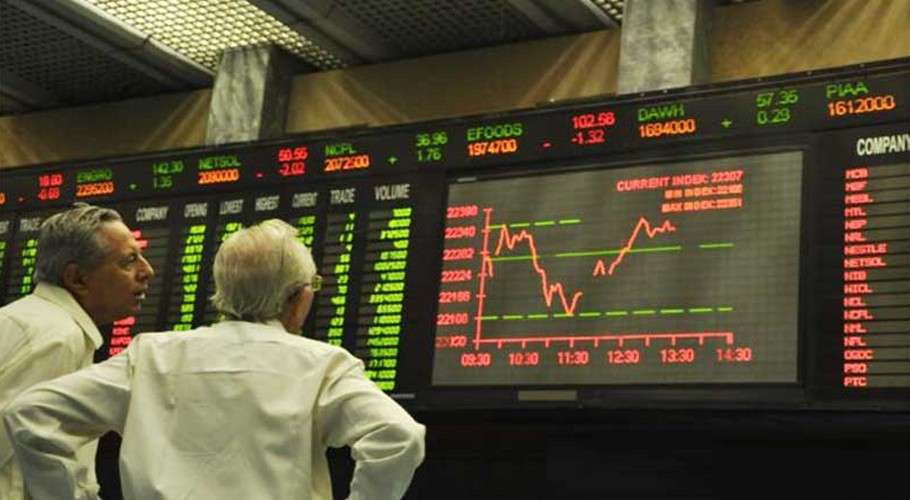
The trading floor in Karachi looked, in the first minutes of Monday’s session, like a room in which all the oxygen had been removed. From the opening bell, the Pakistan Stock Exchange’s benchmark KSE-100 index plummeted over 3,700 points — a drop of nearly 2.5% in less than an hour — as investors absorbed a weekend of extraordinary geopolitical turbulence: oil prices breaching $116 a barrel, a US president musing publicly about seizing Iran’s most critical export hub, and Yemen’s Houthis entering the conflict with fresh missile salvos against Israel. By 9:40am, the KSE-100 had fallen to 147,950.31 points from a previous close of 151,707.51, touching the lowest intraday reading in the index’s 52-week history. Every major sector bled red.
The KSE-100 drops over 3% — and this episode is not occurring in isolation. It is the latest chapter in a five-week global energy crisis that has repriced risk from Houston to Hong Kong, and which now casts a particularly long shadow over Pakistan: a major oil-importing economy whose current account, currency, and inflation trajectory hang in direct tension with every dollar added to the price of Brent crude. What makes today’s session historically distinctive is not simply the severity of the sell-off, but its simultaneous backdrop: even as Karachi’s market bled, barely 1,500 kilometres away in Islamabad, Pakistan’s diplomatic corps was hosting the world’s most consequential attempt yet to end the war that is causing it.
A Market Under Siege: What Happened and Why
Intense selling pressure gripped the Pakistan Stock Exchange on Monday as the KSE-100 index dropped over 3,700 points in early trading, driven by escalating tensions in the Middle East and fears of a prolonged conflict. Bloom Pakistan The rout was broad and unsparing. Selling pressure was particularly concentrated in the automotive, cement, banking, oil and gas, power, and refinery sectors, with shares of major companies including ARL, HUBCO, MARI, OGDC, PPL, HBL, MEBL, MCB, and NBP trading in the negative zone. Bloom Pakistan
The immediate macroeconomic trigger is unmistakable. Brent crude, the global oil benchmark, crossed $116.5 a barrel on Monday before paring to around $114.6 — still 1.8% up on the day — while WTI, the US benchmark, climbed 1% to around $101 a barrel. CNN That price tag carries existential weight for Pakistan, which imports virtually all of its petroleum needs and where energy subsidies already strain a budget operating under the watchful eye of the International Monetary Fund. Crude oil prices have surged more than 50% so far in March following the US-Israeli war against Iran, with Brent having traded around $73 a barrel before the United States and Israel attacked Iran on February 28, prompting Tehran to choke off the Strait of Hormuz. CNN
The rupee, notably, held steady. The USD/PKR exchange rate was around 279.09 on March 30, marginally lower from the previous session, TRADING ECONOMICS suggesting institutional confidence in the State Bank’s management of external reserves — for now. Bond yields, too, showed no alarm. This divergence between equity panic and macro stability is itself revealing: the sell-off is primarily a sentiment shock rather than a deterioration in Pakistan’s fundamentals. That distinction, however cold a comfort to investors nursing heavy losses, matters enormously for the medium-term outlook.
Trump’s Kharg Island Gambit — and the $116 Oil Question
If one man can be credited with Monday’s carnage, his name requires no introduction. Trump told the Financial Times in an interview published Sunday that he wants to “take the oil in Iran” and could seize Kharg Island, which handles about 90% of the country’s oil exports, comparing the potential move to US operations in Venezuela. CNN He then escalated further in the early hours of Monday. The president warned on Truth Social that the US would “completely obliterate” Iran’s electric generating plants, oil wells and Kharg Island if the strategically vital Strait of Hormuz was not “immediately” reopened and a peace deal not reached “shortly.” CNBC
The market implications of such rhetoric are immediately quantifiable. Goldman Sachs estimates a $14–18 per barrel geopolitical risk premium baked into current oil prices, TECHi® while Macquarie Group warned last week that Brent crude could reach $200 a barrel if the war continues until the end of June, equating to a US gasoline price of $7 per gallon. CNN For Pakistan, every $10 rise in sustained crude prices adds approximately $2–2.5 billion to the annual import bill — a structural pressure that threatens to widen the current account deficit, erode foreign reserves, and potentially force the State Bank to revise its monetary easing trajectory.
Michael Haigh, global head of fixed income and commodities research at Société Générale, warned that the potential for further disruption through the Bab el-Mandeb Strait — linking the Gulf of Aden to the Red Sea — could push prices even higher, noting that “four to five million barrels per day” transit the waterway. CNBC In a scenario where both chokepoints are disrupted simultaneously, the oil shock hitting Asia’s emerging markets would be unprecedented in the post-2008 era.
Today’s Damage: Sector-by-Sector Breakdown
| Sector | Impact | Notable Names |
|---|---|---|
| Oil & Gas | Heavy selling | OGDC, PPL, MARI |
| Commercial Banks | Largest negative index contribution | HBL, MCB, NBP, MEBL |
| Cement | Broad-based losses | LUCK |
| Power / IPPs | Negative zone | HUBCO |
| Automotive | Under pressure | ARL |
| Refineries | Sharp declines | ARL |
| Volume Leaders (Overall) | High retail activity | KEL, FNEL, WTL |
Sources: PSX Data Portal, Bloom Pakistan, DayNews.tv — March 30, 2026
Islamabad: The Diplomatic Counterweight
Here is where the story acquires its most remarkable dimension. While Karachi’s brokers scrambled to offload positions, diplomats in Islamabad were doing the opposite — attempting to arrest the very geopolitical spiral that was causing the panic. Two-day consultations of foreign ministers of Türkiye, Saudi Arabia, Egypt and Pakistan started in Islamabad on Sunday as the capital turned into the centre of a rapidly forming diplomatic track — described by officials as the most coordinated regional effort yet to push the United States and Iran towards direct talks. Al Jazeera
The outcome was more concrete than many had anticipated. Pakistan achieved a significant diplomatic success as Saudi Arabia, Türkiye and Egypt endorsed Islamabad’s growing role as a mediator for peace, backing Pakistan’s initiative to promote de-escalation and potentially host talks between the United States and Iran. The Nation Foreign Minister Ishaq Dar announced: “Pakistan is very happy that both Iran and the US have expressed their confidence in Pakistan to facilitate their talks. Pakistan will be honored to host and facilitate meaningful talks between the two sides in coming days for a comprehensive settlement of the ongoing conflict.” Bloomberg
That language carries weight well beyond the ceremonial. Diplomats say that if current contacts hold, talks between US Secretary of State Marco Rubio and Iran’s Foreign Minister Abbas Araghchi could take place within days, potentially in Pakistan. Al Jazeera Germany’s Foreign Minister Johann Wadephul had already telegraphed optimism, saying he expected a direct US-Iran meeting in Pakistan “very soon.” Al Arabiya
The institutional infrastructure is also being built. The four foreign ministers agreed to establish a committee of senior officials tasked with developing modalities for sustained coordination among Pakistan, Saudi Arabia, Türkiye and Egypt The Nation — a formalised mechanism that gives this diplomatic initiative permanence beyond the current crisis.
Crucially, Pakistan’s leverage derives not from military power but from its unique geographic and diplomatic positioning. Islamabad has longstanding links with Tehran and close contacts in the Gulf, while Prime Minister Shehbaz Sharif and Army Chief Field Marshal Asim Munir have struck up a personal rapport with US President Donald Trump. Tehran has refused to admit to holding official talks with Washington but has passed a response to Trump’s 15-point plan to end the war via Islamabad. Bangladesh Sangbad Sangstha
The Strait of Hormuz: Pakistan’s Lifeline and Geopolitical Card
No development more elegantly illustrates Pakistan’s pivotal position than what happened over the weekend. Pakistan announced that Iran would allow 20 of its flagged ships to pass through the Strait of Hormuz — two ships daily — with Foreign Minister Dar calling it “a welcome and constructive gesture by Iran.” CNN Trump himself acknowledged the development, with the US president telling reporters that Iran had “allowed 20 boats laden with oil to go through the Strait of Hormuz, out of a sign of respect.” CNN
This seemingly modest concession — 20 vessels in a waterway that once carried 17.8 million barrels per day — is diplomatically seismic. It signals that Tehran views Islamabad as a credible channel, granting Pakistan a degree of real-time influence over one of the world’s most consequential shipping lanes. For Pakistan’s economy, the reciprocal benefit is potentially substantial: reduced energy costs, greater foreign exchange stability, and a positioning premium as a peace-broker that could attract diplomatic investment and economic goodwill from Gulf partners.
The Strait has been effectively closed to commercial traffic since March 2, with approximately 17.8 million barrels per day of oil flows disrupted. Iran has been operating a yuan-based toll system at the Strait, allowing select Chinese, Russian, and allied vessels to transit while collecting fees in Chinese yuan. TECHi® More ships are passing through the Strait of Hormuz according to shipping data, but still far fewer than before the Middle East conflict erupted. CNN
Global Ripple Effects: Asia First, Then the World
Pakistan is not alone in feeling the tremors. Asia is the first continent to feel the effects of depleting oil stocks, since oil shipments typically reach there first from the Middle East, with Africa and Europe likely to be more impacted by April, a JPMorgan report warned. CNN Tokyo’s equity markets have already registered sharp declines, and the yen is under pressure. In Japan, alarm is sounding over the declining value of the yen, with Vice Finance Minister Atsushi Mimura telling reporters: “We will respond on all fronts.” ITV News
For emerging markets with oil import dependencies — Bangladesh, Sri Lanka, Indonesia, Egypt — the macro arithmetic is equally punishing. Higher oil prices feed directly into inflation, compress central bank policy space, widen current account gaps, and invite currency depreciation. Pakistan, having only recently stabilised after a near-sovereign-debt crisis and IMF bailout, is particularly exposed to this feedback loop. The KSE-100 drops over 3% today are in part a market pricing exercise on exactly this vulnerability.
Brent crude, the international benchmark, has jumped more than 50% since the start of March, surpassing the previous record of 46% during Saddam Hussein’s 1990 invasion of Kuwait. NPR That statistical comparison should sharpen the mind of anyone inclined to treat this as temporary noise.
The Analyst View: Overreaction or Justified Panic?
Seasoned observers of the KSE-100 have been here before — and their verdict is nuanced. The index has now endured a series of geopolitical shocks in rapid succession. On March 2, in the session that followed the initial US-Israeli strikes on Iran, the KSE-100 recorded a plunge of 16,089 points, or 9.57%, its largest single-day fall in the bourse’s history, prompting an automatic market halt after the KSE-30 dropped 5% within the first seven minutes of trading. The Express Tribune
In that session, Topline Securities CEO Mohammed Sohail counselled restraint. “High leverage and overbought positions triggered panic selling,” he observed, adding that the rupee and bond yields remained stable, indicating limited macro impact. “With the market trading at a price-to-earnings ratio of nearly 7x, valuations appear compelling, offering attractive entry points to medium- and long-term investors. If macroeconomic stability persists, the recent sell-off could ultimately prove to be an overreaction,” Sohail said. The Express Tribune
AKD Securities remarked that the KSE-100 overreacted to the Middle East military conflict and expected the index to “stage a recovery as the direct economic impact on Pakistan appears manageable and the country is not a direct party to the conflict.” The Express Tribune
Today’s session carries a similar profile — heightened fear rather than fundamental economic deterioration. The key distinction from March 2’s bloodbath is that this time, Pakistan’s diplomatic positioning has materially improved. The four-nation Islamabad framework, the Hormuz passage concession, and the potential for hosting US-Iran talks all represent real — if fragile — de-escalation optionality that simply did not exist a month ago.
The Outlook: What the Islamabad Diplomatic Track Means for the KSE-100
The PSX’s near-term direction will be determined by two variables operating on very different timescales: oil prices, which respond in real time to rhetoric and battlefield developments; and the diplomatic track, which moves at the pace of sovereign ego and geopolitical calculation.
On the first front, the risk remains decisively to the upside for oil prices. David Roche, strategist at Quantum Strategy, warned that markets are increasingly pricing in the possibility of “boots on the ground” and a move to seize Iran’s key export hub at Kharg Island — a step that would effectively choke off Iran’s dollar revenues but risk triggering full-scale escalation, with Tehran likely to retaliate. CNBC
On the second front, the Islamabad meeting represents the clearest evidence yet that a negotiated off-ramp exists. The four-nation mechanism is not designed to produce a ceasefire itself — its purpose is to align regional positions and prepare the ground for a possible direct US-Iran engagement. If successful, it could provide the political cover both Washington and Tehran need to enter talks without appearing to concede. Al Jazeera
The decisive weeks ahead will test whether Pakistan’s diplomatic capital can be converted into tangible de-escalation — and whether that de-escalation arrives in time to prevent the oil shock from becoming structurally embedded in Pakistan’s economic trajectory. For investors watching the KSE-100, the index is no longer simply a barometer of corporate Pakistan’s health. It has become a live readout of the world’s most consequential diplomatic gamble — one in which Islamabad, improbably, holds a central hand.
The market closed today not in despair, but in watchful, expensive uncertainty. And for an economy that has lived on the edge of crisis for most of the past three years, that is the most honest description of where Pakistan stands: poised, precarious, and pivotal — all at once.

Singapore Firms Press Ahead in US Market Despite Trump Tariffs

The IMF’s High-Voltage Mandate: How Pakistan’s FY27 Power Subsidy Cut Will Rewire Its Economy

How US Debt, Gold Chaos, and a Stalled Middle East Are Rewriting the Rules of Investing

Top 15 Stocks for Investment in 2026 in PSX: Your Complete Guide to Pakistan’s Best Investment Opportunities
Top 15 Stocks for Investment in 2026 in PSX: Your Complete Guide to Pakistan’s Best Investment Opportunities

Debunking IMF Program Myths: Reconfiguring Engagement for True National Ownership in a Volatile World
-
 Markets & Finance4 months ago
Top 15 Stocks for Investment in 2026 in PSX: Your Complete Guide to Pakistan’s Best Investment Opportunities
-
Markets & Finance4 months ago
Top 15 Stocks for Investment in 2026 in PSX: Your Complete Guide to Pakistan’s Best Investment Opportunities
-
 Analysis3 months ago
Debunking IMF Program Myths: Reconfiguring Engagement for True National Ownership in a Volatile World
-

 Global Economy5 months ago
What the U.S. Attack on Venezuela Could Mean for Oil and Canadian Crude Exports: The Economic Impact
-

 Investment4 months ago
Top 10 Mutual Fund Managers in Pakistan for Investment in 2026: A Comprehensive Guide for Optimal Returns
-

 Asia5 months ago
China’s 50% Domestic Equipment Rule: The Semiconductor Mandate Reshaping Global Tech
-

 AI5 months ago
15 Most Lucrative Sectors for Investment in Pakistan: A 2025 Data-Driven Analysis
-

 Exports5 months ago
Pakistan’s Export Goldmine: 10 Game-Changing Markets Where Pakistani Businesses Are Winning Big in 2025