
Opinion
Trump’s Greenland Gambit: How Tariffs on Eight European Allies Could Reshape the Transatlantic Alliance

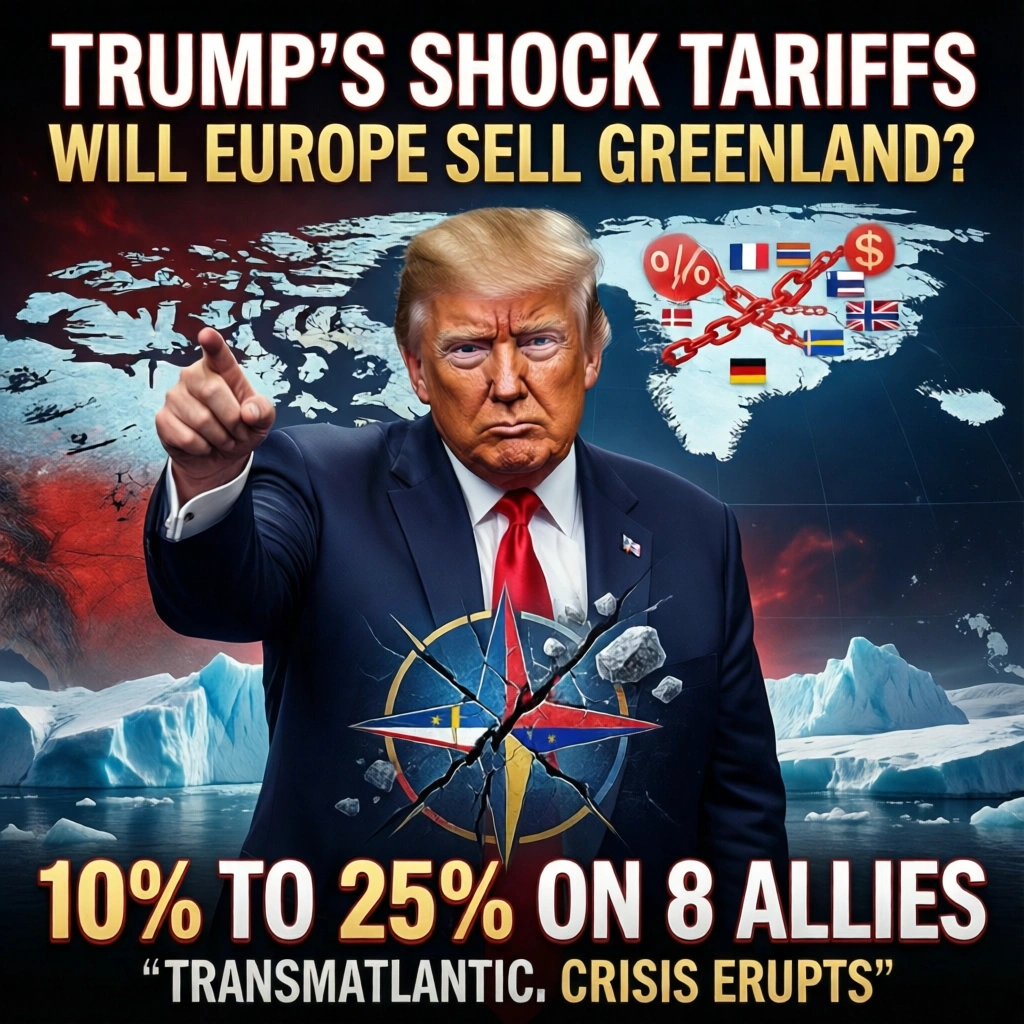
On the frigid evening of January 17, 2026, President Donald Trump lobbed what may prove to be the most audacious—and potentially destructive—ultimatum of his second term across the Atlantic. Via his preferred digital megaphone, Truth Social, Trump announced sweeping tariffs targeting eight of America’s closest European allies: Denmark, Norway, Sweden, France, Germany, the United Kingdom, the Netherlands, and Finland. The levy, set at 10% on all imported goods beginning February 1 and escalating to 25% from June 1, comes with a singular, extraordinary condition: the “Complete and Total purchase of Greenland” by the United States.
The declaration sent tremors through diplomatic channels, financial markets, and NATO headquarters alike. Within hours, European capitals responded with a mixture of bewilderment, outrage, and steely resolve. Danish Prime Minister Mette Frederiksen, who had previously dismissed Trump’s Greenland overtures as “absurd,” condemned the tariff threat as “economic blackmail” that violates fundamental principles of international law and alliance solidarity. German Chancellor’s office termed the move “incomprehensible,” while French officials warned of swift EU-wide countermeasures.
This is not merely another chapter in Trump’s unpredictable trade policy playbook. It represents a fundamental reassessment of America’s relationship with its oldest democratic partners—one that prioritizes Arctic ambitions and resource nationalism over seven decades of transatlantic cooperation. The question facing European leaders and global observers is stark: Is this a negotiating tactic from a president known for brinkmanship, or does it signal a permanent fracturing of the Western alliance at precisely the moment when unity matters most?
The Island That Haunts Trump’s Strategic Imagination
Trump’s fixation on Greenland is neither new nor entirely irrational, even if his methods appear extraordinary. The world’s largest island has occupied a peculiar space in American strategic thinking since 1946, when President Harry Truman offered Denmark $100 million for outright purchase—a proposal politely declined. During the Cold War, the United States established Thule Air Base in northwest Greenland, which remains a critical early-warning station for ballistic missile detection and satellite surveillance, now upgraded to monitor threats from Russia and China.
Trump first publicly floated the purchase idea in August 2019, initially reported as a jest before the then-president confirmed serious interest. The proposal met swift rejection from both Denmark and Greenland’s autonomous government, prompting Trump to cancel a scheduled state visit to Copenhagen in a diplomatic snub that reverberated for months. At the time, analysts dismissed the episode as characteristic Trump bluster—a distraction from domestic troubles or perhaps genuine curiosity about an unconventional deal.
Yet the intervening years have transformed Greenland from a geopolitical curiosity into a strategic imperative in Washington’s eyes. The Arctic is warming twice as fast as the global average, opening previously ice-locked sea routes and revealing vast mineral wealth beneath Greenland’s melting ice sheets. Geological surveys suggest the island harbors significant deposits of rare earth elements—including neodymium, praseodymium, and dysprosium—critical for electric vehicles, wind turbines, advanced weaponry, and semiconductors. China currently controls roughly 70% of global rare earth production and 90% of processing capacity, creating what Pentagon strategists view as an unacceptable vulnerability in supply chains for both commercial technology and defense systems.
Russia’s 2022 invasion of Ukraine and subsequent militarization of its Arctic territories has further elevated Greenland’s importance. Moscow has reopened Soviet-era bases along its northern coastline, deployed advanced anti-access/area denial systems, and conducted frequent bomber patrols near North American airspace. China, despite being a “near-Arctic” nation by its own creative geography, has declared itself a “Polar Silk Road” power, investing in Icelandic infrastructure and conducting research expeditions that European intelligence agencies suspect serve dual civilian-military purposes.
For Trump and his advisers, Greenland represents the ultimate “art of the deal”—a territorial acquisition that would simultaneously secure critical minerals, establish American dominance in the Arctic, and cement a legacy comparable to the Louisiana Purchase or Alaska acquisition. The fact that such a deal contradicts modern international norms regarding self-determination and sovereignty appears, in this calculation, a manageable obstacle rather than a disqualifying one.
The Tariff Ultimatum: Mechanics and Targeted Impact
The tariffs Trump announced represent a significant escalation in both scope and justification. Unlike his first-term steel and aluminum levies, ostensibly grounded in Section 232 national security provisions, or his China tariffs under Section 301, these measures reportedly invoke the International Emergency Economic Powers Act (IEEPA)—an assertion of presidential authority typically reserved for sanctions against hostile nations like Iran or North Korea, as legal experts have noted with alarm.
The eight targeted nations collectively represent America’s third-largest trade relationship, with bilateral goods trade totaling approximately $680 billion annually. The economic pain would be unevenly distributed but universally felt:
Denmark, though a modest trading partner with roughly $15 billion in annual bilateral trade, faces disproportionate leverage given its sovereignty over Greenland. Danish pharmaceutical giants like Novo Nordisk—which supplies approximately 50% of the world’s insulin and has invested billions in US manufacturing—could see profit margins compressed and supply chains disrupted. The country’s wind energy sector, led by Vestas and Ørsted, exports significant turbine components to American renewable projects that could face cost increases precisely when the US seeks to expand green energy capacity.
Germany, America’s largest European trading partner with $267 billion in bilateral trade, confronts the most severe economic exposure. The automotive sector—BMW, Mercedes-Benz, and Volkswagen together exported over $24 billion worth of vehicles to the US in 2025—would face punishing costs that could render German cars uncompetitive against American, Japanese, and Korean alternatives. German machinery, chemicals, and precision instruments, which underpin countless American manufacturing processes, would ripple through industrial supply chains with inflationary consequences for US businesses and consumers.
The United Kingdom, still navigating post-Brexit trade relationships, sees roughly $132 billion in annual goods and services trade with America potentially jeopardized. While services trade might initially escape tariffs, financial institutions, consulting firms, and creative industries fear retaliatory measures or secondary impacts. British Aerospace, with deep integration into US defense projects including the F-35 fighter program, faces potential disruption despite ostensible national security carve-outs.
France, the Netherlands, Sweden, Norway, and Finland each face sector-specific vulnerabilities: French aerospace and luxury goods, Dutch chemicals and refined petroleum, Swedish automobiles and telecommunications equipment, Norwegian seafood and aluminum, and Finnish paper products and technology exports all enter the crosshairs. Collectively, these represent not just bilateral relationships but intricate European supply chains that feed American consumers and manufacturers.
The escalation timeline—from 10% to 25%—appears designed to maximize pressure while offering a narrow window for capitulation. A 10% tariff might be absorbed through currency adjustments or marginal price increases; a 25% levy would fundamentally alter trade flows, forcing companies to relocate production, seek alternative markets, or accept devastating market share losses.
Europe’s Response: Unity, Defiance, and Legal Recourse
European reaction has been swift, coordinated, and unambiguous. Within 24 hours of Trump’s announcement, European Commission President Ursula von der Leyen convened an emergency meeting of EU trade ministers, emerging with a preliminary retaliatory package targeting $75 billion in American exports—from Kentucky bourbon and Harley-Davidson motorcycles to California almonds and Florida orange juice, mirroring the effective pressure tactics employed during Trump’s first-term steel tariffs.
Critically, the European response extends beyond mere economic retaliation. Legal experts within the EU have begun preparing a complaint to the World Trade Organization, arguing that IEEPA invocation for territorial acquisition constitutes an abuse of emergency powers and violates foundational WTO principles. While WTO dispute resolution typically proceeds slowly—often requiring years for final rulings—the symbolic importance of challenging American legal rationale cannot be overstated. It frames the conflict not as a legitimate trade dispute but as an arbitrary exercise of power that threatens the multilateral trading system itself.
NATO allies face a particularly acute dilemma. The alliance, already strained by burden-sharing debates and divergent threat perceptions regarding Russia and China, now confronts a fundamental question: Can collective defense coexist with economic coercion among members? Several European defense ministers have privately expressed concern that Trump’s tariff threats undermine the alliance’s credibility at precisely the moment when Russian aggression demands unity. NATO Secretary General Mark Rutte, in carefully calibrated remarks, emphasized that “economic disputes must not weaken our shared security commitments,” a plea that acknowledges deep anxiety about alliance cohesion.
Perhaps most significantly, Greenland itself has asserted its voice in ways that complicate Trump’s narrative. Múte Bourup Egede, Greenland’s Premier, issued a statement reiterating that “Greenland is not for sale and will never be for sale,” while emphasizing the island’s ongoing path toward full independence from Denmark. Greenland’s 57,000 inhabitants, predominantly Indigenous Inuit, have increasingly demanded autonomy over their resource development and foreign relations—a self-determination claim that makes external purchase proposals both legally dubious and morally fraught. Greenlandic officials have suggested openness to expanded US investment and security cooperation, but firmly within frameworks respecting sovereignty rather than territorial transfer.
Economic Consequences: Beyond the Spreadsheet
Trade wars, as economists wearily remind policymakers, rarely produce clear winners. The immediate impact of Trump’s Greenland tariffs would be quantifiable: the Peterson Institute for International Economics estimates that a full 25% tariff regime could reduce US GDP growth by 0.3-0.5 percentage points while increasing consumer prices by $850-1,200 per household annually through higher costs for vehicles, pharmaceuticals, machinery, and consumer goods.
European economies would suffer comparably, with Germany potentially seeing GDP contraction of 0.4% and manufacturing job losses concentrated in export-dependent regions. Smaller Nordic economies, heavily reliant on US markets for specialized exports, could face sharper downturns. The Netherlands, a critical logistics hub for European-American trade, would experience cascading effects through Rotterdam’s ports and distribution networks.
Yet the deeper consequences extend beyond quarterly earnings reports. Global supply chains, painstakingly constructed over decades to optimize efficiency and resilience, would face abrupt reconfiguration. American pharmaceutical companies relying on Danish active ingredients or German precision equipment would scramble for alternative suppliers—often at higher cost and lower quality. European manufacturers would accelerate efforts to diversify away from American markets, potentially strengthening trade ties with China, India, and Southeast Asia in ways that diminish long-term US influence.
Financial markets, initially wobbling on tariff announcement day with the S&P 500 dropping 1.8%, face sustained uncertainty. Currency volatility—particularly euro-dollar fluctuations—could destabilize international transactions and complicate central bank monetary policy. Investment flows, already cautious amid geopolitical tensions, might retreat further from transatlantic ventures, starving promising technologies and industries of capital.
The rare earth dimension adds peculiar irony to Trump’s strategy. While Greenland theoretically harbors valuable deposits, actual extraction would require decades of infrastructure development, environmental assessments, and community consultation—hardly a near-term solution to Chinese dominance. Meanwhile, alienating European allies who are themselves seeking to diversify rare earth supply chains squanders opportunities for coordinated Western resource strategies that might genuinely challenge Beijing’s monopoly.
The Geopolitical Chessboard: Arctic Ambitions and Alliance Erosion
Beneath the tariff theatre lies a substantive geopolitical question: What does American leadership mean in the 21st century? Trump’s Greenland gambit reflects a worldview increasingly common among American nationalists—that alliances are transactional arrangements to be leveraged for discrete national advantages rather than collective security frameworks requiring mutual sacrifice and long-term commitment.
This philosophy stands in stark contrast to the architecture that has defined Western security since 1949. NATO’s Article 5 mutual defense guarantee assumes that an attack on one member constitutes an attack on all—a principle tested after 9/11 when European allies invoked the clause on America’s behalf, deploying forces to Afghanistan for two decades. The EU-US partnership on sanctions against Russia, technology export controls on China, and climate cooperation similarly presumes shared interests transcending narrow economic calculation.
Trump’s willingness to economically coerce NATO allies fundamentally challenges this framework. If the United States will threaten Denmark—a loyal ally hosting critical defense infrastructure and deploying forces to US-led missions from Iraq to Mali—over territorial ambitions, what restraints apply to American pressure on any partner? The message to European capitals is clear: alignment with Washington offers no protection from Washington’s demands.
The Arctic dimension complicates matters further. All eight nations targeted by Trump’s tariffs are Arctic Council members, engaged in scientific cooperation and environmental governance in the far north. Norway and Finland share Arctic borders with Russia; Sweden recently joined NATO explicitly to enhance Arctic security; Denmark (via Greenland) and the United States are the region’s dominant territorial powers. Effective Arctic strategy—whether addressing Russian militarization, Chinese economic penetration, or climate change impacts—requires precisely the coordinated approach that Trump’s unilateralism undermines.
Russia and China observe these fissures with undisguised satisfaction. Moscow’s propaganda apparatus has gleefully highlighted Western disunity, while Chinese state media frames Trump’s tactics as evidence of American imperial decline and unreliability. Beijing, simultaneously facing its own tariff battles with Washington, sees opportunity to position itself as a more stable economic partner for European nations seeking alternatives to American volatility. The strategic competition that ostensibly motivates Trump’s Greenland interest may actually be advanced by the very methods he employs to pursue it.
Precedents, Parallels, and the Question of Feasibility
Historical parallels to Trump’s approach are scarce and sobering. The United States has acquired territory through purchase—Louisiana from France in 1803, Alaska from Russia in 1867, the Virgin Islands from Denmark in 1917—but always through willing seller-buyer transactions, often driven by the seller’s financial desperation or strategic realignment. Modern international law, codified in the UN Charter and subsequent frameworks, explicitly rejects territorial transfer without the consent of governed populations.
The Virgin Islands precedent, interestingly involving Denmark, occurred during World War I when Copenhagen faced potential German occupation and desperately needed funds. The $25 million transaction (equivalent to roughly $600 million today) came after decades of Danish-American negotiations, formal ratification by both governments, and—crucially—no meaningful consultation with the islands’ inhabitants, reflecting colonial-era norms now universally rejected.
Greenland’s situation differs fundamentally. The island enjoys substantial autonomy under Denmark’s constitutional framework, with local government controlling most domestic affairs while Copenhagen manages foreign relations and defense. Greenland has pursued gradual independence, achieving self-governance in 1979 and expanded autonomy in 2009, with full sovereignty theoretically achievable through referendum. Any transfer of sovereignty—whether to full independence or hypothetically to another nation—would require Greenlandic consent through democratic processes that current polling suggests would overwhelmingly reject American purchase.
The tariff mechanism itself carries ominous precedent from Trump’s first term. Steel and aluminum tariffs imposed in 2018 under Section 232 national security justifications triggered retaliatory cycles that harmed American farmers, manufacturers, and consumers while achieving minimal strategic benefit. The Phase One trade deal with China, celebrated by Trump as a historic victory, saw Beijing fall short of purchase commitments while American concessions on Huawei and technology transfer went substantially unreciprocated. Subsequent economic analyses suggested that American consumers and businesses bore the primary cost of Trump’s trade wars through higher prices and disrupted supply chains.
Legal experts question whether IEEPA, designed for sanctions against hostile actors threatening US national interests, can legitimately justify tariffs aimed at coercing friendly democracies into property sales. Constitutional scholars note that while presidents enjoy broad trade authorities, using them for purposes unrelated to trade policy or genuine national emergencies potentially exceeds statutory authorization and invites judicial challenge. The prospect of courts intervening in foreign policy remains uncertain, but the legal architecture appears shakier than Trump’s confident pronouncements suggest.
Scenarios and Futures: Where Does This End?
As European and American officials absorb the initial shock, several potential pathways emerge, each carrying distinct implications for transatlantic relations and global order.
Scenario One: Strategic Capitulation and Creative Dealmaking. Perhaps least likely but most aligned with Trump’s apparent hopes, Denmark and Greenland could interpret the tariff threat as sufficiently severe to explore unprecedented arrangements. Rather than outright sale, imaginative diplomacy might yield a 99-year lease model (similar to Hong Kong’s pre-1997 status), expanded US basing rights, joint resource development agreements, or substantial American infrastructure investment in exchange for privileged access to minerals and strategic facilities. This outcome would require Greenlandic leadership to view American partnership as preferable to continued Danish association and incipient independence—a calculation that current political sentiment does not support but economic realities and Chinese pressure might eventually encourage.
Scenario Two: Managed De-escalation Through Face-Saving Compromise. More plausibly, intense diplomatic engagement over the coming weeks could produce a formula allowing Trump to claim victory while European allies avoid economic catastrophe. Enhanced US-Greenland bilateral cooperation, formalized through treaties or executive agreements, might address legitimate American security and resource concerns without sovereignty transfer. Denmark could facilitate expanded American military presence or rare earth development partnerships, framed as alliance strengthening rather than territorial concession. Trump could declare that improved Arctic access and resource agreements satisfy US interests, suspending tariffs while preserving rhetorical claims about Greenland’s importance. This path requires European willingness to reward American coercion with substantive concessions—a precedent with troubling implications but potentially preferable to economic warfare.
Scenario Three: Mutual Escalation and Transatlantic Rupture. The darkest timeline sees neither side blinking as February 1 approaches. American tariffs take effect at 10%, triggering immediate EU countermeasures targeting politically sensitive US exports and states. Financial markets deteriorate amid uncertainty; businesses accelerate supply chain reconfiguration; political rhetoric hardens on both sides. The June 1 escalation to 25% produces genuine economic pain—job losses in German automotive regions, pharmaceutical shortages in American markets, inflationary pressures complicating monetary policy. NATO faces existential questions about its viability when economic and security interests diverge so sharply. US-European cooperation on China, Russia, climate, and technology fractures as mutual recrimination overwhelms shared interests. This scenario, while catastrophic, cannot be dismissed given Trump’s demonstrated willingness to sustain confrontation and European determination not to reward extortion.
Scenario Four: Domestic American Constraint. An often overlooked possibility involves American political and economic actors constraining Trump’s ambitions. US businesses dependent on European imports—pharmaceutical companies, auto manufacturers, technology firms—would lobby intensively for tariff reversal or exemption. Congressional Republicans, facing midterm elections in 2026 and constituent pressure from affected industries, might threaten legislation curtailing presidential tariff authorities or blocking IEEPA invocation for non-emergency purposes. Federal courts could issue injunctions questioning the legal basis for tariffs, forcing administration lawyers into prolonged litigation. While Trump demonstrated during his first term a capacity to resist such pressures, the economic stakes here are substantially higher, potentially mobilizing more formidable domestic opposition.
What This Reveals About American Power and Its Limits
Beyond the immediate diplomatic crisis and economic calculations lies a more fundamental question about the nature of American power in the 2020s. Trump’s Greenland gambit embodies a particular vision of strength—one rooted in unilateral action, economic leverage, and transactional relationships rather than alliance management, institutional frameworks, and long-term strategic patience.
This approach contains internal contradictions that European observers have noted with a mixture of concern and strategic calculation. The United States seeks to counter Chinese influence in critical mineral supply chains and Arctic regions, yet does so by alienating the very partners whose cooperation would be essential for any successful containment strategy. America demands loyalty and burden-sharing from NATO allies while demonstrating that loyalty provides no immunity from Washington’s economic coercion. The administration champions sovereignty and self-determination in contexts like Taiwan or Ukraine while dismissing those same principles when applied to Greenland.
These contradictions do not necessarily doom Trump’s approach—inconsistency has rarely constrained effective exercise of power—but they do reveal limits. American economic leverage over Europe remains substantial but not absolute; the EU collectively represents a $17 trillion economy with capacity to absorb short-term pain while diversifying partnerships. Military alliances cannot be sustained indefinitely through intimidation alone; at some threshold, partners conclude that autonomy and alternative arrangements serve their interests better than subordination to an unreliable hegemon.
The Greenland episode may ultimately be remembered less for its specific outcome—whether Trump secures mineral agreements, basing rights, actual territory, or nothing at all—than for what it clarifies about early 21st-century geopolitics. We inhabit an era where even the closest democratic partnerships face strain from nationalism, resource competition, and divergent threat perceptions. The post-1945 liberal international order, built on American leadership and institutional cooperation, confronts challenges from without (authoritarian powers) and within (democratic leaders questioning multilateralism’s value).
Trump’s tariff ultimatum forces allies to answer uncomfortable questions: What price are Europeans willing to pay for transatlantic partnership? Can NATO survive fundamental economic disputes among members? How do middle powers navigate a world where the superpower they’ve relied upon for protection increasingly treats them as adversaries in resource competition?
Conclusion: The Weight of an Island in a Fragmenting World
Greenland, an island of 57,000 souls, spectacular fjords, and melting ice sheets, never asked to become the flashpoint for transatlantic crisis. Its strategic importance is real—the Arctic is indeed warming, minerals are genuinely critical, and great power competition increasingly focuses on polar regions. But the manner in which Trump has chosen to pursue American interests transforms a potential opportunity for cooperative Western strategy into a loyalty test that may fracture the alliances such strategy requires.
As February 1 approaches and European capitals weigh their responses to Trump’s Greenland tariffs, the world watches a stress test of the Western alliance’s resilience. The immediate question—whether Denmark will negotiate, Trump will relent, or economic warfare will escalate—matters enormously for trade flows, market stability, and political careers. But the deeper inquiry concerns whether democracies can sustain cooperation in an age of resource nationalism, where even longtime partners view each other’s assets as potential acquisitions and deploy economic coercion against friends with the same ruthlessness once reserved for adversaries.
History suggests that great powers overestimate their leverage and underestimate their partners’ capacity for independent action. Rome discovered this as client kingdoms rebelled; Britain learned it as colonies demanded independence; the Soviet Union realized it as satellites broke away. Whether the United States is embarking on a similar trajectory—transforming allies into adversaries through arrogance and overreach—remains uncertain.
What is clear is that Trump’s Greenland gambit represents something more consequential than another unpredictable presidential pronouncement. It is a wager on the nature of power itself: whether strength derives from the capacity to compel or the wisdom to cooperate, whether interests are best served through intimidation or partnership, whether the future belongs to those who dominate or those who build coalitions capable of addressing shared challenges.
The answer will shape not just Greenland’s fate or transatlantic trade, but the structure of international order for decades to come. An island in the Arctic has become a mirror reflecting the fractures in the Western alliance—and perhaps the fault lines along which our geopolitical era will ultimately break.


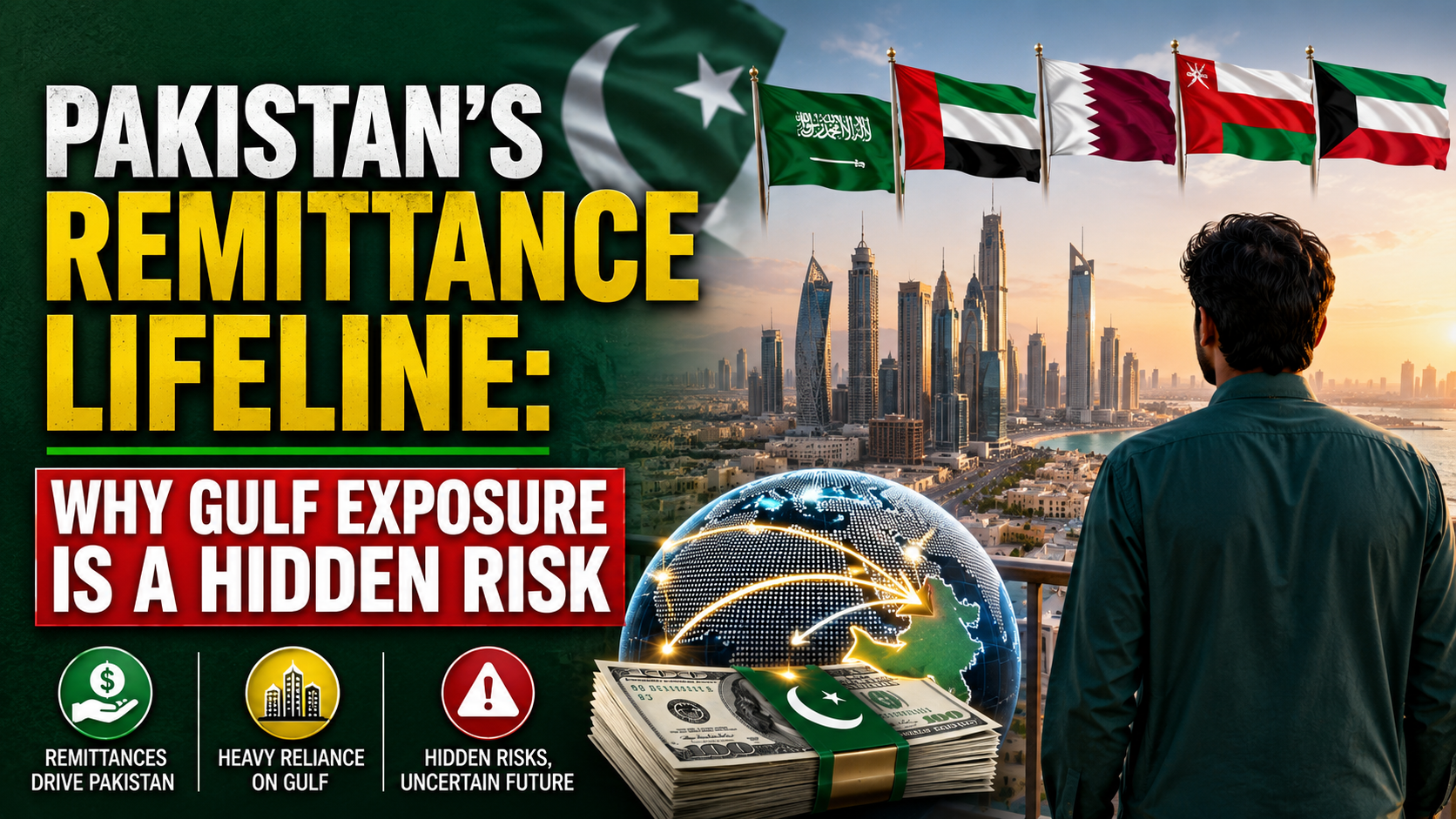
Buried inside the IMF’s latest Pakistan country report is a dependency that receives far less attention than headline GDP or inflation numbers, but arguably carries more immediate risk for millions of households: Pakistan’s economy is structurally exposed to whatever happens next in the Gulf.
The Numbers That Matter
Pakistan receives annual remittances amounting to roughly 9 percent of GDP, of which 55 percent originate from Gulf Cooperation Council countries, according to the IMF’s May 2026 country report. That single funding channel is one of the largest and most stable sources of foreign exchange available to the country — larger, in most years, than export revenue growth or foreign direct investment inflows combined.
The IMF’s own language is unambiguous about the risk this concentration creates: a significant disruption to GCC economies, or a forced return of migrant workers, could weigh heavily on these flows — a major source of financing for both household consumption and Pakistan’s broader balance of payments.
Why This Risk Is Live, Not Theoretical
This is not an abstract stress-test scenario. The Strait of Hormuz disruption, detailed extensively elsewhere in this series, has placed the entire Gulf region’s economic stability under genuine pressure for the first time in years. Should the conflict escalate further or trigger a broader regional economic slowdown, the transmission channel to Pakistan is direct and fast: fewer construction projects and reduced hiring across the GCC translates almost immediately into lower remittance flows from the millions of Pakistani workers employed there.
Capital Flows Are Already Reacting
The IMF has flagged early evidence that this dynamic is not purely hypothetical. Deteriorating global financial conditions have already resulted in capital outflows from Pakistan, which are likely to intensify further if the regional crisis extends, with the Fund specifically noting that access to short-term commercial financing — largely sourced from GCC banks — could also be affected if risk sentiment deteriorates further across the region.
This creates a double exposure that is easy to overlook in headline coverage: Pakistan depends on the Gulf both for the remittance income that supports household consumption, and for the short-term commercial bank financing that helps bridge its external funding gaps between IMF disbursements.
The State Bank’s Reserve Buffer
Pakistan’s own policy response has been to build reserves as a shock absorber. The State Bank of Pakistan has been projecting reserves to continue rising to roughly $18 billion by June 2026 on the back of planned inflows, a level implying that expected capital inflows currently exceed any current account shortfall — but only as long as Pakistan remains within an active IMF programme and maintains access to external funding on favourable terms.
The risk scenario flagged by policy researchers is specific: if monetary easing is mismanaged and confidence in Pakistan’s reform path falters, capital inflows could slow or reverse at the same time imports surge, opening an external funding gap that would draw down reserves and pressure the rupee — a scenario made materially more likely by any Gulf-region shock large enough to simultaneously dent remittances and tighten GCC bank lending.
How much of Pakistan’s remittances come from the Gulf?
Roughly 55% of Pakistan’s remittances — which fund about 9% of GDP — originate from Gulf Cooperation Council countries, making Pakistan’s balance of payments directly exposed to any economic disruption or capital-flow tightening in the Gulf region.
The Agricultural Wildcard
A related, more immediate risk sits in the agricultural supply chain. The IMF notes that disrupted DAP fertiliser supply chains linked to regional tensions could affect the Kharif planting season in June-July, with knock-on effects for food import prices — a second, more direct channel through which Gulf and broader Middle East instability could hit Pakistani households, independent of the remittance and capital-flow risks.
The Policy Takeaway
Pakistan’s economic stabilisation narrative in 2026 — a rebuilding KSE-100, falling inflation, a completed EFF review, covered in depth in our companion article — is real, but it rests on a foundation more exposed to Gulf regional stability than most headline coverage acknowledges. For policymakers in Islamabad, and for the Pakistani diaspora sending capital home each month, the Strait of Hormuz situation is not a distant geopolitical story. It is, in a very direct sense, a domestic economic risk factor.

In most economies, a strengthening currency is treated as evidence of underlying strength. In Russia’s case in 2026, the opposite is true — and this counterintuitive dynamic has received surprisingly little mainstream coverage relative to how directly it undermines Moscow’s ability to finance the war in Ukraine. The ruble touched 69.90 against the dollar in mid-June, its strongest level since February 2023, having gained roughly 45% since the start of the year on some measures. For Russia’s state finances, that appreciation is a genuine problem, not a triumph.
Why a Strong Ruble Hurts, Rather Than Helps, Russia
The mechanism runs through Russia’s fiscal architecture. Oil and gas taxes are calculated as the product of the export oil price and the ruble-dollar exchange rate — meaning that even when the dollar price of Urals crude holds steady, a stronger ruble mechanically reduces the ruble-denominated tax take from every barrel sold. With roughly 80% of Russia’s oil exports now flowing through Rosneft and Lukoil, both under direct US sanctions since late 2025, the currency-driven revenue squeeze compounds a volume-and-price problem that was already severe.
The scale of the shortfall is significant. Analysts at the Bloomsbury Intelligence and Security Institute project Russia faces an energy revenue shortfall of roughly $25–30 billion, driven by the combination of a stronger ruble and falling oil prices cutting the value of Urals crude by around a quarter. Separately, Russia’s Ministry of Finance has had to sell portions of the National Wealth Fund’s gold and yuan holdings to offset the shortfall in oil-and-gas-linked revenue — the Bank of Russia then buys those assets and sells an equivalent value of foreign currency domestically, a so-called “mirror operation” that itself reinforces the ruble’s strength, creating something close to a self-perpetuating cycle.
The Deeper Cause: Sanctions, Not Just Oil Prices
It would be a mistake to attribute the ruble’s strength purely to oil-market dynamics. Analysts at Meduza point to a more structural cause: a drop in imports combined with the Bank of Russia’s historically high interest rate has reduced domestic demand for foreign currency, pushing the ruble higher even as the broader economy stagnates. Compounding this, a large and growing share of Russia’s trade is now settled directly in rubles or yuan — 59.5% of exports and 56% of imports by October 2025 — reducing the currency-market channels through which a weaker ruble might otherwise emerge organically.
Sanctions enforcement has independently cut into export volumes and pricing power. Widened discounts on Russian crude — Urals trading roughly $25 a barrel below Brent as buyers price in the compliance risk of sanctioned suppliers — mean Russia is simultaneously selling less oil, at a bigger discount, for a currency worth mechanically less in tax terms per barrel. It is difficult to construct a more comprehensively unfavourable set of conditions for a state budget built around oil-and-gas revenue.
The Fiscal Math Is Getting Harder to Finance
Russia’s Economic Development Ministry has already revised its own forecasts downward across every major indicator, and the government has been forced into unpopular measures including a VAT increase effective January 2026 and higher domestic borrowing — targeting roughly 5.5 trillion rubles in fresh domestic bond issuance in 2026, with state-owned banks like Sberbank absorbing the bulk of that supply. Analysts note this financing method is among the most inflationary available, functionally similar to money creation, because the primary buyers are state banks rather than independent market participants pricing genuine credit risk.
Why Analysts Don’t Expect Collapse — Just Stagnation
Despite the mounting pressure, multiple assessments converge on the same conclusion: Russia’s economy is not on the verge of collapse. The World Bank’s own forecast trajectory shows growth slowing to around 0.8–1% annually through 2028 rather than contracting outright, describing the outlook as stagnation rather than crisis. As one analysis put it, the state-dependent structure of Russia’s economy — heavy reliance on state-owned enterprises and raw-material exports — is precisely the kind of economic structure that helps authoritarian systems maintain power through prolonged difficulty rather than triggering the kind of acute crisis that would force policy capitulation.
What to Watch
The critical variable for 2026 is whether the Bank of Russia’s interest-rate cuts — already reducing the key rate from 16% toward 15.5% — proceed fast enough to weaken the ruble back toward the Economic Ministry’s own projected average of roughly 92 per dollar. If the ruble instead remains persistently overvalued relative to Russia’s underlying trade fundamentals, the fiscal shortfall — and the resulting drawdown of Russia’s National Wealth Fund — will continue to compress the resources available for financing the war in Ukraine, regardless of headline oil prices.
Why the AI Revolution Is Breaking the Link Between Output and Labor Income
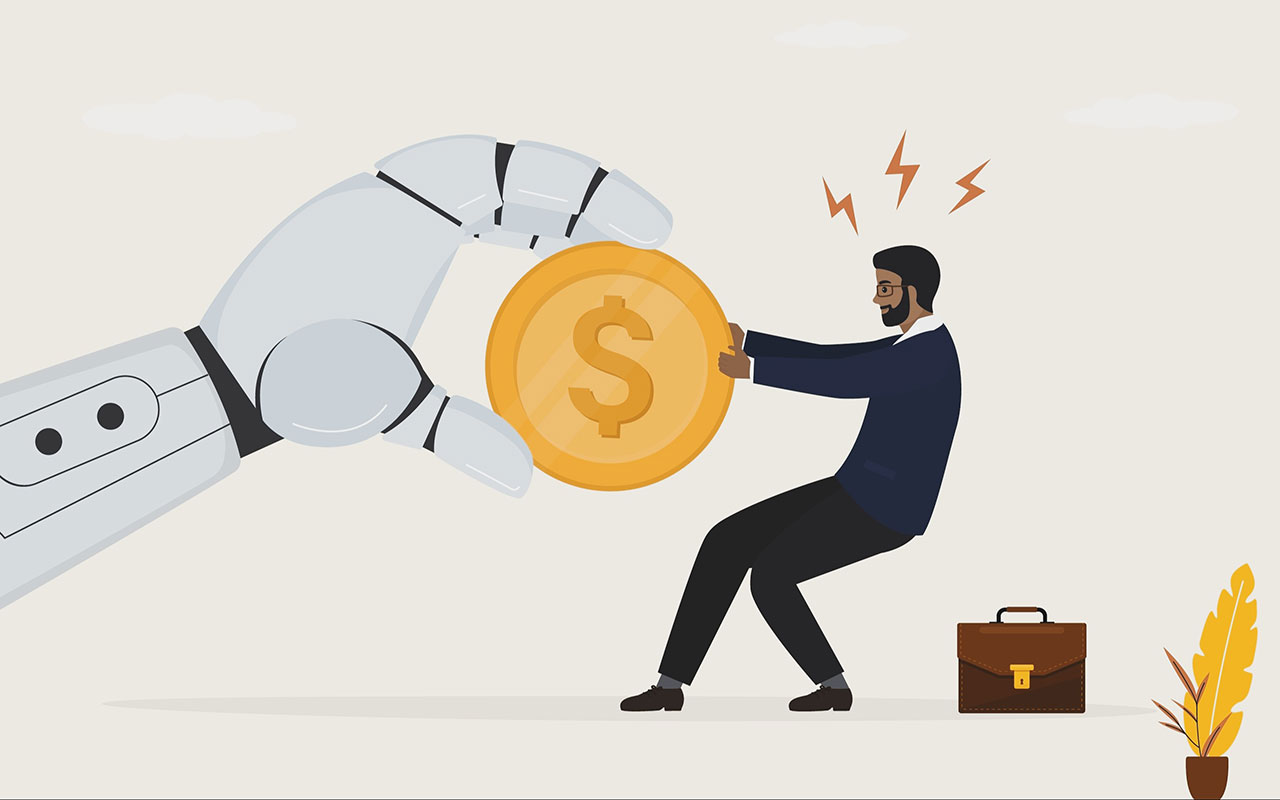
Artificial intelligence is transforming the modern workplace at a breathtaking pace. Generative AI tools are drafting legal briefs, diagnosing medical images, writing software code, and managing supply chains with superhuman efficiency. Yet a landmark report from the International Labour Organization, released on June 15, 2026, reveals a troubling disconnect: while global labor productivity has accelerated to a 3.2% annual clip, real median wages in advanced economies have risen a mere 0.8% (ILO World Employment and Social Outlook, June 2026). The AI boom, it appears, is delivering a productivity miracle that primarily rewards capital owners and the highest‑skilled technologists, leaving the typical worker behind.
The Labour Share in Freefall
The ILO’s most alarming finding is the labor share decline. The labor income share—the slice of national income that goes to workers in the form of wages, salaries, and benefits—has fallen to a historic low of 51% globally, down from 54% in 2004. The decline is sharpest in the United States and Northern Europe, where AI adoption is most advanced. In the US, the labor share has dropped to 56.5%, a level not seen since the Gilded Age. The ILO attributes 40% of this decline since 2020 to technological displacement, with AI being the primary driver.
The mechanism is subtle but powerful. AI automates cognitive routine tasks, not just physical ones. When a financial analyst’s report that once took five days can be produced by an AI in five minutes, the marginal value of that analyst’s time plummets. The analyst may keep her job, but her bargaining power for raises evaporates. Meanwhile, the firm’s profits surge because output per worker rises dramatically. The ILO found that in the top 500 AI‑adopting firms globally, operating margins expanded by an average of 4.8 percentage points between 2022 and 2026, but the wage‑to‑revenue ratio contracted by 2.3 points (McKinsey Global Institute, “The State of AI in 2026”).
Technology Unemployment 2.0
The term “technological unemployment” has moved from academic journals to mainstream policy debates. The ILO estimates that while AI will create 50 million net new jobs by 2030, it will displace or fundamentally transform 400 million roles. The occupations most exposed are those that involve information processing, pattern recognition, and language generation: paralegals, accountants, call‑center agents, radiologists, and software developers themselves. In a striking case, a major global bank announced in April 2026 that it had reduced its compliance department headcount by 35% while simultaneously cutting error rates, replacing human reviewers with a combination of natural‑language processing and robotic process automation (Financial Times).
What makes this wave different from previous automation cycles is the speed and the educational threshold. Historically, automation hit blue‑collar manufacturing; this time, it is hitting white‑collar, university‑educated professionals. A paper from the National Bureau of Economic Research circulated in May 2026 shows that for the first time, workers with a bachelor’s degree are seeing a negative return to experience in AI‑exposed roles; their earnings trajectory is flattening relative to peers in less automatable trades such as plumbing or elderly care (NBER Working Paper 31050).
The Gig Economy Entrenchment
AI is also accelerating the fissuring of the traditional employment relationship. Platforms that match freelancers with tasks, from graphic design to legal research, are increasingly using AI to manage work allocation, evaluate performance, and even set piece‑rate prices. The ILO found that 38% of the global workforce is now engaged in some form of non‑standard employment, up from 34% in 2019. While this provides flexibility, it strips away the training, benefits, and career progression that traditional employment offered. Workers in these arrangements have seen their real incomes stagnate or fall, as algorithmic management squeezes task‑by‑task compensation.
Policy Responses: From AI Taxes to Universal Basic Capital
Governments and international bodies are scrambling to rewrite the social contract. The European Parliament’s Committee on Employment is debating an AI training levy that would require firms deploying automation to contribute 1% of payroll to a reskilling fund. The idea, inspired by Singapore’s SkillsFuture credit, has drawn support from trade unions and even some tech leaders. Sam Altman’s concept of a “universal basic capital”—an ownership stake in the AI‑driven economy distributed to all citizens—has moved from concept to pilot in Finland and Kenya, where blockchain‑based digital trusts allocate shares in a portfolio of AI‑intensive public companies to citizens (World Economic Forum, “AI Governance in Practice”).
The OECD has issued new guidelines urging members to strengthen collective bargaining rights in the digital economy and to enforce antitrust laws that prevent algorithmic wage‑fixing (OECD Employment Outlook 2026). In the United States, the Federal Trade Commission has opened investigations into several large HR‑tech platforms over allegations that their “optimal wage” algorithms constitute illegal coordination among employers.
What Workers and Employers Can Do
For individuals, the advice is increasingly nuanced. The ILO recommends “AI literacy” not as a coding skill but as the ability to supervise, critique, and collaborate with AI outputs. Skills in emotional intelligence, complex negotiation, and ethical judgment are commanding a premium. Employers, on the other hand, are facing a talent paradox: they need workers who can manage AI, but if they hollow out the middle tier of employees, they lose the pipeline for future managers. Firms that invest in robust apprenticeship programs and internal mobility, such as Bosch and Siemens, are finding that they can deploy AI without triggering the toxic wage compression that hurts morale and long‑term innovation (Harvard Business Review, “The Smart Way to Automate”).
The AI productivity boom is real, but the ILO’s message is stark: without deliberate policy intervention, the link between rising output and rising living standards will remain broken. The labor share decline is not an iron law of technology; it is a consequence of institutional choices. Whether nations choose to tax, redistribute, or upskill will determine whether the 2020s are remembered as the decade of shared prosperity or of deepening divide.

Pakistan’s Remittance Lifeline: Why Gulf Exposure Is a Hidden Risk

Dubai’s Rise to the World’s 7th Financial Hub: Inside the D33 Push

China EV Exports Hit Record High in 2026

UK’s “National Contributions Tax” Explained: Burnham-Era Reform 2026

Russia’s Strange Problem in 2026: Its Currency Is Too Strong

Section 301 Forced Labor Tariffs 2026: 60 Countries Affected

UK National Contributions Tax: Burnham’s Radical Tax Plan

Global Central Bank Divergence 2026: Why the Fed, BoE, BoJ, and PBoC Are All Moving Differently

Japan’s Bond Market Just Cracked. It Could Take the Rest of the World’s Debt With It

Malaysia’s Ringgit Is Holding Up. Economists Say the Real Test Is Still Coming

Climate Finance Delivery 2026: Trillion‑Dollar Promise Still Unmet

AI Impact on Wages 2026: Productivity Soars, Paychecks Stagnate

SpaceX IPO 2026: $2 Trillion AI Bubble, OpenAI & Anthropic — What Investors Must Know

China Economy 2026: Property Crisis, AI Investment & Export Surplus Explained

Top 15 Stocks for Investment in 2026 in PSX: Your Complete Guide to Pakistan’s Best Investment Opportunities
Top 15 Stocks for Investment in 2026 in PSX: Your Complete Guide to Pakistan’s Best Investment Opportunities

Debunking IMF Program Myths: Reconfiguring Engagement for True National Ownership in a Volatile World

Top 10 Mutual Fund Managers in Pakistan for Investment in 2026: A Comprehensive Guide for Optimal Returns

What the U.S. Attack on Venezuela Could Mean for Oil and Canadian Crude Exports: The Economic Impact

China’s 50% Domestic Equipment Rule: The Semiconductor Mandate Reshaping Global Tech

15 Most Lucrative Sectors for Investment in Pakistan: A 2025 Data-Driven Analysis

Pakistan’s Export Goldmine: 10 Game-Changing Markets Where Pakistani Businesses Are Winning Big in 2025
15 Most Lucrative Sectors for Investment in Pakistan: A 2025 Data-Driven Analysis
15 Most Lucrative Sectors for Investment in Pakistan: A 2025 Data-Driven Analysis

Pakistan’s Economic Outlook 2025: Between Stabilization and the Shadow of Stagnation
Pakistan’s Economic Outlook 2025: Between Stabilization and the Shadow of Stagnation

China’s Property Woes Could Last Until 2030—Despite Beijing’s Best Censorship Efforts
China’s Property Woes Could Last Until 2030—Despite Beijing’s Best Censorship Efforts
-
 Markets & Finance7 months ago
Top 15 Stocks for Investment in 2026 in PSX: Your Complete Guide to Pakistan’s Best Investment Opportunities
-
Markets & Finance7 months ago
Top 15 Stocks for Investment in 2026 in PSX: Your Complete Guide to Pakistan’s Best Investment Opportunities
-
 Analysis6 months ago
Debunking IMF Program Myths: Reconfiguring Engagement for True National Ownership in a Volatile World
-
 Investment6 months ago
Top 10 Mutual Fund Managers in Pakistan for Investment in 2026: A Comprehensive Guide for Optimal Returns
-
 Global Economy7 months ago
What the U.S. Attack on Venezuela Could Mean for Oil and Canadian Crude Exports: The Economic Impact
-
 Asia7 months ago
China’s 50% Domestic Equipment Rule: The Semiconductor Mandate Reshaping Global Tech
-
 AI7 months ago
15 Most Lucrative Sectors for Investment in Pakistan: A 2025 Data-Driven Analysis
-
 Exports7 months ago
Pakistan’s Export Goldmine: 10 Game-Changing Markets Where Pakistani Businesses Are Winning Big in 2025