
Oil Markets
Strait of Hormuz Crisis: What the Latest Tanker Attacks Mean for Oil, Shipping and Global Trade

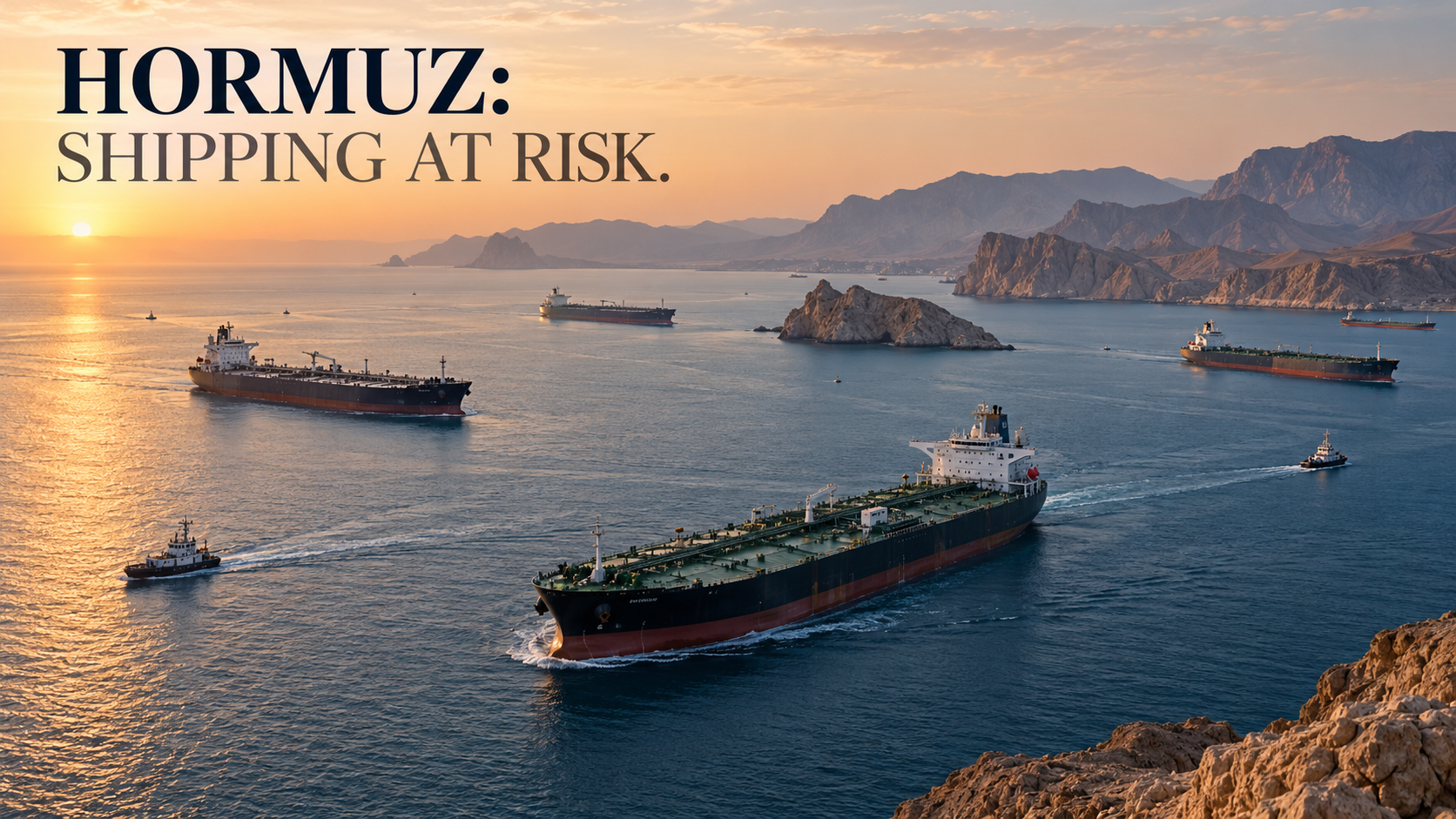
Shipping through the Strait of Hormuz, the narrow passage linking the Persian Gulf with the Gulf of Oman, remains dangerously disrupted after a renewed sequence of attacks on commercial tankers. Data reported by Reuters on October 8 showed commodity-vessel transits falling to their lowest point in more than two months, even as portions of the oil-export system had adapted to months of conflict. The immediate implications extend beyond crude prices: shipping insurance, the security of crews, refined fuels and supply chains all face pressure. Reuters’ October 8 shipping report and Lloyd’s List Intelligence’s maritime assessment provide a grounded view of the disruption.
Key takeaways:
- The strait remains severely restricted for many commercial operators, but “zero shipping” would be inaccurate.
- Recent attacks have increased risk even as some exporters have developed costly workarounds.
- Vessel transits, crude shipments and refined-product deliveries are different measures; they can move in different directions.
- Shipping conditions depend on security, insurance, crew availability, terminals, vessels and routes—not just whether the waterway is physically navigable.
Is the Strait of Hormuz closed?
There is no simple yes-or-no answer. The passage is geographically open water, but military threats and commercial risk have sharply curtailed ordinary shipping. Some vessels continue to transit while others hold back, reroute or operate under exceptional arrangements. A headline declaring a complete physical closure would erase these distinctions.
In the period reviewed by Reuters, Kpler data indicated just seven commodity-vessel passages on Tuesday, October 6, followed by 10 on Wednesday, October 7. Other tracking sources used different vessel definitions and recorded slightly different counts. These figures are snapshots, not an unchanging daily average and not proof that every class of cargo stopped moving.
The conflict’s maritime effects have continued through successive phases in 2026. An earlier understanding enabled some recovery, but the latest attacks illustrate how quickly owners, insurers and captains can reassess risk.
Why Hormuz matters to the global economy
The strait is among the most consequential energy chokepoints because Gulf producers rely on it to reach buyers in Asia and elsewhere. Tanker movements affect crude oil, condensate and petroleum products; liquefied natural gas ships also use the route.
For a sense of scale, the U.S. Energy Information Administration’s 2026 chokepoint analysis estimates average oil flows through Hormuz at 21.6 million barrels per day in the fourth quarter of 2025, compared with 4.9 million barrels per day in the second quarter of 2026. These are quarterly flow estimates, not real-time October readings. They show how significant the early disruption became, but they should not be conflated with current daily transits.
| Metric | Reported observation | What it actually measures |
|---|---|---|
| Hormuz oil flows, Q4 2025 | 21.6 million barrels/day | Quarterly average of crude, condensate and products; EIA |
| Hormuz oil flows, Q2 2026 | 4.9 million barrels/day | Quarterly average following conflict disruption; EIA |
| Commodity vessels, October 6 | 7 passages | Particular-day Kpler vessel observation reported by Reuters |
| Commodity vessels, October 7 | 10 passages | Next-day snapshot, not oil volume |
This illustrates a common mistake in rapidly moving market coverage: a lower ship count does not mechanically mean oil volume declines by the same percentage. Tanker size, load levels, cargo type and alternative export routes matter.
The latest attacks and security assessment
In its October 8 report, Lloyd’s List Intelligence said at least 13 attacks on tankers or gas carriers had been recorded since September 28. The specialist service characterized commercial shipping threats as severe and described continued pressure on the export-recovery network.
The crisis is about the safety of maritime crews as much as it is about the price of oil. A vessel that can technically sail may still lack affordable insurance, an acceptable charter agreement or crew willingness to enter a high-threat area. Owners must consider security advisories, flag and sanctions exposure, the destination of the cargo and possible interruptions on the return voyage.
Financial Times reporting has described attacks extending beyond the narrow waterway, underscoring that an operator’s exposure can continue across surrounding Gulf shipping routes. This is why changing the transit route within a region does not automatically remove the risk.
Why oil flows can recover while shipping stays abnormal
Export systems adapt when normal logistics break down. Cargo can be moved overland where pipelines exist, loaded through alternative ports, consolidated into larger vessels, or transferred between ships. These arrangements can restore some export volumes without recreating pre-crisis shipping conditions.
Lloyd’s List reported 477 non-Iranian-linked transits during September 2026, its highest month since the conflict began, while also noting that workarounds remained costly and concentrated among a relatively small group of operators. That September total and the October daily count are not directly comparable: one is a full-month measure with a specific ship definition, the others are daily snapshots of commodity vessels.
A recovered barrel is not necessarily a recovered route. It may reach its buyer after longer sailing time, additional handling, higher freight charges and elevated security costs. That extra complexity is economically important even if headline export tonnage appears healthier.
Insurance as a second chokepoint
War-risk coverage is a critical commercial constraint. Insurers assess the likelihood of a vessel being damaged, detained or unable to complete its voyage. Owners and charterers must decide whether premiums and contract terms are acceptable. A large increase in required coverage can deter normal cargo movements even where navigation remains physically possible.
Changing conditions also complicate freight pricing. Tanker availability may be constrained if vessels are stuck, diverted or committed to long journeys. Higher tanker day rates and delays can feed into delivered energy costs independent of the benchmark price of crude.
Implications for oil prices, diesel and LNG
Crude oil prices reflect both immediate supply and expectations about future supply. A security incident can raise risk premiums before cargo volumes fall. Conversely, an announcement suggesting lower tension can reduce futures prices without instantly reopening commercial routes.
Refined petroleum products are a separate problem. Gasoline, diesel and jet fuel depend on refinery operations, product-specific export terminals, storage and specialized trading networks. Even when crude output rebounds, damaged or curtailed refinery operations can keep particular fuels scarce. The EIA’s July 2026 analysis described how Middle East disruptions changed petroleum-product sourcing and strengthened refining margins in some other markets.
LNG adds another layer. Gas shipments operate with their own contracts, terminal capacity and vessel availability. An oil-volume recovery does not necessarily describe the state of gas markets.
What should businesses watch next?
Instead of relying on a single dramatic headline, an energy buyer or logistics manager should monitor the following signals together:
- Security incidents: independently confirmed vessel strikes and official maritime risk notices.
- Physical passages: comparable daily and weekly vessel counts using consistent definitions.
- Commodity throughput: crude, refined products and gas separately, not one blended total.
- Freight and insurance: costs of obtaining transportation and coverage for the route.
- Alternative routes: operational pipeline and port capacity, not merely theoretical map distances.
- Refinery status: the availability of usable finished fuels, especially diesel and jet fuel.
Political announcements also matter, but market conditions are shaped by whether ships actually sail and cargo reaches buyers.
Frequently asked questions
Where is the Strait of Hormuz?
It lies between Iran to the north and Oman and the United Arab Emirates region to the south, linking the Persian Gulf with the Gulf of Oman and the Arabian Sea.
Is any shipping still getting through?
Yes. Reuters and Lloyd’s List reported continued, restricted vessel traffic during October 2026. A full shutdown of every vessel would misrepresent these observations.
Why are ship counts and barrels per day different?
Ships vary in size, type and how fully they are loaded. Some vessels transport crude, others products or gas. A transit count and an oil-volume estimate answer different questions.
Does a rise in crude exports mean the crisis is over?
No. Alternative routing, increased insurance costs and attacks can persist even when headline crude export volumes improve.
Which countries face the greatest exposure?
Gulf producers and energy-importing economies are directly exposed, but freight costs, energy prices and financial-market volatility can transmit effects globally.
What should readers trust when forecasts conflict?
Prefer clearly dated EIA data, Reuters reporting and specialist Lloyd’s List methodology. Check both the underlying date and the definition of a transit.
Bottom line
Hormuz is not just a map location. It is a chain of commercial decisions shaped by security, insurance, shipping capacity and energy infrastructure. The October attacks demonstrate how an apparent recovery in some cargo flows can coexist with an intensely risky transportation environment. The most useful reporting separates what has been verified today from historical context and what could happen next.


LONDON — At 4:32 a.m. on Monday, June 8, the Brent crude futures curve went vertical. In the space of seven minutes, a barrel of the global benchmark repriced from $105.20 to $114.30 — an 8.7% leap that veteran crude traders at Vitol and Glencore hadn’t witnessed since the opening hours of Russia’s full-scale invasion of Ukraine in February 2022. On the same screens, the VIX index — Wall Street’s fear gauge — spiked above 38, while the Japanese yen and the Swiss franc punched through three-month highs against the dollar. Gold broke $2,560 an ounce. The trigger was not an algorithm gone haywire nor a fat-finger error. It was a verified signal from the Strait of Hormuz.
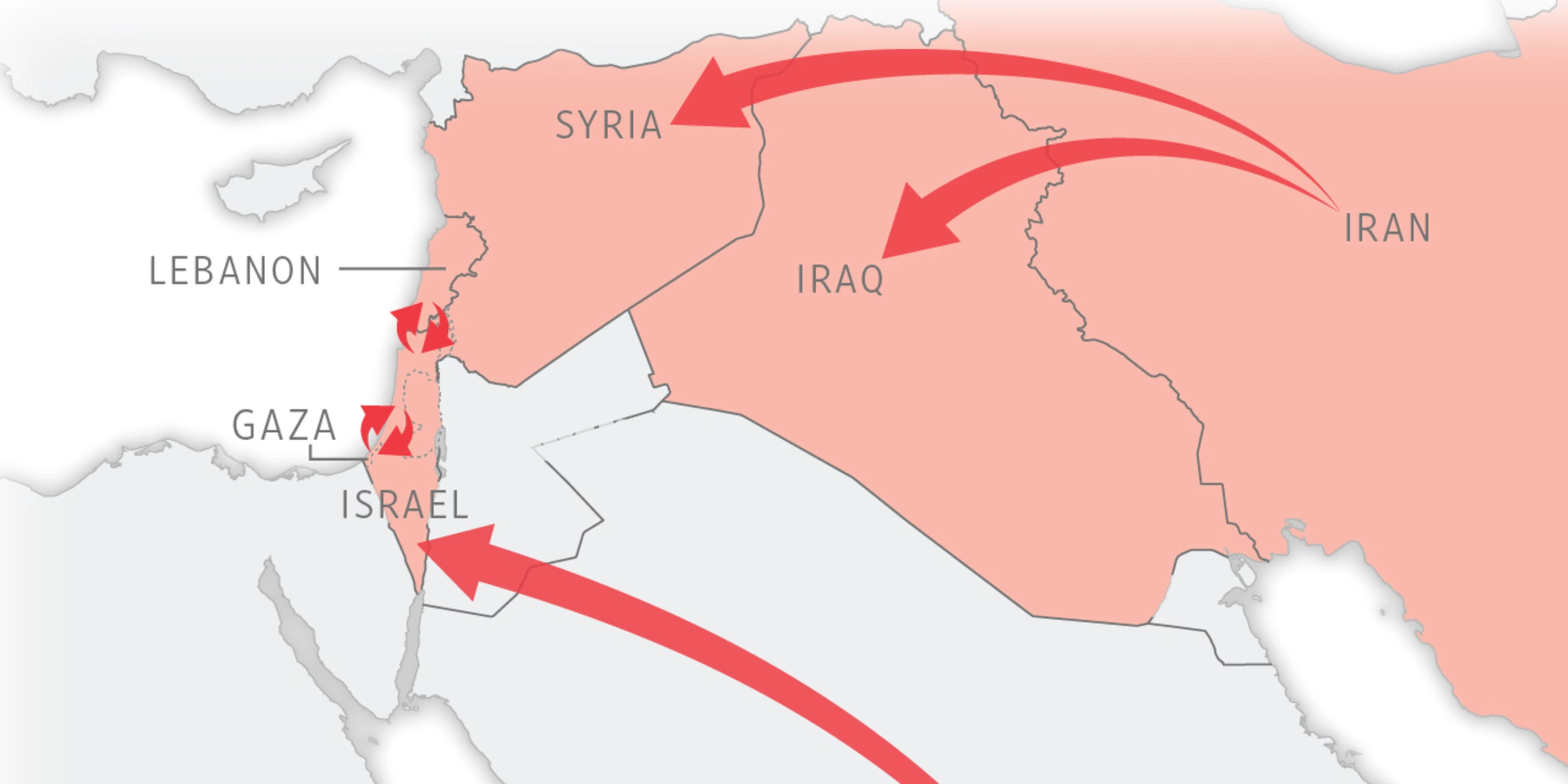
Iran’s Revolutionary Guard Corps had mined the narrow waterway through which one-fifth of the world’s oil consumption transits, effectively sealing off 17 million barrels per day of crude and condensate flows. The act followed a 72-hour exchange of ballistic missile salvos between Israel and Iranian military installations near Isfahan, and the subsequent sinking of an Iran-bound container vessel by an Israeli submarine. By the time European exchanges opened, the Middle East’s slow-burn conflict had mutated into a full-throated conflagration with immediate, terrifying implications for every asset class on the planet.
What’s unfolding now isn’t simply a regional tragedy. It is a financial amplification event — the kind the Bank for International Settlements has warned about for a decade, in which a geopolitical shock interacts with layers of leverage, derivative concentration, and algorithmic positioning to produce sell-offs that race far ahead of any sober reassessment of fundamentals. The phrase amplification risk has moved from the footnotes of central bank financial stability reports to the central diagnosis of the moment.
The anatomy of an amplification shock
Global financial markets rarely price wars linearly. Instead, they process them through a chain of nonlinear amplifiers. The first amplifier is always energy. The Strait of Hormuz closure instantly removes roughly 18% of global oil supply, a magnitude that dwarfs the 1973 Arab oil embargo. The International Monetary Fund’s June 5 update to its World Economic Outlook — published three days before the maritime mining — had already flagged that a sustained $30-per-barrel oil price shock would subtract 1.2 percentage points from global GDP growth within four quarters. [The report](https://www.imf.org/en/Publications/WEO) now reads like an optimistic scenario. Brent’s settlement on June 8 was $118.60, and options markets were pricing a 25% probability of $150 crude by the August contract expiry, according to data from ICE Futures Europe compiled by Bloomberg.
The second amplifier is the dollar. Every major oil spike since 1990 has initially strengthened the US currency as importers scramble for dollars to pay inflated energy bills and investors seek the safety of US Treasuries. That pattern repeated on June 8 and 9: the DXY index surged 1.9%, crushing emerging-market currencies from the Indian rupee to the South African rand. A stronger dollar, in turn, tightens global financial conditions independently of what central banks do. The BIS Quarterly Review had, as recently as March 2026, mapped the vulnerability of non-bank financial intermediaries that have borrowed heavily in dollars via cross-currency swaps. When the dollar leaps, those positions require fresh collateral — forcing asset sales that feed the very volatility that triggered the margin call. It’s a doom loop the BIS labelled “the most underappreciated transmission channel of geopolitical shocks”.
The third amplifier is algorithmic crowding. Over the past three years, trend-following commodity trading advisers (CTAs) and volatility-targeting strategies have swollen to manage an estimated $900 billion in assets, according to research from J.P. Morgan’s prime brokerage unit. These strategies are pathologically programmed to sell equities and buy volatility when realised price swings breach certain thresholds. On June 8, they did exactly that — indiscriminately. The S&P 500 fell 4.7% by midday in New York, a move that machines magnified while human portfolio managers were still trying to ascertain whether the US Navy’s Fifth Fleet was moving toward the Strait.
Samir Khalaf, a 44-year-old crude oil trader who has worked at Vitol in Geneva since 2007, described the session as “five standard deviations from anything I’ve seen — and I’ve seen Iraq, Libya, and the financial crisis.” Khalaf’s desk handled 11 cargo inquiries in the first hour, three times the norm for a Monday. By 9 a.m. Central European Time, he told colleagues the physical market was “pricing in a six-week closure minimum.” Six weeks is the length of time it would take Saudi Arabia, the UAE, and Iraq to fully redirect crude flows through alternative pipelines — if those pipelines aren’t also targeted.
How the Middle East war rewires the global financial architecture
Beyond the immediate panic lies a more unsettling structural question. What does a prolonged interruption of Hormuz traffic do to the scaffolding of the international financial system? The answer is bleaker than many assume, because the system was not designed to decouple from the Middle East’s energy heartland quickly.
Secondary keyword: geopolitical risk amplification. That term captures how an initial shock — a missile, a mine, a sunken vessel — propagates through portfolios, forcing deleveraging and liquidity hoarding that hurt assets with no direct connection to the conflict. On June 9, that dynamic was visible in the investment-grade corporate bond market, where spreads widened by 32 basis points, the sharpest one-day move since the March 2020 dash for cash. ETF flows revealed heavy redemptions not only from emerging-market debt funds but also from high-yield European credit, a market with virtually zero direct exposure to the Middle East. The World Bank’s latest Global Economic Prospects report had warned in early June that financial contagion from a major geopolitical event could increase the cost of capital for developing economies by as much as 180 basis points within a month. That estimate now looks conservative.
One feature of this contagion deserves close attention: the mispricing of sovereign risk in the Gulf Cooperation Council (GCC) states. For years, investors have treated Qatar, the UAE, and Saudi Arabia as “geopolitical hedges” — oil-rich, dollar-pegged safe havens. But if the Strait of Hormuz remains blocked for more than a few weeks, those same nations lose their primary export route. On June 9, credit default swaps on Saudi Arabia’s five-year sovereign debt widened from 48 to 72 basis points, a move that implies the market has begun to reassess the foundational assumption that Gulf states are insulated from the region’s violence.
People Also Ask: How does the Middle East war affect global stock markets?
An escalation in the Middle East drives up oil prices and volatility, triggering a flight to safe havens such as gold and US Treasuries. Stock markets fall on fears of supply disruptions and higher inflation, with energy-importing nations and interest-rate-sensitive sectors suffering most. Historically, equity markets recover once the immediate supply threat diminishes, but the speed of algorithmic trading now amplifies the initial drawdown.
Yet what distinguishes this episode from, say, the 1990 Gulf War or the 2003 Iraq invasion is the speed of the sell-off and the breadth of the asset classes involved. In 1990, the S&P 500 took 53 trading days to fall 15%. This time, that move required fewer than eight hours. The compression of time frames is partly a function of market structure — ETFs, 0DTE options, automated market makers — but it’s also a reflection of an investor base that has been conditioned to “buy the dip” on every geopolitical scare since Crimea 2014. When the dip keeps deepening, and when the supply shock is real rather than merely feared, the behavioural feedback loop snaps.
Second-order effects: the central bank conundrum
Financial markets may be the most visible arena of disruption, but the second-order effects will unfold inside central bank boardrooms. The eurozone, which imports more than 90% of its oil, faces an acute stagflationary impulse. The European Central Bank had, as recently as its June 4 policy meeting, signalled a pause in its rate-cutting cycle after bringing the deposit rate to 2.75%. A sustained oil price of $120 per barrel would, according to the [OECD’s June 2026 Interim Economic Outlook](https://www.oecd.org/economic-outlook/), add 1.4 percentage points to euro-area headline inflation within six months while slicing 0.6 percentage points from GDP growth. President Christine Lagarde must now choose between tolerating a longer inflation overshoot or tightening into a demand shock — precisely the dilemma that haunted the ECB in 2008 and 2011. Her public remarks on June 9, in which she called for “steadiness and patience,” were parsed by traders as code for a prolonged hold, and the euro fell below $1.04 for the first time since November 2022.
For the US Federal Reserve, the calculus is different but no less treacherous. The United States is now a net energy exporter, meaning the oil shock acts as a transfer from consumers to domestic producers rather than a pure terms-of-trade loss. However, the dollar’s sharp appreciation and the global risk-off cascade have tightened financial conditions by an amount equivalent, by some estimates, to 50 basis points of additional Fed tightening. Chair Jay Powell, who is scheduled to appear before the Senate Banking Committee on June 18, will be pressed to explain whether the Fed can separate the inflationary impulse of higher energy costs from the disinflationary force of a slowing global economy. Markets, for now, have erased all expectations of a July rate cut and are pricing a 30% chance of a quarter-point increase by September.
Emerging markets carry the heaviest burden. Central banks in Turkey, Pakistan, and Egypt convened emergency meetings on June 9. All three raised benchmark rates — Turkey’s by a staggering 400 basis points to 52% — to stem capital outflows and currency depreciation. The Institute of International Finance reported that portfolio outflows from emerging-market equities and bonds reached $28 billion in the first two trading days of the week, the largest such exodus since the taper tantrum of 2013. The human dimension of those numbers is stark: for a country like Pakistan, which spends roughly 40% of its import bill on energy, a $120 oil price and a strengthening dollar could deplete its remaining $8.3 billion in foreign reserves within five months, according to an internal finance ministry note seen by Reuters.
A competing view: this, too, shall pass
Not everyone is convinced the sky is falling. A cohort of strategists and historians argue that financial markets have a long record of overreacting to Middle East conflicts, and that the underlying economic damage is often shallower than the initial price action implies. Lina al-Hassan, chief strategist at EFG Hermes in Dubai, issued a note to clients on June 9 titled “Why We’re Buying the Dip — Cautiously.” She pointed out that in 12 of the last 15 major Middle East military escalations since 1990, the S&P 500 was higher three months after the event than it was on the day of the initial shock. Her analysis, grounded in data from MSCI and Refinitiv, shows that while energy stocks and defence contractors rally, the broader market typically recovers once the Pentagon deploys naval assets that restore some degree of freedom of navigation. By June 9 afternoon, the US Navy had confirmed that the aircraft carrier USS Gerald R. Ford was transiting the Bab el-Mandeb strait, a signal that Washington intends to keep at least one chokepoint open.
Al-Hassan’s argument is not that the situation is benign. “This is a serious crisis,” she told me in a phone call. “But the market’s job is to price probabilities, and the probability that Hormuz stays closed for a period long enough to cause a global recession is still below 40%.” She noted that the Iran-Iraq War of the 1980s, in which both sides attacked tankers and mined the Gulf, never succeeded in fully closing the Strait for more than a few days at a time. The strategic reality, she insists, is that Iran cannot sustain a prolonged closure without devastating its own economy and inviting a military response that would far exceed anything it could withstand.
There is merit in this counterargument. The US Fifth Fleet and its allies have overwhelming naval superiority. Iran’s mining operations are provocation, not an indefinite blockade strategy. And financial markets have indeed developed a remarkable capacity to absorb geopolitical shocks since the Cold War’s end. Still, what troubles even the optimists is the amplification machinery that the BIS and others have documented. In 1990, when Iraq invaded Kuwait, high-frequency trading did not exist, ETFs were a niche product, and the dollar-swap obligations of non-bank financial institutions were a rounding error. Today, those mechanisms can turn a manageable supply disruption into a systemic margin spiral. “The difference between 2026 and 1990,” al-Hassan conceded, “is that the plumbing can now burn the house down before the fire department even arrives.”
The reckoning
The conflict in the Middle East has, in a handful of days, forced global financial markets to confront an uncomfortable truth: the post-Cold War assumption that great-power competition would remain largely contained to cyber and proxy domains has expired. Physical chokepoints matter again. Energy weaponisation is back as a first-order macro variable. And the financial system’s own internal amplifiers — leverage, derivatives, algorithmic crowding — are primed to convert a regional war into a global margin call with breathtaking speed.
This is not 1973, when an oil embargo reshaped the geopolitical order, nor is it 2008, when a credit collapse exposed the hubris of financial engineering. It’s something messier: a hybrid crisis in which a 20th-century-style supply shock is being processed through a 21st-century financial architecture that rewards speed over resilience. The policymakers who must navigate this — from Lagarde and Powell to the governors in Ankara and Islamabad — are operating with fogged-up instruments and constrained mandates. The single number that best captures their dilemma may not be the price of Brent crude or the level of the VIX, but a figure buried in the footnotes of the BIS’s latest data: global dollar-denominated debt held by non-banks outside the United States now stands at $14.9 trillion. When the dollar surges and liquidity vanishes, that number becomes an anvil hanging over the world economy. The Middle East just pulled the cord.
Analysis
BlackRock Warns of Hit to European Stocks From Energy Crisis — and This Time the Continent Has Fewer Exits

As the Strait of Hormuz closure triggers the largest supply disruption in oil market history, the world’s largest asset manager is signalling that European equities face structural headwinds that no ceasefire communiqué can fully erase.
In the spring of 2022, Europe watched in stunned disbelief as the price of its future arrived in the form of a natural gas invoice. Russian pipeline flows dropped, storage was thin, and governments from Berlin to Rome scrambled to rewrite decades of energy-supply doctrine in a matter of months. Four years on, with Russian gas long gone from the continent’s supply mix, Europe believed — perhaps too eagerly — that it had solved the problem by diversifying toward Qatari liquefied natural gas and American LNG cargoes. Then came the Iran war. And the Strait of Hormuz closed.
The resulting shock is, by most credible measures, the largest single disruption to global oil and gas markets in recorded history. IEA Executive Director Fatih Birol has called it “the greatest global energy security challenge in history,” a phrase his agency deploys with deliberate precision. And while the immediate geopolitical theatre — the US-Iran ceasefire announced on April 8th, Brent crude briefly retreating below $100 — may create an impression of resolution, BlackRock’s Investment Institute is telling institutional clients something rather more sobering: European equities face a reckoning that a fragile ceasefire cannot undo.
What BlackRock Is Actually Saying About Europe
In its most recent Weekly Commentary, dated April 13, 2026, BlackRock Investment Institute maintained a neutral stance on European equities — a position that, read carefully, is considerably less benign than the word implies. The firm has noted that “Europe’s lagging earnings growth relative to the US keeps us neutral on its stocks,” while flagging that energy-driven cost pressures continue to work against the continent’s industrial base. The firm’s preferred European exposures — financials and industrials — are themselves qualified bets in an environment where the European Central Bank has abandoned its easing cycle and where, as of mid-April, traders were pricing in two quarter-point rate hikes by year-end.
Crucially, BlackRock has simultaneously cut its cash-like preference in euro area front-end government bonds — a positioning it adopted specifically in response to the ECB’s abrupt pivot when the Iran conflict began. That pivot alone tells a story. A month ago, the ECB was expected to cut rates through 2026, supporting credit formation and equity valuations. Today, Frankfurt is fighting a rearguard action against an energy-driven inflation surge that arrived without warning and may persist long after any ceasefire takes hold.
“Europe shifted its energy dependency from Moscow to Doha — and in doing so, swapped one geopolitical chokepoint for another, this time one under active military contest.”
— Global Capital Review Analysis, April 2026
Key Figures at a Glance
| Indicator | Value |
|---|---|
| Dutch TTF gas price (mid-March peak) | €60+ /MWh — near double pre-war levels |
| European gas storage at conflict outset | ~30% capacity — a historic seasonal low |
| Brent crude peak (March 2026) | $110+ per barrel |
| Europe’s sensitivity to oil shocks vs. US | 2× more exposed across inflation and growth |
The Hormuz Trap: How Europe Traded One Dependency for Another
The bitter irony of Europe’s current predicament is architectural. After Russia’s invasion of Ukraine in February 2022, the continent mounted what was, by any fair assessment, an impressive energy pivot. Pipeline dependence on Gazprom was slashed. New LNG terminals were constructed at extraordinary speed. Long-term contracts were signed with suppliers in the US, Australia, and — critically — Qatar. By late 2025, European policymakers were speaking with quiet confidence about energy resilience. Then, strikes on QatarEnergy’s Ras Laffan facilities on March 2, 2026 forced an immediate production shutdown and subsequent force majeure declaration — removing at a stroke nearly a fifth of global LNG supply.
The structural lesson is one that European policymakers are only now being forced to confront: the continent had shifted its energy dependency from Moscow to Doha and, by extension, to the Strait of Hormuz. It did not eliminate a single point of geopolitical failure; it merely relocated it to a different set of coordinates — ones now under active military contest. As the Atlantic Council observed in March, Europe entered the conflict with gas storage levels of just 46 billion cubic metres — compared to 60 bcm in 2025 and 77 bcm in 2024 — leaving the refill season desperately exposed to precisely the kind of supply disruption now unfolding.
Suggested image: Aerial view of Strait of Hormuz tanker traffic — illustrating the world’s most critical energy chokepoint and European LNG vulnerability. Roughly 20% of global oil and a fifth of global LNG trade transited the strait before the conflict. Source: IEA / Reuters.
The ECB’s Impossible Calculus — and What It Means for Equities
Nowhere is the damage more consequential for European equity investors than in the ECB’s abrupt reversal of fortune. Eurozone headline inflation surged to 2.5% in March — up from 1.9% in February — with energy inflation making a near-8 percentage-point monthly swing, from minus 3.1% to plus 4.9% year-on-year. Core inflation, for now, remains relatively contained at 2.3%, offering the ECB a thread of justification for restraint. But Christine Lagarde has already made clear that Frankfurt has not ruled out rate hikes, and the market has moved decisively: two quarter-point increases are priced for 2026 year-end.
This matters for equities in ways that are easy to underestimate. European stock valuations had been supported, in significant part, by the expectation of a sustained easing cycle. The STOXX 600, trading at a P/E of roughly 16.9x as of late March, was priced for a recovery story — lower rates, defence spending tailwinds, and a gradual earnings improvement. That repricing assumption is now under material threat. The ECB postponed its planned rate reductions on March 19, simultaneously raising its 2026 inflation forecast and cutting GDP growth projections — the precise sequence that equity markets dread most. Chemical and steel manufacturers have already imposed surcharges of up to 30% on customers to offset surging electricity and feedstock costs. If those surcharges prove durable, margin compression will ultimately show up in earnings, and no amount of defence-spending optimism will offset it.
Germany and Italy: Where the Recession Risk Is Most Acute
The ECB has explicitly warned that a prolonged conflict could push major energy-dependent economies, including Germany and Italy, into technical recession by the end of 2026. The Oxford Economics model reaches the same uncomfortable conclusion. Germany’s energy-intensive industrial model — the Mittelstand’s chemical, precision engineering, and automotive supply chains — was already under structural stress from Chinese competition and US tariffs. Energy costs at current levels are not a headwind for these companies; they are an existential threat to the business case for European manufacturing.
The DAX’s extraordinary 4.7% one-day gain on April 8th, following the US-Iran ceasefire announcement, illustrates both the relief and the danger: markets are pricing a return to normalcy that the underlying supply arithmetic may not justify. Bloomberg’s reporting on oil industry insiders warns that even after a ceasefire, full restoration of Hormuz shipping traffic could take weeks, and damage to QatarEnergy’s production facilities may require years of repair. A single day of geopolitical relief does not un-drain Europe’s gas storage deficit, nor does it rebuild Ras Laffan.
Suggested image: Frankfurt DAX trading floor or ECB headquarters — anchoring the monetary policy and equities valuation narrative. The central bank’s abrupt reversal from easing to potential tightening represents the most direct threat to European equity valuations. Source: Reuters.
BlackRock’s Contrarian Opportunity: Defence, Infrastructure, and Energy Transition
It would be a mistake to read BlackRock’s caution on broad European equities as a wholesale retreat from the continent. The firm’s positioning is more surgical — and, on inspection, more interesting — than a simple neutral rating implies. BlackRock explicitly identifies geopolitical fragmentation as supportive of defence and aerospace, and views the current crisis as accelerating European governments’ drive toward energy independence — which in practice means faster deployment of wind, solar, and nuclear capacity. These are not merely optimistic talking points; they represent durable, policy-backed capital allocation themes that will outlast any ceasefire by years or decades.
There is a further, less discussed dimension to this thesis. The current energy shock is, paradoxically, the most compelling argument yet made for the European energy transition. Every barrel of oil blocked in the Strait of Hormuz is, in a macroeconomic sense, an advertisement for domestically produced renewable energy — power that is structurally immune to Gulf geopolitics. The EU’s RePowerEU programme, already supercharged by the 2022 Russian gas crisis, now has a second, arguably more urgent, justification. Bruegel’s energy analysts argue that “only by reducing structural dependence on oil and LNG imports can Europe durably shield its economy from recurrent external shocks.” BlackRock, for its part, is positioning in precisely the sectors — clean infrastructure, defence, and supply chain resilience — that will capture that redirected capital.
“Every barrel of oil blocked in the Strait of Hormuz is, in macroeconomic terms, an advertisement for domestically produced renewable power — energy that is structurally immune to Gulf geopolitics.”
— Global Capital Review, April 2026
BlackRock’s Current European Positioning
| Rating | Asset Class |
|---|---|
| NEUTRAL | European equities (broad) |
| OVERWEIGHT | Financials & Industrials |
| OVERWEIGHT | Defence & Aerospace (thematic) |
| REDUCED | Euro area front-end government bonds |
The Stagflation Ghost — and Why 2026 Is Not 1973
The historical parallel that haunts every energy-markets conversation is, of course, 1973. The Arab oil embargo, OPEC’s production cutbacks, and the consequent stagflation that defined the decade. BlackRock, to its credit, has been explicit that the present episode is not a simple replay. As CNBC reported, analysts note that “the 2022 energy crisis landed on a global economy ripe for inflation to take off — supply chains were fractured, job markets tight, and fiscal policy was fuelling the fire. All of that, to varying degrees, is less true today.” Core inflation remains better anchored. Labour markets, while still tight, show more flexibility. And the spread of renewables means gas no longer maps as directly onto electricity prices as it once did.
Yet the differences should not breed complacency. Eurozone inflation is forecast by prediction markets to end 2026 above 3.1% with 61% probability, and above 2.8% with roughly 85% probability — all of this contingent on Hormuz not re-closing and QatarEnergy not suffering further production damage. The base case is not stagflation; but the tail risk of stagflation — defined as negative growth combined with inflation stubbornly above target — is not negligible, particularly for Germany and Italy, where industrial output is already under pressure.
Suggested image: European gas storage facility or LNG terminal — illustrating Europe’s supply infrastructure and the refill season challenge. Europe entered the 2026 conflict with storage at 30% capacity — historically low — leaving the summer refill season critically exposed. Source: Reuters / Getty.
What Institutional Investors Should Do Now
BlackRock’s playbook for European exposure in the current environment is, in essence, a barbell strategy: maintain benchmark-neutral exposure to broad European indices while concentrating active overweights in defence, energy infrastructure, and financials — the latter because higher-for-longer rates improve net interest margins even as they compress equity multiples across the rest of the market. This is not a reckless bet; it is a disciplined application of the macro thesis.
For investors with a longer horizon, the more interesting question is whether the current crisis finally breaks the structural indifference that has kept European equities persistently undervalued relative to their American counterparts. The DAX trades at a meaningful discount to the S&P 500 on forward earnings multiples. If the Iran conflict ultimately accelerates the EU’s energy transition, compresses Europe’s fossil-fuel import bill over a five-year horizon, and catalyses the defence spending surge already in train, then today’s neutral rating on European stocks may, in retrospect, look like the floor rather than the ceiling of BlackRock’s conviction. The firm has form on this: it upgraded European equities from underweight to neutral in February 2025 precisely because it spotted an early inflection. The question is whether the energy crisis will delay or accelerate the next upgrade.
The honest answer, which BlackRock would recognise even if it stops short of saying it plainly, is that this depends almost entirely on physics and logistics — on how quickly the Strait of Hormuz reopens, how fast Qatari production can be restored, and how mild the European summer proves to be. Finance abhors being subordinate to meteorology and maritime law. And yet here we are, again, with the fate of European equities resting as much on the Persian Gulf’s political temperature as on Frankfurt’s monetary arithmetic.
Conclusion: The Price of Structural Dependency
BlackRock’s warning about European stocks is not a panic signal. It is something more unsettling: a calm, evidence-based assessment that the continent’s structural vulnerabilities have not been resolved — they have merely been relocated. Energy dependency on Russia was replaced by dependency on Gulf LNG. A war in the Gulf has demonstrated, with brutal clarity, that the location of the dependency changed while its depth did not.
The investment implication is this: European equities are not uninvestable, but they require a selectivity and a patience that broad index exposure does not provide. Defence, clean infrastructure, and European banks capable of benefiting from a higher-rate environment are the sectors that BlackRock — and, by extension, the smartest institutional capital in the market — is looking at right now. Everything else on the continent faces a summer of existential arithmetic: storage levels, LNG spot prices, and the willingness of the ECB to inflict monetary pain on an already-fragile economy in the name of inflation credibility.
Europe has survived energy crises before. It survived 1973. It survived 2022. It will survive this one. The question that matters for investors, and the one BlackRock is posing without fully answering, is whether it will emerge from this one with the structural reforms — in energy independence, in industrial policy, in defence self-sufficiency — that would finally break the cycle. History suggests the answer requires both a crisis severe enough to force action and political will sufficient to sustain it. The first condition is manifestly being met. The second remains, as ever, Europe’s greatest uncertainty.
References :
BlackRock Investment Institute. (2026, April 13). Weekly commentary. BlackRock. https://www.blackrock.com/corporate/insights/blackrock-investment-institute/publications/weekly-commentary
BlackRock Investment Institute. (2025, December). 2026 investment outlook. BlackRock. https://www.blackrock.com/corporate/insights/blackrock-investment-institute/publications/outlook
Ahmed, M., Boak, J., Metz, S., & Magdy, S. (2026, April 17). Europe nears energy crisis with global implications, head of energy agency warns. PBS NewsHour. https://www.pbs.org/newshour/world/europe-nears-energy-crisis-with-global-implications-head-of-energy-agency-warns
Keliauskaitė, U., McWilliams, B., Mramor, T., Roth, A., Tagliapietra, S., & Zachmann, G. (2026, April 1). How will the Iran conflict hit European energy markets? Bruegel. https://www.bruegel.org/first-glance/how-will-iran-conflict-hit-european-energy-markets
Basquel, L. (2026, March 17). How the Iran war could trigger a European energy crisis. Atlantic Council. https://www.atlanticcouncil.org/dispatches/how-the-iran-war-could-trigger-a-european-energy-crisis/
Euronews Business. (2026, March 31). Eurozone inflation jumps to 2.5% amid Iran war: Will the ECB hike rates? Euronews. https://www.euronews.com/business/2026/03/31/eurozone-inflation-jumps-to-25-amid-iran-war-will-the-ecb-hike-rates
Wikipedia contributors. (2026, April 18). Economic impact of the 2026 Iran war. In Wikipedia, The Free Encyclopedia. https://en.wikipedia.org/wiki/Economic_impact_of_the_2026_Iran_war
CNBC. (2026, March 12). Iran war fuels fears of European energy inflation shock. CNBC. https://www.cnbc.com/2026/03/12/iran-gas-oil-price-bills-europe-energy-ukraine-war-russia-shock-rise-inflation-interest-rates-crisis.html
Bloomberg. (2026, March). How high could oil prices get with Strait of Hormuz closure? Bloomberg. https://www.bloomberg.com/graphics/2026-iran-war-hormuz-closure-oil-shock/
Markets & Finance
KSE-100 Plunges Amid Geopolitical Firestorm — But Islamabad Holds the World’s Attention
Trump’s Kharg Island threat, oil at $116, and the Strait of Hormuz crisis send PSX into freefall — even as Pakistan’s capital quietly attempts to rewrite the region’s fate
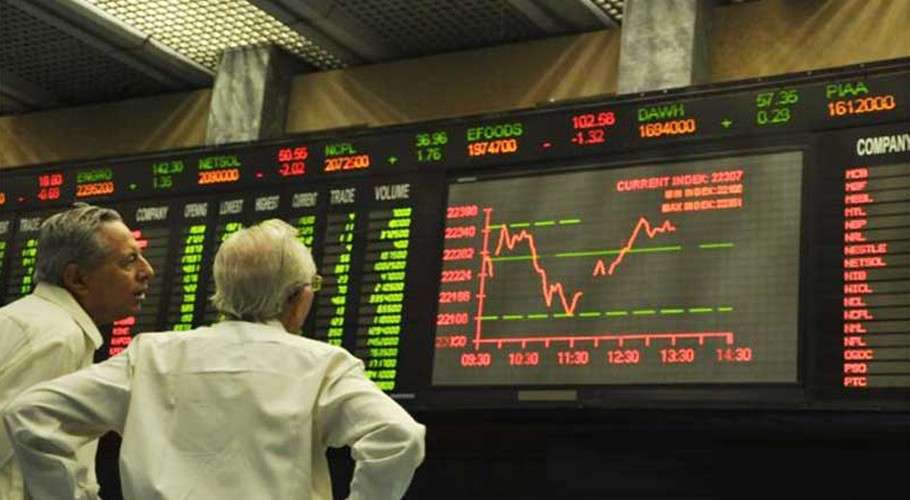
The trading floor in Karachi looked, in the first minutes of Monday’s session, like a room in which all the oxygen had been removed. From the opening bell, the Pakistan Stock Exchange’s benchmark KSE-100 index plummeted over 3,700 points — a drop of nearly 2.5% in less than an hour — as investors absorbed a weekend of extraordinary geopolitical turbulence: oil prices breaching $116 a barrel, a US president musing publicly about seizing Iran’s most critical export hub, and Yemen’s Houthis entering the conflict with fresh missile salvos against Israel. By 9:40am, the KSE-100 had fallen to 147,950.31 points from a previous close of 151,707.51, touching the lowest intraday reading in the index’s 52-week history. Every major sector bled red.
The KSE-100 drops over 3% — and this episode is not occurring in isolation. It is the latest chapter in a five-week global energy crisis that has repriced risk from Houston to Hong Kong, and which now casts a particularly long shadow over Pakistan: a major oil-importing economy whose current account, currency, and inflation trajectory hang in direct tension with every dollar added to the price of Brent crude. What makes today’s session historically distinctive is not simply the severity of the sell-off, but its simultaneous backdrop: even as Karachi’s market bled, barely 1,500 kilometres away in Islamabad, Pakistan’s diplomatic corps was hosting the world’s most consequential attempt yet to end the war that is causing it.
A Market Under Siege: What Happened and Why
Intense selling pressure gripped the Pakistan Stock Exchange on Monday as the KSE-100 index dropped over 3,700 points in early trading, driven by escalating tensions in the Middle East and fears of a prolonged conflict. Bloom Pakistan The rout was broad and unsparing. Selling pressure was particularly concentrated in the automotive, cement, banking, oil and gas, power, and refinery sectors, with shares of major companies including ARL, HUBCO, MARI, OGDC, PPL, HBL, MEBL, MCB, and NBP trading in the negative zone. Bloom Pakistan
The immediate macroeconomic trigger is unmistakable. Brent crude, the global oil benchmark, crossed $116.5 a barrel on Monday before paring to around $114.6 — still 1.8% up on the day — while WTI, the US benchmark, climbed 1% to around $101 a barrel. CNN That price tag carries existential weight for Pakistan, which imports virtually all of its petroleum needs and where energy subsidies already strain a budget operating under the watchful eye of the International Monetary Fund. Crude oil prices have surged more than 50% so far in March following the US-Israeli war against Iran, with Brent having traded around $73 a barrel before the United States and Israel attacked Iran on February 28, prompting Tehran to choke off the Strait of Hormuz. CNN
The rupee, notably, held steady. The USD/PKR exchange rate was around 279.09 on March 30, marginally lower from the previous session, TRADING ECONOMICS suggesting institutional confidence in the State Bank’s management of external reserves — for now. Bond yields, too, showed no alarm. This divergence between equity panic and macro stability is itself revealing: the sell-off is primarily a sentiment shock rather than a deterioration in Pakistan’s fundamentals. That distinction, however cold a comfort to investors nursing heavy losses, matters enormously for the medium-term outlook.
Trump’s Kharg Island Gambit — and the $116 Oil Question
If one man can be credited with Monday’s carnage, his name requires no introduction. Trump told the Financial Times in an interview published Sunday that he wants to “take the oil in Iran” and could seize Kharg Island, which handles about 90% of the country’s oil exports, comparing the potential move to US operations in Venezuela. CNN He then escalated further in the early hours of Monday. The president warned on Truth Social that the US would “completely obliterate” Iran’s electric generating plants, oil wells and Kharg Island if the strategically vital Strait of Hormuz was not “immediately” reopened and a peace deal not reached “shortly.” CNBC
The market implications of such rhetoric are immediately quantifiable. Goldman Sachs estimates a $14–18 per barrel geopolitical risk premium baked into current oil prices, TECHi® while Macquarie Group warned last week that Brent crude could reach $200 a barrel if the war continues until the end of June, equating to a US gasoline price of $7 per gallon. CNN For Pakistan, every $10 rise in sustained crude prices adds approximately $2–2.5 billion to the annual import bill — a structural pressure that threatens to widen the current account deficit, erode foreign reserves, and potentially force the State Bank to revise its monetary easing trajectory.
Michael Haigh, global head of fixed income and commodities research at Société Générale, warned that the potential for further disruption through the Bab el-Mandeb Strait — linking the Gulf of Aden to the Red Sea — could push prices even higher, noting that “four to five million barrels per day” transit the waterway. CNBC In a scenario where both chokepoints are disrupted simultaneously, the oil shock hitting Asia’s emerging markets would be unprecedented in the post-2008 era.
Today’s Damage: Sector-by-Sector Breakdown
| Sector | Impact | Notable Names |
|---|---|---|
| Oil & Gas | Heavy selling | OGDC, PPL, MARI |
| Commercial Banks | Largest negative index contribution | HBL, MCB, NBP, MEBL |
| Cement | Broad-based losses | LUCK |
| Power / IPPs | Negative zone | HUBCO |
| Automotive | Under pressure | ARL |
| Refineries | Sharp declines | ARL |
| Volume Leaders (Overall) | High retail activity | KEL, FNEL, WTL |
Sources: PSX Data Portal, Bloom Pakistan, DayNews.tv — March 30, 2026
Islamabad: The Diplomatic Counterweight
Here is where the story acquires its most remarkable dimension. While Karachi’s brokers scrambled to offload positions, diplomats in Islamabad were doing the opposite — attempting to arrest the very geopolitical spiral that was causing the panic. Two-day consultations of foreign ministers of Türkiye, Saudi Arabia, Egypt and Pakistan started in Islamabad on Sunday as the capital turned into the centre of a rapidly forming diplomatic track — described by officials as the most coordinated regional effort yet to push the United States and Iran towards direct talks. Al Jazeera
The outcome was more concrete than many had anticipated. Pakistan achieved a significant diplomatic success as Saudi Arabia, Türkiye and Egypt endorsed Islamabad’s growing role as a mediator for peace, backing Pakistan’s initiative to promote de-escalation and potentially host talks between the United States and Iran. The Nation Foreign Minister Ishaq Dar announced: “Pakistan is very happy that both Iran and the US have expressed their confidence in Pakistan to facilitate their talks. Pakistan will be honored to host and facilitate meaningful talks between the two sides in coming days for a comprehensive settlement of the ongoing conflict.” Bloomberg
That language carries weight well beyond the ceremonial. Diplomats say that if current contacts hold, talks between US Secretary of State Marco Rubio and Iran’s Foreign Minister Abbas Araghchi could take place within days, potentially in Pakistan. Al Jazeera Germany’s Foreign Minister Johann Wadephul had already telegraphed optimism, saying he expected a direct US-Iran meeting in Pakistan “very soon.” Al Arabiya
The institutional infrastructure is also being built. The four foreign ministers agreed to establish a committee of senior officials tasked with developing modalities for sustained coordination among Pakistan, Saudi Arabia, Türkiye and Egypt The Nation — a formalised mechanism that gives this diplomatic initiative permanence beyond the current crisis.
Crucially, Pakistan’s leverage derives not from military power but from its unique geographic and diplomatic positioning. Islamabad has longstanding links with Tehran and close contacts in the Gulf, while Prime Minister Shehbaz Sharif and Army Chief Field Marshal Asim Munir have struck up a personal rapport with US President Donald Trump. Tehran has refused to admit to holding official talks with Washington but has passed a response to Trump’s 15-point plan to end the war via Islamabad. Bangladesh Sangbad Sangstha
The Strait of Hormuz: Pakistan’s Lifeline and Geopolitical Card
No development more elegantly illustrates Pakistan’s pivotal position than what happened over the weekend. Pakistan announced that Iran would allow 20 of its flagged ships to pass through the Strait of Hormuz — two ships daily — with Foreign Minister Dar calling it “a welcome and constructive gesture by Iran.” CNN Trump himself acknowledged the development, with the US president telling reporters that Iran had “allowed 20 boats laden with oil to go through the Strait of Hormuz, out of a sign of respect.” CNN
This seemingly modest concession — 20 vessels in a waterway that once carried 17.8 million barrels per day — is diplomatically seismic. It signals that Tehran views Islamabad as a credible channel, granting Pakistan a degree of real-time influence over one of the world’s most consequential shipping lanes. For Pakistan’s economy, the reciprocal benefit is potentially substantial: reduced energy costs, greater foreign exchange stability, and a positioning premium as a peace-broker that could attract diplomatic investment and economic goodwill from Gulf partners.
The Strait has been effectively closed to commercial traffic since March 2, with approximately 17.8 million barrels per day of oil flows disrupted. Iran has been operating a yuan-based toll system at the Strait, allowing select Chinese, Russian, and allied vessels to transit while collecting fees in Chinese yuan. TECHi® More ships are passing through the Strait of Hormuz according to shipping data, but still far fewer than before the Middle East conflict erupted. CNN
Global Ripple Effects: Asia First, Then the World
Pakistan is not alone in feeling the tremors. Asia is the first continent to feel the effects of depleting oil stocks, since oil shipments typically reach there first from the Middle East, with Africa and Europe likely to be more impacted by April, a JPMorgan report warned. CNN Tokyo’s equity markets have already registered sharp declines, and the yen is under pressure. In Japan, alarm is sounding over the declining value of the yen, with Vice Finance Minister Atsushi Mimura telling reporters: “We will respond on all fronts.” ITV News
For emerging markets with oil import dependencies — Bangladesh, Sri Lanka, Indonesia, Egypt — the macro arithmetic is equally punishing. Higher oil prices feed directly into inflation, compress central bank policy space, widen current account gaps, and invite currency depreciation. Pakistan, having only recently stabilised after a near-sovereign-debt crisis and IMF bailout, is particularly exposed to this feedback loop. The KSE-100 drops over 3% today are in part a market pricing exercise on exactly this vulnerability.
Brent crude, the international benchmark, has jumped more than 50% since the start of March, surpassing the previous record of 46% during Saddam Hussein’s 1990 invasion of Kuwait. NPR That statistical comparison should sharpen the mind of anyone inclined to treat this as temporary noise.
The Analyst View: Overreaction or Justified Panic?
Seasoned observers of the KSE-100 have been here before — and their verdict is nuanced. The index has now endured a series of geopolitical shocks in rapid succession. On March 2, in the session that followed the initial US-Israeli strikes on Iran, the KSE-100 recorded a plunge of 16,089 points, or 9.57%, its largest single-day fall in the bourse’s history, prompting an automatic market halt after the KSE-30 dropped 5% within the first seven minutes of trading. The Express Tribune
In that session, Topline Securities CEO Mohammed Sohail counselled restraint. “High leverage and overbought positions triggered panic selling,” he observed, adding that the rupee and bond yields remained stable, indicating limited macro impact. “With the market trading at a price-to-earnings ratio of nearly 7x, valuations appear compelling, offering attractive entry points to medium- and long-term investors. If macroeconomic stability persists, the recent sell-off could ultimately prove to be an overreaction,” Sohail said. The Express Tribune
AKD Securities remarked that the KSE-100 overreacted to the Middle East military conflict and expected the index to “stage a recovery as the direct economic impact on Pakistan appears manageable and the country is not a direct party to the conflict.” The Express Tribune
Today’s session carries a similar profile — heightened fear rather than fundamental economic deterioration. The key distinction from March 2’s bloodbath is that this time, Pakistan’s diplomatic positioning has materially improved. The four-nation Islamabad framework, the Hormuz passage concession, and the potential for hosting US-Iran talks all represent real — if fragile — de-escalation optionality that simply did not exist a month ago.
The Outlook: What the Islamabad Diplomatic Track Means for the KSE-100
The PSX’s near-term direction will be determined by two variables operating on very different timescales: oil prices, which respond in real time to rhetoric and battlefield developments; and the diplomatic track, which moves at the pace of sovereign ego and geopolitical calculation.
On the first front, the risk remains decisively to the upside for oil prices. David Roche, strategist at Quantum Strategy, warned that markets are increasingly pricing in the possibility of “boots on the ground” and a move to seize Iran’s key export hub at Kharg Island — a step that would effectively choke off Iran’s dollar revenues but risk triggering full-scale escalation, with Tehran likely to retaliate. CNBC
On the second front, the Islamabad meeting represents the clearest evidence yet that a negotiated off-ramp exists. The four-nation mechanism is not designed to produce a ceasefire itself — its purpose is to align regional positions and prepare the ground for a possible direct US-Iran engagement. If successful, it could provide the political cover both Washington and Tehran need to enter talks without appearing to concede. Al Jazeera
The decisive weeks ahead will test whether Pakistan’s diplomatic capital can be converted into tangible de-escalation — and whether that de-escalation arrives in time to prevent the oil shock from becoming structurally embedded in Pakistan’s economic trajectory. For investors watching the KSE-100, the index is no longer simply a barometer of corporate Pakistan’s health. It has become a live readout of the world’s most consequential diplomatic gamble — one in which Islamabad, improbably, holds a central hand.
The market closed today not in despair, but in watchful, expensive uncertainty. And for an economy that has lived on the edge of crisis for most of the past three years, that is the most honest description of where Pakistan stands: poised, precarious, and pivotal — all at once.

Pakistan Freelancers Tax 2026: Payments, Documentation and Formal Growth

Strait of Hormuz Crisis: What the Latest Tanker Attacks Mean for Oil, Shipping and Global Trade

AI Customer Service in 2026: What’s Working, What’s Failing, and What to Buy

Open a Savings Account Online: How to Actually Earn 10x the National Average Rate

Global Housing Market 2026: Where Prices Rise, Where They Don’t

PSX and KSE-100 Record Highs: An Insider’s Guide to Pakistan Stocks

So Delicious Dessert Recall: Affected Products, FDA Guidelines, and Consumer Action

Pakistan’s Current Account Deficit Narrows Sharply to $98 Million in August 2026

Japan Eyes 3.5% Defense Spending: What It Means for Bonds, Stocks, and the BOJ

PSX & KSE Forecast 2026: Navigating the Latest IMF Reports & World Bank Metrics

Trump Administration’s Crypto Policy: Deregulation and the Future of Digital Assets

Monetary Policy and the Policy Rate

Gold, Silver & Bitcoin Prices Q4 2026: Wealth Management Strategies

Business Insurance for Digital Exports: Protecting Your Company in the AI Era

Top 15 Stocks for Investment in 2026 in PSX: Your Complete Guide to Pakistan’s Best Investment Opportunities
Top 15 Stocks for Investment in 2026 in PSX: Your Complete Guide to Pakistan’s Best Investment Opportunities

Debunking IMF Program Myths: Reconfiguring Engagement for True National Ownership in a Volatile World

Top 10 Mutual Fund Managers in Pakistan for Investment in 2026: A Comprehensive Guide for Optimal Returns

China’s 50% Domestic Equipment Rule: The Semiconductor Mandate Reshaping Global Tech

What the U.S. Attack on Venezuela Could Mean for Oil and Canadian Crude Exports: The Economic Impact

15 Most Lucrative Sectors for Investment in Pakistan: A 2025 Data-Driven Analysis

Pakistan’s Export Goldmine: 10 Game-Changing Markets Where Pakistani Businesses Are Winning Big in 2025
15 Most Lucrative Sectors for Investment in Pakistan: A 2025 Data-Driven Analysis

Pakistan’s Stock Market Renaissance: How 2025’s Hottest Investment Opportunity Is Democratizing Wealth—A Complete Beginner’s Guide
15 Most Lucrative Sectors for Investment in Pakistan: A 2025 Data-Driven Analysis

Pakistan’s Economic Outlook 2025: Between Stabilization and the Shadow of Stagnation

How to Become an Active Taxpayer on Pakistan’s FBR Active Taxpayer List (ATL) in 2026: A Step-by-Step Guide

Best Investments in Pakistan 2026: Top 10 Low-Price Shares and Long-Term Picks for the PSX
-
 Markets & Finance10 months ago
Top 15 Stocks for Investment in 2026 in PSX: Your Complete Guide to Pakistan’s Best Investment Opportunities
-
Markets & Finance10 months ago
Top 15 Stocks for Investment in 2026 in PSX: Your Complete Guide to Pakistan’s Best Investment Opportunities
-
 Analysis9 months ago
Debunking IMF Program Myths: Reconfiguring Engagement for True National Ownership in a Volatile World
-
 Investment9 months ago
Top 10 Mutual Fund Managers in Pakistan for Investment in 2026: A Comprehensive Guide for Optimal Returns
-
 Asia10 months ago
China’s 50% Domestic Equipment Rule: The Semiconductor Mandate Reshaping Global Tech
-
 Global Economy10 months ago
What the U.S. Attack on Venezuela Could Mean for Oil and Canadian Crude Exports: The Economic Impact
-
 AI10 months ago
15 Most Lucrative Sectors for Investment in Pakistan: A 2025 Data-Driven Analysis
-
 Exports10 months ago
Pakistan’s Export Goldmine: 10 Game-Changing Markets Where Pakistani Businesses Are Winning Big in 2025