
Opinion
The rot beneath the bailout

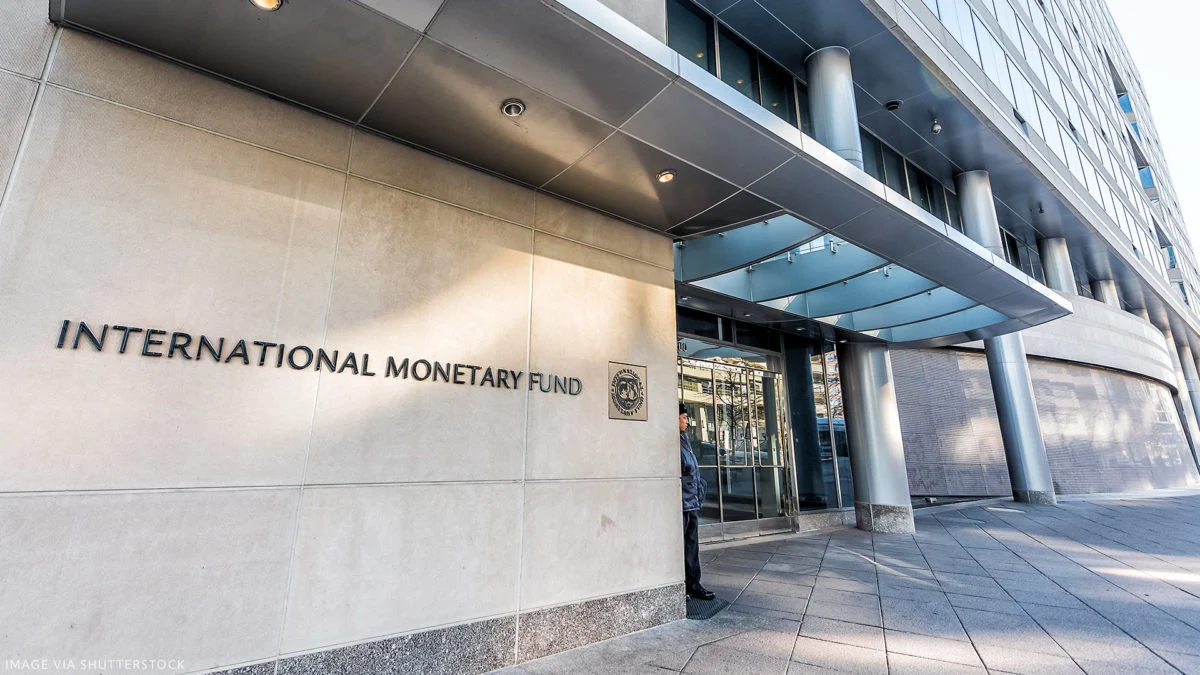
It is no surprise that Pakistan has secured a $7 billion Extended Fund Facility from the IMF — a lifeline for a government staggering under debt repayments, dwindling reserves, and a suffocating fiscal deficit. On paper, this appears to be salvation. In reality, the IMF’s Governance and Corruption Diagnostic Report (November 2025) makes clear that the country’s economic malaise is not simply about liquidity. It is about capture.
Analytically, the report is blunt: corruption in Pakistan is described as “persistent and widespread”. This is notably candid, departing from the usual language of polite diplomacy. It describes a system where governance has been hollowed out, institutions serve the connected instead of the citizen, and resources — whether borrowed or earned — disappear into inefficiency and rent-seeking.
The IMF has publicly stated what Pakistanis have long known: the core problem is not the absence of funds and resources, but the presence of a rigged state. This, economic and governance experts argue, is a formal indictment.
The report contains bitter facts. The report’s section related to “state dominance’ is derogatory. Pakistan’s economy is not merely inefficient; it is engineered to privilege insiders, especially those who are considered sacred goats. For decades, the State-Owned Enterprises (SOEs), many of them loss-making, continue to drain public resources while shielding themselves from accountability. The regulatory frameworks are opaque, designed less to facilitate competition than to entrench monopolies for “privileged actors.”
As per the report, this is not accidental but systemic since the system has consistently resisted checks and balances from the regulatory framework. Usually, when SOEs operate without transparency, when licenses and tariffs are manipulated to favour the few influentials, the result is not just inefficiency — it is exclusion or, more literally, Exemption from legal actions. The ordinary citizens pay higher prices for electricity, gas, and transport, while politically connected firms thrive under protectionist umbrellas, bypassing all the legal formalities.
One will be shocked to know that the language used by the IMF on ‘state capture’ is critical here, as revealed by the report. Pakistan’s governance problem is not about weak institutions alone; it is about institutions weaponised to serve narrow interests that hold the power. In such a system, reform is actively sabotaged as practice is decades old .
As regards the taxation system, the report’s shocking findings on taxation expose the heart of Pakistan’s fiscal crisis due to systemic failure. The Federal Board of Revenue (FBR) operative procedure is “considerable authority and limited oversight”, presiding over a tax system that is very “complex and opaque. According to the IMF, Pakistan faces serious corruption and governance challenges, with weaknesses in fiscal governance and market regulation contributing to problems such as smuggling and under-invoicing in customs administration.
This is all because of the tax-to-GDP ratio that shockingly remains the lowest in the region. The budget cannot be fixed when the revenue authority itself is compromised or plagued by rampant corruption. The government cannot build fiscal space when the system is designed to leak or has loopholes caused by incompetence and graft.
For Pakistanis, this means a paradox where the state demands more in indirect taxes: increased costs for fuel, electricity, and everyday consumption items, while failing to effectively tax the wealthy and politically connected. It is often public sector employees who contribute the maximum chunk of tax revenue. The burden shifts downward, eroding trust in the very idea of fair taxation.
Pakistan’s governance crisis is not new. What is new is the IMF’s willingness to diagnose it openly. By naming corruption as “persistent and widespread”, by identifying state capture as systemic, the report strips away the illusion that money alone can fix the problem
Imagine a typical household in Karachi: the head of the family works as a schoolteacher, the main breadwinner, struggling to make ends meet. Each month, the family allocates a sizeable portion of their income to taxes embedded in utility bills and prices of daily commodities. When electricity tariffs rise due to the inefficiencies of SOEs, the family’s budget is strained, forcing cuts on essentials like education and healthcare — decisions that have long-term impacts on their children’s futures.
For investors, the situation is clear that there is no ease of doing business in Pakistan. The message is equally corrosive. Business firms, especially multinational concerns, perceive Pakistan’s fiscal system not as a framework for growth, but as a mechanism for extraction. This environment is really alarming, prompting multinational firms to reconsider their investments or leave the country.
The IMF report is also an eye-opener for the judiciary, as it is perceived as corrupt, fragmented and clogged with backlogs when people wait years, even generations, for the final verdict. The contract enforcement is relatively weak, property rights are also insecure, and the judicial decisions are often influenced by political or financial pressure. After the 26th and 27th amendments, the judiciary has been enfeebled by the political elite.
Foreign direct investment cannot flow into a country where contracts are unenforceable and property can be seized without remedy. Domestic entrepreneurship cannot thrive when disputes drag on for years in courts seen as compromised.
Rule of law seems to be an abstract principle, though it is the foundation of markets for safety and security or peace of mind. Without it, Pakistan’s economy is not simply inefficient — it is uninvestable.
Conceivably, the most sobering section of the report is its analysis of anti-corruption institutions. NAB and the FIA are described as politically influenced, uncoordinated, and lacking credibility.
The report also raises the hardest question: can these institutions that are accused of benefiting from the status quo be trusted to dismantle it? When anti-graft agencies are weaponised against political opponents rather than systemic corruption, reform becomes a theatre or a distant dream.
The IMF calls for “comprehensive and sequenced reform”, which seems to be a distant dream given the existing hybrid setup. But reform requires agents of change. If the NAB and FIA are compromised, if the judiciary is distrusted, if the FBR is opaque, then who will implement reform? The danger is crystal clear: Pakistan risks entering yet another cycle in which funds are disbursed, conditions are promised and structural change is deferred by a powerful political elite.
For the average Pakistani, the implications are stark. The $7 billion EFF may stabilise reserves temporarily, but it will not lower electricity bills distorted by SOE inefficiency, as the power tariffs will go up or even experience elastic inflation. It will not fix a tax system that punishes consumption while rewarding evasion. It will not unclog courts where justice is delayed and denied.
For global investors, the message is equally sobering. Pakistan is not merely a high-risk market; it is a captured state. Without visible progress on governance, the EFF is not a bridge to reform — it is a bandage on a wound that continues to fester.
The IMF report ends with a call for “concrete and visible progress” to restore public trust. That phrase should be read not as technocratic jargon but as a warning. Pakistan’s crisis is not only economic; it is existential.
A state that cannot tax fairly, adjudicate disputes credibly or regulate transparently cannot sustain itself. A society where corruption is “persistent and widespread” cannot build legitimacy. An economy where capture is systemic cannot grow inclusively.
The $7 billion lifeline buys time. But time without reform is wasted. The choice before Pakistan is stark: dismantle the governance trap or remain trapped in cycles of bailout and breakdown.
Pakistan’s governance crisis is not new. What is new is the IMF’s willingness to diagnose it openly. By naming corruption as “persistent and widespread”, by identifying state capture as systemic, the report strips away the illusion that money alone can fix the problem.
While essential, the EFF is insufficient. The facility will be viewed as another lost opportunity rather than a turning point if full and sequential change is not implemented, along with credible progress on taxation, the rule of law, and anti-corruption.
The rot beneath the economy is governance. Unless Pakistan confronts it, the bandage will peel away, and the wound will deepen.



Danone recalled So Delicious Salted Caramel Cluster pints on Sept 15, 2026. Check UPC 744473476138 and best-by dates on or before April 3, 2028.
- Danone USA issued a voluntary recall on 15 September 2026 of So Delicious Dairy Free Salted Caramel Cluster Non-Dairy Frozen Dessert pints, posted by the FDA.
- The reason: potential presence of foreign materials, such as small stones and other hard objects, within the cashew inclusions.
- Affected product: SKU 136603, UPC 744473476138, best-by dates on and before 3 April 2028. Pints with a later best-by date are not affected.
- No other So Delicious flavours, codes or products are involved. Distribution was nationwide to US retail stores.
- This is the second such recall in under a year — an identical issue prompted a December 2025 recall of the same product.
1. Introduction & Immediate Context
If you have a pint of So Delicious Dairy Free Salted Caramel Cluster in your freezer, check it before reading anything else.
Danone USA is recalling So Delicious Dairy Free Salted Caramel Cluster Non-Dairy Frozen Dessert pints with best-by dates on and before 3 April 2028 due to the potential presence of foreign materials, such as small stones and other hard objects, within the cashew inclusions, according to the company announcement posted by the FDA on 15 September 2026. The issue was identified through consumer complaints, and the FDA has been informed of the voluntary recall.
Danone is working with retail partners to remove affected product from shelves. Unaffected product remains available, and product shipped going forward is not affected.
2. Instant Product-Matching Table
Check all three fields. Flavour name alone is not sufficient, because packaging varies by retailer and the brand rebranded during 2026.
| Field | What to look for | Where to find it |
|---|---|---|
| Product name | So Delicious Dairy Free® Salted Caramel Cluster Non-Dairy Frozen Dessert (pints) | Front label |
| SKU | 136603 | Product listing / retailer receipt |
| UPC | 744473476138 | Back of container |
| Best-by date | On and before 3 April 2028 | Bottom of container |
| Package size | Pint | — |
| Distribution | Nationwide, US retail stores | — |
If all fields match: do not consume the product.
For a refund or replacement coupon: contact the So Delicious Dairy Free Consumer Care Line at 1-833-367-8975, available Monday to Friday, 9 a.m. to 6 p.m. ET.
If your best-by date falls after 3 April 2028: your pint is not part of this recall.
2.1 Comparison with the December 2025 recall
Households that checked their freezers last winter should check again — the date ranges are different.
| Recall | Date issued | Best-by range affected | SKU / UPC | Status |
|---|---|---|---|---|
| December 2025 | 15 December 2025 | Before 08 Aug 2027 | 136603 / 744473476138 | Completed; FDA terminated |
| September 2026 | 15 September 2026 | On and before 3 April 2028 | 136603 / 744473476138 | Active |
The September 2026 range extends roughly eight months beyond the earlier one. Product that passed the December check may still fall inside the current recall.
3. Structural Drivers and Competitor Gaps: Why Twice?
Almost all coverage of this recall stops at the checklist. The pattern is the more useful part of the story.
The stated cause is word-for-word identical to the December 2025 recall — foreign materials such as small stones and hard objects within cashew inclusions — as Fast Company noted in observing that this is now a pattern rather than an isolated incident. The company’s public language has also closely mirrored its statements from the previous year, including the assurance that the issue has been identified and corrected.
The mechanism points upstream. Small stones in cashew inclusions is a raw-material sorting failure, not a manufacturing-line failure. Tree nuts are harvested from the ground or from drying floors, and the standard controls are optical sorting, density separation and metal or X-ray detection at intake. Stones are specifically the contaminant these systems exist to catch, and they are difficult for downstream detection to find because their density can be close to that of the nut itself. A recurrence of the same contaminant in the same inclusion implies the corrective action taken after December 2025 did not resolve the root cause — most plausibly at a supplier or sorting-specification level rather than at the plant.
The recall also reached other jurisdictions. The Canadian Food Inspection Agency issued a Class 2 recall for a related So Delicious Dairy Free cashew-base salted caramel product over plastic-like and gravel-like fragments, indicating a supply-chain rather than single-facility scope.
There are no confirmed injury reports in the current recall documentation, and the FDA categorises this as a consumer-level alert. Foreign-object recalls carry dental-fracture and choking risk rather than illness risk, which is why the guidance is disposal rather than medical monitoring.
4. Key Implications for Stakeholders
Consumers with dietary restrictions. Dairy-free frozen dessert buyers often have limited substitutes, and repeat recalls in a narrow category are disproportionately disruptive. Only this single flavour is affected; other So Delicious products remain unaffected in both recalls.
Allergy-tracking households. Note that this is a foreign-object recall, not an allergen recall. No undeclared allergen is involved, so the standard cross-contamination protocols do not apply here — physical inspection and disposal do.
Retailers. The overlapping date ranges across two recalls create genuine shelf-audit complexity. Scanning by UPC alone will flag unaffected stock; the best-by date is the discriminating field.
Food safety professionals. A repeat of an identical contaminant within nine months is the type of event that typically attracts closer FDA attention to the corrective-action plan filed after the first recall.
How to verify anything you read about this. The FDA recalls, market withdrawals and safety alerts database is updated continuously and is the authoritative source. Secondary coverage has circulated conflicting date ranges by mixing the 2025 and 2026 notices.
5. Frequently Asked Questions
Q1: Which So Delicious products are recalled?
Only So Delicious Dairy Free Salted Caramel Cluster Non-Dairy Frozen Dessert pints with SKU 136603, UPC 744473476138 and a best-by date on or before 3 April 2028. No other flavours, codes or products from the brand are involved.
Q2: What should I do if I have the recalled product?
Do not eat it. Dispose of it and contact the So Delicious Dairy Free Consumer Care Line at 1-833-367-8975, open Monday to Friday, 9 a.m. to 6 p.m. ET, for a refund or replacement coupon.
Q3: Why was So Delicious recalled?
Because of the potential presence of foreign materials such as small stones and other hard objects within the cashew inclusions. The issue was identified through consumer complaints, and the FDA was informed of the voluntary recall.
Q4: Is this the same as the previous So Delicious recall?
It is the same product and the same stated cause, but a different date range. The December 2025 recall covered best-by dates before 8 August 2027 and has been terminated; the September 2026 recall covers dates on and before 3 April 2028.
Q5: Has anyone been hurt?
No confirmed injury reports appear in the current recall documentation. The FDA has categorised the action as a consumer-level alert.
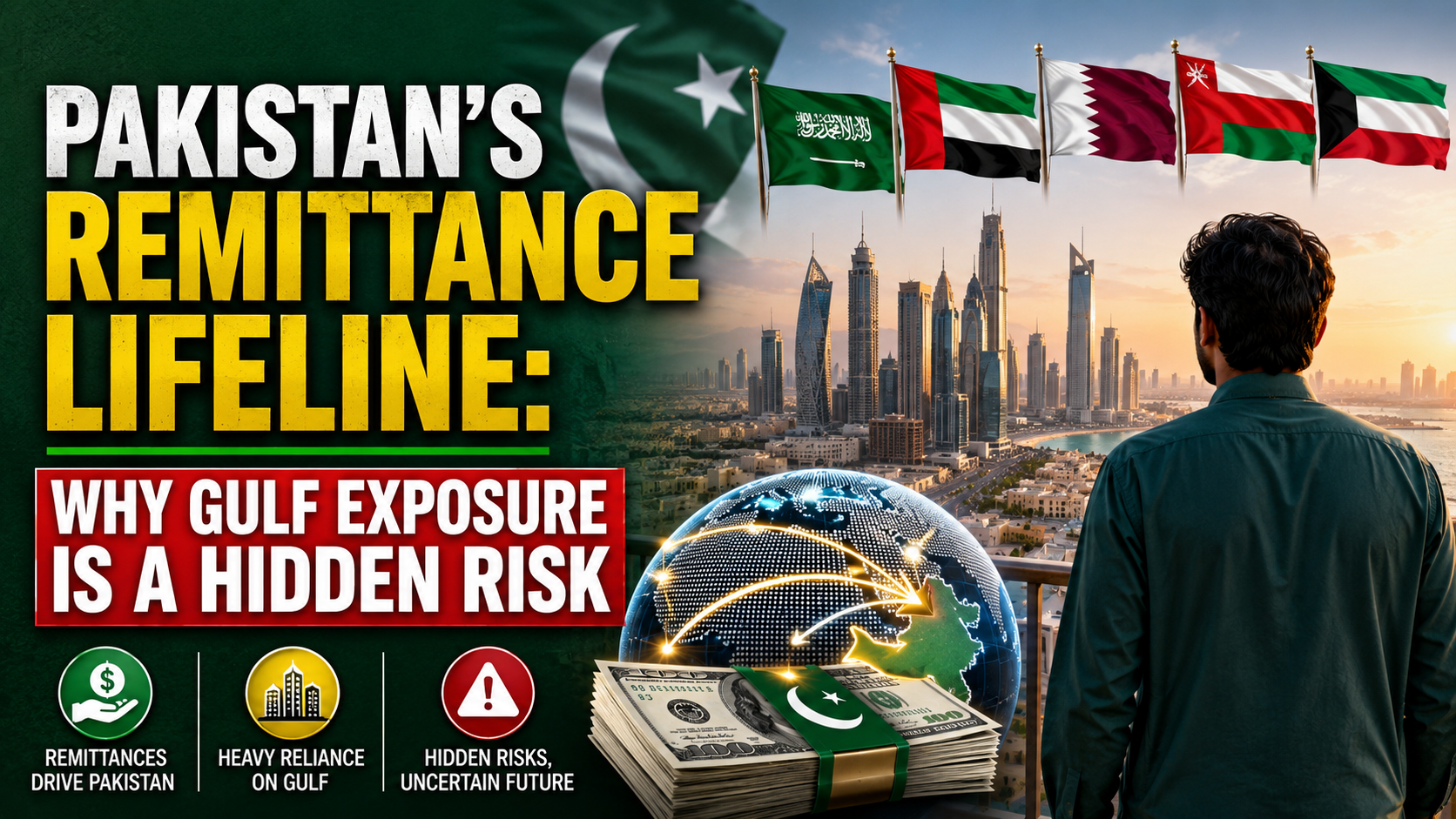
Buried inside the IMF’s latest Pakistan country report is a dependency that receives far less attention than headline GDP or inflation numbers, but arguably carries more immediate risk for millions of households: Pakistan’s economy is structurally exposed to whatever happens next in the Gulf.
The Numbers That Matter
Pakistan receives annual remittances amounting to roughly 9 percent of GDP, of which 55 percent originate from Gulf Cooperation Council countries, according to the IMF’s May 2026 country report. That single funding channel is one of the largest and most stable sources of foreign exchange available to the country — larger, in most years, than export revenue growth or foreign direct investment inflows combined.
The IMF’s own language is unambiguous about the risk this concentration creates: a significant disruption to GCC economies, or a forced return of migrant workers, could weigh heavily on these flows — a major source of financing for both household consumption and Pakistan’s broader balance of payments.
Why This Risk Is Live, Not Theoretical
This is not an abstract stress-test scenario. The Strait of Hormuz disruption, detailed extensively elsewhere in this series, has placed the entire Gulf region’s economic stability under genuine pressure for the first time in years. Should the conflict escalate further or trigger a broader regional economic slowdown, the transmission channel to Pakistan is direct and fast: fewer construction projects and reduced hiring across the GCC translates almost immediately into lower remittance flows from the millions of Pakistani workers employed there.
Capital Flows Are Already Reacting
The IMF has flagged early evidence that this dynamic is not purely hypothetical. Deteriorating global financial conditions have already resulted in capital outflows from Pakistan, which are likely to intensify further if the regional crisis extends, with the Fund specifically noting that access to short-term commercial financing — largely sourced from GCC banks — could also be affected if risk sentiment deteriorates further across the region.
This creates a double exposure that is easy to overlook in headline coverage: Pakistan depends on the Gulf both for the remittance income that supports household consumption, and for the short-term commercial bank financing that helps bridge its external funding gaps between IMF disbursements.
The State Bank’s Reserve Buffer
Pakistan’s own policy response has been to build reserves as a shock absorber. The State Bank of Pakistan has been projecting reserves to continue rising to roughly $18 billion by June 2026 on the back of planned inflows, a level implying that expected capital inflows currently exceed any current account shortfall — but only as long as Pakistan remains within an active IMF programme and maintains access to external funding on favourable terms.
The risk scenario flagged by policy researchers is specific: if monetary easing is mismanaged and confidence in Pakistan’s reform path falters, capital inflows could slow or reverse at the same time imports surge, opening an external funding gap that would draw down reserves and pressure the rupee — a scenario made materially more likely by any Gulf-region shock large enough to simultaneously dent remittances and tighten GCC bank lending.
How much of Pakistan’s remittances come from the Gulf?
Roughly 55% of Pakistan’s remittances — which fund about 9% of GDP — originate from Gulf Cooperation Council countries, making Pakistan’s balance of payments directly exposed to any economic disruption or capital-flow tightening in the Gulf region.
The Agricultural Wildcard
A related, more immediate risk sits in the agricultural supply chain. The IMF notes that disrupted DAP fertiliser supply chains linked to regional tensions could affect the Kharif planting season in June-July, with knock-on effects for food import prices — a second, more direct channel through which Gulf and broader Middle East instability could hit Pakistani households, independent of the remittance and capital-flow risks.
The Policy Takeaway
Pakistan’s economic stabilisation narrative in 2026 — a rebuilding KSE-100, falling inflation, a completed EFF review, covered in depth in our companion article — is real, but it rests on a foundation more exposed to Gulf regional stability than most headline coverage acknowledges. For policymakers in Islamabad, and for the Pakistani diaspora sending capital home each month, the Strait of Hormuz situation is not a distant geopolitical story. It is, in a very direct sense, a domestic economic risk factor.

In most economies, a strengthening currency is treated as evidence of underlying strength. In Russia’s case in 2026, the opposite is true — and this counterintuitive dynamic has received surprisingly little mainstream coverage relative to how directly it undermines Moscow’s ability to finance the war in Ukraine. The ruble touched 69.90 against the dollar in mid-June, its strongest level since February 2023, having gained roughly 45% since the start of the year on some measures. For Russia’s state finances, that appreciation is a genuine problem, not a triumph.
Why a Strong Ruble Hurts, Rather Than Helps, Russia
The mechanism runs through Russia’s fiscal architecture. Oil and gas taxes are calculated as the product of the export oil price and the ruble-dollar exchange rate — meaning that even when the dollar price of Urals crude holds steady, a stronger ruble mechanically reduces the ruble-denominated tax take from every barrel sold. With roughly 80% of Russia’s oil exports now flowing through Rosneft and Lukoil, both under direct US sanctions since late 2025, the currency-driven revenue squeeze compounds a volume-and-price problem that was already severe.
The scale of the shortfall is significant. Analysts at the Bloomsbury Intelligence and Security Institute project Russia faces an energy revenue shortfall of roughly $25–30 billion, driven by the combination of a stronger ruble and falling oil prices cutting the value of Urals crude by around a quarter. Separately, Russia’s Ministry of Finance has had to sell portions of the National Wealth Fund’s gold and yuan holdings to offset the shortfall in oil-and-gas-linked revenue — the Bank of Russia then buys those assets and sells an equivalent value of foreign currency domestically, a so-called “mirror operation” that itself reinforces the ruble’s strength, creating something close to a self-perpetuating cycle.
The Deeper Cause: Sanctions, Not Just Oil Prices
It would be a mistake to attribute the ruble’s strength purely to oil-market dynamics. Analysts at Meduza point to a more structural cause: a drop in imports combined with the Bank of Russia’s historically high interest rate has reduced domestic demand for foreign currency, pushing the ruble higher even as the broader economy stagnates. Compounding this, a large and growing share of Russia’s trade is now settled directly in rubles or yuan — 59.5% of exports and 56% of imports by October 2025 — reducing the currency-market channels through which a weaker ruble might otherwise emerge organically.
Sanctions enforcement has independently cut into export volumes and pricing power. Widened discounts on Russian crude — Urals trading roughly $25 a barrel below Brent as buyers price in the compliance risk of sanctioned suppliers — mean Russia is simultaneously selling less oil, at a bigger discount, for a currency worth mechanically less in tax terms per barrel. It is difficult to construct a more comprehensively unfavourable set of conditions for a state budget built around oil-and-gas revenue.
The Fiscal Math Is Getting Harder to Finance
Russia’s Economic Development Ministry has already revised its own forecasts downward across every major indicator, and the government has been forced into unpopular measures including a VAT increase effective January 2026 and higher domestic borrowing — targeting roughly 5.5 trillion rubles in fresh domestic bond issuance in 2026, with state-owned banks like Sberbank absorbing the bulk of that supply. Analysts note this financing method is among the most inflationary available, functionally similar to money creation, because the primary buyers are state banks rather than independent market participants pricing genuine credit risk.
Why Analysts Don’t Expect Collapse — Just Stagnation
Despite the mounting pressure, multiple assessments converge on the same conclusion: Russia’s economy is not on the verge of collapse. The World Bank’s own forecast trajectory shows growth slowing to around 0.8–1% annually through 2028 rather than contracting outright, describing the outlook as stagnation rather than crisis. As one analysis put it, the state-dependent structure of Russia’s economy — heavy reliance on state-owned enterprises and raw-material exports — is precisely the kind of economic structure that helps authoritarian systems maintain power through prolonged difficulty rather than triggering the kind of acute crisis that would force policy capitulation.
What to Watch
The critical variable for 2026 is whether the Bank of Russia’s interest-rate cuts — already reducing the key rate from 16% toward 15.5% — proceed fast enough to weaken the ruble back toward the Economic Ministry’s own projected average of roughly 92 per dollar. If the ruble instead remains persistently overvalued relative to Russia’s underlying trade fundamentals, the fiscal shortfall — and the resulting drawdown of Russia’s National Wealth Fund — will continue to compress the resources available for financing the war in Ukraine, regardless of headline oil prices.

Diesel Prices 2026–2027: Why Cheaper Crude May Not Mean Cheap Fuel

2027 Social Security COLA: Key Details and Dates

KSE-100 Sees Major Drop Post-SBP Rate Hike

Big Tech’s AI Spending Test: Can Revenue Catch Up With Capital Expenditure?

AI Infrastructure Investment Strategies for 2026

Pakistan Freelancers Tax 2026: Payments, Documentation and Formal Growth

Strait of Hormuz Crisis: What the Latest Tanker Attacks Mean for Oil, Shipping and Global Trade

AI Customer Service in 2026: What’s Working, What’s Failing, and What to Buy

Open a Savings Account Online: How to Actually Earn 10x the National Average Rate

Global Housing Market 2026: Where Prices Rise, Where They Don’t

PSX and KSE-100 Record Highs: An Insider’s Guide to Pakistan Stocks

So Delicious Dessert Recall: Affected Products, FDA Guidelines, and Consumer Action

Pakistan’s Current Account Deficit Narrows Sharply to $98 Million in August 2026

Japan Eyes 3.5% Defense Spending: What It Means for Bonds, Stocks, and the BOJ

Top 15 Stocks for Investment in 2026 in PSX: Your Complete Guide to Pakistan’s Best Investment Opportunities
Top 15 Stocks for Investment in 2026 in PSX: Your Complete Guide to Pakistan’s Best Investment Opportunities

Debunking IMF Program Myths: Reconfiguring Engagement for True National Ownership in a Volatile World

Top 10 Mutual Fund Managers in Pakistan for Investment in 2026: A Comprehensive Guide for Optimal Returns

China’s 50% Domestic Equipment Rule: The Semiconductor Mandate Reshaping Global Tech

What the U.S. Attack on Venezuela Could Mean for Oil and Canadian Crude Exports: The Economic Impact

15 Most Lucrative Sectors for Investment in Pakistan: A 2025 Data-Driven Analysis

Pakistan’s Export Goldmine: 10 Game-Changing Markets Where Pakistani Businesses Are Winning Big in 2025

How to Become an Active Taxpayer on Pakistan’s FBR Active Taxpayer List (ATL) in 2026: A Step-by-Step Guide

Pakistan’s Stock Market Renaissance: How 2025’s Hottest Investment Opportunity Is Democratizing Wealth—A Complete Beginner’s Guide

Best Investments in Pakistan 2026: Top 10 Low-Price Shares and Long-Term Picks for the PSX
15 Most Lucrative Sectors for Investment in Pakistan: A 2025 Data-Driven Analysis
15 Most Lucrative Sectors for Investment in Pakistan: A 2025 Data-Driven Analysis

Pakistan’s Economic Outlook 2025: Between Stabilization and the Shadow of Stagnation
-
 Markets & Finance10 months ago
Top 15 Stocks for Investment in 2026 in PSX: Your Complete Guide to Pakistan’s Best Investment Opportunities
-
Markets & Finance10 months ago
Top 15 Stocks for Investment in 2026 in PSX: Your Complete Guide to Pakistan’s Best Investment Opportunities
-
 Analysis9 months ago
Debunking IMF Program Myths: Reconfiguring Engagement for True National Ownership in a Volatile World
-
 Investment10 months ago
Top 10 Mutual Fund Managers in Pakistan for Investment in 2026: A Comprehensive Guide for Optimal Returns
-
 Asia10 months ago
China’s 50% Domestic Equipment Rule: The Semiconductor Mandate Reshaping Global Tech
-
 Global Economy10 months ago
What the U.S. Attack on Venezuela Could Mean for Oil and Canadian Crude Exports: The Economic Impact
-
 AI11 months ago
15 Most Lucrative Sectors for Investment in Pakistan: A 2025 Data-Driven Analysis
-
 Exports11 months ago
Pakistan’s Export Goldmine: 10 Game-Changing Markets Where Pakistani Businesses Are Winning Big in 2025