
Analysis
Indonesia’s Nickel Quota Slash Sparks Price Surge at World’s Largest Mine

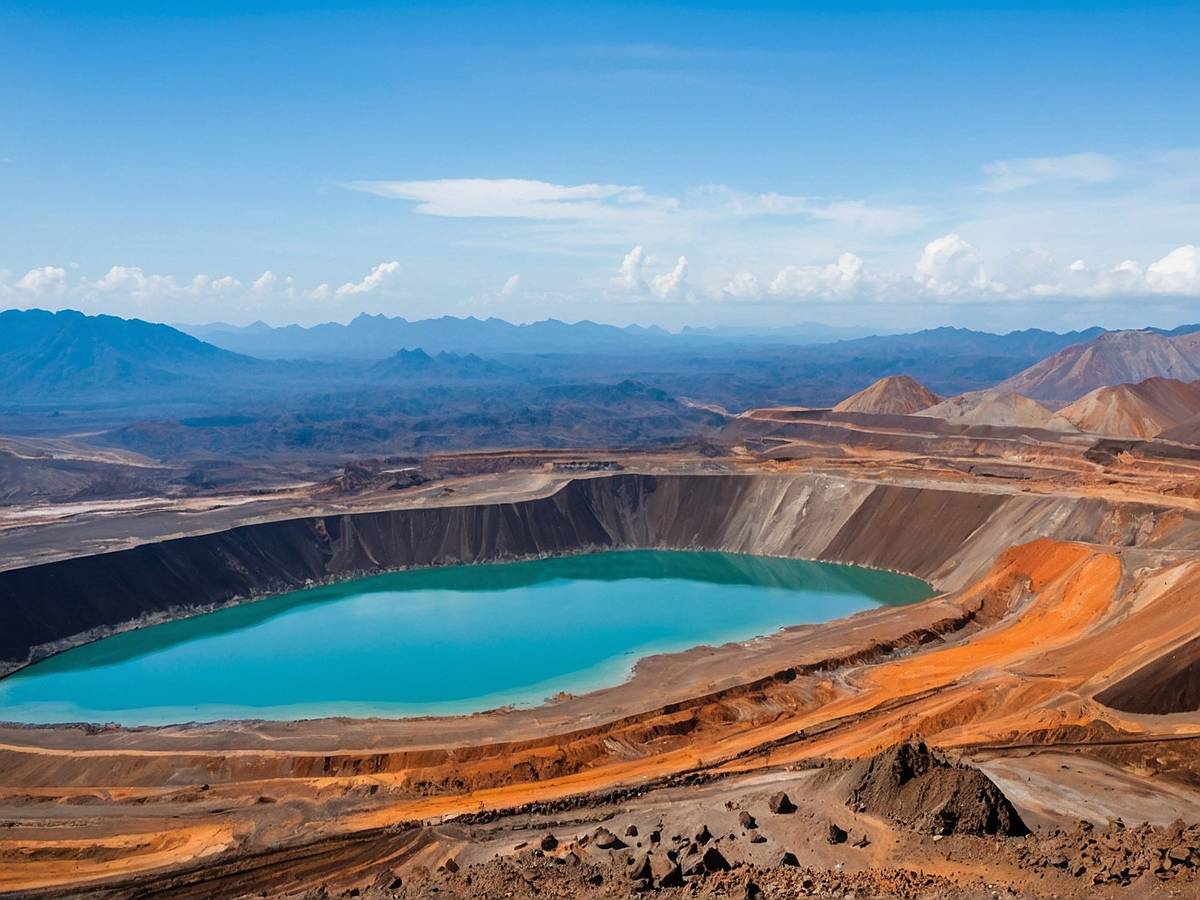
South-East Asian Giant Cuts Production Permits by Nearly One-Third in Strategic Bid to Reshape Global Battery Metal Markets
The London Metal Exchange witnessed a sharp rally in nickel prices on Tuesday as Indonesia—which commands roughly 60% of global nickel production—unveiled dramatic production cuts at the world’s largest nickel mine, sending ripples through industries from electric vehicles to stainless steel manufacturing. The move marks Jakarta’s most aggressive intervention yet in commodities markets as it seeks to arrest a two-year price slump that has challenged the profitability of its vast mining sector.
PT Weda Bay Nickel, the sprawling open-pit operation on Halmahera Island jointly owned by France’s Eramet and China’s Tsingshan Holding Group, received notification from Indonesian authorities to slash its 2026 production quota to just 12 million wet metric tonnes—a stunning 71% reduction from the 42 million tonnes permitted in 2025, according to Eramet’s official statement. The decision sent three-month nickel futures climbing 2.2% to $17,880 per tonne, briefly touching $17,980—the highest level since late January, Bloomberg reported.
The Quota Cut: What Happened?
The quota reduction at Weda Bay forms part of a broader national clampdown on nickel extraction. Indonesia’s Energy and Mineral Resources Ministry has approved total nickel ore production quotas (known locally as RKAB permits) of between 260 million and 270 million tonnes for 2026, down sharply from 379 million tonnes authorized in 2025—representing a cut of approximately 30%, according to Director General of Minerals and Coal Tri Winarno.
This stands in stark contrast to market realities: Indonesian smelters are projected to require between 330 million and 350 million tonnes of ore in 2026 to maintain current operations, creating a shortfall of up to 90 million tonnes. The mismatch has already triggered speculation about potential ore imports from the Philippines and production adjustments across Indonesia’s sprawling industrial parks.
For Weda Bay specifically, the implications are severe. The mine had been planning to expand output to more than 60 million tonnes to support the adjacent Indonesia Weda Bay Industrial Park (IWIP), where dozens of smelters transform raw ore into nickel pig iron, matte, and battery-grade materials. Eramet indicated it would “apply as early as possible for a revision of this production quota to a higher volume,” noting that installed smelter capacity at IWIP exceeds 100 million tonnes annually.
Market Reaction and Price Jump
The market’s response was immediate and forceful. Nickel prices extended gains for a fourth consecutive session, building on a rally that has seen prices climb more than 20% since mid-December. On Shanghai’s futures exchange, nickel surged over 4% as Asian trading opened, according to industry analysts.
Yet the euphoria may prove fleeting. Structural oversupply remains the dominant theme in nickel markets. London Metal Exchange warehouse inventories have ballooned to over 254,000 metric tonnes—the highest level in more than four years—as Indonesian production growth has far outpaced global demand. ING commodities strategist Ewa Manthey forecasts the global nickel market will remain in surplus by approximately 261,000 tonnes in 2026, following a 209,000-tonne surplus in 2025.
“The global market is still forecast to remain in surplus,” Manthey noted in a recent analysis, projecting an average nickel price of just $15,250 per tonne for 2026—well below current trading levels. The analyst emphasized that without large-scale, coordinated supply cuts or unexpectedly robust demand recovery, elevated prices are unlikely to hold.
Global Ramifications for Industries
The quota cuts arrive at a precarious moment for two critical industries that together consume virtually all refined nickel: stainless steel production (accounting for over 60% of demand) and electric vehicle batteries.
Stainless Steel Under Pressure: China’s prolonged property market downturn continues to weigh heavily on stainless steel consumption, dampening what has historically been nickel’s largest end-use market. Chinese stainless steel mills have already implemented multiple price adjustments in response to rising nickel input costs, with 304-grade cold-rolled coil prices increasing from ¥12,800-12,900 per tonne in mid-December to ¥13,400-13,500 per tonne by early January, according to commodities data.
EV Battery Sector Headwinds: Perhaps more concerning for long-term nickel bulls is the shifting chemistry landscape in electric vehicle batteries. Contemporary Amperex Technology (CATL) and other leading battery manufacturers have aggressively pivoted toward lithium-iron-phosphate (LFP) batteries, which contain no nickel. In China, the market share of nickel-manganese-cobalt (NMC) batteries fell to just 18% in the first nine months of 2025, down from 25% in 2024, ING research shows.
Recent advances in LFP technology have erased the energy density gap that once favored nickel-rich chemistries, with some LFP-powered vehicles now achieving ranges exceeding 750 kilometers. This technological evolution threatens to structurally reduce nickel demand growth precisely when Indonesia had anticipated surging EV-driven consumption to absorb its expanded production capacity.
Resource Nationalism and Strategic Calculations
Indonesia’s quota reductions reflect a deliberate policy evolution from raw material exporter to value-added processor. Since implementing a raw nickel ore export ban in 2020, Jakarta has attracted billions in foreign investment—primarily from China—to build out domestic smelting and refining capacity. The country now hosts dozens of rotary kiln electric furnaces (RKEF) producing nickel pig iron and an expanding fleet of high-pressure acid leach (HPAL) plants capable of producing battery-grade nickel.
Yet this rapid industrial expansion has come at considerable cost. Environmental concerns have mounted over coal-fired power plants supporting nickel smelters, deforestation from open-pit mining, and toxic waste management challenges inherent to HPAL processing. Government crackdowns on environmental and safety violations resulted in the temporary seizure of portions of Weda Bay in September 2025 and the suspension of 190 mining permits nationwide.
The quota cuts also serve a more immediate objective: preserving Indonesia’s nickel reserves. According to the Ministry of Energy and Mineral Resources, average nickel ore grades have declined sharply from approximately 1.66% in 2024 to around 1.57% currently—a significant deterioration that reflects accelerated mining of higher-grade resources. By constraining output now, Indonesian authorities aim to extend the productive life of the country’s laterite nickel deposits.
“Indonesia is now using permits and quotas as a direct market lever,” observed The Oregon Group, a critical minerals intelligence firm. “For investors, that raises the upside to any sustained tightening—and the policy risk that quotas can be revised again.”
Expert Analysis and Future Outlook
Market participants remain deeply divided on whether Indonesia’s quota gambit will succeed in sustainably lifting nickel prices or merely create temporary market disruptions before the structural surplus reasserts itself.
Bears point to Indonesia’s track record of adjusting quotas mid-year when economic pressures mount. The country’s RKAB system includes revision mechanisms that could allow approved quotas to expand if domestic smelters face genuine supply constraints. Moreover, several analysts note that actual Indonesian nickel ore production in 2025 totaled approximately 265 million tonnes—well below the approved 326 million tonne quota—suggesting that official limits may not translate directly into realized output reductions.
Bulls counter that Indonesia’s shifting priorities toward resource conservation and downstream value-addition represent a genuine policy inflection point. The government has already stopped approving new industrial permits for nickel pig iron and other intermediate products unless applicants commit to further processing into battery-grade materials. Tax holidays for RKEF smelters producing ferronickel are being revoked as Jakarta refocuses incentives on higher-value battery components.
Geopolitical factors add further complexity. Russia supplies roughly 20% of Class 1 nickel globally, but sanctions risk and supply chain diversification efforts could eventually constrain availability. Meanwhile, Western producers in Canada and Australia are developing lower-carbon, sulphide-based nickel projects specifically targeted at automakers seeking supply chain independence from Indonesia-China dominance.
What Lies Ahead
The coming months will test whether Indonesia can successfully orchestrate a sustained price recovery in the face of persistent oversupply and evolving demand dynamics. Eramet’s immediate plans to seek quota revisions underscore the tensions between government policy objectives and industrial realities on the ground. If Jakarta stands firm on reduced quotas while domestic smelter demand continues growing, ore imports from the Philippines—whose DMCI Mining Corporation posted record output in 2025—could increase substantially.
For industries dependent on stable nickel supply, the message is clear: Indonesia’s role as both dominant producer and active market manager introduces a new layer of volatility and strategic uncertainty into commodity planning. Electric vehicle manufacturers and stainless steel producers alike must now navigate not only fundamental supply-demand dynamics but also the unpredictable policy interventions of a resource-nationalist government determined to extract maximum value from its mineral endowments.
As nickel prices hover near 15-month highs, the question facing traders and industrial consumers is whether this represents a genuine tightening or merely another chapter in Indonesia’s complex experiment with market manipulation—one that could unravel as quickly as it emerged.
Market participants should monitor upcoming RKAB quota revisions and Indonesian government announcements for potential supply adjustments. Current nickel pricing reflects significant speculative positioning that may not be sustainable without fundamental demand improvements.


Buried inside the IMF’s latest Pakistan country report is a dependency that receives far less attention than headline GDP or inflation numbers, but arguably carries more immediate risk for millions of households: Pakistan’s economy is structurally exposed to whatever happens next in the Gulf.
The Numbers That Matter
Pakistan receives annual remittances amounting to roughly 9 percent of GDP, of which 55 percent originate from Gulf Cooperation Council countries, according to the IMF’s May 2026 country report. That single funding channel is one of the largest and most stable sources of foreign exchange available to the country — larger, in most years, than export revenue growth or foreign direct investment inflows combined.
The IMF’s own language is unambiguous about the risk this concentration creates: a significant disruption to GCC economies, or a forced return of migrant workers, could weigh heavily on these flows — a major source of financing for both household consumption and Pakistan’s broader balance of payments.
Why This Risk Is Live, Not Theoretical
This is not an abstract stress-test scenario. The Strait of Hormuz disruption, detailed extensively elsewhere in this series, has placed the entire Gulf region’s economic stability under genuine pressure for the first time in years. Should the conflict escalate further or trigger a broader regional economic slowdown, the transmission channel to Pakistan is direct and fast: fewer construction projects and reduced hiring across the GCC translates almost immediately into lower remittance flows from the millions of Pakistani workers employed there.
Capital Flows Are Already Reacting
The IMF has flagged early evidence that this dynamic is not purely hypothetical. Deteriorating global financial conditions have already resulted in capital outflows from Pakistan, which are likely to intensify further if the regional crisis extends, with the Fund specifically noting that access to short-term commercial financing — largely sourced from GCC banks — could also be affected if risk sentiment deteriorates further across the region.
This creates a double exposure that is easy to overlook in headline coverage: Pakistan depends on the Gulf both for the remittance income that supports household consumption, and for the short-term commercial bank financing that helps bridge its external funding gaps between IMF disbursements.
The State Bank’s Reserve Buffer
Pakistan’s own policy response has been to build reserves as a shock absorber. The State Bank of Pakistan has been projecting reserves to continue rising to roughly $18 billion by June 2026 on the back of planned inflows, a level implying that expected capital inflows currently exceed any current account shortfall — but only as long as Pakistan remains within an active IMF programme and maintains access to external funding on favourable terms.
The risk scenario flagged by policy researchers is specific: if monetary easing is mismanaged and confidence in Pakistan’s reform path falters, capital inflows could slow or reverse at the same time imports surge, opening an external funding gap that would draw down reserves and pressure the rupee — a scenario made materially more likely by any Gulf-region shock large enough to simultaneously dent remittances and tighten GCC bank lending.
How much of Pakistan’s remittances come from the Gulf?
Roughly 55% of Pakistan’s remittances — which fund about 9% of GDP — originate from Gulf Cooperation Council countries, making Pakistan’s balance of payments directly exposed to any economic disruption or capital-flow tightening in the Gulf region.
The Agricultural Wildcard
A related, more immediate risk sits in the agricultural supply chain. The IMF notes that disrupted DAP fertiliser supply chains linked to regional tensions could affect the Kharif planting season in June-July, with knock-on effects for food import prices — a second, more direct channel through which Gulf and broader Middle East instability could hit Pakistani households, independent of the remittance and capital-flow risks.
The Policy Takeaway
Pakistan’s economic stabilisation narrative in 2026 — a rebuilding KSE-100, falling inflation, a completed EFF review, covered in depth in our companion article — is real, but it rests on a foundation more exposed to Gulf regional stability than most headline coverage acknowledges. For policymakers in Islamabad, and for the Pakistani diaspora sending capital home each month, the Strait of Hormuz situation is not a distant geopolitical story. It is, in a very direct sense, a domestic economic risk factor.
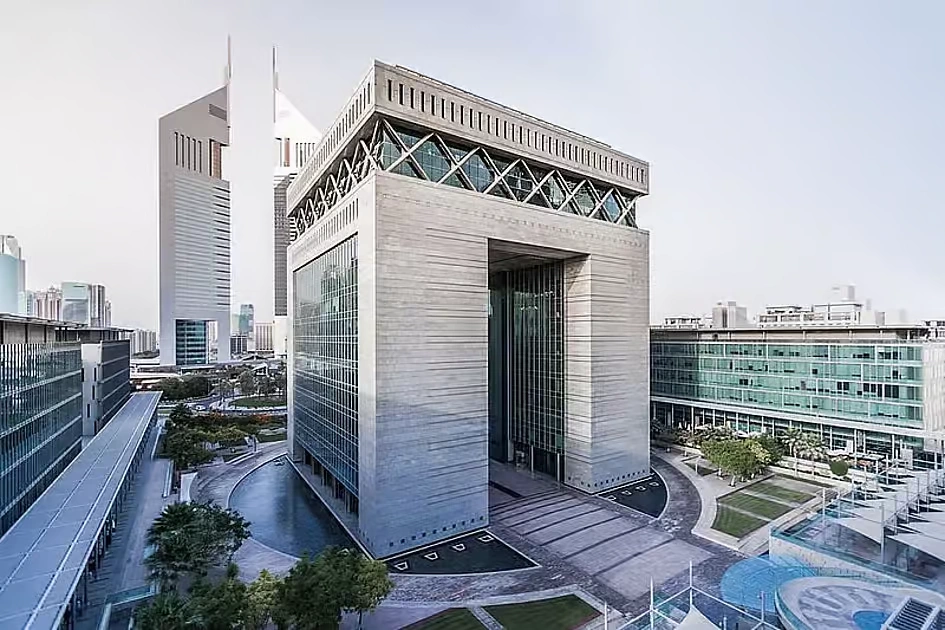
Dubai has climbed to its highest position ever on one of finance’s most closely watched rankings, and the achievement is no accident — it is the direct output of a decade-long, numerically explicit government strategy that few other financial centres have attempted to execute with this level of precision.
The Ranking Itself
The Dubai International Financial Centre has recorded its highest-ever position on the Global Financial Centres Index at seventh place worldwide, the highest ranking ever achieved by any financial centre across the Middle East, Africa and South Asia region, and the only MEASA-region centre to feature in the global top 20 — underscoring both its regional dominance and genuine global competitiveness.
The D33 Strategy Behind the Number
The ranking is explicitly tied to Dubai’s own stated ambitions. The GFCI result is described as pivotal to Dubai’s goal of becoming one of the world’s top four financial centres by 2033, in line with the Dubai Economic Agenda, or D33, which targets a doubling of the emirate’s economy over the decade. Separately, Dubai Chambers has confirmed the plan targets cumulative economic output of AED 32 trillion, or roughly $8.7 trillion, over the decade, supported by 100 transformative projects centred on trade expansion, digital innovation and sustainable growth.
The Underlying Economic Engine
The financial-centre ambitions are backed by genuine current-quarter growth. Dubai’s economy reached AED 232 billion in first-quarter 2026 GDP, a 2.4 percent year-on-year increase, with the finance, construction, healthcare, wholesale and retail trade, and real estate sectors all contributing to the broad-based expansion. Middle East Briefing separately projects the wider UAE economy will expand around 5 percent in 2026, with local banks positioned to increase lending both domestically — supporting SMEs, consumers and project finance — and across borders into markets like Saudi Arabia, where UAE banks’ comparatively lower interbank rates create an arbitrage opportunity.
Real Money Behind the Ranking
The GFCI climb is being validated by tangible transaction volume rather than sentiment alone. Weekly UAE business tracking shows a steady drumbeat of institutional activity: Sharjah Islamic Bank reported AED 803.9 million in net profit, up 15.3 percent, ADI Chain secured a $50 million investment to build sovereign digital infrastructure, and Capital.com reported $1.1 trillion in second-quarter trading volume routed through the jurisdiction. Separately, UAE and Saudi banks are projected to lead GCC credit growth in 2026, reinforcing Dubai and Abu Dhabi’s combined position as the region’s default financial gateway.
Why This Matters for Pakistan and South Asia
Dubai’s ascent as a financial hub carries direct relevance for Pakistan, where — as detailed in our companion coverage of Pakistan’s remittance exposure — roughly 55 percent of the country’s substantial remittance inflows originate from the Gulf Cooperation Council. A deepening, increasingly sophisticated DIFC-anchored financial ecosystem in Dubai means more efficient, lower-cost channels for that capital, alongside growing opportunities for Pakistani and South Asian firms to access GCC-sourced project finance and cross-border credit as UAE banks expand lending beyond their domestic market.
What is Dubai’s global financial centre ranking in 2026?
Dubai’s DIFC recorded its highest-ever ranking on the Global Financial Centres Index at 7th place worldwide in 2026 — the highest ever achieved by any Middle East, Africa or South Asia financial centre — as part of its stated goal to become a top-four global financial hub by 2033.
The Risk Beneath the Growth Story
Not every signal points to unambiguous strength. AGBI’s own reporting notes that UAE banks’ second-quarter results are likely to show weaker profits, slower lending and narrower margins, even as analysts characterise the underlying sector as fundamentally resilient — a reminder that Dubai’s financial-hub ambitions are being pursued against a genuinely more difficult regional operating environment shaped by the Strait of Hormuz disruption and broader Gulf security concerns, not in isolation from them.
The Bottom Line
Dubai’s climb to seventh in the GFCI rankings is less a one-off achievement than a measurable checkpoint on an explicitly numbered, decade-long strategic roadmap — one increasingly backed by real GDP growth, credit expansion, and institutional trading volume rather than ambition alone.
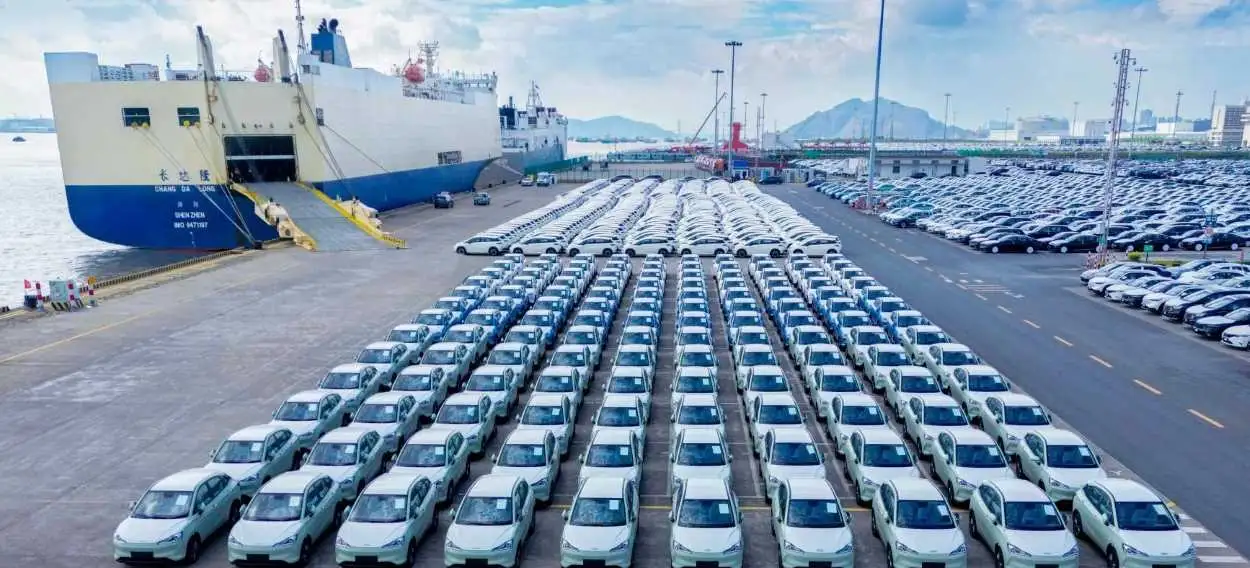
China’s monthly car exports surpassed one million units for the first time in June 2026, according to trade data released alongside the country’s second-quarter GDP figures, while overall imports rose 36% year-over-year to a five-year high even as Beijing cut monthly crude imports to near decade lows, down 41.3% from a year earlier (CNN). The result: China’s trade surplus widened to $125.62 billion in June alone.
The Uncovered Mechanism: Oil Shock as Green-Tech Accelerant
Most coverage has treated China’s electric vehicle and battery export surge as a story purely about domestic manufacturing subsidy and industrial policy. What has received far less attention is the direct causal link to the Iran war: the oil crisis has itself boosted global demand for Chinese clean-energy technology, as energy importers around the world accelerate efforts to reduce fossil-fuel reliance precisely when oil prices are most volatile (CNN). In other words, the same Strait of Hormuz disruption that is damaging Pakistan’s current account and pushing UK inflation higher is simultaneously functioning as a demand accelerant for Chinese EV exports — a direct transmission mechanism linking two of this year’s biggest global stories that is rarely discussed together.
The EU Is Already Losing Patience
China’s widening trade surplus is compounding tensions with the European Union, which has repeatedly criticised Beijing for flooding its market with subsidised industrial exports, a dynamic that predates this year’s conflict but has intensified as Chinese manufacturers redirect capacity toward markets less willing or able to erect the tariff barriers the United States has deployed (CNN; IndexBox).
Why This Is Also a Southeast Asia and Pakistan Story
Malaysia’s own export strength this year has been built substantially on its role in the semiconductor and electronics supply chain feeding the broader AI and green-tech manufacturing boom, meaning Kuala Lumpur benefits indirectly from the same dynamics driving China’s export surge, rather than competing head-on in finished vehicles (The Rakyat Post). Pakistan’s position is more exposed: as a market with its own nascent auto and manufacturing base and limited tariff leverage against Chinese imports, a sustained surge in low-cost Chinese EV and battery exports risks crowding out domestic industrial development at precisely the moment Islamabad is trying to broaden its export base beyond textiles under IMF-monitored reform targets.
The Domestic Trade-Off Beijing Is Managing
China’s export strength is masking, not solving, its domestic consumption weakness. Retail sales rose just 1% year-over-year in June, and analysts including Natixis’s Alicia Garcia-Herrero describe an economy where growth “all about exports” is “really quite unsustainable, to be frank” (CNN). Beijing’s newly released five-year plan to lift annual retail sales toward $9 trillion by 2030 is a direct policy response to this imbalance, but the export engine currently doing the heavy lifting for headline GDP is the same one generating friction with trading partners.
What to Watch
The July Politburo meeting is expected to signal the composition of any new stimulus. A consumption-focused package would ease, over time, the export dependence generating trade friction; an infrastructure-heavy package would likely deepen it, with direct consequences for how aggressively Chinese EV and battery exports continue to expand into markets across Southeast Asia, South Asia and Europe over the second half of 2026.

Pakistan’s Remittance Lifeline: Why Gulf Exposure Is a Hidden Risk

Dubai’s Rise to the World’s 7th Financial Hub: Inside the D33 Push

China EV Exports Hit Record High in 2026

UK’s “National Contributions Tax” Explained: Burnham-Era Reform 2026

Russia’s Strange Problem in 2026: Its Currency Is Too Strong

Section 301 Forced Labor Tariffs 2026: 60 Countries Affected

UK National Contributions Tax: Burnham’s Radical Tax Plan

Global Central Bank Divergence 2026: Why the Fed, BoE, BoJ, and PBoC Are All Moving Differently

Japan’s Bond Market Just Cracked. It Could Take the Rest of the World’s Debt With It

Malaysia’s Ringgit Is Holding Up. Economists Say the Real Test Is Still Coming

Climate Finance Delivery 2026: Trillion‑Dollar Promise Still Unmet

AI Impact on Wages 2026: Productivity Soars, Paychecks Stagnate

SpaceX IPO 2026: $2 Trillion AI Bubble, OpenAI & Anthropic — What Investors Must Know

China Economy 2026: Property Crisis, AI Investment & Export Surplus Explained

Top 15 Stocks for Investment in 2026 in PSX: Your Complete Guide to Pakistan’s Best Investment Opportunities
Top 15 Stocks for Investment in 2026 in PSX: Your Complete Guide to Pakistan’s Best Investment Opportunities

Debunking IMF Program Myths: Reconfiguring Engagement for True National Ownership in a Volatile World

Top 10 Mutual Fund Managers in Pakistan for Investment in 2026: A Comprehensive Guide for Optimal Returns

What the U.S. Attack on Venezuela Could Mean for Oil and Canadian Crude Exports: The Economic Impact

China’s 50% Domestic Equipment Rule: The Semiconductor Mandate Reshaping Global Tech

15 Most Lucrative Sectors for Investment in Pakistan: A 2025 Data-Driven Analysis

Pakistan’s Export Goldmine: 10 Game-Changing Markets Where Pakistani Businesses Are Winning Big in 2025
15 Most Lucrative Sectors for Investment in Pakistan: A 2025 Data-Driven Analysis
15 Most Lucrative Sectors for Investment in Pakistan: A 2025 Data-Driven Analysis

Pakistan’s Economic Outlook 2025: Between Stabilization and the Shadow of Stagnation
Pakistan’s Economic Outlook 2025: Between Stabilization and the Shadow of Stagnation

China’s Property Woes Could Last Until 2030—Despite Beijing’s Best Censorship Efforts
China’s Property Woes Could Last Until 2030—Despite Beijing’s Best Censorship Efforts
-
 Markets & Finance6 months ago
Top 15 Stocks for Investment in 2026 in PSX: Your Complete Guide to Pakistan’s Best Investment Opportunities
-
Markets & Finance6 months ago
Top 15 Stocks for Investment in 2026 in PSX: Your Complete Guide to Pakistan’s Best Investment Opportunities
-
 Analysis6 months ago
Debunking IMF Program Myths: Reconfiguring Engagement for True National Ownership in a Volatile World
-
 Investment6 months ago
Top 10 Mutual Fund Managers in Pakistan for Investment in 2026: A Comprehensive Guide for Optimal Returns
-
 Global Economy7 months ago
What the U.S. Attack on Venezuela Could Mean for Oil and Canadian Crude Exports: The Economic Impact
-
 Asia7 months ago
China’s 50% Domestic Equipment Rule: The Semiconductor Mandate Reshaping Global Tech
-
 AI7 months ago
15 Most Lucrative Sectors for Investment in Pakistan: A 2025 Data-Driven Analysis
-
 Exports7 months ago
Pakistan’s Export Goldmine: 10 Game-Changing Markets Where Pakistani Businesses Are Winning Big in 2025