
Cryptocurrency
Trump Administration’s Crypto Policy: Deregulation and the Future of Digital Assets


In under two years, the regulatory posture toward crypto in the United States has flipped from adversarial to explicitly promotional. What began as an executive order in January 2025 has cascaded into a stablecoin law, a coordinated SEC-CFTC framework, a five-category classification system for digital assets, and — as of this week — a genuine test of whether Congress can finish the job with comprehensive market-structure legislation. Here is the full architecture of Trump-era crypto policy as it stands in September 2026.
The Foundation: Executive Order 14178 and the White House Report
The administration’s crypto agenda traces back to Executive Order 14178, issued at the start of the second Trump term. On July 30, 2025, the President’s Working Group on Digital Asset Markets — established under that order — issued a comprehensive report titled “Strengthening American Leadership in Digital Financial Technology,” according to Practical Law’s coverage. That report became the blueprint both the SEC and CFTC would spend the next year implementing.
SEC’s “Project Crypto” and CFTC’s “Crypto Sprint”
Within 48 hours of the White House report’s release, both major regulators launched dedicated initiatives. SEC Chair Paul Atkins announced “Project Crypto” on July 31, 2025 — an agency-wide effort to implement the White House’s recommendations, with five stated priorities including, notably, “onshoring crypto to the US,” per Practical Law. Chair Atkins directed the SEC’s policy divisions to coordinate with the agency’s Crypto Task Force, led by Commissioner Hester Peirce, a longtime industry-friendly voice at the Commission.
The very next day, then-Acting CFTC Chair Caroline Pham launched a parallel “Crypto Sprint,” a 12-month initiative covering the listing of spot digital assets on CFTC-registered exchanges, allowing derivatives market participants to use tokenized collateral including stablecoins, and establishing a “CEO Innovation Council” of 12 exchange executives, according to K&L Gates. Within months, the CFTC confirmed spot digital assets were available for trading on a CFTC-registered exchange for the first time.
The GENIUS Act: America’s First Federal Stablecoin Law
The most concrete legislative achievement of the period has been the GENIUS Act, the first U.S. federal law specifically governing stablecoins. Its enactment triggered a wave of follow-on rulemaking: K&L Gates noted that the Treasury Department, the Office of the Comptroller of the Currency, and other federal banking agencies all opened rulemakings to implement the law during 2026. The GENIUS Act’s definition of “digital asset” has since become the template other agencies build from — the SEC’s own proposed crypto-asset offering rules explicitly mirror the GENIUS Act’s definitional language.
March 2026: The SEC-CFTC Coordination Breakthrough
The most significant structural shift arrived in March 2026. On March 11, SEC Chairman Paul Atkins and CFTC Chairman Michael Selig signed a Memorandum of Understanding to formally coordinate the two agencies’ historically overlapping and often conflicting jurisdiction over digital assets, according to Latham & Watkins’ policy tracker. The MOU commits both agencies to a “minimum effective dose” of regulation intended to promote innovation while still protecting market integrity.
Six days later, on March 17, 2026, the SEC and CFTC jointly published an interpretive release — their first major coordinated statement since the MOU — sorting digital assets into a five-category framework, according to Holland & Knight: digital commodities, digital collectibles, digital tools, payment stablecoins (aligned with the GENIUS Act definition), and a fifth category covering more traditional securities-like tokens. That classification system is now the reference point nearly every subsequent rulemaking builds from.
Trump-era crypto policy timeline:
| Date | Development | Body |
|---|---|---|
| Jan 2025 | Executive Order 14178 | White House |
| Jul 30, 2025 | Digital asset policy report | Presidential Working Group |
| Jul 31, 2025 | “Project Crypto” launched | SEC (Chair Atkins) |
| Aug 1, 2025 | “Crypto Sprint” launched | CFTC (Acting Chair Pham) |
| — 2025 | GENIUS Act enacted | Congress |
| Mar 11, 2026 | SEC-CFTC MOU signed | SEC + CFTC |
| Mar 17, 2026 | Five-bucket digital asset classification | SEC + CFTC joint release |
| Aug 2026 | “Regulation Crypto Assets” proposed | SEC |
| Sep 10, 2026 | Revised 630-page CLARITY Act released | Senate Republicans |
| Sep 15, 2026 | Procedural vote scheduled | U.S. Senate |
SEC Proposes “Regulation Crypto Assets”
In August 2026, the SEC moved from interpretation to formal rulemaking, proposing “Regulation Crypto Assets” — a bespoke offering regime specifically for crypto investment contracts. According to Sidley Austin’s analysis, Chairman Atkins said the proposed rules “draw heavily from Congressional work over recent years, particularly the CLARITY Act,” explicitly designing the rule to give the industry a regulatory head start pending final legislation. The proposal’s four-year window for a startup exemption mirrors the CLARITY Act’s own timeline for a token project to reach “mature blockchain system” status — a deliberate signal that the SEC expects the legislative and regulatory tracks to converge.
The Unfinished Business: CLARITY Act’s Uncertain Fate
Despite the extensive regulatory groundwork, the industry’s top legislative priority — the Digital Asset Market CLARITY Act, which would legislatively divide SEC/CFTC jurisdiction and create a comprehensive market-structure framework — remains unpassed as of this writing. The House passed its version, but the bill has stalled in the Senate, falling short of the 60 votes needed for passage, according to Holland & Knight.
Senate Republicans released a substantially revised, 630-page version of the bill on September 10, 2026, adding over 100 changes and specifically targeting “decentralized-in-name-only” protocols by requiring them to register with the CFTC, per Investing News Network. A pivotal procedural vote is scheduled for September 15, 2026, after the Senate returns from recess — but the bill already missed one legislative window in August, and CNBC reported that industry insiders, including SALT CEO John Darsie, remain skeptical of passage in 2026 given the difficulty of moving major legislation heading into midterm elections.
What Happens If CLARITY Fails
Crucially, the industry’s regulatory position does not collapse if CLARITY dies in the Senate. As CNBC’s reporting notes, “viewed from a narrow lens, the investment is already paying off, even if Clarity dies” — the SEC and CFTC have already built out much of the practical framework administratively through the MOU, the joint interpretive release, and the proposed Regulation Crypto Assets rule. Legislation would lock the framework into statute, providing durability against a future administration reversing course, but its absence would not undo the deregulatory shift already underway across every major digital-asset regulator, including the Office of the Comptroller of the Currency, which has also moved toward a looser supervisory framework for bank involvement in digital assets.
Final Verdict
The second Trump administration’s crypto policy has been unusually coordinated and fast-moving by regulatory standards: an executive order, a detailed policy report, twin agency initiatives, the first federal stablecoin law, an inter-agency MOU, a joint classification framework, and now a formal rulemaking — all within about 18 months. The remaining variable is whether Congress can convert that administrative groundwork into durable statute via the CLARITY Act, and the September 15 Senate vote is the clearest near-term test of that question. Either outcome, the substantive deregulatory shift toward “onshoring crypto to the US” is already largely in place at the regulatory level — legislation would cement it, not create it.


Analysis
The Trump Coin and Lessons from the Ostrogoths: How a Gold Offering Reveals the Limits of Presidential Power Over America’s Money
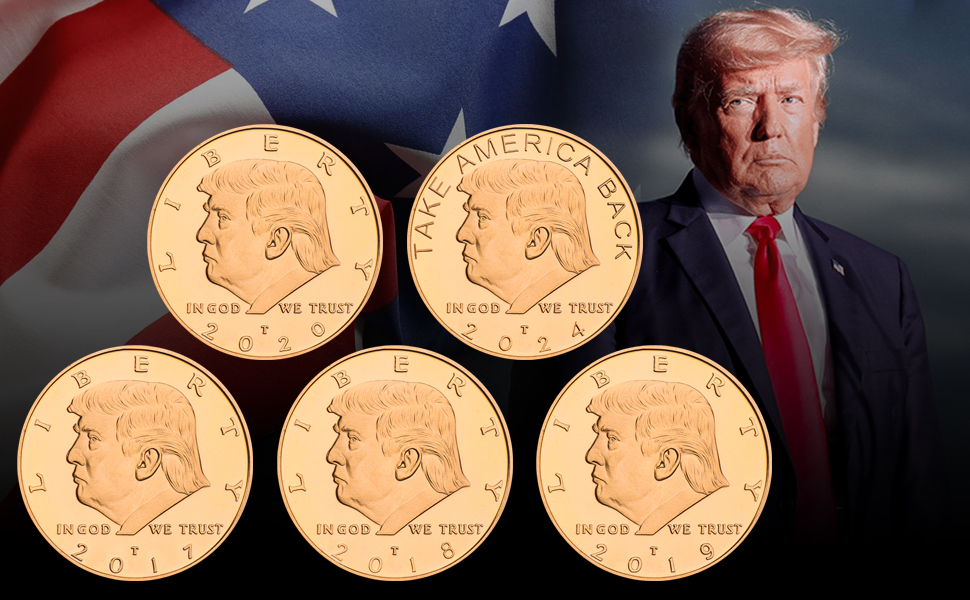
By the time the U.S. Mint strikes the first 24-karat gold Trump commemorative coin later this year, the great American tradition of keeping living politicians off the nation’s money will have been quietly, but spectacularly, circumvented.
Approved unanimously on March 19, 2026, by the Trump-appointed Commission of Fine Arts, the coin is ostensibly a celebration of the nation’s 250th anniversary. Yet, it serves a secondary, more visceral purpose for its chief architect: projecting executive dominance. The design is unapologetically aggressive. The obverse features President Donald Trump leaning intensely over the Resolute Desk, fists clenched, with the word “LIBERTY” arcing above his head and the dual dates “1776–2026” flanking him. The reverse bears a bald eagle, talons braced, ready to take flight.
Predictably, the political theater has been deafening. Critics have decried the coin as monarchic symbolism, pointing out that since the days of George Washington, the republic has fiercely guarded its currency against the vanity of living rulers. Defenders hail it as a masterstroke of patriotic fundraising and commemorative artistry.
But beneath the partisan noise lies a profound economic irony. In the grand sweep of monetary history, a leader plastering his face on ceremonial gold does not signal absolute control over a nation’s wealth. Quite the opposite. As we look back to the shifting empires of late antiquity, such numismatic pageantry usually reveals the exact opposite: a leader attempting to mask the uncomfortable reality of his limited sovereignty.
To understand the true weight of the 2026 Trump gold coin, one must look not to the halls of the Federal Reserve, but to the 6th-century courts of the Ostrogothic kings of Italy.
The Loophole of Vanity: 31 U.S.C. § 5112
To grasp the limits of the President’s monetary power, one must first look at the legal acrobatics required to mint the coin in the first place.
Federal law strictly forbids the portrait of a living person on circulating U.S. currency—a tradition born from the Founding Fathers’ revulsion for the coinage of King George III. To bypass this, the administration utilized the authorities granted under 31 U.S.C. § 5112, specifically the Treasury’s broad discretion to issue gold bullion and commemorative coins that do not enter general circulation.
While the coin bears a nominal face value of $1, it is a piece of bullion, not a medium of exchange. You cannot buy a coffee with it; it will not alter the M2 money supply; it will not shift the consumer price index.
Herein lies the central paradox of the Trump Semiquincentennial coin:
- The Facade of Power: It utilizes the highest-purity gold and the official imprimatur of the United States Mint to project executive authority.
- The Reality of Policy: The actual levers of the American economy—interest rates, quantitative easing, and the health of the fiat dollar—remain stubbornly out of the Oval Office’s direct control, residing instead with the independent Federal Reserve.
This dynamic—where a ruler uses localized, symbolic coinage to project a sovereignty he does not fully possess over the broader economic system—is not a modern invention. It is a historical hallmark of limited power.
Echoes from Ravenna: The Ostrogothic Parallel
When the Western Roman Empire collapsed in the late 5th century, Italy fell under the dominion of the Ostrogoths. The most famous of their rulers, Theodoric the Great, commanded the peninsula with formidable military might from his capital in Ravenna. He was, for all practical purposes, the king of Italy.
Yet, when you examine Ostrogothic coinage from this era, a fascinating picture of deference and limitation emerges.
Despite his military supremacy, Theodoric understood that the true center of global economic gravity lay to the east, in Constantinople. The Byzantine Emperor controlled the solidus—the gold standard of the Mediterranean world. If Theodoric wanted his kingdom to participate in international trade, he had to play by Byzantine monetary rules.
Consequently, the Ostrogoths minted gold and silver coins that were essentially counterfeits of Byzantine money. They bore the portrait of the reigning Eastern Emperor (such as Anastasius or Justinian), not the Ostrogothic king. Theodoric restricted his own branding to a modest monogram, and later kings, like Theodahad, only dared to place their full portraits on the bronze follis—the low-value base metal used for buying bread in local markets, entirely decoupled from international high finance.
The lesson from the Ostrogoths is clear, and widely recognized in peer-reviewed numismatic scholarship: controlling the territory is not the same as controlling the currency. The Ostrogoths used their local mints to project an image of continuity and authority to their immediate subjects, but they bowed to the monetary hegemony of the true empire.
The Byzantine Emperor of Modern Finance
Today, the “Constantinople” of the global economy is not a rival nation, but the institutional apparatus of the fiat dollar system—chiefly, the Federal Reserve and the global bond market.
President Trump has frequently chafed against this reality. Throughout his political career, he has sought to blur the lines of Fed independence, occasionally demanding lower interest rates or criticizing the Fed Chair with a ferocity normally reserved for political rivals. Yet, the institutional firewalls have largely held. The President cannot unilaterally dictate the cost of capital. He cannot force the world to buy U.S. Treasuries.
Thus, the 24-karat commemorative coin acts as his modern bronze follis.
It is a stunning piece of metal, but it is ultimately a domestic token. It satisfies a base of political supporters and projects an aura of monarchic permanence, just as Theodahad’s portrait did in the markets of Rome. But it does not challenge the underlying hegemony of the independent central banking system. The global markets, the sovereign wealth funds, and the algorithmic trading desks—the modern equivalents of the Byzantine merchants—will ignore the gold coin entirely. They will continue to trade in the invisible, digital fiat dollars over which the President exercises only indirect influence.
The Illusion of Monetary Sovereignty
What, then, does the “Trump coin” tell us about the current state of American executive power?
First, it highlights a growing preference for the aesthetics of power over the mechanics of governance. Minting a gold coin with one’s face on it is a frictionless exercise in executive privilege. Reining in a multi-trillion-dollar deficit, negotiating complex trade pacts, or carefully managing a soft economic landing are laborious, constrained, and often unrewarding tasks.
Second, it reveals the resilience of America’s financial architecture. That the President must resort to a commemorative loophole—utilizing a non-circulating bullion designation to bypass the strictures of circulating fiat—is a testament to the fact that the core of America’s money remains insulated from populist whim.
Consider the implications for dollar hegemony:
- Global Confidence: International investors rely on the U.S. dollar precisely because it is not subject to the immediate, emotional control of the executive branch.
- Institutional Friction: The outcry over the coin, while loud, proves that democratic norms regarding the separation of leader and state apparatus are still fiercely defended in the public square.
- The Paradox of Gold: By choosing gold—the traditional refuge of those who distrust government fiat—the administration inadvertently highlights its own lack of faith in the very paper currency it is sworn to manage.
Conclusion: The Weight of Empty Gold
The Roman historian Cassius Dio once observed that you can judge the health of a republic by the faces on its coins. When the republic falls, the faces of magistrates are replaced by the faces of autocrats.
But history is rarely that simple. The Ostrogothic kings of the 6th century put their faces on bronze because they lacked the power to control the gold. In March 2026, an American president has put his face on gold because he lacks the power to control the fiat.
The Semiquincentennial Trump coin is destined to be a remarkable collector’s item, a flashpoint in the culture wars, and a brilliant piece of political marketing. But when historians look back on the numismatics of the 2020s, they will not see a president who conquered the American monetary system. They will see a leader who, much like the kings of late antiquity, had to settle for a brilliant, golden simulacrum of power, while the true economic empire hummed along, indifferent and out of reach.
FAQ: Understanding the 2026 Commemorative Coin and U.S. Monetary Policy
Is it legal for a living U.S. President to be on a coin? Yes, but only under specific circumstances. By law (31 U.S.C. § 5112), living persons cannot be depicted on circulating currency (like standard pennies, quarters, or paper bills). However, the U.S. Mint has the authority to produce non-circulating bullion and commemorative coins. The 2026 Trump coin exploits this loophole as a non-circulating commemorative piece.
Does the U.S. President control the value of the dollar? No. While presidential policies (like tariffs, taxation, and government spending) affect the broader economy, the direct control of the U.S. money supply and interest rates rests with the Federal Reserve, an independent central bank. The President appoints the Fed Chair, but cannot legally dictate the bank’s day-to-day monetary policy.
What is the historical significance of the Ostrogothic coinage parallel? In the 6th century, Ostrogothic kings in Italy minted gold coins bearing the face of the Byzantine Emperor, while reserving their own portraits for lower-value bronze coins. This demonstrated that while they held local, symbolic power, true economic sovereignty belonged to the Byzantine Empire. The 2026 Trump coin operates similarly: it offers localized symbolic prestige, but the actual “engine” of the U.S. economy remains under the control of the independent Federal Reserve.
Can I spend the 24-karat Trump coin at a store? Technically, the coin has a legal face value of $1. However, because it is minted from 24-karat gold, its intrinsic metal value and numismatic collector value far exceed its $1 face value. It is meant to be collected and held as an asset or piece of memorabilia, not used in daily commercial transactions.

Bitcoin trades near $90,000 ahead of the Federal Reserve’s January 2026 rate decision, with a weaker dollar and Magnificent Seven earnings driving risk appetite. Explore crypto’s cautious response, Fed pause expectations, and key market catalysts in this in-depth analysis.
On January 28, 2026, Bitcoin has settled into a familiar pattern: modest gains, quiet consolidation, and a stubborn refusal to breach the $90,000 threshold that has loomed large for weeks. As of late afternoon in Karachi—mid-morning in New York—the flagship cryptocurrency traded at approximately $89,250, up fractionally on the day , extending its recent resilience. Across the broader market, major tokens posted small but positive moves, yet the enthusiasm felt restrained, almost tentative.

This muted crypto rally unfolds against a classically risk-on backdrop in traditional markets. The US dollar index (DXY) has slipped to around 95.70, its lowest in years . Yet cryptocurrency, so often the vanguard of speculative exuberance, has played second fiddle—stabilising rather than leading the charge.
The Federal Reserve’s Delicate Balancing Act
Today marks the conclusion of the Federal Open Market Committee’s first meeting of 2026 .
For risk assets, the implications are nuanced. Lower rates would typically benefit non-yielding assets like Bitcoin and gold alike. Yet the dollar’s decline so far has favoured traditional safe havens and industrial commodities over digital assets, underscoring crypto’s evolving identity: neither pure “digital gold” nor uncomplicated risk play.
The Magnificent Seven’s Make-or-Break Moment
This week also brings earnings from four of the Magnificent Seven—Meta Platforms, Microsoft, Tesla, and Apple—companies whose performance has long served as a barometer for broader risk appetite .
The stakes are high. After a stellar 2025 driven by artificial intelligence optimism, investors are looking for evidence that capital expenditures on AI infrastructure will translate into tangible revenue growth. A strong showing could propel the Nasdaq toward fresh records, dragging risk-sensitive assets—including cryptocurrencies—higher in its wake .
A Weaker Dollar, But Crypto Lags Behind
The dollar’s retreat—down more than 7 per cent from its September peak—has provided classic tailwinds for hard assets . Gold’s surge reflects its status as the traditional beneficiary of currency debasement fears. Silver, with its dual role as monetary and industrial metal, has benefited even more. Cryptocurrency, by contrast, has merely stabilised.
Several factors explain the divergence. First, leverage in crypto futures markets has declined markedly from the peaks seen in late 2025. Open interest on major exchanges is down roughly 25 per cent from November highs . Liquidation clusters remain densely packed above $90,000 and below $85,000, levels that could cap near-term momentum or accelerate a reversal.
Second, opportunity cost dynamics persist. Even with rates on hold, real yields on short-dated Treasuries remain positive, offering a low-risk alternative to holding non-yielding Bitcoin .
Why Caution Prevails Despite Tailwinds
| Asset | 24-Hour Change | Weekly Change | Key Driver |
|---|---|---|---|
| Bitcoin (BTC) | +0.8% | +3.2% | Fed pause anticipation, Nasdaq correlation |
| Ether (ETH) | +2.1% | +5.4% | Staking yield appeal, layer-2 momentum |
| Solana (SOL) | +1.9% | +7.1% | DeFi activity recovery |
| Gold | +1.4% | +4.6% | Weaker dollar, safe-haven flows |
| Silver | +2.7% | +8.3% | Industrial + monetary demand |
| Nasdaq 100 | +0.6% (futures) | +2.9% | Mag 7 earnings optimism |
(Source: CoinGecko, Bloomberg – as of January 28, 2026, 16:00 PKT)
The table above illustrates the relative underperformance clearly. While precious metals have captured the dollar’s decline most directly, cryptocurrencies have posted respectable but hardly standout gains. Market participants cite deleveraging aftermath, regulatory caution, and technical resistance near all-time highs as restraining factors .
Outlook: Balancing Catalysts and Risks
The coming days offer a rare confluence of high-impact events. A dovish Fed—signalling cuts as early as March—combined with robust Magnificent Seven earnings could propel Bitcoin convincingly above $90,000, reopening the path toward six figures that many long-term holders still anticipate. The weaker dollar would provide additional support, particularly if it breaches 95 on the DXY.
Yet risks loom symmetrically. Should Powell emphasise lingering inflation risks and push back firmly against early easing, the dollar could stabilise or rebound, pressuring risk assets broadly . Disappointing tech earnings—particularly any hint that AI monetisation is slower than expected—might trigger a risk-off move, exposing crypto’s vulnerability when traditional growth leaders falter.
In this environment, cryptocurrency’s behaviour is instructive. No longer the pure speculative rocket of earlier cycles, it increasingly trades as a macro-sensitive asset—responsive to interest rates, dollar dynamics, and equity sentiment, yet not fully decoupled from its own internal rhythms of leverage and liquidity.
For now, Bitcoin holds near $90,000 not out of indecision, but deliberation. The market awaits clarity from Washington and Silicon Valley before committing to its next decisive leg. Investors, both institutional and individual, would do well to watch not only price action in crypto, but the performance of gold, the dollar, and the tech giants that still set the tone for global risk.

Executive Summary
The cryptocurrency market has entered a transformative phase in 2026, marked by unprecedented institutional adoption, regulatory clarity, and the maturation of digital assets into mainstream financial infrastructure. This analysis examines the fundamental drivers reshaping crypto markets, provides evidence-based price projections for major assets, and identifies strategic opportunities for sophisticated investors navigating this pivotal year.
The dawn of the institutional era represents more than a cyclical upturn—it signifies crypto’s evolution from speculative frontier to regulated asset class. With over $23 billion in ETF inflows during 2025 and landmark legislation including the GENIUS Act establishing stablecoin frameworks, 2026 promises to deliver the regulatory foundation and capital infrastructure necessary for sustained market growth.
The Macro Landscape: Structural Forces Driving 2026
Regulatory Clarity as Market Catalyst
The regulatory environment has undergone a seismic shift. Grayscale’s 2026 outlook emphasizes that improved regulatory clarity is driving institutional investment into public blockchain technology. After years of legal uncertainty, the passage of the GENIUS Act in July 2025 created the first comprehensive federal framework for payment stablecoins, requiring 100% reserve backing and establishing clear oversight mechanisms.
The Digital Asset Market Clarity (CLARITY) Act, currently advancing through Congress, aims to delineate regulatory authority between the SEC and CFTC. Industry experts estimate a 50-60% probability of passage before the November 2026 midterms, according to recent legislative analysis. If enacted, Bitcoin and Ethereum would primarily fall under CFTC regulation as commodities, providing the definitional clarity that institutional participants have long demanded.
Fiat Currency Risk and Alternative Monetary Assets
Rising global debt levels and persistent inflation concerns continue driving portfolio demand for alternative stores of value. Grayscale’s analysis highlights that U.S. public debt dynamics raise legitimate questions about long-term fiat currency credibility. Bitcoin and Ethereum, as programmatically scarce digital commodities, offer portfolio diversification against fiat debasement risk—a narrative gaining traction among institutional allocators.
The 20 millionth Bitcoin will be mined in March 2026, a predetermined supply milestone that contrasts sharply with the uncertainty surrounding fiat monetary policy. This supply transparency represents a fundamental advantage for digital assets positioning themselves as monetary alternatives.
Institutional Capital Formation
Coinbase’s 2026 Market Outlook characterizes the current environment as resembling “1996” rather than “1999”—suggesting crypto’s institutional adoption is in early stages rather than approaching euphoric excess. This measured perspective reflects meaningful structural developments:
Seventy-six percent of global investors plan to expand digital asset exposure in 2026, with 60% expecting allocations exceeding 5% of assets under management. Over 172 publicly traded companies held Bitcoin as of Q3 2025, representing approximately 5% of circulating supply—a 40% quarterly increase demonstrating accelerating corporate adoption.
Bitcoin: The Anchor Asset Entering New Territory
Price Outlook and Institutional Forecasts
Bitcoin price projections for 2026 span a wide range, reflecting genuine uncertainty about the pace of institutional adoption and macroeconomic conditions. Institutional forecasts vary considerably:
- JPMorgan: $170,000 target
- Standard Chartered: $150,000 (revised from earlier $300,000 projection)
- Tom Lee (Fundstrat): $150,000-$200,000 by early 2026, potentially $250,000 by year-end
- Galaxy Digital: $250,000 by end of 2027
More conservative perspectives acknowledge downside risks. Bloomberg Intelligence’s bear case envisions $10,000 if liquidity tightens materially, while leaked internal guidance from Fundstrat warns of potential corrections to $60,000 in early 2026—demonstrating that even bullish institutions acknowledge near-term volatility risks.
Options markets currently price roughly equal odds of Bitcoin trading at $70,000 or $130,000 by mid-2026, with year-end scenarios spanning $50,000 to $250,000. This extraordinary volatility band reflects uncertainty regarding Federal Reserve policy, leverage conditions, and the sustainability of ETF demand.
The ETF Revolution and Supply Dynamics
Bitcoin ETF assets under management could reach $180-220 billion by year-end 2026, up from approximately $100-120 billion currently. Bitwise predictions suggest ETFs will purchase more than 100% of new Bitcoin supply in 2026, creating structural buying pressure independent of retail sentiment.
This represents a fundamental shift in market structure. As Galaxy Research analyst Jianing Wu projects, more than 100 crypto-linked ETFs could launch in the U.S. during 2026, with net inflows potentially exceeding $50 billion—more than double 2025 levels. Bloomberg Intelligence’s Eric Balchunas estimates conservative base-case inflows of $15 billion, with favorable conditions potentially driving $40 billion in new institutional capital.
Breaking the Four-Year Cycle
Grayscale argues that 2026 may mark the end of Bitcoin’s traditional four-year cycle. Previous bull markets saw Bitcoin prices increase by over 1,000% annually, whereas the most recent cycle peaked at approximately 240% year-over-year growth. This moderation reflects steadier institutional buying replacing retail momentum chasing—a development that paradoxically suggests more sustainable, if less explosive, appreciation potential.
Bitcoin’s diminishing volatility relative to high-growth equities represents another maturation signal. Bitwise forecasts Bitcoin will exhibit lower volatility than Nvidia stock in 2026, reflecting its transition toward established asset status.
Ethereum: The Settlement Layer for Tokenized Finance
Network Fundamentals and Price Projections
Ethereum faces a critical juncture in 2026. Institutional price targets vary significantly:
- Tom Lee (Fundstrat): $7,000-$9,000 early 2026, potentially $20,000 by year-end
- Arthur Hayes (BitMEX co-founder): $10,000 target
- Standard Chartered: $7,500 for 2026, $25,000 by 2028
- InvestingHaven: $3,125-$6,420 range based on steady network utilization
Analysis indicates more than 30% of ETH supply remains staked, reducing liquid supply and historically supporting price stability during demand expansions. However, some analysts, including Benjamin Cowen, remain bearish, suggesting Ethereum may not achieve new all-time highs given current liquidity conditions and Bitcoin market dynamics.
Layer 2 Scaling and DeFi Evolution
Ethereum’s value proposition increasingly centers on its role as the settlement layer for tokenized finance. Coinbase research highlights the Fusaka Hard Fork and ongoing Layer 2 development as critical infrastructure improvements. These scaling solutions enable faster, lower-cost transactions while maintaining Ethereum’s security guarantees—essential for institutional adoption of decentralized finance applications.
The tokenization narrative extends beyond pure speculation. Real-world asset (RWA) tokenization could represent Ethereum’s most compelling use case, with assets under management in tokenized money market funds holding U.S. Treasuries rising above $8 billion in December 2025.
Competitive Positioning
Ethereum faces intensifying competition from alternative Layer 1 blockchains, particularly Solana. However, its established network effects, developer ecosystem, and regulatory clarity advantage position it favorably. Bitwise predicts Ethereum will set new all-time highs if the CLARITY Act passes, underscoring the importance of regulatory developments to ETH’s trajectory.
Stablecoins: The Trillion-Dollar Payment Infrastructure
The GENIUS Act’s Transformative Impact
Stablecoins represent cryptocurrency’s most mature use case, and 2026 will witness their transition from crypto-native tool to regulated payment infrastructure. The GENIUS Act establishes comprehensive requirements for payment stablecoin issuers:
- One-to-one reserve backing with highly liquid assets
- Monthly public attestations and annual independent audits
- Anti-money laundering and sanctions compliance
- Federal or state regulatory oversight depending on issuance scale
Implementation deadlines loom large. Regulators must promulgate final regulations by July 2026, with full enforcement beginning in January 2027 or 18 months after enactment. The FDIC has already proposed procedures for bank subsidiaries to issue stablecoins, signaling traditional financial institutions’ preparation for entry.
Market Growth and Adoption Projections
Coinbase’s stochastic modeling forecasts total stablecoin market capitalization could reach $1.2 trillion by end of 2028, with 2026 representing a critical acceleration year. 21Shares predicts stablecoins will surpass $1 trillion in circulation by 2026—more than triple current levels.
This growth reflects expanding use cases beyond crypto trading. Cross-border settlement, remittances, and payroll platforms increasingly leverage stablecoins for instant, low-cost transactions. Major payment networks including PayPal, Visa, and Mastercard are actively integrating stablecoin capabilities, while JPMorgan and other traditional banks explore both custody and issuance opportunities.
Geopolitical Implications
BlackRock’s 2026 outlook warns that stablecoins could challenge government control over domestic currencies, particularly in emerging markets. Standard Chartered previously estimated stablecoin adoption could drain over $1 trillion from bank accounts in developing economies—a scenario that underscores stablecoins’ potential to reshape global monetary systems while creating regulatory friction.
The GENIUS Act’s restrictions on foreign-issued stablecoins operating in the U.S. market exemplify this tension. Regulators must determine equivalence standards for foreign issuers, potentially fragmenting the global stablecoin landscape along regulatory jurisdictions.
Alternative Assets: Diversification Beyond Bitcoin and Ethereum
Solana: High-Performance Computing Meets Institutional Grade
Solana’s inclusion in institutional product filings marks its transition from speculative Layer 1 alternative to credible infrastructure platform. Price projections for 2026 span considerable range:
- Bear case: $70-$120 amid risk-off environment or network stability concerns
- Base case: $150-$260 with sustained developer engagement and consumer usage
- Bull case: $280-$420 if high-throughput demand meets institutional access expansion
The upcoming Alpenglow launch represents Solana’s next major technical milestone. Success depends on maintaining network reliability—historically Solana’s Achilles’ heel—while scaling transaction capacity. Analysis suggests Solana’s valuation ultimately hinges on execution credibility rather than speculative momentum.
XRP: Regulatory Clarity Drives Institutional Access
XRP’s positioning centers on cross-border payments and liquidity provision for financial institutions. Forecasts indicate regulatory clarity will remain the primary price driver in 2026. Greater definitional certainty improves accessibility for institutional participants, particularly in payment and settlement applications.
The approval of XRP ETFs in 2025 created regulated exposure vehicles for U.S. investors, though adoption depends on continued regulatory support. XRP’s price trajectory will closely track developments in the CLARITY Act and international payment network integration.
BNB: Exchange Utility Meets Smart Contract Platform
BNB serves dual purposes as Binance exchange utility token and BNB Chain ecosystem currency. Projections suggest a 2026 target of $1,380, extending from a 2025 range of $581-$1,000. This assumes stable exchange activity and continued relevance of BNB Chain decentralized applications.
Market perception of BNB remains heavily influenced by regulatory developments affecting centralized exchanges. Compliance outcomes, licensing progress, and jurisdictional clarity will significantly impact investor confidence. Competition from alternative Layer 1 networks and declining trading volumes represent downside risks.
Investment Themes Defining 2026
Real-World Asset Tokenization
Tokenization has transitioned from theoretical possibility to operational reality. Assets under management for tokenized commodities including gold climbed above $3.5 billion by December 2025, while tokenized Treasury products approach $8 billion. These figures represent early indicators of a broader trend.
Silicon Valley Bank’s analysis identifies RWA tokenization as a primary theme for 2026. Traditional financial institutions will increasingly leverage blockchain settlement for traditional securities, real estate interests, and operating cash flows. The efficiency gains—reduced settlement times, enhanced transparency, automated compliance—justify the technological transition costs for large-scale operations.
Major banks have received conditional approval for digital asset operations. The OCC granted trust charters to BitGo, Circle, Fidelity Digital Assets, Paxos, and Ripple—signaling regulatory comfort with institutional custody infrastructure. These approvals enable banks to accept tokenized securities as collateral equivalent to traditional instruments, fundamentally expanding blockchain’s role in capital markets.
Privacy Technologies and Institutional Adoption
The confluence of institutional participation and privacy requirements creates demand for advanced cryptographic solutions. Coinbase highlights zero-knowledge proofs (ZKPs) and fully homomorphic encryption (FHE) as critical infrastructure for enterprises requiring transaction confidentiality.
Privacy-focused cryptocurrencies including Zcash and Monero experienced renewed attention in late 2025, driven by surveillance concerns and regulatory tightening. Galaxy Digital forecasts privacy-linked tokens could reach $100 billion in aggregate value by end of 2026. This growth reflects recognition that institutional capital requires confidentiality guarantees absent from transparent public blockchains.
Ethereum’s privacy initiatives and Layer 2 privacy solutions will compete with native privacy coins. The regulatory treatment of privacy features remains uncertain, creating both opportunity and compliance risk for investors.
AI and Crypto Convergence
Andreessen Horowitz identifies AI agents as revolutionary for internet payments and banking. Coinbase research frames AI-crypto convergence not as isolated trend but as fundamental technological progress.
Practical applications are emerging. AI agents require autonomous payment capabilities, identity verification, and contractual execution—functions blockchain infrastructure naturally provides. The integration enables machine-to-machine transactions, automated treasury management, and algorithmic trading strategies operating continuously across global markets.
This convergence extends beyond speculative narratives. Identity verification will become critical in AI agent ecosystems, with blockchain providing immutable credential systems. Stablecoins serve as native currency for AI-driven financial operations, avoiding the friction of traditional payment rails.
Digital Asset Treasuries (DATs) and Corporate Adoption
The Saylor/Strategy playbook of aggressive Bitcoin treasury allocation has spawned an entire category. Digital asset treasury companies treat crypto accumulation as core operating strategy rather than sidecar allocation. Analysis suggests DAT formations will consolidate in 2026 after rapid proliferation.
Coinbase anticipates a “DAT 2.0” model emerging, where companies move beyond simple accumulation to specialize in professional trading, storage, and procurement of sovereign block space. Recognizing block space as vital commodity for the digital economy represents a sophisticated evolution of corporate treasury management.
These companies amplify balance sheet risk by tying operating outcomes to price volatility—a double-edged sword that creates both opportunity and danger. Investors must distinguish between companies with sustainable treasury strategies and those pursuing unsustainable leverage.
Risk Factors and Downside Scenarios
Macroeconomic Uncertainty
Coinbase acknowledges the uncertainty band remains wide despite constructive outlook. U.S. economic resilience faces headwinds from slowing headline data, though rising labor productivity provides buffering capacity. The Federal Reserve’s policy trajectory—particularly regarding interest rates and quantitative tightening—directly impacts risk asset valuations including cryptocurrencies.
Tighter monetary conditions could trigger broader crypto contraction. Reduced liquidity, higher discount rates, and declining risk appetite would pressure valuations across the asset class. Leaked Fundstrat guidance warning of potential Bitcoin corrections to $60,000 exemplifies institutional concern about near-term downside.
Regulatory Execution Risk
While regulatory progress is undeniable, implementation challenges remain. The GENIUS Act requires complex rulemaking across multiple agencies by July 2026. Delays, inconsistencies, or unexpectedly restrictive interpretations could dampen institutional enthusiasm. International regulatory fragmentation poses additional complications, as differing standards create compliance burdens for global operations.
The CLARITY Act’s passage remains uncertain. A 50-60% probability of enactment before midterms means substantial risk of legislative failure or significant compromise. Without comprehensive market structure legislation, definitional ambiguity continues plaguing crypto businesses and institutional participants.
Technology and Security Failures
Quantum computing represents a long-term threat to cryptographic security, though Grayscale assesses this issue unlikely to affect 2026 valuations. More immediate concerns include smart contract vulnerabilities, exchange hacks, and protocol failures that could erode confidence.
Network-specific risks vary by platform. Solana’s history of outages creates reliability concerns. Ethereum’s complex Layer 2 ecosystem introduces bridge risks and composability challenges. Bitcoin’s deliberate conservatism limits innovation but enhances security—a tradeoff with varying appeal across investor profiles.
Market Structure Evolution
The transition from retail-dominated to institutional-driven markets changes volatility patterns and liquidity dynamics. CoinGecko’s institutional roundup notes 2026 likely marks the beginning of bifurcated markets, where institutional integration and speculative activity proceed along separate paths.
Investors must understand which market segment they’re participating in. Institutional-grade assets with regulatory clarity and custody infrastructure will trade differently than speculative altcoins. This bifurcation could concentrate liquidity in approved instruments while leaving non-compliant assets illiquid and volatile.
Strategic Investment Framework for 2026
Portfolio Construction Principles
Sophisticated cryptocurrency investing in 2026 requires moving beyond binary maximalism. A balanced approach acknowledges Bitcoin’s monetary premium while recognizing Ethereum’s utility value and stablecoins’ payment functionality. Survey data indicates 60% of institutional investors plan allocations exceeding 5% of AUM to crypto—suggesting digital assets warrant meaningful portfolio weight rather than token exposure.
Core holdings should emphasize assets with regulatory clarity, liquid markets, and established custody solutions. Bitcoin and Ethereum meet these criteria, with Bitcoin offering sovereign-resistant monetary properties and Ethereum providing exposure to decentralized finance and tokenization themes. Stablecoin infrastructure investments—both issuers and supporting technology—offer lower-volatility exposure to crypto adoption.
Satellite positions in high-conviction alternatives like Solana or thematic plays on privacy and AI-crypto convergence can enhance returns but require higher risk tolerance and deeper diligence. These allocations should reflect genuine conviction about specific technological advantages or market positioning rather than momentum chasing.
Risk Management and Position Sizing
The wide price projection ranges for 2026 demand disciplined risk management. Bitcoin scenarios spanning $50,000 to $250,000 by year-end create extraordinary uncertainty. Position sizing should reflect this volatility, with appropriate use of dollar-cost averaging for accumulation and profit-taking on strength to manage downside exposure.
Leverage remains dangerous despite improved market structure. The crypto lending market experienced severe stress during previous downturns, with cascading liquidations amplifying volatility. Conservative leverage ratios—if used at all—and clear liquidation plans are essential for protecting capital during inevitable drawdowns.
Diversification across crypto assets provides limited protection given high correlations during market stress. True diversification requires balanced exposure across asset classes, with crypto as satellite allocation rather than core holding for most investors. The exception includes investors with specific expertise, long time horizons, and high risk tolerance justified by return potential.
Identifying Quality Projects
The maturing crypto market demands more rigorous fundamental analysis. Evaluation criteria should include:
Regulatory Positioning: Does the project have clarity regarding its regulatory status? Are compliance frameworks established? What jurisdictions does it operate in?
Economic Sustainability: Beyond token price appreciation, does the protocol generate actual revenue? Are tokenomics designed for long-term viability or short-term extraction? CoinGecko notes that utility-driven token models have largely failed, with buybacks dominating capital return strategies.
Technical Differentiation: What specific problems does the technology solve? Is the solution genuinely superior to alternatives, or merely incremental? Does the architecture scale appropriately for intended use cases?
Adoption Metrics: Are real users and capital flowing to the platform? Network effects and organic growth indicate sustainable value, whereas incentivized activity often proves ephemeral.
Team and Governance: Track records, technical competence, and governance structures matter enormously. Established teams with successful prior projects warrant higher confidence than anonymous developers or serial entrepreneurs with multiple failures.
Conclusion: Navigating the Institutional Transition
The cryptocurrency market in 2026 represents an inflection point—the transition from speculative frontier to regulated asset class. This transformation creates both opportunity and complexity for investors. The days of uniform beta across all crypto assets are ending, replaced by differentiated outcomes based on regulatory status, technological merit, and real-world utility.
Grayscale’s characterization of 2026 as the “dawn of the institutional era” captures this moment accurately. Steadier capital inflows from pension funds, endowments, and corporate treasuries will likely produce more stable—if less explosive—returns than retail-driven bull markets of the past. The probability of deep, prolonged drawdowns decreases as institutional participation broadens, though short-term volatility remains inevitable.
Success in this environment requires abandoning outdated mental models. The four-year cycle framework, while historically useful, may no longer describe market dynamics as institutional capital flows and regulatory developments replace halving-driven narratives. Coinbase’s “1996 not 1999” framing suggests significant upside potential remains, but delivered through sustained adoption rather than speculative euphoria.
Investors must develop sophisticated frameworks for evaluating crypto assets—distinguishing between genuine innovation and marketing hype, between sustainable business models and extraction schemes, between regulatory clarity and compliance theater. The bifurcated market emerging in 2026 will reward diligence and punish complacency.
The strategic opportunity centers on assets positioned at the intersection of regulatory clarity, technological utility, and institutional infrastructure. Bitcoin’s monetary premium appears increasingly validated by macro uncertainty and institutional adoption. Ethereum’s role as settlement layer for tokenized finance creates genuine utility value beyond speculation. Stablecoins represent the most immediate bridge between traditional finance and blockchain rails.
For sophisticated investors willing to navigate complexity, 2026 offers compelling risk-adjusted return potential. The convergence of regulatory frameworks, institutional capital formation, and maturing technology creates conditions for sustained value creation. However, this opportunity demands active management, continuous monitoring of regulatory developments, and discipline to distinguish signal from noise in an ecosystem still prone to hype cycles.
The institutional era has arrived. How investors adapt to this new reality will determine their success in cryptocurrency markets for years to come.
This analysis is provided for informational purposes only and does not constitute investment advice. Cryptocurrency investments involve substantial risk including potential loss of principal. Past performance does not guarantee future results. Investors should conduct thorough due diligence and consult qualified financial advisors before making investment decisions.

Trump Administration’s Crypto Policy: Deregulation and the Future of Digital Assets

Monetary Policy and the Policy Rate

Gold, Silver & Bitcoin Prices Q4 2026: Wealth Management Strategies

Business Insurance for Digital Exports: Protecting Your Company in the AI Era

Real Estate Crash Predictions 2026: Data-Backed Regional Guide

What is a “Lead-Left” Bank? Unpacking Morgan Stanley’s Role in Anthropic’s Mega-IPO

Is SPY Overvalued in September 2026? Fed Rate Hike Odds & Intrinsic Value

Pakistan’s KSE-100 Nears Record Territory Even as the Trade Gap Persists

US Consumer Sentiment Sinks as Retail Sales Drop

Barclays Q2 2026 Results: Income Beats, Costs Rise 7%

Pakistan’s Remittance Lifeline: Why Gulf Exposure Is a Hidden Risk

Dubai’s Rise to the World’s 7th Financial Hub: Inside the D33 Push

China EV Exports Hit Record High in 2026

UK’s “National Contributions Tax” Explained: Burnham-Era Reform 2026

Top 15 Stocks for Investment in 2026 in PSX: Your Complete Guide to Pakistan’s Best Investment Opportunities
Top 15 Stocks for Investment in 2026 in PSX: Your Complete Guide to Pakistan’s Best Investment Opportunities

Debunking IMF Program Myths: Reconfiguring Engagement for True National Ownership in a Volatile World

Top 10 Mutual Fund Managers in Pakistan for Investment in 2026: A Comprehensive Guide for Optimal Returns

What the U.S. Attack on Venezuela Could Mean for Oil and Canadian Crude Exports: The Economic Impact

China’s 50% Domestic Equipment Rule: The Semiconductor Mandate Reshaping Global Tech

15 Most Lucrative Sectors for Investment in Pakistan: A 2025 Data-Driven Analysis

Pakistan’s Export Goldmine: 10 Game-Changing Markets Where Pakistani Businesses Are Winning Big in 2025
15 Most Lucrative Sectors for Investment in Pakistan: A 2025 Data-Driven Analysis
15 Most Lucrative Sectors for Investment in Pakistan: A 2025 Data-Driven Analysis

Pakistan’s Stock Market Renaissance: How 2025’s Hottest Investment Opportunity Is Democratizing Wealth—A Complete Beginner’s Guide

Pakistan’s Economic Outlook 2025: Between Stabilization and the Shadow of Stagnation
Pakistan’s Economic Outlook 2025: Between Stabilization and the Shadow of Stagnation

China’s Property Woes Could Last Until 2030—Despite Beijing’s Best Censorship Efforts
-
 Markets & Finance8 months ago
Top 15 Stocks for Investment in 2026 in PSX: Your Complete Guide to Pakistan’s Best Investment Opportunities
-
Markets & Finance8 months ago
Top 15 Stocks for Investment in 2026 in PSX: Your Complete Guide to Pakistan’s Best Investment Opportunities
-
 Analysis7 months ago
Debunking IMF Program Myths: Reconfiguring Engagement for True National Ownership in a Volatile World
-
 Investment8 months ago
Top 10 Mutual Fund Managers in Pakistan for Investment in 2026: A Comprehensive Guide for Optimal Returns
-
 Global Economy8 months ago
What the U.S. Attack on Venezuela Could Mean for Oil and Canadian Crude Exports: The Economic Impact
-
 Asia9 months ago
China’s 50% Domestic Equipment Rule: The Semiconductor Mandate Reshaping Global Tech
-
 AI9 months ago
15 Most Lucrative Sectors for Investment in Pakistan: A 2025 Data-Driven Analysis
-
 Exports9 months ago
Pakistan’s Export Goldmine: 10 Game-Changing Markets Where Pakistani Businesses Are Winning Big in 2025