
Analysis
Debunking IMF Program Myths: Reconfiguring Engagement for True National Ownership in a Volatile World

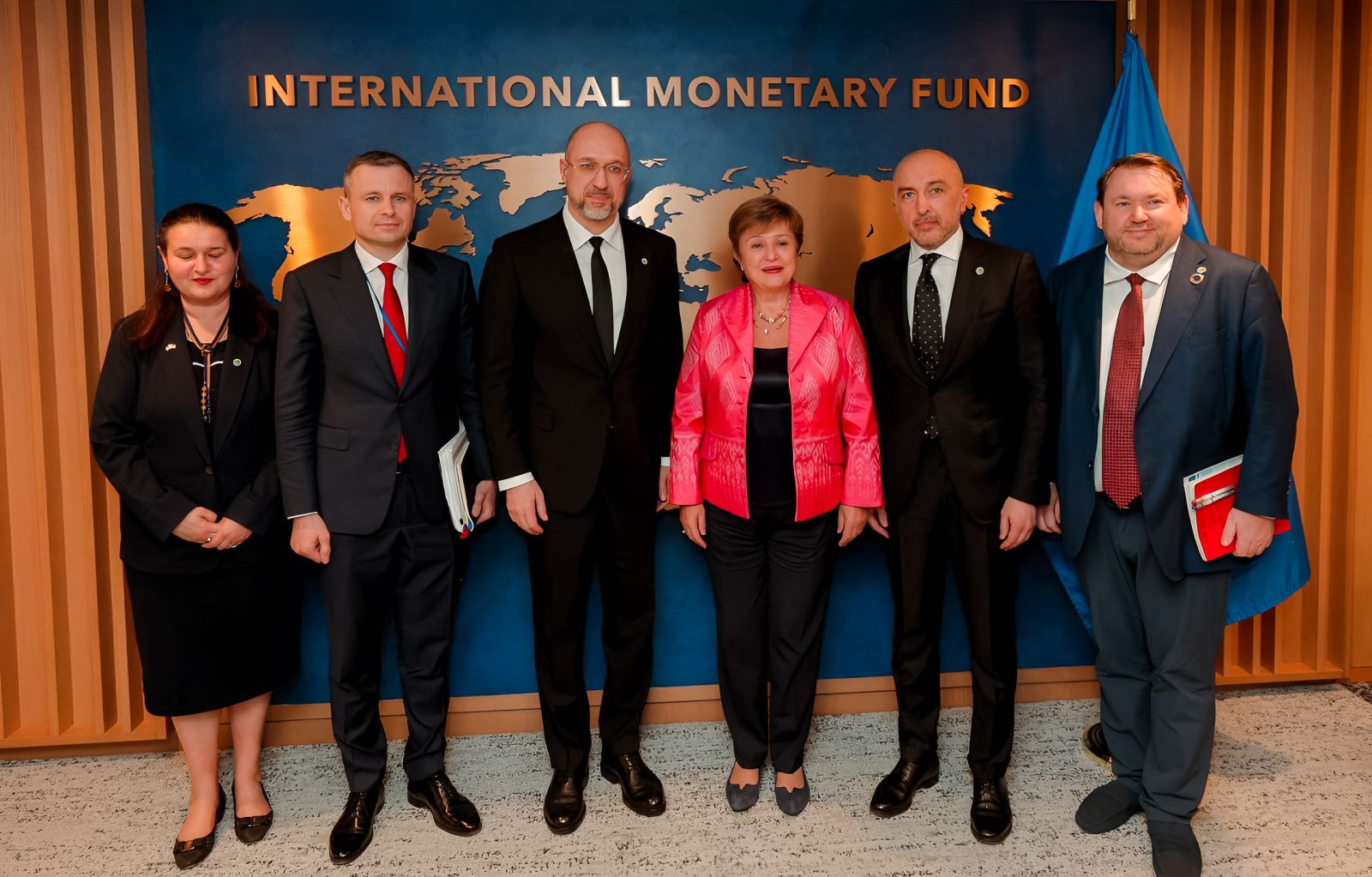
The International Monetary Fund doesn’t swoop into countries and dictate policy from marble-clad offices in Washington. Yet this myth persists, fueling resistance to economic reforms and obscuring a more complex—and ultimately more empowering—reality. As the IMF’s January 2026 World Economic Outlook projects 3.3% global growth amid an AI investment boom that’s offsetting trade headwinds, understanding how IMF engagement actually works has never been more crucial for nations navigating economic turbulence.
The truth? What we call “IMF programs” are fundamentally collaborative frameworks, not externally imposed mandates. They’re nationally driven strategies formalized through documents like the Memorandum of Economic and Financial Policies (MEFP)—blueprints that governments themselves draft, negotiate, and ultimately consent to. This article dismantles the most persistent misconceptions about IMF engagement, explains how these partnerships genuinely operate, and explores how reconfiguring these relationships can strengthen national ownership in our multipolar, technology-driven era.
What Really Happens in an IMF Program?
Picture this: A finance minister in Lusaka, Islamabad, or Palikir isn’t waiting for marching orders from abroad. Instead, they’re convening domestic experts, assessing fiscal realities, and crafting economic strategies that reflect their nation’s priorities. The IMF engagement explained simply becomes a support mechanism—providing financial backing, technical expertise, and international credibility—for reforms that countries have determined they need.
Consider Zambia’s remarkable trajectory. The southern African nation recently completed its sixth review under the Extended Credit Facility, with the IMF projecting 5.8% growth for 2026. This wasn’t achieved by blindly following a Washington playbook. Zambian authorities designed policies addressing their specific challenges: revitalizing copper mining operations, restructuring unsustainable debt, and rebuilding fiscal buffers depleted by pandemic spending. The IMF provided $1.3 billion in financing and policy advice, but Lusaka retained the steering wheel.
Pakistan offers another instructive case. After years of boom-bust cycles, the country’s IMF-backed stabilization has seen foreign exchange reserves climb to $8.2 billion while inflation dropped from a crushing 36% peak to 26.8% by late 2025. The reforms—curtailing smuggling networks that drained $23 billion annually, broadening the tax base, and eliminating distortive energy subsidies—originated from Pakistani policymakers who recognized these structural weaknesses were undermining prosperity. The IMF national ownership principle meant Pakistan shaped the agenda, even when politically difficult.
Core Principles vs. National Adaptations: How IMF Engagement Actually Works
The confusion around debunking IMF program myths often stems from conflating principles with prescriptions. The IMF operates on foundational economic concepts—fiscal sustainability, market-determined exchange rates, competitive markets, trade openness, and prudent capital account management. But these aren’t rigid formulas; they’re frameworks that countries adapt to local contexts.
The Real Framework: Comparing IMF Principles with National Implementation
| IMF Core Principle | Underlying Rationale | National Adaptation Example |
|---|---|---|
| Fiscal Balance | Prevent unsustainable debt accumulation | Pakistan: Phased subsidy removal protecting vulnerable groups while closing 8% fiscal deficit |
| Market-Based Exchange Rates | Eliminate currency misalignment, reserve drains | Egypt: Managed float preserving competitiveness while building $40B+ reserves |
| Privatization/Market Competition | Improve efficiency of state enterprises | Zambia: Mining sector restructuring with community benefit requirements |
| Trade Liberalization | Enhance productivity through competition | Kenya: Regional EAC integration alongside targeted infant industry support |
| Capital Flow Management | Balance investment access with stability | Indonesia: Macroprudential tools managing portfolio flows while welcoming FDI |
This table illustrates a crucial point: the IMF MEFP guide that countries develop isn’t a photocopy of a template. When the Federated States of Micronesia recently concluded Article IV consultations emphasizing fiscal discipline, the specific policies reflected the Pacific nation’s unique challenges—climate vulnerability, limited revenue base, dependence on fishing rights. The fiscal consolidation path looked nothing like Zambia’s or Pakistan’s, yet all three embodied the same core principle: living within your means while investing in future prosperity.
Myth vs. Reality: Separating Fiction from Economic Truth
Myth #1: The IMF Imposes Austerity That Crushes Social Spending
Reality: Recent research from the IMF itself analyzing 115 countries over three decades shows social spending actually increased during IMF-supported programs. The misconception arises from conflating spending composition changes with absolute cuts. Programs typically redirect expenditure from inefficient subsidies benefiting wealthier citizens (like fuel subsidies predominantly used by car owners) toward targeted safety nets for vulnerable populations.
Pakistan’s experience illustrates this. Energy subsidy reform freed fiscal space for the Benazir Income Support Programme, expanding cash transfers to 9 million households—the truly poor households who couldn’t afford electricity anyway. Total social sector spending rose as wasteful universal subsidies fell.
Myth #2: Structural Benchmarks Represent Foreign Control
Reality: Structural benchmarks are milestones that countries themselves propose to track reform implementation. They’re accountability mechanisms—ways for governments to credibly commit to constituents and investors that reforms will proceed despite political resistance. When Zambia committed to benchmarks around debt transparency and mining revenue management, these weren’t external impositions; they were commitments Zambian reformers wanted locked in to prevent backsliding by future administrations.
Think of quantitative performance criteria (quarterly targets for fiscal deficits, inflation, or reserves) as GPS coordinates on a journey the country chose. They help monitor progress and signal when course corrections are needed, but the destination was nationally determined.
Myth #3: IMF Programs Prioritize Foreign Creditors Over Citizens
Reality: The economic sovereignty debate often frames debt restructuring as favoring external bondholders. Yet recent programs demonstrate the opposite. Zambia’s 2024-2025 debt restructuring—supported by IMF financing—achieved $6.3 billion in relief from private creditors and bilateral lenders, freeing resources for health and education while making debt sustainable. The IMF provided leverage for Lusaka to negotiate better terms, not tools for creditors to extract more.
Myth #4: One-Size-Fits-All Policies Ignore Local Contexts
Reality: The IMF’s toolkit includes 14 different lending instruments tailored to varying needs—from the Rapid Financing Instrument for emergency relief to the Extended Fund Facility for deep structural reforms. Recent reforms for a 21st-century global financial architecture have introduced even more flexibility, including pandemic-specific lending windows and climate resilience facilities.
Article IV consultations—annual economic health checks for all 190 member countries—vary dramatically in focus. The January 2026 mission to Micronesia emphasized climate adaptation financing and fisheries revenue management. Concurrent consultations with Germany focused on labor market rigidities and pension sustainability. Pretending these reflect cookie-cutter approaches ignores observable reality.
Reconfiguring IMF Policies for a Multipolar, AI-Driven Economy
As we navigate 2026, the case for reconfiguring IMF engagement has never been stronger. The institution faces legitimate critiques—particularly around its surcharge system, which paradoxically charges higher interest rates to countries in deepest distress. Analysis from the Atlantic Council demonstrates these surcharges can add hundreds of millions in costs, undermining program effectiveness. Reform proposals to eliminate or restructure surcharges gained momentum in 2025, with congressional pressure and civil society advocacy pushing the IMF toward policy changes.
The rise of artificial intelligence presents both opportunities and challenges. The IMF’s 2026 growth projections cite AI-driven productivity gains adding 0.3-0.5 percentage points to global GDP, yet these benefits concentrate in advanced economies and emerging markets with digital infrastructure. For low-income countries, the AI revolution risks widening gaps unless IMF programs explicitly incorporate technology capacity building.
What would genuinely reconfigured IMF engagement look like?
Enhanced National Ownership Through Inclusive Policymaking: Rather than negotiations confined to finance ministries and central banks, broader stakeholder engagement—including parliamentary committees, civil society, and private sector representatives—in MEFP development. Rwanda’s 2024-2025 program pioneered consultative forums bringing diaspora entrepreneurs and women’s business associations into policy dialogue, strengthening buy-in.
Climate and Technology Integration: Every program should assess climate vulnerabilities and digital readiness, with specific financing for resilience investments and skills development. Bangladesh’s 2025 ECF included $400 million earmarked for climate adaptation and tech infrastructure—recognizing these aren’t separate from macroeconomic stability but foundational to it.
Transparent Metrics for Success: Moving beyond GDP growth and inflation to track inclusive development indicators—median income changes, poverty rates, employment quality. Zambia’s program now monitors mine worker retraining and small business formalization, not just copper export volumes.
Faster Debt Relief Mechanisms: The current debt restructuring process averages 2-3 years, during which countries remain in limbo. Accelerated frameworks—perhaps building on the G20’s Common Framework—would reduce uncertainty and expedite recovery. Chad, Ethiopia, and Ghana remain mid-process, delaying essential investments.
Reimagined Surcharge System: Progressive reform replacing current surcharges with modest fees on very large borrowings while eliminating penalties for vulnerable economies. This preserves the IMF’s financial sustainability without extracting resources from those least able to pay.
The Path Forward: From Myth to Meaningful Partnership
The most damaging myth about IMF engagement isn’t about specific policies—it’s the fundamental misconception that countries lack agency in these relationships. This narrative disempowers reformers, fuels populist resistance, and ultimately hinders the home-grown solutions that drive lasting prosperity.
As Reuters reports, the IMF sees steady growth through 2026 as the AI boom offsets trade headwinds, but this aggregate picture masks diverging national trajectories. Countries that harness IMF support for nationally-owned reforms—like Zambia’s mining revitalization or Pakistan’s anti-smuggling campaigns—are positioning themselves to capture technology-driven growth. Those trapped by misconceptions that paralyze engagement risk falling further behind.
The reconfiguration imperative isn’t about defending the IMF’s every action or ignoring legitimate critiques. It’s about understanding how these partnerships actually function so countries can negotiate more effectively, civil society can advocate more precisely, and citizens can hold both their governments and international institutions genuinely accountable.
In a world of mounting climate shocks, rapid technological transformation, and shifting geopolitical alignments, effective economic crisis response demands collaboration. The question isn’t whether countries should engage with the IMF—it’s how to reshape that engagement to maximize national ownership, embed climate and technology priorities, and ensure the benefits of stabilization reach ordinary citizens, not just financial elites.
The myths persist because they’re simpler than reality. But in 2026, simplicity is a luxury the global economy can’t afford. Understanding IMF engagement as the collaborative, nationally-driven process it can be—while pushing for reforms that make it more equitable and effective—offers the only viable path forward. Countries that grasp this reality, debunk the myths holding them back, and reconfigure partnerships on their own terms will be the ones writing the economic success stories of the next decade.


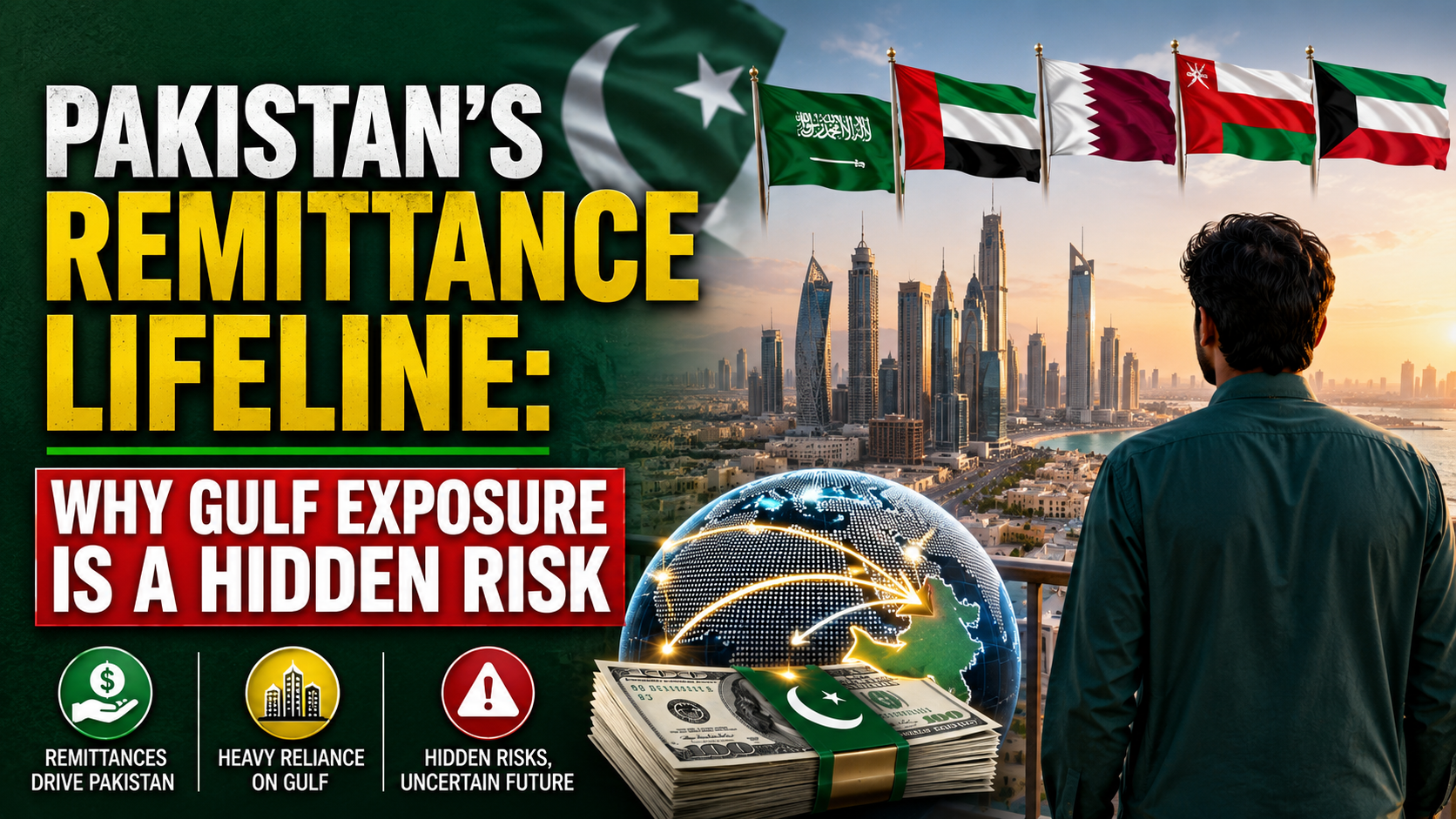
Buried inside the IMF’s latest Pakistan country report is a dependency that receives far less attention than headline GDP or inflation numbers, but arguably carries more immediate risk for millions of households: Pakistan’s economy is structurally exposed to whatever happens next in the Gulf.
The Numbers That Matter
Pakistan receives annual remittances amounting to roughly 9 percent of GDP, of which 55 percent originate from Gulf Cooperation Council countries, according to the IMF’s May 2026 country report. That single funding channel is one of the largest and most stable sources of foreign exchange available to the country — larger, in most years, than export revenue growth or foreign direct investment inflows combined.
The IMF’s own language is unambiguous about the risk this concentration creates: a significant disruption to GCC economies, or a forced return of migrant workers, could weigh heavily on these flows — a major source of financing for both household consumption and Pakistan’s broader balance of payments.
Why This Risk Is Live, Not Theoretical
This is not an abstract stress-test scenario. The Strait of Hormuz disruption, detailed extensively elsewhere in this series, has placed the entire Gulf region’s economic stability under genuine pressure for the first time in years. Should the conflict escalate further or trigger a broader regional economic slowdown, the transmission channel to Pakistan is direct and fast: fewer construction projects and reduced hiring across the GCC translates almost immediately into lower remittance flows from the millions of Pakistani workers employed there.
Capital Flows Are Already Reacting
The IMF has flagged early evidence that this dynamic is not purely hypothetical. Deteriorating global financial conditions have already resulted in capital outflows from Pakistan, which are likely to intensify further if the regional crisis extends, with the Fund specifically noting that access to short-term commercial financing — largely sourced from GCC banks — could also be affected if risk sentiment deteriorates further across the region.
This creates a double exposure that is easy to overlook in headline coverage: Pakistan depends on the Gulf both for the remittance income that supports household consumption, and for the short-term commercial bank financing that helps bridge its external funding gaps between IMF disbursements.
The State Bank’s Reserve Buffer
Pakistan’s own policy response has been to build reserves as a shock absorber. The State Bank of Pakistan has been projecting reserves to continue rising to roughly $18 billion by June 2026 on the back of planned inflows, a level implying that expected capital inflows currently exceed any current account shortfall — but only as long as Pakistan remains within an active IMF programme and maintains access to external funding on favourable terms.
The risk scenario flagged by policy researchers is specific: if monetary easing is mismanaged and confidence in Pakistan’s reform path falters, capital inflows could slow or reverse at the same time imports surge, opening an external funding gap that would draw down reserves and pressure the rupee — a scenario made materially more likely by any Gulf-region shock large enough to simultaneously dent remittances and tighten GCC bank lending.
How much of Pakistan’s remittances come from the Gulf?
Roughly 55% of Pakistan’s remittances — which fund about 9% of GDP — originate from Gulf Cooperation Council countries, making Pakistan’s balance of payments directly exposed to any economic disruption or capital-flow tightening in the Gulf region.
The Agricultural Wildcard
A related, more immediate risk sits in the agricultural supply chain. The IMF notes that disrupted DAP fertiliser supply chains linked to regional tensions could affect the Kharif planting season in June-July, with knock-on effects for food import prices — a second, more direct channel through which Gulf and broader Middle East instability could hit Pakistani households, independent of the remittance and capital-flow risks.
The Policy Takeaway
Pakistan’s economic stabilisation narrative in 2026 — a rebuilding KSE-100, falling inflation, a completed EFF review, covered in depth in our companion article — is real, but it rests on a foundation more exposed to Gulf regional stability than most headline coverage acknowledges. For policymakers in Islamabad, and for the Pakistani diaspora sending capital home each month, the Strait of Hormuz situation is not a distant geopolitical story. It is, in a very direct sense, a domestic economic risk factor.
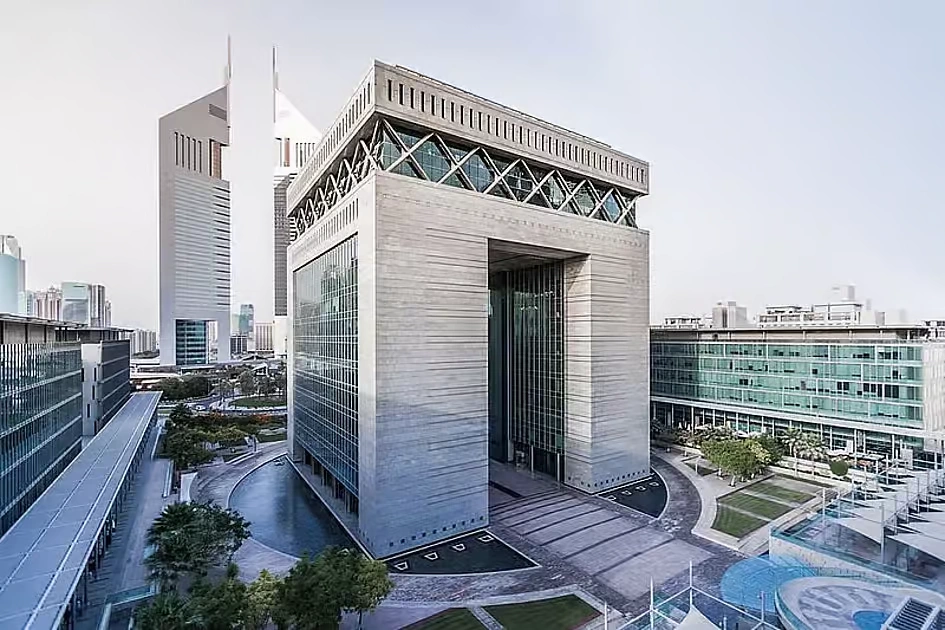
Dubai has climbed to its highest position ever on one of finance’s most closely watched rankings, and the achievement is no accident — it is the direct output of a decade-long, numerically explicit government strategy that few other financial centres have attempted to execute with this level of precision.
The Ranking Itself
The Dubai International Financial Centre has recorded its highest-ever position on the Global Financial Centres Index at seventh place worldwide, the highest ranking ever achieved by any financial centre across the Middle East, Africa and South Asia region, and the only MEASA-region centre to feature in the global top 20 — underscoring both its regional dominance and genuine global competitiveness.
The D33 Strategy Behind the Number
The ranking is explicitly tied to Dubai’s own stated ambitions. The GFCI result is described as pivotal to Dubai’s goal of becoming one of the world’s top four financial centres by 2033, in line with the Dubai Economic Agenda, or D33, which targets a doubling of the emirate’s economy over the decade. Separately, Dubai Chambers has confirmed the plan targets cumulative economic output of AED 32 trillion, or roughly $8.7 trillion, over the decade, supported by 100 transformative projects centred on trade expansion, digital innovation and sustainable growth.
The Underlying Economic Engine
The financial-centre ambitions are backed by genuine current-quarter growth. Dubai’s economy reached AED 232 billion in first-quarter 2026 GDP, a 2.4 percent year-on-year increase, with the finance, construction, healthcare, wholesale and retail trade, and real estate sectors all contributing to the broad-based expansion. Middle East Briefing separately projects the wider UAE economy will expand around 5 percent in 2026, with local banks positioned to increase lending both domestically — supporting SMEs, consumers and project finance — and across borders into markets like Saudi Arabia, where UAE banks’ comparatively lower interbank rates create an arbitrage opportunity.
Real Money Behind the Ranking
The GFCI climb is being validated by tangible transaction volume rather than sentiment alone. Weekly UAE business tracking shows a steady drumbeat of institutional activity: Sharjah Islamic Bank reported AED 803.9 million in net profit, up 15.3 percent, ADI Chain secured a $50 million investment to build sovereign digital infrastructure, and Capital.com reported $1.1 trillion in second-quarter trading volume routed through the jurisdiction. Separately, UAE and Saudi banks are projected to lead GCC credit growth in 2026, reinforcing Dubai and Abu Dhabi’s combined position as the region’s default financial gateway.
Why This Matters for Pakistan and South Asia
Dubai’s ascent as a financial hub carries direct relevance for Pakistan, where — as detailed in our companion coverage of Pakistan’s remittance exposure — roughly 55 percent of the country’s substantial remittance inflows originate from the Gulf Cooperation Council. A deepening, increasingly sophisticated DIFC-anchored financial ecosystem in Dubai means more efficient, lower-cost channels for that capital, alongside growing opportunities for Pakistani and South Asian firms to access GCC-sourced project finance and cross-border credit as UAE banks expand lending beyond their domestic market.
What is Dubai’s global financial centre ranking in 2026?
Dubai’s DIFC recorded its highest-ever ranking on the Global Financial Centres Index at 7th place worldwide in 2026 — the highest ever achieved by any Middle East, Africa or South Asia financial centre — as part of its stated goal to become a top-four global financial hub by 2033.
The Risk Beneath the Growth Story
Not every signal points to unambiguous strength. AGBI’s own reporting notes that UAE banks’ second-quarter results are likely to show weaker profits, slower lending and narrower margins, even as analysts characterise the underlying sector as fundamentally resilient — a reminder that Dubai’s financial-hub ambitions are being pursued against a genuinely more difficult regional operating environment shaped by the Strait of Hormuz disruption and broader Gulf security concerns, not in isolation from them.
The Bottom Line
Dubai’s climb to seventh in the GFCI rankings is less a one-off achievement than a measurable checkpoint on an explicitly numbered, decade-long strategic roadmap — one increasingly backed by real GDP growth, credit expansion, and institutional trading volume rather than ambition alone.
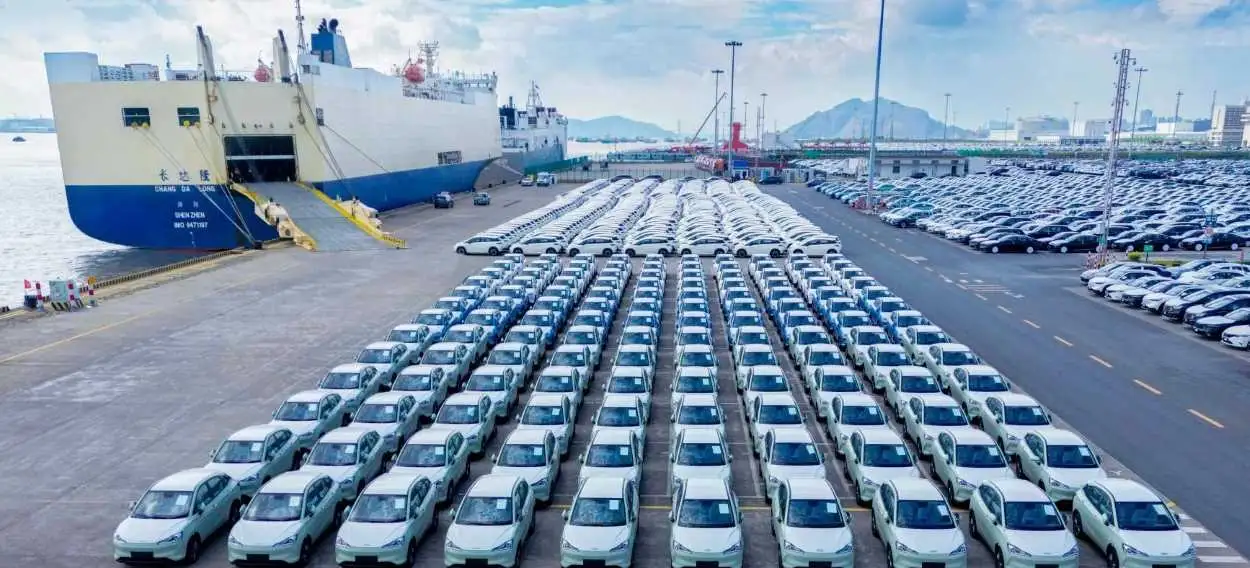
China’s monthly car exports surpassed one million units for the first time in June 2026, according to trade data released alongside the country’s second-quarter GDP figures, while overall imports rose 36% year-over-year to a five-year high even as Beijing cut monthly crude imports to near decade lows, down 41.3% from a year earlier (CNN). The result: China’s trade surplus widened to $125.62 billion in June alone.
The Uncovered Mechanism: Oil Shock as Green-Tech Accelerant
Most coverage has treated China’s electric vehicle and battery export surge as a story purely about domestic manufacturing subsidy and industrial policy. What has received far less attention is the direct causal link to the Iran war: the oil crisis has itself boosted global demand for Chinese clean-energy technology, as energy importers around the world accelerate efforts to reduce fossil-fuel reliance precisely when oil prices are most volatile (CNN). In other words, the same Strait of Hormuz disruption that is damaging Pakistan’s current account and pushing UK inflation higher is simultaneously functioning as a demand accelerant for Chinese EV exports — a direct transmission mechanism linking two of this year’s biggest global stories that is rarely discussed together.
The EU Is Already Losing Patience
China’s widening trade surplus is compounding tensions with the European Union, which has repeatedly criticised Beijing for flooding its market with subsidised industrial exports, a dynamic that predates this year’s conflict but has intensified as Chinese manufacturers redirect capacity toward markets less willing or able to erect the tariff barriers the United States has deployed (CNN; IndexBox).
Why This Is Also a Southeast Asia and Pakistan Story
Malaysia’s own export strength this year has been built substantially on its role in the semiconductor and electronics supply chain feeding the broader AI and green-tech manufacturing boom, meaning Kuala Lumpur benefits indirectly from the same dynamics driving China’s export surge, rather than competing head-on in finished vehicles (The Rakyat Post). Pakistan’s position is more exposed: as a market with its own nascent auto and manufacturing base and limited tariff leverage against Chinese imports, a sustained surge in low-cost Chinese EV and battery exports risks crowding out domestic industrial development at precisely the moment Islamabad is trying to broaden its export base beyond textiles under IMF-monitored reform targets.
The Domestic Trade-Off Beijing Is Managing
China’s export strength is masking, not solving, its domestic consumption weakness. Retail sales rose just 1% year-over-year in June, and analysts including Natixis’s Alicia Garcia-Herrero describe an economy where growth “all about exports” is “really quite unsustainable, to be frank” (CNN). Beijing’s newly released five-year plan to lift annual retail sales toward $9 trillion by 2030 is a direct policy response to this imbalance, but the export engine currently doing the heavy lifting for headline GDP is the same one generating friction with trading partners.
What to Watch
The July Politburo meeting is expected to signal the composition of any new stimulus. A consumption-focused package would ease, over time, the export dependence generating trade friction; an infrastructure-heavy package would likely deepen it, with direct consequences for how aggressively Chinese EV and battery exports continue to expand into markets across Southeast Asia, South Asia and Europe over the second half of 2026.

Pakistan’s Remittance Lifeline: Why Gulf Exposure Is a Hidden Risk

Dubai’s Rise to the World’s 7th Financial Hub: Inside the D33 Push

China EV Exports Hit Record High in 2026

UK’s “National Contributions Tax” Explained: Burnham-Era Reform 2026

Russia’s Strange Problem in 2026: Its Currency Is Too Strong

Section 301 Forced Labor Tariffs 2026: 60 Countries Affected

UK National Contributions Tax: Burnham’s Radical Tax Plan

Global Central Bank Divergence 2026: Why the Fed, BoE, BoJ, and PBoC Are All Moving Differently

Japan’s Bond Market Just Cracked. It Could Take the Rest of the World’s Debt With It

Malaysia’s Ringgit Is Holding Up. Economists Say the Real Test Is Still Coming

Climate Finance Delivery 2026: Trillion‑Dollar Promise Still Unmet

AI Impact on Wages 2026: Productivity Soars, Paychecks Stagnate

SpaceX IPO 2026: $2 Trillion AI Bubble, OpenAI & Anthropic — What Investors Must Know

China Economy 2026: Property Crisis, AI Investment & Export Surplus Explained

Top 15 Stocks for Investment in 2026 in PSX: Your Complete Guide to Pakistan’s Best Investment Opportunities
Top 15 Stocks for Investment in 2026 in PSX: Your Complete Guide to Pakistan’s Best Investment Opportunities

Debunking IMF Program Myths: Reconfiguring Engagement for True National Ownership in a Volatile World

Top 10 Mutual Fund Managers in Pakistan for Investment in 2026: A Comprehensive Guide for Optimal Returns

What the U.S. Attack on Venezuela Could Mean for Oil and Canadian Crude Exports: The Economic Impact

China’s 50% Domestic Equipment Rule: The Semiconductor Mandate Reshaping Global Tech

15 Most Lucrative Sectors for Investment in Pakistan: A 2025 Data-Driven Analysis

Pakistan’s Export Goldmine: 10 Game-Changing Markets Where Pakistani Businesses Are Winning Big in 2025
15 Most Lucrative Sectors for Investment in Pakistan: A 2025 Data-Driven Analysis
15 Most Lucrative Sectors for Investment in Pakistan: A 2025 Data-Driven Analysis

Pakistan’s Economic Outlook 2025: Between Stabilization and the Shadow of Stagnation
Pakistan’s Economic Outlook 2025: Between Stabilization and the Shadow of Stagnation

China’s Property Woes Could Last Until 2030—Despite Beijing’s Best Censorship Efforts
China’s Property Woes Could Last Until 2030—Despite Beijing’s Best Censorship Efforts
-
 Markets & Finance7 months ago
Top 15 Stocks for Investment in 2026 in PSX: Your Complete Guide to Pakistan’s Best Investment Opportunities
-
Markets & Finance7 months ago
Top 15 Stocks for Investment in 2026 in PSX: Your Complete Guide to Pakistan’s Best Investment Opportunities
-
 Investment6 months ago
Top 10 Mutual Fund Managers in Pakistan for Investment in 2026: A Comprehensive Guide for Optimal Returns
-
 Global Economy7 months ago
What the U.S. Attack on Venezuela Could Mean for Oil and Canadian Crude Exports: The Economic Impact
-
 Asia7 months ago
China’s 50% Domestic Equipment Rule: The Semiconductor Mandate Reshaping Global Tech
-
 AI7 months ago
15 Most Lucrative Sectors for Investment in Pakistan: A 2025 Data-Driven Analysis
-
 Exports7 months ago
Pakistan’s Export Goldmine: 10 Game-Changing Markets Where Pakistani Businesses Are Winning Big in 2025
-
AI7 months ago
15 Most Lucrative Sectors for Investment in Pakistan: A 2025 Data-Driven Analysis