
News
The “Breezy” Subpoena: How a Friendly Email Dismantled the Fed’s Wall of Independence


It started not with a bang, nor a constitutional crisis declared from the briefing room podium, but with a casual, almost collegiate email. “The letter couldn’t have been nicer,” a Justice Department official reportedly quipped. Sent by an Assistant U.S. Attorney to the Federal Reserve’s general counsel, the message suggested they just “hop on a call” to discuss some dry, bureaucratic details regarding the renovations of the Marriner S. Eccles Building.
Two days later, the “chat” morphed into a grand jury subpoena.
The criminal probe into Federal Reserve Chair Jerome Powell, ostensibly over testimony regarding building renovation costs, is not merely a legal procedural. It is the crossing of a Rubicon that financial markets have long assumed was impassable. We are witnessing the weaponization of “breezy” administrative procedure to dismantle the last great barrier between executive populism and the world’s reserve currency.
The Renovation Pretext: A $2.5 Billion Trojan Horse
To the uninitiated, the Justice Department’s focus seems banal. The Fed’s headquarters renovation is indeed over budget—ballooning from $1.9 billion to nearly $2.5 billion. However, in the high-stakes theater of Washington political economy, the “what” is rarely as important as the “why now.”
President Donald Trump’s criticism of Powell has been a hallmark of his second term. But the shift from Twitter (now X) broadsides to criminal inquiries marks a tactical evolution. As reported by the Washington Post, the investigation centers on whether Powell “misled” Congress about these costs. Yet, every seasoned analyst knows this is the “Al Capone tax evasion” strategy applied to monetary policy. The goal is not fiscal prudence on building materials; it is interest rate capitulation.
This creates a dangerous asymmetry. If the Fed Chair can be threatened with indictment for administrative oversight whenever interest rates remain “too high” for political comfort, the concept of Operational Independence—the bedrock of modern central banking—evaporates.
The “For Cause” Trap and Market Volatility
The Federal Reserve Act protects the Chair from being fired at the President’s whim, allowing removal only “for cause.” For decades, legal scholars assumed “cause” meant gross malfeasance or corruption.
By framing a budgetary dispute as a criminal matter, the administration is engineering “cause” in real-time. This is a sophisticated legal maneuver designed to bypass the Supreme Court protections that have historically shielded independent agencies.
The economic implications are severe. As noted by The Guardian, the mere threat of removing a Fed Chair introduces a “risk premium” into US Treasuries. If global investors believe the FOMC (Federal Open Market Committee) is setting rates to avoid subpoenas rather than to manage inflation, the dollar’s status as a safe haven is compromised. We are already seeing early signs of this “institutional erosion premium” in the bond markets this week.
The Breezy Email as a Weapon of State
The most chilling detail, however, remains that initial email. It represents the banality of institutional decay. In 2026, the dismantling of norms doesn’t look like a coup; it looks like a calendar invite.
The “breezy” tone serves a dual purpose:
- Plausible Deniability: It frames the prosecutors as “just asking questions,” making the target’s refusal to cooperate look like obstruction.
- Psychological Siege: It signals that the Executive Branch can reach into the most technocratic corners of the state with casual ease.
Conclusion: The End of the Technocratic Era?
If this probe results in an indictment—or even a forced resignation before Powell’s term ends in May—we move from a regime of Rule of Law to one of Rule by Law. The Federal Reserve would effectively become a sub-department of the Treasury, and monetary policy would align with the electoral cycle.
For the investor, the lesson is clear: The era of “Data Dependent” monetary policy is ending. We are entering the era of “Prosecution Dependent” economics.



Danone recalled So Delicious Salted Caramel Cluster pints on Sept 15, 2026. Check UPC 744473476138 and best-by dates on or before April 3, 2028.
- Danone USA issued a voluntary recall on 15 September 2026 of So Delicious Dairy Free Salted Caramel Cluster Non-Dairy Frozen Dessert pints, posted by the FDA.
- The reason: potential presence of foreign materials, such as small stones and other hard objects, within the cashew inclusions.
- Affected product: SKU 136603, UPC 744473476138, best-by dates on and before 3 April 2028. Pints with a later best-by date are not affected.
- No other So Delicious flavours, codes or products are involved. Distribution was nationwide to US retail stores.
- This is the second such recall in under a year — an identical issue prompted a December 2025 recall of the same product.
1. Introduction & Immediate Context
If you have a pint of So Delicious Dairy Free Salted Caramel Cluster in your freezer, check it before reading anything else.
Danone USA is recalling So Delicious Dairy Free Salted Caramel Cluster Non-Dairy Frozen Dessert pints with best-by dates on and before 3 April 2028 due to the potential presence of foreign materials, such as small stones and other hard objects, within the cashew inclusions, according to the company announcement posted by the FDA on 15 September 2026. The issue was identified through consumer complaints, and the FDA has been informed of the voluntary recall.
Danone is working with retail partners to remove affected product from shelves. Unaffected product remains available, and product shipped going forward is not affected.
2. Instant Product-Matching Table
Check all three fields. Flavour name alone is not sufficient, because packaging varies by retailer and the brand rebranded during 2026.
| Field | What to look for | Where to find it |
|---|---|---|
| Product name | So Delicious Dairy Free® Salted Caramel Cluster Non-Dairy Frozen Dessert (pints) | Front label |
| SKU | 136603 | Product listing / retailer receipt |
| UPC | 744473476138 | Back of container |
| Best-by date | On and before 3 April 2028 | Bottom of container |
| Package size | Pint | — |
| Distribution | Nationwide, US retail stores | — |
If all fields match: do not consume the product.
For a refund or replacement coupon: contact the So Delicious Dairy Free Consumer Care Line at 1-833-367-8975, available Monday to Friday, 9 a.m. to 6 p.m. ET.
If your best-by date falls after 3 April 2028: your pint is not part of this recall.
2.1 Comparison with the December 2025 recall
Households that checked their freezers last winter should check again — the date ranges are different.
| Recall | Date issued | Best-by range affected | SKU / UPC | Status |
|---|---|---|---|---|
| December 2025 | 15 December 2025 | Before 08 Aug 2027 | 136603 / 744473476138 | Completed; FDA terminated |
| September 2026 | 15 September 2026 | On and before 3 April 2028 | 136603 / 744473476138 | Active |
The September 2026 range extends roughly eight months beyond the earlier one. Product that passed the December check may still fall inside the current recall.
3. Structural Drivers and Competitor Gaps: Why Twice?
Almost all coverage of this recall stops at the checklist. The pattern is the more useful part of the story.
The stated cause is word-for-word identical to the December 2025 recall — foreign materials such as small stones and hard objects within cashew inclusions — as Fast Company noted in observing that this is now a pattern rather than an isolated incident. The company’s public language has also closely mirrored its statements from the previous year, including the assurance that the issue has been identified and corrected.
The mechanism points upstream. Small stones in cashew inclusions is a raw-material sorting failure, not a manufacturing-line failure. Tree nuts are harvested from the ground or from drying floors, and the standard controls are optical sorting, density separation and metal or X-ray detection at intake. Stones are specifically the contaminant these systems exist to catch, and they are difficult for downstream detection to find because their density can be close to that of the nut itself. A recurrence of the same contaminant in the same inclusion implies the corrective action taken after December 2025 did not resolve the root cause — most plausibly at a supplier or sorting-specification level rather than at the plant.
The recall also reached other jurisdictions. The Canadian Food Inspection Agency issued a Class 2 recall for a related So Delicious Dairy Free cashew-base salted caramel product over plastic-like and gravel-like fragments, indicating a supply-chain rather than single-facility scope.
There are no confirmed injury reports in the current recall documentation, and the FDA categorises this as a consumer-level alert. Foreign-object recalls carry dental-fracture and choking risk rather than illness risk, which is why the guidance is disposal rather than medical monitoring.
4. Key Implications for Stakeholders
Consumers with dietary restrictions. Dairy-free frozen dessert buyers often have limited substitutes, and repeat recalls in a narrow category are disproportionately disruptive. Only this single flavour is affected; other So Delicious products remain unaffected in both recalls.
Allergy-tracking households. Note that this is a foreign-object recall, not an allergen recall. No undeclared allergen is involved, so the standard cross-contamination protocols do not apply here — physical inspection and disposal do.
Retailers. The overlapping date ranges across two recalls create genuine shelf-audit complexity. Scanning by UPC alone will flag unaffected stock; the best-by date is the discriminating field.
Food safety professionals. A repeat of an identical contaminant within nine months is the type of event that typically attracts closer FDA attention to the corrective-action plan filed after the first recall.
How to verify anything you read about this. The FDA recalls, market withdrawals and safety alerts database is updated continuously and is the authoritative source. Secondary coverage has circulated conflicting date ranges by mixing the 2025 and 2026 notices.
5. Frequently Asked Questions
Q1: Which So Delicious products are recalled?
Only So Delicious Dairy Free Salted Caramel Cluster Non-Dairy Frozen Dessert pints with SKU 136603, UPC 744473476138 and a best-by date on or before 3 April 2028. No other flavours, codes or products from the brand are involved.
Q2: What should I do if I have the recalled product?
Do not eat it. Dispose of it and contact the So Delicious Dairy Free Consumer Care Line at 1-833-367-8975, open Monday to Friday, 9 a.m. to 6 p.m. ET, for a refund or replacement coupon.
Q3: Why was So Delicious recalled?
Because of the potential presence of foreign materials such as small stones and other hard objects within the cashew inclusions. The issue was identified through consumer complaints, and the FDA was informed of the voluntary recall.
Q4: Is this the same as the previous So Delicious recall?
It is the same product and the same stated cause, but a different date range. The December 2025 recall covered best-by dates before 8 August 2027 and has been terminated; the September 2026 recall covers dates on and before 3 April 2028.
Q5: Has anyone been hurt?
No confirmed injury reports appear in the current recall documentation. The FDA has categorised the action as a consumer-level alert.

Oil shock Southeast Asia | Strait of Hormuz disruption | Stagflation risk Philippines Thailand | Fuel subsidy bills Asia 2026
Picture a Monday morning in Bangkok’s Chatuchak district. Nattapong, a 34-year-old motorcycle-taxi driver who normally hauls commuters through gridlocked sois for roughly 400 baht a day, is staring at a petrol pump display that has climbed the equivalent of 18% in eight days. He hasn’t raised his fares yet — the app won’t let him — but his margins have almost evaporated. “Before, I could fill up and still send money home,” he says quietly. “Now I’m not sure.”
Multiply Nattapong’s dilemma across 700 million people, eleven countries, and a dozen interconnected supply chains, and you begin to understand what the Strait of Hormuz crisis of March 2026 is doing to South-east Asia. On the morning of Monday, March 9, 2026, Brent crude futures spiked as high as $119.50 a barrel — a session high that will be branded into the memory of every finance minister from Manila to Jakarta — before settling around $110.56, still up nearly 40% in a single month. WTI posted its largest weekly gain in the entire history of the futures contract, a staggering 35.6%, a record stretching back to 1983.
The trigger: joint US-Israeli strikes on Iran beginning February 28, which escalated into a full war and brought Strait of Hormuz shipping to a near-total halt. The choke point — that narrow 33-kilometre-wide passage between Oman and Iran — carries roughly 20 million barrels of oil per day, about one-fifth of global supply. When Iran’s Revolutionary Guard declared the waterway effectively closed and warned vessels they would be targeted, the arithmetic was brutal and immediate. Iraq and Kuwait began cutting output after running out of storage. Qatar’s energy minister told the Financial Times that crude could reach $150 per barrel if tankers remain unable to transit the strait in coming weeks. At Kpler, lead crude analyst Homayoun Falakshahi was blunter: “If between now and end of March you don’t have an amelioration of traffic around the strait, we could go to $150 a barrel,” he told CNN.
For South-east Asia — a region that imports the overwhelming majority of its oil and whose economies run on cheap fuel the way a clock runs on a mainspring — this is not merely a commodity story. It is a cost-of-living crisis, a monetary policy dilemma, and a fiscal time bomb, all detonating simultaneously.
Oil Shock Southeast Asia: Why the Region Is Uniquely Exposed
The geography alone is damning. Japan and the Philippines source roughly 90% of their crude from the Persian Gulf; China and India import 38% and 46% of their oil from the region, respectively. South-east Asia as a whole, with the sole exception of Malaysia, runs a persistent deficit in oil and gas trade. When the Strait of Hormuz tightens, the region doesn’t just pay more — it scrambles for supply.
MUFG Research calculates that every US$10 per barrel increase in oil prices worsens the current account position of Asian economies by 0.2–0.9% of GDP, with Thailand, Singapore, Taiwan, India, and the Philippines taking the largest hits. From a starting price of roughly $60 per barrel in January 2026 to a current print north of $110, that’s a $50-per-barrel shock — implying current account deterioration of potentially 1–4.5% of GDP for the region’s most vulnerable economies. Run that number through to your household electricity bill, your bag of jasmine rice, your morning commute, and the pain becomes visceral.
Nomura’s research team, in a note that has become one of the most-cited documents in Asian trading rooms this week, identified Thailand, India, South Korea, and the Philippines as the most vulnerable economies in Asia. The bank’s reasoning is unforgiving: Thailand carries the largest net oil import bill in Asia at 4.7% of GDP, meaning every 10% oil price change worsens its current account by 0.5 percentage points. The Philippines runs a current account deficit that, at oil above $90 per barrel on a sustained basis, is likely to breach 4.5% of GDP. “In Asia, Thailand, India, Korea, and the Philippines are the most vulnerable to higher oil prices, due to their high import dependence,” Nomura wrote, “while Malaysia would be a relative beneficiary as an energy exporter.”
Country by Country: Winners, Losers, and the Ones Caught in the Middle
The Philippines: Worst in Class, No Cushion
If there is one country in the region for which this crisis reads like a worst-case scenario, it is the Philippines. Manila has nearly 90% of its oil imports sourced from the Middle East and, crucially, operates a largely market-driven fuel pricing mechanism with minimal subsidies. There is no state buffer absorbing the shock before it hits the pump. Retailers in Manila imposed over ₱1-per-liter increases for the tenth consecutive week as of early March, covering diesel, kerosene, and gasoline. The Philippine peso slid back through the ₱58-per-dollar mark on March 9, adding a currency depreciation multiplier to an already brutal import bill.
ING Group estimates the Philippines could see inflation rise by up to 0.4 percentage points for every 10% increase in oil prices. At Nomura, the estimate is 0.5pp per 10% rise — the highest pass-through in the region. Oil at $110 represents roughly an 80% increase over January’s $60 baseline, an inflationary impulse that Capital Economics pegs could push headline CPI well above the Bangko Sentral ng Pilipinas’s 2–4% target. Manila has already announced plans to build a diesel stockpile as an emergency buffer — an admission that supply anxiety, not just price, has entered the conversation.
Thailand: The Biggest Structural Loser
Thailand’s problem isn’t just the size of its oil import bill — it’s the timing. The country is already wrestling with below-potential growth, persistent deflationary pressures in some sectors, and a tourism sector still finding its post-COVID footing. MUFG Research flags Thailand as one of the economies most sensitive to oil price increases from an inflation perspective, with CPI rising up to 0.8 percentage points per US$10/bbl increase — the highest reading in their Asian sensitivity matrix.
The government responded swiftly, announcing a suspension of petroleum exports to protect domestic stocks, an extraordinary measure that signals just how seriously Bangkok is treating supply security. The Thai baht, already vulnerable, has come under selling pressure alongside the Philippine peso, Korean won, and Indian rupee. For Thai factory workers supplying export goods to Western markets, higher transport and energy costs arrive precisely when global demand is wobbling under the weight of US tariffs. It is, as the textbook definition goes, a stagflationary shock — cost pressures rising while growth falters.
Indonesia: The Fiscal Tightrope
Indonesia occupies a peculiar position. It is technically a net importer of petroleum products — paradoxical for a country that was once an OPEC member — but it deploys a system of fuel subsidies (via state-owned Pertamina) that partially shields consumers from global price moves. The catch, of course, is that the shield is funded by the national treasury.
Indonesia’s government budget was built around an Indonesian Crude Price (ICP) assumption of $70 per barrel for 2026. With Brent at $110, that assumption looks almost quaint. Government simulations, according to Indonesia’s fiscal authority, show the state budget deficit could widen to 3.6% of GDP if crude averages $92 per barrel over the year — already above the 3% legal ceiling. At $110 sustained, the numbers are worse. Officials have acknowledged that raising domestic fuel prices — essentially passing the shock to consumers — could become a last resort. Nomura estimates a 10% oil price rise could worsen Indonesia’s fiscal balance by 0.2 percentage points via higher subsidy spending, breaching the 3% deficit ceiling at sufficiently elevated prices. President Prabowo Subianto, who swept to power partly on a cost-of-living platform, faces a politically combustible choice between fiscal discipline and popular anger at the pump.
Malaysia: The Region’s Unlikely Winner
Not everyone in South-east Asia is suffering equally. Malaysia, a net oil and gas exporter and home to Petronas — one of Asia’s most profitable energy companies — finds itself on the rare right side of an oil shock. MUFG Research identifies Malaysia as the only net oil and gas exporter in the region, likely to see a small benefit to its trade balance from higher prices. The ringgit, which has been strengthening as a commodity-linked currency, provides a further buffer.
The complexity lies in Malaysia’s domestic subsidy architecture. Kuala Lumpur has been in the process of a painstaking, politically fraught RON95 fuel subsidy reform — targeting the top income tiers first — which was already reshaping the fiscal landscape before the current crisis. Higher global prices actually make the reform argument easier: the subsidy bill would explode if oil stays elevated, giving Prime Minister Anwar Ibrahim political cover to accelerate rationalization. For Malaysia’s treasury, $110 oil is a revenue windfall and a subsidy headache simultaneously.
Singapore: The Price-Setter That Cannot Escape
Singapore imports everything, including every drop of fuel, but its role as a regional refining and trading hub makes it a price-setter rather than merely a price-taker. The city-state’s commuters are already feeling it: transport costs have risen sharply, and the government’s careful cost-of-living management is under renewed pressure. MUFG’s analysis ranks Singapore among the economies with the highest current account sensitivity to oil price increases, even though its GDP per capita provides a far larger fiscal cushion than its regional neighbours.
Stagflation Risk: The Word Nobody Wanted to Hear
The word “stagflation” is being whispered — and in some trading rooms, shouted — across Asia this week. Nomura’s note explicitly warns of a “stagflationary shock”: the simultaneous combination of rising inflation (from fuel and food cost pass-through) and slowing growth (from weakening consumer purchasing power and export competitiveness). It is the worst of both monetary worlds, leaving central banks without a clean tool. Cut rates to support growth, and you risk stoking inflation. Hold rates to fight inflation, and you choke a slowing economy.
ING Group notes the impact is far from uniform, with several economies partially shielded by subsidies or regulated pricing — but for the Philippines, the stronger inflation hit from market-driven fuel prices creates direct pressure on the BSP to hold rates. Capital Economics, while not abandoning its rate-cut forecasts for the Philippines and Thailand, has flagged that central banks may pause if oil hits and holds above $100 — as it already has. The ripple effects move quickly: higher fuel costs push up food prices (fertilisers, transport, cold chains), which push up core inflation, which pushes up wage demands, which erode manufacturer competitiveness. The chain is well-known. The speed this time is not.
Travel and Tourism: The Invisible Casualty
The oil shock has an airborne dimension that tends to get buried beneath the more immediate news of pump prices and fiscal deficits. Jet fuel — which tracks closely with crude — has surged in lockstep with Brent. Airlines operating regional routes out of Singapore’s Changi, Bangkok’s Suvarnabhumi, and Manila’s NAIA are facing fuel costs that represent 25–35% of operating expenses at normal prices. At current Brent levels, that share rises materially. The consequences are already filtering through: several Gulf carriers have partially resumed flights from Dubai International Airport after earlier disruptions, but route uncertainty and insurance premiums for Gulf overflight remain elevated.
For South-east Asia’s tourism recovery — Bali, Chiang Mai, Phuket, and Palawan were all expecting strong 2026 visitor numbers after several lean post-pandemic years — the arithmetic is uncomfortable. Higher jet fuel costs translate, with a lag of weeks rather than months, into higher airfares. Budget carriers such as AirAsia and Cebu Pacific, which built their business models around cheap fuel enabling cheap tickets, have the least pricing power and the thinnest margins. The traveller contemplating a Bangkok city break or a Bali retreat in Q2 2026 may find the price tag has quietly risen 10–20% since they first searched. That is not a crisis. But it is a headwind — and a reminder that in a globalised economy, no leisure industry is fully insulated from a Persian Gulf conflict.
Could Oil Really Hit $150? The Scenarios
The $150 question is no longer a fringe analyst talking point. Qatar’s energy minister said it publicly. Kpler’s lead crude analyst said it on record. Goldman Sachs wrote to clients that prices are likely to exceed $100 next week if no resolution emerges — a forecast already overtaken by events.
Three scenarios shape the trajectory:
Scenario 1 — Rapid de-escalation (30 days). The US brokers a ceasefire, Hormuz reopens to traffic with naval escorts, and oil retraces toward $80–85. This is the “fast war, fast recovery” template. The damage to South-east Asia is real but contained — a quarter or two of elevated inflation, some current account deterioration, minor growth drag.
Scenario 2 — Prolonged blockade (60–90 days). Tanker insurance remains unavailable or prohibitively expensive, shipping companies stay out, and the physical supply disruption persists. JPMorgan’s Natasha Kaneva has modelled production cuts approaching 6 million barrels per day under this scenario. Brent in the $120–130 range becomes the base case. For South-east Asia, this means inflation breaching targets in the Philippines and Thailand, subsidy bills in Indonesia threatening fiscal rules, and a genuine monetary policy bind across the region.
Scenario 3 — Escalation with infrastructure damage. Further strikes on Gulf energy facilities — as already seen against Iranian oil infrastructure and Qatari and Saudi installations — reduce physical capacity for months, not weeks. $150 becomes plausible. The 1970s-style shock, feared but never fully materialised in the 2022 Ukraine episode, arrives in earnest. South-east Asian growth forecasts get ripped up. The IMF’s 2026 regional outlook, cautiously optimistic as recently as January, would require emergency revision.
The G7 finance ministers were meeting Monday to discuss coordinated strategic reserve releases; the Trump administration announced a $20 billion tanker insurance programme, though shipping companies remain hesitant to transit the region. These measures can dampen prices at the margin. They cannot substitute for an open strait.
Policy Responses and the Green Energy Accelerant
Governments across the region are not waiting passively. Thailand’s petroleum export suspension, Manila’s emergency diesel stockpiling, Indonesia’s scenario planning for domestic fuel price adjustments — these are the short-term reflexes of policymakers who have been through oil shocks before and know that the first 72 hours matter.
The more interesting question is whether this crisis, like previous energy shocks, accelerates structural energy transition. Malaysia’s Petronas has been expanding LNG capacity and renewable partnerships. Indonesia’s vast geothermal resources — the world’s second-largest — have long been under-utilised relative to their potential. The Philippines, which currently imports nearly all its energy, has been pushing solar and wind development under the Clean Energy Act framework. The calculus that kept governments cautious about rapid transition — cheap imported fossil fuels were easy and politically manageable — has just shifted violently.
As ING’s analysis notes, energy makes up a large share of consumer inflation baskets across emerging Asia, meaning the political pain of oil shocks is both immediate and democratically legible. Leaders who endure it once tend to invest in insulation against the next one. The 1973 oil shock gave Japan its world-class energy efficiency. The 2022 Ukraine crisis gave Europe its renewable acceleration. Whether 2026’s Hormuz crisis becomes South-east Asia’s inflection point toward genuine energy security remains the region’s most consequential open question.
The Bottom Line
Brent at $110 and rising is not a number — it is a sentence, handed down to 700 million people who had little say in the conflict that produced it. For the Philippines, it means inflation at the upper edge of tolerance and monetary policy frozen in place when the economy needs easing. For Thailand, it is a stagflationary pressure on a growth story that was already fragile. For Indonesia, it is a fiscal arithmetic problem that risks breaching the legal deficit ceiling. For Malaysia, it is a windfall tempered by subsidy obligations and political exposure. For Singapore, it is a cost-management challenge that tests the city-state’s well-earned reputation for economic resilience.
The $150 scenario is not inevitable. But it is no longer implausible. And in a region that runs on imported energy, the difference between $110 and $150 is not merely financial. It is the cost of a week’s groceries for a Manila family. It is whether a Thai factory orders its next shift. It is whether Nattapong, Bangkok’s motorcycle-taxi driver, can still afford to fill his tank and send money home.
That is the oil shock South-east Asia is living through, right now, in real time.
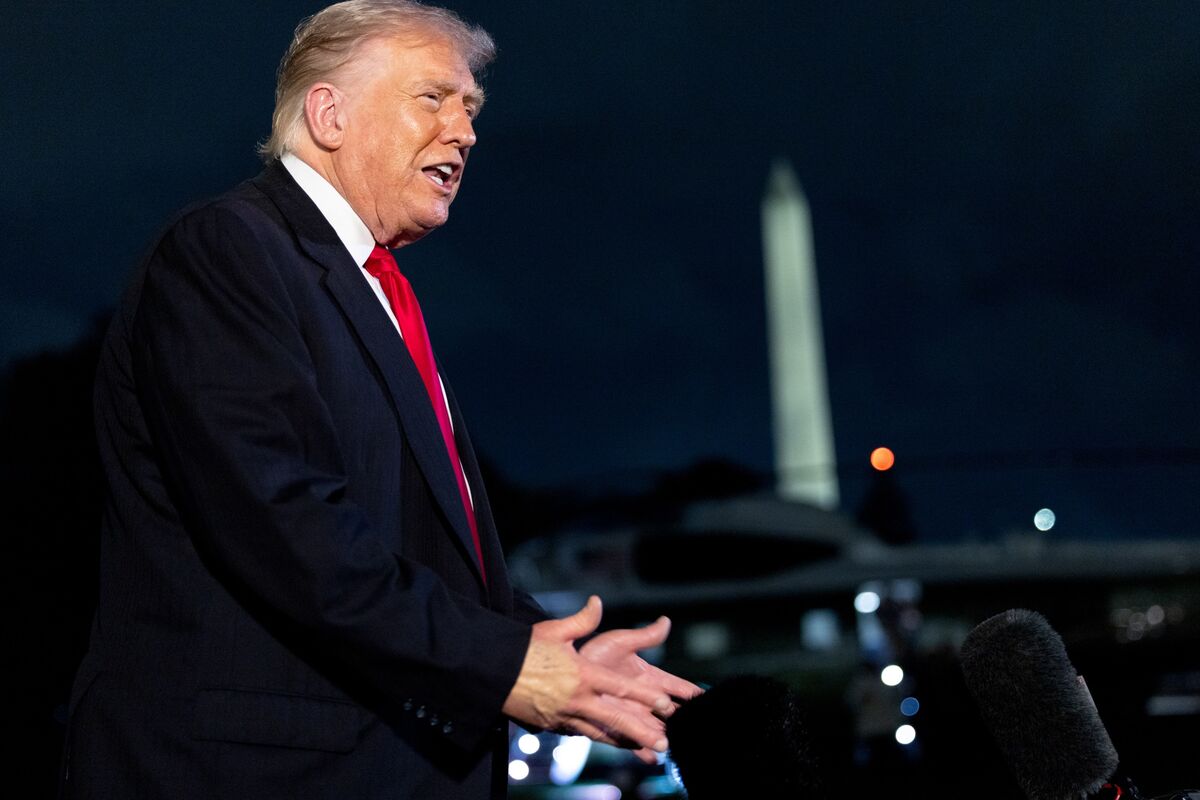
Senate passes funding bill splitting DHS amid ICE controversy while Trump nominates Brett Matsumoto to lead BLS. Analysis of political tensions shaping fiscal and data policy.
The final hours of January 2026 delivered a portrait of American governance under strain: a Senate scrambling to fund the government while managing public fury over immigration enforcement tactics, and a president simultaneously defending those same enforcement operations while attempting to rebuild trust in the nation’s economic statistics. The collision of these two developments—one immediate and visceral, the other technical yet deeply consequential—reveals the fraught political landscape confronting policymakers as fiscal debates intersect with questions of institutional credibility.
Late Friday, the Senate voted 71-29 to pass a funding package that narrowly averted a prolonged partial shutdown, though a brief weekend lapse remained inevitable given the House’s recess until Monday. The compromise, struck between Senate Democrats and the White House, stripped Department of Homeland Security appropriations from a broader five-bill minibus, providing DHS with only a two-week continuing resolution while funding Defense, State, Education, Labor, and other agencies through September 30. Hours earlier, President Trump had announced his nomination of Brett Matsumoto, a career Bureau of Labor Statistics economist, to lead the agency responsible for producing the nation’s employment and inflation data—a position vacant since Trump fired the previous commissioner in August over what he baselessly claimed were “rigged” jobs numbers.
These parallel developments are not coincidental. Both reflect the Trump administration’s determination to reshape federal institutions while Democrats leverage their Senate influence to impose accountability measures. More significantly, they illuminate a broader tension: how can a government produce credible fiscal and economic policy when basic trust in its data-generating apparatus remains contested, and when enforcement agencies operate under such polarized scrutiny that even routine appropriations become ideological battlegrounds?
The Senate’s Delicate Compromise on Funding
The path to Friday’s vote was tortuous. Initially, Senate leaders had expected to pass a six-bill package including full-year DHS funding without significant opposition. But the fatal shooting of Alex Pretti, a 37-year-old ICU nurse, by a Border Patrol agent in Minneapolis on January 24—the second protester killed by federal immigration authorities in a month—transformed what should have been procedural votes into a referendum on Immigration and Customs Enforcement tactics.
Senate Minority Leader Chuck Schumer articulated Democratic demands with unusual specificity: end “roving patrols” by ICE officers, tighten warrant requirements for immigration arrests, establish uniform use-of-force standards aligned with state and local law enforcement, require body cameras, and prohibit agents from wearing masks during operations. “Under President Trump, Secretary Noem and Stephen Miller, ICE has been unleashed without guardrails,” Schumer declared Wednesday. “They violate constitutional rights all the time and deliberately refuse to coordinate with state and local law enforcement.”
Thursday’s initial procedural vote failed 45-55, with every Democrat and eight Republicans opposing advancement of the six-bill package. The defections illustrated both Democratic unity and conservative unease. Senator Rand Paul of Kentucky, chair of the Senate Homeland Security Committee, explicitly questioned administrative warrants: “I am not a big fan of administrative warrants. I think warrants to enter someone’s house should be Fourth Amendment warrants.” Even Senator Susan Collins of Maine, typically aligned with law enforcement, called for an end to ICE’s “Operation Catch of the Day” in her state, which netted over 100 arrests.
The compromise that emerged—separating DHS from the other appropriations and providing only a two-week extension—represented a tactical retreat by Republicans but hardly a strategic victory for Democrats. As Senator Rick Scott of Florida fumed, “I believe this is a horrible bill. I can’t believe we’re not funding ICE. I don’t believe in two weeks it’s going to get funded.” Five conservative Republicans ultimately voted against the package: Scott, Ted Cruz of Texas, Ron Johnson of Wisconsin, Mike Lee of Utah, and Rand Paul.
Yet the deal also exposed Republican fractures. Senator Lindsey Graham of South Carolina held the bill hostage for nearly 24 hours, demanding both a future vote on his sanctuary cities legislation and an amendment addressing the Arctic Frost investigation into January 6, which had obtained senators’ phone records. Only after Majority Leader John Thune pledged a separate sanctuary cities vote did Graham relent.
ICE Under Fire: The Policy and Political Stakes
The funding battle obscures a more fundamental question: has ICE’s enforcement under the Trump administration crossed constitutional boundaries, or are critics weaponizing isolated incidents to constrain legitimate immigration enforcement?
ICE received an extraordinary $75 billion in multi-year funding through the “One Big Beautiful Bill” passed last spring, with $45 billion earmarked for new detention centers and $30 billion for hiring 10,000 additional officers. This dwarfs the agency’s traditional annual appropriation of roughly $10 billion and has enabled the scale of operations now drawing scrutiny. The administrative warrants that Paul and others question—signed by immigration agents rather than judges—have become central to ICE’s capacity to conduct large-scale sweeps without seeking judicial approval for each entry into private residences.
Former BLS Commissioner Erika McEntarfer, whom Trump fired for releasing unfavorable jobs data, offered a prescient warning when defending the statistical agency’s independence: “Messing with economic data is like messing with the traffic lights and turning the sensors off. Cars don’t know where to go, traffic backs up at intersections.” The same logic applies to law enforcement operating without traditional judicial oversight: remove established procedural safeguards, and you risk both constitutional violations and the erosion of public trust that makes effective governance possible.
The two-week continuing resolution creates space for negotiation but guarantees neither reform nor resolution. Democrats have vowed to block any long-term DHS funding absent “meaningful and transformative” changes, in Representative Hakeem Jeffries’s formulation. Republicans counter that Democratic demands would handcuff agents attempting to enforce federal immigration law. Senator Bernie Sanders has gone further, securing a vote on an amendment to eliminate the $75 billion ICE increase and redirect those funds to Medicaid.
Trump’s BLS Nomination: Restoring Credibility or Consolidating Control?
Against this backdrop of institutional distrust, Trump’s selection of Brett Matsumoto to lead the Bureau of Labor Statistics carries particular significance. The nomination represents a stark departure from the president’s initial choice—E.J. Antoni, a Heritage Foundation economist and Project 2025 contributor whom the White House withdrew after facing Senate opposition and revelations about his presence at the Capitol during the January 6 insurrection.
Matsumoto, by contrast, is a technocrat’s technocrat. He has worked as a BLS economist since 2015, focusing on price index measurement, with a Ph.D. in economics from the University of North Carolina at Chapel Hill. Before his recent assignment to the White House Council of Economic Advisers—a position he also held during Trump’s first term—he had no political experience. Industry analysts responded with cautious optimism. Omair Sharif of Inflation Insights called Matsumoto “an extremely solid choice” with over a decade of BLS experience who “understands the details of the data & importance of unbiased data.”
Yet Trump’s announcement framing is revealing. “For many years, the Bureau of Labor Statistics, under WEAK and STUPID people, has been FAILING American Businesses, Policymakers, and Families by releasing VERY inaccurate numbers,” the president wrote on Truth Social. The statement contains no acknowledgment that statistical revisions—like the August downward adjustment showing 258,000 fewer jobs created in May and June than initially reported—reflect methodological rigor rather than political manipulation. Trump fired McEntarfer hours after that revision, baselessly accusing her of faking the numbers for political purposes.
The institutional stakes extend beyond personnel. The BLS produces not only employment reports but also the Consumer Price Index, productivity measures, and wage data that inform Federal Reserve decisions, congressional appropriations, and private-sector planning. If markets and policymakers perceive these figures as politically compromised—or if they’re adjusted to paint a rosier picture than fundamentals warrant—the cascading effects could undermine monetary policy effectiveness and distort resource allocation across the economy.
Matsumoto’s nomination, if confirmed, will test whether technical competence can insulate an agency from political pressure when that pressure emanates from the presidency itself. His career trajectory suggests someone who understands BLS methodologies intimately, but his White House service raises the question of whether proximity to political decision-makers has shaped his perspectives on what constitutes acceptable statistical practice when results prove politically inconvenient.
The Broader Implications: When Data Meets Enforcement
The convergence of the ICE funding battle and the BLS nomination illuminates a deeper challenge for American governance: the erosion of institutional neutrality in an era of hyperpartisanship. Both ICE and the BLS are, in theory, apolitical agencies—one enforcing immigration law as written, the other measuring economic conditions objectively. Yet both have become flashpoints precisely because their core functions generate politically charged outcomes.
Consider the interplay. Reliable economic data should inform immigration policy debates: Do unauthorized immigrants depress wages for native workers, as restrictionists claim, or fill labor shortages that keep inflation in check? Does mass deportation strengthen the economy by opening jobs for citizens, or does it contract GDP by removing productive workers and disrupting supply chains? These are empirical questions requiring trustworthy statistics, yet the very agency tasked with producing those statistics has been explicitly criticized by the president for releasing data that contradicted his preferred narrative.
Similarly, ICE enforcement should reflect legal immigration policy as enacted by Congress, yet the agency’s tactics—particularly the use of administrative rather than judicial warrants—raise questions about whether enforcement has evolved beyond congressional intent. When Democrats demand body cameras and warrant reforms, they’re effectively arguing that ICE has operated with insufficient oversight. When Republicans defend current practices, they’re asserting that existing legal frameworks provide adequate guidance.
The two-week DHS continuing resolution and the pending Matsumoto confirmation thus represent parallel experiments in institutional accountability. Can negotiators craft ICE reforms that satisfy Democratic concerns about constitutional overreach while preserving Republican-desired enforcement capacity? Can a career BLS economist maintain statistical integrity when his appointing authority has demonstrated willingness to fire predecessors over unfavorable data?
Historical Context and Forward Implications
American fiscal and statistical institutions have weathered political storms before. The Congressional Budget Office maintained credibility through decades of partisan appropriations battles by adhering to transparent methodologies and resisting pressure to game projections. The Federal Reserve preserved its independence despite presidential complaints about interest rate decisions. The Census Bureau continued its decennial counts even when results disadvantaged the party controlling the executive branch.
Yet the current moment feels qualitatively different. Trump’s explicit claims that jobs data was “rigged” and his firing of a Senate-confirmed BLS commissioner over routine statistical revisions represent an unprecedented assault on the norm that agencies produce data to inform policy, not to validate predetermined political conclusions. Similarly, the scale and tactics of current ICE operations—enabled by the $75 billion supplemental appropriation—have expanded enforcement in ways that challenge previous understandings of administrative versus judicial authority.
The two-week DHS funding window creates urgent deadlines but little reason for optimism. Senate Republicans face pressure from their base to fund ICE robustly and without constraints; Democrats confront constituencies demanding meaningful accountability following civilian deaths. Absent a credible enforcement oversight mechanism that satisfies both camps, the most likely outcome is sequential continuing resolutions that preserve the status quo while political tensions escalate.
For the BLS, Matsumoto’s confirmation hearing will prove crucial. If senators from both parties secure commitments that statistical methodologies will remain insulated from political interference—and if Matsumoto demonstrates willingness to defend those methodologies even when results prove unflattering—the agency may rebuild credibility. If the confirmation process becomes another partisan brawl, or if Matsumoto proves unable to resist White House pressure, markets and policymakers will learn to discount BLS figures, seeking alternative data sources and eroding the shared factual foundation that effective policymaking requires.
Conclusion: The Trust Deficit
At its core, the convergence of the ICE funding crisis and the BLS nomination reveals American governance’s most pressing challenge: the progressive collapse of institutional trust. Democrats don’t trust ICE to enforce immigration law with appropriate constitutional constraints; Republicans don’t trust Democratic criticisms as good-faith concerns rather than partisan attempts to obstruct lawful enforcement. Trump doesn’t trust BLS career staff to produce unbiased statistics; economists and market participants now question whether BLS figures under a Trump-appointed commissioner will maintain methodological integrity.
This trust deficit compounds policy paralysis. Sound immigration policy requires both effective enforcement and constitutional guardrails—but achieving that balance demands negotiators who believe their counterparts seek the same goal rather than tactical advantage. Reliable economic policymaking requires accurate statistics everyone accepts as legitimate—but that legitimacy erodes when appointments appear designed to control outcomes rather than illuminate realities.
The coming two weeks will test whether American political institutions retain sufficient resilience to bridge these divides. Can Senate negotiators craft ICE reforms that enhance accountability without crippling enforcement? Can Matsumoto navigate the treacherous waters between presidential expectations and statistical integrity? Or will we witness another iteration of the pattern increasingly defining Washington: partisan standoffs resolved through temporary patches that defer rather than resolve fundamental conflicts?
The answers will shape not only budget politics and labor market data but the deeper question of whether shared facts and institutional credibility can survive in an age when every agency output becomes another front in the perpetual political war. As McEntarfer warned when defending statistical independence, turning off the sensors doesn’t make the traffic disappear—it just ensures the inevitable collisions will be more severe.

Diesel Prices 2026–2027: Why Cheaper Crude May Not Mean Cheap Fuel

2027 Social Security COLA: Key Details and Dates

KSE-100 Sees Major Drop Post-SBP Rate Hike

Big Tech’s AI Spending Test: Can Revenue Catch Up With Capital Expenditure?

AI Infrastructure Investment Strategies for 2026

Pakistan Freelancers Tax 2026: Payments, Documentation and Formal Growth

Strait of Hormuz Crisis: What the Latest Tanker Attacks Mean for Oil, Shipping and Global Trade

AI Customer Service in 2026: What’s Working, What’s Failing, and What to Buy

Open a Savings Account Online: How to Actually Earn 10x the National Average Rate

Global Housing Market 2026: Where Prices Rise, Where They Don’t

PSX and KSE-100 Record Highs: An Insider’s Guide to Pakistan Stocks

So Delicious Dessert Recall: Affected Products, FDA Guidelines, and Consumer Action

Pakistan’s Current Account Deficit Narrows Sharply to $98 Million in August 2026

Japan Eyes 3.5% Defense Spending: What It Means for Bonds, Stocks, and the BOJ

Top 15 Stocks for Investment in 2026 in PSX: Your Complete Guide to Pakistan’s Best Investment Opportunities
Top 15 Stocks for Investment in 2026 in PSX: Your Complete Guide to Pakistan’s Best Investment Opportunities

Debunking IMF Program Myths: Reconfiguring Engagement for True National Ownership in a Volatile World

Top 10 Mutual Fund Managers in Pakistan for Investment in 2026: A Comprehensive Guide for Optimal Returns

China’s 50% Domestic Equipment Rule: The Semiconductor Mandate Reshaping Global Tech

What the U.S. Attack on Venezuela Could Mean for Oil and Canadian Crude Exports: The Economic Impact

15 Most Lucrative Sectors for Investment in Pakistan: A 2025 Data-Driven Analysis

Pakistan’s Export Goldmine: 10 Game-Changing Markets Where Pakistani Businesses Are Winning Big in 2025

How to Become an Active Taxpayer on Pakistan’s FBR Active Taxpayer List (ATL) in 2026: A Step-by-Step Guide

Pakistan’s Stock Market Renaissance: How 2025’s Hottest Investment Opportunity Is Democratizing Wealth—A Complete Beginner’s Guide

Best Investments in Pakistan 2026: Top 10 Low-Price Shares and Long-Term Picks for the PSX
15 Most Lucrative Sectors for Investment in Pakistan: A 2025 Data-Driven Analysis
15 Most Lucrative Sectors for Investment in Pakistan: A 2025 Data-Driven Analysis

Pakistan’s Economic Outlook 2025: Between Stabilization and the Shadow of Stagnation
-
 Markets & Finance10 months ago
Top 15 Stocks for Investment in 2026 in PSX: Your Complete Guide to Pakistan’s Best Investment Opportunities
-
Markets & Finance10 months ago
Top 15 Stocks for Investment in 2026 in PSX: Your Complete Guide to Pakistan’s Best Investment Opportunities
-
 Analysis9 months ago
Debunking IMF Program Myths: Reconfiguring Engagement for True National Ownership in a Volatile World
-
 Investment10 months ago
Top 10 Mutual Fund Managers in Pakistan for Investment in 2026: A Comprehensive Guide for Optimal Returns
-
 Asia10 months ago
China’s 50% Domestic Equipment Rule: The Semiconductor Mandate Reshaping Global Tech
-
 Global Economy10 months ago
What the U.S. Attack on Venezuela Could Mean for Oil and Canadian Crude Exports: The Economic Impact
-
 AI11 months ago
15 Most Lucrative Sectors for Investment in Pakistan: A 2025 Data-Driven Analysis
-
 Exports11 months ago
Pakistan’s Export Goldmine: 10 Game-Changing Markets Where Pakistani Businesses Are Winning Big in 2025