
Acquisitions
The $14 Billion Backfire: How the TikTok US Sale Hands ByteDance the Global South


Washington may have “secured” American data, but the forced divestment has armed China’s tech giant with the cash and focus to conquer the next billion users.
As of January 23, the ink is dry on the deal that dilutes ByteDance’s stake in TikTok’s US operations to a passive 19.9 percent, handing the keys (and the code oversight) to an Oracle-led consortium.
For the China hawks, it is a clean kill: a national security threat neutralized without the political suicide of banning the app outright.
But across the Pacific, in the glass-walled meeting rooms of ByteDance’s Singapore headquarters, the mood is not one of defeat. It is one of liquidity.
The forced TikTok US sale has triggered a counterintuitive reality: by severing its most scrutinized limb, ByteDance has not only removed its greatest regulatory headache but has also secured a reported US$14 billion cash influx. Analysts warn that this war chest, combined with the removal of the US distraction, will now be deployed with ruthless efficiency to accelerate ByteDance’s Asia expansion and dominance in the Global South—markets where Meta and Google are already struggling to hold ground.
The Liquidity Paradox
The deal, structured as a joint venture involving Oracle, Silver Lake, and the UAE-based investment firm MGX, values the US operations at a discount relative to its user base—a necessary concession to meet the January deadline. Yet, the financial implications for ByteDance are staggering.
“Washington essentially just handed the world’s most aggressive algorithm factory a venture capital check the size of a small nation’s GDP,” notes Aris Thorne, a senior tech analyst at Forrester (Financial Times, Jan 2026). “ByteDance is projected to clear US$50 billion in profits in 2025. This deal adds $14 billion in immediate liquidity to that pile. They don’t need to reinvest that in the US anymore. They can pour it entirely into Jakarta, São Paulo, and Lagos.”
The math is simple but devastating for ByteDance’s Silicon Valley rivals. While the US currently accounts for roughly 40% of TikTok’s global revenue, it also accounts for 90% of its legal fees, lobbying costs, and executive bandwidth.
With the TikTok Oracle joint venture now managing the slow-moving, compliance-heavy American ecosystem, ByteDance is free to return to its roots: hyper-speed product iteration.
The “Splinternet” Accelerates: A Tale of Two TikToks
The most profound consequence of the TikTok divestment impact will be the bifurcation of the product itself.
In the US, the “new” TikTok will be a safe, sanitized utility. Governed by Oracle’s cloud infrastructure and overseen by a board of American patriots, it will likely see slower feature rollouts. The algorithmic “secret sauce” will be frozen in time or painfully retrained on US-only data silos to satisfy “Project Texas” protocols.
The rest of the world, however, will get the real TikTok.
“We are about to see a divergence in user experience,” says Dr. Elena Kogan, a digital policy fellow at The Brookings Institution (Washington Post, Jan 2026). “In emerging markets, ByteDance will integrate TikTok Shop, digital payments, and generative AI features at a pace the US entity legally cannot match. The American app will become a video player; the global app will become an operating system.”
The New Battleground: Asia and the Emerging Markets
The ByteDance emerging markets strategy is already pivoting from “growth at all costs” to “monetization at warp speed.” The $14 billion windfall is expected to fuel three key initiatives that were previously slowed by the need to appease Western regulators.
1. The Indonesian “Super App” Play
Southeast Asia is the proving ground. In Indonesia, where TikTok has already secured a massive e-commerce foothold after navigating its own regulatory hurdles in 2024, the company is expected to double down.
Unlike in the US, where antitrust laws loom, ByteDance can aggressively bundle its services in Asia. Expect to see subsidized shipping for TikTok Shop, predatory pricing to undercut Shopee and Lazada, and the rapid rollout of “TikTok Pay.”
2. The Battle for Brazil
Brazil remains one of the few markets where Meta’s Instagram Reels is effectively holding the line. That may change. With the TikTok US sale complete, ByteDance can reallocate its top engineering talent from Los Angeles to São Paulo.
“ByteDance has been fighting with one hand tied behind its back in Latin America because all their best AI engineers were fixing compliance issues for Texas,” says a former ByteDance executive who spoke on condition of anonymity (Bloomberg). “Now, the A-team goes to Brazil.”
3. The “Next Billion” in Africa
While Western ad markets saturate, Africa’s digital economy is nascent. Analysts predict ByteDance will use its cash reserves to subsidize data costs for users in Nigeria and Kenya—a strategy Facebook used a decade ago with “Free Basics,” but updated for the video era.
The Meta Nightmare
For Mark Zuckerberg, the TikTok divestment impact is a double-edged sword. Yes, the US version of TikTok may become a weaker competitor due to Oracle’s bureaucratic oversight. But globally, Meta now faces a competitor that is richer, more focused, and angry.
“Meta relies on international growth to offset US saturation,” writes tech columnist Casey Newton (The Verge, Jan 2026). “If ByteDance takes that $14 billion and subsidizes creator funds in India or builds a logistics network in Vietnam, Meta’s next earnings call is going to be painful.”
Geopolitics: Soft Power Shift
There is a geopolitical irony here. The US forced this sale to curb Chinese influence. Yet, by pushing ByteDance out of the US ownership structure, Washington may have inadvertently pushed the company closer to Beijing’s strategic interests in the Global South.
In the ByteDance 2025 profits forecast, the “non-Western” revenue share is expected to jump from 60% to 75% by 2027. As the company becomes less dependent on American dollars, it becomes less sensitive to American values.
“If you thought TikTok was a propaganda tool before, wait until it doesn’t need US advertisers,” warns Senator Mark Warner in a recent statement (New York Times). A ByteDance that derives the bulk of its growth from the Belt and Road Initiative countries is a ByteDance that has little incentive to moderate content that annoys the West.
Conclusion: The Winner’s Curse
As the dust settles on the TikTok Oracle deal, the headlines will praise the “saving” of the US internet. And technically, they are right. American user data is now arguably safer, residing in Texas servers under American lock and key.
But in the borderless world of global finance, capital behaves like water—it flows where it can expand. We have dammed the river in North America, only to flood the plains of Asia and South America.
ByteDance walks away with a bruised ego, a minority stake, and $14 billion in dry powder. They have lost the battle for the American teenager, but they have just been fully funded to win the war for the rest of the planet.


Acquisitions
The Saigol Pivot: Inside Maple Leaf Cement’s Strategic Incursion into Pakistan’s Banking Sector
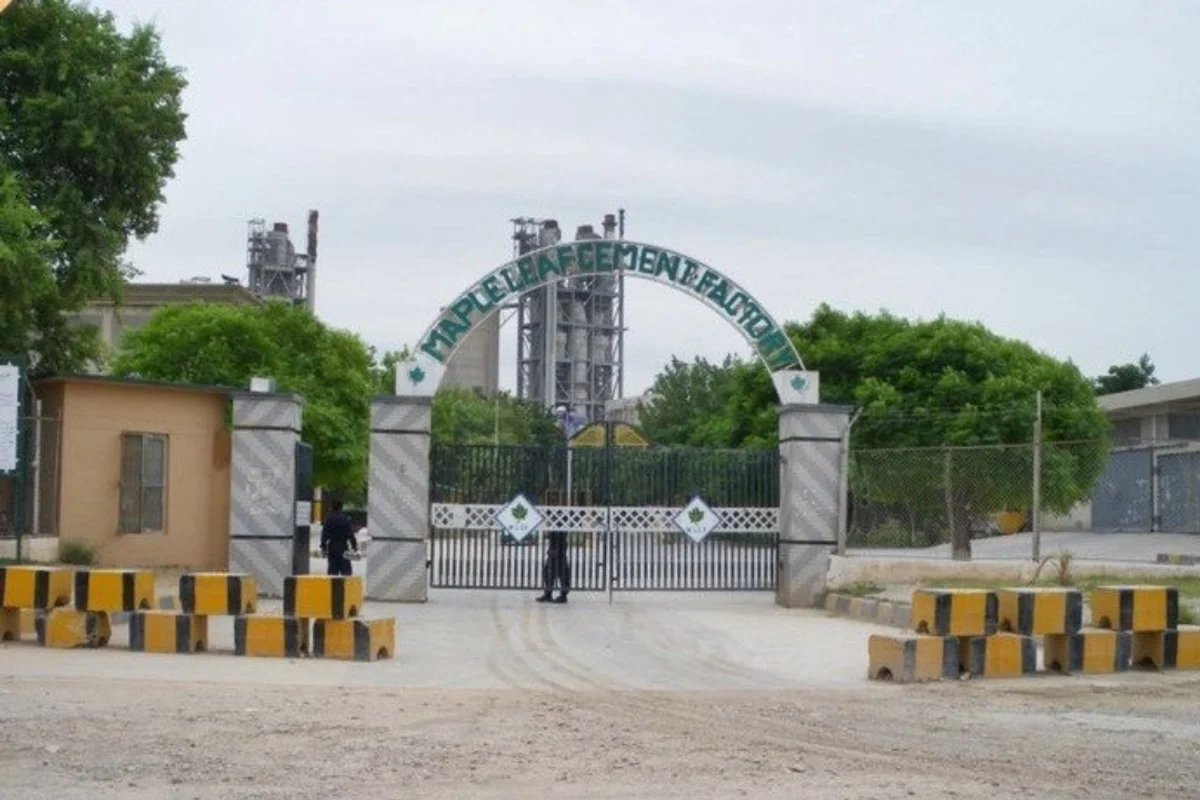
It is a move that initially appears as a study in industrial asymmetry: a northern cement giant, whose fortunes are tied to construction gypsum and clinker, systematically acquiring a stake in one of the country’s mid-tier Islamic banks. But beneath the surface of the Competition Commission of Pakistan’s (CCP) recent authorization lies a narrative far more sophisticated than a simple portfolio shuffle. This is the Saigol family’s Kohinoor Maple Leaf Group (KMLG) executing a deliberate financial pivot, threading the needle between regulatory scrutiny and the volatile realities of the 2026 Pakistan Stock Exchange (PSX) .
The CCP’s green light for Maple Leaf Cement Factory Limited (MLCF) to acquire shares in Faysal Bank Limited (FABL)—including a rare ex post facto approval for purchases made during 2025—offers a window into the evolving strategy of Pakistan’s old industrial guard .
The “Grey Area”: A Regulatory Slap on the Wrist?
In the sterile language of antitrust law, the transaction raised no red flags. The CCP’s Phase I assessment correctly noted the “entirely distinct” nature of cement manufacturing and commercial banking, concluding there was no horizontal or vertical overlap that could stifle competition .
However, the procedural backstory is where the texture lies. The Commission acknowledged reviewing a batch of open-market transactions on the PSX that were “already completed prior to obtaining the Commission’s approval” .
While the CCP granted ex-post facto authorization under Section 31(1)(d)(i) of the Competition Act 2010, it simultaneously issued a pointed directive: MLCF must ensure strict compliance with pre-merger approval requirements for any future transactions . It is a reminder that in Pakistan’s current financial climate, where liquidity is king and speed is of the essence, even blue-chip conglomerates can find themselves navigating the grey areas between investment opportunity and regulatory process. The directive serves as a subtle but firm warning to the market that the CCP is watching the methods of stake-building as closely as the ultimate concentration of ownership .
Strategic Rationale: Beyond Horizontal Logic
To understand the “why,” one must look beyond the cement kilns of Daudkhel and toward the balance sheets of the group. The Kohinoor Maple Leaf Group, born from the trifurcation of the Saigol empire, has long been a bastion of textiles and cement . But 2026 presents a different economic calculus.
Conglomerate diversification is the name of the game. With the PSX experiencing the volatile convulsions of a pre-election year—oscillating between geopolitical panic and IMF-induced stability—banking stocks have emerged as a high-yield, defensive hedge . Unlike the cyclical nature of cement, which is hostage to construction schedules and government infrastructure spending, the banking sector offers exposure to interest rate spreads and consumer financing.
For MLCF, a stake in Faysal Bank is not about vertical integration; it is about earnings stability. Faysal Bank, with its significant presence in Islamic finance (a sector rapidly gaining traction in Pakistan), offers a counter-cyclical buffer to the group’s industrial holdings. As one analyst put it, “They are swapping kiln dust for deposit multiplier.”
The Real-Time Context: PSX Volatility and the Hunt for Yield (March 2026)
The timing of the final authorization is critical. March 2026 finds the Pakistani equity market in a state of calculated anxiety. The KSE-100 has recently weathered a 16.9% correction from its January peaks, triggered by Middle East tensions and fears over the Strait of Hormuz . While energy stocks swing wildly with every oil price fluctuation, banking giants like Faysal Bank offer a rare port in the storm.
According to Arif Habib Limited’s latest strategy notes, the banking sector is currently trading at a price-to-book discount, with institutions like National Bank of Pakistan offering dividend yields as high as 13.3% . While Faysal Bank’s yields are more modest than NBP’s, its shareholding structure—dominated by Bahrain’s Ithmaar Holding (66.78%)—makes it an attractive target for local industrial groups seeking influence without the burden of outright control .
By accumulating shares incrementally through the PSX, KMLG is effectively renting exposure to the financialization of the Pakistani economy. It is a low-profile, high-liquidity entry into a sector that the State Bank of Pakistan projects will remain resilient despite import pressures and currency fluctuations .

Faysal Bank: The Prize Within
Why Faysal Bank specifically? The lender has carved a niche in the Islamic banking corridor, an area the government is keen to expand. With total institutional investors holding over 72% of the bank’s shares, it represents a tightly held, professionally managed asset .
Maple Leaf’s creeping acquisition suggests a desire to secure a seat at the table of Pakistan’s financial future. While the CCP authorization allows for an increased shareholding, it stops short of a full-blown merger. For now, this remains an “incursion”—a strategic toehold in the world of high finance, managed by the same family stewardship that Tariq Saigol has applied to transforming KMLG’s manufacturing base through sustainability and innovation .
The Verdict
The Maple Leaf Cement–Faysal Bank transaction is a harbinger of things to come in the 2026 Pakistani market. As the lines between industrial capital and financial capital blur, we will likely see more of these “conglomerate” acquisitions.
The CCP’s involvement, complete with its ex-post facto review and compliance directive, has set a precedent. It tells the market that while the commission is willing to facilitate investments that support “capital formation,” it will not tolerate a laissez-faire approach to merger control .
For the Saigol family, this is not just an investment; it is a hedge against the future. In an economy where cement demand can cool overnight but banking remains the lifeblood of commerce, owning a piece of the pipeline is the ultimate strategic pivot.
Analysis
Saba Capital’s Bold Tender Offer: Buying Blue Owl Funds at Steep Discounts Amid Private Credit Turmoil

When a hedge fund swoops in to buy distressed stakes at 20–35% below net asset value, it’s rarely a random act of generosity. It’s arbitrage—and it signals something deeper is fracturing in the private credit market.
In early February 2026, Boaz Weinstein’s Saba Capital Management, partnering with Cox Capital Partners, launched a tender offer to acquire shares in three Blue Owl Capital funds: Blue Owl Capital Corporation II (OBDC II), Blue Owl Technology Income Corp (OTIC), and Blue Owl Credit Income Corp (OCIC). The proposed prices ranged from 65 to 80 cents on the dollar relative to each fund’s stated net asset value—a brazen bet that retail investors, trapped by redemption gates and growing skepticism about private asset valuations, would take whatever exit they could get.
This is hedge fund opportunism in credit funds at its most calculated. And it may be one of the more revealing moments in a private credit story that has been quietly unraveling for months.
The Saba Blue Owl Tender Offer: What We Know
The mechanics of the Saba Capital–Blue Owl BDC discount trade are straightforward, even if the implications are anything but. Saba and Cox are offering retail and institutional investors in these non-traded business development companies (BDCs) a cash buyout of their stakes—at prices well below what Blue Owl’s own accounting says those assets are worth.
For OBDC II, OTIC, and OCIC, the discounts reportedly sit between 20% and 35% below NAV, depending on the vehicle. Saba’s thesis: the stated NAVs are optimistic—possibly significantly so—and liquidity pressure on investors will drive enough sellers to make the trade profitable even if some markdown in underlying valuations is warranted.
Blue Owl, for its part, has not been passive. The firm has moved to sell approximately $1.4 billion in assets and announced plans to return capital to investors. But it has also halted redemptions across certain funds, a move that, while legally permissible under fund structures, tends to send a loud signal to the market: liquidity is tighter than the pitch deck implied. Reuters reported a notable drop in OWL shares following news of the asset sales and debt fund restructurings, even as the broader stock recovered modestly on reports of Saba’s involvement—a curious market response that speaks volumes about investor sentiment.
Why Boaz Weinstein Is Betting Against Private Credit Valuations
Weinstein has built his reputation on identifying structural mispricing in complex credit instruments. He rose to prominence partly by recognizing—and profiting from—risks in synthetic credit markets that others had underwritten with excessive confidence. His move into the Blue Owl funds at steep discount follows a familiar playbook: find an illiquid market where reported values and transactable values have diverged sharply, then extract the spread.
The non-traded BDC redemption halt is the mechanism that creates his opportunity. When investors cannot sell their stakes on an exchange and the fund manager suspends the redemption window, those investors are effectively stranded. A tender offer—even at a painful discount—can look attractive to someone who needs liquidity or simply no longer trusts the NAV figure printed on their quarterly statement.
Saba’s position is essentially a structured bet that:
- Private credit valuations are inflated relative to what a secondary buyer would actually pay
- Redemption pressure will continue, keeping retail sellers motivated
- Blue Owl’s asset sales will either validate the markdown or, at minimum, prevent meaningful NAV appreciation
This is not merely opportunism for its own sake. It’s a price discovery mechanism in a corner of the market that has long lacked one.
The Broader Private Credit Liquidity Crisis
To understand why the Saba Capital–Blue Owl BDC discount trade matters beyond a single firm’s P&L, you need to zoom out to the $1.8 trillion private credit market.
Over the past five years, private credit exploded as institutional and retail capital flooded into non-bank lending. The pitch was compelling: higher yields, lower volatility (a feature, skeptics noted, of infrequent mark-to-market pricing rather than genuine stability), and access to growing companies bypassed by traditional banks. BDCs, including non-traded vehicles like those in Blue Owl’s lineup, became popular conduits for retail investors seeking yield in a low-rate world.
But several structural tensions have been building:
- Rising redemption requests as investors reassess the risk-return profile in a higher-rate environment where liquid credit alternatives have become more attractive.
- AI-driven disruption in software lending, which has raised questions about the credit quality of technology-focused portfolios—directly relevant to OTIC, Blue Owl’s tech-oriented income vehicle.
- NAV skepticism, as secondary market transactions and tender offers like Saba’s imply that the private assets underpinning these funds may be worth materially less than reported.
- Liquidity mismatches, baked into the non-traded structure itself—where quarterly redemption windows create an illusion of liquidity that evaporates precisely when investors want it most.
Bloomberg and the Financial Times have both noted that the impact of the Saba tender offer on the private credit market extends beyond Blue Owl, raising uncomfortable questions about how other non-traded BDCs and credit interval funds are being priced.
Blue Owl’s Response: Asset Sales and Capital Returns
Blue Owl’s decision to sell $1.4 billion in assets and accelerate capital returns is, on one reading, a responsible response to liquidity pressure. On another, it’s an implicit acknowledgment that the redemption halt was unsustainable and that some degree of NAV reset was necessary to restore credibility with investors.
The firm has been vocal in pushing back against what it characterizes as opportunistic and potentially misleading tender offers—a reasonable complaint given that Saba’s bid prices are not peer-reviewed appraisals of the underlying loan portfolios but rather negotiating anchors designed to attract distressed sellers. Blue Owl’s leadership has urged investors not to tender, pointing to ongoing asset management and anticipated distributions as the better path to value recovery.
Whether that argument lands will depend heavily on what the $1.4 billion in asset sales actually reveal about realized values. If dispositions close near stated NAV, Blue Owl’s credibility is substantially restored. If they close at significant markdowns, Saba’s thesis gains traction—and the ripple effects across the broader private credit fund universe could be considerable.
What This Means for Retail Investors
The retail investor risks in non-traded BDCs have been well-documented in regulatory filings, though often buried in dense prospectus language. Investors drawn in by above-market yield projections and the prestige of institutional-quality private credit exposure are now encountering the structural fine print: redemption queues, quarterly windows, and the absence of a liquid secondary market.
Saba’s tender offer creates a perverse but real choice. Accepting means crystallizing a 20–35% loss relative to stated NAV. Rejecting means trusting that Blue Owl’s reported values are accurate, that the asset sales will close cleanly, and that redemption capacity will normalize—none of which are guaranteed.
For financial advisors who placed clients into these structures, this is a moment of reckoning. The hedge fund opportunism in credit funds story is partly about Weinstein’s acuity. But it’s also about the mismatch between how non-traded private credit products were sold to retail investors and how they are actually performing under stress.
Forward-Looking: A Stress Test for Private Credit’s Retail Ambitions
The Saba Capital buys Blue Owl stakes at discount episode will likely serve as a case study for regulators, fund managers, and financial advisors for years. It arrives at a moment when the SEC has been scrutinizing the marketing of illiquid alternatives to retail investors, and when several major asset managers are pushing to expand access to private markets through evergreen fund structures.
If the tender offer attracts significant seller participation, it will validate the secondary discount as a real price—not a theoretical one—and pressure other non-traded BDC managers to either shore up liquidity mechanisms or face similar activist attention. If Blue Owl successfully defends its NAV through disciplined asset management and transparent dispositions, it may emerge as a model for how to navigate activist pressure in the private credit space.
Either way, the Blue Owl funds steep discount offer of 2026 has already accomplished something that quarterly NAV statements and manager commentary rarely do: it has forced a genuine conversation about what these assets are actually worth in a market that would prefer not to ask.
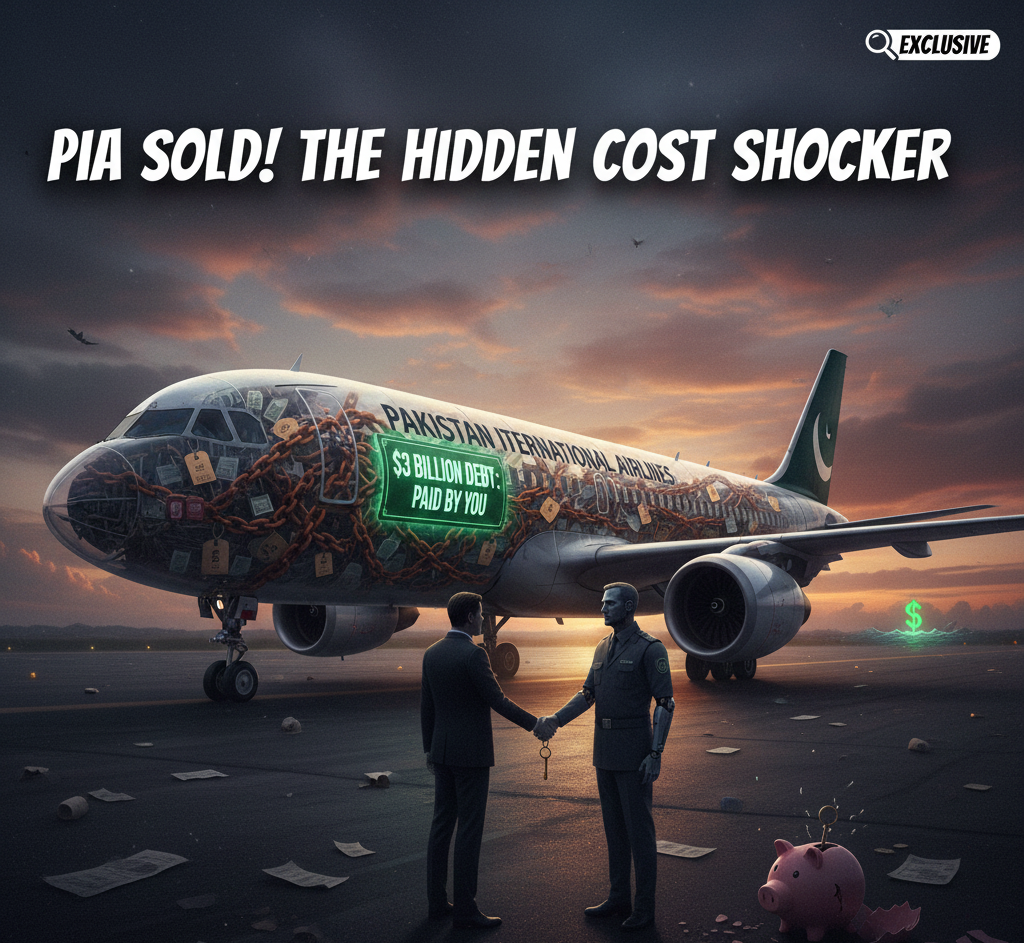
The dust has finally settled on one of Pakistan’s most protracted economic sagas. As of late December 2025, Pakistan International Airlines (PIA) is officially set to change hands, with the Arif Habib Consortium securing the winning bid of Rs 135 billion for a 75% stake.
On the surface, the government has declared victory. The “white elephant” is off the books. The International Monetary Fund (IMF) conditionality has been met. The headlines celebrate a “historic milestone.”
But peel back the layers of this transaction, and a more complex—and costly—reality emerges. Drawing on the incisive analysis of economists Nadeem-ul-Haque and Shahid Kardar, it becomes clear that this transaction is less about a commercial sale and more about a massive, taxpayer-funded financial engineering project.
Is this genuine privatization, or is it, as critics suggest, “quasi-nationalization” disguised as reform? Here is the deep-dive analysis of what really happened, what it cost you, and what it means for the future of Pakistan’s economy.
The “Sale” That Cost Taxpayers $3 Billion
Lesson 1: Privatization Reveals Cost, It Does Not Create It
The most dangerous misconception circulating in WhatsApp groups and television talk shows is that the sale price (Rs 135 billion) represents a “profit” or a “recovery” for the state.
The reality is the opposite.
Before the Arif Habib Consortium could even consider bidding, the government had to perform massive surgery on PIA’s balance sheet. The state—meaning the Pakistani taxpayer—absorbed over Rs 670 billion (approx. $3 billion) of PIA’s legacy debt into a separate holding company.
“The taxpayer paid the bill for PIA’s failure long before the hammer fell at the auction. The privatization process didn’t create this cost; it simply revealed the magnitude of the disaster that had been hidden by creative accounting and sovereign guarantees.” — Dawn News: Economic Analysis of SOEs
Why this matters:
- Socialized Losses, Privatized Profits: The public has already paid for the fuel, the salaries, and the losses of the last decade. The new owners, meanwhile, start with a “clean” airline, unencumbered by the financial sins of the past.
- The Accountability Vacuum: The bureaucrats and political appointees who presided over PIA’s descent into insolvency face no consequences. In the private sector, bankruptcy ruins reputations. In Pakistan’s public sector, failure is simply transferred to the national debt, and the responsible officials move to their next posting.
Quasi-Nationalization? The Ownership Puzzle
Lesson 2: True Privatization Means Exposure to Competition
A critical point raised by Nadeem-ul-Haque is the nature of the “private” buyer. The winning consortium is led by Arif Habib, a titan of Pakistan’s business sector. However, the inclusion of other powerful entities—and the potential involvement of Fauji Fertilizer Company (FFC)—raises structural questions.
If a state-owned enterprise (SOE) is sold to a consortium heavily influenced by other state-linked or military-linked entities, have we actually privatized it? Or have we simply moved it from one pocket of the state to another?
The “Competition” Litmus Test: True privatization is not just about who owns the shares; it is about market discipline.
- Will PIA be allowed to fail? If the new PIA struggles in 2027, will the government bail it out again “too big to fail”?
- Will subsidies end? If the new owners receive preferential fuel rates, sovereign guarantees on new loans, or protection from foreign airlines (like Emirates or Qatar Airways), then the reform is hollow.
The Verdict: Unless the aviation sector is fully deregulated to allow fierce competition, the consumer may see no improvement in prices or service quality.
The “Zombie” Dilemma: Not All SOEs Can Be Saved
Lesson 3: The Case for Liquidation
The PIA saga has dragged on for over a decade because of a refusal to accept a harsh economic truth: Some assets are not commercially viable.
For years, the government attempted to “revamp” and “turn around” PIA before selling it. This approach wasted billions. As Haque and Kardar argue, if an entity cannot survive without a Rs 670 billion bailout, it is arguably a “zombie firm.”
- The Pakistan Steel Mills Parallel: Like PIA, the Steel Mills have bled billions while operations stalled. The lesson here is that liquidation (shutting it down and selling the assets) is often the least costly option for taxpayers, even if it is politically unpopular.
- The Opportunity Cost: The $3 billion absorbed by the state could have funded the Diamer-Bhasha Dam, built hundreds of hospitals, or revamped the entire national education budget. Instead, it was used to clear the books for a single airline.
The Fog of War: Opacity in the Process
Lesson 4: Procedural Weaknesses & The Trust Deficit
While the final auction was televised, the road to it was shrouded in what analysts call an “abysmally poor communication strategy.”
Key Missing Information:
- Valuation Methodology: How did the Privatisation Commission arrive at the reserve price of Rs 100 billion? (Initially, there were fears it was too high; later, bids exceeded it).
- Asset Allocation: What exactly happens to the Roosevelt Hotel in New York or the Scribe in Paris? Are these prime assets part of the deal, or are they being retained? The clarity on this remained murky until the final days.
- Payment Terms: The public deserves to know the exact schedule of payments. Is the Rs 135 billion paid upfront? (Reports suggest only a fraction is upfront cash, with the rest reinvested or paid over time).
“Transparency is not a luxury in privatization; it is the currency of trust. When details are hidden, speculation fills the void, and the credibility of the entire reform agenda suffers.” — Business Recorder: Editorial on Privatisation
Conclusion: A Model for the Future or a Cautionary Tale?
The sale of PIA to the Arif Habib Consortium is, technically, a success. The government has divested a loss-making entity. But as we move into 2026, the celebration must be tempered with vigilance.
We have learned that privatization is not a silver bullet. It is a tool that, when mishandled, can simply transfer wealth from the public purse to private hands while leaving the debt with the common man.
The True Measure of Success: We will know this deal worked not by the press release issued today, but by the reality of 2030.
- If PIA becomes a profitable, tax-paying entity that competes globally without state handouts -> Success.
- If PIA requires another bailout, tariff protection, or debt write-off in five years -> Failure.
Pakistan has sold its airline. Now, we must ensure we haven’t also sold our economic future.

Pakistan’s Remittance Lifeline: Why Gulf Exposure Is a Hidden Risk

Dubai’s Rise to the World’s 7th Financial Hub: Inside the D33 Push

China EV Exports Hit Record High in 2026

UK’s “National Contributions Tax” Explained: Burnham-Era Reform 2026

Russia’s Strange Problem in 2026: Its Currency Is Too Strong

Section 301 Forced Labor Tariffs 2026: 60 Countries Affected

UK National Contributions Tax: Burnham’s Radical Tax Plan

Global Central Bank Divergence 2026: Why the Fed, BoE, BoJ, and PBoC Are All Moving Differently

Japan’s Bond Market Just Cracked. It Could Take the Rest of the World’s Debt With It

Malaysia’s Ringgit Is Holding Up. Economists Say the Real Test Is Still Coming

Climate Finance Delivery 2026: Trillion‑Dollar Promise Still Unmet

AI Impact on Wages 2026: Productivity Soars, Paychecks Stagnate

SpaceX IPO 2026: $2 Trillion AI Bubble, OpenAI & Anthropic — What Investors Must Know

China Economy 2026: Property Crisis, AI Investment & Export Surplus Explained

Top 15 Stocks for Investment in 2026 in PSX: Your Complete Guide to Pakistan’s Best Investment Opportunities
Top 15 Stocks for Investment in 2026 in PSX: Your Complete Guide to Pakistan’s Best Investment Opportunities

Debunking IMF Program Myths: Reconfiguring Engagement for True National Ownership in a Volatile World

Top 10 Mutual Fund Managers in Pakistan for Investment in 2026: A Comprehensive Guide for Optimal Returns

What the U.S. Attack on Venezuela Could Mean for Oil and Canadian Crude Exports: The Economic Impact

China’s 50% Domestic Equipment Rule: The Semiconductor Mandate Reshaping Global Tech

15 Most Lucrative Sectors for Investment in Pakistan: A 2025 Data-Driven Analysis

Pakistan’s Export Goldmine: 10 Game-Changing Markets Where Pakistani Businesses Are Winning Big in 2025
15 Most Lucrative Sectors for Investment in Pakistan: A 2025 Data-Driven Analysis
15 Most Lucrative Sectors for Investment in Pakistan: A 2025 Data-Driven Analysis

Pakistan’s Economic Outlook 2025: Between Stabilization and the Shadow of Stagnation
Pakistan’s Economic Outlook 2025: Between Stabilization and the Shadow of Stagnation

China’s Property Woes Could Last Until 2030—Despite Beijing’s Best Censorship Efforts
China’s Property Woes Could Last Until 2030—Despite Beijing’s Best Censorship Efforts
-
 Markets & Finance7 months ago
Top 15 Stocks for Investment in 2026 in PSX: Your Complete Guide to Pakistan’s Best Investment Opportunities
-
Markets & Finance7 months ago
Top 15 Stocks for Investment in 2026 in PSX: Your Complete Guide to Pakistan’s Best Investment Opportunities
-
 Analysis6 months ago
Debunking IMF Program Myths: Reconfiguring Engagement for True National Ownership in a Volatile World
-
 Investment6 months ago
Top 10 Mutual Fund Managers in Pakistan for Investment in 2026: A Comprehensive Guide for Optimal Returns
-
 Global Economy7 months ago
What the U.S. Attack on Venezuela Could Mean for Oil and Canadian Crude Exports: The Economic Impact
-
 Asia7 months ago
China’s 50% Domestic Equipment Rule: The Semiconductor Mandate Reshaping Global Tech
-
 AI7 months ago
15 Most Lucrative Sectors for Investment in Pakistan: A 2025 Data-Driven Analysis
-
 Exports7 months ago
Pakistan’s Export Goldmine: 10 Game-Changing Markets Where Pakistani Businesses Are Winning Big in 2025