
Analysis
The Dollar’s Icarus Moment: How Trump’s ‘Liberation Day’ Doctrine is Unraveling the Greenback in 2026

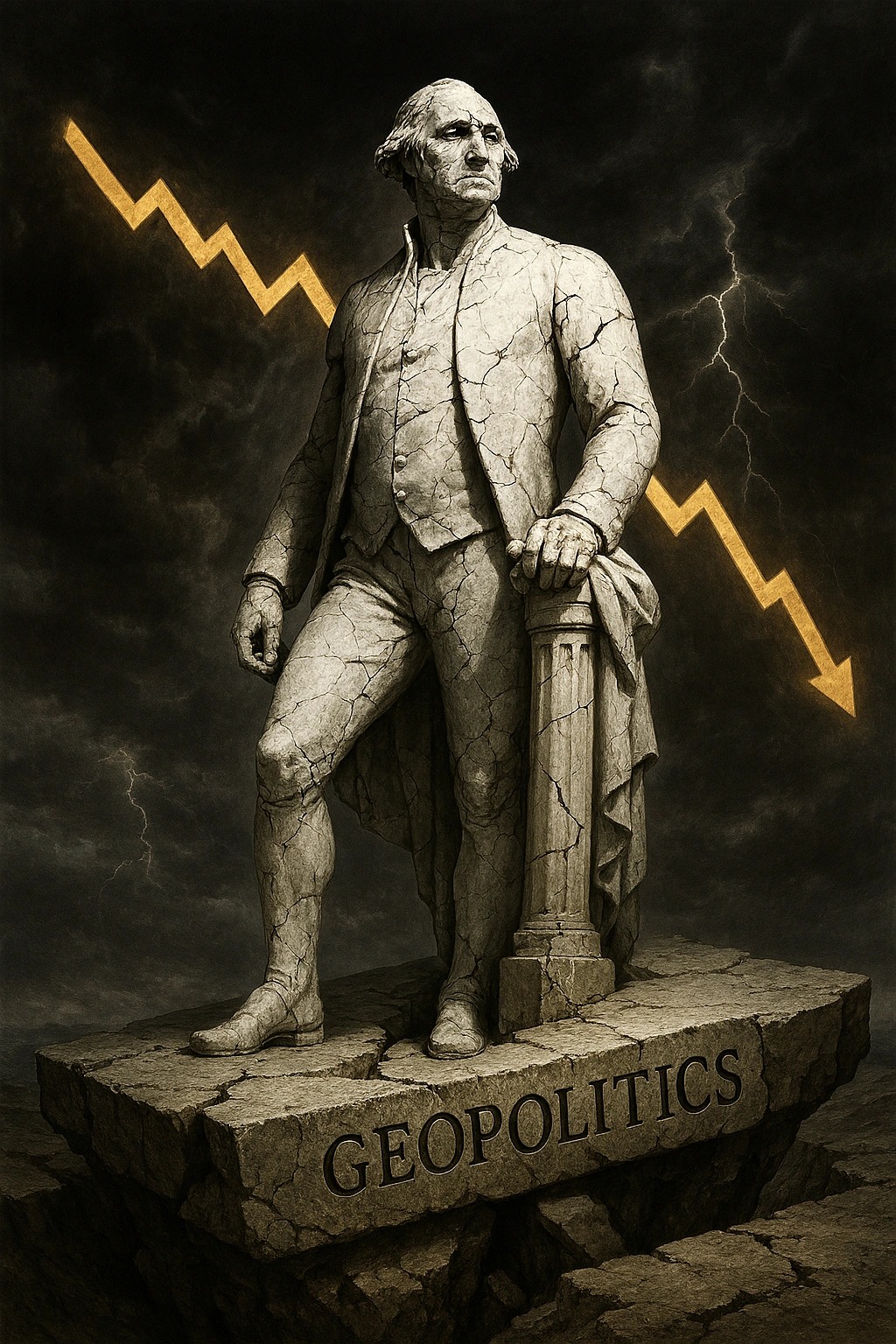
A year after the tariff shockwave, the world’s reserve currency is bleeding credibility—and investors are voting with their feet.
The dollar is dying, not with a bang, but with a slow, bureaucratic whimper punctuated by presidential Twitter tirades and bond market mutinies.
As of late January 2026, the U.S. Dollar Index (DXY) has collapsed more than 9% from its post-election euphoria peak, now hovering perilously near 99—a level last seen during the pandemic’s darkest months. Gold, that ancient barometer of monetary distrust, has shattered every conceivable ceiling, trading north of $4,600 per ounce. Meanwhile, the euro and Swiss franc—once dismissed as the sickly men of global finance—are outperforming with a vigor that would have seemed fantastical eighteen months ago.
What changed? In a word: policy. Or more precisely, the catastrophic intersection of fiscal recklessness, geopolitical adventurism, and institutional sabotage that has come to define the Trump 2.0 economic doctrine.
This is the story of how America’s currency privilege—forged in the crucible of Bretton Woods and sustained through decades of relative fiscal discipline and central bank independence—is being squandered in real time. It’s a cautionary tale about what happens when a reserve currency issuer begins to behave like an emerging market populist, and the market loses faith not in America’s economic fundamentals, but in its political rationality.
The Liberation Day Hangover: When Tariffs Became a Credibility Tax
Let’s rewind to April 2, 2025—what the administration dubbed “Liberation Day.” President Trump unveiled a comprehensive tariff regime that made his first-term trade skirmishes look like diplomatic foreplay. Sweeping levies on European automobiles, targeted duties on French luxury goods, and punitive measures against German industrial exports were announced with the theatrical flourish that has become this presidency’s signature.
The immediate market reaction was telling. The dollar spiked briefly on what traders interpreted as a “strong America” signal. But within weeks, something more sinister began to unfold. Foreign central banks, particularly in the EU and Asia, started quietly diversifying their reserve holdings. The Bank for International Settlements’ quarterly data—often overlooked in the daily noise—showed a measurable uptick in euro and yen allocations at the expense of Treasury securities.
Why? Because “Liberation Day” wasn’t liberation at all. It was an admission that the United States was willing to weaponize the global trading system for domestic political theater, even at the cost of undermining the very stability that makes dollar hegemony possible. When you’re the reserve currency, reliability is everything. Erratic trade policy—particularly against your closest military and economic allies—is a credibility tax that compounds with each presidential decree.
By the time summer 2025 arrived, the structural damage was clear. The dollar’s traditional safe-haven premium during risk-off episodes had noticeably diminished. During the August sovereign debt scare in Italy, capital fled not predominantly to Treasuries but to Swiss bonds and German Bunds. The “exorbitant privilege,” as Valéry Giscard d’Estaing once called it, was beginning to look more like an ordinary privilege—and a declining one at that.
The OBBBA Effect: Stimulus or Poison?
If Liberation Day was the wound, the “One Big Beautiful Bill Act” (OBBBA)—passed with little Republican dissent in late 2025—was the infection that followed.
Marketed as a comprehensive tax reform and infrastructure package, OBBBA was in reality a $2.3 trillion stimulus injection into an economy already running uncomfortably hot. Corporate tax cuts, expanded child credits, and a byzantine web of industrial subsidies were bundled together in legislation that even sympathetic analysts at Morgan Stanley described as “fiscal policy without a theory of change.”
The timing couldn’t have been worse. Core inflation, which had tantalizingly approached the Fed’s 2% target in early 2025, began creeping upward again by year-end. Producer price indices showed persistent cost pressures. And crucially, the bond market—that merciless arbiter of fiscal credibility—began to revolt.
Ten-year Treasury yields, which had stabilized around 4.2% through much of 2025, surged past 4.8% by December. This wasn’t a growth story; it was a risk premium story. International buyers, already spooked by Liberation Day’s institutional uncertainty, started demanding higher compensation for holding dollar-denominated debt. The “twin deficit” anxiety—whereby America’s budget deficit and current account deficit both exceed 5% of GDP—became impossible to ignore.
J.P. Morgan’s Global FX Strategy desk published a damning note in December 2025 titled “The Dollar’s Structural Headwinds,” arguing that OBBBA had effectively frontloaded consumption while backloading fiscal consolidation—a recipe for long-term currency depreciation. When one of Wall Street’s most establishment-friendly banks starts using the word “structural” to describe dollar weakness, you know something fundamental has shifted.
When the Fed Became a Political Piñata
But perhaps nothing has damaged dollar credibility more than the extraordinary public warfare between the White House and the Federal Reserve.
Fed Chair Jerome Powell, reappointed by President Trump in his first term, has found himself in an impossible position. Faced with OBBBA-induced inflationary pressures, the Fed signaled in late 2025 that rate cuts—which markets had priced in aggressively—might need to be postponed or reversed. Powell’s December press conference, where he diplomatically suggested that “fiscal policy coordination would be helpful,” was interpreted by the administration as an act of institutional disloyalty.
What followed was unprecedented. The President, in a series of Truth Social posts throughout January 2026, accused Powell of “sabotaging American workers” and suggested that the Justice Department should “look into” whether the Fed Chair’s actions constituted a prosecutable offense. While legal experts universally dismissed the threat as constitutionally nonsensical, the damage to institutional credibility was immediate and measurable.
Central bank independence isn’t just a good governance principle—it’s a core pillar of reserve currency status. When the executive branch of the world’s largest economy begins threatening criminal prosecution of its central bank leadership for making data-driven policy decisions, international investors take notice. And they act.
The Swiss National Bank’s January 2026 policy statement contained a subtle but telling reference to “maintaining flexibility in reserve composition given evolving global monetary governance standards.” Translation: even the notoriously cautious Swiss are hedging against dollar instability driven by political interference.
The Greenland Gambit and European Estrangement
As if tariffs, fiscal excess, and Fed-bashing weren’t enough, January 2026 brought the “Greenland Gambit”—a renewed presidential fixation on purchasing Denmark’s autonomous territory, complete with thinly veiled threats about NATO commitment if Denmark refused to negotiate.
The geopolitical implications are beyond this article’s scope, but the currency market implications are not. European capitals, already frustrated by Liberation Day tariffs and watching the Fed’s independence erode, began openly discussing “strategic autonomy” in financial matters. French Finance Minister Bruno Le Maire—normally diplomatic to a fault—suggested in a Le Monde interview that Europe should “prepare for a world where dollar stability can no longer be assumed.”
This isn’t just talk. The European Central Bank’s January meeting included discussion of accelerating the “international role of the euro” initiative, which had been languishing since its 2018 launch. Germany’s Bundesbank published research suggesting that euro-denominated trade invoicing could realistically reach 35% of global transactions by 2030 if current U.S. policy trajectories continue.
The dollar’s dominance has always rested on a tripod: deep capital markets, rule of law, and military-backed geopolitical stability. Trump 2.0 policies are systematically undermining each leg. When your closest allies begin treating your currency as an unreliable utility rather than a strategic asset, the network effects that sustain reserve currency status begin to unravel.
Gold’s Testimony: The Market’s Verdict
Let’s talk about gold’s extraordinary rally—because it’s telling a story that Treasury officials desperately wish to ignore.
At $4,600+ per ounce, gold has appreciated roughly 60% from its 2023 lows. This isn’t just inflation hedging or jewelry demand from Asia. This is a profound vote of no confidence in fiat monetary management, particularly dollar-based monetary management.
Central banks—especially in emerging markets and non-Western economies—have become voracious gold buyers. China’s official reserves show consistent monthly accumulation. Poland, Singapore, and India have all substantially increased their bullion holdings. Even historically dollar-centric Gulf states are diversifying into physical gold at rates not seen since the 1970s.
Why gold, and why now? Because gold is the ultimate non-political asset. It can’t be sanctioned, it doesn’t require institutional trust, and it doesn’t care about presidential Twitter feeds. In an environment where the U.S. is simultaneously running massive deficits, threatening its central bank’s independence, alienating allies, and pursuing mercantilist trade policies, gold offers what the dollar increasingly cannot: predictable neutrality.
The De-Dollarization Undercurrent: Trend or Tsunami?
The academic debate about “de-dollarization” has long been contentious. Skeptics correctly note that despite decades of predictions, the dollar still comprises roughly 58% of global foreign exchange reserves and dominates international trade invoicing.
But 2025-2026 may represent an inflection point—not a sudden collapse, but an acceleration of a slow-burning trend. The BRICS nations have expanded their local currency swap arrangements. The Bank for International Settlements’ “Project mBridge,” which facilitates central bank digital currency settlements bypassing SWIFT and dollar intermediation, moved from pilot to operational phase in late 2025.
More tellingly, even traditional American allies are building redundancy. The EU’s INSTEX mechanism—originally designed to circumvent Iranian sanctions—has been quietly expanded into a more general euro-based settlement platform. Japan and South Korea have doubled their bilateral currency swap line, reducing reliance on dollar liquidity.
These are not acts of hostility. They’re acts of prudent risk management by nations watching American institutional stability erode in real time. When the world’s reserve currency issuer behaves unpredictably, the world builds alternatives. Not overnight, but inexorably.
What Comes Next: Three Scenarios
As we move through 2026, three broad scenarios emerge for the dollar:
The Stabilization Scenario: The administration moderates its rhetoric, OBBBA’s inflationary impulse fades, and the Fed regains operational autonomy. The dollar stabilizes in the 98-102 DXY range, and reserve currency status persists, albeit with a slightly diminished market share. Probability: 30%.
The Structural Decline Scenario: Current policy trajectories continue. Europe and Asia accelerate alternative payment systems and reserve diversification. The dollar loses 5-8% of its reserve currency share over the next three years, triggering higher structural yields on U.S. debt and a permanent risk premium. Probability: 50%.
The Crisis Scenario: A unexpected shock—a major U.S. bank failure, a government shutdown during debt ceiling negotiations, or an actual Fed Chair indictment attempt—triggers a sharp, disorderly dollar sell-off. Capital controls become politically discussable. Probability: 20%.
The Icarus Paradox
The dollar’s current predicament echoes the Greek myth of Icarus—flying too close to the sun on wings of wax. American policymakers, intoxicated by decades of “exorbitant privilege,” have forgotten that reserve currency status is earned, not inherited. It requires institutional credibility, policy predictability, and a commitment to the boring but essential work of maintaining trust.
Liberation Day, OBBBA, the Fed attacks, the Greenland threats—these aren’t isolated missteps. They’re symptoms of a broader abandonment of the principles that made dollar hegemony possible in the first place.
The market’s verdict is already in. Gold at record highs, euro outperformance, emerging market central bank diversification—these are not temporary technical factors. They’re structural repositioning for a world where American exceptionalism in currency markets can no longer be assumed.
The dollar won’t collapse tomorrow. Reserve currency transitions take decades, not months. But history suggests they’re also non-linear—periods of apparent stability punctuated by sudden, irreversible shifts. We may be living through one of those shifts right now, watching the wax begin to melt in real time.


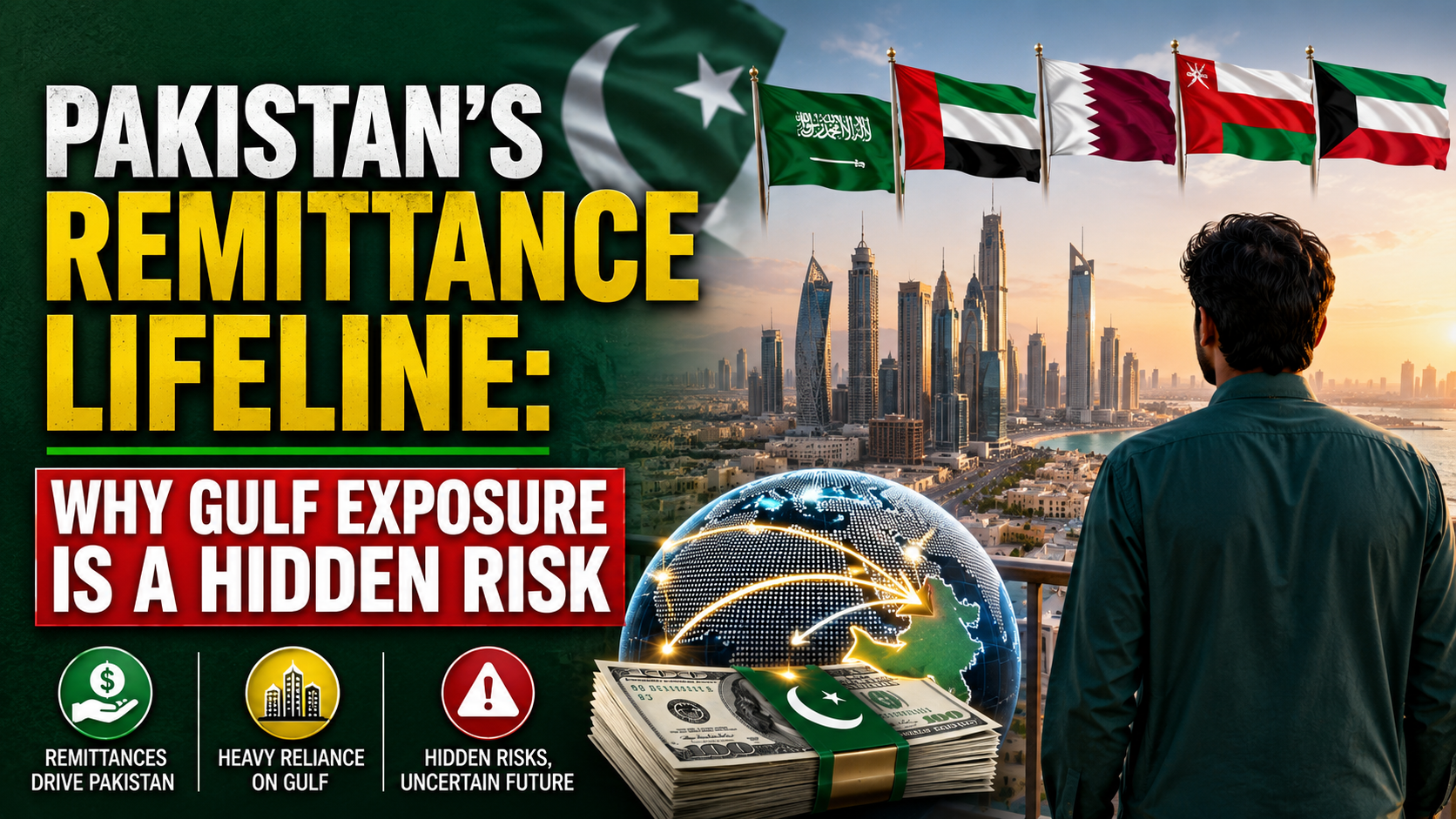
Buried inside the IMF’s latest Pakistan country report is a dependency that receives far less attention than headline GDP or inflation numbers, but arguably carries more immediate risk for millions of households: Pakistan’s economy is structurally exposed to whatever happens next in the Gulf.
The Numbers That Matter
Pakistan receives annual remittances amounting to roughly 9 percent of GDP, of which 55 percent originate from Gulf Cooperation Council countries, according to the IMF’s May 2026 country report. That single funding channel is one of the largest and most stable sources of foreign exchange available to the country — larger, in most years, than export revenue growth or foreign direct investment inflows combined.
The IMF’s own language is unambiguous about the risk this concentration creates: a significant disruption to GCC economies, or a forced return of migrant workers, could weigh heavily on these flows — a major source of financing for both household consumption and Pakistan’s broader balance of payments.
Why This Risk Is Live, Not Theoretical
This is not an abstract stress-test scenario. The Strait of Hormuz disruption, detailed extensively elsewhere in this series, has placed the entire Gulf region’s economic stability under genuine pressure for the first time in years. Should the conflict escalate further or trigger a broader regional economic slowdown, the transmission channel to Pakistan is direct and fast: fewer construction projects and reduced hiring across the GCC translates almost immediately into lower remittance flows from the millions of Pakistani workers employed there.
Capital Flows Are Already Reacting
The IMF has flagged early evidence that this dynamic is not purely hypothetical. Deteriorating global financial conditions have already resulted in capital outflows from Pakistan, which are likely to intensify further if the regional crisis extends, with the Fund specifically noting that access to short-term commercial financing — largely sourced from GCC banks — could also be affected if risk sentiment deteriorates further across the region.
This creates a double exposure that is easy to overlook in headline coverage: Pakistan depends on the Gulf both for the remittance income that supports household consumption, and for the short-term commercial bank financing that helps bridge its external funding gaps between IMF disbursements.
The State Bank’s Reserve Buffer
Pakistan’s own policy response has been to build reserves as a shock absorber. The State Bank of Pakistan has been projecting reserves to continue rising to roughly $18 billion by June 2026 on the back of planned inflows, a level implying that expected capital inflows currently exceed any current account shortfall — but only as long as Pakistan remains within an active IMF programme and maintains access to external funding on favourable terms.
The risk scenario flagged by policy researchers is specific: if monetary easing is mismanaged and confidence in Pakistan’s reform path falters, capital inflows could slow or reverse at the same time imports surge, opening an external funding gap that would draw down reserves and pressure the rupee — a scenario made materially more likely by any Gulf-region shock large enough to simultaneously dent remittances and tighten GCC bank lending.
How much of Pakistan’s remittances come from the Gulf?
Roughly 55% of Pakistan’s remittances — which fund about 9% of GDP — originate from Gulf Cooperation Council countries, making Pakistan’s balance of payments directly exposed to any economic disruption or capital-flow tightening in the Gulf region.
The Agricultural Wildcard
A related, more immediate risk sits in the agricultural supply chain. The IMF notes that disrupted DAP fertiliser supply chains linked to regional tensions could affect the Kharif planting season in June-July, with knock-on effects for food import prices — a second, more direct channel through which Gulf and broader Middle East instability could hit Pakistani households, independent of the remittance and capital-flow risks.
The Policy Takeaway
Pakistan’s economic stabilisation narrative in 2026 — a rebuilding KSE-100, falling inflation, a completed EFF review, covered in depth in our companion article — is real, but it rests on a foundation more exposed to Gulf regional stability than most headline coverage acknowledges. For policymakers in Islamabad, and for the Pakistani diaspora sending capital home each month, the Strait of Hormuz situation is not a distant geopolitical story. It is, in a very direct sense, a domestic economic risk factor.
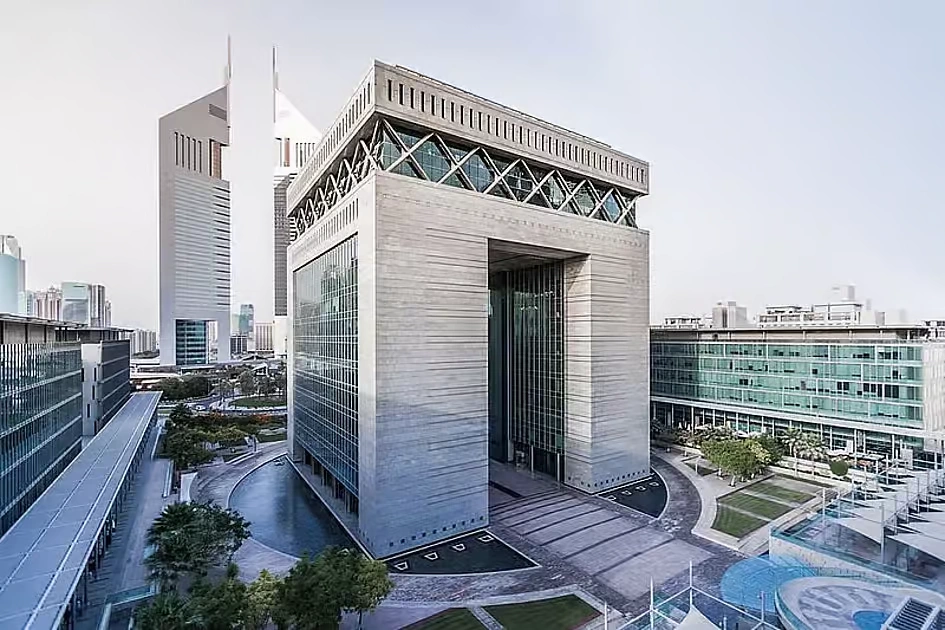
Dubai has climbed to its highest position ever on one of finance’s most closely watched rankings, and the achievement is no accident — it is the direct output of a decade-long, numerically explicit government strategy that few other financial centres have attempted to execute with this level of precision.
The Ranking Itself
The Dubai International Financial Centre has recorded its highest-ever position on the Global Financial Centres Index at seventh place worldwide, the highest ranking ever achieved by any financial centre across the Middle East, Africa and South Asia region, and the only MEASA-region centre to feature in the global top 20 — underscoring both its regional dominance and genuine global competitiveness.
The D33 Strategy Behind the Number
The ranking is explicitly tied to Dubai’s own stated ambitions. The GFCI result is described as pivotal to Dubai’s goal of becoming one of the world’s top four financial centres by 2033, in line with the Dubai Economic Agenda, or D33, which targets a doubling of the emirate’s economy over the decade. Separately, Dubai Chambers has confirmed the plan targets cumulative economic output of AED 32 trillion, or roughly $8.7 trillion, over the decade, supported by 100 transformative projects centred on trade expansion, digital innovation and sustainable growth.
The Underlying Economic Engine
The financial-centre ambitions are backed by genuine current-quarter growth. Dubai’s economy reached AED 232 billion in first-quarter 2026 GDP, a 2.4 percent year-on-year increase, with the finance, construction, healthcare, wholesale and retail trade, and real estate sectors all contributing to the broad-based expansion. Middle East Briefing separately projects the wider UAE economy will expand around 5 percent in 2026, with local banks positioned to increase lending both domestically — supporting SMEs, consumers and project finance — and across borders into markets like Saudi Arabia, where UAE banks’ comparatively lower interbank rates create an arbitrage opportunity.
Real Money Behind the Ranking
The GFCI climb is being validated by tangible transaction volume rather than sentiment alone. Weekly UAE business tracking shows a steady drumbeat of institutional activity: Sharjah Islamic Bank reported AED 803.9 million in net profit, up 15.3 percent, ADI Chain secured a $50 million investment to build sovereign digital infrastructure, and Capital.com reported $1.1 trillion in second-quarter trading volume routed through the jurisdiction. Separately, UAE and Saudi banks are projected to lead GCC credit growth in 2026, reinforcing Dubai and Abu Dhabi’s combined position as the region’s default financial gateway.
Why This Matters for Pakistan and South Asia
Dubai’s ascent as a financial hub carries direct relevance for Pakistan, where — as detailed in our companion coverage of Pakistan’s remittance exposure — roughly 55 percent of the country’s substantial remittance inflows originate from the Gulf Cooperation Council. A deepening, increasingly sophisticated DIFC-anchored financial ecosystem in Dubai means more efficient, lower-cost channels for that capital, alongside growing opportunities for Pakistani and South Asian firms to access GCC-sourced project finance and cross-border credit as UAE banks expand lending beyond their domestic market.
What is Dubai’s global financial centre ranking in 2026?
Dubai’s DIFC recorded its highest-ever ranking on the Global Financial Centres Index at 7th place worldwide in 2026 — the highest ever achieved by any Middle East, Africa or South Asia financial centre — as part of its stated goal to become a top-four global financial hub by 2033.
The Risk Beneath the Growth Story
Not every signal points to unambiguous strength. AGBI’s own reporting notes that UAE banks’ second-quarter results are likely to show weaker profits, slower lending and narrower margins, even as analysts characterise the underlying sector as fundamentally resilient — a reminder that Dubai’s financial-hub ambitions are being pursued against a genuinely more difficult regional operating environment shaped by the Strait of Hormuz disruption and broader Gulf security concerns, not in isolation from them.
The Bottom Line
Dubai’s climb to seventh in the GFCI rankings is less a one-off achievement than a measurable checkpoint on an explicitly numbered, decade-long strategic roadmap — one increasingly backed by real GDP growth, credit expansion, and institutional trading volume rather than ambition alone.
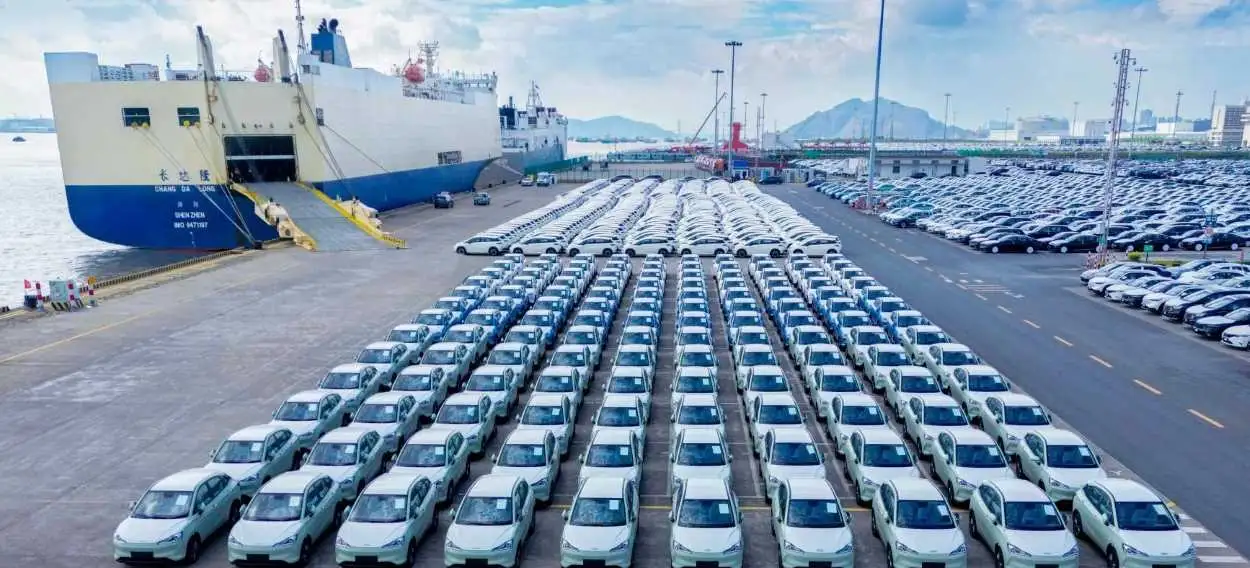
China’s monthly car exports surpassed one million units for the first time in June 2026, according to trade data released alongside the country’s second-quarter GDP figures, while overall imports rose 36% year-over-year to a five-year high even as Beijing cut monthly crude imports to near decade lows, down 41.3% from a year earlier (CNN). The result: China’s trade surplus widened to $125.62 billion in June alone.
The Uncovered Mechanism: Oil Shock as Green-Tech Accelerant
Most coverage has treated China’s electric vehicle and battery export surge as a story purely about domestic manufacturing subsidy and industrial policy. What has received far less attention is the direct causal link to the Iran war: the oil crisis has itself boosted global demand for Chinese clean-energy technology, as energy importers around the world accelerate efforts to reduce fossil-fuel reliance precisely when oil prices are most volatile (CNN). In other words, the same Strait of Hormuz disruption that is damaging Pakistan’s current account and pushing UK inflation higher is simultaneously functioning as a demand accelerant for Chinese EV exports — a direct transmission mechanism linking two of this year’s biggest global stories that is rarely discussed together.
The EU Is Already Losing Patience
China’s widening trade surplus is compounding tensions with the European Union, which has repeatedly criticised Beijing for flooding its market with subsidised industrial exports, a dynamic that predates this year’s conflict but has intensified as Chinese manufacturers redirect capacity toward markets less willing or able to erect the tariff barriers the United States has deployed (CNN; IndexBox).
Why This Is Also a Southeast Asia and Pakistan Story
Malaysia’s own export strength this year has been built substantially on its role in the semiconductor and electronics supply chain feeding the broader AI and green-tech manufacturing boom, meaning Kuala Lumpur benefits indirectly from the same dynamics driving China’s export surge, rather than competing head-on in finished vehicles (The Rakyat Post). Pakistan’s position is more exposed: as a market with its own nascent auto and manufacturing base and limited tariff leverage against Chinese imports, a sustained surge in low-cost Chinese EV and battery exports risks crowding out domestic industrial development at precisely the moment Islamabad is trying to broaden its export base beyond textiles under IMF-monitored reform targets.
The Domestic Trade-Off Beijing Is Managing
China’s export strength is masking, not solving, its domestic consumption weakness. Retail sales rose just 1% year-over-year in June, and analysts including Natixis’s Alicia Garcia-Herrero describe an economy where growth “all about exports” is “really quite unsustainable, to be frank” (CNN). Beijing’s newly released five-year plan to lift annual retail sales toward $9 trillion by 2030 is a direct policy response to this imbalance, but the export engine currently doing the heavy lifting for headline GDP is the same one generating friction with trading partners.
What to Watch
The July Politburo meeting is expected to signal the composition of any new stimulus. A consumption-focused package would ease, over time, the export dependence generating trade friction; an infrastructure-heavy package would likely deepen it, with direct consequences for how aggressively Chinese EV and battery exports continue to expand into markets across Southeast Asia, South Asia and Europe over the second half of 2026.

Pakistan’s Remittance Lifeline: Why Gulf Exposure Is a Hidden Risk

Dubai’s Rise to the World’s 7th Financial Hub: Inside the D33 Push

China EV Exports Hit Record High in 2026

UK’s “National Contributions Tax” Explained: Burnham-Era Reform 2026

Russia’s Strange Problem in 2026: Its Currency Is Too Strong

Section 301 Forced Labor Tariffs 2026: 60 Countries Affected

UK National Contributions Tax: Burnham’s Radical Tax Plan

Global Central Bank Divergence 2026: Why the Fed, BoE, BoJ, and PBoC Are All Moving Differently

Japan’s Bond Market Just Cracked. It Could Take the Rest of the World’s Debt With It

Malaysia’s Ringgit Is Holding Up. Economists Say the Real Test Is Still Coming

Climate Finance Delivery 2026: Trillion‑Dollar Promise Still Unmet

AI Impact on Wages 2026: Productivity Soars, Paychecks Stagnate

SpaceX IPO 2026: $2 Trillion AI Bubble, OpenAI & Anthropic — What Investors Must Know

China Economy 2026: Property Crisis, AI Investment & Export Surplus Explained

Top 15 Stocks for Investment in 2026 in PSX: Your Complete Guide to Pakistan’s Best Investment Opportunities
Top 15 Stocks for Investment in 2026 in PSX: Your Complete Guide to Pakistan’s Best Investment Opportunities

Debunking IMF Program Myths: Reconfiguring Engagement for True National Ownership in a Volatile World

Top 10 Mutual Fund Managers in Pakistan for Investment in 2026: A Comprehensive Guide for Optimal Returns

What the U.S. Attack on Venezuela Could Mean for Oil and Canadian Crude Exports: The Economic Impact

China’s 50% Domestic Equipment Rule: The Semiconductor Mandate Reshaping Global Tech

15 Most Lucrative Sectors for Investment in Pakistan: A 2025 Data-Driven Analysis

Pakistan’s Export Goldmine: 10 Game-Changing Markets Where Pakistani Businesses Are Winning Big in 2025
15 Most Lucrative Sectors for Investment in Pakistan: A 2025 Data-Driven Analysis
15 Most Lucrative Sectors for Investment in Pakistan: A 2025 Data-Driven Analysis

Pakistan’s Economic Outlook 2025: Between Stabilization and the Shadow of Stagnation
Pakistan’s Economic Outlook 2025: Between Stabilization and the Shadow of Stagnation

China’s Property Woes Could Last Until 2030—Despite Beijing’s Best Censorship Efforts
China’s Property Woes Could Last Until 2030—Despite Beijing’s Best Censorship Efforts
-
 Markets & Finance7 months ago
Top 15 Stocks for Investment in 2026 in PSX: Your Complete Guide to Pakistan’s Best Investment Opportunities
-
Markets & Finance7 months ago
Top 15 Stocks for Investment in 2026 in PSX: Your Complete Guide to Pakistan’s Best Investment Opportunities
-
 Analysis6 months ago
Debunking IMF Program Myths: Reconfiguring Engagement for True National Ownership in a Volatile World
-
 Investment6 months ago
Top 10 Mutual Fund Managers in Pakistan for Investment in 2026: A Comprehensive Guide for Optimal Returns
-
 Global Economy7 months ago
What the U.S. Attack on Venezuela Could Mean for Oil and Canadian Crude Exports: The Economic Impact
-
 Asia7 months ago
China’s 50% Domestic Equipment Rule: The Semiconductor Mandate Reshaping Global Tech
-
 AI7 months ago
15 Most Lucrative Sectors for Investment in Pakistan: A 2025 Data-Driven Analysis
-
 Exports7 months ago
Pakistan’s Export Goldmine: 10 Game-Changing Markets Where Pakistani Businesses Are Winning Big in 2025