
Asia
Shanghai’s Bold Bid to Become a Global Financial Powerhouse by 2035


Shanghai’s 2035 plan to become a global financial hub leverages AI, RMB internationalization, and national backing—but faces geopolitical, demographic, and institutional challenges.
How China’s commercial capital is leveraging unprecedented national backing, AI innovation, and RMB internationalization to challenge New York, London, and Hong Kong—while navigating geopolitical headwinds and demographic realities
The Lujiazui skyline glows against the Huangpu River at dusk, its trio of supertall towers—Shanghai Tower, the World Financial Center, and Jin Mao—rising like sentinels over the Bund’s neocolonial facades. This juxtaposition of eras captures Shanghai’s perpetual dance between past and future, between China’s century of humiliation and its ambitions for the century ahead. In December 2025, as city planners presented their proposals for the 15th Five-Year Plan, that future came into sharper focus: by 2035, Shanghai aims to establish itself as a “socialist modern international metropolis with global influence,” with its Shanghai international financial center 2035 vision receiving explicit national endorsement for the first time in years.
The stakes extend far beyond municipal pride. Shanghai’s roadmap—encompassing AI-driven manufacturing, green finance, semiconductor self-sufficiency, and offshore yuan markets—represents Beijing’s most comprehensive attempt yet to build financial infrastructure capable of withstanding Western economic pressure while capturing the commanding heights of 21st-century innovation. Whether this vision succeeds or stumbles will shape not only China’s economic trajectory but the broader contest between competing models of state capitalism and liberal market economies.
National Mandate Meets Local Ambition
Shanghai’s latest planning cycle arrives at a pivotal juncture. The 15th Five-Year Plan recommendations adopted by China’s Central Committee in October 2025 explicitly identify advancing Shanghai as an international financial center as a national priority—a designation that carries both prestige and resources. This marks a notable shift from the more muted treatment in previous planning documents, reflecting Beijing’s recognition that financial power remains inseparable from technological sovereignty and geopolitical resilience.

The Shanghai 15th Five-Year Plan financial ambitions center on what local officials call the “Five Centers” strategy: positioning the city as the preeminent hub for international economic activity, finance, trade, shipping, and science-technology innovation. Published in January 2026, the detailed recommendations outline concrete targets across each pillar. The plan sets a long-term objective of doubling Shanghai’s per capita GDP from 2020 levels to approximately 313,600 yuan ($45,000) by 2035—requiring sustained annual growth of roughly six percent, a challenging target given China’s broader demographic and debt headwinds.
Yet the China Shanghai financial center push is about more than numbers. Beijing views Shanghai as essential to an alternative financial architecture that reduces vulnerability to dollar-based sanctions and Western payment systems. As one analysis of the broader 15th Five-Year Plan notes, “finance must serve industry, technology and the domestic market—not become an independent driver that risks systemic vulnerability.” This philosophy distinguishes Shanghai’s model from the more freewheeling approaches of New York or London, embedding financial development within broader industrial and technological strategies rather than treating it as an end in itself.
The plan’s timing reflects careful calculation. Trump’s return to the White House in January 2025 initially triggered fears of renewed trade warfare, but by late 2025, U.S.-China relations had stabilized around managed competition rather than open confrontation. The November 2025 trade truce, extended after multiple rounds of negotiation, bought Beijing breathing room to pursue longer-term strategic objectives. Shanghai’s 2035 blueprint assumes not détente but a durable pattern of competitive coexistence—what Chinese strategists call “de-risking” rather than decoupling.
The “Five Centers” Architecture: From Global Resource Allocation to RMB Innovation
At the heart of Shanghai’s transformation lies an interconnected system designed to concentrate capital, talent, technology, and trade flows. The Shanghai global financial hub plan envisions these five pillars reinforcing one another: financial markets channeling capital to advanced manufacturers, shipping networks distributing high-value exports, and innovation clusters generating IP that can be commercialized through both domestic and offshore financing.
International Financial Center: This remains the cornerstone. Shanghai’s financial markets already command impressive scale—the Shanghai Stock Exchange ranks third globally by market capitalization, while the bond market under custody ranks first among exchange-based systems worldwide. The Shanghai Gold Exchange leads in physical gold trading, and several Shanghai Futures Exchange commodities top global volume rankings. Total annual transaction value across Shanghai’s financial markets exceeds 2,800 trillion yuan.
The 15th Five-Year Plan pushes further, calling for Shanghai to become a global renminbi asset allocation center and risk management hub. This means expanding cross-border and offshore financial services while developing sophisticated derivatives markets that allow international investors to hedge yuan exposure. The expansion of Bond Connect now permits overseas retail investors to participate, broadening RMB repatriation channels. The RMB Cross-Border Interbank Payment System (CIPS) has reached over 120 countries and regions, providing alternatives to SWIFT for Belt and Road transactions.
Shanghai’s fintech ecosystem offers particular competitive advantages. Recent rankings placed Shanghai ahead of London in research and development investment, innovation outcomes, and information technology industry scale. The city has outperformed all competitors in fintech application metrics while climbing to fourth globally in fintech growth potential. Districts like Pudong specialize in financial services, Xuhui in AI foundation models and privacy computing, Huangpu in asset management and insurance tech, and Hongkou in innovative financial companies—creating a distributed yet interconnected fintech landscape.
International Trade and Shipping Center: Shanghai’s port infrastructure provides the physical backbone for its financial ambitions. The Yangshan Deep Water Port, connected to the mainland by the world’s longest sea bridge, handles over 47 million twenty-foot equivalent units annually, making Shanghai the world’s busiest container port. The plan calls for strengthening trade hub functions, accelerating innovation in trade formats, and improving global supply chain management—essentially positioning Shanghai as the node where goods, capital, and information intersect.
The Lin-gang Special Area, established within the Shanghai Free Trade Zone, exemplifies this integration. It introduced China’s first offshore RMB tax guidelines and piloted offshore trade tax incentives, while the offshore RMB bond market surpassed 600 billion yuan in value. An international reinsurance trading platform positions Shanghai as a hub for dispersing Asian catastrophe risks—a role previously dominated by Bermuda and Lloyd’s of London.
Science and Technology Innovation Center: This pillar distinguishes the Shanghai 2035 socialist metropolis vision from purely financial ambitions. The plan identifies six emerging sectors for cultivation: intelligent and hydrogen-powered vehicles, high-end equipment manufacturing, advanced materials, low-carbon industries, and fashion/consumer goods. Particular emphasis falls on quantum technology, brain-computer interfaces, controlled nuclear fusion, biomanufacturing, and mobile communications—domains where China seeks to close gaps with or leapfrog Western competitors.
Shanghai’s AI ecosystem has achieved critical mass. The Shanghai Foundation Model Innovation Center, inaugurated in September 2023, became China’s first and the world’s largest incubator dedicated to foundation models. Located in Xuhui district, it houses technology giants including the Shanghai AI Laboratory, Tencent, Alibaba, Microsoft, SenseTime, and the Hong Kong University of Science and Technology Shanghai Center, plus AI startups like Infinigence, Yitu, and PAI—all within one kilometer of each other. The center features a computing power scheduling platform partnering with nine providers, and attracted over 100 billion yuan in investment funds including the 60-billion-yuan National AI Industry Investment Fund.
By 2024, Shanghai’s AI industry exceeded 450 billion yuan in total output, positioning the city as a serious contender in the global race for AI supremacy. The integration of AI across finance, manufacturing, logistics, and urban governance creates feedback loops that accelerate adoption and refinement—a dynamic that Silicon Valley pioneered but Shanghai now replicates at greater scale.
The Shanghai AI and Advanced Manufacturing Hub: Chips, Green Tech, and Industrial Modernization
Shanghai’s industrial strategy centers on building a “modern industrial system with advanced manufacturing as its backbone”—recognizing that financial power without manufacturing depth proves hollow. The city’s approach differs markedly from Western deindustrialization patterns, instead pursuing simultaneous upgrades across traditional industries and cultivation of next-generation sectors.
Semiconductor Self-Sufficiency: Few domains matter more to Beijing than chips. U.S. export controls have choked access to cutting-edge lithography equipment and advanced nodes, making domestic capability an existential priority. Shanghai hosts major fabs including Semiconductor Manufacturing International Corporation (SMIC) and plays anchor roles in both national and local semiconductor funds.
The Shanghai Science and Technology Innovation Investment Fund received a capital boost of $1 billion in September 2024, bolstering capacity to finance projects vital to China’s semiconductor self-reliance. This builds on the first phase dating to 2016, which invested billions into major foundries and equipment makers. Nationally, the China Integrated Circuit Industry Investment Fund Phase III established in May 2024 boasts registered capital of 344 billion yuan ($47.5 billion)—larger than the first two phases combined. Phase III focuses on large-scale manufacturing, equipment, materials, and high-bandwidth memory for AI semiconductors.
Shanghai’s chip ecosystem benefits from concentration: research institutes, fabs, equipment suppliers, and design houses cluster in Zhangjiang, Pudong, and Lin-gang, enabling rapid iteration and knowledge spillovers. While Western sanctions limit access to extreme ultraviolet lithography needed for sub-7nm nodes, Shanghai’s ecosystem excels at mature-node innovation and packaging technologies that remain crucial for automotive, industrial, and consumer electronics.
Green Finance and Low-Carbon Industries: Shanghai positions itself as the nexus for China’s climate transition. The city issued implementation plans for carbon peak and carbon neutrality, established one of the first national climate investment and financing pilots in Pudong, and operates China’s national emissions trading scheme from Shanghai. By end-2022, carbon trading quotas reached 230 million metric tons with cumulative volume of 10.48 billion yuan.
The “technology + finance” model established green technology equity investment funds to promote coordinated development. A collaborative network involving research institutions, international organizations, and leading companies develops green technologies, supported by over 1,600 experts and 119 service agencies. Shanghai rapidly advances offshore wind power and “photovoltaic+” projects while building integrated energy management platforms covering water, electricity, oil, gas, and hydrogen.
This infrastructure supports growing green bond issuance, ESG-linked lending, and climate derivatives—positioning Shanghai to capture capital flows as global investors increasingly demand sustainable assets. The Shanghai Environment and Energy Exchange provides platforms for carbon trading, green certificates, and environmental rights transactions, creating liquid markets that price externalities and allocate climate-related capital.
Manufacturing Digitalization: The plan sets an ambitious target: by 2025, all manufacturers above designated size will receive digitalization assessments, with at least 80 percent completing digital transformation. The scale of industrial internet core segments should reach 200 billion yuan. Eight municipal-level digital transformation demonstration areas have been established, with 40 smart factories under construction.
This push reflects recognition that manufacturing competitiveness increasingly depends on software, sensors, and analytics rather than just scale or labor costs. Shanghai leverages its concentrations of both industrial firms and tech companies to pioneer applications in predictive maintenance, supply chain optimization, and lights-out production. The integration of 5G networks, industrial IoT devices, and AI-powered control systems transforms factories into nodes within larger cyber-physical systems.
RMB Internationalization: Shanghai as the Offshore Yuan Anchor
Perhaps no element of the Shanghai international financial center 2035 blueprint carries greater geopolitical significance than advancing renminbi internationalization. While Hong Kong remains the largest offshore yuan hub, Shanghai serves as the onshore anchor—the deep, liquid market from which offshore activity ultimately derives.
Current State of RMB Globalization: The yuan’s international role has expanded meaningfully but remains far from displacing the dollar. By February 2025, RMB accounted for 4.33 percent of global payments by value according to SWIFT—up from negligible shares two decades ago but still dwarfed by the dollar’s roughly 40 percent share. More than 70 central banks hold yuan reserves, yet RMB constitutes only 2-3 percent of global foreign exchange reserves.
The People’s Bank of China reports that cross-border RMB receipts and payments totaled 35 trillion yuan in first-half 2025, up 14 percent year-on-year. RMB-denominated trade in goods reached 6.4 trillion yuan, accounting for 28 percent of total cross-border transactions—both record highs. As exchange rate flexibility increases, more enterprises choose RMB for settlement to hedge currency risk and reduce transaction costs.
China’s approach emphasizes gradual, trade-based internationalization rather than full capital account liberalization. The PBOC has signed bilateral currency swap agreements with over 40 foreign central banks, with 31 agreements totaling around 4.31 trillion yuan currently in force. Some have been activated by counterparty authorities (Argentina, Russia) to meet international financing needs when cut off from other funding sources—demonstrating RMB’s growing utility as a geopolitical hedge.
Shanghai’s Infrastructure for Yuan Flows: The city’s role centers on providing deep, sophisticated markets where international actors can access, deploy, and hedge yuan exposures. The Shanghai Free Trade Zone operates under a “liberalizing the first line, efficient control of the second line, and free circulation within the zone” model that enables innovation in bonds, repos, derivatives, and insurance while maintaining regulatory firewalls between onshore and offshore systems.
The expansion of financial openness includes allowing qualified non-financial groups to establish financial holding companies and participate in interbank foreign exchange markets. FinTech companies in Lin-gang push innovation in AI, big data, cloud computing, and blockchain for financial applications. Financial institutions and insurers provide long-term credit, investment funds, and direct investment for technology research, while the Shanghai Stock Exchange’s STAR Market facilitates tech company listings.
The reinsurance International Board launched at the 2024 Lujiazui Forum transforms the reinsurance market from “one-way openness” to “two-way openness”—allowing foreign reinsurers to access Chinese risk while Chinese carriers diversify internationally. This creates yuan-denominated flows in a massive global market previously dominated by Western carriers.
Blockchain and AI technologies enhance oversight of cross-border funds through a “digital regulatory sandbox” while optimizing anti-money laundering and anti-fraud systems. The goal: maintain financial stability and regulatory control while expanding yuan’s international footprint—a balancing act that distinguishes Shanghai’s model from the laissez-faire approaches of traditional offshore centers.
Petroyuan and Alternative Payment Rails: Beyond conventional financial instruments, Shanghai’s International Energy Exchange launched yuan-denominated crude oil futures in 2018, creating an alternative to dollar-based benchmarks. While still modest in global terms, petroyuan contracts provide energy exporters—particularly those facing Western sanctions—with options for settling trades outside dollar systems.
The Cross-Border Interbank Payment System (CIPS), headquartered in Shanghai, processes daily RMB transactions reaching $60 billion as of 2025—still far behind SWIFT’s dollar volumes but growing steadily. CIPS provides critical infrastructure for Belt and Road transactions and offers sanctioned entities alternatives to Western-controlled payment networks.
Global Competition: Shanghai vs. New York, London, Hong Kong, and Singapore
Shanghai’s aspirations inevitably invite comparisons with established financial centers. The Global Financial Centres Index (GFCI 38), published September 2025, ranks New York first, London second, Hong Kong third, and Singapore fourth—with Shanghai placing eighth globally, ahead of Shenzhen (ninth) and Beijing (tenth).
New York and London: These centers remain dominant due to deep capital markets, predictable legal systems, full currency convertibility, and concentration of multinational corporations and global talent. New York benefits from dollar hegemony and the world’s largest economy, while London leverages time-zone positioning, English common law, and historic ties across Commonwealth nations and former colonies.
Shanghai cannot replicate these advantages. Capital controls limit convertibility, constraining foreign institutional participation. The legal system, while modernizing, operates under party oversight rather than fully independent courts. English language proficiency lags despite improvements. State influence over major financial institutions reduces perceptions of market-driven pricing.
Yet Shanghai possesses countervailing strengths: proximity to the world’s second-largest economy and largest manufacturer, government coordination capacity to mobilize resources rapidly, concentration of high-quality STEM talent at competitive costs, and—increasingly—technological sophistication in fintech and AI applications. Where New York and London excel at allocating existing capital, Shanghai integrates financial services with industrial policy and technological development in ways Western centers abandoned decades ago.
Hong Kong: The comparison here cuts deepest. Hong Kong long served as China’s window to global capital—the place where yuan could move freely, where Chinese companies listed to access international investors, where expatriates managed Asia portfolios under familiar legal frameworks. The Global Financial Centres Index shows Hong Kong widening its lead over Singapore in March 2025, reinforcing its position as Asia’s preeminent financial hub.
Yet Hong Kong’s advantages are also vulnerabilities. The 2019 protests, followed by the National Security Law and pandemic-era border closures, prompted some capital to relocate to Singapore. While Hong Kong remains indispensable for certain functions—IPO gateway, offshore yuan anchor, asset management hub—Beijing increasingly views Shanghai as the strategic alternative. If external pressures or internal instability compromise Hong Kong, Shanghai must be ready.
The relationship is less zero-sum than complementary asymmetry. Hong Kong provides the offshore platform where capital moves freely; Shanghai supplies the onshore depth, industrial linkages, and policy coordination. Together they form what Beijing envisions as a dual-hub system—though the balance of influence gradually tilts northward.
Singapore: Singapore versus Hong Kong represents Asia’s most watched financial rivalry. Singapore specializes in wealth management and serves as ASEAN’s gateway; Hong Kong dominates investment banking and links to mainland China. Post-2019, Singapore gained from Hong Kong’s troubles, attracting family offices and regional headquarters.
Shanghai’s relationship with Singapore differs. Rather than direct competition, Shanghai competes for similar functions: becoming the RMB hub, the AI innovation center, the shipping and logistics node. Singapore’s advantages—rule of law, English language, international talent—mirror those Shanghai lacks. Yet Singapore’s small size limits industrial depth and technological ecosystems that Shanghai can leverage.
The broader pattern suggests specialization more than winner-takes-all. New York and London dominate truly global functions. Hong Kong and Singapore serve as regional hubs with particular strengths. Shanghai emerges as the command center for China’s economic system—massive domestic markets, industrial policy coordination, technology-finance integration—seeking to project that model internationally through BRI and yuan internationalization.
The Shanghai Five Centers Strategy: Reinforcing Interdependencies
What distinguishes Shanghai’s approach is the deliberate cultivation of mutually reinforcing capabilities. The Shanghai Five Centers strategy operates on the premise that genuine financial power requires multiple supporting pillars:
Economic Center → Financial Center: Concentration of corporate headquarters, R&D facilities, and high-value manufacturing provides deal flow, lending opportunities, and equity offerings that sustain financial markets. Shanghai hosts regional headquarters for 891 multinational corporations and Chinese headquarters for 531 foreign-invested companies as of 2023, creating dense networks of cross-border capital flows.
Trade/Shipping Center → Financial Center: Physical goods flows generate demand for trade finance, commodity derivatives, insurance, and logistics optimization. Shanghai’s port volumes create opportunities for fintech innovations in customs clearance, supply chain finance, and blockchain-based bill of lading systems.
Innovation Center → Financial Center: Technology companies require venture capital, growth equity, and IPO markets, while generating innovations—AI credit scoring, biometric payments, quantum encryption—that reshape financial services themselves. The Shanghai Stock Exchange’s STAR Market, launched 2019, provides listing venue for tech firms, while innovation centers incubate startups that foreign VCs increasingly co-invest in.
Financial Center → All Others: Conversely, sophisticated capital markets allocate resources to the most productive uses—funding R&D, financing port expansion, underwriting trade receivables. The ability to issue yuan-denominated bonds, structure complex derivatives, and provide international payment settlement supports all other center functions.
This systemic thinking reflects Chinese planning traditions: rather than allowing markets alone to determine outcomes, authorities deliberately construct ecosystems where desired activities cluster and reinforce. Critics see inefficiency and misallocation; proponents point to rapid infrastructure deployment, coordinated industrial upgrading, and avoidance of boom-bust financial cycles that plague pure market systems.
Headwinds: Geopolitics, Demographics, Debt, and Institutional Constraints
For all its ambitions, Shanghai’s 2035 vision confronts formidable obstacles that could derail or delay progress.
Geopolitical Tensions: U.S.-China relations stabilized in late 2025 but remain fundamentally competitive. Technology restrictions limiting access to advanced chips, AI systems, and manufacturing equipment constrain Shanghai’s innovation ambitions. Financial sanctions—actual or threatened—deter international firms from deepening Shanghai exposure. Taiwan tensions create tail risks of conflict that would devastate cross-strait capital flows and potentially trigger Western sanctions similar to those imposed on Russia.
The January 2026 survey by AmCham China found 79 percent of respondents held neutral or positive views on U.S.-China relations for 2026—a 30-percentage-point improvement—yet anxiety over uncertainty persists. Companies increasingly embed geopolitical risk into investment decisions, diversifying supply chains and building resilience rather than concentrating operations. This structural caution limits the depth of international financial integration Shanghai can achieve.
Demographic Decline: Shanghai, like China broadly, faces population aging and shrinkage that threatens labor supply and consumption growth. The city’s population ceiling policies, designed to manage “big city disease,” cap growth precisely when attracting global talent matters most. Compared to Singapore or Hong Kong, Shanghai’s immigration policies remain restrictive, limiting access to the international professionals who make financial centers truly global.
Debt Overhang: China’s total debt—government, corporate, household—exceeds 280 percent of GDP, among the highest in major economies. Local government financing vehicles carry hidden liabilities from infrastructure binges. Property developers’ distress, while contained, creates banking system fragility. Shanghai’s ability to mobilize capital for 15th Five-Year Plan priorities depends on resolving these debt problems without triggering deflation or financial crisis.
The analysis of China’s 15th Five-Year Plan notes Beijing’s determination to avoid Japan’s 1990s stagnation or Asian financial crisis patterns through “controlled financial vitality”—yet achieving growth without debt accumulation or asset bubbles requires extraordinary policy calibration.
Institutional Constraints: Capital controls that protect monetary sovereignty also limit Shanghai’s appeal to international investors who demand free capital movement. State influence over major financial institutions raises questions about market pricing and credit allocation efficiency. The legal system, while improving, lacks the complete independence and precedent-based predictability that common-law jurisdictions provide.
These constraints are not temporary bugs but structural features of China’s system. Removing them—full capital account opening, judicial independence, reduced state ownership—would undermine party control. Shanghai’s challenge is achieving international financial center status within these constraints, not despite them.
Scenario Analysis: Pathways to 2035
Optimistic Scenario – “The Shanghai Ascent”: China sustains 4-5 percent annual growth through productivity gains and consumption rebalancing. U.S.-China relations remain competitive but stable, with limited escalation. RMB gradually captures 10-15 percent of global payment share as BRI countries and Global South economies diversify from dollar dependence. Shanghai’s AI and chip industries achieve breakthroughs in mature nodes and specialized applications, if not cutting-edge lithography. Financial reforms proceed incrementally—expanded Bond Connect, deeper derivatives markets, more foreign participation—without full capital account opening. By 2035, Shanghai solidly ranks as the world’s third or fourth financial center behind New York and London but ahead of or level with Hong Kong and Singapore, serving as the undisputed RMB hub and technology-finance nexus.
Base Case – “Managed Middle Power”: Growth moderates to 3-4 percent as structural headwinds intensify. Geopolitical tensions oscillate without major crises. RMB internationalization continues but plateaus at 6-8 percent of global payments—useful for regional trade and sanctions-circumvention but not a true alternative to the dollar. Shanghai makes steady progress on all Five Centers but doesn’t dramatically close gaps with leading Western hubs. Capital controls and institutional constraints limit international appeal, while Hong Kong and Singapore retain key niches. By 2035, Shanghai functions as China’s primary financial center and a significant Asian hub, but the “global influence” remains more aspirational than realized. This scenario approximates current trajectories extended forward—meaningful progress but not transformation.
Pessimistic Scenario – “The Premature Peak”: A perfect storm: Taiwan crisis triggers Western sanctions, property sector distress metastasizes into banking crisis, demographic decline accelerates, and technological decoupling intensifies. RMB internationalization stalls or reverses as confidence erodes. Foreign capital exits, multinationals relocate regional headquarters to Singapore or Tokyo, and Shanghai’s ambitions contract to serving primarily domestic markets. This scenario, while unlikely as a comprehensive package, illustrates how interconnected risks could compound. Even partial realization—say, a limited Taiwan conflict without invasion but with sustained tensions—could derail Shanghai’s international aspirations for a decade or more.
Wild Card – “The Digital Disruption”: Central bank digital currencies, AI-powered autonomous finance, and blockchain-based settlement systems fundamentally reshape global finance in ways that advantage Shanghai’s technological sophistication over Western incumbents’ legacy infrastructure. China’s lead in digital yuan, experience with mobile payments, and regulatory willingness to experiment with novel structures position Shanghai as the hub for next-generation finance—much as the U.S. leveraged telegraph and telephone to build New York’s dominance over London in the early 20th century. This scenario requires both technological breakthroughs and regulatory openness that current trends suggest but don’t guarantee.
Implications for Global Markets and Investors
Shanghai’s 2035 trajectory, regardless of which scenario unfolds, carries consequences beyond China’s borders.
For Multinationals: Companies must navigate a bifurcating financial landscape where Shanghai-centric yuan systems operate in partial parallel to dollar-based networks. Maintaining relationships with both requires redundant infrastructure—dual treasury operations, separate compliance frameworks, complex hedging strategies. Early movers who establish Shanghai presence and yuan competency may gain advantages as Chinese companies globalize and BRI countries increase yuan usage.
For Asset Managers: China’s bond and equity markets, while enormous domestically, remain underrepresented in global portfolios. If Shanghai’s financial opening continues and RMB internationalizes, allocations could shift significantly—particularly if index providers increase China weightings. Yet political risk, capital control uncertainty, and corporate governance concerns create volatility that passive strategies may underestimate.
For Financial Institutions: The question isn’t whether to engage Shanghai but how deeply. Establishing operations provides market access and positions for yuan internationalization, but regulatory complexity, competition with state-backed champions, and geopolitical risks create hazards. The optimal strategy likely involves selective participation in areas where foreign expertise commands premiums—wealth management for ultra-high-net-worth Chinese, cross-border M&A advisory, structured products—while avoiding head-to-head competition with domestic banks in retail or SME lending.
For Policymakers: Shanghai’s rise challenges Western assumptions about the indispensability of liberal democratic institutions for financial center success. If Shanghai achieves even the base-case scenario, it demonstrates that state-directed capitalism with capital controls can create formidable financial infrastructure—particularly when integrated with industrial policy and technological development. This doesn’t prove superiority but does complicate narratives about inevitable convergence toward Western models.
The broader trend toward a multipolar currency system—neither dollar hegemony nor yuan dominance but fragmentation across regional and functional spheres—seems most plausible. In this world, Shanghai serves as the yuan and Asian manufacturing hub, New York as the dollar and Western tech hub, London as the European time-zone and legal hub, with Hong Kong and Singapore bridging East and West. Competition intensifies but doesn’t produce a single winner.
Conclusion: Ambition Tempered by Reality
Shanghai’s roadmap to becoming a global financial powerhouse by 2035 represents one of the most ambitious municipal development programs ever conceived. The integration of the Shanghai international financial center 2035 vision with national priorities, the scale of resources committed, and the sophistication of strategic thinking all warrant serious attention. Unlike hype-driven smart city projects or vanity mega-developments, Shanghai’s Five Centers strategy builds on genuine competitive advantages: manufacturing depth, technological capacity, policy coordination, and enormous domestic markets.
Yet ambition alone doesn’t guarantee success. The geopolitical environment remains fraught, with U.S.-China competition likely to intensify even if outright conflict is avoided. Demographic and debt challenges constrain growth and fiscal capacity. Institutional barriers—capital controls, legal system constraints, state dominance—limit international appeal. Shanghai’s model, successful at mobilizing resources and coordinating action, proves less adept at generating the entrepreneurial dynamism, regulatory flexibility, and genuine openness that characterize leading global centers.
The most likely outcome falls between transformation and stagnation: Shanghai will strengthen its position as China’s premier financial center, expand its regional influence, and make yuan internationalization meaningful if not dominant. It will excel at integrating finance with manufacturing and technology in ways Western centers abandoned. But it will struggle to attract the international talent, capital, and institutions that would make it truly global rather than Chinese-global.
For observers, the Shanghai story offers lessons beyond China. It demonstrates how state capacity and strategic planning can achieve rapid infrastructure development and ecosystem building—capabilities that market-led Western approaches increasingly lack. It shows how financial power and technological innovation intertwine in the 21st century. And it illustrates how geopolitical competition now extends beyond military domains to encompass financial architecture, payment systems, and the infrastructure of global commerce.
Whether Shanghai’s 2035 vision succeeds, stumbles, or achieves something between, the attempt itself reshapes the landscape of global finance. The era of uncontested Western dominance of international financial centers is ending—not because the West is collapsing but because China has built, with deliberation and enormous resources, an alternative. That alternative may prove inferior in some respects, superior in others, and simply different in most. The decade ahead will reveal which assessments prove accurate.
For now, along the Huangpu River, construction cranes still crowd the skyline, LED facades illuminate the night, and planners debate the details of how to allocate the next trillion yuan in investment. The gap between vision and reality remains vast. But if history offers any lesson, it is that discounting Shanghai’s ability to exceed expectations—or Beijing’s determination to see the vision realized—is a wager few should make lightly.


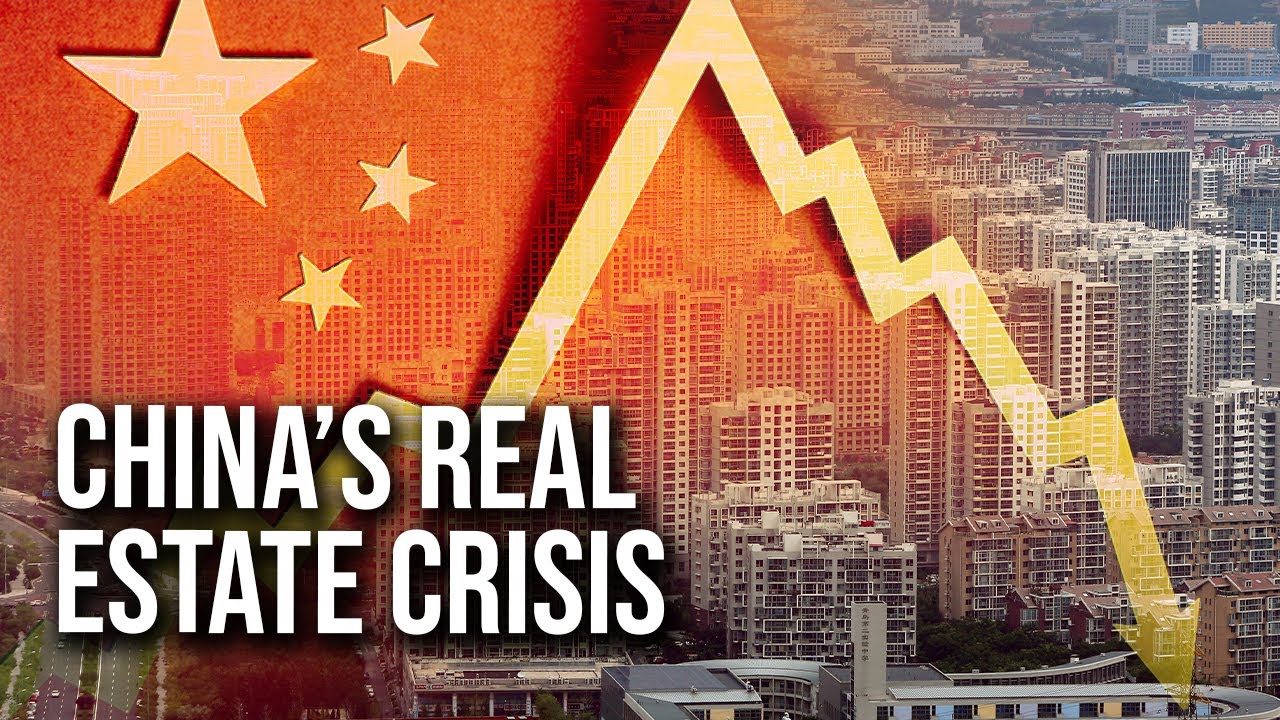
China’s economy in 2026 is a study in contradiction. In its largest cities — Shanghai, Beijing, Guangzhou, Shenzhen — new-home prices have risen for three consecutive months, driven by targeted policy support that is beginning to show traction. Across the remaining hundreds of cities, prices are still falling at a pace that is accelerating, not slowing.
National property investment fell 16.2% year-over-year in the first five months of 2026 — a staggering contraction in a sector that once accounted for roughly a quarter of Chinese GDP. At the same time, China’s technology sector is attracting record capital flows, its export machine is running at full throttle despite global trade tensions, and the People’s Bank of China (PBOC) is quietly implementing some of the most significant monetary architecture reforms in a generation.
China is, in effect, running two economies simultaneously. Understanding which one dominates the other will determine the trajectory of global markets for the next several years.
The Property Sector: A Structural Wound, Not a Cyclical Dip
China’s real estate crisis is entering its fifth year. What began with the 2021 Evergrande collapse has evolved into a sustained structural contraction that is fundamentally reshaping the economic role of property in China’s growth model.
National home prices declined at a faster pace in May 2026 than in April, a sign that market conditions are deteriorating rather than stabilising at the aggregate level. The OECD inventory of unsold homes across China’s lower-tier cities remains enormous — a structural supply overhang that cannot be resolved by demand-side stimulus alone.
The policy response has been asymmetric by design. The central government’s support measures are concentrated in Tier 1 and select Tier 2 cities, where local governments have more fiscal capacity to implement purchase subsidies, down-payment reductions, and mortgage rate cuts. In these markets, the policy appears to be working: new-home prices in China’s first-tier cities rose for the third consecutive month in May.
But first-tier cities account for a small fraction of China’s total housing stock. The vast majority of property — and the vast majority of household wealth — is concentrated in smaller cities where policy support is less effective and price declines are continuing.
The macro consequence is a negative wealth effect that is suppressing consumer confidence and retail spending precisely at the moment China needs domestic demand to compensate for a structurally lower export environment.
The PBOC’s Quiet Revolution
While the property sector weighs on growth, the People’s Bank of China has been implementing a series of significant monetary policy reforms. PBOC Governor Pan Gongsheng announced measures in June 2026 that include:
- Increased use of overnight reverse repo operations, a technical adjustment that improves the PBOC’s ability to manage short-term liquidity conditions with precision
- Narrowing the short-term interest rate corridor, reducing volatility in interbank lending rates and improving monetary policy transmission
- Steps to support the offshore use of the renminbi, accelerating the internationalisation of the Chinese currency as part of China’s longer-term strategy to reduce dependency on the US dollar in global trade and finance
These announcements are significant, but should not be misread as a broad-based monetary stimulus package. The PBOC is reforming its operational framework and improving financial market infrastructure — not firing an economic bazooka. The distinction matters for investors who might expect a China stimulus surge analogous to 2009 or 2015.
For investors, the PBOC’s focus on financial market development and liquidity management signals that policymakers are prioritising long-term stability over short-term growth stimulus. This implies a more gradual recovery trajectory than markets have sometimes assumed.
China’s Export Machine: A Source of Strength and Tension
Against the backdrop of the property slump, China’s export sector is performing exceptionally well. China’s trade surplus has expanded significantly in 2026, driven by:
- Industrial overcapacity in sectors including steel, solar panels, electric vehicles, chemicals, and lithium-ion batteries
- A weaker renminbi that has improved price competitiveness for Chinese exporters in global markets
- Continued strong demand for Chinese manufactured goods from Southeast Asia, Latin America, and Africa — markets that have deepened trade ties with China as US-China trade friction has redirected some Western procurement
China’s strong export growth has sparked significant international pushback. Policymakers across the European Union, the United States, and major emerging markets have expressed concerns about industrial overcapacity and the impact of low-cost Chinese exports on domestic manufacturing industries. The EU has implemented additional tariffs on Chinese electric vehicles, and US tariffs on a broad range of Chinese goods remain elevated following the Trump administration’s tariff regime.
The structural tension: China needs export growth to compensate for weak domestic demand, but its export success is generating the geopolitical friction that could ultimately constrain market access.
China’s AI Pivot: From Property Developer to Tech Powerhouse
The most significant transformation in China’s economic structure in 2026 is not occurring in housing — it is occurring in technology. China’s leadership has made a deliberate and well-resourced pivot toward artificial intelligence, semiconductors, and advanced manufacturing as the new engines of economic growth.
Chinese technology companies including Huawei, Baidu, Alibaba, and ByteDance are investing at scale in AI model development, AI chip design, and AI-integrated enterprise applications. The Chinese government’s industrial policy support for these sectors — through subsidies, preferential financing, and regulatory facilitation — is mobilising capital at a pace that rivals the hyperscaler buildout in the United States.
The strategic motivation is clear: reduce dependency on US semiconductor technology (particularly following US export controls on advanced chips), build sovereign AI capability across defence, governance, and commercial applications, and position Chinese technology companies as global AI leaders in markets outside the Western sphere.
This pivot is creating investment opportunities in Chinese technology equities — though geopolitical risk, regulatory uncertainty, and the US export control regime create complex risk factors that must be weighed carefully by international investors.
The Global Market Implications
China’s two-speed economy creates distinct implications for different asset classes and geographic markets:
Commodities: The property sector contraction is the dominant factor for commodity demand. Steel, copper, cement, and glass — all deeply tied to construction activity — face sustained headwinds from Chinese property weakness. Iron ore prices reflect this dynamic. In contrast, Chinese demand for technology-related commodities (lithium, cobalt, rare earths) remains robust as the EV and battery supply chain continues to scale.
Asian equities: The MSCI Emerging Markets index has significant China weighting, and China’s two-speed dynamics are creating divergence between technology-oriented Chinese equities (performing well) and property/financial sector stocks (underperforming). Country selection and sector allocation matter enormously in the current Chinese equity environment.
Currency markets: The PBOC’s renminbi internationalisation measures represent a long-duration effort to reduce dollar dependence. In the near term, currency management remains a key PBOC tool — managed depreciation to support exporters, with intervention to prevent disorderly moves that could trigger capital outflows.
European and US corporates: Companies with significant China exposure face a bifurcated operating environment — strong demand in technology-related end markets, weak demand in consumer and construction-related segments. Luxury goods, industrials, and materials companies are disproportionately affected by the property sector contraction.
The Policy Outlook: What Comes Next
The Chinese government faces a genuinely difficult policy dilemma. Aggressive fiscal or monetary stimulus risks reigniting the debt dynamics that made the property crisis inevitable in the first place. Insufficient support risks a deeper consumer confidence collapse that could turn a structural slowdown into a sharper cyclical downturn.
The current policy approach — targeted support for Tier 1 property markets, incremental PBOC reforms, and aggressive industrial policy investment in technology sectors — represents a careful balancing act. It is not the big bang stimulus that some investors have anticipated, but it is also not the hands-off approach that would allow a disorderly collapse.
The most likely trajectory: China grows at 4.0%–4.5% in 2026, below its historical average but ahead of the IMF’s revised global growth forecast of 3.1%. The property sector continues to weigh on domestic demand, while exports and technology investment provide partial offsets. The renminbi remains managed, and the PBOC avoids large-scale interest rate cuts that would widen the US-China rate differential and accelerate capital outflows.
The Bottom Line
China’s economy in 2026 is not in crisis, but it is in transition — and the transition is proving slower and more painful than the optimists predicted. The property sector wound is structural, not cyclical. The technology pivot is real but will take years to fully offset the economic weight that property once carried.
For global investors, China remains the world’s second-largest economy and a critical driver of commodity, trade, and technology markets. Ignoring it is not an option. But the analytical frameworks from the 2010s — property-led, infrastructure-driven, credit-fuelled growth — are no longer the right lens through which to assess Chinese economic dynamics in 2026.
The new China story is being written in data centres, EV factories, and AI labs — not in unfinished apartment towers.
FAQs
Q: What is happening with China’s economy in 2026?
A: China is running a two-speed economy. The property sector is contracting sharply — investment fell 16.2% year-over-year in early 2026 — while technology investment, AI spending, and exports are growing. The PBOC is implementing monetary reforms without large-scale stimulus.
Q: Is China’s property market recovering in 2026?
A: Partially and unevenly. New home prices in Tier 1 cities rose for three consecutive months through May 2026, suggesting policy support is gaining traction in the largest markets. Nationally, however, prices declined at a faster pace in May than April, and the recovery remains uneven across regions.
Q: What is China’s GDP growth forecast for 2026?
A: Most forecasters project China’s GDP growth at approximately 4.0%–4.5% in 2026 — below historical averages but above the IMF’s global average of 3.1%. The property sector contraction is the primary drag, partially offset by technology investment and export growth.
Q: How is China’s AI investment affecting global markets?
A: China’s AI and technology pivot is creating strong demand for technology-related commodities (lithium, rare earths), boosting Chinese technology equities, and intensifying competition with US and European AI companies — particularly in markets outside the Western sphere.
Analysis
Nidec Accounting Fraud: The Pressure Culture That Built Japan’s Biggest Corporate Scandal in a Decade

There’s a comic book on Nidec’s website — or there was, until recently — called “The Man Hotter Than the Sun.“ It chronicles the rise of Shigenobu Nagamori, who founded the world’s largest precision motor company in a shack in Kyoto in 1973 and built it into a global industrial giant supplying Apple, the automotive sector, and half the data centres on earth. Hard work. Relentless ambition. Numbers that never disappointed. It was a very Japanese success story, and it was also, investigators have now concluded, partly a fiction — one sustained for years by managers who inflated profits rather than face the man whose sun, apparently, could not be allowed to set.
What Is the Nidec Accounting Fraud — and How Big Is It?
The Nidec accounting fraud is Japan’s largest corporate accounting scandal in at least a decade. A third-party committee report released in March 2026 found that Nidec Corporation had committed accounting fraud totalling 166.2 billion yen — roughly $1.1 billion — as of 2023. That figure, staggering on its own, is likely the floor. The company has warned it may be forced to book an additional ¥250 billion, or $1.6 billion, in impairment charges as the full cost of the scandal is tallied, with third-party investigators saying they uncovered at least 1,000 separate instances of improper accounting across the group. Seoul Economic DailyBloomberg
The scandal first showed its face not in Kyoto, where Nidec is headquartered, but in Casalmaggiore, a small town in northern Italy’s Po Valley. It was the company’s Italian subsidiary, Nidec FIR International S.R.L., where possible lapses first surfaced in June 2025, forcing Nidec to delay filing its annual financial results. Within months, a Chinese subsidiary was implicated too, and then the scope widened further: investigators found misconduct at operations in Switzerland and across Nidec’s automotive inverter business. financialcontent
On October 28, 2025, the Tokyo Stock Exchange designated Nidec’s stock as a “security on special alert,” citing substantial need for improving the company’s internal management systems. The move sent shares tumbling by their daily 500 yen limit — a drop of roughly 19% in a single session. By the time the formal third-party report landed on February 27, 2026, Chairman Hiroshi Kobe and three other senior executives had resigned. Moody’s downgraded Nidec’s debt rating three levels into junk territory, and the stock was removed from the Nikkei 225 index. CEO Mitsuya Kishida bowed publicly at a press conference and said he would forfeit his salary until October. NIDEC CORPORATIONMy-cpe
The mechanics of the fraud were, in retrospect, classically mundane. Misconduct confirmed at Nidec Group bases included: avoidance of recognising valuation losses on obsolete raw materials and finished goods; improper avoidance of impairment losses based on sales plans with low probability of achievement; inflated inventory values; misreported customs declarations; government grants booked as revenue. Each individual manipulation was modest. Aggregated across dozens of subsidiaries over multiple years, they added up to a billion-dollar lie. NIDEC CORPORATION
How Did Corporate Culture Drive the Fraud?
This is where the story moves from accounting irregularity to structural pathology. The central finding of the independent investigation is not that Nagamori ordered the fraud — investigators found no evidence he personally directed specific manipulations. What they found was more insidious.
The committee blamed founder Shigenobu Nagamori for “excessive pressure to meet performance targets,” particularly profit targets, and found that many business units attempted to meet their goals using creative accounting. In plain terms: managers across Italy, China, and Switzerland were not cooking the books because they were corrupt. They were doing it because the alternative — telling Nagamori, a man who has written books about his rags-to-riches philosophy and whose image once adorned the company’s public website — that the numbers wouldn’t hit, was something the culture simply didn’t allow. MarketScreener
What caused the Nidec accounting fraud? The third-party investigation concluded that Nagamori’s excessive pressure on staff to meet profit targets created a corporate culture in which managers across multiple countries resorted to improper accounting rather than miss their numbers. Investigators documented more than 1,000 separate instances of misconduct spread across the group’s global subsidiaries.
This mechanism — what organisational theorists sometimes call “performance pressure fraud” — is not unique to Japan. But it finds particularly fertile ground in founder-dominated companies, where the founder’s authority has rarely been formally checked and where decades of success have calcified the idea that the numbers are always achievable if you push hard enough. Nagamori had, famously, sent regular messages to senior managers demanding better performance. As far back as September 2021, after handing over the CEO role, he was telling managers that the company faced its biggest-ever business crisis and that they needed to do more to boost performance and the share price. The message, delivered repeatedly across years, wasn’t lost on the people below him. Bloomberg
Oasis Management, the activist fund that holds approximately 6.7% of Nidec, described the problem bluntly in March 2026: “The problem at Nidec lies in a corporate culture that pressured employees into engaging in improper accounting practices for the sake of performance or share price; a lack of ethical judgment among management that effectively tolerated such improper accounting; the failure to establish appropriate checks and balances.” businesswire
What Are the Implications for Nidec and Japan Inc.?
The immediate picture for Nidec itself is grim. CEO Kishida has announced a plan to spend ¥130 billion over five years on measures to prevent recurrence and rebuild the governance system, including the suspension of the company’s once-aggressive acquisition strategy. Business acquisitions had been Nidec’s primary growth engine for three decades — an irony not lost on investors, since it was precisely that acquisition-driven expansion into Italy, China, and Switzerland that created the dispersed, difficult-to-audit subsidiaries where the fraud took root. The Japan Times
Nidec has also cancelled its year-end dividend for the fiscal year ending March 2026, with the company saying it “has no choice” given the investigation’s material impact on its financial closing for past fiscal years. The Securities and Exchange Surveillance Commission has reportedly begun its own probe, adding a regulatory dimension to what is already a reputational and financial catastrophe. NIDEC CORPORATION
The broader signal for Japanese markets is harder to read, but not easily dismissed. Japan’s corporate governance reform drive — accelerated by the Tokyo Stock Exchange’s 2023 push to force companies trading below book value to justify their capital allocation — was already testing the limits of how far founder-controlled companies would actually change. Nidec was, until recently, considered a model of what Japanese manufacturing could become: globally scaled, technically sophisticated, financially driven. The revelation that its financial sophistication was partly illusory lands badly at precisely the moment foreign investors have been warming to Japan’s equity story.
Academic research published in the Asia Pacific Journal of Management in 2025 found that the combination of foreign investor pressure for short-term gains and inadequately independent boards — particularly at companies with concentrated founder ownership — significantly elevates the risk of corporate misconduct in Japanese firms. Nidec fits the profile precisely. Springer
The Counterargument: Was Nagamori Singled Out Unfairly?
Not everyone is persuaded that Nagamori is the villain this narrative requires. Some analysts argue that to pin a systemic governance failure on one individual’s personality is to let the board, the auditors, and the company’s own internal compliance function off the hook entirely.
PwC, Nidec’s auditor, issued a disclaimer of opinion on the company’s fiscal year 2025 consolidated financial statements — an extraordinary step that signals the auditor could not obtain sufficient evidence to form a view. PwC pointed specifically to accounting practices that could have a “significant impact on consolidated financial statements” due to arbitrary adjustments in the timing of asset write-downs. That’s a significant failure of external oversight, and it raises questions about why red flags were not raised earlier in an audit relationship that spans years. mexc
There’s also a legitimate argument that the third-party committee report, while technically independent, was commissioned by Nidec itself — a structural limitation that critics of Japan’s third-party committee system have long flagged. The Japan Federation of Bar Associations guidelines that govern these panels were designed for transparency, but the panels’ independence is fundamentally constrained by the fact that the company in question controls the scope and, ultimately, bears the costs of the investigation. Whether the 1,000-plus instances of misconduct represent the full picture, or merely the portion the investigation was equipped to find, remains an open question.
Still, that caveat doesn’t fundamentally alter the central finding. A culture doesn’t become fraudulent by accident. Someone has to set the temperature.
A Reckoning That Was Always Coming
Nidec’s Culture Transformation Lab — the body launched on February 1, 2026, to “convey the voices of front-line employees directly to management” — has a name that reads less like a corporate initiative and more like an admission. If front-line voices needed a formal laboratory to be heard, the silence before it was built tells you everything about what the organisation had become.
The Nidec accounting fraud is, at one level, a story about a single company and a single founder’s shadow falling too far across the boardroom. At another level, it’s a test case for whether Japan’s governance reforms have teeth. The TSE’s special alert mechanism worked; Moody’s downgrade worked; the independent investigation worked. What didn’t work, for years, was the ordinary internal machinery that is supposed to catch this kind of thing before it reaches $1.1 billion.
That machinery failed because the people operating it were too afraid to make it fail in the other direction.
The comic book about the man hotter than the sun has been quietly removed from Nidec’s website. What’s left is a company trying to figure out how to build something that doesn’t burn everything around it.

Mining stocks across Europe came under renewed pressure in the latest trading session, extending a soft patch that has quietly gathered momentum over recent weeks. The tone was not disorderly, but it was decisively negative, with cyclical exposure once again proving sensitive to shifting commodity expectations.
In Dublin, Kenmare Resources stood out on the downside, weighing on the Iseq index after fresh concerns around titanium mineral pricing and operational strain linked to its Mozambique operations. The move reinforced a broader pattern: when sentiment turns against industrial metals, smaller producers tend to absorb the sharpest adjustment.
By mid-session, traders described the market as “directionless but heavy,” with few buyers willing to step in ahead of clearer signals on demand and pricing stability.
The latest weakness in mining equities is unfolding against a backdrop of uneven global growth signals and persistent uncertainty in industrial demand. Markets have been oscillating between brief optimism on infrastructure-led demand and deeper concerns about China’s property sector, which continues to shape global metals consumption.
Currency dynamics are adding another layer of pressure. A firmer US dollar typically weighs on commodities priced in dollars, tightening financial conditions for non-US buyers and feeding through into equity valuations of mining firms.
Research desks across major banks have repeatedly flagged the sensitivity of mining stocks to macro shocks, particularly interest rate expectations and industrial production cycles. Even modest revisions to growth forecasts tend to produce outsized moves in the sector, reflecting its position at the more volatile end of the equity spectrum.
Recent broker commentary has also pointed to renewed caution in European materials equities, citing slower-than-expected demand recovery and elevated input cost structures that continue to compress margins.
1 — European mining stocks under pressure
European mining stocks extend losses on demand concerns
European mining stocks slipped broadly as investors reassessed near-term earnings potential across the sector. The weakness was not confined to a single commodity group, but rather reflected a coordinated pullback in sentiment toward industrial metals and related equities.
Data from European equity markets shows that mining remains among the most cyclical segments of the index universe, often leading both rallies and corrections depending on global demand expectations. Recent trading sessions have reinforced that pattern, with miners underperforming broader industrials as risk appetite faded.
A key driver has been softening expectations around base metals demand, particularly copper and iron ore, where forward pricing has become more sensitive to revisions in Chinese industrial activity forecasts. Even incremental downgrades to growth assumptions have been enough to trigger equity repricing.
Kenmare Resources added a sharper, stock-specific dimension to the broader move. The company, which operates the Moma titanium minerals mine in Mozambique, has faced sustained pressure from weaker ilmenite and zircon pricing, alongside operational and cost-side constraints.
Recent financial disclosures highlighted the strain clearly, with the company reporting a significant deterioration in profitability and moving to conserve cash amid weaker market conditions. Dividend payments were suspended following impairment charges and lower earnings visibility, underscoring the sensitivity of mid-cap miners to commodity cycles.
The reaction in Dublin was swift. As one of the more index-sensitive constituents, Kenmare’s decline had an outsized impact on the Iseq, amplifying the broader negative tone in Irish equities.
The episode also highlights a structural feature of mining indices: concentration risk. When a handful of commodity-linked names dominate index weighting, company-specific stress can quickly translate into index-level moves.
2 — Why mining equities are underperforming
Secondary keyword: Kenmare Resources shares and valuation reset
The pressure on Kenmare Resources shares reflects a wider repricing underway across mid-cap mining equities, where earnings visibility is tightly linked to spot commodity markets and cost discipline.
At the core of the current weakness is a simple mechanism: falling commodity price expectations reduce forward earnings, while higher discount rates compress valuation multiples at the same time. That dual squeeze tends to hit mining equities harder than most other sectors.
A frequently asked question among investors is:
Why are European mining stocks falling?
European mining stocks are falling due to weaker industrial metal price expectations, persistent uncertainty around global demand growth, and a stronger US dollar that reduces commodity pricing support. At the same time, company-specific issues such as rising costs and operational disruptions are intensifying pressure on individual miners, particularly mid-cap producers with concentrated asset exposure.
The timing effect is also important. Commodity markets often stabilise before equities do, because investors wait for confirmation of sustained demand recovery rather than reacting to short-term price moves. This creates a lag where mining equities continue to decline even as some underlying commodities begin to level out.
There is also an ongoing valuation reset. Following the post-pandemic commodity surge, mining equities traded at elevated earnings multiples relative to historical norms. As those expectations normalise, the adjustment process tends to overshoot before stabilising.
In that sense, current price action reflects repricing discipline rather than disorderly selling.
3 — Broader implications for markets and industry
The implications of weaker mining equities extend beyond short-term portfolio performance. In capital-intensive industries like mining, equity valuations play a direct role in shaping investment decisions, project timelines, and dividend policy.
For producers of titanium minerals such as Kenmare, pricing weakness in ilmenite and zircon feeds directly into revenue streams that are already exposed to cyclical industrial demand. When construction and manufacturing activity slows globally, downstream demand for pigments, coatings, and ceramics tends to soften with a lag.
Recent company commentary has pointed to efforts to manage costs and preserve liquidity, reflecting a more defensive operational stance in response to uncertain pricing conditions. That shift is typical of mid-cycle corrections, where producers prioritise balance sheet strength over expansion.
At a macro level, mining equities often serve as an early indicator of industrial demand trends. Prolonged weakness in the sector can signal broader slowdowns in manufacturing activity, particularly in export-oriented European economies.
Currency dynamics add another feedback loop. If commodity prices remain under pressure, they can reinforce US dollar strength, which in turn weighs further on commodity-linked equities. This interaction has historically amplified downturns in the mining cycle.
The key risk from here is duration. Short corrections tend to be absorbed quickly, but extended periods of weak pricing often trigger deeper adjustments in capital allocation across the sector, including delayed investment and tighter shareholder distributions.
4 — Alternative views and counterbalance
Not all market participants interpret the current weakness as the start of a sustained downturn.
Some equity strategists argue that valuations across European mining stocks already reflect a significant portion of near-term downside risk. They point to earlier corrections in materials equities and suggest that balance sheets among major diversified miners remain relatively resilient.
There is also a longer-term structural argument anchored in energy transition demand. Copper, nickel, titanium minerals, and related inputs are expected to play a central role in electrification, infrastructure renewal, and aerospace applications. From this perspective, short-term demand softness may obscure a more durable upward trajectory in structural demand.
Kenmare itself has highlighted signs of stabilisation in certain product lines, particularly zircon, where pricing has shown less volatility than broader industrial metals. That divergence suggests that not all segments of the mining complex are moving in sync.
Still, the counterargument depends heavily on timing. Even structurally positive demand narratives do not prevent near-term equity repricing when earnings weaken. Markets tend to discount recovery, but only once tangible data confirms it.
CLOSING
The latest decline in European mining stocks is less a break in trend than a continuation of a familiar cycle. Commodity expectations soften, earnings forecasts adjust, and equities respond ahead of the macro data that eventually confirms or challenges those expectations.
Kenmare’s performance simply sharpened that adjustment, exposing how quickly sentiment can shift in concentrated, commodity-linked indices like the Iseq.
What matters now is not the direction of a single session, but whether industrial demand stabilises long enough to anchor earnings expectations once again.
Until that happens, mining equities are likely to remain tethered to sentiment as much as fundamentals.

Business Insurance for Digital Exports: Protecting Your Company in the AI Era

Real Estate Crash Predictions 2026: Data-Backed Regional Guide

What is a “Lead-Left” Bank? Unpacking Morgan Stanley’s Role in Anthropic’s Mega-IPO

Is SPY Overvalued in September 2026? Fed Rate Hike Odds & Intrinsic Value

Pakistan’s KSE-100 Nears Record Territory Even as the Trade Gap Persists

US Consumer Sentiment Sinks as Retail Sales Drop

Barclays Q2 2026 Results: Income Beats, Costs Rise 7%

Pakistan’s Remittance Lifeline: Why Gulf Exposure Is a Hidden Risk

Dubai’s Rise to the World’s 7th Financial Hub: Inside the D33 Push

China EV Exports Hit Record High in 2026

UK’s “National Contributions Tax” Explained: Burnham-Era Reform 2026

Russia’s Strange Problem in 2026: Its Currency Is Too Strong

Section 301 Forced Labor Tariffs 2026: 60 Countries Affected

UK National Contributions Tax: Burnham’s Radical Tax Plan

Top 15 Stocks for Investment in 2026 in PSX: Your Complete Guide to Pakistan’s Best Investment Opportunities
Top 15 Stocks for Investment in 2026 in PSX: Your Complete Guide to Pakistan’s Best Investment Opportunities

Debunking IMF Program Myths: Reconfiguring Engagement for True National Ownership in a Volatile World

Top 10 Mutual Fund Managers in Pakistan for Investment in 2026: A Comprehensive Guide for Optimal Returns

What the U.S. Attack on Venezuela Could Mean for Oil and Canadian Crude Exports: The Economic Impact

China’s 50% Domestic Equipment Rule: The Semiconductor Mandate Reshaping Global Tech

15 Most Lucrative Sectors for Investment in Pakistan: A 2025 Data-Driven Analysis

Pakistan’s Export Goldmine: 10 Game-Changing Markets Where Pakistani Businesses Are Winning Big in 2025
15 Most Lucrative Sectors for Investment in Pakistan: A 2025 Data-Driven Analysis
15 Most Lucrative Sectors for Investment in Pakistan: A 2025 Data-Driven Analysis

Pakistan’s Stock Market Renaissance: How 2025’s Hottest Investment Opportunity Is Democratizing Wealth—A Complete Beginner’s Guide

Pakistan’s Economic Outlook 2025: Between Stabilization and the Shadow of Stagnation
Pakistan’s Economic Outlook 2025: Between Stabilization and the Shadow of Stagnation

China’s Property Woes Could Last Until 2030—Despite Beijing’s Best Censorship Efforts
-
 Markets & Finance8 months ago
Top 15 Stocks for Investment in 2026 in PSX: Your Complete Guide to Pakistan’s Best Investment Opportunities
-
Markets & Finance8 months ago
Top 15 Stocks for Investment in 2026 in PSX: Your Complete Guide to Pakistan’s Best Investment Opportunities
-
 Analysis7 months ago
Debunking IMF Program Myths: Reconfiguring Engagement for True National Ownership in a Volatile World
-
 Investment8 months ago
Top 10 Mutual Fund Managers in Pakistan for Investment in 2026: A Comprehensive Guide for Optimal Returns
-
 Global Economy8 months ago
What the U.S. Attack on Venezuela Could Mean for Oil and Canadian Crude Exports: The Economic Impact
-
 Asia8 months ago
China’s 50% Domestic Equipment Rule: The Semiconductor Mandate Reshaping Global Tech
-
 AI9 months ago
15 Most Lucrative Sectors for Investment in Pakistan: A 2025 Data-Driven Analysis
-
 Exports9 months ago
Pakistan’s Export Goldmine: 10 Game-Changing Markets Where Pakistani Businesses Are Winning Big in 2025