
Global Economy
Pakistan’s Stock Market Renaissance: How 2025’s Hottest Investment Opportunity Is Democratizing Wealth—A Complete Beginner’s Guide


How a frontier market’s 94% surge, IMF-backed reforms, and digital transformation are creating unprecedented opportunities for retail investors
When Saba Ahmed, a 29-year-old graphic designer from Karachi, opened her CDC account in March 2025, she joined a historic wave transforming Pakistan’s investment landscape. With just PKR 50,000 saved from freelance projects, she’s now part of a retail investor revolution that helped propel the Karachi Stock Exchange’s KSE-100 Index to an all-time high of 170,719 points in December 2025—a staggering 94% increase from the previous year.
Her story isn’t unique. From Lahore university students to Islamabad housewives, Pakistanis are discovering what institutional investors have known for months: the Pakistan Stock Exchange has become one of Asia’s best-performing markets, outpacing even regional giants. Yet beneath the record-breaking headlines lies a more profound transformation—the democratization of capital markets in a country where only 0.3% of the population owns shares.
This convergence of financial inclusion, governance reform, and geopolitical positioning offers insights extending far beyond Pakistan’s borders. For policymakers examining emerging market resilience, investors seeking frontier opportunities, and citizens demanding economic participation, the PSX experiment represents a critical test case for whether structural reform can genuinely broaden prosperity.
The Landscape: From Crisis to Confidence
The Numbers That Changed Everything
The KSE-100 Index reached an all-time high of 170,719 points, with 12-month gains exceeding 46%, positioning Pakistan among Asia’s top-performing equity markets. This isn’t hollow momentum—it’s backed by fundamentals that signal genuine transformation.
As of September 2025, PSX lists 525 companies with total market capitalization of approximately PKR 18.276 trillion (about $64.83 billion USD). More significantly, the rally is broad-based: banking, energy, cement, fertilizers, and textiles all contributing, suggesting structural confidence rather than speculative bubbles.
The transformation becomes starker in comparative context. While India’s Nifty 50 delivered respectable returns and Bangladesh struggled with political instability, Pakistan’s stock market emerged as an unexpected outperformer. The PSX Dividend 20 Index—tracking top dividend-yielding companies—gained over 40% year-to-date, offering yields substantially above regional peers.
The Geopolitical Context: Reform Under Pressure
This market renaissance didn’t occur in isolation. It emerged from Pakistan’s $7 billion Extended Fund Facility (EFF) agreement with the IMF, approved in September 2024 and supplemented by a $1.4 billion Resilience and Sustainability Facility. The program imposed painful conditionalities: fiscal primary surplus targets of 2.1% of GDP, broadened tax bases including agricultural income taxes, and energy sector reforms to eliminate circular debt exceeding PKR 4.9 trillion.
Inflation fell to a historic low of 0.3% in April, while gross reserves stood at $10.3 billion at end-April, up from $9.4 billion in August 2024, projected to reach $13.9 billion by end-June 2025. These aren’t just statistics—they’re confidence signals that convinced foreign institutional investors to return after years of capital flight.
Yet risks persist. The IMF’s second review completion in December 2025 came with warnings about policy slippages, geopolitical commodity shocks, and climate vulnerabilities. Recent flooding affected 7 million people and temporarily dampened agricultural output, highlighting Pakistan’s exposure to climate risks. The delicate balancing act between reform momentum and political sustainability will determine whether this rally has legs.
Opening the Gates: Your Step-by-Step Investment Framework
Understanding the CDC Account: The Gateway to PSX
The Central Depository Company (CDC) serves as Pakistan’s securities custodian, similar to the DTCC in the United States or NSDL in India. Your CDC account holds your shares electronically, enabling settlement through the National Clearing Company of Pakistan on a T+2 basis—a system now enhanced by digital integration with the RAAST instant payment system.
Two Account Types Serve Different Needs:
The Sahulat Account targets new investors with simplified documentation. Designed for students, housewives, and small-scale investors, it requires only your CNIC (Computerized National Identity Card) and imposes a PKR 800,000 ($2,840 USD) investment ceiling. This structure eliminates income verification barriers, lowering entry thresholds that historically excluded the majority of Pakistanis from capital markets.
The Sahulat Account gives retail investors access to regular market trading without leverage or futures restrictions, requiring minimal documentation. Once your investment exceeds the ceiling, upgrading to a standard account requires income documentation—a progressive on-ramp recognizing Pakistan’s large informal economy.
The Standard CDC Investor Account offers unrestricted access but demands comprehensive Know Your Customer (KYC) compliance: CNIC/NICOP/Passport copies, bank account verification, address proof, and for Muslims, Zakat exemption declarations. The CDC digitized this process in 2024, enabling online applications through www.cdcaccess.com.pk with mobile app support.
The Practical Process: From Application to Trading
Step 1: Broker Selection and Documentation
Pakistan has 270+ registered Trading Right Entitlement Certificate (TREC) holders—brokerage firms licensed by the Securities and Exchange Commission of Pakistan. Leading digital brokers include KTrade Securities, KASB Securities, Arif Habib Limited, and AKD Securities, each offering mobile trading platforms with varying fee structures.
Brokerage commissions typically range from 0.15% to 0.30% per trade, with annual account maintenance fees between PKR 500-2,000. Capital gains tax on shares held less than one year stands at 15%, while shares held longer face no capital gains tax—a powerful incentive for long-term investing. Dividend income incurs withholding tax of 15% for filers and 30% for non-filers, creating tax incentives for formal economy participation.
Step 2: Account Opening Timeline
Individual accounts are opened within 24 hours whereas corporate accounts take 48 hours after cheque clearance. The process has accelerated dramatically since CDC’s online system launch, eliminating the need for physical office visits in most cases.
Your Account Opening Package includes:
- Transaction Order book for physical trade instructions
- CDC Relationship Number (your unique identifier)
- Access credentials for CDC Access portal and mobile app
- Registration for SMS and email alerts on all transactions
Step 3: Funding and Trading
Investors can fund accounts through bank transfers, with CDC now integrated into Pakistan’s RAAST instant payment system for real-time settlements. The minimum investment varies by stock price—theoretically one share—but practical minimums of PKR 10,000-20,000 ($35-70 USD) provide meaningful diversification.
The Pakistan Stock Exchange operates Monday-Friday with trading sessions from 9:30 AM to 3:30 PM Pakistan Standard Time. Pre-opening sessions allow order placement before market open, while post-close sessions handle uncompleted orders. Modern mobile applications from brokers provide real-time quotes, portfolio tracking, and research tools previously available only to institutional investors.
The Cost Structure: Understanding the Economics
A typical investment of PKR 100,000 faces:
- Brokerage commission: PKR 150-300 (0.15-0.30%)
- CDC fee: PKR 10-15
- SECP regulatory fee: Nominal
- National Clearing Company charges: PKR 5-10
Round-trip transaction costs (buy and sell) total approximately 0.5-0.8% excluding tax—competitive with regional markets but higher than developed economies. These costs matter less for buy-and-hold dividend strategies than for active trading.
The Dividend Aristocrats Strategy: Where Value Meets Stability
Pakistan’s Unique Dividend Culture
The PSX Dividend 20 Index tracks the performance of the top 20 dividend paying companies, ranked and weighted based on their trailing 12-month dividend yield, rebalanced semi-annually. This index provides a ready-made screening tool for income-focused investors, something mature markets offer but many frontier markets lack.
Pakistani corporate culture favors dividend distributions more than growth-focused tech sectors, reflecting the market’s composition. Oil and gas companies, banks, cement manufacturers, and Fast-Moving Consumer Goods (FMCG) firms dominate the high-yield landscape, offering dividend yields frequently exceeding 6-10% annually—substantially above Pakistan’s current inflation rate of approximately 7-8%.
Sector Analysis: Where Dividends Flow
Banking Sector Leaders
Banks like United Bank Limited, Meezan Bank, and MCB Bank have historically provided dividend yields of 6-9%, supported by net interest margin expansion as interest rates normalized from emergency highs. The sector benefited from improved credit quality as macroeconomic stability returned, with non-performing loan ratios declining throughout 2025.
Regulatory capital requirements ensure dividend sustainability, with the State Bank of Pakistan enforcing minimum capital adequacy ratios of 11.5%. Banks that maintained strong provisions during crisis years now possess the balance sheet strength to reward shareholders while funding credit growth.
Oil & Gas Sector Stability
State-owned enterprises like Oil & Gas Development Company Limited (OGDC) and Pakistan Petroleum Limited have provided consistent dividends tied to commodity prices and production volumes. With global energy prices stabilizing and domestic gas field development continuing, these companies offer inflation hedges alongside income.
The government’s 2025 policy shift toward market-determined energy pricing—a key IMF conditionality—reduces subsidy burdens while improving profitability for producers. However, investors must monitor circular debt resolution; delayed payments to power producers historically constrained some companies’ ability to distribute cash.
Fertilizer Sector: Agricultural Dependence
Fauji Fertilizer Company and Engro Fertilizers serve Pakistan’s agricultural sector, which employs 37% of the workforce. Government subsidy reforms targeting agricultural support prices create both risks and opportunities. Reduced direct subsidies may pressure demand, while improved payment discipline by government procurement agencies strengthens receivables quality.
Climate vulnerability represents a material risk—flooding can devastate crop yields, reducing fertilizer demand. Yet Pakistan’s youthful population and food security imperatives ensure long-term agricultural investment, supporting fertilizer industry fundamentals.
The Sustainability Question: Dividend Trap Risks
A sustainable payout ratio typically under 70% ensures the company isn’t over-distributing profits. Investors should verify that dividends are supported by operational cash flow rather than debt-financed distributions—a red flag common during liquidity crises.
Compare yields against government Pakistan Investment Bonds (PIBs). When 10-year PIB yields stand at 11-12%, equity dividend yields of 8-9% must be justified by growth potential or special circumstances. Excessively high yields often signal market skepticism about dividend sustainability.
Navigating the Risks: What Could Go Wrong
Political Instability Premium
Pakistan’s political volatility remains a material risk. Frequent government changes, military influence in economic policymaking, and judicial-executive tensions create uncertainty that periodically triggers capital flight. The 2025 relative stability rests partly on broad political consensus around the IMF program—a consensus that could fracture under electoral pressures or external shocks.
Investors must accept that PSX can experience 20-30% drawdowns triggered by political events unrelated to corporate fundamentals. Historical patterns show rapid recoveries once stability returns, rewarding patient capital but punishing leveraged positions.
Currency Depreciation Reality
The Pakistani Rupee has depreciated approximately 25-30% against the US Dollar over the past five years, a trend that may continue given structural current account pressures. For domestic investors, this matters less—they earn and invest in Rupees. For foreign investors or Pakistanis earning abroad, currency risk substantially affects returns.
The State Bank of Pakistan maintains a flexible exchange rate and continues to improve the functioning of the foreign exchange market and transparency around FX operations. This policy shift from controlled rates reduces central bank intervention but increases volatility. Dollar-denominated returns may significantly lag local currency returns depending on exchange rate movements.
Liquidity Considerations
Average daily trading volume on PSX exceeds PKR 35-40 billion, concentrated in top 50 companies. Mid-cap and small-cap stocks often trade thinly, with wide bid-ask spreads and difficulty executing large orders without moving prices. The introduction of circuit breakers limiting daily price movements to 5% in either direction reduces volatility but can trap investors in illiquid positions during crises.
Foreign institutional ownership remains below 10% of market capitalization, far lower than India (22%) or Indonesia (45%). While rising foreign interest supports valuations, any reversal could pressure prices given limited domestic institutional buffers—pension funds and insurance companies remain underdeveloped compared to regional peers.
Regulatory and Governance Risks
The Securities and Exchange Commission of Pakistan has strengthened enforcement, introducing corporate governance reforms and beneficial ownership disclosure requirements throughout 2024-2025. Yet governance standards still lag international benchmarks, with related-party transactions, opaque family business structures, and limited minority shareholder protections remaining concerns.
The 2025 Governance and Corruption Diagnostic report released under IMF conditionality highlighted persistent issues in procurement transparency and state-owned enterprise governance. While reforms are underway, changing institutional cultures requires years of sustained effort. Investors should favor companies with strong independent directors, transparent reporting, and established audit relationships.
The Broader Implications: What This Means Beyond Markets
Financial Inclusion as Economic Strategy
Pakistan’s 241 million people—62% under age 30—represent an enormous untapped investor base. Individual traders are turning to equities as property prices stagnate and deposit rates have halved in the past two years, illustrating how macroeconomic shifts can democratize investing when alternatives disappoint.
Expanding retail participation addresses multiple policy goals simultaneously. It channels domestic savings toward productive investment, reducing reliance on external financing. It creates middle-class stakeholders in economic stability, building political constituencies for sustained reform. And it addresses youth unemployment by providing wealth-building alternatives to government jobs or emigration.
The challenge lies in investor protection. Unsophisticated investors entering markets during euphoric periods historically suffer losses when sentiment shifts. The SECP’s emphasis on investor education through initiatives like JamaPunji—the investor education portal—attempts to build financial literacy alongside market access. Whether these efforts sufficiently prepare retail investors for inevitable downturns remains uncertain.
The China Factor: Strategic Implications
In 2017, a consortium of Chinese exchanges including Shanghai Stock Exchange, Shenzhen Stock Exchange, and China Financial Futures Exchange acquired a 40% strategic stake in PSX, making China its single largest foreign shareholder. The “China Connect” system theoretically enables cross-border capital flows, though practical implementation has lagged ambitions.
This ownership structure carries geopolitical dimensions. As Pakistan balances its traditional security relationship with China against renewed economic engagement with Western institutions through the IMF, the stock exchange becomes a symbol of competing visions. Chinese infrastructure investment through the China-Pakistan Economic Corridor could boost listed companies’ growth prospects, while Western investors remain cautious about governance and political risks.
Regional Competitive Dynamics
Pakistan competes with Bangladesh, Sri Lanka, and frontier African markets for foreign portfolio investment. Bangladesh’s current political instability provides Pakistan a temporary advantage, while Sri Lanka’s post-default recovery creates a compelling distressed opportunity narrative. Pakistan must sustain reform momentum to differentiate itself as more than a tactical trade.
The comparison with India remains inevitable and unflattering. India’s market capitalization exceeds $4 trillion compared to Pakistan’s $65 billion—a 60:1 ratio that exceeds the countries’ economic size differential. India’s success in building institutional infrastructure, retail participation, and regulatory credibility provides both a roadmap and a competitive challenge. Pakistani policymakers increasingly study India’s National Stock Exchange transformation as a model, adapted for local context.
The Path Forward: Scenarios for the Next Five Years
The Optimistic Case: Structural Transformation
If Pakistan maintains IMF program discipline through 2027 while avoiding major political disruptions, the market could sustain 15-20% annual returns through 2030. Key drivers would include:
- Privatization Pipeline: Government plans to privatize Pakistan International Airlines, several power distribution companies, and other state-owned enterprises could unlock value while demonstrating commitment to market-oriented reforms. Successful privatizations would attract strategic investors and validate governance improvements.
- Digital Transformation: Pakistan’s IT services exports exceeded $3 billion in FY2024-25 and are growing 25% annually. If even a fraction of successful tech companies pursue PSX listings instead of overseas exits, the market could develop a genuine growth sector beyond traditional industries.
- Demographic Dividend: If macro stability persists and regulatory reforms continue, Pakistan’s youthful population could drive sustained consumption growth, benefiting listed consumer companies while expanding the retail investor base.
The Pessimistic Case: Reversal of Fortunes
Conversely, political instability, reform backsliding, or external shocks could trigger rapid capital flight. Pakistan’s vulnerability to:
- Geopolitical Tensions: Escalation with India, Afghanistan spillover effects, or positioning amid US-China competition could rapidly shift investor sentiment. Defense spending imperatives could crowd out development expenditure, slowing growth.
- Climate Catastrophes: As 2025’s flooding demonstrated, Pakistan remains highly vulnerable to climate events. A major disaster could derail fiscal targets, forcing emergency spending that conflicts with IMF conditionalities.
- Reform Fatigue: The political sustainability of IMF-mandated austerity remains questionable. Provincial resistance to agricultural income taxes, business community opposition to documentation requirements, and public frustration with subsidy removal could fracture the reform coalition.
The Most Likely Outcome: Muddling Through
Pakistan’s historical pattern suggests neither sustained excellence nor complete collapse but rather cyclical progress punctuated by periodic crises. The 2025-2026 rally likely represents genuine improvement rather than a bubble, but expecting linear progress ignores structural constraints.
Smart investors will approach PSX as a tactical allocation within diversified portfolios rather than a strategic bet. The market offers compelling risk-adjusted returns for those who understand and accept the volatility, regulatory uncertainty, and currency risks. For Pakistani citizens, participating in their economy’s growth through equity ownership represents both a financial opportunity and a civic engagement act.
Practical Recommendations: How to Proceed
For Individual Investors
Start Small, Learn First: Open a Sahulat Account with minimal capital to understand market mechanics before committing substantial savings. Use the first six months as an education period, tracking your picks without emotional attachment.
Focus on Dividend Aristocrats: Top dividend paying sectors on PSX include banking, energy and fertilizers. Build a portfolio of 6-8 established dividend payers rather than chasing speculative growth. Reinvest dividends to compound returns.
Maintain Realistic Expectations: Budget for 30% drawdowns as normal market corrections. Only invest capital you won’t need for 3-5 years. Consider PSX as 10-20% of total savings, not your entire nest egg.
Stay Informed: Subscribe to PSX announcements through the official data portal. Follow quarterly results for your holdings. Understand that in Pakistan, management quality and political connections often matter more than financial ratios suggest.
For Foreign Investors
Understand Repatriation Rules: Pakistan maintains some capital control vestiges despite liberalization. While foreign portfolio investors can generally repatriate proceeds, sudden policy reversals during crises have occurred historically. Size positions accordingly.
Consider Fund Routes: Emerging market funds or Pakistan-focused funds provide professional management, local expertise, and reduced administrative burden compared to direct investing. Several international fund managers now include Pakistan in frontier market allocations.
Monitor Geopolitics: Political risk isn’t diversifiable in Pakistan—a military coup, India-Pakistan crisis, or IMF program collapse would affect all holdings simultaneously. Maintain hedges or view Pakistan as a small, speculative allocation.
For Policymakers and Regulators
Accelerate Institutional Development: Strengthen pension funds, insurance companies, and mutual funds to provide domestic institutional ballast. Currently, foreign investors and retail traders drive volatility; strong local institutions provide stability.
Enhance Transparency: Mandate beneficial ownership disclosure, strengthen auditor liability, and enforce insider trading penalties rigorously. Governance credibility determines whether Pakistan attracts long-term capital or remains a tactical trade.
Build Financial Literacy: Expand investor education beyond cities. Partner with universities, civil society organizations, and religious institutions to reach populations traditionally excluded from financial systems.
Conclusion: Democracy of Capital in Action
When Saba Ahmed checked her CDC mobile app in December 2025 and saw her modest portfolio up 35% in nine months, she joined millions of Pakistanis experiencing a rare moment—when government policy, market forces, and individual agency aligned to create genuine opportunity.
The Pakistan Stock Exchange’s 2025 renaissance isn’t merely a financial phenomenon. It represents a test of whether structural reform can broaden prosperity beyond elites, whether digital infrastructure can overcome historical exclusion, and whether a frontier market can sustain momentum against formidable headwinds.
Analysts forecast the KSE-100 Index could reach 170,000 points if macroeconomic stability and reform progress continue—a target already achieved, prompting revised estimates above 180,000 for 2026. Yet the more important question isn’t whether markets rally further, but whether this rally reflects and reinforces genuine economic transformation.
For the global community, Pakistan’s experiment offers lessons about IMF program design, financial inclusion strategies, and the political economy of reform. For investors, it presents a high-risk, high-reward opportunity in one of the world’s last major frontier markets. For Pakistanis, it offers something more fundamental—a stake in their nation’s future.
The democratization of capital is never smooth. Markets will correct, disappointments will occur, and risks will materialize. But the principle that ordinary citizens should participate in economic growth, not merely observe it from afar, represents a worthy aspiration. Whether Pakistan’s stock market revolution delivers on that promise will define more than investment returns—it will help shape a nation’s trajectory.
DISCLAIMER: This analysis is for informational and educational purposes only and should not be construed as investment advice. All investments carry risk, including potential loss of principal. Pakistan’s market involves heightened political, currency, and liquidity risks. Readers should conduct their own due diligence and consult qualified financial advisors before making investment decisions. The author has no financial interest in Pakistani securities or companies mentioned.
SOURCES & CITATIONS:
- Pakistan Stock Exchange Official Data Portal (dps.psx.com.pk)
- Central Depository Company of Pakistan (cdcpakistan.com)
- International Monetary Fund Country Reports and Press Releases (2024-2025)
- Securities and Exchange Commission of Pakistan (secp.gov.pk)
- Trading Economics Pakistan Indicators
- Bloomberg, Reuters market data
- Pakistan Bureau of Statistics
- World Bank Pakistan Development Updates


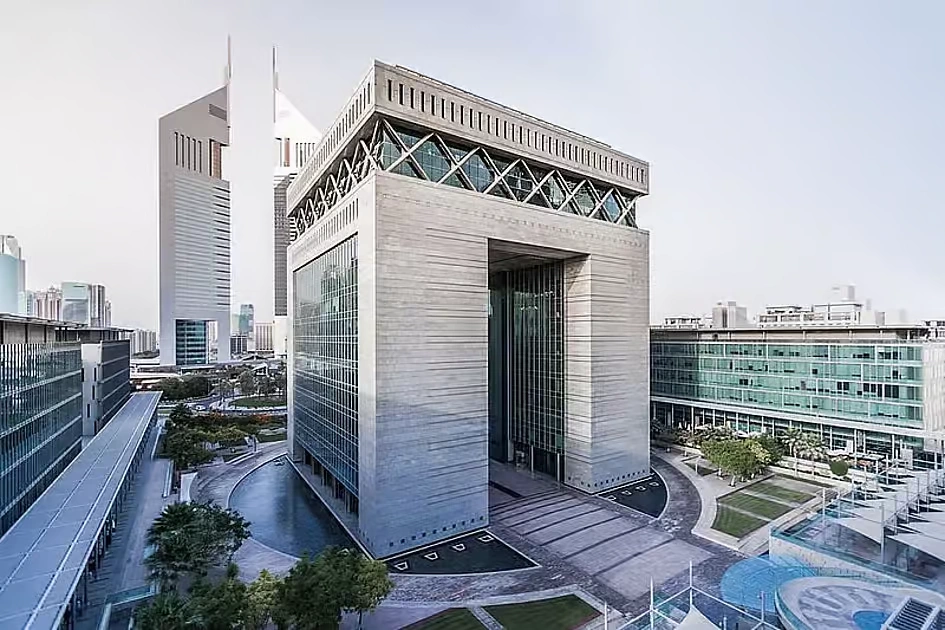
Dubai has climbed to its highest position ever on one of finance’s most closely watched rankings, and the achievement is no accident — it is the direct output of a decade-long, numerically explicit government strategy that few other financial centres have attempted to execute with this level of precision.
The Ranking Itself
The Dubai International Financial Centre has recorded its highest-ever position on the Global Financial Centres Index at seventh place worldwide, the highest ranking ever achieved by any financial centre across the Middle East, Africa and South Asia region, and the only MEASA-region centre to feature in the global top 20 — underscoring both its regional dominance and genuine global competitiveness.
The D33 Strategy Behind the Number
The ranking is explicitly tied to Dubai’s own stated ambitions. The GFCI result is described as pivotal to Dubai’s goal of becoming one of the world’s top four financial centres by 2033, in line with the Dubai Economic Agenda, or D33, which targets a doubling of the emirate’s economy over the decade. Separately, Dubai Chambers has confirmed the plan targets cumulative economic output of AED 32 trillion, or roughly $8.7 trillion, over the decade, supported by 100 transformative projects centred on trade expansion, digital innovation and sustainable growth.
The Underlying Economic Engine
The financial-centre ambitions are backed by genuine current-quarter growth. Dubai’s economy reached AED 232 billion in first-quarter 2026 GDP, a 2.4 percent year-on-year increase, with the finance, construction, healthcare, wholesale and retail trade, and real estate sectors all contributing to the broad-based expansion. Middle East Briefing separately projects the wider UAE economy will expand around 5 percent in 2026, with local banks positioned to increase lending both domestically — supporting SMEs, consumers and project finance — and across borders into markets like Saudi Arabia, where UAE banks’ comparatively lower interbank rates create an arbitrage opportunity.
Real Money Behind the Ranking
The GFCI climb is being validated by tangible transaction volume rather than sentiment alone. Weekly UAE business tracking shows a steady drumbeat of institutional activity: Sharjah Islamic Bank reported AED 803.9 million in net profit, up 15.3 percent, ADI Chain secured a $50 million investment to build sovereign digital infrastructure, and Capital.com reported $1.1 trillion in second-quarter trading volume routed through the jurisdiction. Separately, UAE and Saudi banks are projected to lead GCC credit growth in 2026, reinforcing Dubai and Abu Dhabi’s combined position as the region’s default financial gateway.
Why This Matters for Pakistan and South Asia
Dubai’s ascent as a financial hub carries direct relevance for Pakistan, where — as detailed in our companion coverage of Pakistan’s remittance exposure — roughly 55 percent of the country’s substantial remittance inflows originate from the Gulf Cooperation Council. A deepening, increasingly sophisticated DIFC-anchored financial ecosystem in Dubai means more efficient, lower-cost channels for that capital, alongside growing opportunities for Pakistani and South Asian firms to access GCC-sourced project finance and cross-border credit as UAE banks expand lending beyond their domestic market.
What is Dubai’s global financial centre ranking in 2026?
Dubai’s DIFC recorded its highest-ever ranking on the Global Financial Centres Index at 7th place worldwide in 2026 — the highest ever achieved by any Middle East, Africa or South Asia financial centre — as part of its stated goal to become a top-four global financial hub by 2033.
The Risk Beneath the Growth Story
Not every signal points to unambiguous strength. AGBI’s own reporting notes that UAE banks’ second-quarter results are likely to show weaker profits, slower lending and narrower margins, even as analysts characterise the underlying sector as fundamentally resilient — a reminder that Dubai’s financial-hub ambitions are being pursued against a genuinely more difficult regional operating environment shaped by the Strait of Hormuz disruption and broader Gulf security concerns, not in isolation from them.
The Bottom Line
Dubai’s climb to seventh in the GFCI rankings is less a one-off achievement than a measurable checkpoint on an explicitly numbered, decade-long strategic roadmap — one increasingly backed by real GDP growth, credit expansion, and institutional trading volume rather than ambition alone.
Analysis
Global Central Bank Divergence 2026: Why the Fed, BoE, BoJ, and PBoC Are All Moving Differently
The world’s major central banks are no longer moving in anything resembling lockstep. The Federal Reserve is watching a weakening labor market while weighing energy-driven inflation risk, the Bank of Japan is scaling back bond purchases into a fiscal expansion, the Bank of Russia is cutting rates through sanctions-driven stagnation, and the Bank of England is openly discussing a hike rather than the cuts it signaled just months ago, a divergence in global monetary policy that reflects how unevenly the Iran war’s economic shock has landed across different economies.
The Fed’s Data-Dependent Pivot
Federal Reserve Chairman Kevin Warsh has explicitly asked markets to look to incoming data rather than central bank guidance to map the path for US interest rates, a communication shift that took on new significance after June’s jobs report showed just 57,000 new positions, roughly half the expected pace, according to Yahoo Finance’s markets coverage. Warsh has separately said inflation risks have eased substantially, a combination that has markets betting on a more accommodative Fed even as the central bank has offered no formal commitment ahead of its July 30 decision.
The Bank of England’s Reversal
Few central banks illustrate the scale of the pivot as clearly as the Bank of England. Governor Andrew Bailey said market pricing for two rate cuts this year had looked reasonable before the Iran war lifted inflation risks, according to the Credit Protection Association’s reporting, a statement that effectively closed the door on the easing path the Bank had signaled entering 2026. With UK inflation forecast to climb back toward 3.5% by year end and the base rate held at 3.75%, RSM UK’s analysis suggests a hike, not a cut, is now the more live possibility for the Bank’s July 30 decision, timed to land the same day as the Fed’s own announcement.
Canada and the Bank of Canada’s Cautious Hold
The Bank of Canada has held its policy rate at 2.25% since the spring, balancing a genuinely fragile domestic economy, technically in recession by some measures, against the same energy-driven inflation pressure affecting the UK, according to the central bank’s own announcement. Unlike the Fed or Bank of England, the Bank of Canada’s dilemma is compounded by an unresolved CUSMA trade review, meaning its policy path depends as much on trade negotiation outcomes as on conventional inflation and employment data.
Russia’s Disinflation Campaign, Slowed but Not Abandoned
At the opposite extreme sits the Bank of Russia, which has cut its key rate eight consecutive times since June 2025, from a record 21% down to 14.25% by its June 2026 decision, even as annual inflation remains at 5.6%, well above its 4% target, according to the central bank’s own data. Governor Elvira Nabiullina’s cutting cycle reflects a fundamentally different set of pressures than Western central banks face: a wartime economy where fiscal policy, not conventional demand, drives the inflation picture, and where the central bank’s June cut of just 25 basis points, smaller than the market’s expected 50, signals genuine caution about cutting too fast into persistent pro-inflationary risk from higher domestic energy costs.
Asia’s Split Response
Indonesia and Malaysia illustrate how differently emerging Asian economies are navigating the same global energy shock. Bank Indonesia has held its rate at 4.75% for seven consecutive meetings specifically to defend the rupiah, which has weakened 3.6% year-to-date, according to McKinsey’s regional review, prioritizing currency stability over the growth-supportive easing its 5.61% GDP growth might otherwise justify. Bank Negara Malaysia, by contrast, has benefited from a currency that has held relatively firm, giving it more flexibility, though inflation drifting toward the top of its 1.5% to 2.5% target range, per The Edge Malaysia’s reporting, suggests that flexibility may narrow through the second half of the year.
Japan sits furthest from the rest of the pack. The Bank of Japan has been reducing its own bond purchases even as 10-year Japanese government bond yields have climbed above 2.75%, their highest level since May 2026, according to Trading Economics, a tightening-adjacent move driven as much by concern over Prime Minister Sanae Takaichi’s fiscal expansion plans as by conventional inflation targeting.
China’s Different Problem Entirely
China’s central bank faces a problem none of its peers share: six consecutive quarters of deflation rather than inflation. Societe Generale economist Wei Yao has suggested Chinese bond yields could fall to record lows in 2026 as the People’s Bank of China continues easing, a view consistent with Beijing’s own base case of roughly RMB 1 trillion in additional fiscal stimulus alongside 20 basis points of rate cuts and 50 basis points of reserve requirement ratio cuts, according to Citi Research’s 2026 outlook, cited via Asia Times’ coverage of the Politburo’s domestic demand pivot.
What This Divergence Actually Means
The practical consequence of seven major central banks pursuing seven distinct policy paths is a global capital markets environment where currency volatility, carry trade dynamics, and cross-border capital flows have become considerably harder to forecast using any single macro framework. When Japan’s ultra-low yields anchored global borrowing costs and most Western central banks moved in broad cyclical alignment, currency and rate forecasting rested on relatively stable assumptions about global monetary conditions. That anchor is now gone. Investors positioning across UK gilts, US Treasurys, Japanese government bonds, and emerging Asian debt in the second half of 2026 face a genuinely fragmented policy landscape, one where the same global shock, the Iran war’s energy price spike, has produced hikes, holds, and cuts in near-equal measure depending entirely on each economy’s starting fiscal position, currency exposure, and domestic political constraints.
Rich Nations Face Make‑or‑Break Moment at COP31 Preparatory Talks
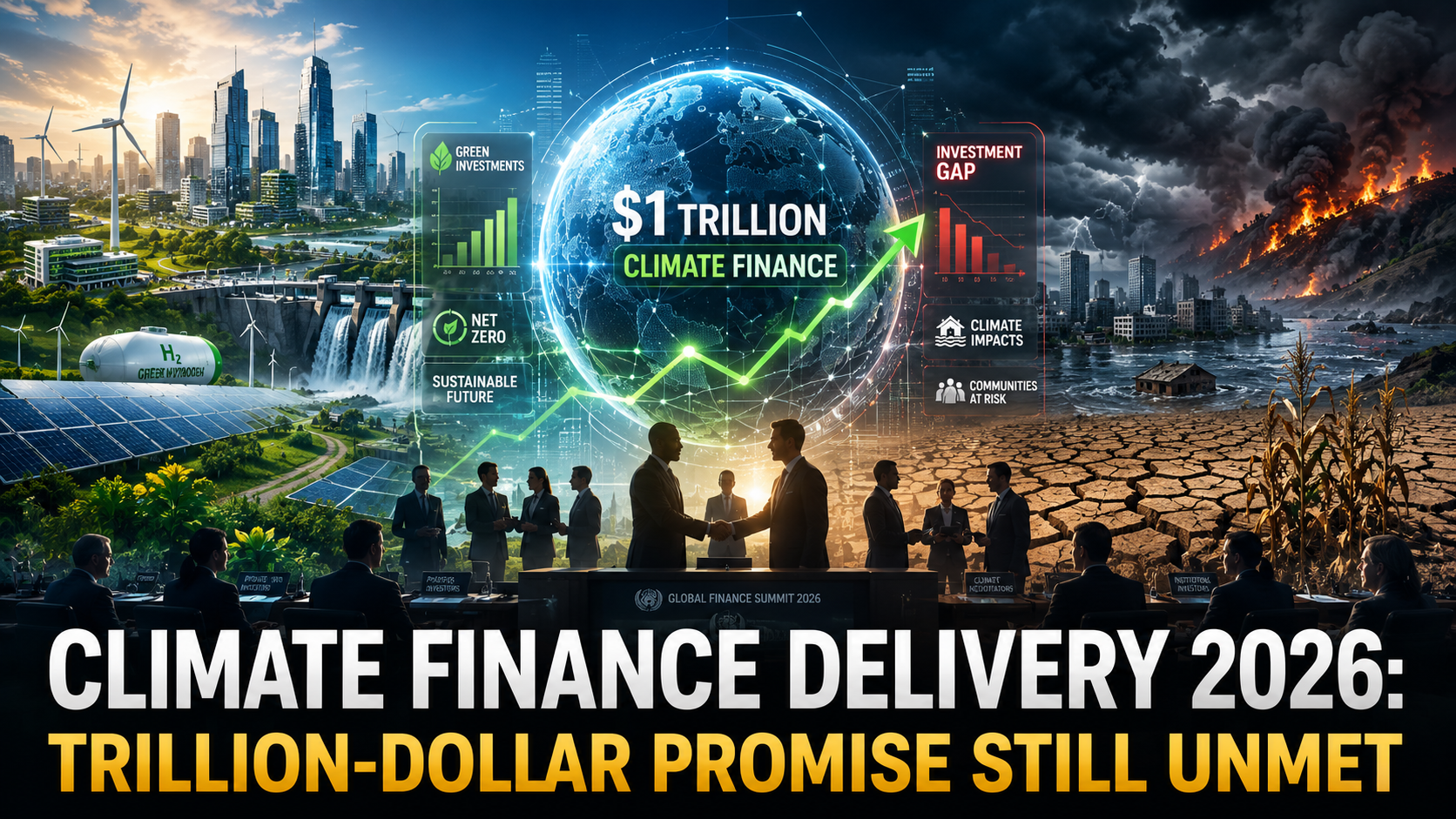
The United Nations Framework Convention on Climate Change (UNFCCC) has released a sobering assessment: climate finance delivery 2026 remains a staggering $1.1 trillion short of the $2.4 trillion that developing countries need annually to transition to low‑carbon economies and adapt to climate impacts (UNFCCC Standing Committee on Finance, June 2026). The report, published ahead of the pre‑COP31 ministerial in Bonn, reveals that total climate finance flows reached $1.3 trillion in 2024 (the latest available data), virtually flat from 2023. While the number is a record in absolute terms, the chasm between what is provided and what is needed is widening, not narrowing.
The Structure of the Shortfall
The $2.4 trillion annual need is broken down into three components: $1.2 trillion for mitigation (clean energy, industry decarbonisation), $800 billion for adaptation (sea walls, drought‑resilient crops, early warning systems), and $400 billion for loss and damage (compensation for unavoidable climate impacts). Currently, mitigation receives the lion’s share of finance—over 85%—mostly in the form of loans that add to debt burdens. Adaptation, which is most critical for the poorest countries, receives only $130 billion, and loss and damage, despite the operationalisation of a dedicated fund at COP28 in 2023, has seen a mere $2 billion in pledges against the $400 billion ask.
The loss and damage fund, a hard‑won victory for vulnerable nations, is emblematic of the gap between rhetoric and reality. Rich countries have committed just 0.5% of what the UNFCCC secretariat estimates is required for countries like Pakistan (2022 floods), Vanuatu (cyclones), and the Sahel (desertification) to rebuild in a climate‑resilient manner. The World Bank, which hosts the fund, has been slow to disburse, and the US, historically the largest historical emitter, has contributed only $500 million, a fraction of its fair share (World Bank Loss and Damage Fund Update, June 2026).
The NCQG Negotiations: Who Pays?
The NCQG negotiations (new collective quantified goal on climate finance) are the central battlefield of COP31, scheduled for November 2026 in Brasília. The current goal, set at COP15 in 2009, was $100 billion a year by 2020—a target met only in 2022. The new goal must reflect the drastically increased needs and a broader donor base. The EU and the US are insisting that China, now the world’s largest emitter and the second‑largest economy, must become a formal contributor, arguing that the 1992 division of the world into “Annex I” (developed) and “non‑Annex I” (developing) is outdated. China and the G77+China grouping counter that historical responsibility and per‑capita emissions still place the primary obligation on the old industrial powers.
The deadlock has been partially broken by a bridging proposal from the COP31 presidency (Brazil) that would create a three‑tiered system: Tier 1 contributors (traditional donors) would provide grants and concessional finance; Tier 2 contributors (high‑income developing countries like China, Saudi Arabia, Singapore) would provide non‑concessional loans and technology transfer; and Tier 3 contributors (multilateral development banks) would leverage their balance sheets to mobilise private capital. The proposal would set a cumulative target of $1.5 trillion a year by 2030, but the tiers’ shares remain hotly contested (UNFCCC, Pre‑COP31 Ministerial Draft Text, June 2026).
Mobilising Private Finance: The MDB Reform Agenda
Given the fiscal constraints in donor countries, the real engine of increased climate finance must be the multilateral development banks (MDBs) and the private sector. The World Bank, under its new president, has implemented the recommendations of the G20 Capital Adequacy Framework review, which could unlock an additional $100 billion in lending headroom over a decade without requiring new capital. The Bank is launching a new “Climate Enhanced” bond, where coupon payments are linked to verified emission reduction outcomes in a portfolio of African clean‑cooking and reforestation projects, targeting institutional investors hungry for impact‑linked returns (World Bank, Outcome Bond Issuance, June 2026).
The International Finance Corporation is expanding its “Green Up” guarantee facility, which de‑risks private investments in emerging‑market renewable energy by covering first‑loss risks. The Glasgow Financial Alliance for Net Zero (GFANZ) has evolved from a coalition of pledges to a set of country‑specific investment platforms: in Vietnam, a Just Energy Transition Partnership has mobilized $15 billion, and in Senegal, a similar platform is targeting $5 billion for solar and green hydrogen. These vehicles blend public concessional capital with private investment, but scaling them to the $2.4 trillion level remains aspirational.
The Cost of Inaction
The UNFCCC report emphasizes that every year of underfunding magnifies the eventual bill. The cost of inaction—measured in destroyed infrastructure, lost crop yields, and health crises—is accelerating. Swiss Re estimates that unabated climate change could reduce global GDP by 11% by 2050 (Swiss Re Institute, “Climate Economics”, 2026). For the private sector, climate risk is already material: supply chains are being disrupted by floods in Bangladesh and droughts in Panama, and insurance coverage is retreating from vulnerable regions, leaving assets stranded. The business case for closing the climate finance gap is not charitable; it is self‑interest.
The pre‑COP31 talks in Bonn are being described by veteran negotiators as the most consequential since Copenhagen 2009. The outcome will determine whether the Paris Agreement’s 1.5°C target remains within reach. The message from the UNFCCC is unambiguous: the world’s financial architecture is not fit for purpose in the face of a climate emergency, and the window for reform is closing fast.

Pakistan’s Remittance Lifeline: Why Gulf Exposure Is a Hidden Risk

Dubai’s Rise to the World’s 7th Financial Hub: Inside the D33 Push

China EV Exports Hit Record High in 2026

UK’s “National Contributions Tax” Explained: Burnham-Era Reform 2026

Russia’s Strange Problem in 2026: Its Currency Is Too Strong

Section 301 Forced Labor Tariffs 2026: 60 Countries Affected

UK National Contributions Tax: Burnham’s Radical Tax Plan

Global Central Bank Divergence 2026: Why the Fed, BoE, BoJ, and PBoC Are All Moving Differently

Japan’s Bond Market Just Cracked. It Could Take the Rest of the World’s Debt With It

Malaysia’s Ringgit Is Holding Up. Economists Say the Real Test Is Still Coming

Climate Finance Delivery 2026: Trillion‑Dollar Promise Still Unmet

AI Impact on Wages 2026: Productivity Soars, Paychecks Stagnate

SpaceX IPO 2026: $2 Trillion AI Bubble, OpenAI & Anthropic — What Investors Must Know

China Economy 2026: Property Crisis, AI Investment & Export Surplus Explained

Top 15 Stocks for Investment in 2026 in PSX: Your Complete Guide to Pakistan’s Best Investment Opportunities
Top 15 Stocks for Investment in 2026 in PSX: Your Complete Guide to Pakistan’s Best Investment Opportunities

Debunking IMF Program Myths: Reconfiguring Engagement for True National Ownership in a Volatile World

Top 10 Mutual Fund Managers in Pakistan for Investment in 2026: A Comprehensive Guide for Optimal Returns

What the U.S. Attack on Venezuela Could Mean for Oil and Canadian Crude Exports: The Economic Impact

China’s 50% Domestic Equipment Rule: The Semiconductor Mandate Reshaping Global Tech

15 Most Lucrative Sectors for Investment in Pakistan: A 2025 Data-Driven Analysis

Pakistan’s Export Goldmine: 10 Game-Changing Markets Where Pakistani Businesses Are Winning Big in 2025
15 Most Lucrative Sectors for Investment in Pakistan: A 2025 Data-Driven Analysis
15 Most Lucrative Sectors for Investment in Pakistan: A 2025 Data-Driven Analysis

Pakistan’s Economic Outlook 2025: Between Stabilization and the Shadow of Stagnation
Pakistan’s Economic Outlook 2025: Between Stabilization and the Shadow of Stagnation

China’s Property Woes Could Last Until 2030—Despite Beijing’s Best Censorship Efforts
China’s Property Woes Could Last Until 2030—Despite Beijing’s Best Censorship Efforts
-
 Markets & Finance7 months ago
Top 15 Stocks for Investment in 2026 in PSX: Your Complete Guide to Pakistan’s Best Investment Opportunities
-
Markets & Finance7 months ago
Top 15 Stocks for Investment in 2026 in PSX: Your Complete Guide to Pakistan’s Best Investment Opportunities
-
 Analysis6 months ago
Debunking IMF Program Myths: Reconfiguring Engagement for True National Ownership in a Volatile World
-
 Investment6 months ago
Top 10 Mutual Fund Managers in Pakistan for Investment in 2026: A Comprehensive Guide for Optimal Returns
-
 Global Economy7 months ago
What the U.S. Attack on Venezuela Could Mean for Oil and Canadian Crude Exports: The Economic Impact
-
 Asia7 months ago
China’s 50% Domestic Equipment Rule: The Semiconductor Mandate Reshaping Global Tech
-
 AI7 months ago
15 Most Lucrative Sectors for Investment in Pakistan: A 2025 Data-Driven Analysis
-
 Exports7 months ago
Pakistan’s Export Goldmine: 10 Game-Changing Markets Where Pakistani Businesses Are Winning Big in 2025