
Banks
Pakistan’s Banking Powerhouses: Top 10 Banks by Assets, Operations, and Profitability in 2024-2025

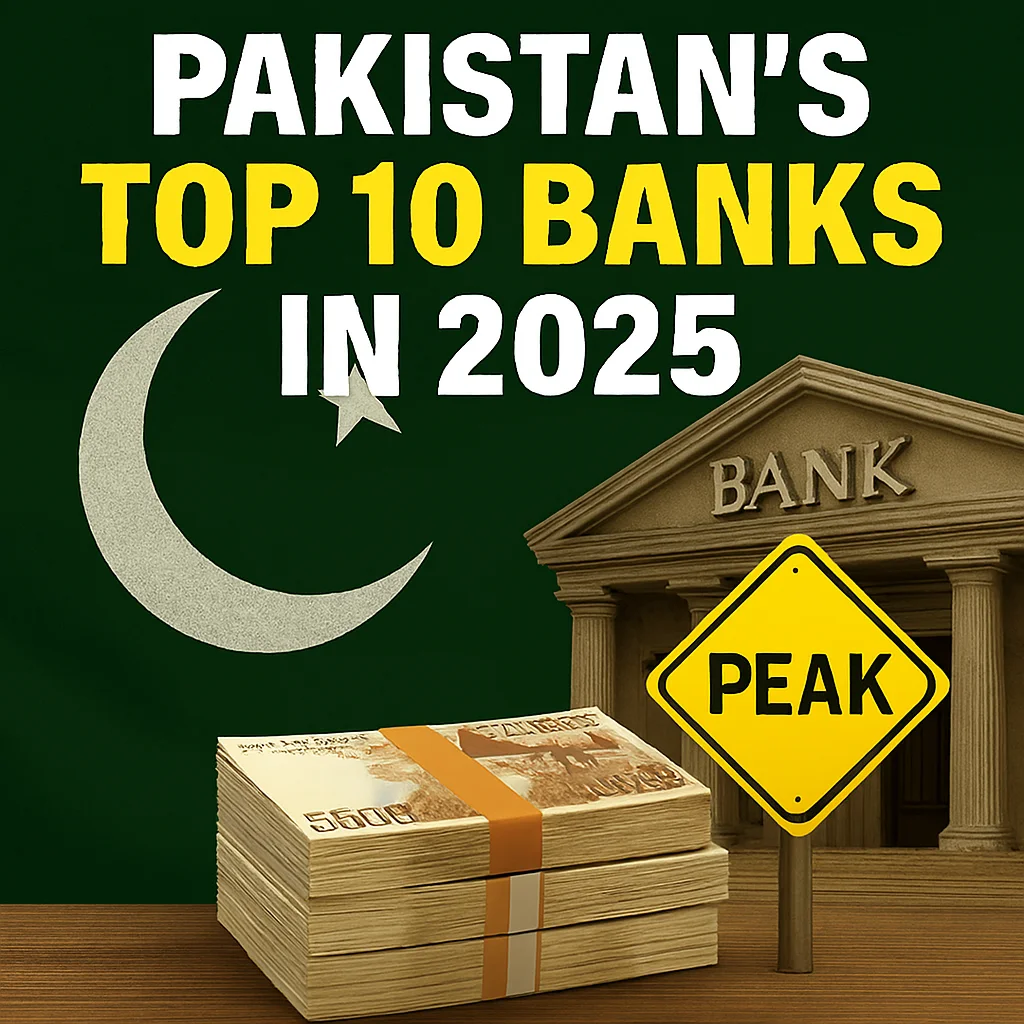
Deep dive into Pakistan’s banking giants: comprehensive analysis of the top 10 banks by assets, profitability, and operations with latest 2024 data.
When Meezan Bank became the first bank in Pakistan to cross the Rs. 100 billion profit milestone in 2024, it signaled more than just a financial achievement. It marked a fundamental shift in Pakistan’s banking landscape, where Islamic finance, digital transformation, and unprecedented profitability are reshaping an industry that contributes over 50 trillion rupees to the nation’s economy.
Pakistan’s banking sector stands at a fascinating crossroads. Total banking sector assets surpassed Rs. 50 trillion by the end of 2024, yet the industry faces a constitutional mandate to eliminate interest-based banking by 2028. This confluence of record profits and regulatory transformation makes understanding Pakistan’s banking hierarchy more crucial than ever for investors, policymakers, and consumers navigating this 340-billion-dollar economy.
Key Takeaways
- Meezan Bank leads in profitability with Rs. 101.5 billion profit, becoming first Pakistani bank to cross Rs. 100 billion threshold
- HBL remains largest by assets at Rs. 6.1 trillion despite being fourth in profitability
- Banking sector collectively earned Rs. 600+ billion in 2024 profits while paying Rs. 650+ billion in taxes
- Islamic banking assets approached Rs. 10 trillion with constitutional mandate for complete transition by 2028
- Digital transactions now represent 84% of retail banking activity, up from 76% previous year
- State Bank of Pakistan reduced policy rates from 22% to 12%, pressuring bank margins
- Consolidation activity increased with multiple acquisition deals in progress
- Technology investment and cybersecurity emerged as critical competitive differentiators
- Financial inclusion expansion continues through digital wallets, branchless banking, and RAAST payment system
- Top banks maintain strong capital adequacy ratios well above regulatory minimums
Pakistan’s Banking Sector: A Market Overview
The Pakistani banking industry has evolved into a sophisticated financial ecosystem that serves as the backbone of the nation’s economic infrastructure. The banking industry accounts for up to 55% of GDP and about 74% of the assets in the financial industry, demonstrating its outsized role in national development.
As of 2024-2025, Pakistan operates 44 banks comprising local and foreign institutions, including commercial banks, Islamic banks, microfinance institutions, and development financial institutions. This diverse banking landscape serves a population of over 240 million people, with urban centers like Karachi, Lahore, and Islamabad driving significant banking activity.
The sector’s performance in 2024 exceeded expectations despite economic headwinds. Listed banks’ profits rose to Rs. 597 billion in 2024 despite higher taxes, while tax contributions surpassed Rs. 650 billion. This resilience stems from strategic positioning in government securities, particularly Sukuks, robust deposit mobilization, and accelerated digital transformation initiatives.
Regulatory Framework and Digital Innovation
The State Bank of Pakistan (SBP) serves as the central regulatory authority, maintaining monetary stability through statutory frameworks and supervisory oversight. In 2024, the SBP implemented several key regulatory measures addressing foreign exchange operations, SME financing, and cybersecurity, establishing new departments like the Financial Institutions Resolution Department to proactively manage systemic risks.
Digital transformation has emerged as a defining characteristic of Pakistan’s banking evolution. According to the State Bank of Pakistan, 84 percent of retail transactions in fiscal year 2023 to 2024 were digital, a sharp jump from 76 percent the year before. The launch of RAAST, Pakistan’s first instant payment system, has revolutionized real-time payments and accelerated financial inclusion across previously underserved populations.
The Islamic Banking Revolution
Perhaps the most significant development reshaping Pakistan’s banking sector is the accelerating momentum of Islamic finance. Islamic banking assets approached Rs. 10 trillion, with deposits exceeding Rs. 8 trillion, while the branch network expanded significantly, exceeding 4,500 branches. This growth trajectory intensified following the parliamentary approval of a constitutional amendment mandating complete elimination of interest-based banking by January 1, 2028.
Top 10 Banks in Pakistan: Comprehensive Rankings
Ranking Methodology
This analysis ranks Pakistan’s top 10 banks using three primary metrics: total assets (reflecting institutional scale and market presence), profitability (measured by profit after tax for 2024), and operational footprint (branch networks, digital platforms, and customer reach). Data sources include State Bank of Pakistan reports, Pakistan Stock Exchange filings, individual bank financial statements, and verified third-party financial analyses.
1. Meezan Bank Limited
Total Assets: Approaching Rs. 3 trillion
Profit After Tax (2024): Rs. 101.5 billion
Pre-Tax Profit: Rs. 222 billion
Tax Contribution: Rs. 121 billion
Branch Network: 815+ branches nationwide
Market Position: #1 in Profitability, Largest Islamic Bank
Meezan Bank has achieved what seemed impossible just years ago. Meezan Bank set an all-time record with a profit exceeding Rs. 100 billion in 2024, the highest ever in the country’s banking and corporate sectors, marking a remarkable 20% annual growth from Rs. 84.5 billion in 2023.
As Pakistan’s first and largest Islamic bank, Meezan Bank operates exclusively on Shariah-compliant principles since receiving its Islamic Commercial Banking license from the State Bank of Pakistan in 2002. The bank provides a wide range of Islamic banking products and services and has been recognized as the Best Islamic Bank in Pakistan by various local and international institutions.
Key Differentiators:
The bank’s earnings per share surged to Rs. 57 from Rs. 47 in 2023, with shareholders receiving a dividend of Rs. 28 per share. Meezan Bank’s strategic focus on Sukuk investments and private sector financing enabled it to navigate the high-interest-rate environment effectively while maintaining its ethical banking mandate.
“When Meezan Bank became the first in Pakistan to cross Rs. 100 billion in profit, it marked more than financial achievement—it signaled Islamic finance’s ascendancy in South Asia’s fifth-largest economy.”
With the 2028 deadline for complete elimination of interest-based banking approaching, Meezan Bank stands uniquely positioned. Its established infrastructure, customer trust in Islamic finance, and operational expertise in Shariah-compliant products provide significant competitive advantages as conventional banks scramble to transition their operations.
Digital Innovation: Meezan Bank has invested heavily in digital platforms, launching mobile banking applications and internet banking services that maintain Islamic banking principles while offering modern convenience. The bank’s technology infrastructure supports seamless transaction processing while ensuring Shariah compliance at every step.
2. United Bank Limited (UBL)
Total Assets: Rs. 2.8 trillion
Profit After Tax (2024): Rs. 75.7 billion
Pre-Tax Profit: Rs. 150 billion
Tax Contribution: Rs. 74.3 billion
Branch Network: 1,390+ branches across Pakistan, presence in 19+ countries
Market Position: #2 in Profitability, Major Private Sector Bank
United Bank Limited secured the second spot in 2024, with profits surging by 34%, reaching Rs. 75.7 billion, up from Rs. 56.4 billion the previous year. This impressive growth trajectory propelled UBL from fourth place in 2023 to second position in 2024, demonstrating exceptional strategic execution.
Founded in 1959, UBL represents one of Pakistan’s oldest and most established banking institutions. With total assets of Rs. 2.8 trillion, the bank serves approximately 4 million customers through an extensive domestic and international network.
Strategic Transformation:
UBL’s remarkable performance stems from aggressive digital transformation initiatives and a strategic pivot toward Islamic banking. The bank made significant strides in its transition to Islamic banking, converting its operations in Khyber Pakhtunkhwa and Balochistan, positioning itself ahead of the 2028 regulatory deadline.
The bank’s total income saw a remarkable 48.8% jump to Rs. 257 billion, largely driven by a 132% surge in non-markup income, which reached Rs. 83.7 billion. Earnings per share grew to Rs. 61 from Rs. 45, reflecting improved operational efficiency and revenue diversification.
Operational Excellence:
UBL dominated as the highest dividend-paying bank with an outstanding Rs. 44 payout, rewarding shareholders handsomely while maintaining robust capital adequacy ratios. The bank’s emphasis on technological infrastructure provides a strong foundation for continued growth and resilience.
With overseas presence in more than 19 countries and comprehensive product offerings spanning retail, corporate, and investment banking, UBL maintains a diversified revenue stream that cushions against market volatility.
3. MCB Bank Limited
Total Assets: Rs. 1.9 trillion
Profit After Tax (2024): Rs. 63.4 billion (Annual reports show Rs. 57.6 billion in some quarters)
Pre-Tax Profit: Rs. 118.4 billion
Tax Contribution: Over Rs. 60 billion
Branch Network: 1,400+ branches nationwide
Market Position: #3 in Profitability, Established 1947
MCB Bank, one of Pakistan’s oldest banking institutions established in 1947, maintains its position among the top three despite facing headwinds in 2024. MCB Bank slipped to third place in 2024, recording a profit of Rs. 57.6 billion, down from Rs. 59.8 billion the previous year.
The slight decline in profitability reflects the challenging operating environment characterized by policy rate fluctuations and increased operational costs. However, MCB’s pre-tax profit of Rs. 118.4 billion demonstrates strong core performance, with the tax burden significantly impacting net earnings.
Market Leadership:
Despite the profit decline, MCB Bank declared a dividend of Rs. 36 per share, maintaining its reputation for shareholder-friendly policies. The bank’s earnings per share stood at Rs. 48, down from Rs. 50 in the previous year, reflecting the compressed margins in a highly competitive environment.
MCB Bank operates through multiple business segments including Branch Banking, which serves retail, small business, and corporate clients with comprehensive banking services including loans, securities, and agricultural financing. The bank has been recognized with the prestigious Euromoney Award for Best Investment Bank in Pakistan for consecutive years.
Strategic Focus:
MCB Bank’s strategy revolves around customer-centricity, digital transformation, asset quality, and talent retention, leveraging technology and making strategic investments to ensure compliance, efficiency, and innovation-driven progress.
The bank’s vast branch network of over 1,400 locations across Pakistan ensures extensive market penetration, while its asset management services cater to sophisticated investors seeking professional wealth management solutions.
4. Habib Bank Limited (HBL)
Total Assets: Rs. 6.1 trillion
Profit After Tax (2024): Rs. 57.8 billion
Pre-Tax Profit: Rs. 120.3 billion
Tax Contribution: Rs. 62.5 billion
Branch Network: 1,751 branches, 2,007 ATMs, international presence
Market Position: #4 in Profitability, Largest Bank by Assets
HBL, the largest bank of Pakistan, declared a record profit before tax of PKR 120.3 billion for the year ended December 31, 2024, 6 percent higher than in 2023. However, the massive 54% tax rate on banks significantly impacted net earnings, resulting in profit after tax of Rs. 57.8 billion.
Founded in 1941, HBL represents Pakistan’s most extensive banking institution with total assets of Rs. 6.1 trillion and deposits of Rs. 4.4 trillion. HBL’s balance sheet grew by 9 percent to PKR 6.1 trillion, with total deposits growing by PKR 228 billion over December 2023.
Operational Scale:
HBL’s operational footprint dwarfs competitors, with 1,751 branches domestically and extensive international operations spanning Europe, Australia, the Middle East, America, Asia, and Africa. This global presence enables HBL to capture remittance flows and serve Pakistan’s diaspora effectively.
The bank’s Capital Adequacy Ratio improved from 16.0% in December 2023 to 17.7% in 2024, well above regulatory requirements, demonstrating financial resilience. The CASA (Current Account Savings Account) ratio reached nearly 90%, indicating strong low-cost deposit mobilization.
Recognition and Leadership:
Euromoney Awards for Excellence 2024 awarded HBL the accolades of ‘Pakistan’s Best Bank’, ‘Pakistan’s Best Bank for Corporates’, and ‘Pakistan’s Best Bank for ESG’. The Federation of Pakistan Chambers of Commerce and Industry honored HBL as the ‘Best Conventional Bank of the Year’.
Despite flat profit growth, HBL paid shareholders a dividend of Rs. 16.5 per share (Rs. 4.25 final dividend plus Rs. 12 interim dividends), maintaining its commitment to investor returns. The bank’s EPS for 2024 stood at Rs. 39.85, slightly higher than Rs. 39.32 in 2023.
Strategic Initiatives:
HBL has positioned itself as a thought leader in sustainable banking, actively supporting the State Bank of Pakistan and World Bank in developing the National Green Taxonomy. This forward-thinking approach has enabled the bank to identify green financing opportunities for climate change mitigation and adaptation, aligning profit with planetary health.
5. Standard Chartered Bank Pakistan Limited
Total Assets: Competitive positioning among top banks
Profit After Tax (2024): Rs. 46 billion
Pre-Tax Profit: Rs. 100 billion
Tax Contribution: Rs. 54 billion
Branch Network: Selective premium locations
Market Position: #5 in Profitability, International Banking Leader
Standard Chartered Bank reported its highest-ever profit of Rs. 46 billion, reflecting a 7.9 percent annual growth, improving its position from sixth to fifth among Pakistan’s most profitable banks. This remarkable performance demonstrates the effectiveness of the bank’s premium banking strategy and international connectivity.
As a subsidiary of the global Standard Chartered Group, the Pakistani operations benefit from world-class banking expertise, sophisticated risk management frameworks, and access to international capital markets. The bank’s earnings per share stood at Rs. 11.90, with shareholders receiving a dividend of Rs. 9 per share.
Strategic Positioning:
Standard Chartered Bank Pakistan focuses on serving corporate clients, multinationals, and high-net-worth individuals with specialized banking solutions. This selective approach generates higher margins than mass-market retail banking while maintaining manageable risk profiles.
The bank has announced aggressive plans for transitioning to Islamic banking, recognizing the regulatory imperative and market opportunity presented by the 2028 deadline for elimination of interest-based banking. This strategic pivot positions Standard Chartered to maintain its premium market position while complying with evolving regulations.
Digital Excellence:
Standard Chartered Bank Pakistan leverages its parent company’s global digital banking platforms, offering customers seamless international banking services, sophisticated treasury solutions, and cutting-edge trade finance products. The bank’s technology infrastructure supports complex cross-border transactions while maintaining regulatory compliance across multiple jurisdictions.
6. Allied Bank Limited (ABL)
Total Assets: Rs. 1.7 trillion
Profit After Tax (2024): Rs. 43 billion
Pre-Tax Profit: Rs. 87 billion
Tax Contribution: Rs. 44.8 billion
Branch Network: Extensive national coverage
Market Position: #6 in Profitability
Allied Bank Limited climbed to sixth place, reporting its highest-ever profit of Rs. 43 billion, with a share value of Rs. 37.5 and dividend distribution of Rs. 16 per share. This represents ABL’s strongest financial performance, reflecting successful execution of growth strategies and operational improvements.
Founded in 1942, Allied Bank brings over eight decades of banking experience to Pakistan’s financial landscape. With total assets of Rs. 1.7 trillion, the bank serves diverse customer segments through comprehensive product offerings.
Customer-Centric Innovation:
Allied Bank is committed to deepening relationships with existing customers by offering an extensive suite of financial products, including credit cards, personal finance, car finance, home finance, solar system finance, scooty finance, and electric bike finance. These tailored solutions address Pakistan’s evolving financial needs, from traditional banking to sustainable energy financing.
A game-changer in ABL’s customer service strategy is the introduction of the Intelligent Virtual Assistant (IVA), powered by advanced AI technology. This 24/7 support system provides seamless, human-like interactions for inquiries, requests, and complaint resolutions, enhancing customer satisfaction while reducing operational costs.
Growth Trajectory:
Allied Bank’s consistent profit growth and strong operational strategies highlight its ability to navigate Pakistan’s complex banking environment. The bank’s focus on technology adoption, product innovation, and customer experience positions it well for continued expansion in an increasingly competitive market.
7. Bank Al Habib Limited
Total Assets: Competitive market positioning
Profit After Tax (2024): Rs. 39 billion
Pre-Tax Profit: Rs. 83.8 billion
Tax Contribution: Rs. 43.9 billion
Branch Network: National presence
Market Position: #7 in Profitability
Bank Al Habib jumped to seventh place, recording 12% profit growth to Rs. 39 billion in 2024. This upward trajectory reflects the bank’s successful market positioning and effective execution of business strategies in a challenging economic environment.
The bank’s improved performance demonstrates resilience and adaptability, with management successfully navigating policy rate fluctuations and competitive pressures. Bank Al Habib’s focus on service quality and customer relationships has enabled consistent market share gains.
Operational Strategy:
Bank Al Habib maintains a balanced approach between retail and corporate banking, serving individual consumers while cultivating relationships with businesses across various sectors. This diversification provides revenue stability and reduces concentration risk.
The bank has invested in branch infrastructure and digital platforms simultaneously, recognizing that Pakistan’s banking customers expect both physical presence and online convenience. This omnichannel strategy has proven effective in attracting and retaining customers across demographic segments.
8. Bank Alfalah Limited
Total Assets: Over Rs. 2 trillion
Profit After Tax (2024): Rs. 38.3 billion
Pre-Tax Profit: Rs. 83 billion
Tax Contribution: Rs. 44.7 billion
Branch Network: 890+ branches in 200+ cities, international operations
Market Position: #8 in Profitability
Bank Alfalah reported its highest-ever profit of Rs. 38.3 billion in 2024, marking a 5% growth from the previous year. The bank’s share value increased from Rs. 23.1 to Rs. 24.3, with a dividend payout of Rs. 8.5 per share to shareholders.
Bank Alfalah’s journey from Habib Credit and Exchange Bank to becoming one of Pakistan’s largest private banks demonstrates remarkable institutional transformation. The bank has crossed significant milestones of 1,000 branches and Rs. 2 trillion in deposits, improving its industry ranking in terms of deposit base, total assets, and branch footprint.
Expansion Strategy:
Bank Alfalah is Pakistan’s fourth largest lender by assets and is owned by UAE-headquartered Abu Dhabi Group, having seen the second fastest deposit growth in the past five years among Pakistani banks. This aggressive growth trajectory stems from strategic acquisitions, organic expansion, and market share gains.
The bank is actively pursuing acquisition opportunities, including reaching final stages of agreement to acquire Saudi National Bank’s majority stake in Samba Bank. This growth-through-acquisition strategy enables rapid scale expansion while absorbing existing customer bases and branch networks.
Digital Leadership:
In 2018, Bank Alfalah launched its digital banking group, setting industry standards with its Alfa app, which brings together unprecedented services and features in one platform. In 2023, the bank opened Pakistan’s first ‘Digital Lifestyle’ branch, combining physical presence with cutting-edge digital experiences.
Bank Alfalah received awards including ‘Best Digital Banking’ by Pakistan Banks Association and recognition as one of the ‘Top 25 Companies’ by Pakistan Stock Exchange, validating its innovation-focused strategy.
9. National Bank of Pakistan (NBP)
Total Assets: Rs. 3.9 trillion
Profit After Tax (2024): Rs. 26.8 billion
Pre-Tax Profit: Rs. 56.6 billion
Tax Contribution: Rs. 29.8 billion
Branch Network: 1,450+ branches nationwide, 21 branches internationally
Market Position: Largest State-Owned Bank
National Bank of Pakistan saw a significant decline in profitability in 2024, dropping from fifth to ninth place, with profits falling to Rs. 26.8 billion, down from Rs. 56.8 billion in 2023. This 50% decline represents the most dramatic profitability shift among Pakistan’s major banks.
Founded in 1949, NBP serves as the largest state-owned financial institution in Pakistan, playing a crucial role as trustee of public funds and agent to the State Bank of Pakistan. With total assets of Rs. 3.9 trillion, NBP ranks among Pakistan’s largest banks by balance sheet size.
Challenges and Restructuring:
NBP’s one-time pension expense of Rs. 57 billion in Q4 2024 significantly impacted profitability, explaining much of the dramatic year-over-year decline. This extraordinary charge masked underlying operational performance, though challenges remain in improving efficiency and reducing costs.
The bank’s earnings per share decreased to Rs. 12 from Rs. 24 in the previous year, reflecting the compressed profitability. However, NBP paid a cash dividend of Rs. 8 per share in 2024, marking its first cash payout since 2016, signaling management’s confidence in future performance.
Market Role:
NBP plays a unique role in Pakistan’s financial ecosystem, serving both public and private sectors while supporting government initiatives in agricultural financing, small business development, and financial inclusion. The bank’s extensive branch network reaches remote areas where private banks rarely operate, providing essential banking services to underserved populations.
With over 12,000 employees and 1,450 branches spread across Pakistan plus 21 international branches, NBP maintains unparalleled market penetration. The bank has developed consumer products to enhance marketing effectiveness and engage with diverse societal segments through cultural activities.
10. Habib Metro Bank
Total Assets: Competitive market positioning
Profit After Tax (2024): Rs. 24.6 billion
Pre-Tax Profit: Rs. 56.7 billion
Tax Contribution: Rs. 27.9 billion
Branch Network: National presence
Market Position: #10 in Profitability
Habib Metro Bank maintained its position among the top 10 profitable banks, reporting a profit of Rs. 24.6 billion, showing flat profit growth compared to the previous year. This stability amid market volatility demonstrates the bank’s operational resilience and effective risk management.
Habib Metro Bank’s share value stood at Rs. 23, with the bank paying a dividend of Rs. 12 per share to shareholders. The consistent performance reflects solid fundamentals and prudent management of the changing interest rate environment.
Competitive Positioning:
While lacking the dramatic growth stories of peers, Habib Metro Bank’s steady performance appeals to risk-averse investors seeking predictable returns. The bank maintains conservative lending practices and focuses on quality over quantity in customer acquisition.
The bank’s ability to maintain profitability despite intense competition and regulatory pressures demonstrates effective cost management and revenue optimization. Habib Metro Bank serves as a reliable mid-tier banking option for customers seeking personalized service and local market expertise.
Sector Analysis: Key Trends and Patterns
Record Profitability Amid High Taxation
In 2024, Pakistani banks collectively earned over Rs. 600 billion in profit after tax, representing the sector’s strongest performance ever. However, this came at a cost, with the government extracting over Rs. 650 billion in tax revenues from banks, resulting in an effective tax rate exceeding 50% for many institutions.
The profitability surge stemmed primarily from high interest rates that prevailed through most of 2024, enabling banks to earn substantial spreads between lending rates and deposit costs. Government issuance of Sukuks (Islamic bonds) provided lucrative investment opportunities, particularly for Islamic banks, while private sector lending grew modestly.
Digital Transformation Acceleration
The COVID-19 pandemic catalyzed digital adoption that continues accelerating in 2024-2025. Mobile banking transactions have increased over 150% in volume and nearly 200% in value compared to pre-pandemic levels. Digital wallets like JazzCash and Easypaisa have become mainstream payment methods, with JazzCash alone processing over 10.7 trillion rupees in transactions.
Traditional banks have responded by launching sophisticated mobile applications, internet banking platforms, and AI-powered customer service tools. The competitive pressure from fintech companies has forced established banks to innovate rapidly or risk losing market share to nimbler competitors.
Islamic Banking Ascendancy
The parliamentary approval of constitutional amendments mandating complete elimination of interest-based banking by 2028 has fundamentally altered strategic planning across Pakistan’s banking sector. Banks with established Islamic banking operations enjoy significant advantages, while conventional-only banks scramble to build Shariah-compliant infrastructure.
Islamic banking assets approached Rs. 10 trillion, with deposits exceeding Rs. 8 trillion, while the branch network expanded significantly, exceeding 4,500 branches. This rapid growth trajectory positions Islamic finance as Pakistan’s banking future rather than a niche market segment.
Consolidation and Acquisition Activity
The banking sector witnessed increased merger and acquisition activity in 2024, with Bank Alfalah pursuing Samba Bank acquisition and multiple foreign banks divesting Pakistani operations. This consolidation trend likely continues as smaller banks struggle to compete against larger, technology-enabled competitors with deeper capital bases.
Regulatory pressure for higher capital adequacy ratios and investments in cybersecurity infrastructure create barriers to entry and operating challenges for smaller institutions. Expect further consolidation as the sector matures and efficiency pressures intensify.
Cybersecurity Challenges
A high-profile cyberattack on Meezan Bank that compromised customer data highlighted growing cybersecurity risks facing Pakistani banks. The State Bank of Pakistan responded by establishing a dedicated Cyber Risk Management Department to strengthen oversight and provide guidance to financial institutions.
As digital transactions proliferate and customers conduct more banking activities online, cybersecurity emerges as a critical competitive differentiator. Banks investing in robust security frameworks, continuous monitoring, and incident response capabilities will earn customer trust and regulatory approval.
The Road Ahead: Banking Sector Outlook 2025-2027
Interest Rate Normalization
The State Bank of Pakistan reduced the policy rate from a peak of 22% to 12% by late 2024, with further cuts expected in 2025. This normalization will compress bank margins, forcing institutions to focus on fee-based income, operational efficiency, and loan volume growth rather than high interest spreads.
Banks with diversified revenue streams, strong deposit franchises, and efficient operations will navigate this transition successfully. Those overly dependent on interest income face margin compression and profitability challenges.
Islamic Banking Transition
The 2028 deadline for complete Islamic banking conversion creates both challenges and opportunities. Banks like Meezan, UBL, and those with strong Islamic banking divisions gain competitive advantages. Conventional banks face massive technology investments, staff retraining, and customer migration challenges.
Expect accelerated product innovation in Islamic finance, with banks developing sophisticated Shariah-compliant solutions for corporate banking, trade finance, and wealth management. The transition represents the most significant structural change in Pakistani banking since nationalization in the 1970s.
Financial Inclusion Expansion
Despite progress, Pakistan’s financial inclusion remains limited, with significant populations in rural areas and low-income segments lacking access to formal banking services. Digital banking, branchless banking models, and microfinance initiatives continue expanding reach.
The RAAST instant payment system’s success demonstrates technology’s potential to bridge financial inclusion gaps. Banks partnering with fintech companies, mobile network operators, and retail chains can tap underserved markets while fulfilling regulatory expectations for inclusive growth.
Technology Investment Imperatives
Artificial intelligence, machine learning, and data analytics are transforming banking operations from customer service to credit underwriting. Banks investing in these technologies improve efficiency, enhance customer experiences, and make better risk decisions.
Cloud computing enables smaller banks to access enterprise-grade technology without massive infrastructure investments. API banking facilitates ecosystem partnerships, allowing banks to embed their services in non-banking platforms and applications.
Regional Economic Integration
Pakistan’s strategic location between China, India, and the Middle East presents opportunities for banks to facilitate cross-border trade, investment flows, and remittances. The China-Pakistan Economic Corridor (CPEC) continues generating banking opportunities in project finance, trade finance, and infrastructure development.
Banks with international networks and correspondent banking relationships can capitalize on Pakistan’s position as a regional trade hub, particularly as economic conditions stabilize and investor confidence returns.
Conclusion: Navigating Pakistan’s Banking Renaissance
Pakistan’s banking sector in 2024-2025 presents a fascinating study in transformation and resilience. Record profits of over Rs. 600 billion demonstrate the industry’s financial strength, while the mandatory transition to Islamic banking by 2028 ensures continuous evolution. Digital transformation accelerates at unprecedented pace, with 84% of retail transactions now conducted digitally.
The top 10 banks profiled here represent diverse institutional models—from Meezan Bank’s pure Islamic banking leadership to HBL’s global reach and asset scale, from UBL’s remarkable turnaround to NBP’s state-owned market penetration. Each institution brings unique strengths while facing common challenges of regulatory compliance, technological investment, and competitive differentiation.
For investors, Pakistan’s banking sector offers compelling opportunities tempered by execution risks. Banks with strong Islamic banking franchises, robust digital platforms, and efficient operations appear best positioned for the transition ahead. The sector’s contribution to national economic development, representing over 55% of GDP and 74% of financial sector assets, ensures continued policy support despite high taxation.
For policymakers, balancing financial sector stability with transformation imperatives requires careful calibration. The 2028 Islamic banking deadline approaches rapidly, necessitating clear regulatory guidance, implementation support, and monitoring frameworks to ensure orderly transition without disrupting credit availability or payment systems.
For consumers and businesses, Pakistan’s evolving banking landscape promises improved services, greater accessibility, and more choices. Digital banking reduces transaction costs and increases convenience, while Islamic banking provides Shariah-compliant alternatives aligned with religious preferences. Competition drives innovation, ultimately benefiting end users through better products and services.
The banking sector that emerges from this transformation period will look dramatically different from today’s landscape. Islamic finance principles will dominate, digital channels will handle the vast majority of transactions, and technology-enabled efficiency will replace labor-intensive processes. The banks profiled here are navigating this transition with varying degrees of success, but all recognize that standing still means falling behind.
Pakistan’s banking renaissance is well underway. The institutions that embrace change, invest in technology and talent, and maintain customer focus will thrive in the new landscape. Those clinging to legacy models and traditional approaches risk obsolescence. For a sector this vital to national economic health, the stakes couldn’t be higher.
About the Author:
A senior financial journalist and digital economy expert with over 15 years of experience covering South Asian markets, banking sector transformation, and fintech innovation for leading international publications.
- Sources:
State Bank of Pakistan Annual Reports and Quarterly Statements, - Pakistan Stock Exchange Filings,
- Individual Bank Annual Reports 2024,
- KPMG Pakistan Banking Perspective 2024-2025,
- Pakistan Bureau of Statistics, International Monetary Fund Pakistan Country Reports,
- World Bank Pakistan Economic Updates,
- Bloomberg Terminal Data,
- Reuters Financial Services.


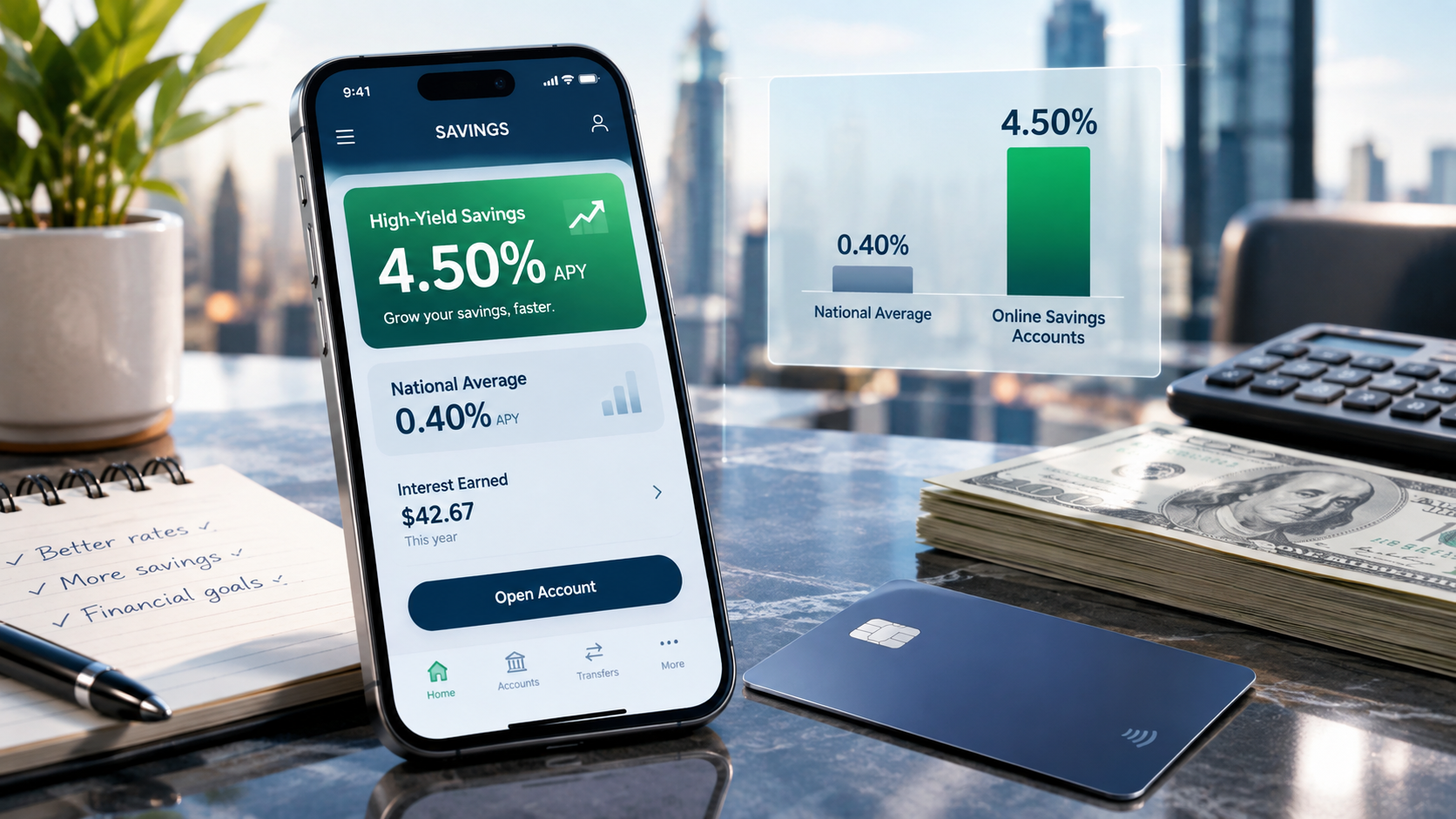
The national average savings account rate sits at roughly 0.38%–0.45% APY, while top online high-yield savings accounts pay upward of 4%–4.70% APY — meaning the bank you choose, not just how much you save, can be the single biggest factor in your interest earnings.
Opening a savings account online has become the default choice for rate-conscious savers, since digital-only banks and online divisions of traditional banks consistently outpace brick-and-mortar savings rates by a wide margin. But comparing accounts requires looking past the advertised headline rate to understand balance tiers, promotional periods, and what happens to your rate after an introductory offer ends.
This guide explains how online savings accounts actually work, what drives the rate you’ll really earn, and how to choose between the many competing options.
How Online Savings Accounts Work
Online banks can typically offer higher rates than traditional brick-and-mortar banks because they carry lower overhead — no branch network to maintain — and pass some of that savings on to depositors in the form of better APY.
Key takeaway: The national average savings account rate is approximately 0.38%–0.45% APY, while top online high-yield savings accounts regularly offer 4.00%–4.70% APY — roughly ten times the national average. On a $10,000 balance, that difference amounts to hundreds of dollars in additional interest per year with zero additional risk.
What to Check Before Opening an Account
- APY (Annual Percentage Yield) — the actual compounded return you’ll earn, not to be confused with a simple interest rate.
- Minimum balance to earn the advertised APY — some accounts pay the top rate only above a certain balance, with a much lower rate below it.
- Minimum opening deposit — ranges from $0 to $500 or more depending on the institution.
- FDIC or NCUA insurance — standard coverage protects deposits up to $250,000 per depositor, per institution, per ownership category.
- Whether the rate is promotional or ongoing — some “welcome” APYs apply only for a limited introductory period before reverting to a lower standard rate.
- Withdrawal limitations — some accounts retain federal transaction limits or impose their own monthly withdrawal caps.
Step-by-Step: Opening a Savings Account Online
- Compare APY, fees, and minimum balance requirements across several online banks rather than defaulting to your existing checking account’s bank.
- Complete the online application — typically name, address, Social Security number, and identity verification.
- Link a funding source — an existing bank account, debit card, or mailed check, depending on the provider.
- Fund the account — minimum opening deposits are commonly $0 to $50 for online-only high-yield accounts, though some require more.
- Set up automatic transfers, if desired, to build consistent savings habits without manual deposits.
- Monitor the rate periodically — since APYs on high-yield accounts are variable and can change based on broader interest rate movements.
Financial and Strategic Implications: What Your Rate Actually Earns You
The gap between average and top-tier rates compounds meaningfully over time, particularly for larger balances or longer savings horizons.
| Savings Scenario | At National Average (~0.40% APY) | At High-Yield Rate (~4.50% APY) |
|---|---|---|
| $5,000 balance, 1 year | ~$20 interest | ~$225 interest |
| $10,000 balance, 1 year | ~$40 interest | ~$450 interest |
| $25,000 balance, 1 year | ~$100 interest | ~$1,125 interest |
| $10,000 balance, 5 years (compounded) | ~$202 total interest | ~$2,461 total interest |
Expert insight: FDIC insurance protects deposits up to $250,000 per depositor, per insured bank, per ownership category — meaning a saver with more than $250,000 in cash should consider splitting funds across multiple FDIC-insured institutions, or using accounts with expanded coverage structures, to ensure full protection.
Watch for Rate Cliffs and Tiered Balances
Some accounts advertise an attractive headline APY that only applies below a certain balance threshold or above a specific minimum — with a meaningfully lower rate applying outside that band. Always check the full rate schedule, not just the number in the advertisement, since the effective blended rate on your actual balance can be lower than the headline figure suggests.
Promotional Rates vs. Standing Rates
A number of online banks offer an elevated introductory APY for new customers for a limited window (commonly 3 months), after which the rate reverts to the bank’s standard ongoing rate. This can still be worthwhile for short-term savings goals, but shouldn’t be confused with the account’s long-term earning rate when comparing options for a multi-year savings strategy.
How to Choose the Right Online Savings Account
- Compare the ongoing rate, not just the promotional rate — a lower “everyday” APY may still beat a competitor’s post-promotion rate.
- Confirm there’s no monthly maintenance fee, or that any fee is easily waived, since a fee can offset meaningful interest earnings on smaller balances.
- Check transfer speed to and from linked accounts — since online-only banks rely on electronic transfers, which can take one to three business days depending on the institution.
- Verify FDIC or NCUA insurance explicitly before depositing significant funds.
- Consider a cash management account as an alternative if you want features like debit card access alongside a competitive yield, since some non-bank cash management accounts offer similar or higher rates with added flexibility.
- Match the account structure to your goal — a basic high-yield savings account suits an emergency fund, while a CD may suit money you won’t need for a fixed period, often at a comparably competitive or higher rate.
Key takeaway: The single most impactful decision most savers make isn’t picking the absolute highest APY on a comparison table — it’s simply moving money out of a near-zero-interest traditional savings account at all, since even a “merely good” online rate typically represents a 5–10x improvement over the national average.
Future Outlook: Savings Rate Trends Through 2027
- Online savings rates remain closely tied to broader interest rate policy. As monetary policy shifts, high-yield savings APYs typically move in the same direction with a short lag, meaning current top rates are not guaranteed to persist indefinitely.
- Competition among online banks and fintech platforms continues to compress the rate-comparison gap. New entrants regularly launch promotional rates to attract deposits, rewarding savers who periodically re-shop rather than staying with the same account indefinitely.
- Cash management accounts are increasingly competing directly with traditional savings accounts. Several non-bank financial platforms now offer FDIC-insured cash accounts with yields competitive with — or exceeding — dedicated high-yield savings products, often with additional liquidity features.
- Inflation-adjusted “real return” awareness is growing among savers. As savers increasingly compare APY against inflation expectations rather than viewing it in isolation, the gap between a merely adequate rate and a genuinely strong rate is becoming a more prominent part of account-selection decisions.
Frequently Asked Questions
What’s a good APY for an online savings account right now?
Top online high-yield savings accounts commonly offer APYs in the 4.00%–4.70% range, substantially above the national average of roughly 0.38%–0.45%.
Is an online savings account as safe as a traditional bank savings account?
Yes, as long as the institution is FDIC-insured (or NCUA-insured for credit unions), your deposits receive the same $250,000 per-depositor protection regardless of whether the bank has physical branches.
Do I need a minimum balance to open a savings account online?
It varies by institution — many online banks allow you to open an account with $0 to $50, while some require a larger minimum deposit, commonly in the $100–$500 range.
Will my online savings account rate stay the same over time?
Not necessarily. High-yield savings APYs are variable and generally move with broader interest rate conditions, and some accounts feature limited-time promotional rates that revert to a lower standard rate after an introductory period.
Can I have more than one online savings account?
Yes, and many savers deliberately do — both to compare rates across institutions and to spread balances above $250,000 across multiple FDIC-insured banks for full deposit insurance coverage.

Danone recalled So Delicious Salted Caramel Cluster pints on Sept 15, 2026. Check UPC 744473476138 and best-by dates on or before April 3, 2028.
- Danone USA issued a voluntary recall on 15 September 2026 of So Delicious Dairy Free Salted Caramel Cluster Non-Dairy Frozen Dessert pints, posted by the FDA.
- The reason: potential presence of foreign materials, such as small stones and other hard objects, within the cashew inclusions.
- Affected product: SKU 136603, UPC 744473476138, best-by dates on and before 3 April 2028. Pints with a later best-by date are not affected.
- No other So Delicious flavours, codes or products are involved. Distribution was nationwide to US retail stores.
- This is the second such recall in under a year — an identical issue prompted a December 2025 recall of the same product.
1. Introduction & Immediate Context
If you have a pint of So Delicious Dairy Free Salted Caramel Cluster in your freezer, check it before reading anything else.
Danone USA is recalling So Delicious Dairy Free Salted Caramel Cluster Non-Dairy Frozen Dessert pints with best-by dates on and before 3 April 2028 due to the potential presence of foreign materials, such as small stones and other hard objects, within the cashew inclusions, according to the company announcement posted by the FDA on 15 September 2026. The issue was identified through consumer complaints, and the FDA has been informed of the voluntary recall.
Danone is working with retail partners to remove affected product from shelves. Unaffected product remains available, and product shipped going forward is not affected.
2. Instant Product-Matching Table
Check all three fields. Flavour name alone is not sufficient, because packaging varies by retailer and the brand rebranded during 2026.
| Field | What to look for | Where to find it |
|---|---|---|
| Product name | So Delicious Dairy Free® Salted Caramel Cluster Non-Dairy Frozen Dessert (pints) | Front label |
| SKU | 136603 | Product listing / retailer receipt |
| UPC | 744473476138 | Back of container |
| Best-by date | On and before 3 April 2028 | Bottom of container |
| Package size | Pint | — |
| Distribution | Nationwide, US retail stores | — |
If all fields match: do not consume the product.
For a refund or replacement coupon: contact the So Delicious Dairy Free Consumer Care Line at 1-833-367-8975, available Monday to Friday, 9 a.m. to 6 p.m. ET.
If your best-by date falls after 3 April 2028: your pint is not part of this recall.
2.1 Comparison with the December 2025 recall
Households that checked their freezers last winter should check again — the date ranges are different.
| Recall | Date issued | Best-by range affected | SKU / UPC | Status |
|---|---|---|---|---|
| December 2025 | 15 December 2025 | Before 08 Aug 2027 | 136603 / 744473476138 | Completed; FDA terminated |
| September 2026 | 15 September 2026 | On and before 3 April 2028 | 136603 / 744473476138 | Active |
The September 2026 range extends roughly eight months beyond the earlier one. Product that passed the December check may still fall inside the current recall.
3. Structural Drivers and Competitor Gaps: Why Twice?
Almost all coverage of this recall stops at the checklist. The pattern is the more useful part of the story.
The stated cause is word-for-word identical to the December 2025 recall — foreign materials such as small stones and hard objects within cashew inclusions — as Fast Company noted in observing that this is now a pattern rather than an isolated incident. The company’s public language has also closely mirrored its statements from the previous year, including the assurance that the issue has been identified and corrected.
The mechanism points upstream. Small stones in cashew inclusions is a raw-material sorting failure, not a manufacturing-line failure. Tree nuts are harvested from the ground or from drying floors, and the standard controls are optical sorting, density separation and metal or X-ray detection at intake. Stones are specifically the contaminant these systems exist to catch, and they are difficult for downstream detection to find because their density can be close to that of the nut itself. A recurrence of the same contaminant in the same inclusion implies the corrective action taken after December 2025 did not resolve the root cause — most plausibly at a supplier or sorting-specification level rather than at the plant.
The recall also reached other jurisdictions. The Canadian Food Inspection Agency issued a Class 2 recall for a related So Delicious Dairy Free cashew-base salted caramel product over plastic-like and gravel-like fragments, indicating a supply-chain rather than single-facility scope.
There are no confirmed injury reports in the current recall documentation, and the FDA categorises this as a consumer-level alert. Foreign-object recalls carry dental-fracture and choking risk rather than illness risk, which is why the guidance is disposal rather than medical monitoring.
4. Key Implications for Stakeholders
Consumers with dietary restrictions. Dairy-free frozen dessert buyers often have limited substitutes, and repeat recalls in a narrow category are disproportionately disruptive. Only this single flavour is affected; other So Delicious products remain unaffected in both recalls.
Allergy-tracking households. Note that this is a foreign-object recall, not an allergen recall. No undeclared allergen is involved, so the standard cross-contamination protocols do not apply here — physical inspection and disposal do.
Retailers. The overlapping date ranges across two recalls create genuine shelf-audit complexity. Scanning by UPC alone will flag unaffected stock; the best-by date is the discriminating field.
Food safety professionals. A repeat of an identical contaminant within nine months is the type of event that typically attracts closer FDA attention to the corrective-action plan filed after the first recall.
How to verify anything you read about this. The FDA recalls, market withdrawals and safety alerts database is updated continuously and is the authoritative source. Secondary coverage has circulated conflicting date ranges by mixing the 2025 and 2026 notices.
5. Frequently Asked Questions
Q1: Which So Delicious products are recalled?
Only So Delicious Dairy Free Salted Caramel Cluster Non-Dairy Frozen Dessert pints with SKU 136603, UPC 744473476138 and a best-by date on or before 3 April 2028. No other flavours, codes or products from the brand are involved.
Q2: What should I do if I have the recalled product?
Do not eat it. Dispose of it and contact the So Delicious Dairy Free Consumer Care Line at 1-833-367-8975, open Monday to Friday, 9 a.m. to 6 p.m. ET, for a refund or replacement coupon.
Q3: Why was So Delicious recalled?
Because of the potential presence of foreign materials such as small stones and other hard objects within the cashew inclusions. The issue was identified through consumer complaints, and the FDA was informed of the voluntary recall.
Q4: Is this the same as the previous So Delicious recall?
It is the same product and the same stated cause, but a different date range. The December 2025 recall covered best-by dates before 8 August 2027 and has been terminated; the September 2026 recall covers dates on and before 3 April 2028.
Q5: Has anyone been hurt?
No confirmed injury reports appear in the current recall documentation. The FDA has categorised the action as a consumer-level alert.
Barclays reported second-quarter income of £8.3 billion, up £1.2 billion from a year earlier, and upgraded its full-year 2026 income target even as operating expenses climbed 7% year-on-year — a mixed but ultimately reassuring signal for UK banking-sector health as the country navigates elevated gilt yields and a new premiership.
Income Growth Outpaces a Rise in Costs
Barclays reported second-quarter operating expenses of £4.5 billion, up 7% year-on-year, which the bank attributed to business growth, inflation, and increased investment spending, according to CNBC’s markets coverage. Despite the cost increase, income rose to £8.3 billion, and adjusted earnings per share beat Wall Street consensus, prompting shares to initially react positively before falling more than 7% amid broader market volatility on the results day.
Group Chief Executive C.S. Venkatakrishnan struck a confident tone on the outlook, saying the bank was upgrading its 2026 Group income target to approximately £31.5 billion and remained committed to delivering all financial and distribution targets through 2028, according to the same CNBC report.
Why the Results Matter Beyond Barclays
The results land at a delicate moment for UK financial markets more broadly. Ten-year gilt yields have been trading near 5% amid uncertainty over new Prime Minister Andy Burnham’s fiscal programme, while 30-year yields — sensitive to long-term fiscal credibility — have hovered near multi-year highs. A major UK bank posting income growth and raising its full-year guidance amid that backdrop offers a data point suggesting the underlying corporate and consumer credit environment remains healthier than the gilt market’s elevated risk pricing might suggest on its own.
Context: A Resilient Consumer Backdrop
Barclays’ results also arrive alongside broader UK data that has surprised to the upside. UK retail sales rose 1% in June against expectations for a 0.3% decline, while consumer confidence climbed to a six-month high in July, supported by warmer weather and a spending lift tied to the football World Cup — trends that plausibly support the credit and transaction-fee income underpinning Barclays’ income beat. Annual consumer price inflation, meanwhile, slowed to a 15-month low of 2.6% in June, giving the Bank of England room to hold interest rates steady at its policy meeting this week.
The Cost Pressure Story Isn’t Unique to Barclays
The 7% rise in Barclays’ operating expenses reflects a broader pattern across UK banking: inflation-driven wage costs, continued investment in technology and compliance infrastructure, and the general cost of doing business in a higher-rate environment. How rival UK lenders navigate the same pressures in their own upcoming results will be a key signal of whether Barclays’ income upgrade reflects bank-specific execution strength or a sector-wide tailwind from resilient consumer activity.
What to Watch
Barclays’ upgraded £31.5 billion income target sets a clear benchmark against which the rest of 2026 results will be measured, while the sustainability of the current cost growth rate — set against a Bank of England policy backdrop still calibrated around inflation risk — will determine whether margin expansion continues into 2027. Investors will also be watching how the bank’s guidance holds up if gilt-market volatility around the new government’s fiscal plans intensifies.

Diesel Prices 2026–2027: Why Cheaper Crude May Not Mean Cheap Fuel

2027 Social Security COLA: Key Details and Dates

KSE-100 Sees Major Drop Post-SBP Rate Hike

Big Tech’s AI Spending Test: Can Revenue Catch Up With Capital Expenditure?

AI Infrastructure Investment Strategies for 2026

Pakistan Freelancers Tax 2026: Payments, Documentation and Formal Growth

Strait of Hormuz Crisis: What the Latest Tanker Attacks Mean for Oil, Shipping and Global Trade

AI Customer Service in 2026: What’s Working, What’s Failing, and What to Buy

Open a Savings Account Online: How to Actually Earn 10x the National Average Rate

Global Housing Market 2026: Where Prices Rise, Where They Don’t

PSX and KSE-100 Record Highs: An Insider’s Guide to Pakistan Stocks

So Delicious Dessert Recall: Affected Products, FDA Guidelines, and Consumer Action

Pakistan’s Current Account Deficit Narrows Sharply to $98 Million in August 2026

Japan Eyes 3.5% Defense Spending: What It Means for Bonds, Stocks, and the BOJ

Top 15 Stocks for Investment in 2026 in PSX: Your Complete Guide to Pakistan’s Best Investment Opportunities
Top 15 Stocks for Investment in 2026 in PSX: Your Complete Guide to Pakistan’s Best Investment Opportunities

Debunking IMF Program Myths: Reconfiguring Engagement for True National Ownership in a Volatile World

Top 10 Mutual Fund Managers in Pakistan for Investment in 2026: A Comprehensive Guide for Optimal Returns

China’s 50% Domestic Equipment Rule: The Semiconductor Mandate Reshaping Global Tech

What the U.S. Attack on Venezuela Could Mean for Oil and Canadian Crude Exports: The Economic Impact

15 Most Lucrative Sectors for Investment in Pakistan: A 2025 Data-Driven Analysis

How to Become an Active Taxpayer on Pakistan’s FBR Active Taxpayer List (ATL) in 2026: A Step-by-Step Guide

Pakistan’s Export Goldmine: 10 Game-Changing Markets Where Pakistani Businesses Are Winning Big in 2025

Pakistan’s Stock Market Renaissance: How 2025’s Hottest Investment Opportunity Is Democratizing Wealth—A Complete Beginner’s Guide

Best Investments in Pakistan 2026: Top 10 Low-Price Shares and Long-Term Picks for the PSX
15 Most Lucrative Sectors for Investment in Pakistan: A 2025 Data-Driven Analysis
15 Most Lucrative Sectors for Investment in Pakistan: A 2025 Data-Driven Analysis

Pakistan’s Economic Outlook 2025: Between Stabilization and the Shadow of Stagnation
-
 Markets & Finance10 months ago
Top 15 Stocks for Investment in 2026 in PSX: Your Complete Guide to Pakistan’s Best Investment Opportunities
-
Markets & Finance10 months ago
Top 15 Stocks for Investment in 2026 in PSX: Your Complete Guide to Pakistan’s Best Investment Opportunities
-
 Analysis9 months ago
Debunking IMF Program Myths: Reconfiguring Engagement for True National Ownership in a Volatile World
-
 Investment10 months ago
Top 10 Mutual Fund Managers in Pakistan for Investment in 2026: A Comprehensive Guide for Optimal Returns
-
 Asia10 months ago
China’s 50% Domestic Equipment Rule: The Semiconductor Mandate Reshaping Global Tech
-
 Global Economy10 months ago
What the U.S. Attack on Venezuela Could Mean for Oil and Canadian Crude Exports: The Economic Impact
-
 AI11 months ago
15 Most Lucrative Sectors for Investment in Pakistan: A 2025 Data-Driven Analysis
-
 Taxes & Compliance9 months ago
How to Become an Active Taxpayer on Pakistan’s FBR Active Taxpayer List (ATL) in 2026: A Step-by-Step Guide