
Belt and Road
China’s Belt and Road Roars Back: A Record $213 Billion Surge in 2025 and What It Means for the World


As Western infrastructure promises stall, Beijing’s flagship initiative delivers its strongest year yet—fueling a dramatic global realignment
On a sweltering afternoon in Port Harcourt, Nigeria, construction crews break ground on what will become one of Africa’s largest liquefied natural gas facilities. In the snow-dusted steppes of Kazakhstan, Chinese engineers finalize contracts for a sprawling wind farm complex. Thousands of miles away in the Democratic Republic of Congo, surveyors map terrain for copper mining operations that will feed the world’s electric vehicle revolution. These disparate projects share a common thread: they represent fragments of the most ambitious infrastructure undertaking in modern history, one that in 2025 achieved a resurgence few observers predicted.
China’s Belt and Road Initiative recorded $213.5 billion in new deals during 2025, according to the Griffith Asia Institute’s comprehensive annual report released in January 2026. This staggering figure—comprising $128.4 billion in construction contracts and $85.2 billion in direct investments—represents a 75% surge from 2024 and marks the Belt and Road’s strongest performance since Beijing launched the initiative in 2013. The cumulative total now stands at $1.399 trillion across more than 150 countries, cementing the BRI as the defining infrastructure project of the 21st century.
But raw numbers tell only part of the story. Beneath this remarkable resurgence lies a complex narrative of geopolitical repositioning, environmental contradictions, and shifting global power dynamics that will shape international relations for decades to come.
The Numbers Behind the Comeback
To understand the magnitude of 2025’s acceleration, context is essential. The Belt and Road Initiative 2025 performance represents a dramatic reversal from recent years of stagnation and retrenchment. Following peak activity in the late 2010s, Chinese overseas infrastructure engagement contracted sharply during the pandemic years, dropping below $80 billion annually as Beijing confronted domestic economic headwinds and mounting international skepticism about debt sustainability.
The turnaround began cautiously in 2024 before exploding into 2025’s record-breaking figures. Christoph Nedopil Wang, director of the Griffith Asia Institute’s Green Finance & Development Center and author of the definitive BRI tracking report, describes the shift as “the most significant single-year expansion in the initiative’s history—one that fundamentally alters calculations about China’s global economic footprint.”
Year-over-Year BRI Engagement Comparison:
| Year | Total Engagement | Construction Contracts | Direct Investment | % Change |
|---|---|---|---|---|
| 2023 | $75.9 billion | $48.2 billion | $27.7 billion | -8% |
| 2024 | $122.1 billion | $76.8 billion | $45.3 billion | +61% |
| 2025 | $213.5 billion | $128.4 billion | $85.2 billion | +75% |
This acceleration occurred despite—or perhaps because of—intensifying geopolitical tensions, persistent Western skepticism, and domestic Chinese economic challenges including property sector troubles and deflationary pressures. The paradox raises fundamental questions: What drove this remarkable surge? And what does it signal about the global economic order’s evolution?
The Energy Paradox: Greenest and Dirtiest Year
Perhaps no aspect of China’s Belt and Road investments surge 2025 embodies contemporary contradictions more vividly than the energy sector’s composition. This was simultaneously the initiative’s “greenest” and “dirtiest” year—a paradox reflecting both China’s genuine renewable energy ambitions and its pragmatic resource security imperatives.
Energy transactions dominated the year’s activity, commanding $93.9 billion or 44% of total engagement. Within this massive portfolio lies a striking duality: renewable energy projects reached unprecedented heights while fossil fuel investments surged to levels unseen since the Paris Agreement era.
On the green ledger, solar and wind projects captured $31.2 billion in new commitments—triple the 2024 figure. China’s dominant position in renewable technology manufacturing allowed it to export turnkey solutions at prices Western competitors cannot match. The Zhambyl Wind Energy Complex in Kazakhstan, contracted at $4.8 billion, will generate 3,000 megawatts when completed in 2028, making it Central Asia’s largest renewable installation. In Egypt, Chinese firms secured contracts for solar parks totaling 6,500 megawatts across three desert sites.
Yet fossil fuels claimed an even larger share. Natural gas infrastructure absorbed $42.7 billion, led by Nigeria’s Brass LNG Project ($12 billion) and expansion of Mozambique’s offshore gas facilities ($8.3 billion). Coal-fired power plants—supposedly phased out under China’s 2021 pledge to cease overseas coal financing—found backdoor continuation through “already committed” projects and loopholes for facilities incorporating carbon capture technology. The Financial Times noted that Beijing “pours cash into Belt and Road financing in global resources grab,” highlighting how climate pledges bend when energy security concerns intensify.
This contradiction reflects pragmatic calculation rather than hypocrisy. Chinese policymakers view energy security as existential, particularly as Western sanctions regimes demonstrate how resource dependencies create vulnerabilities. Partner nations share this calculus: for countries like Pakistan, Bangladesh, and Indonesia, immediate electrification needs trump long-term climate considerations. Western offers of renewable-only infrastructure financing often arrive with conditions these nations find onerous or delayed by bureaucratic processes BRI streamlines.
“China offers what developing nations actually want, not what Western development agencies think they should want,” observes Dr. Sarah Chen, senior fellow at the Council on Foreign Relations. “That distinction explains much of BRI’s competitive advantage.”
Metals, Mining, and the Battery Arms Race
The second-largest sectoral surge occurred in metals and mining, which captured $32.6 billion in 2025—a near-quadrupling from 2024’s $8.7 billion. This explosion directly correlates with global electric vehicle production scaling and renewable energy infrastructure deployment, both requiring vast quantities of copper, lithium, cobalt, and rare earth elements.
The Democratic Republic of Congo emerged as the epicenter of BRI mining expansion, with Chinese firms securing or expanding operations across fourteen separate projects worth a combined $11.4 billion. The most significant, the Kamoa-Kakula Copper Complex expansion, will more than double output at what’s already the world’s second-largest copper mine. Separately, lithium extraction operations in Chile’s Atacama Desert and Argentina’s Lithium Triangle secured $6.2 billion in Chinese financing and technical partnership agreements.
These investments serve dual purposes. Commercially, they position Chinese firms at chokepoints in supply chains for technologies dominating the 21st-century economy. Geopolitically, they reduce dependence on Western-controlled commodity trading networks while cultivating influence in resource-rich nations courted by multiple great powers.
The strategy shows sophistication absent from earlier BRI phases. Rather than merely financing extraction, Chinese firms increasingly pursue integrated value chains—from mining through processing to component manufacturing. In Indonesia, a $3.8 billion nickel processing complex will produce battery-grade materials rather than exporting raw ore, creating local employment while ensuring Chinese EV manufacturers secure stable supplies.
Critics note environmental and labor concerns accompanying this mining boom. Independent monitors report inadequate environmental impact assessments, insufficient community consultation, and exploitative labor practices at some sites. Yet defenders counter that Chinese-backed operations increasingly meet international standards and compare favorably to Western mining firms’ historical records in the same regions.
Africa and Central Asia: The New Frontiers
Geographic reorientation constitutes the third defining feature of Belt and Road’s 2025 resurgence. While Southeast Asia remains important, the initiative dramatically pivoted toward Africa (up 283% to $67.8 billion) and Central Asia (up 156% to $31.4 billion).
Africa’s Transformative Moment
The China BRI record deals 2025 in Africa span infrastructure categories from ports to power grids, railways to refineries. Beyond sheer dollar figures, the qualitative shift matters: China increasingly finances transformative mega-projects rather than scattered smaller initiatives.
Top Five African BRI Projects in 2025:
- Nigeria Brass LNG Complex – $12.0 billion (energy)
- Republic of Congo Pointe-Noire Port Expansion – $6.8 billion (maritime infrastructure)
- DRC Kamoa-Kakula Copper Expansion – $5.7 billion (mining)
- Ethiopia Abay Grand Infrastructure Corridor – $4.9 billion (multi-modal transport)
- Tanzania Standard Gauge Railway Phase III – $3.8 billion (rail transport)
These projects reflect African nations’ infrastructure deficit—estimated at $100 billion annually by the African Development Bank—and Western development finance’s chronic inability to deliver at comparable scale and speed. While the United States’ Partnership for Global Infrastructure and Investment (PGII) announced with fanfare in 2022, has struggled to deploy even $10 billion of its promised $200 billion, China moves from commitment to groundbreaking in months rather than years.
The South China Morning Post reported that African leaders increasingly view BRI as the only viable mechanism for achieving infrastructure parity with developed regions. This perception, whether entirely accurate or not, shapes diplomatic alignments and voting patterns in multilateral forums where China seeks support on issues from Taiwan to trade rules.
Central Asia’s Strategic Significance
Central Asia’s 156% surge reflects both geography and geopolitics. These former Soviet republics occupy the literal heartland of Eurasia, controlling energy corridors, mineral deposits, and overland routes linking China to Europe and the Middle East.
Kazakhstan led regional engagement with $14.2 billion in new BRI contracts, headlined by the Zhambyl wind project but extending to oil pipeline upgrades, railway modernization, and industrial park development. Uzbekistan ($8.7 billion) and Turkmenistan ($4.3 billion) followed, with transactions heavy on gas infrastructure and textile manufacturing.
Russia’s invasion of Ukraine accelerated this pivot. Western sanctions severed many Central Asian republics’ traditional economic links through Russian territory, creating openings for Chinese alternatives. Transportation projects now explicitly route around Russian networks—the Trans-Caspian International Transport Route expansion ($2.1 billion in Chinese financing) creates a China-Central Asia-Caucasus-Europe corridor bypassing Russian railways entirely.
This geographic shift also serves domestic Chinese objectives. Xinjiang, China’s westernmost province and focal point of international human rights criticism, borders three Central Asian nations. BRI projects creating economic interdependence with neighbors potentially complicate Western pressure campaigns while absorbing output from Xinjiang’s industrial capacity.
Geopolitical Drivers: Resource Security in an Age of Fragmentation
Strip away the development rhetoric, and Belt and Road fundamentally represents China’s response to strategic vulnerabilities exposed by intensifying US-China competition. The 2025 surge occurred against backdrop of tightening Western export controls on semiconductors and other critical technologies, expanding AUKUS security cooperation, and increasingly explicit American efforts to limit Chinese economic influence.
Three overlapping security imperatives drive Beijing’s doubling down on BRI:
Supply Chain Resilience
The pandemic and subsequent geopolitical tensions demonstrated catastrophic vulnerabilities in globalized supply chains. Chinese policymakers concluded that resource security requires not just diversified suppliers but also controlled infrastructure connecting extraction sites to Chinese industry. BRI investments lock in access through ownership stakes, long-term contracts, and strategic infrastructure like ports and railways that Chinese firms operate.
The mining sector surge exemplifies this logic. With Western nations pursuing “friend-shoring” and “de-risking” strategies to reduce China dependencies, Beijing races to secure physical control over resources before such initiatives mature. The battery metals boom means Chinese firms must lock in cobalt, lithium, and rare earth supplies now or face potential exclusion later.
Diplomatic Leverage
Each billion dollars invested buys not just commodities or construction contracts but diplomatic capital. BRI partner nations frequently support Chinese positions in UN voting, remain neutral on Xinjiang and Hong Kong criticisms, and resist pressure to exclude Huawei from telecom networks. While crude “debt trap diplomacy” narratives oversimplify complex relationships, patterns of alignment are undeniable.
The Africa surge particularly matters for multilateral diplomacy. African nations comprise more than one-quarter of UN General Assembly votes and increasingly assert collective agency on global governance reforms where China seeks greater influence.
Counter-Hegemonic Infrastructure
More ambitiously, BRI aims to create alternative networks reducing global dependence on Western-dominated financial and logistical infrastructure. Chinese payment systems, satellite networks, telecommunications equipment, and standardized railway gauges gradually build parallel systems that function independently of American or European control.
This creates optionality for partner nations and complications for Western coercive diplomacy. When the United States or EU threaten sanctions, targeted nations increasingly can pivot to Chinese-backed alternatives—a dynamic fundamentally altering traditional Western leverage.
The Debt Question: Sustainability Versus Development
No discussion of Belt and Road reaches equilibrium without addressing debt sustainability—the initiative’s most persistent criticism. By late 2025, more than 60 countries owed China over $1.1 trillion in BRI-related debt, with several African and South Asian nations dedicating 15-25% of government revenues to Chinese loan servicing.
High-profile cases fuel debt trap narratives: Sri Lanka’s Hambantota Port lease, Zambia’s Chinese-held debt exceeding $6 billion, Pakistan’s chronic renegotiation requests. Research from organizations like the World Bank and AidData document numerous cases where BRI projects failed to generate promised returns, leaving recipients with white elephant infrastructure and crushing debt obligations.
Yet nuance matters. Recent academic research challenges simplistic debt trap framings, finding that Chinese creditors frequently renegotiate terms, accept delays, and restructure obligations rather than seizing collateral. The China Africa Research Initiative at Johns Hopkins documented 93 debt restructuring cases between 2000 and 2024, with Chinese lenders showing flexibility comparable to Paris Club creditors.
Moreover, the counterfactual matters: absent BRI financing, many recipient nations would simply lack infrastructure entirely. The Tanzania railway transporting copper from landlocked Zambia to ports generates measurable economic activity impossible without the initial debt-financed construction. Bangladesh’s Chinese-built power plants ended decades of crippling electricity shortages, enabling industrial growth that enhanced debt servicing capacity.
“The debt sustainability question is real but often posed dishonestly,” argues Dr. Deborah Brautigam, director of the China Africa Research Initiative. “Western critics ignore that multilateral development banks also saddle poor countries with debt, often with more stringent conditions and slower disbursement. The relevant question is whether projects generate sufficient development benefits to justify borrowing, not whether debt exists at all.”
The 2025 surge included modest improvements toward sustainability. Average interest rates declined to 4.2% from 5.7% in prior years. Concessional loan percentages increased slightly. More projects incorporated revenue-sharing arrangements rather than fixed repayment schedules. Whether these shifts represent genuine reform or cosmetic adjustments to deflect criticism remains debatable.
Western Alternatives: Promises Versus Performance
Understanding BRI’s resurgence requires examining the competitive landscape. Western democracies belatedly recognized infrastructure’s geopolitical significance, launching initiatives explicitly framed as BRI alternatives: the G7’s Build Back Better World (B3W) in 2021, rebranded as Partnership for Global Infrastructure and Investment (PGII) in 2022, the EU’s Global Gateway, and Japan’s Partnership for Quality Infrastructure.
These programs promised hundreds of billions in infrastructure financing emphasizing sustainability, transparency, and good governance. Three years later, delivery lags embarrassingly behind rhetoric. PGII’s $200 billion commitment over five years has deployed under $15 billion in actual projects. Global Gateway’s €300 billion pledge has yielded scattered small-scale initiatives rather than transformative mega-projects.
Multiple factors explain this gap. Western financing mechanisms involve multilateral coordination, environmental impact assessments, labor standards compliance, and procurement transparency that—while laudable—create bureaucratic obstacles Chinese state-owned enterprises bypass. Private sector participation requires bankable returns that many developing market projects cannot guarantee. Recipient nations face conditions on governance, transparency, and policy reform that BRI loans avoid.
The result: Western financing promises attract headlines while Chinese construction crews break ground. For African or Asian leaders seeking tangible infrastructure on electoral timelines, the choice becomes stark. BRI’s appeal lies less in Chinese superiority than Western ineffectiveness.
Some observers detect shifting Western approaches in response. Recent PGII announcements emphasize fewer conditions and faster deployment. Whether these adjustments can match BRI’s pace without sacrificing standards remains uncertain.
The Human Dimension: Winners, Losers, and Complexities
Beyond geopolitical abstractions and billion-dollar figures, Belt and Road manifests in human experiences across partner nations—experiences far more complex than either cheerleading or condemnation acknowledges.
In Kenya, Chinese-built Standard Gauge Railway reduced Mombasa-Nairobi transit time from twelve hours to four, slashing business costs and enabling small traders to access larger markets. Yet the same railway displaced thousands of families, many inadequately compensated, and employs primarily Chinese workers in skilled positions while reserving menial labor for locals.
In Pakistan’s Gwadar, Chinese investment created port infrastructure transforming a fishing village into a potential trading hub. Yet locals complain of marginalization as Chinese-developed enclaves restrict access and fishing grounds shrink to accommodate industrial development. Promised prosperity hasn’t materialized for many residents who now live in limbo between traditional livelihoods lost and modern employment opportunities not yet arrived.
In Central Asia, BRI highway construction connects remote communities to markets and services previously inaccessible. But the same roads facilitate resource extraction that enriches Chinese firms and local elites while providing little benefit to ordinary citizens beyond low-wage construction employment.
These complexities defy simplistic narratives. BRI simultaneously drives development and creates dependencies, generates employment and displaces communities, builds infrastructure and extracts resources. Partner nation governments bear responsibility for negotiating terms, ensuring environmental protections, and distributing benefits equitably—responsibilities many fail to discharge effectively.
Civil society organizations increasingly recognize this complexity, moving beyond blanket opposition toward demanding better project design, stronger safeguards, and more equitable benefit-sharing. Some Chinese institutions show responsiveness: debt restructuring, improved environmental standards, increased local employment targets. Whether this represents genuine learning or tactical adaptation to criticism remains contested.
Looking Forward: Trajectories and Transformations
As 2026 unfolds, several trends will shape Belt and Road’s evolution:
Sectoral Focus: Energy transition pressures and battery technology demands will sustain mining and renewable investments. Fossil fuel projects face increasing reputational costs, potentially moderating the 2025 surge even as energy security concerns persist. Technology infrastructure—5G networks, data centers, digital payment systems—will likely capture growing shares as China exports digital economy capabilities.
Regional Shifts: Africa and Central Asia will probably retain prominence, with possible expansion into Latin America if commodity prices remain elevated. Southeast Asia may see relatively slower growth as earlier BRI phases already developed much infrastructure. Middle Eastern petrostates flush with oil revenues present interesting opportunities, particularly around renewable energy and high-tech manufacturing.
Financial Innovation: Expect continued movement toward local currency financing, reducing dollar dependencies that create vulnerabilities for both China and partner nations. Yuan internationalization receives subtle but steady advancement through BRI transactions. Blended finance mechanisms combining Chinese state capital with private investment may increase as Beijing seeks to reduce fiscal exposure.
Governance Improvements: Whether from genuine commitment or diplomatic necessity, modest improvements in transparency, environmental standards, and labor practices will likely continue. Multilateral cooperation on debt restructuring through frameworks like the G20 Common Framework may increase as defaults multiply. These changes will remain incremental rather than transformative.
Geopolitical Competition: Western infrastructure initiatives will probably improve delivery but remain unlikely to match BRI’s scale. The competition shifts toward selective counterprogramming in strategic regions and technologies rather than comprehensive alternatives. Middle power nations like Japan, South Korea, and UAE pursue independent infrastructure diplomacy, fragmenting what was once clearer Western-Chinese dichotomy.
The most significant question involves sustainability—not just debt sustainability but BRI’s viability within China’s evolving domestic context. With economic growth slowing, property sector troubles persisting, and local government debt mounting, can Beijing sustain massive overseas infrastructure financing indefinitely?
Analysts divide on this question. Skeptics note that China’s domestic challenges necessitate capital retention rather than export. Defenders counter that BRI serves strategic interests justifying financial costs, particularly as domestic investment opportunities diminish in saturated infrastructure markets.
Conclusion: Recalibrating Global Order
China’s Belt and Road Initiative record $213 billion year represents far more than construction contracts and commodity deals. It signals a fundamental recalibration of global economic geography, one where developing nations increasingly turn to Beijing rather than Washington for infrastructure, investment, and development models.
This shift unfolds against broader patterns of fragmentation replacing the integrated globalization that characterized the post-Cold War era. Supply chains regionalize. Payment systems diverge. Technology standards multiply. Infrastructure networks realign along geopolitical rather than purely economic logic.
Whether this trajectory proves sustainable remains uncertain. China’s domestic economic headwinds could force retrenchment. Debt crises could trigger partner nation backlash. Western alternatives might eventually deliver on promises. Environmental and social criticisms could impose constraints Chinese policymakers cannot ignore.
Yet for now, the momentum runs decisively in BRI’s favor. While Western nations debate infrastructure financing mechanisms in Brussels and Washington conference rooms, Chinese firms pour concrete, string power lines, and lay rail tracks from Lagos to Lahore, Quito to Astana. Grand strategy manifests in tangible construction, development aspiration meets engineering capacity, and geopolitical influence accumulates one project at a time.
The global order that emerges from this infrastructure revolution will differ profoundly from what preceded it. Roads, railways, ports, and power grids built today will shape economic possibilities, political alignments, and strategic calculations for generations. Understanding Belt and Road’s 2025 resurgence means understanding the future being built, quite literally, right now.
For policymakers in Washington, Brussels, Tokyo, and New Delhi, the message is stark: competing effectively requires moving beyond rhetoric to deliver tangible alternatives at scale and speed. For leaders in Nairobi, Dhaka, and Jakarta, the challenge involves negotiating terms that advance development without mortgaging sovereignty. And for observers everywhere, the imperative is seeing Belt and Road clearly—neither as development panacea nor neo-colonial trap, but as complex reality reshaping our interconnected world.
The road ahead remains under construction, but its direction increasingly runs eastward.


AIIB
Defying Global Headwinds: How the AIIB’s New Leadership is Mobilizing Critical Infrastructure Investment Across Asia
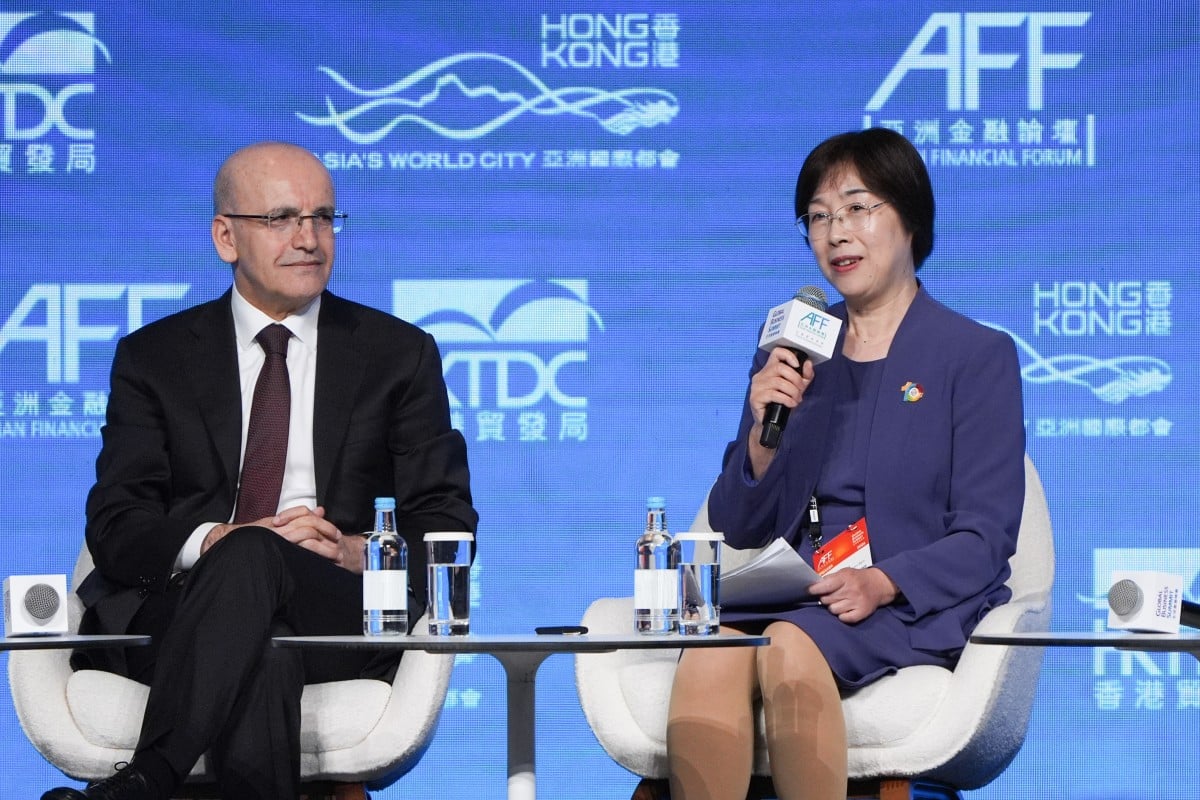
Ten days into her presidency, Zou Jiayi chose Hong Kong’s Asian Financial Forum as the venue for a message that was simultaneously reassuring and urgent. Speaking on January 26 to an audience of financial heavyweights and policymakers, the new president of the Asian Infrastructure Investment Bank emphasized that multilateral cooperation has become “an economic imperative” for sustaining long-term investment amid rising global economic uncertainty aiib. Her debut overseas speech signaled both continuity with her predecessor’s vision and a sharpened focus on the formidable challenges that lie ahead.
The timing was deliberate. As geopolitical fractures deepen, borrowing costs rise, and concessional finance dwindles, Zou noted that countries across Asia and beyond continue to require “reliable energy, resilient infrastructure, digital connectivity, effective climate mitigation and adaptation” aiib—needs that grow more pressing even as fiscal space tightens. For the AIIB, which has grown from 57 founding members to 111 approved members with USD100 billion in capitalization, the question is no longer whether multilateral development banks matter. It is whether they can mobilize capital at sufficient scale to bridge Asia’s infrastructure chasm—and whether China’s most prominent multilateral initiative can navigate an increasingly polarized global landscape.
A Decade in the Making: The AIIB’s Unlikely Journey
The AIIB’s establishment in 2016 represented something rare in contemporary geopolitics: a Chinese-led initiative that Western powers, with the notable exceptions of the United States and Japan, chose to join rather than oppose. The bank emerged from China’s frustration with what it perceived as inadequate representation in the post-war Bretton Woods institutions. Despite China’s economic ascent, its voting share in the Asian Development Bank remained disproportionately small—just 5.47 percent compared to the 26 percent combined voting power held by Japan and the United States—while governance reforms moved at glacial pace.
Yet the AIIB was designed, perhaps strategically, to avoid direct confrontation with the existing order. Its governance frameworks deliberately mirror those of the World Bank and ADB, incorporating international best practices on environmental and social safeguards, procurement transparency, and project evaluation. More than half of the bank’s approved projects have involved co-financing with established multilateral institutions. The institution maintains AAA credit ratings from all major rating agencies—a testament to its financial discipline and multilateral governance structure, where developing countries hold approximately 70 percent of shares.
This hybrid identity—simultaneously embedded within and distinct from Western-led development architecture—has allowed the AIIB to endure even as US-China strategic competition has intensified. But it also creates tensions. Western observers continue to scrutinize whether Beijing wields excessive influence through its 30.5 percent shareholding, which gives China effective veto power over major decisions. Meanwhile, China itself walks a tightrope, managing the AIIB as a genuinely multilateral institution while also pursuing its more opaque Belt and Road Initiative through state-owned banks.
Zou’s Inheritance: Scale, Ambition, and Sobering Constraints
Zou Jiayi assumed the AIIB presidency on January 16, the bank’s tenth anniversary, inheriting an institution that has approved nearly USD70 billion across 361 projects in 40 member economies. Her predecessor, Jin Liqun, spent a decade building credibility, expanding membership, and establishing operational systems. The accomplishments are tangible: over 51,000 kilometers of transportation infrastructure supported, 71 million people gaining access to safe drinking water, and 410 million beneficiaries of improved transport connectivity.
Yet measured against Asia’s infrastructure needs, these achievements remain a drop in a very deep bucket. The Asian Development Bank estimates that developing Asia requires USD1.7 trillion annually through 2030 simply to maintain growth momentum, address poverty, and respond to climate change. That figure balloons to USD1.8 trillion when climate adaptation and mitigation measures are fully incorporated. Against this backdrop, the AIIB’s USD8.4 billion in 2024 project approvals across 51 projects—impressive by institutional growth metrics—captures less than 0.5 percent of annual regional needs.
The bank’s updated corporate strategy acknowledges this reality with aggressive targets: doubling annual financing to USD17 billion by 2030, deploying at least USD75 billion over the strategy period, and ensuring over 50 percent goes toward climate-related investments. These are ambitious goals. They are also, quite clearly, insufficient to close the infrastructure gap without massive private capital mobilization—which brings us to the central challenge Zou articulated in Hong Kong.
The Private Capital Conundrum
Zou was unequivocal in Hong Kong: public resources “alone will not be sufficient” scmp. Private capital mobilization, alongside support from peer development banks, would be crucial. This recognition reflects a fundamental tension in development finance: traditional multilateral lending, even at unprecedented scale, cannot come close to meeting infrastructure needs. The private sector must be induced to invest in projects that carry political risks, long payback periods, regulatory uncertainties, and—increasingly—climate vulnerabilities.
Yet coaxing private investors into emerging market infrastructure has proven maddeningly difficult. Risk-return profiles often don’t align with institutional investor requirements. Currency mismatches create vulnerabilities. Weak regulatory frameworks and corruption concerns add further friction. Development banks have experimented with various mechanisms to address these challenges: partial credit guarantees, first-loss tranches, blended finance structures, and on-lending facilities through local financial institutions.
The AIIB has embraced this “finance-plus” approach, exemplified by three projects Zou highlighted in her speech: initiatives in Türkiye, Indonesia, and Kazakhstan that demonstrate how multilateral cooperation enables sustainable investment across diverse country contexts aiib. The Türkiye project involves sustainable bond investments channeled through private developers. Indonesia’s multifunctional satellite project operates as a public-private partnership bringing digital connectivity to remote areas. Kazakhstan’s Zhanatas wind power plant demonstrated how multilateral backing can catalyze commercial financing for renewable energy in frontier markets.
These successes, however, remain exceptions rather than the rule. The AIIB’s nonsovereign (private sector) portfolio remains modest compared to sovereign lending. Scaling private capital mobilization requires not just financial innovation but also patient institution-building: strengthening regulatory frameworks, improving project preparation, enhancing local capital markets, and building pipelines of bankable projects. It’s intricate, time-consuming work that doesn’t lend itself to dramatic announcements or swift results.
Climate Imperatives Meet Geopolitical Realities
Climate financing represents both the AIIB’s greatest opportunity and its most complex challenge. In 2024, 67 percent of the bank’s approved financing contributed to climate mitigation or adaptation—surpassing its 50 percent target for the third consecutive year. Nearly every approved project (50 of 51) aligned with Sustainable Development Goal 13 on climate action. The bank introduced Climate Policy-Based Financing instruments to support members’ reform programs, issued digitally native bonds through Euroclear, and raised nearly USD10 billion in sustainable development bonds.
These achievements matter enormously. Infrastructure decisions made today will lock in emissions patterns for decades. Asia accounts for the majority of global infrastructure investment and a disproportionate share of future emissions growth. Getting infrastructure right—prioritizing renewable energy over coal, building climate-resilient transport networks, investing in water management systems that can withstand extreme weather—is arguably the most important contribution development banks can make to global climate stability.
Yet climate finance also illuminates geopolitical fault lines. While the AIIB has officially aligned its operations with the Paris Agreement and maintains rigorous environmental standards, China—the bank’s largest shareholder and second-largest borrower—continues to finance coal projects through bilateral mechanisms. This creates uncomfortable contradictions. Western members value the AIIB’s climate commitments; they simultaneously worry about whether Chinese influence might soften environmental standards or prioritize projects that serve Beijing’s strategic interests.
The answer, to date, appears to be no. The AIIB’s multilateral governance structure, AAA credit rating, and co-financing relationships create powerful incentives for maintaining high standards. The bank’s environmental and social framework, while sometimes criticized for placing too much monitoring responsibility on clients, aligns with international best practices. Projects undergo independent evaluation. A public debarment list includes dozens of Chinese entities excluded from bidding on AIIB contracts.
Still, perception matters. In an era of intensifying US-China competition, economic “de-risking,” and fractured value chains, even genuinely multilateral institutions face scrutiny based on their leadership’s nationality. The AIIB must continuously demonstrate that it operates according to professional merit rather than geopolitical calculation—a burden that Western-led institutions, whatever their flaws, rarely face.
Navigating Treacherous Waters: The “De-Risking” Dilemma
Zou acknowledged in Hong Kong that the global economy faces “a convergence of challenges, including a weakening of traditional drivers of global growth such as strong investment and integrated value chains” aiib. This was diplomatic language for a more stark reality: the post-Cold War consensus on economic integration has fractured, perhaps irreparably. Supply chains are being reconfigured along geopolitical lines. Export controls proliferate. “Friend-shoring” replaces globalization as the operative principle in advanced economies.
For multilateral development banks, this environment presents what Zou called “geopolitical tensions,” “fragmentation of global value chains,” and “declining concessional resources” scmp. Infrastructure connectivity—long viewed as an unalloyed good—now triggers security concerns. Digital infrastructure projects face scrutiny over data governance and technological dependencies. Energy projects must navigate not just climate considerations but also great power competition over supply chains for batteries, solar panels, and rare earth minerals.
The AIIB finds itself in a particularly delicate position. Its mission of enhancing regional connectivity can be read as complementary to—or in competition with—various initiatives: the US-led Indo-Pacific Economic Framework, the European Union’s Global Gateway, Japan’s Partnership for Quality Infrastructure, and of course China’s Belt and Road Initiative. Zou must articulate a value proposition that transcends these competing visions while avoiding entanglement in their conflicts.
Her emphasis on multilateral cooperation as an economic imperative, rather than a geopolitical strategy, suggests one approach: positioning the AIIB as a pragmatic problem-solver focused on tangible development outcomes rather than ideological alignment. The bank’s co-financing relationships with the World Bank, ADB, and European development banks provide concrete evidence of this positioning. These partnerships reduce duplication, leverage expertise, share risks, and signal commitment to international standards.
Yet cooperation has its limits. Research examining AIIB project patterns finds that co-financing with the World Bank occurs less frequently in countries with strong Belt and Road Initiative ties to China, suggesting that geopolitical considerations do influence project selection, even if indirectly. The AIIB’s role as host institution for the China-led Multilateral Cooperation Center for Development Finance—whose relationship to the BRI remains deliberately opaque—further complicates claims of pure multilateralism.
The Road to 2030: Realistic Ambitions or Inevitable Disappointment?
As Zou settles into her five-year term, the central question is whether the AIIB can meaningfully contribute to closing Asia’s infrastructure gap or whether it will remain, despite growth, a marginal player relative to the scale of needs. The bank’s goal of reaching USD17 billion in annual approvals by 2030 would represent impressive institutional expansion. It would still capture less than one percent of annual regional infrastructure requirements.
This gap between ambition and reality suggests three possible futures. The first is transformative success: the AIIB becomes a genuine catalyst for private capital mobilization, leveraging its balance sheet to unlock multiples of private investment, pioneering innovative financial instruments, and demonstrating that multilateral cooperation can transcend geopolitical divisions. In this scenario, the bank’s impact is measured not in its direct lending but in its role as orchestrator, de-risker, and standard-setter.
The second possibility is respectable incrementalism: the AIIB continues growing steadily, maintains its AAA rating, delivers solid development outcomes in member countries, and co-finances projects with peer institutions. It becomes a useful but not transformative addition to the development finance architecture—valuable primarily for providing borrower countries with an additional funding source and slightly more voice in governance compared to Western-dominated institutions.
The third scenario is slow decline into irrelevance or, worse, becoming a vehicle for Chinese strategic interests that alienates Western members and undermines the bank’s multilateral character. This seems unlikely given the institution’s governance structures and Jin Liqun’s decade of credibility-building, but geopolitical pressures could push in this direction if not carefully managed.
Zou’s Hong Kong speech positioned her firmly in pursuit of the first scenario. Her emphasis on cooperation, private capital, and shared development priorities reflects understanding that the AIIB’s influence will be determined not by its balance sheet alone but by its ability to convene actors, mobilize resources, and demonstrate that multilateral solutions can deliver results in an age of nationalism and competition.
The Verdict: Indispensable but Insufficient
The infrastructure gap facing developing Asia represents both a development crisis and an opportunity. Inadequate infrastructure constrains economic growth, perpetuates poverty, limits access to education and healthcare, and increases vulnerability to climate shocks. Yet infrastructure investment, done well, can be transformative: connecting markets, enabling industrialization, providing clean energy access, and building climate resilience.
Zou characterized infrastructure investment as a “duty” for development banks to support industrialization and help countries provide goods and services to the global market scmp. This framing is telling. It positions the AIIB not as a charity but as a catalyst for economic transformation—aligning with the bank’s focus on sustainable returns, economic viability, and productive infrastructure rather than pure poverty alleviation.
The AIIB’s first decade demonstrated that a Chinese-led multilateral institution could operate according to international standards, attract broad membership, and deliver substantive development outcomes. Zou’s challenge is to scale this success while navigating increasingly treacherous geopolitical waters. Her insistence on multilateral cooperation as an economic imperative—not just a diplomatic nicety—suggests recognition that fragmentation serves no one’s interests when infrastructure needs are so vast.
Yet realism demands acknowledging that even a successful AIIB operating at peak efficiency cannot, alone or with peer institutions, close Asia’s infrastructure gap. The private sector must be decisively engaged. Domestic resource mobilization must be strengthened. Project preparation must improve. Regulatory frameworks must evolve. These changes require patient, painstaking work that extends far beyond any single institution’s mandate.
The AIIB under Zou’s leadership will likely prove indispensable but insufficient—a useful, professionally managed multilateral development bank that makes meaningful contributions to Asian infrastructure while remaining orders of magnitude too small relative to needs. That’s not a failure of vision or execution. It’s a reflection of the enormous scale of challenges facing developing Asia and the structural limits of multilateral development finance in an era of constrained public resources and hesitant private capital.
Whether the bank can transcend these limits—whether it can truly become the catalyst and mobilizer Zou envisions—will depend not just on Beijing’s commitment or Western engagement, but on whether Asia’s developing economies can create the enabling conditions that make infrastructure projects genuinely bankable. That transformation, ultimately, is one that development banks can support but not substitute for. And it’s a challenge that will extend well beyond Zou’s five-year term, or indeed the AIIB’s second decade. The question is whether, in a world of deepening divisions, multilateral institutions retain the credibility and capacity to help nations build the future—together.

Singapore Firms Press Ahead in US Market Despite Trump Tariffs

The IMF’s High-Voltage Mandate: How Pakistan’s FY27 Power Subsidy Cut Will Rewire Its Economy

How US Debt, Gold Chaos, and a Stalled Middle East Are Rewriting the Rules of Investing

Top 15 Stocks for Investment in 2026 in PSX: Your Complete Guide to Pakistan’s Best Investment Opportunities
Top 15 Stocks for Investment in 2026 in PSX: Your Complete Guide to Pakistan’s Best Investment Opportunities

Debunking IMF Program Myths: Reconfiguring Engagement for True National Ownership in a Volatile World
-
 Markets & Finance4 months ago
Top 15 Stocks for Investment in 2026 in PSX: Your Complete Guide to Pakistan’s Best Investment Opportunities
-
Markets & Finance4 months ago
Top 15 Stocks for Investment in 2026 in PSX: Your Complete Guide to Pakistan’s Best Investment Opportunities
-
 Analysis3 months ago
Debunking IMF Program Myths: Reconfiguring Engagement for True National Ownership in a Volatile World
-

 Global Economy5 months ago
What the U.S. Attack on Venezuela Could Mean for Oil and Canadian Crude Exports: The Economic Impact
-

 Investment4 months ago
Top 10 Mutual Fund Managers in Pakistan for Investment in 2026: A Comprehensive Guide for Optimal Returns
-

 Asia5 months ago
China’s 50% Domestic Equipment Rule: The Semiconductor Mandate Reshaping Global Tech
-

 AI5 months ago
15 Most Lucrative Sectors for Investment in Pakistan: A 2025 Data-Driven Analysis
-

 Exports5 months ago
Pakistan’s Export Goldmine: 10 Game-Changing Markets Where Pakistani Businesses Are Winning Big in 2025