
Asia
China’s Travellers Pivot to Vietnam: Southeast Asia’s Tourism Realignment


How a Strategic Shift is Reshaping the Multi-Billion-Dollar Regional Travel Industry
A quiet transformation is reshaping Southeast Asia’s tourism landscape. While Thailand has long dominated the region’s visitor statistics, Vietnam emerged in 2024 as the unexpected star, capturing record numbers of Chinese tourists and fundamentally altering competitive dynamics across a market worth tens of billions of dollars annually.
Vietnam welcomed 17.5 million international visitors in 2024, achieving a 39.5% increase compared to 2023, positioning the country at 98% of pre-pandemic levels. More significantly, China delivered approximately 3.74 million arrivals to Vietnam in 2024, representing a remarkable 114.4% increase from 2023. This surge represents far more than statistical achievement—it signals a strategic realignment in how Asian travelers are choosing their destinations.
Why are Chinese tourists choosing Vietnam over Thailand?
Chinese tourists are choosing Vietnam due to five key factors: visa-free entry for 45 days, 30-40% lower costs compared to Thailand, improved flight connectivity with 200+ weekly direct routes, cultural familiarity with shared heritage, and post-pandemic travel diversification strategies encouraged by Beijing’s outbound tourism policies.
The Numbers Behind Vietnam’s Meteoric Rise
Vietnam’s tourism recovery stands as Southeast Asia’s fastest-recovering tourism market, outpacing regional peers like Singapore at 86% and Thailand at 87.5%. The momentum began building in early 2024 when China regained its leading position in the Vietnamese tourism market with nearly 357,200 visitors in May, up over 140% compared to the same month the previous year.
By mid-2024, the trend solidified. International visitor arrivals to Vietnam grew by 58.4% year-on-year to more than 8.8 million in the first six months of 2024, including almost 2 million from China. November 2024 brought additional validation when international arrivals rose by 15.6% year-on-year to 1.98 million, with China leading growth at 27.5%.
These aren’t merely impressive statistics—they represent a fundamental redistribution of tourism dollars. Vietnam’s tourism revenue is projected to generate $32 billion in 2024, placing it firmly in competition with established powerhouses like Thailand and Malaysia.
Top Benefits for Chinese Travelers to Vietnam:
- Visa-free entry for up to 45 days (compared to visa requirements for Thailand)
- Lower travel costs: Hotels 40% cheaper, dining 35% less expensive
- Direct flights from 25+ Chinese cities with 3-hour average flight time
- WeChat Pay and Alipay widely accepted in tourist areas
- Cultural similarity with Chinese language signage in major destinations
- Safety ranking: Vietnam scored 8.2/10 for Chinese tourist security
- Diverse attractions from beaches to mountains within compact geography
Why Chinese Travellers Are Choosing Vietnam: Five Strategic Advantages
1. Simplified Entry: The Visa Revolution
Vietnam’s visa policy overhaul has eliminated a traditional friction point for Chinese travelers. While not offering complete visa-free access for Chinese nationals, Vietnam implemented an expanded e-visa system in August 2023 that transformed entry procedures. The country now offers 90-day e-visas for single or multiple entries to citizens of all countries, dramatically simplifying what was once a cumbersome process.
This contrasts sharply with some regional competitors where visa procedures remain more complex. Thailand, despite its tourism prowess, requires Chinese travelers to obtain visas on arrival or apply in advance, adding administrative burden. Vietnam’s streamlined digital system allows Chinese tourists to secure authorization quickly through an online platform, reducing planning friction and encouraging spontaneous travel decisions.
For European visitors, Vietnam’s open visa policy allows citizens to stay temporarily for up to 45 days, effective from August 15, 2023, demonstrating the country’s commitment to facilitating international travel across multiple source markets.
“Vietnam has emerged as the unexpected winner in Southeast Asia’s tourism resurgence, capturing market share with a precision that surprised industry veterans.”
2. Economic Value: More Bang for the Yuan
Vietnam’s cost competitiveness represents perhaps its most compelling advantage for Chinese middle-class travelers. Accommodation, dining, and activities consistently cost 30-40% less than comparable experiences in Thailand or Indonesia. A four-star hotel room in Hanoi or Ho Chi Minh City averages $60-80 per night, while equivalent accommodations in Bangkok or Bali command $95-150.
Beyond basic costs, Vietnam’s integration of Chinese digital payment systems has eliminated currency exchange friction. WeChat Pay and Alipay acceptance has expanded rapidly across tourist zones, allowing Chinese visitors to transact as seamlessly as they would domestically. This technological integration, combined with favorable exchange rates, makes Vietnam particularly attractive to cost-conscious travelers who can stretch their budgets significantly further than in traditional destinations.
3. Geographic Proximity and Cultural Resonance
Vietnam shares a 1,450-kilometer border with China, creating natural connectivity advantages. Direct flight routes have proliferated, with more than 200 weekly connections linking Chinese cities to Vietnamese destinations. Flight times from major Chinese hubs to Hanoi or Ho Chi Minh City average just three hours, making Vietnam accessible for long weekends and short breaks.
Cultural familiarity enhances Vietnam’s appeal. Historical connections, shared culinary traditions, and linguistic similarities create comfort for Chinese tourists. Unlike more culturally distant destinations, Vietnam offers recognizable elements—from food ingredients to architectural styles—that reduce travel anxiety while still providing exotic appeal.
4. Infrastructure Investment and Modern Connectivity
Vietnam has committed substantial resources to tourism infrastructure development. The Vietnamese government’s overall infrastructure investment target for 2024 and beyond is around $36 billion, covering transport networks, airports, seaports, and utilities, which indirectly supports tourism growth.
Airport expansions have transformed accessibility. Major infrastructure projects, including airport expansions and metro completions, are on track in both Hanoi and Ho Chi Minh City, potentially boosting the hospitality sector further. These improvements directly benefit international visitors by reducing connection times, improving transportation options, and enhancing overall travel experiences.
The aviation sector specifically shows remarkable growth potential. The Vietnam Airport Construction and Modernization Market is projected to grow from US$72.4 billion in 2025 to US$125.6 billion by 2031, at a compound annual growth rate of 9.5 percent, according to Vietnam Briefing, demonstrating sustained commitment to connectivity infrastructure.
5. Strategic Timing and Market Positioning
Vietnam’s tourism surge coincides with China’s evolving outbound travel policies. Post-pandemic, Chinese authorities have gradually reopened international travel while encouraging diversification beyond traditional mass-market destinations. Vietnam positioned itself perfectly to capture this trend, offering familiar Asian experiences without the overcrowding that now characterizes places like Thailand’s Phuket or Bali during peak seasons.
The country has also benefited from regional competitors’ challenges. Thailand’s tourism infrastructure, despite high arrival numbers, shows signs of strain with environmental concerns and occasional service quality issues. Vietnam enters as a fresh alternative offering unspoiled beaches, emerging resort destinations, and enthusiastic hospitality without the jaded service culture sometimes found in over-touristed locations.
The Broader Southeast Asian Tourism Realignment
Vietnam’s success reflects wider shifts across Southeast Asia’s tourism ecosystem. In 2024, the combined arrivals to Thailand, Malaysia, Singapore, Indonesia, Vietnam, and the Philippines reached approximately 114 million visitors, representing about 89 percent of the 2019 total of 127 million.
This regional recovery masks significant variations. Vietnam led the region in year-over-year growth, achieving 39.5% increase in arrivals in 2024 compared to 2023, allowing Vietnam to surpass Singapore and secure third place in total arrivals, according to The Outbox Company.
Thailand, while maintaining leadership with 35.5 million visitors, faces growth challenges. Recent data suggests Thailand is currently on pace to see fewer tourists than it did in 2024, with arrivals as of June 2025 approximately 5 percent lower than the same period the previous year, as reported by The Diplomat.
Malaysia demonstrates steady progress with 25 million arrivals in 2024, approaching but not quite matching its 2019 peak of 26 million. Singapore and Indonesia show modest recoveries, while the Philippines lags significantly at just 5.9 million visitors—well below its modest 2019 benchmark.
Economic Implications: A Multi-Billion-Dollar Redistribution
The tourism realignment carries substantial economic consequences. The Southeast Asia Tourism Market is expected to reach USD 35.52 billion in 2025 and grow at a CAGR of 11.43% to reach USD 61.02 billion by 2030, according to market research from Mordor Intelligence.
Within this expanding market, Vietnam is positioned for disproportionate gains. Vietnam is projected to log the fastest 13.75% CAGR through 2030, suggesting the country will capture an increasing share of regional tourism revenue.
The hospitality sector specifically shows explosive growth. The Vietnam hospitality market was valued at USD 7.0 Billion in 2024 and is projected to reach USD 20.7 Billion by 2033, growing at a CAGR of 12.20%, as reported in hospitality market analysis.
Foreign direct investment reflects this optimism. In January 2025, new FDI in accommodation and food services reached US$13.63 million across seven projects, with global hotel chains including Marriott, Accor, and Hilton expanding their portfolios in Vietnam, according to Vietnam Briefing.
Vietnam’s Strategic Infrastructure Push
Vietnam’s tourism success isn’t accidental—it results from deliberate policy choices and sustained infrastructure investment. As of 2023, Vietnam has over 20,000 registered hotels, providing diverse accommodation options from budget guesthouses to luxury resorts.
The accommodation sector continues expanding rapidly. Tourism infrastructure continues to receive investment, with approximately 40,000 accommodation establishments and 800,000 rooms nationwide, as noted by Vietnam’s tourism authorities. This supply growth matches demand increases while maintaining competitive pricing.
Coastal development represents a particular focus area. In 2024, the average absorption rate for coastal hotels and resorts reached 57%, doubling that of 2023, according to the Vietnam Association of Real Estate Brokers, indicating robust demand for beachfront properties. The analysis from The Investor suggests this trend will accelerate.
Premium developments signal investor confidence. The Trump Organization announced a US$1.5 billion project near Hanoi featuring luxury hotels, two 54-hole golf courses, and residential areas, as reported by ASEAN Briefing. Such large-scale commitments validate Vietnam’s tourism trajectory and attract additional capital.
Emerging Destinations Beyond Traditional Hubs
Vietnam’s tourism growth extends beyond Hanoi, Ho Chi Minh City, and Ha Long Bay. Places such as Ninh Binh, Binh Dinh, Quang Ngai, Phu Yen, and Ninh Thuan have experienced remarkable increase in total tourist arrivals over the past three years, according to hospitality analysis. These secondary destinations offer authentic experiences without overwhelming tourist crowds, appealing particularly to experienced travelers seeking undiscovered locations.
Provincial diversification spreads economic benefits more evenly while reducing environmental pressure on popular sites. As major cities reach maturity, investor interest is pivoting to provinces like Ninh Binh, Vung Tau, and Ha Giang, gaining visibility through government promotion, new roads, and community-led tourism, creating opportunities for boutique hotels, eco-resorts, and cultural tourism ventures.
Challenges Ahead: Can Vietnam Sustain This Momentum?
Vietnam’s rapid tourism growth brings inevitable challenges. Infrastructure, while improving, still struggles in some areas. While air travel infrastructure has improved significantly with more direct flight routes, regional and inter-provincial road networks still lack effective connectivity, potentially hampering accessibility during peak seasons.
Environmental sustainability concerns mount as visitor numbers surge. Destinations like Ha Long Bay face overtourism risks that threaten the natural beauty attracting visitors initially. Balancing growth with conservation remains an ongoing challenge requiring careful management.
Workforce development presents another constraint. The percentage of trained workers has reached approximately 67%, approaching the set target, although there are still limitations in terms of high-quality labor and specialized skills. Rapid expansion strains available talent pools, potentially affecting service quality if not addressed proactively.
Legal and regulatory frameworks require modernization. Vietnam’s 2017 Tourism Law is considered outdated as it leaves gaps in business regulation and constraints on funding and workforce development, according to industry analysis from Vietnam Briefing. New accommodation formats like capsule hotels and farm stays lack standardized regulations, creating uncertainty for investors.
What This Means for Travelers, Businesses, and Competitors
For Chinese Travelers
Vietnam offers exceptional value combined with convenient access and familiar cultural elements. The best times to visit remain shoulder seasons—April to May and September to November—when weather conditions optimize and crowds thin. Beyond major cities, destinations like Hoi An, Nha Trang, and emerging spots like Ninh Binh provide diverse experiences from ancient architecture to pristine beaches.
Savvy travelers should note that rapid development means destinations change quickly. Places considered “undiscovered” this year may be substantially more developed next year. Early visits to emerging destinations offer authentic experiences before mass tourism arrives.
For Tourism Industry Businesses
Vietnam presents compelling investment opportunities across multiple segments. The hotel sector, particularly in secondary cities and coastal areas, shows strong fundamentals with rising occupancy rates and improving average daily rates. Both Hanoi and Ho Chi Minh City recorded higher than historical average daily rates as of June 2024, according to hospitality consultancy CBRE Vietnam.
Technology-enabled tourism services represent another growth area. According to Vietnam’s Tourism System Master Plan for 2021-2030, the highest-priority investment projects are those in digital transformation, including software and mobile applications for tourists, as outlined by Global Angle.
Sustainable tourism ventures align with government priorities. Policies now require tourism establishments to eliminate single-use plastics by 2030, creating demand for eco-friendly operations and green technology providers.
For Regional Competitors
Vietnam’s success provides instructive lessons. The country’s combination of streamlined visa processes, competitive pricing, aggressive infrastructure investment, and strategic marketing created powerful momentum. Competitors observing market share erosion should examine these elements.
Thailand, despite maintaining leadership, must innovate to prevent further declines. Its proposals to legalize casinos represent one attempt to differentiate and attract new visitor segments. Malaysia’s “Visit Malaysia 2026” campaign signals recognition of competitive pressures.
The broader lesson: complacency invites disruption. Established destinations assuming historical dominance will continue indefinitely risk losing ground to more agile competitors willing to invest and adapt.
The Future: 2025-2027 Forecasts and Scenarios
Vietnam’s government has set ambitious targets reflecting confidence in continued momentum. Vietnam is forecast to welcome more than 22 million travelers in 2025, far eclipsing the pre-pandemic record.
Market analysts project continued robust performance. With Chinese tourism recovery still incomplete—Vietnam’s 3.74 million Chinese arrivals in 2024 remain significantly lower than the 5.8 million visitors recorded in 2019—substantial upside exists if pre-pandemic ratios return.
Several scenarios could unfold through 2027:
Optimistic Scenario: China’s outbound travel fully normalizes, Vietnam captures 25-30% of Southeast Asian Chinese tourist flows, and annual arrivals reach 28-30 million by 2027. This scenario requires sustained infrastructure investment, maintained price competitiveness, and successful environmental management.
Base Case Scenario: Vietnam maintains current growth trajectory with 20-23 million annual arrivals by 2027, representing steady but unspectacular progress. Chinese tourism continues growing but faces competition from Thailand’s renewed efforts and new destinations entering the market.
Challenging Scenario: Infrastructure constraints, environmental degradation, or regional competitors’ aggressive responses slow Vietnam’s momentum. Arrivals plateau at 18-20 million, still representing recovery but falling short of transformative potential.
The most likely path combines elements of the base case with selective achievements from the optimistic scenario. Vietnam’s trajectory appears sustainable given fundamentals, though execution risks remain substantial.
Southeast Asian Tourism’s New Era
The tourism realignment underway across Southeast Asia represents more than temporary post-pandemic adjustment—it signals lasting structural change in how travelers choose destinations and how countries compete for valuable tourism revenue.
Vietnam’s emergence challenges established hierarchies and demonstrates that strategic positioning, policy reforms, and infrastructure investment can rapidly reshape competitive dynamics. For a country that welcomed just 4.2 million international visitors in 2008, reaching 17.6 million in 2024 with clear momentum for further growth represents remarkable achievement.
Chinese tourists’ pivot to Vietnam drives this transformation but reflects broader patterns. Travelers increasingly seek value, convenience, and authentic experiences over traditional status destinations. Countries offering these attributes while maintaining competitive pricing and streamlined access position themselves for sustained success.
The multi-billion-dollar redistribution of Southeast Asian tourism spending will continue reshaping regional economies, employment patterns, and development priorities. Vietnam currently rides this wave most successfully, but the dynamic nature of tourism suggests continued evolution ahead.
For travelers, this creates opportunities to explore an improving destination before it becomes as crowded and commercialized as some alternatives. For businesses, it offers investment prospects in a high-growth market with favorable fundamentals. For competing destinations, it serves as both warning and inspiration—adapt and invest, or watch market share erode to more agile competitors.
Southeast Asia’s tourism map is being redrawn. Vietnam holds the pen at present, but the final picture remains unfinished.


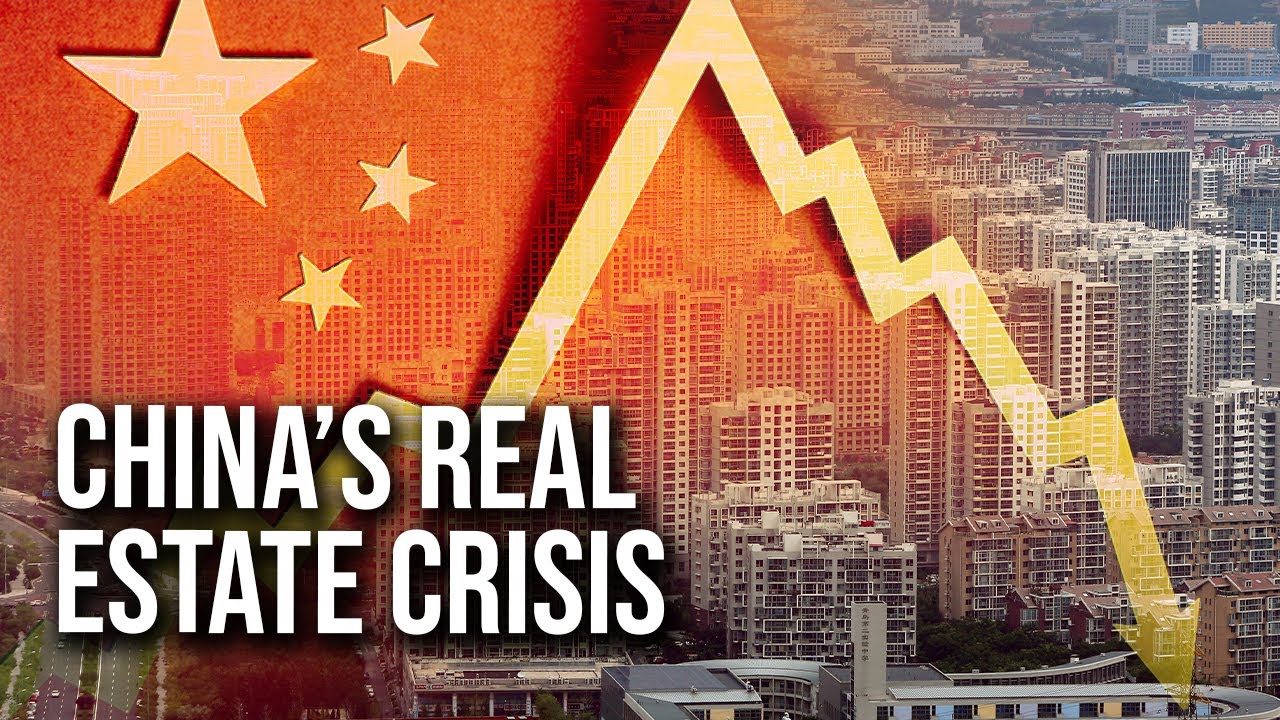
China’s economy in 2026 is a study in contradiction. In its largest cities — Shanghai, Beijing, Guangzhou, Shenzhen — new-home prices have risen for three consecutive months, driven by targeted policy support that is beginning to show traction. Across the remaining hundreds of cities, prices are still falling at a pace that is accelerating, not slowing.
National property investment fell 16.2% year-over-year in the first five months of 2026 — a staggering contraction in a sector that once accounted for roughly a quarter of Chinese GDP. At the same time, China’s technology sector is attracting record capital flows, its export machine is running at full throttle despite global trade tensions, and the People’s Bank of China (PBOC) is quietly implementing some of the most significant monetary architecture reforms in a generation.
China is, in effect, running two economies simultaneously. Understanding which one dominates the other will determine the trajectory of global markets for the next several years.
The Property Sector: A Structural Wound, Not a Cyclical Dip
China’s real estate crisis is entering its fifth year. What began with the 2021 Evergrande collapse has evolved into a sustained structural contraction that is fundamentally reshaping the economic role of property in China’s growth model.
National home prices declined at a faster pace in May 2026 than in April, a sign that market conditions are deteriorating rather than stabilising at the aggregate level. The OECD inventory of unsold homes across China’s lower-tier cities remains enormous — a structural supply overhang that cannot be resolved by demand-side stimulus alone.
The policy response has been asymmetric by design. The central government’s support measures are concentrated in Tier 1 and select Tier 2 cities, where local governments have more fiscal capacity to implement purchase subsidies, down-payment reductions, and mortgage rate cuts. In these markets, the policy appears to be working: new-home prices in China’s first-tier cities rose for the third consecutive month in May.
But first-tier cities account for a small fraction of China’s total housing stock. The vast majority of property — and the vast majority of household wealth — is concentrated in smaller cities where policy support is less effective and price declines are continuing.
The macro consequence is a negative wealth effect that is suppressing consumer confidence and retail spending precisely at the moment China needs domestic demand to compensate for a structurally lower export environment.
The PBOC’s Quiet Revolution
While the property sector weighs on growth, the People’s Bank of China has been implementing a series of significant monetary policy reforms. PBOC Governor Pan Gongsheng announced measures in June 2026 that include:
- Increased use of overnight reverse repo operations, a technical adjustment that improves the PBOC’s ability to manage short-term liquidity conditions with precision
- Narrowing the short-term interest rate corridor, reducing volatility in interbank lending rates and improving monetary policy transmission
- Steps to support the offshore use of the renminbi, accelerating the internationalisation of the Chinese currency as part of China’s longer-term strategy to reduce dependency on the US dollar in global trade and finance
These announcements are significant, but should not be misread as a broad-based monetary stimulus package. The PBOC is reforming its operational framework and improving financial market infrastructure — not firing an economic bazooka. The distinction matters for investors who might expect a China stimulus surge analogous to 2009 or 2015.
For investors, the PBOC’s focus on financial market development and liquidity management signals that policymakers are prioritising long-term stability over short-term growth stimulus. This implies a more gradual recovery trajectory than markets have sometimes assumed.
China’s Export Machine: A Source of Strength and Tension
Against the backdrop of the property slump, China’s export sector is performing exceptionally well. China’s trade surplus has expanded significantly in 2026, driven by:
- Industrial overcapacity in sectors including steel, solar panels, electric vehicles, chemicals, and lithium-ion batteries
- A weaker renminbi that has improved price competitiveness for Chinese exporters in global markets
- Continued strong demand for Chinese manufactured goods from Southeast Asia, Latin America, and Africa — markets that have deepened trade ties with China as US-China trade friction has redirected some Western procurement
China’s strong export growth has sparked significant international pushback. Policymakers across the European Union, the United States, and major emerging markets have expressed concerns about industrial overcapacity and the impact of low-cost Chinese exports on domestic manufacturing industries. The EU has implemented additional tariffs on Chinese electric vehicles, and US tariffs on a broad range of Chinese goods remain elevated following the Trump administration’s tariff regime.
The structural tension: China needs export growth to compensate for weak domestic demand, but its export success is generating the geopolitical friction that could ultimately constrain market access.
China’s AI Pivot: From Property Developer to Tech Powerhouse
The most significant transformation in China’s economic structure in 2026 is not occurring in housing — it is occurring in technology. China’s leadership has made a deliberate and well-resourced pivot toward artificial intelligence, semiconductors, and advanced manufacturing as the new engines of economic growth.
Chinese technology companies including Huawei, Baidu, Alibaba, and ByteDance are investing at scale in AI model development, AI chip design, and AI-integrated enterprise applications. The Chinese government’s industrial policy support for these sectors — through subsidies, preferential financing, and regulatory facilitation — is mobilising capital at a pace that rivals the hyperscaler buildout in the United States.
The strategic motivation is clear: reduce dependency on US semiconductor technology (particularly following US export controls on advanced chips), build sovereign AI capability across defence, governance, and commercial applications, and position Chinese technology companies as global AI leaders in markets outside the Western sphere.
This pivot is creating investment opportunities in Chinese technology equities — though geopolitical risk, regulatory uncertainty, and the US export control regime create complex risk factors that must be weighed carefully by international investors.
The Global Market Implications
China’s two-speed economy creates distinct implications for different asset classes and geographic markets:
Commodities: The property sector contraction is the dominant factor for commodity demand. Steel, copper, cement, and glass — all deeply tied to construction activity — face sustained headwinds from Chinese property weakness. Iron ore prices reflect this dynamic. In contrast, Chinese demand for technology-related commodities (lithium, cobalt, rare earths) remains robust as the EV and battery supply chain continues to scale.
Asian equities: The MSCI Emerging Markets index has significant China weighting, and China’s two-speed dynamics are creating divergence between technology-oriented Chinese equities (performing well) and property/financial sector stocks (underperforming). Country selection and sector allocation matter enormously in the current Chinese equity environment.
Currency markets: The PBOC’s renminbi internationalisation measures represent a long-duration effort to reduce dollar dependence. In the near term, currency management remains a key PBOC tool — managed depreciation to support exporters, with intervention to prevent disorderly moves that could trigger capital outflows.
European and US corporates: Companies with significant China exposure face a bifurcated operating environment — strong demand in technology-related end markets, weak demand in consumer and construction-related segments. Luxury goods, industrials, and materials companies are disproportionately affected by the property sector contraction.
The Policy Outlook: What Comes Next
The Chinese government faces a genuinely difficult policy dilemma. Aggressive fiscal or monetary stimulus risks reigniting the debt dynamics that made the property crisis inevitable in the first place. Insufficient support risks a deeper consumer confidence collapse that could turn a structural slowdown into a sharper cyclical downturn.
The current policy approach — targeted support for Tier 1 property markets, incremental PBOC reforms, and aggressive industrial policy investment in technology sectors — represents a careful balancing act. It is not the big bang stimulus that some investors have anticipated, but it is also not the hands-off approach that would allow a disorderly collapse.
The most likely trajectory: China grows at 4.0%–4.5% in 2026, below its historical average but ahead of the IMF’s revised global growth forecast of 3.1%. The property sector continues to weigh on domestic demand, while exports and technology investment provide partial offsets. The renminbi remains managed, and the PBOC avoids large-scale interest rate cuts that would widen the US-China rate differential and accelerate capital outflows.
The Bottom Line
China’s economy in 2026 is not in crisis, but it is in transition — and the transition is proving slower and more painful than the optimists predicted. The property sector wound is structural, not cyclical. The technology pivot is real but will take years to fully offset the economic weight that property once carried.
For global investors, China remains the world’s second-largest economy and a critical driver of commodity, trade, and technology markets. Ignoring it is not an option. But the analytical frameworks from the 2010s — property-led, infrastructure-driven, credit-fuelled growth — are no longer the right lens through which to assess Chinese economic dynamics in 2026.
The new China story is being written in data centres, EV factories, and AI labs — not in unfinished apartment towers.
FAQs
Q: What is happening with China’s economy in 2026?
A: China is running a two-speed economy. The property sector is contracting sharply — investment fell 16.2% year-over-year in early 2026 — while technology investment, AI spending, and exports are growing. The PBOC is implementing monetary reforms without large-scale stimulus.
Q: Is China’s property market recovering in 2026?
A: Partially and unevenly. New home prices in Tier 1 cities rose for three consecutive months through May 2026, suggesting policy support is gaining traction in the largest markets. Nationally, however, prices declined at a faster pace in May than April, and the recovery remains uneven across regions.
Q: What is China’s GDP growth forecast for 2026?
A: Most forecasters project China’s GDP growth at approximately 4.0%–4.5% in 2026 — below historical averages but above the IMF’s global average of 3.1%. The property sector contraction is the primary drag, partially offset by technology investment and export growth.
Q: How is China’s AI investment affecting global markets?
A: China’s AI and technology pivot is creating strong demand for technology-related commodities (lithium, rare earths), boosting Chinese technology equities, and intensifying competition with US and European AI companies — particularly in markets outside the Western sphere.
Analysis
Nidec Accounting Fraud: The Pressure Culture That Built Japan’s Biggest Corporate Scandal in a Decade

There’s a comic book on Nidec’s website — or there was, until recently — called “The Man Hotter Than the Sun.“ It chronicles the rise of Shigenobu Nagamori, who founded the world’s largest precision motor company in a shack in Kyoto in 1973 and built it into a global industrial giant supplying Apple, the automotive sector, and half the data centres on earth. Hard work. Relentless ambition. Numbers that never disappointed. It was a very Japanese success story, and it was also, investigators have now concluded, partly a fiction — one sustained for years by managers who inflated profits rather than face the man whose sun, apparently, could not be allowed to set.
What Is the Nidec Accounting Fraud — and How Big Is It?
The Nidec accounting fraud is Japan’s largest corporate accounting scandal in at least a decade. A third-party committee report released in March 2026 found that Nidec Corporation had committed accounting fraud totalling 166.2 billion yen — roughly $1.1 billion — as of 2023. That figure, staggering on its own, is likely the floor. The company has warned it may be forced to book an additional ¥250 billion, or $1.6 billion, in impairment charges as the full cost of the scandal is tallied, with third-party investigators saying they uncovered at least 1,000 separate instances of improper accounting across the group. Seoul Economic DailyBloomberg
The scandal first showed its face not in Kyoto, where Nidec is headquartered, but in Casalmaggiore, a small town in northern Italy’s Po Valley. It was the company’s Italian subsidiary, Nidec FIR International S.R.L., where possible lapses first surfaced in June 2025, forcing Nidec to delay filing its annual financial results. Within months, a Chinese subsidiary was implicated too, and then the scope widened further: investigators found misconduct at operations in Switzerland and across Nidec’s automotive inverter business. financialcontent
On October 28, 2025, the Tokyo Stock Exchange designated Nidec’s stock as a “security on special alert,” citing substantial need for improving the company’s internal management systems. The move sent shares tumbling by their daily 500 yen limit — a drop of roughly 19% in a single session. By the time the formal third-party report landed on February 27, 2026, Chairman Hiroshi Kobe and three other senior executives had resigned. Moody’s downgraded Nidec’s debt rating three levels into junk territory, and the stock was removed from the Nikkei 225 index. CEO Mitsuya Kishida bowed publicly at a press conference and said he would forfeit his salary until October. NIDEC CORPORATIONMy-cpe
The mechanics of the fraud were, in retrospect, classically mundane. Misconduct confirmed at Nidec Group bases included: avoidance of recognising valuation losses on obsolete raw materials and finished goods; improper avoidance of impairment losses based on sales plans with low probability of achievement; inflated inventory values; misreported customs declarations; government grants booked as revenue. Each individual manipulation was modest. Aggregated across dozens of subsidiaries over multiple years, they added up to a billion-dollar lie. NIDEC CORPORATION
How Did Corporate Culture Drive the Fraud?
This is where the story moves from accounting irregularity to structural pathology. The central finding of the independent investigation is not that Nagamori ordered the fraud — investigators found no evidence he personally directed specific manipulations. What they found was more insidious.
The committee blamed founder Shigenobu Nagamori for “excessive pressure to meet performance targets,” particularly profit targets, and found that many business units attempted to meet their goals using creative accounting. In plain terms: managers across Italy, China, and Switzerland were not cooking the books because they were corrupt. They were doing it because the alternative — telling Nagamori, a man who has written books about his rags-to-riches philosophy and whose image once adorned the company’s public website — that the numbers wouldn’t hit, was something the culture simply didn’t allow. MarketScreener
What caused the Nidec accounting fraud? The third-party investigation concluded that Nagamori’s excessive pressure on staff to meet profit targets created a corporate culture in which managers across multiple countries resorted to improper accounting rather than miss their numbers. Investigators documented more than 1,000 separate instances of misconduct spread across the group’s global subsidiaries.
This mechanism — what organisational theorists sometimes call “performance pressure fraud” — is not unique to Japan. But it finds particularly fertile ground in founder-dominated companies, where the founder’s authority has rarely been formally checked and where decades of success have calcified the idea that the numbers are always achievable if you push hard enough. Nagamori had, famously, sent regular messages to senior managers demanding better performance. As far back as September 2021, after handing over the CEO role, he was telling managers that the company faced its biggest-ever business crisis and that they needed to do more to boost performance and the share price. The message, delivered repeatedly across years, wasn’t lost on the people below him. Bloomberg
Oasis Management, the activist fund that holds approximately 6.7% of Nidec, described the problem bluntly in March 2026: “The problem at Nidec lies in a corporate culture that pressured employees into engaging in improper accounting practices for the sake of performance or share price; a lack of ethical judgment among management that effectively tolerated such improper accounting; the failure to establish appropriate checks and balances.” businesswire
What Are the Implications for Nidec and Japan Inc.?
The immediate picture for Nidec itself is grim. CEO Kishida has announced a plan to spend ¥130 billion over five years on measures to prevent recurrence and rebuild the governance system, including the suspension of the company’s once-aggressive acquisition strategy. Business acquisitions had been Nidec’s primary growth engine for three decades — an irony not lost on investors, since it was precisely that acquisition-driven expansion into Italy, China, and Switzerland that created the dispersed, difficult-to-audit subsidiaries where the fraud took root. The Japan Times
Nidec has also cancelled its year-end dividend for the fiscal year ending March 2026, with the company saying it “has no choice” given the investigation’s material impact on its financial closing for past fiscal years. The Securities and Exchange Surveillance Commission has reportedly begun its own probe, adding a regulatory dimension to what is already a reputational and financial catastrophe. NIDEC CORPORATION
The broader signal for Japanese markets is harder to read, but not easily dismissed. Japan’s corporate governance reform drive — accelerated by the Tokyo Stock Exchange’s 2023 push to force companies trading below book value to justify their capital allocation — was already testing the limits of how far founder-controlled companies would actually change. Nidec was, until recently, considered a model of what Japanese manufacturing could become: globally scaled, technically sophisticated, financially driven. The revelation that its financial sophistication was partly illusory lands badly at precisely the moment foreign investors have been warming to Japan’s equity story.
Academic research published in the Asia Pacific Journal of Management in 2025 found that the combination of foreign investor pressure for short-term gains and inadequately independent boards — particularly at companies with concentrated founder ownership — significantly elevates the risk of corporate misconduct in Japanese firms. Nidec fits the profile precisely. Springer
The Counterargument: Was Nagamori Singled Out Unfairly?
Not everyone is persuaded that Nagamori is the villain this narrative requires. Some analysts argue that to pin a systemic governance failure on one individual’s personality is to let the board, the auditors, and the company’s own internal compliance function off the hook entirely.
PwC, Nidec’s auditor, issued a disclaimer of opinion on the company’s fiscal year 2025 consolidated financial statements — an extraordinary step that signals the auditor could not obtain sufficient evidence to form a view. PwC pointed specifically to accounting practices that could have a “significant impact on consolidated financial statements” due to arbitrary adjustments in the timing of asset write-downs. That’s a significant failure of external oversight, and it raises questions about why red flags were not raised earlier in an audit relationship that spans years. mexc
There’s also a legitimate argument that the third-party committee report, while technically independent, was commissioned by Nidec itself — a structural limitation that critics of Japan’s third-party committee system have long flagged. The Japan Federation of Bar Associations guidelines that govern these panels were designed for transparency, but the panels’ independence is fundamentally constrained by the fact that the company in question controls the scope and, ultimately, bears the costs of the investigation. Whether the 1,000-plus instances of misconduct represent the full picture, or merely the portion the investigation was equipped to find, remains an open question.
Still, that caveat doesn’t fundamentally alter the central finding. A culture doesn’t become fraudulent by accident. Someone has to set the temperature.
A Reckoning That Was Always Coming
Nidec’s Culture Transformation Lab — the body launched on February 1, 2026, to “convey the voices of front-line employees directly to management” — has a name that reads less like a corporate initiative and more like an admission. If front-line voices needed a formal laboratory to be heard, the silence before it was built tells you everything about what the organisation had become.
The Nidec accounting fraud is, at one level, a story about a single company and a single founder’s shadow falling too far across the boardroom. At another level, it’s a test case for whether Japan’s governance reforms have teeth. The TSE’s special alert mechanism worked; Moody’s downgrade worked; the independent investigation worked. What didn’t work, for years, was the ordinary internal machinery that is supposed to catch this kind of thing before it reaches $1.1 billion.
That machinery failed because the people operating it were too afraid to make it fail in the other direction.
The comic book about the man hotter than the sun has been quietly removed from Nidec’s website. What’s left is a company trying to figure out how to build something that doesn’t burn everything around it.

Mining stocks across Europe came under renewed pressure in the latest trading session, extending a soft patch that has quietly gathered momentum over recent weeks. The tone was not disorderly, but it was decisively negative, with cyclical exposure once again proving sensitive to shifting commodity expectations.
In Dublin, Kenmare Resources stood out on the downside, weighing on the Iseq index after fresh concerns around titanium mineral pricing and operational strain linked to its Mozambique operations. The move reinforced a broader pattern: when sentiment turns against industrial metals, smaller producers tend to absorb the sharpest adjustment.
By mid-session, traders described the market as “directionless but heavy,” with few buyers willing to step in ahead of clearer signals on demand and pricing stability.
The latest weakness in mining equities is unfolding against a backdrop of uneven global growth signals and persistent uncertainty in industrial demand. Markets have been oscillating between brief optimism on infrastructure-led demand and deeper concerns about China’s property sector, which continues to shape global metals consumption.
Currency dynamics are adding another layer of pressure. A firmer US dollar typically weighs on commodities priced in dollars, tightening financial conditions for non-US buyers and feeding through into equity valuations of mining firms.
Research desks across major banks have repeatedly flagged the sensitivity of mining stocks to macro shocks, particularly interest rate expectations and industrial production cycles. Even modest revisions to growth forecasts tend to produce outsized moves in the sector, reflecting its position at the more volatile end of the equity spectrum.
Recent broker commentary has also pointed to renewed caution in European materials equities, citing slower-than-expected demand recovery and elevated input cost structures that continue to compress margins.
1 — European mining stocks under pressure
European mining stocks extend losses on demand concerns
European mining stocks slipped broadly as investors reassessed near-term earnings potential across the sector. The weakness was not confined to a single commodity group, but rather reflected a coordinated pullback in sentiment toward industrial metals and related equities.
Data from European equity markets shows that mining remains among the most cyclical segments of the index universe, often leading both rallies and corrections depending on global demand expectations. Recent trading sessions have reinforced that pattern, with miners underperforming broader industrials as risk appetite faded.
A key driver has been softening expectations around base metals demand, particularly copper and iron ore, where forward pricing has become more sensitive to revisions in Chinese industrial activity forecasts. Even incremental downgrades to growth assumptions have been enough to trigger equity repricing.
Kenmare Resources added a sharper, stock-specific dimension to the broader move. The company, which operates the Moma titanium minerals mine in Mozambique, has faced sustained pressure from weaker ilmenite and zircon pricing, alongside operational and cost-side constraints.
Recent financial disclosures highlighted the strain clearly, with the company reporting a significant deterioration in profitability and moving to conserve cash amid weaker market conditions. Dividend payments were suspended following impairment charges and lower earnings visibility, underscoring the sensitivity of mid-cap miners to commodity cycles.
The reaction in Dublin was swift. As one of the more index-sensitive constituents, Kenmare’s decline had an outsized impact on the Iseq, amplifying the broader negative tone in Irish equities.
The episode also highlights a structural feature of mining indices: concentration risk. When a handful of commodity-linked names dominate index weighting, company-specific stress can quickly translate into index-level moves.
2 — Why mining equities are underperforming
Secondary keyword: Kenmare Resources shares and valuation reset
The pressure on Kenmare Resources shares reflects a wider repricing underway across mid-cap mining equities, where earnings visibility is tightly linked to spot commodity markets and cost discipline.
At the core of the current weakness is a simple mechanism: falling commodity price expectations reduce forward earnings, while higher discount rates compress valuation multiples at the same time. That dual squeeze tends to hit mining equities harder than most other sectors.
A frequently asked question among investors is:
Why are European mining stocks falling?
European mining stocks are falling due to weaker industrial metal price expectations, persistent uncertainty around global demand growth, and a stronger US dollar that reduces commodity pricing support. At the same time, company-specific issues such as rising costs and operational disruptions are intensifying pressure on individual miners, particularly mid-cap producers with concentrated asset exposure.
The timing effect is also important. Commodity markets often stabilise before equities do, because investors wait for confirmation of sustained demand recovery rather than reacting to short-term price moves. This creates a lag where mining equities continue to decline even as some underlying commodities begin to level out.
There is also an ongoing valuation reset. Following the post-pandemic commodity surge, mining equities traded at elevated earnings multiples relative to historical norms. As those expectations normalise, the adjustment process tends to overshoot before stabilising.
In that sense, current price action reflects repricing discipline rather than disorderly selling.
3 — Broader implications for markets and industry
The implications of weaker mining equities extend beyond short-term portfolio performance. In capital-intensive industries like mining, equity valuations play a direct role in shaping investment decisions, project timelines, and dividend policy.
For producers of titanium minerals such as Kenmare, pricing weakness in ilmenite and zircon feeds directly into revenue streams that are already exposed to cyclical industrial demand. When construction and manufacturing activity slows globally, downstream demand for pigments, coatings, and ceramics tends to soften with a lag.
Recent company commentary has pointed to efforts to manage costs and preserve liquidity, reflecting a more defensive operational stance in response to uncertain pricing conditions. That shift is typical of mid-cycle corrections, where producers prioritise balance sheet strength over expansion.
At a macro level, mining equities often serve as an early indicator of industrial demand trends. Prolonged weakness in the sector can signal broader slowdowns in manufacturing activity, particularly in export-oriented European economies.
Currency dynamics add another feedback loop. If commodity prices remain under pressure, they can reinforce US dollar strength, which in turn weighs further on commodity-linked equities. This interaction has historically amplified downturns in the mining cycle.
The key risk from here is duration. Short corrections tend to be absorbed quickly, but extended periods of weak pricing often trigger deeper adjustments in capital allocation across the sector, including delayed investment and tighter shareholder distributions.
4 — Alternative views and counterbalance
Not all market participants interpret the current weakness as the start of a sustained downturn.
Some equity strategists argue that valuations across European mining stocks already reflect a significant portion of near-term downside risk. They point to earlier corrections in materials equities and suggest that balance sheets among major diversified miners remain relatively resilient.
There is also a longer-term structural argument anchored in energy transition demand. Copper, nickel, titanium minerals, and related inputs are expected to play a central role in electrification, infrastructure renewal, and aerospace applications. From this perspective, short-term demand softness may obscure a more durable upward trajectory in structural demand.
Kenmare itself has highlighted signs of stabilisation in certain product lines, particularly zircon, where pricing has shown less volatility than broader industrial metals. That divergence suggests that not all segments of the mining complex are moving in sync.
Still, the counterargument depends heavily on timing. Even structurally positive demand narratives do not prevent near-term equity repricing when earnings weaken. Markets tend to discount recovery, but only once tangible data confirms it.
CLOSING
The latest decline in European mining stocks is less a break in trend than a continuation of a familiar cycle. Commodity expectations soften, earnings forecasts adjust, and equities respond ahead of the macro data that eventually confirms or challenges those expectations.
Kenmare’s performance simply sharpened that adjustment, exposing how quickly sentiment can shift in concentrated, commodity-linked indices like the Iseq.
What matters now is not the direction of a single session, but whether industrial demand stabilises long enough to anchor earnings expectations once again.
Until that happens, mining equities are likely to remain tethered to sentiment as much as fundamentals.

Monetary Policy and the Policy Rate

Gold, Silver & Bitcoin Prices Q4 2026: Wealth Management Strategies

Business Insurance for Digital Exports: Protecting Your Company in the AI Era

Real Estate Crash Predictions 2026: Data-Backed Regional Guide

What is a “Lead-Left” Bank? Unpacking Morgan Stanley’s Role in Anthropic’s Mega-IPO

Is SPY Overvalued in September 2026? Fed Rate Hike Odds & Intrinsic Value

Pakistan’s KSE-100 Nears Record Territory Even as the Trade Gap Persists

US Consumer Sentiment Sinks as Retail Sales Drop

Barclays Q2 2026 Results: Income Beats, Costs Rise 7%

Pakistan’s Remittance Lifeline: Why Gulf Exposure Is a Hidden Risk

Dubai’s Rise to the World’s 7th Financial Hub: Inside the D33 Push

China EV Exports Hit Record High in 2026

UK’s “National Contributions Tax” Explained: Burnham-Era Reform 2026

Russia’s Strange Problem in 2026: Its Currency Is Too Strong

Top 15 Stocks for Investment in 2026 in PSX: Your Complete Guide to Pakistan’s Best Investment Opportunities
Top 15 Stocks for Investment in 2026 in PSX: Your Complete Guide to Pakistan’s Best Investment Opportunities

Debunking IMF Program Myths: Reconfiguring Engagement for True National Ownership in a Volatile World

Top 10 Mutual Fund Managers in Pakistan for Investment in 2026: A Comprehensive Guide for Optimal Returns

What the U.S. Attack on Venezuela Could Mean for Oil and Canadian Crude Exports: The Economic Impact

China’s 50% Domestic Equipment Rule: The Semiconductor Mandate Reshaping Global Tech

15 Most Lucrative Sectors for Investment in Pakistan: A 2025 Data-Driven Analysis

Pakistan’s Export Goldmine: 10 Game-Changing Markets Where Pakistani Businesses Are Winning Big in 2025
15 Most Lucrative Sectors for Investment in Pakistan: A 2025 Data-Driven Analysis
15 Most Lucrative Sectors for Investment in Pakistan: A 2025 Data-Driven Analysis

Pakistan’s Stock Market Renaissance: How 2025’s Hottest Investment Opportunity Is Democratizing Wealth—A Complete Beginner’s Guide

Pakistan’s Economic Outlook 2025: Between Stabilization and the Shadow of Stagnation
Pakistan’s Economic Outlook 2025: Between Stabilization and the Shadow of Stagnation

China’s Property Woes Could Last Until 2030—Despite Beijing’s Best Censorship Efforts
-
 Markets & Finance8 months ago
Top 15 Stocks for Investment in 2026 in PSX: Your Complete Guide to Pakistan’s Best Investment Opportunities
-
Markets & Finance8 months ago
Top 15 Stocks for Investment in 2026 in PSX: Your Complete Guide to Pakistan’s Best Investment Opportunities
-
 Analysis7 months ago
Debunking IMF Program Myths: Reconfiguring Engagement for True National Ownership in a Volatile World
-
 Investment8 months ago
Top 10 Mutual Fund Managers in Pakistan for Investment in 2026: A Comprehensive Guide for Optimal Returns
-
 Global Economy8 months ago
What the U.S. Attack on Venezuela Could Mean for Oil and Canadian Crude Exports: The Economic Impact
-
 Asia8 months ago
China’s 50% Domestic Equipment Rule: The Semiconductor Mandate Reshaping Global Tech
-
 AI9 months ago
15 Most Lucrative Sectors for Investment in Pakistan: A 2025 Data-Driven Analysis
-
 Exports9 months ago
Pakistan’s Export Goldmine: 10 Game-Changing Markets Where Pakistani Businesses Are Winning Big in 2025