
Asia
Asia’s Economic Powerhouses: The Top 10 Countries with the Highest Projected GDP Growth Rates in 2026

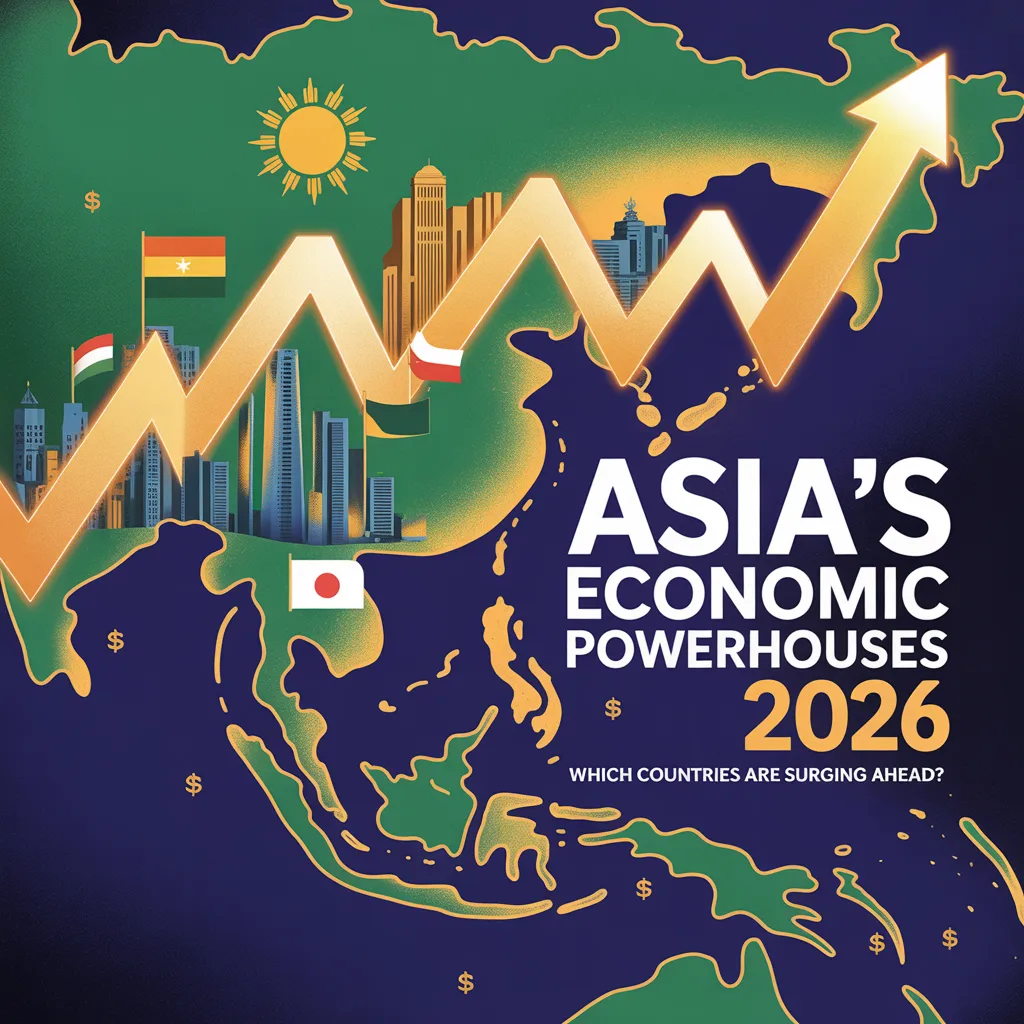
We are in an era of persistent global economic fragility—marked by tepid growth in advanced economies, lingering inflationary pressures, and fracturing geopolitical alignments—a single continent continues to serve as the world’s indispensable engine of expansion: Asia. While forecasts from the International Monetary Fund (IMF) and the World Bank paint a subdued picture for much of the West in 2026, the dynamism of developing and emerging Asia offers a compelling counter-narrative of ambition, resilience, and transformation. This is not merely the story of China’s scale anymore; it is an increasingly multipolar tale of demographic vigor, strategic reforms, and technological leapfrogging spreading from the Indian subcontinent to the archipelagos of Southeast Asia and the resource-rich nations of Central Asia.
The coming year is poised to underscore this divergence. As major central banks tentatively navigate a post-tightening landscape, the Top 10 Countries of Asia with Best GDP Growth Rate in 2026 are projected to surge ahead, with growth rates clustering between 6% and 8%—figures that would be unimaginable in Europe or North America. This list, derived from the latest consensus of the IMF’s January 2026 World Economic Outlook, the Asian Development Bank’s (ADB) Asian Development Outlook Update (December 2025), and the World Bank’s Global Economic Prospects, reveals a fascinating mosaic of economic models. From consumption-driven giants to export-oriented manufacturing hubs and commodity-powered reformers, these nations collectively define the frontier of global growth.
However, raw growth figures only tell part of the story. Beneath the headline numbers lie complex narratives of policy choices, vulnerability to external shocks, and the urgent challenge of translating rapid GDP expansion into sustainable, inclusive development. This analysis goes beyond a simple ranking. We will dissect the key structural drivers propelling each economy, weigh the formidable risks—from debt sustainability and climate vulnerability to geopolitical tensions—and explore what the ascendancy of these fastest growing economies in Asia 2026 means for global trade patterns, investment flows, and the broader balance of economic power. The journey through this top 10 list is a journey through the future contours of the world economy.
Regional Overview: The Multipolar Engine of Global Growth
The Asian economic outlook for 2026 is one of layered momentum. South Asia, led by India and Bangladesh, remains the unequivocal growth leader, fueled by young populations, rising domestic demand, and accelerating digital and physical infrastructure investment. Southeast Asia demonstrates remarkable resilience; nations like Vietnam, the Philippines, and Indonesia are successfully navigating global demand shifts, bolstering their positions within reconfigured supply chains, and seeing a robust return of tourism and services.
East Asia presents a more moderated picture. China’s growth, while stabilizing through targeted stimulus, continues its gradual deceleration as authorities manage structural transitions in the property sector and seek higher-quality growth. Japan and South Korea are forecast to see modest, steady expansion. Meanwhile, Central Asia emerges as a region of notable opportunity. Countries like Uzbekistan and Kazakhstan are leveraging commodity wealth, undertaking significant business climate reforms, and benefiting from redirected trade routes, placing them firmly among the highest GDP growth Asia 2026 cohort.
A critical throughline for all these top performing Asian economies in 2026 is the strategic navigation of geopolitical fragmentation. The drive for “friendshoring” and supply chain diversification, coupled with proactive trade agreements (like the Regional Comprehensive Economic Partnership, RCEP), is providing a tailwind for many. Yet, this same fragmentation presents acute risks, including protectionist measures, technology decoupling, and the potential for regional instability. Success in 2026 will hinge not just on economic fundamentals, but on diplomatic dexterity.
The Countdown: Asia’s Top 10 Fastest-Growing Economies in 2026
The following ranking is based on the latest available real GDP growth projections for 2026, using the IMF’s January 2026 data as the primary anchor, cross-referenced with ADB and World Bank forecasts for consistency. All percentages represent real, annual GDP growth projections.
#1: India – 6.8% Projected Growth
India’s economic momentum appears not just sustained but broadening. Even as its base expands, it is forecast to remain the world’s fastest-growing major economy. The driver’s seat is occupied by formidable domestic demand: a burgeoning middle class, strong public capital expenditure on infrastructure (roads, railways, ports, and digital networks), and a vibrant, venture-capital-funded startup ecosystem, particularly in fintech and enterprise software. Manufacturing is gaining traction through the Production Linked Incentive (PLI) schemes, aimed at making India a competitive alternative in electronics, pharmaceuticals, and renewable energy components.
However, the path is not without potholes. The primary challenge remains generating sufficient formal employment for its massive youth cohort. Private corporate investment, while improving, needs to accelerate further. Geopolitically, India skillfully walks a tightrope, benefiting from Western supply chain diversification while maintaining economic ties with Russia. Climate risks—from extreme heat impacting agriculture and labor productivity to water stress—loom large as a structural constraint. Execution of land, labor, and agricultural reforms will be critical to unlocking its full potential and cementing its position as the foremost of the fastest growing countries in Asia 2026.
#2: Vietnam – 6.5% Projected Growth
Vietnam continues its quiet, relentless ascent as a manufacturing powerhouse. Its stable political environment, competitive labor costs, strategic geography, and a web of ambitious free trade agreements (including with the EU and through RCEP) make it a premier destination for foreign direct investment (FDI). This is especially true in electronics, textiles, and increasingly, semiconductors and data centers. A burgeoning digital economy and a recovery in tourism are providing additional thrust.
Risks center on infrastructure strain—ports and power grids require massive upgrades to keep pace—and an impending middle-income trap. The country must move up the value chain into higher-skilled manufacturing and services. Furthermore, its deep reliance on external demand makes it vulnerable to a protracted global slowdown. Managing relations with both the US and China, its two largest trading partners, remains a delicate, ongoing diplomatic necessity for Hanoi.
#3: Philippines – 6.2% Projected Growth
The Philippine economy is powered by a powerful trifecta: resilient consumption, sustained remittance inflows from its vast overseas diaspora, and an aggressive public infrastructure program, “Build Better More.” A young, English-speaking population is also fueling a high-growth business process outsourcing (BPO) sector that is evolving into higher-value IT and creative services.
President Ferdinand Marcos Jr.’s administration has prioritized economic reopening and fiscal consolidation. The main headwinds are inflationary, particularly from food prices, which can erode consumer spending power. High levels of public debt, accumulated during the pandemic, limit fiscal firepower. Like its regional peers, the Philippines is acutely vulnerable to climate shocks, facing an average of 20 typhoons annually, which disrupt agriculture and infrastructure.
#4: Bangladesh – 6.0% Projected Growth
Bangladesh’s remarkable growth story, long anchored by its ready-made garment (RMG) exports, is at a pivotal juncture. To maintain its trajectory and graduate from Least Developed Country (LDC) status, it must diversify. Signs are promising: growing FDI in pharmaceuticals, ceramics, and light engineering, alongside a digital finance revolution driven by platforms like bKash. Domestic demand is resilient, supported by stable remittances.
The challenges are substantial. It faces a severe macroeconomic imbalance—depleting foreign exchange reserves, a weakening Taka, and high inflation—which requires careful monetary and fiscal management. Political stability is a watchpoint following the 2024 elections. Furthermore, the RMG sector itself must evolve to meet higher global standards on sustainability and labor practices. Navigating these shoals will determine if Bangladesh can sustain its place among Asia’s fastest growing countries.
#5: Uzbekistan – 5.8% Projected Growth
The reformist star of Central Asia, Uzbekistan has undertaken a sweeping transformation since 2016. Liberalizing its currency, easing trade barriers, and privatizing state-owned enterprises have unlocked significant economic energy. Growth is fueled by a gold, copper, and natural gas export boom, alongside a renaissance in domestic manufacturing and services. Its large, young population and strategic position on emerging Middle Corridor trade routes between China and Europe offer significant potential.
The risks are institutional. The fight against corruption and the strengthening of judicial independence are works in progress. The economy remains highly susceptible to fluctuations in global commodity prices. While reforms have been bold, their depth and consistency will be tested as the country seeks to attract higher-value, non-extractive FDI and build a more diversified economic base.
#6: Cambodia – 5.7% Projected Growth
Cambodia’s economy is undergoing a critical transition. Its traditional pillars—garment exports and tourism—are recovering steadily. However, the future lies in moving beyond basic textiles into more complex footwear and travel goods, and leveraging new investment laws to attract FDI into electronics assembly and auto parts. The China-Cambodia Free Trade Agreement and Belt and Road Initiative (BRI) investments in infrastructure provide a significant tailwind.
Vulnerabilities are pronounced. The economy is heavily dollarized, limiting monetary policy options. Its export profile is narrow and faces increasing competition from regional peers. Geopolitical alignment with China, while economically beneficial in the short term, may limit opportunities with Western markets concerned about strategic dependencies. Deep-seated issues of governance and human capital development remain long-term constraints.
#7: Indonesia – 5.3% Projected Growth
As Southeast Asia’s largest economy, Indonesia benefits from immense scale and resource wealth. The cornerstone of its 2026 outlook is the continued development of its downstream commodities policy—banning the export of raw nickel, bauxite, and other minerals to force the creation of domestic smelting and refining industries. This aims to capture more value from its natural resources. Strong consumption from its 270-million-strong population and a booming digital economy provide a stable foundation.
President Prabowo Subianto’s administration inherits both promise and peril. The flagship new capital city, Nusantara, represents a massive fiscal commitment with uncertain economic returns. Protectionist trade policies risk inviting retaliation and could slow productivity growth. Furthermore, the commodity-driven growth model is cyclical and environmentally intensive. Balancing nationalism with global integration will be Prabowo’s central economic challenge.
#8: Tajikistan – 5.2% Projected Growth
Tajikistan’s growth is underpinned by two dominant factors: massive public investment in hydropower and transportation infrastructure (notably the Rogun Dam), and substantial remittance inflows from migrant workers, primarily in Russia. As a key node in China’s Belt and Road Initiative, it is also seeing increased investment in mining and connectivity projects.
The economy is exceptionally fragile. It is arguably the most remittance-dependent country in the world, making it highly sensitive to economic conditions in Russia. Debt sustainability is a perennial concern, with significant obligations to China. Climate change presents a paradoxical threat: while offering hydropower potential, glacial melt and changing weather patterns also risk water security and agriculture.
#9: Kyrgyz Republic – 5.0% Projected Growth
Similar to its neighbor Tajikistan, the Kyrgyz Republic’s economy is propelled by the “Gold-Remittance” nexus. The massive Kumtor gold mine is a primary export earner and government revenue source, while remittances fuel domestic consumption. Efforts to develop tourism around its stunning natural landscapes are showing promise, and it serves as a re-export hub for Chinese goods to other Central Asian markets and Russia.
The risks are acute. Political instability is a recurrent theme, with periodic protests and changes in government undermining policy continuity. The economy is disproportionately affected by sanctions on Russia, a major trade partner. Corruption and a weak business environment deter more diversified, value-added investment, keeping the economy locked in a volatile, low-value-added cycle.
#10: Laos – 4.8% Projected Growth
Laos rounds out the top 10, though its growth comes with profound caveats. The economy is being pulled in two directions: a debt-driven infrastructure boom (primarily hydropower dams and a China-Laos railway) and severe macroeconomic distress. The railway has boosted tourism and trade connectivity, while power exports to Thailand and Vietnam are a key revenue source.
However, Laos stands as a cautionary tale. It faces a dire debt crisis, with obligations exceeding 100% of GDP and a significant portion owed to Chinese state-owned enterprises. Currency depreciation and soaring inflation have eroded living standards. Its growth is thus bifurcated—sectoral infrastructure projects create GDP activity, while the broader economy struggles. Without a comprehensive debt restructuring, its growth is unsustainable.

Comparative Analysis & Structural Drivers
What unites these diverse top performing Asian economies 2026? Several cross-cutting drivers emerge:
- Demographic Dividends: Nations like India, the Philippines, and Bangladesh possess young, growing populations, fueling labor force expansion and vibrant domestic markets.
- Strategic Integration: Proactive trade policy (e.g., Vietnam’s FTAs, RCEP adoption) and positioning within alternative supply chains (“China+1”) are providing a powerful export lift.
- Infrastructure Investment: Whether through public spending (India, Philippines) or BRI projects (Central Asia, Laos), massive capital expenditure is addressing bottlenecks and boosting short-term demand.
- Digital Leapfrogging: Widespread mobile internet adoption is accelerating financial inclusion, e-commerce, and service sector productivity across the board.
- Commodity Endowments: For Central Asia and Indonesia, resource wealth—when managed wisely—funds development and drives exports.
Conversely, they share common vulnerabilities: exposure to climate change, reliance on volatile external finance (remittances, FDI, commodity prices), and the persistent challenge of weak institutions and governance.
Risks and Opportunities: The 2026 Crucible
The optimistic projections for these fastest growing economies in Asia 2026 are contingent on navigating a minefield of risks.
- Geopolitical Fragmentation: An escalation of tensions in the Taiwan Strait or South China Sea, or a hardening of tech/trade blocs, could severely disrupt the export-dependent models of Vietnam, Cambodia, and others.
- Climate Vulnerability: From Bangladesh’s floods to Southeast Asia’s droughts and heatwaves, physical climate risks threaten agriculture, infrastructure, and labor productivity, imposing heavy adaptation costs.
- Debt Sustainability: While less acute than in some other emerging markets, debt burdens are rising in South Asia (Pakistan, Sri Lanka are warnings) and are critical in Laos. Higher-for-longer global interest rates increase servicing costs.
- The “Middle-Income Trap”: Countries like Vietnam, Indonesia, and the Philippines must execute complex reforms in education, innovation, and institutional quality to escape low-value-added manufacturing and services.
The opportunities, however, are transformative. Successful navigation of 2026 could cement Asia’s role as the center of global demand, not just supply. The green transition represents a massive opportunity in renewable energy (solar, hydropower), critical minerals processing (Indonesia, Central Asia), and electric vehicle supply chains. Furthermore, the rise of regional security and trade architectures, less dependent on any single power, could foster a new era of stability-led prosperity.
Conclusion
The list of the Top 10 Countries of Asia with Best GDP Growth Rate in 2026 is more than a statistical snapshot; it is a roadmap to the economic future. It reveals a continent where dynamism has become decentralized, with growth champions emerging across every subregion. This dispersion of economic power makes Asia’s overall growth more resilient, even as China moderates.
Yet, as our analysis shows, high GDP growth rates are a starting point, not an end goal. The true test for these fastest growing countries in Asia 2026 will be the quality and sustainability of their expansion. Can growth generate broad-based employment, withstand external shocks, and occur within planetary boundaries? The answers will depend on difficult policy choices made in capital cities from New Delhi to Jakarta to Tashkent in the months ahead.
For investors and policymakers worldwide, the imperative is clear: look beyond the headlines and the simple rankings. Understand the unique narrative, the structural drivers, and the embedded risks in each of these economies. They are not just growing fast; they are actively shaping the next chapter of globalization. Their success or failure will, to a remarkable degree, dictate the tone of the global economy for decades to come.


Auto
Fuel Crisis Ignites E-Bike Revolution in Bangladesh: How Geopolitical Shock Is Reshaping Dhaka’s Streets and the Future of Mobility
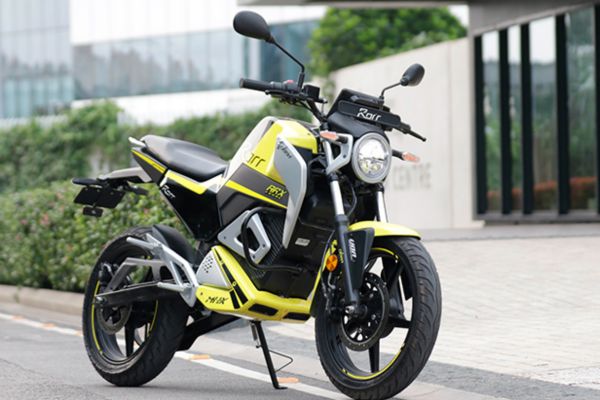
Mohammad Emrul Kayes is not the kind of man who makes impulsive purchases. A Supreme Court lawyer with a polished practice in Dhaka and a car parked in his driveway, he had little obvious reason to walk into a Runner Motors showroom last month. He was not replacing his car. He was not chasing a trend. He was, quite simply, exhausted — exhausted by the ritual humiliation of queuing for petrol in a city that had run headlong into the geopolitical consequences of a war being fought three thousand miles away.
“For me, it was about solving everyday hassles I face while buying fuel,” Kayes explained after making his purchase — a Runner-distributed Yadea e-bike, priced well above the average Dhaka commuter’s budget. “The e-bike changed that. It’s quick, simple, and stress-free.” His frustration is shared by millions: since US-Israeli airstrikes on Iran began on February 28, 2026, triggering Tehran’s closure of the Strait of Hormuz and what the International Energy Agency has called the “greatest global energy security challenge in history”, Bangladesh’s already fragile fuel supply chain has buckled under the weight of a 2-litre rationing limit, long queues at petrol stations, and spiralling prices.
What followed was not a policy announcement or a government initiative. It was a marketplace revolt — quiet, swift, and profoundly revealing. Fuel crisis drives e-bike demand in Bangladesh in a way that no government subsidy or climate pledge has managed to do in years of trying.
A Sales Surge That Defies the Cycle
The numbers are unambiguous. Monthly e-bike sales in Bangladesh had been growing at a steady 10–15% annually for three years — a respectable, if unspectacular, trajectory for a market dominated by 6.5 million registered fossil-fuel motorcycles. Then March 2026 arrived.
Industry data shows that e-bike sales surged from an average of 800–1,000 units per month to approximately 2,200 units in March alone — a jump of over 100% in a single month. Market insiders project that figure could reach 3,000 units if present conditions persist. In a country where e-bikes account for barely 2–3% of the total motorcycle market, these numbers represent something far more significant than a seasonal blip.
Runner Group, which distributes 12 models of Yadea-branded e-bikes priced between Tk 90,000 and Tk 315,000, has seen demand surge across its entire range. Nazrul Islam, the company’s managing director, did not mince words about the opportunity. “E-bikes offer a clear advantage,” he said, emphasising that households with rooftop solar panels could charge and run EVs for years at minimal cost — a pointed contrast with vehicles dependent on imported petroleum whose supply chains are now hostage to geopolitics.
Walton, Bangladesh’s homegrown electronics giant, reported perhaps the most dramatic spike. “In March, when fuel shortages intensified at refilling stations, demand jumped by as much as 85 percent,” said Md Touhidur Rahman Rad, chief business officer at Walton Digi-Tech Industries Limited. The company’s TAKYON e-bike range — covering seven models — offers 80 to 130 kilometres of range on a single charge, a figure that comfortably covers the daily commute of most Dhaka professionals. Pran-RFL Group, which markets its RYDO brand, reported a 60% sales increase. Kamruzzaman Kamal, the group’s marketing director, stressed the need for a balanced policy framework — noting that high import duties on components raise production costs for local assemblers, even as cheaper finished imports from China create downward pricing pressure.
The Financial Express reported that in some cases, specific models have seen 200–300% growth in sales, with buyers calculating that the annual operating cost of a traditional petrol motorcycle — roughly Tk 50,000 — dwarfs the approximately Tk 4,000 a year in electricity costs for an equivalent e-bike. That is a lifetime cost differential that no amount of marketing could have communicated as effectively as an empty petrol station.
The Geopolitical Fault Line Beneath Dhaka’s Streets
To understand why Bangladesh is so acutely exposed to a conflict beginning at the Strait of Hormuz, one must understand its energy architecture. Bangladesh relies on imports for approximately 95% of its energy needs, making it one of the most import-dependent economies in South Asia. The country has no meaningful strategic petroleum reserve, limited pipeline infrastructure, and a foreign exchange position that was already under strain before Brent crude surged past $100 — then $116 — per barrel.
The World Economic Forum’s analysis of the conflict’s economic architecture is stark: more than 80% of oil and LNG shipped through the Strait of Hormuz in 2024 went to Asian markets. The asymmetry, as the Forum noted, is brutal — the US, which initiated the conflict, imports relatively little oil through Hormuz. Its Asian partners absorb an overwhelming share of the burden. The Asian Development Bank put it plainly: smaller energy-importing economies, including Pakistan, Sri Lanka, and Bangladesh, are likely to experience the strongest macroeconomic effects, with higher oil prices transmitting rapidly into inflation and exchange rate pressures through widening current account deficits.
Bangladesh’s response has been a combination of administrative rationing (the 2-litre fuel limit), university closures, and military deployment to guard oil depots — measures that have prevented the worst, while failing to address the structural vulnerability that made them necessary in the first place. The Council on Foreign Relations noted in March that Bangladesh faces a high likelihood of street protests if shortages persist. Against this backdrop, the turn to e-bikes is not merely a consumer preference — it is an act of economic self-defence.
Bangladesh Is Not Alone: The South Asian EV Pivot
The pattern is visible across the region. Pakistan, grappling with its own acute fuel shortages and Prime Minister Shehbaz Sharif’s emergency austerity measures — a four-day working week, school closures — has seen parallel momentum in its electric two-wheeler segment, driven by a government e-bike scheme that has distributed tens of thousands of units in Punjab province and a population desperate for fuel-independent commuting. Sri Lanka, which navigated a catastrophic fuel crisis in 2022, has sustained elevated e-bike interest ever since, offering a cautionary lesson in what happens when import-dependent nations ignore structural energy vulnerability until it becomes existential.
Bangladesh’s e-bike sales surge in 2026 must be read against this regional backdrop: a South Asia in which geopolitical shock is doing the work that policy nudges failed to accomplish, compressing years of projected EV adoption into a matter of weeks.
The Economics of the Quiet Revolution
There is a tendency, in coverage of EV transitions, to reduce the story to environmental moralism. This is both accurate and incomplete. The Bangladesh electric motorcycle market growth story is, at its core, a story about rational economics — amplified to urgency by a crisis.
Consider the lifecycle arithmetic. A petrol motorcycle in Bangladesh costs approximately Tk 50,000 per year to run, a figure that will rise further as global oil markets remain disrupted. An equivalent e-bike costs around Tk 4,000 annually in electricity — a saving of Tk 46,000 per year, or enough to repay a significant portion of the vehicle’s purchase price within two to three years. For a country where motorcycle financing often carries interest rates of 15–25%, the lower running cost is not merely attractive — it is transformative for household budgets.
Then there is the foreign exchange dimension, which economists in Dhaka have begun to highlight with new urgency. Every litre of petrol that Bangladesh does not import is a dollar of foreign reserves preserved. As the taka faces pressure from a widening current account deficit driven by elevated energy import costs, the macroeconomic case for EV adoption is no longer theoretical. It is measurable, monthly, in the central bank’s reserve figures.
Nazrul Islam of Runner Group was pointing at precisely this when he noted that solar-charged e-bikes could operate for years with minimal cost — the implication being that a household with rooftop solar effectively decouples its mobility costs from global oil markets entirely. Bangladesh’s renewable energy capacity, while still modest as a share of the national grid, is growing — and the prospect of solar-to-EV charging loops represents a genuine structural hedge against future Hormuz-style disruptions.
The key economic advantages of e-bike adoption in Bangladesh’s current context:
- Annual fuel cost reduction of Tk 46,000 per vehicle compared to petrol equivalents
- Foreign exchange savings from reduced petroleum imports at a moment of acute reserve pressure
- Lower maintenance costs: e-bikes have fewer moving parts, no engine oil changes, and simpler servicing requirements
- Range sufficiency: 80–130 km per charge covers the vast majority of urban and peri-urban commutes
- Solar integration potential: rooftop solar can eliminate charging costs for a growing segment of users
Dhaka’s Congestion Problem and the Two-Wheeler Opportunity
Anyone who has spent time in Dhaka understands the city’s particular urban mobility nightmare. With a population density among the highest in the world and a public transit system that has historically struggled to keep pace with demand, the two-wheeler has long been the pragmatic choice for millions of commuters — nimble, affordable, and indifferent to the gridlock that defeats buses and cars alike.
The EV transition in Bangladesh’s fuel shortage context adds a new dimension to this calculus. E-bikes, particularly smaller models in the 80–100 km range category, are already winning converts among young professionals, women commuters, and gig economy workers for whom fuel cost predictability is as important as purchase price. The Business Standard reported that women riders in particular are drawn to e-bikes for their controlled speeds and ease of use — a demographic shift that could significantly broaden the market’s social base.
For Dhaka specifically, an accelerated e-bike adoption curve offers a triple dividend: lower emissions in a city already choking on vehicular pollution, reduced fuel import dependency at the national level, and potential congestion relief as more nimble, silent two-wheelers replace louder, idling petrol bikes at intersections. None of these benefits is automatic — they require supporting infrastructure — but the demand signal now exists in a way it did not six months ago.
The Policy Gap: From Demand Signal to Structural Shift
Here is where optimism must give way to rigour. The e-bike adoption Dhaka is currently witnessing is crisis-driven — which means it is also potentially reversible. If oil prices stabilise, if Hormuz reopens to normal traffic, if the fuel queues dissolve, a significant portion of the newly converted may drift back to petrol. For the current surge to represent a permanent inflection point rather than a panic purchase, policy must close the gap between market momentum and structural transformation.
[As Bangladesh eyes its 2035 NDC targets], the stakes are high. The country’s Third Nationally Determined Contribution (NDC 3.0) under the Paris Agreement targets a 21.77% reduction in transport sector emissions, with electrification of 30% of passenger cars and 25% of Dhaka buses by 2035, alongside broader goals of 30% EV penetration by 2030. Bangladesh’s NDC 3.0, available via the UNFCCC, represents an ambitious architecture — but one that is currently being undermined by contradictory fiscal policy.
Kamruzzaman Kamal of Pran-RFL identified the central tension precisely: high import duties on e-bike components raise costs for local assemblers, while cheaper, fully-built Chinese imports undercut their pricing. The result is a market dominated by Chinese brands — Yadea and Revoo together account for a large majority of sales — with limited domestic value addition. Imports from China alone are estimated at around Tk 3 billion annually, according to the Financial Express, underscoring Beijing’s growing footprint in Bangladesh’s emerging electric mobility ecosystem.
The critical policy gaps that must be addressed:
- Charging infrastructure: Bangladesh has almost no public EV charging network outside Dhaka. Without it, range anxiety will cap adoption at urban elites with home charging access.
- Import duty rationalisation: Current duties on components disadvantage local assembly, while inconsistent treatment of fully-built units creates market distortion.
- Manufacturing policy: There is currently no dedicated manufacturing policy for e-bikes, discouraging deeper domestic value addition.
- Battery standards: The transition from lead-acid to lithium-ion batteries — mandated from December 2025 — requires quality certification frameworks that remain underdeveloped.
- Solid-state battery readiness: As Chinese manufacturers begin commercialising next-generation solid-state batteries with 200+ km ranges and faster charging, Bangladesh’s regulatory framework needs to anticipate rather than react.
- Financing access: Motorcycle loans remain classified as high-risk by most Bangladeshi banks, limiting e-bike adoption among gig workers and lower-income commuters who would benefit most.
The Chinese Technology Dimension
It would be incomplete to analyse Bangladesh’s electric bike Bangladesh fuel crisis moment without acknowledging the role of Chinese manufacturing in making it possible. The dramatic fall in lithium-ion battery costs over the past decade — driven overwhelmingly by Chinese industrial policy — has brought e-bike prices into range for a much broader segment of Bangladeshi consumers than was conceivable five years ago.
Runner’s Yadea partnership, Walton’s TAKYON range drawing on Chinese component supply chains, and the broader ecosystem of 30-odd importers operating in the market all depend on this foundation. The Financial Express noted that with improved battery technologies, some models now offer ranges up to 200 km — a specification that, even recently, would have seemed implausibly ambitious for a Bangladeshi-priced product.
This Chinese technology dependence is a double-edged dynamic. On one side, it has democratised e-bike access in ways that pure domestic innovation could not have achieved at this speed. On the other, it creates supply chain vulnerability — particularly significant given that China has moved to restrict petroleum product exports in response to the same Hormuz crisis, according to the Atlantic Council, and its broader geopolitical posture toward Southeast and South Asia is far from predictable.
For Bangladesh, the strategic implication is clear: use the current demand surge as an industrial policy moment. The window exists to move from pure import dependency toward CKD assembly and, ultimately, toward genuine domestic manufacturing in batteries, motors, and controllers — the components that define an EV’s value chain. RFL Group’s existing capacity of 5,000 units per month is a starting point, not a ceiling.
Lessons for the Global South
Bangladesh’s experience in March 2026 offers an unusually clean natural experiment for development economists and energy policy analysts: what happens when a geopolitical shock removes fuel availability as a given, and the consumer market is given a working alternative?
The answer, at least in Dhaka’s preliminary data, is that adoption accelerates far faster than most supply-side projections anticipated. This has implications well beyond Bangladesh. Nigeria, Pakistan, Egypt, Sri Lanka, the Philippines — each a large, import-dependent, two-wheeler-dominant economy with nascent EV markets — are watching a version of their own potential future play out on Dhaka’s streets.
The World Bank’s work on sustainable transport in developing economies has long noted that the combination of high fuel import costs, urban congestion, and growing middle-class mobility demand creates a structural opening for electric two-wheelers in emerging markets. What Bangladesh’s 2026 moment demonstrates is that the demand, when activated by a sufficiently acute shock, exists and is real — the binding constraint is on the supply and policy side, not the consumer side.
For international investors, the Bangladesh electric motorcycle market growth trajectory — from 700 monthly units in 2024 to a potential 3,000 by mid-2026, against a backdrop of 6.5 million registered petrol motorcycles — represents an addressable market in the early stages of a structural shift. The e-bike sales surge Bangladesh 2026 has generated is, in this reading, not a crisis anomaly but an early disclosure of a durable trend.
The Road Ahead: From Panic to Policy
Mohammad Emrul Kayes’s e-bike sits in his driveway alongside his car, a quiet symbol of something larger than personal convenience. He did not abandon the internal combustion engine out of idealism. He made a rational calculation under conditions of scarcity — and in doing so, joined tens of thousands of Bangladeshis who are collectively, and largely unremarked, rewriting the economics of urban mobility in one of the world’s most densely populated countries.
The fuel crisis that drove him to that showroom will, at some point, ease. Iranian-Hormuz diplomacy may eventually restore something like normal shipping flows; oil prices at $116 per barrel cannot persist indefinitely without demand destruction and supply response. But the habits formed in a crisis have a way of outlasting the crisis itself. The household that has experienced Tk 4,000 annual running costs will not easily return to Tk 50,000. The commuter who has navigated Dhaka traffic in the silence of an electric motor will not easily miss the noise and the queue.
Bangladesh’s policymakers have, for the first time in years, a genuine demand signal to build upon. The EV transition Bangladesh’s fuel shortage has catalysed is not a gift — it is a window. It will close if charging infrastructure remains absent, if import duties remain incoherent, if manufacturing policy continues to lag. But it is open now, briefly and powerfully, in a way it has never been before.
The question is not whether Bangladesh’s streets will electrify. The question is whether Bangladesh’s policymakers will be nimble enough to turn a panic purchase into a permanent pivot — and whether Dhaka will emerge from this crisis as a model for the rest of the Global South, or as a cautionary tale about the cost of hesitation.
The e-bikes are already on the road. The policy needs to catch up.
Key Recommendations for Bangladesh’s EV Transition
For policymakers:
- Establish a national public EV charging network in Dhaka within 18 months, with clear targets for expansion to divisional cities by 2028.
- Rationalise import duty structure to distinguish between CKD (parts) and CBU (finished) imports, with a clear road map favouring domestic assembly.
- Issue a dedicated e-bike manufacturing policy with investment incentives for battery and motor production.
- Create a dedicated motorcycle loan facility through state banks, targeting gig workers and low-income commuters.
For industry:
- Accelerate investment in after-sales service networks outside Dhaka — the market’s next frontier.
- Prioritise partnerships with solar home system providers to enable solar-to-EV charging loops for rural and peri-urban users.
- Engage NBR proactively on battery certification standards to prevent the 2025 lead-acid phase-out from creating a compliance vacuum.
For international partners:
- The World Bank, ADB, and bilateral development finance institutions should treat Bangladesh’s current e-bike momentum as a leverage moment for green transport financing.
- Climate finance under Bangladesh’s NDC 3.0 conditional targets should explicitly include charging infrastructure and domestic battery manufacturing as eligible categories.
Acquisitions
The Saigol Pivot: Inside Maple Leaf Cement’s Strategic Incursion into Pakistan’s Banking Sector
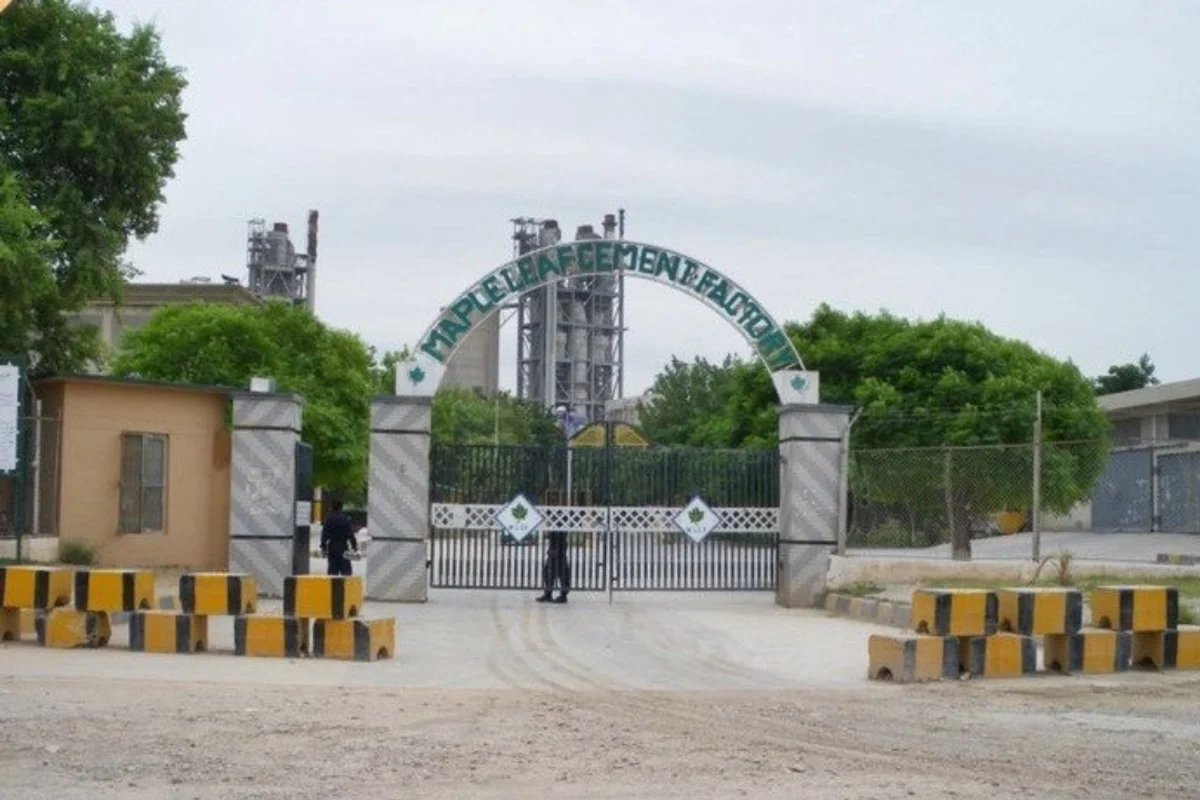
It is a move that initially appears as a study in industrial asymmetry: a northern cement giant, whose fortunes are tied to construction gypsum and clinker, systematically acquiring a stake in one of the country’s mid-tier Islamic banks. But beneath the surface of the Competition Commission of Pakistan’s (CCP) recent authorization lies a narrative far more sophisticated than a simple portfolio shuffle. This is the Saigol family’s Kohinoor Maple Leaf Group (KMLG) executing a deliberate financial pivot, threading the needle between regulatory scrutiny and the volatile realities of the 2026 Pakistan Stock Exchange (PSX) .
The CCP’s green light for Maple Leaf Cement Factory Limited (MLCF) to acquire shares in Faysal Bank Limited (FABL)—including a rare ex post facto approval for purchases made during 2025—offers a window into the evolving strategy of Pakistan’s old industrial guard .
The “Grey Area”: A Regulatory Slap on the Wrist?
In the sterile language of antitrust law, the transaction raised no red flags. The CCP’s Phase I assessment correctly noted the “entirely distinct” nature of cement manufacturing and commercial banking, concluding there was no horizontal or vertical overlap that could stifle competition .
However, the procedural backstory is where the texture lies. The Commission acknowledged reviewing a batch of open-market transactions on the PSX that were “already completed prior to obtaining the Commission’s approval” .
While the CCP granted ex-post facto authorization under Section 31(1)(d)(i) of the Competition Act 2010, it simultaneously issued a pointed directive: MLCF must ensure strict compliance with pre-merger approval requirements for any future transactions . It is a reminder that in Pakistan’s current financial climate, where liquidity is king and speed is of the essence, even blue-chip conglomerates can find themselves navigating the grey areas between investment opportunity and regulatory process. The directive serves as a subtle but firm warning to the market that the CCP is watching the methods of stake-building as closely as the ultimate concentration of ownership .
Strategic Rationale: Beyond Horizontal Logic
To understand the “why,” one must look beyond the cement kilns of Daudkhel and toward the balance sheets of the group. The Kohinoor Maple Leaf Group, born from the trifurcation of the Saigol empire, has long been a bastion of textiles and cement . But 2026 presents a different economic calculus.
Conglomerate diversification is the name of the game. With the PSX experiencing the volatile convulsions of a pre-election year—oscillating between geopolitical panic and IMF-induced stability—banking stocks have emerged as a high-yield, defensive hedge . Unlike the cyclical nature of cement, which is hostage to construction schedules and government infrastructure spending, the banking sector offers exposure to interest rate spreads and consumer financing.
For MLCF, a stake in Faysal Bank is not about vertical integration; it is about earnings stability. Faysal Bank, with its significant presence in Islamic finance (a sector rapidly gaining traction in Pakistan), offers a counter-cyclical buffer to the group’s industrial holdings. As one analyst put it, “They are swapping kiln dust for deposit multiplier.”
The Real-Time Context: PSX Volatility and the Hunt for Yield (March 2026)
The timing of the final authorization is critical. March 2026 finds the Pakistani equity market in a state of calculated anxiety. The KSE-100 has recently weathered a 16.9% correction from its January peaks, triggered by Middle East tensions and fears over the Strait of Hormuz . While energy stocks swing wildly with every oil price fluctuation, banking giants like Faysal Bank offer a rare port in the storm.
According to Arif Habib Limited’s latest strategy notes, the banking sector is currently trading at a price-to-book discount, with institutions like National Bank of Pakistan offering dividend yields as high as 13.3% . While Faysal Bank’s yields are more modest than NBP’s, its shareholding structure—dominated by Bahrain’s Ithmaar Holding (66.78%)—makes it an attractive target for local industrial groups seeking influence without the burden of outright control .
By accumulating shares incrementally through the PSX, KMLG is effectively renting exposure to the financialization of the Pakistani economy. It is a low-profile, high-liquidity entry into a sector that the State Bank of Pakistan projects will remain resilient despite import pressures and currency fluctuations .

Faysal Bank: The Prize Within
Why Faysal Bank specifically? The lender has carved a niche in the Islamic banking corridor, an area the government is keen to expand. With total institutional investors holding over 72% of the bank’s shares, it represents a tightly held, professionally managed asset .
Maple Leaf’s creeping acquisition suggests a desire to secure a seat at the table of Pakistan’s financial future. While the CCP authorization allows for an increased shareholding, it stops short of a full-blown merger. For now, this remains an “incursion”—a strategic toehold in the world of high finance, managed by the same family stewardship that Tariq Saigol has applied to transforming KMLG’s manufacturing base through sustainability and innovation .
The Verdict
The Maple Leaf Cement–Faysal Bank transaction is a harbinger of things to come in the 2026 Pakistani market. As the lines between industrial capital and financial capital blur, we will likely see more of these “conglomerate” acquisitions.
The CCP’s involvement, complete with its ex-post facto review and compliance directive, has set a precedent. It tells the market that while the commission is willing to facilitate investments that support “capital formation,” it will not tolerate a laissez-faire approach to merger control .
For the Saigol family, this is not just an investment; it is a hedge against the future. In an economy where cement demand can cool overnight but banking remains the lifeblood of commerce, owning a piece of the pipeline is the ultimate strategic pivot.

Oil shock Southeast Asia | Strait of Hormuz disruption | Stagflation risk Philippines Thailand | Fuel subsidy bills Asia 2026
Picture a Monday morning in Bangkok’s Chatuchak district. Nattapong, a 34-year-old motorcycle-taxi driver who normally hauls commuters through gridlocked sois for roughly 400 baht a day, is staring at a petrol pump display that has climbed the equivalent of 18% in eight days. He hasn’t raised his fares yet — the app won’t let him — but his margins have almost evaporated. “Before, I could fill up and still send money home,” he says quietly. “Now I’m not sure.”
Multiply Nattapong’s dilemma across 700 million people, eleven countries, and a dozen interconnected supply chains, and you begin to understand what the Strait of Hormuz crisis of March 2026 is doing to South-east Asia. On the morning of Monday, March 9, 2026, Brent crude futures spiked as high as $119.50 a barrel — a session high that will be branded into the memory of every finance minister from Manila to Jakarta — before settling around $110.56, still up nearly 40% in a single month. WTI posted its largest weekly gain in the entire history of the futures contract, a staggering 35.6%, a record stretching back to 1983.
The trigger: joint US-Israeli strikes on Iran beginning February 28, which escalated into a full war and brought Strait of Hormuz shipping to a near-total halt. The choke point — that narrow 33-kilometre-wide passage between Oman and Iran — carries roughly 20 million barrels of oil per day, about one-fifth of global supply. When Iran’s Revolutionary Guard declared the waterway effectively closed and warned vessels they would be targeted, the arithmetic was brutal and immediate. Iraq and Kuwait began cutting output after running out of storage. Qatar’s energy minister told the Financial Times that crude could reach $150 per barrel if tankers remain unable to transit the strait in coming weeks. At Kpler, lead crude analyst Homayoun Falakshahi was blunter: “If between now and end of March you don’t have an amelioration of traffic around the strait, we could go to $150 a barrel,” he told CNN.
For South-east Asia — a region that imports the overwhelming majority of its oil and whose economies run on cheap fuel the way a clock runs on a mainspring — this is not merely a commodity story. It is a cost-of-living crisis, a monetary policy dilemma, and a fiscal time bomb, all detonating simultaneously.
Oil Shock Southeast Asia: Why the Region Is Uniquely Exposed
The geography alone is damning. Japan and the Philippines source roughly 90% of their crude from the Persian Gulf; China and India import 38% and 46% of their oil from the region, respectively. South-east Asia as a whole, with the sole exception of Malaysia, runs a persistent deficit in oil and gas trade. When the Strait of Hormuz tightens, the region doesn’t just pay more — it scrambles for supply.
MUFG Research calculates that every US$10 per barrel increase in oil prices worsens the current account position of Asian economies by 0.2–0.9% of GDP, with Thailand, Singapore, Taiwan, India, and the Philippines taking the largest hits. From a starting price of roughly $60 per barrel in January 2026 to a current print north of $110, that’s a $50-per-barrel shock — implying current account deterioration of potentially 1–4.5% of GDP for the region’s most vulnerable economies. Run that number through to your household electricity bill, your bag of jasmine rice, your morning commute, and the pain becomes visceral.
Nomura’s research team, in a note that has become one of the most-cited documents in Asian trading rooms this week, identified Thailand, India, South Korea, and the Philippines as the most vulnerable economies in Asia. The bank’s reasoning is unforgiving: Thailand carries the largest net oil import bill in Asia at 4.7% of GDP, meaning every 10% oil price change worsens its current account by 0.5 percentage points. The Philippines runs a current account deficit that, at oil above $90 per barrel on a sustained basis, is likely to breach 4.5% of GDP. “In Asia, Thailand, India, Korea, and the Philippines are the most vulnerable to higher oil prices, due to their high import dependence,” Nomura wrote, “while Malaysia would be a relative beneficiary as an energy exporter.”
Country by Country: Winners, Losers, and the Ones Caught in the Middle
The Philippines: Worst in Class, No Cushion
If there is one country in the region for which this crisis reads like a worst-case scenario, it is the Philippines. Manila has nearly 90% of its oil imports sourced from the Middle East and, crucially, operates a largely market-driven fuel pricing mechanism with minimal subsidies. There is no state buffer absorbing the shock before it hits the pump. Retailers in Manila imposed over ₱1-per-liter increases for the tenth consecutive week as of early March, covering diesel, kerosene, and gasoline. The Philippine peso slid back through the ₱58-per-dollar mark on March 9, adding a currency depreciation multiplier to an already brutal import bill.
ING Group estimates the Philippines could see inflation rise by up to 0.4 percentage points for every 10% increase in oil prices. At Nomura, the estimate is 0.5pp per 10% rise — the highest pass-through in the region. Oil at $110 represents roughly an 80% increase over January’s $60 baseline, an inflationary impulse that Capital Economics pegs could push headline CPI well above the Bangko Sentral ng Pilipinas’s 2–4% target. Manila has already announced plans to build a diesel stockpile as an emergency buffer — an admission that supply anxiety, not just price, has entered the conversation.
Thailand: The Biggest Structural Loser
Thailand’s problem isn’t just the size of its oil import bill — it’s the timing. The country is already wrestling with below-potential growth, persistent deflationary pressures in some sectors, and a tourism sector still finding its post-COVID footing. MUFG Research flags Thailand as one of the economies most sensitive to oil price increases from an inflation perspective, with CPI rising up to 0.8 percentage points per US$10/bbl increase — the highest reading in their Asian sensitivity matrix.
The government responded swiftly, announcing a suspension of petroleum exports to protect domestic stocks, an extraordinary measure that signals just how seriously Bangkok is treating supply security. The Thai baht, already vulnerable, has come under selling pressure alongside the Philippine peso, Korean won, and Indian rupee. For Thai factory workers supplying export goods to Western markets, higher transport and energy costs arrive precisely when global demand is wobbling under the weight of US tariffs. It is, as the textbook definition goes, a stagflationary shock — cost pressures rising while growth falters.
Indonesia: The Fiscal Tightrope
Indonesia occupies a peculiar position. It is technically a net importer of petroleum products — paradoxical for a country that was once an OPEC member — but it deploys a system of fuel subsidies (via state-owned Pertamina) that partially shields consumers from global price moves. The catch, of course, is that the shield is funded by the national treasury.
Indonesia’s government budget was built around an Indonesian Crude Price (ICP) assumption of $70 per barrel for 2026. With Brent at $110, that assumption looks almost quaint. Government simulations, according to Indonesia’s fiscal authority, show the state budget deficit could widen to 3.6% of GDP if crude averages $92 per barrel over the year — already above the 3% legal ceiling. At $110 sustained, the numbers are worse. Officials have acknowledged that raising domestic fuel prices — essentially passing the shock to consumers — could become a last resort. Nomura estimates a 10% oil price rise could worsen Indonesia’s fiscal balance by 0.2 percentage points via higher subsidy spending, breaching the 3% deficit ceiling at sufficiently elevated prices. President Prabowo Subianto, who swept to power partly on a cost-of-living platform, faces a politically combustible choice between fiscal discipline and popular anger at the pump.
Malaysia: The Region’s Unlikely Winner
Not everyone in South-east Asia is suffering equally. Malaysia, a net oil and gas exporter and home to Petronas — one of Asia’s most profitable energy companies — finds itself on the rare right side of an oil shock. MUFG Research identifies Malaysia as the only net oil and gas exporter in the region, likely to see a small benefit to its trade balance from higher prices. The ringgit, which has been strengthening as a commodity-linked currency, provides a further buffer.
The complexity lies in Malaysia’s domestic subsidy architecture. Kuala Lumpur has been in the process of a painstaking, politically fraught RON95 fuel subsidy reform — targeting the top income tiers first — which was already reshaping the fiscal landscape before the current crisis. Higher global prices actually make the reform argument easier: the subsidy bill would explode if oil stays elevated, giving Prime Minister Anwar Ibrahim political cover to accelerate rationalization. For Malaysia’s treasury, $110 oil is a revenue windfall and a subsidy headache simultaneously.
Singapore: The Price-Setter That Cannot Escape
Singapore imports everything, including every drop of fuel, but its role as a regional refining and trading hub makes it a price-setter rather than merely a price-taker. The city-state’s commuters are already feeling it: transport costs have risen sharply, and the government’s careful cost-of-living management is under renewed pressure. MUFG’s analysis ranks Singapore among the economies with the highest current account sensitivity to oil price increases, even though its GDP per capita provides a far larger fiscal cushion than its regional neighbours.
Stagflation Risk: The Word Nobody Wanted to Hear
The word “stagflation” is being whispered — and in some trading rooms, shouted — across Asia this week. Nomura’s note explicitly warns of a “stagflationary shock”: the simultaneous combination of rising inflation (from fuel and food cost pass-through) and slowing growth (from weakening consumer purchasing power and export competitiveness). It is the worst of both monetary worlds, leaving central banks without a clean tool. Cut rates to support growth, and you risk stoking inflation. Hold rates to fight inflation, and you choke a slowing economy.
ING Group notes the impact is far from uniform, with several economies partially shielded by subsidies or regulated pricing — but for the Philippines, the stronger inflation hit from market-driven fuel prices creates direct pressure on the BSP to hold rates. Capital Economics, while not abandoning its rate-cut forecasts for the Philippines and Thailand, has flagged that central banks may pause if oil hits and holds above $100 — as it already has. The ripple effects move quickly: higher fuel costs push up food prices (fertilisers, transport, cold chains), which push up core inflation, which pushes up wage demands, which erode manufacturer competitiveness. The chain is well-known. The speed this time is not.
Travel and Tourism: The Invisible Casualty
The oil shock has an airborne dimension that tends to get buried beneath the more immediate news of pump prices and fiscal deficits. Jet fuel — which tracks closely with crude — has surged in lockstep with Brent. Airlines operating regional routes out of Singapore’s Changi, Bangkok’s Suvarnabhumi, and Manila’s NAIA are facing fuel costs that represent 25–35% of operating expenses at normal prices. At current Brent levels, that share rises materially. The consequences are already filtering through: several Gulf carriers have partially resumed flights from Dubai International Airport after earlier disruptions, but route uncertainty and insurance premiums for Gulf overflight remain elevated.
For South-east Asia’s tourism recovery — Bali, Chiang Mai, Phuket, and Palawan were all expecting strong 2026 visitor numbers after several lean post-pandemic years — the arithmetic is uncomfortable. Higher jet fuel costs translate, with a lag of weeks rather than months, into higher airfares. Budget carriers such as AirAsia and Cebu Pacific, which built their business models around cheap fuel enabling cheap tickets, have the least pricing power and the thinnest margins. The traveller contemplating a Bangkok city break or a Bali retreat in Q2 2026 may find the price tag has quietly risen 10–20% since they first searched. That is not a crisis. But it is a headwind — and a reminder that in a globalised economy, no leisure industry is fully insulated from a Persian Gulf conflict.
Could Oil Really Hit $150? The Scenarios
The $150 question is no longer a fringe analyst talking point. Qatar’s energy minister said it publicly. Kpler’s lead crude analyst said it on record. Goldman Sachs wrote to clients that prices are likely to exceed $100 next week if no resolution emerges — a forecast already overtaken by events.
Three scenarios shape the trajectory:
Scenario 1 — Rapid de-escalation (30 days). The US brokers a ceasefire, Hormuz reopens to traffic with naval escorts, and oil retraces toward $80–85. This is the “fast war, fast recovery” template. The damage to South-east Asia is real but contained — a quarter or two of elevated inflation, some current account deterioration, minor growth drag.
Scenario 2 — Prolonged blockade (60–90 days). Tanker insurance remains unavailable or prohibitively expensive, shipping companies stay out, and the physical supply disruption persists. JPMorgan’s Natasha Kaneva has modelled production cuts approaching 6 million barrels per day under this scenario. Brent in the $120–130 range becomes the base case. For South-east Asia, this means inflation breaching targets in the Philippines and Thailand, subsidy bills in Indonesia threatening fiscal rules, and a genuine monetary policy bind across the region.
Scenario 3 — Escalation with infrastructure damage. Further strikes on Gulf energy facilities — as already seen against Iranian oil infrastructure and Qatari and Saudi installations — reduce physical capacity for months, not weeks. $150 becomes plausible. The 1970s-style shock, feared but never fully materialised in the 2022 Ukraine episode, arrives in earnest. South-east Asian growth forecasts get ripped up. The IMF’s 2026 regional outlook, cautiously optimistic as recently as January, would require emergency revision.
The G7 finance ministers were meeting Monday to discuss coordinated strategic reserve releases; the Trump administration announced a $20 billion tanker insurance programme, though shipping companies remain hesitant to transit the region. These measures can dampen prices at the margin. They cannot substitute for an open strait.
Policy Responses and the Green Energy Accelerant
Governments across the region are not waiting passively. Thailand’s petroleum export suspension, Manila’s emergency diesel stockpiling, Indonesia’s scenario planning for domestic fuel price adjustments — these are the short-term reflexes of policymakers who have been through oil shocks before and know that the first 72 hours matter.
The more interesting question is whether this crisis, like previous energy shocks, accelerates structural energy transition. Malaysia’s Petronas has been expanding LNG capacity and renewable partnerships. Indonesia’s vast geothermal resources — the world’s second-largest — have long been under-utilised relative to their potential. The Philippines, which currently imports nearly all its energy, has been pushing solar and wind development under the Clean Energy Act framework. The calculus that kept governments cautious about rapid transition — cheap imported fossil fuels were easy and politically manageable — has just shifted violently.
As ING’s analysis notes, energy makes up a large share of consumer inflation baskets across emerging Asia, meaning the political pain of oil shocks is both immediate and democratically legible. Leaders who endure it once tend to invest in insulation against the next one. The 1973 oil shock gave Japan its world-class energy efficiency. The 2022 Ukraine crisis gave Europe its renewable acceleration. Whether 2026’s Hormuz crisis becomes South-east Asia’s inflection point toward genuine energy security remains the region’s most consequential open question.
The Bottom Line
Brent at $110 and rising is not a number — it is a sentence, handed down to 700 million people who had little say in the conflict that produced it. For the Philippines, it means inflation at the upper edge of tolerance and monetary policy frozen in place when the economy needs easing. For Thailand, it is a stagflationary pressure on a growth story that was already fragile. For Indonesia, it is a fiscal arithmetic problem that risks breaching the legal deficit ceiling. For Malaysia, it is a windfall tempered by subsidy obligations and political exposure. For Singapore, it is a cost-management challenge that tests the city-state’s well-earned reputation for economic resilience.
The $150 scenario is not inevitable. But it is no longer implausible. And in a region that runs on imported energy, the difference between $110 and $150 is not merely financial. It is the cost of a week’s groceries for a Manila family. It is whether a Thai factory orders its next shift. It is whether Nattapong, Bangkok’s motorcycle-taxi driver, can still afford to fill his tank and send money home.
That is the oil shock South-east Asia is living through, right now, in real time.

Singapore Firms Press Ahead in US Market Despite Trump Tariffs

The IMF’s High-Voltage Mandate: How Pakistan’s FY27 Power Subsidy Cut Will Rewire Its Economy

How US Debt, Gold Chaos, and a Stalled Middle East Are Rewriting the Rules of Investing

Top 15 Stocks for Investment in 2026 in PSX: Your Complete Guide to Pakistan’s Best Investment Opportunities
Top 15 Stocks for Investment in 2026 in PSX: Your Complete Guide to Pakistan’s Best Investment Opportunities

Debunking IMF Program Myths: Reconfiguring Engagement for True National Ownership in a Volatile World
-
 Markets & Finance4 months ago
Top 15 Stocks for Investment in 2026 in PSX: Your Complete Guide to Pakistan’s Best Investment Opportunities
-
Markets & Finance4 months ago
Top 15 Stocks for Investment in 2026 in PSX: Your Complete Guide to Pakistan’s Best Investment Opportunities
-
 Analysis3 months ago
Debunking IMF Program Myths: Reconfiguring Engagement for True National Ownership in a Volatile World
-

 Global Economy5 months ago
What the U.S. Attack on Venezuela Could Mean for Oil and Canadian Crude Exports: The Economic Impact
-

 Investment4 months ago
Top 10 Mutual Fund Managers in Pakistan for Investment in 2026: A Comprehensive Guide for Optimal Returns
-

 Asia5 months ago
China’s 50% Domestic Equipment Rule: The Semiconductor Mandate Reshaping Global Tech
-

 AI5 months ago
15 Most Lucrative Sectors for Investment in Pakistan: A 2025 Data-Driven Analysis
-

 Exports5 months ago
Pakistan’s Export Goldmine: 10 Game-Changing Markets Where Pakistani Businesses Are Winning Big in 2025