
Opinion
The rot beneath the bailout

It is no surprise that Pakistan has secured a $7 billion Extended Fund Facility from the IMF — a lifeline for a government staggering under debt repayments, dwindling reserves, and a suffocating fiscal deficit. On paper, this appears to be salvation. In reality, the IMF’s Governance and Corruption Diagnostic Report (November 2025) makes clear that the country’s economic malaise is not simply about liquidity. It is about capture.
Analytically, the report is blunt: corruption in Pakistan is described as “persistent and widespread”. This is notably candid, departing from the usual language of polite diplomacy. It describes a system where governance has been hollowed out, institutions serve the connected instead of the citizen, and resources — whether borrowed or earned — disappear into inefficiency and rent-seeking.
The IMF has publicly stated what Pakistanis have long known: the core problem is not the absence of funds and resources, but the presence of a rigged state. This, economic and governance experts argue, is a formal indictment.
The report contains bitter facts. The report’s section related to “state dominance’ is derogatory. Pakistan’s economy is not merely inefficient; it is engineered to privilege insiders, especially those who are considered sacred goats. For decades, the State-Owned Enterprises (SOEs), many of them loss-making, continue to drain public resources while shielding themselves from accountability. The regulatory frameworks are opaque, designed less to facilitate competition than to entrench monopolies for “privileged actors.”
As per the report, this is not accidental but systemic since the system has consistently resisted checks and balances from the regulatory framework. Usually, when SOEs operate without transparency, when licenses and tariffs are manipulated to favour the few influentials, the result is not just inefficiency — it is exclusion or, more literally, Exemption from legal actions. The ordinary citizens pay higher prices for electricity, gas, and transport, while politically connected firms thrive under protectionist umbrellas, bypassing all the legal formalities.
One will be shocked to know that the language used by the IMF on ‘state capture’ is critical here, as revealed by the report. Pakistan’s governance problem is not about weak institutions alone; it is about institutions weaponised to serve narrow interests that hold the power. In such a system, reform is actively sabotaged as practice is decades old .
As regards the taxation system, the report’s shocking findings on taxation expose the heart of Pakistan’s fiscal crisis due to systemic failure. The Federal Board of Revenue (FBR) operative procedure is “considerable authority and limited oversight”, presiding over a tax system that is very “complex and opaque. According to the IMF, Pakistan faces serious corruption and governance challenges, with weaknesses in fiscal governance and market regulation contributing to problems such as smuggling and under-invoicing in customs administration.
This is all because of the tax-to-GDP ratio that shockingly remains the lowest in the region. The budget cannot be fixed when the revenue authority itself is compromised or plagued by rampant corruption. The government cannot build fiscal space when the system is designed to leak or has loopholes caused by incompetence and graft.
For Pakistanis, this means a paradox where the state demands more in indirect taxes: increased costs for fuel, electricity, and everyday consumption items, while failing to effectively tax the wealthy and politically connected. It is often public sector employees who contribute the maximum chunk of tax revenue. The burden shifts downward, eroding trust in the very idea of fair taxation.
Pakistan’s governance crisis is not new. What is new is the IMF’s willingness to diagnose it openly. By naming corruption as “persistent and widespread”, by identifying state capture as systemic, the report strips away the illusion that money alone can fix the problem
Imagine a typical household in Karachi: the head of the family works as a schoolteacher, the main breadwinner, struggling to make ends meet. Each month, the family allocates a sizeable portion of their income to taxes embedded in utility bills and prices of daily commodities. When electricity tariffs rise due to the inefficiencies of SOEs, the family’s budget is strained, forcing cuts on essentials like education and healthcare — decisions that have long-term impacts on their children’s futures.
For investors, the situation is clear that there is no ease of doing business in Pakistan. The message is equally corrosive. Business firms, especially multinational concerns, perceive Pakistan’s fiscal system not as a framework for growth, but as a mechanism for extraction. This environment is really alarming, prompting multinational firms to reconsider their investments or leave the country.
The IMF report is also an eye-opener for the judiciary, as it is perceived as corrupt, fragmented and clogged with backlogs when people wait years, even generations, for the final verdict. The contract enforcement is relatively weak, property rights are also insecure, and the judicial decisions are often influenced by political or financial pressure. After the 26th and 27th amendments, the judiciary has been enfeebled by the political elite.
Foreign direct investment cannot flow into a country where contracts are unenforceable and property can be seized without remedy. Domestic entrepreneurship cannot thrive when disputes drag on for years in courts seen as compromised.
Rule of law seems to be an abstract principle, though it is the foundation of markets for safety and security or peace of mind. Without it, Pakistan’s economy is not simply inefficient — it is uninvestable.
Conceivably, the most sobering section of the report is its analysis of anti-corruption institutions. NAB and the FIA are described as politically influenced, uncoordinated, and lacking credibility.
The report also raises the hardest question: can these institutions that are accused of benefiting from the status quo be trusted to dismantle it? When anti-graft agencies are weaponised against political opponents rather than systemic corruption, reform becomes a theatre or a distant dream.
The IMF calls for “comprehensive and sequenced reform”, which seems to be a distant dream given the existing hybrid setup. But reform requires agents of change. If the NAB and FIA are compromised, if the judiciary is distrusted, if the FBR is opaque, then who will implement reform? The danger is crystal clear: Pakistan risks entering yet another cycle in which funds are disbursed, conditions are promised and structural change is deferred by a powerful political elite.
For the average Pakistani, the implications are stark. The $7 billion EFF may stabilise reserves temporarily, but it will not lower electricity bills distorted by SOE inefficiency, as the power tariffs will go up or even experience elastic inflation. It will not fix a tax system that punishes consumption while rewarding evasion. It will not unclog courts where justice is delayed and denied.
For global investors, the message is equally sobering. Pakistan is not merely a high-risk market; it is a captured state. Without visible progress on governance, the EFF is not a bridge to reform — it is a bandage on a wound that continues to fester.
The IMF report ends with a call for “concrete and visible progress” to restore public trust. That phrase should be read not as technocratic jargon but as a warning. Pakistan’s crisis is not only economic; it is existential.
A state that cannot tax fairly, adjudicate disputes credibly or regulate transparently cannot sustain itself. A society where corruption is “persistent and widespread” cannot build legitimacy. An economy where capture is systemic cannot grow inclusively.
The $7 billion lifeline buys time. But time without reform is wasted. The choice before Pakistan is stark: dismantle the governance trap or remain trapped in cycles of bailout and breakdown.
Pakistan’s governance crisis is not new. What is new is the IMF’s willingness to diagnose it openly. By naming corruption as “persistent and widespread”, by identifying state capture as systemic, the report strips away the illusion that money alone can fix the problem.
While essential, the EFF is insufficient. The facility will be viewed as another lost opportunity rather than a turning point if full and sequential change is not implemented, along with credible progress on taxation, the rule of law, and anti-corruption.
The rot beneath the economy is governance. Unless Pakistan confronts it, the bandage will peel away, and the wound will deepen.


The phone calls from American buyers haven’t stopped. Neither have the shipments. For many Singapore-based companies with exposure to the United States, the Trump administration’s 10% baseline tariff — widely feared when it landed in April 2025 — has turned out to be, as more than one founder has privately put it, something they can live with. The margin hit is real. The commitment to the US market is, for now, intact.
This isn’t naivety. Singapore’s business class is too wired into global trade to mistake inconvenience for catastrophe. What the past twelve months have revealed, instead, is a calibrated judgement: that America’s consumer base, its legal predictability, and its sheer scale still make it the world’s most attractive destination, tariff or no tariff.
Why Singapore’s Export Sector Held Up Better Than Expected
When the White House announced its sweeping reciprocal tariffs on April 2, 2025 — quickly dubbed “Liberation Day” — Singapore found itself in an unusual position. The city-state was handed the lowest rate in Southeast Asia: a 10% baseline, compared with 19% to 40% for neighbours like Vietnam, Indonesia, and Cambodia. This was in spite of Singapore holding a free trade agreement with Washington that had been in force since January 2004 — and despite the US actually running a goods trade surplus with Singapore.
That anomaly still rankles in Singapore’s government corridors. According to the US Trade Representative, the US goods trade surplus with Singapore reached $3.6 billion in 2025, up from $1.9 billion in 2024 — a near-doubling that makes the tariff’s rationale increasingly hard to justify on balance-of-payments grounds. In March 2026, Singapore’s trade ministry went public with its dispute of American trade data, arguing the official US figures misrepresent the bilateral picture.
Yet even with the duty in place, Singapore’s companies did something that surprised economists who had modelled for a significant contraction: they adapted and, in many cases, pushed on. The Ministry of Trade and Industry upgraded Singapore’s 2025 GDP forecast to around 4% in November — well above the 1.5% to 2.5% initially pencilled in — citing stronger semiconductor exports driven by the AI boom and unexpected resilience among trading partners. Full-year growth came in at 4.8%.
The US remains Singapore’s second-largest export destination, absorbing roughly 11% of the Republic’s domestic exports in 2024. Companies have not abandoned that relationship. Many have leaned into it harder, viewing tariff disruption elsewhere in Asia as a relative advantage.
A Manageable Levy, But Not a Costless One
How are Singapore companies dealing with US tariffs? The short answer is: largely by absorbing part of the cost, passing some on, and restructuring faster than anyone expected.
A March 2025 survey by the American Chamber of Commerce in Singapore found that most respondents planned to pass tariff-related costs through to US customers, while simultaneously accelerating supply chain diversification. This dual-track response reflects a broader strategic logic: protect the American relationship in the near term while reducing single-market dependency over a longer horizon.
What that looks like on the ground varies by sector. Manufacturers in precision engineering — a bright spot identified by MTI in its August 2025 briefing — have continued ramping up capital investment in AI-related semiconductor production, insulated partly by the global demand surge from data centre buildouts. These firms aren’t debating whether to serve the US market. They’re debating how to remain irreplaceable within it.
The picture is more complicated for smaller companies working with thinner margins. Nomura analysts reported in September 2025 that Singapore exporters were absorbing more than 20% of US tariff costs directly — a real and sustained squeeze. Still, for a 10% levy applied to goods that clear US customs at high average selling prices, the maths often still work. A Singapore med-tech firm shipping precision instruments at $15,000 per unit absorbs a very different blow than, say, a Vietnamese garment exporter facing a 32% rate on $8 t-shirts.
The relevant comparison isn’t between tariff and no-tariff Singapore. It’s between Singapore at 10% and its regional competitors at 19% to 40%. On that basis, the commercial case for the US market hasn’t collapsed. It’s narrowed — which is why the companies still in the game are typically those with the product quality to justify the premium or the brand equity to pass costs through.
The Sectoral Flashpoints: Pharma and Chips
Singapore’s composure at the aggregate level masks genuine alarm in two sectors that define its high-value export identity: pharmaceuticals and semiconductors.
Singapore ships approximately S$4 billion (US$3.1 billion) worth of pharmaceutical products to the United States each year. These are mostly branded drugs — sophisticated, high-value formulations — which faced a threatened 100% tariff unless manufacturers established a physical US manufacturing presence. That threat, announced as part of Trump’s sectoral tariff push, is currently on hold pending negotiations and exemption applications. But it has not disappeared. Deputy Prime Minister and Trade Minister Gan Kim Yong acknowledged in September 2025 that negotiations with Washington over both pharma and semiconductors were ongoing, with an “arrangement to allow us to remain competitive in the US market” still the goal rather than the outcome.
Minister Gan Siow Huang confirmed in October 2025 that a significant number of Singapore-based pharmaceutical firms are pausing US expansion decisions pending tariff clarity — a rational hold on capital allocation, not a signal of retreat. The broader concern, articulated by Gan Kim Yong, is longer-range: that escalating tariffs globally could divert investment away from Singapore toward the United States, draining capital that might otherwise have flowed into the region.
In semiconductors, Singapore’s position is partially protected by the AI-driven global demand spike. The precision engineering cluster saw continued investment ramp-ups through 2025, with MTI noting the “sustained shift towards higher value-added” activity as a structural buffer. Yet Section 232 sectoral tariffs on chips — not yet imposed but actively discussed in Washington — remain a latent risk that keeps Singapore’s trade negotiators in near-permanent engagement with US counterparts.
The Case Against Optimism: What the Bears Are Right About
It would be a misreading of Singapore’s resilience to treat it as vindication of the tariff-and-carry-on school of thought. The firms that are pressing ahead in the US market are, almost uniformly, those with structural advantages that most companies don’t have: high average selling prices, proprietary technology, brand recognition, or an irreplaceable position within a US supply chain.
For smaller Singapore companies — the SMEs that account for roughly two-thirds of the city-state’s workforce — the calculus looks different. EnterpriseSG acknowledged in early 2026 that tariffs would “continue to be a looming concern for a long time,” with sectoral duties on semiconductors and pharmaceuticals a persistent threat and the risk of trade diversion from tariff-hit neighbours an additional drag.
What tariff rate does Singapore face from the United States?
Singapore faces a 10% baseline US tariff — the lowest in Southeast Asia — under the Trump administration’s reciprocal tariff framework, despite a free trade agreement in force since 2004 and a US goods trade surplus of $3.6 billion in 2025. A further increase to 15% under Section 122 was announced in February 2026.
Government support has materialised, but its scope has limits. The Business Adaptation Grant, launched in October 2025, offers up to S$100,000 per company with co-funding required — meaningful for a one-person fintech studio rethinking its US go-to-market, but insufficient to offset the structural cost pressures facing an electronics manufacturer running US$50 million in American revenue. SMEs receive a higher support quantum; the grant’s architects acknowledge it can’t reach every firm.
There is also a timing question. Singapore’s 2025 outperformance was partly a function of front-loading: companies rushed exports in the first half of the year ahead of anticipated tariff escalation, driving a 13% NODX rebound in June that flattered the headline numbers. Strip out front-loading, and the structural growth trajectory is more modest. MTI has already warned that 2026 growth — forecast in the 1% to 3% range — will feel meaningfully different from 2025’s AI-and-front-loading-driven surge.
What follows, however, is not necessarily contraction. It is normalisation under a genuinely higher-tariff world — a world Singapore’s companies are, by now, better equipped to navigate than they were fourteen months ago.
The Structural Bet: Singapore’s Long-Term US Positioning
Singapore’s most consequential strategic response to Trump’s tariff regime has not been lobbying Washington or diversifying away from the US. It’s been doubling down on what makes Singaporean goods hard to replace: quality, reliability, and an institutional environment that American buyers trust.
Prime Minister Lawrence Wong has been careful not to overstate the resolution of US-Singapore trade talks, noting as recently as late 2025 that negotiations were at “a very early stage” on pharmaceuticals. But the underlying posture of Singapore’s business community — captured in a UOB Business Outlook Study from May 2025 — is instructive: eight in ten Singapore companies planned overseas expansion within three years, with North America among the markets specifically flagged by consumer goods and industrial firms despite the tariff environment.
That appetite reflects something the macro data alone can’t show. Many Singapore companies with US exposure have been building American relationships for decades. They know their buyers personally. They’ve invested in US certifications, US-compatible regulatory frameworks, US distribution networks. Walking away from that at a 10% tariff rate would mean writing off infrastructure that cost more than 10% to build.
The more profound question is whether the next generation of Singapore companies — those deciding now where to build their first international footprint — will make the same American bet their predecessors did. The EnterpriseSG data on market diversification is notable: in 2025, the agency helped Singapore companies enter 76 new markets — the broadest footprint in five years. Angola. Fiji. Markets that would have been afterthoughts in 2019.
The US isn’t losing its primacy in Singapore’s commercial imagination. But it is, for the first time in a generation, being weighed against alternatives in a way that feels genuinely open. That shift is subtle. It may also be durable.
There is a version of this story where 10% is, in fact, nothing — where Singapore’s companies absorb a manageable cost, keep their American relationships intact, and emerge from the tariff era with their US market share preserved or even expanded as higher-levied competitors retreat. That version is not impossible. Several major firms are living it.
But the more honest reading of the past twelve months is that Singapore’s business community has proved something more modest and more instructive: not that tariffs don’t matter, but that they don’t automatically determine outcomes. What matters, still, is whether you have something the American market genuinely wants. For companies that do, the levy is a tax on success. For those that don’t, it’s an exit ramp. The US market is sorting Singapore’s exporters, quietly and efficiently, in exactly the way markets always have.
Analysis
The IMF’s High-Voltage Mandate: How Pakistan’s FY27 Power Subsidy Cut Will Rewire Its Economy
Walk through the humming control rooms of Islamabad’s power ministry, and you will find the air thick with a very specific anxiety. It isn’t just the fear of physical grid failure that keeps bureaucrats awake at night; it is the sheer, terrifying arithmetic of the sector’s balance sheet.
For decades, Pakistan’s energy infrastructure has functioned less like a public utility and more like a sovereign wealth furnace. Through a lethal cocktail of transmission losses, rampant theft, bloated capacity payments to Independent Power Producers (IPPs), and politically motivated blanket subsidies, the state has subsidized the cost of keeping the lights on—often with money it simply did not have.
But the era of the state footing the bill is rapidly drawing to a close. Under the strict parameters of the latest $7 billion Extended Fund Facility (EFF) from the International Monetary Fund (IMF), Islamabad is preparing for a seismic paradigm shift. The mandate is clear: the state must aggressively shrink its footprint in the energy sector, capping power subsidies at 0.6% of GDP (approximately Rs 830 billion) for the fiscal year 2026-27.
This isn’t merely an accounting adjustment. It is a fundamental rewiring of the social contract between the Pakistani state and its citizens, tied to an ambitious—some would say draconian—target to slash the annual flow of circular debt to Rs 300 billion.
To understand the sheer scale of the IMF Pakistan energy reforms, we must look beyond the immediate sticker shock of rising electricity bills. We need to examine the surgical precision of the policy shift coming in January 2027: the death of the blanket lifeline tariff and the birth of a hyper-targeted welfare safety net.
The Anatomy of an Economic Tapeworm: Circular Debt
To diagnose the cure, one must understand the disease. Pakistan’s “circular debt” is an economic tapeworm that has slowly drained the fiscal lifeblood of the nation.
It works like this: the government sets electricity tariffs below the actual cost of generation and distribution to appease voters. Simultaneously, distribution companies (DISCOs) fail to collect bills from vast swathes of the population while losing up to a fifth of their power through dilapidated lines or outright theft. The government, perpetually strapped for cash, fails to pay the subsidy differential to power producers. The producers, in turn, cannot pay fuel suppliers. The debt becomes circular, trapping the entire supply chain in a cycle of insolvency.
Historically, the government’s solution was to periodically print money or take on high-interest domestic debt to clear the arrears—a process that fueled inflation and crowded out private sector credit. According to the World Bank’s recent diagnostic on South Asian power sectors, this ad-hoc bailout culture has cost Pakistan billions in lost economic growth.
The IMF has finally called time on this shell game. The FY27 target caps the circular debt flow—the new debt added in a single year—at Rs 300 billion. To put this in perspective, just a few years ago, the flow was careening past the Rs 800 billion mark. The endgame, aggressively mapped out by Fund economists, is the complete elimination of circular debt accumulation by 2031.
The FY27 Squeeze: Rs 830 Billion and Not a Rupee More
The central pillar of the IMF’s strategy is the rigid allocation of subsidies. For FY27, the power subsidy allocation is strictly capped at Rs 830 billion, or 0.6% of GDP. This is a significant proportional downgrade from previous years, where untargeted energy subsidies often hovered around the 1% GDP mark, devouring the fiscal space desperately needed for healthcare, education, and climate resilience.
Why is this 0.6% figure so critical? Because it forces a binary choice upon Islamabad: either drastically improve the operational efficiency of the grid, or pass the absolute, unvarnished cost of electricity directly to the consumer. In reality, it will be a painful mixture of both.
The government is already scrambling to find the efficiency gains demanded by the IMF. We are witnessing an unprecedented push to renegotiate sovereign contracts with IPPs, a move fraught with legal peril but deemed existentially necessary. Simultaneously, the privatization pipeline for loss-making DISCOs has been accelerated, shifting from a theoretical talking point to a boardroom imperative.
But efficiency gains take time—years, often, to manifest on a balance sheet. The immediate gap will be bridged by consumer tariffs. And this is where the political economy of the IMF Pakistan power subsidy cut FY27 becomes incredibly volatile.
January 2027: The End of the “Lifeline” Illusion
Perhaps the most culturally disruptive element of the reform package is the scheduled sunset of the 200-unit blanket subsidy.
For years, the state has provided a “lifeline” tariff for residential consumers utilizing less than 200 units of electricity per month. On paper, it sounds progressive. In practice, it is fundamentally flawed. As any energy economist will tell you, electricity meters are terrible proxies for wealth.
A wealthy household in Lahore or Karachi might have multiple meters installed in a single, sprawling residence, artificially keeping consumption on each meter below the 200-unit threshold to harvest state subsidies. Meanwhile, the middle class—those hovering in the 300 to 500-unit bracket—cross-subsidize this leakage through punitively high baseline tariffs.
“The blanket subsidy was a regressive tax wrapped in progressive rhetoric,” notes a senior researcher at the Sustainable Development Policy Institute (SDPI). “It subsidized the rich while punishing the productive sectors of the economy.”
The IMF has mandated that by January 2027, this blanket relief will be completely abolished. The pricing of electricity will finally reflect its actual generation cost. But what happens to the genuinely destitute—the millions of Pakistanis who truly cannot afford market-rate electricity?
The BISP Pivot: Targeted Welfare in the Digital Age
The solution lies in a structural pivot away from subsidizing the commodity (electricity) and toward subsidizing the individual.
Starting in 2027, relief will be exclusively channeled through the Benazir Income Support Programme (BISP), Pakistan’s flagship social safety net. BISP utilizes a sophisticated National Socio-Economic Registry (NSER) relying on proxy-means testing to identify the poorest households in the country.
Instead of artificially lowering the price of electricity on the bill, the state will allow the tariff to rise to cost-recovery levels. Simultaneously, it will execute direct cash transfers to BISP beneficiaries, allowing them to pay those bills.
This decoupling of social welfare from utility pricing is a masterstroke of orthodox economic policy. It achieves three things:
- Fiscal Predictability: The Ministry of Finance knows exactly how much the subsidy will cost, eliminating the open-ended liability of fluctuating fuel prices.
- Behavioral Shift: Consumers, facing the true price of electricity on their bills, are incentivized to conserve energy, reducing overall national demand.
- Leakage Reduction: Subsidies are routed exclusively to verified, low-income citizens, cutting out the upper-middle-class freeloaders.
FY27 Power Sector Restructuring Matrix
| Metric | The Old Paradigm (Pre-2024) | IMF Mandated Target (FY27) |
|---|---|---|
| Subsidy Ceiling | Open-ended, often >1% GDP | Strictly capped at Rs 830bn (0.6% GDP) |
| Circular Debt Flow | Highly volatile (Rs 500bn – 800bn+) | Capped at Rs 300bn maximum |
| Lifeline Mechanism | Blanket tariff <200 units per meter | Abolished by Jan 2027; replaced by BISP |
| Tariff Adjustment | Politically delayed, causing arrears | Automatic, monthly/quarterly adjustments |
| State Role | Monopoly buyer and distributor | Transitioning to multi-buyer, privatized DISCOs |
The Industrial Fallout: Can Pakistan Export Its Way Out?
While the mechanics of the residential subsidy shift are complex, the implications for Pakistan’s industrial base are critical to the country’s macroeconomic survival.
Pakistan’s textile sector, which accounts for the lion’s share of the nation’s export receipts, has long argued that high energy costs render them uncompetitive against regional rivals like Bangladesh, Vietnam, and India. Historically, the government provided heavily subsidized power to export-oriented sectors. Under the IMF’s watchful eye, those days are over. The cross-subsidy burden has been dramatically re-weighted.
With the baseline industrial tariff hovering around the staggering equivalent of 14-16 US cents per kWh—significantly higher than regional averages—industry leaders have warned of deindustrialization. Reuters recently reported on the widespread closure of textile mills in Faisalabad, citing power costs as the primary catalyst.
The government faces a delicate tightrope walk. To reduce the Rs 300bn circular debt flow, it must maintain high tariffs. But if tariffs remain punitively high, industrial consumption drops. If industrial consumption drops, the fixed capacity payments to IPPs must be spread across a smaller pool of consumers, forcing tariffs even higher in a devastating “death spiral.”
The only exit from this loop is rapid, aggressive economic growth that organically increases baseline energy demand. Yet, the high interest rates and fiscal consolidation mandated by the IMF to curb inflation actively suppress that very growth. It is a catch-22 that requires immense technocratic skill to navigate.
Global Context: A Familiar Medicine
Pakistan is not the first emerging market to be forced into this bitter energy transition. Egypt underwent a remarkably similar, highly painful unbundling of its energy subsidies under its own IMF programs starting in 2016. Cairo systematically raised tariffs, transitioned to cash transfers, and endured severe short-term inflation. However, the long-term payoff was a more resilient fiscal baseline and a massive influx of foreign direct investment into its renewable energy sector.
Similarly, Sri Lanka’s post-default recovery has heavily relied on immediate, cost-reflective pricing in its utility sectors. The lesson from international capital markets is clear: sovereign investors will not fund a state that refuses to charge what its core commodities actually cost.
The Verdict: Will the Center Hold?
The path to Pakistan’s circular debt reduction in 2026 and beyond is not merely an economic challenge; it is a test of political endurance.
Success requires the government to look angry voters in the eye and explain why their electricity bills have doubled, while simultaneously assuring global bondholders that fiscal discipline is permanent. The shift to targeted electricity subsidies via BISP is economically sound, but the execution risk is astronomical. If the BISP cash transfers are delayed by bureaucratic friction, the resulting economic pain at the bottom of the pyramid could trigger unmanageable social unrest.
Furthermore, reducing the circular debt flow to Rs 300bn requires flawless execution on anti-theft campaigns and the successful privatization of at least two major DISCOs before FY27—a timeline that seems incredibly optimistic given the historical inertia of Pakistan’s privatization commission.
Yet, there is a silver lining. For the first time in a generation, the illusion of cheap power has been shattered. The structural reforms currently being legislated are not merely superficial band-aids; they are the deep, necessary surgeries the power sector has needed for decades.
If Islamabad can hold its nerve, weather the inflationary storm of 2025-2026, and successfully execute the January 2027 BISP transition, Pakistan might finally rid itself of the circular debt tapeworm. It will emerge as a leaner, more economically orthodox nation, where the true cost of power drives innovation, conservation, and sustainable, rather than subsidized, growth.
The medicine is undeniably bitter. But for a sovereign balance sheet teetering on the edge of the abyss, it is the only prescription left.
Analysis
BlackRock Warns of Hit to European Stocks From Energy Crisis — and This Time the Continent Has Fewer Exits
As the Strait of Hormuz closure triggers the largest supply disruption in oil market history, the world’s largest asset manager is signalling that European equities face structural headwinds that no ceasefire communiqué can fully erase.
In the spring of 2022, Europe watched in stunned disbelief as the price of its future arrived in the form of a natural gas invoice. Russian pipeline flows dropped, storage was thin, and governments from Berlin to Rome scrambled to rewrite decades of energy-supply doctrine in a matter of months. Four years on, with Russian gas long gone from the continent’s supply mix, Europe believed — perhaps too eagerly — that it had solved the problem by diversifying toward Qatari liquefied natural gas and American LNG cargoes. Then came the Iran war. And the Strait of Hormuz closed.
The resulting shock is, by most credible measures, the largest single disruption to global oil and gas markets in recorded history. IEA Executive Director Fatih Birol has called it “the greatest global energy security challenge in history,” a phrase his agency deploys with deliberate precision. And while the immediate geopolitical theatre — the US-Iran ceasefire announced on April 8th, Brent crude briefly retreating below $100 — may create an impression of resolution, BlackRock’s Investment Institute is telling institutional clients something rather more sobering: European equities face a reckoning that a fragile ceasefire cannot undo.
What BlackRock Is Actually Saying About Europe
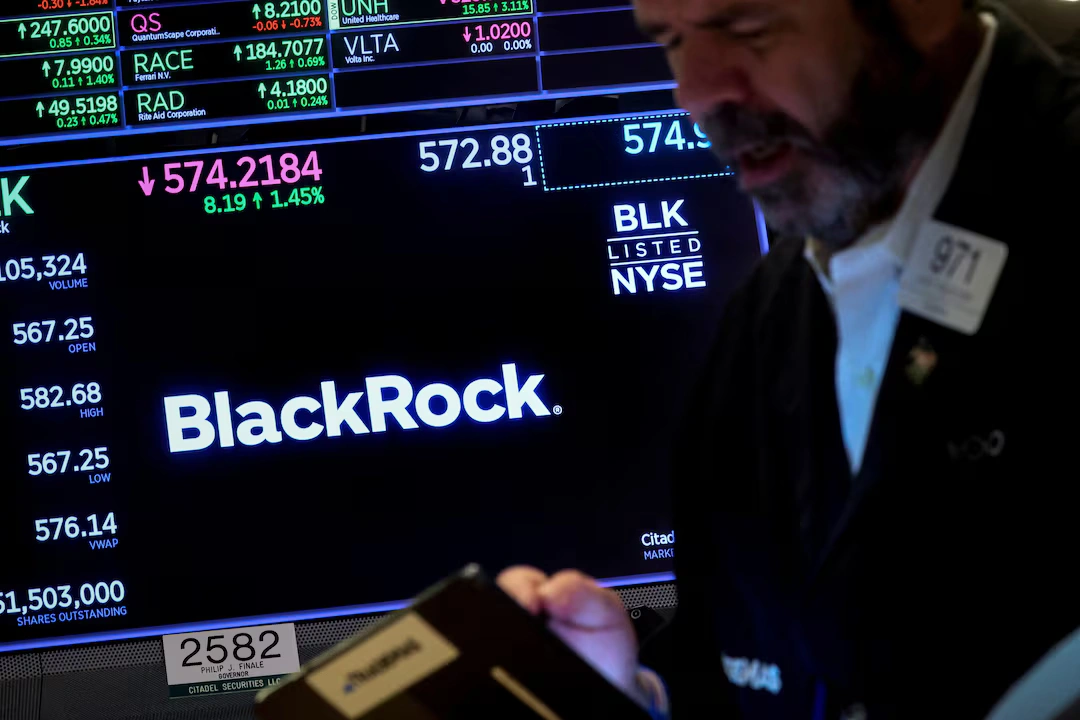
In its most recent Weekly Commentary, dated April 13, 2026, BlackRock Investment Institute maintained a neutral stance on European equities — a position that, read carefully, is considerably less benign than the word implies. The firm has noted that “Europe’s lagging earnings growth relative to the US keeps us neutral on its stocks,” while flagging that energy-driven cost pressures continue to work against the continent’s industrial base. The firm’s preferred European exposures — financials and industrials — are themselves qualified bets in an environment where the European Central Bank has abandoned its easing cycle and where, as of mid-April, traders were pricing in two quarter-point rate hikes by year-end.
Crucially, BlackRock has simultaneously cut its cash-like preference in euro area front-end government bonds — a positioning it adopted specifically in response to the ECB’s abrupt pivot when the Iran conflict began. That pivot alone tells a story. A month ago, the ECB was expected to cut rates through 2026, supporting credit formation and equity valuations. Today, Frankfurt is fighting a rearguard action against an energy-driven inflation surge that arrived without warning and may persist long after any ceasefire takes hold.
“Europe shifted its energy dependency from Moscow to Doha — and in doing so, swapped one geopolitical chokepoint for another, this time one under active military contest.”
— Global Capital Review Analysis, April 2026
Key Figures at a Glance
| Indicator | Value |
|---|---|
| Dutch TTF gas price (mid-March peak) | €60+ /MWh — near double pre-war levels |
| European gas storage at conflict outset | ~30% capacity — a historic seasonal low |
| Brent crude peak (March 2026) | $110+ per barrel |
| Europe’s sensitivity to oil shocks vs. US | 2× more exposed across inflation and growth |
The Hormuz Trap: How Europe Traded One Dependency for Another
The bitter irony of Europe’s current predicament is architectural. After Russia’s invasion of Ukraine in February 2022, the continent mounted what was, by any fair assessment, an impressive energy pivot. Pipeline dependence on Gazprom was slashed. New LNG terminals were constructed at extraordinary speed. Long-term contracts were signed with suppliers in the US, Australia, and — critically — Qatar. By late 2025, European policymakers were speaking with quiet confidence about energy resilience. Then, strikes on QatarEnergy’s Ras Laffan facilities on March 2, 2026 forced an immediate production shutdown and subsequent force majeure declaration — removing at a stroke nearly a fifth of global LNG supply.
The structural lesson is one that European policymakers are only now being forced to confront: the continent had shifted its energy dependency from Moscow to Doha and, by extension, to the Strait of Hormuz. It did not eliminate a single point of geopolitical failure; it merely relocated it to a different set of coordinates — ones now under active military contest. As the Atlantic Council observed in March, Europe entered the conflict with gas storage levels of just 46 billion cubic metres — compared to 60 bcm in 2025 and 77 bcm in 2024 — leaving the refill season desperately exposed to precisely the kind of supply disruption now unfolding.
Suggested image: Aerial view of Strait of Hormuz tanker traffic — illustrating the world’s most critical energy chokepoint and European LNG vulnerability. Roughly 20% of global oil and a fifth of global LNG trade transited the strait before the conflict. Source: IEA / Reuters.
The ECB’s Impossible Calculus — and What It Means for Equities
Nowhere is the damage more consequential for European equity investors than in the ECB’s abrupt reversal of fortune. Eurozone headline inflation surged to 2.5% in March — up from 1.9% in February — with energy inflation making a near-8 percentage-point monthly swing, from minus 3.1% to plus 4.9% year-on-year. Core inflation, for now, remains relatively contained at 2.3%, offering the ECB a thread of justification for restraint. But Christine Lagarde has already made clear that Frankfurt has not ruled out rate hikes, and the market has moved decisively: two quarter-point increases are priced for 2026 year-end.
This matters for equities in ways that are easy to underestimate. European stock valuations had been supported, in significant part, by the expectation of a sustained easing cycle. The STOXX 600, trading at a P/E of roughly 16.9x as of late March, was priced for a recovery story — lower rates, defence spending tailwinds, and a gradual earnings improvement. That repricing assumption is now under material threat. The ECB postponed its planned rate reductions on March 19, simultaneously raising its 2026 inflation forecast and cutting GDP growth projections — the precise sequence that equity markets dread most. Chemical and steel manufacturers have already imposed surcharges of up to 30% on customers to offset surging electricity and feedstock costs. If those surcharges prove durable, margin compression will ultimately show up in earnings, and no amount of defence-spending optimism will offset it.
Germany and Italy: Where the Recession Risk Is Most Acute
The ECB has explicitly warned that a prolonged conflict could push major energy-dependent economies, including Germany and Italy, into technical recession by the end of 2026. The Oxford Economics model reaches the same uncomfortable conclusion. Germany’s energy-intensive industrial model — the Mittelstand’s chemical, precision engineering, and automotive supply chains — was already under structural stress from Chinese competition and US tariffs. Energy costs at current levels are not a headwind for these companies; they are an existential threat to the business case for European manufacturing.
The DAX’s extraordinary 4.7% one-day gain on April 8th, following the US-Iran ceasefire announcement, illustrates both the relief and the danger: markets are pricing a return to normalcy that the underlying supply arithmetic may not justify. Bloomberg’s reporting on oil industry insiders warns that even after a ceasefire, full restoration of Hormuz shipping traffic could take weeks, and damage to QatarEnergy’s production facilities may require years of repair. A single day of geopolitical relief does not un-drain Europe’s gas storage deficit, nor does it rebuild Ras Laffan.
Suggested image: Frankfurt DAX trading floor or ECB headquarters — anchoring the monetary policy and equities valuation narrative. The central bank’s abrupt reversal from easing to potential tightening represents the most direct threat to European equity valuations. Source: Reuters.
BlackRock’s Contrarian Opportunity: Defence, Infrastructure, and Energy Transition
It would be a mistake to read BlackRock’s caution on broad European equities as a wholesale retreat from the continent. The firm’s positioning is more surgical — and, on inspection, more interesting — than a simple neutral rating implies. BlackRock explicitly identifies geopolitical fragmentation as supportive of defence and aerospace, and views the current crisis as accelerating European governments’ drive toward energy independence — which in practice means faster deployment of wind, solar, and nuclear capacity. These are not merely optimistic talking points; they represent durable, policy-backed capital allocation themes that will outlast any ceasefire by years or decades.
There is a further, less discussed dimension to this thesis. The current energy shock is, paradoxically, the most compelling argument yet made for the European energy transition. Every barrel of oil blocked in the Strait of Hormuz is, in a macroeconomic sense, an advertisement for domestically produced renewable energy — power that is structurally immune to Gulf geopolitics. The EU’s RePowerEU programme, already supercharged by the 2022 Russian gas crisis, now has a second, arguably more urgent, justification. Bruegel’s energy analysts argue that “only by reducing structural dependence on oil and LNG imports can Europe durably shield its economy from recurrent external shocks.” BlackRock, for its part, is positioning in precisely the sectors — clean infrastructure, defence, and supply chain resilience — that will capture that redirected capital.
“Every barrel of oil blocked in the Strait of Hormuz is, in macroeconomic terms, an advertisement for domestically produced renewable power — energy that is structurally immune to Gulf geopolitics.”
— Global Capital Review, April 2026
BlackRock’s Current European Positioning
| Rating | Asset Class |
|---|---|
| NEUTRAL | European equities (broad) |
| OVERWEIGHT | Financials & Industrials |
| OVERWEIGHT | Defence & Aerospace (thematic) |
| REDUCED | Euro area front-end government bonds |
The Stagflation Ghost — and Why 2026 Is Not 1973
The historical parallel that haunts every energy-markets conversation is, of course, 1973. The Arab oil embargo, OPEC’s production cutbacks, and the consequent stagflation that defined the decade. BlackRock, to its credit, has been explicit that the present episode is not a simple replay. As CNBC reported, analysts note that “the 2022 energy crisis landed on a global economy ripe for inflation to take off — supply chains were fractured, job markets tight, and fiscal policy was fuelling the fire. All of that, to varying degrees, is less true today.” Core inflation remains better anchored. Labour markets, while still tight, show more flexibility. And the spread of renewables means gas no longer maps as directly onto electricity prices as it once did.
Yet the differences should not breed complacency. Eurozone inflation is forecast by prediction markets to end 2026 above 3.1% with 61% probability, and above 2.8% with roughly 85% probability — all of this contingent on Hormuz not re-closing and QatarEnergy not suffering further production damage. The base case is not stagflation; but the tail risk of stagflation — defined as negative growth combined with inflation stubbornly above target — is not negligible, particularly for Germany and Italy, where industrial output is already under pressure.
Suggested image: European gas storage facility or LNG terminal — illustrating Europe’s supply infrastructure and the refill season challenge. Europe entered the 2026 conflict with storage at 30% capacity — historically low — leaving the summer refill season critically exposed. Source: Reuters / Getty.
What Institutional Investors Should Do Now
BlackRock’s playbook for European exposure in the current environment is, in essence, a barbell strategy: maintain benchmark-neutral exposure to broad European indices while concentrating active overweights in defence, energy infrastructure, and financials — the latter because higher-for-longer rates improve net interest margins even as they compress equity multiples across the rest of the market. This is not a reckless bet; it is a disciplined application of the macro thesis.
For investors with a longer horizon, the more interesting question is whether the current crisis finally breaks the structural indifference that has kept European equities persistently undervalued relative to their American counterparts. The DAX trades at a meaningful discount to the S&P 500 on forward earnings multiples. If the Iran conflict ultimately accelerates the EU’s energy transition, compresses Europe’s fossil-fuel import bill over a five-year horizon, and catalyses the defence spending surge already in train, then today’s neutral rating on European stocks may, in retrospect, look like the floor rather than the ceiling of BlackRock’s conviction. The firm has form on this: it upgraded European equities from underweight to neutral in February 2025 precisely because it spotted an early inflection. The question is whether the energy crisis will delay or accelerate the next upgrade.
The honest answer, which BlackRock would recognise even if it stops short of saying it plainly, is that this depends almost entirely on physics and logistics — on how quickly the Strait of Hormuz reopens, how fast Qatari production can be restored, and how mild the European summer proves to be. Finance abhors being subordinate to meteorology and maritime law. And yet here we are, again, with the fate of European equities resting as much on the Persian Gulf’s political temperature as on Frankfurt’s monetary arithmetic.
Conclusion: The Price of Structural Dependency
BlackRock’s warning about European stocks is not a panic signal. It is something more unsettling: a calm, evidence-based assessment that the continent’s structural vulnerabilities have not been resolved — they have merely been relocated. Energy dependency on Russia was replaced by dependency on Gulf LNG. A war in the Gulf has demonstrated, with brutal clarity, that the location of the dependency changed while its depth did not.
The investment implication is this: European equities are not uninvestable, but they require a selectivity and a patience that broad index exposure does not provide. Defence, clean infrastructure, and European banks capable of benefiting from a higher-rate environment are the sectors that BlackRock — and, by extension, the smartest institutional capital in the market — is looking at right now. Everything else on the continent faces a summer of existential arithmetic: storage levels, LNG spot prices, and the willingness of the ECB to inflict monetary pain on an already-fragile economy in the name of inflation credibility.
Europe has survived energy crises before. It survived 1973. It survived 2022. It will survive this one. The question that matters for investors, and the one BlackRock is posing without fully answering, is whether it will emerge from this one with the structural reforms — in energy independence, in industrial policy, in defence self-sufficiency — that would finally break the cycle. History suggests the answer requires both a crisis severe enough to force action and political will sufficient to sustain it. The first condition is manifestly being met. The second remains, as ever, Europe’s greatest uncertainty.
References :
BlackRock Investment Institute. (2026, April 13). Weekly commentary. BlackRock. https://www.blackrock.com/corporate/insights/blackrock-investment-institute/publications/weekly-commentary
BlackRock Investment Institute. (2025, December). 2026 investment outlook. BlackRock. https://www.blackrock.com/corporate/insights/blackrock-investment-institute/publications/outlook
Ahmed, M., Boak, J., Metz, S., & Magdy, S. (2026, April 17). Europe nears energy crisis with global implications, head of energy agency warns. PBS NewsHour. https://www.pbs.org/newshour/world/europe-nears-energy-crisis-with-global-implications-head-of-energy-agency-warns
Keliauskaitė, U., McWilliams, B., Mramor, T., Roth, A., Tagliapietra, S., & Zachmann, G. (2026, April 1). How will the Iran conflict hit European energy markets? Bruegel. https://www.bruegel.org/first-glance/how-will-iran-conflict-hit-european-energy-markets
Basquel, L. (2026, March 17). How the Iran war could trigger a European energy crisis. Atlantic Council. https://www.atlanticcouncil.org/dispatches/how-the-iran-war-could-trigger-a-european-energy-crisis/
Euronews Business. (2026, March 31). Eurozone inflation jumps to 2.5% amid Iran war: Will the ECB hike rates? Euronews. https://www.euronews.com/business/2026/03/31/eurozone-inflation-jumps-to-25-amid-iran-war-will-the-ecb-hike-rates
Wikipedia contributors. (2026, April 18). Economic impact of the 2026 Iran war. In Wikipedia, The Free Encyclopedia. https://en.wikipedia.org/wiki/Economic_impact_of_the_2026_Iran_war
CNBC. (2026, March 12). Iran war fuels fears of European energy inflation shock. CNBC. https://www.cnbc.com/2026/03/12/iran-gas-oil-price-bills-europe-energy-ukraine-war-russia-shock-rise-inflation-interest-rates-crisis.html
Bloomberg. (2026, March). How high could oil prices get with Strait of Hormuz closure? Bloomberg. https://www.bloomberg.com/graphics/2026-iran-war-hormuz-closure-oil-shock/

Singapore Firms Press Ahead in US Market Despite Trump Tariffs

The IMF’s High-Voltage Mandate: How Pakistan’s FY27 Power Subsidy Cut Will Rewire Its Economy

How US Debt, Gold Chaos, and a Stalled Middle East Are Rewriting the Rules of Investing

Top 15 Stocks for Investment in 2026 in PSX: Your Complete Guide to Pakistan’s Best Investment Opportunities
Top 15 Stocks for Investment in 2026 in PSX: Your Complete Guide to Pakistan’s Best Investment Opportunities

Debunking IMF Program Myths: Reconfiguring Engagement for True National Ownership in a Volatile World
-
 Markets & Finance4 months ago
Top 15 Stocks for Investment in 2026 in PSX: Your Complete Guide to Pakistan’s Best Investment Opportunities
-
Markets & Finance4 months ago
Top 15 Stocks for Investment in 2026 in PSX: Your Complete Guide to Pakistan’s Best Investment Opportunities
-
 Analysis3 months ago
Debunking IMF Program Myths: Reconfiguring Engagement for True National Ownership in a Volatile World
-

 Global Economy5 months ago
What the U.S. Attack on Venezuela Could Mean for Oil and Canadian Crude Exports: The Economic Impact
-

 Investment4 months ago
Top 10 Mutual Fund Managers in Pakistan for Investment in 2026: A Comprehensive Guide for Optimal Returns
-

 Asia5 months ago
China’s 50% Domestic Equipment Rule: The Semiconductor Mandate Reshaping Global Tech
-

 AI5 months ago
15 Most Lucrative Sectors for Investment in Pakistan: A 2025 Data-Driven Analysis
-

 Exports5 months ago
Pakistan’s Export Goldmine: 10 Game-Changing Markets Where Pakistani Businesses Are Winning Big in 2025