
News
Gen X Millennials Real Estate Inheritance: $124T Wealth Transfer


Baby boomers control $19T in real estate. Discover how Gen X and Millennials will inherit unprecedented wealth and whether they’re prepared for the great wealth transfer ahead.
The $124 Trillion Question Nobody’s Asking
Picture this: Your parents hand you the keys to a $2 million waterfront property in Naples, Florida. Along with it comes a complex portfolio of real estate investments, tax implications you’ve never studied, and decisions that could either preserve or evaporate generations of accumulated wealth within a decade. Are you ready?
Most people aren’t. And that’s the uncomfortable truth sitting at the heart of the largest wealth transfer in human history.
Over the next decade, roughly 1.2 million individuals with net worths of $5 million or more will pass down more than $38 trillion globally, according to research from Coldwell Banker Global Luxury. But zoom out to the full 25-year horizon, and the numbers become almost incomprehensible: $124 trillion in assets will change hands through 2048, with $105 trillion flowing to heirs and $18 trillion designated for charitable causes, per wealth management firm Cerulli Associates.
Featured Snippet Answer: The great wealth transfer in real estate refers to the $124 trillion in assets—including approximately $19 trillion in property holdings—that baby boomers will pass to younger generations through 2048, representing the largest intergenerational wealth shift in history and fundamentally reshaping luxury real estate markets.
At the center of this seismic shift sits real estate—the single largest asset class in most affluent portfolios. Baby boomers currently own nearly $19 trillion in U.S. real estate wealth, representing roughly 41% of all property nationwide despite comprising less than 20% of the population. This isn’t just money changing hands. It’s an entire economic order being rewritten, one inheritance at a time.
Yet here’s what keeps me up at night as someone who’s spent two decades analyzing political economy and wealth dynamics: two-thirds of Gen Z adults report they’re not confident in their understanding of personal finance, and even among their slightly older millennial counterparts, financial literacy rates remain alarmingly low. We’re watching the greatest wealth transfer in history unfold while the recipients are woefully unprepared to manage it.

The Unprecedented Scale: How We Got Here
To understand the magnitude of what’s coming, we need to grasp how baby boomers accumulated this staggering real estate fortune in the first place. This wasn’t luck—it was timing, policy, and compounding advantage working in concert over five decades.
The boomer generation benefited from what economists call a “perfect storm” of wealth accumulation conditions. They entered their prime earning years during the post-war economic expansion, purchased homes when median prices were 2-3 times annual household income (compared to 5-7 times today), and rode an unprecedented wave of property appreciation that saw U.S. home prices surge 47% in just the last five years alone.
But the real wealth multiplier came from policy decisions. Mortgage interest deductions, favorable capital gains treatment on primary residences, and historically low interest rates—particularly the sub-4% mortgages many boomers locked in during the 2010s—created a systematic wealth-building machine that younger generations simply cannot replicate.
According to Federal Reserve data analyzed by Self Financial, boomers hold 51.7% of the nation’s total wealth, with real estate comprising 22.7% of their net worth. Generation X trails with 29.4% of real estate holdings valued at approximately $14 trillion, while millennials own just 20.4%—roughly $10 trillion worth of property, or less than two-thirds of what boomers owned at the same age.
The geographic concentration tells an even more interesting story. Florida dominates the landscape of boomer wealth concentration, claiming five of the top ten metros where retirees hold the most real estate equity. In North Port-Bradenton alone, homeowners aged 65 and older hold $97 billion in property value, representing more than half of all homeowners in that metro area. Naples-Marco Island follows with $70 billion, and Cape Coral adds another $62 billion to Florida’s real estate empire.
This concentration isn’t accidental. It reflects deliberate lifestyle arbitrage—warm weather, no state income tax, purpose-built retirement communities—combined with decades of appreciation in markets that became increasingly desirable. These properties aren’t just homes; they’re multi-million-dollar assets that will soon change hands, whether through inheritance, sale, or some combination of both.
Political Economy Analysis: The Wealth Transfer as a Defining Moment
From a political economy perspective, this wealth transfer represents far more than a private family matter multiplied across millions of households. It’s a stress test for American capitalism, a potential inflection point for wealth inequality, and a policy challenge that Washington is woefully unprepared to address.
Let’s start with the tax dimension, because nothing reveals political priorities quite like tax policy. The federal estate tax exemption—the amount you can transfer tax-free at death—has become a political football with profound implications. Under recent legislation signed in July 2025, the exemption will increase to $15 million per person in 2026, with adjustments for inflation in future years. This represents a significant win for wealthy families and creates a substantial planning opportunity.
But here’s the political economic reality that few people discuss openly: Only about 0.1% of estates will ever pay federal estate taxes under these thresholds. The 40% federal rate applies only after you’ve exhausted your exemption, and with proper planning—trusts, gifting strategies, valuation discounts—even ultra-wealthy families can significantly reduce their exposure.
What does this mean? It means the great wealth transfer will largely proceed without the “progressive taxation” drag that many assume exists. Generational wealth will compound, not disperse. The gap between those inheriting substantial assets and those inheriting nothing will widen dramatically.
Consider the numbers: Millennials are set to inherit $46 trillion, more than any other demographic, by 2048. But this wealth is not evenly distributed. A small percentage of millennials—those whose parents or grandparents own substantial real estate and financial assets—will receive life-changing inheritances. The majority will receive little to nothing.
This bifurcation has profound political implications. We’re creating two Americas: one where young professionals inherit real estate portfolios that instantly catapult them into wealth they could never accumulate through earnings alone, and another where individuals struggle to afford their first home despite advanced degrees and solid careers.
The policy response has been remarkably muted. While politicians debate marginal tax rates on ordinary income, the real wealth transfer—through appreciated real estate, stepped-up basis at death, and sophisticated trust structures—proceeds largely untouched. Some proposals have suggested limiting stepped-up basis or imposing stricter rules on grantor trusts, but these have gained little traction in a political environment reluctant to appear “anti-family.”
From my vantage point as a political economy analyst, this represents a fundamental mismatch between rhetoric and reality. We debate wealth inequality while facilitating the largest tax-advantaged wealth transfer in history. We worry about social mobility while creating structural advantages that compound across generations.
The National Association of Realtors reports that baby boomers now account for 42% of all home buyers, up from 38% just a year ago for millennials. Half of older boomers and 40% of younger boomers are purchasing homes entirely with cash. This isn’t a generation preparing to downsize and release housing inventory—it’s a generation continuing to accumulate and control assets, extending their economic dominance even as biological succession looms.
The international dimension adds another layer of complexity. Dubai’s prime real estate market is projected to grow 5% in 2025, while Paris real estate is experiencing a renaissance with prices projected to rise 2.5% as U.K. and U.S. buyers capitalize on currency advantages. Wealthy Americans are diversifying globally, meaning some of this inherited wealth will flow out of U.S. markets entirely, seeking tax optimization and lifestyle advantages abroad.
The Real Estate Component: Why Property is Central to This Transfer
Real estate occupies a unique position in this wealth transfer, and understanding why requires appreciating its distinctive characteristics as an asset class.
First, real estate represents the largest single asset for most affluent households. Unlike stocks that can be easily divided, or cash that can be quickly spent, real estate comes with emotional attachments, practical complexities, and significant transaction costs. When someone inherits a family home in Santa Rosa with $54 billion held by retirees in that metro, they’re not just receiving a financial asset—they’re inheriting decisions about family legacy, property management, potential sale, and tax planning.
Second, real estate benefits from what I call “politically protected appreciation.” Through zoning restrictions, NIMBY (Not In My Backyard) policies, and limited new construction in desirable markets, existing property owners have essentially weaponized local government to restrict supply and drive up values. Luxury home inventory has reached a two-year high, up 40.4% for single-family and 42.6% for attached properties since last year, but this increase still pales in comparison to demand, particularly in prime coastal markets.
The luxury real estate market is experiencing its own evolution. According to Coldwell Banker’s mid-year analysis, median sold prices for single-family luxury homes rose 1.8% year-over-year and 8.0% over 2023, while attached homes saw an 8.4% year-over-year gain and a 16.5% jump compared to 2023. Despite economic uncertainty, quality properties in prime locations continue commanding premium prices.
But here’s what makes this transfer particularly interesting from a market dynamics perspective: buyer composition is shifting dramatically. Coldwell Banker research shows that 43% of surveyed Luxury Property Specialists report a rise in Millennial and Gen Z purchases, while 29% report stable or growing Gen X activity. These younger buyers are arriving earlier than anticipated—some through early inheritances, others through the “giving while living” trend, and still others through equity gains from earlier property purchases.
Regional patterns reveal strategic considerations driving this market. Florida’s dominance isn’t just about weather—it’s about tax strategy. States with no income tax and favorable estate planning environments are seeing concentrated wealth accumulation. The Villages, where 78% of homeowners are 65 and up, represents the highest concentration of senior homeownership in the country, yet median home prices remain relatively modest at $369,900 compared to coastal alternatives.
California presents a different narrative entirely. Despite high taxes and cost of living, Santa Rosa-Petaluma shows retirees holding $54 billion in real estate wealth, drawn by wine country lifestyle, cultural amenities, and proximity to San Francisco. Barnstable Town on Cape Cod demonstrates another pattern: $34 billion in boomer-owned real estate with median prices near $900,000, where coastal charm and New England heritage command premium valuations despite seasonal limitations.
The attached luxury market—condominiums and townhomes—tells a more nuanced story. Sales have softened slightly compared to single-family estates, reflecting rate sensitivity among buyers and fewer new listings. Yet this segment may become increasingly important as aging boomers eventually downsize, potentially flooding markets with high-end condos in urban centers and resort communities.
Current data shows total owner-occupied real estate valued at $47.9 trillion nationwide, with home equity reaching $34.5 trillion at the beginning of 2025. Boomers control roughly half of this equity pie, representing unprecedented stored wealth that will eventually transfer.
Preparation Strategies: How Affluent Families Are Navigating Succession
The sophisticated approach wealthy families are taking to prepare for this transfer reveals both innovation and persistent challenges. I’ve observed three distinct preparation tiers emerging in the luxury market.
Tier One: Formal Estate Planning with Multi-Generational Strategy
At the highest wealth levels—families with $30 million-plus net worth—comprehensive planning is standard. These families engage teams including estate attorneys, tax advisors, family office professionals, and wealth psychologists to create detailed succession frameworks.
Strategic approaches include spousal lifetime access trusts (SLATs), intentionally defective grantor trusts (IDGTs), and dynasty trusts designed to preserve wealth across multiple generations. These structures allow assets to grow outside the taxable estate while maintaining some degree of family control and access.
The annual gifting strategy has become particularly important. Individuals can gift up to $19,000 per recipient annually without using any estate tax exemption, creating a simple but powerful wealth transfer mechanism. A couple with three children and six grandchildren could transfer $342,000 annually ($19,000 × 18 gifts) without touching their lifetime exemption—that’s $3.42 million over ten years.
For real estate specifically, families are employing family limited partnerships (FLPs) and qualified personal residence trusts (QPRTs) to transfer property at discounted valuations. A parent might contribute a $5 million vacation home to an FLP, claim valuation discounts of 30-40% due to lack of marketability and minority interest, then gift limited partnership interests to children. The IRS challenges some of these structures, but properly structured FLPs remain effective tools.
Tier Two: Professional Guidance with Selective Implementation
Families in the $5-30 million range typically engage estate attorneys and financial advisors but implement strategies more selectively. They focus on high-impact moves: updating wills and trusts, titling property appropriately, establishing irrevocable life insurance trusts (ILITs) to provide liquidity for estate taxes or equalization among heirs.
According to data, only 42% of boomers have full estate plans in place, a shockingly low figure given the wealth at stake. Even among those who do have plans, many are outdated, failing to account for recent tax law changes or family circumstances like divorce, remarriage, or estrangement.
Question: What is the great wealth transfer in real estate?
The great wealth transfer refers to the $124 trillion in assets baby boomers will pass to younger generations through 2048, including approximately $19 trillion in U.S. real estate holdings. This represents the largest intergenerational wealth shift in history, with 1.2 million individuals worth $5 million or more transferring $38 trillion in the next decade alone, fundamentally reshaping luxury property markets worldwide.
Real estate succession planning in this tier often involves practical considerations. Should we transfer the beachfront property now or wait? How do we handle a rental property portfolio with three children who have different risk tolerances? What happens to the family farm when nobody wants to farm?
One innovative approach gaining traction: “inheritance dry runs” where parents give adult children smaller amounts (perhaps $50,000-100,000) to invest independently, observing how they handle it before larger transfers occur. This reveals financial maturity—or lack thereof—while stakes remain manageable.
Tier Three: Minimal Planning, Maximum Risk
Perhaps most concerning, many affluent families engage in minimal succession planning, assuming everything will “work itself out.” Research shows that 52% of boomers do not plan to leave an inheritance, believing they will spend it all, while one-third haven’t discussed inheritance plans with their children.
This lack of communication creates fertile ground for family conflict. When real estate represents 25-40% of net worth and carries emotional significance—”This is where we summered for forty years”—the absence of clear succession plans becomes explosive. Adult children discover competing assumptions about who gets what, often only after parents are incapacitated or deceased.
The tax consequences can be severe. Without proper planning, estates face unnecessary taxation, properties sell in fire sales to cover bills, and family members sue each other over interpretation of vague will provisions. Experts warn that 70% of wealthy families lose their wealth by the second generation, often due to poor planning and family conflict rather than market losses.
Generational Readiness Gap: Are Gen X and Millennials Prepared?
This is where reality collides with optimism in painful ways. The short answer is: No, most are not prepared. But the longer answer reveals why and what we can do about it.
Research from Seismic shows that only 26% of Gen Z feel well-prepared for major financial changes, while two-thirds lack confidence in their personal finance understanding. While Gen Z is younger and will inherit later, their millenni al siblings don’t fare dramatically better.
The financial literacy gap is staggering. Fewer than 30% of millennials correctly answer basic questions about interest rates, inflation, and risk diversification, according to global financial capability surveys. This isn’t about intelligence—it’s about education and experience. Traditional schooling fails to incorporate practical financial education, and many young adults reach their 30s never having discussed money meaningfully with parents or mentors.
When it comes to real estate specifically, the knowledge gaps become acute. How many millennials understand:
- Step-up in basis and its tax implications?
- Property tax reassessment upon inheritance?
- The difference between qualified personal residence and investment property treatment?
- When to sell versus hold rental properties?
- How to evaluate whether inherited real estate fits their portfolio?
The answer, in most cases, is very few.
Cultural factors compound these challenges. Many families treat money as taboo, avoiding discussions about inheritance, estate plans, or financial values. Parents fear appearing presumptuous or creating entitlement; adult children worry about seeming greedy or opportunistic. This silence persists even as $124 trillion waits in the wings.
Interestingly, both baby boomers and Gen X agree that younger generations aren’t ready: 42% of boomers and 45% of Gen X believe younger people are unprepared to handle inherited wealth responsibly. Yet these same older generations often fail to provide education, mentorship, or gradual responsibility to build competence.
There’s also a values mismatch that creates tension. Millennials prioritize sustainability, impact investing, and ESG (Environmental, Social, Governance) factors, while their parents focused on total return and wealth preservation. When a millennial inherits a portfolio including fossil fuel royalties or factory farm investments, value conflicts emerge alongside financial decisions.
The geographic dimension matters too. Millennials account for 60% of global cryptocurrency users and are 7% more likely to be interested in investments than average consumers—but they’re also the generation living furthest from homeownership. They understand digital assets but lack experience with real estate fundamentals.
Yet there are positive signals. Approximately 74% of U.S. teens express keen interest in learning more about financial topics, and millennials are 33% more likely than average internet users to manage budgets as part of their jobs. When given access to education and tools, younger generations demonstrate eagerness to learn.
The challenge isn’t capability—it’s preparation and timing. We’re approaching the largest wealth transfer in history with recipients who lack experience managing wealth of this magnitude.
Market Ripple Effects: How This Transfer Will Reshape Luxury Real Estate
The wealth transfer isn’t a future event—it’s already reshaping markets in real time, creating opportunities and dislocations that will intensify over the next decade.
The Inventory Question
Conventional wisdom suggested a “silver tsunami” would flood markets with housing inventory as boomers downsized or passed away. Reality has proven more complex. Many boomers are aging in place, with some even buying additional properties, as NAR data shows them regaining the top spot as the largest buyer cohort.
Yet inventory dynamics are shifting. Luxury home inventory has reached two-year highs, suggesting that some high-end property holders are beginning to list. This creates interesting dynamics: more choice for buyers, but also more competition for sellers who must differentiate quality properties from others.
The Cash Buyer Phenomenon
Perhaps the most striking market shift is the surge in all-cash offers. According to Coldwell Banker’s research, 96% of luxury agents report cash offers are holding steady or increasing in 2025. Over half have seen substantial increases in cash purchases during just the first five months of 2025.
What’s driving this? Two factors converge. First, elevated interest rates make mortgage costs significant even for wealthy buyers. Jason Waugh, president of Coldwell Banker Affiliates, explains: “Cash provides leverage, speed, and security. Why absorb borrowing costs if you have the cash to close?”
Second, many buyers represent first-generation wealth transfer—adult children receiving early inheritances or tapping home equity from previous properties to move up. They’re deploying inherited capital or liquidating other inherited assets into real estate, viewing property as a stable wealth preservation vehicle.
Market Bifurcation
A clear divide is emerging between ultra-wealthy buyers ($30 million-plus net worth) and affluent-but-not-ultra-rich buyers ($1-5 million). Coldwell Banker surveys show that ultra-wealthy buyers remain active and pursue second, third, even fourth homes, while lower-tier luxury buyers act more cautiously, seeking deals, delaying decisions, or targeting renovation projects.
This split creates two parallel luxury markets operating under different rules. Top-tier properties in prime locations with exceptional quality sell quickly, often above asking price. Secondary luxury—nice homes in good areas but without that ineffable “wow” factor—sits longer and requires price reductions.
Geographic Rebalancing
Remote work flexibility is enabling lifestyle-first location decisions, allowing people to prioritize quality of life over proximity to employment. This benefits markets like Prescott, Arizona, where retirees hold $27 billion across nearly 58% of homeowners age 65-plus, with median prices around $669,000—offering better value than coastal alternatives.
International markets are seeing American wealth flow outward. Dubai prime real estate is growing 5% annually, Paris is experiencing a renaissance with 2.5% price growth, while Portugal and Spain gain traction among buyers seeking affordability and investment potential. Some inherited wealth will deploy globally, diversifying both for returns and tax optimization.
The Everyday Millionaire Effect
Rising home equity has created what UBS calls “Everyday Millionaires”—individuals who’ve crossed the million-dollar net worth threshold primarily through home appreciation rather than high incomes. These move-up buyers are entering luxury markets for the first time, changing buyer composition and expectations.
These buyers want move-in ready properties with smart home technology, sustainability features, and indoor-outdoor living spaces. They’re less interested in project homes requiring extensive renovation. Properties with spa bathrooms, chef-style kitchens, and seamless outdoor integration are driving current market interest.
Investment Mindset Evolution
Sixty-eight percent of luxury specialists report clients are maintaining or increasing real estate investments in 2025, viewing property as a hard asset that preserves wealth during stock market volatility. Real estate’s historically low correlation with equities makes it an attractive diversification tool, particularly for wealth-transfer recipients managing newly inherited portfolios.
But younger generations bring different investment philosophies. Millennials invest in gold at rates 20% higher than any other consumer group and dominate cryptocurrency adoption. They may view real estate differently than their parents—as one asset class among many, not necessarily the bedrock of wealth preservation.
Expert Opinion & Conclusion: Navigating the Decade of Transfer
After decades analyzing wealth dynamics, political economy, and real estate markets, I’ve reached several conclusions about this historic transfer.
First, the wealth transfer is inevitable but its impact is not predetermined. Whether this moment becomes a catalyst for broader prosperity or accelerates inequality depends on choices made by families, policymakers, and institutions over the next ten years.
Second, preparation is everything. Families who engage in open communication, provide financial education, and implement sophisticated succession planning will see wealth compound across generations. Those who avoid difficult conversations and wing it will likely join the 70% of wealthy families who lose their fortunes by the second generation.
Third, real estate will remain central but evolve. The $19 trillion in boomer-owned property won’t simply replicate in the hands of heirs. Some will sell, converting real estate to diversified portfolios. Others will leverage properties differently, possibly through syndication, fractional ownership, or new models we haven’t yet imagined. The dominance of single-family homes in wealth storage may give way to more diversified approaches.
Fourth, policy intervention seems unlikely but necessary. The political will to meaningfully address intergenerational wealth transfer appears absent. Recent legislation increased estate tax exemptions to $15 million per person, making the system even more favorable to wealth preservation. Without changes to step-up in basis, estate taxation, or transfer mechanisms, inequality will widen as inheritance becomes the primary determinant of lifetime wealth.
Fifth, financial literacy is the great equalizer—if we act now. The 74% of teenagers wanting to learn about finance represent hope. If we can meet this demand with quality education—in schools, workplaces, and families—we can create a generation capable of managing inherited wealth responsibly.
For luxury homeowners preparing to transfer wealth: Start conversations now. Bring adult children into estate planning discussions. Provide smaller inheritances during your lifetime to test readiness. Engage professional advisors. Create opportunities for children to manage property, make investment decisions, and learn from mistakes while you’re available to guide.
For Gen X and millennials expecting to inherit: Educate yourself about real estate, tax planning, and wealth management. Ask questions even when uncomfortable. Understand not just what you might inherit, but your parents’ wishes, values, and hopes for how assets should be used. Consider that refusing to discuss these topics doesn’t make you noble—it makes you unprepared.
For policymakers: The current trajectory concentrates wealth, reduces mobility, and creates a permanent economic aristocracy. While politically difficult, addressing step-up in basis, implementing progressive transfer taxes, and expanding first-generation homeownership programs would create a more equitable system.
The next decade will be unlike any we’ve experienced. Nearly 12,000 people will turn 65 each day through 2025, accelerating the transfer. Millennials will inherit $46 trillion by 2048, fundamentally altering their economic position. The luxury real estate market will transform as new buyers with new values and priorities reshape demand.
This is more than statistics and tax strategies. It’s about whether America remains a place where hard work and talent determine success, or becomes a hereditary wealth society where birth determines destiny. The great wealth transfer will test whether we’re equal opportunity capitalists or simply excellent at pretending.
The keys to those million-dollar properties are about to change hands. The question isn’t just who gets them—it’s what they’ll do with them, and what kind of society we’ll build in the process.
The transfer is coming. Ready or not.
Key Statistics
- $124 trillion – Total wealth transferring through 2048 globally
- $19 trillion – Baby boomer-owned U.S. real estate value
- $46 trillion – Amount millennials will inherit by 2048
- 41% – Percentage of all U.S. real estate owned by baby boomers
- 96% – Luxury agents reporting stable or increased cash offers
- 26% – Gen Z adults feeling well-prepared for financial changes
- 42% – Baby boomers with complete estate plans in place
Sources Referenced:
- Coldwell Banker Global Luxury Mid-Year Report 2025
- Fortune: The $124 Trillion Great Wealth Transfer
- Federal Reserve Flow of Funds Data
- Cerulli Associates Wealth Transfer Report
- National Association of Realtors Generational Trends Report 2025
- Institute for Luxury Home Marketing
- Plante Moran Estate Planning Update
- Citizens Bank Wealth Transfer Planning Guide
- CPA Practice Advisor: Gen Z Financial Preparedness
- Merrill Lynch: Great Wealth Transfer Impact Research
- GlobalWebIndex Financial Literacy by Generation



Oil shock Southeast Asia | Strait of Hormuz disruption | Stagflation risk Philippines Thailand | Fuel subsidy bills Asia 2026
Picture a Monday morning in Bangkok’s Chatuchak district. Nattapong, a 34-year-old motorcycle-taxi driver who normally hauls commuters through gridlocked sois for roughly 400 baht a day, is staring at a petrol pump display that has climbed the equivalent of 18% in eight days. He hasn’t raised his fares yet — the app won’t let him — but his margins have almost evaporated. “Before, I could fill up and still send money home,” he says quietly. “Now I’m not sure.”
Multiply Nattapong’s dilemma across 700 million people, eleven countries, and a dozen interconnected supply chains, and you begin to understand what the Strait of Hormuz crisis of March 2026 is doing to South-east Asia. On the morning of Monday, March 9, 2026, Brent crude futures spiked as high as $119.50 a barrel — a session high that will be branded into the memory of every finance minister from Manila to Jakarta — before settling around $110.56, still up nearly 40% in a single month. WTI posted its largest weekly gain in the entire history of the futures contract, a staggering 35.6%, a record stretching back to 1983.
The trigger: joint US-Israeli strikes on Iran beginning February 28, which escalated into a full war and brought Strait of Hormuz shipping to a near-total halt. The choke point — that narrow 33-kilometre-wide passage between Oman and Iran — carries roughly 20 million barrels of oil per day, about one-fifth of global supply. When Iran’s Revolutionary Guard declared the waterway effectively closed and warned vessels they would be targeted, the arithmetic was brutal and immediate. Iraq and Kuwait began cutting output after running out of storage. Qatar’s energy minister told the Financial Times that crude could reach $150 per barrel if tankers remain unable to transit the strait in coming weeks. At Kpler, lead crude analyst Homayoun Falakshahi was blunter: “If between now and end of March you don’t have an amelioration of traffic around the strait, we could go to $150 a barrel,” he told CNN.
For South-east Asia — a region that imports the overwhelming majority of its oil and whose economies run on cheap fuel the way a clock runs on a mainspring — this is not merely a commodity story. It is a cost-of-living crisis, a monetary policy dilemma, and a fiscal time bomb, all detonating simultaneously.
Oil Shock Southeast Asia: Why the Region Is Uniquely Exposed
The geography alone is damning. Japan and the Philippines source roughly 90% of their crude from the Persian Gulf; China and India import 38% and 46% of their oil from the region, respectively. South-east Asia as a whole, with the sole exception of Malaysia, runs a persistent deficit in oil and gas trade. When the Strait of Hormuz tightens, the region doesn’t just pay more — it scrambles for supply.
MUFG Research calculates that every US$10 per barrel increase in oil prices worsens the current account position of Asian economies by 0.2–0.9% of GDP, with Thailand, Singapore, Taiwan, India, and the Philippines taking the largest hits. From a starting price of roughly $60 per barrel in January 2026 to a current print north of $110, that’s a $50-per-barrel shock — implying current account deterioration of potentially 1–4.5% of GDP for the region’s most vulnerable economies. Run that number through to your household electricity bill, your bag of jasmine rice, your morning commute, and the pain becomes visceral.
Nomura’s research team, in a note that has become one of the most-cited documents in Asian trading rooms this week, identified Thailand, India, South Korea, and the Philippines as the most vulnerable economies in Asia. The bank’s reasoning is unforgiving: Thailand carries the largest net oil import bill in Asia at 4.7% of GDP, meaning every 10% oil price change worsens its current account by 0.5 percentage points. The Philippines runs a current account deficit that, at oil above $90 per barrel on a sustained basis, is likely to breach 4.5% of GDP. “In Asia, Thailand, India, Korea, and the Philippines are the most vulnerable to higher oil prices, due to their high import dependence,” Nomura wrote, “while Malaysia would be a relative beneficiary as an energy exporter.”
Country by Country: Winners, Losers, and the Ones Caught in the Middle
The Philippines: Worst in Class, No Cushion
If there is one country in the region for which this crisis reads like a worst-case scenario, it is the Philippines. Manila has nearly 90% of its oil imports sourced from the Middle East and, crucially, operates a largely market-driven fuel pricing mechanism with minimal subsidies. There is no state buffer absorbing the shock before it hits the pump. Retailers in Manila imposed over ₱1-per-liter increases for the tenth consecutive week as of early March, covering diesel, kerosene, and gasoline. The Philippine peso slid back through the ₱58-per-dollar mark on March 9, adding a currency depreciation multiplier to an already brutal import bill.
ING Group estimates the Philippines could see inflation rise by up to 0.4 percentage points for every 10% increase in oil prices. At Nomura, the estimate is 0.5pp per 10% rise — the highest pass-through in the region. Oil at $110 represents roughly an 80% increase over January’s $60 baseline, an inflationary impulse that Capital Economics pegs could push headline CPI well above the Bangko Sentral ng Pilipinas’s 2–4% target. Manila has already announced plans to build a diesel stockpile as an emergency buffer — an admission that supply anxiety, not just price, has entered the conversation.
Thailand: The Biggest Structural Loser
Thailand’s problem isn’t just the size of its oil import bill — it’s the timing. The country is already wrestling with below-potential growth, persistent deflationary pressures in some sectors, and a tourism sector still finding its post-COVID footing. MUFG Research flags Thailand as one of the economies most sensitive to oil price increases from an inflation perspective, with CPI rising up to 0.8 percentage points per US$10/bbl increase — the highest reading in their Asian sensitivity matrix.
The government responded swiftly, announcing a suspension of petroleum exports to protect domestic stocks, an extraordinary measure that signals just how seriously Bangkok is treating supply security. The Thai baht, already vulnerable, has come under selling pressure alongside the Philippine peso, Korean won, and Indian rupee. For Thai factory workers supplying export goods to Western markets, higher transport and energy costs arrive precisely when global demand is wobbling under the weight of US tariffs. It is, as the textbook definition goes, a stagflationary shock — cost pressures rising while growth falters.
Indonesia: The Fiscal Tightrope
Indonesia occupies a peculiar position. It is technically a net importer of petroleum products — paradoxical for a country that was once an OPEC member — but it deploys a system of fuel subsidies (via state-owned Pertamina) that partially shields consumers from global price moves. The catch, of course, is that the shield is funded by the national treasury.
Indonesia’s government budget was built around an Indonesian Crude Price (ICP) assumption of $70 per barrel for 2026. With Brent at $110, that assumption looks almost quaint. Government simulations, according to Indonesia’s fiscal authority, show the state budget deficit could widen to 3.6% of GDP if crude averages $92 per barrel over the year — already above the 3% legal ceiling. At $110 sustained, the numbers are worse. Officials have acknowledged that raising domestic fuel prices — essentially passing the shock to consumers — could become a last resort. Nomura estimates a 10% oil price rise could worsen Indonesia’s fiscal balance by 0.2 percentage points via higher subsidy spending, breaching the 3% deficit ceiling at sufficiently elevated prices. President Prabowo Subianto, who swept to power partly on a cost-of-living platform, faces a politically combustible choice between fiscal discipline and popular anger at the pump.
Malaysia: The Region’s Unlikely Winner
Not everyone in South-east Asia is suffering equally. Malaysia, a net oil and gas exporter and home to Petronas — one of Asia’s most profitable energy companies — finds itself on the rare right side of an oil shock. MUFG Research identifies Malaysia as the only net oil and gas exporter in the region, likely to see a small benefit to its trade balance from higher prices. The ringgit, which has been strengthening as a commodity-linked currency, provides a further buffer.
The complexity lies in Malaysia’s domestic subsidy architecture. Kuala Lumpur has been in the process of a painstaking, politically fraught RON95 fuel subsidy reform — targeting the top income tiers first — which was already reshaping the fiscal landscape before the current crisis. Higher global prices actually make the reform argument easier: the subsidy bill would explode if oil stays elevated, giving Prime Minister Anwar Ibrahim political cover to accelerate rationalization. For Malaysia’s treasury, $110 oil is a revenue windfall and a subsidy headache simultaneously.
Singapore: The Price-Setter That Cannot Escape
Singapore imports everything, including every drop of fuel, but its role as a regional refining and trading hub makes it a price-setter rather than merely a price-taker. The city-state’s commuters are already feeling it: transport costs have risen sharply, and the government’s careful cost-of-living management is under renewed pressure. MUFG’s analysis ranks Singapore among the economies with the highest current account sensitivity to oil price increases, even though its GDP per capita provides a far larger fiscal cushion than its regional neighbours.
Stagflation Risk: The Word Nobody Wanted to Hear
The word “stagflation” is being whispered — and in some trading rooms, shouted — across Asia this week. Nomura’s note explicitly warns of a “stagflationary shock”: the simultaneous combination of rising inflation (from fuel and food cost pass-through) and slowing growth (from weakening consumer purchasing power and export competitiveness). It is the worst of both monetary worlds, leaving central banks without a clean tool. Cut rates to support growth, and you risk stoking inflation. Hold rates to fight inflation, and you choke a slowing economy.
ING Group notes the impact is far from uniform, with several economies partially shielded by subsidies or regulated pricing — but for the Philippines, the stronger inflation hit from market-driven fuel prices creates direct pressure on the BSP to hold rates. Capital Economics, while not abandoning its rate-cut forecasts for the Philippines and Thailand, has flagged that central banks may pause if oil hits and holds above $100 — as it already has. The ripple effects move quickly: higher fuel costs push up food prices (fertilisers, transport, cold chains), which push up core inflation, which pushes up wage demands, which erode manufacturer competitiveness. The chain is well-known. The speed this time is not.
Travel and Tourism: The Invisible Casualty
The oil shock has an airborne dimension that tends to get buried beneath the more immediate news of pump prices and fiscal deficits. Jet fuel — which tracks closely with crude — has surged in lockstep with Brent. Airlines operating regional routes out of Singapore’s Changi, Bangkok’s Suvarnabhumi, and Manila’s NAIA are facing fuel costs that represent 25–35% of operating expenses at normal prices. At current Brent levels, that share rises materially. The consequences are already filtering through: several Gulf carriers have partially resumed flights from Dubai International Airport after earlier disruptions, but route uncertainty and insurance premiums for Gulf overflight remain elevated.
For South-east Asia’s tourism recovery — Bali, Chiang Mai, Phuket, and Palawan were all expecting strong 2026 visitor numbers after several lean post-pandemic years — the arithmetic is uncomfortable. Higher jet fuel costs translate, with a lag of weeks rather than months, into higher airfares. Budget carriers such as AirAsia and Cebu Pacific, which built their business models around cheap fuel enabling cheap tickets, have the least pricing power and the thinnest margins. The traveller contemplating a Bangkok city break or a Bali retreat in Q2 2026 may find the price tag has quietly risen 10–20% since they first searched. That is not a crisis. But it is a headwind — and a reminder that in a globalised economy, no leisure industry is fully insulated from a Persian Gulf conflict.
Could Oil Really Hit $150? The Scenarios
The $150 question is no longer a fringe analyst talking point. Qatar’s energy minister said it publicly. Kpler’s lead crude analyst said it on record. Goldman Sachs wrote to clients that prices are likely to exceed $100 next week if no resolution emerges — a forecast already overtaken by events.
Three scenarios shape the trajectory:
Scenario 1 — Rapid de-escalation (30 days). The US brokers a ceasefire, Hormuz reopens to traffic with naval escorts, and oil retraces toward $80–85. This is the “fast war, fast recovery” template. The damage to South-east Asia is real but contained — a quarter or two of elevated inflation, some current account deterioration, minor growth drag.
Scenario 2 — Prolonged blockade (60–90 days). Tanker insurance remains unavailable or prohibitively expensive, shipping companies stay out, and the physical supply disruption persists. JPMorgan’s Natasha Kaneva has modelled production cuts approaching 6 million barrels per day under this scenario. Brent in the $120–130 range becomes the base case. For South-east Asia, this means inflation breaching targets in the Philippines and Thailand, subsidy bills in Indonesia threatening fiscal rules, and a genuine monetary policy bind across the region.
Scenario 3 — Escalation with infrastructure damage. Further strikes on Gulf energy facilities — as already seen against Iranian oil infrastructure and Qatari and Saudi installations — reduce physical capacity for months, not weeks. $150 becomes plausible. The 1970s-style shock, feared but never fully materialised in the 2022 Ukraine episode, arrives in earnest. South-east Asian growth forecasts get ripped up. The IMF’s 2026 regional outlook, cautiously optimistic as recently as January, would require emergency revision.
The G7 finance ministers were meeting Monday to discuss coordinated strategic reserve releases; the Trump administration announced a $20 billion tanker insurance programme, though shipping companies remain hesitant to transit the region. These measures can dampen prices at the margin. They cannot substitute for an open strait.
Policy Responses and the Green Energy Accelerant
Governments across the region are not waiting passively. Thailand’s petroleum export suspension, Manila’s emergency diesel stockpiling, Indonesia’s scenario planning for domestic fuel price adjustments — these are the short-term reflexes of policymakers who have been through oil shocks before and know that the first 72 hours matter.
The more interesting question is whether this crisis, like previous energy shocks, accelerates structural energy transition. Malaysia’s Petronas has been expanding LNG capacity and renewable partnerships. Indonesia’s vast geothermal resources — the world’s second-largest — have long been under-utilised relative to their potential. The Philippines, which currently imports nearly all its energy, has been pushing solar and wind development under the Clean Energy Act framework. The calculus that kept governments cautious about rapid transition — cheap imported fossil fuels were easy and politically manageable — has just shifted violently.
As ING’s analysis notes, energy makes up a large share of consumer inflation baskets across emerging Asia, meaning the political pain of oil shocks is both immediate and democratically legible. Leaders who endure it once tend to invest in insulation against the next one. The 1973 oil shock gave Japan its world-class energy efficiency. The 2022 Ukraine crisis gave Europe its renewable acceleration. Whether 2026’s Hormuz crisis becomes South-east Asia’s inflection point toward genuine energy security remains the region’s most consequential open question.
The Bottom Line
Brent at $110 and rising is not a number — it is a sentence, handed down to 700 million people who had little say in the conflict that produced it. For the Philippines, it means inflation at the upper edge of tolerance and monetary policy frozen in place when the economy needs easing. For Thailand, it is a stagflationary pressure on a growth story that was already fragile. For Indonesia, it is a fiscal arithmetic problem that risks breaching the legal deficit ceiling. For Malaysia, it is a windfall tempered by subsidy obligations and political exposure. For Singapore, it is a cost-management challenge that tests the city-state’s well-earned reputation for economic resilience.
The $150 scenario is not inevitable. But it is no longer implausible. And in a region that runs on imported energy, the difference between $110 and $150 is not merely financial. It is the cost of a week’s groceries for a Manila family. It is whether a Thai factory orders its next shift. It is whether Nattapong, Bangkok’s motorcycle-taxi driver, can still afford to fill his tank and send money home.
That is the oil shock South-east Asia is living through, right now, in real time.
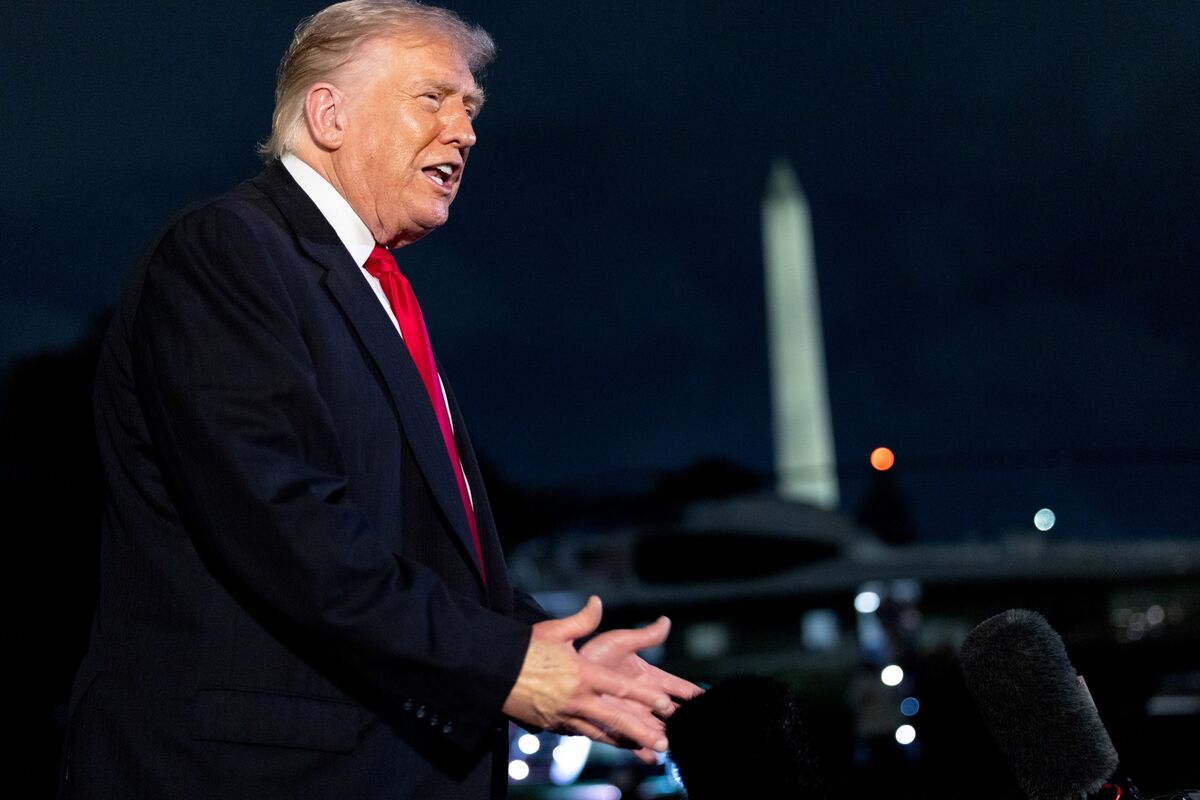
Senate passes funding bill splitting DHS amid ICE controversy while Trump nominates Brett Matsumoto to lead BLS. Analysis of political tensions shaping fiscal and data policy.
The final hours of January 2026 delivered a portrait of American governance under strain: a Senate scrambling to fund the government while managing public fury over immigration enforcement tactics, and a president simultaneously defending those same enforcement operations while attempting to rebuild trust in the nation’s economic statistics. The collision of these two developments—one immediate and visceral, the other technical yet deeply consequential—reveals the fraught political landscape confronting policymakers as fiscal debates intersect with questions of institutional credibility.
Late Friday, the Senate voted 71-29 to pass a funding package that narrowly averted a prolonged partial shutdown, though a brief weekend lapse remained inevitable given the House’s recess until Monday. The compromise, struck between Senate Democrats and the White House, stripped Department of Homeland Security appropriations from a broader five-bill minibus, providing DHS with only a two-week continuing resolution while funding Defense, State, Education, Labor, and other agencies through September 30. Hours earlier, President Trump had announced his nomination of Brett Matsumoto, a career Bureau of Labor Statistics economist, to lead the agency responsible for producing the nation’s employment and inflation data—a position vacant since Trump fired the previous commissioner in August over what he baselessly claimed were “rigged” jobs numbers.
These parallel developments are not coincidental. Both reflect the Trump administration’s determination to reshape federal institutions while Democrats leverage their Senate influence to impose accountability measures. More significantly, they illuminate a broader tension: how can a government produce credible fiscal and economic policy when basic trust in its data-generating apparatus remains contested, and when enforcement agencies operate under such polarized scrutiny that even routine appropriations become ideological battlegrounds?
The Senate’s Delicate Compromise on Funding
The path to Friday’s vote was tortuous. Initially, Senate leaders had expected to pass a six-bill package including full-year DHS funding without significant opposition. But the fatal shooting of Alex Pretti, a 37-year-old ICU nurse, by a Border Patrol agent in Minneapolis on January 24—the second protester killed by federal immigration authorities in a month—transformed what should have been procedural votes into a referendum on Immigration and Customs Enforcement tactics.
Senate Minority Leader Chuck Schumer articulated Democratic demands with unusual specificity: end “roving patrols” by ICE officers, tighten warrant requirements for immigration arrests, establish uniform use-of-force standards aligned with state and local law enforcement, require body cameras, and prohibit agents from wearing masks during operations. “Under President Trump, Secretary Noem and Stephen Miller, ICE has been unleashed without guardrails,” Schumer declared Wednesday. “They violate constitutional rights all the time and deliberately refuse to coordinate with state and local law enforcement.”
Thursday’s initial procedural vote failed 45-55, with every Democrat and eight Republicans opposing advancement of the six-bill package. The defections illustrated both Democratic unity and conservative unease. Senator Rand Paul of Kentucky, chair of the Senate Homeland Security Committee, explicitly questioned administrative warrants: “I am not a big fan of administrative warrants. I think warrants to enter someone’s house should be Fourth Amendment warrants.” Even Senator Susan Collins of Maine, typically aligned with law enforcement, called for an end to ICE’s “Operation Catch of the Day” in her state, which netted over 100 arrests.
The compromise that emerged—separating DHS from the other appropriations and providing only a two-week extension—represented a tactical retreat by Republicans but hardly a strategic victory for Democrats. As Senator Rick Scott of Florida fumed, “I believe this is a horrible bill. I can’t believe we’re not funding ICE. I don’t believe in two weeks it’s going to get funded.” Five conservative Republicans ultimately voted against the package: Scott, Ted Cruz of Texas, Ron Johnson of Wisconsin, Mike Lee of Utah, and Rand Paul.
Yet the deal also exposed Republican fractures. Senator Lindsey Graham of South Carolina held the bill hostage for nearly 24 hours, demanding both a future vote on his sanctuary cities legislation and an amendment addressing the Arctic Frost investigation into January 6, which had obtained senators’ phone records. Only after Majority Leader John Thune pledged a separate sanctuary cities vote did Graham relent.
ICE Under Fire: The Policy and Political Stakes
The funding battle obscures a more fundamental question: has ICE’s enforcement under the Trump administration crossed constitutional boundaries, or are critics weaponizing isolated incidents to constrain legitimate immigration enforcement?
ICE received an extraordinary $75 billion in multi-year funding through the “One Big Beautiful Bill” passed last spring, with $45 billion earmarked for new detention centers and $30 billion for hiring 10,000 additional officers. This dwarfs the agency’s traditional annual appropriation of roughly $10 billion and has enabled the scale of operations now drawing scrutiny. The administrative warrants that Paul and others question—signed by immigration agents rather than judges—have become central to ICE’s capacity to conduct large-scale sweeps without seeking judicial approval for each entry into private residences.
Former BLS Commissioner Erika McEntarfer, whom Trump fired for releasing unfavorable jobs data, offered a prescient warning when defending the statistical agency’s independence: “Messing with economic data is like messing with the traffic lights and turning the sensors off. Cars don’t know where to go, traffic backs up at intersections.” The same logic applies to law enforcement operating without traditional judicial oversight: remove established procedural safeguards, and you risk both constitutional violations and the erosion of public trust that makes effective governance possible.
The two-week continuing resolution creates space for negotiation but guarantees neither reform nor resolution. Democrats have vowed to block any long-term DHS funding absent “meaningful and transformative” changes, in Representative Hakeem Jeffries’s formulation. Republicans counter that Democratic demands would handcuff agents attempting to enforce federal immigration law. Senator Bernie Sanders has gone further, securing a vote on an amendment to eliminate the $75 billion ICE increase and redirect those funds to Medicaid.
Trump’s BLS Nomination: Restoring Credibility or Consolidating Control?
Against this backdrop of institutional distrust, Trump’s selection of Brett Matsumoto to lead the Bureau of Labor Statistics carries particular significance. The nomination represents a stark departure from the president’s initial choice—E.J. Antoni, a Heritage Foundation economist and Project 2025 contributor whom the White House withdrew after facing Senate opposition and revelations about his presence at the Capitol during the January 6 insurrection.
Matsumoto, by contrast, is a technocrat’s technocrat. He has worked as a BLS economist since 2015, focusing on price index measurement, with a Ph.D. in economics from the University of North Carolina at Chapel Hill. Before his recent assignment to the White House Council of Economic Advisers—a position he also held during Trump’s first term—he had no political experience. Industry analysts responded with cautious optimism. Omair Sharif of Inflation Insights called Matsumoto “an extremely solid choice” with over a decade of BLS experience who “understands the details of the data & importance of unbiased data.”
Yet Trump’s announcement framing is revealing. “For many years, the Bureau of Labor Statistics, under WEAK and STUPID people, has been FAILING American Businesses, Policymakers, and Families by releasing VERY inaccurate numbers,” the president wrote on Truth Social. The statement contains no acknowledgment that statistical revisions—like the August downward adjustment showing 258,000 fewer jobs created in May and June than initially reported—reflect methodological rigor rather than political manipulation. Trump fired McEntarfer hours after that revision, baselessly accusing her of faking the numbers for political purposes.
The institutional stakes extend beyond personnel. The BLS produces not only employment reports but also the Consumer Price Index, productivity measures, and wage data that inform Federal Reserve decisions, congressional appropriations, and private-sector planning. If markets and policymakers perceive these figures as politically compromised—or if they’re adjusted to paint a rosier picture than fundamentals warrant—the cascading effects could undermine monetary policy effectiveness and distort resource allocation across the economy.
Matsumoto’s nomination, if confirmed, will test whether technical competence can insulate an agency from political pressure when that pressure emanates from the presidency itself. His career trajectory suggests someone who understands BLS methodologies intimately, but his White House service raises the question of whether proximity to political decision-makers has shaped his perspectives on what constitutes acceptable statistical practice when results prove politically inconvenient.
The Broader Implications: When Data Meets Enforcement
The convergence of the ICE funding battle and the BLS nomination illuminates a deeper challenge for American governance: the erosion of institutional neutrality in an era of hyperpartisanship. Both ICE and the BLS are, in theory, apolitical agencies—one enforcing immigration law as written, the other measuring economic conditions objectively. Yet both have become flashpoints precisely because their core functions generate politically charged outcomes.
Consider the interplay. Reliable economic data should inform immigration policy debates: Do unauthorized immigrants depress wages for native workers, as restrictionists claim, or fill labor shortages that keep inflation in check? Does mass deportation strengthen the economy by opening jobs for citizens, or does it contract GDP by removing productive workers and disrupting supply chains? These are empirical questions requiring trustworthy statistics, yet the very agency tasked with producing those statistics has been explicitly criticized by the president for releasing data that contradicted his preferred narrative.
Similarly, ICE enforcement should reflect legal immigration policy as enacted by Congress, yet the agency’s tactics—particularly the use of administrative rather than judicial warrants—raise questions about whether enforcement has evolved beyond congressional intent. When Democrats demand body cameras and warrant reforms, they’re effectively arguing that ICE has operated with insufficient oversight. When Republicans defend current practices, they’re asserting that existing legal frameworks provide adequate guidance.
The two-week DHS continuing resolution and the pending Matsumoto confirmation thus represent parallel experiments in institutional accountability. Can negotiators craft ICE reforms that satisfy Democratic concerns about constitutional overreach while preserving Republican-desired enforcement capacity? Can a career BLS economist maintain statistical integrity when his appointing authority has demonstrated willingness to fire predecessors over unfavorable data?
Historical Context and Forward Implications
American fiscal and statistical institutions have weathered political storms before. The Congressional Budget Office maintained credibility through decades of partisan appropriations battles by adhering to transparent methodologies and resisting pressure to game projections. The Federal Reserve preserved its independence despite presidential complaints about interest rate decisions. The Census Bureau continued its decennial counts even when results disadvantaged the party controlling the executive branch.
Yet the current moment feels qualitatively different. Trump’s explicit claims that jobs data was “rigged” and his firing of a Senate-confirmed BLS commissioner over routine statistical revisions represent an unprecedented assault on the norm that agencies produce data to inform policy, not to validate predetermined political conclusions. Similarly, the scale and tactics of current ICE operations—enabled by the $75 billion supplemental appropriation—have expanded enforcement in ways that challenge previous understandings of administrative versus judicial authority.
The two-week DHS funding window creates urgent deadlines but little reason for optimism. Senate Republicans face pressure from their base to fund ICE robustly and without constraints; Democrats confront constituencies demanding meaningful accountability following civilian deaths. Absent a credible enforcement oversight mechanism that satisfies both camps, the most likely outcome is sequential continuing resolutions that preserve the status quo while political tensions escalate.
For the BLS, Matsumoto’s confirmation hearing will prove crucial. If senators from both parties secure commitments that statistical methodologies will remain insulated from political interference—and if Matsumoto demonstrates willingness to defend those methodologies even when results prove unflattering—the agency may rebuild credibility. If the confirmation process becomes another partisan brawl, or if Matsumoto proves unable to resist White House pressure, markets and policymakers will learn to discount BLS figures, seeking alternative data sources and eroding the shared factual foundation that effective policymaking requires.
Conclusion: The Trust Deficit
At its core, the convergence of the ICE funding crisis and the BLS nomination reveals American governance’s most pressing challenge: the progressive collapse of institutional trust. Democrats don’t trust ICE to enforce immigration law with appropriate constitutional constraints; Republicans don’t trust Democratic criticisms as good-faith concerns rather than partisan attempts to obstruct lawful enforcement. Trump doesn’t trust BLS career staff to produce unbiased statistics; economists and market participants now question whether BLS figures under a Trump-appointed commissioner will maintain methodological integrity.
This trust deficit compounds policy paralysis. Sound immigration policy requires both effective enforcement and constitutional guardrails—but achieving that balance demands negotiators who believe their counterparts seek the same goal rather than tactical advantage. Reliable economic policymaking requires accurate statistics everyone accepts as legitimate—but that legitimacy erodes when appointments appear designed to control outcomes rather than illuminate realities.
The coming two weeks will test whether American political institutions retain sufficient resilience to bridge these divides. Can Senate negotiators craft ICE reforms that enhance accountability without crippling enforcement? Can Matsumoto navigate the treacherous waters between presidential expectations and statistical integrity? Or will we witness another iteration of the pattern increasingly defining Washington: partisan standoffs resolved through temporary patches that defer rather than resolve fundamental conflicts?
The answers will shape not only budget politics and labor market data but the deeper question of whether shared facts and institutional credibility can survive in an age when every agency output becomes another front in the perpetual political war. As McEntarfer warned when defending statistical independence, turning off the sensors doesn’t make the traffic disappear—it just ensures the inevitable collisions will be more severe.
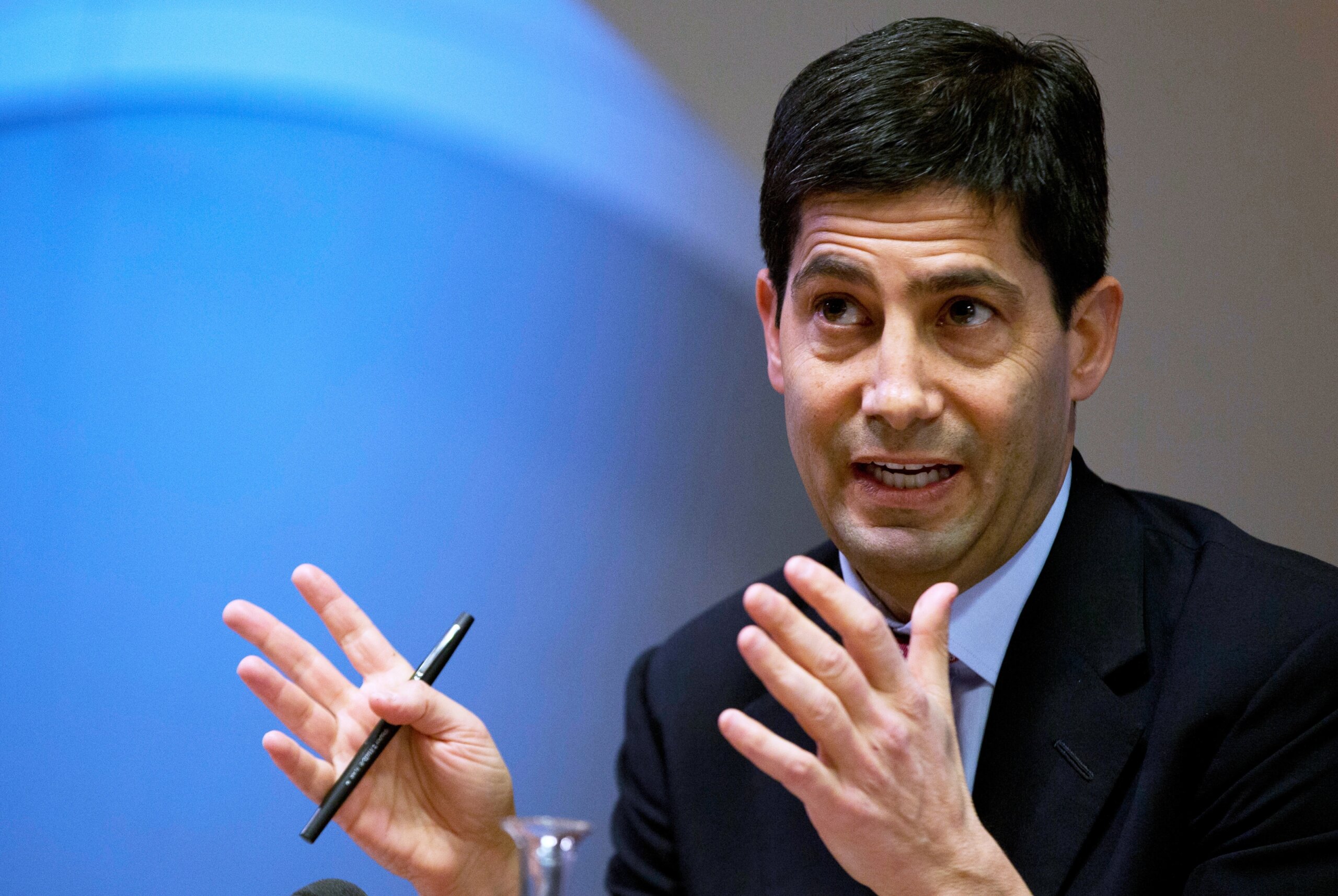
Kevin Warsh’s nomination as chair could spark sweeping changes to the central bank—if he can navigate the political gauntlet ahead
President Donald Trump nominated Kevin Warsh as the next Federal Reserve chair on January 30, ending months of speculation and launching what promises to be one of the most consequential leadership transitions in the central bank’s modern history. The choice of Warsh, a former Fed governor who has publicly called for “regime change” at the institution, signals an impending reconsideration of the Fed’s expanded mandate and operational independence—even as markets rallied on relief that Trump selected a relatively orthodox candidate over potentially more pliable alternatives.
The announcement, delivered via Truth Social with characteristic Trumpian superlatives, positions Warsh to succeed Jerome Powell when his term expires in May. Yet beneath the market’s initial sigh of relief—the dollar surged nearly one percent while gold plummeted almost five percent—lies a more complex and potentially destabilizing dynamic. Warsh arrives at the Fed not as a continuity candidate but as an avowed critic who has spent years arguing that the institution has strayed dangerously from its core mission, expanded its balance sheet recklessly, and lost the credibility necessary to anchor inflation expectations.
“The credibility deficit lies with the incumbents that are at the Fed, in my view,” Warsh declared during a CNBC interview last July, using language rarely directed at the central bank by prospective chairs. This forthright assessment of the institution he now seeks to lead encapsulates the tension at the heart of his nomination: Warsh brings impeccable credentials and crisis-tested experience from his 2006-2011 tenure as a Fed governor during the global financial meltdown, yet he returns as something closer to a reformer than a steward.
The case for overhaul
Warsh’s critique of the Federal Reserve extends well beyond the tactical disagreements over interest rate policy that typically animate debates about monetary management. Instead, he has articulated a fundamental challenge to what he characterizes as “mission creep”—the Fed’s gradual expansion into climate risk assessment, diversity initiatives, and an arsenal of unconventional policy tools that, in his view, have politicized the institution and undermined its independence.
During an April lecture hosted by the Group of Thirty, Warsh argued that “the Fed’s current wounds are largely self-inflicted.” His prescription involves what he has termed a new “Treasury-Fed accord,” invoking the 1951 agreement that liberated the central bank from its obligation to support government bond prices. Such an accord, Warsh contends, would establish clearer boundaries around the Fed’s balance sheet management and restore a division of labor between monetary and fiscal authorities that has eroded over successive crises.
The intellectual coherence of Warsh’s position stands in stark contrast to the political pressures that brought him to this juncture. Trump has berated Powell relentlessly for maintaining rates he considers excessively restrictive, demanded cuts to levels historically associated with economic distress, and even launched a Justice Department criminal investigation into the Fed chair over renovation cost overruns—an episode that shocked senators from both parties and raised profound questions about central bank independence. Trump praised Warsh effusively, predicting he would “go down as one of the GREAT Fed Chairmen, maybe the best,” yet this endorsement comes freighted with expectations that may prove incompatible with the institutional reforms Warsh has long advocated.
The paradox of the hawk turned dove
Warsh built his reputation during his first Fed stint as an inflation hawk who frequently warned of price pressures that never materialized. During the recovery from the 2008 crisis, when unemployment hovered near ten percent, he persistently cautioned about upside inflation risks—a position that, in retrospect, appears to have unnecessarily constrained the Fed’s support for a struggling economy. This history makes his recent evolution toward endorsing rate cuts all the more noteworthy, and potentially suspect.
The transformation appears rooted in Warsh’s conviction that artificial intelligence and deregulation are ushering in a productivity renaissance that will allow faster growth without inflation—a thesis he outlined in a January 2025 Wall Street Journal column arguing that “the Trump administration’s strong deregulatory policies, if implemented, would be disinflationary” and that cuts in government spending would further reduce price pressures. This theoretical framework conveniently aligns with Trump’s political imperatives, raising questions about whether Warsh’s intellectual journey reflects genuine economic analysis or strategic positioning for the role he now seeks.
Markets appear uncertain how to reconcile these competing signals. As reported by Bloomberg, the dollar and short-dated Treasuries rallied on relief that Trump selected Warsh “rather than someone seen as more willing to ignore inflation and slash interest rates,” yet analysts remain skeptical about his newfound accommodation. Deutsche Bank analysts suggested they “do not view him as structurally dovish” despite his recent rhetoric, while University of Michigan economist Justin Wolfers noted that Warsh’s hawkish record represents “exactly not who the president wants,” raising concerns that “deals were made.”
The confirmation crucible
Even assuming Warsh’s nomination survives the Senate Banking Committee—itself far from assured—he faces structural constraints that may frustrate both his reformist ambitions and Trump’s demand for aggressive rate cuts. Interest rate decisions are made not by the chair alone but by the twelve-member Federal Open Market Committee, which includes seven governors and five rotating regional bank presidents. As the Council on Foreign Relations observed, “while the chair presides over the committee, he cannot dictate policy without securing the support of a majority of its members.”
Current committee members have shown little appetite for the dramatic easing Trump envisions. The Fed’s December projections indicated just one quarter-point cut expected in 2026, with policymakers citing inflation that remains stubbornly above the two percent target at 2.7 percent. Warsh would need to build consensus among colleagues, some of whom may view his appointment as a politicization of the central bank, at precisely the moment when his patron demands results that economic conditions may not justify.
The confirmation process itself has become unexpectedly treacherous. Senator Thom Tillis of North Carolina, a crucial Republican vote on the narrowly divided Banking Committee, has vowed to oppose any Fed nominee until the Justice Department probe of Powell is resolved—a probe widely viewed as political retaliation. As NBC News reported, Senate Majority Leader John Thune acknowledged that without Tillis’s support, Warsh could “probably not” win confirmation. Democratic senators, meanwhile, have denounced the nomination as fundamentally compromised, with Senator Elizabeth Warren calling on Republicans to block the pick unless Trump ends his “witch hunts” against Powell and Governor Lisa Cook.
Global reverberations
The implications extend well beyond domestic monetary policy. Warsh’s potential chairmanship arrives at a moment of extraordinary fragility in the international financial architecture. Trump’s erratic foreign policy—including threats against Greenland and sweeping tariff proposals—has already undermined confidence in American institutions. The spectacle of a president openly attempting to bend the Fed to his will, backed by criminal investigations and threats to fire sitting governors, has sent a chilling message to central bankers and finance ministers worldwide about the durability of American commitment to rules-based governance.
Atlantic Council experts noted that “if Warsh wants to cement the Fed’s standing, he will need to act—and be seen to act—as an independent guardian of price stability and full employment.” Yet achieving this will require navigating between Trump’s demands for accommodation and the Fed’s institutional imperative to maintain credibility. The risk is that Warsh becomes neither effective reformer nor trusted independent actor, but rather a chair whose every decision is scrutinized for evidence of political influence—a dynamic that could prove far more corrosive to Fed independence than any specific policy choice.
Markets have begun pricing in these uncertainties. The initial relief that greeted Warsh’s selection has given way to more sober assessments as investors contemplate the path ahead. According to CNBC, precious metals experienced historic volatility, with silver plunging thirty percent in its worst day since 1980—a dramatic unwinding of positions that had accumulated amid fears of Fed politicization and dollar debasement. This suggests markets are betting that Warsh will prove more institutionally conservative than feared, yet they remain vigilant for signs that political pressures will overwhelm technocratic judgment.
The productivity wager
At the core of Warsh’s intellectual framework lies a bet on supply-side transformation. He contends that artificial intelligence, deregulation, and efficiency gains can deliver the holy grail of economic policy: robust growth with subdued inflation. If correct, this would allow the Fed to cut rates while maintaining price stability, satisfying Trump’s political demands without sacrificing the institution’s credibility.
Yet this argument confronts considerable skepticism. The promised productivity boom from previous technological revolutions—personal computers, the internet, mobile computing—took years to materialize in aggregate statistics, and often arrived alongside disruptive transitions that central banks struggled to navigate. Warsh has criticized the Fed’s “bloated balance sheet” and called for significant reductions as reported by Yahoo Finance, but shrinking the balance sheet while simultaneously cutting rates presents technical and communications challenges that could roil markets accustomed to the Powell Fed’s cautious incrementalism.
Moreover, the productivity thesis serves conveniently to reconcile Warsh’s hawkish past with his dovish present, raising questions about whether it represents rigorous analysis or motivated reasoning. If inflation proves more persistent than his framework suggests—whether due to Trump’s tariffs, immigration restrictions, or other supply constraints—Warsh will face an excruciating choice between vindicating his intellectual evolution by staying accommodative or reverting to his inflation-fighting instincts and incurring presidential wrath.
Powell’s shadow
One factor that may complicate Warsh’s transition has received insufficient attention: Jerome Powell could choose to remain on the Board of Governors even after his chairmanship expires. While most chairs have resigned entirely upon losing their leadership role, Powell’s term as a governor extends until early 2028, and there are indications he may stay to serve as a counterweight to political pressure.
Such a scenario would present Warsh with a formidable challenge. Powell commands enormous respect within the institution and global financial community, having navigated the pandemic recession, the subsequent inflation surge, and now Trump’s unprecedented assault on Fed independence with a calm determination that has largely maintained market confidence. His presence on the board as a voting member would serve as a constant reminder of alternative approaches and potentially rally committee members resistant to Warsh’s reforms or susceptible to presidential pressure.
The way forward
Kevin Warsh’s nomination represents a pivotal moment for American economic governance. His potential chairmanship could catalyze an overdue reckoning with the Fed’s expanded mandate, bloated balance sheet, and tendency toward what he views as technocratic overreach. Alternatively, it could mark the beginning of a more politically pliable central bank that subordinates rigorous economic analysis to executive branch preferences—precisely the outcome that central bank independence was designed to prevent.
The most likely path lies somewhere between these extremes. Warsh possesses the credentials and crisis experience to command respect, the intellectual framework to justify policy choices that may diverge from both Trump’s demands and the Powell Fed’s approach, and sufficient political acumen to navigate the treacherous confirmation process ahead. Yet he assumes office at a moment when the Fed’s independence has never been more contested, when inflation remains above target despite three rate cuts, when fiscal deficits are expanding rapidly, and when global economic conditions remain volatile and uncertain.
The ultimate test will be whether Warsh can execute his vision of Fed reform while maintaining the institution’s credibility and independence—or whether the political circumstances of his appointment will overwhelm his reformist intentions, leaving the Federal Reserve neither fish nor fowl but rather an institution fundamentally changed in ways that undermine its effectiveness. For investors, policymakers, and citizens navigating an increasingly uncertain economic landscape, the answer to this question will shape not just interest rates and inflation outcomes, but the very architecture of American economic governance for decades to come.
As markets digest the Warsh nomination and prepare for his confirmation hearings in the spring, one reality has become clear: the Powell era’s studied pragmatism and consensus-driven incrementalism is ending. What replaces it—whether constructive reform or corrosive politicization—remains the most consequential economic policy question of 2026.

Monetary Policy and the Policy Rate

Gold, Silver & Bitcoin Prices Q4 2026: Wealth Management Strategies

Business Insurance for Digital Exports: Protecting Your Company in the AI Era

Real Estate Crash Predictions 2026: Data-Backed Regional Guide

What is a “Lead-Left” Bank? Unpacking Morgan Stanley’s Role in Anthropic’s Mega-IPO

Is SPY Overvalued in September 2026? Fed Rate Hike Odds & Intrinsic Value

Pakistan’s KSE-100 Nears Record Territory Even as the Trade Gap Persists

US Consumer Sentiment Sinks as Retail Sales Drop

Barclays Q2 2026 Results: Income Beats, Costs Rise 7%

Pakistan’s Remittance Lifeline: Why Gulf Exposure Is a Hidden Risk

Dubai’s Rise to the World’s 7th Financial Hub: Inside the D33 Push

China EV Exports Hit Record High in 2026

UK’s “National Contributions Tax” Explained: Burnham-Era Reform 2026

Russia’s Strange Problem in 2026: Its Currency Is Too Strong

Top 15 Stocks for Investment in 2026 in PSX: Your Complete Guide to Pakistan’s Best Investment Opportunities
Top 15 Stocks for Investment in 2026 in PSX: Your Complete Guide to Pakistan’s Best Investment Opportunities

Debunking IMF Program Myths: Reconfiguring Engagement for True National Ownership in a Volatile World

Top 10 Mutual Fund Managers in Pakistan for Investment in 2026: A Comprehensive Guide for Optimal Returns

What the U.S. Attack on Venezuela Could Mean for Oil and Canadian Crude Exports: The Economic Impact

China’s 50% Domestic Equipment Rule: The Semiconductor Mandate Reshaping Global Tech

15 Most Lucrative Sectors for Investment in Pakistan: A 2025 Data-Driven Analysis

Pakistan’s Export Goldmine: 10 Game-Changing Markets Where Pakistani Businesses Are Winning Big in 2025
15 Most Lucrative Sectors for Investment in Pakistan: A 2025 Data-Driven Analysis
15 Most Lucrative Sectors for Investment in Pakistan: A 2025 Data-Driven Analysis

Pakistan’s Stock Market Renaissance: How 2025’s Hottest Investment Opportunity Is Democratizing Wealth—A Complete Beginner’s Guide

Pakistan’s Economic Outlook 2025: Between Stabilization and the Shadow of Stagnation
Pakistan’s Economic Outlook 2025: Between Stabilization and the Shadow of Stagnation

China’s Property Woes Could Last Until 2030—Despite Beijing’s Best Censorship Efforts
-
 Markets & Finance8 months ago
Top 15 Stocks for Investment in 2026 in PSX: Your Complete Guide to Pakistan’s Best Investment Opportunities
-
Markets & Finance8 months ago
Top 15 Stocks for Investment in 2026 in PSX: Your Complete Guide to Pakistan’s Best Investment Opportunities
-
 Analysis7 months ago
Debunking IMF Program Myths: Reconfiguring Engagement for True National Ownership in a Volatile World
-
 Investment8 months ago
Top 10 Mutual Fund Managers in Pakistan for Investment in 2026: A Comprehensive Guide for Optimal Returns
-
 Global Economy8 months ago
What the U.S. Attack on Venezuela Could Mean for Oil and Canadian Crude Exports: The Economic Impact
-
 Asia8 months ago
China’s 50% Domestic Equipment Rule: The Semiconductor Mandate Reshaping Global Tech
-
 AI9 months ago
15 Most Lucrative Sectors for Investment in Pakistan: A 2025 Data-Driven Analysis
-
 Exports9 months ago
Pakistan’s Export Goldmine: 10 Game-Changing Markets Where Pakistani Businesses Are Winning Big in 2025
Pingback: Florida braces for a historic generational wealth transfer - caa | Capital Analytics Associates
Pingback: Florida braces for a historic generational wealth transfer - caa | Capital Analytics Associates