
AI
15 Most Lucrative Sectors for Investment in Pakistan: A 2025 Data-Driven Analysis

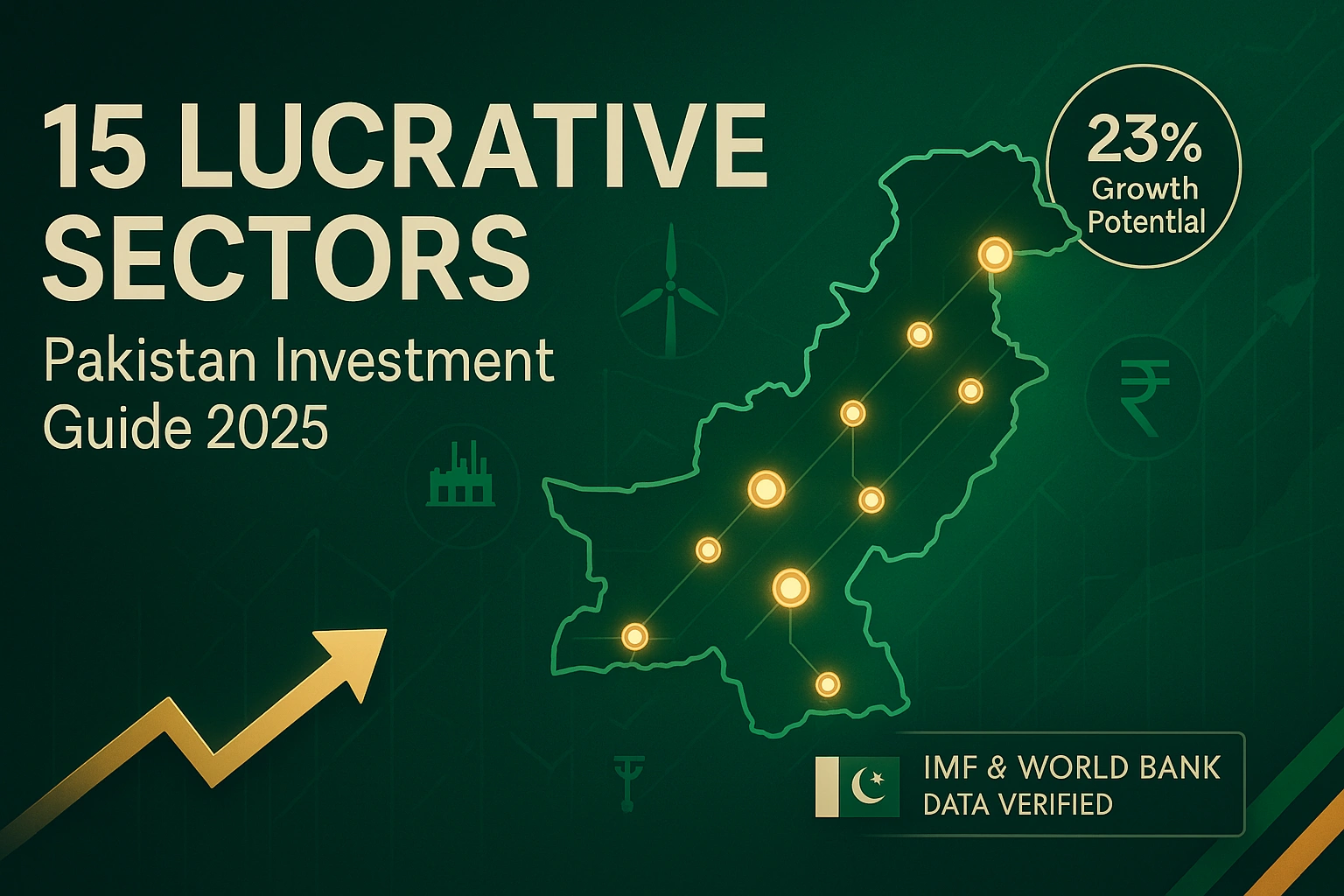
While global investors chase saturated markets in established economies, Pakistan’s 240.49 million population presents a transformation that Goldman Sachs has quietly termed “the emerging market story of the decade”—yet 87% of international portfolios remain critically underexposed to this $350 billion economy poised at an inflection point.
The numbers tell a compelling story that contradicts mainstream narratives. Pakistan attracted $1.9 billion in FDI during fiscal year 2024, marking a 17% increase from the previous year, while the first seven months of FY25 saw FDI surge by 56% compared to the same period in FY24. But here’s what makes this moment historic: the convergence of demographic momentum, infrastructure maturity, and policy reforms is creating investment opportunities that won’t remain hidden much longer.
This analysis draws on institutional data from Pakistan’s Planning Commission, Ministry of Finance, State Bank of Pakistan, the IMF, World Bank, and Asian Development Bank to identify the 15 sectors where capital deployment offers the most attractive risk-adjusted returns through 2030.
Pakistan’s Economic Inflection Point: Understanding the 2025 Investment Landscape
The IMF projects Pakistan’s GDP growth at 2.7% for 2025 and 3.6% for 2026, but these headline figures mask profound sectoral dynamics. Inflation is expected to moderate to 4.5% in 2025, creating the most favorable monetary environment in five years for capital deployment.
Pakistan’s demographic dividend is perhaps its most underappreciated asset. With 65% of the population under 30 years old and agriculture employing half the labor force while contributing 24% to GDP, the economy is transitioning toward services and high-value manufacturing. The China-Pakistan Economic Corridor (CPEC) has already delivered $25 billion in infrastructure investments, with Phase II focusing on special economic zones and digital infrastructure that will unlock regional connectivity advantages.
The World Bank announced a $20 billion Country Partnership Framework with Pakistan, emphasizing clean energy and climate resilience projects, while the International Finance Corporation plans to invest up to $2 billion annually over the next decade. These institutional commitments signal a recalibration of Pakistan’s risk profile.
The Extended Fund Facility program with the IMF has driven critical reforms: currency stabilization, energy sector restructuring, and tax base expansion. For investors, this translates to improved repatriation conditions, reduced policy uncertainty, and a government increasingly aligned with market-oriented growth strategies.
Pakistan’s strategic geography positions it as the gateway between South Asia, Central Asia, and the Middle East. Gwadar Port’s operationalization creates a maritime trade corridor that reduces shipping costs for Central Asian republics by 40%, while road and rail networks connecting to China’s western provinces are transforming regional logistics economics.
THE 15 SECTORS: Where Smart Capital Finds Asymmetric Returns
1. Technology & IT Services: The $15 Billion Export Trajectory
Investment Thesis: Pakistan’s IT sector is experiencing explosive growth that few international investors have fully priced in.
Market Size & Growth: Pakistan’s IT and IT-enabled Services exports reached a record high of $3.8 billion in FY2024-25, while total IT, ITeS, and freelancers’ exports hit $4.6 billion for FY 2024-25, reflecting 26.4% growth. The government has set an ambitious but achievable target of $25 billion in IT exports by 2028.
Key Drivers: Zero income tax on IT exports until June 2025, 100% foreign ownership permitted, complete profit repatriation, and cost advantages where Pakistani developers charge 60-70% less than Western counterparts while delivering comparable quality. The United States accounts for 54.5% of Pakistan’s IT exports, but diversification into Gulf markets is accelerating rapidly.
Statistical Evidence: Monthly IT exports reached a historic high of $348 million in December 2024, up 28% year-over-year. Software services exports surpassed $1 billion for the first time in an 11-month period, showing 27.4% growth. The talent pipeline is robust, with over 300,000 IT graduates entering the workforce annually.
Opportunity Highlights: Software-as-a-Service (SaaS) startups, fintech platforms, blockchain development, artificial intelligence services, gaming development, and business process outsourcing. Pakistan hosted the first-ever Digital Foreign Direct Investment Forum, securing over $700 million in investment commitments. The upcoming Islamabad IT Park will provide state-of-the-art infrastructure for 10,000+ technology workers.
Risk Considerations: Internet reliability concerns and occasional policy uncertainty around VPN regulations require monitoring, though the government recognizes IT as a strategic growth sector.
Investment Entry Points: Direct stakes in Pakistani software houses, venture capital funds focused on Pakistani startups, partnerships with established firms like Systems Limited or TRG Pakistan, or real estate in technology parks.
2. Renewable Energy: The Solar Revolution Transforming Power Economics
Investment Thesis: Pakistan is experiencing the world’s fastest solar adoption rate, fundamentally restructuring energy economics.
Market Size & Growth: Pakistan imported 17GW of solar panel capacity in 2024, double the previous year’s imports, making it the world’s largest solar panel importer. The solar energy market is expected to grow from 6.75 gigawatts in 2025 to 15.5 gigawatts by 2030, representing an 18.09% compound annual growth rate.
Key Drivers: Electricity tariffs have doubled since 2021, creating powerful economic incentives for distributed solar. Between 2019 and 2025, cumulative solar panel imports surpassed Pakistan’s total installed power plant capacity by 2 gigawatts. Government targets call for 20% of electricity from renewables by 2025 and 30% by 2030.
Statistical Evidence: Net-metered rooftop solar reached 5.3 GW (5,300 MW) by end-April 2025, up from 2,500 MW a year earlier. Pakistan also imported an estimated 1.25 gigawatt-hours of lithium-ion battery packs in 2024, signaling the evolution toward solar-plus-storage solutions. Solar’s share of total electricity generation is expected to reach 1.6% in 2025, up from 0.7% in 2024.
Opportunity Highlights: Solar panel manufacturing and assembly (currently 90% imported from China), energy storage systems, solar farm development, agricultural solar pumps (with estimates that half of 1.5-2 million tube wells will switch to solar, adding 5.6-7.5 GW of capacity), and engineering, procurement, and construction (EPC) services. Wind energy presents complementary opportunities, with wind generation projected to reach 5,946 GWh in 2025.
Risk Considerations: Policy changes on net-metering tariffs could affect residential payback periods, though the economic fundamentals remain compelling given high grid electricity costs.
Investment Entry Points: Joint ventures with Chinese manufacturers for local assembly, solar farm development through PPIB, EPC contracting, or financing vehicles for commercial solar installations.

3. Agriculture & Agritech: Modernizing a $80 Billion Backbone
Investment Thesis: Agriculture contributes 24% to GDP and employs half the labor force, yet operates far below potential productivity due to outdated practices—creating massive modernization opportunities.
Market Size & Growth: The agriculture sector achieved 6.25% growth in FY2024, the highest in 19 years, driven by record wheat, rice, and cotton production. With 37.4% of employment in agriculture, productivity improvements translate directly to national GDP growth.
Key Drivers: State Bank of Pakistan allocated Rs 2,250 billion for agriculture lending in FY2024, 26.7% higher than the previous year. Climate-adaptive practices are essential following devastating 2022 floods that caused $12.9 billion in agricultural damages. Government focus on increasing oilseed and cotton production to reduce import dependence creates clear policy support.
Statistical Evidence: Wheat production reached 31.4 million tonnes in FY2024, up 11.6%, while cotton production surged 108.2% to 10.2 million bales after flood recovery. Livestock contributed 60.8% of agricultural value and grew 4.72% in FY2025, reflecting strong demand for dairy and meat products.
Opportunity Highlights: Precision agriculture technologies, drip irrigation systems, cold chain logistics, agricultural biotechnology, organic farming, livestock genetics improvement, dairy processing, and agricultural commodity trading platforms. CPEC agricultural cooperation includes technology transfer for disease-free zones, mechanization, and processing facilities.
Risk Considerations: Climate volatility remains a factor, with erratic rainfall patterns affecting crop yields. Land ownership disputes can complicate large-scale operations.
Investment Entry Points: Joint ventures in food processing, partnerships with agricultural universities for technology commercialization, or investment in agricultural finance institutions serving the unbanked rural population.
4. Textile & Apparel: Reclaiming the $25 Billion Export Vision
Investment Thesis: Textile exports rose 9.67% to $9.084 billion in the first half of FY25, with value-added segments driving growth as Pakistan capitalizes on Bangladesh’s manufacturing challenges.
Market Size & Growth: Pakistan’s textile exports reached $17.88 billion in FY2025, up 7.39%, with the sector representing 55.4% of total exports. Industry projections suggest $25 billion in annual textile exports is achievable with proper policy support.
Key Drivers: Political unrest in Bangladesh redirected export orders to Pakistan between December 2024 and March 2025, providing a window for Pakistani manufacturers to capture market share. Knitwear exports increased 15.47% and ready-made garments rose 17.52%, reflecting a strategic shift toward higher-value products.
Statistical Evidence: Textile exports in July-August FY2025 reached $2.92 billion, up 5.37% year-over-year. In 2024, textile exports increased by $1.3 billion compared to the previous year. The U.S. market accounts for $5 billion annually, representing 92% of Pakistan’s exports to America.
Opportunity Highlights: Vertical integration from spinning to garment manufacturing, technical textiles for automotive and industrial applications, sustainable fashion brands, and man-made fiber production. Cotton yarn faces challenges, but finished garments show strong momentum.
Risk Considerations: U.S. tariff policies could impact competitiveness, with President Trump’s tariffs potentially reducing exports by 20-25%. Energy costs and removal of zero-rating for local inputs pose cost pressures.
Investment Entry Points: Partnerships with established textile groups, investments in specialized segments like denim or home textiles, or development of export-oriented manufacturing facilities in special economic zones.
5. Construction & Real Estate: Urbanization’s $40 Billion Opportunity
Investment Thesis: With 65% of the population under 30 and rapid urbanization, Pakistan faces a housing shortage of 10 million units, creating sustained demand for decades.
Market Size & Growth: The construction sector contributes approximately 2.5% to GDP directly, with multiplier effects across 40+ allied industries. Government low-cost housing initiatives aim to deliver 500,000 units annually, while commercial real estate in Karachi, Lahore, and Islamabad shows 12-15% annual appreciation.
Key Drivers: State Bank of Pakistan’s construction financing schemes offer subsidized mortgages. Special Economic Zones under CPEC require industrial parks, warehousing, and worker housing. Tax incentives for construction materials and documented property transactions are improving sector transparency.
Statistical Evidence: Cement dispatches—a leading indicator—grew 8% in FY2024, reaching 52 million tonnes. Mortgage financing increased 35% year-over-year, though penetration remains below 0.3% of GDP, suggesting massive growth potential.
Opportunity Highlights: Affordable housing projects targeting middle-income families, commercial office spaces in metropolitan areas, hospitality infrastructure for tourism, logistics parks near CPEC routes, and Build-Operate-Transfer (BOT) infrastructure projects.
Risk Considerations: Property registration complexities and uneven documentation standards require thorough legal due diligence. Currency volatility affects imported construction materials.
Investment Entry Points: Real Estate Investment Trusts (REITs) are emerging, joint ventures with established developers, or direct land banking in areas designated for future development.
6. Healthcare & Pharmaceuticals: Serving 240 Million Lives
Investment Thesis: Pakistan’s healthcare expenditure is only 2.8% of GDP—far below the World Health Organization’s 5% recommendation—creating structural growth as incomes rise and health awareness increases.
Market Size & Growth: The pharmaceutical market is valued at $4.2 billion, growing 12-15% annually. With a doctor-to-patient ratio of 1:1,300 (WHO recommends 1:1,000), healthcare infrastructure expansion is inevitable.
Key Drivers: Rising middle class with health insurance coverage expanding, government’s push for Universal Health Coverage, COVID-19’s lasting impact on health consciousness, and pharmaceutical export potential to Africa and Central Asia.
Statistical Evidence: Pharmaceutical production increased 6.8% in FY2024, with local manufacturers meeting 70% of domestic demand. Medical device imports grew 15% annually, indicating market expansion. Private hospital chains are expanding bed capacity by 20% year-over-year in major cities.
Opportunity Highlights: Diagnostic laboratories, specialty hospitals (cardiac, orthopedic, oncology), telemedicine platforms, pharmaceutical manufacturing under licensing agreements, medical tourism targeting diaspora and regional patients, and health insurance platforms.
Risk Considerations: Price controls on essential medicines can compress margins. Regulatory approval processes require navigation with experienced local partners.
Investment Entry Points: Partnerships with hospital chains like Shaukat Khanum or Aga Khan University Hospital, pharmaceutical contract manufacturing, or diagnostic center franchises.
7. Financial Services: Banking the Unbanked Majority
Investment Thesis: Only 21% of Pakistani adults have bank accounts, while 53% have mobile phone connections—creating a massive fintech opportunity to leapfrog traditional banking.
Market Size & Growth: The banking sector holds assets of $180 billion, with Islamic banking growing at 20% annually and now comprising 22% of total banking assets. Digital payments grew 47% in FY2024.
Key Drivers: State Bank of Pakistan’s Digital Pakistan initiative, mandatory digital payments for government transactions, and branchless banking regulations. Remittances—$29.4 billion in fiscal year 2021—create demand for efficient money transfer solutions.
Statistical Evidence: Mobile wallet accounts surged to 120 million, with transaction values increasing 65% year-over-year. Credit card penetration remains below 2%, indicating massive potential. Microfinance institutions serve only 9 million borrowers against a target market of 40 million.
Opportunity Highlights: Digital payment gateways, peer-to-peer lending platforms, microfinance banks, Islamic finance products, insurance technology (insurtech), credit scoring using alternative data, and embedded finance solutions for e-commerce.
Risk Considerations: Cybersecurity infrastructure is developing but requires investment. Regulatory compliance for fintech startups demands careful attention.
Investment Entry Points: Equity stakes in fintech startups, partnerships with commercial banks for digital transformation, or microfinance bank investments serving underbanked segments.
8. Mining & Minerals: Unlocking $6 Trillion in Untapped Resources
Investment Thesis: Pakistan possesses world-class mineral deposits—including the Reko Diq copper-gold project valued at over $60 billion—that remain largely unexploited due to historical policy constraints now being resolved.
Market Size & Growth: Estimated mineral reserves total $6 trillion, yet mining contributes only 2.8% to GDP. Reko Diq alone will produce 200,000 tonnes of copper and 250,000 ounces of gold annually at full capacity.
Key Drivers: Saudi Arabia is considering acquiring a 10-20% stake in the Reko Diq project, validating the sector’s potential. New mining policies offer tax holidays, streamlined approvals, and guaranteed repatriation. Global energy transition increases demand for copper, lithium, and rare earth elements found in Pakistan.
Statistical Evidence: Coal reserves exceed 185 billion tonnes, primarily in Thar, where mining has commenced with power generation capacity of 1,320 MW operational. Cement industry consumes 45 million tonnes of limestone annually, supporting sustainable extraction. Gemstone exports (emeralds, rubies) reached $15 million in FY2024 with informal sector much larger.
Opportunity Highlights: Reko Diq copper-gold complex (Balochistan), Thar coal integrated mining and power projects, marble and granite extraction for export, rare earth element exploration, and mineral processing facilities near extraction sites.
Risk Considerations: Balochistan’s security situation requires robust risk management. Infrastructure connectivity to mines needs investment. Environmental permits demand comprehensive compliance.
Investment Entry Points: Joint ventures with government entities like Balochistan Minerals, equipment leasing to mining operators, or downstream mineral processing facilities.
9. Logistics & Transportation: Moving Goods Across Trade Corridors
Investment Thesis: Pakistan’s location at the intersection of $3 trillion in annual trade routes creates logistics demand that current infrastructure cannot meet, with e-commerce growth adding urgent capacity needs.
Market Size & Growth: Logistics costs represent 18-20% of GDP (versus 10-12% in developed economies), indicating massive efficiency gains possible. E-commerce penetration below 2% is growing at 40% annually, requiring supporting logistics.
Key Drivers: Gwadar Port operationalization, CPEC transport corridors, government’s push to increase railway freight share from 4% to 20% by 2030, and cold chain requirements for agricultural exports.
Statistical Evidence: Container traffic at Karachi Port grew 7% in FY2024, reaching 2.6 million TEUs. Road freight dominates 96% of cargo movement, but railway infrastructure investments of $8 billion are underway. Warehousing space in major cities commands 15-20% annual rental yields.
Opportunity Highlights: Cold chain facilities for agricultural products, last-mile delivery solutions for e-commerce, third-party logistics (3PL) providers, inter-city freight services, warehousing near ports and borders, and technology platforms for load optimization.
Risk Considerations: Road infrastructure quality varies significantly by region. Regulatory differences between provinces complicate inter-provincial operations.
Investment Entry Points: Partnerships with logistics companies like TCS or Leopard Courier, warehouse development in industrial estates, or specialized cold storage facilities.
10. Tourism & Hospitality: Rediscovering the ‘Switzerland of Asia’
Investment Thesis: Northern Pakistan’s mountain landscapes rival Switzerland’s beauty at 10% of the cost, while religious tourism (especially to Sikh and Sufi sites) creates year-round demand—yet hospitality infrastructure is severely underdeveloped.
Market Size & Growth: Tourism contributes only 5.9% to GDP (versus 10.4% in comparable economies), with 1.1 million international arrivals in 2024 (pre-pandemic levels were 1.9 million). Domestic tourism is booming, with 60 million domestic tourists annually.
Key Drivers: Government’s visa-on-arrival for 50 countries, marketing campaigns showcasing Pakistan’s beauty, improved security perceptions, and UNESCO World Heritage sites (6 total) gaining recognition. K2 base camp treks command $5,000+ per tourist, while Hunza and Skardu are becoming Instagram-famous destinations.
Statistical Evidence: Hotel occupancy in Gilgit-Baltistan reached 85% during summer 2024, with rates increasing 30% year-over-year. Religious tourism to Kartarpur Corridor (for Sikhs) exceeded 3 million visitors since opening. Adventure tourism revenue in northern areas grew 45% in FY2024.
Opportunity Highlights: Boutique hotels in scenic locations, adventure tourism operators (trekking, mountaineering, rafting), religious tourism facilities, eco-lodges, heritage site restoration with commercial operations, and travel technology platforms connecting tourists with verified services.
Risk Considerations: Seasonal demand concentration in summer months (May-October) requires business model adaptations. International perceptions of security, though improving, require proactive management.
Investment Entry Points: Hotel development in underserved tourist areas, partnerships with provincial tourism departments, or acquisition of heritage properties for restoration and operation.
11. Education Technology: Bridging the Skills Gap
Investment Thesis: With 26 million children out of school and a youth bulge requiring vocational training, education technology offers scalable solutions to Pakistan’s human capital challenge.
Market Size & Growth: The education sector is valued at $9 billion, growing 8% annually. Online education penetration accelerated during COVID-19 but remains below 5% of the market, suggesting massive headroom.
Key Drivers: Government partnerships for digital classrooms, corporate demand for skilled workers in IT and manufacturing, and parental willingness to invest in children’s education even in low-income segments. 4G coverage reaching 80% of population enables mobile-first learning.
Statistical Evidence: EdTech startups raised $28 million in venture funding in 2024, with platform enrollments growing 120% year-over-year. Vocational training market is valued at $600 million, with government allocating $100 million for skills development programs. Test preparation market (for MDCAT, ECAT, CSS, etc.) exceeds $200 million annually.
Opportunity Highlights: Online K-12 education platforms, vocational training in high-demand skills (coding, digital marketing, design), test preparation services, corporate training solutions, learning management systems for schools, and AI-powered personalized learning apps.
Risk Considerations: Payment collection from consumer segments requires robust systems. Content localization in Urdu and regional languages is essential for mass market penetration.
Investment Entry Points: Venture capital investments in promising EdTech startups, partnerships with educational institutions for technology deployment, or franchise models for test preparation centers.
12. Automotive & Electric Vehicle Manufacturing: Electrifying Mobility
Investment Thesis: Pakistan assembles 250,000 vehicles annually in a market dominated by three players, while EV adoption is emerging with government incentives—creating disruption opportunities for new entrants.
Market Size & Growth: Automotive sector contributes 4% to GDP and employs 3.5 million people directly and indirectly. Local assembly saves 30-40% versus full imports through tariff structures designed to encourage localization.
Key Drivers: Government’s EV policy offers 5-year tax holidays, lower duties on EV imports, and mandates for charging infrastructure. Rickshaws and motorcycles (5 million units annually) are prime electrification targets. Rising fuel costs (petrol at PKR 280/liter) make EVs economically attractive.
Statistical Evidence: Two-wheeler production reached 2.3 million units in FY2024, while car production was 190,000 units. Chinese brands (MG, Chery, BYD) are entering with competitive EVs. Motorcycle electrification pilot programs in Lahore and Karachi show 65% cost savings versus gasoline.
Opportunity Highlights: EV assembly plants through joint ventures, charging infrastructure networks, battery manufacturing and recycling, auto parts localization (currently 60% imported), and conversion kits for existing vehicles to electric/CNG.
Risk Considerations: Currency volatility affects CKD (completely knocked down) import costs. Consumer preference for established Japanese brands requires brand-building investment.
Investment Entry Points: Joint ventures with Chinese EV manufacturers, dealership networks for new brands, or specialized EV components manufacturing.
13. Food Processing & FMCG: Feeding a Nation of 240 Million
Investment Thesis: Post-harvest losses exceed 30% of agricultural production due to inadequate processing and storage, while packaged food penetration remains low—creating a $15 billion processing opportunity.
Market Size & Growth: FMCG market valued at $22 billion, growing 10% annually as urbanization and modern retail expand. Food processing contributes 2% to GDP versus 8-10% in comparable economies, indicating structural growth potential.
Key Drivers: Rising disposable incomes, nuclear family structures preferring convenience foods, halal certification providing export access to 1.8 billion Muslim consumers globally, and cold chain development enabling perishables handling.
Statistical Evidence: Packaged milk penetration reached 52% (from 3% in 2000), proving scalability of organized processing. Dairy exports to Afghanistan and Central Asia grew 18% in FY2024. Snack foods market expanded 15%, with local players like Kolson and Ismail Industries competing effectively.
Opportunity Highlights: Dairy processing for domestic and export markets, meat processing with halal certification, fruit and vegetable processing for export, snack foods for growing middle class, and organic food products targeting premium segments.
Risk Considerations: Raw material price volatility affects margins. Working capital requirements for agricultural sourcing need careful management.
Investment Entry Points: Partnerships with agricultural cooperatives for reliable sourcing, acquisition of existing brands, or greenfield processing facilities near production areas.
14. Telecommunications & 5G Infrastructure: Connecting Digital Pakistan
Investment Thesis: Mobile penetration exceeds 90%, but data usage is exploding as Pakistan transitions from 3G/4G to 5G, requiring infrastructure investments of $8 billion through 2030.
Market Size & Growth: Telecom sector generates $3.8 billion in annual revenue, with cellular companies investing $800 million annually in network expansion. Data revenue now represents 45% of operator revenue, up from 25% five years ago.
Key Drivers: 5G spectrum auctions scheduled for 2025, government’s smart city initiatives requiring connectivity, IoT applications for agriculture and logistics, and content streaming demand. Average data consumption per user doubled to 12GB/month in 2024.
Statistical Evidence: Pakistan has 196 million cellular subscribers with 122 million using mobile broadband. Fiber-to-the-home coverage reached 2.8 million connections, growing 40% year-over-year. Telecom sector contributed $4.5 billion to national exchequer in FY2024.
Opportunity Highlights: Tower infrastructure sharing models, 5G equipment deployment, fiber optic network expansion, data center facilities, content delivery networks, and telecom tower real estate investment trusts.
Risk Considerations: Regulatory environment includes high taxation on telecom services. License fee structures require monitoring.
Investment Entry Points: Infrastructure-sharing partnerships with operators, data center development for cloud services, or specialized 5G applications for industrial clients.
15. Chemical & Petrochemical Industry: Building Industrial Foundation
Investment Thesis: Pakistan imports $4 billion in chemicals annually while possessing feedstock advantages in natural gas—creating import substitution opportunities worth billions.
Market Size & Growth: Chemical sector contributes 1.2% to GDP, valued at $4.2 billion, with fertilizer production being largest segment. Plastics and polymer demand grows at 8% annually, driven by packaging and construction.
Key Drivers: Government’s policy to encourage downstream industries under CPEC special economic zones, guaranteed gas supply to priority industries, and rising agricultural demand for fertilizers and crop protection chemicals.
Statistical Evidence: Urea production reached 6.2 million tonnes in FY2024, with Pakistan largely self-sufficient. Phosphate fertilizer (DAP) production is expanding with new plants adding 1.2 million tonnes capacity. Plastics consumption per capita is only 11 kg (versus 45 kg in India), indicating growth runway.
Opportunity Highlights: Specialty chemicals for agriculture, plastics and polymer production, fertilizer manufacturing with gas-based feedstock, pharmaceutical intermediates, and petrochemical refining with value addition.
Risk Considerations: Natural gas pricing policies can impact feedstock economics. Environmental regulations on chemical manufacturing are tightening.
Investment Entry Points: Joint ventures in special economic zones with gas supply guarantees, partnerships with engineering firms for plant setup, or distribution networks for imported specialty chemicals.
Navigating Pakistan’s Investment Frontier: Strategic Takeaways
Pakistan’s investment narrative in 2025 is fundamentally different from the crisis-dominated years that preceded it. The convergence of structural reforms, demographic momentum, and strategic geography creates a rare alignment of factors that sophisticated investors recognize.
Seven Strategic Recommendations for Investors:
- Start with Sectors Showing Demonstrated Momentum: IT services, solar energy, and textile value-addition are already delivering returns and provide lower-risk entry points before moving to emerging opportunities.
- Leverage Government Policy Alignment: Sectors receiving explicit government support through Special Investment Facilitation Council—including IT, agriculture, mining, and EVs—benefit from bureaucratic streamlining.
- Partner with Established Local Players: Pakistan’s business ecosystem rewards relationships. Joint ventures with respected groups provide market access, regulatory navigation, and operational expertise.
- Build Repatriation Strategies from Day One: While regulations permit 100% profit repatriation, practical implementation requires banking relationships and documentation. Structure this proactively.
- Diversify Geographic Exposure: Punjab dominates economic activity, but opportunities in Sindh’s ports, Khyber Pakhtunkhwa’s minerals and tourism, and Balochistan’s natural resources offer higher-risk, higher-return profiles.
- Plan for Long-Term Capital Deployment: Pakistan rewards patient capital. Three-to-five-year horizons capture market development cycles better than short-term trading approaches.
- Monitor Political Economy Closely: IMF program compliance, U.S.-Pakistan trade relations, and China’s CPEC commitments significantly impact investment climate. Maintain scenario planning for policy shifts.
Risk Mitigation Framework:
Currency hedging through natural hedging (export-linked revenues), political risk insurance from multilateral agencies, diversified stakeholder engagement, and robust governance structures minimize downside exposure while capturing upside potential.
Three-Year Outlook: By 2028, successful investors will have established market positions in sectors transitioning from fragmented to organized. IT sector could realistically reach $12-15 billion in exports, solar installations could exceed 25 GW total capacity, and textile exports could approach the $25 billion target if tariff negotiations succeed.
Ten-Year Outlook: Pakistan’s economy could reasonably reach $500 billion by 2035 if current reform trajectories persist. Population exceeding 260 million, with median age of 25, creates consumer demand comparable to Indonesia’s growth in the 2000s. Infrastructure investments under CPEC Phase II unlock connectivity premiums in logistics, manufacturing, and services.
The question for institutional investors is not whether Pakistan presents opportunities—the data confirms it does—but rather which sectors align with their risk appetite, time horizons, and operational capabilities. The early movers who establish positions now, while valuations remain attractive and competition is manageable, will capture asymmetric returns as Pakistan’s economy matures over the coming decade.
For investor inquiries and detailed sector analysis reports, contact the Pakistan Board of Investment at invest.gov.pk or explore opportunities through the Special Investment Facilitation Council (SIFC).
Data Sources: Planning Commission of Pakistan (pc.gov.pk), Ministry of Finance (finance.gov.pk), Board of Investment Pakistan
Disclaimer: This analysis is for informational purposes only and does not constitute investment advice. Prospective investors should conduct thorough due diligence and consult with financial advisors before making investment decisions.


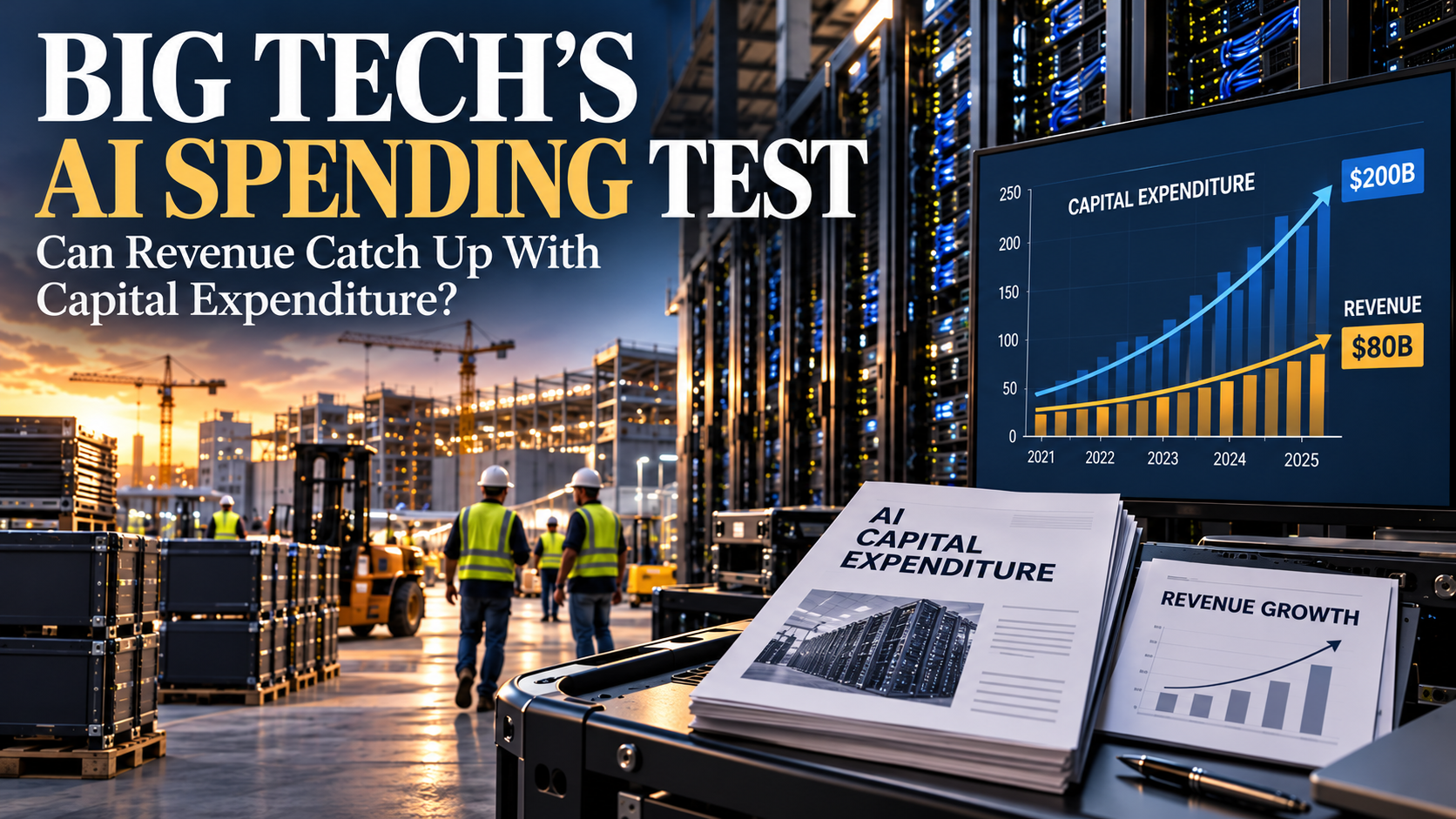
The artificial-intelligence revolution has a rather old-fashioned problem: someone must pay for the buildings, chips, cooling systems and electricity before the promised productivity gains arrive. For Big Tech, the crucial question this earnings season is no longer whether AI is exciting. It is whether the economics of building capacity can satisfy the owners of public companies.
A Reuters examination of hyperscaler spending found that rising AI infrastructure commitments were putting free cash flow under pressure even as cloud and AI revenues expanded. With Alphabet, Microsoft, Amazon and other major businesses due to face further investor scrutiny during the late-October reporting period, the argument is shifting from technological capability to return on invested capital.
Capex is not the same as an expense
Capital expenditure includes spending on long-lived assets such as data centres, servers and network infrastructure. Its accounting cost is generally spread over time through depreciation. The cash often leaves sooner. A company can therefore report healthy operating profit while its free cash flow weakens because it is building capacity at extraordinary speed.
The gap matters because shares are valued on future economic benefits, not just on the volume of equipment a company can buy. High capex can be an intelligent competitive strategy if that infrastructure becomes heavily utilised and generates attractive cash returns. It can also be a costly mistake if expected demand fails to materialise or hardware becomes outdated sooner than planned.
Five questions earnings calls must answer
Is utilisation improving? A data centre that has been built but not fully used represents tied-up capital. Investors need insight into workloads, capacity commitments and the timing of revenue recognition.
Are AI customers paying enough? Generative AI applications can have meaningful inference costs. Growth in usage is less impressive if each additional request barely covers variable expense.
Will depreciation rise faster than sales? Rapid investment today can depress future reported margins as expensive equipment enters service. Hardware useful lives and replacement cycles deserve scrutiny.
Who funds the power and network expansion? Electricity procurement, cooling and grid upgrades are not trivial afterthoughts. Constraints outside the chip market could delay cash generation.
What happens to shareholder returns? Repurchases and dividends can coexist with investment, but they become harder to sustain if capex consumes a growing share of operating cash flow.
Why this is more than a Silicon Valley story
The AI boom has implications for countries positioned to supply power equipment, semiconductors, engineering and enterprise software. Yet the IMF’s October World Economic Outlook warns that economies outside the technology-investment value chain—especially energy importers—face a difficult global environment. This is a reminder that spectacular capital spending in one sector does not mean broad prosperity everywhere.
Even within successful technology markets, concentration can be a risk. Data-centre demand benefits cloud providers, landlords, utilities and chipmakers, but these businesses occupy different points in the value chain. One company’s purchase is another’s revenue; it is not necessarily proof that the final customer has achieved a worthwhile return.
An earnings dashboard worth publishing
| Metric | Bullish interpretation | Caution sign |
|---|---|---|
| Cloud revenue growth | Customers expand workloads | Growth relies on aggressive discounts |
| Capex as share of operating cash flow | Disciplined build-out | Spending consumes most available cash |
| AI contract backlog | Visibility into future demand | Backlog fails to convert to recognised revenue |
| Gross and operating margins | Pricing power survives cost growth | Inference/depreciation erodes economics |
| Data-centre power availability | Capacity arrives on schedule | Grid constraints delay utilisation |
Investors should watch change rather than one quarter’s absolute number. Management promises can be sincerely made and still prove wrong because of shifts in model architecture, regulation or competition.
The comparison with earlier infrastructure booms
New technology frequently requires substantial upfront investment. Railroads, telecommunications networks and the internet all created enormous social value; not every infrastructure owner earned equally attractive returns. AI may follow a similar pattern: productivity benefits can be large while the firms funding initial construction achieve uneven shareholder outcomes.
That possibility is not an argument against AI. It is an argument against confusing technology adoption with investment profitability. The latter requires credible unit economics, durable customer demand and disciplined financing. Rising bond yields raise the hurdle further by making the cost of capital less forgiving.
The return-on-capital test
A business that spends billions on new servers should eventually earn returns exceeding the economic cost of tying up that capital. To assess this, investors can compare incremental operating profit with the capital added to the business, allowing for taxes, depreciation and replacement spending. The exercise is imperfect because companies rarely disclose every cost of a specific AI product, but it is more meaningful than comparing investment announcements alone.
Training and inference also have different economics. Training large systems demands concentrated computing resources, while inference costs recur as customers use the service. Falling computing cost per query can make AI applications more attractive, but intense competition may pass those savings to customers rather than to the company providing the model. Revenue growth can therefore outpace profit growth.
Long-term contracts deserve close reading. A headline backlog may offer visibility but not guarantee immediate cash receipts or eliminate counterparty risk. Construction delays and power shortages can further separate announced spending from commercially available capacity.
The decisive quarterly question is whether management can demonstrate improving monetisation per unit of infrastructure. Without that evidence, investors are being asked to capitalise promised future demand at a time when the cost of financing that promise is significant.
Does rising AI spending prove that demand is strong?
It signals corporate confidence about future demand, not guaranteed utilisation or profits.
What matters more: earnings or free cash flow?
Both. Earnings capture business performance under accounting rules; free cash flow helps judge capacity to finance spending without additional borrowing or dilution.
Could AI still transform the economy if stocks disappoint?
Yes. Economic benefits to consumers and businesses need not be captured by every investor funding the technology.
The thesis for this earnings season: the market already knows that the machines are powerful. What it wants to know now is whether owning those machines is a profitable business.
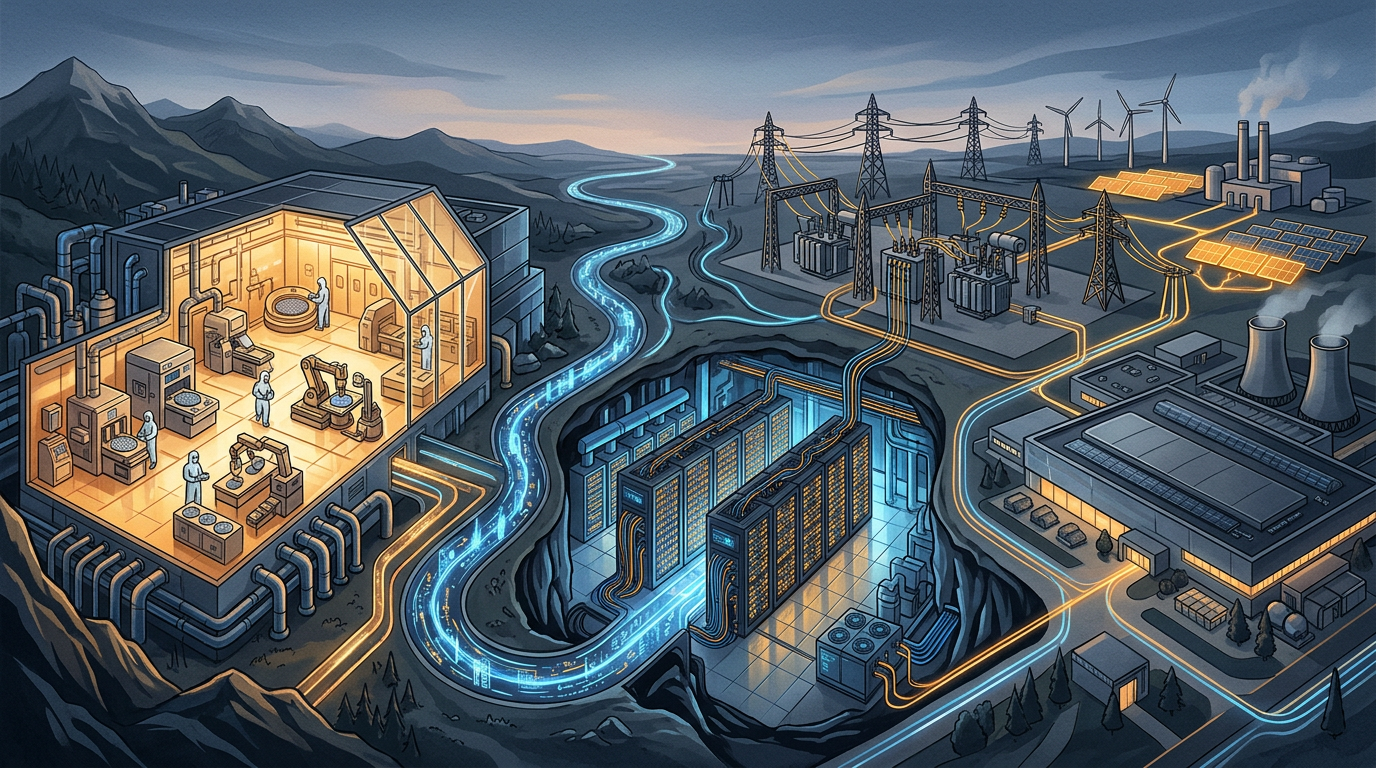
Investing in AI infrastructure—data centers, chips, and power—is particularly critical in 2026. As global economic growth diverges, capital has become far more sensitive to borrowing costs, forcing investors to look past compelling narratives and focus on realistic valuations. Rather than forecasting guaranteed returns, this guide examines key research methodologies and risk factors. According to the IMF’s October 2026 outlook, global growth is projected at 3.1% with inflation at 4.7%, even as its financial stability assessment cautions that underlying market vulnerabilities remain despite apparent resilience.
Key takeaways
- Match each investment decision to its time horizon, currency and ability to withstand losses.
- Separate observable earnings or contractual cash flows from optimistic forecasts.
- Compare diversification, fees, taxes, liquidity and regulatory restrictions before committing capital.
- Track primary institutional evidence and update assumptions when conditions change.
- Readers in Pakistan should consider rupee exposure and availability of regulated investment channels.
Why this matters now
The central question behind AI infrastructure investing 2026 is not merely what may happen next. It is which economic mechanisms could change cash flow, purchasing power or risk. The Bank for International Settlements’ 2026 review describes an economy supported by technological investment but constrained by geopolitical and fiscal pressures. A robust financial plan must therefore survive both a favourable and an adverse scenario.
Follow the investment chain, not just the headline
AI infrastructure spending flows through chips, advanced packaging, servers, networking, cooling, power equipment, real estate and utilities. Revenue can arrive at different times: hardware producers may book orders long before a data-centre tenant earns adequate cash flow from AI services. The BIS identifies AI investment as a support for recent global activity, but capital intensity can create financial fragility. See the primary institutional research.
For practical analysis, separate the baseline, the upside case and the downside case. Document the specific development that would change your assessment. Assess timing: a promising long-term theme may still be inappropriate for cash needed within twelve months.
Semiconductors: strong demand does not erase cycles
Leading-edge manufacturing is capital intensive and technically complex. Constraints in memory, packaging or fabrication can create pricing power, while capacity expansions can later produce oversupply. Compare long-term contracts, customer concentration, inventory and returns on invested capital. A rising revenue line is insufficient if shareholders continually finance new assets.
For practical analysis, separate the baseline, the upside case and the downside case. Document the specific development that would change your assessment. Assess timing: a promising long-term theme may still be inappropriate for cash needed within twelve months.
Data centres and the cost of electricity
AI computing requires secure access to electricity, transmission connections, cooling water where relevant, and backup capacity. The International Energy Agency’s Energy and AI assessment documents the central role of electricity planning. Before evaluating an operator, examine energy contracts, utilization rates, construction delays and whether customers can meet long-term commitments. See the primary institutional research.
For practical analysis, separate the baseline, the upside case and the downside case. Document the specific development that would change your assessment. Assess timing: a promising long-term theme may still be inappropriate for cash needed within twelve months.
Financing and correlated downside
The IMF warns that leveraged AI investments and concentrated exposures could magnify a valuation correction. Capital providers must distinguish contracted cash receipts from optimistic future sales estimates. Watch for circular financing, where investors and customers are economically dependent on each other’s ability to keep spending. See the primary institutional research.
For practical analysis, separate the baseline, the upside case and the downside case. Document the specific development that would change your assessment. Assess timing: a promising long-term theme may still be inappropriate for cash needed within twelve months.
Pakistan’s realistic entry points
Pakistan is unlikely to replicate an advanced-chip fabrication cluster quickly. More plausible routes include enterprise software, cybersecurity, specialised engineering, managed services and targeted power or fibre investments where the economics support them. Any local investment thesis needs reliable energy, regulatory clarity, payment rails and skills rather than the assumption that every AI project is profitable. See the primary institutional research.
For practical analysis, separate the baseline, the upside case and the downside case. Document the specific development that would change your assessment. Assess timing: a promising long-term theme may still be inappropriate for cash needed within twelve months.
Comparison and decision framework
| Question | Stronger evidence | Warning sign |
|---|---|---|
| What drives returns? | Audited cash flows, clear contract or transparent index | Undefined or projected returns |
| What can go wrong? | Explicit scenario and downside analysis | Claims of guaranteed gains |
| Is it affordable to hold? | Low transparent fees and adequate liquidity | Leverage, costly spreads or lockups |
| Is access legitimate? | Appropriate licensing and clear legal rights | Unverified brokers or custody |
| Is the exposure diversified? | Multiple independent sources of return | One company, sector or currency |
What it means for Pakistani savers and investors
A Pakistani reader faces both international investment risk and local purchasing-power risk. For example, a foreign asset can rise in US-dollar terms while the rupee conversion and transaction costs alter the realized local outcome. The opposite can also occur. Record the starting exchange rate, applicable taxes, custody charges and capital-transfer restrictions, and confirm current requirements with the State Bank of Pakistan and the relevant securities regulator. Overseas access should not be assumed universally available.
An emergency reserve, expensive consumer debt and near-term family obligations deserve attention before any speculative allocation. A portfolio that cannot meet a sudden cash requirement may force sales at the worst moment. The objective is not to remove risk—impossible in markets—but to choose risks that fit the investor’s actual liabilities.
Risks, limitations and uncertainty
Institutional forecasts are conditional and can change after policy decisions, commodity shocks, conflict escalation or unexpectedly weak earnings. Historic correlations are not binding promises about future asset performance. The analysis does not provide live stock prices, current investment product quotes, real-time exchange rates or individualized tax advice. Prices, regulations and product eligibility should be checked on the transaction date.
Frequently asked questions
Is this a guaranteed investment opportunity?
No. Every financial asset or strategy involves uncertainty. The existence of a popular investment theme is not evidence that an individual security is fairly priced.
What should beginners examine first?
Understand the product, the financial loss you could tolerate, fees and liquidity. Verify the provider and decide whether the money may be needed soon.
How do interest rates affect the analysis?
They influence financing costs, discount rates, exchange rates and demand. The effect differs by sector, maturity and business balance sheet.
Can Pakistani residents invest in foreign markets?
Access depends on current foreign-exchange, banking, brokerage, securities and tax rules, and on the investor’s individual circumstances. Check current regulations and regulated providers rather than assuming access.
How often should this analysis be refreshed?
Review institutional economic releases monthly and re-evaluate immediately after material earnings, regulatory or policy changes. Avoid reacting mechanically to every daily market movement.
Is diversification enough to prevent losses?
No. Diversification may reduce company-specific risk but cannot eliminate broad market, currency, inflation or systemic risks.
Conclusion
Sound financial decisions begin with verifiable evidence, reasonable valuation, awareness of uncertainty and a plan that survives adverse outcomes. Readers should compare multiple independent sources and avoid letting a compelling headline substitute for due diligence.
A practical guide to Pakistan freelancer tax documentation, export payments and formal business growth. Check the rules and steps before billing abroad.
Key Takeaways
- Pakistan’s ICT exports reached approximately $4.6 billion in FY2025–26, according to July 2026 reporting of official figures; freelancers contribute within this wider services story.
- The Economic Survey FY2025–26 reported $856.3 million in freelancer earnings in July–March FY26, a different time window from the full-year IT total.
- A foreign client’s invoice, the bank’s receipt record and the worker’s tax filing should tell a consistent story; cash received is not automatically taxable profit.
- The correct withholding treatment depends on current law, service classification, documentation and eligibility; an online flat-rate claim is not a substitute for personalised advice.
A designer in Multan can sell work to a business in Dubai without setting up an office abroad. Receiving the money, proving where it came from and handling Pakistan tax documentation are often more difficult than completing the project. That is why Pakistan freelancers tax 2026 is not simply a question of finding the lowest rate.
Formalising international earnings should offer something in return: dependable payments, an auditable income record, access to housing and business finance, and the ability to hire staff. The country benefits when genuine export receipts pass through regulated channels. Freelancers benefit when banks and tax authorities publish understandable rules and use them consistently. This guide explains the practical system without pretending that every freelancer has the same tax status or every digital service receives identical treatment.
What do current numbers tell us about Pakistan’s freelancers?
The Pakistan Economic Survey FY2025–26 highlights recorded freelance-related foreign exchange earnings of approximately $856.3 million for July–March FY26. The 17 July 2026 ICT exports report placed full-year ICT export earnings around $4.6 billion. Those are not mutually interchangeable statistics: reporting windows, definitions and eligible transactions differ.
| Indicator | Period | Reported amount | What it does not show |
|---|---|---|---|
| Freelancer foreign-exchange earnings | Jul–Mar FY26 | About $856.3m | Total informal freelancing everywhere |
| ICT export receipts | Full FY2025–26 | About $4.6bn | Freelancer earnings alone |
| ICT export remittances | Jul–Mar FY26 | $3.388bn | Number of people earning overseas |
| FY27 fiscal year | Jul 2026–Jun 2027 | Ongoing | Final annual receipts |
A worker using overseas platforms may be paid at irregular intervals. Platform dashboards can show invoiced value, while Pakistani bank statistics usually measure recognised receipts. For policy analysis, these figures should not be added together as if they were independent categories.
The key missing economic question is business formation. How many individual exporters graduate into firms with recurring customers, staff training and intellectual property? Policymakers need clearer longitudinal data before celebrating an unsupported number of new technology jobs.
How should freelancers receive money from overseas clients?
Start with a bank or regulated service that can explain in writing how foreign service payments are received, identified and converted. Confirm required invoice fields, proof of work and any restrictions specific to your profession. Each authorised bank may have its own operational checklist within the applicable SBP rules; payment methods that work for one client may not be suitable for another.
The Economic Survey 2025–26 describes measures intended to ease IT export realisation and documentation. That direction matters because a long delay in crediting a legitimate invoice can disrupt freelancers who must pay rent or subcontractors before a project is finished.
A sensible document set includes the client contract, numbered invoice, evidence of delivery and the bank receipt. Keep a consistent description of the service. When the payer is a platform rather than the end customer, preserve the platform statement connecting the payment to work performed.
Do not rely on informal dollar exchange arrangements simply because they seem convenient. They may create regulatory, fraud and record-keeping risks. Equally, do not assume every bank representative knows the full details of service-export classification. Escalate ambiguous cases through the bank’s compliance channel and ask for a written answer.
What is taxable and what paperwork should be kept?
Tax treatment is determined by the Finance Act, applicable income-tax rules, taxpayer status, whether the earnings meet any export-service conditions and the evidence available. The Federal Board of Revenue’s Finance Act 2026 page is the appropriate starting point for current law. Older blog posts frequently mix fiscal years or state a withholding rate without specifying the conditions.
A freelancer should distinguish gross invoice value, the amount received after platform fees, legitimate deductible expenses and tax actually withheld, if any. They are not identical. Also distinguish advance collection from final liability or credits: those concepts have specific legal definitions.
Example bookkeeping, not a tax assessment
Suppose a client pays $1,000, a platform deducts $50 and the bank credits the local-currency equivalent of $950. Your books should preserve the $1,000 invoice, $50 platform-fee evidence, applicable foreign-exchange conversion rate and actual bank credit. Whether the $50 is deductible and what tax applies depend on current law and professional circumstances. No exchange rate or tax percentage is assumed here.
| Document | Practical purpose |
|---|---|
| Client agreement | Defines work, payer and location of services |
| Original invoice | Shows gross contractual earnings |
| Payment-platform statement | Explains fees and net settlement |
| Pakistani bank credit advice | Evidence of receipt and conversion |
| Expense receipts | Supports claimed business costs |
| Tax return and statements | Reconciles annual declared income |
Ask a qualified tax practitioner to review your specific classification before relying on promotional claims about a universal freelancer tax rate.
Why does formal status matter for getting credit?
A freelance professional may earn more than a salaried employee yet struggle to obtain a mortgage because income arrives irregularly and is not clearly documented. From the bank’s perspective, a reliable history of recurring contracts and deposits is easier to underwrite than an unverified statement of expected overseas payments.
The SBP’s revised SME prudential rules, applicable from 1 January 2026 and its July 2026 revisions show that the banking regulator is updating definitions and financing requirements. A sole professional and a registered enterprise can face different documentation and product eligibility, so ask a bank how it assesses variable foreign-currency income.
Formalisation can also reduce client concentration. If the business can hire and invoice transparently, its founder may manage larger projects. But turning a freelancer into a company is not automatically beneficial. Registration, accounting and compliance create costs. Evaluate whether the structure solves a real business need.
A government that wants export growth should make compliance predictable. It should publish plain-English guidance covering practical invoices, bank documentation, permissible accounts, complaints and tax filing for common freelancer situations.
Would Raast or a digital rupee solve cross-border payments?
Raast is primarily domestic instant-payment infrastructure. It can make local transfers and merchant payments easier, but it does not mean any overseas client can automatically send money through the same interface. Cross-border settlement involves foreign banks, currency conversion, identity verification and international compliance requirements.
The SBP payment-systems publications document the rapid growth of digital banking. In the January–March 2026 quarterly review, the regulator reported widespread digital retail use. That is progress for domestic collections and payments to subcontractors. For export receipts, the key test is whether an approved channel connects to foreign payers at an understandable cost.
Some proposals present a central-bank digital currency as a solution to all international payment problems. A hypothetical digital rupee would still require legal interoperability, market liquidity and user protections. A pilot or policy exploration is not evidence that a widely accessible retail digital rupee has been launched. Check official announcements rather than relying on a promotional application.
Freelancers need functional ordinary rails first: transparent fees, prompt settlement, reliable receipts and a clear process when a legitimate transaction is rejected.
What policy changes would make freelancers a larger export industry?
Publish a standardised bank checklist for common professional services; harmonise the way legitimate transactions are recorded; establish a prompt escalation process for delayed credits; and provide export-service tax guidance that distinguishes individuals, partnerships and incorporated firms.
Then improve access to working capital. International clients may pay 30 or 60 days after work is delivered. A lender can assess documented receivables more responsibly when contracts, invoices and settlement histories are reliable. Regulators must balance that opportunity against fake invoices and concentrated borrowers.
The World Bank’s Pakistan strategy includes productive private-sector investment. A practical export strategy should also fund training in client management, cybersecurity, written communication and contract negotiation. These skills turn a single good project into repeat business.
Finally, report outcomes that matter: average receipt-processing time, complaints resolved, number of recurring service exporters and formal firms formed. The objective is not to force every individual into a costly structure. It is to remove needless penalties from being transparent and compliant.
What is the freelancer tax rate in Pakistan in 2026?
There is no safe universal answer without checking the precise service type, tax status, documentation and applicable law for FY2026–27. Different payment and business structures can lead to different treatment. Consult the final Finance Act 2026 and FBR guidance or a qualified adviser; do not apply a percentage from an older article blindly.
What This Means for You
New freelancer: Set up a separate place to track business payments, issue numbered invoices and maintain proof of project completion. Ask your authorised bank for written foreign-payment requirements before accepting a large contract.
Established exporter: Reconcile platform fees, gross invoices and actual credits monthly. Review tax status ahead of filing deadlines instead of discovering classification issues when a bank asks for proof of income.
Small agency: Keep contracts, client concentration and receivables visible. A sustainable business is less dependent on one platform or subcontractor.
Tax policymaker: Test compliance forms with real freelancers from different income levels and regions. A good rule should be understandable to a designer in Sialkot and an accountant in Peshawar without a specialist intermediary for routine matters.
What to Watch Next
- 26 October 2026: The State Bank monetary-policy decision and any revision to its inflation assessment; verify any schedule change with the SBP.
- Early November 2026, exact release date to be confirmed: Pakistan Bureau of Statistics October inflation and merchandise-trade releases.
- Late October–November 2026, date not yet confirmed: Any IMF Executive Board announcement on the October staff-level agreement; staff agreement is not Board approval.
- Throughout FY2026–27: Updated SBP monthly balance-of-payments and remittance statistics; compare cumulative results rather than one month alone.
Frequently Asked Questions
What is the freelancer tax rate in Pakistan in 2026?
There is no safe universal answer without checking the precise service type, tax status, documentation and applicable law for FY2026–27. Different payment and business structures can lead to different treatment. Consult the final Finance Act 2026 and FBR guidance or a qualified adviser; do not apply a percentage from an older article blindly.
Are freelance payments counted as IT exports?
Some qualifying digital-service receipts are reflected in the ICT export category, but not every freelance activity or dashboard balance is recorded in the same way. The Economic Survey and State Bank track particular receipt concepts. Confirm what your bank records and avoid adding overlapping categories together.
Can Pakistani freelancers be paid directly through Raast by foreign clients?
Raast provides domestic instant-payment infrastructure; access from a foreign sender is a separate cross-border integration question. A foreign business should use a currently approved transfer channel. Ask your bank about available providers, fees and documents rather than assuming a domestic Raast alias is an international receiving account.
Should a freelancer register a company in Pakistan?
Not always. A company can help when hiring, entering larger contracts or seeking finance, but it also creates administrative and tax obligations. Compare sole-professional options, contractual requirements and projected business costs with a registered adviser before restructuring.
How can freelancers prove income to Pakistani banks?
Maintain consistent client contracts, invoices, platform statements and matching bank receipts over time. A bank may also ask for tax filings and source-of-funds explanations. Requirements vary by product and institution, so ask the lender which documented earnings it recognises for underwriting.
The best tax and payment system would make the honest route the easy route. Pakistan has demonstrated that professionals can earn from clients worldwide. The next stage is helping them receive, document, invest and grow that income without needless friction.

Diesel Prices 2026–2027: Why Cheaper Crude May Not Mean Cheap Fuel

2027 Social Security COLA: Key Details and Dates

KSE-100 Sees Major Drop Post-SBP Rate Hike

Big Tech’s AI Spending Test: Can Revenue Catch Up With Capital Expenditure?

AI Infrastructure Investment Strategies for 2026

Pakistan Freelancers Tax 2026: Payments, Documentation and Formal Growth

Strait of Hormuz Crisis: What the Latest Tanker Attacks Mean for Oil, Shipping and Global Trade

AI Customer Service in 2026: What’s Working, What’s Failing, and What to Buy

Open a Savings Account Online: How to Actually Earn 10x the National Average Rate

Global Housing Market 2026: Where Prices Rise, Where They Don’t

PSX and KSE-100 Record Highs: An Insider’s Guide to Pakistan Stocks

So Delicious Dessert Recall: Affected Products, FDA Guidelines, and Consumer Action

Pakistan’s Current Account Deficit Narrows Sharply to $98 Million in August 2026

Japan Eyes 3.5% Defense Spending: What It Means for Bonds, Stocks, and the BOJ

Top 15 Stocks for Investment in 2026 in PSX: Your Complete Guide to Pakistan’s Best Investment Opportunities
Top 15 Stocks for Investment in 2026 in PSX: Your Complete Guide to Pakistan’s Best Investment Opportunities

Debunking IMF Program Myths: Reconfiguring Engagement for True National Ownership in a Volatile World

Top 10 Mutual Fund Managers in Pakistan for Investment in 2026: A Comprehensive Guide for Optimal Returns

China’s 50% Domestic Equipment Rule: The Semiconductor Mandate Reshaping Global Tech

What the U.S. Attack on Venezuela Could Mean for Oil and Canadian Crude Exports: The Economic Impact

15 Most Lucrative Sectors for Investment in Pakistan: A 2025 Data-Driven Analysis

How to Become an Active Taxpayer on Pakistan’s FBR Active Taxpayer List (ATL) in 2026: A Step-by-Step Guide

Pakistan’s Export Goldmine: 10 Game-Changing Markets Where Pakistani Businesses Are Winning Big in 2025

Pakistan’s Stock Market Renaissance: How 2025’s Hottest Investment Opportunity Is Democratizing Wealth—A Complete Beginner’s Guide

Best Investments in Pakistan 2026: Top 10 Low-Price Shares and Long-Term Picks for the PSX
15 Most Lucrative Sectors for Investment in Pakistan: A 2025 Data-Driven Analysis
15 Most Lucrative Sectors for Investment in Pakistan: A 2025 Data-Driven Analysis

Pakistan’s Economic Outlook 2025: Between Stabilization and the Shadow of Stagnation
-
 Markets & Finance10 months ago
Top 15 Stocks for Investment in 2026 in PSX: Your Complete Guide to Pakistan’s Best Investment Opportunities
-
Markets & Finance10 months ago
Top 15 Stocks for Investment in 2026 in PSX: Your Complete Guide to Pakistan’s Best Investment Opportunities
-
 Analysis9 months ago
Debunking IMF Program Myths: Reconfiguring Engagement for True National Ownership in a Volatile World
-
 Investment10 months ago
Top 10 Mutual Fund Managers in Pakistan for Investment in 2026: A Comprehensive Guide for Optimal Returns
-
 Asia10 months ago
China’s 50% Domestic Equipment Rule: The Semiconductor Mandate Reshaping Global Tech
-
 Global Economy10 months ago
What the U.S. Attack on Venezuela Could Mean for Oil and Canadian Crude Exports: The Economic Impact
-
 Taxes & Compliance9 months ago
How to Become an Active Taxpayer on Pakistan’s FBR Active Taxpayer List (ATL) in 2026: A Step-by-Step Guide
-
 Exports11 months ago
Pakistan’s Export Goldmine: 10 Game-Changing Markets Where Pakistani Businesses Are Winning Big in 2025