
AI
Inside Singapore’s AI Bootcamp to Retrain 35,000 Bankers: Reshaping Asia’s Financial Future


When Kelvin Chiang presented his team’s agentic AI models to Singapore’s Monetary Authority, he knew he was demonstrating something unprecedented. What used to consume an entire workday for a private banker—compiling wealth reports, validating sources of funds, drafting compliance documents—now takes just 10 minutes. But before Bank of Singapore could deploy these tools across its wealth management division, Chiang’s data scientists had to walk regulators through every safeguard, every failsafe, and every human oversight mechanism designed to prevent the system from “hallucinating” false information.
The regulators didn’t push back. They embraced it.
That collaborative spirit between government and industry defines Singapore’s radically different approach to the AI transformation sweeping global banking. While financial institutions in the United States and Europe announce mass layoffs—Goldman Sachs warning of more job cuts as AI takes hold—Singapore is executing the world’s most ambitious banking workforce retraining program. DBS Bank, OCBC, and United Overseas Bank are retraining all 35,000 of their domestic employees over the next two years, a government-backed initiative that represents not just a skills upgrade, but a fundamental reimagining of what it means to work in financial services.
The Revolutionary Scale of Singapore’s AI Training Initiative
The numbers tell only part of the story. Singapore’s three banking giants are investing hundreds of millions in a training infrastructure that reaches from entry-level tellers to senior executives. But unlike generic technology upskilling programs that plague many organizations, this bootcamp targets specific, measurable competencies needed to work alongside autonomous AI systems.
Violet Chung, a senior partner at McKinsey & Company, identifies what makes this initiative unique: “The government is doing something about it because they realize that this capability and this change is actually infusing potentially a lot of fear.” That acknowledgment of worker anxiety—combined with proactive solutions rather than platitudes—sets Singapore apart from Western approaches that often prioritize shareholder returns over workforce stability.
The Monetary Authority of Singapore (MAS) isn’t just cheerleading from the sidelines. Deputy Chairman Chee Hong Tat, who also serves as Minister for National Development, has made workforce resilience a regulatory expectation. The message to banks is clear: deploy AI aggressively, but ensure your people evolve with the technology. Singapore’s National Jobs Council, working through the Institute of Banking and Finance, offers banks up to 90% salary support for mid-career staff reskilling—an unprecedented level of public investment in private sector workforce development.
Understanding Agentic AI: The Technology Driving the Transformation
To grasp why 35,000 bankers need retraining, you must first understand what agentic AI does differently than the chatbots and recommendation engines that preceded it.

Traditional AI systems respond to prompts. Ask a question, get an answer. Agentic AI, by contrast, pursues goals autonomously. According to research from Deloitte, these systems can plan multi-step workflows, coordinate actions across platforms, and adapt their strategies in real-time based on changing circumstances—all without constant human intervention.
Consider OCBC’s implementation. Kenneth Zhu, the 36-year-old executive director of data science and AI, oversees a lab where 400 AI models make six million decisions every single day. These aren’t simple calculations. The models flag suspicious transactions, score credit risk, filter false positives in anti-money laundering systems, and even draft preliminary reports that once consumed hours of compliance officers’ time.
At DBS Bank, an internal AI assistant now handles more than one million prompts monthly. The bank has deployed role-specific tools that reduce call handling time by up to 20%—not by replacing customer service staff, but by handling the tedious documentation and data retrieval that used to interrupt human conversations. Customer service officers now spend their time actually serving customers, while AI manages the administrative burden.
The source of wealth verification process at Bank of Singapore exemplifies agentic AI’s potential. Relationship managers previously spent up to 10 days manually reviewing hundreds of pages of client documents—financial statements, tax notices, property valuations, corporate filings—to write compliance reports. The new SOWA (Source of Wealth Assistant) system completes this same analysis in one hour, cross-referencing Bank of Singapore’s extensive database and OCBC’s parent company records to validate information plausibility.
Bloomberg Intelligence forecasts that DBS will generate up to S$1.6 billion ($1.2 billion) in additional pretax profit through AI-derived cost savings—roughly a 17% boost. These aren’t theoretical projections. DBS CEO Tan Su Shan reports the bank already achieved S$750 million in AI-driven economic value in 2024, with expectations exceeding S$1 billion in 2026.
Inside the Bootcamp: How 35,000 Bankers Are Actually Learning AI
The phrase “AI bootcamp” might conjure images of programmers teaching SQL queries. Singapore’s program looks nothing like that.
The curriculum divides into three tiers, each calibrated to job function and AI exposure level:
Tier 1: AI Literacy for Everyone (All 35,000 employees)
- Understanding what AI can and cannot do
- Recognizing AI-generated content and potential hallucinations
- Data privacy and security in AI contexts
- Ethical considerations when deploying automated decision-making
- Prompt engineering basics for interacting with AI assistants
Tier 2: AI Collaboration Skills (Frontline and Middle Management)
- Working with AI co-pilots for customer service
- Interpreting AI-generated insights and recommendations
- Overriding AI decisions when human judgment is required
- Monitoring AI system performance and reporting anomalies
- Translating customer needs into AI-friendly inputs
Tier 3: AI Development and Governance (Technical Teams and Senior Leaders)
- Model risk management frameworks
- Building and validating AI use cases
- Implementing responsible AI principles (fairness, explainability, accountability)
- Regulatory compliance for AI systems
- Strategic AI investment and ROI measurement
The Institute of Banking and Finance Singapore doesn’t just offer online modules. Through its Technology in Finance Immersion Programme, the organization partners with banks to create hands-on learning experiences. Participants work on actual banking challenges, developing practical skills rather than theoretical knowledge.
Dr. Jochen Wirtz, vice-dean of MBA programs at National University of Singapore, emphasizes the urgency: “Banks would be completely stupid now to load up on employees who they will then have to let go again in three or four years. You’re much better off freezing now, trying to retrain whatever you can.”
That philosophy explains why DBS has frozen hiring for AI-vulnerable positions while simultaneously training 13,000 existing employees—more than 10,000 of whom have already completed initial certification. Rather than the classic “hire-and-fire” cycle that characterizes American banking, Singapore pursues “freeze-and-train.”
The Human Reality: Fear, Adaptation, and Unexpected Opportunities
Not everyone welcomes their AI co-worker with open arms.
Bank tellers watching their branch traffic decline, back-office analysts seeing AI handle tasks they spent years mastering, relationship managers uncertain how to add value when machines draft perfect emails—the anxiety is real and justified. Singapore’s approach acknowledges these concerns rather than dismissing them.
Walter Theseira, associate professor of economics at Singapore University of Social Sciences, notes that banks are managing workforce transitions through “natural attrition rather than forced redundancies.” When employees retire, change roles internally, or move to other companies, banks increasingly choose not to backfill those positions. This gradual adjustment—combined with the creation of new AI-adjacent roles—softens the disruption.
The emerging job categories reveal how AI transforms rather than eliminates work:
- AI Quality Assurance Specialists: Testing AI outputs for accuracy, bias, and regulatory compliance
- Digital Relationship Managers: Handling complex wealth management with AI-generated insights
- Automation Process Designers: Identifying workflows suitable for AI augmentation
- Model Risk Officers: Ensuring AI systems operate within approved parameters
- Customer Experience Strategists: Designing human-AI interaction patterns
UOB has given all employees access to Microsoft Copilot while deploying more than 300 AI-powered tools across operations. OCBC reports that AI-assisted processes have freed up capacity equivalent to hiring 1,000 additional staff—capacity redirected toward higher-value customer interactions and strategic initiatives rather than eliminated.
One success story circulating in Singapore’s banking community involves a former transaction processor who completed the AI training program and now leads a team designing automated fraud detection workflows. Her deep understanding of payment patterns—knowledge that seemed obsolete when AI took over transaction processing—became invaluable when combined with technical AI literacy. She didn’t lose her job to automation; she gained leverage over it.
Singapore’s Regulatory Philosophy: Partnership Over Policing
What separates Singapore’s approach from virtually every other financial center is how its regulator, the Monetary Authority of Singapore, engages with AI deployment.
In November 2025, MAS released its consultation paper on Guidelines for AI Risk Management—a document that reflects months of collaboration with banks rather than top-down dictates imposed on them. The guidelines focus on proportionate, risk-based oversight rather than prescriptive rules that could stifle innovation.
MAS Deputy Managing Director Ho Hern Shin explained the philosophy: “The proposed Guidelines on AI Risk Management provide financial institutions with clear supervisory expectations to support them in leveraging AI in their operations. These proportionate, risk-based guidelines enable responsible innovation.”
The guidelines address five critical areas:
- Governance and Oversight: Board and senior management responsibilities for AI risk culture
- AI Risk Management Systems: Clear identification processes and accurate AI inventories
- Risk Materiality Assessments: Evaluating AI impact based on complexity and reliance
- Life Cycle Controls: Managing AI from development through deployment and monitoring
- Capabilities and Capacity: Building organizational competency to work with AI safely
Rather than banning certain AI applications, MAS encourages banks to experiment while maintaining rigorous documentation of safeguards. When Kelvin Chiang presented his agentic AI tools, regulators wanted to understand the thinking process, the oversight mechanisms, and the escalation protocols—not to obstruct deployment, but to ensure responsible implementation.
This collaborative regulatory stance extends to funding. Through the IBF’s programs, Singapore effectively subsidizes workforce transformation, recognizing that individual banks cannot bear the full cost of societal-scale reskilling. PwC research shows organizations offering AI training report 42% higher employee engagement and 38% lower attrition in technical roles—benefits that justify public investment.
MAS Chairman Gan Kim Yong, who also serves as Deputy Prime Minister, framed the imperative at Singapore FinTech Festival: “It is important for us to understand that the job will change and it’s very hard to keep the same job relevant for a long period of time. As jobs evolve, we have to keep the people relevant.”
The ROI Case: Why Massive AI Investment Makes Business Sense
Singapore’s banks aren’t retraining 35,000 workers out of altruism. The business case for AI transformation is overwhelming—provided the workforce can leverage it.
DBS CEO Tan Su Shan described AI adoption as generating a “snowballing effect” of benefits. The bank’s 370 AI use cases, powered by more than 1,500 models, contributed S$750 million in economic value in 2024. She projects this will exceed S$1 billion in 2026, representing a measurable return on years of investment in both technology and people.
The efficiency gains manifest across every banking function:
Customer Service: AI handles routine inquiries, reducing average response time while allowing human agents to focus on complex problems requiring empathy and judgment. DBS’s upgraded Joy chatbot managed 120,000 unique conversations, cutting wait times and boosting satisfaction scores by 23%.
Risk Management: OCBC’s 400 AI models process six million daily decisions related to fraud detection, credit scoring, and compliance monitoring—work that would require thousands of additional staff and still produce inferior results due to human attention limitations.
Wealth Management: AI-powered portfolio analysis and market insights allow relationship managers at private banks to serve more clients at higher quality. What once required a team of analysts now happens in real-time, personalized to each client’s specific situation.
Operations: Back-office processing that once consumed entire departments now runs largely automated, with humans focused on exception handling and quality assurance rather than manual data entry.
According to KPMG research, organizations achieve an average 2.3x return on agentic AI investments within 13 months. Frontier firms leading AI adoption report returns of 2.84x, while laggards struggle at 0.84x—a performance gap that could determine competitive survival.
The transformation isn’t limited to cost savings. DBS now delivers 30 million hyper-personalized insights monthly to 3.5 million customers in Singapore alone, using AI to analyze transaction patterns, life events, and financial behaviors. These “nudges”—reminding customers of favorable exchange rates, suggesting timely financial products, flagging unusual spending—drive engagement and revenue while genuinely helping customers make better decisions.
Global Context: How Singapore’s Model Differs from Western Approaches
The contrast with American and European banking couldn’t be starker.
JPMorgan Chase CEO Jamie Dimon speaks enthusiastically about AI’s opportunities while the bank deploys hundreds of use cases. Yet JPMorgan analysts project global banks could eliminate up to 200,000 jobs within three to five years as AI scales. Goldman Sachs continues warning employees to expect cuts. The narrative centers on efficiency gains and shareholder value, with workforce impact treated as an unfortunate but necessary consequence.
European banks face different pressures. Strict labor protections make large-scale layoffs difficult, but they also complicate rapid workforce transformation. Banks attempt gradual transitions through attrition, but without Singapore’s comprehensive retraining infrastructure, displaced workers often struggle to find equivalent roles.
Singapore’s model succeeds through three unique factors:
1. Government-Industry Alignment The close relationship between MAS, the National Jobs Council, and major banks enables coordinated action impossible in more fragmented markets. When Singapore decides workforce resilience matters, resources flow accordingly.
2. Social Contract Expectations Singapore’s three major banks operate with implicit understanding that their banking licenses come with social responsibilities. Massive layoffs would trigger regulatory and reputational consequences, creating strong incentives for workforce investment.
3. Manageable Scale With 35,000 domestic banking employees across three major institutions, Singapore can execute comprehensive training that would be logistically impossible for American banks with hundreds of thousands of global staff.
Harvard Business Review analysis suggests Singapore’s approach, while difficult to replicate exactly, offers lessons for other nations: establish clear regulatory expectations around workforce transition, provide financial support for retraining, create industry-specific training partnerships, and measure success not just by AI deployment speed but by workforce adaptation rates.
The 2026-2028 Horizon: What Comes Next
As Singapore approaches the halfway point of its two-year retraining initiative, early results suggest the model works—but also highlight emerging challenges.
DBS has already reduced approximately 4,000 temporary and contract positions over three years, while UOB and OCBC report no AI-related layoffs of permanent staff. The banking sector is discovering that AI changes job composition more than job quantity, at least in the medium term.
The next wave of transformation will test whether current training adequately prepares employees. Gartner forecasts that by 2028, agentic AI will enable 15% of daily work decisions to be made autonomously—up from essentially zero in 2024. As AI agents gain more autonomy, the human role shifts from executor to orchestrator, requiring even higher-order skills.
MAS is already considering how to hold senior executives personally accountable for AI risk management, recognizing that autonomous systems create novel governance challenges. The proposed framework would mirror the Monetary Authority’s approach to conduct risk, where individuals bear clear responsibility for failures.
Singapore is also grappling with an unexpected challenge: Singlish, the local English creole, creates complications for AI natural language processing. Models trained on standard English struggle with Singapore’s unique linguistic patterns, requiring localized AI development—which in turn demands more sophisticated training for local AI specialists.
The broader implications extend beyond banking. If Singapore succeeds in demonstrating that massive AI deployment can coexist with workforce stability through strategic retraining, it provides a template for other industries and nations facing similar disruptions.
McKinsey estimates that AI could put $170 billion in global banking profits at risk for institutions that fail to adapt, while pioneers could gain a 4% advantage in return on tangible equity—a massive performance gap. Singapore’s banks, with their AI-literate workforce, position themselves firmly in the pioneer category.
Lessons for the Global Banking Industry
Singapore’s AI bootcamp experiment offers actionable insights for financial institutions worldwide:
Start with Culture, Not Technology: The most sophisticated AI fails if employees resist or misuse it. Comprehensive training that addresses fears and demonstrates value creates buy-in impossible to achieve through top-down mandates.
Partner with Government: Workforce transformation at this scale exceeds individual firms’ capacity. Public-private partnerships can distribute costs while ensuring industry-wide capability building.
Measure What Matters: Singapore tracks not just AI deployment metrics but workforce adaptation rates, employee satisfaction with AI tools, and the emergence of new hybrid roles. These human-centric measures predict long-term success better than pure technology KPIs.
Reimagine Rather Than Replace: The most successful AI implementations augment human capabilities rather than substituting for them. Relationship managers with AI insights outperform both pure humans and pure machines.
Invest in Adjacent Capabilities: AI literacy alone isn’t enough. Workers need complementary skills—critical thinking, emotional intelligence, creative problem-solving—that AI cannot replicate but can amplify.
Create New Career Paths: As traditional roles evolve, new opportunities in AI quality assurance, model risk management, and human-AI experience design create advancement paths for ambitious employees.
Accept Gradual Transition: Singapore’s two-year timeline, with flexibility for individual banks to move faster or slower based on their readiness, acknowledges that workforce transformation cannot be rushed without creating unnecessary disruption.
The Verdict: A Model Worth Watching
As the financial world watches Singapore’s unprecedented experiment, the stakes extend far beyond one nation’s banking sector. The question isn’t whether AI will transform banking—that transformation is already underway. The question is whether that transformation must inevitably create massive worker displacement, or whether strategic intervention can enable human adaptation at the pace of technological change.
Singapore bets on the latter possibility. By retraining all 35,000 domestic banking employees, by creating robust public-private partnerships, by developing comprehensive curricula that address both technical skills and existential anxieties, the city-state attempts to prove that the future of work doesn’t have to be a zero-sum battle between humans and machines.
Early returns suggest the model works. Banks report measurable productivity gains without mass layoffs. Employees initially resistant to AI training increasingly embrace it as they discover enhanced rather than diminished job prospects. Regulators fine-tune an approach that enables innovation while maintaining safety.
Yet challenges remain. Can retraining keep pace with accelerating AI capabilities? Will the job categories being created prove as numerous and lucrative as those being transformed? What happens to workers who cannot or will not adapt, despite comprehensive support?
These questions lack definitive answers. What Singapore demonstrates beyond doubt is that workforce transformation of this magnitude is possible—that major financial institutions can deploy cutting-edge AI aggressively while simultaneously investing in their people’s futures.
When historians eventually assess the AI revolution’s impact on work, Singapore’s banking sector bootcamp may be remembered as either a successful proof of concept that other nations and industries replicated, or as an admirable but ultimately isolated experiment that proved impossible to scale beyond a small, tightly integrated economy.
The next two years will tell us which.


AI
Meta’s First AI Model Since Zuckerberg’s $100-Billion+ Spending Spree: A Turning Point or Expensive Echo?

The Day the Invoice Came Due
There is a particular silence that follows a very expensive promise. For the better part of three years, Mark Zuckerberg has made the kind of declarations that either define a legacy or haunt one — that Meta would build artificial general intelligence, that open-source AI was a moral and commercial imperative, that the company would spend whatever it took to avoid being left behind. On Wednesday morning, that silence finally broke.
Meta unveiled Muse Spark, the inaugural model from its newly formed Meta Superintelligence Labs, developed under the leadership of Chief AI Officer Alexandr Wang. The announcement landed like a thunderclap in the markets — Meta shares surged nearly nine percent on the day — and it lands, intellectually, with considerably more complexity. This is the first meaningful model to emerge from the company since Zuckerberg embarked on what has become a $100-billion-plus infrastructure and talent overhaul that reshaped Meta’s internal architecture more dramatically than any shift since the pivot to mobile a decade ago.
The question worth asking — not by breathless press releases, but by anyone who manages capital, writes policy, or builds on these platforms — is whether Muse Spark represents a genuine inflection in Meta’s AI trajectory, or whether it is the world’s most expensive game of catch-up, dressed in the language of superintelligence.
The Spending Spree: A Reckoning in Scale
To understand what Muse Spark means, one must first understand what Zuckerberg bet to produce it.
The numbers are, by any honest accounting, staggering. Meta has committed between $115 billion and $135 billion in capital expenditures for 2026 alone — nearly double the prior year — with AI infrastructure costs as the primary engine of that figure. This follows years of accelerating spend on GPU clusters, custom silicon, and data center buildouts that have repositioned the company as one of the largest private AI infrastructure operators on earth.
But the dollar figures tell only part of the story. The more consequential inflection came last year, when Zuckerberg, reportedly dissatisfied with how far Meta had fallen behind OpenAI and Google in the frontier model race, moved decisively on talent. The company structured a $14.3 billion acquisition of Scale AI — more accurately an acqui-hire of scale — and brought Wang in as Chief AI Officer to build a dedicated superintelligence division from scratch. Around that same time, Meta reportedly offered individual engineers compensation packages worth hundreds of millions of dollars to staff the new team. The financial press called it audacious. Zuckerberg called it necessary.
Wang rebuilt the company’s AI stack entirely, from the infrastructure layer upward. According to Meta’s own technical blog, the Superintelligence Labs team spent nine months constructing new infrastructure, new architecture, and new data pipelines — a wholesale reimagining, not an iteration. Muse Spark, codenamed internally as “Avocado,” is the first output of that rebuild.
What makes this moment particularly pointed is its implicit acknowledgment. Llama 4, released in April 2025, was publicly celebrated but privately conceded — even by Meta executives — to be a “catching up” play rather than a market-defining one. The open-source ecosystem it nurtured was real and enthusiastic, with over 650 million downloads across the Llama lineage. But enthusiasm from developers does not automatically translate into enterprise revenue, and it certainly does not close the reasoning gap with GPT-5 or Gemini. The creation of Meta Superintelligence Labs, the Wang hire, and now the launch of a closed, proprietary model are not the actions of a company confident in its existing strategy. They are the actions of a company that has diagnosed a structural problem and chosen to spend its way through it.
Muse Spark: What It Is, What It Isn’t
Precision matters here, because the AI industry is awash in overclaiming, and Muse Spark’s launch is notable precisely because Meta was, by its own admission, measured in its assertions.
Muse Spark is a natively multimodal reasoning model — it accepts voice, text, and image inputs, producing text output — built on what Meta describes as a mixture-of-experts architecture rebuilt from the ground up. It operates across three modes: an Instant mode for rapid, low-latency queries; a Thinking mode for more demanding analytical tasks such as parsing legal documents or breaking down scientific problems; and a Contemplating mode, which runs multiple agents in parallel to tackle the most complex reasoning challenges. A fourth — Shopping mode — reflects Meta’s unique commercial geography: it integrates large language model reasoning with behavioral data drawn from Meta’s social platforms to support purchase decisions.
On benchmarks, Muse Spark’s Contemplating mode scored 50.4% on the Humanity’s Last Exam (HLE) with tools and 58% in HLE standalone, while reaching 38% in FrontierScience Research tasks — benchmarks that sit at the bleeding edge of what AI systems can currently attempt. The model benchmarks favorably against Anthropic’s Claude Opus 4.6 Max, Google’s Gemini 3.1 Pro High, OpenAI’s GPT-5.4, and xAI’s Grok 4.2 on STEM-focused tasks. Meta is also opening a private API preview for select partners, with paid access to a wider audience to follow.
Here, however, is where intellectual honesty demands a pause. Meta has acknowledged gaps — meaningful ones — particularly in coding tasks, where the model trails competitors. And an unnamed Meta executive, speaking to Bloomberg, framed the model as competitive in certain domains rather than universally dominant. That candor is refreshing, but it also confirms that Muse Spark is not a state-of-the-art model across the board. It is a competitive model in specific verticals, released to signal strategic momentum and to begin monetizing one of the largest user bases in human history.
The model is also, notably, closed-source — a stark reversal of Zuckerberg’s long-held philosophical position on open AI development. The pivot is strategic, not accidental. Meta now quietly operates on two tracks: open Llama models for ecosystem and developer loyalty; proprietary Muse models for competitive positioning and, eventually, revenue. Microsoft understood this duality years ago. Meta has arrived at it later, more expensively, and under duress.
The Strategic Calculation: Is the Gamble Paying Off?
Here is where the analyst must resist the gravitational pull of both triumphalism and cynicism.
The bull case for Meta’s trajectory is real and worth stating clearly. No other technology company sits on 3.5 billion active users as a distribution network for an AI assistant. While OpenAI must convince the world to adopt ChatGPT as a new habit, Meta can embed Muse Spark into WhatsApp conversations already happening, Instagram feeds already scrolling, Facebook interactions already occurring. The friction of adoption is, for Meta, essentially zero. That is not a model capability advantage — it is a structural one, and in consumer technology, distribution often matters more than raw performance.
The shopping mode is, in this context, particularly telling. By combining language model reasoning with Meta’s proprietary behavioral graph — what users browse, share, and respond to across its platforms — the company is building something that OpenAI and Google cannot easily replicate: personalized AI commerce at social-media scale. If it works even partially, it creates an advertising and commerce flywheel that could justify Zuckerberg’s infrastructure gamble without needing to win a single benchmark competition.
The bear case, however, is also grounded in structural reality. OpenAI has a two-to-three-year head start in enterprise API relationships. Google has Gemini baked into Workspace, Android, and Cloud. Anthropic, though smaller, has staked out a credibility position in high-stakes professional environments — legal, medical, financial — that proprietary model newcomers struggle to displace. Meta’s pivot to closed models is strategically rational, but it creates a credibility gap: its identity as the champion of open AI, now complicated, and its enterprise track record, essentially nonexistent.
There is also the China dimension, which elite policymakers increasingly cannot ignore. As U.S.-China tensions over AI capabilities continue to escalate, and as the Biden-to-Trump-era export controls on advanced chips reshape the global compute landscape, Meta’s massive infrastructure investment is partly a bet on American AI supremacy being maintained long enough for that infrastructure to deliver returns. If DeepSeek and its successors continue to demonstrate frontier-level performance at dramatically lower compute costs, the economics of Meta’s capital expenditure program become harder to defend.
The Geopolitical Frame: AI Arms Race, Meta’s Position, and the Regulatory Shadow
Any serious analysis of Meta’s AI position in April 2026 must situate it within the broader geopolitical contest that has redefined technology competition over the past eighteen months.
The AI arms race has stratified into distinct tiers. At the frontier, OpenAI and Anthropic are competing in a race defined as much by safety policy as by raw capability — Anthropic’s newly announced Mythos model, reportedly so powerful that its initial release is limited to a handful of companies for cybersecurity defense purposes, exemplifies how the most advanced systems are being handled with sovereign-level caution. Google is attempting to out-scale everyone on infrastructure while maintaining Gemini’s deep integration with its core product suite. xAI’s Grok series continues to position itself as the anti-establishment option, riding Elon Musk’s platform access at X.
Meta, in this hierarchy, occupies a genuinely unusual position. It is simultaneously one of the most significant AI infrastructure investors in the world and one of the least consequential AI model brands in enterprise circles. That tension is what Muse Spark is attempting to resolve. The model’s release is less a technical announcement than a political one — a signal to investors, regulators, partners, and competitors that Meta is no longer content to operate as the open-source benefactor of an ecosystem it cannot monetize.
The regulatory implications deserve serious attention. European regulators, already engaged with Meta’s data practices under GDPR, will scrutinize with particular interest a model that explicitly integrates behavioral data from social platforms into its reasoning and shopping capabilities. The privacy policy accompanying Meta AI sets, according to Axios, “few limits on how the company can use any data shared with its AI system.” That is an invitation for regulatory escalation that could limit European rollout and create template precedents for U.S. state-level privacy legislation.
The Verdict: Inflection Point, With Asterisks
There is a genre of technology announcement designed principally to change a narrative. Muse Spark is partly that — a declaration that the investment has begun to yield, that Alexandr Wang’s nine-month rebuild has produced something worth showing to the world. In that narrow sense, the launch succeeds. Meta’s stock market reaction was not irrational.
But the deeper question — whether Zuckerberg’s $100-billion-plus AI bet has produced a model that genuinely advances the frontier, or whether it has produced a credible entry-level proprietary play that will need two or three more iterations before it commands true enterprise respect — remains open. Muse Spark is the beginning of an argument, not its conclusion.
For investors, the signal is directional rather than definitive: Meta has demonstrated that its superintelligence infrastructure can produce a competitive model on an accelerated timeline, and it has a distribution advantage that no competitor can immediately replicate. Whether that translates into AI revenue at the scale the market now expects is a 2027-and-beyond question.
For policymakers, the more significant story may not be Muse Spark itself but what it represents about the concentration of AI capability in a handful of American platforms that also control the world’s most significant social infrastructure. The European Union’s AI Act, still being operationalized, will need to reckon with models that are not just reasoning engines but behavioral-data-integrated social commerce systems.
For the technologists, researchers, and builders who make up the Llama ecosystem, the message from Menlo Park is more ambiguous than it appears: we still believe in open AI, but we are now also building something else, something proprietary, something that may eventually leave the open stack as a deliberate limitation rather than a principled philosophy.
The invoice for Zuckerberg’s spending spree has, at last, produced its first payment. Whether it covers the debt is a question that only time — and a great deal more compute — will answer.
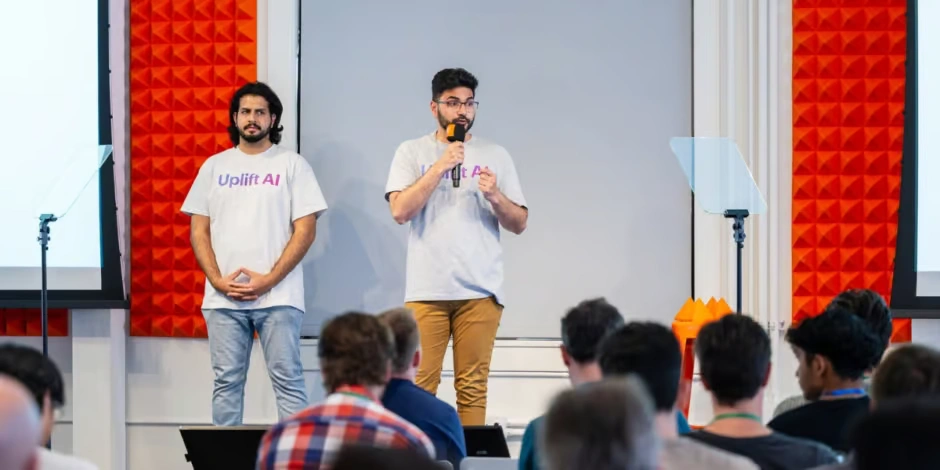
KARACHI — In the sun-drenched cotton fields of southern Punjab, a farmer named Bashir holds a cheap Android smartphone. He doesn’t type; he doesn’t know how. Instead, he presses a button and asks a question in his native Saraiki. Within seconds, a human-sounding voice responds, explaining the exact nitrate concentration needed for his soil based on the morning’s weather report.
This isn’t a speculative vision of 2030. It is the immediate reality being built by Uplift AI, a Pakistani voice-AI infrastructure startup that recently announced a $3.5 million seed round in January 2026. Led by Y Combinator and Indus Valley Capital, the round marks a pivotal shift in the global AI narrative—one where the “next billion users” are brought online not through text, but through the primal, intuitive medium of speech.
A High-Stakes Bet on Linguistic Sovereignty
The funding arrives as Pakistan’s tech ecosystem stages a gritty comeback. Following a 2025 rebound that saw startups raise over $74 million—a 121% increase from the previous year’s doldrums—Uplift AI’s seed round represents one of the largest early-stage injections into pure-play AI in the region.
Joining the cap table is an elite syndicate including Pioneer Fund, Conjunction, Moment Ventures, and a group of high-profile Silicon Valley angels. Their conviction lies in a sobering statistic: 42% of Pakistani adults are illiterate. For them, the LLM revolution of 2023–2024 was a spectator sport. By building foundational voice models for Urdu, Punjabi, Pashto, Sindhi, Balochi, and Saraiki, Uplift AI is effectively building the “operating system” for a population previously locked out of the digital economy.
The Engineers Who Left Big Tech for the Indus Valley
Uplift AI’s pedigree is its primary moat. Founders Zaid Qureshi and Hammad Malik are veterans of the front lines of voice technology. Malik spent nearly a decade at Apple and Amazon, contributing to the core logic of Siri and Alexa, while Qureshi served as a senior engineer at AWS Bedrock, designing the very guardrails that govern modern enterprise AI.
“Off-the-shelf models from Silicon Valley treat regional languages as an afterthought—a translation layer slapped onto an English brain,” says Hammad Malik, CEO of Uplift AI. “We built our Orator family of models from the ground up. We don’t just translate; we capture the cadence, the cultural nuance, and the soul of the language.”
This “ground-up” philosophy involved a massive, in-house data operation. The startup has spent the last year recording thousands of hours of native speakers across Pakistan’s provinces to ensure their Speech-to-Text (STT) and Text-to-Speech (TTS) engines could outperform global giants like ElevenLabs or OpenAI in local dialects. According to the company, their models are currently 60 times more cost-effective for regional developers than Western alternatives.
Traction: From Khan Academy to the Corn Fields
The market’s response suggests the founders’ thesis was correct. Uplift AI has already secured high-impact partnerships:
- Khan Academy: Dubbed over 2,500 Urdu educational videos, slashing production costs and making world-class education accessible to millions of non-reading students.
- Syngenta: Deploying voice-first tools for farmers to receive agricultural intelligence in their local dialects.
- Developer Ecosystem: Over 1,000 developers are currently utilizing Uplift’s APIs to build everything from FIR (First Information Report) bots for police stations to health-intake systems for rural clinics.
| Language | Status | Market Reach (Est.) |
| Urdu | Live | 100M+ Speakers |
| Punjabi | Live | 80M+ Speakers |
| Sindhi | Live | 30M+ Speakers |
| Pashto | Beta | 25M+ Speakers |
| Balochi/Saraiki | In-Development | 20M+ Speakers |
Competitive Landscape: The Regional “Voice-First” Race
Uplift AI does not exist in a vacuum. In neighboring India, well-funded players like Sarvam AI and Krutrim are racing to build sovereign “Indic” models. However, Uplift’s focus on voice-first infrastructure rather than just text-based LLMs gives it a unique edge in markets with low literacy and high mobile penetration.
While global giants like AssemblyAI or OpenAI’s Whisper offer multilingual support, they often struggle with “code-switching”—the common practice in Pakistan of mixing Urdu with English or regional slang. Uplift’s models are natively trained to understand this linguistic fluidity, making them the preferred choice for local enterprises.
Macro Implications: AI as a GDP Multiplier
The significance of this round extends beyond a single startup. It signals Pakistan’s emergence as a serious contender in the “Sovereign AI” movement. By investing in local infrastructure, the country is reducing its “intelligence trade deficit”—the reliance on expensive, foreign-hosted models that don’t understand local context.
According to Aatif Awan, Managing Partner at Indus Valley Capital, “Voice is the primary gateway to the digital economy in emerging markets. Uplift AI isn’t just a tech play; it’s a productivity play for the entire nation.”
The startup plans to use the $3.5M to expand its R&D team and begin its foray into the MENA (Middle East and North Africa) region, targeting other underserved languages. As the “Generative AI” hype settles into a phase of practical utility, the real winners will be those who can connect the most sophisticated technology to the most fundamental human need: to be understood.
What’s Next?
The success of Uplift AI suggests that the next phase of the AI revolution won’t happen in the boardrooms of San Francisco, but in the streets of Karachi and the farms of Multan. By giving a digital voice to the 42% who cannot read, Uplift AI is not just building a company—it is unlocking a nation.
Singapore stands at an economic crossroads in 2026. The Ministry of Trade and Industry projects GDP growth between 1.0% and 3.0% for the year, a moderation from 2025’s robust 4.8% expansion but one that masks extraordinary sectoral opportunities. While manufacturing surged 15% in Q4 2025, driven by biomedical and electronics clusters, the city-state’s real entrepreneurial promise lies not in traditional industries but in its digital-first transformation.
For aspiring entrepreneurs, this moment presents a paradox of promise. Singapore’s trade-dependent economy faces headwinds—trade accounts for over 320% of GDP, exposing it to global tariff tensions—yet its AI readiness score of 0.80 ranks first globally, and the fintech market is projected to reach USD 13.97 billion in 2026, growing at 15.9% annually through 2031. The question isn’t whether to launch a business in Singapore, but which business model will capture the massive profit potential embedded in this sophisticated, technology-saturated market.
This comprehensive analysis examines the top 10 businesses to start in Singapore in 2026, drawing on real-time data from authoritative sources including the Singapore Economic Development Board, Ministry of Trade and Industry, Statista, and market intelligence from premium outlets. Each opportunity is evaluated on startup costs, revenue potential, competitive barriers, and strategic advantages specific to Singapore’s unique ecosystem.
1. AI Consulting and Implementation Services: Riding the Wave of Digital Transformation
Singapore’s artificial intelligence market tells a story of explosive growth. The AI market is projected to grow at 28.10% annually through 2030, reaching USD 4.64 billion, while generative AI specifically will expand at 46.26% CAGR to USD 5.09 billion by 2030. More tellingly, 53% of Singaporean companies have already deployed AI at scale, the third-highest rate globally behind only India and the UAE.
Why This Profitable Business Idea in Singapore Works Now
The government’s aggressive push toward sovereign AI and trusted governance creates sustained enterprise demand. IMDA published the Model AI Governance Framework for Agentic AI in 2026, mandating responsible deployment frameworks across sectors. Companies need external expertise to navigate these requirements while extracting business value. According to Salesforce’s State of Service report, AI is expected to handle 41% of customer service cases in Singapore by 2027, up from 30% today, revealing massive implementation gaps.
Startup Costs and Revenue Projections
Initial investment: SGD 15,000-30,000 (cloud infrastructure, business registration, initial marketing) Year 1 revenue potential: SGD 150,000-400,000 Year 3 revenue potential: SGD 800,000-2 million Gross margins: 60-75%
Small teams of 2-3 AI specialists can command SGD 8,000-15,000 per project for pilot implementations, with enterprise retainers reaching SGD 20,000-50,000 monthly. The Micron announcement of $24 billion investment in Singapore for AI-related semiconductor production signals sustained infrastructure demand that will ripple through the consulting ecosystem.
Competitive Barriers and Risks
Technical talent shortage remains acute. Domain expertise in specific verticals (healthcare, finance, logistics) commands premium pricing. Large consultancies like Accenture and Deloitte dominate enterprise accounts, but nimble startups can capture mid-market SMEs through specialized offerings—medical imaging AI for clinics, inventory optimization for retailers, or compliance automation for fintech firms.
Success Strategy
Focus on one vertical initially. Partner with universities for talent pipeline. Offer “AI readiness assessments” as loss leaders to land implementation contracts. Build case studies demonstrating ROI in 90-day pilots.
2. Cybersecurity Solutions and Managed Services: Protecting Singapore’s Digital Economy
If AI represents opportunity, cybersecurity represents necessity. Singapore’s cybersecurity market is expected to reach USD 2.65 billion in 2025 and grow at 16.14% CAGR to USD 5.60 billion by 2030. More significantly, Singapore needs over 3,000 more cybersecurity specialists by 2026, as MAS tightens compliance requirements.
Market Drivers Creating Profit Potential
Singapore Exchange’s mandatory four-business-day cyber-incident notification rules surfaced 14 reportable events in 2024’s pilot, driving listed firms to increase spending on automated breach-impact assessment tools by 31%. Digital full-banks accumulated SGD 1.8 billion in deposits by end-2024, channeling roughly 22% of operating expenditure into cybersecurity during their first year.
Zero-trust architecture mandates create recurring revenue opportunities. By November 2024, 96% of critical information infrastructure owners had submitted zero-trust roadmaps, generating demand for ongoing implementation, monitoring, and compliance validation services.
Startup Costs and Profit Margins
Initial investment: SGD 25,000-50,000 (certifications, security tools, compliance frameworks) Year 1 revenue potential: SGD 200,000-500,000 Year 3 revenue potential: SGD 1-3 million Gross margins: 50-70%
Managed security service providers (MSSPs) can structure retainers from SGD 5,000-25,000 monthly depending on client size. Penetration testing commands SGD 10,000-50,000 per engagement. The talent constraint actually benefits qualified operators—median senior-analyst pay climbed 14% to SGD 117,000, but successful firms charging 2-3x salary in client fees maintain healthy margins.
Differentiation in a Competitive Market
Most cybersecurity firms focus on network security. Emerging opportunities lie in OT (operational technology) security for manufacturers, cloud security posture management for digital-native companies, and compliance-as-a-service for fintech startups navigating MAS Technology Risk Management guidelines.
Risks and Mitigation
Client acquisition costs are high in enterprise sales. Start with SME packages (SGD 3,000-8,000/month) to build references, then move upmarket. Partner with software vendors like Microsoft and AWS for co-selling opportunities. Obtain CREST certification to differentiate from unlicensed operators.
3. Fintech Infrastructure and Embedded Finance Solutions: Building the Plumbing of Digital Commerce
Singapore’s fintech market will reach USD 13.97 billion in 2026, growing from USD 12.05 billion in 2025. But the real opportunity isn’t another consumer payments app—it’s building the infrastructure that powers next-generation financial services.
The Project Nexus Advantage
Project Nexus will connect payment rails across Singapore, Malaysia, Thailand, Philippines, and India by 2026, enabling real-time settlement and freeing an estimated USD 120 billion in trapped liquidity. Early-stage fintech firms providing API integration, cross-border reconciliation software, or SME working-capital products tied to shipment milestones can capture disproportionate value.
High-Profit Niches in 2026
Embedded finance platforms: Enable non-financial companies to offer financial services. A SaaS platform providing “banking-as-a-service” APIs can charge 0.5-2% per transaction plus monthly infrastructure fees.
Regulatory technology (regtech): Increasing sophistication of AI-powered attacks and growing regulatory scrutiny will redefine cybersecurity strategies in 2026. Compliance automation tools for KYC, AML, and reporting can command SGD 2,000-15,000 monthly SaaS fees.
B2B payments optimization: Trade finance platforms leveraging real-time settlement for SME supplier payments represent a multi-billion-dollar opportunity as traditional nostro/vostro account structures become obsolete.
Revenue Model and Profitability
Initial investment: SGD 100,000-300,000 (development, licenses, initial compliance) Year 1 revenue potential: SGD 300,000-800,000 Year 3 revenue potential: SGD 2-8 million Gross margins: 70-85% (SaaS model)
Transaction-based pricing scales elegantly. A platform processing SGD 10 million monthly at 0.75% generates SGD 75,000 in monthly revenue. Ten enterprise clients create a SGD 900,000 annual run-rate with minimal incremental costs.
Regulatory Considerations
MAS licensing requirements are stringent but navigable for infrastructure providers. Consider partnership models with licensed entities initially. The MAS SGD 100 million FSTI 3.0 program co-funds quantum-safe cybersecurity and AI-driven risk models, providing potential grant support.
4. HealthTech and Telemedicine Platforms: Serving Singapore’s Aging Population
Singapore’s demographic time bomb creates entrepreneurial opportunity. The number of healthtech startups grew from 140 to over 400 by 2025, with Singapore accounting for 9% of all healthtech startups in Asia despite its small size. In 2025, Singapore’s health and biotech sectors secured $342 million in funding.
Market Fundamentals
Singapore’s population is aging rapidly, with chronic disease management becoming a national priority. The government’s Smart Nation initiative explicitly supports digital health adoption. From AI-enabled home care to precision diagnostics, healthtech addresses both access and quality challenges.
Profitable Business Models
Chronic disease management platforms: AI-powered platforms like Mesh Bio use analytics to identify risks earlier and personalize care. B2B contracts with healthcare providers generate SGD 5-20 per patient per month.
Telemedicine infrastructure: Building white-label telemedicine platforms for clinics and hospitals. License fees of SGD 3,000-15,000 monthly plus per-consultation charges (SGD 2-5).
Medical wearables and RPM: Real-time patient monitoring wearables command hardware margins (30-40%) plus recurring subscription revenue (SGD 50-150/month per device).
Startup Costs and Scaling
Initial investment: SGD 80,000-200,000 (product development, regulatory compliance, clinical validation) Year 1 revenue potential: SGD 200,000-600,000 Year 3 revenue potential: SGD 1.5-5 million Gross margins: 50-75%
Regulatory Pathway
HSA (Health Sciences Authority) approval is required for medical devices. Start with wellness devices (lower regulatory burden) to validate market fit, then pursue medical device classification. Partner with established healthcare providers for clinical credibility and distribution.
Export Potential
Singapore serves as a springboard to Southeast Asia’s 650 million population. Successful validation in Singapore’s sophisticated market enables regional expansion, multiplying addressable market 100-fold.
5. E-Commerce Enablement and Cross-Border Logistics Tech: Powering the $30 Billion Digital Commerce Boom
Singapore’s e-commerce market was valued at USD 8.9 billion in 2024 and is projected to reach USD 29.57 billion by 2032, growing at 16.2% CAGR. But the real money isn’t in becoming the next Shopee—it’s in providing the infrastructure that makes e-commerce work.
Market Opportunity
Food and beverages is expanding at 12.45% CAGR through 2030, fastest among all categories. Parcel-locker densification and refrigerated last-mile fleets support fresh-food deliveries. Social commerce—TikTok Shop reached USD 16.3 billion GMV in 2023—creates demand for creator tools and fulfillment integration.
High-Margin Service Categories
Multi-channel integration platforms: SaaS tools enabling merchants to synchronize inventory across Shopee, Lazada, TikTok Shop, and Amazon. Charge SGD 200-2,000 monthly based on order volume.
Cross-border logistics optimization: Software that optimizes customs clearance, carrier selection, and shipping costs. Take 5-15% of savings generated.
D2C brand incubation: White-label product sourcing, branding, and marketplace optimization services. Success-based fees (10-30% of revenue) or equity stakes in brands built.
Returns and reverse logistics: Automated returns management platforms charging per transaction (SGD 3-8) or monthly subscriptions (SGD 500-5,000).
Financial Model
Initial investment: SGD 30,000-80,000 (software development, partnerships, working capital) Year 1 revenue potential: SGD 250,000-700,000 Year 3 revenue potential: SGD 1.2-4 million Gross margins: 60-80%
A logistics tech platform serving 50 merchants processing 5,000 orders monthly at SGD 2 per order generates SGD 120,000 monthly (SGD 1.44 million annually) with minimal variable costs once software is built.
Competitive Moat
Network effects matter. The more merchants on your platform, the better rates you negotiate with carriers. The more data you aggregate, the smarter your algorithms. First movers in specific verticals (food, fashion, electronics) can build defensible positions before well-funded competitors enter.
6. EdTech and Corporate Learning Solutions: Capturing the $2 Billion Skills Training Market
Singapore’s workforce transformation creates massive demand for continuous learning. 94% of firms are expected to become AI-driven by 2028, with AI and data science salaries boosting by over 25%. This skills gap translates to commercial opportunity.
Government-Backed Market Demand
SkillsFuture credits provide Singaporeans with government subsidies for approved training programs. Companies receive productivity grants to upskill employees. This creates a market where both individual learners and corporate buyers have subsidized purchasing power.
Profitable EdTech Models
Corporate micro-learning platforms: 10-15 minute modules on AI tools, cybersecurity, data analysis. B2B contracts of SGD 50-200 per employee annually.
Industry-specific certification programs: Deep-tech certifications for semiconductors, biotech, or fintech. Charge SGD 2,000-8,000 per learner with 60%+ margins.
AI-powered personalized learning: Adaptive learning platforms that customize content based on performance. Premium positioning at SGD 300-800 per learner annually.
Career transition bootcamps: 8-12 week intensive programs for mid-career switchers entering tech. Charge SGD 8,000-15,000 per cohort with income-share agreements as alternative payment.
Economics and Scale
Initial investment: SGD 50,000-150,000 (content creation, platform development, instructor fees) Year 1 revenue potential: SGD 300,000-900,000 Year 3 revenue potential: SGD 1.5-5 million Gross margins: 65-85% (digital delivery)
A corporate learning platform with 20 enterprise clients, each with 100 employees at SGD 150 per seat, generates SGD 300,000 annually. Scale to 100 clients (achievable in 3 years) and revenue reaches SGD 1.5 million with marginal content costs.
Regulatory Advantage
Partner with SkillsFuture Singapore (SSG) to become an approved training provider. This unlocks access to billions in government subsidies, dramatically reducing customer acquisition costs and price sensitivity.
7. Sustainable Food and AgriFood Tech: Meeting Green Plan 2030 Targets
Singapore’s Green Plan 2030 targets 80% of new buildings to be Super Low Energy Buildings by 2030, and the government has committed over S$30 million to the Food Tech Innovation Centre alongside A*STAR. Leading players like Oatly and Eat Just have established facilities in Singapore.
Market Dynamics
Singapore imports over 90% of its food, creating national security concerns. The government actively promotes local production through technology. Alternative proteins, vertical farming, and food waste reduction represent high-growth segments with government support.
Profitable Niches
B2B alternative protein ingredients: Selling plant-based or cultivated protein to food manufacturers. This wholesale model offers better margins (30-50%) than D2C consumer brands.
Vertical farming automation: Providing AI-powered climate control, nutrient monitoring, and harvest prediction software to vertical farms. Charge SGD 5,000-20,000 monthly per facility.
Food waste valorization: Converting food waste into animal feed, compost, or biofuel. Charge waste generators for collection (tipping fees) while selling outputs—double revenue streams.
Dark kitchen and ghost restaurant infrastructure: Shared commercial kitchen space with integrated ordering systems. Rent to multiple brands, generating SGD 4,000-15,000 per kitchen bay monthly.
Startup Investment and Returns
Initial investment: SGD 80,000-250,000 (equipment, licenses, initial inventory) Year 1 revenue potential: SGD 200,000-800,000 Year 3 revenue potential: SGD 1-4 million Gross margins: 35-60% (varies by model)
Grant Support
Enterprise Singapore offers sustainability-focused grants with up to 70% support (from standard 50%). This dramatically reduces capital requirements for green initiatives.
Exit Opportunities
Singapore’s agriFood tech ecosystem attracts significant M&A activity. Successful startups can exit to regional conglomerates (Wilmar, Olam) or global food companies seeking Asian footprints. Temasek’s active investments create additional liquidity paths.
8. Digital Marketing and Performance Marketing Agencies: Serving Singapore’s 46,000+ SMEs
Singapore hosts 46,232 companies as of January 2026, with 5,890 having secured funding. These companies—from funded startups to growth-stage enterprises—need customer acquisition expertise. Digital marketing services remain perennially in demand with high margins.
Why This Small Business Opportunity in Singapore Remains Attractive
Low barriers to entry combined with high margins create entrepreneurial appeal. A solo operator can launch with minimal capital, scale to a 5-10 person team generating SGD 2-5 million annually, then either scale further or sell to a consolidator.
Service Models and Pricing
SEO and content marketing: Retainers of SGD 3,000-15,000 monthly. Gross margins: 60-75%.
Performance marketing (Google Ads, Meta Ads): Charge 15-25% of ad spend or performance fees (5-15% of attributed revenue). A client spending SGD 50,000 monthly generates SGD 7,500-12,500 in agency fees.
Social commerce management: Managing TikTok Shop, Instagram Shopping, live-streaming commerce. Charge SGD 5,000-20,000 monthly plus 5-10% of sales.
Marketing automation and CRM: Implementation and management of HubSpot, Salesforce, or local alternatives. Setup fees (SGD 10,000-50,000) plus monthly management (SGD 2,000-10,000).
Financial Projections
Initial investment: SGD 10,000-25,000 (business setup, initial marketing, software subscriptions) Year 1 revenue potential: SGD 180,000-500,000 Year 3 revenue potential: SGD 800,000-3 million Gross margins: 60-80%
Differentiation Strategy
Generalist agencies face intense competition. Specialize by vertical (healthtech marketing, fintech growth, e-commerce brands) or by channel (TikTok-first agency, programmatic advertising specialists). Develop proprietary IP—frameworks, tools, or methodologies—that justify premium pricing.
Scale and Exit
Unlike product companies, agencies scale linearly with headcount. The path to SGD 10 million+ revenue requires either significant team growth or productization (creating software tools that deliver service outcomes with less human labor). Alternatively, build to SGD 3-5 million revenue and sell to a holding company at 3-6x EBITDA multiples.
9. Home-Based Business Services: Consulting, Virtual Assistance, and Specialized B2B Services
Not every profitable business requires significant capital. Singapore’s high cost of physical real estate makes home-based business models especially attractive for solo entrepreneurs and small teams.
Online Business Singapore Low Investment Options
Technical writing and documentation: B2B technical writing for software companies, financial services, or manufacturers. Charge SGD 0.15-0.50 per word or SGD 80-200 per hour. A single client project (20,000-word technical manual) generates SGD 3,000-10,000.
Fractional C-suite services: Part-time CFO, CMO, or CTO services for startups and SMEs. Charge SGD 5,000-15,000 monthly for 2-4 days of work. Four clients create SGD 20,000-60,000 monthly income with minimal overhead.
Specialized recruiting: Tech recruiting, executive search, or niche talent acquisition. Charge 20-25% of first-year salary. Placing 12 candidates annually at average SGD 120,000 salaries generates SGD 288,000-360,000 revenue.
Virtual CFO and bookkeeping: Monthly financial management for SMEs. Charge SGD 800-3,000 monthly per client. Twenty clients generate SGD 192,000-720,000 annually.
B2B content creation: White papers, case studies, thought leadership for tech companies. Charge SGD 2,000-8,000 per deliverable. Ten deliverables monthly generate SGD 240,000-960,000 annually.
Economics of Home-Based Models
Initial investment: SGD 3,000-10,000 (business registration, initial marketing, professional services) Year 1 revenue potential: SGD 80,000-300,000 Year 3 revenue potential: SGD 200,000-1 million Gross margins: 80-95% (primarily time-based)
Scaling Strategies
Lifestyle businesses work beautifully in Singapore’s high-cost environment—a solo consultant generating SGD 300,000 annually keeps more take-home than a mid-level corporate employee earning SGD 150,000. To scale beyond personal capacity, hire associate consultants, build proprietary methodologies you can license, or create info products and courses that generate passive income.
10. Sustainability Consulting and ESG Advisory: Profiting from the Green Transition
The global green technology and sustainability market is set to grow to USD 185.21 billion by 2034 at 22.94% CAGR. Singapore sits at the epicenter of Asia’s sustainability transformation, with the financial sector channeling billions into green investments.
Market Drivers
MAS, aligned with Green Plan 2030, has channeled funding into green bonds, sustainability-linked loans, and voluntary carbon trading platforms like Climate Impact X. SGX-listed companies face increasing ESG disclosure requirements. Supply chain partners of global corporations must demonstrate sustainability credentials to maintain contracts.
High-Value Services
Carbon accounting and reporting: Help companies measure, reduce, and report emissions. Charge SGD 15,000-80,000 for baseline assessments plus SGD 3,000-15,000 monthly for ongoing tracking.
Sustainability strategy development: Multi-month engagements creating net-zero roadmaps. Charge SGD 50,000-300,000 per engagement depending on company size.
Green financing advisory: Help companies access green bonds, sustainability-linked loans, or climate tech venture capital. Charge success fees (1-3% of capital raised) or retainers (SGD 10,000-30,000 monthly).
Supply chain sustainability audits: Assess and improve supplier sustainability practices. Charge per supplier audited (SGD 5,000-20,000) or percentage of procurement spend (0.5-2%).
ESG reporting and compliance: Prepare sustainability reports meeting GRI, SASB, or TCFD standards. Charge SGD 30,000-150,000 annually depending on report complexity.
Business Model
Initial investment: SGD 20,000-60,000 (certifications, training, initial marketing) Year 1 revenue potential: SGD 200,000-700,000 Year 3 revenue potential: SGD 1-4 million Gross margins: 65-85%
Credentials Matter
Obtain recognized certifications: GRI Certified Sustainability Professional, SASB FSA Credential, or relevant engineering certifications for technical assessments. Partner with engineering firms for energy audits and technical solutions you can’t deliver in-house.
Competitive Positioning
Big Four accounting firms dominate large enterprise ESG advisory. Target mid-market companies (SGD 50-500 million revenue) that need sophisticated services but can’t afford Big Four rates. Specialize by sector—maritime decarbonization, real estate energy retrofits, food supply chain sustainability—to build domain expertise competitors can’t easily replicate.
Synthesis: Choosing Your Path in Singapore’s 2026 Business Landscape
These ten opportunities share common threads: they leverage Singapore’s strengths (advanced digital infrastructure, sophisticated buyers, government support), address genuine market needs amplified by demographic or regulatory trends, and offer paths to profitability within 12-18 months for well-executed ventures.
Capital Intensity vs. Profit Potential Trade-offs
| Business Model | Initial Investment | Year 3 Revenue Potential | Competitive Moat |
|---|---|---|---|
| AI Consulting | Low (SGD 15-30K) | High (SGD 800K-2M) | Medium (expertise) |
| Cybersecurity | Medium (SGD 25-50K) | High (SGD 1-3M) | High (credentials) |
| Fintech | High (SGD 100-300K) | Very High (SGD 2-8M) | Very High (regulatory) |
| HealthTech | Medium (SGD 80-200K) | High (SGD 1.5-5M) | High (clinical validation) |
| E-commerce Tech | Low-Medium (SGD 30-80K) | High (SGD 1.2-4M) | Medium (network effects) |
| EdTech | Medium (SGD 50-150K) | High (SGD 1.5-5M) | Medium (content quality) |
| FoodTech | Medium-High (SGD 80-250K) | Medium (SGD 1-4M) | Medium (government support) |
| Digital Marketing | Very Low (SGD 10-25K) | Medium-High (SGD 800K-3M) | Low (services) |
| Home Business | Very Low (SGD 3-10K) | Low-Medium (SGD 200K-1M) | Low (personal brand) |
| Sustainability | Low-Medium (SGD 20-60K) | High (SGD 1-4M) | Medium (certification) |
Key Success Factors Across All Models
- Leverage government support: From SkillsFuture subsidies to Enterprise Development Grants offering 50-70% funding support, Singapore’s government actively co-invests in entrepreneurship.
- Focus on B2B models first: Singapore’s small consumer market (6 million people) limits B2C scale. B2B models offer higher contract values, longer customer relationships, and regional export potential.
- Build for ASEAN, validate in Singapore: Use Singapore’s sophisticated market as a quality signal, then expand to Indonesia (270 million people), Vietnam, Thailand, and Malaysia for scale.
- Prioritize recurring revenue: Subscription, retainer, and usage-based pricing models create predictable cash flow and higher business valuations (5-10x revenue vs. 1-3x for one-time sales).
- Partner strategically: Singapore’s ecosystem rewards collaboration. Partner with universities for talent and R&D, government agencies for grants and validation, and corporations for distribution and credibility.
Your Action Plan for Launching a Profitable Business in Singapore in 2026
The opportunity is clear. Singapore-based startups are expected to raise over $18.4 billion in new funding in 2026, with nearly 6,000 new startups projected by year-end. The question isn’t whether Singapore offers entrepreneurial opportunity—it manifestly does. The question is which opportunity aligns with your expertise, capital, and risk tolerance.
Start by assessing your competitive advantages. Do you have deep technical expertise (favor AI, cybersecurity, healthtech)? Strong sales and relationship-building skills (favor consulting, digital marketing)? Industry connections (leverage into fintech, sustainability advisory)? Limited capital but strong work ethic (home-based services, consulting)?
Next, validate demand before building. Conduct 20-30 customer discovery interviews. Sell pilot projects before developing full solutions. Use government grants to de-risk early-stage investment. Build minimum viable products in weeks, not months.
Finally, think beyond Singapore from day one. The city-state’s true value lies in its role as Asia’s quality signal and regional launchpad. Build businesses that can export to ASEAN’s 650 million people or serve global enterprises from a Singapore base.
The moderating GDP growth of 2026 masks profound sectoral opportunities. Manufacturing may face challenges, but digital services, technology enablement, and sustainability solutions are accelerating. Choose wisely, execute relentlessly, and leverage Singapore’s unparalleled business environment to build the next generation of highly profitable Asian enterprises.
Ready to launch your Singapore business? The best time to start was yesterday. The second-best time is now. Whether you’re pursuing AI consulting, cybersecurity services, fintech innovation, or any of the opportunities outlined here, Singapore’s ecosystem stands ready to support ambitious entrepreneurs willing to solve real problems for paying customers. The massive profits of 2026 and beyond await those bold enough to begin.

Singapore Firms Press Ahead in US Market Despite Trump Tariffs

The IMF’s High-Voltage Mandate: How Pakistan’s FY27 Power Subsidy Cut Will Rewire Its Economy

How US Debt, Gold Chaos, and a Stalled Middle East Are Rewriting the Rules of Investing

Top 15 Stocks for Investment in 2026 in PSX: Your Complete Guide to Pakistan’s Best Investment Opportunities
Top 15 Stocks for Investment in 2026 in PSX: Your Complete Guide to Pakistan’s Best Investment Opportunities

Debunking IMF Program Myths: Reconfiguring Engagement for True National Ownership in a Volatile World
-
 Markets & Finance4 months ago
Top 15 Stocks for Investment in 2026 in PSX: Your Complete Guide to Pakistan’s Best Investment Opportunities
-
Markets & Finance4 months ago
Top 15 Stocks for Investment in 2026 in PSX: Your Complete Guide to Pakistan’s Best Investment Opportunities
-
 Analysis3 months ago
Debunking IMF Program Myths: Reconfiguring Engagement for True National Ownership in a Volatile World
-

 Global Economy5 months ago
What the U.S. Attack on Venezuela Could Mean for Oil and Canadian Crude Exports: The Economic Impact
-

 Investment4 months ago
Top 10 Mutual Fund Managers in Pakistan for Investment in 2026: A Comprehensive Guide for Optimal Returns
-

 Asia5 months ago
China’s 50% Domestic Equipment Rule: The Semiconductor Mandate Reshaping Global Tech
-

 AI5 months ago
15 Most Lucrative Sectors for Investment in Pakistan: A 2025 Data-Driven Analysis
-

 Exports5 months ago
Pakistan’s Export Goldmine: 10 Game-Changing Markets Where Pakistani Businesses Are Winning Big in 2025
Pingback: DBS Hits S$1 Billion AI Value Milestone — But Agentic AI Poses Talent Challenges for Singapore Banks - The Economy