
AI
DBS Hits S$1 Billion AI Value Milestone — But Agentic AI Poses Talent Challenges for Singapore Banks

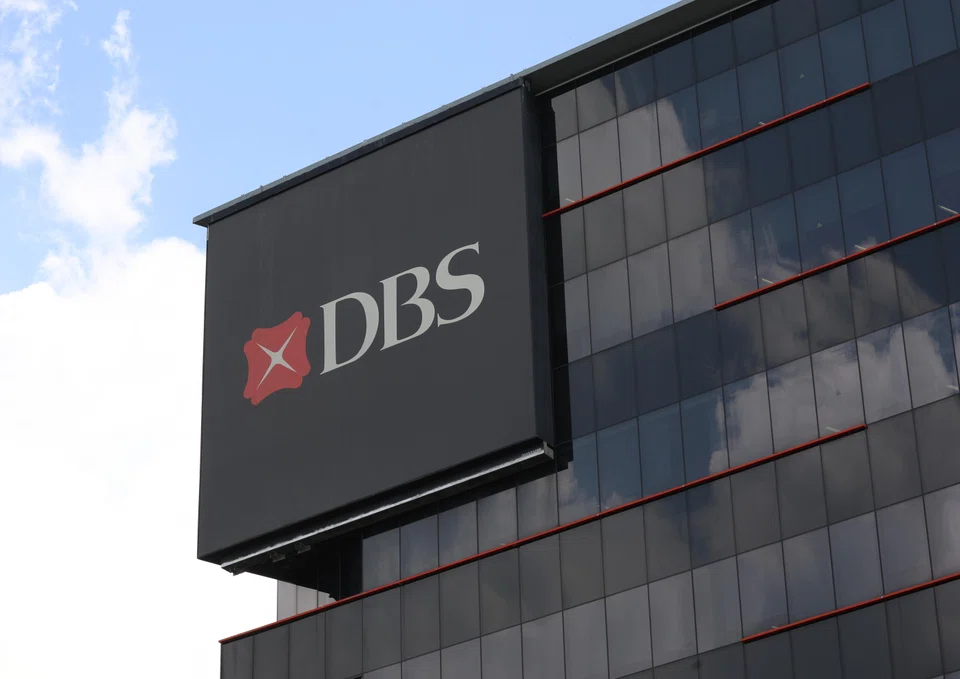
DBS Bank achieves record S$1 billion in AI economic value for 2025, yet agentic artificial intelligence raises critical talent challenges across Singapore’s banking sector.
At precisely 8:47 a.m. on a humid November morning in Singapore’s Marina Bay financial district, a corporate treasurer at a mid-sized logistics firm receives a notification from her DBS banking app. The message, crafted by an artificial intelligence system that analyzed three years of her company’s cash flow patterns, freight payment cycles, and seasonal working capital needs, suggests restructuring S$2.3 million in short-term debt into a more tax-efficient facility—saving her firm approximately S$84,000 annually. She accepts the recommendation with a single tap. The AI executes the restructuring before her first coffee break.
This seemingly mundane interaction represents a seismic shift in Asian banking: the industrialization of intelligence at scale. For DBS Bank, Southeast Asia’s largest financial institution by assets, such moments are no longer experimental—they have become the measurable foundation of competitive advantage. In 2025, the bank achieved a landmark that few global financial institutions can match: S$1 billion in audited economic value directly attributable to artificial intelligence initiatives, a 33% increase from S$750 million in 2024, as confirmed by Nimish Panchmatia, the bank’s chief data and transformation officer.
Yet even as DBS celebrates this quantifiable triumph—publishing AI returns in its annual report with a transparency that borders on revolutionary—a more complex narrative is emerging across Singapore’s banking landscape. The rise of agentic AI, systems capable of autonomous decision-making and multi-step task execution, is forcing financial institutions to confront an uncomfortable truth: the same technologies delivering billion-dollar efficiencies are fundamentally reshaping what it means to work in banking.
The Audited Achievement: How DBS Monetizes Machine Intelligence
DBS’s S$1 billion milestone is remarkable not for its magnitude alone, but for its methodological rigor. In an industry where vague claims about “AI transformation” have become ubiquitous noise, DBS employs what Panchmatia describes as an “impact-based, transparent and auditable” control mechanism. The bank doesn’t merely estimate AI’s contribution—it proves it through A/B testing and control group analysis, treating machine learning deployments with the same statistical discipline traditionally reserved for clinical pharmaceutical trials.
This empirical approach reveals AI’s penetration across every operational layer. DBS has deployed over 1,500 AI and machine learning models across more than 370 distinct use cases, spanning customer-facing businesses and support functions. The bank’s fraud detection systems now vet 100% of technology change requests using AI-powered risk scoring, resulting in an 81% reduction in system incidents. In customer service, generative AI tools are cutting call handling times by up to 20%, boosting both productivity and satisfaction metrics.
Behind these achievements lies a decade-long strategic commitment that began in 2018, when DBS determined that the next wave of digital transformation would be data-driven. The bank invested heavily in structured data platforms, cultivated a 700-person Data Chapter of professionals, and—perhaps most significantly—fostered an organizational culture that treats experimentation not as a luxury but as operational necessity. CEO Tan Su Shan has made this explicit: “It’s not hope. It’s now. It’s already happening,” she stated at the 2025 Singapore FinTech Festival, emphasizing that AI’s contribution to revenue is no longer speculative.
The bank’s commitment to transparency extends to acknowledging trade-offs. Panchmatia cautions against the temptation to create a “micro-industry” that meticulously quantifies every penny of hoped-for value. If improvement cannot be clearly defined and measured—whether in cost reduction, revenue uplift, processing time, or risk mitigation—DBS considers that value nonexistent. This discipline has created what analysts at Klover.ai describe as a “self-reinforcing flywheel,” where demonstrated ROI justifies expanded investment, which generates more use cases, which in turn produces more measurable value.
The Agentic Shift: From Tools to Teammates
While DBS’s traditional AI achievements are impressive, the banking sector is now grappling with a more profound transformation: the emergence of agentic artificial intelligence. Unlike earlier generative AI systems that primarily assist with content creation or analysis, agentic AI can make decisions, execute tasks autonomously, and manage multi-step objectives with limited human supervision. McKinsey research suggests this represents not merely an incremental improvement but an “organization-level mindset shift and a fundamental rewiring of the way work gets done, and by whom.”
The implications are already visible across Singapore’s banking ecosystem. At Oversea-Chinese Banking Corporation (OCBC), data scientist Kelvin Chiang developed five agentic AI models that can complete in ten minutes what previously took a private banker an entire day—tasks like drafting comprehensive wealth management documents by synthesizing research reports, regulatory filings, and client preferences. Before deployment, Chiang took his team directly to the Monetary Authority of Singapore (MAS) to demonstrate safeguards and explain how staff would respond if the system “hallucinated” or generated false information.
Similarly, Sumitomo Mitsui Banking Corp. has launched a Singapore-based agentic AI startup specifically designed to accelerate automation in corporate onboarding and know-your-customer processes. The venture promises to reduce corporate account opening times from five days to two, and potentially compress loan processing from seven months to as little as five days. Mayoran Rajendra, head of SMBC’s AI transformation office, emphasizes that “100% accuracy can never be assumed,” maintaining human oversight through workflows that ensure every extracted data point remains traceable and auditable.
These systems represent more than productivity enhancements. They herald what industry analysts term “autonomous intelligence”—AI that doesn’t merely augment human decision-making but, in certain contexts, replaces it entirely. Gartner forecasts that by 2028, agentic AI will enable 15% of daily work decisions to be made autonomously, up from essentially zero in 2024. This trajectory poses fundamental questions about the future composition of banking workforces.
The Talent Paradox: Reskilling 35,000 While Competing for Specialists
Singapore’s banking sector employs approximately 35,000 professionals—a workforce now facing what could be the most significant occupational transformation since the digitization of trading floors in the 1990s. The scale of the challenge is reflected in the national response: MAS, in partnership with the Institute of Banking and Finance, has launched a comprehensive Jobs Transformation Map for the financial sector, identifying how generative AI will reshape key job roles and the upskilling required as positions are transformed and augmented by AI.
DBS alone has identified more than 12,000 employees for upskilling or reskilling initiatives since early 2025, with nearly all having commenced learning roadmaps covering AI and data competencies. The bank has simultaneously reduced approximately 4,000 temporary and contract positions over three years, though both OCBC and United Overseas Bank report no AI-related layoffs of permanent staff. This pattern suggests AI is changing job composition rather than job quantity—at least in the medium term.
Yet this transition reveals what Workday’s Global State of Skills report identifies as a “skills visibility crisis.” In Singapore, 43% of business leaders express concern about future talent shortages, while only 30% are confident their organizations possess the necessary skills for long-term success. More troubling: a mere 46% of leaders claim clear understanding of their current workforce’s skills. This uncertainty becomes acute when competing for specialized AI talent. The recent reported acquisition of Manus, a Chinese-founded agentic AI startup, by Meta for over $2 billion—as noted by Finimize—illustrates the global competition for AI expertise. Nvidia CEO Jensen Huang has observed that roughly half of the world’s AI researchers are Chinese, a reminder that talent leadership will hinge on where people can build, raise capital, and sell worldwide.
For Singapore’s banks, this creates a dual challenge. They must simultaneously retrain existing workforces in AI literacy while attracting and retaining the scarce specialists capable of building proprietary systems. OCBC’s approach is instructive: the bank is training 100 senior leaders in coaching by 2027 to enable “objective and informed discussions about technology initiatives rather than emotional debates.” Meanwhile, UOB has partnered with Accenture to accelerate generative and agentic AI adoption—a “buy versus build” strategy that provides faster capability acquisition but potentially less proprietary institutional knowledge than DBS’s home-grown approach.
The human dimension extends beyond technical skills. Laurence Liew, director of AI Innovation at AI Singapore, emphasizes that agentic AI demands higher-order capabilities: “As AI agents gain more autonomy, the human role shifts from executor to orchestrator.” This transition requires not just coding proficiency but judgment, creativity, empathy, and the ability to manage autonomous systems responsibly—qualities that resist automation precisely because they are distinctly human.
The Regulatory Framework: Balancing Innovation and Accountability
Singapore’s regulatory response to AI’s proliferation reflects a philosophy that distinguishes the city-state from more prescriptive jurisdictions. In November 2025, MAS released its consultation paper on Guidelines for AI Risk Management—a document notable for what it doesn’t do. Rather than imposing rigid rules that might stifle innovation, MAS has established proportionate, risk-based expectations that apply across all financial institutions while accommodating differences in scale, scope, and business models.
Deputy Managing Director Ho Hern Shin explained the rationale: “The proposed Guidelines on AI Risk Management provide financial institutions with clear supervisory expectations to support them in leveraging AI in their operations. These proportionate, risk-based guidelines enable responsible innovation by financial institutions that implement the relevant safeguards to address key AI-related risks.”
The guidelines emphasize governance and oversight by boards and senior management, comprehensive AI inventories that capture approved scope and purpose, and risk materiality assessments covering impact, complexity, and reliance dimensions. Significantly, MAS is considering how to hold senior executives personally accountable for AI risk management, recognizing that autonomous systems create novel governance challenges traditional frameworks struggle to address.
DBS has responded by implementing its PURE framework (Purpose, Unbiased, Responsible, Explainable) and establishing a cross-functional Responsible AI Council composed of senior leaders from legal, risk, and technology disciplines. This council oversees and approves AI use cases, ensuring adherence to both regulatory requirements and ethical standards. The bank’s commitment to a “human in the loop” philosophy means AI augments rather than replaces human judgment, particularly in sensitive functions like risk assessment and critical customer interactions.
This collaborative regulatory approach has created what practitioners describe as permission to experiment within well-defined guardrails. When OCBC presented its agentic AI tools, regulators wanted to understand thinking processes, oversight mechanisms, and escalation protocols—not to obstruct deployment but to ensure responsible implementation. This pragmatism distinguishes Singapore from jurisdictions where regulatory uncertainty has become an innovation tax.
The Regional Context: Singapore’s Competitive Position
DBS’s AI achievements must be understood within the broader competitive dynamics of Asian banking. While DBS has built a significant lead through its decade-long investment in proprietary platforms and data infrastructure, competitors are pursuing different strategies with varying degrees of success.
OCBC, which established Asia’s first dedicated AI lab in 2018, has deployed generative AI productivity tools across its 30,000-employee global workforce, reporting productivity gains of approximately 50% in piloted functions. The bank’s AI systems now make over four million daily decisions across risk management, customer service, and sales—projected to reach ten million by 2025. OCBC’s focus on “10x initiative,” which challenges every employee to deliver ten times baseline productivity, reflects an ambitious vision of collective organizational uplift through AI augmentation.
UOB’s recent partnership with Accenture signals a more accelerated adoption pathway, leveraging external expertise to compress development timelines. While this approach may yield faster deployment than DBS’s build-it-yourself philosophy, it raises questions about long-term differentiation. Analysis by Klover.ai suggests that “partner or buy strategies” can quickly acquire advanced capabilities but may generate less proprietary institutional knowledge and greater dependency on third-party vendors for core innovation.
Beyond Singapore, the regional picture is mixed. Hong Kong, Tokyo, Seoul, and Mumbai are all investing heavily in banking AI, but implementation varies widely based on regulatory environments, talent availability, and institutional risk appetites. McKinsey estimates that generative AI could add between $200 billion and $340 billion in annual value to the global banking sector—2.8% to 4.7% of total industry revenues—largely through increased productivity. The institutions capturing disproportionate shares of this value will likely be those that master not just the technology but the organizational transformation it demands.
The Ethical Dimension: AI With a Heart
Perhaps the most significant aspect of DBS’s AI strategy is its explicit framing as “AI with a heart”—a philosophy that acknowledges technology’s limitations and privileges human judgment in contexts where values, empathy, and cultural nuance matter. Panchmatia has articulated this as a shift from “user-centered AI” to “human-centered AI,” where systems actively support customer wellbeing, financial literacy, and positive societal impact rather than merely optimizing individual transactions.
This approach manifests in concrete design choices. DBS employs adaptive feedback loops that continuously refine customer insights based on behavioral responses. If a customer receives a nudge—such as an installment option for a large purchase—and chooses not to engage, that feedback adjusts future interactions. The system learns not just what customers do, but what they choose not to do, respecting autonomy while improving relevance.
The ethical stakes escalate with agentic AI’s increasing autonomy. As systems gain authority to make consequential decisions with limited oversight, questions about bias, fairness, transparency, and accountability become existential rather than peripheral. DBS’s external validation—receiving the Celent Model Risk Manager Award for AI and GenAI in 2025—suggests the bank’s governance approach is gaining industry recognition. Yet challenges persist. Gartner projects that nearly 40% of agentic AI projects will stall or be cancelled by 2027, primarily due to fragmented data and underestimated operational complexity.
The potential for AI to exacerbate social inequalities looms large. If automation primarily displaces routine cognitive tasks performed by mid-level professionals while concentrating gains among highly skilled specialists and capital owners, the technology could widen rather than narrow economic divides. Singapore’s comprehensive reskilling programs represent an attempt to democratize access to AI-augmented opportunities, but success is far from assured. As Workday observes, 52% of Singaporean business leaders cite reskilling time as a major obstacle, with 49% identifying resistance to change as a barrier.
The Path Forward: Can Singapore Maintain Its Lead?
As 2026 unfolds, Singapore’s banking sector stands at an inflection point. DBS’s S$1 billion AI value milestone demonstrates that machine intelligence can deliver measurable competitive advantage when implemented with rigor and transparency. The bank’s success reflects strategic foresight, substantial investment, cultural transformation, and—critically—the courage to publish audited results that expose both achievements and limitations.
Yet the transition to agentic AI introduces uncertainties that disciplined execution alone cannot resolve. The technology’s capacity for autonomous decision-making raises governance challenges that existing frameworks struggle to address. The competition for specialized AI talent is intensifying globally, with the world’s most innovative minds increasingly mobile and capital flowing to wherever regulatory environments and opportunities align. Singapore’s relatively small population—approximately 5.9 million—means the city-state cannot rely on domestic talent pipelines alone but must attract and retain international expertise through superior working conditions, intellectual stimulation, and quality of life.
The regional competitive landscape is also shifting. While Singapore currently enjoys a first-mover advantage in AI-enabled banking, Hong Kong, South Korea, and emerging financial centers are investing aggressively in competing capabilities. The question is whether Singapore’s collaborative regulatory approach, comprehensive reskilling programs, and established financial ecosystem can maintain differentiation as AI technologies commoditize and diffuse.
Perhaps the most profound uncertainty concerns whether the promise of AI augmentation will prove inclusive or exclusionary. If the technology primarily benefits those already privileged with access to elite education, digital literacy, and professional networks, it risks becoming another mechanism of stratification. Conversely, if thoughtfully deployed with attention to accessibility and opportunity creation, AI could democratize access to sophisticated financial services and expand economic participation.
DBS’s achievement of S$1 billion in AI economic value is undeniably impressive—a quantifiable demonstration that machine intelligence has moved from experimental novelty to operational bedrock. Yet as agentic AI systems gain autonomy and influence, Singapore’s banks face challenges that transcend technology: how to balance efficiency with employment security, innovation with accountability, competitive advantage with social cohesion. The city-state that figures out this balance first may not just maintain its lead in banking AI—it may define what responsible financial automation looks like for the rest of the world.
The corporate treasurer who accepted that AI-generated debt restructuring recommendation at 8:47 a.m. saved her firm S$84,000. But the larger question—whether the AI that enabled her productivity will ultimately create or destroy opportunities for others like her—remains stubbornly, provocatively open.



The New Risk Frontier of Digital Exports
As software, AI models, digital media, and cross-border SaaS platforms dominate global trade, traditional commercial property and casualty insurance is no longer sufficient. Digital exporters face complex liabilities ranging from cross-border data privacy breaches and algorithmic bias claims to intellectual property infringement in foreign jurisdictions. In 2026, protecting a borderless digital enterprise requires specialized insurance coverage tailored to intangible asset risks.
Failing to secure robust digital export insurance can expose founders and shareholders to catastrophic lawsuits originating from overseas regulatory bodies.
Essential Coverages for Digital Export Enterprises
Cyber Liability and Algorithmic Error Coverage
If an AI model or software product exported overseas malfunctions or suffers a data breach, foreign regulators can levy severe fines under regional privacy laws. Modern cyber policies cover both regulatory defense costs and third-party damages.
Intellectual Property and Copyright Defense
Digital creators and SaaS firms operating globally are frequent targets of frivolous IP litigation in unfamiliar legal systems. Specialized IP insurance covers the exorbitant legal fees required to defend international patents and copyrights.
| Insurance Policy Type | Primary Protection Area | Target Enterprise | Average Annual Premium |
| Global Cyber Liability | Data breaches, ransomware, AI output errors | SaaS & AI Platforms | $5,000 – $18,000 |
| E&O Professional Liability | Service failures, missed deliverables | Digital Consultancies & Agencies | $3,000 – $10,000 |
| International IP Defense | Foreign copyright & patent lawsuits | Software Developers & Creators | $7,000 – $25,000 |
Securing Comprehensive Coverage: Best Practices
Navigating the insurance market for digital exports requires partnering with specialized brokers who understand intangible asset exposures.
Audit Geographic Exposures: Clearly map where your digital users reside to ensure your policy covers those specific regulatory jurisdictions.
Verify AI Exclusion Clauses: Carefully review policy wording to ensure your generative AI or automated tools are not explicitly excluded from coverage.
Maintain Incident Response Protocols: Insurers offer lower premiums to firms that demonstrate rigorous cybersecurity and data governance standards.
“Risk Management Expert Note: Your software may be intangible, but your liability in foreign markets is entirely real. Comprehensive digital export insurance is the ultimate shield for borderless growth.”
Equipping your digital export enterprise with specialized insurance safeguards your balance sheet and ensures uninterrupted global expansion.

Why the AI Revolution Is Breaking the Link Between Output and Labor Income
Artificial intelligence is transforming the modern workplace at a breathtaking pace. Generative AI tools are drafting legal briefs, diagnosing medical images, writing software code, and managing supply chains with superhuman efficiency. Yet a landmark report from the International Labour Organization, released on June 15, 2026, reveals a troubling disconnect: while global labor productivity has accelerated to a 3.2% annual clip, real median wages in advanced economies have risen a mere 0.8% (ILO World Employment and Social Outlook, June 2026). The AI boom, it appears, is delivering a productivity miracle that primarily rewards capital owners and the highest‑skilled technologists, leaving the typical worker behind.
The Labour Share in Freefall
The ILO’s most alarming finding is the labor share decline. The labor income share—the slice of national income that goes to workers in the form of wages, salaries, and benefits—has fallen to a historic low of 51% globally, down from 54% in 2004. The decline is sharpest in the United States and Northern Europe, where AI adoption is most advanced. In the US, the labor share has dropped to 56.5%, a level not seen since the Gilded Age. The ILO attributes 40% of this decline since 2020 to technological displacement, with AI being the primary driver.
The mechanism is subtle but powerful. AI automates cognitive routine tasks, not just physical ones. When a financial analyst’s report that once took five days can be produced by an AI in five minutes, the marginal value of that analyst’s time plummets. The analyst may keep her job, but her bargaining power for raises evaporates. Meanwhile, the firm’s profits surge because output per worker rises dramatically. The ILO found that in the top 500 AI‑adopting firms globally, operating margins expanded by an average of 4.8 percentage points between 2022 and 2026, but the wage‑to‑revenue ratio contracted by 2.3 points (McKinsey Global Institute, “The State of AI in 2026”).
Technology Unemployment 2.0
The term “technological unemployment” has moved from academic journals to mainstream policy debates. The ILO estimates that while AI will create 50 million net new jobs by 2030, it will displace or fundamentally transform 400 million roles. The occupations most exposed are those that involve information processing, pattern recognition, and language generation: paralegals, accountants, call‑center agents, radiologists, and software developers themselves. In a striking case, a major global bank announced in April 2026 that it had reduced its compliance department headcount by 35% while simultaneously cutting error rates, replacing human reviewers with a combination of natural‑language processing and robotic process automation (Financial Times).
What makes this wave different from previous automation cycles is the speed and the educational threshold. Historically, automation hit blue‑collar manufacturing; this time, it is hitting white‑collar, university‑educated professionals. A paper from the National Bureau of Economic Research circulated in May 2026 shows that for the first time, workers with a bachelor’s degree are seeing a negative return to experience in AI‑exposed roles; their earnings trajectory is flattening relative to peers in less automatable trades such as plumbing or elderly care (NBER Working Paper 31050).
The Gig Economy Entrenchment
AI is also accelerating the fissuring of the traditional employment relationship. Platforms that match freelancers with tasks, from graphic design to legal research, are increasingly using AI to manage work allocation, evaluate performance, and even set piece‑rate prices. The ILO found that 38% of the global workforce is now engaged in some form of non‑standard employment, up from 34% in 2019. While this provides flexibility, it strips away the training, benefits, and career progression that traditional employment offered. Workers in these arrangements have seen their real incomes stagnate or fall, as algorithmic management squeezes task‑by‑task compensation.
Policy Responses: From AI Taxes to Universal Basic Capital
Governments and international bodies are scrambling to rewrite the social contract. The European Parliament’s Committee on Employment is debating an AI training levy that would require firms deploying automation to contribute 1% of payroll to a reskilling fund. The idea, inspired by Singapore’s SkillsFuture credit, has drawn support from trade unions and even some tech leaders. Sam Altman’s concept of a “universal basic capital”—an ownership stake in the AI‑driven economy distributed to all citizens—has moved from concept to pilot in Finland and Kenya, where blockchain‑based digital trusts allocate shares in a portfolio of AI‑intensive public companies to citizens (World Economic Forum, “AI Governance in Practice”).
The OECD has issued new guidelines urging members to strengthen collective bargaining rights in the digital economy and to enforce antitrust laws that prevent algorithmic wage‑fixing (OECD Employment Outlook 2026). In the United States, the Federal Trade Commission has opened investigations into several large HR‑tech platforms over allegations that their “optimal wage” algorithms constitute illegal coordination among employers.
What Workers and Employers Can Do
For individuals, the advice is increasingly nuanced. The ILO recommends “AI literacy” not as a coding skill but as the ability to supervise, critique, and collaborate with AI outputs. Skills in emotional intelligence, complex negotiation, and ethical judgment are commanding a premium. Employers, on the other hand, are facing a talent paradox: they need workers who can manage AI, but if they hollow out the middle tier of employees, they lose the pipeline for future managers. Firms that invest in robust apprenticeship programs and internal mobility, such as Bosch and Siemens, are finding that they can deploy AI without triggering the toxic wage compression that hurts morale and long‑term innovation (Harvard Business Review, “The Smart Way to Automate”).
The AI productivity boom is real, but the ILO’s message is stark: without deliberate policy intervention, the link between rising output and rising living standards will remain broken. The labor share decline is not an iron law of technology; it is a consequence of institutional choices. Whether nations choose to tax, redistribute, or upskill will determine whether the 2020s are remembered as the decade of shared prosperity or of deepening divide.

A growing effort is underway across financial markets to transform raw AI computing power into a tradeable commodity — a development some are already comparing to the emergence of oil as a globally traded resource. The push reflects how central compute capacity has become to the modern economy, and how badly investors want exposure to it.
From Infrastructure to Asset Class
For years, computing power has been treated purely as infrastructure — something companies build, lease, or rent, but rarely trade as a financial instrument in its own right. That is starting to change as demand for AI training and inference capacity has exploded, creating scarcity dynamics that look increasingly similar to those in traditional commodity markets.
The comparison to oil isn’t accidental. Like crude, computing power is a finite resource with significant production costs, geographically concentrated supply, and demand that touches nearly every sector of the economy. Proponents of commoditizing compute argue that a tradeable market could help allocate scarce GPU capacity more efficiently while giving investors a new way to express views on the pace of AI adoption.
The Mechanics Being Explored
Efforts in this space are looking at structures that would allow compute capacity to be bought, sold, and potentially hedged much like energy contracts — with futures-style instruments tied to access to processing power rather than physical commodities. The idea is still in relatively early stages, but the level of attention it’s drawing from both traditional financial institutions and AI infrastructure providers suggests it’s being taken seriously as a long-term structural shift.
Why It Matters Beyond Wall Street
If compute power does become a standardized, tradeable asset, the implications would stretch well beyond financial markets. Pricing transparency could help smaller AI companies and startups better plan their infrastructure costs, while large-scale data center operators could use new instruments to hedge against demand volatility.
It would also mark a significant evolution in how markets value the AI boom — shifting some of the speculative energy currently concentrated in AI-linked equities toward a more direct, infrastructure-based asset class.
The Road Ahead
Turning any new resource into a liquid, well-functioning commodity market typically takes years of work on standardization, regulation, and trust-building among market participants. But the early momentum behind treating AI compute as “the new oil” signals just how foundational computing power has become to the next phase of the global economy.

Business Insurance for Digital Exports: Protecting Your Company in the AI Era

Real Estate Crash Predictions 2026: Data-Backed Regional Guide

What is a “Lead-Left” Bank? Unpacking Morgan Stanley’s Role in Anthropic’s Mega-IPO

Is SPY Overvalued in September 2026? Fed Rate Hike Odds & Intrinsic Value

Pakistan’s KSE-100 Nears Record Territory Even as the Trade Gap Persists

US Consumer Sentiment Sinks as Retail Sales Drop

Barclays Q2 2026 Results: Income Beats, Costs Rise 7%

Pakistan’s Remittance Lifeline: Why Gulf Exposure Is a Hidden Risk

Dubai’s Rise to the World’s 7th Financial Hub: Inside the D33 Push

China EV Exports Hit Record High in 2026

UK’s “National Contributions Tax” Explained: Burnham-Era Reform 2026

Russia’s Strange Problem in 2026: Its Currency Is Too Strong

Section 301 Forced Labor Tariffs 2026: 60 Countries Affected

UK National Contributions Tax: Burnham’s Radical Tax Plan

Top 15 Stocks for Investment in 2026 in PSX: Your Complete Guide to Pakistan’s Best Investment Opportunities
Top 15 Stocks for Investment in 2026 in PSX: Your Complete Guide to Pakistan’s Best Investment Opportunities

Debunking IMF Program Myths: Reconfiguring Engagement for True National Ownership in a Volatile World

Top 10 Mutual Fund Managers in Pakistan for Investment in 2026: A Comprehensive Guide for Optimal Returns

What the U.S. Attack on Venezuela Could Mean for Oil and Canadian Crude Exports: The Economic Impact

China’s 50% Domestic Equipment Rule: The Semiconductor Mandate Reshaping Global Tech

15 Most Lucrative Sectors for Investment in Pakistan: A 2025 Data-Driven Analysis

Pakistan’s Export Goldmine: 10 Game-Changing Markets Where Pakistani Businesses Are Winning Big in 2025
15 Most Lucrative Sectors for Investment in Pakistan: A 2025 Data-Driven Analysis
15 Most Lucrative Sectors for Investment in Pakistan: A 2025 Data-Driven Analysis

Pakistan’s Stock Market Renaissance: How 2025’s Hottest Investment Opportunity Is Democratizing Wealth—A Complete Beginner’s Guide

Pakistan’s Economic Outlook 2025: Between Stabilization and the Shadow of Stagnation
Pakistan’s Economic Outlook 2025: Between Stabilization and the Shadow of Stagnation

China’s Property Woes Could Last Until 2030—Despite Beijing’s Best Censorship Efforts
-
 Markets & Finance8 months ago
Top 15 Stocks for Investment in 2026 in PSX: Your Complete Guide to Pakistan’s Best Investment Opportunities
-
Markets & Finance8 months ago
Top 15 Stocks for Investment in 2026 in PSX: Your Complete Guide to Pakistan’s Best Investment Opportunities
-
 Analysis7 months ago
Debunking IMF Program Myths: Reconfiguring Engagement for True National Ownership in a Volatile World
-
 Investment8 months ago
Top 10 Mutual Fund Managers in Pakistan for Investment in 2026: A Comprehensive Guide for Optimal Returns
-
 Global Economy8 months ago
What the U.S. Attack on Venezuela Could Mean for Oil and Canadian Crude Exports: The Economic Impact
-
 Asia8 months ago
China’s 50% Domestic Equipment Rule: The Semiconductor Mandate Reshaping Global Tech
-
 AI9 months ago
15 Most Lucrative Sectors for Investment in Pakistan: A 2025 Data-Driven Analysis
-
 Exports9 months ago
Pakistan’s Export Goldmine: 10 Game-Changing Markets Where Pakistani Businesses Are Winning Big in 2025