
China Economy
China’s Ice Silk Road 2026: Arctic Strategy and Geopolitical Shift


What is China’s Ice Silk Road?
China’s “Ice Silk Road”—also known as the Polar Silk Road—is an ambitious extension of its Belt and Road Initiative into the Arctic, formally unveiled in Beijing’s 2018 Arctic Policy White Paper. It envisions a new maritime corridor linking China to Europe via the Northern Sea Route (NSR), capitalizing on melting ice to shorten shipping times and secure energy resources. Far from mere rhetoric, it reflects China’s self-proclaimed status as a “Near-Arctic State” and its drive to become a “Polar Great Power.”
Here are the key geopolitical implications emerging in 2026:
- Strategic bypass: The NSR offers an alternative to the vulnerable Malacca Strait, through which 80% of China’s energy imports flow.
- Deepening Russia ties: Over 90% of China’s Arctic investments target Russian projects, but this partnership strengthens Moscow’s leverage.
- Emerging tensions: Accelerated ice melt raises prospects for resource disputes and militarization, transforming the Arctic from a frozen barrier into a potential frontline.
- Western pushback: Setbacks in Greenland and elsewhere highlight security concerns from the U.S. and allies.
- Opportunities for balancers: Nations like South Korea could exploit subtle divergences between China, Russia, and North Korea to enhance regional stability.
Yet beneath the economic rhetoric lies a more profound shift. China’s Arctic push exploits climate change and opportunistic alliances to challenge Western maritime dominance, creating ripple effects for global security—from U.S. homeland defense to alliances in Asia.
Roots of Ambition: From Xi’s Vision to National Security Doctrine
The Ice Silk Road traces back to 2014, when President Xi Jinping, aboard the icebreaker Xuelong in Tasmania, declared China’s intent to evolve from a “Polar Big Power”—focused on quantitative expansion—to a qualitative “Polar Great Power.” This marked a pivot toward technological independence, governance influence, and maximized benefits.
By 2018, China’s first Arctic White Paper formalized the strategy, asserting rights under UNCLOS for navigation, research, and resource development while proposing to “jointly build” the Ice Silk Road with partners, primarily Russia. The 2021-2025 Five-Year Plan elevated polar regions as “strategic new frontiers,” tying them to maritime power goals.
Recent doctrine escalates this further. A 2025 national security white paper equates maritime interests with territorial sovereignty, implying potential justification for power projection in distant seas—including the Arctic. This evolution signals that Beijing views the far north not just as an economic opportunity, but as integral to core security.
Tangible Progress: Shipping Boom and Energy Stakes
China’s advances are most visible in the NSR’s rapid commercialization. Despite challenges, traffic has surged: in 2025, Chinese operators completed a record 14 container voyages, pushing transit cargo to new highs around 3.2 million tons across roughly 103 voyages.Reuters report on Chinese Arctic freight
Overall NSR activity reflects steep growth, with container volumes rising noticeably as Beijing accumulates expertise through state-owned COSCO and domestic shipbuilding.

Energy dominates investments. China has poured capital into Russian LNG projects like Yamal and Arctic LNG 2, undeterred by sanctions—receiving 22 shipments from sanctioned facilities in 2025 alone.Reuters on sanctioned Russian LNG to China Stakes in Gydan Peninsula developments and progress on onshore pipelines underscore this focus.
Scientific footholds, such as the China-Iceland Arctic Science Observatory, bolster presence, though Western analysts flag dual-use potential for surveillance.
Setbacks Amid Pushback: The Limits of Influence
Success has been uneven. Attempts to develop rare earths in Greenland faltered due to local elections and U.S.-Danish interventions, while airport bids and a proposed Finland-Norway railway collapsed amid security fears. These episodes reveal a geopolitical environment where economic overtures collide with alliance checks.CSIS analysis on Greenland and Arctic security
As ice recedes, non-Arctic actors like China face scrutiny, with coastal states prioritizing sovereign control.
Core Implications: Bypassing Chokepoints and Shifting Balances
The NSR’s strategic value shines in its potential to circumvent the Malacca dilemma—a “single point of failure” for China’s imports. Largely within Russia’s EEZ, it shields traffic from U.S. naval reach, provided Sino-Russian ties hold.Economist on Russia-China Arctic plans
This dependency cuts both ways: Russia gains leverage over route access. Emerging continental shelf claims, like those over the Lomonosov Ridge, foreshadow disputes, while melting enables permanent basing and submarine operations—altering force projection dynamics.Economist interactive on Arctic military threats
For the U.S., the Arctic shifts from natural barrier to vulnerable flank, demanding costly investments in icebreakers and defenses.Economist on U.S. icebreaker gap
Exploratory Risks: New Frontlines and Regional Dynamics
Three hypotheses illuminate 2026 risks.
First, climate change erodes U.S. strategic depth, elevating the Arctic to homeland priority as Russia and China probe nearer Alaska.NYT on Arctic threats NATO’s Arctic majority (excluding Russia) risks fault lines, yet Moscow’s wariness of Chinese encroachment—evident in restricted data sharing—limits full alignment.Carnegie on Sino-Russian Arctic limits
Second, China’s desired Tumen River outlet to the East Sea remains blocked by Russia and North Korea, preserving their ports and leverage. Joint infrastructure reinforces this check.
Third, U.S. “bifurcated” positioning—treating North Korea as a bolt against Chinese expansion—requires peninsular stability, pushing allies toward greater burden-sharing.
2026 Outlook: Stalled Pipelines and Heightened Vigilance
Early 2026 brings mixed signals. Power of Siberia 2 talks persist, with China holding pricing leverage amid alternatives; completion could take years.Carnegie on Russia-China gas deals NSR container traffic booms, but sanctions and ice variability temper euphoria.
Tensions simmer: Norway tightens Svalbard controls against Russian (and Chinese) influence, while Greenland’s resources draw renewed scrutiny.NYT on Svalbard Arctic control
For the West, urgency lies in coordinated deterrence—bolstering icebreaking, alliances, and governance—without provoking escalation. Allies like South Korea could preemptively stabilize by restoring ties with Russia and engaging North Korea, alleviating asymmetries that fuel bloc formation.Brookings on China Arctic ambitions
A Calculated Gambit in a Warming World
China’s Ice Silk Road is no fleeting venture; it’s a sophisticated play harnessing environmental upheaval and pragmatic partnerships to redraw global contours. In 2026, as routes open and stakes rise, the Arctic tests whether cooperation or competition prevails. The West cannot afford complacency—strategic adaptation, not isolation, offers the best counter. This melting frontier demands attention, lest it freeze old alliances into irrelevance.
References
Brookings Institution. (n.d.). China’s Arctic activities and ambitions. https://www.brookings.edu/events/chinas-arctic-activities-and-ambitions/
Carnegie Endowment for International Peace. (2025, February 18). The Arctic is testing the limits of the Sino-Russian partnership. https://carnegieendowment.org/russia-eurasia/politika/2025/02/russia-china-arctic-views?lang=en
Carnegie Endowment for International Peace. (2025, September 22). Why can’t Russia and China agree on the Power of Siberia 2 gas pipeline? https://carnegieendowment.org/russia-eurasia/politika/2025/09/russia-china-gas-deals?lang=en
Center for Strategic and International Studies. (2025). Greenland, rare earths, and Arctic security. https://www.csis.org/analysis/greenland-rare-earths-and-arctic-security
Jun, J. (2025, December 31). China’s ‘Ice Silk Road’ strategy and geopolitical implications. The East Asia Institute.
Reuters. (2025, October 14). Chinese freighter halves EU delivery time on maiden Arctic voyage to UK. https://www.reuters.com/sustainability/climate-energy/chinese-freighter-halves-eu-delivery-time-maiden-arctic-voyage-uk-2025-10-14/
Reuters. (2026, January 2). China receives 22 shipments of LNG from sanctioned Russian projects in 2025. https://www.reuters.com/business/energy/china-receives-22-shipments-lng-sanctioned-russian-projects-2025-2026-01-02/
The Economist. (2025, January 23). The Arctic: Climate change’s great economic opportunity. https://www.economist.com/finance-and-economics/2025/01/23/the-arctic-climate-changes-great-economic-opportunity
The Economist. (2025, October 2). How bad is America’s icebreaker gap with Russia? https://www.economist.com/europe/2025/10/02/how-bad-is-americas-icebreaker-gap-with-russia
The Economist. (2025, November 12). The Arctic will become more connected to the global economy. https://www.economist.com/the-world-ahead/2025/11/12/the-arctic-will-become-more-connected-to-the-global-economy


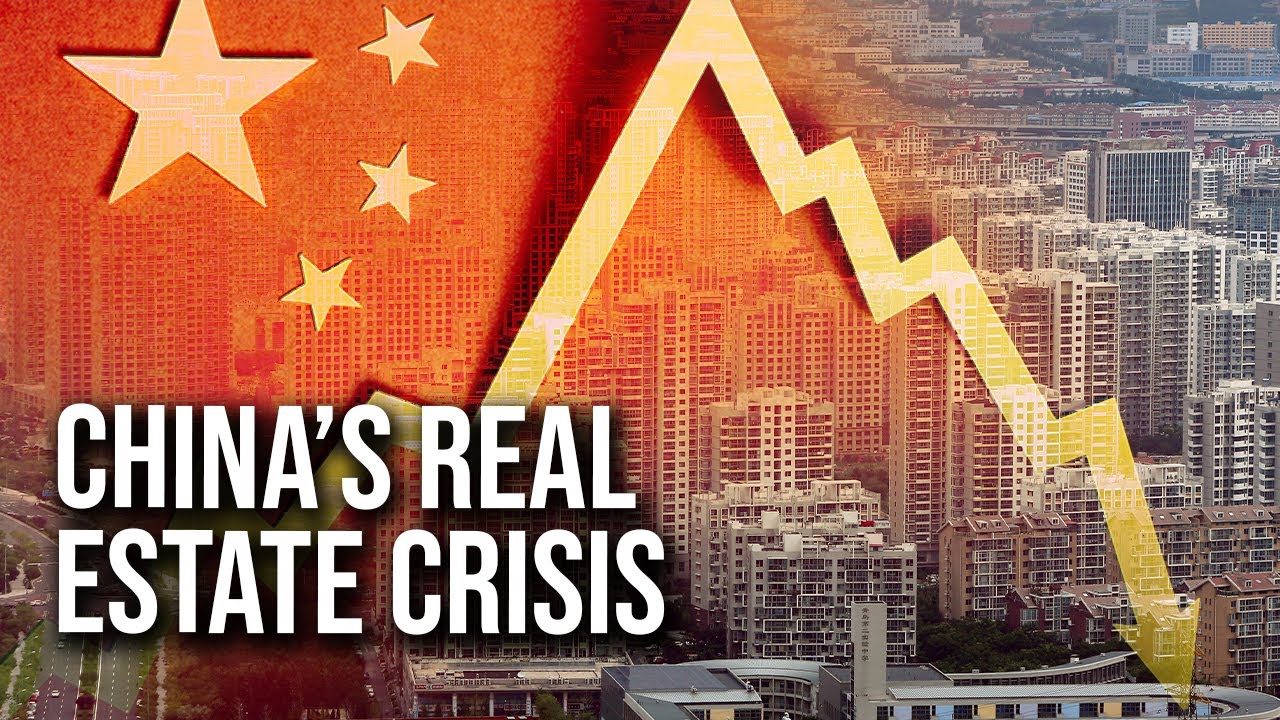
China’s economy in 2026 is a study in contradiction. In its largest cities — Shanghai, Beijing, Guangzhou, Shenzhen — new-home prices have risen for three consecutive months, driven by targeted policy support that is beginning to show traction. Across the remaining hundreds of cities, prices are still falling at a pace that is accelerating, not slowing.
National property investment fell 16.2% year-over-year in the first five months of 2026 — a staggering contraction in a sector that once accounted for roughly a quarter of Chinese GDP. At the same time, China’s technology sector is attracting record capital flows, its export machine is running at full throttle despite global trade tensions, and the People’s Bank of China (PBOC) is quietly implementing some of the most significant monetary architecture reforms in a generation.
China is, in effect, running two economies simultaneously. Understanding which one dominates the other will determine the trajectory of global markets for the next several years.
The Property Sector: A Structural Wound, Not a Cyclical Dip
China’s real estate crisis is entering its fifth year. What began with the 2021 Evergrande collapse has evolved into a sustained structural contraction that is fundamentally reshaping the economic role of property in China’s growth model.
National home prices declined at a faster pace in May 2026 than in April, a sign that market conditions are deteriorating rather than stabilising at the aggregate level. The OECD inventory of unsold homes across China’s lower-tier cities remains enormous — a structural supply overhang that cannot be resolved by demand-side stimulus alone.
The policy response has been asymmetric by design. The central government’s support measures are concentrated in Tier 1 and select Tier 2 cities, where local governments have more fiscal capacity to implement purchase subsidies, down-payment reductions, and mortgage rate cuts. In these markets, the policy appears to be working: new-home prices in China’s first-tier cities rose for the third consecutive month in May.
But first-tier cities account for a small fraction of China’s total housing stock. The vast majority of property — and the vast majority of household wealth — is concentrated in smaller cities where policy support is less effective and price declines are continuing.
The macro consequence is a negative wealth effect that is suppressing consumer confidence and retail spending precisely at the moment China needs domestic demand to compensate for a structurally lower export environment.
The PBOC’s Quiet Revolution
While the property sector weighs on growth, the People’s Bank of China has been implementing a series of significant monetary policy reforms. PBOC Governor Pan Gongsheng announced measures in June 2026 that include:
- Increased use of overnight reverse repo operations, a technical adjustment that improves the PBOC’s ability to manage short-term liquidity conditions with precision
- Narrowing the short-term interest rate corridor, reducing volatility in interbank lending rates and improving monetary policy transmission
- Steps to support the offshore use of the renminbi, accelerating the internationalisation of the Chinese currency as part of China’s longer-term strategy to reduce dependency on the US dollar in global trade and finance
These announcements are significant, but should not be misread as a broad-based monetary stimulus package. The PBOC is reforming its operational framework and improving financial market infrastructure — not firing an economic bazooka. The distinction matters for investors who might expect a China stimulus surge analogous to 2009 or 2015.
For investors, the PBOC’s focus on financial market development and liquidity management signals that policymakers are prioritising long-term stability over short-term growth stimulus. This implies a more gradual recovery trajectory than markets have sometimes assumed.
China’s Export Machine: A Source of Strength and Tension
Against the backdrop of the property slump, China’s export sector is performing exceptionally well. China’s trade surplus has expanded significantly in 2026, driven by:
- Industrial overcapacity in sectors including steel, solar panels, electric vehicles, chemicals, and lithium-ion batteries
- A weaker renminbi that has improved price competitiveness for Chinese exporters in global markets
- Continued strong demand for Chinese manufactured goods from Southeast Asia, Latin America, and Africa — markets that have deepened trade ties with China as US-China trade friction has redirected some Western procurement
China’s strong export growth has sparked significant international pushback. Policymakers across the European Union, the United States, and major emerging markets have expressed concerns about industrial overcapacity and the impact of low-cost Chinese exports on domestic manufacturing industries. The EU has implemented additional tariffs on Chinese electric vehicles, and US tariffs on a broad range of Chinese goods remain elevated following the Trump administration’s tariff regime.
The structural tension: China needs export growth to compensate for weak domestic demand, but its export success is generating the geopolitical friction that could ultimately constrain market access.
China’s AI Pivot: From Property Developer to Tech Powerhouse
The most significant transformation in China’s economic structure in 2026 is not occurring in housing — it is occurring in technology. China’s leadership has made a deliberate and well-resourced pivot toward artificial intelligence, semiconductors, and advanced manufacturing as the new engines of economic growth.
Chinese technology companies including Huawei, Baidu, Alibaba, and ByteDance are investing at scale in AI model development, AI chip design, and AI-integrated enterprise applications. The Chinese government’s industrial policy support for these sectors — through subsidies, preferential financing, and regulatory facilitation — is mobilising capital at a pace that rivals the hyperscaler buildout in the United States.
The strategic motivation is clear: reduce dependency on US semiconductor technology (particularly following US export controls on advanced chips), build sovereign AI capability across defence, governance, and commercial applications, and position Chinese technology companies as global AI leaders in markets outside the Western sphere.
This pivot is creating investment opportunities in Chinese technology equities — though geopolitical risk, regulatory uncertainty, and the US export control regime create complex risk factors that must be weighed carefully by international investors.
The Global Market Implications
China’s two-speed economy creates distinct implications for different asset classes and geographic markets:
Commodities: The property sector contraction is the dominant factor for commodity demand. Steel, copper, cement, and glass — all deeply tied to construction activity — face sustained headwinds from Chinese property weakness. Iron ore prices reflect this dynamic. In contrast, Chinese demand for technology-related commodities (lithium, cobalt, rare earths) remains robust as the EV and battery supply chain continues to scale.
Asian equities: The MSCI Emerging Markets index has significant China weighting, and China’s two-speed dynamics are creating divergence between technology-oriented Chinese equities (performing well) and property/financial sector stocks (underperforming). Country selection and sector allocation matter enormously in the current Chinese equity environment.
Currency markets: The PBOC’s renminbi internationalisation measures represent a long-duration effort to reduce dollar dependence. In the near term, currency management remains a key PBOC tool — managed depreciation to support exporters, with intervention to prevent disorderly moves that could trigger capital outflows.
European and US corporates: Companies with significant China exposure face a bifurcated operating environment — strong demand in technology-related end markets, weak demand in consumer and construction-related segments. Luxury goods, industrials, and materials companies are disproportionately affected by the property sector contraction.
The Policy Outlook: What Comes Next
The Chinese government faces a genuinely difficult policy dilemma. Aggressive fiscal or monetary stimulus risks reigniting the debt dynamics that made the property crisis inevitable in the first place. Insufficient support risks a deeper consumer confidence collapse that could turn a structural slowdown into a sharper cyclical downturn.
The current policy approach — targeted support for Tier 1 property markets, incremental PBOC reforms, and aggressive industrial policy investment in technology sectors — represents a careful balancing act. It is not the big bang stimulus that some investors have anticipated, but it is also not the hands-off approach that would allow a disorderly collapse.
The most likely trajectory: China grows at 4.0%–4.5% in 2026, below its historical average but ahead of the IMF’s revised global growth forecast of 3.1%. The property sector continues to weigh on domestic demand, while exports and technology investment provide partial offsets. The renminbi remains managed, and the PBOC avoids large-scale interest rate cuts that would widen the US-China rate differential and accelerate capital outflows.
The Bottom Line
China’s economy in 2026 is not in crisis, but it is in transition — and the transition is proving slower and more painful than the optimists predicted. The property sector wound is structural, not cyclical. The technology pivot is real but will take years to fully offset the economic weight that property once carried.
For global investors, China remains the world’s second-largest economy and a critical driver of commodity, trade, and technology markets. Ignoring it is not an option. But the analytical frameworks from the 2010s — property-led, infrastructure-driven, credit-fuelled growth — are no longer the right lens through which to assess Chinese economic dynamics in 2026.
The new China story is being written in data centres, EV factories, and AI labs — not in unfinished apartment towers.
FAQs
Q: What is happening with China’s economy in 2026?
A: China is running a two-speed economy. The property sector is contracting sharply — investment fell 16.2% year-over-year in early 2026 — while technology investment, AI spending, and exports are growing. The PBOC is implementing monetary reforms without large-scale stimulus.
Q: Is China’s property market recovering in 2026?
A: Partially and unevenly. New home prices in Tier 1 cities rose for three consecutive months through May 2026, suggesting policy support is gaining traction in the largest markets. Nationally, however, prices declined at a faster pace in May than April, and the recovery remains uneven across regions.
Q: What is China’s GDP growth forecast for 2026?
A: Most forecasters project China’s GDP growth at approximately 4.0%–4.5% in 2026 — below historical averages but above the IMF’s global average of 3.1%. The property sector contraction is the primary drag, partially offset by technology investment and export growth.
Q: How is China’s AI investment affecting global markets?
A: China’s AI and technology pivot is creating strong demand for technology-related commodities (lithium, rare earths), boosting Chinese technology equities, and intensifying competition with US and European AI companies — particularly in markets outside the Western sphere.

When silver prices cratered by a historic 27% on January 30, 2026—wiping out $150 billion in market value within hours—most traders scrambled to stanch the bleeding. Yet one firm turned catastrophe into windfall. Zhongcai Futures, the proprietary trading house controlled by reclusive Chinese entrepreneur Bian Ximing, banked over $500 million by betting against the very rally that entranced global speculators, according to reports from the Financial Times and market observers.
The profit haul marks another stunning victory for the 61-year-old plastics magnate turned commodities oracle, whose contrarian instincts have repeatedly outmaneuvered Wall Street’s conventional wisdom. After pocketing $1.5 billion from prescient gold futures trades between 2022 and 2024, Bian’s Shanghai-based brokerage executed short positions on silver just as the white metal approached its dizzying peak above $121 per ounce in late January—a record that would prove ephemeral.
The Silver Supercycle That Wasn’t
Silver’s ascent in late 2025 and early 2026 resembled nothing witnessed since the Hunt Brothers’ infamous squeeze four decades prior. Fueled by a confluence of factors—Chinese retail speculation, artificial intelligence’s voracious appetite for the metal’s thermal properties, and mounting concerns over currency debasement—prices rocketed from approximately $32 per ounce in early 2025 to an intraday high near $121 by late January 2026, representing a staggering 276% surge.
The narrative captivating markets was compelling: silver’s unrivaled electrical and thermal conductivity had become indispensable for next-generation AI chip manufacturing. Data center construction exploded as Large Language Models demanded increasingly sophisticated cooling systems, with silver-sintered thermal pastes emerging as the industry standard. Industrial demand appeared insatiable.
Yet beneath the euphoria lurked structural fragilities. As Bloomberg chronicled, speculative fever gripped Shanghai trading floors, where individual investors and equity funds venturing into commodities drove prices divorced from supply-demand fundamentals. Trend-following commodity trading advisers amplified the momentum, creating what analysts later termed a “speculative bubble” rather than a durable industrial squeeze.
By mid-January, the iShares Silver Trust (SLV) recorded unprecedented call option volumes exceeding those of the Nasdaq 100 ETF—a harbinger of the volatility to come. When silver futures surged past $110 per ounce, the CME Group implemented emergency measures, transitioning to percentage-based margin requirements that hiked maintenance margins to 15% for standard positions. The Shanghai Futures Exchange followed suit with multiple rounds of restrictions throughout January.
These administrative interventions would prove decisive. As reported across financial media, the margin hikes forced leveraged speculators who had controlled 5,000-ounce contracts with minimal collateral into a “margin trap,” triggering cascading liquidations that accelerated the selloff.
Zhongcai’s Contrarian Gambit
While retail investors queued for hours outside European bullion dealers and Chinese traders posted thousand-percent gains on social media, Bian Ximing’s team pursued a different calculus. Operating from Gibraltar—where Bian conducts business largely via video calls, maintaining his characteristic distance from Shanghai’s trading floors—Zhongcai Futures established short positions on the Shanghai Futures Exchange as silver approached its zenith.
The timing proved exquisite. On January 30, silver commenced its historic plunge around 10:30 AM Eastern Time, declining to $119 before President Trump’s announcement of Kevin Warsh as Federal Reserve chair nominee at 1:45 PM—a development widely cited as the crash catalyst, though the selloff had already eliminated 27% of silver’s value by that point. By session’s end, spot silver settled near $84 per ounce, representing a $37 per ounce drop in under 20 hours.
The mechanics behind Zhongcai’s profits illuminate Bian’s investment philosophy. Rather than chasing parabolic moves, he focuses on identifying structural imbalances and positioning for mean reversion. His sporadic blog posts—parsed religiously by Chinese traders seeking to emulate his hedge fund-style approach—emphasize “letting go of ego,” choosing targets based on trends, and maintaining discipline on costs. “Investment is essentially a game of survival capability,” Bian wrote in a January reflection, weeks before silver’s collapse.
Market observers note that Zhongcai’s short positions likely concentrated on Shanghai contracts rather than COMEX, providing natural hedges as Chinese markets remained closed during Lunar New Year holidays that shielded domestic traders from the worst intraday volatility when global prices briefly tumbled. The firm’s $500 million gain reflects not merely directional conviction but sophisticated execution across timing, venue selection, and risk management.
Anatomy of the Rout: Why Silver Crashed
The January 30 selloff represented multiple failures converging simultaneously. First, the paper silver market—ETFs and futures trading many multiples of physical metal volume—had disconnected dangerously from underlying supply. The 28% single-day drop in SLV, its worst session since inception, exposed how financialized commodity instruments can gap violently when speculation reaches fever pitch.
Second, exchange-mandated margin increases forced deleveraging precisely when positions were most extended. With silver at $120, a standard 5,000-ounce contract carried $600,000 in notional exposure; CME’s 15% maintenance requirement meant traders suddenly needed $90,000 versus previous minimums around $25,000. Those unable to meet calls faced automatic liquidation, creating self-reinforcing downward pressure.
Third, high-frequency trading dynamics amplified the cascade. Chinese authorities’ early-2026 moves to remove servers from exchange data centers and halt subscriptions in certain commodity fund products—including the UBS SDIC Silver Futures Fund—mechanically reduced marginal demand just as volatility peaked. When algorithms detected price deterioration, automated selling intensified the rout.
Current silver prices hovering around $90 per ounce as of February 4, 2026, reflect partial recovery from the lows but remain dramatically below late January peaks. The metal has stabilized approximately 176% above year-ago levels, though technical analysts identify the $75-$80 range as critical support—the consolidation zone before silver’s final parabolic surge.
Bian Ximing: The Invisible King of Futures
Born in 1963 in Zhuji, Zhejiang Province, during China’s tumultuous Cultural Revolution, Bian Ximing’s trajectory from vocational school graduate to billionaire commodities trader embodies calculated risk-taking married to macroeconomic foresight. After founding a high-end plastic tubes factory in 1995, he diversified into real estate, finance, and media, acquiring the brokerage that became Zhongcai Futures in 2003.
His reputation crystallized through his 2022-2024 gold play. Anticipating global efforts to reduce dollar reliance amid inflation fears, Bian established long positions at gold’s mid-2022 lows and scaled holdings through 2023, ultimately exiting near bullion’s 2024 peaks with an estimated $1.5 billion profit. The success earned him comparisons to Warren Buffett for his patient, fundamentals-driven approach—a rarity among China’s more speculative trading culture.
Yet Bian’s latest copper bet demonstrates his agility. As of May 2025 reports, Zhongcai held the largest net long copper position on the Shanghai Futures Exchange—nearly 90,000 tons worth approximately $1 billion—wagering on the metal’s centrality to electrification and China’s high-tech industrial transition. That position has generated roughly $200 million in profits to date, per Bloomberg calculations.
The silver short, however, marks a tactical pivot. While maintaining copper longs, Zhongcai recognized silver’s speculative excess and positioned accordingly—illustrating Bian’s capacity to hold seemingly contradictory views on related assets when fundamentals diverge. His lieutenants occasionally post “reflections” on the company site, offering glimpses into a trading operation that blends Western institutional discipline with shrewd navigation of China’s distinct market structure.
Market Implications: What Comes Next for Precious Metals
The silver crash holds sobering lessons for commodity markets increasingly dominated by momentum strategies and retail speculation. First, even genuine industrial demand stories—silver’s role in AI infrastructure is legitimate—can be overwhelmed by speculative excess. When paper markets far exceed physical volumes, financialization creates vulnerabilities to sharp corrections.
Second, regulatory interventions matter. Exchange margin adjustments, while prudent for systemic stability, can trigger violent moves when implemented amid extended positioning. Traders operating with maximum leverage learned painfully that exchanges prioritize clearinghouse solvency over individual P&L.
Third, the episode underscores China’s growing influence on global commodity prices. Chinese retail and institutional flows drove silver’s rally and contributed to its collapse, with domestic regulatory actions—HFT crackdowns, fund redemption halts—rippling across international markets. As geopolitical tensions persist, understanding China’s market structure becomes essential for commodity investors worldwide.
Looking ahead, analysts divide on silver’s trajectory. Citigroup analysts maintain $150 targets, citing structural supply deficits and AI-driven demand as justifying a new $65-$70 floor even after the correction. Bears counter that January’s crash revealed demand isn’t as inelastic as bulls assumed; at $100-plus per ounce, industrial substitution and demand destruction become economic imperatives.
Gold faces similar crosscurrents, having plunged 12% on January 30 to below $5,000 per ounce after touching $5,602 earlier that week. While central bank purchases and geopolitical risk support longer-term bullion strength, the correction demonstrates that even traditional safe havens aren’t immune to sentiment reversals when positioning grows extreme.
For copper, Bian’s continued conviction through recent trade-war volatility signals confidence in China’s economic resilience and secular electrification trends. Major players like Mercuria forecast $12,000-$13,000 per ton, well above current $9,500 levels, if supply constraints and infrastructure demand materialize as expected.
The Broader Lessons
Zhongcai’s silver windfall exemplifies timeless trading principles that transcend specific asset classes. Bian Ximing’s success stems from identifying crowded trades, maintaining discipline when markets grow euphoric, and executing with precision when others capitulate. His ability to profit from both gold’s rise (2022-2024) and silver’s fall (January 2026) reflects not market timing alone but understanding market structure, sentiment extremes, and the mechanics of leveraged speculation.
For institutional investors, the episode reinforces why derivatives exposure requires rigorous risk management. The 99% long liquidation rate during silver’s crash—$70.52 million wiped out in four hours according to data compiled by ChainCatcher News and HyperInsight—illustrates how one-directional positioning leaves little room for error when volatility strikes.
Retail traders, meanwhile, confront uncomfortable truths about information asymmetries. While Zhongcai operated with deep liquidity and sophisticated infrastructure, individual investors often lacked real-time data on margin adjustments and exchange positioning. The “invisible king of futures” capitalizes partly on seeing what others miss—or seeing it faster.
As markets digest January’s tumult, silver’s recovery to $90 per ounce suggests the correction hasn’t destroyed all investor appetite. Physical demand remains robust; Shanghai Gold Exchange premiums over London quotes exceeded $13 per ounce in early February, incentivizing new bullion imports. Mining supply constraints persist, with Fresnillo cutting 2026 guidance and Hecla projecting output below 2025 levels.
Yet the psychological scars will linger. January 2026 joins 1980’s Hunt Brothers collapse and 2011’s post-financial crisis peak as cautionary tales of silver’s volatility. Those betting on precious metals’ inflation-hedge properties must now contend with the reality that speculative fervor can override fundamentals for extended periods—in both directions.
Conclusion: Discipline Triumphs Over Euphoria
In an era when retail traders armed with Reddit forums and leveraged derivatives amplify market moves, Zhongcai’s $500 million silver profit stands as a reminder that disciplined capital allocation still matters. Bian Ximing’s reluctance to chase parabolic rallies, his focus on structural imbalances rather than momentum, and his willingness to position contrarily when consensus grows overwhelming—these attributes explain why his track record sparkles while so many speculators suffer.
As silver stabilizes and investors reassess precious metals allocations, the January crash offers a masterclass in market dynamics. Leverage cuts both ways. Exchange rules trump individual conviction. And occasionally, the trader watching from Gibraltar sees more clearly than the crowd queuing outside Budapest bullion shops.
For those navigating commodity markets in 2026 and beyond, Zhongcai’s success suggests a path forward: respect fundamentals, fear euphoria, and remember that in investing as in life, survival matters more than spectacular gains. The invisible king of futures has spoken—not through interviews or appearances, but through profits earned when others panicked or grew reckless. In that sense, Bian Ximing’s greatest lesson may be the one he’s lived rather than written: that true edge comes not from outsmarting the market, but from outlasting it.
Asia
BYD’s Ambitious 24% Export Growth Target for 2026: Can New Models and Global Showrooms Defy a Slowing China EV Market?

BYD’s auditorium at Shenzhen headquarters that crystallizes the strategic pivot of the world’s largest electric vehicle maker: 1.3 million. This is BYD’s target for overseas sales in 2026, a 24.3% jump from the previous year, as announced by branding chief Li Yunfei in a January media briefing. This figure is more than a goal; it is a declaration. With China’s domestic EV market showing unmistakable signs of saturation and ferocious price wars eroding margins, BYD’s relentless growth engine now depends on its ability to replicate its monumental domestic success on foreign shores. The question echoing through global automotive boardrooms is whether its expanded lineup—including the premium Denza brand—and a rapidly unfurling network of international showrooms can overcome rising geopolitical headwinds and entrenched competition.
The Meteoric Ascent: How BYD Built a Colossus
To understand the magnitude of the 2026 export target, one must first appreciate the velocity of BYD’s ascent. The company, which began as a battery manufacturer, has executed one of the most stunning industrial transformations of the 21st century. In 2025, BYD sold approximately 4.6 million New Energy Vehicles (NEVs), cementing its position as the undisputed volume leader. Crucially, within that figure lay a milestone that shifted the global order: ~2.26 million Battery Electric Vehicles (BEVs), officially surpassing Tesla’s global deliveries and seizing the BEV crown Reuters.
The foundation of this dominance is vertical integration. BYD controls its own battery supply (the acclaimed Blade Battery), semiconductors, and even mines key raw materials. This mastery over the supply chain provided a critical buffer during global disruptions and allows for aggressive cost control. However, the domestic market that fueled this rise is changing. After years of hyper-growth, supported by generous government subsidies, China’s EV adoption curve is maturing. The result is an intensely competitive landscape where over 100 brands are locked in a profit-eroding price war Bloomberg.
BYD’s 2026 Export Blueprint: From 1.05 Million to 1.3 Million
BYD’s overseas strategy is not a tentative experiment but a full-scale offensive, backed by precise tactical moves. The 2025 export base of approximately 1.04-1.05 million vehicles—representing a staggering 145-200% year-on-year surge—provides a formidable launchpad. The 2026 plan, aiming for 1.3 million units, is built on two articulated pillars: product diversification and network densification.
1. New Models and the Premium Denza Push: Li Yunfei explicitly stated the launch of “more new models in some lucrative markets,” which will include Denza-branded vehicles. Denza, BYD’s joint venture with Mercedes-Benz, represents its attack on the premium segment. Launching models like the Denza N9 SUV in Europe and other high-margin markets is a direct challenge to German OEMs and Tesla’s Model X. This move upmarket is essential for improving brand perception and profitability beyond the volume-oriented Seal and Atto 3 (known as Yuan Plus in China) Financial Times.
2. Dealer Network Expansion: The brute-force expansion of physical presence is key. BYD is moving beyond reliance on importers to establishing dedicated dealerships and partnerships with large, reputable auto retail groups in key regions. This provides localized customer service, builds brand trust, and significantly increases touchpoints for consumers. In 2025 alone, BYD expanded its European dealer network by over 40% CNBC.
The Domestic Imperative: Why Overseas Growth is Non-Negotiable
BYD’s export push is as much about necessity as ambition. The Chinese market, while still the world’s largest, is entering a new phase.
- Market Saturation in Major Cities: First-tier cities are approaching saturation points for NEV penetration, pushing growth into lower-tier cities and rural areas where consumer appetite and charging infrastructure are less developed.
- The Relentless Price War: With legacy automakers like Volkswagen and GM fighting for share and nimble startups like Nio and Xpeng launching competitive models, discounting has become endemic. This pressures margins for all players, even the cost-leading BYD The Wall Street Journal.
- Plateauing Growth Rates: After years of doubling, NEV sales growth in China is expected to slow to the 20-30% range in 2026, a dramatic deceleration from the breakneck pace of the early 2020s.
Consequently, overseas markets—with their higher average selling prices and less crowded competition—represent the most viable path for maintaining BYD’s growth trajectory and satisfying investor expectations.
The Global Chessboard: BYD vs. Tesla and the Chinese Cohort
BYD’s international expansion does not occur in a vacuum. It faces a multi-front competitive battle.
vs. Tesla: The rivalry is now global. While BYD surpassed Tesla in BEV volumes in 2025, Tesla retains significant advantages in brand cachet, software (FSD), and supercharging network density in critical markets like North America and Europe. Tesla’s response, including its own cheaper next-generation model, will test BYD’s value proposition abroad The Economist.
vs. Chinese Export Rivals: BYD is not the only Chinese automaker looking overseas. A look at 2025 export volumes reveals a cohort in hot pursuit:
- SAIC Motor (MG): The historic leader in Chinese EV exports, leveraging the MG brand’s European heritage.
- Chery: Aggressive in Russia, Latin America, and emerging markets.
- Geely (Zeekr, Polestar, Volvo): A sophisticated multi-brand approach targeting premium segments globally.
While BYD currently leads in total NEV exports, its rivals are carving out strong regional niches, making global growth a contested space Reuters.
Geopolitical Speed Bumps and Localization as the Antidote
The single greatest risk to BYD’s 2026 export target is not competition, but politics. Tariffs have become the primary tool for Western governments seeking to shield their auto industries.
- European Union: Provisional tariffs on Chinese EVs, varying by manufacturer based on cooperation with the EU’s investigation, add significant cost. BYD’s rate, while lower than some rivals, still impacts pricing.
- United States: The 100% tariff on Chinese EVs effectively locks BYD out of the world’s second-largest car market for the foreseeable future.
BYD’s counter-strategy is localization. By building vehicles where they are sold, it can circumvent tariffs, create local jobs, and soften its political image. Its global factory footprint is expanding rapidly:
- Thailand: A new plant operational in 2024, making it a hub for ASEAN right-hand-drive markets.
- Hungary: A strategically chosen factory within the EU, set to come online in 2025-2026, to supply the European market tariff-free.
- Brazil: A major complex announced, targeting Latin America and leveraging regional trade agreements.
This “build locally” strategy requires massive capital expenditure but is essential for sustainable long-term growth in protected markets Bloomberg.
Risks and the Road Ahead: Brand, Quality, and Culture
Beyond tariffs, BYD faces subtler challenges. Brand perception in mature markets remains a work in progress; shifting from being seen as a “cheap Chinese import” to a trusted, desirable marque takes time and consistent quality. While its cars score well on initial quality surveys, long-term reliability and durability data in diverse climates is still being accumulated.
Furthermore, managing a truly global workforce, supply chain, and product portfolio tailored to regional tastes (e.g., European preferences for stiffer suspension and different infotainment systems) is a complex operational leap from being a predominantly domestic champion.
Conclusion: A Calculated Gamble on a Global Stage
BYD’s 24% export growth target for 2026 is ambitious yet calculated. It is underpinned by a formidable cost structure, a rapidly diversifying product portfolio, and a pragmatic shift to local production. The slowing domestic market leaves it little choice but to pursue this path aggressively.
The coming year will be a critical test of whether its engineering prowess and operational efficiency can translate into brand strength and customer loyalty across cultures. Success is not guaranteed—geopolitical friction is increasing, and competitors are not standing still. However, BYD has repeatedly defied expectations. Its 2026 export campaign is more than a sales target; it is the next chapter in the most consequential story in the global automotive industry this decade—the determined rise of Chinese automakers from domestic leaders to dominant global players. The world’s roads are about to become the proving ground.

Business Insurance for Digital Exports: Protecting Your Company in the AI Era

Real Estate Crash Predictions 2026: Data-Backed Regional Guide

What is a “Lead-Left” Bank? Unpacking Morgan Stanley’s Role in Anthropic’s Mega-IPO

Is SPY Overvalued in September 2026? Fed Rate Hike Odds & Intrinsic Value

Pakistan’s KSE-100 Nears Record Territory Even as the Trade Gap Persists

US Consumer Sentiment Sinks as Retail Sales Drop

Barclays Q2 2026 Results: Income Beats, Costs Rise 7%

Pakistan’s Remittance Lifeline: Why Gulf Exposure Is a Hidden Risk

Dubai’s Rise to the World’s 7th Financial Hub: Inside the D33 Push

China EV Exports Hit Record High in 2026

UK’s “National Contributions Tax” Explained: Burnham-Era Reform 2026

Russia’s Strange Problem in 2026: Its Currency Is Too Strong

Section 301 Forced Labor Tariffs 2026: 60 Countries Affected

UK National Contributions Tax: Burnham’s Radical Tax Plan

Top 15 Stocks for Investment in 2026 in PSX: Your Complete Guide to Pakistan’s Best Investment Opportunities
Top 15 Stocks for Investment in 2026 in PSX: Your Complete Guide to Pakistan’s Best Investment Opportunities

Debunking IMF Program Myths: Reconfiguring Engagement for True National Ownership in a Volatile World

Top 10 Mutual Fund Managers in Pakistan for Investment in 2026: A Comprehensive Guide for Optimal Returns

What the U.S. Attack on Venezuela Could Mean for Oil and Canadian Crude Exports: The Economic Impact

China’s 50% Domestic Equipment Rule: The Semiconductor Mandate Reshaping Global Tech

15 Most Lucrative Sectors for Investment in Pakistan: A 2025 Data-Driven Analysis

Pakistan’s Export Goldmine: 10 Game-Changing Markets Where Pakistani Businesses Are Winning Big in 2025
15 Most Lucrative Sectors for Investment in Pakistan: A 2025 Data-Driven Analysis
15 Most Lucrative Sectors for Investment in Pakistan: A 2025 Data-Driven Analysis

Pakistan’s Stock Market Renaissance: How 2025’s Hottest Investment Opportunity Is Democratizing Wealth—A Complete Beginner’s Guide

Pakistan’s Economic Outlook 2025: Between Stabilization and the Shadow of Stagnation
Pakistan’s Economic Outlook 2025: Between Stabilization and the Shadow of Stagnation

China’s Property Woes Could Last Until 2030—Despite Beijing’s Best Censorship Efforts
-
 Markets & Finance8 months ago
Top 15 Stocks for Investment in 2026 in PSX: Your Complete Guide to Pakistan’s Best Investment Opportunities
-
Markets & Finance8 months ago
Top 15 Stocks for Investment in 2026 in PSX: Your Complete Guide to Pakistan’s Best Investment Opportunities
-
 Analysis7 months ago
Debunking IMF Program Myths: Reconfiguring Engagement for True National Ownership in a Volatile World
-
 Investment8 months ago
Top 10 Mutual Fund Managers in Pakistan for Investment in 2026: A Comprehensive Guide for Optimal Returns
-
 Global Economy8 months ago
What the U.S. Attack on Venezuela Could Mean for Oil and Canadian Crude Exports: The Economic Impact
-
 Asia8 months ago
China’s 50% Domestic Equipment Rule: The Semiconductor Mandate Reshaping Global Tech
-
 AI9 months ago
15 Most Lucrative Sectors for Investment in Pakistan: A 2025 Data-Driven Analysis
-
 Exports9 months ago
Pakistan’s Export Goldmine: 10 Game-Changing Markets Where Pakistani Businesses Are Winning Big in 2025