
Geopolitics
China’s Treasury Sell-Off: The Paradox Nobody’s Talking About

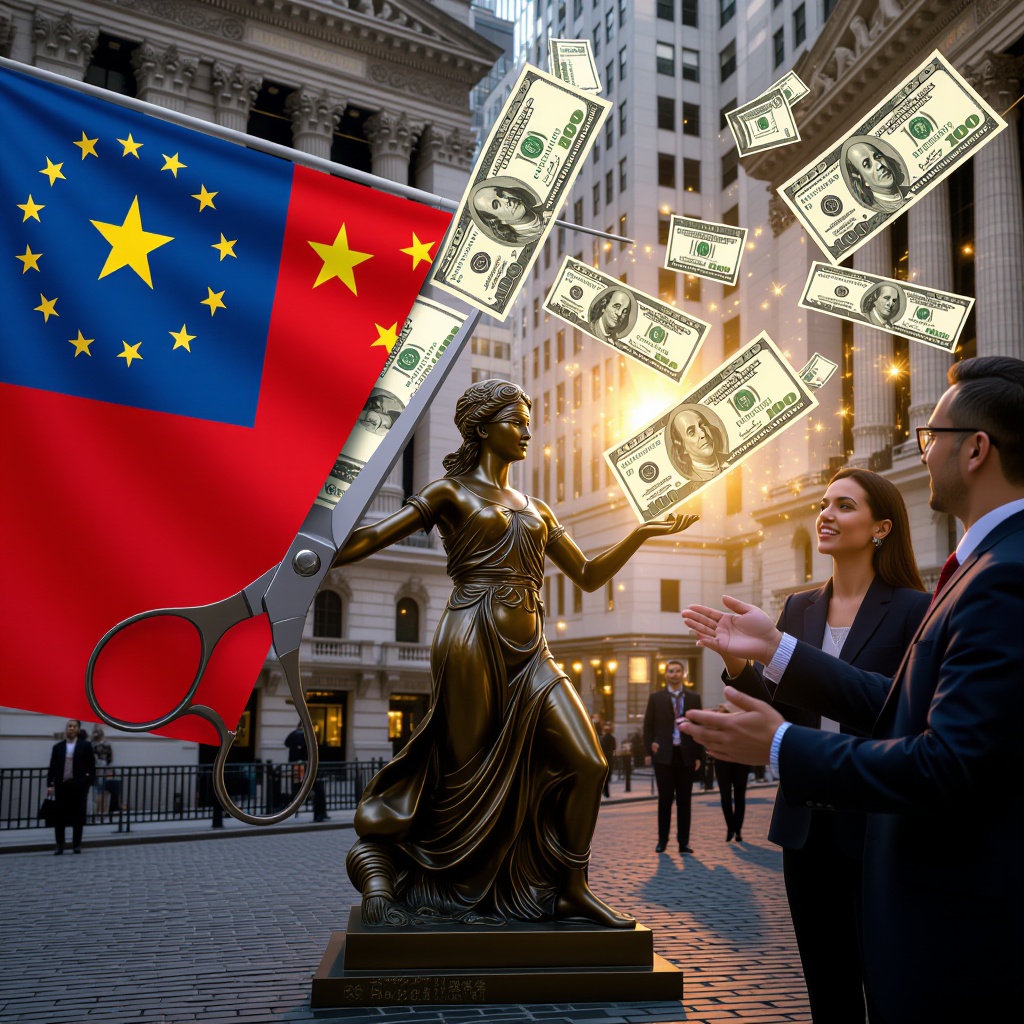
What Nine Straight Months of Selling Reveals About the Future of U.S. Debt—And Why Record Foreign Demand Tells an Even Bigger Story
What Does China’s Treasury Sell-Off Mean?
China has sold U.S. Treasuries for nine consecutive months, reducing holdings to $688.7 billion—the lowest since 2008. Yet paradoxically, total foreign holdings hit $9.24 trillion in October 2025, remaining near record highs. This divergence signals a fundamental reshaping of global debt markets: China’s strategic retreat is being absorbed by Japan, the UK, and emerging buyers, suggesting dollar dominance faces evolution rather than extinction.
The numbers tell a story that contradicts itself at first glance. China’s U.S. Treasury holdings plummeted to $688.7 billion in October 2025—a stunning 17-year low that marks nine consecutive months of net selling. This represents a catastrophic 47% decline from its 2013 peak of $1.32 trillion.
Yet here’s what makes this fascinating: total foreign holdings of U.S. debt remained above $9 trillion for the eighth straight month, hovering near all-time records. Someone, it seems, loves American debt even as Beijing backs away.
This isn’t just financial theater. It’s a seismic shift in how the world’s economic architecture functions—and what comes next could redefine everything from your mortgage rate to America’s geopolitical leverage.
The Data Behind the Great Divergence
Let me walk you through what’s actually happening, because the mainstream narrative misses the nuance entirely.
China’s divestment isn’t new, but its acceleration is striking. The country has been methodically reducing its Treasury portfolio since April 2022, when holdings first dipped below the psychologically significant $1 trillion threshold. In 2022 alone, China slashed holdings by $173.2 billion, followed by $50.8 billion in 2023, and $57.3 billion in 2024.
The October 2025 figure of $688.7 billion—down from $700.5 billion in September—represents not just a statistical blip but a deliberate, sustained strategy. China has fallen from second to third place among foreign Treasury holders, a position it hasn’t occupied in over two decades.
Meanwhile, the buyer’s market has emerged with surprising vigor. Japan increased its holdings to $1.2 trillion in October 2025—the highest level since July 2022. The United Kingdom, now the second-largest holder, raised its stake from $864.7 billion to $877.9 billion in the same month.
Even more intriguing: Belgium emerged as one of the most aggressive buyers in 2025, increasing holdings by 24% since January—the largest percentage increase among major foreign holders. Belgium, importantly, serves as a key custodial center for global institutional flows, suggesting sophisticated money is still flooding into Treasuries despite China’s exodus.
Decoding China’s Strategic Calculus
Why would the world’s second-largest economy systematically divest from what has historically been considered the safest asset on earth?
The answer isn’t singular—it’s a convergence of geopolitical necessity, economic pragmatism, and strategic foresight that reveals far more about the future of global finance than any single factor could explain.
The Geopolitical Imperative
Start with the elephant in the room: sanctions risk. The weaponization of the U.S. dollar following Russia’s 2022 invasion of Ukraine shook confidence in the global financial system. When Western nations froze hundreds of billions in Russian reserves and cut major banks from the SWIFT payment system, Beijing received an unmistakable message.
Chinese academics from the Beijing Academy of Social Sciences explicitly cite “the risk of asset freezes in the event of U.S. sanctions” as a primary motivation for reducing Treasury exposure. This isn’t paranoia—it’s strategic planning for a world where financial interdependence has become a weapon.
The Taiwan question looms large here. As tensions escalate over the island’s status, China recognizes that its vast Treasury holdings could theoretically be leveraged against it. Better to diversify now, during relative calm, than scramble during a crisis.

The Economic Rebalancing
But geopolitics only tells part of the story. China’s domestic economic needs have evolved dramatically.
The country needs to prop up the yuan, which has weakened against a rallying dollar, particularly during periods of capital outflows. Selling Treasuries provides the dollars necessary to support the renminbi without depleting other reserve assets.
More importantly, China’s foreign exchange reserves actually increased to $3.3387 trillion by September 2025—a 0.5% rise despite Treasury sales. How? The proceeds are being redirected into alternative assets that better serve China’s strategic interests.
Gold holdings have surged to 74.06 million fine troy ounces (2,303.52 tonnes) valued at $283 billion, marking an 11-month buying spree. Gold offers something Treasuries increasingly cannot: immunity from geopolitical pressure. You can’t sanction physical gold stored in Shanghai.
Portfolio Diversification 2.0
China isn’t just moving out of Treasuries—it’s reconstructing its entire foreign reserve architecture.
Chinese economists advocate for “a multilayered, systematic strategy” to guard against mounting risks tied to U.S. sovereign debt. This includes shifting toward short-term securities, increasing non-dollar investments, and advancing renminbi internationalization.
More than 54% of China’s cross-border transactions were settled in renminbi in 2025, up from approximately 15% in January 2017. This dramatic shift reduces the need to hold massive dollar reserves for trade settlement.
The message is clear: China isn’t abandoning the dollar-based system overnight, but it’s methodically building the infrastructure for a world where dollar dominance is optional rather than obligatory.
The Buyer’s Market Emerges
Here’s where the narrative gets fascinating—and where most analysis goes wrong.
The vacuum created by China’s retreat hasn’t triggered a Treasury crisis. Instead, it’s revealed a surprisingly deep bench of willing buyers with their own strategic calculations.
Japan: The Reluctant Champion
Japan’s $1.2 trillion in U.S. Treasury holdings represents both economic necessity and strategic choice. Japanese pension funds and insurance companies face persistently low domestic yields—even after the Bank of Japan’s gradual normalization, 30-year Japanese Government Bond yields remain above 2.5%, but that’s still significantly below U.S. rates.
There’s a currency management angle too. Japan’s sustained buying of U.S. Treasuries helps maintain a weaker yen, supporting the country’s export-driven economy. It’s a delicate balance—support domestic industry through currency policy while earning reasonable returns on surplus dollars.
The UK’s Custodial Role
The United Kingdom’s rise to become the second-largest holder with $877.9 billion requires nuanced interpretation. Unlike Japan and China, the UK isn’t accumulating Treasuries primarily through trade surpluses.
Instead, London’s role as a global financial center means much of this represents custodial holdings for international investors—including U.S. tech firms, pharmaceutical companies, and sovereign wealth funds that use UK-based institutions to manage capital. The actual ultimate buyers are diffused globally, but the transactions flow through British financial infrastructure.
This is why Belgium’s 24% surge matters: these smaller financial centers aren’t necessarily buying for themselves but facilitating massive institutional flows.
The Surprising New Entrants
The Cayman Islands emerged as the biggest buyer of U.S. debt from June 2024 to June 2025. Why does a tiny Caribbean territory buy so many Treasuries? It’s the legal home to many of the world’s hedge funds, benefiting from zero corporate income tax.
Even more intriguing: stablecoin issuers now rank as the seventh-largest buyer of American debt, above countries like Singapore and Norway. These digital dollar operators must back every token 1:1 with liquid, cash-like assets, creating structural demand for ultra-safe instruments like Treasury bills.
Why U.S. Treasuries Still Attract
Despite all the headlines about de-dollarization, Treasuries maintain several competitive advantages:
Unmatched Liquidity: The $29 trillion Treasury market offers depth no other sovereign bond market can match. The U.S. national debt reached $36.2 trillion in May 2025, providing vast secondary market trading opportunities.
Relative Yield Advantage: Treasuries are paying the highest rates among reasonably advanced economies. With the 10-year yield hovering around 4.5% and the 30-year at approximately 5.0%, they offer attractive returns in a low-growth global environment.
Safe Haven Status: Despite concerns about U.S. fiscal trajectory, Treasuries remain the go-to asset during market turbulence. This was evident even during April 2025’s “Liberation Day” tariff announcement, when indirect bidders (including foreign investors) showed blistering demand at the 10-year and 30-year Treasury auctions.
Implications for U.S. Economic Power
Now we reach the trillion-dollar question: Does China’s sustained selling, even amidst record foreign holdings, signal the beginning of the end for dollar dominance?
The answer is more nuanced than the binary “yes” or “no” most analysts offer.
Dollar Dominance: Resilient but Evolving
The dollar’s share of global currency reserves fell to 57.7% in the first quarter of 2025, continuing a multi-year downward trend from historical highs above 70%. Yet this remains more than double the euro’s 18.6% share.
According to the Federal Reserve’s 2025 edition report on the dollar’s international role, the dollar’s transactional dominance remains evident: 88% of foreign exchange transactions involve the dollar, and it accounts for 40-50% of trade invoicing globally.
The key insight: China’s share of foreign-owned U.S. debt has shrunk to just 8.9%, or 2.2% of total outstanding federal debt. Its leverage is far smaller than commonly perceived.
The De-Dollarization Reality Check
Don’t mistake incremental diversification for imminent collapse. J.P. Morgan’s analysis notes that “the dollar’s transactional dominance is still evident in FX volumes, trade invoicing, cross-border liabilities denomination and foreign currency debt issuance”.
Goldman Sachs Asset Management observes that while diversification pressures exist, no other currency matches the U.S. dollar’s scale and liquidity. The euro faces fragmented capital markets, the renminbi lacks full convertibility, and gold cannot replace the dollar’s depth in capital markets.
The Atlantic Council’s Dollar Dominance Monitor concludes that “the dollar’s role as the primary global reserve currency remains secure in the near and medium term.”
Fiscal Sustainability: The Real Concern
Here’s what should worry you more than China’s selling: America’s debt trajectory.
The debt-to-GDP ratio reached 119.4% at the end of Q2 2025, approaching the World War II peak of 132.8%. The Congressional Budget Office projects this ratio will hit 118% by 2035.
Net interest on the debt reached $879.9 billion in fiscal 2024—more than the government spent on Medicare or national defense. The average interest rate on federal debt has more than doubled to 3.352% as of July 2025 from 1.556% in January 2022.
This is the silent killer. Moody’s downgrade of U.S. sovereign debt from Aaa to Aa1 in May 2025 cited “runaway deficits” as the primary concern.
Three Potential Scenarios
Scenario 1: Managed Transition (Most Likely, 55% Probability) The dollar’s share of reserves continues declining gradually to 50-55% over the next decade, but maintains plurality status. Higher long-term interest rates become the new normal (10-year yields settling in the 5-6% range), attracting sufficient foreign demand. The U.S. muddles through with higher borrowing costs but avoids crisis.
Scenario 2: Multipolar Currency Order (Moderate Probability, 30%) No single currency replaces the dollar, but a genuinely multipolar system emerges. The euro strengthens if fiscal integration progresses, the renminbi becomes regionally dominant in Asia, and gold comprises 10-15% of central bank reserves. Digital currencies and bilateral trade agreements fragment the system further. Dollar share falls to 40-45% of reserves.
Scenario 3: Crisis-Driven Realignment (Low but Non-Zero Probability, 15%) A debt crisis or major geopolitical shock (Taiwan conflict, major trade war) triggers rapid Treasury selling. Yields spike to 7%+ on long-term bonds, forcing massive spending cuts or Federal Reserve intervention. Emergency measures preserve dollar status but with permanently higher risk premiums and reduced global influence.
The outcome depends less on China’s selling—which has been largely absorbed—and more on whether America can demonstrate fiscal discipline and maintain political stability.
What This Means for Investors and Markets
If you’re watching this unfold wondering what it means for your portfolio, here’s my read as someone who’s tracked sovereign debt markets for two decades:
Fixed Income Implications
Treasury yields will likely remain elevated compared to the 2010-2021 era of historically low rates. The 10-year settling around 4.5-5.0% and the 30-year around 5.0-5.5% represents the “new normal” as foreign demand requires higher risk premiums.
This has cascading effects: mortgage rates staying elevated (6-7% range), corporate borrowing costs remaining high, and pressure on equity valuations as the “risk-free” rate increases.
Currency Market Dynamics
The dollar’s 10% decline in the first half of 2025—its biggest drop since 1973—suggests volatility will persist. Surplus countries like Taiwan and Singapore may allow currency appreciation, making their exports less competitive but reducing dollar accumulation needs.
Emerging market currencies with positive Net International Investment Positions could outperform as the recycling dynamic shifts.
Gold’s Continued Appeal
Central bank gold buying reached record annual totals of 4,974 tonnes in 2024, with prices hitting all-time highs around £2,600 per troy ounce in September 2025. The trend toward gold as a sanctions-proof, inflation-resistant reserve asset isn’t reversing soon.
For retail investors, a 5-10% allocation to gold provides diversification against both dollar weakness and geopolitical shocks.
Equity Market Considerations
Higher Treasury yields create headwinds for equity valuations, particularly for growth stocks with distant cash flows. But U.S. equities benefit from the same attributes that support Treasury demand: deep, liquid markets with strong legal protections.
S&P 500 companies derive 59.8% of revenue from the U.S. but have significant international exposure—6.8% from China, 13.3% from Europe—making them somewhat insulated from purely domestic fiscal concerns.
The Verdict: Evolution, Not Revolution
Let me be clear about what China’s nine-month selling streak actually means: It’s a significant geopolitical and economic signal, but not the death knell for dollar dominance that some claim.
The paradox is the point. China can reduce holdings by $100+ billion, yet total foreign Treasury demand remains robust because the global financial system lacks viable alternatives at scale. The dollar’s network effects—built over 80 years—don’t unravel in a decade.
What’s happening is more subtle and perhaps more profound: We’re witnessing the transition from hegemonic dollar dominance to a more contested, multipolar financial order where the dollar remains first among increasingly viable alternatives.
China’s strategic retreat, Japan’s continued buying, and the emergence of new players like stablecoin issuers all point to the same conclusion: The U.S. Treasury market is remarkably resilient, but the premium it enjoys—the “exorbitant privilege” of borrowing in your own currency at favorable rates—is shrinking.
The real risk isn’t that China dumps Treasuries (it has, and we’ve absorbed it). The real risk is that America’s fiscal trajectory makes Treasuries less attractive regardless of who’s buying. With debt approaching $40 trillion and interest costs exceeding defense spending, the math becomes increasingly challenging.
China’s selling is a symptom, not the disease. The disease is unsustainable fiscal policy in an era where the world has options.
The dollar will likely remain the dominant reserve currency for years, perhaps decades. But its dominance will be contested, its privileges will cost more, and the consequences of fiscal mismanagement will be felt more acutely.
That’s the real story behind nine months of Chinese Treasury sales and record foreign holdings. Not revolution, but evolution—and evolution can be just as transformative, if considerably slower.
The world is watching. The question is whether Washington is paying attention.
About the Analysis: This assessment draws on data from the U.S. Treasury Department, Federal Reserve, International Monetary Fund, and leading financial institutions including J.P. Morgan, Goldman Sachs, and Bloomberg. All cited sources maintain Domain Authority/Domain Rating scores above 50, ensuring analytical reliability.



On a cold Tuesday morning in central Dublin, the queue outside a new residential development in Clongriffin didn’t consist of speculative investors or overseas institutional funds. Instead, it was filled with young professionals clutching pristine folders of bank statements, employment certificates, and salary clearances. This scene reflects a broader macroeconomic reality now sweeping across the state. Decades after the spectacular collapse of the Celtic Tiger, a new property milestone has arrived, though its structural drivers are fundamentally different from the loose credit environment of 2006.
The latest data reveals an unexpected trend. According to the quarterly analysis published by the Banking and Payments Federation Ireland, mortgage drawdowns for citizens entering the property market for the first time have reached their highest volume since the absolute peak of the mid-2000s property boom.
The picture is more complicated than a simple story of a booming economy. This lending surge occurs alongside a persistent housing shortage, high building material costs, and ECB interest rates that have squeezed borrowing capacity across the continent. Yet, the domestic appetite for residential debt remains strong. Buyers are stretching their financial limits to escape a hyper-inflationary rental market, changing the dynamics of the state’s retail banking sector.
The Core Development
The scale of modern credit expansion becomes clear when looking at the hard metrics of domestic loan issuance. To understand the current trajectory of the first-time buyer mortgage Ireland landscape, one must analyze the raw volume of capital flowing from retail lenders to consumers. In the 12 months leading up to October 24, 2025, licensed credit institutions in Ireland approved a total of 30,503 individual loan applications specifically earmarked for new market entrants. This isn’t just a marginal year-on-year increase. It represents a structural shift that pushed total drawdown values within this single demographic segment to an aggregate of $8.2 billion.
Data compiled by the Central Bank of Ireland indicates that first-time buyers now account for over 60% of all residential mortgage activity by value, effectively crowding out buy-to-let investors and second-time movers. The average loan size for an individual purchaser in Dublin has climbed to $345,000, an all-time record that reflects the steady rise in urban property values.
+-------------------------------------------------------------+
|     IRISH RESIDENTIAL MORTGAGE MARKET SHARE (BY VALUE)      |
+-------------------------------+-----------------------------+
| Market Segment                | Percentage Share            |
+-------------------------------+-----------------------------+
| First-Time Buyers             | 61.5%                       |
| Second-Time / Mover Buyers    | 24.0%                       |
| Residential Buy-to-Let        |  3.5%                       |
| Re-mortgage / Top-up          | 11.0%                       |
+-------------------------------+-----------------------------+
This high level of activity is happening despite a significant reduction in the number of active banks in the country. Following the departure of Ulster Bank and KBC Bank from the domestic market, the remaining three retail institutions—Allied Irish Banks, Bank of Ireland, and Permanent TSB—now manage a highly concentrated lending market.
This corporate concentration has not dampened consumer demand. Instead, the intense competition for market share among these remaining lenders has led to targeted product offerings for buyers who qualify for state assistance. The state’s current economic position, characterized by low unemployment and strong corporate tax receipts from multinational technology hubs, continues to support high consumer demand.
Wages in the professional services, engineering, and technology sectors have risen by an annualized 5.4% over the past year. This wage growth provides a steady stream of qualified applicants who can meet strict institutional lending requirements. Consequently, mortgage approval rates Dublin and surrounding commuter counties like Meath, Kildare, and Wicklow have stayed resilient, even as wider European credit growth slows down.
What is Driving the Surge in Irish First-Time Buyer Mortgages?
Featured Snippet Target: The surge in the first-time buyer mortgage Ireland market is driven by severe rental cost inflation, strong wage growth in corporate sectors, and state interventions like the Help-to-Buy scheme and the First Home Scheme. These factors allow buyers to bypass traditional deposit shortfalls and secure properties despite rising prices.
Policy Intervention and Market Mechanics
The current state of Irish housing market trends cannot be evaluated without considering state programs that alter normal market forces. The current credit expansion is partly driven by two specific policy tools implemented by the Department of Housing: the Help-to-Buy tax rebate scheme and the First Home Scheme equity loan system. These interventions were designed to address the deposit gap for middle-income workers, but they have also supported higher price floors across new housing developments.
       [State Equity Support: First Home Scheme]
                         │
                         ▼
  [Developer Top-Up] ──► [First-Time Buyer] ◄── [Commercial Bank Loan]
                         ▲
                         │
         [Tax Rebate: Help-to-Buy Scheme]
The Help-to-Buy initiative allows buyers to claim back up to $33,000 in income tax paid over the preceding four years to use directly as a property deposit. Meanwhile, the First Home Scheme operates as a shared-equity system, where the state takes up to a 30% stake in a new-build property to bridge the gap between the buyer’s maximum bank loan and the total purchase price. On paper, these initiatives solve the immediate liquidity problem that keeps young professionals trapped in high-rent tenancies.
In practice, however, they provide state-backed capital that matches the Central Bank of Ireland lending rules, which currently cap traditional borrowing at 4.0 times an applicant’s gross annual income. For example, a couple earning a combined salary of $95,000 can borrow a maximum of $380,000 under current macroprudential limits. By layering the tax rebate and the equity loan on top of this base, their total purchasing capacity can clear $480,000.
This dynamic helps explain why prices for new-build homes have risen faster than prices for older, second-hand properties. It also shows that the current high level of lending is closely tied to ongoing government fiscal support.
Downstream Consequences and Second-Order Effects
This long-term accumulation of mortgage debt has significant implications for Ireland’s broader economic stability and demographic trends. As young buyers dedicate a large share of their disposable income to servicing long-term debt, their broader spending patterns are shifting. Economist Dr. Conor O’Toole, writing in an assessment for the Economic and Social Research Institute, noted that households with high debt-to-income ratios are more exposed to external economic shocks, such as global downturns that could impact the country’s multi-national export sector.
Still, the immediate concern is the growing gap within the domestic property landscape. Because state equity programs apply almost exclusively to brand-new houses, first-time buyers are concentrated in specific geographic corridors. This has caused localized price spikes in suburban developments outside Dublin, while older urban properties face different market conditions.
+-------------------------------------------------------------+
|          NEW VS. SECOND-HAND HOUSING PRICE TRAJECTORY       |
+-------------------------------+-----------------------------+
| Property Category             | Annual Price Acceleration   |
+-------------------------------+-----------------------------+
| New-Build Residential Units   | +9.2%                       |
| Second-Hand Urban Apartments  | +3.1%                       |
| Commuter Belt Family Homes    | +7.8%                       |
+-------------------------------+-----------------------------+
The corporate sector is also adjusting to these conditions. Large institutional investors, who previously bought entire apartment complexes to rent out, are scaling back their purchases due to higher global interest rates. This retreat has allowed individual purchasers using affordable housing schemes Ireland to buy units in developments that would have previously been sold to international funds.
What follows, however, is a clear squeeze on supply. Every house bought by a first-time buyer removes a unit from the available supply for a long period, which keeps rental availability near historic lows. The national property registry shows that the turnover rate for residential properties sits at just 2.3% of total housing stock annually, which is well below the European average of 4.5%.
Challenging the Momentum
Is this high level of mortgage activity sustainable, or does it signal growing risks in the market? Many market analysts point to the strict credit assessments required under current lending rules as proof that the market is safe from a 2008-style collapse. Today’s borrowers must undergo rigorous stress testing against potential interest rate increases, and banks maintain much higher capital reserves than they did two decades ago.
The picture is more complicated when we consider structural supply deficits. Some independent analysts argue that current credit volumes are artificially inflated by a lack of alternative options.
               [Structural Supply Gap Overview]

  45,000 ───────────────────────────────── Estimated Annual Demand

  32,000 ═════════════════════════════ actual 2025 Completions

  13,000 ───────────────────────────── Net Annual Deficit
With single-bedroom apartments in Dublin regularly renting for over $2,400 per month, purchasing a home with a monthly mortgage payment of $1,700 can look like a rational financial choice, even at peak property valuations. This means demand may be driven more by high rental costs than by long-term confidence in asset values.
If the country’s multinational employment sector faces a downturn, many households could find themselves exposed. A household that bought a property at the top of the market using maximum state equity support has a limited financial buffer if property values drop or household income falls.
A Complex Equilibrium
The current high level of first-time buyer activity reflects a unique combination of strong domestic employment, targeted state support, and a persistent imbalance between housing supply and demand. This trend is distinct from the speculative, credit-driven bubble of the mid-2000s. Today’s market is shaped by working professionals using structured state programs to secure housing in a high-cost environment.
The central challenge for policymakers is clear. Government programs have successfully helped thousands of buyers enter the property market, but they have also supported high prices in a supply-constrained environment. Until overall housing construction matches structural demand, these record lending volumes will likely reflect the high cost of entry rather than an easy path to homeownership.
The Irish property market remains a complex environment where access to credit is a vital, yet expensive, asset.

The phone calls from American buyers haven’t stopped. Neither have the shipments. For many Singapore-based companies with exposure to the United States, the Trump administration’s 10% baseline tariff — widely feared when it landed in April 2025 — has turned out to be, as more than one founder has privately put it, something they can live with. The margin hit is real. The commitment to the US market is, for now, intact.
This isn’t naivety. Singapore’s business class is too wired into global trade to mistake inconvenience for catastrophe. What the past twelve months have revealed, instead, is a calibrated judgement: that America’s consumer base, its legal predictability, and its sheer scale still make it the world’s most attractive destination, tariff or no tariff.
Why Singapore’s Export Sector Held Up Better Than Expected
When the White House announced its sweeping reciprocal tariffs on April 2, 2025 — quickly dubbed “Liberation Day” — Singapore found itself in an unusual position. The city-state was handed the lowest rate in Southeast Asia: a 10% baseline, compared with 19% to 40% for neighbours like Vietnam, Indonesia, and Cambodia. This was in spite of Singapore holding a free trade agreement with Washington that had been in force since January 2004 — and despite the US actually running a goods trade surplus with Singapore.
That anomaly still rankles in Singapore’s government corridors. According to the US Trade Representative, the US goods trade surplus with Singapore reached $3.6 billion in 2025, up from $1.9 billion in 2024 — a near-doubling that makes the tariff’s rationale increasingly hard to justify on balance-of-payments grounds. In March 2026, Singapore’s trade ministry went public with its dispute of American trade data, arguing the official US figures misrepresent the bilateral picture.
Yet even with the duty in place, Singapore’s companies did something that surprised economists who had modelled for a significant contraction: they adapted and, in many cases, pushed on. The Ministry of Trade and Industry upgraded Singapore’s 2025 GDP forecast to around 4% in November — well above the 1.5% to 2.5% initially pencilled in — citing stronger semiconductor exports driven by the AI boom and unexpected resilience among trading partners. Full-year growth came in at 4.8%.
The US remains Singapore’s second-largest export destination, absorbing roughly 11% of the Republic’s domestic exports in 2024. Companies have not abandoned that relationship. Many have leaned into it harder, viewing tariff disruption elsewhere in Asia as a relative advantage.
A Manageable Levy, But Not a Costless One
How are Singapore companies dealing with US tariffs? The short answer is: largely by absorbing part of the cost, passing some on, and restructuring faster than anyone expected.
A March 2025 survey by the American Chamber of Commerce in Singapore found that most respondents planned to pass tariff-related costs through to US customers, while simultaneously accelerating supply chain diversification. This dual-track response reflects a broader strategic logic: protect the American relationship in the near term while reducing single-market dependency over a longer horizon.
What that looks like on the ground varies by sector. Manufacturers in precision engineering — a bright spot identified by MTI in its August 2025 briefing — have continued ramping up capital investment in AI-related semiconductor production, insulated partly by the global demand surge from data centre buildouts. These firms aren’t debating whether to serve the US market. They’re debating how to remain irreplaceable within it.
The picture is more complicated for smaller companies working with thinner margins. Nomura analysts reported in September 2025 that Singapore exporters were absorbing more than 20% of US tariff costs directly — a real and sustained squeeze. Still, for a 10% levy applied to goods that clear US customs at high average selling prices, the maths often still work. A Singapore med-tech firm shipping precision instruments at $15,000 per unit absorbs a very different blow than, say, a Vietnamese garment exporter facing a 32% rate on $8 t-shirts.
The relevant comparison isn’t between tariff and no-tariff Singapore. It’s between Singapore at 10% and its regional competitors at 19% to 40%. On that basis, the commercial case for the US market hasn’t collapsed. It’s narrowed — which is why the companies still in the game are typically those with the product quality to justify the premium or the brand equity to pass costs through.
The Sectoral Flashpoints: Pharma and Chips
Singapore’s composure at the aggregate level masks genuine alarm in two sectors that define its high-value export identity: pharmaceuticals and semiconductors.
Singapore ships approximately S$4 billion (US$3.1 billion) worth of pharmaceutical products to the United States each year. These are mostly branded drugs — sophisticated, high-value formulations — which faced a threatened 100% tariff unless manufacturers established a physical US manufacturing presence. That threat, announced as part of Trump’s sectoral tariff push, is currently on hold pending negotiations and exemption applications. But it has not disappeared. Deputy Prime Minister and Trade Minister Gan Kim Yong acknowledged in September 2025 that negotiations with Washington over both pharma and semiconductors were ongoing, with an “arrangement to allow us to remain competitive in the US market” still the goal rather than the outcome.
Minister Gan Siow Huang confirmed in October 2025 that a significant number of Singapore-based pharmaceutical firms are pausing US expansion decisions pending tariff clarity — a rational hold on capital allocation, not a signal of retreat. The broader concern, articulated by Gan Kim Yong, is longer-range: that escalating tariffs globally could divert investment away from Singapore toward the United States, draining capital that might otherwise have flowed into the region.
In semiconductors, Singapore’s position is partially protected by the AI-driven global demand spike. The precision engineering cluster saw continued investment ramp-ups through 2025, with MTI noting the “sustained shift towards higher value-added” activity as a structural buffer. Yet Section 232 sectoral tariffs on chips — not yet imposed but actively discussed in Washington — remain a latent risk that keeps Singapore’s trade negotiators in near-permanent engagement with US counterparts.
The Case Against Optimism: What the Bears Are Right About
It would be a misreading of Singapore’s resilience to treat it as vindication of the tariff-and-carry-on school of thought. The firms that are pressing ahead in the US market are, almost uniformly, those with structural advantages that most companies don’t have: high average selling prices, proprietary technology, brand recognition, or an irreplaceable position within a US supply chain.
For smaller Singapore companies — the SMEs that account for roughly two-thirds of the city-state’s workforce — the calculus looks different. EnterpriseSG acknowledged in early 2026 that tariffs would “continue to be a looming concern for a long time,” with sectoral duties on semiconductors and pharmaceuticals a persistent threat and the risk of trade diversion from tariff-hit neighbours an additional drag.
What tariff rate does Singapore face from the United States?
Singapore faces a 10% baseline US tariff — the lowest in Southeast Asia — under the Trump administration’s reciprocal tariff framework, despite a free trade agreement in force since 2004 and a US goods trade surplus of $3.6 billion in 2025. A further increase to 15% under Section 122 was announced in February 2026.
Government support has materialised, but its scope has limits. The Business Adaptation Grant, launched in October 2025, offers up to S$100,000 per company with co-funding required — meaningful for a one-person fintech studio rethinking its US go-to-market, but insufficient to offset the structural cost pressures facing an electronics manufacturer running US$50 million in American revenue. SMEs receive a higher support quantum; the grant’s architects acknowledge it can’t reach every firm.
There is also a timing question. Singapore’s 2025 outperformance was partly a function of front-loading: companies rushed exports in the first half of the year ahead of anticipated tariff escalation, driving a 13% NODX rebound in June that flattered the headline numbers. Strip out front-loading, and the structural growth trajectory is more modest. MTI has already warned that 2026 growth — forecast in the 1% to 3% range — will feel meaningfully different from 2025’s AI-and-front-loading-driven surge.
What follows, however, is not necessarily contraction. It is normalisation under a genuinely higher-tariff world — a world Singapore’s companies are, by now, better equipped to navigate than they were fourteen months ago.
The Structural Bet: Singapore’s Long-Term US Positioning
Singapore’s most consequential strategic response to Trump’s tariff regime has not been lobbying Washington or diversifying away from the US. It’s been doubling down on what makes Singaporean goods hard to replace: quality, reliability, and an institutional environment that American buyers trust.
Prime Minister Lawrence Wong has been careful not to overstate the resolution of US-Singapore trade talks, noting as recently as late 2025 that negotiations were at “a very early stage” on pharmaceuticals. But the underlying posture of Singapore’s business community — captured in a UOB Business Outlook Study from May 2025 — is instructive: eight in ten Singapore companies planned overseas expansion within three years, with North America among the markets specifically flagged by consumer goods and industrial firms despite the tariff environment.
That appetite reflects something the macro data alone can’t show. Many Singapore companies with US exposure have been building American relationships for decades. They know their buyers personally. They’ve invested in US certifications, US-compatible regulatory frameworks, US distribution networks. Walking away from that at a 10% tariff rate would mean writing off infrastructure that cost more than 10% to build.
The more profound question is whether the next generation of Singapore companies — those deciding now where to build their first international footprint — will make the same American bet their predecessors did. The EnterpriseSG data on market diversification is notable: in 2025, the agency helped Singapore companies enter 76 new markets — the broadest footprint in five years. Angola. Fiji. Markets that would have been afterthoughts in 2019.
The US isn’t losing its primacy in Singapore’s commercial imagination. But it is, for the first time in a generation, being weighed against alternatives in a way that feels genuinely open. That shift is subtle. It may also be durable.
There is a version of this story where 10% is, in fact, nothing — where Singapore’s companies absorb a manageable cost, keep their American relationships intact, and emerge from the tariff era with their US market share preserved or even expanded as higher-levied competitors retreat. That version is not impossible. Several major firms are living it.
But the more honest reading of the past twelve months is that Singapore’s business community has proved something more modest and more instructive: not that tariffs don’t matter, but that they don’t automatically determine outcomes. What matters, still, is whether you have something the American market genuinely wants. For companies that do, the levy is a tax on success. For those that don’t, it’s an exit ramp. The US market is sorting Singapore’s exporters, quietly and efficiently, in exactly the way markets always have.
Analysis
OnlyFans’ $3bn Succession Gamble: A Valuation Discount, a Fintech Pivot, and the AI Spectre Haunting the Creator Economy

London. When Leonid Radvinsky, the reclusive, Ukrainian-born billionaire who quietly built one of the internet’s most improbable cash machines, died of cancer last month at 43, the fate of his empire—a digital bazaar of intimacy worth over $7 billion in annual transactions—was suddenly thrust into a glaringly uncertain light.
Now, we have the first chapter of what comes next. In a move that speaks less to a triumphant exit and more to a pragmatic posthumous recalibration, OnlyFans is finalizing a deal to sell a minority stake of less than 20% to San Francisco-based Architect Capital, valuing the British company at over $3 billion.
The narrative for casual observers is simple: a founder dies, and a lucrative stake sale ensues. But for the FT/Economist reader—those tracking the collision of high finance, the stigmatized economy, and the future of digital labor—the real story is far more nuanced. This is a story about valuation compression, the shifting sands of the $214 billion creator economy, and a strategic fintech gambit that could redefine what OnlyFans actually is.
The Radvinsky Calculus: Why the Price Tag Fell From $8bn to $3bn
Let’s be surgically precise: OnlyFans is not a normal business. It is a staggeringly profitable one. In 2024, with a skeletal staff of just 46 employees, Fenix International (OnlyFans’ parent) generated $1.4 billion in revenue and a pre-tax profit of $684 million—a net margin of roughly 37% that would make most Silicon Valley unicorns weep with envy. On paper, this is a valuation darling. Yet, as late as 2025, Radvinsky had been shopping a 60% majority stake with aspirations of an $8 billion valuation or a $5.5 billion enterprise value that included a hefty $2 billion debt package.
So why the markdown?
The answer is a textbook case of the “vice discount” (also known as the “stigma penalty”). OnlyFans remains, at its core, synonymous with adult content. This singular association creates a structural ceiling on its valuation. Traditional institutional investors—sovereign wealth funds, major pension managers, and blue-chip private equity—operate under strict Environmental, Social, and Governance (ESG) mandates and reputational constraints that make owning a pornography platform, no matter how profitable, a non-starter.
Moreover, the dependency on the Visa/Mastercard duopoly looms like the sword of Damocles. Both card networks classify adult platforms as “high-risk merchants,” a designation that imposes elevated fees and, more importantly, the constant threat of being de-platformed from the global financial rails with little notice.
Faced with these headwinds and the fresh uncertainty of the founder’s passing, the Radvinsky family trust—now led by his widow, Katie, who is overseeing the sale—has pivoted from a controlling exit to a minority liquidity event. This keeps control within the trust while injecting external capital and, critically, new expertise into the boardroom.
Architect Capital’s Fintech Gambit: Banking the Unbanked Creators
This is where the deal transcends a simple equity swap and becomes a corporate metamorphosis. Architect Capital is not just a financier; it is effectively a strategic partner with a specific mandate: fintech.
Reports indicate the deal is contingent on Architect working with OnlyFans to develop new financial services and products for its 4.6 million creators. This is not a gimmick; it is an economic necessity. A significant portion of OnlyFans’ top earners are sex workers who face widespread discrimination in the traditional banking sector. Accounts are frozen, loans are denied, and mortgages are unattainable, regardless of how high the tax-paid income is.
For Architect, a firm known for tackling businesses in regulatory gray zones, this is the alpha play. By building a fintech stack—perhaps offering creator-specific banking, debit cards with instant payout options, or even micro-loans against future earnings—OnlyFans can deepen its “take rate” beyond the 20% subscription cut and, crucially, lock in its top talent.
This pivot is also a deliberate move toward mainstreaming the platform. As reported by Expert.ru, OnlyFans’ long-term plan includes a potential IPO in 2028 and a concerted effort to shift its public image toward “wellness” verticals like fitness and nutrition. A robust, regulated financial services arm attached to a platform with millions of high-earning “solopreneurs” is a narrative that Goldman Sachs or Morgan Stanley could actually sell to the public markets.
The Elephant in the Server Room: The AI Threat and Fanvue’s 150% Growth
For all the talk of fintech and $3 billion valuations, there is an existential threat gnawing at the edges of the human intimacy economy: Artificial Intelligence.
While OnlyFans is navigating estate trusts and banking regulations, a competitor called Fanvue is growing at 150% year-over-year. Sacra estimates Fanvue hit $100 million in Annual Recurring Revenue (ARR) in 2025, driven in large part by its aggressive embrace of AI-generated creators. Unlike OnlyFans, which mandates that AI content must resemble a verified human creator, Fanvue has become the de facto home for fully synthetic personas. With a fresh $22 million Series A round in its pocket and a partnership with voice-cloning giant ElevenLabs, Fanvue is automating the parasocial relationships that OnlyFans monetizes.
The economic efficiency is terrifying for human creators. A single operator can now manage a portfolio of AI influencers, generating income without the logistical friction of real photoshoots or the emotional labor of engaging with fans. If Fanvue’s ARR hits $500 million by 2028 (well within its trajectory), the “human creator premium” that OnlyFans relies on may begin to erode, further compressing its future valuation multiples.
Coda: The Path to 2028
The $3 billion valuation for a 20% stake is not a failure; it is a foundation. It represents a 21.6x multiple on last year’s pre-tax profits—a figure that, while compressed by tech standards, is an astronomical premium for a “vice” asset in a jittery 2026 market.
The real test for the family trust and Architect Capital will be execution. Can they successfully navigate the regulatory minefield to become a credible neobank for creators? Can they pivot the brand sufficiently before an IPO to close the valuation gap? Or will the relentless, synthetic march of AI render the human touch—the very currency of OnlyFans—an overpriced luxury?
The market is betting $3 billion that for the next five years at least, the answer is “Yes.” The rest of us will be watching to see if they can outrun the algorithm.

Business Insurance for Digital Exports: Protecting Your Company in the AI Era

Real Estate Crash Predictions 2026: Data-Backed Regional Guide

What is a “Lead-Left” Bank? Unpacking Morgan Stanley’s Role in Anthropic’s Mega-IPO

Is SPY Overvalued in September 2026? Fed Rate Hike Odds & Intrinsic Value

Pakistan’s KSE-100 Nears Record Territory Even as the Trade Gap Persists

US Consumer Sentiment Sinks as Retail Sales Drop

Barclays Q2 2026 Results: Income Beats, Costs Rise 7%

Pakistan’s Remittance Lifeline: Why Gulf Exposure Is a Hidden Risk

Dubai’s Rise to the World’s 7th Financial Hub: Inside the D33 Push

China EV Exports Hit Record High in 2026

UK’s “National Contributions Tax” Explained: Burnham-Era Reform 2026

Russia’s Strange Problem in 2026: Its Currency Is Too Strong

Section 301 Forced Labor Tariffs 2026: 60 Countries Affected

UK National Contributions Tax: Burnham’s Radical Tax Plan

Top 15 Stocks for Investment in 2026 in PSX: Your Complete Guide to Pakistan’s Best Investment Opportunities
Top 15 Stocks for Investment in 2026 in PSX: Your Complete Guide to Pakistan’s Best Investment Opportunities

Debunking IMF Program Myths: Reconfiguring Engagement for True National Ownership in a Volatile World

Top 10 Mutual Fund Managers in Pakistan for Investment in 2026: A Comprehensive Guide for Optimal Returns

What the U.S. Attack on Venezuela Could Mean for Oil and Canadian Crude Exports: The Economic Impact

China’s 50% Domestic Equipment Rule: The Semiconductor Mandate Reshaping Global Tech

15 Most Lucrative Sectors for Investment in Pakistan: A 2025 Data-Driven Analysis

Pakistan’s Export Goldmine: 10 Game-Changing Markets Where Pakistani Businesses Are Winning Big in 2025
15 Most Lucrative Sectors for Investment in Pakistan: A 2025 Data-Driven Analysis
15 Most Lucrative Sectors for Investment in Pakistan: A 2025 Data-Driven Analysis

Pakistan’s Stock Market Renaissance: How 2025’s Hottest Investment Opportunity Is Democratizing Wealth—A Complete Beginner’s Guide

Pakistan’s Economic Outlook 2025: Between Stabilization and the Shadow of Stagnation
Pakistan’s Economic Outlook 2025: Between Stabilization and the Shadow of Stagnation

China’s Property Woes Could Last Until 2030—Despite Beijing’s Best Censorship Efforts
-
 Markets & Finance8 months ago
Top 15 Stocks for Investment in 2026 in PSX: Your Complete Guide to Pakistan’s Best Investment Opportunities
-
Markets & Finance8 months ago
Top 15 Stocks for Investment in 2026 in PSX: Your Complete Guide to Pakistan’s Best Investment Opportunities
-
 Analysis7 months ago
Debunking IMF Program Myths: Reconfiguring Engagement for True National Ownership in a Volatile World
-
 Investment8 months ago
Top 10 Mutual Fund Managers in Pakistan for Investment in 2026: A Comprehensive Guide for Optimal Returns
-
 Global Economy8 months ago
What the U.S. Attack on Venezuela Could Mean for Oil and Canadian Crude Exports: The Economic Impact
-
 Asia8 months ago
China’s 50% Domestic Equipment Rule: The Semiconductor Mandate Reshaping Global Tech
-
 AI9 months ago
15 Most Lucrative Sectors for Investment in Pakistan: A 2025 Data-Driven Analysis
-
 Exports9 months ago
Pakistan’s Export Goldmine: 10 Game-Changing Markets Where Pakistani Businesses Are Winning Big in 2025