
Global Economy
Beyond Blocs: How Nations Navigate the Fracturing Global Order

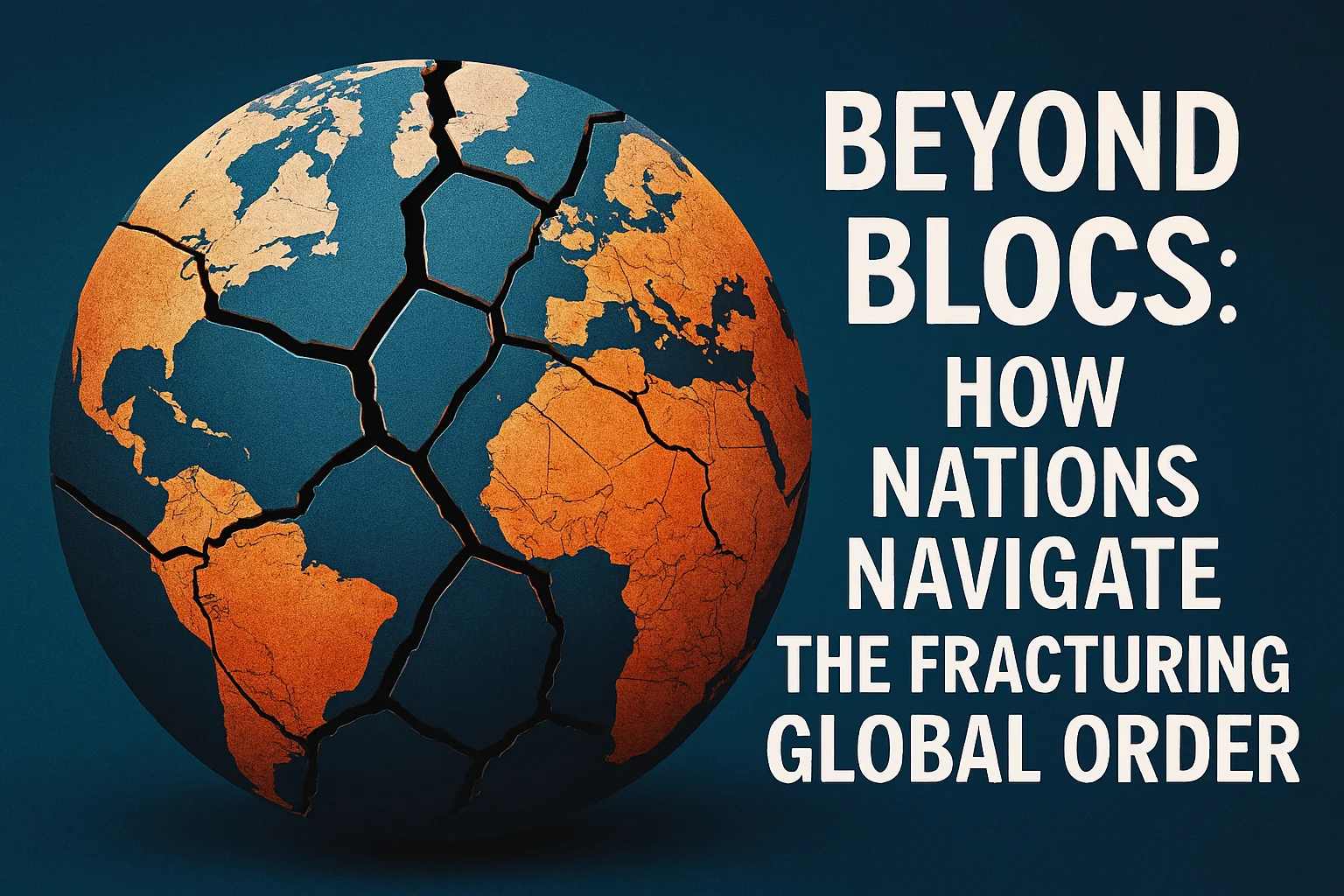
The world isn’t simply splitting between East and West—it’s fragmenting into a complex web of strategic autonomy, hedged alliances, and national self-interest.
When BRICS welcomed four new members on January 1, 2024—Egypt, Ethiopia, Iran, and the United Arab Emirates—and then announced ten additional “partner countries” at its Kazan summit in October, Western analysts scrambled to decode what this expansion meant for the international system. Was this the birth of an anti-Western bloc? A challenge to dollar hegemony? The formalization of a new Cold War divide?
The reality is far more nuanced, and arguably more consequential. What we’re witnessing isn’t the clean bifurcation of a new Cold War, but rather the messy emergence of a multipolar world order where nations increasingly refuse to choose sides—even as the pressure to do so intensifies. The question facing capitals from New Delhi to Brasília, from Jakarta to Riyadh, isn’t whether to align with Washington or Beijing. It’s how to maximize national advantage while navigating between competing power centers that each offer different combinations of economic opportunity, security partnerships, and geopolitical leverage.
This strategic complexity represents a fundamental departure from the post-Cold War “unipolar moment” and demands a more sophisticated understanding of how power actually operates in 2024.
The Death of Easy Alignment
The numbers tell a striking story. According to the IMF’s 2024 data, BRICS countries now account for 41 percent of global GDP when measured by purchasing power parity. Yet this statistic obscures more than it reveals. BRICS isn’t a unified bloc in any meaningful sense—it’s a loose coalition of countries with divergent interests, competing territorial disputes, and vastly different governance models. China’s economy is six times larger than Russia’s. India and China fought a border war in 2020 and maintain 50,000 troops each along their disputed Himalayan frontier. Brazil’s democratic institutions bear little resemblance to Iran’s theocratic system.
What unites BRICS members isn’t ideology or even shared strategic interests. It’s a common desire for greater autonomy from Western-dominated institutions and a multipolar global architecture that affords them more influence. As Indian External Affairs Minister Subrahmanyam Jaishankar stated at the Kazan summit: “This economic, political, and cultural rebalancing has now reached a point where we can contemplate real multipolarity.”
“The question isn’t whether we want multipolarity—it’s already here. The question is whether we can manage it wisely.”
Consider how global trade patterns have evolved. The World Trade Organization reported in 2024 that US-China bilateral trade grew more slowly than either country’s trade with the rest of the world—evidence of deliberate diversification rather than decoupling. Meanwhile, China’s 2024 trade surplus exceeded one trillion dollars, while the US trade deficit widened to record levels, driven not primarily by tariffs or trade policy, but by fundamental macroeconomic imbalances: weak Chinese consumer demand pushing exports, and strong US fiscal expansion pulling in imports.
The IMF’s External Sector Report confirms that global current account balances widened by 0.6 percentage points of world GDP in 2024, reversing a two-decade narrowing trend. Yet this wasn’t driven by geopolitical bloc formation—it reflected domestic policy choices in individual countries that happen to align with divergent economic strategies.
The Strategic Autonomy Imperative
No country embodies the complexity of modern alignment choices better than India. With the world’s largest population, fastest-growing major economy, and a geographic position straddling South Asia, the Indian Ocean, and the Indo-Pacific, India has systematically refused to choose between competing power centers.
India participates in the Quadrilateral Security Dialogue alongside the United States, Japan, and Australia—a grouping widely seen as aimed at countering Chinese influence. Simultaneously, India remains Russia’s largest arms customer, purchasing 70 percent of its military equipment from Moscow, and has increased bilateral trade with Russia by 400 percent since 2022, largely through discounted oil purchases. India also engages China through BRICS and the Shanghai Cooperation Organization, even while maintaining significant military deployments along their disputed border.
This isn’t contradiction—it’s what Indian policymakers call “strategic autonomy,” an evolved version of Cold War non-alignment adapted for a multipolar era. As a senior Indian diplomat explained to me recently, “We judge each issue on its merits relative to our national interest. Why should we sacrifice our relationship with Russia to satisfy American preferences when Russia supplies our defense needs and offers energy security?”
India’s approach reflects a broader pattern among middle powers. When the UN General Assembly voted in 2023 on resolutions condemning Russia’s invasion of Ukraine, 141 countries supported the measure, but 52 either voted against, abstained, or were absent. Of those 52, 45 were from the Global South. Research analyzing these voting patterns found that abstentions were primarily driven by Global South membership, while Russian aid recipients were more likely to vote in Russia’s favor.
Critically, these voting patterns don’t reflect a coherent anti-Western coalition. They reveal countries pursuing distinct national interests that happen to diverge from Western positions. Countries with significant trade dependencies on Russia, military equipment supplies from Moscow, or participation in China’s Belt and Road Initiative were less likely to condemn Russian actions—not because of ideological alignment, but because of practical considerations about economic ties and security relationships.
The Economics of Hedging
Follow the money, and the multipolar reality becomes even clearer. According to UN Trade and Development data, global trade hit a record $33 trillion in 2024, expanding 3.7 percent. Services drove growth, rising 9 percent annually, while goods trade grew 2 percent. Developing economies outpaced developed nations, with imports and exports rising 4 percent for the year, driven mainly by East and South Asia.
Yet beneath these aggregate figures lies a world of hedging behavior. Take Saudi Arabia’s economic strategy. The kingdom has deepened defense cooperation with the United States while simultaneously pursuing major investment partnerships with China, joining the Shanghai Cooperation Organization as a dialogue partner, and exploring BRICS membership. Saudi Arabia isn’t choosing between Washington and Beijing—it’s leveraging its position as the world’s largest oil exporter to extract maximum benefit from both.
Similarly, the United Arab Emirates joined BRICS in 2024 while maintaining its position as a major US security partner and hosting American military bases. Turkish President Recep Tayyip Erdoğan has applied for BRICS membership while remaining a NATO member—a combination that would have been unthinkable during the Cold War but makes perfect sense in today’s multipolar environment.
The economic logic is straightforward. In 2024, China produced 32 percent of global manufacturing output compared to 16 percent for the United States. China has also become competitive in advanced technologies ranging from electric vehicles to artificial intelligence. For countries seeking infrastructure development, manufacturing partnerships, or technology transfer, China often offers more attractive terms than Western alternatives. But for financial services, advanced chips, and certain defense technologies, Western countries maintain decisive advantages.
Why choose when you can hedge? This is the fundamental insight driving strategic behavior across the Global South and among middle powers.
The Institutional Breakdown
The multipolar shift is perhaps most visible in the declining effectiveness of postwar multilateral institutions. The UN Security Council has reached what analysts describe as “quasi-paralysis” on major conflicts. Russia’s veto power has provided political immunity for its Ukraine invasion, while the council proved equally ineffective in Gaza, where vetoes and procedural disputes prevented meaningful action despite the humanitarian catastrophe.
The World Trade Organization has struggled to adapt its rules to digital trade, state capitalism, and industrial policy. The IMF and World Bank face declining legitimacy in much of the Global South, where they’re viewed as instruments of Western economic ideology. Meanwhile, China has established alternative institutions—the Asian Infrastructure Investment Bank, the New Development Bank, and the Belt and Road Initiative—that offer developing countries access to capital without the governance conditions attached to Western lending.
Yet these alternative institutions haven’t displaced the Bretton Woods system; they’ve supplemented it. Most countries maintain relationships with both Western and Chinese-led institutions, accessing whichever offers better terms for specific projects. This institutional pluralism reflects the broader multipolar logic: diversify partnerships, maximize options, avoid dependence on any single power center.
Consider voting patterns in the UN General Assembly. A 2024 Bruegel Institute analysis of thousands of UN votes found that European alignment with Chinese voting positions declined from 0.7 in the early 2010s to between 0.55 and 0.61 currently—a modest but meaningful shift that coincides with Xi Jinping’s more assertive foreign policy. Yet this doesn’t mean European countries have aligned more closely with US positions. Instead, it reflects growing divergence between major powers that leaves middle powers with more complex calculations.
The same analysis found that when China and the United States take opposite positions—which occurs in 84.7 percent of UN votes—countries respond based on specific national interests rather than bloc loyalty. Global South countries display higher alignment with Chinese positions on issues related to sovereignty, development rights, and opposition to humanitarian intervention. But this doesn’t translate into automatic support for Chinese positions on security issues or territorial disputes.
Technology as Battleground and Bridge
Nowhere is multipolar complexity more evident than in technology governance. The semiconductor industry illustrates the challenge. The United States, Netherlands, and Japan coordinate export controls on advanced chipmaking equipment to China. Yet China remains the world’s largest semiconductor market, and most major chip companies derive significant revenue from Chinese customers.
Countries face an impossible choice: align with US technology restrictions and sacrifice access to the Chinese market, or maintain Chinese market access and risk US sanctions. Most have pursued a middle path—implementing some restrictions while maintaining maximum permissible engagement with China.
The same dynamic plays out in artificial intelligence governance, data localization requirements, and digital infrastructure. Western countries promote their regulatory frameworks emphasizing privacy and competition. China offers a model emphasizing sovereignty and state oversight. Most countries adopt hybrid approaches, cherry-picking elements from different models based on domestic political considerations.
This technological fragmentation imposes real costs. Supply chains become less efficient. Standards proliferate. Innovation faces barriers. Yet it also creates opportunities for countries that position themselves as bridges between competing technological ecosystems. Singapore, for example, has positioned itself as a neutral hub for both Western and Chinese technology firms, offering access to both markets while maintaining regulatory credibility with each.
The Climate Complication
Climate change should be the ultimate multilateral challenge—a threat that affects all countries and requires collective action. Yet even here, multipolarity creates obstacles. COP28 in late 2023 demonstrated yet again how difficult it is to achieve consensus when countries have vastly different development priorities, historical responsibilities for emissions, and capacities to transition to clean energy.
Western countries push for ambitious emission reduction targets and rapid transition away from fossil fuels. China and India argue that developed countries must provide significantly more climate finance to enable developing country transitions, given that Western industrialization caused the bulk of historical emissions. Gulf states seek to protect oil and gas revenues. Small island states face existential threats from sea level rise and demand far more aggressive action than major emitters are willing to contemplate.
In a multipolar world, no single power or bloc can impose its preferred climate framework on others. Progress requires painstaking negotiation among numerous power centers with conflicting interests. The result is often the lowest common denominator—agreements that sound ambitious but lack enforcement mechanisms or sufficient ambition to address the scale of the challenge.
Yet multipolarity also enables innovation. China has become the world’s dominant manufacturer of solar panels, wind turbines, and electric vehicles—not through multilateral consensus but through massive state-directed industrial policy. India leads the International Solar Alliance, a coalition of solar-rich countries pursuing South-South cooperation on renewable energy. These parallel initiatives sometimes achieve more than formal multilateral processes precisely because they don’t require universal consensus.
Where Multipolarity Leads
Three possible futures emerge from current trends, each with profound implications for global stability and prosperity.
The first is managed multipolarity—a world where major powers and middle powers negotiate new rules of the road that accommodate diverse interests while maintaining sufficient cooperation on shared challenges. This requires Western powers accepting diminished influence, rising powers exercising restraint in pursuing their interests, and middle powers resisting pressure to choose sides. It’s the most desirable outcome but perhaps the least likely, given the competitive dynamics already underway.
The second is chaotic fragmentation—the path we’re currently on. Trade restrictions proliferate: countries imposed about 3,200 new trade restrictions in 2022 and 3,000 in 2023, up from 1,100 in 2019 according to Global Trade Alert data. Security partnerships multiply and sometimes conflict. Technology ecosystems diverge. International institutions decline in effectiveness. Countries hedge and hedge again, creating a complex web of overlapping and sometimes contradictory commitments. This approach may avoid direct confrontation between major powers but imposes mounting costs through inefficiency, uncertainty, and the inability to address collective challenges.
The third is bipolar breakdown—a scenario where mounting tensions between the United States and China force countries to make the binary choices they’ve thus far avoided. This could result from a Taiwan crisis, a major financial crisis, or an escalating technology war that makes hedging untenable. The result would resemble a new Cold War, though with important differences: economic interdependence remains far deeper than during the original Cold War, nuclear arsenals are more widely distributed, and many countries are more powerful and independent than during the bipolar era.
Policy Implications for 2025 and Beyond
For Western policymakers, the key insight is that most countries aren’t looking to join an anti-Western bloc—they’re pursuing strategic autonomy. Framing the world as democracy versus autocracy or West versus the rest creates a self-fulfilling prophecy that drives countries into opposing camps. A more sophisticated approach recognizes legitimate demands for greater voice in global governance, acknowledges the appeal of Chinese economic partnerships, and competes on the substance of what the West offers rather than demanding loyalty.
This means reform of international institutions to give emerging economies greater decision-making power. It means offering competitive alternatives to Chinese infrastructure finance rather than simply criticizing the Belt and Road Initiative. It means accepting that countries will maintain relationships with Russia, China, and other rivals even while partnering with the West on specific issues.
For rising powers like China and India, multipolarity offers opportunities but also requires restraint. China’s wolf warrior diplomacy and coercive economic tactics have often backfired, strengthening US alliances and prompting countries to hedge more heavily. A more confident China could afford to be less coercive, recognizing that genuine multipolarity requires multiple independent power centers, not Chinese dominance replacing American hegemony.
For middle powers and Global South countries, the imperative is to build the domestic capabilities that make strategic autonomy sustainable. This means investing in defense production to reduce dependence on single suppliers, diversifying trade relationships, developing indigenous technology capabilities, and building regional coalitions that amplify their voices in global forums.
The Uncomfortable Reality
The uncomfortable truth about multipolarity is that it makes everything harder. Negotiating climate agreements becomes more complex. Pandemic response requires coordination among more actors. Trade rules must accommodate more diverse economic models. Security architectures multiply rather than consolidate.
Yet there’s no going back to unipolarity, even if it were desirable. The world’s 8 billion people live in countries with vastly different histories, cultures, and interests. The notion that any single country or small group of countries should write the rules for everyone else lacks legitimacy outside the West. The postwar liberal international order delivered unprecedented prosperity and avoided great power war for eight decades—remarkable achievements worth preserving. But that order reflected the power realities of 1945, not 2024.
The question isn’t whether we want multipolarity—it’s already here. The question is whether we can manage it wisely, preserving cooperation where it matters most while accommodating legitimate demands for greater equity and voice. The alternative to managed multipolarity isn’t a restoration of the old order. It’s chaos and, potentially, conflict on a scale the postwar era has been fortunate enough to avoid.
As Vladimir Putin said at the November 2024 Valdai Discussion Club, “The current of global politics is running from the crumbling hegemonic world towards growing diversity, while the West is trying to swim against the tide.” One needn’t agree with Putin’s politics to recognize the basic truth: the multipolar world is not a disruption of the natural order. It’s a return to the historical norm, where power is distributed among numerous centers and countries navigate complex relationships based on interest rather than ideology.
The sooner we accept this reality and develop strategies suited to it, the better positioned we’ll be to address the genuine challenges—climate change, pandemic disease, nuclear proliferation, economic development—that affect all countries regardless of their alignment preferences.
Success in a multipolar world requires what it has always required: diplomatic skill, strategic patience, and recognition that other countries have legitimate interests that may differ from our own. The era of imposing solutions from above is ending. The era of negotiating them among equals—or at least rough equals—is beginning. Whether this transition proves peaceful and productive or chaotic and conflictual will define the next quarter century.
Author is a Senior Opinion Columnist and Policy Expert on Foreign Policy, International Security, and Global Governance. Former adviser to think tanks and government officials on geopolitical risk assessment. Views expressed are the author’s own.


Barclays reported second-quarter income of £8.3 billion, up £1.2 billion from a year earlier, and upgraded its full-year 2026 income target even as operating expenses climbed 7% year-on-year — a mixed but ultimately reassuring signal for UK banking-sector health as the country navigates elevated gilt yields and a new premiership.
Income Growth Outpaces a Rise in Costs
Barclays reported second-quarter operating expenses of £4.5 billion, up 7% year-on-year, which the bank attributed to business growth, inflation, and increased investment spending, according to CNBC’s markets coverage. Despite the cost increase, income rose to £8.3 billion, and adjusted earnings per share beat Wall Street consensus, prompting shares to initially react positively before falling more than 7% amid broader market volatility on the results day.
Group Chief Executive C.S. Venkatakrishnan struck a confident tone on the outlook, saying the bank was upgrading its 2026 Group income target to approximately £31.5 billion and remained committed to delivering all financial and distribution targets through 2028, according to the same CNBC report.
Why the Results Matter Beyond Barclays
The results land at a delicate moment for UK financial markets more broadly. Ten-year gilt yields have been trading near 5% amid uncertainty over new Prime Minister Andy Burnham’s fiscal programme, while 30-year yields — sensitive to long-term fiscal credibility — have hovered near multi-year highs. A major UK bank posting income growth and raising its full-year guidance amid that backdrop offers a data point suggesting the underlying corporate and consumer credit environment remains healthier than the gilt market’s elevated risk pricing might suggest on its own.
Context: A Resilient Consumer Backdrop
Barclays’ results also arrive alongside broader UK data that has surprised to the upside. UK retail sales rose 1% in June against expectations for a 0.3% decline, while consumer confidence climbed to a six-month high in July, supported by warmer weather and a spending lift tied to the football World Cup — trends that plausibly support the credit and transaction-fee income underpinning Barclays’ income beat. Annual consumer price inflation, meanwhile, slowed to a 15-month low of 2.6% in June, giving the Bank of England room to hold interest rates steady at its policy meeting this week.
The Cost Pressure Story Isn’t Unique to Barclays
The 7% rise in Barclays’ operating expenses reflects a broader pattern across UK banking: inflation-driven wage costs, continued investment in technology and compliance infrastructure, and the general cost of doing business in a higher-rate environment. How rival UK lenders navigate the same pressures in their own upcoming results will be a key signal of whether Barclays’ income upgrade reflects bank-specific execution strength or a sector-wide tailwind from resilient consumer activity.
What to Watch
Barclays’ upgraded £31.5 billion income target sets a clear benchmark against which the rest of 2026 results will be measured, while the sustainability of the current cost growth rate — set against a Bank of England policy backdrop still calibrated around inflation risk — will determine whether margin expansion continues into 2027. Investors will also be watching how the bank’s guidance holds up if gilt-market volatility around the new government’s fiscal plans intensifies.
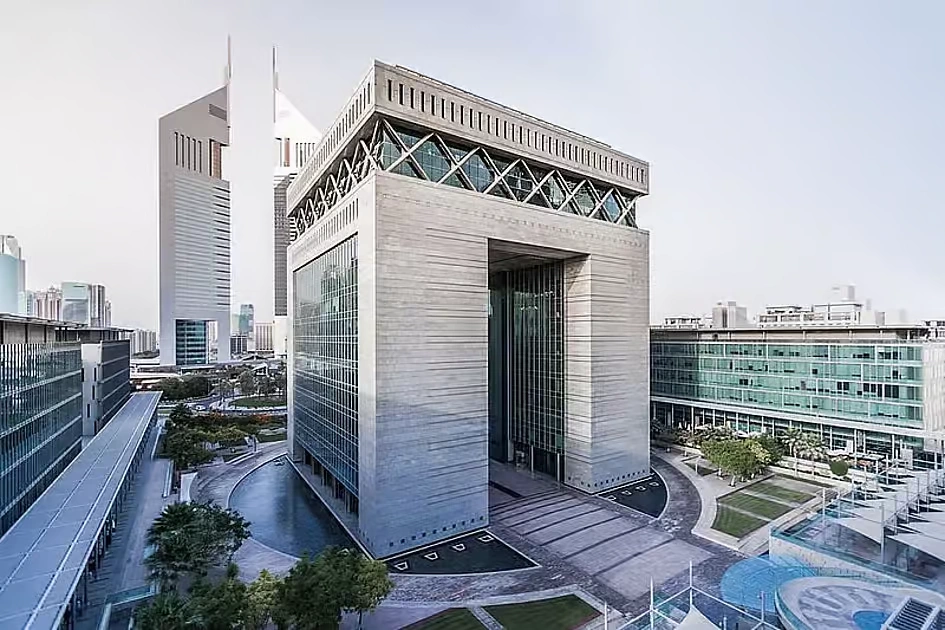
Dubai has climbed to its highest position ever on one of finance’s most closely watched rankings, and the achievement is no accident — it is the direct output of a decade-long, numerically explicit government strategy that few other financial centres have attempted to execute with this level of precision.
The Ranking Itself
The Dubai International Financial Centre has recorded its highest-ever position on the Global Financial Centres Index at seventh place worldwide, the highest ranking ever achieved by any financial centre across the Middle East, Africa and South Asia region, and the only MEASA-region centre to feature in the global top 20 — underscoring both its regional dominance and genuine global competitiveness.
The D33 Strategy Behind the Number
The ranking is explicitly tied to Dubai’s own stated ambitions. The GFCI result is described as pivotal to Dubai’s goal of becoming one of the world’s top four financial centres by 2033, in line with the Dubai Economic Agenda, or D33, which targets a doubling of the emirate’s economy over the decade. Separately, Dubai Chambers has confirmed the plan targets cumulative economic output of AED 32 trillion, or roughly $8.7 trillion, over the decade, supported by 100 transformative projects centred on trade expansion, digital innovation and sustainable growth.
The Underlying Economic Engine
The financial-centre ambitions are backed by genuine current-quarter growth. Dubai’s economy reached AED 232 billion in first-quarter 2026 GDP, a 2.4 percent year-on-year increase, with the finance, construction, healthcare, wholesale and retail trade, and real estate sectors all contributing to the broad-based expansion. Middle East Briefing separately projects the wider UAE economy will expand around 5 percent in 2026, with local banks positioned to increase lending both domestically — supporting SMEs, consumers and project finance — and across borders into markets like Saudi Arabia, where UAE banks’ comparatively lower interbank rates create an arbitrage opportunity.
Real Money Behind the Ranking
The GFCI climb is being validated by tangible transaction volume rather than sentiment alone. Weekly UAE business tracking shows a steady drumbeat of institutional activity: Sharjah Islamic Bank reported AED 803.9 million in net profit, up 15.3 percent, ADI Chain secured a $50 million investment to build sovereign digital infrastructure, and Capital.com reported $1.1 trillion in second-quarter trading volume routed through the jurisdiction. Separately, UAE and Saudi banks are projected to lead GCC credit growth in 2026, reinforcing Dubai and Abu Dhabi’s combined position as the region’s default financial gateway.
Why This Matters for Pakistan and South Asia
Dubai’s ascent as a financial hub carries direct relevance for Pakistan, where — as detailed in our companion coverage of Pakistan’s remittance exposure — roughly 55 percent of the country’s substantial remittance inflows originate from the Gulf Cooperation Council. A deepening, increasingly sophisticated DIFC-anchored financial ecosystem in Dubai means more efficient, lower-cost channels for that capital, alongside growing opportunities for Pakistani and South Asian firms to access GCC-sourced project finance and cross-border credit as UAE banks expand lending beyond their domestic market.
What is Dubai’s global financial centre ranking in 2026?
Dubai’s DIFC recorded its highest-ever ranking on the Global Financial Centres Index at 7th place worldwide in 2026 — the highest ever achieved by any Middle East, Africa or South Asia financial centre — as part of its stated goal to become a top-four global financial hub by 2033.
The Risk Beneath the Growth Story
Not every signal points to unambiguous strength. AGBI’s own reporting notes that UAE banks’ second-quarter results are likely to show weaker profits, slower lending and narrower margins, even as analysts characterise the underlying sector as fundamentally resilient — a reminder that Dubai’s financial-hub ambitions are being pursued against a genuinely more difficult regional operating environment shaped by the Strait of Hormuz disruption and broader Gulf security concerns, not in isolation from them.
The Bottom Line
Dubai’s climb to seventh in the GFCI rankings is less a one-off achievement than a measurable checkpoint on an explicitly numbered, decade-long strategic roadmap — one increasingly backed by real GDP growth, credit expansion, and institutional trading volume rather than ambition alone.
Analysis
Global Central Bank Divergence 2026: Why the Fed, BoE, BoJ, and PBoC Are All Moving Differently
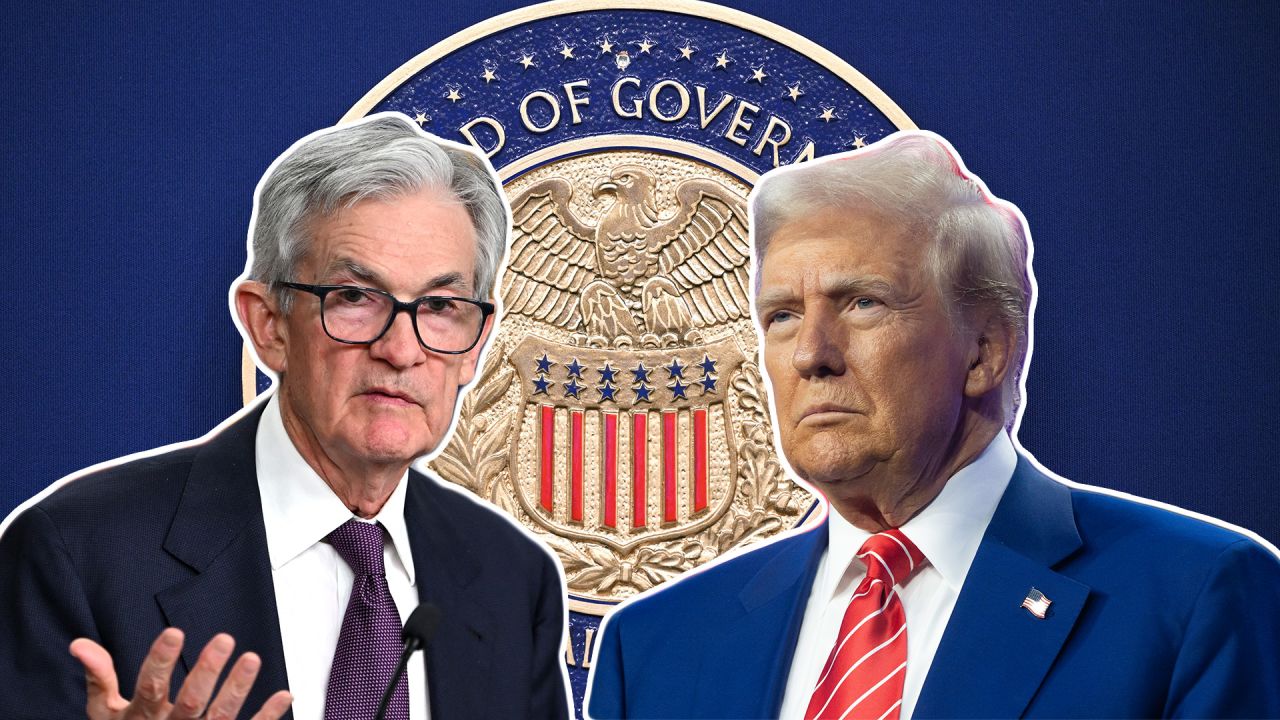
The world’s major central banks are no longer moving in anything resembling lockstep. The Federal Reserve is watching a weakening labor market while weighing energy-driven inflation risk, the Bank of Japan is scaling back bond purchases into a fiscal expansion, the Bank of Russia is cutting rates through sanctions-driven stagnation, and the Bank of England is openly discussing a hike rather than the cuts it signaled just months ago, a divergence in global monetary policy that reflects how unevenly the Iran war’s economic shock has landed across different economies.
The Fed’s Data-Dependent Pivot
Federal Reserve Chairman Kevin Warsh has explicitly asked markets to look to incoming data rather than central bank guidance to map the path for US interest rates, a communication shift that took on new significance after June’s jobs report showed just 57,000 new positions, roughly half the expected pace, according to Yahoo Finance’s markets coverage. Warsh has separately said inflation risks have eased substantially, a combination that has markets betting on a more accommodative Fed even as the central bank has offered no formal commitment ahead of its July 30 decision.
The Bank of England’s Reversal
Few central banks illustrate the scale of the pivot as clearly as the Bank of England. Governor Andrew Bailey said market pricing for two rate cuts this year had looked reasonable before the Iran war lifted inflation risks, according to the Credit Protection Association’s reporting, a statement that effectively closed the door on the easing path the Bank had signaled entering 2026. With UK inflation forecast to climb back toward 3.5% by year end and the base rate held at 3.75%, RSM UK’s analysis suggests a hike, not a cut, is now the more live possibility for the Bank’s July 30 decision, timed to land the same day as the Fed’s own announcement.
Canada and the Bank of Canada’s Cautious Hold
The Bank of Canada has held its policy rate at 2.25% since the spring, balancing a genuinely fragile domestic economy, technically in recession by some measures, against the same energy-driven inflation pressure affecting the UK, according to the central bank’s own announcement. Unlike the Fed or Bank of England, the Bank of Canada’s dilemma is compounded by an unresolved CUSMA trade review, meaning its policy path depends as much on trade negotiation outcomes as on conventional inflation and employment data.
Russia’s Disinflation Campaign, Slowed but Not Abandoned
At the opposite extreme sits the Bank of Russia, which has cut its key rate eight consecutive times since June 2025, from a record 21% down to 14.25% by its June 2026 decision, even as annual inflation remains at 5.6%, well above its 4% target, according to the central bank’s own data. Governor Elvira Nabiullina’s cutting cycle reflects a fundamentally different set of pressures than Western central banks face: a wartime economy where fiscal policy, not conventional demand, drives the inflation picture, and where the central bank’s June cut of just 25 basis points, smaller than the market’s expected 50, signals genuine caution about cutting too fast into persistent pro-inflationary risk from higher domestic energy costs.
Asia’s Split Response
Indonesia and Malaysia illustrate how differently emerging Asian economies are navigating the same global energy shock. Bank Indonesia has held its rate at 4.75% for seven consecutive meetings specifically to defend the rupiah, which has weakened 3.6% year-to-date, according to McKinsey’s regional review, prioritizing currency stability over the growth-supportive easing its 5.61% GDP growth might otherwise justify. Bank Negara Malaysia, by contrast, has benefited from a currency that has held relatively firm, giving it more flexibility, though inflation drifting toward the top of its 1.5% to 2.5% target range, per The Edge Malaysia’s reporting, suggests that flexibility may narrow through the second half of the year.
Japan sits furthest from the rest of the pack. The Bank of Japan has been reducing its own bond purchases even as 10-year Japanese government bond yields have climbed above 2.75%, their highest level since May 2026, according to Trading Economics, a tightening-adjacent move driven as much by concern over Prime Minister Sanae Takaichi’s fiscal expansion plans as by conventional inflation targeting.
China’s Different Problem Entirely
China’s central bank faces a problem none of its peers share: six consecutive quarters of deflation rather than inflation. Societe Generale economist Wei Yao has suggested Chinese bond yields could fall to record lows in 2026 as the People’s Bank of China continues easing, a view consistent with Beijing’s own base case of roughly RMB 1 trillion in additional fiscal stimulus alongside 20 basis points of rate cuts and 50 basis points of reserve requirement ratio cuts, according to Citi Research’s 2026 outlook, cited via Asia Times’ coverage of the Politburo’s domestic demand pivot.
What This Divergence Actually Means
The practical consequence of seven major central banks pursuing seven distinct policy paths is a global capital markets environment where currency volatility, carry trade dynamics, and cross-border capital flows have become considerably harder to forecast using any single macro framework. When Japan’s ultra-low yields anchored global borrowing costs and most Western central banks moved in broad cyclical alignment, currency and rate forecasting rested on relatively stable assumptions about global monetary conditions. That anchor is now gone. Investors positioning across UK gilts, US Treasurys, Japanese government bonds, and emerging Asian debt in the second half of 2026 face a genuinely fragmented policy landscape, one where the same global shock, the Iran war’s energy price spike, has produced hikes, holds, and cuts in near-equal measure depending entirely on each economy’s starting fiscal position, currency exposure, and domestic political constraints.

Business Insurance for Digital Exports: Protecting Your Company in the AI Era

Real Estate Crash Predictions 2026: Data-Backed Regional Guide

What is a “Lead-Left” Bank? Unpacking Morgan Stanley’s Role in Anthropic’s Mega-IPO

Is SPY Overvalued in September 2026? Fed Rate Hike Odds & Intrinsic Value

Pakistan’s KSE-100 Nears Record Territory Even as the Trade Gap Persists

US Consumer Sentiment Sinks as Retail Sales Drop

Barclays Q2 2026 Results: Income Beats, Costs Rise 7%

Pakistan’s Remittance Lifeline: Why Gulf Exposure Is a Hidden Risk

Dubai’s Rise to the World’s 7th Financial Hub: Inside the D33 Push

China EV Exports Hit Record High in 2026

UK’s “National Contributions Tax” Explained: Burnham-Era Reform 2026

Russia’s Strange Problem in 2026: Its Currency Is Too Strong

Section 301 Forced Labor Tariffs 2026: 60 Countries Affected

UK National Contributions Tax: Burnham’s Radical Tax Plan

Top 15 Stocks for Investment in 2026 in PSX: Your Complete Guide to Pakistan’s Best Investment Opportunities
Top 15 Stocks for Investment in 2026 in PSX: Your Complete Guide to Pakistan’s Best Investment Opportunities

Debunking IMF Program Myths: Reconfiguring Engagement for True National Ownership in a Volatile World

Top 10 Mutual Fund Managers in Pakistan for Investment in 2026: A Comprehensive Guide for Optimal Returns

What the U.S. Attack on Venezuela Could Mean for Oil and Canadian Crude Exports: The Economic Impact

China’s 50% Domestic Equipment Rule: The Semiconductor Mandate Reshaping Global Tech

15 Most Lucrative Sectors for Investment in Pakistan: A 2025 Data-Driven Analysis

Pakistan’s Export Goldmine: 10 Game-Changing Markets Where Pakistani Businesses Are Winning Big in 2025
15 Most Lucrative Sectors for Investment in Pakistan: A 2025 Data-Driven Analysis
15 Most Lucrative Sectors for Investment in Pakistan: A 2025 Data-Driven Analysis

Pakistan’s Stock Market Renaissance: How 2025’s Hottest Investment Opportunity Is Democratizing Wealth—A Complete Beginner’s Guide

Pakistan’s Economic Outlook 2025: Between Stabilization and the Shadow of Stagnation
Pakistan’s Economic Outlook 2025: Between Stabilization and the Shadow of Stagnation

China’s Property Woes Could Last Until 2030—Despite Beijing’s Best Censorship Efforts
-
 Markets & Finance8 months ago
Top 15 Stocks for Investment in 2026 in PSX: Your Complete Guide to Pakistan’s Best Investment Opportunities
-
Markets & Finance8 months ago
Top 15 Stocks for Investment in 2026 in PSX: Your Complete Guide to Pakistan’s Best Investment Opportunities
-
 Analysis7 months ago
Debunking IMF Program Myths: Reconfiguring Engagement for True National Ownership in a Volatile World
-
 Investment8 months ago
Top 10 Mutual Fund Managers in Pakistan for Investment in 2026: A Comprehensive Guide for Optimal Returns
-
 Global Economy8 months ago
What the U.S. Attack on Venezuela Could Mean for Oil and Canadian Crude Exports: The Economic Impact
-
 Asia8 months ago
China’s 50% Domestic Equipment Rule: The Semiconductor Mandate Reshaping Global Tech
-
 AI9 months ago
15 Most Lucrative Sectors for Investment in Pakistan: A 2025 Data-Driven Analysis
-
 Exports9 months ago
Pakistan’s Export Goldmine: 10 Game-Changing Markets Where Pakistani Businesses Are Winning Big in 2025