
Leadership
The New Executive Gold Standard: Top 10 Companies Lavishing Unprecedented Perks on CEOs and CFOs in 2025–2026


In boardrooms from San Francisco to Singapore, the conversation on executive compensation has shifted. For decades, the metric that mattered was equity—stock options, RSUs, and performance shares. But in the wake of the 2024–2025 reporting cycle, a new, quieter currency has emerged: the hyper-personalized perquisite.
Following the targeted assassination of UnitedHealthcare CEO Brian Thompson in late 2024, the definition of “standard benefits” for the C-suite underwent an immediate, violent recalibration. What was once dismissed as vanity—personal security details, residential hardening, and private aviation for “supercommuting”—is now framed by compensation committees as a non-negotiable insurance policy against geopolitical instability and domestic unrest.
According to FW Cook’s 2025 Executive Perquisites Report, the landscape has transformed. Personal use of corporate aircraft is now authorized at 76% of S&P 100 companies (up from 70% in 2021), while comprehensive security programs have surged to 59% prevalence. This isn’t just about luxury; it is a quiet arms race for talent and safety.
Why Executive Perks Are Surging in 2025
The data is unambiguous: the era of the “low-maintenance” CEO is over. Two primary drivers are fueling this spending spree:
- The Security Imperative: The UnitedHealthcare tragedy forced risk committees to reclassify executive visibility as a liability. ISS-Corporate reports that security perquisites hit a five-year high in 2025, with over 25% of companies adding new protective layers—ranging from cyber-intelligence teams to armed drivers.
- The Rise of the “Supercommuter”: As return-to-office mandates clash with global talent pools, boards are paying a premium to bridge the gap. The private jet is no longer just for business; it is the essential tool for the hybrid CEO living in Newport Beach while running a company in Seattle.
Ranked: Top 10 Companies Setting the Perk Standard (2025–2026 Cycle)
Drawing from the latest Equilar 100 data, 2025 proxy statements (DEF 14A), and Glass Lewis governance reports, these ten companies are defining the new ceiling for executive privilege.
1. Meta Platforms (NASDAQ: META)
- The Beneficiary: Mark Zuckerberg (CEO)
- The Package: ~$14 Million Annual Security Allowance + Private Aircraft Costs
- The Rationale: Meta remains the undisputed heavyweight champion of executive security. The company’s 2025 proxy filings defend the staggering $14 million pre-tax security allowance as necessary due to the “specific threats to his safety arising directly as a result of his position.” Unlike peers who cap benefits, Meta’s program is open-ended, covering personnel, equipment, and residential improvements.
- Governance Note: While the number is astronomical, shareholders have largely acquiesced, viewing Zuckerberg’s safety as synonymous with the company’s stability.
2. Salesforce (NYSE: CRM)
- The Beneficiary: Marc Benioff (CEO)
- The Package: $4.6 Million (Aggregate Perks)
- Breakdown: ~$3 million in personal security + ~$1.6 million in personal aircraft use.
- The Rationale: Benioff’s perk package has drawn sharp fire from Glass Lewis, which highlighted that his perks more than doubled over a two-year period. Salesforce defends the aircraft usage as a security requirement, yet the “commuter” nature of the flights remains a flashpoint for ESG investors.
- Governance Note: In 2024, Salesforce faced significant “Say-on-Pay” opposition, with these perks cited as a key indicator of misalignment with shareholder interests.
3. Starbucks (NASDAQ: SBUX)
- The Beneficiary: Brian Niccol (CEO)
- The Package: The “Supercommute” Jet Access
- The Details: Upon his poaching from Chipotle, Niccol negotiated a landmark arrangement: he lives in Newport Beach, CA, and commutes 1,000 miles to Seattle via corporate jet up to three times a week.
- The Rationale: This perk rewrote the playbook for talent acquisition in 2025. It signaled that top-tier talent could dictate geography, with the company footing the bill for the friction.
- Governance Note: The optics of a “green” company flying a CEO 2,000 miles weekly triggered immediate backlash, yet the board deems it a necessary cost for a turnaround.
4. UnitedHealth Group (NYSE: UNH)
- The Beneficiary: C-Suite Executives
- The Package: $1.7 Million Security Allocation (New Entrant)
- The Rationale: Previously reporting $0 in security perks, UnitedHealth allocated $1.7 million specifically for executive protection in the 2024–2025 cycle following the assassination of its CEO. This figure represents the new baseline for healthcare executives facing public ire.
- The Insight: This specific allocation is the clearest data point linking physical safety risks to line-item compensation costs in the Fortune 50.
5. Palo Alto Networks (NASDAQ: PANW)
- The Beneficiary: Nikesh Arora (CEO)
- The Package: High-Security Focus within $99M+ Total Comp
- The Rationale: As the head of a top-tier cybersecurity firm, Arora’s physical and digital security is paramount. The company’s perks are deeply integrated into a compensation package that consistently ranks in the top 5 of the Equilar 100.
- The Detail: Unlike legacy firms, Palo Alto Networks bundles security as a business continuity necessity, blurring the lines between “perk” and “operational expense.”
6. Apple (NASDAQ: AAPL)
- The Beneficiary: Tim Cook (CEO)
- The Package: ~$1.6 Million (Security + Aircraft)
- Breakdown: ~$820,000 security + ~$770,000 aircraft (estimated based on trailing averages).
- The Rationale: Apple requires Cook to fly private for all travel, business or personal. This mandate—common among the elite tech giants—shifts the narrative from “luxury” to “mandated efficiency.”
- Governance Note: Apple’s consistent, predictable perk spending rarely attracts activist ire, setting the “safe harbor” standard for other boards.
7. Alphabet (NASDAQ: GOOGL)
- The Beneficiary: Sundar Pichai (CEO) & Ruth Porat (President/CIO)
- The Package: ~$6–8 Million (Security-Dominant)
- The Rationale: Alphabet’s “Personal Security Program” is one of the most comprehensive in the Valley. The perk includes security at personal residences and during personal travel. Notably, Alphabet extends significant security perks to other NEOs (Named Executive Officers), recognizing that risk isn’t isolated to the CEO.
8. Axon Enterprise (NASDAQ: AXON)
- The Beneficiary: Patrick W. Smith (CEO)
- The Package: $164.5 Million Total Comp Context
- The Rationale: While the bulk of Smith’s package is performance-based equity, the “founder premium” at Axon includes liberal use of corporate resources for efficiency. As the highest-paid CEO in the 2025 Equilar study, Smith’s package sets a ceiling for founder-led industrial tech firms.
9. Oracle (NYSE: ORCL)
- The Beneficiary: Larry Ellison (CTO/Founder)
- The Package: Residential Security & Maritime Security
- The Rationale: Ellison has historically maintained one of the most complex security apparatuses, often involving protection for his various residential compounds. While technically the CTO, his perk package frequently eclipses that of most S&P 500 CEOs, justified by his founder status and geopolitical profile.
10. JPMorgan Chase (NYSE: JPM)
- The Beneficiary: Jamie Dimon (CEO)
- The Package: ~$400,000+ (Aircraft/Cars/Security)
- The Rationale: The “Banker Standard.” Dimon’s perks are modest compared to tech moguls but remain the benchmark for Wall Street. The bank covers spousal travel on business trips and residential security, reflecting the specific kidnapping/ransom risks associated with global banking leaders.
The CFO Angle: A Quiet Accumulation of Privilege
While headlines fixate on the CEO, a subtler trend is emerging in the 2025 proxy statements: the elevation of the CFO into the “protected class.”
In Fintech and Private Equity, CFOs are increasingly granted “Secured Transport” perks—armored car services and drivers—that were previously reserved for the CEO. The logic is economic: the CFO holds the keys to liquidity. Kidnapping insurance and residential hardening for CFOs are becoming standard in volatile markets (Latin America, Eastern Europe) and are creeping into US domestic packages for firms like Coinbase and BlackRock, where the CFO serves as a public face for financial policy.
Criticism & Governance Risks
The explosion of perks has not gone unnoticed. Glass Lewis and ISS have sharpened their pencils for the 2026 proxy season. The primary friction point is no longer the cost of the jet, but the classification of the flight.
- The “Commuting” Loophole: When a CEO flies from a vacation home to HQ, companies often tag it as “business travel” for security reasons. The IRS and shareholders are pushing back, demanding these be taxed and disclosed as personal benefits.
- ESG Hypocrisy: Investors are increasingly using “Say-on-Pay” votes to punish boards that authorize unlimited jet usage while publishing aggressive Net Zero carbon goals. Starbucks faced this contradiction head-on in 2024, and it remains a potent vulnerability for boards in 2026.
Future Outlook: 2026 and Beyond
As we move deeper into 2026, expect the definition of “perks” to expand into Cyber-Physical Protection. The next frontier isn’t just a bodyguard; it is a dedicated team scrubbing the dark web for executive family data, AI-driven home surveillance, and identity theft protection that costs upwards of $100,000 annually.
In this new era, the corporate jet is just the table stakes. The real gold standard is the guarantee of safety in an unsafe world.


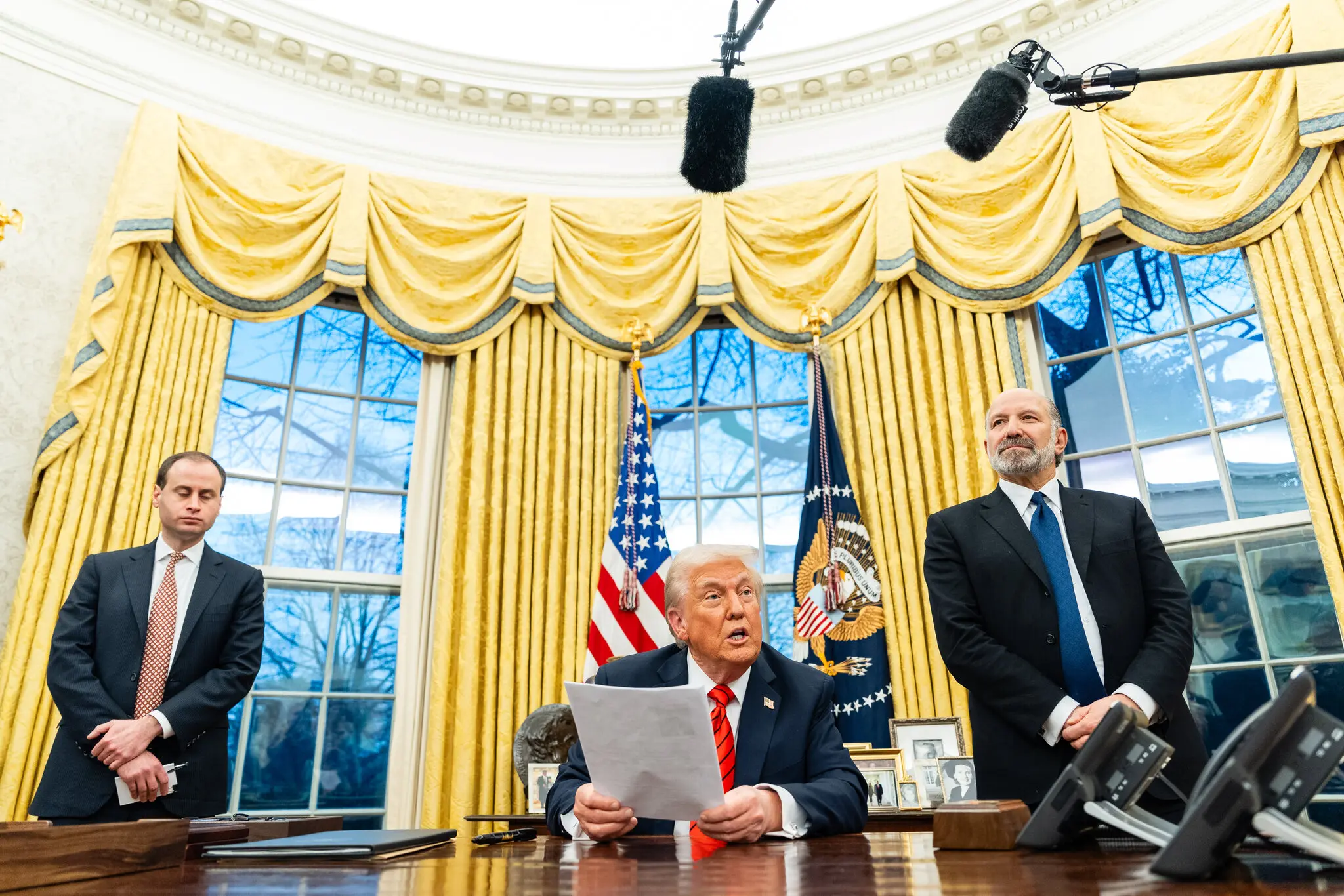
Supreme Court Strikes Down IEEPA Policy, President Imposes 15% Duty in Defiant Response
A Constitutional Earthquake Reshapes Global Markets
When the United States Supreme Court delivered its 6-3 ruling on February 20, 2026, striking down the centerpiece of President Donald Trump’s tariff agenda, the initial reaction in financial markets was almost euphoric. Stocks jumped. The dollar surged briefly. Companies with heavy exposure to import levies — Amazon, Apple, retailers and appliance makers — immediately ranked among the day’s top performers. For a fleeting moment, it looked as though the era of trade war uncertainty might be drawing to a close.
That illusion evaporated within hours.
By the end of trading, the dollar had reversed course, finishing the day lower against major peers including the euro, the pound, and the yen. Gold and silver prices rallied — a signal, analysts noted, that investors don’t believe companies are entirely in the clear on tariff uncertainty yet. NBC News And when President Trump stormed out of the White House to denounce the justices as a “disgrace,” then announced sweeping new tariffs under an entirely different legal framework, the markets understood: the trade war had not ended. It had simply evolved.
The episode underscores one of 2026’s defining investment themes — that gold prices surge on trade uncertainty regardless of which direction events turn, while the dollar’s credibility faces a prolonged and structural test.
The Supreme Court Ruling: What It Said and What It Didn’t
In a long-awaited decision, Chief Justice John Roberts delivered the majority opinion concluding that the International Emergency Economic Powers Act of 1977 “does not authorize the President to impose tariffs.” The ruling was 6-3, with Justices Clarence Thomas, Samuel Alito, and Brett Kavanaugh dissenting. CNBC
The IEEPA had been the legal cornerstone of Trump’s so-called “Liberation Day” tariffs — the sweeping global levies announced in April 2025 that upended supply chains, rattled global equity markets, and generated enormous revenues for the U.S. Treasury. The federal government had been collecting approximately $30 billion in tariffs every month under the policy — roughly four times the pre-Trump baseline. NPR
The court’s majority leaned heavily on the “major questions doctrine,” the principle that Congress must explicitly authorize executive actions of vast economic significance. Roberts concluded that Trump’s approach “would represent a transformative expansion of the President’s authority over tariff policy” — language that drew immediate comparisons to the court’s earlier decision blocking President Biden’s student loan forgiveness program.
Yet crucially, the ruling left several important questions unresolved. The court declined to address “whether, and if so how, the Government should go about returning the billions of dollars that it has collected from importers” — an issue now likely headed to the U.S. Court of International Trade. NBC News For businesses that paid the IEEPA levies, the path to potential refunds remains uncertain and legally complex.
Trump’s Response: A 15% Global Tariff Under the Trade Act of 1974
President Trump wasted no time. Within hours of the ruling, he invoked Section 232 of the Trade Act of 1974 — a rarely used provision traditionally associated with national security justifications — to announce an initial 10% across-the-board tariff on nearly all U.S. trading partners. By the weekend, that figure had climbed to 15%.
Trump increased the rate of the new global tariff to 15%, vowing to work around the ruling that had invalidated his emergency tariffs. The Washington Post The move immediately raised fresh questions about the legal durability of this new approach, and whether it too would face constitutional challenge. Unlike IEEPA, the Trade Act of 1974 has a longer history of judicial deference — but legal experts caution that a 15% blanket global tariff of this magnitude would likely face scrutiny under the same major questions doctrine the court just applied.
Chris Krueger, managing director at TD Cowen Washington Research Group, had anticipated precisely this scenario, writing that given Trump’s public frustration with previous court rulings, “we would not be surprised to see a meaningful tariff escalation/response from the White House sooner rather than later.” CNBC
Market Reactions: Gold as the Safe-Haven Barometer
For investors watching the Trump tariffs’ impact on gold, the past week has been instructive. When clarity fails to materialize — and in this instance, a Supreme Court ruling produced not stability but a new round of legal improvisation — capital reliably flows toward precious metals.
Gold futures rose approximately 1% and silver gained 4% as investors poured into safe-haven assets following the tariff ruling and Trump’s defiant response. Yahoo Finance The moves reflect a broader dynamic: gold prices surge on trade uncertainty because the metal offers what fiat currency cannot — a store of value insulated from policy volatility and executive overreach.
The dollar’s behavior was equally telling. After an initial jump against major currencies on the day of the ruling, the greenback reversed course and ended lower — a pattern that speaks to deeper anxieties about U.S. economic governance. A stronger dollar is typically seen as a sign of investor confidence in U.S. assets and stability. NBC News Its retreat, even as legal uncertainty around tariffs appeared to lift, suggests that markets are pricing in something more structural: a prolonged period of executive-judicial conflict that will continue to cloud America’s trade relationships.
The U.S. dollar slide and its economic effects extend beyond currency traders. A weaker dollar raises import costs for American consumers, complicates Federal Reserve decision-making on interest rates, and erodes the purchasing power of dollar-denominated assets held by foreign central banks.
Global Trade Implications: Allies, Rivals, and the Refund Question
The international fallout from both the ruling and Trump’s 15% response has been swift and multifaceted.
Some countries have indicated they will honor the trade deals negotiated with the U.S. prior to the ruling, but experts believe the Supreme Court decision could provide meaningful leverage for major trading partners such as China, India, and the European Union. Yahoo Finance The EU Parliament’s trade chief moved quickly, proposing to freeze the bloc’s trade agreement with Washington amid what officials described as tariff “chaos.” ECB President Christine Lagarde warned that the latest tariff developments put agreed trade terms at serious risk.
Chinese markets, by contrast, responded with relative optimism. The Hang Seng index closed 2% higher on the following Monday, as investors weighed whether China’s leader Xi Jinping might seek to renegotiate terms of the existing U.S.-China trade deal from a position of renewed strength. Yahoo Finance
For businesses on the ground — importers, manufacturers, logistics operators — the picture remains murky. Small business coalition “We Pay the Tariffs” called for a “full, fast, and automatic” refund process, with executive director Dan Anthony warning that “small businesses cannot afford to wait months or years while bureaucratic delays play out.” NBC News President Trump, for his part, declined to commit to honoring refund obligations, suggesting the matter would need to be litigated — a prospect that could drag through the courts for years.
Inflation, the Fed, and the Long-Term Economic Outlook
The Supreme Court ruling arrived on the same day the Commerce Department reported that core inflation ran at a 3% annual rate in December, as measured by the Fed’s preferred PCE gauge. The timing is no coincidence in its significance: with inflation still running above the Federal Reserve’s 2% target, any new round of tariff-driven cost pressures — even under a different legal framework — complicates the central bank’s path toward rate normalization.
Jason Pride, chief of investment strategy and research at Glenmede, argued that “fiscal conditions already point to a sizable positive impulse in 2026,” driven by the One Big Beautiful Bill Act and an easing monetary policy backdrop, and that the tariff ruling might incrementally enhance this stimulus. CNBC But he cautioned that a temporary drag on exports could emerge if companies front-run the new tariff regime by accelerating imports — a pattern observed earlier in 2025.
For emerging markets, the risks are asymmetric. A weaker dollar provides temporary relief on dollar-denominated debt servicing, but a renewed global trade war, with its attendant supply chain disruptions and demand uncertainty, would hit export-dependent developing economies disproportionately hard.
What Comes Next: Legal Uncertainty as the New Normal
The Supreme Court’s ruling does not, in the words of Justice Kavanaugh’s concurrence, “greatly restrict Presidential tariff authority going forward” outside the IEEPA context. That means the 15% Trade Act tariffs — and further escalations — are not without legal foundation. Whether they survive judicial scrutiny at their current scale and scope is a question that will likely take months, if not years, to resolve.
What is clear is that the era of global trade war risks in 2026 has not passed. It has simply entered a new phase — one defined not by a single contested law, but by an ongoing struggle between executive ambition, congressional authority, and judicial oversight. For investors, that means continued demand for safe-haven assets, ongoing volatility in currency markets, and heightened sensitivity to any fresh policy signal from Washington.
Gold, which has demonstrated its enduring role as a crisis barometer throughout this episode, appears well-positioned to maintain its elevation so long as that uncertainty persists. The dollar, caught between two competing narratives — the rule-of-law reassurance of a functioning judiciary and the policy instability of an administration determined to circumvent it — faces a more complicated road ahead.
In the end, markets are not just pricing a tariff rate. They are pricing a system’s resilience.

Diesel Prices 2026–2027: Why Cheaper Crude May Not Mean Cheap Fuel

2027 Social Security COLA: Key Details and Dates

KSE-100 Sees Major Drop Post-SBP Rate Hike

Big Tech’s AI Spending Test: Can Revenue Catch Up With Capital Expenditure?

AI Infrastructure Investment Strategies for 2026

Pakistan Freelancers Tax 2026: Payments, Documentation and Formal Growth

Strait of Hormuz Crisis: What the Latest Tanker Attacks Mean for Oil, Shipping and Global Trade

AI Customer Service in 2026: What’s Working, What’s Failing, and What to Buy

Open a Savings Account Online: How to Actually Earn 10x the National Average Rate

Global Housing Market 2026: Where Prices Rise, Where They Don’t

PSX and KSE-100 Record Highs: An Insider’s Guide to Pakistan Stocks

So Delicious Dessert Recall: Affected Products, FDA Guidelines, and Consumer Action

Pakistan’s Current Account Deficit Narrows Sharply to $98 Million in August 2026

Japan Eyes 3.5% Defense Spending: What It Means for Bonds, Stocks, and the BOJ

Top 15 Stocks for Investment in 2026 in PSX: Your Complete Guide to Pakistan’s Best Investment Opportunities
Top 15 Stocks for Investment in 2026 in PSX: Your Complete Guide to Pakistan’s Best Investment Opportunities

Debunking IMF Program Myths: Reconfiguring Engagement for True National Ownership in a Volatile World

Top 10 Mutual Fund Managers in Pakistan for Investment in 2026: A Comprehensive Guide for Optimal Returns

China’s 50% Domestic Equipment Rule: The Semiconductor Mandate Reshaping Global Tech

What the U.S. Attack on Venezuela Could Mean for Oil and Canadian Crude Exports: The Economic Impact

15 Most Lucrative Sectors for Investment in Pakistan: A 2025 Data-Driven Analysis

How to Become an Active Taxpayer on Pakistan’s FBR Active Taxpayer List (ATL) in 2026: A Step-by-Step Guide

Pakistan’s Export Goldmine: 10 Game-Changing Markets Where Pakistani Businesses Are Winning Big in 2025

Pakistan’s Stock Market Renaissance: How 2025’s Hottest Investment Opportunity Is Democratizing Wealth—A Complete Beginner’s Guide

Best Investments in Pakistan 2026: Top 10 Low-Price Shares and Long-Term Picks for the PSX
15 Most Lucrative Sectors for Investment in Pakistan: A 2025 Data-Driven Analysis
15 Most Lucrative Sectors for Investment in Pakistan: A 2025 Data-Driven Analysis

Pakistan’s Economic Outlook 2025: Between Stabilization and the Shadow of Stagnation
-
 Markets & Finance10 months ago
Top 15 Stocks for Investment in 2026 in PSX: Your Complete Guide to Pakistan’s Best Investment Opportunities
-
Markets & Finance10 months ago
Top 15 Stocks for Investment in 2026 in PSX: Your Complete Guide to Pakistan’s Best Investment Opportunities
-
 Analysis9 months ago
Debunking IMF Program Myths: Reconfiguring Engagement for True National Ownership in a Volatile World
-
 Investment10 months ago
Top 10 Mutual Fund Managers in Pakistan for Investment in 2026: A Comprehensive Guide for Optimal Returns
-
 Asia10 months ago
China’s 50% Domestic Equipment Rule: The Semiconductor Mandate Reshaping Global Tech
-
 Global Economy10 months ago
What the U.S. Attack on Venezuela Could Mean for Oil and Canadian Crude Exports: The Economic Impact
-
 AI11 months ago
15 Most Lucrative Sectors for Investment in Pakistan: A 2025 Data-Driven Analysis
-
 Taxes & Compliance9 months ago
How to Become an Active Taxpayer on Pakistan’s FBR Active Taxpayer List (ATL) in 2026: A Step-by-Step Guide