
Energy Economy
K-Electric Tariff Cut Sparks $2B Arbitration Crisis

The lights flickered in Rashid Ahmed’s textile factory in Karachi’s SITE industrial area on a sweltering October afternoon. Not from another power cut—those he’d grudgingly accepted as the cost of doing business in Pakistan—but from uncertainty. News had just broken that the National Electric Power Regulatory Authority (NEPRA) had slashed K-Electric’s tariff by Rs7.6 per unit, the steepest reduction the city’s sole power provider had seen in years. Ahmed’s electricity bill would drop, yes, but the veteran manufacturer knew something the celebratory headlines didn’t reveal: when regulators squeeze utilities this hard in emerging markets, someone always pays the price.
Six weeks later, that bill arrived—not to consumers, but to Pakistan itself, in the form of a a $2 billion arbitration claim filed by furious Gulf investors who now accuse Islamabad of regulatory sabotage.
This collision between populist rate relief, corporate profitability, and foreign investment protection has become the most consequential energy sector dispute in Pakistan’s recent history, with implications extending far beyond Karachi’s overloaded distribution network. It reveals fundamental tensions in how developing nations balance affordable electricity for 16 million consumers against the contractual promises made to privatized utilities—and the scorching retaliation that follows when that balance tips.
The Uniform Tariff Trap: How National Policy Caught K-Electric in Its Crosshairs
To understand why K-Electric’s Gulf investors are threatening Pakistan with its largest utility sector arbitration, one must first grasp the peculiar economics of Pakistan’s uniform tariff policy—a well-intentioned populist mechanism that has become a fiscal Frankenstein.
Unlike most countries where electricity prices reflect local generation costs and distribution efficiency, Pakistan mandates a single national tariff across all regions. Karachi consumers pay the same per-unit rate as those in Lahore or Peshawar, regardless of whether power comes from expensive furnace oil plants or cheaper hydroelectric dams. The difference? The federal government covers the gap through subsidies, which for fiscal year 2025-26 total Rs249 billion out of a Rs3,520 billion revenue requirement.
K-Electric occupies a uniquely vulnerable position within this framework. As Pakistan’s only vertically integrated private utility—privatized in 2005 to a consortium led by Saudi Arabia’s Al Jomaih Power and Kuwait’s Denham Capital—it operates independently from the national grid while simultaneously being subject to national pricing policies designed for state-owned distribution companies (DISCOs). For nearly two decades, this arrangement worked through an implicit bargain: K-Electric would modernize Karachi’s decrepit infrastructure while the government ensured cost-reflective tariffs that allowed reasonable returns.
That bargain shattered on October 21, 2025, when NEPRA reversed its own May 2025 determination—issued after two-and-a-half years of consultation—and slashed K-Electric’s multi-year tariff from Rs39.97 to Rs32.37 per kilowatt-hour. The reduction didn’t emerge from new operational data or efficiency gains. Rather, it stemmed from a review petition filed by Pakistan’s Power Division seeking to align K-Electric’s rates more closely with the Rs31.59 average for state DISCOs, thereby reducing the subsidy burden on federal coffers.
Anatomy of a Financial Shock: How Rs7.6 Per Unit Translates to Existential Crisis
The mathematics of K-Electric’s predicament are brutal. Each rupee reduction in tariff translates to approximately Rs15 billion in annual revenue loss, according to industry estimates cited by The News. The Rs7.6 cut therefore represents Rs110-120 billion annually, or roughly Rs700 billion over the seven-year control period through fiscal 2030.
But the damage extends beyond headline numbers. NEPRA’s revised determination fundamentally restructured K-Electric’s business model across multiple dimensions:
Return on Equity Denominated in Rupees: Previously, K-Electric’s transmission and distribution operations earned dollar-indexed returns—a standard protection against currency devaluation in emerging market infrastructure. NEPRA converted these to rupee-denominated returns, immediately slashing the real value of anticipated profits given Pakistan’s chronic depreciation pressures.
Capacity Payment Restructuring: The regulator terminated four aging gas-fired generation plants outright and altered payment formulas for remaining facilities. Only 35% of capacity payments are now guaranteed, with the remainder shifted from “take-or-pay” (payment regardless of dispatch) to “take-and-pay” (payment only when utilized)—mirroring the controversial Independent Power Producer (IPP) model that Pakistan has been trying to renegotiate nationwide.
Recovery Benchmarks Raised to 100%: K-Electric’s bill collection rate, which stood at 91.5% in fiscal 2023-24, must now reach 100% to avoid tariff penalties. This is particularly punishing for a utility serving Karachi’s sprawling informal settlements where electricity theft and non-payment remain endemic. For context, NEPRA allowed no recovery losses for Punjab’s five DISCOs, creating an impossible standard.
The financial impact has been swift and severe. Analysts at AKD Securities estimate that K-Electric’s Rs4 billion profit in fiscal 2024 could flip to a Rs70-80 billion annual loss once accounts are restated under the new tariff. K-Electric’s foreign shareholders project losses could reach Rs100 billion annually through 2030.
CEO Moonis Alvi, in a carefully worded video statement, acknowledged the utility was “reviewing how to continue operations” under the revised framework—corporate-speak that sent K-Electric’s share price tumbling and triggered alarm bells among energy analysts. One expert told Dawn newspaper the cut would cause “immediate financial and operational shocks,” warning that “you don’t pull hundreds of billions out of a utility and expect business as usual.”
The $2 Billion Reckoning: When Regulatory Reversal Becomes Investor Retaliation
The tariff cut was merely the spark. The kindling had been accumulating for nearly a decade.
On January 16, 2026, London-based law firms Steptoe International and Omnia Strategy filed a Notice of Arbitration on behalf of 32 Saudi individuals and entities linked to the Al Jomaih family, along with five Kuwaiti companies. Together holding a 30.7% indirect stake in K-Electric, they’ve appointed Professor Stephan Schill as their arbitrator and proposed the Permanent Court of Arbitration to oversee proceedings under the Organisation of Islamic Cooperation Investment Agreement and UNCITRAL Arbitration Rules.
The 39-page filing reads like an indictment of Pakistan’s investment climate, alleging systematic breach of treaty obligations across multiple fronts:
Indirect Expropriation Through Stalled Privatization: The investors agreed in October 2016 to sell 66.4% of K-Electric to Shanghai Electric Power Company for $1.77 billion. Despite initial regulatory support, the deal languished for over eight years amid “shifting conditions, contradictory instructions, and withheld national security approvals,” according to the filing. Shanghai Electric eventually withdrew, leaving investors without their planned exit and K-Electric without the capital infusion needed for grid modernization.
The aborted sale carries particular sting because it wasn’t a commercial failure—both parties wanted to proceed. Rather, it died of bureaucratic attrition and alleged political interference, what arbitration specialists call “creeping expropriation” where investment value is systematically destroyed through regulatory obstruction rather than outright seizure.
Unpaid Government Receivables: The investors claim nearly two decades of unpaid tariff differential subsidies and other receivables have “crippled K-Electric’s finances” while authorities continued imposing penalties for late payments on infrastructure investments. This creates a perverse dynamic where the government simultaneously owes the company money while fining it for cash flow problems caused by… the government not paying what it owes.
Tariff Framework Politicization: The October 2025 tariff reversal represents, in the investors’ view, the culmination of regulatory unreliability. They allege the government “reopened settled matters through flawed review processes” and imposed revised tariffs costing approximately Rs85 billion annually without proper consultation or respect for the multi-year certainty that tariff frameworks are meant to provide.
Failed Protection Against Hostile Takeovers: The filing also points to attempts by domestic investor Zia Chishty to gain control of K-Electric’s parent company through offshore structures, which Gulf shareholders characterize as an orchestrated takeover attempt that Pakistani authorities failed to prevent despite “repeated complaints.”
Pakistan now has 60 days to nominate its own arbitrator. If it fails to engage constructively, the case proceeds to a three-member tribunal that could award damages, impose injunctions, or order structural remedies. Previous arbitration cases in Pakistan’s power sector have cost the country heavily—the government’s forced renegotiations with IPPs in 2024-25, while technically “voluntary,” were driven partly by the threat of cascading arbitration claims.
Echoes of Emerging Market Privatization Failures: Argentina, Nigeria, and the FDI Death Spiral
Pakistan’s predicament with K-Electric is hardly unique. It echoes a familiar pattern across developing economies where infrastructure privatization meets fiscal desperation—a toxic combination that has destroyed investor confidence from Buenos Aires to Lagos.
Argentina’s experience with electricity privatization in the 1990s offers an especially cautionary parallel. After selling state utilities to Spanish and French consortiums, the government implemented an emergency tariff freeze during the 2001-02 economic crisis, converting dollar-denominated tariffs to pesos at par despite 75% currency devaluation. The resulting disputes spawned over 40 arbitration cases at the International Centre for Settlement of Investment Disputes (ICSID), with awards exceeding $1 billion. Two decades later, Argentina still struggles to attract foreign capital for energy infrastructure.
Nigeria’s privatization of its power sector in 2013 followed a similar trajectory. Distribution companies purchased at premium valuations quickly discovered the government wouldn’t honor subsidy commitments or permit cost-reflective tariffs for fear of political backlash. By 2020, most DISCOs were technically insolvent, and foreign investors had written down their stakes to near zero. The World Bank’s 2025 Investment Climate Statement for Pakistan notes that such regulatory unreliability “directly undermines FDI” and creates lasting reputational damage.
For Pakistan, the timing couldn’t be worse. Foreign direct investment, excluding retained earnings, has cratered below $1 billion annually—a figure that pales against regional competitors. Vietnam attracted $6.9 billion in just the first two months of 2025, a 68% year-on-year surge. India, despite recent slowdowns, maintains FDI flows an order of magnitude higher than Pakistan’s. Even Bangladesh, wracked by political turmoil, attracts proportionally more investment relative to GDP.
The K-Electric dispute signals to potential investors that contractual commitments in Pakistan’s infrastructure sector are vulnerable to unilateral revision whenever fiscal pressures mount—precisely the message a country desperate for investment in renewable energy, mining, and digital infrastructure cannot afford to send.
The Circular Debt Paradox and Pakistan’s Energy Sector Checkmate
K-Electric’s crisis is symptomatic of a larger dysfunction: Pakistan’s power sector circular debt, which now exceeds Rs1.693 trillion and growing. This represents unpaid obligations cascading through the system—the government owes subsidies to utilities, utilities owe fuel suppliers, suppliers owe refineries, and consumers owe utilities for unpaid bills.
The uniform tariff policy, intended to shield consumers from high electricity costs, has become a primary driver of this debt spiral. By setting retail prices below cost-recovery levels and failing to fully fund the resulting subsidies, the government essentially finances consumption through arrears. K-Electric is both victim and participant: owed billions in historical subsidies while struggling to collect from consumers, it now faces tariff cuts that make cost recovery impossible even with perfect collections.
NEPRA’s October 2025 decision crystallizes the impossibility of Pakistan’s energy policy trilemma: keep tariffs low for political survival, maintain utility profitability to attract investment, and avoid ballooning subsidies to meet IMF fiscal targets. Pakistan has been pretending it could satisfy all three simultaneously. The K-Electric tariff cut represents the moment that pretense collapsed—solving the subsidy problem by transferring Rs700 billion in costs to private investors who, predictably, are now threatening to walk away.
Climate Ambitions Meet Investment Reality: The Renewable Energy Stakes
Beyond immediate financial ramifications, the K-Electric dispute threatens Pakistan’s nascent renewable energy ambitions. Karachi’s utility had secured Pakistan’s lowest renewable tariffs through competitive bidding—Rs8.9 to Rs11.6 per unit for 640 MW of solar and wind projects at Dhabeji, Winder, and Bela. These projects, approved by NEPRA in May 2025, represented a rare bright spot in Pakistan’s energy transition.
But capital-intensive renewable projects require regulatory certainty above all else. Solar and wind facilities have high upfront costs and decades-long payback periods, making them exquisitely sensitive to policy risk. If Gulf investors—historically among the most patient infrastructure capital providers—can have their tariffs retroactively slashed by 19% despite multi-year regulatory approval, why would any renewable energy developer believe their 20-year power purchase agreement will be honored?
The broader climate finance implications are sobering. Pakistan requires an estimated $348 billion through 2030 to meet its climate commitments, according to its updated Nationally Determined Contribution. Perhaps $101 billion of that must come from private sources, primarily foreign investment in renewable energy. Yet Pakistan’s investment climate is characterized by “bureaucratic red tape, policy unpredictability, weak contract enforcement, and infrastructure deficits”—precisely the conditions that make climate finance impossible to mobilize at scale.
Development banks like the Asian Development Bank and Green Climate Fund have structured some risk mitigation, including guarantees for distributed solar projects. But these mechanisms only work if host governments maintain baseline regulatory credibility. The K-Electric precedent suggests Pakistan may be dismantling that credibility precisely when climate change makes energy transition most urgent.
Karachi’s Power Future: Infrastructure Investment or Managed Decline?
For Karachi’s 16 million residents and Pakistan’s industrial heartland, the immediate question is whether K-Electric can maintain, let alone improve, service quality under financial duress.
The utility met Karachi’s peak summer 2025 demand of 3,563 MW with 3,545 MW supply—a credible performance for a grid serving one of the world’s largest cities. But that reliability required sustained capital expenditure: transmission upgrades, distribution network expansion, loss reduction programs, and the commissioning of 900 MW in new generation capacity at the RLNG-based BQPS-III plant.
Under the revised tariff, such investments become financially irrational. Why would shareholders inject capital into a utility whose regulator retroactively reduces approved returns? The likely outcome: K-Electric enters maintenance mode, avoiding major capital commitments while extracting whatever cash flows remain. This means delayed grid upgrades, slower expansion to underserved areas, and potentially deteriorating reliability as equipment ages without replacement.
The government’s implicit bet is that K-Electric’s investors will accept diminished returns rather than abandon a strategic asset. That calculation may prove catastrophically wrong. Saudi and Kuwaiti investors entered K-Electric in 2005 with a 20-year horizon; they’re now 20 years in with nothing to show but mounting losses and broken promises. The arbitration filing suggests they’ve reached the breaking point.
One scenario sees the Gulf investors eventually selling to domestic Pakistani conglomerates at fire-sale valuations, as occurred with some IPPs in 2024. Pakistani business groups, with deeper political connections and lower cost of capital, might accept returns that foreign investors cannot. But this would mark another retreat of foreign capital from Pakistan’s infrastructure sector—a symbolic defeat for a country trying to project itself as investment-ready.
Policy Pathways: Can Pakistan Restore Credibility?
Pakistan faces a choice between two paths, neither painless but one potentially transformative.
Path One: Managed Retreat and Renationalization—Pakistan could accept that private sector participation in distribution and integrated utilities has failed, compensate K-Electric’s investors at some negotiated value, and fold the utility back into state control. This would be honest but devastating for Pakistan’s broader privatization agenda. The government is currently trying to sell Pakistan International Airlines and several power sector assets; K-Electric’s effective renationalization would make those sales nearly impossible at acceptable valuations.
Path Two: Regulatory Reset with Credible Commitments—Alternatively, Pakistan could use the K-Electric crisis to fundamentally reform its approach to private infrastructure. This would require:
- Independent Regulatory Insulation: Strengthening NEPRA’s independence and establishing binding limits on government review petitions. The October 2025 reversal occurred because the Power Division could file a review petition triggering full reconsideration—a mechanism that makes any determination provisional.
- Subsidy Transparency and Fiscal Realism: Acknowledging that uniform tariffs require fully-funded subsidies appropriated in the budget, not off-balance-sheet arrangements that collapse during fiscal stress. If Pakistan cannot afford Rs700 billion in power subsidies over seven years, it should adjust tariff policy rather than retroactively slashing approved rates.
- Arbitration Clause Enforcement: Rather than fighting every arbitration claim, Pakistan should establish domestic mechanisms that give investors confidence their grievances will be heard fairly. The Investment Ombudsman created under the 2022 Special Investment Facilitation Council has potential but needs demonstrated credibility.
- Ring-Fencing Privatized Assets: Privatized entities like K-Electric should be explicitly excluded from policy measures designed for state-owned enterprises, or compensated when subjected to such measures. The recent IPP renegotiations, while financially beneficial short-term, sent a devastating signal about contractual sanctity.
Finance Minister Muhammad Aurangzeb’s “Uraan Pakistan” initiative, outlined at the World Economic Forum, promises improved investment climate and partnerships in priority sectors. But rhetoric without institutional reform is merely noise. Global investors have heard similar promises from Pakistan before—and watched them dissolve under political pressure.
The Karachi Canary: What K-Electric Signals for Pakistan’s Economic Future
Energy policy is often where investment climates live or die in developing economies. Electricity is essential yet politically volatile, capital-intensive yet long-cycle, technically complex yet visible to every voter. How governments handle this trilemma reveals whether they prioritize short-term political expediency or long-term institutional credibility.
K-Electric’s predicament suggests Pakistan is failing this test. By retroactively slashing tariffs after a multi-year regulatory process, the government solved an immediate subsidy problem while destroying long-term investor confidence. The Rs700 billion transferred from K-Electric to the federal budget over seven years will be dwarfed by the tens of billions in foregone investment as other investors price Pakistan risk higher.
The $2 billion arbitration claim is a symptom, not the disease. The disease is a political economy where every institution—regulatory bodies, courts, even constitutional protections for private property—can be overridden when fiscal desperation meets populist pressure. Pakistan’s investment-to-GDP ratio has fallen to a 50-year low of 13.1%, according to the 2025 Investment Climate Statement. That didn’t happen by accident; it’s the rational response to a system where contracts are perpetually renegotiable and yesterday’s approved project becomes tomorrow’s “excessive profit” to be clawed back.
For the textile manufacturer in SITE industrial area, the K-Electric tariff cut won’t translate to lower bills—the uniform tariff mechanism ensures his rates remain unchanged. What he’ll experience instead is gradually deteriorating grid reliability, more frequent unscheduled outages, and slower response times as K-Electric starves infrastructure investment. The savings on paper evaporate in lost production hours.
Pakistan’s leaders have a brief window to demonstrate they understand what’s at stake. The Gulf investors have given the government 60 days to respond before arbitration proceeds. That period could be used for genuine engagement: acknowledging the regulatory whiplash, negotiating some compensatory adjustment, and establishing credible protections against future retrospective changes.
More likely, bureaucratic inertia and political denial will prevail until a tribunal awards damages Pakistan cannot afford to pay, further eroding sovereign creditworthiness and cementing the country’s status as an investment graveyard.
The lights in Rashid Ahmed’s factory will likely keep flickering—no longer from uncertainty, but from a grid starved of the investment it desperately needs. In the annals of infrastructure privatization failures, K-Electric’s slow-motion collapse may rank as among the most preventable, arising not from force majeure or technological disruption but from simple failure to honor commitments. That is perhaps the cruelest epitaph: Pakistan had a functioning private utility that invested $4.7 billion over two decades, reduced losses, and expanded capacity. It chose to destroy it for Rs700 billion in short-term fiscal relief—a bargain Mephistopheles himself would have declined as too one-sided.


Analysis
US-Iran Conflict: The Hidden $2 Trillion Threat to Markets — And the Only Peaceful Exit Strategy That Works
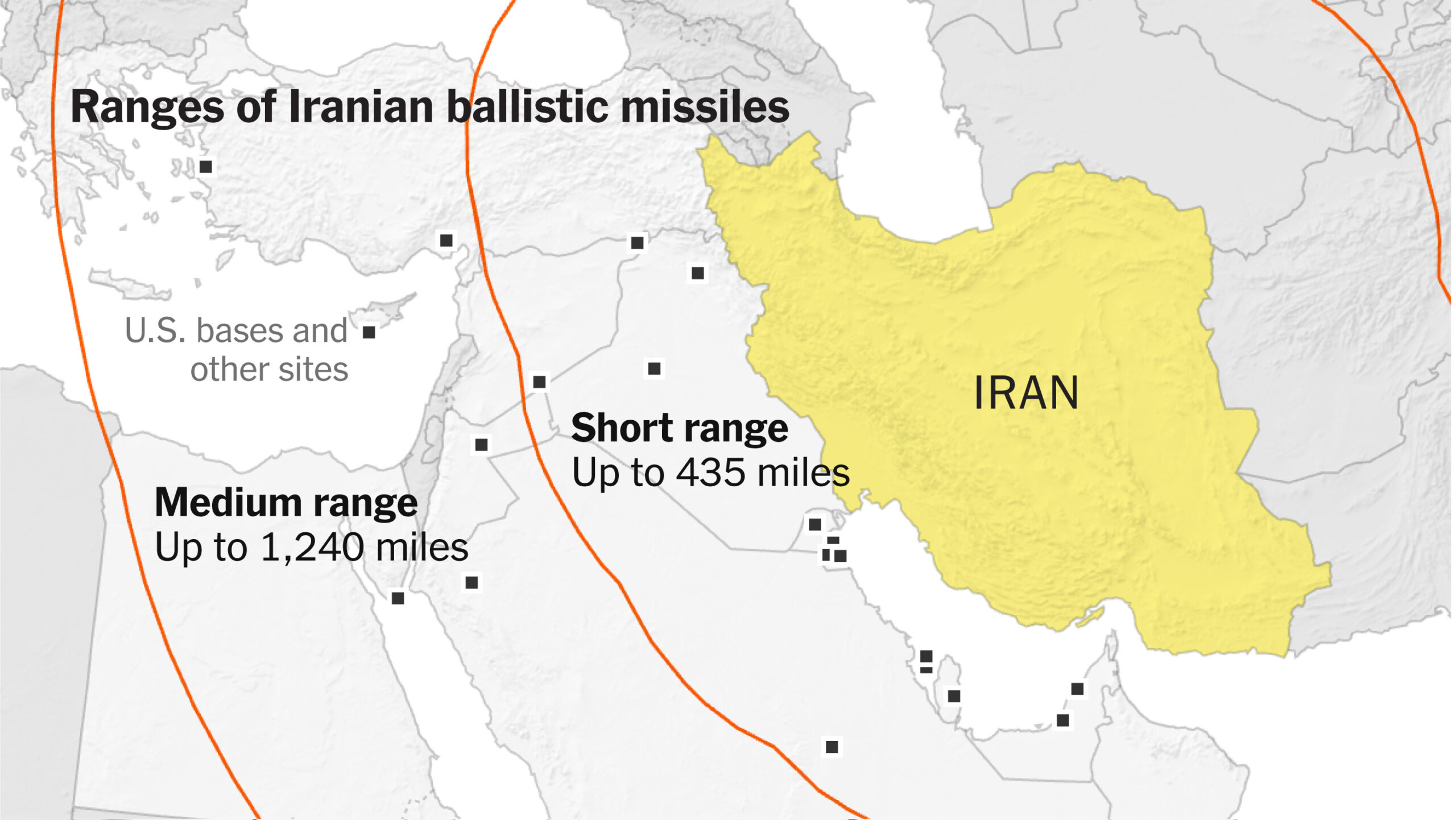
At 2:30 a.m. Eastern time on February 28, 2026, President Donald Trump appeared on Truth Social to tell the world that Operation Epic Fury had begun. Within hours, US and Israeli airstrikes had killed Supreme Leader Ali Khamenei, targeted Iran’s nuclear and missile infrastructure, and triggered an Iranian counter-barrage that struck US military installations across the Gulf from Kuwait to Qatar. The Strait of Hormuz — the narrow channel through which one-fifth of the world’s seaborne oil flows daily — effectively ceased to function as a global trade corridor. What followed was not merely a military confrontation. It was, instantly and simultaneously, a financial one.
The US-Iran conflict financial markets impact is now being measured in trillions, not billions. The S&P 500 has shed all of its 2026 gains in four trading days. Gold has broken historic highs. Oil is being repriced as a weapon, not a commodity. And central banks from Frankfurt to Tokyo have abruptly paused rate-cut deliberations they had spent months preparing. Understanding the full economic anatomy of this crisis — and the narrow but navigable diplomatic corridor that still exists — is no longer optional for any serious investor, policymaker, or business leader.
1: The Flashpoints and the Immediate Market Shock
The escalation was not unforeseeable. From late January 2026 onward, the United States had amassed air and naval assets in the region at a scale not seen since the 2003 invasion of Iraq. Wikipedia Markets were already on edge before the first bomb fell. When they did fall, the reaction was swift and severe.
The Cboe Volatility Index surged 18% in early Monday trading, while spot gold prices accelerated more than 2% to approach $5,400 an ounce. CNBC By March 3, the S&P 500 had slid more than 2% shortly after the opening bell to trade near 6,715, erasing all year-to-date gains and hitting a three-month low, with nearly 90% of S&P 500 stocks in the red and decliners outnumbering advancers 17-to-1 at the NYSE. Coinpaper
The energy market moved even harder. US crude oil rose 8.4% to $72.74 per barrel on the first Monday of the conflict, while global benchmark Brent jumped 9% to $79.45 — closing at their highest levels since the US and Israel bombed Iran’s nuclear facilities in June 2025. CNBC By Wednesday, Brent extended its gains to $82.76 a barrel, hovering near the highest level since January 2025, with WTI rising for a third day to $75.48 — and Brent now 36% higher year-to-date according to LSEG data. CNBC
The bond market defied its usual wartime script. Rather than rallying as a safe haven, Treasuries sold off as inflation fears dominated. The 10-year Treasury yield, which influences borrowing costs across the economy, fell as low as 3.96% before reversing course and rising to 4.04%. CNN By Day 4, with Brent above $82 and no ceasefire in sight, the 10-year was pressing toward 4.10% — precisely the wrong direction for a Federal Reserve that had spent most of early 2026 signaling rate cuts.
2: Sector-by-Sector Damage — A Stress Test for Wall Street
The US-Iran tensions stock market crash dynamic is not uniform. It is a story of violent rotation — capital moving decisively from growth to defense, from global to domestic, from risk to refuge.
Energy: The clear winner, perversely. Global oil majors traded higher, with Exxon Mobil up 4.1% in pre-market trading, Chevron up 3.9%, France’s TotalEnergies 3.6% higher, and Shell advancing 2.2%. CNBC Refiners with US-centric supply chains have additional insulation from the Hormuz disruption.
Airlines: The clearest victim. More than 1 million people were caught in travel chaos as another 1,900 flights were canceled in and out of the Middle East on Day 4, including from major hubs like Dubai. CNBC United, American, and Delta have seen shares drop 4–8%. Higher jet fuel costs compound the problem: approximately 30% of Europe’s jet fuel supply originates from or transits through the Strait of Hormuz. Al Jazeera
Defense contractors: Lockheed Martin, Northrop Grumman, and RTX gained 2–3% as military operations intensified. INDmoney These gains are likely to persist for weeks regardless of diplomatic outcome, as allied nations across Europe and the Gulf accelerate procurement.
Technology and semiconductors: The damage is more subtle but may prove more durable. Taiwan and South Korea — two of Asia’s most critical semiconductor manufacturing hubs — import the majority of their crude through the Strait of Hormuz. A sustained supply shock raises input costs, forces energy rationing decisions, and injects planning uncertainty into capital expenditure cycles. The impact of the Iran-Israel war on global economy in the semiconductor sector may only become visible in Q2 earnings guidance.
Shipping and insurance: Supertanker rates have hit all-time highs. Insurance withdrawal is doing the work that a physical blockade has not — the outcome for cargo flow is largely the same, with tanker traffic dropping approximately 70% and over 150 ships anchoring outside the strait to avoid risks. Kpler Goldman Sachs noted in a client memo that even without further physical disruptions, “precautionary restocking and redirection can raise already elevated freight rates further.” Those costs will transmit to consumers across petrochemical, plastics, and agricultural supply chains within weeks.
The aggregate market capitalization loss across US and European equities over four trading days exceeds $2 trillion — a figure that encompasses not just direct sector damage but the systemic repricing of risk across growth assets globally.
3: The Global Ripple Effects — Europe, Asia, and Gulf Sovereign Funds
No geography escapes the oil prices US-Iran conflict 2026 arithmetic. But the damage is not equally distributed.
Europe faces a particularly acute energy vulnerability. The continent, still structurally scarred by the 2022 Russian gas crisis, had stabilized its LNG supply chains through Qatari and Emirati routes — both of which now transit through a contested Strait. Bank of America warned that a prolonged disruption in the Strait could push European natural gas prices above €60 per megawatt hour. CNBC European benchmark Dutch TTF futures saw prices nearly double over 48 hours before easing on diplomatic headlines. The pan-European Stoxx 600 fell 2.7% on Day 4, with bank shares down 3.8%, insurance stocks down 4.2%, and mining stocks down 3.9%. CNBC
Asia carries the highest structural exposure. The majority of crude oil shipped through the Strait of Hormuz flows to China, India, Japan, and South Korea, accounting for nearly 70% of total shipments according to the US Energy Information Administration. Al Jazeera Goldman Sachs modeled that under a six-week Strait closure with oil rising from $70 to $85 per barrel, regional inflation in Asia could rise by approximately 0.7 percentage points, with the Philippines and Thailand most vulnerable and China facing a more modest increase. CNBC
Gulf sovereign wealth funds face a paradox that would be almost elegant if not for the human cost. Higher oil revenues theoretically boost fund inflows; but Iranian missile strikes on UAE, Qatari, Kuwaiti, and Saudi infrastructure create operational disruption and direct asset damage. Dubai International Airport — one of the world’s busiest aviation hubs — was struck. The UAE’s financial identity as a stable, neutral commercial center is being stress-tested in real time.
Central banks globally find themselves trapped between the inflation imperative and the growth shock. Nomura’s economists stated that “the ongoing Iran conflict solidifies the case for many central banks to hold rates steady for now,” leaving policymakers to juggle a delicate task of balancing inflationary risk against slowing growth. CNBC For the Federal Reserve, which had been building toward two rate cuts in 2026’s first half, the conflict could push that timetable to the fourth quarter at earliest — or eliminate it entirely.
4: The Only Viable Peaceful Exit Strategy — And Why It Can Still Work
This is where most analysis stops and where this piece begins in earnest. The diplomatic wreckage left by Operation Epic Fury is substantial. But it is not irreparable — and the economic pressure building on all sides is, paradoxically, the most powerful argument for a negotiated settlement.
Why a deal is structurally possible:
Trump told The Atlantic magazine on Day 2 that Iran’s new leadership wanted to resume negotiations and that he had agreed to talk to them: “They want to talk, and I have agreed to talk, so I will be talking to them.” CNBC Iran’s provisional leadership — a council comprising President Masoud Pezeshkian and senior officials — is navigating an existential moment without Khamenei’s ideological authority. That creates both fragility and, crucially, flexibility. Importantly, just before the strikes began, Oman’s Foreign Minister said a “breakthrough” had been reached and Iran had agreed both to never stockpile enriched uranium and to full verification by the IAEA. House of Commons Library The architecture of a deal already existed. It was not lack of diplomatic progress that triggered the war — it was the decision to strike before that progress could be formalized.
A realistic peaceful exit strategy for US-Iran requires four sequential steps:
Step 1 — Ceasefire and maritime corridor restoration (Days 1–7). The immediate priority is humanitarian and commercial. Trump has already offered US Development Finance Corporation insurance for tankers transiting Hormuz and pledged naval escorts. Oil prices eased significantly after Trump’s announcement, with Brent up 3% rather than the 10%+ of earlier sessions. CNBC This signals that markets will respond immediately to credible de-escalation signals. Oman, which hosted the February Muscat talks and whose Foreign Minister declared progress “within reach,” is the natural first-mover for a ceasefire framework. Qatar and Turkey — both of which have maintained functional working relationships with Tehran — can serve as parallel channels.
Step 2 — UN Security Council monitoring framework (Days 7–21). Historical precedent is instructive. The 1981 Algiers Accords, brokered by Algeria after Iran held 52 Americans hostage for 444 days, succeeded precisely because a credible neutral third party structured the terms and each side could claim a form of victory. A UN-monitored ceasefire framework — with the IAEA resuming real-time access to Iranian nuclear sites — addresses Washington’s core stated objective while giving Iran’s provisional government a face-saving mechanism to halt counter-strikes.
Step 3 — Phased sanctions rollback tied to verifiable nuclear benchmarks (Weeks 3–8). Iran’s economy was already in crisis before the first airstrike. Iran’s GDP per capita had fallen from over $8,000 in 2012 to around $5,000 by 2024. Wikipedia The incoming provisional leadership will face acute pressure from a population that was already staging the largest protests since the 1979 revolution. Economic relief — even partial and phased — is the most powerful leverage a negotiating framework can offer. The pre-existing Geneva blueprint, imperfect as it was, provides a workable skeleton.
Step 4 — A Gulf security architecture with multilateral guarantees (Months 2–6). The enduring lesson of every prior US-Iran de-escalation cycle is that bilateral deals without regional buy-in collapse under the weight of proxy conflicts and domestic political pressure. Saudi Arabia, the UAE, Qatar, and Turkey need to be co-signatories or formal witnesses to any sustainable settlement — not merely passive observers. Saudi Crown Prince Mohammed bin Salman’s reported calls to Trump before the strikes demonstrate that Gulf states are not passive in this conflict. Their inclusion in a permanent security framework is the difference between a ceasefire and a durable peace.
The economic logic is unambiguous: every week the Hormuz disruption persists, global GDP loses an estimated $25–30 billion in foregone trade flows, supply chain disruption, and elevated energy costs. A month of full disruption — Goldman Sachs’s $100-per-barrel scenario — would represent one of the largest deflationary shocks to global growth since the 2008 financial crisis. That shared economic pain is, historically, what finally moves adversaries from battlefield to negotiating table.
5: The Investor Playbook — What to Buy, Hedge, or Avoid Right Now
The safe haven assets during US-Iran crisis playbook is partially conventional, partially counterintuitive in this specific conflict.
Strong conviction positions:
- Gold: J.P. Morgan raised its gold price target to $6,300 per ounce by the end of 2026, reflecting sustained geopolitical risk as a structural driver. CNBC At $5,300–$5,410 currently, the upside thesis remains intact.
- US energy majors: Exxon, Chevron, and their European equivalents remain direct beneficiaries of elevated Brent until Hormuz normalizes.
- Defense contractors: Northrop Grumman, RTX, and L3Harris benefit from both the current operational tempo and the inevitable allied defense spending acceleration that follows every regional escalation.
- US dollar and short-duration Treasuries: The dollar index has erased its 2026 losses. Short-duration bills offer inflation-adjusted protection without the duration risk of 10-year bonds in an inflationary environment.
Positions to hedge or reduce:
- Airlines: Avoid until Hormuz reopens and jet fuel normalizes. The dual pressure of higher fuel costs and collapsed Middle East route revenue is a structural problem, not a temporary one.
- Emerging market equities, particularly Asian importers: The Philippines, Thailand, and South Korea face the most acute oil-import cost exposure.
- European utility companies: Natural gas price volatility creates margin compression that takes quarters to appear fully in earnings.
- Tech and growth equities with elevated multiples: Not because of direct exposure to the conflict, but because sustained higher oil prices reinforce the “higher for longer” rate narrative that compresses price-to-earnings multiples in high-duration assets.
The contrarian opportunity: Inverse VIX instruments and long equity positions become interesting only when a ceasefire signal appears credible. History is clear on this: geopolitical shocks that are followed by negotiated settlements produce sharp equity rebounds. Trump’s own statement that Iran wants to talk is the first credible signal since Operation Epic Fury began.
Conclusion: The Clock Is Expensive
Every day the Strait of Hormuz remains effectively closed, the hidden economic meter runs. The $2 trillion figure in this piece’s headline is not a speculative construct — it is a conservative aggregation of market capitalization losses, disrupted trade value, inflation uplift, and foregone GDP that is already being booked into the global economy’s ledgers.
The exit, however, exists. It requires Trump to convert his Atlantic interview signal into a formal back-channel offer, Oman to reconvene the Muscat framework under UN auspices, and Iran’s provisional government to recognize that economic survival and a negotiated nuclear settlement are not separate imperatives but the same one. European natural gas futures dropped as much as 12% in a single session on reports that Iranian operatives had reached out to discuss terms for ending the conflict Euronews — a reminder of just how swiftly markets reward even the whisper of diplomacy.
The conflict is four days old. The diplomatic infrastructure that nearly prevented it is, remarkably, still partially intact. Whether the economic shock of the Hormuz crisis finally proves more persuasive than the ideology that created it remains the defining geopolitical and financial question of 2026.

There is a moment in every genuine geopolitical crisis when financial markets stop pretending they are merely reacting to data and begin reckoning with something more elemental: fear. That moment arrived on the morning of Saturday, February 28, 2026, when the United States and Israel launched coordinated strikes on Iran—killing Supreme Leader Ayatollah Ali Khamenei and igniting the most consequential military conflict in the Middle East in a generation. By Monday morning in New York, the world’s trading floors were measuring the aftershocks in barrels, basis points, and bullion.
What began as a targeted military operation has rapidly evolved into a multi-front conflict with cascading implications for energy markets, global supply chains, and the architecture of international finance. For investors, policymakers, and ordinary citizens watching the price of petrol rise at the pump, the central question is no longer whether markets will feel the US-Iran conflict market impact—they already are. The real question is how deep, how prolonged, and who ultimately bears the cost.
Immediate Market Reactions: Risk-Off in Real Time
The financial system’s first verdict was swift and largely predictable in its direction if not its magnitude. Stocks fell and the dollar climbed as military strikes intensified across the Middle East, sending oil to its biggest surge in four years while stoking concern that inflation will accelerate. Gold briefly topped $5,400. The S&P 500 dropped 1.1%, following losses in Europe and Asia. Airlines and cruise operators sank while energy and defense shares jumped. Bloomberg
By Monday’s open, the damage had spread more broadly. The Dow Jones Industrial Average dropped 282 points, or 0.6%. The S&P 500 lost 0.5%, and the Nasdaq Composite declined 0.4%—though the three major averages rallied off session lows as gains in technology stocks helped trim losses. At their nadir, the Dow was down about 600 points, or 1.2%. CNBC The CBOE Volatility Index—Wall Street’s so-called “fear gauge”—jumped to its highest level of 2026.
The bond market offered a counterintuitive signal. The 10-year Treasury yield was little changed Monday at 3.97%, regaining some ground after falling to an 11-month low of 3.926% on Friday. CNBC That modest move suggested bond traders are torn between two forces: a flight-to-safety impulse pulling yields lower, and an inflation anxiety—driven by soaring oil—pushing them back up. As an analyst, I’ve observed this precise tension before in conflict-driven crises: the bond market’s internal debate often telegraphs how long-lasting the disruption will prove to be.
The Strait of Hormuz: The World’s Most Expensive Bottleneck
No single geographic feature looms larger over the geopolitical risks oil prices calculation than the Strait of Hormuz. This narrow waterway between Iran and Oman is, in the words of one analyst, not a “production story” but a “chokepoint story”—and chokepoints, when threatened, carry systemic implications that dwarf any single country’s output.
More than 14 million barrels per day flowed through the Strait in 2025, or roughly a third of the world’s total seaborne crude exports. About three-quarters of those barrels went to China, India, Japan and South Korea. China, the world’s second-largest economy, receives half of its crude imports through the Strait. CNBC Iran has threatened to close this waterway entirely.
About 13 million barrels per day of crude oil transited the Strait of Hormuz in 2025, accounting for roughly 31% of global seaborne crude flows, according to market intelligence firm Kpler. CNBC Container shipping giants have already responded: Maersk announced it would suspend all vessel crossings in the Strait of Hormuz until further notice, warning that services calling ports in the Arabian Gulf may experience delays. CNBC
Amrita Sen, founder of Energy Aspects, told CNBC that oil markets are likely to hold around $80 a barrel for now after an initial spike, noting stabilization, but warned that “what the U.S. will not be able to do is control these one-off attacks on tankers.” CNBC The insurance industry is already pricing in the risk: marine hull insurance in the Gulf could rise by 25 to 50 percent in the near term, according to Dylan Mortimer, marine hull UK war leader at insurance broker Marsh. CNBC Those premiums ultimately flow through to the cost of every barrel, and every barrel’s cost flows through to every economy on earth.
Sector-Specific Impacts: Winners, Losers, and the Middle Ground
The Iran tensions global economy shock has not distributed its pain—or its windfalls—evenly across sectors. The divergence is stark.
Energy and Defense: The Reluctant Beneficiaries
Several oil stocks surged following the strikes on fears the conflict could disrupt global crude production and transport. Exxon Mobil and Chevron shares gained about 4%, while ConocoPhillips was also up more than 5%. Brent crude prices hit a new 52-week high of more than $78 on Monday. CNBC Defense contractors followed suit: Lockheed Martin shares gained 6%, while Northrop Grumman was up 5%, and drone maker AeroVironment jumped more than 10%. CNBC
Travel and Hospitality: The Immediate Casualties
Travel-related stocks dropped sharply. United Airlines, most exposed to international travel of the US carriers, tumbled more than 6%. American and Delta each fell more than 5%. Marriott International slid nearly 5%, while Airbnb sank more than 3%. Online reservation platforms Expedia and Booking Holdings slid more than 4% and 3% respectively. CNBC
The human toll on aviation has been immediate. Airlines canceled thousands of flights for the week in the Middle East, with 1,560 flights scrubbed on Monday alone, or 41.28% of those scheduled for arrival in Middle East countries, according to aviation data firm Cirium. Hundreds of thousands of passengers remain stranded. CNBC
Safe-Haven Assets: Gold’s Gravity-Defying Run
Gold’s ascent has been the defining market narrative of this crisis. Gold rallied above $5,300 per ounce, hitting record highs as investors moved into safe-haven assets. JP Morgan has raised its gold price target to $6,300 per ounce by December 2026, reflecting analyst confidence that this isn’t just a temporary spike. INDmoney Precious metals and the US dollar are now functioning as the twin shock absorbers of the global financial system.
Long-Term Risks: Inflation, Fragmentation, and the Asian Dimension
Beyond the immediate volatility lies a more structurally dangerous set of pressures. Elevated oil prices, if sustained, function as a regressive global tax—hitting emerging markets, commodity-importing nations, and lower-income households hardest.
Standard Chartered’s Global Head of Research Eric Robertsen noted that investors had already been underpricing geopolitical risk, with commodity-linked currencies outperforming, suggesting markets are paying for exposure to scarce resources and terms-of-trade winners. CNBC
The implications for Asia—the region most dependent on Hormuz-transiting oil—are severe and underappreciated by Western financial commentary. China, Japan, South Korea, and India collectively import the vast majority of their crude through this corridor. Any sustained disruption would accelerate inflationary pressures across Asian manufacturing economies, potentially stalling the global export recovery that policymakers have counted on.
There is also the geopolitical fracture dimension. China and Russia have condemned the US-Israeli strikes. In a phone call with his Russian counterpart, Chinese Foreign Minister Wang Yi said it was “unacceptable for the US and Israel to launch attacks against Iran.” CNBC This fracture carries long-term implications for dollar-denominated trade systems, multilateral institutions, and the cohesion of any post-conflict reconstruction framework.
The scenario analysis from Wells Fargo is instructive. Their strategists mapped out scenarios ranging from quick de-escalation to a worst-case prolonged Hormuz closure: in their worst-case scenario, the S&P 500 could drop to 6,000 from current levels around 6,850, but their base case still targets 7,500 by year-end. INDmoney The range of that spread—nearly 25%—is itself a measure of how genuinely uncertain the endgame remains.
The Diplomatic Paradox: War Launched During Talks
Perhaps the most jarring dimension of this crisis is the diplomatic context in which it erupted. The UN Secretary-General noted that the joint military operation by Israel and the United States occurred following indirect talks between the US and Iran mediated by Oman, “squandering an opportunity for diplomacy.” UN News
Although the last round of talks ended Thursday with Iran agreeing to “never” stockpile enriched uranium, that was not enough to avert US military action. CNN Markets loathe uncertainty, but they despise diplomatic incoherence even more—because it removes the scaffolding of predictable resolution. The absence of a clear off-ramp is precisely what is keeping risk premiums elevated across asset classes.
President Trump has suggested the conflict could last four weeks, and separately told The Atlantic that Iran’s new leadership wants to resume negotiations. Trump said Iran’s new leadership wanted to resume negotiations and that he has agreed to talk to them, saying “They want to talk, and I have agreed to talk.” CNBC Markets will be parsing every diplomatic signal for evidence of de-escalation—any credible ceasefire announcement would likely trigger a sharp oil selloff and equity recovery.
Investor Implications and Strategic Considerations
For portfolio managers navigating Middle East conflict investment strategies, several principles apply in this environment.
Overweight energy and defense selectively. The oil price tailwind for integrated majors and defense contractors is real, but entry points matter. Much of the initial upside is already priced in.
Reduce exposure to aviation, hospitality, and emerging-market importers. Nations like India, South Korea, and Japan face disproportionate energy import cost pressures, which will compress corporate margins and strain current accounts.
Monitor the Strait obsessively. David Roche of Quantum Strategy framed the market impact in terms of duration and whether Iran would attempt to close the Strait of Hormuz—if the conflict is short and contained, the risk-off move and oil spike could be brief; if it turns into a three-to-five-week regime change endeavor, markets would react “rather badly.” CNBC
Gold remains the structural hedge. With JP Morgan targeting $6,300 by year-end and central bank demand for bullion already at historical highs entering 2026, gold’s role as the geopolitical insurance policy of last resort appears set to deepen.
Conclusion: A Conflict That Will Rewrite Risk Premiums
The US-Iran conflict of February-March 2026 is not merely another geopolitical flare-up to be absorbed and forgotten within a trading week. The assassination of Khamenei, the direct involvement of US military forces, the threatened closure of the world’s most critical energy chokepoint, and the fissure it has opened between Western and non-Western powers collectively represent a structural inflection point for global markets.
In the short term, monitor Brent crude and the CBOE VIX daily as the conflict’s most sensitive barometers. In the medium term, watch whether Iran’s successor leadership follows through on negotiation signals or opts for prolonged asymmetric warfare against Gulf infrastructure. In the long term, consider how this crisis accelerates the already-underway energy transition: every $10 increase in sustainable oil prices makes renewable alternatives marginally more competitive, nudging capital allocation toward green infrastructure.
Conflict is never an opportunity to celebrate. But history teaches that periods of maximum geopolitical uncertainty are also when the contours of the next financial order begin to take shape—quietly, beneath the noise of war. The investors and institutions who read those contours correctly today will be better positioned for the world that emerges when the smoke clears over Tehran.
The lights flickered in Rashid Ahmed’s textile factory in Karachi’s SITE industrial area on a sweltering October afternoon. Not from another power cut—those he’d grudgingly accepted as the cost of doing business in Pakistan—but from uncertainty. News had just broken that the National Electric Power Regulatory Authority (NEPRA) had slashed K-Electric’s tariff by Rs7.6 per unit, the steepest reduction the city’s sole power provider had seen in years. Ahmed’s electricity bill would drop, yes, but the veteran manufacturer knew something the celebratory headlines didn’t reveal: when regulators squeeze utilities this hard in emerging markets, someone always pays the price.
Six weeks later, that bill arrived—not to consumers, but to Pakistan itself, in the form of a a $2 billion arbitration claim filed by furious Gulf investors who now accuse Islamabad of regulatory sabotage.
This collision between populist rate relief, corporate profitability, and foreign investment protection has become the most consequential energy sector dispute in Pakistan’s recent history, with implications extending far beyond Karachi’s overloaded distribution network. It reveals fundamental tensions in how developing nations balance affordable electricity for 16 million consumers against the contractual promises made to privatized utilities—and the scorching retaliation that follows when that balance tips.
The Uniform Tariff Trap: How National Policy Caught K-Electric in Its Crosshairs
To understand why K-Electric’s Gulf investors are threatening Pakistan with its largest utility sector arbitration, one must first grasp the peculiar economics of Pakistan’s uniform tariff policy—a well-intentioned populist mechanism that has become a fiscal Frankenstein.
Unlike most countries where electricity prices reflect local generation costs and distribution efficiency, Pakistan mandates a single national tariff across all regions. Karachi consumers pay the same per-unit rate as those in Lahore or Peshawar, regardless of whether power comes from expensive furnace oil plants or cheaper hydroelectric dams. The difference? The federal government covers the gap through subsidies, which for fiscal year 2025-26 total Rs249 billion out of a Rs3,520 billion revenue requirement.
K-Electric occupies a uniquely vulnerable position within this framework. As Pakistan’s only vertically integrated private utility—privatized in 2005 to a consortium led by Saudi Arabia’s Al Jomaih Power and Kuwait’s Denham Capital—it operates independently from the national grid while simultaneously being subject to national pricing policies designed for state-owned distribution companies (DISCOs). For nearly two decades, this arrangement worked through an implicit bargain: K-Electric would modernize Karachi’s decrepit infrastructure while the government ensured cost-reflective tariffs that allowed reasonable returns.
That bargain shattered on October 21, 2025, when NEPRA reversed its own May 2025 determination—issued after two-and-a-half years of consultation—and slashed K-Electric’s multi-year tariff from Rs39.97 to Rs32.37 per kilowatt-hour. The reduction didn’t emerge from new operational data or efficiency gains. Rather, it stemmed from a review petition filed by Pakistan’s Power Division seeking to align K-Electric’s rates more closely with the Rs31.59 average for state DISCOs, thereby reducing the subsidy burden on federal coffers.
Anatomy of a Financial Shock: How Rs7.6 Per Unit Translates to Existential Crisis
The mathematics of K-Electric’s predicament are brutal. Each rupee reduction in tariff translates to approximately Rs15 billion in annual revenue loss, according to industry estimates cited by The News. The Rs7.6 cut therefore represents Rs110-120 billion annually, or roughly Rs700 billion over the seven-year control period through fiscal 2030.
But the damage extends beyond headline numbers. NEPRA’s revised determination fundamentally restructured K-Electric’s business model across multiple dimensions:
Return on Equity Denominated in Rupees: Previously, K-Electric’s transmission and distribution operations earned dollar-indexed returns—a standard protection against currency devaluation in emerging market infrastructure. NEPRA converted these to rupee-denominated returns, immediately slashing the real value of anticipated profits given Pakistan’s chronic depreciation pressures.
Capacity Payment Restructuring: The regulator terminated four aging gas-fired generation plants outright and altered payment formulas for remaining facilities. Only 35% of capacity payments are now guaranteed, with the remainder shifted from “take-or-pay” (payment regardless of dispatch) to “take-and-pay” (payment only when utilized)—mirroring the controversial Independent Power Producer (IPP) model that Pakistan has been trying to renegotiate nationwide.
Recovery Benchmarks Raised to 100%: K-Electric’s bill collection rate, which stood at 91.5% in fiscal 2023-24, must now reach 100% to avoid tariff penalties. This is particularly punishing for a utility serving Karachi’s sprawling informal settlements where electricity theft and non-payment remain endemic. For context, NEPRA allowed no recovery losses for Punjab’s five DISCOs, creating an impossible standard.
The financial impact has been swift and severe. Analysts at AKD Securities estimate that K-Electric’s Rs4 billion profit in fiscal 2024 could flip to a Rs70-80 billion annual loss once accounts are restated under the new tariff. K-Electric’s foreign shareholders project losses could reach Rs100 billion annually through 2030.
CEO Moonis Alvi, in a carefully worded video statement, acknowledged the utility was “reviewing how to continue operations” under the revised framework—corporate-speak that sent K-Electric’s share price tumbling and triggered alarm bells among energy analysts. One expert told Dawn newspaper the cut would cause “immediate financial and operational shocks,” warning that “you don’t pull hundreds of billions out of a utility and expect business as usual.”
The $2 Billion Reckoning: When Regulatory Reversal Becomes Investor Retaliation
The tariff cut was merely the spark. The kindling had been accumulating for nearly a decade.
On January 16, 2026, London-based law firms Steptoe International and Omnia Strategy filed a Notice of Arbitration on behalf of 32 Saudi individuals and entities linked to the Al Jomaih family, along with five Kuwaiti companies. Together holding a 30.7% indirect stake in K-Electric, they’ve appointed Professor Stephan Schill as their arbitrator and proposed the Permanent Court of Arbitration to oversee proceedings under the Organisation of Islamic Cooperation Investment Agreement and UNCITRAL Arbitration Rules.
The 39-page filing reads like an indictment of Pakistan’s investment climate, alleging systematic breach of treaty obligations across multiple fronts:
Indirect Expropriation Through Stalled Privatization: The investors agreed in October 2016 to sell 66.4% of K-Electric to Shanghai Electric Power Company for $1.77 billion. Despite initial regulatory support, the deal languished for over eight years amid “shifting conditions, contradictory instructions, and withheld national security approvals,” according to the filing. Shanghai Electric eventually withdrew, leaving investors without their planned exit and K-Electric without the capital infusion needed for grid modernization.
The aborted sale carries particular sting because it wasn’t a commercial failure—both parties wanted to proceed. Rather, it died of bureaucratic attrition and alleged political interference, what arbitration specialists call “creeping expropriation” where investment value is systematically destroyed through regulatory obstruction rather than outright seizure.
Unpaid Government Receivables: The investors claim nearly two decades of unpaid tariff differential subsidies and other receivables have “crippled K-Electric’s finances” while authorities continued imposing penalties for late payments on infrastructure investments. This creates a perverse dynamic where the government simultaneously owes the company money while fining it for cash flow problems caused by… the government not paying what it owes.
Tariff Framework Politicization: The October 2025 tariff reversal represents, in the investors’ view, the culmination of regulatory unreliability. They allege the government “reopened settled matters through flawed review processes” and imposed revised tariffs costing approximately Rs85 billion annually without proper consultation or respect for the multi-year certainty that tariff frameworks are meant to provide.
Failed Protection Against Hostile Takeovers: The filing also points to attempts by domestic investor Zia Chishty to gain control of K-Electric’s parent company through offshore structures, which Gulf shareholders characterize as an orchestrated takeover attempt that Pakistani authorities failed to prevent despite “repeated complaints.”
Pakistan now has 60 days to nominate its own arbitrator. If it fails to engage constructively, the case proceeds to a three-member tribunal that could award damages, impose injunctions, or order structural remedies. Previous arbitration cases in Pakistan’s power sector have cost the country heavily—the government’s forced renegotiations with IPPs in 2024-25, while technically “voluntary,” were driven partly by the threat of cascading arbitration claims.
Echoes of Emerging Market Privatization Failures: Argentina, Nigeria, and the FDI Death Spiral
Pakistan’s predicament with K-Electric is hardly unique. It echoes a familiar pattern across developing economies where infrastructure privatization meets fiscal desperation—a toxic combination that has destroyed investor confidence from Buenos Aires to Lagos.
Argentina’s experience with electricity privatization in the 1990s offers an especially cautionary parallel. After selling state utilities to Spanish and French consortiums, the government implemented an emergency tariff freeze during the 2001-02 economic crisis, converting dollar-denominated tariffs to pesos at par despite 75% currency devaluation. The resulting disputes spawned over 40 arbitration cases at the International Centre for Settlement of Investment Disputes (ICSID), with awards exceeding $1 billion. Two decades later, Argentina still struggles to attract foreign capital for energy infrastructure.
Nigeria’s privatization of its power sector in 2013 followed a similar trajectory. Distribution companies purchased at premium valuations quickly discovered the government wouldn’t honor subsidy commitments or permit cost-reflective tariffs for fear of political backlash. By 2020, most DISCOs were technically insolvent, and foreign investors had written down their stakes to near zero. The World Bank’s 2025 Investment Climate Statement for Pakistan notes that such regulatory unreliability “directly undermines FDI” and creates lasting reputational damage.
For Pakistan, the timing couldn’t be worse. Foreign direct investment, excluding retained earnings, has cratered below $1 billion annually—a figure that pales against regional competitors. Vietnam attracted $6.9 billion in just the first two months of 2025, a 68% year-on-year surge. India, despite recent slowdowns, maintains FDI flows an order of magnitude higher than Pakistan’s. Even Bangladesh, wracked by political turmoil, attracts proportionally more investment relative to GDP.
The K-Electric dispute signals to potential investors that contractual commitments in Pakistan’s infrastructure sector are vulnerable to unilateral revision whenever fiscal pressures mount—precisely the message a country desperate for investment in renewable energy, mining, and digital infrastructure cannot afford to send.
The Circular Debt Paradox and Pakistan’s Energy Sector Checkmate
K-Electric’s crisis is symptomatic of a larger dysfunction: Pakistan’s power sector circular debt, which now exceeds Rs1.693 trillion and growing. This represents unpaid obligations cascading through the system—the government owes subsidies to utilities, utilities owe fuel suppliers, suppliers owe refineries, and consumers owe utilities for unpaid bills.
The uniform tariff policy, intended to shield consumers from high electricity costs, has become a primary driver of this debt spiral. By setting retail prices below cost-recovery levels and failing to fully fund the resulting subsidies, the government essentially finances consumption through arrears. K-Electric is both victim and participant: owed billions in historical subsidies while struggling to collect from consumers, it now faces tariff cuts that make cost recovery impossible even with perfect collections.
NEPRA’s October 2025 decision crystallizes the impossibility of Pakistan’s energy policy trilemma: keep tariffs low for political survival, maintain utility profitability to attract investment, and avoid ballooning subsidies to meet IMF fiscal targets. Pakistan has been pretending it could satisfy all three simultaneously. The K-Electric tariff cut represents the moment that pretense collapsed—solving the subsidy problem by transferring Rs700 billion in costs to private investors who, predictably, are now threatening to walk away.
Climate Ambitions Meet Investment Reality: The Renewable Energy Stakes
Beyond immediate financial ramifications, the K-Electric dispute threatens Pakistan’s nascent renewable energy ambitions. Karachi’s utility had secured Pakistan’s lowest renewable tariffs through competitive bidding—Rs8.9 to Rs11.6 per unit for 640 MW of solar and wind projects at Dhabeji, Winder, and Bela. These projects, approved by NEPRA in May 2025, represented a rare bright spot in Pakistan’s energy transition.
But capital-intensive renewable projects require regulatory certainty above all else. Solar and wind facilities have high upfront costs and decades-long payback periods, making them exquisitely sensitive to policy risk. If Gulf investors—historically among the most patient infrastructure capital providers—can have their tariffs retroactively slashed by 19% despite multi-year regulatory approval, why would any renewable energy developer believe their 20-year power purchase agreement will be honored?
The broader climate finance implications are sobering. Pakistan requires an estimated $348 billion through 2030 to meet its climate commitments, according to its updated Nationally Determined Contribution. Perhaps $101 billion of that must come from private sources, primarily foreign investment in renewable energy. Yet Pakistan’s investment climate is characterized by “bureaucratic red tape, policy unpredictability, weak contract enforcement, and infrastructure deficits”—precisely the conditions that make climate finance impossible to mobilize at scale.
Development banks like the Asian Development Bank and Green Climate Fund have structured some risk mitigation, including guarantees for distributed solar projects. But these mechanisms only work if host governments maintain baseline regulatory credibility. The K-Electric precedent suggests Pakistan may be dismantling that credibility precisely when climate change makes energy transition most urgent.
Karachi’s Power Future: Infrastructure Investment or Managed Decline?
For Karachi’s 16 million residents and Pakistan’s industrial heartland, the immediate question is whether K-Electric can maintain, let alone improve, service quality under financial duress.
The utility met Karachi’s peak summer 2025 demand of 3,563 MW with 3,545 MW supply—a credible performance for a grid serving one of the world’s largest cities. But that reliability required sustained capital expenditure: transmission upgrades, distribution network expansion, loss reduction programs, and the commissioning of 900 MW in new generation capacity at the RLNG-based BQPS-III plant.
Under the revised tariff, such investments become financially irrational. Why would shareholders inject capital into a utility whose regulator retroactively reduces approved returns? The likely outcome: K-Electric enters maintenance mode, avoiding major capital commitments while extracting whatever cash flows remain. This means delayed grid upgrades, slower expansion to underserved areas, and potentially deteriorating reliability as equipment ages without replacement.
The government’s implicit bet is that K-Electric’s investors will accept diminished returns rather than abandon a strategic asset. That calculation may prove catastrophically wrong. Saudi and Kuwaiti investors entered K-Electric in 2005 with a 20-year horizon; they’re now 20 years in with nothing to show but mounting losses and broken promises. The arbitration filing suggests they’ve reached the breaking point.
One scenario sees the Gulf investors eventually selling to domestic Pakistani conglomerates at fire-sale valuations, as occurred with some IPPs in 2024. Pakistani business groups, with deeper political connections and lower cost of capital, might accept returns that foreign investors cannot. But this would mark another retreat of foreign capital from Pakistan’s infrastructure sector—a symbolic defeat for a country trying to project itself as investment-ready.
Policy Pathways: Can Pakistan Restore Credibility?
Pakistan faces a choice between two paths, neither painless but one potentially transformative.
Path One: Managed Retreat and Renationalization—Pakistan could accept that private sector participation in distribution and integrated utilities has failed, compensate K-Electric’s investors at some negotiated value, and fold the utility back into state control. This would be honest but devastating for Pakistan’s broader privatization agenda. The government is currently trying to sell Pakistan International Airlines and several power sector assets; K-Electric’s effective renationalization would make those sales nearly impossible at acceptable valuations.
Path Two: Regulatory Reset with Credible Commitments—Alternatively, Pakistan could use the K-Electric crisis to fundamentally reform its approach to private infrastructure. This would require:
- Independent Regulatory Insulation: Strengthening NEPRA’s independence and establishing binding limits on government review petitions. The October 2025 reversal occurred because the Power Division could file a review petition triggering full reconsideration—a mechanism that makes any determination provisional.
- Subsidy Transparency and Fiscal Realism: Acknowledging that uniform tariffs require fully-funded subsidies appropriated in the budget, not off-balance-sheet arrangements that collapse during fiscal stress. If Pakistan cannot afford Rs700 billion in power subsidies over seven years, it should adjust tariff policy rather than retroactively slashing approved rates.
- Arbitration Clause Enforcement: Rather than fighting every arbitration claim, Pakistan should establish domestic mechanisms that give investors confidence their grievances will be heard fairly. The Investment Ombudsman created under the 2022 Special Investment Facilitation Council has potential but needs demonstrated credibility.
- Ring-Fencing Privatized Assets: Privatized entities like K-Electric should be explicitly excluded from policy measures designed for state-owned enterprises, or compensated when subjected to such measures. The recent IPP renegotiations, while financially beneficial short-term, sent a devastating signal about contractual sanctity.
Finance Minister Muhammad Aurangzeb’s “Uraan Pakistan” initiative, outlined at the World Economic Forum, promises improved investment climate and partnerships in priority sectors. But rhetoric without institutional reform is merely noise. Global investors have heard similar promises from Pakistan before—and watched them dissolve under political pressure.
The Karachi Canary: What K-Electric Signals for Pakistan’s Economic Future
Energy policy is often where investment climates live or die in developing economies. Electricity is essential yet politically volatile, capital-intensive yet long-cycle, technically complex yet visible to every voter. How governments handle this trilemma reveals whether they prioritize short-term political expediency or long-term institutional credibility.
K-Electric’s predicament suggests Pakistan is failing this test. By retroactively slashing tariffs after a multi-year regulatory process, the government solved an immediate subsidy problem while destroying long-term investor confidence. The Rs700 billion transferred from K-Electric to the federal budget over seven years will be dwarfed by the tens of billions in foregone investment as other investors price Pakistan risk higher.
The $2 billion arbitration claim is a symptom, not the disease. The disease is a political economy where every institution—regulatory bodies, courts, even constitutional protections for private property—can be overridden when fiscal desperation meets populist pressure. Pakistan’s investment-to-GDP ratio has fallen to a 50-year low of 13.1%, according to the 2025 Investment Climate Statement. That didn’t happen by accident; it’s the rational response to a system where contracts are perpetually renegotiable and yesterday’s approved project becomes tomorrow’s “excessive profit” to be clawed back.
For the textile manufacturer in SITE industrial area, the K-Electric tariff cut won’t translate to lower bills—the uniform tariff mechanism ensures his rates remain unchanged. What he’ll experience instead is gradually deteriorating grid reliability, more frequent unscheduled outages, and slower response times as K-Electric starves infrastructure investment. The savings on paper evaporate in lost production hours.
Pakistan’s leaders have a brief window to demonstrate they understand what’s at stake. The Gulf investors have given the government 60 days to respond before arbitration proceeds. That period could be used for genuine engagement: acknowledging the regulatory whiplash, negotiating some compensatory adjustment, and establishing credible protections against future retrospective changes.
More likely, bureaucratic inertia and political denial will prevail until a tribunal awards damages Pakistan cannot afford to pay, further eroding sovereign creditworthiness and cementing the country’s status as an investment graveyard.
The lights in Rashid Ahmed’s factory will likely keep flickering—no longer from uncertainty, but from a grid starved of the investment it desperately needs. In the annals of infrastructure privatization failures, K-Electric’s slow-motion collapse may rank as among the most preventable, arising not from force majeure or technological disruption but from simple failure to honor commitments. That is perhaps the cruelest epitaph: Pakistan had a functioning private utility that invested $4.7 billion over two decades, reduced losses, and expanded capacity. It chose to destroy it for Rs700 billion in short-term fiscal relief—a bargain Mephistopheles himself would have declined as too one-sided.

Pakistan’s Remittance Lifeline: Why Gulf Exposure Is a Hidden Risk

Dubai’s Rise to the World’s 7th Financial Hub: Inside the D33 Push

China EV Exports Hit Record High in 2026

UK’s “National Contributions Tax” Explained: Burnham-Era Reform 2026

Russia’s Strange Problem in 2026: Its Currency Is Too Strong

Section 301 Forced Labor Tariffs 2026: 60 Countries Affected

UK National Contributions Tax: Burnham’s Radical Tax Plan

Global Central Bank Divergence 2026: Why the Fed, BoE, BoJ, and PBoC Are All Moving Differently

Japan’s Bond Market Just Cracked. It Could Take the Rest of the World’s Debt With It

Malaysia’s Ringgit Is Holding Up. Economists Say the Real Test Is Still Coming

Climate Finance Delivery 2026: Trillion‑Dollar Promise Still Unmet

AI Impact on Wages 2026: Productivity Soars, Paychecks Stagnate

SpaceX IPO 2026: $2 Trillion AI Bubble, OpenAI & Anthropic — What Investors Must Know

China Economy 2026: Property Crisis, AI Investment & Export Surplus Explained

Top 15 Stocks for Investment in 2026 in PSX: Your Complete Guide to Pakistan’s Best Investment Opportunities
Top 15 Stocks for Investment in 2026 in PSX: Your Complete Guide to Pakistan’s Best Investment Opportunities

Debunking IMF Program Myths: Reconfiguring Engagement for True National Ownership in a Volatile World

Top 10 Mutual Fund Managers in Pakistan for Investment in 2026: A Comprehensive Guide for Optimal Returns

What the U.S. Attack on Venezuela Could Mean for Oil and Canadian Crude Exports: The Economic Impact

China’s 50% Domestic Equipment Rule: The Semiconductor Mandate Reshaping Global Tech

15 Most Lucrative Sectors for Investment in Pakistan: A 2025 Data-Driven Analysis

Pakistan’s Export Goldmine: 10 Game-Changing Markets Where Pakistani Businesses Are Winning Big in 2025
15 Most Lucrative Sectors for Investment in Pakistan: A 2025 Data-Driven Analysis
15 Most Lucrative Sectors for Investment in Pakistan: A 2025 Data-Driven Analysis

Pakistan’s Economic Outlook 2025: Between Stabilization and the Shadow of Stagnation
Pakistan’s Economic Outlook 2025: Between Stabilization and the Shadow of Stagnation

China’s Property Woes Could Last Until 2030—Despite Beijing’s Best Censorship Efforts
China’s Property Woes Could Last Until 2030—Despite Beijing’s Best Censorship Efforts
-
 Markets & Finance7 months ago
Top 15 Stocks for Investment in 2026 in PSX: Your Complete Guide to Pakistan’s Best Investment Opportunities
-
Markets & Finance7 months ago
Top 15 Stocks for Investment in 2026 in PSX: Your Complete Guide to Pakistan’s Best Investment Opportunities
-
 Analysis6 months ago
Debunking IMF Program Myths: Reconfiguring Engagement for True National Ownership in a Volatile World
-
 Investment6 months ago
Top 10 Mutual Fund Managers in Pakistan for Investment in 2026: A Comprehensive Guide for Optimal Returns
-
 Global Economy7 months ago
What the U.S. Attack on Venezuela Could Mean for Oil and Canadian Crude Exports: The Economic Impact
-
 Asia7 months ago
China’s 50% Domestic Equipment Rule: The Semiconductor Mandate Reshaping Global Tech
-
 AI7 months ago
15 Most Lucrative Sectors for Investment in Pakistan: A 2025 Data-Driven Analysis
-
 Exports7 months ago
Pakistan’s Export Goldmine: 10 Game-Changing Markets Where Pakistani Businesses Are Winning Big in 2025