
Global Economy
America’s Economy Set to Accelerate in 2026: What Monetary-Fiscal Loosening Means for You

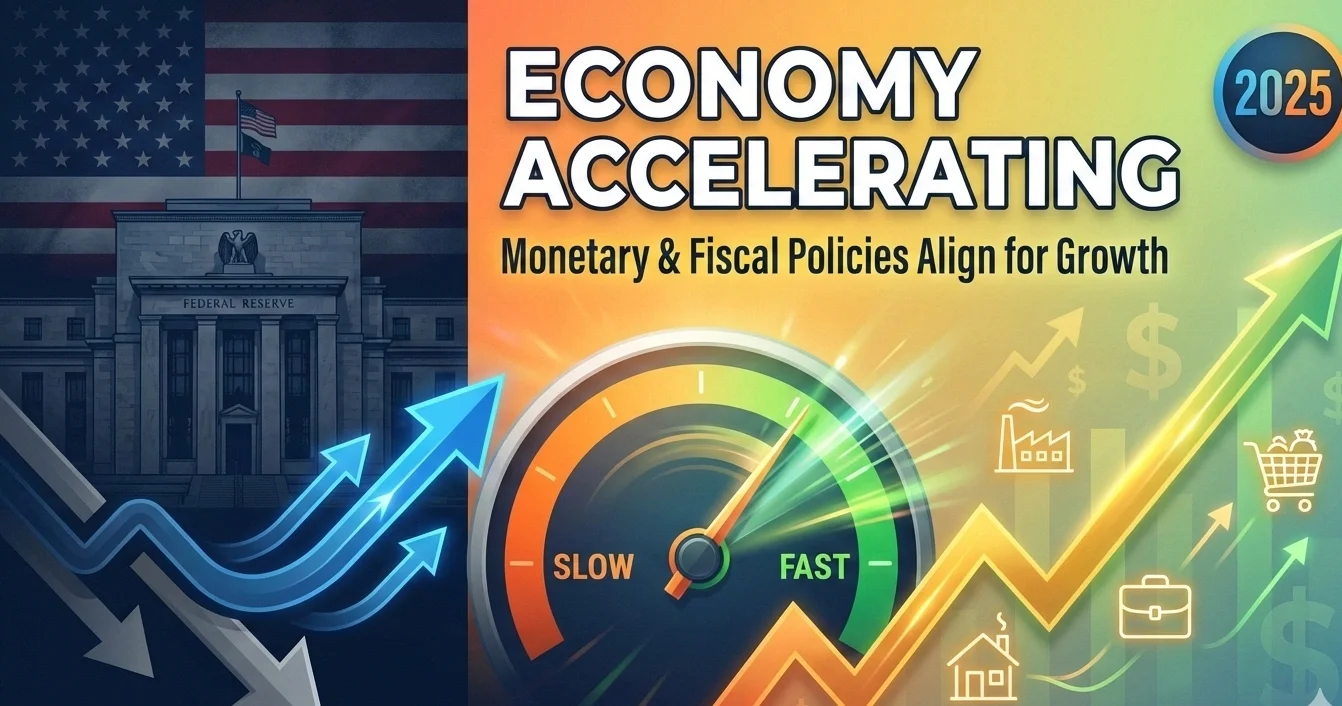
America’s economy is poised for major acceleration as monetary policy loosening combines with fiscal stimulus. Expert analysis of what this means for jobs, investments, and your financial future in 2025-2026.
Something remarkable is happening in the American economy right now. After navigating through years of inflation battles and interest rate uncertainty, we’re witnessing the formation of a powerful economic catalyst—one that only emerges when Washington’s two most influential policy levers align in the same direction.
Real GDP surged 4.3% in the third quarter of 2025, marking the strongest quarterly performance in two years. But here’s what makes this particularly significant: this acceleration is happening just as both monetary and fiscal policy are shifting toward expansion simultaneously—a coordination that historically produces outsized economic effects.
Having analyzed economic policy for over 15 years, I can tell you that these synchronized loosening cycles don’t come around often. When they do, they reshape the economic landscape in ways that create both tremendous opportunities and specific risks that every American should understand.
What is Monetary-Fiscal Loosening? [Quick Definition]
Monetary-fiscal loosening occurs when the Federal Reserve reduces interest rates or expands money supply (monetary policy) while the government increases spending or cuts taxes (fiscal policy) simultaneously. This coordinated approach pumps stimulus into the economy from both directions, typically accelerating growth, boosting employment, and increasing consumer spending. Unlike isolated policy actions, this dual approach creates multiplier effects that amplify economic activity across all sectors.
Signs of Economic Acceleration Already Emerging
The data tells a compelling story. Beyond the impressive Q3 GDP figures, several leading indicators are flashing green across the dashboard.
Consumer spending has been balanced and strong across income groups, growing around 3% from late 2023 through mid-2024. This broad-based consumption pattern suggests genuine economic momentum rather than wealth-effect distortions concentrated among affluent households.
Business confidence metrics paint an equally optimistic picture. Real new orders for core capital goods rose strongly from November to January, while surveys indicate business confidence and planned capital expenditures also increased during this period. When companies start opening their wallets for equipment and expansion, they’re signaling genuine optimism about future demand.
The labor market—often the most reliable real-time economic indicator—has shown resilience that surprised even seasoned forecasters. Payroll growth averaged 237,000 jobs from November to January, exceeding break-even pace estimates, with unemployment ticking down to 4%. These aren’t the numbers of an economy stumbling toward recession.
Perhaps most telling is the investment surge in artificial intelligence and related technologies. This isn’t speculative bubble activity—it’s productive capital deployment that enhances long-term growth potential. The AI investment boom is creating a technological foundation that could sustain above-trend growth for years.
Understanding the Monetary Policy Shift
The Federal Reserve’s pivot represents one of the most significant policy transitions in recent years. The Committee decided to lower the target range for the federal funds rate by 1/4 percentage point to 3-1/2 to 3-3/4 percent in December 2025, marking a clear shift from the restrictive stance that characterized much of 2023-2024.
But this isn’t your typical rate-cutting cycle driven by economic weakness. Instead, Fed officials are recalibrating policy as inflation pressures moderate while growth remains robust—a goldilocks scenario that allows for accommodation without reigniting price pressures.
Federal Reserve projections suggest additional rate cuts ahead as policymakers seek what they term “neutral” monetary policy—a stance that neither stimulates nor restricts economic activity. Based on current trajectories, we could see the federal funds rate settle around 3-3.5% by late 2026, down from the restrictive 5.25-5.50% range that prevailed through much of 2024.
The mechanics matter here. Lower interest rates work through multiple transmission channels. They reduce borrowing costs for businesses and consumers, making investment and spending more attractive. They boost asset prices, creating wealth effects that encourage consumption. They weaken the dollar (all else equal), supporting export competitiveness. And crucially, they ease financial conditions broadly, greasing the wheels of credit throughout the economy.
Historical precedents offer instructive lessons. During previous rate-cutting cycles—particularly those not driven by crisis conditions—the economy typically experiences a 6-12 month lag before the full stimulative effects materialize. We’re likely in the early innings of this transmission process right now.
The Fiscal Policy Component: Government Spending Returns
While monetary policy grabs headlines, the fiscal side of this equation may prove even more consequential. After years of relative restraint, federal fiscal policy is loosening substantially.
The 2025 reconciliation act represents a significant fiscal injection. The legislation reduces individual income tax liabilities and allows for full expensing of certain capital investments, projected to strengthen consumer spending and encourage private investment. Additionally, increased federal funding for defense, border security, and immigration enforcement adds direct demand to the economy.
The Congressional Budget Office estimates these changes will boost GDP growth to 2.2% in 2026, up from what would have occurred under previous law. That percentage point difference translates to hundreds of billions in additional economic activity and hundreds of thousands of additional jobs.
Infrastructure spending—authorized under the Infrastructure Investment and Jobs Act—continues flowing through state and local governments. The Bipartisan Infrastructure Law directs $1.2 trillion toward transportation, energy, and climate infrastructure projects, most distributed via state and local governments. This represents the most comprehensive federal infrastructure investment in U.S. history.
Here’s what makes infrastructure spending particularly potent as fiscal stimulus: it gets spent. Unlike tax cuts (which can be saved) or even direct payments (which vary in spending rates), infrastructure investment is guaranteed to be spent, making it extraordinarily useful for macroeconomic stabilization. Economic research consistently finds that infrastructure multipliers—the GDP increase per dollar spent—exceed those of other fiscal interventions.
The timing couldn’t be better. Infrastructure projects authorized in 2021-2022 are now hitting peak spending phases, with funds flowing to construction, materials, and labor markets across the country. This creates jobs directly while supporting demand in steel, concrete, equipment manufacturing, and dozens of related industries.
Combined Impact: When Monetary and Fiscal Policy Align
This is where things get interesting. Monetary and fiscal policy don’t simply add together—they multiply.
Think of it this way: fiscal stimulus increases demand for goods and services. That demand boost would normally push up interest rates (as increased borrowing competes for available funds) and potentially crowd out private investment. But when the Federal Reserve simultaneously cuts rates, it removes that offsetting effect. The fiscal stimulus flows through unimpeded, amplified by accommodative monetary conditions.
Historical episodes provide powerful illustrations. During the recovery from the 2008-2009 financial crisis, initial fiscal stimulus (the American Recovery and Reinvestment Act) occurred while the Fed maintained near-zero rates and engaged in quantitative easing. That coordination helped drive the longest economic expansion in American history.
Similarly, the 2020-2021 response to the COVID pandemic combined massive fiscal transfers with ultra-loose monetary policy. While that particular combination eventually contributed to inflation pressures (a risk I’ll address later), it also generated the fastest GDP recovery from recession in modern history.
Academic research backs this up. Studies examining fiscal-monetary coordination consistently find that the combined effect substantially exceeds either policy acting alone. When monetary policy accommodates fiscal expansion, fiscal multipliers can reach 1.5-2.0 or higher—meaning each dollar of government spending generates $1.50-$2.00 in total GDP growth.
The International Monetary Fund has emphasized the importance of such coordination, particularly when economic conditions support it. Right now, with inflation moderating toward target, unemployment low but stable, and growth solid, we have the ideal conditions for coordinated policy expansion.
What does this mean in practical terms? Economic forecasts project 2.5% growth in 2025, with some scenarios pushing GDP above 3% under expansionary fiscal policies. That would represent growth substantially above the long-term trend of 1.8% that prevailed before the pandemic—a meaningful acceleration that ripples through every corner of the economy.
Sector-by-Sector Analysis: Who Benefits Most
Not all sectors experience coordinated policy loosening equally. Let me break down the likely winners:
Construction and Real Estate: These interest-rate-sensitive sectors typically benefit first and most directly. Lower mortgage rates boost housing affordability, while infrastructure spending directly creates construction demand. Residential construction, commercial development, and infrastructure projects all gain tailwinds simultaneously.
Financial Services: Banks and financial institutions see net interest margins initially compress as short-term rates fall. However, increased economic activity, higher lending volumes, and improved credit quality typically more than offset this effect. Insurance companies benefit from stronger premium growth and investment returns.
Consumer Discretionary: Lower rates reduce financing costs for big-ticket purchases (vehicles, appliances, furniture) while tax cuts boost after-tax income. Retailers, restaurants, leisure companies, and consumer goods manufacturers all benefit from increased purchasing power and consumer confidence.
Technology and Innovation: The ongoing AI investment boom receives additional fuel from lower capital costs. Tech companies—particularly those requiring significant capital expenditure—find expansion projects more economically attractive. The artificial intelligence buildout represents a multi-year tailwind regardless of monetary policy, but accommodation accelerates the timeline.
Manufacturing and Industry: Infrastructure projects create direct demand for industrial materials, equipment, and components. Tax provisions favoring capital investment encourage factory modernization and capacity expansion. Export competitiveness may improve if dollar weakness materializes.
Small Businesses: This often-overlooked sector stands to gain substantially. Lower borrowing costs ease financing constraints, while stronger consumer demand lifts revenues. The National Federation of Independent Business reported rising small business optimism and increased capital expenditure plans heading into 2025.
Energy deserves special mention. Traditional fossil fuel producers benefit from economic acceleration driving energy demand, while renewable energy and grid modernization gain from infrastructure funding targeted toward climate goals. It’s one of the few sectors experiencing tailwinds from multiple policy directions simultaneously.
Risks and Considerations You Should Know
Let me be direct: this isn’t a free lunch. Coordinated monetary-fiscal loosening creates genuine risks that demand attention.
Inflation Resurgence: This represents the primary concern. With growth estimated near or possibly above long-run potential and a full-employment labor market, risks to inflation skew to the upside. If demand growth outpaces the economy’s productive capacity, price pressures could reignite.
The Federal Reserve watches inflation expectations obsessively for good reason. If households and businesses begin expecting sustained higher inflation, that expectation becomes self-fulfilling as workers demand compensating wage increases and companies preemptively raise prices. Breaking entrenched inflation expectations requires painful monetary tightening—the Volcker-era experience of the early 1980s taught that lesson brutally.
Current inflation readings show moderation but remain above the Fed’s 2% target. Tariff-related price pressures add complexity, potentially pushing consumer prices higher even as underlying demand-driven inflation cools. The pass-through from tariffs remains uneven, creating measurement challenges that complicate policy decisions.
Debt Sustainability: The Congressional Budget Office projects the federal deficit at $1.9 trillion in fiscal 2025, growing to $2.7 trillion by 2035. Those figures represent 6.2% and 5.2% of GDP respectively—historically elevated levels during economic expansion.
Rising debt burdens create multiple vulnerabilities. They reduce fiscal space to respond to future recessions or crises. They increase interest expense as a share of the budget, crowding out other spending priorities. And eventually, they could trigger concerns about fiscal sustainability that push up interest rates independent of Fed policy.
Some economists argue that current debt levels remain sustainable given America’s reserve currency status and strong institutional framework. Others warn we’re approaching dangerous territory. What’s clear is that the fiscal loosening occurring now reduces the margin for error.
Global Economic Headwinds: The United States doesn’t operate in isolation. Europe faces growth challenges and potential debt sustainability concerns. China grapples with property sector distress and deflationary pressures. Geopolitical tensions and trade policy uncertainties create downside risks to global growth that could spillback to American shores through trade and financial channels.
A strong dollar—likely if the Fed cuts less aggressively than other major central banks—could widen the trade deficit and hurt export-oriented industries. Financial market volatility stemming from international developments could tighten domestic financial conditions regardless of Fed policy.
Political and Policy Uncertainties: Economic policy rarely follows neat, predictable paths. Political dynamics could alter fiscal trajectories. Trade policies might shift. Regulatory changes could affect specific sectors dramatically. The 2026 midterm elections and positioning for 2028 inject additional uncertainty.
Business leaders consistently cite elevated uncertainty as a concern tempering investment plans. That uncertainty itself can become self-fulfilling if it causes businesses to postpone decisions and households to increase precautionary savings.
What This Means for Businesses and Investors
If you’re running a business or managing investments, this environment demands strategic positioning.
For Business Leaders:
The case for accelerating planned investments strengthens considerably. Lower borrowing costs reduce capital project hurdle rates, while stronger demand growth improves revenue projections. Companies that move decisively to expand capacity, upgrade technology, or enter new markets while financing remains attractive may build competitive advantages that persist for years.
Talent acquisition and retention deserve renewed focus. As labor markets tighten—a likely outcome if growth accelerates as projected—competition for skilled workers intensifies. Companies that invest in compensation, training, and workplace quality position themselves to attract talent that drives long-term success.
Supply chain resilience remains critical despite cyclical strength. The past several years taught painful lessons about concentration risk and just-in-time vulnerabilities. Growth environments create opportunities to diversify suppliers and build redundancy without sacrificing margins.
For Investors:
Asset allocation deserves fresh evaluation. Traditional bonds face headwinds in this environment—inflation risk and eventual rate increases (once the cutting cycle completes) threaten fixed-income returns. Equity exposure makes sense given growth acceleration, but concentration risks loom large given recent market leadership narrowness.
Sector rotation opportunities abound. Early-cycle beneficiaries (financials, industrials, materials) typically outperform as coordinated policy loosening takes hold. Small-cap stocks often show particular strength given their domestic revenue orientation and financial leverage to rate declines.
Real assets provide inflation hedges if price pressures resurface. Infrastructure funds, real estate investment trusts, commodities, and Treasury Inflation-Protected Securities all offer varying degrees of inflation protection while participating in growth.
International diversification shouldn’t be abandoned despite U.S. outperformance. Currency effects, valuation disparities, and different cycle positioning across regions create opportunities beyond American borders.
Dollar-cost averaging and systematic rebalancing become more valuable, not less, as uncertainty remains elevated. Trying to time cyclical turns perfectly rarely succeeds; maintaining disciplined, diversified exposure wins over longer horizons.
What This Means for Everyday Americans
Here’s the bottom line for your personal finances and economic well-being:
Employment Outlook: Job prospects look strong. Output multipliers around 1.5 suggest each $100 billion in infrastructure spending boosts employment by over 1 million workers. Combined with other fiscal stimulus and accommodative monetary policy, job creation should remain robust. Unemployment could trend toward 3.5-4.0% if growth accelerates as projected.
This translates to worker leverage. Labor shortages typically drive wage growth as employers compete for talent. If you’re considering career moves, negotiating raises, or exploring new opportunities, economic conditions favor workers more than they have in years.
Wage Growth Expectations: Wage gains should outpace inflation, delivering real purchasing power increases for most workers. Professional and technical fields—particularly those related to AI, infrastructure, and high-growth sectors—likely see strongest compensation growth. Even service and manual labor markets tighten as construction and logistics demand increases.
That said, wage growth varies substantially by geography, industry, and skill level. Investment in education, training, and skill development pays off more during growth phases as employers value productivity-enhancing capabilities.
Cost of Living Considerations: This represents the counterbalance. While incomes rise, so might prices—particularly for housing, services, and goods facing capacity constraints. The inflation-wage race determines whether living standards improve or stagnate.
Housing deserves particular attention. Lower mortgage rates improve affordability on one hand, but accelerated demand combined with constrained supply pushes prices higher. The net effect varies dramatically by local market—high-cost coastal cities face different dynamics than growing Sun Belt metros or rural areas.
Housing Market Implications: Mortgage rates likely trend lower over the next 12-18 months as Fed cuts flow through to longer-term rates. That improves purchasing power for buyers substantially—a one percentage point decline in rates increases buying power by roughly 10%.
However, home price appreciation may offset much of this benefit. The benchmark home price index is expected to rise 3.7% in 2025 and 3.3% in 2026, with stronger growth in outer years. First-time buyers and those in hot markets face particular challenges.
For homeowners with existing mortgages, refinancing opportunities emerge. Those locked into 6-7% rates can potentially save hundreds monthly by refinancing into 5-6% (or lower) mortgages. Calculate break-even timelines carefully accounting for closing costs.
Credit and Debt Management: Lower interest rates cut both ways. Credit card rates, auto loans, and personal loans all typically decline (though often with lags). This makes debt more manageable and consumption more affordable.
However, easy credit environments encourage over-leverage. Just because you can borrow doesn’t mean you should. Maintain emergency funds, limit high-interest debt, and avoid assuming debt loads that become problematic if economic conditions shift.
Retirement Planning: Growth environments benefit retirement portfolios—both through higher returns and improved Social Security/pension funding. However, don’t abandon risk management. Diversification, appropriate asset allocation for your time horizon, and regular rebalancing remain critical.
Those nearing retirement face particular considerations. Locking in gains through bond ladders or annuities makes sense for the portion of portfolios needed for near-term spending. Let equity exposure work for longer-term needs while protecting against sequence-of-returns risk.
The Road Ahead: Scenarios and Timeline
Let me sketch three plausible scenarios for how this unfolds:
Base Case (60% probability): Coordinated policy loosening drives GDP growth to 2.5-3.0% through 2026. Unemployment drifts to 3.7-4.0%. Inflation moderates to 2.2-2.5%, remaining slightly above target but not accelerating. The Fed completes its cutting cycle around 3.25-3.50% by late 2026, then pauses. Fiscal policy continues expansionary through 2025-2026 before modest consolidation pressures emerge. This scenario delivers solid growth without reigniting serious inflation concerns.
Upside Case (25% probability): Productivity gains from AI adoption and infrastructure modernization exceed expectations. Growth accelerates to 3.0-3.5%, unemployment drops below 3.5%, but inflation stays contained at 2.0-2.3% due to productivity offsetting demand pressures. The Fed cuts more aggressively, reaching 2.75-3.00%. Stock markets surge 20-30%. This becomes a genuine economic boom reminiscent of the late-1990s technology expansion.
Downside Case (15% probability): Policy coordination misfires. Demand stimulus overwhelms productive capacity. Inflation accelerates back toward 3.5-4.0%, forcing the Fed to reverse course and raise rates again. Growth slows sharply to 0.5-1.0% or potentially contracts. This scenario involves policy error—either too much fiscal stimulus, too much monetary accommodation, or both—creating the stagflation-lite conditions policymakers desperately want to avoid.
Timeline matters. The transmission mechanisms from policy changes to economic outcomes operate with lags. Monetary policy changes typically take 6-12 months to achieve full impact. Fiscal policy effects vary—tax cuts hit quickly while infrastructure spending builds gradually over years.
Expect the most visible acceleration during the second half of 2025 and first half of 2026 as multiple policy streams flow simultaneously. By late 2026-2027, we’ll likely enter a consolidation phase as policies stabilize and attention shifts to sustainability questions.
Final Thoughts: Opportunity with Open Eyes
America’s economy stands at an inflection point. The alignment of monetary and fiscal policy toward expansion creates genuine momentum that should deliver years of solid growth, strong employment, and rising prosperity for millions of Americans.
This isn’t merely my optimism speaking—it’s what economic history, current data, and policy trajectories consistently indicate when conditions align as they do today. The fundamentals supporting acceleration are real: technological innovation driving productivity, infrastructure investment addressing decades of underinvestment, business and consumer confidence improving, and policy coordination providing cyclical thrust.
Yet optimism should never slide into complacency. The risks outlined above—inflation, debt, global uncertainty, policy errors—aren’t hypothetical concerns but genuine possibilities that demand respect and preparation. Success requires navigating these crosscurrents skillfully at both policy and personal levels.
For policymakers, the challenge involves threading a narrow needle: providing enough accommodation to support growth without reigniting inflation, maintaining fiscal stimulus without creating unsustainable debt dynamics, and preserving flexibility to respond to surprises. The Federal Reserve has experience managing this balancing act, though perfect execution remains elusive.
For businesses, this environment rewards bold but prudent action—investing in growth while maintaining resilience, expanding capacity while controlling leverage, competing aggressively for talent while managing costs.
For individuals and families, the opportunity involves positioning for prosperity while protecting against setbacks. Participate in asset appreciation, pursue career advancement, improve skills, make thoughtful consumption and housing decisions—but maintain emergency funds, manage debt responsibly, and diversify risks.
The next two years present a potentially golden window for American economic performance. Whether we fully capitalize on this opportunity depends on policy execution, business decisions, and how millions of Americans navigate their personal economic situations.
One thing seems certain: standing still isn’t a viable strategy. This environment punishes complacency but rewards those who prepare, adapt, and position intelligently for the acceleration ahead.
Frequently Asked Questions
When will I start seeing the economic benefits in my daily life?
Most Americans should notice effects within 3-6 months. Lower interest rates flow through to consumer loans fairly quickly. Job market improvements materialize within 6-12 months as businesses respond to stronger demand. Wage increases typically lag 9-18 months as labor markets tighten.
Should I wait to buy a house until rates drop further?
Generally no—trying to time the exact market bottom rarely works. If you find suitable housing at prices you can afford with current rates, buying makes sense. You can always refinance later if rates drop further. Waiting risks home price appreciation offsetting any rate savings.
How can I protect myself against inflation if it returns?
Diversify into inflation-protected assets (TIPS, real estate, commodities). Focus on developing skills that command premium wages. Limit fixed-rate debt that becomes more valuable during inflation. Consider cost-of-living adjustments in salary negotiations. Maintain some international exposure given dollar vulnerability during inflation episodes.
Is now a good time to start a business?
Economic expansions create favorable conditions for entrepreneurship—strong consumer demand, available capital, robust labor supply for hiring. However, assess your specific market carefully. Access to startup capital should improve as rates decline and investor risk appetite increases.
Will Social Security and Medicare remain secure?
Short-term (next 5-10 years), yes. Longer-term sustainability requires reforms given demographic trends. Economic growth helps by increasing tax revenues, but doesn’t eliminate structural challenges. Stay informed about policy discussions and plan for potential benefit modifications.
Sources: Federal Reserve, Congressional Budget Office, U.S. Bureau of Economic Analysis, U.S. Department of Treasury, International Monetary Fund, Deloitte Insights, Goldman Sachs Research, EY Economics, Richmond Federal Reserve, World Bank, Economic Policy Institute, and peer-reviewed academic journals.
Disclaimer: This article provides educational information and analysis. It does not constitute financial advice, investment recommendations, or predictions of future performance. Consult qualified professionals regarding your specific financial situation. Economic forecasts involve significant uncertainty and actual outcomes may differ substantially from projections discussed.


Analysis
OnlyFans’ $3bn Succession Gamble: A Valuation Discount, a Fintech Pivot, and the AI Spectre Haunting the Creator Economy

London. When Leonid Radvinsky, the reclusive, Ukrainian-born billionaire who quietly built one of the internet’s most improbable cash machines, died of cancer last month at 43, the fate of his empire—a digital bazaar of intimacy worth over $7 billion in annual transactions—was suddenly thrust into a glaringly uncertain light.
Now, we have the first chapter of what comes next. In a move that speaks less to a triumphant exit and more to a pragmatic posthumous recalibration, OnlyFans is finalizing a deal to sell a minority stake of less than 20% to San Francisco-based Architect Capital, valuing the British company at over $3 billion.
The narrative for casual observers is simple: a founder dies, and a lucrative stake sale ensues. But for the FT/Economist reader—those tracking the collision of high finance, the stigmatized economy, and the future of digital labor—the real story is far more nuanced. This is a story about valuation compression, the shifting sands of the $214 billion creator economy, and a strategic fintech gambit that could redefine what OnlyFans actually is.
The Radvinsky Calculus: Why the Price Tag Fell From $8bn to $3bn
Let’s be surgically precise: OnlyFans is not a normal business. It is a staggeringly profitable one. In 2024, with a skeletal staff of just 46 employees, Fenix International (OnlyFans’ parent) generated $1.4 billion in revenue and a pre-tax profit of $684 million—a net margin of roughly 37% that would make most Silicon Valley unicorns weep with envy. On paper, this is a valuation darling. Yet, as late as 2025, Radvinsky had been shopping a 60% majority stake with aspirations of an $8 billion valuation or a $5.5 billion enterprise value that included a hefty $2 billion debt package.
So why the markdown?
The answer is a textbook case of the “vice discount” (also known as the “stigma penalty”). OnlyFans remains, at its core, synonymous with adult content. This singular association creates a structural ceiling on its valuation. Traditional institutional investors—sovereign wealth funds, major pension managers, and blue-chip private equity—operate under strict Environmental, Social, and Governance (ESG) mandates and reputational constraints that make owning a pornography platform, no matter how profitable, a non-starter.
Moreover, the dependency on the Visa/Mastercard duopoly looms like the sword of Damocles. Both card networks classify adult platforms as “high-risk merchants,” a designation that imposes elevated fees and, more importantly, the constant threat of being de-platformed from the global financial rails with little notice.
Faced with these headwinds and the fresh uncertainty of the founder’s passing, the Radvinsky family trust—now led by his widow, Katie, who is overseeing the sale—has pivoted from a controlling exit to a minority liquidity event. This keeps control within the trust while injecting external capital and, critically, new expertise into the boardroom.
Architect Capital’s Fintech Gambit: Banking the Unbanked Creators
This is where the deal transcends a simple equity swap and becomes a corporate metamorphosis. Architect Capital is not just a financier; it is effectively a strategic partner with a specific mandate: fintech.
Reports indicate the deal is contingent on Architect working with OnlyFans to develop new financial services and products for its 4.6 million creators. This is not a gimmick; it is an economic necessity. A significant portion of OnlyFans’ top earners are sex workers who face widespread discrimination in the traditional banking sector. Accounts are frozen, loans are denied, and mortgages are unattainable, regardless of how high the tax-paid income is.
For Architect, a firm known for tackling businesses in regulatory gray zones, this is the alpha play. By building a fintech stack—perhaps offering creator-specific banking, debit cards with instant payout options, or even micro-loans against future earnings—OnlyFans can deepen its “take rate” beyond the 20% subscription cut and, crucially, lock in its top talent.
This pivot is also a deliberate move toward mainstreaming the platform. As reported by Expert.ru, OnlyFans’ long-term plan includes a potential IPO in 2028 and a concerted effort to shift its public image toward “wellness” verticals like fitness and nutrition. A robust, regulated financial services arm attached to a platform with millions of high-earning “solopreneurs” is a narrative that Goldman Sachs or Morgan Stanley could actually sell to the public markets.
The Elephant in the Server Room: The AI Threat and Fanvue’s 150% Growth
For all the talk of fintech and $3 billion valuations, there is an existential threat gnawing at the edges of the human intimacy economy: Artificial Intelligence.
While OnlyFans is navigating estate trusts and banking regulations, a competitor called Fanvue is growing at 150% year-over-year. Sacra estimates Fanvue hit $100 million in Annual Recurring Revenue (ARR) in 2025, driven in large part by its aggressive embrace of AI-generated creators. Unlike OnlyFans, which mandates that AI content must resemble a verified human creator, Fanvue has become the de facto home for fully synthetic personas. With a fresh $22 million Series A round in its pocket and a partnership with voice-cloning giant ElevenLabs, Fanvue is automating the parasocial relationships that OnlyFans monetizes.
The economic efficiency is terrifying for human creators. A single operator can now manage a portfolio of AI influencers, generating income without the logistical friction of real photoshoots or the emotional labor of engaging with fans. If Fanvue’s ARR hits $500 million by 2028 (well within its trajectory), the “human creator premium” that OnlyFans relies on may begin to erode, further compressing its future valuation multiples.
Coda: The Path to 2028
The $3 billion valuation for a 20% stake is not a failure; it is a foundation. It represents a 21.6x multiple on last year’s pre-tax profits—a figure that, while compressed by tech standards, is an astronomical premium for a “vice” asset in a jittery 2026 market.
The real test for the family trust and Architect Capital will be execution. Can they successfully navigate the regulatory minefield to become a credible neobank for creators? Can they pivot the brand sufficiently before an IPO to close the valuation gap? Or will the relentless, synthetic march of AI render the human touch—the very currency of OnlyFans—an overpriced luxury?
The market is betting $3 billion that for the next five years at least, the answer is “Yes.” The rest of us will be watching to see if they can outrun the algorithm.
Analysis
The Trump Coin and Lessons from the Ostrogoths: How a Gold Offering Reveals the Limits of Presidential Power Over America’s Money
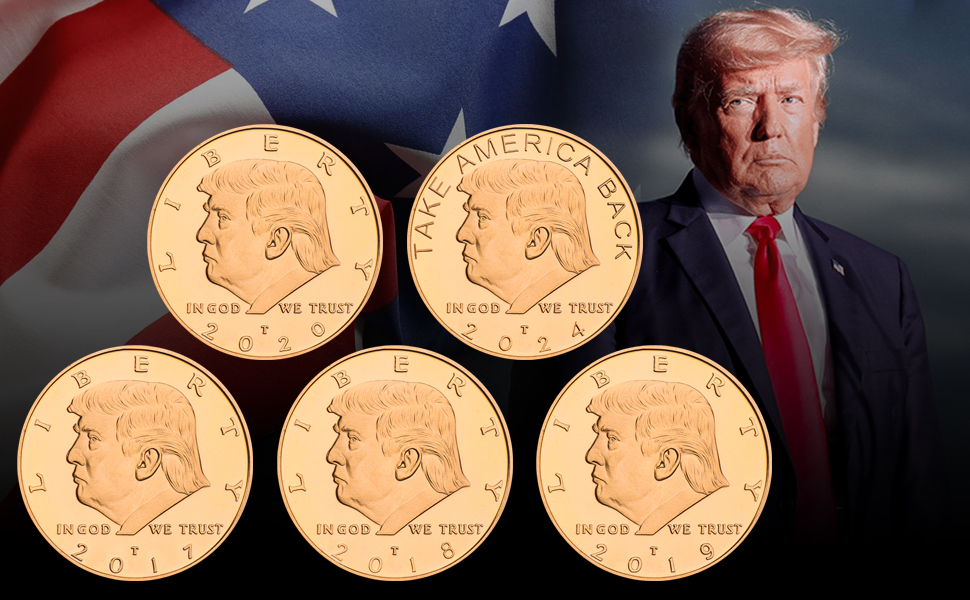
By the time the U.S. Mint strikes the first 24-karat gold Trump commemorative coin later this year, the great American tradition of keeping living politicians off the nation’s money will have been quietly, but spectacularly, circumvented.
Approved unanimously on March 19, 2026, by the Trump-appointed Commission of Fine Arts, the coin is ostensibly a celebration of the nation’s 250th anniversary. Yet, it serves a secondary, more visceral purpose for its chief architect: projecting executive dominance. The design is unapologetically aggressive. The obverse features President Donald Trump leaning intensely over the Resolute Desk, fists clenched, with the word “LIBERTY” arcing above his head and the dual dates “1776–2026” flanking him. The reverse bears a bald eagle, talons braced, ready to take flight.
Predictably, the political theater has been deafening. Critics have decried the coin as monarchic symbolism, pointing out that since the days of George Washington, the republic has fiercely guarded its currency against the vanity of living rulers. Defenders hail it as a masterstroke of patriotic fundraising and commemorative artistry.
But beneath the partisan noise lies a profound economic irony. In the grand sweep of monetary history, a leader plastering his face on ceremonial gold does not signal absolute control over a nation’s wealth. Quite the opposite. As we look back to the shifting empires of late antiquity, such numismatic pageantry usually reveals the exact opposite: a leader attempting to mask the uncomfortable reality of his limited sovereignty.
To understand the true weight of the 2026 Trump gold coin, one must look not to the halls of the Federal Reserve, but to the 6th-century courts of the Ostrogothic kings of Italy.
The Loophole of Vanity: 31 U.S.C. § 5112
To grasp the limits of the President’s monetary power, one must first look at the legal acrobatics required to mint the coin in the first place.
Federal law strictly forbids the portrait of a living person on circulating U.S. currency—a tradition born from the Founding Fathers’ revulsion for the coinage of King George III. To bypass this, the administration utilized the authorities granted under 31 U.S.C. § 5112, specifically the Treasury’s broad discretion to issue gold bullion and commemorative coins that do not enter general circulation.
While the coin bears a nominal face value of $1, it is a piece of bullion, not a medium of exchange. You cannot buy a coffee with it; it will not alter the M2 money supply; it will not shift the consumer price index.
Herein lies the central paradox of the Trump Semiquincentennial coin:
- The Facade of Power: It utilizes the highest-purity gold and the official imprimatur of the United States Mint to project executive authority.
- The Reality of Policy: The actual levers of the American economy—interest rates, quantitative easing, and the health of the fiat dollar—remain stubbornly out of the Oval Office’s direct control, residing instead with the independent Federal Reserve.
This dynamic—where a ruler uses localized, symbolic coinage to project a sovereignty he does not fully possess over the broader economic system—is not a modern invention. It is a historical hallmark of limited power.
Echoes from Ravenna: The Ostrogothic Parallel
When the Western Roman Empire collapsed in the late 5th century, Italy fell under the dominion of the Ostrogoths. The most famous of their rulers, Theodoric the Great, commanded the peninsula with formidable military might from his capital in Ravenna. He was, for all practical purposes, the king of Italy.
Yet, when you examine Ostrogothic coinage from this era, a fascinating picture of deference and limitation emerges.
Despite his military supremacy, Theodoric understood that the true center of global economic gravity lay to the east, in Constantinople. The Byzantine Emperor controlled the solidus—the gold standard of the Mediterranean world. If Theodoric wanted his kingdom to participate in international trade, he had to play by Byzantine monetary rules.
Consequently, the Ostrogoths minted gold and silver coins that were essentially counterfeits of Byzantine money. They bore the portrait of the reigning Eastern Emperor (such as Anastasius or Justinian), not the Ostrogothic king. Theodoric restricted his own branding to a modest monogram, and later kings, like Theodahad, only dared to place their full portraits on the bronze follis—the low-value base metal used for buying bread in local markets, entirely decoupled from international high finance.
The lesson from the Ostrogoths is clear, and widely recognized in peer-reviewed numismatic scholarship: controlling the territory is not the same as controlling the currency. The Ostrogoths used their local mints to project an image of continuity and authority to their immediate subjects, but they bowed to the monetary hegemony of the true empire.
The Byzantine Emperor of Modern Finance
Today, the “Constantinople” of the global economy is not a rival nation, but the institutional apparatus of the fiat dollar system—chiefly, the Federal Reserve and the global bond market.
President Trump has frequently chafed against this reality. Throughout his political career, he has sought to blur the lines of Fed independence, occasionally demanding lower interest rates or criticizing the Fed Chair with a ferocity normally reserved for political rivals. Yet, the institutional firewalls have largely held. The President cannot unilaterally dictate the cost of capital. He cannot force the world to buy U.S. Treasuries.
Thus, the 24-karat commemorative coin acts as his modern bronze follis.
It is a stunning piece of metal, but it is ultimately a domestic token. It satisfies a base of political supporters and projects an aura of monarchic permanence, just as Theodahad’s portrait did in the markets of Rome. But it does not challenge the underlying hegemony of the independent central banking system. The global markets, the sovereign wealth funds, and the algorithmic trading desks—the modern equivalents of the Byzantine merchants—will ignore the gold coin entirely. They will continue to trade in the invisible, digital fiat dollars over which the President exercises only indirect influence.
The Illusion of Monetary Sovereignty
What, then, does the “Trump coin” tell us about the current state of American executive power?
First, it highlights a growing preference for the aesthetics of power over the mechanics of governance. Minting a gold coin with one’s face on it is a frictionless exercise in executive privilege. Reining in a multi-trillion-dollar deficit, negotiating complex trade pacts, or carefully managing a soft economic landing are laborious, constrained, and often unrewarding tasks.
Second, it reveals the resilience of America’s financial architecture. That the President must resort to a commemorative loophole—utilizing a non-circulating bullion designation to bypass the strictures of circulating fiat—is a testament to the fact that the core of America’s money remains insulated from populist whim.
Consider the implications for dollar hegemony:
- Global Confidence: International investors rely on the U.S. dollar precisely because it is not subject to the immediate, emotional control of the executive branch.
- Institutional Friction: The outcry over the coin, while loud, proves that democratic norms regarding the separation of leader and state apparatus are still fiercely defended in the public square.
- The Paradox of Gold: By choosing gold—the traditional refuge of those who distrust government fiat—the administration inadvertently highlights its own lack of faith in the very paper currency it is sworn to manage.
Conclusion: The Weight of Empty Gold
The Roman historian Cassius Dio once observed that you can judge the health of a republic by the faces on its coins. When the republic falls, the faces of magistrates are replaced by the faces of autocrats.
But history is rarely that simple. The Ostrogothic kings of the 6th century put their faces on bronze because they lacked the power to control the gold. In March 2026, an American president has put his face on gold because he lacks the power to control the fiat.
The Semiquincentennial Trump coin is destined to be a remarkable collector’s item, a flashpoint in the culture wars, and a brilliant piece of political marketing. But when historians look back on the numismatics of the 2020s, they will not see a president who conquered the American monetary system. They will see a leader who, much like the kings of late antiquity, had to settle for a brilliant, golden simulacrum of power, while the true economic empire hummed along, indifferent and out of reach.
FAQ: Understanding the 2026 Commemorative Coin and U.S. Monetary Policy
Is it legal for a living U.S. President to be on a coin? Yes, but only under specific circumstances. By law (31 U.S.C. § 5112), living persons cannot be depicted on circulating currency (like standard pennies, quarters, or paper bills). However, the U.S. Mint has the authority to produce non-circulating bullion and commemorative coins. The 2026 Trump coin exploits this loophole as a non-circulating commemorative piece.
Does the U.S. President control the value of the dollar? No. While presidential policies (like tariffs, taxation, and government spending) affect the broader economy, the direct control of the U.S. money supply and interest rates rests with the Federal Reserve, an independent central bank. The President appoints the Fed Chair, but cannot legally dictate the bank’s day-to-day monetary policy.
What is the historical significance of the Ostrogothic coinage parallel? In the 6th century, Ostrogothic kings in Italy minted gold coins bearing the face of the Byzantine Emperor, while reserving their own portraits for lower-value bronze coins. This demonstrated that while they held local, symbolic power, true economic sovereignty belonged to the Byzantine Empire. The 2026 Trump coin operates similarly: it offers localized symbolic prestige, but the actual “engine” of the U.S. economy remains under the control of the independent Federal Reserve.
Can I spend the 24-karat Trump coin at a store? Technically, the coin has a legal face value of $1. However, because it is minted from 24-karat gold, its intrinsic metal value and numismatic collector value far exceed its $1 face value. It is meant to be collected and held as an asset or piece of memorabilia, not used in daily commercial transactions.
Investing 101
Gaming Giant’s Bold Gamble: Why Investors are Devouring Risky EA Debt Amid Geopolitical Crosscurrents

Investors are aggressively snapping up debt for Electronic Arts’ historic $55bn take-private, signaling resilient credit markets despite geopolitical tensions and AI disruption. Explore the EA LBO’s financial engineering, cost savings, and the appetite for risky video game financing in 2026.
Introduction: The Unyielding Allure of High-Yield
The world of high finance rarely pauses for breath, even as geopolitical headwinds gather and technological disruption reshapes industries. Yet, the recent $55 billion take-private of video game titan Electronic Arts (EA) has delivered a masterclass in market resilience, demonstrating an almost insatiable investor appetite for leveraged debt—even when tied to a complex, globally-infused transaction. Led by Saudi Arabia’s Public Investment Fund (PIF), Silver Lake, and Affinity Partners, this landmark deal, poised to redefine the gaming M&A landscape, has seen its $18-20 billion debt package met with overwhelming demand, proving that the pursuit of yield often eclipses lingering doubts.
This isn’t merely another private equity mega-deal; it’s a bellwether for global credit markets in early 2026. JPMorgan-led bond deals, designed to finance one of the largest leveraged buyouts in history, have drawn over $25 billion in orders, far surpassing their target size. This aggressive investor embrace of what many consider risky debt, particularly given the backdrop of Middle East tensions and concerns over AI’s impact on software, underscores a fascinating dichotomy: a cautious macroeconomic outlook juxtaposed with an audacious hunt for returns in stable, cash-generative assets. The question isn’t just how this was financed, but why investors dove in with such conviction, and what it signals for the year ahead.
The Anatomy of a Mega-Buyout: EA’s Financial Engineering
At an enterprise value of approximately $55 billion, the Electronic Arts take-private deal stands as the largest leveraged buyout on record, eclipsing the 2007 TXU Energy privatization. The financing structure is a finely tuned orchestration of equity and debt, designed to maximize returns for the acquiring consortium while appealing to a broad spectrum of debt investors.
Equity & Debt Breakdown
The EA $55bn LBO is funded through a combination of substantial equity and a significant debt tranche:
- Equity Component: Approximately $36 billion, largely comprising cash contributions from the consortium partners, including the rollover of PIF’s existing 9.9% stake in EA. PIF is set to own a substantial majority, approximately 93.4%, with Silver Lake holding 5.5% and Affinity Partners 1.1%.
- Debt Package: A substantial $18-20 billion debt package, fully committed by a JPMorgan-led syndicate of banks. This makes it the largest LBO debt financing post-Global Financial Crisis.
Unpacking the Debt Tranches: Demand & Pricing
The sheer scale of demand for this EA acquisition financing has been striking. The initial $18 billion debt offering, which included both secured and unsecured tranches, quickly swelled to over $25 billion in investor orders. This oversubscription highlights a strong market appetite for gaming-backed paper.
Key components of the debt include:
- Leveraged Loans: A cross-border loan deal totaling $5.75 billion launched on March 16, 2026, comprising a $4 billion U.S. dollar loan and a €1.531 billion ($1.75 billion) euro tranche.
- Pricing: Term Loan Bs (TLBs) were guided at 350-375 basis points over SOFR/Euribor, with a 0% floor and a 98.5 Original Issue Discount (OID). This discounted pricing suggests lenders were baking in some risk, yet the demand remained robust.
- Secured & Unsecured Bonds: The financing also features an upsized $3.25 billion term loan A, an additional $6.5 billion of other dollar and euro secured debt, and $2.5 billion of unsecured debt. While specific high-yield bond pricing hasn’t been detailed, market intelligence suggests secured debt at approximately 6.25-7.25% and unsecured north of 8.75%, reflective of the leverage profile.
The Deleveraging Path: Justifying a 6x+ Debt/EBITDA
Moody’s projects that EA’s gross debt will increase twelve-fold from $1.5 billion, pushing pro forma leverage (total debt to EBITDA) to around eight times at closing. Such high leverage ratios typically raise red flags, but the consortium’s pitch centers on EA’s robust cash flows and significant projected cost savings.
Three Pillars Justifying the Leverage
- Stable Cash Flows from Core Franchises: EA boasts an enviable portfolio of consistently profitable franchises, including FIFA (now EA Sports FC), Madden NFL, Apex Legends, and The Sims. These titles generate predictable, recurring revenue streams, particularly through live service models and annual updates, which underpin the company’s financial stability—a critical factor for debt investors.
- Strategic Cost Savings & Operational Efficiencies: The new owners have outlined an aggressive plan for $700 million in projected annual cost savings. This includes:
- R&D Optimization: $263 million from reclassifying R&D expenses for major titles like Battlefield 6 and Skate as one-time costs, now that they are live and generating revenue.
- Portfolio Review: $100 million from a strategic review of the game portfolio.
- AI Tool Integration: $100 million from leveraging AI tools for development and operations.
- Organizational Streamlining: $170 million from broader organizational efficiencies.
- Public Company Cost Removal: $30 million saved by no longer incurring costs associated with being a public entity.
These add-backs significantly bolster adjusted EBITDA figures, making the debt package appear more manageable to prospective lenders. Moody’s expects leverage to decrease to five times by 2029.
- Untapped Growth Potential in Private Ownership: Freed from quarterly earnings pressure, EA’s management can pursue longer-term strategic initiatives and R&D without the immediate scrutiny of public markets. This is particularly appealing for a company operating in an industry prone to rapid innovation and large, multi-year development cycles. The consortium’s diverse networks across gaming, entertainment, and sports are expected to create opportunities to “blend physical and digital experiences, enhance fan engagement, and drive growth on a global stage”.
Geopolitical Currents and the Appetite for Risky Debt
The influx of capital into the Electronic Arts bond deals is particularly noteworthy given the complex geopolitical backdrop of early 2026. Global markets are navigating sustained tensions in the Middle East, the specter of trade tariffs, and the disruptive force of artificial intelligence. Yet, these factors have not deterred investors from snapping up debt to finance Electronic Arts’ $55bn take-private.
The Saudi PIF Factor: Geopolitical Implications
The prominent role of Saudi Arabia’s Public Investment Fund (PIF) as the lead equity investor introduces a significant geopolitical dimension. The PIF, managing over $925 billion in assets, views this acquisition as a strategic move to establish Saudi Arabia as a global hub for games and sports, aligning with its “Vision 2030” diversification efforts. PIF’s deep pockets and long-term investment horizon offer stability often attractive to private equity deals.
However, the involvement of a sovereign wealth fund, particularly one with ties to Jared Kushner’s Affinity Partners, has not been without scrutiny. Concerns about national security risks, foreign access to consumer data, and control over American technology (including AI) have been voiced by organizations like the Communications Workers of America (CWA), who urged federal regulators to scrutinize the deal. Despite these geopolitical and regulatory considerations, the debt market demonstrated a remarkable willingness to participate. This indicates that the perceived financial stability and growth prospects of EA outweighed concerns tied to the source of equity capital.
AI Disruption and Market Confidence
The gaming industry, like many sectors, faces potential disruption from AI. Yet, EA itself projects $100 million in cost savings from AI tools, signaling a strategic embrace rather than fear of the technology. This forward-looking approach to AI, coupled with the inherent stability of established gaming franchises, likely contributed to investor confidence. In a volatile environment, proven entertainment IP acts as a relatively safe harbor.
The successful placement of this jumbo financing also suggests that while some sectors (like software) have seen “broader risk-off sentiment” due to AI uncertainty, the market distinguishes between general software and robust, content-driven interactive entertainment.
Broader Implications for Gaming M&A and Private Equity
The EA LBO is more than an isolated transaction; it’s a powerful signal for the broader M&A landscape and the future of private equity.
A Return to Mega-LBOs?
After a period where massive leveraged buyouts fell out of favor post-Global Financial Crisis, the EA deal marks a definitive comeback. It “waves the green flag on sponsors resuming mega-deal transactions,” indicating that easing borrowing costs and renewed boardroom confidence are aligning to facilitate large-cap M&A. The success of this deal, especially the oversubscription of its debt tranches, could embolden other private equity firms to pursue similar-sized targets in industries with reliable cash flows. This is crucial for private-equity debt appetite in 2026.
Creative Independence Post-Delisting
While private ownership offers freedom from public market pressures, it also introduces questions about creative independence. Historically, private equity has been associated with aggressive cost-cutting and a focus on short-term profits. For a creative industry like gaming, this can be a double-edged sword. While the stated goal is to “accelerate innovation and growth”, some within EA have expressed concern about potential workforce reductions and increased monetization post-acquisition. The challenge for the new owners will be to balance financial optimization with the nurturing of creative talent and IP development crucial for long-term success.
What it Means for 2027: Scenarios and Ripple Effects
As the EA $55bn take-private moves towards its expected close in Q1 FY27 (June 2026), its ripple effects will be closely watched by analysts and investors alike.
- Post-Deal EA Strategy: Under private ownership, expect EA to double down on its most successful franchises and potentially explore new growth vectors less scrutinized by quarterly reports. Strategic investments in areas like mobile gaming, esports, and potentially new IP development could accelerate. The projected cost savings will likely be reinvested to fuel growth or rapidly deleverage.
- Valuation Multiples: The deal itself sets a new benchmark for valuations in the gaming sector, particularly for companies with strong IP and predictable revenue streams. This could influence future M&A activities involving peers like Activision Blizzard (though now part of Microsoft) or Take-Two Interactive, raising their perceived floor valuations.
- Credit Market Confidence: The overwhelming investor demand for EA’s debt signals a powerful confidence in the leveraged finance markets, particularly for well-understood, resilient businesses. If EA successfully executes its deleveraging and growth strategy post-buyout, it will further validate the market’s willingness to finance large, complex LBOs, even amidst global uncertainty. This could pave the way for more “risky debt” deals tied to stable, high-quality assets.
- Geopolitical Influence in Tech: The PIF’s leading role solidifies the trend of sovereign wealth funds actively participating in global technology and entertainment sectors. This influence will continue to shape discussions around regulatory oversight, national interests, and the evolving landscape of global capital flows.
The investors snapping up debt to finance Electronic Arts’ $55bn take-private aren’t just betting on a video game company; they’re wagering on the enduring power of stable cash flows, strategic cost management, and a robust credit market willing to absorb risk for attractive yields. In a world grappling with uncertainty, the virtual battlefields of EA’s franchises offer a surprisingly solid ground for real-world financial gains.

Singapore Firms Press Ahead in US Market Despite Trump Tariffs

The IMF’s High-Voltage Mandate: How Pakistan’s FY27 Power Subsidy Cut Will Rewire Its Economy

How US Debt, Gold Chaos, and a Stalled Middle East Are Rewriting the Rules of Investing

Top 15 Stocks for Investment in 2026 in PSX: Your Complete Guide to Pakistan’s Best Investment Opportunities
Top 15 Stocks for Investment in 2026 in PSX: Your Complete Guide to Pakistan’s Best Investment Opportunities

Debunking IMF Program Myths: Reconfiguring Engagement for True National Ownership in a Volatile World
-
 Markets & Finance4 months ago
Top 15 Stocks for Investment in 2026 in PSX: Your Complete Guide to Pakistan’s Best Investment Opportunities
-
Markets & Finance4 months ago
Top 15 Stocks for Investment in 2026 in PSX: Your Complete Guide to Pakistan’s Best Investment Opportunities
-
 Analysis3 months ago
Debunking IMF Program Myths: Reconfiguring Engagement for True National Ownership in a Volatile World
-

 Global Economy5 months ago
What the U.S. Attack on Venezuela Could Mean for Oil and Canadian Crude Exports: The Economic Impact
-

 Investment4 months ago
Top 10 Mutual Fund Managers in Pakistan for Investment in 2026: A Comprehensive Guide for Optimal Returns
-

 Asia5 months ago
China’s 50% Domestic Equipment Rule: The Semiconductor Mandate Reshaping Global Tech
-

 AI5 months ago
15 Most Lucrative Sectors for Investment in Pakistan: A 2025 Data-Driven Analysis
-

 Exports5 months ago
Pakistan’s Export Goldmine: 10 Game-Changing Markets Where Pakistani Businesses Are Winning Big in 2025