
Opinion
Pakistan’s Solar Push: Can Renewables Power Growth?

Introduction
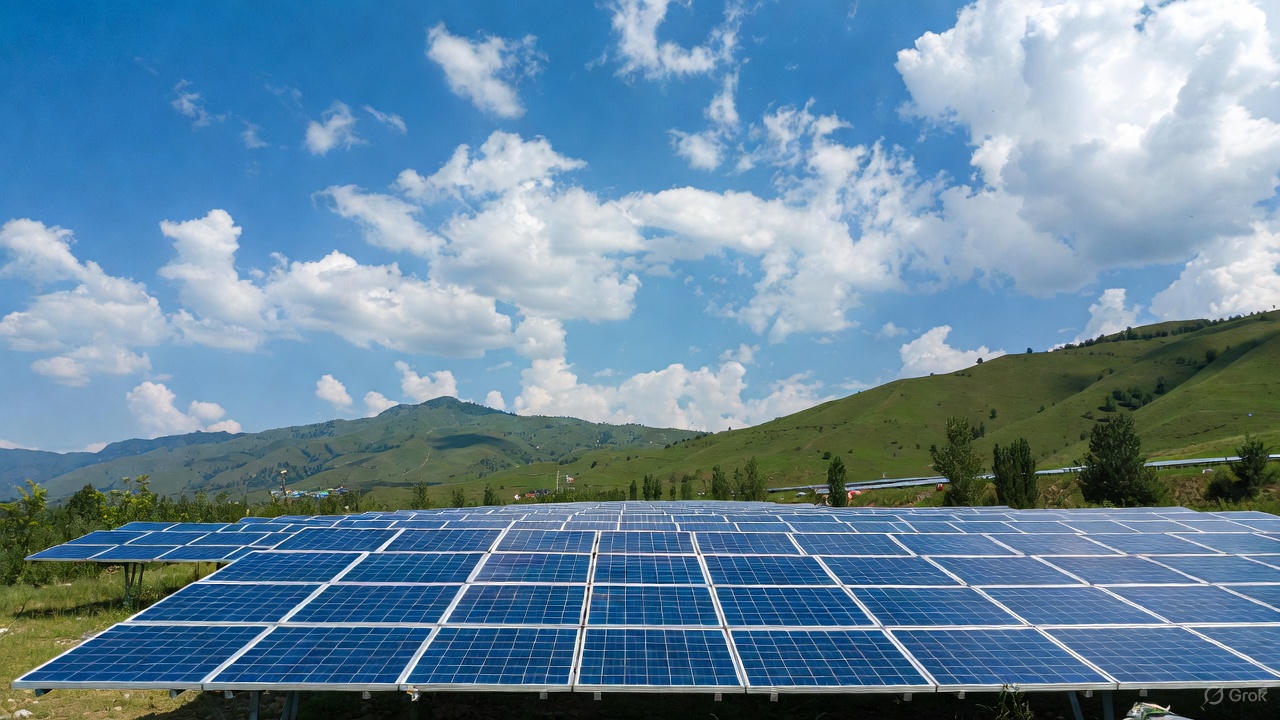
Pakistan’s energy story has long been dominated by imported fossil fuels, chronic shortages, and rising costs. Yet, in 2025, a new narrative is unfolding: solar energy is emerging as a cornerstone of Pakistan’s economic future. With net-metered solar capacity reaching 5.3 GW by April 2025 out of a total installed generation capacity of 46,605 MW, the country is making strides toward a greener grid. But can renewables — particularly solar — truly power growth, or are structural challenges too steep?
🌞 Historical Context: Pakistan’s Energy Mix
- For decades, Pakistan relied heavily on thermal power (oil, gas, coal), which accounted for nearly 60% of generation in 2020.
- Hydropower contributed around 30%, while renewables were negligible.
- This dependence on imports strained foreign reserves, with energy imports costing over $20 billion annually by 2022.
📊 Current Solar Capacity & Targets
- Net-metered solar capacity: 5.3 GW (April 2025).
- Government targets: 40% renewable share by 2025 and 60% by 2030, already surpassing interim goals.
- World Bank projection: Solar and wind should reach 30% of total electricity capacity by 2030, equivalent to 24,000 MW.
- ADB forecast: Pakistan’s GDP growth at 2.7% in 2025, with inflation at 4.5%, highlighting the need for cheaper, stable energy.
💡 Economic Benefits of Solar
- Energy Security: Reduces reliance on imported oil and gas, easing pressure on foreign reserves.
- Job Creation: Solar installation and maintenance could generate hundreds of thousands of jobs by 2030.
- Cost Savings: World Bank estimates renewables could save Pakistan $5 billion over 20 years.
- Industrial Competitiveness: Affordable electricity boosts manufacturing, especially textiles and IT.
🚧 Challenges Ahead
- Grid Integration: Transmission capacity lags at 22,000 MW vs demand of 31,000 MW, causing outages.
- Financing: IMF notes Pakistan’s debt burden limits fiscal space for large-scale renewable projects.
- Policy Gaps: Recent 18% GST on imported solar panels risks slowing adoption.
- Equity Concerns: Solar adoption is faster among urban elites; rural and low-income households remain underserved.
🌍 Comparative Insights
- India: Installed over 80 GW of solar by 2025, leveraging subsidies and large-scale parks.
- Bangladesh: Pioneered solar home systems, reaching millions of rural households.
- Pakistan: Strong potential, but policy inconsistency and financing hurdles slow progress.
🔮 Future Outlook
- IMF’s Resilience and Sustainability Facility: $1.3 billion allocated to Pakistan for climate-resilient infrastructure.
- Private Sector Role: Rooftop solar and battery storage are booming, with adoption quadrupling from 2024–2025.
- Global Context: Falling solar panel costs (down 80% since 2010) make renewables increasingly competitive.
✍️ Conclusion
Pakistan’s solar push is real and transformative, but fragile. The numbers show progress: capacity is rising, targets are ambitious, and economic benefits are clear. Yet, without grid upgrades, equitable financing, and consistent policy, solar alone cannot power sustainable growth.
In my view, Pakistan is not just entering a renewable era — it is at a crossroads. If policymakers align fiscal discipline with energy reforms, solar could become the backbone of Pakistan’s economic revival. If not, the promise of renewables risks being another missed opportunity.



Danone recalled So Delicious Salted Caramel Cluster pints on Sept 15, 2026. Check UPC 744473476138 and best-by dates on or before April 3, 2028.
- Danone USA issued a voluntary recall on 15 September 2026 of So Delicious Dairy Free Salted Caramel Cluster Non-Dairy Frozen Dessert pints, posted by the FDA.
- The reason: potential presence of foreign materials, such as small stones and other hard objects, within the cashew inclusions.
- Affected product: SKU 136603, UPC 744473476138, best-by dates on and before 3 April 2028. Pints with a later best-by date are not affected.
- No other So Delicious flavours, codes or products are involved. Distribution was nationwide to US retail stores.
- This is the second such recall in under a year — an identical issue prompted a December 2025 recall of the same product.
1. Introduction & Immediate Context
If you have a pint of So Delicious Dairy Free Salted Caramel Cluster in your freezer, check it before reading anything else.
Danone USA is recalling So Delicious Dairy Free Salted Caramel Cluster Non-Dairy Frozen Dessert pints with best-by dates on and before 3 April 2028 due to the potential presence of foreign materials, such as small stones and other hard objects, within the cashew inclusions, according to the company announcement posted by the FDA on 15 September 2026. The issue was identified through consumer complaints, and the FDA has been informed of the voluntary recall.
Danone is working with retail partners to remove affected product from shelves. Unaffected product remains available, and product shipped going forward is not affected.
2. Instant Product-Matching Table
Check all three fields. Flavour name alone is not sufficient, because packaging varies by retailer and the brand rebranded during 2026.
| Field | What to look for | Where to find it |
|---|---|---|
| Product name | So Delicious Dairy Free® Salted Caramel Cluster Non-Dairy Frozen Dessert (pints) | Front label |
| SKU | 136603 | Product listing / retailer receipt |
| UPC | 744473476138 | Back of container |
| Best-by date | On and before 3 April 2028 | Bottom of container |
| Package size | Pint | — |
| Distribution | Nationwide, US retail stores | — |
If all fields match: do not consume the product.
For a refund or replacement coupon: contact the So Delicious Dairy Free Consumer Care Line at 1-833-367-8975, available Monday to Friday, 9 a.m. to 6 p.m. ET.
If your best-by date falls after 3 April 2028: your pint is not part of this recall.
2.1 Comparison with the December 2025 recall
Households that checked their freezers last winter should check again — the date ranges are different.
| Recall | Date issued | Best-by range affected | SKU / UPC | Status |
|---|---|---|---|---|
| December 2025 | 15 December 2025 | Before 08 Aug 2027 | 136603 / 744473476138 | Completed; FDA terminated |
| September 2026 | 15 September 2026 | On and before 3 April 2028 | 136603 / 744473476138 | Active |
The September 2026 range extends roughly eight months beyond the earlier one. Product that passed the December check may still fall inside the current recall.
3. Structural Drivers and Competitor Gaps: Why Twice?
Almost all coverage of this recall stops at the checklist. The pattern is the more useful part of the story.
The stated cause is word-for-word identical to the December 2025 recall — foreign materials such as small stones and hard objects within cashew inclusions — as Fast Company noted in observing that this is now a pattern rather than an isolated incident. The company’s public language has also closely mirrored its statements from the previous year, including the assurance that the issue has been identified and corrected.
The mechanism points upstream. Small stones in cashew inclusions is a raw-material sorting failure, not a manufacturing-line failure. Tree nuts are harvested from the ground or from drying floors, and the standard controls are optical sorting, density separation and metal or X-ray detection at intake. Stones are specifically the contaminant these systems exist to catch, and they are difficult for downstream detection to find because their density can be close to that of the nut itself. A recurrence of the same contaminant in the same inclusion implies the corrective action taken after December 2025 did not resolve the root cause — most plausibly at a supplier or sorting-specification level rather than at the plant.
The recall also reached other jurisdictions. The Canadian Food Inspection Agency issued a Class 2 recall for a related So Delicious Dairy Free cashew-base salted caramel product over plastic-like and gravel-like fragments, indicating a supply-chain rather than single-facility scope.
There are no confirmed injury reports in the current recall documentation, and the FDA categorises this as a consumer-level alert. Foreign-object recalls carry dental-fracture and choking risk rather than illness risk, which is why the guidance is disposal rather than medical monitoring.
4. Key Implications for Stakeholders
Consumers with dietary restrictions. Dairy-free frozen dessert buyers often have limited substitutes, and repeat recalls in a narrow category are disproportionately disruptive. Only this single flavour is affected; other So Delicious products remain unaffected in both recalls.
Allergy-tracking households. Note that this is a foreign-object recall, not an allergen recall. No undeclared allergen is involved, so the standard cross-contamination protocols do not apply here — physical inspection and disposal do.
Retailers. The overlapping date ranges across two recalls create genuine shelf-audit complexity. Scanning by UPC alone will flag unaffected stock; the best-by date is the discriminating field.
Food safety professionals. A repeat of an identical contaminant within nine months is the type of event that typically attracts closer FDA attention to the corrective-action plan filed after the first recall.
How to verify anything you read about this. The FDA recalls, market withdrawals and safety alerts database is updated continuously and is the authoritative source. Secondary coverage has circulated conflicting date ranges by mixing the 2025 and 2026 notices.
5. Frequently Asked Questions
Q1: Which So Delicious products are recalled?
Only So Delicious Dairy Free Salted Caramel Cluster Non-Dairy Frozen Dessert pints with SKU 136603, UPC 744473476138 and a best-by date on or before 3 April 2028. No other flavours, codes or products from the brand are involved.
Q2: What should I do if I have the recalled product?
Do not eat it. Dispose of it and contact the So Delicious Dairy Free Consumer Care Line at 1-833-367-8975, open Monday to Friday, 9 a.m. to 6 p.m. ET, for a refund or replacement coupon.
Q3: Why was So Delicious recalled?
Because of the potential presence of foreign materials such as small stones and other hard objects within the cashew inclusions. The issue was identified through consumer complaints, and the FDA was informed of the voluntary recall.
Q4: Is this the same as the previous So Delicious recall?
It is the same product and the same stated cause, but a different date range. The December 2025 recall covered best-by dates before 8 August 2027 and has been terminated; the September 2026 recall covers dates on and before 3 April 2028.
Q5: Has anyone been hurt?
No confirmed injury reports appear in the current recall documentation. The FDA has categorised the action as a consumer-level alert.

Buried inside the IMF’s latest Pakistan country report is a dependency that receives far less attention than headline GDP or inflation numbers, but arguably carries more immediate risk for millions of households: Pakistan’s economy is structurally exposed to whatever happens next in the Gulf.
The Numbers That Matter
Pakistan receives annual remittances amounting to roughly 9 percent of GDP, of which 55 percent originate from Gulf Cooperation Council countries, according to the IMF’s May 2026 country report. That single funding channel is one of the largest and most stable sources of foreign exchange available to the country — larger, in most years, than export revenue growth or foreign direct investment inflows combined.
The IMF’s own language is unambiguous about the risk this concentration creates: a significant disruption to GCC economies, or a forced return of migrant workers, could weigh heavily on these flows — a major source of financing for both household consumption and Pakistan’s broader balance of payments.
Why This Risk Is Live, Not Theoretical
This is not an abstract stress-test scenario. The Strait of Hormuz disruption, detailed extensively elsewhere in this series, has placed the entire Gulf region’s economic stability under genuine pressure for the first time in years. Should the conflict escalate further or trigger a broader regional economic slowdown, the transmission channel to Pakistan is direct and fast: fewer construction projects and reduced hiring across the GCC translates almost immediately into lower remittance flows from the millions of Pakistani workers employed there.
Capital Flows Are Already Reacting
The IMF has flagged early evidence that this dynamic is not purely hypothetical. Deteriorating global financial conditions have already resulted in capital outflows from Pakistan, which are likely to intensify further if the regional crisis extends, with the Fund specifically noting that access to short-term commercial financing — largely sourced from GCC banks — could also be affected if risk sentiment deteriorates further across the region.
This creates a double exposure that is easy to overlook in headline coverage: Pakistan depends on the Gulf both for the remittance income that supports household consumption, and for the short-term commercial bank financing that helps bridge its external funding gaps between IMF disbursements.
The State Bank’s Reserve Buffer
Pakistan’s own policy response has been to build reserves as a shock absorber. The State Bank of Pakistan has been projecting reserves to continue rising to roughly $18 billion by June 2026 on the back of planned inflows, a level implying that expected capital inflows currently exceed any current account shortfall — but only as long as Pakistan remains within an active IMF programme and maintains access to external funding on favourable terms.
The risk scenario flagged by policy researchers is specific: if monetary easing is mismanaged and confidence in Pakistan’s reform path falters, capital inflows could slow or reverse at the same time imports surge, opening an external funding gap that would draw down reserves and pressure the rupee — a scenario made materially more likely by any Gulf-region shock large enough to simultaneously dent remittances and tighten GCC bank lending.
How much of Pakistan’s remittances come from the Gulf?
Roughly 55% of Pakistan’s remittances — which fund about 9% of GDP — originate from Gulf Cooperation Council countries, making Pakistan’s balance of payments directly exposed to any economic disruption or capital-flow tightening in the Gulf region.
The Agricultural Wildcard
A related, more immediate risk sits in the agricultural supply chain. The IMF notes that disrupted DAP fertiliser supply chains linked to regional tensions could affect the Kharif planting season in June-July, with knock-on effects for food import prices — a second, more direct channel through which Gulf and broader Middle East instability could hit Pakistani households, independent of the remittance and capital-flow risks.
The Policy Takeaway
Pakistan’s economic stabilisation narrative in 2026 — a rebuilding KSE-100, falling inflation, a completed EFF review, covered in depth in our companion article — is real, but it rests on a foundation more exposed to Gulf regional stability than most headline coverage acknowledges. For policymakers in Islamabad, and for the Pakistani diaspora sending capital home each month, the Strait of Hormuz situation is not a distant geopolitical story. It is, in a very direct sense, a domestic economic risk factor.

In most economies, a strengthening currency is treated as evidence of underlying strength. In Russia’s case in 2026, the opposite is true — and this counterintuitive dynamic has received surprisingly little mainstream coverage relative to how directly it undermines Moscow’s ability to finance the war in Ukraine. The ruble touched 69.90 against the dollar in mid-June, its strongest level since February 2023, having gained roughly 45% since the start of the year on some measures. For Russia’s state finances, that appreciation is a genuine problem, not a triumph.
Why a Strong Ruble Hurts, Rather Than Helps, Russia
The mechanism runs through Russia’s fiscal architecture. Oil and gas taxes are calculated as the product of the export oil price and the ruble-dollar exchange rate — meaning that even when the dollar price of Urals crude holds steady, a stronger ruble mechanically reduces the ruble-denominated tax take from every barrel sold. With roughly 80% of Russia’s oil exports now flowing through Rosneft and Lukoil, both under direct US sanctions since late 2025, the currency-driven revenue squeeze compounds a volume-and-price problem that was already severe.
The scale of the shortfall is significant. Analysts at the Bloomsbury Intelligence and Security Institute project Russia faces an energy revenue shortfall of roughly $25–30 billion, driven by the combination of a stronger ruble and falling oil prices cutting the value of Urals crude by around a quarter. Separately, Russia’s Ministry of Finance has had to sell portions of the National Wealth Fund’s gold and yuan holdings to offset the shortfall in oil-and-gas-linked revenue — the Bank of Russia then buys those assets and sells an equivalent value of foreign currency domestically, a so-called “mirror operation” that itself reinforces the ruble’s strength, creating something close to a self-perpetuating cycle.
The Deeper Cause: Sanctions, Not Just Oil Prices
It would be a mistake to attribute the ruble’s strength purely to oil-market dynamics. Analysts at Meduza point to a more structural cause: a drop in imports combined with the Bank of Russia’s historically high interest rate has reduced domestic demand for foreign currency, pushing the ruble higher even as the broader economy stagnates. Compounding this, a large and growing share of Russia’s trade is now settled directly in rubles or yuan — 59.5% of exports and 56% of imports by October 2025 — reducing the currency-market channels through which a weaker ruble might otherwise emerge organically.
Sanctions enforcement has independently cut into export volumes and pricing power. Widened discounts on Russian crude — Urals trading roughly $25 a barrel below Brent as buyers price in the compliance risk of sanctioned suppliers — mean Russia is simultaneously selling less oil, at a bigger discount, for a currency worth mechanically less in tax terms per barrel. It is difficult to construct a more comprehensively unfavourable set of conditions for a state budget built around oil-and-gas revenue.
The Fiscal Math Is Getting Harder to Finance
Russia’s Economic Development Ministry has already revised its own forecasts downward across every major indicator, and the government has been forced into unpopular measures including a VAT increase effective January 2026 and higher domestic borrowing — targeting roughly 5.5 trillion rubles in fresh domestic bond issuance in 2026, with state-owned banks like Sberbank absorbing the bulk of that supply. Analysts note this financing method is among the most inflationary available, functionally similar to money creation, because the primary buyers are state banks rather than independent market participants pricing genuine credit risk.
Why Analysts Don’t Expect Collapse — Just Stagnation
Despite the mounting pressure, multiple assessments converge on the same conclusion: Russia’s economy is not on the verge of collapse. The World Bank’s own forecast trajectory shows growth slowing to around 0.8–1% annually through 2028 rather than contracting outright, describing the outlook as stagnation rather than crisis. As one analysis put it, the state-dependent structure of Russia’s economy — heavy reliance on state-owned enterprises and raw-material exports — is precisely the kind of economic structure that helps authoritarian systems maintain power through prolonged difficulty rather than triggering the kind of acute crisis that would force policy capitulation.
What to Watch
The critical variable for 2026 is whether the Bank of Russia’s interest-rate cuts — already reducing the key rate from 16% toward 15.5% — proceed fast enough to weaken the ruble back toward the Economic Ministry’s own projected average of roughly 92 per dollar. If the ruble instead remains persistently overvalued relative to Russia’s underlying trade fundamentals, the fiscal shortfall — and the resulting drawdown of Russia’s National Wealth Fund — will continue to compress the resources available for financing the war in Ukraine, regardless of headline oil prices.

Diesel Prices 2026–2027: Why Cheaper Crude May Not Mean Cheap Fuel

2027 Social Security COLA: Key Details and Dates

KSE-100 Sees Major Drop Post-SBP Rate Hike

Big Tech’s AI Spending Test: Can Revenue Catch Up With Capital Expenditure?

AI Infrastructure Investment Strategies for 2026

Pakistan Freelancers Tax 2026: Payments, Documentation and Formal Growth

Strait of Hormuz Crisis: What the Latest Tanker Attacks Mean for Oil, Shipping and Global Trade

AI Customer Service in 2026: What’s Working, What’s Failing, and What to Buy

Open a Savings Account Online: How to Actually Earn 10x the National Average Rate

Global Housing Market 2026: Where Prices Rise, Where They Don’t

PSX and KSE-100 Record Highs: An Insider’s Guide to Pakistan Stocks

So Delicious Dessert Recall: Affected Products, FDA Guidelines, and Consumer Action

Pakistan’s Current Account Deficit Narrows Sharply to $98 Million in August 2026

Japan Eyes 3.5% Defense Spending: What It Means for Bonds, Stocks, and the BOJ

Top 15 Stocks for Investment in 2026 in PSX: Your Complete Guide to Pakistan’s Best Investment Opportunities
Top 15 Stocks for Investment in 2026 in PSX: Your Complete Guide to Pakistan’s Best Investment Opportunities

Debunking IMF Program Myths: Reconfiguring Engagement for True National Ownership in a Volatile World

Top 10 Mutual Fund Managers in Pakistan for Investment in 2026: A Comprehensive Guide for Optimal Returns

China’s 50% Domestic Equipment Rule: The Semiconductor Mandate Reshaping Global Tech

What the U.S. Attack on Venezuela Could Mean for Oil and Canadian Crude Exports: The Economic Impact

15 Most Lucrative Sectors for Investment in Pakistan: A 2025 Data-Driven Analysis

Pakistan’s Export Goldmine: 10 Game-Changing Markets Where Pakistani Businesses Are Winning Big in 2025

How to Become an Active Taxpayer on Pakistan’s FBR Active Taxpayer List (ATL) in 2026: A Step-by-Step Guide

Pakistan’s Stock Market Renaissance: How 2025’s Hottest Investment Opportunity Is Democratizing Wealth—A Complete Beginner’s Guide

Best Investments in Pakistan 2026: Top 10 Low-Price Shares and Long-Term Picks for the PSX
15 Most Lucrative Sectors for Investment in Pakistan: A 2025 Data-Driven Analysis
15 Most Lucrative Sectors for Investment in Pakistan: A 2025 Data-Driven Analysis

Pakistan’s Economic Outlook 2025: Between Stabilization and the Shadow of Stagnation
-
 Markets & Finance10 months ago
Top 15 Stocks for Investment in 2026 in PSX: Your Complete Guide to Pakistan’s Best Investment Opportunities
-
Markets & Finance10 months ago
Top 15 Stocks for Investment in 2026 in PSX: Your Complete Guide to Pakistan’s Best Investment Opportunities
-
 Analysis9 months ago
Debunking IMF Program Myths: Reconfiguring Engagement for True National Ownership in a Volatile World
-
 Investment10 months ago
Top 10 Mutual Fund Managers in Pakistan for Investment in 2026: A Comprehensive Guide for Optimal Returns
-
 Asia10 months ago
China’s 50% Domestic Equipment Rule: The Semiconductor Mandate Reshaping Global Tech
-
 Global Economy10 months ago
What the U.S. Attack on Venezuela Could Mean for Oil and Canadian Crude Exports: The Economic Impact
-
 AI11 months ago
15 Most Lucrative Sectors for Investment in Pakistan: A 2025 Data-Driven Analysis
-
 Exports11 months ago
Pakistan’s Export Goldmine: 10 Game-Changing Markets Where Pakistani Businesses Are Winning Big in 2025