
Opinion
Trump’s Greenland Gambit: How Tariffs on Eight European Allies Could Reshape the Transatlantic Alliance

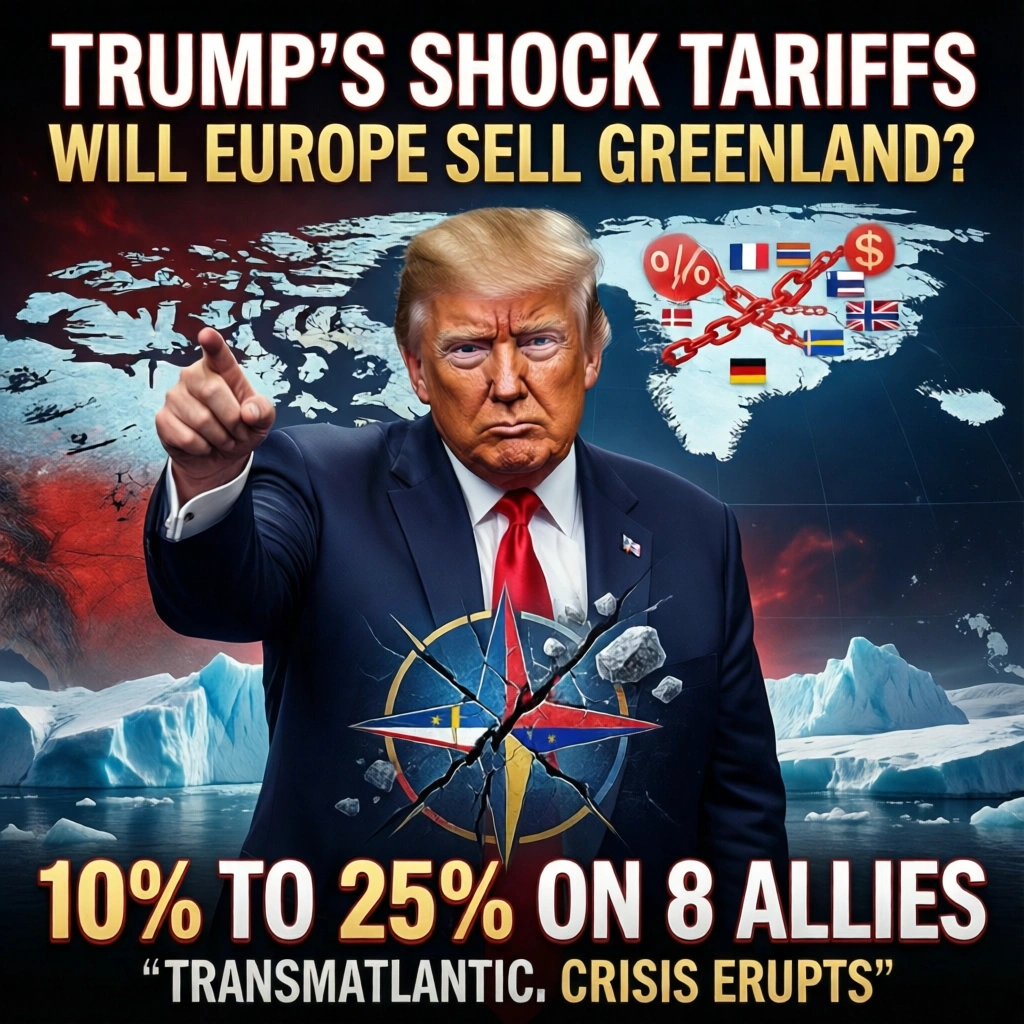
On the frigid evening of January 17, 2026, President Donald Trump lobbed what may prove to be the most audacious—and potentially destructive—ultimatum of his second term across the Atlantic. Via his preferred digital megaphone, Truth Social, Trump announced sweeping tariffs targeting eight of America’s closest European allies: Denmark, Norway, Sweden, France, Germany, the United Kingdom, the Netherlands, and Finland. The levy, set at 10% on all imported goods beginning February 1 and escalating to 25% from June 1, comes with a singular, extraordinary condition: the “Complete and Total purchase of Greenland” by the United States.
The declaration sent tremors through diplomatic channels, financial markets, and NATO headquarters alike. Within hours, European capitals responded with a mixture of bewilderment, outrage, and steely resolve. Danish Prime Minister Mette Frederiksen, who had previously dismissed Trump’s Greenland overtures as “absurd,” condemned the tariff threat as “economic blackmail” that violates fundamental principles of international law and alliance solidarity. German Chancellor’s office termed the move “incomprehensible,” while French officials warned of swift EU-wide countermeasures.
This is not merely another chapter in Trump’s unpredictable trade policy playbook. It represents a fundamental reassessment of America’s relationship with its oldest democratic partners—one that prioritizes Arctic ambitions and resource nationalism over seven decades of transatlantic cooperation. The question facing European leaders and global observers is stark: Is this a negotiating tactic from a president known for brinkmanship, or does it signal a permanent fracturing of the Western alliance at precisely the moment when unity matters most?
The Island That Haunts Trump’s Strategic Imagination
Trump’s fixation on Greenland is neither new nor entirely irrational, even if his methods appear extraordinary. The world’s largest island has occupied a peculiar space in American strategic thinking since 1946, when President Harry Truman offered Denmark $100 million for outright purchase—a proposal politely declined. During the Cold War, the United States established Thule Air Base in northwest Greenland, which remains a critical early-warning station for ballistic missile detection and satellite surveillance, now upgraded to monitor threats from Russia and China.
Trump first publicly floated the purchase idea in August 2019, initially reported as a jest before the then-president confirmed serious interest. The proposal met swift rejection from both Denmark and Greenland’s autonomous government, prompting Trump to cancel a scheduled state visit to Copenhagen in a diplomatic snub that reverberated for months. At the time, analysts dismissed the episode as characteristic Trump bluster—a distraction from domestic troubles or perhaps genuine curiosity about an unconventional deal.
Yet the intervening years have transformed Greenland from a geopolitical curiosity into a strategic imperative in Washington’s eyes. The Arctic is warming twice as fast as the global average, opening previously ice-locked sea routes and revealing vast mineral wealth beneath Greenland’s melting ice sheets. Geological surveys suggest the island harbors significant deposits of rare earth elements—including neodymium, praseodymium, and dysprosium—critical for electric vehicles, wind turbines, advanced weaponry, and semiconductors. China currently controls roughly 70% of global rare earth production and 90% of processing capacity, creating what Pentagon strategists view as an unacceptable vulnerability in supply chains for both commercial technology and defense systems.
Russia’s 2022 invasion of Ukraine and subsequent militarization of its Arctic territories has further elevated Greenland’s importance. Moscow has reopened Soviet-era bases along its northern coastline, deployed advanced anti-access/area denial systems, and conducted frequent bomber patrols near North American airspace. China, despite being a “near-Arctic” nation by its own creative geography, has declared itself a “Polar Silk Road” power, investing in Icelandic infrastructure and conducting research expeditions that European intelligence agencies suspect serve dual civilian-military purposes.
For Trump and his advisers, Greenland represents the ultimate “art of the deal”—a territorial acquisition that would simultaneously secure critical minerals, establish American dominance in the Arctic, and cement a legacy comparable to the Louisiana Purchase or Alaska acquisition. The fact that such a deal contradicts modern international norms regarding self-determination and sovereignty appears, in this calculation, a manageable obstacle rather than a disqualifying one.
The Tariff Ultimatum: Mechanics and Targeted Impact
The tariffs Trump announced represent a significant escalation in both scope and justification. Unlike his first-term steel and aluminum levies, ostensibly grounded in Section 232 national security provisions, or his China tariffs under Section 301, these measures reportedly invoke the International Emergency Economic Powers Act (IEEPA)—an assertion of presidential authority typically reserved for sanctions against hostile nations like Iran or North Korea, as legal experts have noted with alarm.
The eight targeted nations collectively represent America’s third-largest trade relationship, with bilateral goods trade totaling approximately $680 billion annually. The economic pain would be unevenly distributed but universally felt:
Denmark, though a modest trading partner with roughly $15 billion in annual bilateral trade, faces disproportionate leverage given its sovereignty over Greenland. Danish pharmaceutical giants like Novo Nordisk—which supplies approximately 50% of the world’s insulin and has invested billions in US manufacturing—could see profit margins compressed and supply chains disrupted. The country’s wind energy sector, led by Vestas and Ørsted, exports significant turbine components to American renewable projects that could face cost increases precisely when the US seeks to expand green energy capacity.
Germany, America’s largest European trading partner with $267 billion in bilateral trade, confronts the most severe economic exposure. The automotive sector—BMW, Mercedes-Benz, and Volkswagen together exported over $24 billion worth of vehicles to the US in 2025—would face punishing costs that could render German cars uncompetitive against American, Japanese, and Korean alternatives. German machinery, chemicals, and precision instruments, which underpin countless American manufacturing processes, would ripple through industrial supply chains with inflationary consequences for US businesses and consumers.
The United Kingdom, still navigating post-Brexit trade relationships, sees roughly $132 billion in annual goods and services trade with America potentially jeopardized. While services trade might initially escape tariffs, financial institutions, consulting firms, and creative industries fear retaliatory measures or secondary impacts. British Aerospace, with deep integration into US defense projects including the F-35 fighter program, faces potential disruption despite ostensible national security carve-outs.
France, the Netherlands, Sweden, Norway, and Finland each face sector-specific vulnerabilities: French aerospace and luxury goods, Dutch chemicals and refined petroleum, Swedish automobiles and telecommunications equipment, Norwegian seafood and aluminum, and Finnish paper products and technology exports all enter the crosshairs. Collectively, these represent not just bilateral relationships but intricate European supply chains that feed American consumers and manufacturers.
The escalation timeline—from 10% to 25%—appears designed to maximize pressure while offering a narrow window for capitulation. A 10% tariff might be absorbed through currency adjustments or marginal price increases; a 25% levy would fundamentally alter trade flows, forcing companies to relocate production, seek alternative markets, or accept devastating market share losses.
Europe’s Response: Unity, Defiance, and Legal Recourse
European reaction has been swift, coordinated, and unambiguous. Within 24 hours of Trump’s announcement, European Commission President Ursula von der Leyen convened an emergency meeting of EU trade ministers, emerging with a preliminary retaliatory package targeting $75 billion in American exports—from Kentucky bourbon and Harley-Davidson motorcycles to California almonds and Florida orange juice, mirroring the effective pressure tactics employed during Trump’s first-term steel tariffs.
Critically, the European response extends beyond mere economic retaliation. Legal experts within the EU have begun preparing a complaint to the World Trade Organization, arguing that IEEPA invocation for territorial acquisition constitutes an abuse of emergency powers and violates foundational WTO principles. While WTO dispute resolution typically proceeds slowly—often requiring years for final rulings—the symbolic importance of challenging American legal rationale cannot be overstated. It frames the conflict not as a legitimate trade dispute but as an arbitrary exercise of power that threatens the multilateral trading system itself.
NATO allies face a particularly acute dilemma. The alliance, already strained by burden-sharing debates and divergent threat perceptions regarding Russia and China, now confronts a fundamental question: Can collective defense coexist with economic coercion among members? Several European defense ministers have privately expressed concern that Trump’s tariff threats undermine the alliance’s credibility at precisely the moment when Russian aggression demands unity. NATO Secretary General Mark Rutte, in carefully calibrated remarks, emphasized that “economic disputes must not weaken our shared security commitments,” a plea that acknowledges deep anxiety about alliance cohesion.
Perhaps most significantly, Greenland itself has asserted its voice in ways that complicate Trump’s narrative. Múte Bourup Egede, Greenland’s Premier, issued a statement reiterating that “Greenland is not for sale and will never be for sale,” while emphasizing the island’s ongoing path toward full independence from Denmark. Greenland’s 57,000 inhabitants, predominantly Indigenous Inuit, have increasingly demanded autonomy over their resource development and foreign relations—a self-determination claim that makes external purchase proposals both legally dubious and morally fraught. Greenlandic officials have suggested openness to expanded US investment and security cooperation, but firmly within frameworks respecting sovereignty rather than territorial transfer.
Economic Consequences: Beyond the Spreadsheet
Trade wars, as economists wearily remind policymakers, rarely produce clear winners. The immediate impact of Trump’s Greenland tariffs would be quantifiable: the Peterson Institute for International Economics estimates that a full 25% tariff regime could reduce US GDP growth by 0.3-0.5 percentage points while increasing consumer prices by $850-1,200 per household annually through higher costs for vehicles, pharmaceuticals, machinery, and consumer goods.
European economies would suffer comparably, with Germany potentially seeing GDP contraction of 0.4% and manufacturing job losses concentrated in export-dependent regions. Smaller Nordic economies, heavily reliant on US markets for specialized exports, could face sharper downturns. The Netherlands, a critical logistics hub for European-American trade, would experience cascading effects through Rotterdam’s ports and distribution networks.
Yet the deeper consequences extend beyond quarterly earnings reports. Global supply chains, painstakingly constructed over decades to optimize efficiency and resilience, would face abrupt reconfiguration. American pharmaceutical companies relying on Danish active ingredients or German precision equipment would scramble for alternative suppliers—often at higher cost and lower quality. European manufacturers would accelerate efforts to diversify away from American markets, potentially strengthening trade ties with China, India, and Southeast Asia in ways that diminish long-term US influence.
Financial markets, initially wobbling on tariff announcement day with the S&P 500 dropping 1.8%, face sustained uncertainty. Currency volatility—particularly euro-dollar fluctuations—could destabilize international transactions and complicate central bank monetary policy. Investment flows, already cautious amid geopolitical tensions, might retreat further from transatlantic ventures, starving promising technologies and industries of capital.
The rare earth dimension adds peculiar irony to Trump’s strategy. While Greenland theoretically harbors valuable deposits, actual extraction would require decades of infrastructure development, environmental assessments, and community consultation—hardly a near-term solution to Chinese dominance. Meanwhile, alienating European allies who are themselves seeking to diversify rare earth supply chains squanders opportunities for coordinated Western resource strategies that might genuinely challenge Beijing’s monopoly.
The Geopolitical Chessboard: Arctic Ambitions and Alliance Erosion
Beneath the tariff theatre lies a substantive geopolitical question: What does American leadership mean in the 21st century? Trump’s Greenland gambit reflects a worldview increasingly common among American nationalists—that alliances are transactional arrangements to be leveraged for discrete national advantages rather than collective security frameworks requiring mutual sacrifice and long-term commitment.
This philosophy stands in stark contrast to the architecture that has defined Western security since 1949. NATO’s Article 5 mutual defense guarantee assumes that an attack on one member constitutes an attack on all—a principle tested after 9/11 when European allies invoked the clause on America’s behalf, deploying forces to Afghanistan for two decades. The EU-US partnership on sanctions against Russia, technology export controls on China, and climate cooperation similarly presumes shared interests transcending narrow economic calculation.
Trump’s willingness to economically coerce NATO allies fundamentally challenges this framework. If the United States will threaten Denmark—a loyal ally hosting critical defense infrastructure and deploying forces to US-led missions from Iraq to Mali—over territorial ambitions, what restraints apply to American pressure on any partner? The message to European capitals is clear: alignment with Washington offers no protection from Washington’s demands.
The Arctic dimension complicates matters further. All eight nations targeted by Trump’s tariffs are Arctic Council members, engaged in scientific cooperation and environmental governance in the far north. Norway and Finland share Arctic borders with Russia; Sweden recently joined NATO explicitly to enhance Arctic security; Denmark (via Greenland) and the United States are the region’s dominant territorial powers. Effective Arctic strategy—whether addressing Russian militarization, Chinese economic penetration, or climate change impacts—requires precisely the coordinated approach that Trump’s unilateralism undermines.
Russia and China observe these fissures with undisguised satisfaction. Moscow’s propaganda apparatus has gleefully highlighted Western disunity, while Chinese state media frames Trump’s tactics as evidence of American imperial decline and unreliability. Beijing, simultaneously facing its own tariff battles with Washington, sees opportunity to position itself as a more stable economic partner for European nations seeking alternatives to American volatility. The strategic competition that ostensibly motivates Trump’s Greenland interest may actually be advanced by the very methods he employs to pursue it.
Precedents, Parallels, and the Question of Feasibility
Historical parallels to Trump’s approach are scarce and sobering. The United States has acquired territory through purchase—Louisiana from France in 1803, Alaska from Russia in 1867, the Virgin Islands from Denmark in 1917—but always through willing seller-buyer transactions, often driven by the seller’s financial desperation or strategic realignment. Modern international law, codified in the UN Charter and subsequent frameworks, explicitly rejects territorial transfer without the consent of governed populations.
The Virgin Islands precedent, interestingly involving Denmark, occurred during World War I when Copenhagen faced potential German occupation and desperately needed funds. The $25 million transaction (equivalent to roughly $600 million today) came after decades of Danish-American negotiations, formal ratification by both governments, and—crucially—no meaningful consultation with the islands’ inhabitants, reflecting colonial-era norms now universally rejected.
Greenland’s situation differs fundamentally. The island enjoys substantial autonomy under Denmark’s constitutional framework, with local government controlling most domestic affairs while Copenhagen manages foreign relations and defense. Greenland has pursued gradual independence, achieving self-governance in 1979 and expanded autonomy in 2009, with full sovereignty theoretically achievable through referendum. Any transfer of sovereignty—whether to full independence or hypothetically to another nation—would require Greenlandic consent through democratic processes that current polling suggests would overwhelmingly reject American purchase.
The tariff mechanism itself carries ominous precedent from Trump’s first term. Steel and aluminum tariffs imposed in 2018 under Section 232 national security justifications triggered retaliatory cycles that harmed American farmers, manufacturers, and consumers while achieving minimal strategic benefit. The Phase One trade deal with China, celebrated by Trump as a historic victory, saw Beijing fall short of purchase commitments while American concessions on Huawei and technology transfer went substantially unreciprocated. Subsequent economic analyses suggested that American consumers and businesses bore the primary cost of Trump’s trade wars through higher prices and disrupted supply chains.
Legal experts question whether IEEPA, designed for sanctions against hostile actors threatening US national interests, can legitimately justify tariffs aimed at coercing friendly democracies into property sales. Constitutional scholars note that while presidents enjoy broad trade authorities, using them for purposes unrelated to trade policy or genuine national emergencies potentially exceeds statutory authorization and invites judicial challenge. The prospect of courts intervening in foreign policy remains uncertain, but the legal architecture appears shakier than Trump’s confident pronouncements suggest.
Scenarios and Futures: Where Does This End?
As European and American officials absorb the initial shock, several potential pathways emerge, each carrying distinct implications for transatlantic relations and global order.
Scenario One: Strategic Capitulation and Creative Dealmaking. Perhaps least likely but most aligned with Trump’s apparent hopes, Denmark and Greenland could interpret the tariff threat as sufficiently severe to explore unprecedented arrangements. Rather than outright sale, imaginative diplomacy might yield a 99-year lease model (similar to Hong Kong’s pre-1997 status), expanded US basing rights, joint resource development agreements, or substantial American infrastructure investment in exchange for privileged access to minerals and strategic facilities. This outcome would require Greenlandic leadership to view American partnership as preferable to continued Danish association and incipient independence—a calculation that current political sentiment does not support but economic realities and Chinese pressure might eventually encourage.
Scenario Two: Managed De-escalation Through Face-Saving Compromise. More plausibly, intense diplomatic engagement over the coming weeks could produce a formula allowing Trump to claim victory while European allies avoid economic catastrophe. Enhanced US-Greenland bilateral cooperation, formalized through treaties or executive agreements, might address legitimate American security and resource concerns without sovereignty transfer. Denmark could facilitate expanded American military presence or rare earth development partnerships, framed as alliance strengthening rather than territorial concession. Trump could declare that improved Arctic access and resource agreements satisfy US interests, suspending tariffs while preserving rhetorical claims about Greenland’s importance. This path requires European willingness to reward American coercion with substantive concessions—a precedent with troubling implications but potentially preferable to economic warfare.
Scenario Three: Mutual Escalation and Transatlantic Rupture. The darkest timeline sees neither side blinking as February 1 approaches. American tariffs take effect at 10%, triggering immediate EU countermeasures targeting politically sensitive US exports and states. Financial markets deteriorate amid uncertainty; businesses accelerate supply chain reconfiguration; political rhetoric hardens on both sides. The June 1 escalation to 25% produces genuine economic pain—job losses in German automotive regions, pharmaceutical shortages in American markets, inflationary pressures complicating monetary policy. NATO faces existential questions about its viability when economic and security interests diverge so sharply. US-European cooperation on China, Russia, climate, and technology fractures as mutual recrimination overwhelms shared interests. This scenario, while catastrophic, cannot be dismissed given Trump’s demonstrated willingness to sustain confrontation and European determination not to reward extortion.
Scenario Four: Domestic American Constraint. An often overlooked possibility involves American political and economic actors constraining Trump’s ambitions. US businesses dependent on European imports—pharmaceutical companies, auto manufacturers, technology firms—would lobby intensively for tariff reversal or exemption. Congressional Republicans, facing midterm elections in 2026 and constituent pressure from affected industries, might threaten legislation curtailing presidential tariff authorities or blocking IEEPA invocation for non-emergency purposes. Federal courts could issue injunctions questioning the legal basis for tariffs, forcing administration lawyers into prolonged litigation. While Trump demonstrated during his first term a capacity to resist such pressures, the economic stakes here are substantially higher, potentially mobilizing more formidable domestic opposition.
What This Reveals About American Power and Its Limits
Beyond the immediate diplomatic crisis and economic calculations lies a more fundamental question about the nature of American power in the 2020s. Trump’s Greenland gambit embodies a particular vision of strength—one rooted in unilateral action, economic leverage, and transactional relationships rather than alliance management, institutional frameworks, and long-term strategic patience.
This approach contains internal contradictions that European observers have noted with a mixture of concern and strategic calculation. The United States seeks to counter Chinese influence in critical mineral supply chains and Arctic regions, yet does so by alienating the very partners whose cooperation would be essential for any successful containment strategy. America demands loyalty and burden-sharing from NATO allies while demonstrating that loyalty provides no immunity from Washington’s economic coercion. The administration champions sovereignty and self-determination in contexts like Taiwan or Ukraine while dismissing those same principles when applied to Greenland.
These contradictions do not necessarily doom Trump’s approach—inconsistency has rarely constrained effective exercise of power—but they do reveal limits. American economic leverage over Europe remains substantial but not absolute; the EU collectively represents a $17 trillion economy with capacity to absorb short-term pain while diversifying partnerships. Military alliances cannot be sustained indefinitely through intimidation alone; at some threshold, partners conclude that autonomy and alternative arrangements serve their interests better than subordination to an unreliable hegemon.
The Greenland episode may ultimately be remembered less for its specific outcome—whether Trump secures mineral agreements, basing rights, actual territory, or nothing at all—than for what it clarifies about early 21st-century geopolitics. We inhabit an era where even the closest democratic partnerships face strain from nationalism, resource competition, and divergent threat perceptions. The post-1945 liberal international order, built on American leadership and institutional cooperation, confronts challenges from without (authoritarian powers) and within (democratic leaders questioning multilateralism’s value).
Trump’s tariff ultimatum forces allies to answer uncomfortable questions: What price are Europeans willing to pay for transatlantic partnership? Can NATO survive fundamental economic disputes among members? How do middle powers navigate a world where the superpower they’ve relied upon for protection increasingly treats them as adversaries in resource competition?
Conclusion: The Weight of an Island in a Fragmenting World
Greenland, an island of 57,000 souls, spectacular fjords, and melting ice sheets, never asked to become the flashpoint for transatlantic crisis. Its strategic importance is real—the Arctic is indeed warming, minerals are genuinely critical, and great power competition increasingly focuses on polar regions. But the manner in which Trump has chosen to pursue American interests transforms a potential opportunity for cooperative Western strategy into a loyalty test that may fracture the alliances such strategy requires.
As February 1 approaches and European capitals weigh their responses to Trump’s Greenland tariffs, the world watches a stress test of the Western alliance’s resilience. The immediate question—whether Denmark will negotiate, Trump will relent, or economic warfare will escalate—matters enormously for trade flows, market stability, and political careers. But the deeper inquiry concerns whether democracies can sustain cooperation in an age of resource nationalism, where even longtime partners view each other’s assets as potential acquisitions and deploy economic coercion against friends with the same ruthlessness once reserved for adversaries.
History suggests that great powers overestimate their leverage and underestimate their partners’ capacity for independent action. Rome discovered this as client kingdoms rebelled; Britain learned it as colonies demanded independence; the Soviet Union realized it as satellites broke away. Whether the United States is embarking on a similar trajectory—transforming allies into adversaries through arrogance and overreach—remains uncertain.
What is clear is that Trump’s Greenland gambit represents something more consequential than another unpredictable presidential pronouncement. It is a wager on the nature of power itself: whether strength derives from the capacity to compel or the wisdom to cooperate, whether interests are best served through intimidation or partnership, whether the future belongs to those who dominate or those who build coalitions capable of addressing shared challenges.
The answer will shape not just Greenland’s fate or transatlantic trade, but the structure of international order for decades to come. An island in the Arctic has become a mirror reflecting the fractures in the Western alliance—and perhaps the fault lines along which our geopolitical era will ultimately break.


Analysis
The Trump Coin and Lessons from the Ostrogoths: How a Gold Offering Reveals the Limits of Presidential Power Over America’s Money
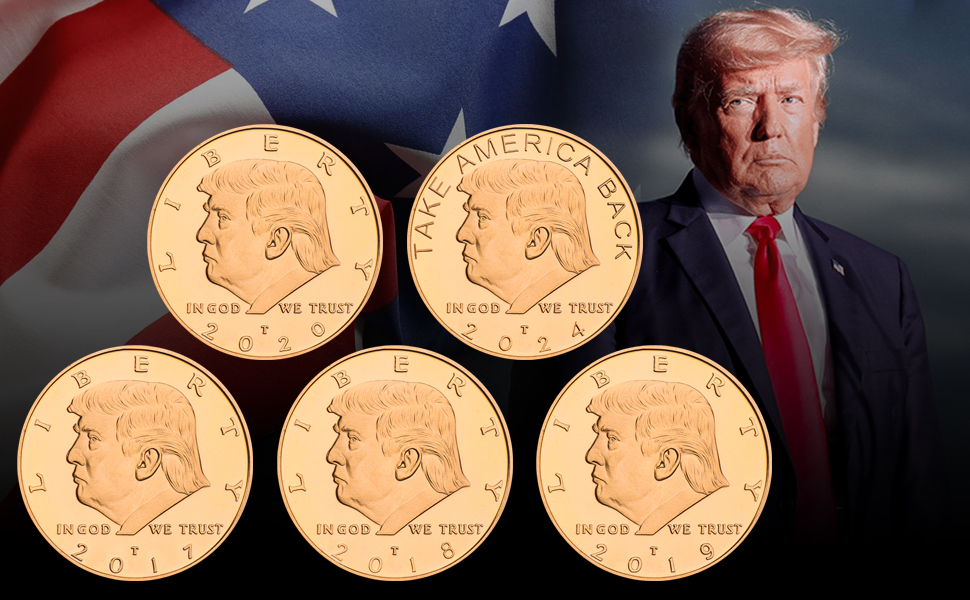
By the time the U.S. Mint strikes the first 24-karat gold Trump commemorative coin later this year, the great American tradition of keeping living politicians off the nation’s money will have been quietly, but spectacularly, circumvented.
Approved unanimously on March 19, 2026, by the Trump-appointed Commission of Fine Arts, the coin is ostensibly a celebration of the nation’s 250th anniversary. Yet, it serves a secondary, more visceral purpose for its chief architect: projecting executive dominance. The design is unapologetically aggressive. The obverse features President Donald Trump leaning intensely over the Resolute Desk, fists clenched, with the word “LIBERTY” arcing above his head and the dual dates “1776–2026” flanking him. The reverse bears a bald eagle, talons braced, ready to take flight.
Predictably, the political theater has been deafening. Critics have decried the coin as monarchic symbolism, pointing out that since the days of George Washington, the republic has fiercely guarded its currency against the vanity of living rulers. Defenders hail it as a masterstroke of patriotic fundraising and commemorative artistry.
But beneath the partisan noise lies a profound economic irony. In the grand sweep of monetary history, a leader plastering his face on ceremonial gold does not signal absolute control over a nation’s wealth. Quite the opposite. As we look back to the shifting empires of late antiquity, such numismatic pageantry usually reveals the exact opposite: a leader attempting to mask the uncomfortable reality of his limited sovereignty.
To understand the true weight of the 2026 Trump gold coin, one must look not to the halls of the Federal Reserve, but to the 6th-century courts of the Ostrogothic kings of Italy.
The Loophole of Vanity: 31 U.S.C. § 5112
To grasp the limits of the President’s monetary power, one must first look at the legal acrobatics required to mint the coin in the first place.
Federal law strictly forbids the portrait of a living person on circulating U.S. currency—a tradition born from the Founding Fathers’ revulsion for the coinage of King George III. To bypass this, the administration utilized the authorities granted under 31 U.S.C. § 5112, specifically the Treasury’s broad discretion to issue gold bullion and commemorative coins that do not enter general circulation.
While the coin bears a nominal face value of $1, it is a piece of bullion, not a medium of exchange. You cannot buy a coffee with it; it will not alter the M2 money supply; it will not shift the consumer price index.
Herein lies the central paradox of the Trump Semiquincentennial coin:
- The Facade of Power: It utilizes the highest-purity gold and the official imprimatur of the United States Mint to project executive authority.
- The Reality of Policy: The actual levers of the American economy—interest rates, quantitative easing, and the health of the fiat dollar—remain stubbornly out of the Oval Office’s direct control, residing instead with the independent Federal Reserve.
This dynamic—where a ruler uses localized, symbolic coinage to project a sovereignty he does not fully possess over the broader economic system—is not a modern invention. It is a historical hallmark of limited power.
Echoes from Ravenna: The Ostrogothic Parallel
When the Western Roman Empire collapsed in the late 5th century, Italy fell under the dominion of the Ostrogoths. The most famous of their rulers, Theodoric the Great, commanded the peninsula with formidable military might from his capital in Ravenna. He was, for all practical purposes, the king of Italy.
Yet, when you examine Ostrogothic coinage from this era, a fascinating picture of deference and limitation emerges.
Despite his military supremacy, Theodoric understood that the true center of global economic gravity lay to the east, in Constantinople. The Byzantine Emperor controlled the solidus—the gold standard of the Mediterranean world. If Theodoric wanted his kingdom to participate in international trade, he had to play by Byzantine monetary rules.
Consequently, the Ostrogoths minted gold and silver coins that were essentially counterfeits of Byzantine money. They bore the portrait of the reigning Eastern Emperor (such as Anastasius or Justinian), not the Ostrogothic king. Theodoric restricted his own branding to a modest monogram, and later kings, like Theodahad, only dared to place their full portraits on the bronze follis—the low-value base metal used for buying bread in local markets, entirely decoupled from international high finance.
The lesson from the Ostrogoths is clear, and widely recognized in peer-reviewed numismatic scholarship: controlling the territory is not the same as controlling the currency. The Ostrogoths used their local mints to project an image of continuity and authority to their immediate subjects, but they bowed to the monetary hegemony of the true empire.
The Byzantine Emperor of Modern Finance
Today, the “Constantinople” of the global economy is not a rival nation, but the institutional apparatus of the fiat dollar system—chiefly, the Federal Reserve and the global bond market.
President Trump has frequently chafed against this reality. Throughout his political career, he has sought to blur the lines of Fed independence, occasionally demanding lower interest rates or criticizing the Fed Chair with a ferocity normally reserved for political rivals. Yet, the institutional firewalls have largely held. The President cannot unilaterally dictate the cost of capital. He cannot force the world to buy U.S. Treasuries.
Thus, the 24-karat commemorative coin acts as his modern bronze follis.
It is a stunning piece of metal, but it is ultimately a domestic token. It satisfies a base of political supporters and projects an aura of monarchic permanence, just as Theodahad’s portrait did in the markets of Rome. But it does not challenge the underlying hegemony of the independent central banking system. The global markets, the sovereign wealth funds, and the algorithmic trading desks—the modern equivalents of the Byzantine merchants—will ignore the gold coin entirely. They will continue to trade in the invisible, digital fiat dollars over which the President exercises only indirect influence.
The Illusion of Monetary Sovereignty
What, then, does the “Trump coin” tell us about the current state of American executive power?
First, it highlights a growing preference for the aesthetics of power over the mechanics of governance. Minting a gold coin with one’s face on it is a frictionless exercise in executive privilege. Reining in a multi-trillion-dollar deficit, negotiating complex trade pacts, or carefully managing a soft economic landing are laborious, constrained, and often unrewarding tasks.
Second, it reveals the resilience of America’s financial architecture. That the President must resort to a commemorative loophole—utilizing a non-circulating bullion designation to bypass the strictures of circulating fiat—is a testament to the fact that the core of America’s money remains insulated from populist whim.
Consider the implications for dollar hegemony:
- Global Confidence: International investors rely on the U.S. dollar precisely because it is not subject to the immediate, emotional control of the executive branch.
- Institutional Friction: The outcry over the coin, while loud, proves that democratic norms regarding the separation of leader and state apparatus are still fiercely defended in the public square.
- The Paradox of Gold: By choosing gold—the traditional refuge of those who distrust government fiat—the administration inadvertently highlights its own lack of faith in the very paper currency it is sworn to manage.
Conclusion: The Weight of Empty Gold
The Roman historian Cassius Dio once observed that you can judge the health of a republic by the faces on its coins. When the republic falls, the faces of magistrates are replaced by the faces of autocrats.
But history is rarely that simple. The Ostrogothic kings of the 6th century put their faces on bronze because they lacked the power to control the gold. In March 2026, an American president has put his face on gold because he lacks the power to control the fiat.
The Semiquincentennial Trump coin is destined to be a remarkable collector’s item, a flashpoint in the culture wars, and a brilliant piece of political marketing. But when historians look back on the numismatics of the 2020s, they will not see a president who conquered the American monetary system. They will see a leader who, much like the kings of late antiquity, had to settle for a brilliant, golden simulacrum of power, while the true economic empire hummed along, indifferent and out of reach.
FAQ: Understanding the 2026 Commemorative Coin and U.S. Monetary Policy
Is it legal for a living U.S. President to be on a coin? Yes, but only under specific circumstances. By law (31 U.S.C. § 5112), living persons cannot be depicted on circulating currency (like standard pennies, quarters, or paper bills). However, the U.S. Mint has the authority to produce non-circulating bullion and commemorative coins. The 2026 Trump coin exploits this loophole as a non-circulating commemorative piece.
Does the U.S. President control the value of the dollar? No. While presidential policies (like tariffs, taxation, and government spending) affect the broader economy, the direct control of the U.S. money supply and interest rates rests with the Federal Reserve, an independent central bank. The President appoints the Fed Chair, but cannot legally dictate the bank’s day-to-day monetary policy.
What is the historical significance of the Ostrogothic coinage parallel? In the 6th century, Ostrogothic kings in Italy minted gold coins bearing the face of the Byzantine Emperor, while reserving their own portraits for lower-value bronze coins. This demonstrated that while they held local, symbolic power, true economic sovereignty belonged to the Byzantine Empire. The 2026 Trump coin operates similarly: it offers localized symbolic prestige, but the actual “engine” of the U.S. economy remains under the control of the independent Federal Reserve.
Can I spend the 24-karat Trump coin at a store? Technically, the coin has a legal face value of $1. However, because it is minted from 24-karat gold, its intrinsic metal value and numismatic collector value far exceed its $1 face value. It is meant to be collected and held as an asset or piece of memorabilia, not used in daily commercial transactions.
Acquisitions
The Saigol Pivot: Inside Maple Leaf Cement’s Strategic Incursion into Pakistan’s Banking Sector
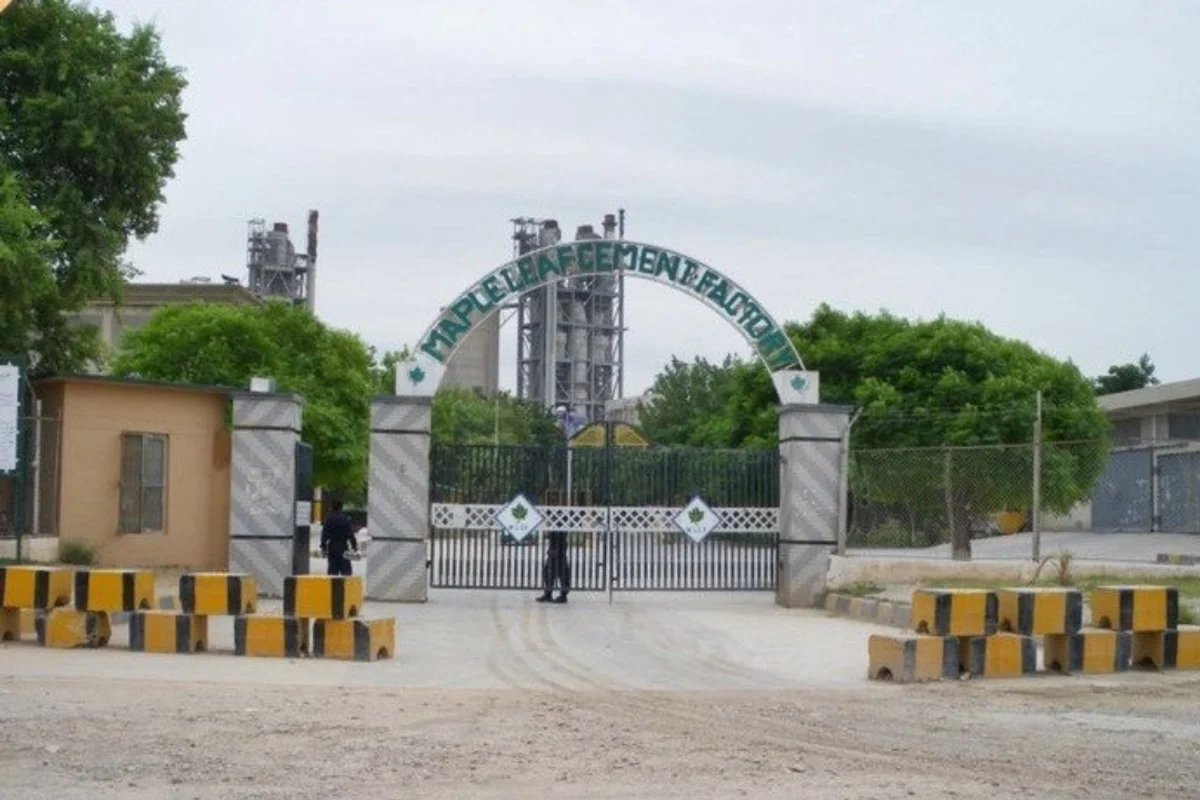
It is a move that initially appears as a study in industrial asymmetry: a northern cement giant, whose fortunes are tied to construction gypsum and clinker, systematically acquiring a stake in one of the country’s mid-tier Islamic banks. But beneath the surface of the Competition Commission of Pakistan’s (CCP) recent authorization lies a narrative far more sophisticated than a simple portfolio shuffle. This is the Saigol family’s Kohinoor Maple Leaf Group (KMLG) executing a deliberate financial pivot, threading the needle between regulatory scrutiny and the volatile realities of the 2026 Pakistan Stock Exchange (PSX) .
The CCP’s green light for Maple Leaf Cement Factory Limited (MLCF) to acquire shares in Faysal Bank Limited (FABL)—including a rare ex post facto approval for purchases made during 2025—offers a window into the evolving strategy of Pakistan’s old industrial guard .
The “Grey Area”: A Regulatory Slap on the Wrist?
In the sterile language of antitrust law, the transaction raised no red flags. The CCP’s Phase I assessment correctly noted the “entirely distinct” nature of cement manufacturing and commercial banking, concluding there was no horizontal or vertical overlap that could stifle competition .
However, the procedural backstory is where the texture lies. The Commission acknowledged reviewing a batch of open-market transactions on the PSX that were “already completed prior to obtaining the Commission’s approval” .
While the CCP granted ex-post facto authorization under Section 31(1)(d)(i) of the Competition Act 2010, it simultaneously issued a pointed directive: MLCF must ensure strict compliance with pre-merger approval requirements for any future transactions . It is a reminder that in Pakistan’s current financial climate, where liquidity is king and speed is of the essence, even blue-chip conglomerates can find themselves navigating the grey areas between investment opportunity and regulatory process. The directive serves as a subtle but firm warning to the market that the CCP is watching the methods of stake-building as closely as the ultimate concentration of ownership .
Strategic Rationale: Beyond Horizontal Logic
To understand the “why,” one must look beyond the cement kilns of Daudkhel and toward the balance sheets of the group. The Kohinoor Maple Leaf Group, born from the trifurcation of the Saigol empire, has long been a bastion of textiles and cement . But 2026 presents a different economic calculus.
Conglomerate diversification is the name of the game. With the PSX experiencing the volatile convulsions of a pre-election year—oscillating between geopolitical panic and IMF-induced stability—banking stocks have emerged as a high-yield, defensive hedge . Unlike the cyclical nature of cement, which is hostage to construction schedules and government infrastructure spending, the banking sector offers exposure to interest rate spreads and consumer financing.
For MLCF, a stake in Faysal Bank is not about vertical integration; it is about earnings stability. Faysal Bank, with its significant presence in Islamic finance (a sector rapidly gaining traction in Pakistan), offers a counter-cyclical buffer to the group’s industrial holdings. As one analyst put it, “They are swapping kiln dust for deposit multiplier.”
The Real-Time Context: PSX Volatility and the Hunt for Yield (March 2026)
The timing of the final authorization is critical. March 2026 finds the Pakistani equity market in a state of calculated anxiety. The KSE-100 has recently weathered a 16.9% correction from its January peaks, triggered by Middle East tensions and fears over the Strait of Hormuz . While energy stocks swing wildly with every oil price fluctuation, banking giants like Faysal Bank offer a rare port in the storm.
According to Arif Habib Limited’s latest strategy notes, the banking sector is currently trading at a price-to-book discount, with institutions like National Bank of Pakistan offering dividend yields as high as 13.3% . While Faysal Bank’s yields are more modest than NBP’s, its shareholding structure—dominated by Bahrain’s Ithmaar Holding (66.78%)—makes it an attractive target for local industrial groups seeking influence without the burden of outright control .
By accumulating shares incrementally through the PSX, KMLG is effectively renting exposure to the financialization of the Pakistani economy. It is a low-profile, high-liquidity entry into a sector that the State Bank of Pakistan projects will remain resilient despite import pressures and currency fluctuations .

Faysal Bank: The Prize Within
Why Faysal Bank specifically? The lender has carved a niche in the Islamic banking corridor, an area the government is keen to expand. With total institutional investors holding over 72% of the bank’s shares, it represents a tightly held, professionally managed asset .
Maple Leaf’s creeping acquisition suggests a desire to secure a seat at the table of Pakistan’s financial future. While the CCP authorization allows for an increased shareholding, it stops short of a full-blown merger. For now, this remains an “incursion”—a strategic toehold in the world of high finance, managed by the same family stewardship that Tariq Saigol has applied to transforming KMLG’s manufacturing base through sustainability and innovation .
The Verdict
The Maple Leaf Cement–Faysal Bank transaction is a harbinger of things to come in the 2026 Pakistani market. As the lines between industrial capital and financial capital blur, we will likely see more of these “conglomerate” acquisitions.
The CCP’s involvement, complete with its ex-post facto review and compliance directive, has set a precedent. It tells the market that while the commission is willing to facilitate investments that support “capital formation,” it will not tolerate a laissez-faire approach to merger control .
For the Saigol family, this is not just an investment; it is a hedge against the future. In an economy where cement demand can cool overnight but banking remains the lifeblood of commerce, owning a piece of the pipeline is the ultimate strategic pivot.

Oil shock Southeast Asia | Strait of Hormuz disruption | Stagflation risk Philippines Thailand | Fuel subsidy bills Asia 2026
Picture a Monday morning in Bangkok’s Chatuchak district. Nattapong, a 34-year-old motorcycle-taxi driver who normally hauls commuters through gridlocked sois for roughly 400 baht a day, is staring at a petrol pump display that has climbed the equivalent of 18% in eight days. He hasn’t raised his fares yet — the app won’t let him — but his margins have almost evaporated. “Before, I could fill up and still send money home,” he says quietly. “Now I’m not sure.”
Multiply Nattapong’s dilemma across 700 million people, eleven countries, and a dozen interconnected supply chains, and you begin to understand what the Strait of Hormuz crisis of March 2026 is doing to South-east Asia. On the morning of Monday, March 9, 2026, Brent crude futures spiked as high as $119.50 a barrel — a session high that will be branded into the memory of every finance minister from Manila to Jakarta — before settling around $110.56, still up nearly 40% in a single month. WTI posted its largest weekly gain in the entire history of the futures contract, a staggering 35.6%, a record stretching back to 1983.
The trigger: joint US-Israeli strikes on Iran beginning February 28, which escalated into a full war and brought Strait of Hormuz shipping to a near-total halt. The choke point — that narrow 33-kilometre-wide passage between Oman and Iran — carries roughly 20 million barrels of oil per day, about one-fifth of global supply. When Iran’s Revolutionary Guard declared the waterway effectively closed and warned vessels they would be targeted, the arithmetic was brutal and immediate. Iraq and Kuwait began cutting output after running out of storage. Qatar’s energy minister told the Financial Times that crude could reach $150 per barrel if tankers remain unable to transit the strait in coming weeks. At Kpler, lead crude analyst Homayoun Falakshahi was blunter: “If between now and end of March you don’t have an amelioration of traffic around the strait, we could go to $150 a barrel,” he told CNN.
For South-east Asia — a region that imports the overwhelming majority of its oil and whose economies run on cheap fuel the way a clock runs on a mainspring — this is not merely a commodity story. It is a cost-of-living crisis, a monetary policy dilemma, and a fiscal time bomb, all detonating simultaneously.
Oil Shock Southeast Asia: Why the Region Is Uniquely Exposed
The geography alone is damning. Japan and the Philippines source roughly 90% of their crude from the Persian Gulf; China and India import 38% and 46% of their oil from the region, respectively. South-east Asia as a whole, with the sole exception of Malaysia, runs a persistent deficit in oil and gas trade. When the Strait of Hormuz tightens, the region doesn’t just pay more — it scrambles for supply.
MUFG Research calculates that every US$10 per barrel increase in oil prices worsens the current account position of Asian economies by 0.2–0.9% of GDP, with Thailand, Singapore, Taiwan, India, and the Philippines taking the largest hits. From a starting price of roughly $60 per barrel in January 2026 to a current print north of $110, that’s a $50-per-barrel shock — implying current account deterioration of potentially 1–4.5% of GDP for the region’s most vulnerable economies. Run that number through to your household electricity bill, your bag of jasmine rice, your morning commute, and the pain becomes visceral.
Nomura’s research team, in a note that has become one of the most-cited documents in Asian trading rooms this week, identified Thailand, India, South Korea, and the Philippines as the most vulnerable economies in Asia. The bank’s reasoning is unforgiving: Thailand carries the largest net oil import bill in Asia at 4.7% of GDP, meaning every 10% oil price change worsens its current account by 0.5 percentage points. The Philippines runs a current account deficit that, at oil above $90 per barrel on a sustained basis, is likely to breach 4.5% of GDP. “In Asia, Thailand, India, Korea, and the Philippines are the most vulnerable to higher oil prices, due to their high import dependence,” Nomura wrote, “while Malaysia would be a relative beneficiary as an energy exporter.”
Country by Country: Winners, Losers, and the Ones Caught in the Middle
The Philippines: Worst in Class, No Cushion
If there is one country in the region for which this crisis reads like a worst-case scenario, it is the Philippines. Manila has nearly 90% of its oil imports sourced from the Middle East and, crucially, operates a largely market-driven fuel pricing mechanism with minimal subsidies. There is no state buffer absorbing the shock before it hits the pump. Retailers in Manila imposed over ₱1-per-liter increases for the tenth consecutive week as of early March, covering diesel, kerosene, and gasoline. The Philippine peso slid back through the ₱58-per-dollar mark on March 9, adding a currency depreciation multiplier to an already brutal import bill.
ING Group estimates the Philippines could see inflation rise by up to 0.4 percentage points for every 10% increase in oil prices. At Nomura, the estimate is 0.5pp per 10% rise — the highest pass-through in the region. Oil at $110 represents roughly an 80% increase over January’s $60 baseline, an inflationary impulse that Capital Economics pegs could push headline CPI well above the Bangko Sentral ng Pilipinas’s 2–4% target. Manila has already announced plans to build a diesel stockpile as an emergency buffer — an admission that supply anxiety, not just price, has entered the conversation.
Thailand: The Biggest Structural Loser
Thailand’s problem isn’t just the size of its oil import bill — it’s the timing. The country is already wrestling with below-potential growth, persistent deflationary pressures in some sectors, and a tourism sector still finding its post-COVID footing. MUFG Research flags Thailand as one of the economies most sensitive to oil price increases from an inflation perspective, with CPI rising up to 0.8 percentage points per US$10/bbl increase — the highest reading in their Asian sensitivity matrix.
The government responded swiftly, announcing a suspension of petroleum exports to protect domestic stocks, an extraordinary measure that signals just how seriously Bangkok is treating supply security. The Thai baht, already vulnerable, has come under selling pressure alongside the Philippine peso, Korean won, and Indian rupee. For Thai factory workers supplying export goods to Western markets, higher transport and energy costs arrive precisely when global demand is wobbling under the weight of US tariffs. It is, as the textbook definition goes, a stagflationary shock — cost pressures rising while growth falters.
Indonesia: The Fiscal Tightrope
Indonesia occupies a peculiar position. It is technically a net importer of petroleum products — paradoxical for a country that was once an OPEC member — but it deploys a system of fuel subsidies (via state-owned Pertamina) that partially shields consumers from global price moves. The catch, of course, is that the shield is funded by the national treasury.
Indonesia’s government budget was built around an Indonesian Crude Price (ICP) assumption of $70 per barrel for 2026. With Brent at $110, that assumption looks almost quaint. Government simulations, according to Indonesia’s fiscal authority, show the state budget deficit could widen to 3.6% of GDP if crude averages $92 per barrel over the year — already above the 3% legal ceiling. At $110 sustained, the numbers are worse. Officials have acknowledged that raising domestic fuel prices — essentially passing the shock to consumers — could become a last resort. Nomura estimates a 10% oil price rise could worsen Indonesia’s fiscal balance by 0.2 percentage points via higher subsidy spending, breaching the 3% deficit ceiling at sufficiently elevated prices. President Prabowo Subianto, who swept to power partly on a cost-of-living platform, faces a politically combustible choice between fiscal discipline and popular anger at the pump.
Malaysia: The Region’s Unlikely Winner
Not everyone in South-east Asia is suffering equally. Malaysia, a net oil and gas exporter and home to Petronas — one of Asia’s most profitable energy companies — finds itself on the rare right side of an oil shock. MUFG Research identifies Malaysia as the only net oil and gas exporter in the region, likely to see a small benefit to its trade balance from higher prices. The ringgit, which has been strengthening as a commodity-linked currency, provides a further buffer.
The complexity lies in Malaysia’s domestic subsidy architecture. Kuala Lumpur has been in the process of a painstaking, politically fraught RON95 fuel subsidy reform — targeting the top income tiers first — which was already reshaping the fiscal landscape before the current crisis. Higher global prices actually make the reform argument easier: the subsidy bill would explode if oil stays elevated, giving Prime Minister Anwar Ibrahim political cover to accelerate rationalization. For Malaysia’s treasury, $110 oil is a revenue windfall and a subsidy headache simultaneously.
Singapore: The Price-Setter That Cannot Escape
Singapore imports everything, including every drop of fuel, but its role as a regional refining and trading hub makes it a price-setter rather than merely a price-taker. The city-state’s commuters are already feeling it: transport costs have risen sharply, and the government’s careful cost-of-living management is under renewed pressure. MUFG’s analysis ranks Singapore among the economies with the highest current account sensitivity to oil price increases, even though its GDP per capita provides a far larger fiscal cushion than its regional neighbours.
Stagflation Risk: The Word Nobody Wanted to Hear
The word “stagflation” is being whispered — and in some trading rooms, shouted — across Asia this week. Nomura’s note explicitly warns of a “stagflationary shock”: the simultaneous combination of rising inflation (from fuel and food cost pass-through) and slowing growth (from weakening consumer purchasing power and export competitiveness). It is the worst of both monetary worlds, leaving central banks without a clean tool. Cut rates to support growth, and you risk stoking inflation. Hold rates to fight inflation, and you choke a slowing economy.
ING Group notes the impact is far from uniform, with several economies partially shielded by subsidies or regulated pricing — but for the Philippines, the stronger inflation hit from market-driven fuel prices creates direct pressure on the BSP to hold rates. Capital Economics, while not abandoning its rate-cut forecasts for the Philippines and Thailand, has flagged that central banks may pause if oil hits and holds above $100 — as it already has. The ripple effects move quickly: higher fuel costs push up food prices (fertilisers, transport, cold chains), which push up core inflation, which pushes up wage demands, which erode manufacturer competitiveness. The chain is well-known. The speed this time is not.
Travel and Tourism: The Invisible Casualty
The oil shock has an airborne dimension that tends to get buried beneath the more immediate news of pump prices and fiscal deficits. Jet fuel — which tracks closely with crude — has surged in lockstep with Brent. Airlines operating regional routes out of Singapore’s Changi, Bangkok’s Suvarnabhumi, and Manila’s NAIA are facing fuel costs that represent 25–35% of operating expenses at normal prices. At current Brent levels, that share rises materially. The consequences are already filtering through: several Gulf carriers have partially resumed flights from Dubai International Airport after earlier disruptions, but route uncertainty and insurance premiums for Gulf overflight remain elevated.
For South-east Asia’s tourism recovery — Bali, Chiang Mai, Phuket, and Palawan were all expecting strong 2026 visitor numbers after several lean post-pandemic years — the arithmetic is uncomfortable. Higher jet fuel costs translate, with a lag of weeks rather than months, into higher airfares. Budget carriers such as AirAsia and Cebu Pacific, which built their business models around cheap fuel enabling cheap tickets, have the least pricing power and the thinnest margins. The traveller contemplating a Bangkok city break or a Bali retreat in Q2 2026 may find the price tag has quietly risen 10–20% since they first searched. That is not a crisis. But it is a headwind — and a reminder that in a globalised economy, no leisure industry is fully insulated from a Persian Gulf conflict.
Could Oil Really Hit $150? The Scenarios
The $150 question is no longer a fringe analyst talking point. Qatar’s energy minister said it publicly. Kpler’s lead crude analyst said it on record. Goldman Sachs wrote to clients that prices are likely to exceed $100 next week if no resolution emerges — a forecast already overtaken by events.
Three scenarios shape the trajectory:
Scenario 1 — Rapid de-escalation (30 days). The US brokers a ceasefire, Hormuz reopens to traffic with naval escorts, and oil retraces toward $80–85. This is the “fast war, fast recovery” template. The damage to South-east Asia is real but contained — a quarter or two of elevated inflation, some current account deterioration, minor growth drag.
Scenario 2 — Prolonged blockade (60–90 days). Tanker insurance remains unavailable or prohibitively expensive, shipping companies stay out, and the physical supply disruption persists. JPMorgan’s Natasha Kaneva has modelled production cuts approaching 6 million barrels per day under this scenario. Brent in the $120–130 range becomes the base case. For South-east Asia, this means inflation breaching targets in the Philippines and Thailand, subsidy bills in Indonesia threatening fiscal rules, and a genuine monetary policy bind across the region.
Scenario 3 — Escalation with infrastructure damage. Further strikes on Gulf energy facilities — as already seen against Iranian oil infrastructure and Qatari and Saudi installations — reduce physical capacity for months, not weeks. $150 becomes plausible. The 1970s-style shock, feared but never fully materialised in the 2022 Ukraine episode, arrives in earnest. South-east Asian growth forecasts get ripped up. The IMF’s 2026 regional outlook, cautiously optimistic as recently as January, would require emergency revision.
The G7 finance ministers were meeting Monday to discuss coordinated strategic reserve releases; the Trump administration announced a $20 billion tanker insurance programme, though shipping companies remain hesitant to transit the region. These measures can dampen prices at the margin. They cannot substitute for an open strait.
Policy Responses and the Green Energy Accelerant
Governments across the region are not waiting passively. Thailand’s petroleum export suspension, Manila’s emergency diesel stockpiling, Indonesia’s scenario planning for domestic fuel price adjustments — these are the short-term reflexes of policymakers who have been through oil shocks before and know that the first 72 hours matter.
The more interesting question is whether this crisis, like previous energy shocks, accelerates structural energy transition. Malaysia’s Petronas has been expanding LNG capacity and renewable partnerships. Indonesia’s vast geothermal resources — the world’s second-largest — have long been under-utilised relative to their potential. The Philippines, which currently imports nearly all its energy, has been pushing solar and wind development under the Clean Energy Act framework. The calculus that kept governments cautious about rapid transition — cheap imported fossil fuels were easy and politically manageable — has just shifted violently.
As ING’s analysis notes, energy makes up a large share of consumer inflation baskets across emerging Asia, meaning the political pain of oil shocks is both immediate and democratically legible. Leaders who endure it once tend to invest in insulation against the next one. The 1973 oil shock gave Japan its world-class energy efficiency. The 2022 Ukraine crisis gave Europe its renewable acceleration. Whether 2026’s Hormuz crisis becomes South-east Asia’s inflection point toward genuine energy security remains the region’s most consequential open question.
The Bottom Line
Brent at $110 and rising is not a number — it is a sentence, handed down to 700 million people who had little say in the conflict that produced it. For the Philippines, it means inflation at the upper edge of tolerance and monetary policy frozen in place when the economy needs easing. For Thailand, it is a stagflationary pressure on a growth story that was already fragile. For Indonesia, it is a fiscal arithmetic problem that risks breaching the legal deficit ceiling. For Malaysia, it is a windfall tempered by subsidy obligations and political exposure. For Singapore, it is a cost-management challenge that tests the city-state’s well-earned reputation for economic resilience.
The $150 scenario is not inevitable. But it is no longer implausible. And in a region that runs on imported energy, the difference between $110 and $150 is not merely financial. It is the cost of a week’s groceries for a Manila family. It is whether a Thai factory orders its next shift. It is whether Nattapong, Bangkok’s motorcycle-taxi driver, can still afford to fill his tank and send money home.
That is the oil shock South-east Asia is living through, right now, in real time.

KSE-100 Plunges Amid Geopolitical Firestorm — But Islamabad Holds the World’s Attention

The Trump Coin and Lessons from the Ostrogoths: How a Gold Offering Reveals the Limits of Presidential Power Over America’s Money

Gaming Giant’s Bold Gamble: Why Investors are Devouring Risky EA Debt Amid Geopolitical Crosscurrents

Top 15 Stocks for Investment in 2026 in PSX: Your Complete Guide to Pakistan’s Best Investment Opportunities
Top 15 Stocks for Investment in 2026 in PSX: Your Complete Guide to Pakistan’s Best Investment Opportunities

Debunking IMF Program Myths: Reconfiguring Engagement for True National Ownership in a Volatile World
-
 Markets & Finance3 months ago
Top 15 Stocks for Investment in 2026 in PSX: Your Complete Guide to Pakistan’s Best Investment Opportunities
-
Markets & Finance3 months ago
Top 15 Stocks for Investment in 2026 in PSX: Your Complete Guide to Pakistan’s Best Investment Opportunities
-
 Analysis2 months ago
Debunking IMF Program Myths: Reconfiguring Engagement for True National Ownership in a Volatile World
-

 Global Economy3 months ago
What the U.S. Attack on Venezuela Could Mean for Oil and Canadian Crude Exports: The Economic Impact
-

 Investment3 months ago
Top 10 Mutual Fund Managers in Pakistan for Investment in 2026: A Comprehensive Guide for Optimal Returns
-

 Asia3 months ago
China’s 50% Domestic Equipment Rule: The Semiconductor Mandate Reshaping Global Tech
-

 AI3 months ago
15 Most Lucrative Sectors for Investment in Pakistan: A 2025 Data-Driven Analysis
-

 Exports3 months ago
Pakistan’s Export Goldmine: 10 Game-Changing Markets Where Pakistani Businesses Are Winning Big in 2025