
Auto
Fuel Crisis Ignites E-Bike Revolution in Bangladesh: How Geopolitical Shock Is Reshaping Dhaka’s Streets and the Future of Mobility

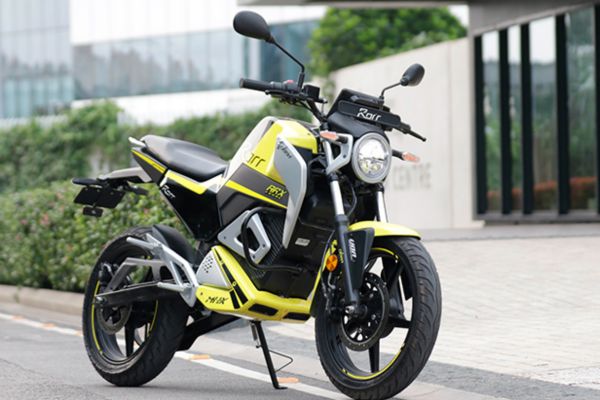
Mohammad Emrul Kayes is not the kind of man who makes impulsive purchases. A Supreme Court lawyer with a polished practice in Dhaka and a car parked in his driveway, he had little obvious reason to walk into a Runner Motors showroom last month. He was not replacing his car. He was not chasing a trend. He was, quite simply, exhausted — exhausted by the ritual humiliation of queuing for petrol in a city that had run headlong into the geopolitical consequences of a war being fought three thousand miles away.
“For me, it was about solving everyday hassles I face while buying fuel,” Kayes explained after making his purchase — a Runner-distributed Yadea e-bike, priced well above the average Dhaka commuter’s budget. “The e-bike changed that. It’s quick, simple, and stress-free.” His frustration is shared by millions: since US-Israeli airstrikes on Iran began on February 28, 2026, triggering Tehran’s closure of the Strait of Hormuz and what the International Energy Agency has called the “greatest global energy security challenge in history”, Bangladesh’s already fragile fuel supply chain has buckled under the weight of a 2-litre rationing limit, long queues at petrol stations, and spiralling prices.
What followed was not a policy announcement or a government initiative. It was a marketplace revolt — quiet, swift, and profoundly revealing. Fuel crisis drives e-bike demand in Bangladesh in a way that no government subsidy or climate pledge has managed to do in years of trying.
A Sales Surge That Defies the Cycle
The numbers are unambiguous. Monthly e-bike sales in Bangladesh had been growing at a steady 10–15% annually for three years — a respectable, if unspectacular, trajectory for a market dominated by 6.5 million registered fossil-fuel motorcycles. Then March 2026 arrived.
Industry data shows that e-bike sales surged from an average of 800–1,000 units per month to approximately 2,200 units in March alone — a jump of over 100% in a single month. Market insiders project that figure could reach 3,000 units if present conditions persist. In a country where e-bikes account for barely 2–3% of the total motorcycle market, these numbers represent something far more significant than a seasonal blip.
Runner Group, which distributes 12 models of Yadea-branded e-bikes priced between Tk 90,000 and Tk 315,000, has seen demand surge across its entire range. Nazrul Islam, the company’s managing director, did not mince words about the opportunity. “E-bikes offer a clear advantage,” he said, emphasising that households with rooftop solar panels could charge and run EVs for years at minimal cost — a pointed contrast with vehicles dependent on imported petroleum whose supply chains are now hostage to geopolitics.
Walton, Bangladesh’s homegrown electronics giant, reported perhaps the most dramatic spike. “In March, when fuel shortages intensified at refilling stations, demand jumped by as much as 85 percent,” said Md Touhidur Rahman Rad, chief business officer at Walton Digi-Tech Industries Limited. The company’s TAKYON e-bike range — covering seven models — offers 80 to 130 kilometres of range on a single charge, a figure that comfortably covers the daily commute of most Dhaka professionals. Pran-RFL Group, which markets its RYDO brand, reported a 60% sales increase. Kamruzzaman Kamal, the group’s marketing director, stressed the need for a balanced policy framework — noting that high import duties on components raise production costs for local assemblers, even as cheaper finished imports from China create downward pricing pressure.
The Financial Express reported that in some cases, specific models have seen 200–300% growth in sales, with buyers calculating that the annual operating cost of a traditional petrol motorcycle — roughly Tk 50,000 — dwarfs the approximately Tk 4,000 a year in electricity costs for an equivalent e-bike. That is a lifetime cost differential that no amount of marketing could have communicated as effectively as an empty petrol station.
The Geopolitical Fault Line Beneath Dhaka’s Streets
To understand why Bangladesh is so acutely exposed to a conflict beginning at the Strait of Hormuz, one must understand its energy architecture. Bangladesh relies on imports for approximately 95% of its energy needs, making it one of the most import-dependent economies in South Asia. The country has no meaningful strategic petroleum reserve, limited pipeline infrastructure, and a foreign exchange position that was already under strain before Brent crude surged past $100 — then $116 — per barrel.
The World Economic Forum’s analysis of the conflict’s economic architecture is stark: more than 80% of oil and LNG shipped through the Strait of Hormuz in 2024 went to Asian markets. The asymmetry, as the Forum noted, is brutal — the US, which initiated the conflict, imports relatively little oil through Hormuz. Its Asian partners absorb an overwhelming share of the burden. The Asian Development Bank put it plainly: smaller energy-importing economies, including Pakistan, Sri Lanka, and Bangladesh, are likely to experience the strongest macroeconomic effects, with higher oil prices transmitting rapidly into inflation and exchange rate pressures through widening current account deficits.
Bangladesh’s response has been a combination of administrative rationing (the 2-litre fuel limit), university closures, and military deployment to guard oil depots — measures that have prevented the worst, while failing to address the structural vulnerability that made them necessary in the first place. The Council on Foreign Relations noted in March that Bangladesh faces a high likelihood of street protests if shortages persist. Against this backdrop, the turn to e-bikes is not merely a consumer preference — it is an act of economic self-defence.
Bangladesh Is Not Alone: The South Asian EV Pivot
The pattern is visible across the region. Pakistan, grappling with its own acute fuel shortages and Prime Minister Shehbaz Sharif’s emergency austerity measures — a four-day working week, school closures — has seen parallel momentum in its electric two-wheeler segment, driven by a government e-bike scheme that has distributed tens of thousands of units in Punjab province and a population desperate for fuel-independent commuting. Sri Lanka, which navigated a catastrophic fuel crisis in 2022, has sustained elevated e-bike interest ever since, offering a cautionary lesson in what happens when import-dependent nations ignore structural energy vulnerability until it becomes existential.
Bangladesh’s e-bike sales surge in 2026 must be read against this regional backdrop: a South Asia in which geopolitical shock is doing the work that policy nudges failed to accomplish, compressing years of projected EV adoption into a matter of weeks.
The Economics of the Quiet Revolution
There is a tendency, in coverage of EV transitions, to reduce the story to environmental moralism. This is both accurate and incomplete. The Bangladesh electric motorcycle market growth story is, at its core, a story about rational economics — amplified to urgency by a crisis.
Consider the lifecycle arithmetic. A petrol motorcycle in Bangladesh costs approximately Tk 50,000 per year to run, a figure that will rise further as global oil markets remain disrupted. An equivalent e-bike costs around Tk 4,000 annually in electricity — a saving of Tk 46,000 per year, or enough to repay a significant portion of the vehicle’s purchase price within two to three years. For a country where motorcycle financing often carries interest rates of 15–25%, the lower running cost is not merely attractive — it is transformative for household budgets.
Then there is the foreign exchange dimension, which economists in Dhaka have begun to highlight with new urgency. Every litre of petrol that Bangladesh does not import is a dollar of foreign reserves preserved. As the taka faces pressure from a widening current account deficit driven by elevated energy import costs, the macroeconomic case for EV adoption is no longer theoretical. It is measurable, monthly, in the central bank’s reserve figures.
Nazrul Islam of Runner Group was pointing at precisely this when he noted that solar-charged e-bikes could operate for years with minimal cost — the implication being that a household with rooftop solar effectively decouples its mobility costs from global oil markets entirely. Bangladesh’s renewable energy capacity, while still modest as a share of the national grid, is growing — and the prospect of solar-to-EV charging loops represents a genuine structural hedge against future Hormuz-style disruptions.
The key economic advantages of e-bike adoption in Bangladesh’s current context:
- Annual fuel cost reduction of Tk 46,000 per vehicle compared to petrol equivalents
- Foreign exchange savings from reduced petroleum imports at a moment of acute reserve pressure
- Lower maintenance costs: e-bikes have fewer moving parts, no engine oil changes, and simpler servicing requirements
- Range sufficiency: 80–130 km per charge covers the vast majority of urban and peri-urban commutes
- Solar integration potential: rooftop solar can eliminate charging costs for a growing segment of users
Dhaka’s Congestion Problem and the Two-Wheeler Opportunity
Anyone who has spent time in Dhaka understands the city’s particular urban mobility nightmare. With a population density among the highest in the world and a public transit system that has historically struggled to keep pace with demand, the two-wheeler has long been the pragmatic choice for millions of commuters — nimble, affordable, and indifferent to the gridlock that defeats buses and cars alike.
The EV transition in Bangladesh’s fuel shortage context adds a new dimension to this calculus. E-bikes, particularly smaller models in the 80–100 km range category, are already winning converts among young professionals, women commuters, and gig economy workers for whom fuel cost predictability is as important as purchase price. The Business Standard reported that women riders in particular are drawn to e-bikes for their controlled speeds and ease of use — a demographic shift that could significantly broaden the market’s social base.
For Dhaka specifically, an accelerated e-bike adoption curve offers a triple dividend: lower emissions in a city already choking on vehicular pollution, reduced fuel import dependency at the national level, and potential congestion relief as more nimble, silent two-wheelers replace louder, idling petrol bikes at intersections. None of these benefits is automatic — they require supporting infrastructure — but the demand signal now exists in a way it did not six months ago.
The Policy Gap: From Demand Signal to Structural Shift
Here is where optimism must give way to rigour. The e-bike adoption Dhaka is currently witnessing is crisis-driven — which means it is also potentially reversible. If oil prices stabilise, if Hormuz reopens to normal traffic, if the fuel queues dissolve, a significant portion of the newly converted may drift back to petrol. For the current surge to represent a permanent inflection point rather than a panic purchase, policy must close the gap between market momentum and structural transformation.
[As Bangladesh eyes its 2035 NDC targets], the stakes are high. The country’s Third Nationally Determined Contribution (NDC 3.0) under the Paris Agreement targets a 21.77% reduction in transport sector emissions, with electrification of 30% of passenger cars and 25% of Dhaka buses by 2035, alongside broader goals of 30% EV penetration by 2030. Bangladesh’s NDC 3.0, available via the UNFCCC, represents an ambitious architecture — but one that is currently being undermined by contradictory fiscal policy.
Kamruzzaman Kamal of Pran-RFL identified the central tension precisely: high import duties on e-bike components raise costs for local assemblers, while cheaper, fully-built Chinese imports undercut their pricing. The result is a market dominated by Chinese brands — Yadea and Revoo together account for a large majority of sales — with limited domestic value addition. Imports from China alone are estimated at around Tk 3 billion annually, according to the Financial Express, underscoring Beijing’s growing footprint in Bangladesh’s emerging electric mobility ecosystem.
The critical policy gaps that must be addressed:
- Charging infrastructure: Bangladesh has almost no public EV charging network outside Dhaka. Without it, range anxiety will cap adoption at urban elites with home charging access.
- Import duty rationalisation: Current duties on components disadvantage local assembly, while inconsistent treatment of fully-built units creates market distortion.
- Manufacturing policy: There is currently no dedicated manufacturing policy for e-bikes, discouraging deeper domestic value addition.
- Battery standards: The transition from lead-acid to lithium-ion batteries — mandated from December 2025 — requires quality certification frameworks that remain underdeveloped.
- Solid-state battery readiness: As Chinese manufacturers begin commercialising next-generation solid-state batteries with 200+ km ranges and faster charging, Bangladesh’s regulatory framework needs to anticipate rather than react.
- Financing access: Motorcycle loans remain classified as high-risk by most Bangladeshi banks, limiting e-bike adoption among gig workers and lower-income commuters who would benefit most.
The Chinese Technology Dimension
It would be incomplete to analyse Bangladesh’s electric bike Bangladesh fuel crisis moment without acknowledging the role of Chinese manufacturing in making it possible. The dramatic fall in lithium-ion battery costs over the past decade — driven overwhelmingly by Chinese industrial policy — has brought e-bike prices into range for a much broader segment of Bangladeshi consumers than was conceivable five years ago.
Runner’s Yadea partnership, Walton’s TAKYON range drawing on Chinese component supply chains, and the broader ecosystem of 30-odd importers operating in the market all depend on this foundation. The Financial Express noted that with improved battery technologies, some models now offer ranges up to 200 km — a specification that, even recently, would have seemed implausibly ambitious for a Bangladeshi-priced product.
This Chinese technology dependence is a double-edged dynamic. On one side, it has democratised e-bike access in ways that pure domestic innovation could not have achieved at this speed. On the other, it creates supply chain vulnerability — particularly significant given that China has moved to restrict petroleum product exports in response to the same Hormuz crisis, according to the Atlantic Council, and its broader geopolitical posture toward Southeast and South Asia is far from predictable.
For Bangladesh, the strategic implication is clear: use the current demand surge as an industrial policy moment. The window exists to move from pure import dependency toward CKD assembly and, ultimately, toward genuine domestic manufacturing in batteries, motors, and controllers — the components that define an EV’s value chain. RFL Group’s existing capacity of 5,000 units per month is a starting point, not a ceiling.
Lessons for the Global South
Bangladesh’s experience in March 2026 offers an unusually clean natural experiment for development economists and energy policy analysts: what happens when a geopolitical shock removes fuel availability as a given, and the consumer market is given a working alternative?
The answer, at least in Dhaka’s preliminary data, is that adoption accelerates far faster than most supply-side projections anticipated. This has implications well beyond Bangladesh. Nigeria, Pakistan, Egypt, Sri Lanka, the Philippines — each a large, import-dependent, two-wheeler-dominant economy with nascent EV markets — are watching a version of their own potential future play out on Dhaka’s streets.
The World Bank’s work on sustainable transport in developing economies has long noted that the combination of high fuel import costs, urban congestion, and growing middle-class mobility demand creates a structural opening for electric two-wheelers in emerging markets. What Bangladesh’s 2026 moment demonstrates is that the demand, when activated by a sufficiently acute shock, exists and is real — the binding constraint is on the supply and policy side, not the consumer side.
For international investors, the Bangladesh electric motorcycle market growth trajectory — from 700 monthly units in 2024 to a potential 3,000 by mid-2026, against a backdrop of 6.5 million registered petrol motorcycles — represents an addressable market in the early stages of a structural shift. The e-bike sales surge Bangladesh 2026 has generated is, in this reading, not a crisis anomaly but an early disclosure of a durable trend.
The Road Ahead: From Panic to Policy
Mohammad Emrul Kayes’s e-bike sits in his driveway alongside his car, a quiet symbol of something larger than personal convenience. He did not abandon the internal combustion engine out of idealism. He made a rational calculation under conditions of scarcity — and in doing so, joined tens of thousands of Bangladeshis who are collectively, and largely unremarked, rewriting the economics of urban mobility in one of the world’s most densely populated countries.
The fuel crisis that drove him to that showroom will, at some point, ease. Iranian-Hormuz diplomacy may eventually restore something like normal shipping flows; oil prices at $116 per barrel cannot persist indefinitely without demand destruction and supply response. But the habits formed in a crisis have a way of outlasting the crisis itself. The household that has experienced Tk 4,000 annual running costs will not easily return to Tk 50,000. The commuter who has navigated Dhaka traffic in the silence of an electric motor will not easily miss the noise and the queue.
Bangladesh’s policymakers have, for the first time in years, a genuine demand signal to build upon. The EV transition Bangladesh’s fuel shortage has catalysed is not a gift — it is a window. It will close if charging infrastructure remains absent, if import duties remain incoherent, if manufacturing policy continues to lag. But it is open now, briefly and powerfully, in a way it has never been before.
The question is not whether Bangladesh’s streets will electrify. The question is whether Bangladesh’s policymakers will be nimble enough to turn a panic purchase into a permanent pivot — and whether Dhaka will emerge from this crisis as a model for the rest of the Global South, or as a cautionary tale about the cost of hesitation.
The e-bikes are already on the road. The policy needs to catch up.
Key Recommendations for Bangladesh’s EV Transition
For policymakers:
- Establish a national public EV charging network in Dhaka within 18 months, with clear targets for expansion to divisional cities by 2028.
- Rationalise import duty structure to distinguish between CKD (parts) and CBU (finished) imports, with a clear road map favouring domestic assembly.
- Issue a dedicated e-bike manufacturing policy with investment incentives for battery and motor production.
- Create a dedicated motorcycle loan facility through state banks, targeting gig workers and low-income commuters.
For industry:
- Accelerate investment in after-sales service networks outside Dhaka — the market’s next frontier.
- Prioritise partnerships with solar home system providers to enable solar-to-EV charging loops for rural and peri-urban users.
- Engage NBR proactively on battery certification standards to prevent the 2025 lead-acid phase-out from creating a compliance vacuum.
For international partners:
- The World Bank, ADB, and bilateral development finance institutions should treat Bangladesh’s current e-bike momentum as a leverage moment for green transport financing.
- Climate finance under Bangladesh’s NDC 3.0 conditional targets should explicitly include charging infrastructure and domestic battery manufacturing as eligible categories.


Asia
BYD’s Ambitious 24% Export Growth Target for 2026: Can New Models and Global Showrooms Defy a Slowing China EV Market?
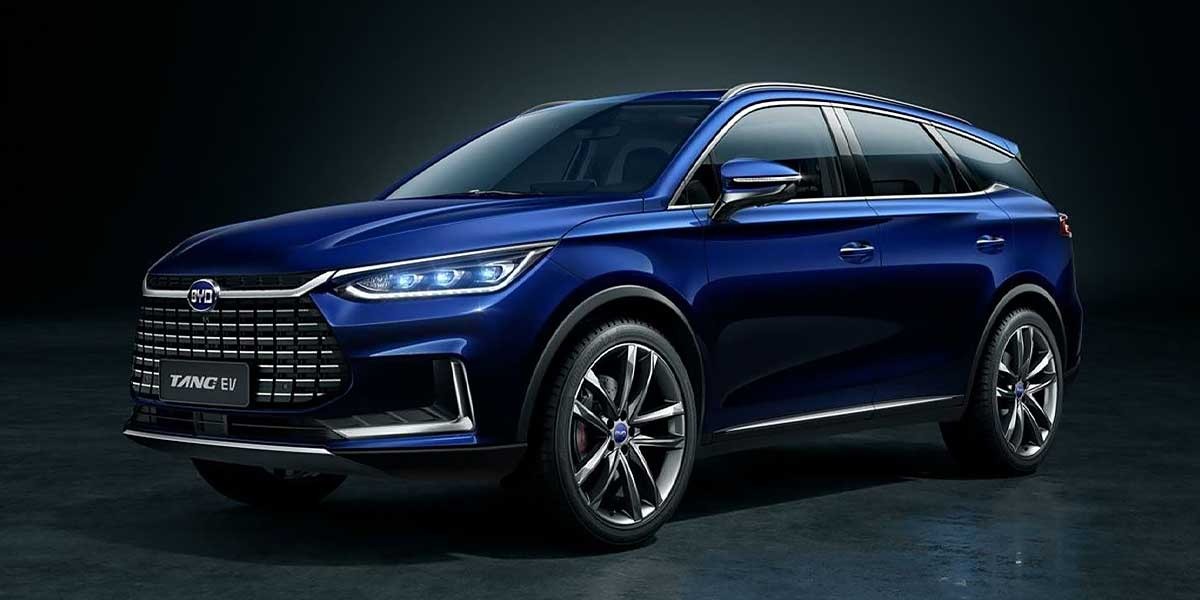
BYD’s auditorium at Shenzhen headquarters that crystallizes the strategic pivot of the world’s largest electric vehicle maker: 1.3 million. This is BYD’s target for overseas sales in 2026, a 24.3% jump from the previous year, as announced by branding chief Li Yunfei in a January media briefing. This figure is more than a goal; it is a declaration. With China’s domestic EV market showing unmistakable signs of saturation and ferocious price wars eroding margins, BYD’s relentless growth engine now depends on its ability to replicate its monumental domestic success on foreign shores. The question echoing through global automotive boardrooms is whether its expanded lineup—including the premium Denza brand—and a rapidly unfurling network of international showrooms can overcome rising geopolitical headwinds and entrenched competition.
The Meteoric Ascent: How BYD Built a Colossus
To understand the magnitude of the 2026 export target, one must first appreciate the velocity of BYD’s ascent. The company, which began as a battery manufacturer, has executed one of the most stunning industrial transformations of the 21st century. In 2025, BYD sold approximately 4.6 million New Energy Vehicles (NEVs), cementing its position as the undisputed volume leader. Crucially, within that figure lay a milestone that shifted the global order: ~2.26 million Battery Electric Vehicles (BEVs), officially surpassing Tesla’s global deliveries and seizing the BEV crown Reuters.
The foundation of this dominance is vertical integration. BYD controls its own battery supply (the acclaimed Blade Battery), semiconductors, and even mines key raw materials. This mastery over the supply chain provided a critical buffer during global disruptions and allows for aggressive cost control. However, the domestic market that fueled this rise is changing. After years of hyper-growth, supported by generous government subsidies, China’s EV adoption curve is maturing. The result is an intensely competitive landscape where over 100 brands are locked in a profit-eroding price war Bloomberg.
BYD’s 2026 Export Blueprint: From 1.05 Million to 1.3 Million
BYD’s overseas strategy is not a tentative experiment but a full-scale offensive, backed by precise tactical moves. The 2025 export base of approximately 1.04-1.05 million vehicles—representing a staggering 145-200% year-on-year surge—provides a formidable launchpad. The 2026 plan, aiming for 1.3 million units, is built on two articulated pillars: product diversification and network densification.
1. New Models and the Premium Denza Push: Li Yunfei explicitly stated the launch of “more new models in some lucrative markets,” which will include Denza-branded vehicles. Denza, BYD’s joint venture with Mercedes-Benz, represents its attack on the premium segment. Launching models like the Denza N9 SUV in Europe and other high-margin markets is a direct challenge to German OEMs and Tesla’s Model X. This move upmarket is essential for improving brand perception and profitability beyond the volume-oriented Seal and Atto 3 (known as Yuan Plus in China) Financial Times.
2. Dealer Network Expansion: The brute-force expansion of physical presence is key. BYD is moving beyond reliance on importers to establishing dedicated dealerships and partnerships with large, reputable auto retail groups in key regions. This provides localized customer service, builds brand trust, and significantly increases touchpoints for consumers. In 2025 alone, BYD expanded its European dealer network by over 40% CNBC.
The Domestic Imperative: Why Overseas Growth is Non-Negotiable
BYD’s export push is as much about necessity as ambition. The Chinese market, while still the world’s largest, is entering a new phase.
- Market Saturation in Major Cities: First-tier cities are approaching saturation points for NEV penetration, pushing growth into lower-tier cities and rural areas where consumer appetite and charging infrastructure are less developed.
- The Relentless Price War: With legacy automakers like Volkswagen and GM fighting for share and nimble startups like Nio and Xpeng launching competitive models, discounting has become endemic. This pressures margins for all players, even the cost-leading BYD The Wall Street Journal.
- Plateauing Growth Rates: After years of doubling, NEV sales growth in China is expected to slow to the 20-30% range in 2026, a dramatic deceleration from the breakneck pace of the early 2020s.
Consequently, overseas markets—with their higher average selling prices and less crowded competition—represent the most viable path for maintaining BYD’s growth trajectory and satisfying investor expectations.
The Global Chessboard: BYD vs. Tesla and the Chinese Cohort
BYD’s international expansion does not occur in a vacuum. It faces a multi-front competitive battle.
vs. Tesla: The rivalry is now global. While BYD surpassed Tesla in BEV volumes in 2025, Tesla retains significant advantages in brand cachet, software (FSD), and supercharging network density in critical markets like North America and Europe. Tesla’s response, including its own cheaper next-generation model, will test BYD’s value proposition abroad The Economist.
vs. Chinese Export Rivals: BYD is not the only Chinese automaker looking overseas. A look at 2025 export volumes reveals a cohort in hot pursuit:
- SAIC Motor (MG): The historic leader in Chinese EV exports, leveraging the MG brand’s European heritage.
- Chery: Aggressive in Russia, Latin America, and emerging markets.
- Geely (Zeekr, Polestar, Volvo): A sophisticated multi-brand approach targeting premium segments globally.
While BYD currently leads in total NEV exports, its rivals are carving out strong regional niches, making global growth a contested space Reuters.
Geopolitical Speed Bumps and Localization as the Antidote
The single greatest risk to BYD’s 2026 export target is not competition, but politics. Tariffs have become the primary tool for Western governments seeking to shield their auto industries.
- European Union: Provisional tariffs on Chinese EVs, varying by manufacturer based on cooperation with the EU’s investigation, add significant cost. BYD’s rate, while lower than some rivals, still impacts pricing.
- United States: The 100% tariff on Chinese EVs effectively locks BYD out of the world’s second-largest car market for the foreseeable future.
BYD’s counter-strategy is localization. By building vehicles where they are sold, it can circumvent tariffs, create local jobs, and soften its political image. Its global factory footprint is expanding rapidly:
- Thailand: A new plant operational in 2024, making it a hub for ASEAN right-hand-drive markets.
- Hungary: A strategically chosen factory within the EU, set to come online in 2025-2026, to supply the European market tariff-free.
- Brazil: A major complex announced, targeting Latin America and leveraging regional trade agreements.
This “build locally” strategy requires massive capital expenditure but is essential for sustainable long-term growth in protected markets Bloomberg.
Risks and the Road Ahead: Brand, Quality, and Culture
Beyond tariffs, BYD faces subtler challenges. Brand perception in mature markets remains a work in progress; shifting from being seen as a “cheap Chinese import” to a trusted, desirable marque takes time and consistent quality. While its cars score well on initial quality surveys, long-term reliability and durability data in diverse climates is still being accumulated.
Furthermore, managing a truly global workforce, supply chain, and product portfolio tailored to regional tastes (e.g., European preferences for stiffer suspension and different infotainment systems) is a complex operational leap from being a predominantly domestic champion.
Conclusion: A Calculated Gamble on a Global Stage
BYD’s 24% export growth target for 2026 is ambitious yet calculated. It is underpinned by a formidable cost structure, a rapidly diversifying product portfolio, and a pragmatic shift to local production. The slowing domestic market leaves it little choice but to pursue this path aggressively.
The coming year will be a critical test of whether its engineering prowess and operational efficiency can translate into brand strength and customer loyalty across cultures. Success is not guaranteed—geopolitical friction is increasing, and competitors are not standing still. However, BYD has repeatedly defied expectations. Its 2026 export campaign is more than a sales target; it is the next chapter in the most consequential story in the global automotive industry this decade—the determined rise of Chinese automakers from domestic leaders to dominant global players. The world’s roads are about to become the proving ground.

Fuel Crisis Ignites E-Bike Revolution in Bangladesh: How Geopolitical Shock Is Reshaping Dhaka’s Streets and the Future of Mobility

Meta’s First AI Model Since Zuckerberg’s $100-Billion+ Spending Spree: A Turning Point or Expensive Echo?

KSE-100 Plunges Amid Geopolitical Firestorm — But Islamabad Holds the World’s Attention

Top 15 Stocks for Investment in 2026 in PSX: Your Complete Guide to Pakistan’s Best Investment Opportunities
Top 15 Stocks for Investment in 2026 in PSX: Your Complete Guide to Pakistan’s Best Investment Opportunities

Debunking IMF Program Myths: Reconfiguring Engagement for True National Ownership in a Volatile World
-
 Markets & Finance3 months ago
Top 15 Stocks for Investment in 2026 in PSX: Your Complete Guide to Pakistan’s Best Investment Opportunities
-
Markets & Finance3 months ago
Top 15 Stocks for Investment in 2026 in PSX: Your Complete Guide to Pakistan’s Best Investment Opportunities
-
 Analysis2 months ago
Debunking IMF Program Myths: Reconfiguring Engagement for True National Ownership in a Volatile World
-

 Global Economy3 months ago
What the U.S. Attack on Venezuela Could Mean for Oil and Canadian Crude Exports: The Economic Impact
-

 Investment3 months ago
Top 10 Mutual Fund Managers in Pakistan for Investment in 2026: A Comprehensive Guide for Optimal Returns
-

 Asia3 months ago
China’s 50% Domestic Equipment Rule: The Semiconductor Mandate Reshaping Global Tech
-

 AI4 months ago
15 Most Lucrative Sectors for Investment in Pakistan: A 2025 Data-Driven Analysis
-

 Exports4 months ago
Pakistan’s Export Goldmine: 10 Game-Changing Markets Where Pakistani Businesses Are Winning Big in 2025