
Analysis
Indonesia’s Nickel Quota Slash Sparks Price Surge at World’s Largest Mine

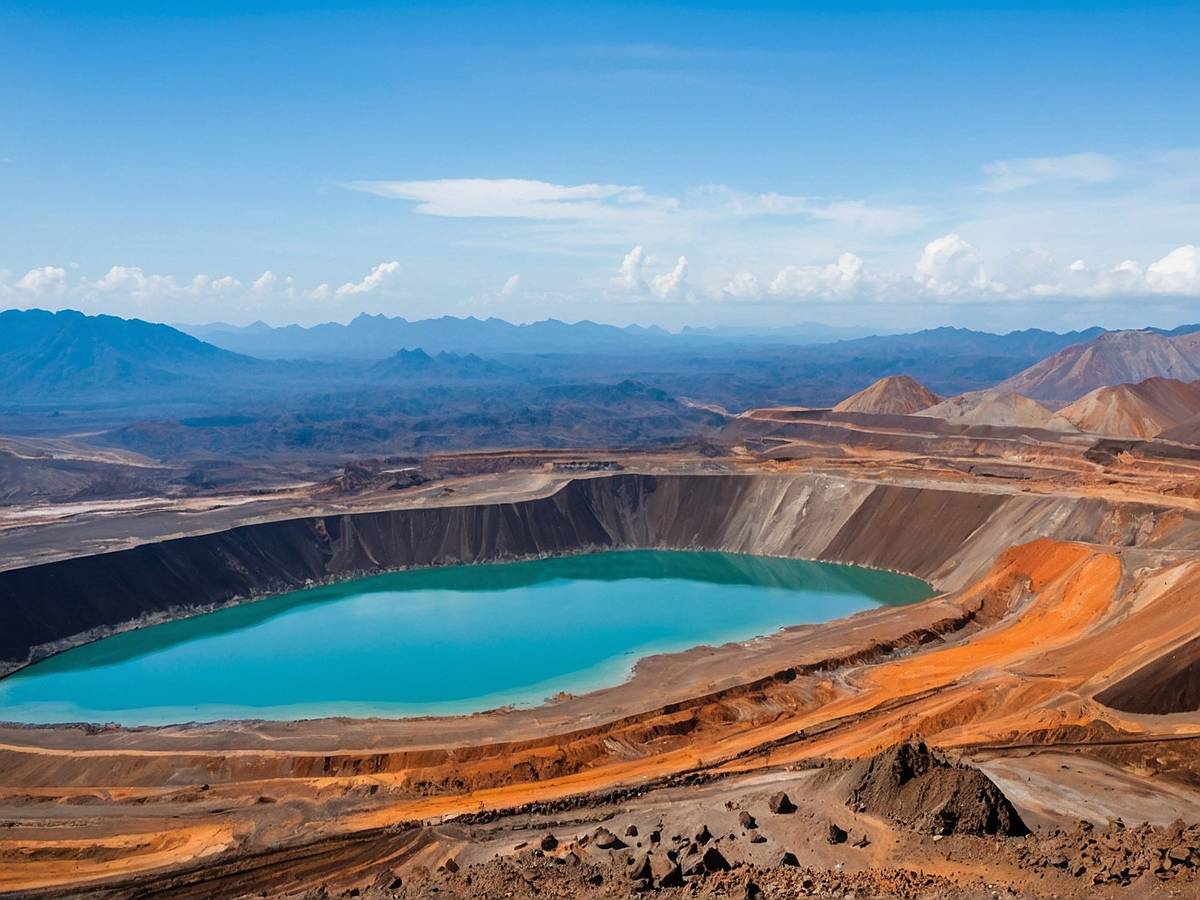
South-East Asian Giant Cuts Production Permits by Nearly One-Third in Strategic Bid to Reshape Global Battery Metal Markets
The London Metal Exchange witnessed a sharp rally in nickel prices on Tuesday as Indonesia—which commands roughly 60% of global nickel production—unveiled dramatic production cuts at the world’s largest nickel mine, sending ripples through industries from electric vehicles to stainless steel manufacturing. The move marks Jakarta’s most aggressive intervention yet in commodities markets as it seeks to arrest a two-year price slump that has challenged the profitability of its vast mining sector.
PT Weda Bay Nickel, the sprawling open-pit operation on Halmahera Island jointly owned by France’s Eramet and China’s Tsingshan Holding Group, received notification from Indonesian authorities to slash its 2026 production quota to just 12 million wet metric tonnes—a stunning 71% reduction from the 42 million tonnes permitted in 2025, according to Eramet’s official statement. The decision sent three-month nickel futures climbing 2.2% to $17,880 per tonne, briefly touching $17,980—the highest level since late January, Bloomberg reported.
The Quota Cut: What Happened?
The quota reduction at Weda Bay forms part of a broader national clampdown on nickel extraction. Indonesia’s Energy and Mineral Resources Ministry has approved total nickel ore production quotas (known locally as RKAB permits) of between 260 million and 270 million tonnes for 2026, down sharply from 379 million tonnes authorized in 2025—representing a cut of approximately 30%, according to Director General of Minerals and Coal Tri Winarno.
This stands in stark contrast to market realities: Indonesian smelters are projected to require between 330 million and 350 million tonnes of ore in 2026 to maintain current operations, creating a shortfall of up to 90 million tonnes. The mismatch has already triggered speculation about potential ore imports from the Philippines and production adjustments across Indonesia’s sprawling industrial parks.
For Weda Bay specifically, the implications are severe. The mine had been planning to expand output to more than 60 million tonnes to support the adjacent Indonesia Weda Bay Industrial Park (IWIP), where dozens of smelters transform raw ore into nickel pig iron, matte, and battery-grade materials. Eramet indicated it would “apply as early as possible for a revision of this production quota to a higher volume,” noting that installed smelter capacity at IWIP exceeds 100 million tonnes annually.
Market Reaction and Price Jump
The market’s response was immediate and forceful. Nickel prices extended gains for a fourth consecutive session, building on a rally that has seen prices climb more than 20% since mid-December. On Shanghai’s futures exchange, nickel surged over 4% as Asian trading opened, according to industry analysts.
Yet the euphoria may prove fleeting. Structural oversupply remains the dominant theme in nickel markets. London Metal Exchange warehouse inventories have ballooned to over 254,000 metric tonnes—the highest level in more than four years—as Indonesian production growth has far outpaced global demand. ING commodities strategist Ewa Manthey forecasts the global nickel market will remain in surplus by approximately 261,000 tonnes in 2026, following a 209,000-tonne surplus in 2025.
“The global market is still forecast to remain in surplus,” Manthey noted in a recent analysis, projecting an average nickel price of just $15,250 per tonne for 2026—well below current trading levels. The analyst emphasized that without large-scale, coordinated supply cuts or unexpectedly robust demand recovery, elevated prices are unlikely to hold.
Global Ramifications for Industries
The quota cuts arrive at a precarious moment for two critical industries that together consume virtually all refined nickel: stainless steel production (accounting for over 60% of demand) and electric vehicle batteries.
Stainless Steel Under Pressure: China’s prolonged property market downturn continues to weigh heavily on stainless steel consumption, dampening what has historically been nickel’s largest end-use market. Chinese stainless steel mills have already implemented multiple price adjustments in response to rising nickel input costs, with 304-grade cold-rolled coil prices increasing from ¥12,800-12,900 per tonne in mid-December to ¥13,400-13,500 per tonne by early January, according to commodities data.
EV Battery Sector Headwinds: Perhaps more concerning for long-term nickel bulls is the shifting chemistry landscape in electric vehicle batteries. Contemporary Amperex Technology (CATL) and other leading battery manufacturers have aggressively pivoted toward lithium-iron-phosphate (LFP) batteries, which contain no nickel. In China, the market share of nickel-manganese-cobalt (NMC) batteries fell to just 18% in the first nine months of 2025, down from 25% in 2024, ING research shows.
Recent advances in LFP technology have erased the energy density gap that once favored nickel-rich chemistries, with some LFP-powered vehicles now achieving ranges exceeding 750 kilometers. This technological evolution threatens to structurally reduce nickel demand growth precisely when Indonesia had anticipated surging EV-driven consumption to absorb its expanded production capacity.
Resource Nationalism and Strategic Calculations
Indonesia’s quota reductions reflect a deliberate policy evolution from raw material exporter to value-added processor. Since implementing a raw nickel ore export ban in 2020, Jakarta has attracted billions in foreign investment—primarily from China—to build out domestic smelting and refining capacity. The country now hosts dozens of rotary kiln electric furnaces (RKEF) producing nickel pig iron and an expanding fleet of high-pressure acid leach (HPAL) plants capable of producing battery-grade nickel.
Yet this rapid industrial expansion has come at considerable cost. Environmental concerns have mounted over coal-fired power plants supporting nickel smelters, deforestation from open-pit mining, and toxic waste management challenges inherent to HPAL processing. Government crackdowns on environmental and safety violations resulted in the temporary seizure of portions of Weda Bay in September 2025 and the suspension of 190 mining permits nationwide.
The quota cuts also serve a more immediate objective: preserving Indonesia’s nickel reserves. According to the Ministry of Energy and Mineral Resources, average nickel ore grades have declined sharply from approximately 1.66% in 2024 to around 1.57% currently—a significant deterioration that reflects accelerated mining of higher-grade resources. By constraining output now, Indonesian authorities aim to extend the productive life of the country’s laterite nickel deposits.
“Indonesia is now using permits and quotas as a direct market lever,” observed The Oregon Group, a critical minerals intelligence firm. “For investors, that raises the upside to any sustained tightening—and the policy risk that quotas can be revised again.”
Expert Analysis and Future Outlook
Market participants remain deeply divided on whether Indonesia’s quota gambit will succeed in sustainably lifting nickel prices or merely create temporary market disruptions before the structural surplus reasserts itself.
Bears point to Indonesia’s track record of adjusting quotas mid-year when economic pressures mount. The country’s RKAB system includes revision mechanisms that could allow approved quotas to expand if domestic smelters face genuine supply constraints. Moreover, several analysts note that actual Indonesian nickel ore production in 2025 totaled approximately 265 million tonnes—well below the approved 326 million tonne quota—suggesting that official limits may not translate directly into realized output reductions.
Bulls counter that Indonesia’s shifting priorities toward resource conservation and downstream value-addition represent a genuine policy inflection point. The government has already stopped approving new industrial permits for nickel pig iron and other intermediate products unless applicants commit to further processing into battery-grade materials. Tax holidays for RKEF smelters producing ferronickel are being revoked as Jakarta refocuses incentives on higher-value battery components.
Geopolitical factors add further complexity. Russia supplies roughly 20% of Class 1 nickel globally, but sanctions risk and supply chain diversification efforts could eventually constrain availability. Meanwhile, Western producers in Canada and Australia are developing lower-carbon, sulphide-based nickel projects specifically targeted at automakers seeking supply chain independence from Indonesia-China dominance.
What Lies Ahead
The coming months will test whether Indonesia can successfully orchestrate a sustained price recovery in the face of persistent oversupply and evolving demand dynamics. Eramet’s immediate plans to seek quota revisions underscore the tensions between government policy objectives and industrial realities on the ground. If Jakarta stands firm on reduced quotas while domestic smelter demand continues growing, ore imports from the Philippines—whose DMCI Mining Corporation posted record output in 2025—could increase substantially.
For industries dependent on stable nickel supply, the message is clear: Indonesia’s role as both dominant producer and active market manager introduces a new layer of volatility and strategic uncertainty into commodity planning. Electric vehicle manufacturers and stainless steel producers alike must now navigate not only fundamental supply-demand dynamics but also the unpredictable policy interventions of a resource-nationalist government determined to extract maximum value from its mineral endowments.
As nickel prices hover near 15-month highs, the question facing traders and industrial consumers is whether this represents a genuine tightening or merely another chapter in Indonesia’s complex experiment with market manipulation—one that could unravel as quickly as it emerged.
Market participants should monitor upcoming RKAB quota revisions and Indonesian government announcements for potential supply adjustments. Current nickel pricing reflects significant speculative positioning that may not be sustainable without fundamental demand improvements.



The New Risk Frontier of Digital Exports
As software, AI models, digital media, and cross-border SaaS platforms dominate global trade, traditional commercial property and casualty insurance is no longer sufficient. Digital exporters face complex liabilities ranging from cross-border data privacy breaches and algorithmic bias claims to intellectual property infringement in foreign jurisdictions. In 2026, protecting a borderless digital enterprise requires specialized insurance coverage tailored to intangible asset risks.
Failing to secure robust digital export insurance can expose founders and shareholders to catastrophic lawsuits originating from overseas regulatory bodies.
Essential Coverages for Digital Export Enterprises
Cyber Liability and Algorithmic Error Coverage
If an AI model or software product exported overseas malfunctions or suffers a data breach, foreign regulators can levy severe fines under regional privacy laws. Modern cyber policies cover both regulatory defense costs and third-party damages.
Intellectual Property and Copyright Defense
Digital creators and SaaS firms operating globally are frequent targets of frivolous IP litigation in unfamiliar legal systems. Specialized IP insurance covers the exorbitant legal fees required to defend international patents and copyrights.
| Insurance Policy Type | Primary Protection Area | Target Enterprise | Average Annual Premium |
| Global Cyber Liability | Data breaches, ransomware, AI output errors | SaaS & AI Platforms | $5,000 – $18,000 |
| E&O Professional Liability | Service failures, missed deliverables | Digital Consultancies & Agencies | $3,000 – $10,000 |
| International IP Defense | Foreign copyright & patent lawsuits | Software Developers & Creators | $7,000 – $25,000 |
Securing Comprehensive Coverage: Best Practices
Navigating the insurance market for digital exports requires partnering with specialized brokers who understand intangible asset exposures.
Audit Geographic Exposures: Clearly map where your digital users reside to ensure your policy covers those specific regulatory jurisdictions.
Verify AI Exclusion Clauses: Carefully review policy wording to ensure your generative AI or automated tools are not explicitly excluded from coverage.
Maintain Incident Response Protocols: Insurers offer lower premiums to firms that demonstrate rigorous cybersecurity and data governance standards.
“Risk Management Expert Note: Your software may be intangible, but your liability in foreign markets is entirely real. Comprehensive digital export insurance is the ultimate shield for borderless growth.”
Equipping your digital export enterprise with specialized insurance safeguards your balance sheet and ensures uninterrupted global expansion.

If you’ve followed coverage of Anthropic’s reported IPO preparations, you’ve likely seen a specific phrase repeated across Financial Times and Bloomberg reporting: Morgan Stanley is said to hold the “pole position” for the lead-left role on the offering. It sounds like insider jargon — and it is — but understanding what it actually means reveals a lot about how the largest IPOs in history get priced, sold, and stabilized after they start trading.
Key Takeaways
- “Lead-left” refers to the underwriting bank listed first on the cover page of an IPO prospectus — traditionally positioned on the left side of the page.
- The lead-left bank runs the bookbuilding process, sets the final offer price alongside the issuer, and typically earns the largest share of underwriting fees.
- Morgan Stanley reportedly holds the inside track for this role on Anthropic’s IPO, with Goldman Sachs running “neck-and-neck” for a top-tier co-lead position.
- JPMorgan, Citigroup, and Barclays are expected to round out the broader underwriting syndicate.
- The same three lead banks — Morgan Stanley, Goldman Sachs, JPMorgan — ran the book on the SpaceX IPO in June 2026, the current record holder for largest offering ever.
- For investors, the lead-left bank’s decisions directly shape share allocation, pricing discipline, and after-market stability.
The Origin of the Term (and Why It Still Matters)
The “lead-left” designation dates back to a literal physical convention: on the cover page of a printed IPO prospectus, underwriting banks are listed in order of importance, with the most senior bank’s name and logo positioned on the far left. Over decades, “lead-left” became shorthand for the bank running point on the entire transaction — even as prospectuses moved from print to digital filings.
Today, being lead-left signals to the market that a bank has taken primary responsibility for:
- Bookbuilding — soliciting and aggregating orders from institutional investors during the roadshow
- Price discovery — synthesizing investor demand into a final offer price recommendation for the issuer’s board
- Fee allocation — typically claiming the largest cut of the total underwriting discount, often in the 20–40% range of total fees depending on syndicate structure
- Stabilization — managing after-market trading support, including exercising the “greenshoe” over-allotment option to buy back shares if the stock trades below the offer price shortly after listing
Why the Role Matters More in a Deal This Size
For a conventional mid-sized IPO, the lead-left designation is largely an internal Wall Street prestige marker. For a deal of Anthropic’s reported scale — targeting a valuation near $2 trillion, which would rival or exceed SpaceX’s record-setting June 2026 debut — the stakes are dramatically higher.
A misjudged offer price on a deal this large can produce two very different bad outcomes:
- Underpricing: If shares are priced too conservatively relative to demand, the company leaves substantial capital on the table, and early flippers capture gains that could have gone to the company’s own balance sheet.
- Overpricing: If shares are priced too aggressively, the stock can “break issue” — trading below its offer price shortly after listing — which damages investor confidence and can make it harder for the company to raise capital in follow-on offerings.
SpaceX’s own trajectory illustrates this tension well: shares priced at $135, reaching a first-day peak near a $2.1 trillion market cap, before settling into a range closer to $1.5 trillion by late July. Managing that kind of post-listing volatility responsibly falls disproportionately on the lead-left bank’s trading desk.
Morgan Stanley vs. Goldman Sachs: Why Both Are in the Running
Reporting indicates Morgan Stanley and Goldman Sachs are “running neck-and-neck” for top billing on Anthropic’s deal — a genuinely competitive situation rather than a formality. Both banks bring distinct strengths:
| Factor | Morgan Stanley | Goldman Sachs |
|---|---|---|
| Prior AI-sector IPO experience | Co-led SpaceX (June 2026) | Co-led SpaceX (June 2026) |
| Institutional distribution network | Extensive global wealth management arm | Deep institutional and sovereign wealth relationships |
| Existing Anthropic relationship | Reported prior debt financing role | Reported prior debt financing role |
| Technology sector banking franchise | Historically strong in large-cap tech | Historically strong in large-cap tech and growth equity |
In practice, mega-deals of this size increasingly use joint lead-left structures or closely shared top billing, which allows the issuer to tap both banks’ distribution networks without fully subordinating either one — a structure that may ultimately be how Anthropic’s deal resolves this specific competitive tension.
How This Connects to Anthropic’s Debt Financing
It’s not coincidental that the banks reportedly competing for Anthropic’s lead underwriting roles are the same institutions that previously provided the company debt financing, and are now reportedly structuring a $15 billion pre-IPO credit facility. This dual relationship gives whichever bank secures lead-left status unusually deep, pre-existing visibility into Anthropic’s financial position — audited or not — heading into the roadshow.
What Retail Investors Should Take Away From the Lead-Left Story
- It’s a signal of seriousness, not a valuation guarantee. A bank agreeing to lead a deal at a reported $2 trillion target valuation suggests institutional confidence in achievable demand — it does not certify that the price is fundamentally justified.
- It affects share allocation indirectly. Retail brokerage partnerships for IPO share access are often negotiated through relationships with the lead-left and co-lead banks, meaning which banks lead the deal can shape (modestly) which retail platforms get any allocation at all.
- It affects after-market behavior. The lead-left bank’s stabilization activity in the days following listing can meaningfully dampen (or fail to dampen) early volatility — worth watching closely if you plan to trade in the first week after listing rather than the IPO itself.
FAQ
What does “lead-left” mean in an IPO?
It refers to the underwriting bank listed first — traditionally on the left side — of an IPO prospectus cover page, signifying the bank with primary responsibility for pricing, bookbuilding, and after-market stabilization.
Is Morgan Stanley confirmed as Anthropic’s lead-left bank?
Not yet confirmed. Reporting from the Financial Times indicates Morgan Stanley holds the “pole position” for the role, with Goldman Sachs running closely for a top-tier position, but no final syndicate structure has been publicly confirmed by Anthropic.
Do lead-left banks make more money than other underwriters?
Generally yes. The lead-left bank typically receives the largest share of the total underwriting fee pool, reflecting its greater responsibility and risk in the bookbuilding and pricing process.
Does the lead-left bank guarantee a successful IPO?
No. A strong lead-left bank improves the odds of an orderly process and pricing discipline, but cannot guarantee post-listing stock performance, as SpaceX’s own valuation compression after its June 2026 debut illustrates.
The SPDR S&P 500 ETF Trust (SPY) enters September 2026 trading around 7–14% above GuruFocus’s proprietary GF Value intrinsic-value estimate, depending on the week’s model inputs, with the index near record highs after an roughly 11–12% year-to-date gain. Unlike the rate-cut narrative that dominated markets earlier in the summer, the 10-year Treasury’s climb to 4.80% and hawkish Federal Reserve commentary now point toward markets pricing meaningful odds of a rate hike, not a cut, at this month’s FOMC meeting — a reversal that changes the valuation math for equities.
SPY Valuation Snapshot: Late August Into September 2026
| Date | SPY Price | GF Value™ (Intrinsic) | Overvaluation | GF Score™ | S&P 500 Level |
|---|---|---|---|---|---|
| Aug 6, 2026 | $768.31 | $685.35 | 12.1% | 85/100 | ~7,705 |
| Aug 10, 2026 | $773.26 | $702.96 | 10.0% | 86/100 | — |
| Aug 11, 2026 | $772.84 | $702.96 | 9.9% | 86/100 | — |
| Aug 17, 2026 | $776.34 | $705.76 | 10.0% | 86/100 | — |
| Aug 18, 2026 | $767.87 | $705.76 | 8.8% | 86/100 | — |
| Aug 19, 2026 | $769.45 | $705.76 | 9.0% | 86/100 | — |
| Aug 20, 2026 | $769.06 | $705.76 | 9.0% | 86/100 | — |
| Aug 25, 2026 | $765.67 | $715.63 | 7.0% | 86/100 | 7,665 (+11.4% YTD) |
| Aug 30, 2026 | $769.35 | $674.87 | 14.0% | 86/100 | — |
Note: GF Value estimates shift week to week as GuruFocus’s model incorporates new earnings, growth, and macro data — the fluctuation itself (from 7.0% to 14.0% overvalued within a single month) is a useful reminder that any single-day valuation snapshot is a moving target, not a fixed verdict.
| Rate/Bond Metric | Level (Sept 1, 2026) |
|---|---|
| 10-Year Treasury yield | 4.80% (highest since January 2025) |
| 30-Year Treasury yield | 5.28% |
| 2-Year Treasury yield | 4.39% |
| Market-implied odds of a Fed rate hike this month | ~68%, up from ~40% the prior week |
| SPY trailing P/E (TTM) | ~23.7x |
Sources: GuruFocus GF Value daily/weekly valuation notes (Aug 6–30, 2026); TradingEconomics, MacroMicro, and StreetStats Treasury yield data (Sept 1, 2026).
Deep Dive: A Valuation Picture Complicated by a Rate Story That Just Flipped
GF Value Says “Modestly to Meaningfully Overvalued,” But the Range Matters More Than Any Single Print
GuruFocus’s GF Value model — which blends historical trading multiples, business growth trends, and forward performance estimates into a single intrinsic-value estimate — has placed SPY anywhere from roughly 7% to 14% above fair value at various points across August 2026 alone. That’s not model inconsistency so much as it reflects genuinely volatile inputs: intrinsic value estimates move as new earnings data, Treasury yields, and macro releases feed the model, while the market price itself has been chopping in a roughly $765–$777 band.
The consistent signal across every reading, regardless of the exact overvaluation percentage: SPY’s GF Score — a composite of financial strength, profitability, growth, valuation, and momentum — has held steady in the 85–86 out of 100 range throughout the period. In plain terms, the model is saying the same thing every week: fundamentals underneath the index remain genuinely strong (profitability and growth sub-scores of 8/10), but the price paid for those fundamentals leaves a thin-to-negative margin of safety for new money entering at current levels.
The Bigger Story: The Fed Narrative Just Reversed
This is the detail most surface-level coverage of SPY valuation is missing entering September: the market’s rate-path assumption flipped over the course of late August. Earlier in the summer, a weak July jobs report and cooling CPI prints had markets leaning toward the possibility of rate cuts later in the year. By the final week of August, that had reversed. Fed Chair Warsh’s remarks at the Jackson Hole symposium reaffirmed a commitment to bringing inflation down, and Fed Governor Barr followed with comments that the central bank should be prepared to raise rates if inflation does not subside. The market reaction was immediate: odds of a 25-basis-point hike this month jumped from around 40% to roughly 68% within a single week, and the 10-year Treasury yield climbed for five consecutive sessions to reach 4.80% — its highest level since January 2025.
The proximate driver of the inflation concern is oil. Renewed geopolitical tensions have pushed crude prices higher, and rising energy costs are feeding directly into inflation expectations at a moment when the labor market — job openings edged higher in July, layoffs fell, and manufacturing expanded for an eighth straight month in August — is not showing the kind of softness that would normally take a hike off the table.
Why Rising Long-Term Yields Compress Equity Valuation Models
Every discounted-cash-flow-style valuation — including the general category of model GuruFocus’s GF Value falls into — is sensitive to the discount rate applied to future earnings. When the 10-year Treasury yield rises from a level closer to 4.3% (its trailing 12-month average) to a fresh cycle high of 4.80%, the “risk-free” comparison rate against which equity earnings yields are judged rises with it. All else equal, a higher discount rate lowers the intrinsic value estimate for the same stream of future earnings — which is part of why GF Value estimates for SPY have generally trended toward higher overvaluation readings as yields have climbed through August, even as the S&P 500 itself continued grinding higher.
The Seasonal Overlay: September’s Historical Track Record
Independent of valuation or rates, the calendar itself carries a well-documented pattern: the back half of September has historically been the weakest stretch of the trading year for the S&P 500, producing slightly negative average returns more often than any other multi-week period. That seasonal headwind, layered on top of a rate environment that just turned more hawkish and a valuation model flashing high-single to low-double-digit overvaluation, is the combination coverage of SPY heading into September 2026 should actually be weighing — not any single data point in isolation.
What a 23.7x Trailing P/E Actually Tells You
SPY’s trailing twelve-month P/E of approximately 23.7x sits meaningfully above long-run historical averages for the index (commonly cited in the high teens), though comparisons are complicated by the absence of a readily available 5-year median P/E in the underlying data used for this analysis — a data-availability gap GuruFocus itself has flagged in several of its own valuation notes. Investors should treat any single trailing-multiple comparison as one input among several (GF Value, GF Score, rate environment, seasonal pattern) rather than a standalone verdict.
Actionable Takeaways for Investors
- Don’t anchor to a single GF Value overvaluation percentage. The swing from 7.0% to 14.0% overvalued within the same month shows the model is sensitive to short-term inputs; look at the trend and the GF Score (steady at 85–86) together, not one week’s headline number.
- Track the 10-year Treasury yield as a leading valuation signal. A continued climb toward or past 4.80–5.00% would mechanically pressure equity valuation models further; a reversal back toward the 4.30% trailing average would ease that pressure.
- Reassess the “rate cut” assumption baked into your portfolio. If your equity allocation was built assuming Fed easing later in 2026, the shift toward hike odds of ~68% for this month’s meeting is a material change worth revisiting with a financial advisor.
- Respect September seasonality without overreacting to it. Historical weak-September patterns are a real, well-documented statistical tendency, not a guarantee — use it as a reason for disciplined position sizing rather than a market-timing signal on its own.
- Watch oil prices as the connective tissue between geopolitics, inflation, and equity valuation. The current inflation concern feeding into hike odds is substantially an energy-price story; a de-escalation in the geopolitical tensions driving crude higher would likely ease both bond yields and equity valuation pressure simultaneously.
Frequently Asked Questions
Is the S&P 500 overvalued right now? By GuruFocus’s GF Value metric, SPY has traded between roughly 7% and 14% above its estimated intrinsic value at various points across August 2026, with a GF Score of 85–86 out of 100 indicating strong underlying fundamentals despite the valuation premium — the honest answer is “modestly to meaningfully” overvalued depending on which week’s model reading you use, not overvalued by one fixed number.
Will the Federal Reserve raise or cut interest rates in September 2026? As of early September 2026, market pricing has shifted toward pricing in meaningful odds (around 68%) of a rate hike rather than a cut, reversing the rate-cut expectations that dominated earlier in the summer, driven by hawkish Fed commentary at Jackson Hole and rising oil-driven inflation concerns.
Why did the 10-year Treasury yield hit 4.80% in September 2026? The 10-year Treasury yield climbed for five consecutive sessions to reach 4.80% — its highest level since January 2025 — driven by rising oil prices amid renewed geopolitical tensions and hawkish signals from Federal Reserve officials suggesting a rate hike may be needed to control inflation.
How does September seasonality typically affect the S&P 500? Historically, the latter half of September has been the weakest multi-week stretch of the trading year for the S&P 500, often producing slightly negative average returns, though this is a statistical tendency rather than a reliable predictor for any specific year.

Business Insurance for Digital Exports: Protecting Your Company in the AI Era

Real Estate Crash Predictions 2026: Data-Backed Regional Guide

What is a “Lead-Left” Bank? Unpacking Morgan Stanley’s Role in Anthropic’s Mega-IPO

Is SPY Overvalued in September 2026? Fed Rate Hike Odds & Intrinsic Value

Pakistan’s KSE-100 Nears Record Territory Even as the Trade Gap Persists

US Consumer Sentiment Sinks as Retail Sales Drop

Barclays Q2 2026 Results: Income Beats, Costs Rise 7%

Pakistan’s Remittance Lifeline: Why Gulf Exposure Is a Hidden Risk

Dubai’s Rise to the World’s 7th Financial Hub: Inside the D33 Push

China EV Exports Hit Record High in 2026

UK’s “National Contributions Tax” Explained: Burnham-Era Reform 2026

Russia’s Strange Problem in 2026: Its Currency Is Too Strong

Section 301 Forced Labor Tariffs 2026: 60 Countries Affected

UK National Contributions Tax: Burnham’s Radical Tax Plan

Top 15 Stocks for Investment in 2026 in PSX: Your Complete Guide to Pakistan’s Best Investment Opportunities
Top 15 Stocks for Investment in 2026 in PSX: Your Complete Guide to Pakistan’s Best Investment Opportunities

Debunking IMF Program Myths: Reconfiguring Engagement for True National Ownership in a Volatile World

Top 10 Mutual Fund Managers in Pakistan for Investment in 2026: A Comprehensive Guide for Optimal Returns

What the U.S. Attack on Venezuela Could Mean for Oil and Canadian Crude Exports: The Economic Impact

China’s 50% Domestic Equipment Rule: The Semiconductor Mandate Reshaping Global Tech

15 Most Lucrative Sectors for Investment in Pakistan: A 2025 Data-Driven Analysis

Pakistan’s Export Goldmine: 10 Game-Changing Markets Where Pakistani Businesses Are Winning Big in 2025
15 Most Lucrative Sectors for Investment in Pakistan: A 2025 Data-Driven Analysis
15 Most Lucrative Sectors for Investment in Pakistan: A 2025 Data-Driven Analysis

Pakistan’s Stock Market Renaissance: How 2025’s Hottest Investment Opportunity Is Democratizing Wealth—A Complete Beginner’s Guide

Pakistan’s Economic Outlook 2025: Between Stabilization and the Shadow of Stagnation
Pakistan’s Economic Outlook 2025: Between Stabilization and the Shadow of Stagnation

China’s Property Woes Could Last Until 2030—Despite Beijing’s Best Censorship Efforts
-
 Markets & Finance8 months ago
Top 15 Stocks for Investment in 2026 in PSX: Your Complete Guide to Pakistan’s Best Investment Opportunities
-
Markets & Finance8 months ago
Top 15 Stocks for Investment in 2026 in PSX: Your Complete Guide to Pakistan’s Best Investment Opportunities
-
 Analysis7 months ago
Debunking IMF Program Myths: Reconfiguring Engagement for True National Ownership in a Volatile World
-
 Investment8 months ago
Top 10 Mutual Fund Managers in Pakistan for Investment in 2026: A Comprehensive Guide for Optimal Returns
-
 Global Economy8 months ago
What the U.S. Attack on Venezuela Could Mean for Oil and Canadian Crude Exports: The Economic Impact
-
 Asia8 months ago
China’s 50% Domestic Equipment Rule: The Semiconductor Mandate Reshaping Global Tech
-
 AI9 months ago
15 Most Lucrative Sectors for Investment in Pakistan: A 2025 Data-Driven Analysis
-
 Exports9 months ago
Pakistan’s Export Goldmine: 10 Game-Changing Markets Where Pakistani Businesses Are Winning Big in 2025