
Exclusive
Trump’s Greenland Grab Mirrors Putin’s Playbook: The World Order

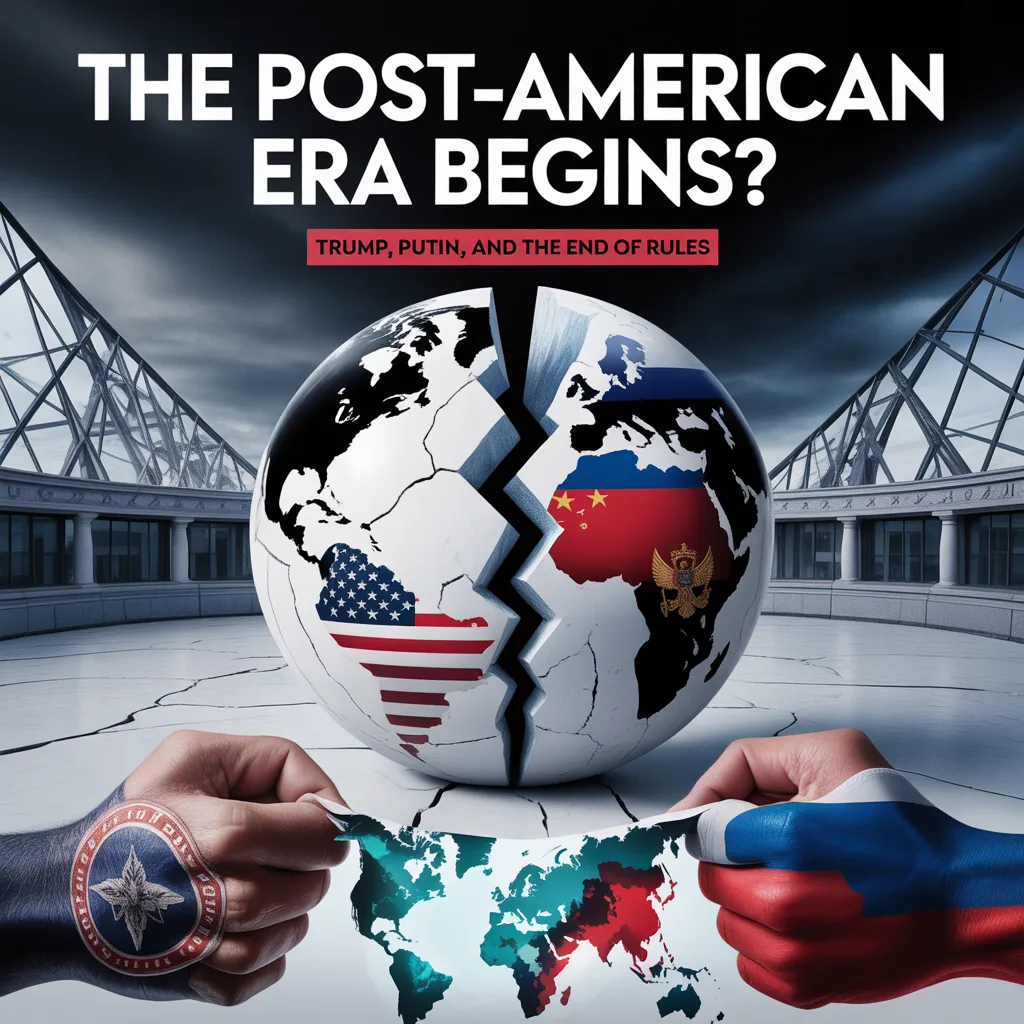
On a crisp January morning in Davos, as global elites gathered for their annual ritual of discussing “collaboration” and “shared prosperity,” Canadian Prime Minister Mark Carney delivered a speech that felt less like diplomacy and more like a eulogy. “We are in the midst of a rupture, not a transition,” he declared, warning that great powers now wield economic integration as weapons and tariffs as leverage. What made Carney’s address so striking wasn’t merely its candor about the death of the rules-based international order—it was the unspoken target of his critique. Though he never mentioned Donald Trump by name, everyone understood: the gravedigger of the post-1945 system isn’t primarily Beijing or Moscow. It’s Washington.
The irony is as sharp as it is unsettling. For eight decades, the United States positioned itself as the architect and guarantor of a liberal international order predicated on sovereignty, multilateral cooperation, and the peaceful resolution of disputes. Today, under Trump’s second administration, America is accelerating that order’s collapse with a ferocity that makes Russia’s revisionism look almost modest by comparison. The evidence is mounting: Trump Greenland national security threats that echo Putin’s Ukraine rationale, withdrawal from 66 international organizations, and an explicit rejection of international law itself. The world’s erstwhile hegemon isn’t pivoting—it’s demolishing its own creation.
Trump Greenland National Security: A Familiar Playbook
In late January 2026, President Trump declared that acquiring Greenland was “imperative for national and world security,” repeatedly refusing to rule out military force to seize the Danish autonomous territory. The White House press secretary confirmed that “utilizing the U.S. Military is always an option” in pursuing what Trump frames as a vital strategic objective. His justification? Greenland’s Arctic position makes it essential to defend against Russian and Chinese encroachment. Never mind that the United States already maintains a significant military presence at Pituffik Space Base under a 1951 agreement with Denmark, or that Denmark is a NATO ally bound by mutual defense commitments. Trump’s push for Greenland represents a territorial ambition dressed in the language of security—a rationale that should sound disturbingly familiar.
When Vladimir Putin ordered Russian forces into Ukraine in February 2022, he invoked strikingly similar logic. He framed the invasion as a preventive war necessitated by NATO expansion and Ukraine’s growing military cooperation with the West, which he characterized as an existential threat to Russian security. Putin claimed he was conducting a “special military operation to protect the people in the Donbas,” portraying Russia’s aggression as defensive action against Western provocations. The parallels to Trump’s Greenland rhetoric are unmistakable: both leaders invoke national security imperatives to justify territorial expansion, both dismiss the sovereignty of smaller nations as subordinate to great-power interests, and both signal willingness to use military force if diplomacy fails to deliver the desired result.

The structural similarity goes deeper than rhetoric. As scholars analyzing Putin’s preventive war logic have noted, Moscow genuinely feared that Ukraine’s westward drift would shift the balance of power irreversibly against Russia. Trump’s national security advisor reportedly framed Greenland in precisely these terms: critical minerals vital for emerging technologies and national security applications, combined with strategic positioning against peer competitors. Both cases reveal how great powers invoke security to legitimize what earlier eras would have simply called conquest. The Trump administration’s approach differs from Putin’s primarily in degree and presentation—Trump at Davos eventually backed away from tariff threats and pledged not to use force, though his broader posture suggests these were tactical retreats rather than strategic shifts.
Post-American Era: Economic Weaponization and the New Reality
Mark Carney’s Davos speech articulated what allies have whispered privately for years: the post-American era has arrived, and it arrived with American complicity. Drawing on Václav Havel’s essay on life under Soviet totalitarianism, Carney argued that middle powers had long placed metaphorical signs in their windows—participating in the rituals of the rules-based order while politely ignoring the gap between American rhetoric and reality. That bargain no longer works because great powers have begun using economic integration as weapons, tariffs as leverage, financial infrastructure as coercion, and supply chains as vulnerabilities to be exploited.
The economic weaponization Carney describes isn’t hypothetical. Trump has threatened 25% tariffs on European goods unless Denmark cedes Greenland, withdrawn from dozens of international organizations, and explicitly stated in a New York Times interview: “I don’t need international law.” These actions represent a systematic dismantling of the institutional architecture that Washington itself constructed after 1945. When the United States freezes all foreign assistance, blocks judges at the International Criminal Court with sanctions, and contemplates military seizure of allied territory, it’s not reforming the liberal international order—it’s demolishing it.
What distinguishes American norm erosion from Chinese or Russian revisionism is its devastating effect on the order’s legitimacy. Beijing and Moscow have long been external challengers, states that never fully bought into liberal principles and therefore were always viewed with suspicion by the system’s defenders. But when the United States—the order’s founding architect, military guarantor, and self-proclaimed exemplar—abandons multilateralism for transactionalism and sovereignty for spheres of influence, it removes the keystone from the entire edifice. As observers at Chatham House note, Trump’s assertion that he personally determines when the United States should comply with rules that bind others represents a fundamental repudiation of the reciprocity on which international law depends.
Trump Greenland Putin Ukraine Parallels: Great Powers Unchained
The parallels between Trump’s Greenland ambitions and Putin’s Ukraine invasion illuminate a broader pattern: the return of great-power politics unmoored from international legal constraints. Both leaders frame territorial expansion as defensive necessity, both invoke the language of security to mask strategic opportunism, and both signal contempt for the sovereignty of smaller neighbors. Yet the comparison also reveals asymmetries that make the American case more corrosive to global order.
Putin’s Russia, while destabilizing and aggressive, operates largely as expected from a revanchist power still nursing post-Cold War grievances. Moscow’s invasion of Ukraine, though catastrophic, surprised few serious analysts of Russian strategic culture. The Kremlin has consistently prioritized spheres of influence over sovereign equality, and its use of force, while illegal and brutal, aligns with historical patterns of Russian imperial behavior. International reaction to the Ukraine invasion—sanctions, isolation, unified NATO response—demonstrated that the international community still recognizes and punishes brazen violations of territorial integrity, even when committed by a nuclear-armed permanent Security Council member.
Trump’s America, by contrast, represents something more dangerous: the defection of the system’s hegemon. When the United States threatens military action against Greenland while simultaneously positioning itself as a defender of peace, when it withdraws from multilateral frameworks while demanding allies shoulder greater security burdens, it doesn’t just violate norms—it delegitimizes them. The hypocrisy is the point. By demonstrating that rules apply selectively based on power rather than principle, Washington validates every revisionist power’s cynicism about the liberal international order. Why should China respect freedom of navigation in the South China Sea when America threatens to seize Arctic territory from a NATO ally? Why should Russia accept Ukraine’s sovereignty when the United States disregards Greenland’s self-determination?
Three critical distinctions separate Trump’s approach from Putin’s and make it more systemically corrosive:
Institutional destruction vs. institutional evasion. Russia works around or against international institutions; America is actively dismantling them from within. Moscow violated the UN Charter by invading Ukraine, but it didn’t withdraw from the United Nations or sanction the International Court of Justice. Trump has done both equivalents, leaving a trail of abandoned treaties and defunded organizations.
Alliance betrayal vs. alliance expansion. Putin’s aggression strengthened NATO cohesion and prompted Finland and Sweden to join the alliance. Trump’s threats against Greenland have fractured transatlantic unity and raised existential questions about Article 5 guarantees. When a Democratic Senator observes that NATO countries might need to defend Greenland “against the U.S. if necessary,” the alliance’s foundational logic has collapsed.
Normative leadership vs. normative destruction. Russia never claimed to champion a rules-based order; its revisionism involves no ideological betrayal. America’s abandonment of principles it once preached—sovereignty, peaceful resolution of disputes, multilateral cooperation—represents a betrayal that undermines those principles’ global legitimacy. As analysis from the Carnegie Endowment notes, Trump’s policies signal a shift from American leadership of a liberal order to America operating as just one great power in a post-Western world.
US Undermining World Order: The Venezuela Test Case
If Trump’s Greenland threats represented rhetorical escalation, the January 2026 military operation in Venezuela provided brutal proof of concept. U.S. forces abducted Venezuelan President Nicolás Maduro and his wife in a large-scale raid on Caracas, with Trump declaring the United States would “run” Venezuela and was “not afraid of boots on the ground.” The operation violated every principle of sovereignty, non-intervention, and peaceful dispute resolution enshrined in the UN Charter—principles the United States spent decades promoting as universal norms.
The Venezuela intervention accelerated Trump’s Greenland campaign precisely because it demonstrated that consequences for American lawlessness remain minimal. International condemnation came, predictably, from South America and the Global South. But the muted response from European allies—whose own security depends on American credibility—revealed how thoroughly Trump has inverted the traditional logic of alliances. Rather than America’s allies constraining its behavior through institutional commitments and shared values, Trump has weaponized alliance dependence to extract concessions and silence criticism. When Denmark responded to Greenland threats by deploying elite troops to the territory, Trump threatened tariffs. When those tariffs materialized, European unity fractured.
This is economic coercion masquerading as alliance management, and it represents a profound departure from postwar American statecraft. Previous administrations occasionally pressured allies on defense spending or trade disputes, but they operated within an accepted framework of reciprocal obligations and institutional constraints. Trump has discarded that framework entirely, replacing it with a transactional model where America’s overwhelming power—military, economic, financial—becomes a cudgel for extracting unilateral advantage. The rules-based order assumed that power would be self-limiting, channeled through institutions and constrained by enlightened self-interest. Trump’s foreign policy demonstrates that assumption was always fragile.
Decline of Liberal International Order: Middle Powers and Adaptation
Carney’s speech represented more than elegant critique—it outlined a survival strategy for what he termed “middle powers” navigating the wreckage of American-led order. His prescription: stop invoking the “rules-based international order” as though it still functions as advertised, acknowledge that great powers now pursue unhindered power and interests, and build coalitions among less powerful states to create “a third path with impact.”
This vision of middle-power resilience through collective action offers both hope and warning. Hope, because it suggests the complete collapse into great-power spheres of influence isn’t inevitable—that states between the giants retain agency if they coordinate effectively. Warning, because it implicitly concedes that the universal rules-based order is dead, replaced by a more fragmented, regionalized system where justice and security depend on coalition strength rather than law.
Canada’s response under Carney illustrates this adaptation in practice. Within months of taking office, he signed trade and security agreements across four continents, doubled defense spending, and positioned Canada as a champion of the multilateral system that Washington is abandoning. Other middle powers are following similar playbooks. European nations are accelerating integration and boosting military capacity, recognizing they can no longer outsource security to an increasingly unreliable America. ASEAN states are diversifying partnerships, hedging between Washington and Beijing rather than betting exclusively on either. Even traditional American allies like South Korea and Japan are exploring greater strategic autonomy.
Yet this proliferation of hedging strategies and defensive regionalisms carries its own risks. A world organized around competing regional blocs and ad hoc coalitions may prove more stable than unconstrained great-power rivalry, but it represents a significant step backward from the aspirations of 1945. The postwar order, for all its flaws and hypocrisies, at least established the principle that international law should constrain power—that might shouldn’t automatically make right. When middle powers abandon appeals to universal norms in favor of balance-of-power politics, they validate the very great-power cynicism that necessitated their adaptation.
Rules-Based Order Collapse: The Path Forward
The uncomfortable truth that Carney articulated and Trump embodies is that nostalgia offers no strategy. The liberal international order that emerged from World War II—multilateral institutions, free trade, collective security, democratic solidarity—was always more aspiration than reality, particularly for those outside the Western security community. Its genuine achievements, from unprecedented economic growth to the avoidance of great-power war, coexisted with profound inequalities, selective application of rules, and a persistent gap between universalist rhetoric and particularist practice.
What made the system workable wasn’t perfection but American willingness to embed its hegemony within institutional constraints that at least gestured toward reciprocity and legitimacy. When Washington championed the WTO even when rulings went against it, when it built coalitions rather than dictating terms, when it defended smaller allies’ sovereignty even at cost to short-term interests, it sustained the fiction that rules could constrain power. Trump has shattered that fiction with remarkable efficiency.
The consequences extend far beyond Greenland or Venezuela. Every authoritarian regime now possesses a ready-made justification for territorial ambitions: “If America can threaten to seize allied territory for national security reasons, why can’t we?” Every middle power calculating its security posture must now account for the possibility that American protection is conditional, transactional, and reversible. Every international institution confronts an existential question: what purpose do rules serve when the most powerful player explicitly rejects their authority?
Three scenarios appear plausible for the international system’s evolution:
Fragmented regionalism: The current trajectory, where overlapping regional orders—European integration, Asian hedging, Western Hemisphere proximity to American power—replace the aspiration of universal rules. This is Carney’s “third path,” potentially more stable than pure great-power rivalry but far less protective of smaller states’ sovereignty and far less conducive to addressing global challenges like climate change or pandemic response.
Spheres of influence: Trump’s apparent preference, where great powers divide the world into exclusive zones and police their peripheries without interference. This arrangement might reduce great-power conflict through mutual recognition, but it would formalize the subordination of smaller states and legitimize territorial expansion for security reasons—essentially returning to 19th-century concert politics with 21st-century technology.
System collapse into conflict: The nightmare scenario, where the erosion of institutional restraints and proliferation of territorial grievances creates cascading crises that overwhelm great powers’ capacity for management. This is the path that led from the Congress of Vienna’s breakdown to World War I, and while nuclear weapons change the calculus, they don’t eliminate the risk of miscalculation and escalation.
None of these futures resembles the liberal international order’s promise. None offers the combination of sovereignty protection, economic openness, and collective security that defined postwar aspirations. And crucially, the United States isn’t drifting into these scenarios through inattention or incompetence—it’s actively accelerating toward them through deliberate policy choices that prioritize short-term advantage over long-term stability.
The Greengrocer’s Sign: Legitimacy and the Future
Carney’s invocation of Havel’s greengrocer serves as this moment’s most potent metaphor. For decades, allies participated in rituals celebrating the rules-based order even as they privately recognized its imperfections and hypocrisies. They placed the sign in the window—”Workers of the world, unite” or “Sovereignty matters” or “International law binds us all”—not out of conviction but to avoid trouble, signal compliance, and preserve the system’s veneer of legitimacy.
Trump has removed America’s sign. By explicitly stating “I don’t need international law,” by threatening force against allies, by withdrawing from institutions and agreements, he’s acknowledged what cynics always suspected: that American support for the liberal order was conditional on American advantage, and when that calculus shifted, the principles would be abandoned.
The question now is whether other powers will follow America’s example and remove their own signs, embracing naked interest and power politics, or whether they’ll attempt to sustain some version of rules-based order without American leadership. Early evidence suggests a mixture: some states, particularly in the Global South, are invoking international law more vigorously now that Washington has abandoned it, seeing an opportunity to constrain great powers through collective legal action. Others are pursuing the hedging strategies Carney advocates, building resilience through diversification rather than relying on rules.
What seems increasingly unlikely is a return to the comfortable fiction of the past seven decades—that a benign American hegemon would voluntarily constrain its power through institutional commitments and provide global public goods while asking relatively little in return. That fiction required American buy-in, and Trump has made clear that at least one major faction of American politics views it as a sucker’s bargain. Even if a future administration attempts to restore elements of liberal internationalism, allies will remember 2025-2026 and hedge accordingly.
The great tragedy of Trump’s Greenland obsession and broader assault on international order isn’t that it reveals American hypocrisy—serious observers always knew the gap between principle and practice. The tragedy is that it destroys whatever practical value that hypocrisy once served. When America claimed to support sovereignty while occasionally violating it, at least smaller states could appeal to those stated principles as leverage. When America framed alliances as partnerships rather than protection rackets, at least allies could assume some baseline of reliable commitments. Trump has stripped away the hypocrisy and left only the power politics beneath.
In doing so, he hasn’t made America weaker—the United States remains overwhelmingly powerful militarily and economically. But he has made the world more dangerous, more fragmented, and less capable of addressing collective challenges. And he has ensured that when historians write the story of the liberal international order’s collapse, they will identify not Beijing or Moscow as the primary accelerant, but Washington. The United States, having led the West in building an international order after 1945, now leads it in tearing that order down.
Carney’s warning deserves the final word: “The old order is not coming back. We should not mourn it. Nostalgia is not a strategy. But from the fracture, we can build something better, stronger and more just.” Whether middle powers can actually construct that better order while great powers pursue unhindered ambitions remains the decade’s defining question. But one thing is certain: they’ll be building it without the United States—or more precisely, despite the United States.


There is a moment in every genuine geopolitical crisis when financial markets stop pretending they are merely reacting to data and begin reckoning with something more elemental: fear. That moment arrived on the morning of Saturday, February 28, 2026, when the United States and Israel launched coordinated strikes on Iran—killing Supreme Leader Ayatollah Ali Khamenei and igniting the most consequential military conflict in the Middle East in a generation. By Monday morning in New York, the world’s trading floors were measuring the aftershocks in barrels, basis points, and bullion.
What began as a targeted military operation has rapidly evolved into a multi-front conflict with cascading implications for energy markets, global supply chains, and the architecture of international finance. For investors, policymakers, and ordinary citizens watching the price of petrol rise at the pump, the central question is no longer whether markets will feel the US-Iran conflict market impact—they already are. The real question is how deep, how prolonged, and who ultimately bears the cost.
Immediate Market Reactions: Risk-Off in Real Time
The financial system’s first verdict was swift and largely predictable in its direction if not its magnitude. Stocks fell and the dollar climbed as military strikes intensified across the Middle East, sending oil to its biggest surge in four years while stoking concern that inflation will accelerate. Gold briefly topped $5,400. The S&P 500 dropped 1.1%, following losses in Europe and Asia. Airlines and cruise operators sank while energy and defense shares jumped. Bloomberg
By Monday’s open, the damage had spread more broadly. The Dow Jones Industrial Average dropped 282 points, or 0.6%. The S&P 500 lost 0.5%, and the Nasdaq Composite declined 0.4%—though the three major averages rallied off session lows as gains in technology stocks helped trim losses. At their nadir, the Dow was down about 600 points, or 1.2%. CNBC The CBOE Volatility Index—Wall Street’s so-called “fear gauge”—jumped to its highest level of 2026.
The bond market offered a counterintuitive signal. The 10-year Treasury yield was little changed Monday at 3.97%, regaining some ground after falling to an 11-month low of 3.926% on Friday. CNBC That modest move suggested bond traders are torn between two forces: a flight-to-safety impulse pulling yields lower, and an inflation anxiety—driven by soaring oil—pushing them back up. As an analyst, I’ve observed this precise tension before in conflict-driven crises: the bond market’s internal debate often telegraphs how long-lasting the disruption will prove to be.
The Strait of Hormuz: The World’s Most Expensive Bottleneck
No single geographic feature looms larger over the geopolitical risks oil prices calculation than the Strait of Hormuz. This narrow waterway between Iran and Oman is, in the words of one analyst, not a “production story” but a “chokepoint story”—and chokepoints, when threatened, carry systemic implications that dwarf any single country’s output.
More than 14 million barrels per day flowed through the Strait in 2025, or roughly a third of the world’s total seaborne crude exports. About three-quarters of those barrels went to China, India, Japan and South Korea. China, the world’s second-largest economy, receives half of its crude imports through the Strait. CNBC Iran has threatened to close this waterway entirely.
About 13 million barrels per day of crude oil transited the Strait of Hormuz in 2025, accounting for roughly 31% of global seaborne crude flows, according to market intelligence firm Kpler. CNBC Container shipping giants have already responded: Maersk announced it would suspend all vessel crossings in the Strait of Hormuz until further notice, warning that services calling ports in the Arabian Gulf may experience delays. CNBC
Amrita Sen, founder of Energy Aspects, told CNBC that oil markets are likely to hold around $80 a barrel for now after an initial spike, noting stabilization, but warned that “what the U.S. will not be able to do is control these one-off attacks on tankers.” CNBC The insurance industry is already pricing in the risk: marine hull insurance in the Gulf could rise by 25 to 50 percent in the near term, according to Dylan Mortimer, marine hull UK war leader at insurance broker Marsh. CNBC Those premiums ultimately flow through to the cost of every barrel, and every barrel’s cost flows through to every economy on earth.
Sector-Specific Impacts: Winners, Losers, and the Middle Ground
The Iran tensions global economy shock has not distributed its pain—or its windfalls—evenly across sectors. The divergence is stark.
Energy and Defense: The Reluctant Beneficiaries
Several oil stocks surged following the strikes on fears the conflict could disrupt global crude production and transport. Exxon Mobil and Chevron shares gained about 4%, while ConocoPhillips was also up more than 5%. Brent crude prices hit a new 52-week high of more than $78 on Monday. CNBC Defense contractors followed suit: Lockheed Martin shares gained 6%, while Northrop Grumman was up 5%, and drone maker AeroVironment jumped more than 10%. CNBC
Travel and Hospitality: The Immediate Casualties
Travel-related stocks dropped sharply. United Airlines, most exposed to international travel of the US carriers, tumbled more than 6%. American and Delta each fell more than 5%. Marriott International slid nearly 5%, while Airbnb sank more than 3%. Online reservation platforms Expedia and Booking Holdings slid more than 4% and 3% respectively. CNBC
The human toll on aviation has been immediate. Airlines canceled thousands of flights for the week in the Middle East, with 1,560 flights scrubbed on Monday alone, or 41.28% of those scheduled for arrival in Middle East countries, according to aviation data firm Cirium. Hundreds of thousands of passengers remain stranded. CNBC
Safe-Haven Assets: Gold’s Gravity-Defying Run
Gold’s ascent has been the defining market narrative of this crisis. Gold rallied above $5,300 per ounce, hitting record highs as investors moved into safe-haven assets. JP Morgan has raised its gold price target to $6,300 per ounce by December 2026, reflecting analyst confidence that this isn’t just a temporary spike. INDmoney Precious metals and the US dollar are now functioning as the twin shock absorbers of the global financial system.
Long-Term Risks: Inflation, Fragmentation, and the Asian Dimension
Beyond the immediate volatility lies a more structurally dangerous set of pressures. Elevated oil prices, if sustained, function as a regressive global tax—hitting emerging markets, commodity-importing nations, and lower-income households hardest.
Standard Chartered’s Global Head of Research Eric Robertsen noted that investors had already been underpricing geopolitical risk, with commodity-linked currencies outperforming, suggesting markets are paying for exposure to scarce resources and terms-of-trade winners. CNBC
The implications for Asia—the region most dependent on Hormuz-transiting oil—are severe and underappreciated by Western financial commentary. China, Japan, South Korea, and India collectively import the vast majority of their crude through this corridor. Any sustained disruption would accelerate inflationary pressures across Asian manufacturing economies, potentially stalling the global export recovery that policymakers have counted on.
There is also the geopolitical fracture dimension. China and Russia have condemned the US-Israeli strikes. In a phone call with his Russian counterpart, Chinese Foreign Minister Wang Yi said it was “unacceptable for the US and Israel to launch attacks against Iran.” CNBC This fracture carries long-term implications for dollar-denominated trade systems, multilateral institutions, and the cohesion of any post-conflict reconstruction framework.
The scenario analysis from Wells Fargo is instructive. Their strategists mapped out scenarios ranging from quick de-escalation to a worst-case prolonged Hormuz closure: in their worst-case scenario, the S&P 500 could drop to 6,000 from current levels around 6,850, but their base case still targets 7,500 by year-end. INDmoney The range of that spread—nearly 25%—is itself a measure of how genuinely uncertain the endgame remains.
The Diplomatic Paradox: War Launched During Talks
Perhaps the most jarring dimension of this crisis is the diplomatic context in which it erupted. The UN Secretary-General noted that the joint military operation by Israel and the United States occurred following indirect talks between the US and Iran mediated by Oman, “squandering an opportunity for diplomacy.” UN News
Although the last round of talks ended Thursday with Iran agreeing to “never” stockpile enriched uranium, that was not enough to avert US military action. CNN Markets loathe uncertainty, but they despise diplomatic incoherence even more—because it removes the scaffolding of predictable resolution. The absence of a clear off-ramp is precisely what is keeping risk premiums elevated across asset classes.
President Trump has suggested the conflict could last four weeks, and separately told The Atlantic that Iran’s new leadership wants to resume negotiations. Trump said Iran’s new leadership wanted to resume negotiations and that he has agreed to talk to them, saying “They want to talk, and I have agreed to talk.” CNBC Markets will be parsing every diplomatic signal for evidence of de-escalation—any credible ceasefire announcement would likely trigger a sharp oil selloff and equity recovery.
Investor Implications and Strategic Considerations
For portfolio managers navigating Middle East conflict investment strategies, several principles apply in this environment.
Overweight energy and defense selectively. The oil price tailwind for integrated majors and defense contractors is real, but entry points matter. Much of the initial upside is already priced in.
Reduce exposure to aviation, hospitality, and emerging-market importers. Nations like India, South Korea, and Japan face disproportionate energy import cost pressures, which will compress corporate margins and strain current accounts.
Monitor the Strait obsessively. David Roche of Quantum Strategy framed the market impact in terms of duration and whether Iran would attempt to close the Strait of Hormuz—if the conflict is short and contained, the risk-off move and oil spike could be brief; if it turns into a three-to-five-week regime change endeavor, markets would react “rather badly.” CNBC
Gold remains the structural hedge. With JP Morgan targeting $6,300 by year-end and central bank demand for bullion already at historical highs entering 2026, gold’s role as the geopolitical insurance policy of last resort appears set to deepen.
Conclusion: A Conflict That Will Rewrite Risk Premiums
The US-Iran conflict of February-March 2026 is not merely another geopolitical flare-up to be absorbed and forgotten within a trading week. The assassination of Khamenei, the direct involvement of US military forces, the threatened closure of the world’s most critical energy chokepoint, and the fissure it has opened between Western and non-Western powers collectively represent a structural inflection point for global markets.
In the short term, monitor Brent crude and the CBOE VIX daily as the conflict’s most sensitive barometers. In the medium term, watch whether Iran’s successor leadership follows through on negotiation signals or opts for prolonged asymmetric warfare against Gulf infrastructure. In the long term, consider how this crisis accelerates the already-underway energy transition: every $10 increase in sustainable oil prices makes renewable alternatives marginally more competitive, nudging capital allocation toward green infrastructure.
Conflict is never an opportunity to celebrate. But history teaches that periods of maximum geopolitical uncertainty are also when the contours of the next financial order begin to take shape—quietly, beneath the noise of war. The investors and institutions who read those contours correctly today will be better positioned for the world that emerges when the smoke clears over Tehran.
On a crisp January morning in Davos, as global elites gathered for their annual ritual of discussing “collaboration” and “shared prosperity,” Canadian Prime Minister Mark Carney delivered a speech that felt less like diplomacy and more like a eulogy. “We are in the midst of a rupture, not a transition,” he declared, warning that great powers now wield economic integration as weapons and tariffs as leverage. What made Carney’s address so striking wasn’t merely its candor about the death of the rules-based international order—it was the unspoken target of his critique. Though he never mentioned Donald Trump by name, everyone understood: the gravedigger of the post-1945 system isn’t primarily Beijing or Moscow. It’s Washington.
The irony is as sharp as it is unsettling. For eight decades, the United States positioned itself as the architect and guarantor of a liberal international order predicated on sovereignty, multilateral cooperation, and the peaceful resolution of disputes. Today, under Trump’s second administration, America is accelerating that order’s collapse with a ferocity that makes Russia’s revisionism look almost modest by comparison. The evidence is mounting: Trump Greenland national security threats that echo Putin’s Ukraine rationale, withdrawal from 66 international organizations, and an explicit rejection of international law itself. The world’s erstwhile hegemon isn’t pivoting—it’s demolishing its own creation.
Trump Greenland National Security: A Familiar Playbook
In late January 2026, President Trump declared that acquiring Greenland was “imperative for national and world security,” repeatedly refusing to rule out military force to seize the Danish autonomous territory. The White House press secretary confirmed that “utilizing the U.S. Military is always an option” in pursuing what Trump frames as a vital strategic objective. His justification? Greenland’s Arctic position makes it essential to defend against Russian and Chinese encroachment. Never mind that the United States already maintains a significant military presence at Pituffik Space Base under a 1951 agreement with Denmark, or that Denmark is a NATO ally bound by mutual defense commitments. Trump’s push for Greenland represents a territorial ambition dressed in the language of security—a rationale that should sound disturbingly familiar.
When Vladimir Putin ordered Russian forces into Ukraine in February 2022, he invoked strikingly similar logic. He framed the invasion as a preventive war necessitated by NATO expansion and Ukraine’s growing military cooperation with the West, which he characterized as an existential threat to Russian security. Putin claimed he was conducting a “special military operation to protect the people in the Donbas,” portraying Russia’s aggression as defensive action against Western provocations. The parallels to Trump’s Greenland rhetoric are unmistakable: both leaders invoke national security imperatives to justify territorial expansion, both dismiss the sovereignty of smaller nations as subordinate to great-power interests, and both signal willingness to use military force if diplomacy fails to deliver the desired result.
The structural similarity goes deeper than rhetoric. As scholars analyzing Putin’s preventive war logic have noted, Moscow genuinely feared that Ukraine’s westward drift would shift the balance of power irreversibly against Russia. Trump’s national security advisor reportedly framed Greenland in precisely these terms: critical minerals vital for emerging technologies and national security applications, combined with strategic positioning against peer competitors. Both cases reveal how great powers invoke security to legitimize what earlier eras would have simply called conquest. The Trump administration’s approach differs from Putin’s primarily in degree and presentation—Trump at Davos eventually backed away from tariff threats and pledged not to use force, though his broader posture suggests these were tactical retreats rather than strategic shifts.
Post-American Era: Economic Weaponization and the New Reality
Mark Carney’s Davos speech articulated what allies have whispered privately for years: the post-American era has arrived, and it arrived with American complicity. Drawing on Václav Havel’s essay on life under Soviet totalitarianism, Carney argued that middle powers had long placed metaphorical signs in their windows—participating in the rituals of the rules-based order while politely ignoring the gap between American rhetoric and reality. That bargain no longer works because great powers have begun using economic integration as weapons, tariffs as leverage, financial infrastructure as coercion, and supply chains as vulnerabilities to be exploited.
The economic weaponization Carney describes isn’t hypothetical. Trump has threatened 25% tariffs on European goods unless Denmark cedes Greenland, withdrawn from dozens of international organizations, and explicitly stated in a New York Times interview: “I don’t need international law.” These actions represent a systematic dismantling of the institutional architecture that Washington itself constructed after 1945. When the United States freezes all foreign assistance, blocks judges at the International Criminal Court with sanctions, and contemplates military seizure of allied territory, it’s not reforming the liberal international order—it’s demolishing it.
What distinguishes American norm erosion from Chinese or Russian revisionism is its devastating effect on the order’s legitimacy. Beijing and Moscow have long been external challengers, states that never fully bought into liberal principles and therefore were always viewed with suspicion by the system’s defenders. But when the United States—the order’s founding architect, military guarantor, and self-proclaimed exemplar—abandons multilateralism for transactionalism and sovereignty for spheres of influence, it removes the keystone from the entire edifice. As observers at Chatham House note, Trump’s assertion that he personally determines when the United States should comply with rules that bind others represents a fundamental repudiation of the reciprocity on which international law depends.
Trump Greenland Putin Ukraine Parallels: Great Powers Unchained
The parallels between Trump’s Greenland ambitions and Putin’s Ukraine invasion illuminate a broader pattern: the return of great-power politics unmoored from international legal constraints. Both leaders frame territorial expansion as defensive necessity, both invoke the language of security to mask strategic opportunism, and both signal contempt for the sovereignty of smaller neighbors. Yet the comparison also reveals asymmetries that make the American case more corrosive to global order.
Putin’s Russia, while destabilizing and aggressive, operates largely as expected from a revanchist power still nursing post-Cold War grievances. Moscow’s invasion of Ukraine, though catastrophic, surprised few serious analysts of Russian strategic culture. The Kremlin has consistently prioritized spheres of influence over sovereign equality, and its use of force, while illegal and brutal, aligns with historical patterns of Russian imperial behavior. International reaction to the Ukraine invasion—sanctions, isolation, unified NATO response—demonstrated that the international community still recognizes and punishes brazen violations of territorial integrity, even when committed by a nuclear-armed permanent Security Council member.
Trump’s America, by contrast, represents something more dangerous: the defection of the system’s hegemon. When the United States threatens military action against Greenland while simultaneously positioning itself as a defender of peace, when it withdraws from multilateral frameworks while demanding allies shoulder greater security burdens, it doesn’t just violate norms—it delegitimizes them. The hypocrisy is the point. By demonstrating that rules apply selectively based on power rather than principle, Washington validates every revisionist power’s cynicism about the liberal international order. Why should China respect freedom of navigation in the South China Sea when America threatens to seize Arctic territory from a NATO ally? Why should Russia accept Ukraine’s sovereignty when the United States disregards Greenland’s self-determination?
Three critical distinctions separate Trump’s approach from Putin’s and make it more systemically corrosive:
Institutional destruction vs. institutional evasion. Russia works around or against international institutions; America is actively dismantling them from within. Moscow violated the UN Charter by invading Ukraine, but it didn’t withdraw from the United Nations or sanction the International Court of Justice. Trump has done both equivalents, leaving a trail of abandoned treaties and defunded organizations.
Alliance betrayal vs. alliance expansion. Putin’s aggression strengthened NATO cohesion and prompted Finland and Sweden to join the alliance. Trump’s threats against Greenland have fractured transatlantic unity and raised existential questions about Article 5 guarantees. When a Democratic Senator observes that NATO countries might need to defend Greenland “against the U.S. if necessary,” the alliance’s foundational logic has collapsed.
Normative leadership vs. normative destruction. Russia never claimed to champion a rules-based order; its revisionism involves no ideological betrayal. America’s abandonment of principles it once preached—sovereignty, peaceful resolution of disputes, multilateral cooperation—represents a betrayal that undermines those principles’ global legitimacy. As analysis from the Carnegie Endowment notes, Trump’s policies signal a shift from American leadership of a liberal order to America operating as just one great power in a post-Western world.
US Undermining World Order: The Venezuela Test Case
If Trump’s Greenland threats represented rhetorical escalation, the January 2026 military operation in Venezuela provided brutal proof of concept. U.S. forces abducted Venezuelan President Nicolás Maduro and his wife in a large-scale raid on Caracas, with Trump declaring the United States would “run” Venezuela and was “not afraid of boots on the ground.” The operation violated every principle of sovereignty, non-intervention, and peaceful dispute resolution enshrined in the UN Charter—principles the United States spent decades promoting as universal norms.
The Venezuela intervention accelerated Trump’s Greenland campaign precisely because it demonstrated that consequences for American lawlessness remain minimal. International condemnation came, predictably, from South America and the Global South. But the muted response from European allies—whose own security depends on American credibility—revealed how thoroughly Trump has inverted the traditional logic of alliances. Rather than America’s allies constraining its behavior through institutional commitments and shared values, Trump has weaponized alliance dependence to extract concessions and silence criticism. When Denmark responded to Greenland threats by deploying elite troops to the territory, Trump threatened tariffs. When those tariffs materialized, European unity fractured.
This is economic coercion masquerading as alliance management, and it represents a profound departure from postwar American statecraft. Previous administrations occasionally pressured allies on defense spending or trade disputes, but they operated within an accepted framework of reciprocal obligations and institutional constraints. Trump has discarded that framework entirely, replacing it with a transactional model where America’s overwhelming power—military, economic, financial—becomes a cudgel for extracting unilateral advantage. The rules-based order assumed that power would be self-limiting, channeled through institutions and constrained by enlightened self-interest. Trump’s foreign policy demonstrates that assumption was always fragile.
Decline of Liberal International Order: Middle Powers and Adaptation
Carney’s speech represented more than elegant critique—it outlined a survival strategy for what he termed “middle powers” navigating the wreckage of American-led order. His prescription: stop invoking the “rules-based international order” as though it still functions as advertised, acknowledge that great powers now pursue unhindered power and interests, and build coalitions among less powerful states to create “a third path with impact.”
This vision of middle-power resilience through collective action offers both hope and warning. Hope, because it suggests the complete collapse into great-power spheres of influence isn’t inevitable—that states between the giants retain agency if they coordinate effectively. Warning, because it implicitly concedes that the universal rules-based order is dead, replaced by a more fragmented, regionalized system where justice and security depend on coalition strength rather than law.
Canada’s response under Carney illustrates this adaptation in practice. Within months of taking office, he signed trade and security agreements across four continents, doubled defense spending, and positioned Canada as a champion of the multilateral system that Washington is abandoning. Other middle powers are following similar playbooks. European nations are accelerating integration and boosting military capacity, recognizing they can no longer outsource security to an increasingly unreliable America. ASEAN states are diversifying partnerships, hedging between Washington and Beijing rather than betting exclusively on either. Even traditional American allies like South Korea and Japan are exploring greater strategic autonomy.
Yet this proliferation of hedging strategies and defensive regionalisms carries its own risks. A world organized around competing regional blocs and ad hoc coalitions may prove more stable than unconstrained great-power rivalry, but it represents a significant step backward from the aspirations of 1945. The postwar order, for all its flaws and hypocrisies, at least established the principle that international law should constrain power—that might shouldn’t automatically make right. When middle powers abandon appeals to universal norms in favor of balance-of-power politics, they validate the very great-power cynicism that necessitated their adaptation.
Rules-Based Order Collapse: The Path Forward
The uncomfortable truth that Carney articulated and Trump embodies is that nostalgia offers no strategy. The liberal international order that emerged from World War II—multilateral institutions, free trade, collective security, democratic solidarity—was always more aspiration than reality, particularly for those outside the Western security community. Its genuine achievements, from unprecedented economic growth to the avoidance of great-power war, coexisted with profound inequalities, selective application of rules, and a persistent gap between universalist rhetoric and particularist practice.
What made the system workable wasn’t perfection but American willingness to embed its hegemony within institutional constraints that at least gestured toward reciprocity and legitimacy. When Washington championed the WTO even when rulings went against it, when it built coalitions rather than dictating terms, when it defended smaller allies’ sovereignty even at cost to short-term interests, it sustained the fiction that rules could constrain power. Trump has shattered that fiction with remarkable efficiency.
The consequences extend far beyond Greenland or Venezuela. Every authoritarian regime now possesses a ready-made justification for territorial ambitions: “If America can threaten to seize allied territory for national security reasons, why can’t we?” Every middle power calculating its security posture must now account for the possibility that American protection is conditional, transactional, and reversible. Every international institution confronts an existential question: what purpose do rules serve when the most powerful player explicitly rejects their authority?
Three scenarios appear plausible for the international system’s evolution:
Fragmented regionalism: The current trajectory, where overlapping regional orders—European integration, Asian hedging, Western Hemisphere proximity to American power—replace the aspiration of universal rules. This is Carney’s “third path,” potentially more stable than pure great-power rivalry but far less protective of smaller states’ sovereignty and far less conducive to addressing global challenges like climate change or pandemic response.
Spheres of influence: Trump’s apparent preference, where great powers divide the world into exclusive zones and police their peripheries without interference. This arrangement might reduce great-power conflict through mutual recognition, but it would formalize the subordination of smaller states and legitimize territorial expansion for security reasons—essentially returning to 19th-century concert politics with 21st-century technology.
System collapse into conflict: The nightmare scenario, where the erosion of institutional restraints and proliferation of territorial grievances creates cascading crises that overwhelm great powers’ capacity for management. This is the path that led from the Congress of Vienna’s breakdown to World War I, and while nuclear weapons change the calculus, they don’t eliminate the risk of miscalculation and escalation.
None of these futures resembles the liberal international order’s promise. None offers the combination of sovereignty protection, economic openness, and collective security that defined postwar aspirations. And crucially, the United States isn’t drifting into these scenarios through inattention or incompetence—it’s actively accelerating toward them through deliberate policy choices that prioritize short-term advantage over long-term stability.
The Greengrocer’s Sign: Legitimacy and the Future
Carney’s invocation of Havel’s greengrocer serves as this moment’s most potent metaphor. For decades, allies participated in rituals celebrating the rules-based order even as they privately recognized its imperfections and hypocrisies. They placed the sign in the window—”Workers of the world, unite” or “Sovereignty matters” or “International law binds us all”—not out of conviction but to avoid trouble, signal compliance, and preserve the system’s veneer of legitimacy.
Trump has removed America’s sign. By explicitly stating “I don’t need international law,” by threatening force against allies, by withdrawing from institutions and agreements, he’s acknowledged what cynics always suspected: that American support for the liberal order was conditional on American advantage, and when that calculus shifted, the principles would be abandoned.
The question now is whether other powers will follow America’s example and remove their own signs, embracing naked interest and power politics, or whether they’ll attempt to sustain some version of rules-based order without American leadership. Early evidence suggests a mixture: some states, particularly in the Global South, are invoking international law more vigorously now that Washington has abandoned it, seeing an opportunity to constrain great powers through collective legal action. Others are pursuing the hedging strategies Carney advocates, building resilience through diversification rather than relying on rules.
What seems increasingly unlikely is a return to the comfortable fiction of the past seven decades—that a benign American hegemon would voluntarily constrain its power through institutional commitments and provide global public goods while asking relatively little in return. That fiction required American buy-in, and Trump has made clear that at least one major faction of American politics views it as a sucker’s bargain. Even if a future administration attempts to restore elements of liberal internationalism, allies will remember 2025-2026 and hedge accordingly.
The great tragedy of Trump’s Greenland obsession and broader assault on international order isn’t that it reveals American hypocrisy—serious observers always knew the gap between principle and practice. The tragedy is that it destroys whatever practical value that hypocrisy once served. When America claimed to support sovereignty while occasionally violating it, at least smaller states could appeal to those stated principles as leverage. When America framed alliances as partnerships rather than protection rackets, at least allies could assume some baseline of reliable commitments. Trump has stripped away the hypocrisy and left only the power politics beneath.
In doing so, he hasn’t made America weaker—the United States remains overwhelmingly powerful militarily and economically. But he has made the world more dangerous, more fragmented, and less capable of addressing collective challenges. And he has ensured that when historians write the story of the liberal international order’s collapse, they will identify not Beijing or Moscow as the primary accelerant, but Washington. The United States, having led the West in building an international order after 1945, now leads it in tearing that order down.
Carney’s warning deserves the final word: “The old order is not coming back. We should not mourn it. Nostalgia is not a strategy. But from the fracture, we can build something better, stronger and more just.” Whether middle powers can actually construct that better order while great powers pursue unhindered ambitions remains the decade’s defining question. But one thing is certain: they’ll be building it without the United States—or more precisely, despite the United States.
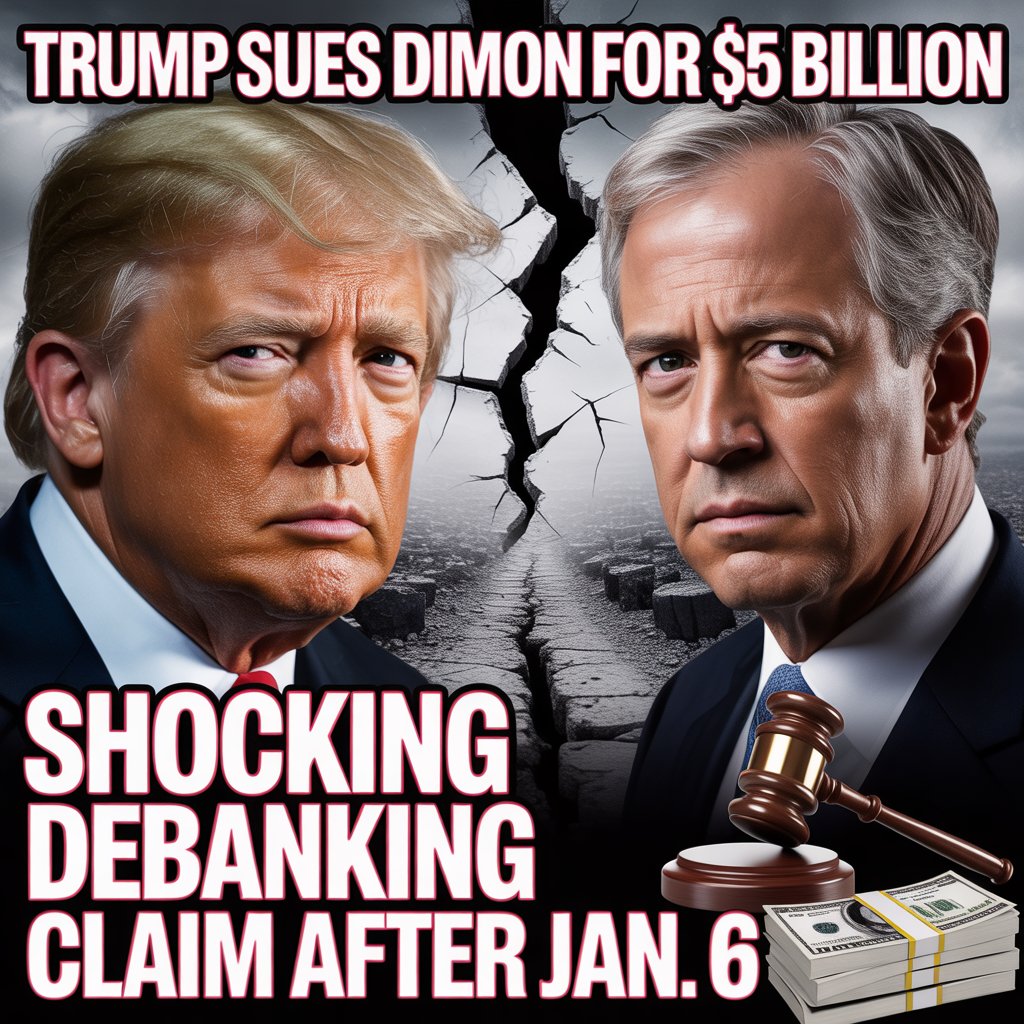
Trump files $5B lawsuit against JPMorgan and CEO Jamie Dimon over alleged political debanking after Jan. 6. Inside the explosive legal battle reshaping Wall Street.
The Lawsuit That Could Redefine Banking’s Political Boundaries
On a crisp January morning in 2026, Donald Trump—now barely two weeks into his second presidency—fired what may prove to be one of the most consequential legal salvos against Wall Street in modern American history. The $5 billion lawsuit, filed in Florida state court on January 22, targets not only JPMorgan Chase, America’s largest bank, but also its formidable CEO Jamie Dimon, alleging “political debanking” in the aftermath of the January 6, 2021 Capitol riot.
The complaint centers on a stark allegation: that JPMorgan, under Dimon’s leadership, closed Trump’s personal and business accounts in February 2021 not for legitimate compliance reasons, but as political retaliation. According to The New York Times, the lawsuit characterizes the bank’s actions as a “coordinated effort to weaponize financial access against political opponents,” invoking Florida’s recently enacted anti-debanking statute to claim unprecedented damages.
The timing is extraordinary. Trump returns to the Oval Office with an ambitious agenda of financial deregulation and tariff restructuring, yet immediately finds himself in open warfare with the very institution that once helped finance his real estate empire. For Jamie Dimon—often described as the most powerful banker in America—the lawsuit represents an uncomfortable collision between his role as a nonpartisan financial steward and the increasingly politicized landscape of corporate America.
This case transcends a dispute between a former president and his banker. It strikes at fundamental questions about the boundaries of corporate power, the role of banks as gatekeepers to the financial system, and whether access to banking can—or should—be conditioned on political considerations. The reverberations will be felt far beyond Palm Beach and Manhattan.

The Fracture: From Business Partners to Courtroom Adversaries
The Pre-2021 Relationship
The relationship between Donald Trump and JPMorgan Chase was never warm, but it was functional. Throughout the 2000s and 2010s, JPMorgan maintained various banking relationships with Trump Organization entities, though the bank had reportedly scaled back its exposure following Trump’s 1990s casino bankruptcies. Unlike Deutsche Bank, which became Trump’s primary lender during years when major Wall Street institutions avoided him, JPMorgan maintained a cautious but present role—managing accounts, processing transactions, facilitating international transfers for his global properties.
Jamie Dimon, for his part, navigated the Trump presidency with characteristic pragmatism. The JPMorgan CEO publicly supported aspects of Trump’s 2017 tax reform, attended White House business councils, and maintained cordial relations even as he occasionally criticized specific policies. It was classic Dimon: engage with power, advocate for business interests, avoid unnecessary confrontation.
The January 6 Turning Point
Then came January 6, 2021. As rioters stormed the Capitol and the nation reeled, corporate America faced a reckoning. According to The Washington Post, JPMorgan’s risk management and compliance teams initiated an urgent review of all Trump-related accounts in the riot’s immediate aftermath. The bank’s concerns reportedly centered on three factors: reputational risk, regulatory scrutiny, and potential exposure to sanctions or legal complications given ongoing investigations into the events of that day.
By February 2021, JPMorgan had made its decision. In a series of terse notifications—described in the lawsuit as “cold and peremptory”—the bank informed Trump and several affiliated entities that their accounts would be closed within 30 days. No detailed explanation was provided beyond boilerplate language about “business decisions” and “risk tolerance.”
Trump, then a private citizen banned from major social media platforms and facing his second impeachment, had few immediate options for recourse. But he evidently did not forget.
Inside the Lawsuit: Claims, Legal Strategy, and the Florida Debanking Law
The Core Allegations
The 87-page complaint, filed in Palm Beach County Circuit Court, makes sweeping allegations of political discrimination and viewpoint-based financial censorship. Bloomberg reports that Trump’s legal team argues JPMorgan violated Florida Statutes Section 542.336, a law enacted in 2023 that prohibits financial institutions operating in the state from denying services based on political views, religious beliefs, or social credit scores.
The lawsuit claims that JPMorgan’s decision was “pretextual and politically motivated,” pointing to several pieces of circumstantial evidence:
- Timing: The account closures came mere weeks after January 6, suggesting a direct causal link.
- Selective application: The complaint alleges other high-profile clients with controversial political profiles or legal troubles maintained their JPMorgan accounts.
- Lack of explanation: JPMorgan allegedly refused to provide substantive justification beyond generic risk management language.
- Public statements: The lawsuit references internal communications and public comments by JPMorgan executives about corporate responsibility and ESG commitments following January 6.
The $5 Billion Question
The astronomical damages figure—$5 billion—is based on claims of reputational harm, business disruption, and punitive damages. Trump’s attorneys argue that being “debanked” by America’s largest financial institution inflicted severe damage on his business empire, complicating transactions, raising costs, and signaling to other institutions that he was an unacceptable client. Forbes notes that the complaint specifically cites lost opportunities, increased borrowing costs, and the “digital scarlet letter” of being rejected by JPMorgan.
Legal experts interviewed by multiple outlets express skepticism about the damages calculation, noting that proving direct financial harm from account closures—particularly for someone with Trump’s access to alternative banking options—will be extraordinarily difficult. Yet the symbolic value of the number is clear: this is warfare, not negotiation.
Jamie Dimon in the Crosshairs: Personal Liability and Corporate Leadership
Why Sue Dimon Personally?
The inclusion of Jamie Dimon as an individual defendant elevates this from a routine corporate dispute to something far more personal. The Financial Times reports that Trump’s complaint alleges Dimon was directly involved in the decision to close the accounts, citing board meeting minutes and internal communications that purportedly show the CEO weighing in on Trump-related risk management decisions in early 2021.
This is unusual. CEOs of major banks typically insulate themselves from individual account decisions through layers of compliance, legal, and risk management infrastructure. Piercing that corporate veil requires demonstrating that Dimon personally directed or ratified the allegedly discriminatory conduct—a high bar in litigation.
Yet Trump’s team appears confident. The complaint portrays Dimon as the architect of a broader corporate strategy to distance JPMorgan from controversial political figures in the post-January 6 environment, allegedly using compliance mechanisms as cover for viewpoint discrimination.
Dimon’s Delicate Position
For Jamie Dimon, the lawsuit creates acute discomfort. He has cultivated an image as a steady hand in turbulent times—someone who can navigate political crosscurrents while keeping JPMorgan above the fray. He maintained working relationships with both the Trump and Biden administrations, advocated for practical business policies regardless of partisan source, and positioned himself as a voice of reason in polarized times.
Now he faces a lawsuit from a sitting president who commands fierce loyalty from roughly half the American electorate and who has never been shy about using his platform to wage public relations warfare. According to Reuters, JPMorgan’s initial response has been measured but firm: the bank denies all allegations and insists the account closures were based solely on “routine risk management protocols unrelated to any client’s political views.”
JPMorgan’s Defense: Risk Management or Political Censorship?
The Bank’s Rationale
JPMorgan has not yet filed a formal response to the lawsuit, but its public statements and background briefings to journalists reveal the contours of its defense. The bank argues that:
- Regulatory compliance: As a globally systemically important bank (G-SIB), JPMorgan faces extraordinary regulatory scrutiny and must maintain rigorous anti-money laundering, sanctions compliance, and risk management protocols.
- Reputational risk: The January 6 events triggered massive reputational risk assessments across corporate America. Banks routinely evaluate whether clients pose unacceptable reputational hazards—a legitimate business consideration.
- Operational independence: Account closure decisions are made by specialized risk and compliance teams using objective criteria, not by the CEO’s office based on political animus.
- Preexisting concerns: CNBC reports that sources close to JPMorgan suggest the bank had been conducting enhanced due diligence on Trump Organization accounts well before January 6, related to longstanding questions about the company’s financial practices.
The Industry Context
JPMorgan’s predicament reflects broader tensions in the banking sector. After January 6, numerous financial institutions severed ties with Trump-affiliated entities or individuals. Payment processors like Stripe stopped processing donations for Trump campaign entities. Banks conducting business with anyone connected to the Capitol riot faced intense public pressure and potential regulatory complications.
Yet this creates a troubling precedent. If banks can effectively de-person individuals from the financial system based on political controversy—however defined—where do the boundaries lie? Conservative activists have documented dozens of cases where individuals and organizations on the right claim they were “debanked” for their political views, from gun rights advocates to anti-abortion activists.
The Debanking Phenomenon: A Growing Flashpoint
What Is Political Debanking?
“Debanking” refers to financial institutions closing or denying accounts to customers based on factors unrelated to traditional banking risk—most controversially, political views or associations. The practice exists in a legal and ethical gray zone. Banks have broad discretion to choose their clients, but that discretion isn’t absolute, particularly when anti-discrimination laws or public utility considerations come into play.
The BBC describes the phenomenon as part of a broader trend in which major corporations use their market power to enforce ideological boundaries—what critics call “corporate cancel culture” and defenders characterize as legitimate risk management and values alignment.
Florida’s Anti-Debanking Law
Florida’s 2023 legislation specifically prohibits financial institutions from discriminating based on political opinions, religious beliefs, or “social credit scores”—a term borrowed from concerns about Chinese-style social monitoring systems. The law allows individuals and businesses to sue for damages if they can prove they were denied financial services for these prohibited reasons.
Trump’s lawsuit is the highest-profile test of this statute. If successful, it could open the floodgates for similar litigation and encourage other Republican-controlled states to enact comparable protections. If it fails, it may establish that banks retain broad discretion to evaluate clients holistically, including reputational and political considerations.
Wall Street’s Trump Dilemma: Navigating the Second Term
The Complicated Courtship
Wall Street’s relationship with Donald Trump has always been transactional and ambivalent. The financial sector enthusiastically supported his 2017 tax cuts and deregulatory agenda, yet many executives were privately appalled by his conduct and rhetoric. Jamie Dimon himself once criticized Trump’s handling of racial tensions, though he later walked back some comments.
Now, with Trump back in the White House pursuing an ambitious agenda that includes further banking deregulation, financial institutions face an uncomfortable calculus. Antagonizing the president risks regulatory retaliation, but appearing to capitulate to political pressure undermines their claims to operational independence.
The lawsuit intensifies this dilemma. If JPMorgan settles quickly or backs down, it may embolden Trump to use similar pressure tactics against other institutions. If the bank fights aggressively, it risks a protracted public battle with a president who thrives on conflict and commands a megaphone unlike any other.
Regulatory and Legislative Implications
The Trump administration’s financial regulatory appointees will be watching this case closely. While the lawsuit is a civil matter in state court—not subject to federal intervention—the broader questions it raises about banking access and political neutrality could inform federal policy.
Congressional Republicans have already signaled interest in federal anti-debanking legislation, modeled on Florida’s law. If Trump’s lawsuit gains traction, it could accelerate those efforts and create a new front in the ongoing culture wars over corporate America’s role in policing political speech and association.
Economic and Market Implications
Short-Term Market Reaction
JPMorgan’s stock barely flinched on news of the lawsuit—testimony to investors’ view that the case poses minimal financial risk to the bank. The $5 billion figure, while eye-catching, represents less than two weeks of JPMorgan’s typical quarterly profit. Legal fees and reputational damage are the more realistic concerns.
Long-Term Structural Questions
The deeper economic question is whether this lawsuit accelerates fragmentation in the financial services industry along political lines. Some conservative entrepreneurs are already building “anti-woke” banking alternatives, positioning themselves as havens for customers who fear political discrimination by mainstream institutions.
If successful, these parallel financial infrastructures could reduce efficiency, increase costs, and fragment liquidity in the banking system. Alternatively, they might introduce healthy competition and discipline for incumbent institutions that have grown complacent about customer service and political neutrality.
The Precedent Problem: Where Does This End?
Slippery Slopes on Both Sides
Both sides in this dispute can point to troubling hypotheticals. If banks cannot consider political factors at all in client selection, can they be forced to serve individuals or entities under sanctions, involved in ongoing criminal investigations, or credibly accused of financial fraud—provided those targets can frame their situation as political persecution?
Conversely, if banks have unlimited discretion to debank based on ideology, couldn’t conservative-led institutions refuse to serve progressive clients? Couldn’t banks in certain regions effectively exclude entire classes of politically disfavored customers?
The lawsuit forces courts to grapple with these questions without clear precedent. Banking law has traditionally granted financial institutions broad discretion in client selection, but those principles were developed in an era when banking and politics occupied more separate spheres.
What Happens Next: Legal Timeline and Likely Outcomes
Procedural Roadmap
JPMorgan will likely move to dismiss the case, arguing that Trump has failed to state a valid legal claim and that the bank’s actions fall within its protected business judgment. Florida’s anti-debanking law remains largely untested in litigation, so courts will have to interpret its scope and application.
If the case survives dismissal, discovery could be explosive. Trump’s attorneys would gain access to JPMorgan’s internal communications, risk assessments, and decision-making processes around the account closures. The bank would similarly probe Trump’s actual financial damages and alternative banking relationships.
Most legal analysts expect the case to settle rather than go to trial, though Trump’s litigious history and Dimon’s institutional resolve make predictions hazardous. A settlement could include no admission of wrongdoing but might involve JPMorgan agreeing to clearer, more transparent account closure policies.
The Political Calculus
Trump appears to view the lawsuit as both a genuine grievance and a useful political narrative. The “debanking” story resonates with his base’s sense that elite institutions weaponize their power against conservatives. Whether the case has legal merit may matter less than its political utility in reinforcing that narrative.
For JPMorgan, the priority will be containing damage—to its reputation, its regulatory standing, and its relationships with both political parties. The bank cannot afford to be seen as capitulating to political pressure, but neither can it afford a years-long public brawl with the President of the United States.
Conclusion: Banking, Power, and the Politics of Access
The Trump-JPMorgan lawsuit crystallizes tensions that extend far beyond one controversial president and one powerful bank. At its heart, this case asks who controls access to the infrastructure of modern capitalism—and on what terms.
Financial institutions occupy a quasi-public role in democratic societies. They are private enterprises with shareholder obligations, yet they also serve as gatekeepers to essential economic participation. When banks exercise that gatekeeping power based on political considerations—whether explicitly or through the malleable language of risk management—they enter contested terrain.
Trump’s lawsuit, whatever its ultimate legal fate, has already succeeded in forcing this question onto the national agenda. It challenges the post-January 6 consensus among corporate leaders that distancing from Trump carried no serious institutional cost. And it previews what may be a defining feature of Trump’s second term: the use of litigation, regulation, and executive power to reshape corporate America’s relationship with political controversy.
Jamie Dimon, who has navigated financial crises, regulatory transformations, and political upheavals with unusual dexterity, now faces perhaps his most delicate challenge. The lawsuit is a reminder that in contemporary America, even the most powerful banker cannot fully insulate his institution from the gravitational pull of politics.
The $5 billion question is ultimately not about damages—it’s about boundaries. Where does legitimate risk management end and political discrimination begin? The answer will reverberate through boardrooms and courtrooms for years to come.

Singapore Firms Press Ahead in US Market Despite Trump Tariffs

The IMF’s High-Voltage Mandate: How Pakistan’s FY27 Power Subsidy Cut Will Rewire Its Economy

How US Debt, Gold Chaos, and a Stalled Middle East Are Rewriting the Rules of Investing

Top 15 Stocks for Investment in 2026 in PSX: Your Complete Guide to Pakistan’s Best Investment Opportunities
Top 15 Stocks for Investment in 2026 in PSX: Your Complete Guide to Pakistan’s Best Investment Opportunities

Debunking IMF Program Myths: Reconfiguring Engagement for True National Ownership in a Volatile World
-
 Markets & Finance4 months ago
Top 15 Stocks for Investment in 2026 in PSX: Your Complete Guide to Pakistan’s Best Investment Opportunities
-
Markets & Finance4 months ago
Top 15 Stocks for Investment in 2026 in PSX: Your Complete Guide to Pakistan’s Best Investment Opportunities
-
 Analysis3 months ago
Debunking IMF Program Myths: Reconfiguring Engagement for True National Ownership in a Volatile World
-

 Global Economy5 months ago
What the U.S. Attack on Venezuela Could Mean for Oil and Canadian Crude Exports: The Economic Impact
-

 Investment4 months ago
Top 10 Mutual Fund Managers in Pakistan for Investment in 2026: A Comprehensive Guide for Optimal Returns
-

 Asia5 months ago
China’s 50% Domestic Equipment Rule: The Semiconductor Mandate Reshaping Global Tech
-

 AI5 months ago
15 Most Lucrative Sectors for Investment in Pakistan: A 2025 Data-Driven Analysis
-

 Exports5 months ago
Pakistan’s Export Goldmine: 10 Game-Changing Markets Where Pakistani Businesses Are Winning Big in 2025