
Global Economy
What the U.S. Attack on Venezuela Could Mean for Oil and Canadian Crude Exports: The Economic Impact

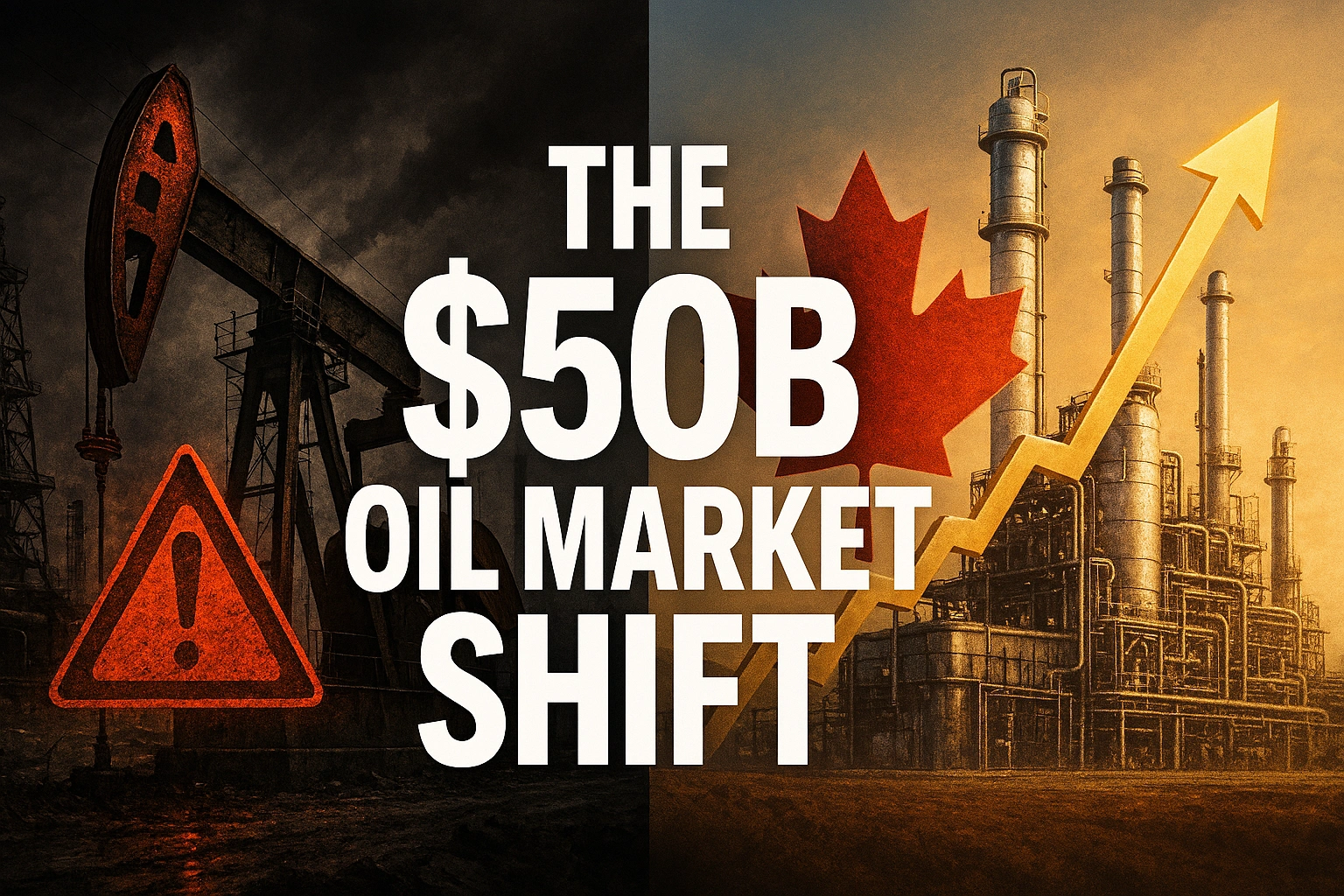
The aggressive U.S. pressure campaign against Venezuela’s oil sector is reshaping North American energy markets in ways few anticipated. The U.S. Treasury Department sanctioned four companies and oil tankers on December 31, 2025, as part of President Trump’s intensifying blockade against the Maduro regime, triggering a domino effect that positions Canada as an unexpected beneficiary in the global crude oil trade.
Here’s what this geopolitical shake-up means for oil prices, supply chains, and the $150 billion Canadian energy sector—and why investors, refiners, and policymakers are watching closely.
Understanding the U.S.-Venezuela Oil Relationship
The Escalating Sanctions Campaign
The Trump administration has sanctioned multiple vessels and companies involved in Venezuela’s shadow fleet operations, disrupting what remains of the country’s oil export capability. This isn’t just diplomatic posturing—it represents a fundamental disruption to hemispheric energy flows that have existed for decades.
Venezuela exports less than 1 million barrels per day, a small fraction of the 106 million barrels per day global oil market, according to analysis from the Center for Strategic and International Studies. Yet the strategic importance of Venezuelan heavy crude far exceeds its volume.
Venezuela’s Diminished Production Capacity
Venezuela’s oil production topped 3 million barrels per day in the early 2000s but has fallen sharply in recent decades due to declining investment and U.S. sanctions. The country once held the world’s largest proven oil reserves, but production infrastructure has deteriorated dramatically under years of economic mismanagement and international isolation.
Rebuilding Venezuela’s oil infrastructure would require investments of more than $100 billion and take at least a decade to lift production to 4 million barrels per day, according to Francisco Monaldi, director of the Latin America energy program at Rice University.
The Immediate Impact on Global Oil Markets
Gulf Coast Refineries Face a Critical Supply Gap
The reality facing U.S. refiners is more complex than simple supply and demand. Gulf Coast refiners favor heavy crude like Mexican Maya, as they typically run medium and heavy oil configurations, according to Wood Mackenzie analysis. Venezuelan heavy crude has historically filled a specific niche—high sulfur content, low API gravity—that perfectly matches the coking capabilities of sophisticated Gulf Coast refineries.
Gulf Coast refinery utilization started 2025 at 93% but has drifted to the mid-80% range as several mid-sized refineries cut runs by 5% to 10%. This decline isn’t entirely about Venezuelan supply disruptions—oversupply of light crude from the Permian Basin and compressed refining margins play significant roles—but the loss of heavy crude optionality constrains operational flexibility.
Price Volatility Remains Muted Despite Geopolitical Tensions
A continuing crackdown could throttle most or all of Venezuela’s exports and associated revenues, yet less than 20 percent of Venezuelan crude exports are transported on shadow tankers—a smaller proportion than Russian and Iranian barrels utilizing the same fleet.
West Texas Intermediate crude fell to $57.32 a barrel in January 2026, down from nearly $80 in January 2025, demonstrating that broader market factors currently outweigh Venezuela-specific disruptions. The International Energy Agency projects the oil market could see a surplus of 3.8 million barrels per day in 2026—the largest glut since the pandemic.
The Diesel Dilemma
There’s one product where Venezuelan supply matters disproportionately: diesel fuel. Venezuela produces a form of crude suitable for making diesel, which is widely used across industries. Removing Venezuela’s oil input from global markets could push up diesel costs in the U.S. and boost inflation, according to Atlantic Council analysis.
This creates an interesting paradox. While overall crude oil supply remains abundant, specific refined product markets could tighten, creating regional price dislocations that sophisticated traders will exploit.
Canada’s Strategic Opportunity in the Energy Landscape
Western Canadian Select Emerges as the Alternative
Enter Canada—and specifically, Western Canadian Select heavy crude. The characteristics that once made WCS a challenging product to market now make it invaluable. With API gravity between 20.5 and 21.5 degrees and sulfur content of 3.0 to 3.5 percent, WCS offers similar processing characteristics to Venezuelan crude.
The WTI-WCS price differential narrowed from $18.65 per barrel in 2023 to $14.73 per barrel in 2024, attributed to the commissioning of the Trans Mountain Pipeline Expansion in May 2024, according to the Alberta Energy Regulator.
The differential has been trading in a tight band between $10.25 and $11.70 under WTI since September 2025, with analysts pointing to strong international buying of Canadian crude off the Pacific coast. Even with seasonal widening, these differentials represent historically favorable pricing for Canadian producers.
Trans Mountain Pipeline: The Game-Changing Infrastructure
The Trans Mountain Pipeline Expansion isn’t just another infrastructure project—it fundamentally rewires North American energy geography. The expansion increased capacity from 300,000 to 890,000 barrels per day, nearly tripling throughput and increasing total western Canadian crude oil export pipeline capacity by 13%.
Within the first 12 months of operation, average pipeline movements of crude oil from Alberta to British Columbia increased more than fivefold, with total crude oil volumes exported through British Columbia surging by more than sixfold, according to Statistics Canada data.
The geographic diversification is remarkable. From May 2024 to April 2025, crude oil shipments to non-U.S. destinations accounted for 48.1% of exports by volume from British Columbia, compared to 100% going to the U.S. in the previous 12-month period.
Production Capacity Ramping Aggressively
Canadian crude oil production rose 9.4% year-over-year to 150 million barrels in January 2025, with exports totaling 129 million barrels, up from 125.5 million barrels a year earlier, according to data from Mansfield Energy citing Statistics Canada.
This production growth trajectory positions Canada as one of the most significant non-OPEC+ crude output growth stories globally. Oil sands producers are capitalizing on improved market access, ramping up production to fill new pipeline capacity.
Economic Implications for North America
U.S. Energy Security Gets More Complex
The U.S. relationship with Canadian crude isn’t simply transactional—it’s deeply integrated through decades of infrastructure investment and refinery optimization. In 2022, 79.2 percent of Canada’s refined oil came from the U.S., with Canadian crude refined in the Midwest and then sold back to Canada and the rest of the world, according to data from the Observatory of Economic Complexity.
This creates a fascinating interdependency. As Venezuela falls further out of the supply picture, U.S. refiners need Canadian heavy crude more than ever. Yet simultaneously, Canadian producers have new leverage through Pacific export options that didn’t exist two years ago.
The U.S. tariff threat that dominated headlines in early 2025 demonstrated this tension. Under the tariff case, the WCS price was expected to be 18% below the base case forecast at $45 per barrel due to a 10% U.S. tariff on Canadian energy products, resulting in a widening WCS-WTI differential.
Canadian Economic Growth Projections Improve
Since the expanded Trans Mountain pipeline came online, non-U.S. oil exports rose from about 2.5 percent of total exports to about 6.5 percent, according to Alberta Central economist Charles St-Arnaud. This diversification reduces Canada’s vulnerability to U.S. market dynamics and policy uncertainty.
The Alberta government expects the average WTI price to be $76.50 US, up $2.50 US per barrel from originally forecast, demonstrating the economic significance of improved market access.
The multiplier effects extend beyond direct oil revenues. Pipeline operations, tanker loading facilities, refinery upgrades, and related services generate substantial employment and tax revenue across Western Canada.
Investment Flows Redirect Northward
Canadian production is averaging five million barrels per day as of July 2025—up from 4.8 million in 2023—and is set to grow further into 2026, according to ATB Financial. This production growth requires billions in capital investment across the oil sands complex.
Energy analyst Rory Johnston projects year-over-year growth of 100,000 to 300,000 barrels per day through 2025, making Canada one of the largest sources of crude output growth globally. In a world where major international oil companies face pressure to constrain capital deployment, Canadian oil sands represent one of the few jurisdictions seeing significant production increases.
Geopolitical Ramifications Beyond North America
China Emerges as Canada’s Largest Pacific Buyer
China has become the top buyer of Canadian oil via the Trans Mountain pipeline at 207,000 barrels per day—a massive increase from an average of 7,000 barrels per day in the decade to 2023, according to Institute for Energy Research data.
This shift carries profound implications. Chinese refiners gain access to reliable heavy crude supplies outside U.S. jurisdictional reach, reducing their dependence on sanctioned sources like Iran and Venezuela. For Canada, Chinese demand provides price support and market optionality that didn’t exist when the U.S. was effectively the only customer.
Chinese oil purchases through the port near Vancouver soared to more than seven million barrels in March 2025 and were on pace to exceed that figure in April, while Chinese imports of U.S. oil dropped to three million barrels a month from 29 million barrels in June 2024.
Regional Stability Questions in Latin America
The U.S. seizure of shadow fleet tankers demonstrates that Washington is willing to physically halt exports of sanctioned oil, potentially throttling most or all of Venezuela’s exports. This aggressive enforcement creates precedents that extend beyond Venezuela.
Russia and China face outsized vulnerabilities in a world of greater sanctions enforcement that may include physical seizures. Washington’s actions could inspire other sanctioning authorities to implement similar operations, particularly in strategic chokepoints like the Danish straits.
OPEC+ Calculations Shift
Venezuela’s production decline removes a historically significant OPEC member from market balancing equations. While current Venezuelan output is modest, the country’s vast reserves and potential production capacity have always factored into long-term OPEC+ strategy.
Canada isn’t an OPEC member and has no production coordination with the cartel. Increased Canadian output essentially represents non-OPEC supply growth that OPEC+ must account for in its own production decisions. This dynamic could contribute to persistent oversupply conditions that depress prices.
Challenges and Risks Ahead
Infrastructure Bottlenecks Remain
Canadian crude exports from the Trans Mountain pipeline fell to 407 thousand barrels per day in June 2025, down 10.5% from May and 23.5% below the March record of 532 thousand barrels per day, according to Kpler data.
Peak seasonal maintenance and wildfire-related production disruptions that began in late May caused the decline, while strong inland U.S. demand from the Midwest and Gulf Coast reduced export availability. These operational realities demonstrate that even with new infrastructure, Canadian exports face constraints.
Enbridge Mainline was apportioned 4% in June 2025, with further apportionment expected in July, as demand from the Midwest and Gulf Coast competes for the same crude pool.
Environmental and Regulatory Headwinds
Canadian oil sands remain among the most carbon-intensive crude sources globally. As climate policies tighten—particularly in key markets like California and the European Union—carbon intensity creates both regulatory risk and reputational challenges.
California’s low-carbon fuel standards explicitly penalize high-carbon crude sources. While Asian buyers currently show less concern about carbon intensity, this could change as climate policies evolve. The $34 billion Trans Mountain expansion faced years of environmental opposition, demonstrating that future infrastructure projects will face significant regulatory hurdles.
Market Volatility Creates Planning Uncertainty
Oil prices fell to $57.32 per barrel in January 2026, dropping roughly 20% in 2025 and extending a decline over the previous two years. This price environment challenges the economics of capital-intensive oil sands development.
Oil sands projects require multi-billion-dollar investments with decades-long payback periods. Price volatility makes financial planning extraordinarily difficult. While improved market access through Trans Mountain helps, it doesn’t eliminate exposure to global price cycles.
Trans Mountain has become one of the most expensive routes for oil shippers due to toll increases necessary to cover construction cost overruns exceeding $34 billion. Higher transportation costs eat into producer netbacks, reducing the competitiveness of Canadian crude.
Expert Predictions and Future Outlook
Growing Asian Demand for Heavy Crude
Market analysts project continued growth in Asian demand for Canadian heavy crude, particularly as refineries complete infrastructure adaptations and develop expertise in processing oil sands products. This represents a fundamental shift in global crude trade flows.
Chinese and Indian refiners have invested billions in coking capacity specifically designed to handle heavy, high-sulfur crudes. As these facilities ramp up, they create structural demand for exactly the type of crude Canada produces in abundance.
Infrastructure Expansion Plans
Trans Mountain Corp is reviewing expansion projects for the line, with goals of increasing exports to Asian markets by adding between 200,000 and 300,000 barrels per day of capacity. Most of this additional capacity would likely target Asian rather than U.S. West Coast markets.
These expansion plans indicate confidence in long-term demand, but they also face the same political and environmental challenges that made the initial Trans Mountain expansion so contentious. Whether Canada can sustain the political will to approve major new energy infrastructure remains uncertain.
Long-Term Supply-Demand Balance Questions
Based on futures markets, the average price for WTI in 2026 is roughly $61 per barrel, down from the 2024 average of $76 per barrel, largely driven by concerns of slowing demand and an escalating global trade war, according to CAPP analysis.
The fundamental challenge facing the oil industry is that supply growth—from the U.S. shale, Canadian oil sands, Brazilian pre-salt, and Guyana—continues outpacing demand growth. Even with Venezuelan production effectively removed from the market, global oversupply persists.
This creates a paradoxical situation: Canadian producers gain market share and improve their strategic position while operating in an environment of depressed prices and margin pressure.
Key Takeaways: What This Means for Stakeholders
For U.S. Refiners: The loss of Venezuelan heavy crude creates dependency on Canadian and Mexican sources. Smart refiners are securing long-term Canadian crude supply contracts while the market remains oversupplied.
For Canadian Producers: The Trans Mountain expansion has created genuine optionality and improved netbacks, but success requires continued production efficiency improvements and market development in Asia.
For Investors: Canadian energy companies with low-cost oil sands operations and strong balance sheets look increasingly attractive. The sector faces headwinds from overall price weakness but structural advantages from improved market access.
For Policymakers: Energy security considerations increasingly favor North American supply chains. The U.S.-Canada energy relationship, despite periodic tensions, represents a strategic asset in an uncertain geopolitical environment.
For Asia’s Energy Buyers: Canadian crude offers reliable supply outside U.S. sanctions risk, though at the cost of higher transportation expenses and carbon intensity concerns.
The Bottom Line
The U.S. pressure campaign against Venezuela is accelerating a transformation already underway in North American energy markets. Canada isn’t simply filling a gap left by Venezuelan supply disruptions—it’s fundamentally repositioning as a globally connected crude exporter with options beyond its traditional U.S.-centric model.
The WTI-WCS price differential is anticipated to average $11 per barrel in 2025 as Trans Mountain enters its first full calendar year of operation. This represents the narrowest differential in years and reflects improved market access.
Yet significant uncertainties remain. Trade policy tensions between the U.S. and Canada could resurface. Global oil demand growth faces headwinds from electric vehicle adoption and efficiency improvements. Climate policies could penalize carbon-intensive crude sources.
What’s clear is that the era of Canadian crude as a captive supply to U.S. refineries has ended. The strategic implications of this shift—for energy security, geopolitics, and market dynamics—will play out over the coming decade.
For now, Canadian producers are capitalizing on a unique moment: Venezuelan production constrained by sanctions, new export infrastructure creating Asian market access, and global refiners seeking reliable heavy crude supplies. Whether this opportunity translates into sustained economic benefits depends on execution, market conditions, and policy developments that remain highly uncertain.
Frequently Asked Questions
Q: What is the impact of US sanctions on Venezuelan oil?
The U.S. has sanctioned multiple companies and vessels in Venezuela’s shadow fleet, disrupting the country’s ability to export crude oil and generating revenue for the Maduro regime. These sanctions effectively cut Venezuela off from most international oil markets, though some exports continue through sanctions evasion.
Q: How will Canadian crude exports benefit from the Venezuela situation?
Canadian crude benefits through five key mechanisms:
- Reduced competition from Venezuelan heavy crude in Gulf Coast refineries
- Trans Mountain Pipeline providing Asian market access
- Narrower price differentials due to improved market access
- Increased production justified by reliable export capacity
- Strategic positioning as a sanctions-free alternative to Venezuelan supply
Q: Why do Gulf Coast refineries need heavy crude oil?
Gulf Coast refineries invested billions in coking and conversion units specifically designed to process heavy, high-sulfur crude into valuable products like gasoline and diesel. These complex refinery configurations achieve higher margins when processing discounted heavy crude rather than more expensive light crude, making heavy crude supplies strategically important to their operations.


Analysis
OnlyFans’ $3bn Succession Gamble: A Valuation Discount, a Fintech Pivot, and the AI Spectre Haunting the Creator Economy

London. When Leonid Radvinsky, the reclusive, Ukrainian-born billionaire who quietly built one of the internet’s most improbable cash machines, died of cancer last month at 43, the fate of his empire—a digital bazaar of intimacy worth over $7 billion in annual transactions—was suddenly thrust into a glaringly uncertain light.
Now, we have the first chapter of what comes next. In a move that speaks less to a triumphant exit and more to a pragmatic posthumous recalibration, OnlyFans is finalizing a deal to sell a minority stake of less than 20% to San Francisco-based Architect Capital, valuing the British company at over $3 billion.
The narrative for casual observers is simple: a founder dies, and a lucrative stake sale ensues. But for the FT/Economist reader—those tracking the collision of high finance, the stigmatized economy, and the future of digital labor—the real story is far more nuanced. This is a story about valuation compression, the shifting sands of the $214 billion creator economy, and a strategic fintech gambit that could redefine what OnlyFans actually is.
The Radvinsky Calculus: Why the Price Tag Fell From $8bn to $3bn
Let’s be surgically precise: OnlyFans is not a normal business. It is a staggeringly profitable one. In 2024, with a skeletal staff of just 46 employees, Fenix International (OnlyFans’ parent) generated $1.4 billion in revenue and a pre-tax profit of $684 million—a net margin of roughly 37% that would make most Silicon Valley unicorns weep with envy. On paper, this is a valuation darling. Yet, as late as 2025, Radvinsky had been shopping a 60% majority stake with aspirations of an $8 billion valuation or a $5.5 billion enterprise value that included a hefty $2 billion debt package.
So why the markdown?
The answer is a textbook case of the “vice discount” (also known as the “stigma penalty”). OnlyFans remains, at its core, synonymous with adult content. This singular association creates a structural ceiling on its valuation. Traditional institutional investors—sovereign wealth funds, major pension managers, and blue-chip private equity—operate under strict Environmental, Social, and Governance (ESG) mandates and reputational constraints that make owning a pornography platform, no matter how profitable, a non-starter.
Moreover, the dependency on the Visa/Mastercard duopoly looms like the sword of Damocles. Both card networks classify adult platforms as “high-risk merchants,” a designation that imposes elevated fees and, more importantly, the constant threat of being de-platformed from the global financial rails with little notice.
Faced with these headwinds and the fresh uncertainty of the founder’s passing, the Radvinsky family trust—now led by his widow, Katie, who is overseeing the sale—has pivoted from a controlling exit to a minority liquidity event. This keeps control within the trust while injecting external capital and, critically, new expertise into the boardroom.
Architect Capital’s Fintech Gambit: Banking the Unbanked Creators
This is where the deal transcends a simple equity swap and becomes a corporate metamorphosis. Architect Capital is not just a financier; it is effectively a strategic partner with a specific mandate: fintech.
Reports indicate the deal is contingent on Architect working with OnlyFans to develop new financial services and products for its 4.6 million creators. This is not a gimmick; it is an economic necessity. A significant portion of OnlyFans’ top earners are sex workers who face widespread discrimination in the traditional banking sector. Accounts are frozen, loans are denied, and mortgages are unattainable, regardless of how high the tax-paid income is.
For Architect, a firm known for tackling businesses in regulatory gray zones, this is the alpha play. By building a fintech stack—perhaps offering creator-specific banking, debit cards with instant payout options, or even micro-loans against future earnings—OnlyFans can deepen its “take rate” beyond the 20% subscription cut and, crucially, lock in its top talent.
This pivot is also a deliberate move toward mainstreaming the platform. As reported by Expert.ru, OnlyFans’ long-term plan includes a potential IPO in 2028 and a concerted effort to shift its public image toward “wellness” verticals like fitness and nutrition. A robust, regulated financial services arm attached to a platform with millions of high-earning “solopreneurs” is a narrative that Goldman Sachs or Morgan Stanley could actually sell to the public markets.
The Elephant in the Server Room: The AI Threat and Fanvue’s 150% Growth
For all the talk of fintech and $3 billion valuations, there is an existential threat gnawing at the edges of the human intimacy economy: Artificial Intelligence.
While OnlyFans is navigating estate trusts and banking regulations, a competitor called Fanvue is growing at 150% year-over-year. Sacra estimates Fanvue hit $100 million in Annual Recurring Revenue (ARR) in 2025, driven in large part by its aggressive embrace of AI-generated creators. Unlike OnlyFans, which mandates that AI content must resemble a verified human creator, Fanvue has become the de facto home for fully synthetic personas. With a fresh $22 million Series A round in its pocket and a partnership with voice-cloning giant ElevenLabs, Fanvue is automating the parasocial relationships that OnlyFans monetizes.
The economic efficiency is terrifying for human creators. A single operator can now manage a portfolio of AI influencers, generating income without the logistical friction of real photoshoots or the emotional labor of engaging with fans. If Fanvue’s ARR hits $500 million by 2028 (well within its trajectory), the “human creator premium” that OnlyFans relies on may begin to erode, further compressing its future valuation multiples.
Coda: The Path to 2028
The $3 billion valuation for a 20% stake is not a failure; it is a foundation. It represents a 21.6x multiple on last year’s pre-tax profits—a figure that, while compressed by tech standards, is an astronomical premium for a “vice” asset in a jittery 2026 market.
The real test for the family trust and Architect Capital will be execution. Can they successfully navigate the regulatory minefield to become a credible neobank for creators? Can they pivot the brand sufficiently before an IPO to close the valuation gap? Or will the relentless, synthetic march of AI render the human touch—the very currency of OnlyFans—an overpriced luxury?
The market is betting $3 billion that for the next five years at least, the answer is “Yes.” The rest of us will be watching to see if they can outrun the algorithm.
Analysis
The Trump Coin and Lessons from the Ostrogoths: How a Gold Offering Reveals the Limits of Presidential Power Over America’s Money
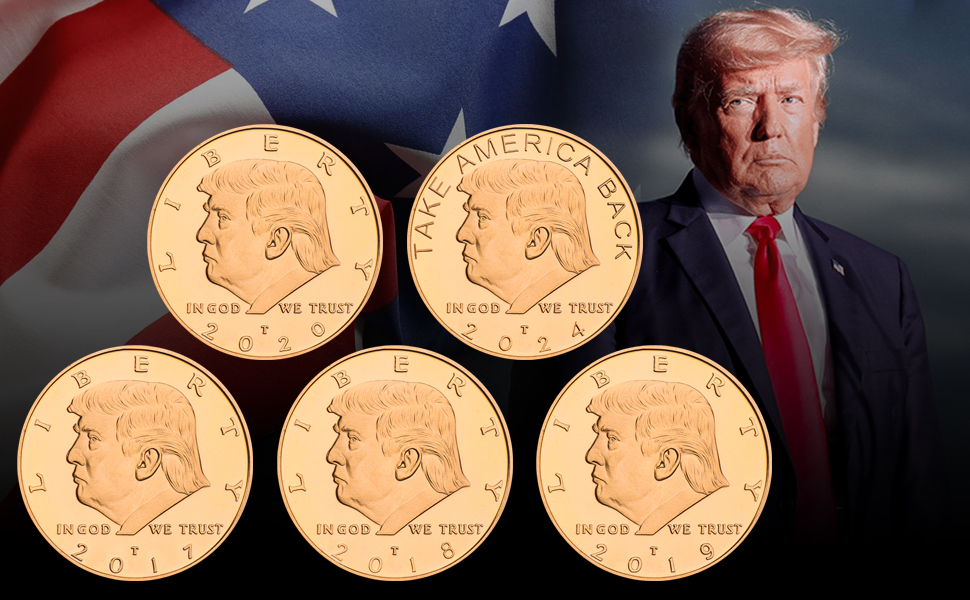
By the time the U.S. Mint strikes the first 24-karat gold Trump commemorative coin later this year, the great American tradition of keeping living politicians off the nation’s money will have been quietly, but spectacularly, circumvented.
Approved unanimously on March 19, 2026, by the Trump-appointed Commission of Fine Arts, the coin is ostensibly a celebration of the nation’s 250th anniversary. Yet, it serves a secondary, more visceral purpose for its chief architect: projecting executive dominance. The design is unapologetically aggressive. The obverse features President Donald Trump leaning intensely over the Resolute Desk, fists clenched, with the word “LIBERTY” arcing above his head and the dual dates “1776–2026” flanking him. The reverse bears a bald eagle, talons braced, ready to take flight.
Predictably, the political theater has been deafening. Critics have decried the coin as monarchic symbolism, pointing out that since the days of George Washington, the republic has fiercely guarded its currency against the vanity of living rulers. Defenders hail it as a masterstroke of patriotic fundraising and commemorative artistry.
But beneath the partisan noise lies a profound economic irony. In the grand sweep of monetary history, a leader plastering his face on ceremonial gold does not signal absolute control over a nation’s wealth. Quite the opposite. As we look back to the shifting empires of late antiquity, such numismatic pageantry usually reveals the exact opposite: a leader attempting to mask the uncomfortable reality of his limited sovereignty.
To understand the true weight of the 2026 Trump gold coin, one must look not to the halls of the Federal Reserve, but to the 6th-century courts of the Ostrogothic kings of Italy.
The Loophole of Vanity: 31 U.S.C. § 5112
To grasp the limits of the President’s monetary power, one must first look at the legal acrobatics required to mint the coin in the first place.
Federal law strictly forbids the portrait of a living person on circulating U.S. currency—a tradition born from the Founding Fathers’ revulsion for the coinage of King George III. To bypass this, the administration utilized the authorities granted under 31 U.S.C. § 5112, specifically the Treasury’s broad discretion to issue gold bullion and commemorative coins that do not enter general circulation.
While the coin bears a nominal face value of $1, it is a piece of bullion, not a medium of exchange. You cannot buy a coffee with it; it will not alter the M2 money supply; it will not shift the consumer price index.
Herein lies the central paradox of the Trump Semiquincentennial coin:
- The Facade of Power: It utilizes the highest-purity gold and the official imprimatur of the United States Mint to project executive authority.
- The Reality of Policy: The actual levers of the American economy—interest rates, quantitative easing, and the health of the fiat dollar—remain stubbornly out of the Oval Office’s direct control, residing instead with the independent Federal Reserve.
This dynamic—where a ruler uses localized, symbolic coinage to project a sovereignty he does not fully possess over the broader economic system—is not a modern invention. It is a historical hallmark of limited power.
Echoes from Ravenna: The Ostrogothic Parallel
When the Western Roman Empire collapsed in the late 5th century, Italy fell under the dominion of the Ostrogoths. The most famous of their rulers, Theodoric the Great, commanded the peninsula with formidable military might from his capital in Ravenna. He was, for all practical purposes, the king of Italy.
Yet, when you examine Ostrogothic coinage from this era, a fascinating picture of deference and limitation emerges.
Despite his military supremacy, Theodoric understood that the true center of global economic gravity lay to the east, in Constantinople. The Byzantine Emperor controlled the solidus—the gold standard of the Mediterranean world. If Theodoric wanted his kingdom to participate in international trade, he had to play by Byzantine monetary rules.
Consequently, the Ostrogoths minted gold and silver coins that were essentially counterfeits of Byzantine money. They bore the portrait of the reigning Eastern Emperor (such as Anastasius or Justinian), not the Ostrogothic king. Theodoric restricted his own branding to a modest monogram, and later kings, like Theodahad, only dared to place their full portraits on the bronze follis—the low-value base metal used for buying bread in local markets, entirely decoupled from international high finance.
The lesson from the Ostrogoths is clear, and widely recognized in peer-reviewed numismatic scholarship: controlling the territory is not the same as controlling the currency. The Ostrogoths used their local mints to project an image of continuity and authority to their immediate subjects, but they bowed to the monetary hegemony of the true empire.
The Byzantine Emperor of Modern Finance
Today, the “Constantinople” of the global economy is not a rival nation, but the institutional apparatus of the fiat dollar system—chiefly, the Federal Reserve and the global bond market.
President Trump has frequently chafed against this reality. Throughout his political career, he has sought to blur the lines of Fed independence, occasionally demanding lower interest rates or criticizing the Fed Chair with a ferocity normally reserved for political rivals. Yet, the institutional firewalls have largely held. The President cannot unilaterally dictate the cost of capital. He cannot force the world to buy U.S. Treasuries.
Thus, the 24-karat commemorative coin acts as his modern bronze follis.
It is a stunning piece of metal, but it is ultimately a domestic token. It satisfies a base of political supporters and projects an aura of monarchic permanence, just as Theodahad’s portrait did in the markets of Rome. But it does not challenge the underlying hegemony of the independent central banking system. The global markets, the sovereign wealth funds, and the algorithmic trading desks—the modern equivalents of the Byzantine merchants—will ignore the gold coin entirely. They will continue to trade in the invisible, digital fiat dollars over which the President exercises only indirect influence.
The Illusion of Monetary Sovereignty
What, then, does the “Trump coin” tell us about the current state of American executive power?
First, it highlights a growing preference for the aesthetics of power over the mechanics of governance. Minting a gold coin with one’s face on it is a frictionless exercise in executive privilege. Reining in a multi-trillion-dollar deficit, negotiating complex trade pacts, or carefully managing a soft economic landing are laborious, constrained, and often unrewarding tasks.
Second, it reveals the resilience of America’s financial architecture. That the President must resort to a commemorative loophole—utilizing a non-circulating bullion designation to bypass the strictures of circulating fiat—is a testament to the fact that the core of America’s money remains insulated from populist whim.
Consider the implications for dollar hegemony:
- Global Confidence: International investors rely on the U.S. dollar precisely because it is not subject to the immediate, emotional control of the executive branch.
- Institutional Friction: The outcry over the coin, while loud, proves that democratic norms regarding the separation of leader and state apparatus are still fiercely defended in the public square.
- The Paradox of Gold: By choosing gold—the traditional refuge of those who distrust government fiat—the administration inadvertently highlights its own lack of faith in the very paper currency it is sworn to manage.
Conclusion: The Weight of Empty Gold
The Roman historian Cassius Dio once observed that you can judge the health of a republic by the faces on its coins. When the republic falls, the faces of magistrates are replaced by the faces of autocrats.
But history is rarely that simple. The Ostrogothic kings of the 6th century put their faces on bronze because they lacked the power to control the gold. In March 2026, an American president has put his face on gold because he lacks the power to control the fiat.
The Semiquincentennial Trump coin is destined to be a remarkable collector’s item, a flashpoint in the culture wars, and a brilliant piece of political marketing. But when historians look back on the numismatics of the 2020s, they will not see a president who conquered the American monetary system. They will see a leader who, much like the kings of late antiquity, had to settle for a brilliant, golden simulacrum of power, while the true economic empire hummed along, indifferent and out of reach.
FAQ: Understanding the 2026 Commemorative Coin and U.S. Monetary Policy
Is it legal for a living U.S. President to be on a coin? Yes, but only under specific circumstances. By law (31 U.S.C. § 5112), living persons cannot be depicted on circulating currency (like standard pennies, quarters, or paper bills). However, the U.S. Mint has the authority to produce non-circulating bullion and commemorative coins. The 2026 Trump coin exploits this loophole as a non-circulating commemorative piece.
Does the U.S. President control the value of the dollar? No. While presidential policies (like tariffs, taxation, and government spending) affect the broader economy, the direct control of the U.S. money supply and interest rates rests with the Federal Reserve, an independent central bank. The President appoints the Fed Chair, but cannot legally dictate the bank’s day-to-day monetary policy.
What is the historical significance of the Ostrogothic coinage parallel? In the 6th century, Ostrogothic kings in Italy minted gold coins bearing the face of the Byzantine Emperor, while reserving their own portraits for lower-value bronze coins. This demonstrated that while they held local, symbolic power, true economic sovereignty belonged to the Byzantine Empire. The 2026 Trump coin operates similarly: it offers localized symbolic prestige, but the actual “engine” of the U.S. economy remains under the control of the independent Federal Reserve.
Can I spend the 24-karat Trump coin at a store? Technically, the coin has a legal face value of $1. However, because it is minted from 24-karat gold, its intrinsic metal value and numismatic collector value far exceed its $1 face value. It is meant to be collected and held as an asset or piece of memorabilia, not used in daily commercial transactions.
Investing 101
Gaming Giant’s Bold Gamble: Why Investors are Devouring Risky EA Debt Amid Geopolitical Crosscurrents
Investors are aggressively snapping up debt for Electronic Arts’ historic $55bn take-private, signaling resilient credit markets despite geopolitical tensions and AI disruption. Explore the EA LBO’s financial engineering, cost savings, and the appetite for risky video game financing in 2026.
Introduction: The Unyielding Allure of High-Yield
The world of high finance rarely pauses for breath, even as geopolitical headwinds gather and technological disruption reshapes industries. Yet, the recent $55 billion take-private of video game titan Electronic Arts (EA) has delivered a masterclass in market resilience, demonstrating an almost insatiable investor appetite for leveraged debt—even when tied to a complex, globally-infused transaction. Led by Saudi Arabia’s Public Investment Fund (PIF), Silver Lake, and Affinity Partners, this landmark deal, poised to redefine the gaming M&A landscape, has seen its $18-20 billion debt package met with overwhelming demand, proving that the pursuit of yield often eclipses lingering doubts.
This isn’t merely another private equity mega-deal; it’s a bellwether for global credit markets in early 2026. JPMorgan-led bond deals, designed to finance one of the largest leveraged buyouts in history, have drawn over $25 billion in orders, far surpassing their target size. This aggressive investor embrace of what many consider risky debt, particularly given the backdrop of Middle East tensions and concerns over AI’s impact on software, underscores a fascinating dichotomy: a cautious macroeconomic outlook juxtaposed with an audacious hunt for returns in stable, cash-generative assets. The question isn’t just how this was financed, but why investors dove in with such conviction, and what it signals for the year ahead.
The Anatomy of a Mega-Buyout: EA’s Financial Engineering
At an enterprise value of approximately $55 billion, the Electronic Arts take-private deal stands as the largest leveraged buyout on record, eclipsing the 2007 TXU Energy privatization. The financing structure is a finely tuned orchestration of equity and debt, designed to maximize returns for the acquiring consortium while appealing to a broad spectrum of debt investors.
Equity & Debt Breakdown
The EA $55bn LBO is funded through a combination of substantial equity and a significant debt tranche:
- Equity Component: Approximately $36 billion, largely comprising cash contributions from the consortium partners, including the rollover of PIF’s existing 9.9% stake in EA. PIF is set to own a substantial majority, approximately 93.4%, with Silver Lake holding 5.5% and Affinity Partners 1.1%.
- Debt Package: A substantial $18-20 billion debt package, fully committed by a JPMorgan-led syndicate of banks. This makes it the largest LBO debt financing post-Global Financial Crisis.
Unpacking the Debt Tranches: Demand & Pricing
The sheer scale of demand for this EA acquisition financing has been striking. The initial $18 billion debt offering, which included both secured and unsecured tranches, quickly swelled to over $25 billion in investor orders. This oversubscription highlights a strong market appetite for gaming-backed paper.
Key components of the debt include:
- Leveraged Loans: A cross-border loan deal totaling $5.75 billion launched on March 16, 2026, comprising a $4 billion U.S. dollar loan and a €1.531 billion ($1.75 billion) euro tranche.
- Pricing: Term Loan Bs (TLBs) were guided at 350-375 basis points over SOFR/Euribor, with a 0% floor and a 98.5 Original Issue Discount (OID). This discounted pricing suggests lenders were baking in some risk, yet the demand remained robust.
- Secured & Unsecured Bonds: The financing also features an upsized $3.25 billion term loan A, an additional $6.5 billion of other dollar and euro secured debt, and $2.5 billion of unsecured debt. While specific high-yield bond pricing hasn’t been detailed, market intelligence suggests secured debt at approximately 6.25-7.25% and unsecured north of 8.75%, reflective of the leverage profile.
The Deleveraging Path: Justifying a 6x+ Debt/EBITDA
Moody’s projects that EA’s gross debt will increase twelve-fold from $1.5 billion, pushing pro forma leverage (total debt to EBITDA) to around eight times at closing. Such high leverage ratios typically raise red flags, but the consortium’s pitch centers on EA’s robust cash flows and significant projected cost savings.
Three Pillars Justifying the Leverage
- Stable Cash Flows from Core Franchises: EA boasts an enviable portfolio of consistently profitable franchises, including FIFA (now EA Sports FC), Madden NFL, Apex Legends, and The Sims. These titles generate predictable, recurring revenue streams, particularly through live service models and annual updates, which underpin the company’s financial stability—a critical factor for debt investors.
- Strategic Cost Savings & Operational Efficiencies: The new owners have outlined an aggressive plan for $700 million in projected annual cost savings. This includes:
- R&D Optimization: $263 million from reclassifying R&D expenses for major titles like Battlefield 6 and Skate as one-time costs, now that they are live and generating revenue.
- Portfolio Review: $100 million from a strategic review of the game portfolio.
- AI Tool Integration: $100 million from leveraging AI tools for development and operations.
- Organizational Streamlining: $170 million from broader organizational efficiencies.
- Public Company Cost Removal: $30 million saved by no longer incurring costs associated with being a public entity.
These add-backs significantly bolster adjusted EBITDA figures, making the debt package appear more manageable to prospective lenders. Moody’s expects leverage to decrease to five times by 2029.
- Untapped Growth Potential in Private Ownership: Freed from quarterly earnings pressure, EA’s management can pursue longer-term strategic initiatives and R&D without the immediate scrutiny of public markets. This is particularly appealing for a company operating in an industry prone to rapid innovation and large, multi-year development cycles. The consortium’s diverse networks across gaming, entertainment, and sports are expected to create opportunities to “blend physical and digital experiences, enhance fan engagement, and drive growth on a global stage”.
Geopolitical Currents and the Appetite for Risky Debt
The influx of capital into the Electronic Arts bond deals is particularly noteworthy given the complex geopolitical backdrop of early 2026. Global markets are navigating sustained tensions in the Middle East, the specter of trade tariffs, and the disruptive force of artificial intelligence. Yet, these factors have not deterred investors from snapping up debt to finance Electronic Arts’ $55bn take-private.
The Saudi PIF Factor: Geopolitical Implications
The prominent role of Saudi Arabia’s Public Investment Fund (PIF) as the lead equity investor introduces a significant geopolitical dimension. The PIF, managing over $925 billion in assets, views this acquisition as a strategic move to establish Saudi Arabia as a global hub for games and sports, aligning with its “Vision 2030” diversification efforts. PIF’s deep pockets and long-term investment horizon offer stability often attractive to private equity deals.
However, the involvement of a sovereign wealth fund, particularly one with ties to Jared Kushner’s Affinity Partners, has not been without scrutiny. Concerns about national security risks, foreign access to consumer data, and control over American technology (including AI) have been voiced by organizations like the Communications Workers of America (CWA), who urged federal regulators to scrutinize the deal. Despite these geopolitical and regulatory considerations, the debt market demonstrated a remarkable willingness to participate. This indicates that the perceived financial stability and growth prospects of EA outweighed concerns tied to the source of equity capital.
AI Disruption and Market Confidence
The gaming industry, like many sectors, faces potential disruption from AI. Yet, EA itself projects $100 million in cost savings from AI tools, signaling a strategic embrace rather than fear of the technology. This forward-looking approach to AI, coupled with the inherent stability of established gaming franchises, likely contributed to investor confidence. In a volatile environment, proven entertainment IP acts as a relatively safe harbor.
The successful placement of this jumbo financing also suggests that while some sectors (like software) have seen “broader risk-off sentiment” due to AI uncertainty, the market distinguishes between general software and robust, content-driven interactive entertainment.
Broader Implications for Gaming M&A and Private Equity
The EA LBO is more than an isolated transaction; it’s a powerful signal for the broader M&A landscape and the future of private equity.
A Return to Mega-LBOs?
After a period where massive leveraged buyouts fell out of favor post-Global Financial Crisis, the EA deal marks a definitive comeback. It “waves the green flag on sponsors resuming mega-deal transactions,” indicating that easing borrowing costs and renewed boardroom confidence are aligning to facilitate large-cap M&A. The success of this deal, especially the oversubscription of its debt tranches, could embolden other private equity firms to pursue similar-sized targets in industries with reliable cash flows. This is crucial for private-equity debt appetite in 2026.
Creative Independence Post-Delisting
While private ownership offers freedom from public market pressures, it also introduces questions about creative independence. Historically, private equity has been associated with aggressive cost-cutting and a focus on short-term profits. For a creative industry like gaming, this can be a double-edged sword. While the stated goal is to “accelerate innovation and growth”, some within EA have expressed concern about potential workforce reductions and increased monetization post-acquisition. The challenge for the new owners will be to balance financial optimization with the nurturing of creative talent and IP development crucial for long-term success.
What it Means for 2027: Scenarios and Ripple Effects
As the EA $55bn take-private moves towards its expected close in Q1 FY27 (June 2026), its ripple effects will be closely watched by analysts and investors alike.
- Post-Deal EA Strategy: Under private ownership, expect EA to double down on its most successful franchises and potentially explore new growth vectors less scrutinized by quarterly reports. Strategic investments in areas like mobile gaming, esports, and potentially new IP development could accelerate. The projected cost savings will likely be reinvested to fuel growth or rapidly deleverage.
- Valuation Multiples: The deal itself sets a new benchmark for valuations in the gaming sector, particularly for companies with strong IP and predictable revenue streams. This could influence future M&A activities involving peers like Activision Blizzard (though now part of Microsoft) or Take-Two Interactive, raising their perceived floor valuations.
- Credit Market Confidence: The overwhelming investor demand for EA’s debt signals a powerful confidence in the leveraged finance markets, particularly for well-understood, resilient businesses. If EA successfully executes its deleveraging and growth strategy post-buyout, it will further validate the market’s willingness to finance large, complex LBOs, even amidst global uncertainty. This could pave the way for more “risky debt” deals tied to stable, high-quality assets.
- Geopolitical Influence in Tech: The PIF’s leading role solidifies the trend of sovereign wealth funds actively participating in global technology and entertainment sectors. This influence will continue to shape discussions around regulatory oversight, national interests, and the evolving landscape of global capital flows.
The investors snapping up debt to finance Electronic Arts’ $55bn take-private aren’t just betting on a video game company; they’re wagering on the enduring power of stable cash flows, strategic cost management, and a robust credit market willing to absorb risk for attractive yields. In a world grappling with uncertainty, the virtual battlefields of EA’s franchises offer a surprisingly solid ground for real-world financial gains.

Singapore Firms Press Ahead in US Market Despite Trump Tariffs

The IMF’s High-Voltage Mandate: How Pakistan’s FY27 Power Subsidy Cut Will Rewire Its Economy

How US Debt, Gold Chaos, and a Stalled Middle East Are Rewriting the Rules of Investing

Top 15 Stocks for Investment in 2026 in PSX: Your Complete Guide to Pakistan’s Best Investment Opportunities
Top 15 Stocks for Investment in 2026 in PSX: Your Complete Guide to Pakistan’s Best Investment Opportunities

Debunking IMF Program Myths: Reconfiguring Engagement for True National Ownership in a Volatile World
-
 Markets & Finance4 months ago
Top 15 Stocks for Investment in 2026 in PSX: Your Complete Guide to Pakistan’s Best Investment Opportunities
-
Markets & Finance4 months ago
Top 15 Stocks for Investment in 2026 in PSX: Your Complete Guide to Pakistan’s Best Investment Opportunities
-
 Analysis3 months ago
Debunking IMF Program Myths: Reconfiguring Engagement for True National Ownership in a Volatile World
-

 Investment4 months ago
Top 10 Mutual Fund Managers in Pakistan for Investment in 2026: A Comprehensive Guide for Optimal Returns
-

 Asia5 months ago
China’s 50% Domestic Equipment Rule: The Semiconductor Mandate Reshaping Global Tech
-

 AI5 months ago
15 Most Lucrative Sectors for Investment in Pakistan: A 2025 Data-Driven Analysis
-

 Exports5 months ago
Pakistan’s Export Goldmine: 10 Game-Changing Markets Where Pakistani Businesses Are Winning Big in 2025
-
AI5 months ago
15 Most Lucrative Sectors for Investment in Pakistan: A 2025 Data-Driven Analysis