
Global Economy
15 Strategic Pathways to Accelerate Pakistan’s GDP Growth: A Policy Roadmap for Economic Transformation


Expert analysis: How Pakistan can accelerate economic growth from 2.7% to 6%+ through strategic reforms in exports, tech, agriculture & more. Data-driven insights.
Pakistan stands at a critical economic crossroads in 2025. With GDP growth projected at just 2.7% according to the IMF—barely half the rate needed to absorb the 2.4 million Pakistanis entering the workforce annually—the nation faces a stark choice between bold structural reform and continued stagnation. Yet beneath these sobering headlines lies extraordinary untapped potential worth over $100 billion in additional GDP by 2030.
Consider this paradox: Pakistan received a record-breaking $38.3 billion in remittances in fiscal year 2024-25, a 27% year-over-year surge that now exceeds total export earnings. Meanwhile, textile exports climbed to $17.8 billion, and foreign direct investment increased 56% in the first seven months of FY25. These are not the indicators of a failing economy—they’re the building blocks of transformation waiting to be assembled into a coherent growth strategy.
The evidence from regional peers is instructive. Vietnam attracted $6.9 billion in FDI in just the first two months of 2025, while Bangladesh—despite recent political turmoil—maintained $30 billion in annual remittances. India secured $71 billion in FDI throughout 2024, with booming semiconductor and fintech sectors. Pakistan possesses similar strategic advantages: a 255-million-strong market, a youthful population with 60% under age 30, and geographic positioning at the nexus of South Asia, Central Asia, and the Middle East.
What separates high-growth emerging markets from stagnant ones isn’t resource endowment or population size—it’s execution. This analysis presents 15 evidence-based pathways, grounded in successful emerging market strategies and Pakistan’s unique competitive advantages, that could accelerate the nation’s trajectory from today’s $374.6 billion economy to a $500 billion powerhouse within the decade.
1. Revolutionize Export Competitiveness Through Value-Addition
Pakistan’s textile sector generated $17.8 billion in FY25, accounting for 55.8% of total exports. Yet the sector operates at just 60% of its $25 billion installed capacity. The solution isn’t producing more cotton yarn—where exports plummeted 34% year-over-year—but moving aggressively into value-added segments.
Data reveals the strategy’s viability: ready-made garments surged 23% in the first five months of FY25, while knitwear climbed 18.4%. Bangladesh, despite political unrest, still commands global apparel markets worth $35 billion annually. Pakistan’s advantage lies in redirected orders from Bangladesh’s struggling factories—over 2,300 registered units have closed in 18 months—and China’s textile tariffs. Leading exporters like Interloop Limited ($147 billion PKR in FY24) and Style Textile ($135 billion PKR) demonstrate the sector’s premium potential.
The pathway forward requires three elements: industrial electricity tariffs below $0.08 per kWh to match Vietnamese competitiveness, accelerated customs clearance reducing the average 12-day port turnaround, and targeted financing for machinery modernization. With consistent energy supply and restored zero-rating on local supplies, Pakistan could realistically achieve $25 billion in textile exports by 2027, adding $7-8 billion annually to GDP.
2. Transform Agriculture into a High-Productivity Export Engine
Agriculture contributes 23.5% to Pakistan’s GDP and employs 37.4% of the workforce, yet productivity lags decades behind global standards. The sector recorded just 0.56% growth in FY25, with major crops contracting 13.5% due to climate shocks and outdated practices. This represents Pakistan’s single largest missed opportunity.
The World Bank estimates that modernizing Pakistani agriculture could unlock $30-40 billion in additional value by 2030. Consider the baseline: per-hectare wheat yields average 2.9 tons compared to India’s 3.4 tons and China’s 5.6 tons. Rice yields similarly trail at 3.2 tons per hectare versus Vietnam’s 5.8 tons. Livestock, which showed 4.7% growth and accounts for 60% of agricultural GDP, remains largely informal and inefficient.
Evidence-based reforms would focus on three priorities. First, precision agriculture adoption—drip irrigation, GPS-guided machinery, and soil health monitoring—could boost yields 25-35% while reducing water consumption by 40%. Second, establishing cold-chain infrastructure spanning farm-to-market networks would reduce the current 30-40% post-harvest losses worth $4 billion annually. Third, creating value-added processing zones for fruits, vegetables, and dairy would triple export revenues from the current $4.5 billion baseline.
China has already signed protocols for Pakistani dried chili, dairy products, and heated beef exports. Leveraging the China-Pakistan Agricultural Cooperation framework with its focus on germplasm resources and processing technology could transform Pakistan from a food importer to a regional agricultural powerhouse.
3. Unleash Digital Economy Growth and IT Export Expansion
Pakistan’s IT exports reached $3.8 billion in FY24-25, marking an 18% year-over-year increase. With over 130 million broadband connections and a rapidly growing freelance economy, the sector represents Pakistan’s fastest pathway to high-value, low-carbon GDP growth. Yet the nation captures less than 1% of the global $1.2 trillion IT services market.
India’s IT sector generates $245 billion annually—nearly 10% of its GDP—demonstrating the scalable potential. Vietnam’s tech sector attracted 68% of its FY25 FDI inflows, showing how digital infrastructure drives broader economic transformation. Pakistan’s English-speaking workforce, competitive labor costs 40-50% below India’s, and expanding fiber-optic networks create a foundation for exponential growth.
The strategy requires coordinated action across four dimensions. First, establishing 50 new technology parks in Tier-2 cities—Faisalabad, Sialkot, Multan—would decentralize opportunities beyond Karachi, Lahore, and Islamabad. Second, reforming data localization requirements and simplifying foreign payment processing would attract multinational R&D centers, as seen with Google and Microsoft’s investments in India’s tier-2 cities. Third, creating a $500 million venture capital co-investment fund would catalyze Pakistan’s struggling startup ecosystem, which saw funding collapse 88% from $355 million in 2022 to just $43 million in 2024. Fourth, training 500,000 developers, data scientists, and AI specialists through public-private partnerships would address the acute talent shortage.
Industry projections suggest these reforms could drive IT exports to $15 billion by 2030, contributing 1.5-2% additional GDP annually while creating 1.5 million high-paying jobs.
4. Attract FDI Through Regulatory Simplification and Investment Zones
Foreign Direct Investment totaled just $2.46 billion in FY25—representing merely 0.6% of GDP—compared to India’s $71 billion (2.2% of GDP), Vietnam’s $35.7 billion (8.1% of GDP), and even Bangladesh’s $3.5 billion (1.1% of GDP). Pakistan’s FDI-to-GDP ratio has consistently underperformed regional peers for two decades, costing the economy an estimated $40-50 billion in lost growth.
The challenge isn’t Pakistan’s investment potential—the country allows 100% foreign ownership across most sectors and offers a $374 billion market. The problem is execution. The World Bank’s Doing Business indicators reveal the bottlenecks: starting a business requires 17 procedures over 16.5 days compared to 7 procedures and 4 days in Singapore. Contract enforcement takes 1,071 days versus Malaysia’s 425 days. Recovering insolvency requires 2.9 years against Vietnam’s 5 years.
Evidence from successful reformers shows the pathway. In 2014, India launched “Make in India” alongside 98 regulatory reforms, attracting $64 billion in FDI within 24 months. Rwanda cut business registration from 14 days to 6 hours, triggering a sustained FDI surge. The UAE’s free zones with zero taxation, 100% repatriation, and fast-track approvals now host 380,000 companies.
Pakistan’s Special Investment Facilitation Council (SIFC) represents a promising start, but implementation remains inconsistent. The strategy should prioritize three initiatives: establishing 10 sector-specific Special Economic Zones with five-year tax holidays, automated customs clearance, and dedicated utility connections; creating single-window digital portals for investment approvals, eliminating the current 35-40 agency touchpoints; and guaranteeing dispute resolution through international arbitration backed by sovereign commitment.
Saudi Arabia’s planned investment in Pakistan’s Reko Diq copper-gold project—potentially $2 billion for 10-20% equity—illustrates the latent interest. Systematic reforms could realistically triple FDI to $7.5 billion annually by 2028, adding 0.8-1% to annual GDP growth.
5. Capitalize on Record Remittances Through Financial Inclusion
Overseas Pakistanis sent $38.3 billion home in FY25, a stunning 27% increase that marks the highest remittance flow in Pakistan’s history. This eclipsed total export earnings of $29.5 billion, making remittances the nation’s largest foreign exchange source. Saudi Arabia contributed $8.2 billion, UAE $6.8 billion, and the UK $6.4 billion, demonstrating the diaspora’s substantial economic power.
Yet Pakistan captures only a fraction of remittances’ growth potential. Studies by the World Bank show that every dollar of remittances spent through formal banking systems multiplies economic impact 2.3-2.8 times through consumption, investment, and credit expansion. Currently, 25-30% of remittance-dependent households lack formal bank accounts, limiting this multiplier effect.
The transformation strategy centers on financial deepening. First, extending the Roshan Digital Account platform—which has attracted $7.4 billion since September 2020—to offer diaspora investors stakes in infrastructure bonds, real estate investment trusts (REITs), and Pakistan Stock Exchange listings would channel remittances into productive investment rather than pure consumption. Second, creating remittance-linked microfinance products allowing recipients to access working capital loans at preferential rates would boost entrepreneurship in rural areas where 65% of remittances flow. Third, reducing transaction costs through fintech competition—Pakistan’s average remittance cost remains 6.1% versus the G20 target of 3%—would increase net inflows by $800 million-$1 billion annually.
Morocco’s experience demonstrates the model: by offering diaspora-specific investment vehicles and streamlined property purchase procedures, the country doubled remittance-funded productive investment from 15% to 30% between 2015-2023. Pakistan could realistically channel 35-40% of the $38 billion into business formation, housing construction, and equity markets, generating $15-20 billion in additional economic activity and 0.5-0.7% annual GDP growth.
6. Modernize Energy Infrastructure to Lower Industrial Costs
Pakistan’s industrial electricity tariffs averaging $0.12-0.14 per kWh rank among the world’s highest, compared to $0.06-0.08 in Vietnam and $0.07-0.09 in Bangladesh. This cost differential alone explains much of Pakistan’s export competitiveness gap. Energy costs represent 25-30% of textile manufacturing expenses, 18-22% in cement production, and 15-20% in chemicals—making competitiveness impossible at current rates.
The energy sector’s contradictions are striking: Pakistan possesses enormous untapped renewable potential—60,000 MW of wind, 100,000 MW of solar, and 3,100 MW of readily exploitable hydropower—yet relies on expensive imported LNG and furnace oil for 40% of generation. The result is unsustainable circular debt exceeding PKR 2.3 trillion ($8.2 billion) and commercial losses that get passed to consumers.
International Monetary Fund analysis suggests that comprehensive energy reform could reduce industrial power costs by 30-35% while eliminating circular debt within three years. The strategy requires four parallel initiatives: accelerating renewable energy adoption through competitive bidding that has already driven solar costs below $0.04 per kWh; renegotiating legacy Independent Power Producer agreements that guarantee 15-17% dollar-denominated returns regardless of generation; privatizing distribution companies to end politically-motivated theft that averages 18% system-wide losses; and completing long-delayed transmission upgrades that bottleneck 4,000-5,000 MW of available generation.
China’s State Grid Corporation has expressed interest in modernizing Pakistan’s transmission infrastructure, while UAE’s TAQA and Saudi Arabia’s ACWA Power could anchor renewable projects. Reducing industrial electricity tariffs to regional averages would restore $8-10 billion in export competitiveness, boost manufacturing GDP by 1.5-2%, and create 400,000-500,000 jobs in export-oriented industries.
7. Optimize Tax Policy for Broadening the Base Without Crushing Growth
Pakistan’s tax-to-GDP ratio of 10.2% ranks among the world’s lowest—less than half of India’s 21.3%, Bangladesh’s 18.7%, or Vietnam’s 19.4%. This chronic revenue deficit constrains public investment in infrastructure, education, and health while forcing unsustainable borrowing. Yet counterintuitively, Pakistan simultaneously imposes some of the highest tax rates on formal businesses: 29% corporate tax, 35% super tax on high earners, and a maze of withholding taxes that effectively push marginal rates above 40%.
The result is a destructive equilibrium: only 3.2 million Pakistanis file income tax returns in a nation of 255 million, while registered taxpayers face punitive rates that discourage formalization. The Finance Act 2025’s harsh enforcement measures—including Section 37A and 37B allowing arrests without prior notice—have triggered capital flight rather than compliance. Simultaneously, IMF assessment reveals that tax exemptions and concessions cost 4.6% of GDP annually, disproportionately benefiting real estate, energy, and connected sectors.
Evidence from successful reformers demonstrates the alternative pathway. Indonesia broadened its tax base from 27 million to 45 million filers between 2016-2023 through voluntary disclosure programs, simplified filing, and lower rates—raising the tax-to-GDP ratio from 10.8% to 13.2%. Rwanda achieved 15.2% tax-to-GDP despite being poorer than Pakistan by eliminating exemptions, digitizing administration, and creating a reputation for fairness.
Pakistan’s optimal strategy balances three priorities: reducing corporate tax rates to 20-22% to match regional competitors while eliminating most exemptions and concessions; expanding the tax net to capture the undocumented real estate, wholesale trade, and services sectors through property transaction monitoring, utility consumption cross-referencing, and digital trail enforcement; and providing three-year tax holidays for new business registrations coupled with aggressive prosecution of major evaders. Combined with simplified filing through a unified portal, these reforms could realistically boost tax collection to 13-14% of GDP within three years—adding PKR 2-2.5 trillion ($7-9 billion) annually for growth-enhancing infrastructure investment.
8. Develop Human Capital Through Education-to-Employment Alignment
Pakistan faces a demographic paradox: 60% of its 255 million people are under age 30—potentially the world’s largest youth dividend—yet 40% of university graduates remain unemployed or underemployed. The disconnect between education and market demands costs the economy an estimated $15-20 billion annually in lost productivity while fueling social frustration.
Current spending patterns explain the crisis. Public education expenditure remains stuck at 2.2% of GDP versus the UNESCO-recommended 4-6% and regional comparators like India (4.6%), Vietnam (4.1%), and Bangladesh (2.9%). This translates to minimal per-student investment: Pakistan spends $180 per primary student compared to India’s $521 and Vietnam’s $611. Unsurprisingly, learning outcomes lag dramatically—only 38% of Grade 5 students demonstrate basic reading proficiency according to the World Bank.
Beyond funding, curriculum misalignment creates structural unemployment. Engineering graduates learn theoretical concepts divorced from industry practice. Business schools produce MBAs who’ve never analyzed real financial statements. Computer science majors graduate without knowledge of modern development frameworks. Meanwhile, employers desperately seek skilled workers: the textile sector needs 80,000 trained technicians, IT companies struggle to fill 120,000 positions, and construction projects face chronic shortages of qualified supervisors.
The solution requires wholesale reform across three dimensions. First, expanding technical and vocational education through German-style apprenticeship programs combining classroom instruction with paid workplace training. Germany’s model produces employment rates above 90% for vocational graduates. Second, mandating industry advisory boards for all university programs, ensuring curriculum matches market needs. Third, creating 200 sector-specific training centers—Advanced Manufacturing Institute, Digital Skills Academy, Agricultural Extension Centers—operated through public-private partnerships modeled on Singapore’s SkillsFuture program.
Investment would be substantial: $3-4 billion annually, or 0.8-1.0% of GDP. But returns would far exceed costs: trained workers earn 40-60% higher wages, boosting consumption and tax revenue, while reduced skill mismatches could add 0.7-0.9% to annual GDP growth.
9. Unlock Manufacturing Growth Through SME Access to Finance
Small and medium enterprises constitute 90% of Pakistani businesses and employ 78% of the non-agricultural workforce, yet receive less than 7% of total banking credit. This credit starvation constrains the economy’s most dynamic sector, limiting job creation and innovation. Meanwhile, banks park excess liquidity in risk-free government securities yielding 12-15% rather than extending business loans.
The contrast with successful Asian economies is stark. In Vietnam, SMEs access 28% of total credit; in Thailand 32%; in South Korea 38%. These nations achieved inclusive growth by systematically reducing SME financing barriers through credit guarantee schemes, alternative lending platforms, and regulatory incentives for bank lending.
Pakistan’s SME credit gap is estimated at $50-70 billion—nearly equivalent to 15-20% of GDP. This financing deficit prevents promising manufacturers from upgrading machinery, prevents service providers from expanding, and prevents retailers from opening new locations. The result is artificially suppressed economic activity across every sector.
The breakthrough strategy would deploy five complementary mechanisms. First, establishing a $10 billion National SME Credit Guarantee Corporation that assumes 50-70% of default risk, mirroring successful programs in Japan and South Korea that catalyzed 4-6x leverage in private lending. Second, licensing 20-30 specialized SME banks focused exclusively on businesses with annual revenues between PKR 50 million-800 million, similar to India’s Small Industries Development Bank. Third, creating alternative credit assessment frameworks based on transaction history, utility payments, and supply chain relationships rather than traditional collateral requirements that exclude 80% of SMEs. Fourth, digitizing the entire loan application and approval process through blockchain-verified documentation, reducing approval time from 120-180 days to 7-10 days. Fifth, mandating that commercial banks dedicate 18-20% of their lending portfolio to SMEs within three years, enforced through differentiated reserve requirements.
International experience suggests these reforms could increase SME lending from $15 billion currently to $45-50 billion within five years. With average loan-to-value ratios of 60-70%, this would unlock $70-80 billion in SME investment, generating 2-2.5 million jobs and adding 1.2-1.5% to annual GDP growth through enhanced productivity and expanded production.
10. Leverage CPEC and Regional Connectivity for Trade Expansion
The China-Pakistan Economic Corridor represents Pakistan’s most significant infrastructure investment—$62 billion committed across energy, transport, and special economic zones. Yet seven years after CPEC’s 2017 peak, the returns remain disappointing. Only 9 of 27 planned Special Economic Zones are operational, Chinese FDI has declined to $568 million in FY24 from peak levels, and trade volumes have failed to meet projections.
The challenge extends beyond CPEC. Pakistan’s trade with Central Asian republics—Kazakhstan, Uzbekistan, Turkmenistan, Kyrgyzstan, Tajikistan—totals barely $900 million despite a combined market of 75 million people and $320 billion GDP. Iran, sharing an 800-kilometer border, records just $2.1 billion in bilateral trade. Afghanistan, despite Pakistani transit trade access, generates controversial and often disrupted commerce.
This represents a colossal missed opportunity. Pakistan’s geography positions it as the natural bridge linking China’s western regions, Central Asia’s energy and mineral wealth, and South Asia’s consumer markets. The Gwadar Port, once operational at capacity, could handle 300-400 million tons annually—10x current volumes. The Karakoram Highway and upgraded rail connections could carry $20-30 billion in annual transit trade.
Unlocking this potential requires strategic recalibration across four priorities. First, completing “early harvest” CPEC projects—particularly the 1,872 km ML-1 railway upgrade connecting Karachi to Peshawar at $6.8 billion cost—that would reduce freight time from 18 hours to 8 hours while boosting capacity from 34 to 137 trains daily. Second, operationalizing Gwadar Port through aggressive marketing to Chinese, Central Asian, and Afghan shippers, offering competitive handling rates 15-20% below Karachi while guaranteeing smooth customs clearance. Third, negotiating bilateral Free Trade Agreements with Uzbekistan and Kazakhstan, focusing on textiles-for-energy exchanges and agricultural product access. Fourth, establishing the long-discussed Pakistan-Afghanistan-Uzbekistan railway corridor that would slash Central Asian shipping costs by 40-50% compared to current Iran-Turkey routes.
Turkey’s strategic positioning between Europe and Asia provides the template: it evolved from peripheral economy to global logistics hub, capturing $25-30 billion in annual transit revenue. Pakistan could realistically generate $10-15 billion in transit fees, logistics services, and warehousing revenues by 2030 while boosting manufactured exports through Central Asian market access. Combined impact: 0.6-0.8% additional annual GDP growth plus 300,000-400,000 jobs in logistics, warehousing, and trade services.
11. Accelerate Digital Financial Services and Fintech Innovation
Pakistan’s financial inclusion rate stands at 21% according to the World Bank, meaning 79% of adults—nearly 120 million people—lack formal banking access. This financial exclusion constrains consumption, prevents savings accumulation, blocks entrepreneurship, and forces reliance on informal moneylenders charging 30-60% annual interest. Yet Pakistan simultaneously hosts 130 million mobile phone users and 100 million smartphone connections—the infrastructure for fintech revolution exists.
India’s digital payments transformation offers the clearest roadmap: the Unified Payments Interface (UPI) processed 15.2 billion transactions worth $350 billion in 2024, up from essentially zero in 2016. This digital leap included 400 million previously unbanked citizens, catalyzed 150 million nano-entrepreneurs, and added an estimated 1.2% to annual GDP growth. Kenya’s M-Pesa mobile money platform similarly revolutionized financial access, lifting 194,000 households—2% of Kenyan households—out of poverty according to MIT research.
Pakistan’s digital payment volume totaled just $42 billion in FY24, representing 11% of GDP compared to India’s 68% and Kenya’s 47%. The potential for expansion is extraordinary: capturing just 25% of Pakistan’s cash economy—estimated at 60-70% of all transactions—would inject $90-100 billion into formal channels, expanding the tax base, enabling credit scoring, and facilitating e-commerce.
The acceleration strategy requires five synchronized reforms. First, mandating open banking standards allowing third-party developers to build payment applications on bank infrastructure, mirroring the UK’s revolutionary approach that spawned 400 fintech companies. Second, licensing 50 specialized Electronic Money Institutions (EMIs) to offer mobile wallets, peer-to-peer transfers, and merchant payments without full banking infrastructure requirements. Third, establishing a national digital identity system linked to biometric verification that eliminates the cumbersome documentation currently blocking account opening. Fourth, creating regulatory sandboxes where fintech startups can test innovative products—microloans based on mobile usage, agricultural insurance using satellite data, gold-backed savings accounts—without bureaucratic approval delays. Fifth, requiring all government payments including salaries, pensions, and procurement to flow exclusively through digital channels, forcing adoption among the 4 million government employees and millions of vendor relationships.
International consultancies estimate these reforms could boost financial inclusion to 65-70% within four years while generating $8-10 billion in annual fintech transaction revenue. The multiplier effects—enhanced tax collection, expanded credit, reduced corruption, accelerated e-commerce—could add 0.5-0.7% to annual GDP growth while creating 150,000-200,000 fintech-enabled jobs.
12. Develop Tourism as a High-Growth Foreign Exchange Source
Pakistan welcomed merely 1.8 million international tourists in 2024, generating approximately $800 million in foreign exchange earnings. This compares catastrophically to Vietnam’s 12.6 million visitors ($35 billion revenue), Egypt’s 14.9 million ($13 billion), and Turkey’s 51.4 million visitors ($51 billion). Yet Pakistan possesses tourism assets arguably superior to these comparators: five UNESCO World Heritage Sites, the world’s second-highest peak K2, pristine beaches spanning 1,046 kilometers, the ancient Indus Valley Civilization ruins, and the spectacular Karakoram Highway rated among the world’s greatest road journeys.
Security concerns and international perceptions explain much of the tourism deficit, but internal constraints matter equally. Pakistan offers just 85,000 quality hotel rooms compared to Vietnam’s 550,000 and Turkey’s 1.2 million. Tourist visa processes remain cumbersome despite the 2019 e-visa system introduction. Domestic connectivity is poor—reaching northern tourism destinations requires 12-18 hours by road from major cities. Marketing budgets trail regional peers by 90-95%.
The World Travel and Tourism Council estimates Pakistan’s tourism potential at $18-22 billion annually by 2030—representing 25-28x current levels—based on infrastructure investment and perception management. This would generate 2.5-3.0 million direct jobs while stimulating construction, hospitality, transport, and handicrafts sectors.
The roadmap requires investment across six pillars. First, launching a $500 million “Brand Pakistan” global marketing campaign highlighting safety improvements, natural beauty, and cultural heritage, modeled on Turkey’s “Home of Peace” rebrand that reversed tourism declines post-2016. Second, fast-tracking 150 tourism infrastructure projects including mountain resorts in Hunza and Skardu, coastal developments in Gwadar and Karachi, and heritage tourism circuits connecting Mohenjo-daro, Harappa, Taxila, and Lahore. Third, training 100,000 hospitality workers through specialized tourism academies and language programs. Fourth, simplifying visa processing to 24-hour e-visa issuance for citizens of 100+ countries, matching Thailand’s streamlined approach. Fifth, developing domestic aviation infrastructure with 15 new small airports connecting tourism destinations directly to major cities, reducing travel time by 60-70%. Sixth, creating safety certifications and tourist police units that guarantee visitor security.
Turkey’s experience—growing tourism from 31 million visitors ($25 billion) in 2011 to 51 million ($51 billion) in 2024 despite security challenges—proves the model works. Pakistan could realistically attract 8-10 million tourists by 2030, generating $8-10 billion in revenue and contributing 0.4-0.5% to annual GDP growth.
13. Strengthen Institutional Governance and Anti-Corruption Frameworks
The IMF’s 2025 Governance and Corruption Diagnostic Assessment delivered a devastating verdict: Pakistan loses 5-6.5% of GDP annually—approximately $20-25 billion—to corruption driven by entrenched “elite capture.” This systemic leakage equals the nation’s entire education and health budgets combined. Procurement costs run 25-30% above international norms. Infrastructure projects face 40-50% budget overruns, mostly from corrupt practices. Tax exemptions worth 4.6% of GDP flow to politically connected sectors.
The human cost extends beyond numbers. Investors consistently rank corruption as Pakistan’s top business obstacle—above security concerns and infrastructure deficits. The World Bank’s 2024 Ease of Doing Business indicators placed Pakistan 108th of 190 nations, with contract enforcement and property registration particularly problematic. Transparency International scores Pakistan 133rd of 180 nations on its Corruption Perceptions Index.
Yet countries have escaped corruption traps through sustained institutional reform. Rwanda, post-genocide, overhauled governance systems and achieved 49th place globally—ahead of several European nations. Singapore, once corruption-ridden, implemented draconian enforcement that transformed it into the world’s second-least-corrupt country. Georgia reduced corruption dramatically between 2003-2012 through police restructuring, civil service reform, and digital government services that eliminated human discretion.
Pakistan’s optimal strategy combines six components. First, establishing genuinely autonomous anti-corruption courts modeled on Hong Kong’s Independent Commission Against Corruption (ICAC), with special prosecutors, judges shielded from political pressure, and fast-track proceedings guaranteeing verdicts within 6-9 months rather than the current 8-12 years. Second, digitizing all government services—business registration, tax filing, permit issuance, land records—through citizen-facing portals that eliminate discretionary official interaction, mirroring Estonia’s e-governance model where 99% of public services operate online. Third, implementing transparent procurement systems with competitive bidding, public contract disclosure, and third-party audits for all projects exceeding PKR 100 million. Fourth, protecting whistleblowers through anonymity guarantees, financial rewards (10-15% of recovered funds), and relocation assistance when needed. Fifth, prosecuting high-profile cases demonstrating that elite impunity has ended—Singapore’s founding leader Lee Kuan Yew famously imprisoned his own minister for corruption. Sixth, professionalizing the civil service through merit-based recruitment, performance incentives, and competitive compensation that reduces temptation.
The World Bank estimates that reducing corruption by 50% could boost GDP growth by 1.5-2.0% annually through enhanced investment, improved infrastructure delivery, and strengthened institutions. For Pakistan, this translates to $6-8 billion additional annual GDP by 2030—matching the total received from IMF programs but generated sustainably through better governance.
14. Pursue Climate Resilience and Green Growth Opportunities
The catastrophic 2022 floods that submerged one-third of Pakistan, displaced 33 million people, and caused $30 billion in damages—43% in agriculture alone—exposed the nation’s acute climate vulnerability. Yet climate change represents not just existential threat but economic opportunity: the global green economy is projected to reach $10.3 trillion by 2030, and Pakistan’s strategic positioning enables capturing substantial market share.
Pakistan ranks among the world’s top 10 most climate-vulnerable nations according to the Climate Risk Index, facing glacial melt threatening water security for 240 million people, rising temperatures reducing crop yields by 10-15% over recent decades, intensifying monsoons causing more frequent catastrophic flooding, and desertification affecting 1.6 million hectares. These climate stresses will cost an estimated 3-5% of GDP annually by 2030 without adaptation measures.
Simultaneously, green economy opportunities are immense. Pakistan’s renewable energy potential—60,000 MW wind, 100,000 MW solar, 3,100 MW small hydro—could position it as a clean energy exporter to South and Central Asia. Carbon credit markets, where Pakistan holds 500-700 million tons of sequestration potential through reforestation, could generate $5-10 billion if properly developed. Green hydrogen production using cheap solar electricity could supply hard-to-decarbonize sectors including shipping and chemicals.
The transformation requires integrated climate-economy strategy across five priorities. First, investing $4-6 billion annually in climate adaptation infrastructure including flood management systems, drought-resistant agricultural practices, early warning networks, and resilient housing—expenses that pay for themselves by preventing disaster losses. Second, channeling 50% of CPEC Phase II investments toward renewable energy projects, expanding solar and wind capacity from current 3,500 MW to 25,000 MW by 2030 and replacing expensive imported fossil fuels. Third, launching the 10 Billion Tree Tsunami program to restore degraded forests, create carbon sequestration certificates tradable on international markets, and boost ecotourism. Fourth, developing green manufacturing zones focused on electric vehicle assembly, solar panel production, and battery manufacturing that supply both domestic markets and regional exports. Fifth, accessing the $20 billion World Bank Country Partnership Framework emphasizing clean energy and climate resilience projects announced in 2025.
International experience shows that climate-smart growth isn’t contradictory—Denmark derives 50% of electricity from wind while maintaining high income levels; Costa Rica achieved 98% renewable electricity and tourism-driven prosperity. For Pakistan, integrated climate action could add 0.4-0.6% to annual GDP growth through renewable energy savings, green exports, and avoided disaster costs while creating 400,000-500,000 green economy jobs.
15. Deepen Capital Market Development and Corporate Governance
The Pakistan Stock Exchange (PSX) closed 2024 as one of the world’s best-performing markets, with the KSE-100 index surging 85% to reach 115,000 points. Yet despite this spectacular run, market capitalization remains just $108 billion—representing 29% of GDP compared to India’s 120%, Indonesia’s 42%, and Bangladesh’s 38%. Only 534 companies list on PSX versus 5,400 on India’s NSE, 850 on Indonesia’s IDX, and 380 on Vietnam’s HOSE.
This underdevelopment reflects deeper structural issues. Foreign institutional investment constitutes merely 4-6% of PSX market cap compared to 23% in India and 18% in Indonesia. Corporate bond markets are virtually nonexistent—$3.8 billion outstanding versus India’s $320 billion and Indonesia’s $195 billion. Pension fund assets equal just 2.1% of GDP against India’s 15% and Malaysia’s 68%. Retail equity participation captures only 0.5% of the population—1.2 million investors in a nation of 255 million.
This capital market shallowness constrains growth by forcing excessive dependence on bank financing, preventing companies from raising long-term investment capital, offering limited retirement savings vehicles, and denying households wealth-building opportunities. It also blocks foreign portfolio investment that could provide $8-12 billion annually.
The deepening strategy requires comprehensive capital market reforms across six dimensions. First, incentivizing IPOs through five-year tax holidays for newly listed companies with minimum $50 million market cap, mirroring Vietnam’s successful approach that drove 100+ IPOs between 2018-2023. Second, strengthening corporate governance through mandatory independent directors (40% of boards), quarterly earnings disclosure, and severe penalties for financial fraud that restore investor confidence. Third, developing fixed-income markets by requiring government-owned enterprises to issue corporate bonds, establishing credit rating agencies, and creating bond ETFs accessible to retail investors. Fourth, expanding pension coverage from 6 million workers currently to 25 million through auto-enrollment workplace savings plans invested 60% in equities, following Chile’s privatized pension model. Fifth, allowing Real Estate Investment Trusts (REITs) for commercial property with pass-through taxation, unlocking Pakistan’s $400-500 billion real estate sector for middle-class investment. Sixth, streamlining foreign investment procedures through single-day registration, guaranteed repatriation, and treaty protections that match regional standards.
The World Bank estimates that doubling capital market depth to 60% of GDP could boost annual growth by 0.8-1.2% through enhanced corporate investment, efficient capital allocation, and expanded household wealth. For Pakistan, this would mean PSX market capitalization reaching $220-240 billion by 2030, corporate bond markets expanding to $40-50 billion, and 8-10 million retail investors—generating an additional $8-10 billion in annual economic activity.
The Path Forward: From Analysis to Implementation
Pakistan’s economic stagnation is neither inevitable nor permanent. Each of the 15 pathways outlined above is grounded in evidence from successful emerging markets and Pakistan’s demonstrated capabilities. Collectively, these reforms could realistically accelerate GDP growth from the current 2.7% to 5.5-6.5% within five years—a doubling that would fundamentally transform living standards, employment, and national confidence.
The arithmetic is compelling. Export competitiveness gains could add $12-15 billion annually. Agricultural modernization could unlock $8-10 billion. IT sector scaling could contribute $8-12 billion. FDI tripling would inject $4-5 billion yearly. Remittance optimization could generate $6-8 billion in multiplier effects. Energy reform would save $8-10 billion. Tax broadening would mobilize $7-9 billion for infrastructure. SME financing would create $15-18 billion in new business activity. Regional connectivity could generate $10-15 billion. Fintech expansion would formalize $20-25 billion. Tourism development could earn $8-10 billion. Governance improvements would recover $10-12 billion annually. Climate-smart growth could contribute $4-6 billion while avoiding disaster losses. Capital market deepening would mobilize $8-10 billion.
The combined potential exceeds $150 billion in additional annual GDP by 2030—transforming Pakistan from a $375 billion economy to $500-550 billion, raising per capita income from $1,680 to $2,150-2,350, and creating 8-10 million quality jobs for the bulging youth population.
Yet implementation represents the genuine challenge. Pakistan has produced countless reform blueprints—Vision 2010, Vision 2025, countless IMF programs—that foundered on elite resistance, bureaucratic inertia, and political instability. What distinguishes successful reformers like Vietnam, Rwanda, or Indonesia isn’t better strategies but sustained execution across electoral cycles backed by political leadership willing to confront vested interests.
Three factors could make this time different. First, the emerging geopolitical environment offers unprecedented opportunities—Saudi Arabia’s $25 billion investment interest, UAE’s expansion plans, China’s CPEC recalibration, and Western desire for supply chain diversification away from China. Second, the dire fiscal situation creates reform urgency—Pakistan cannot sustain current debt servicing consuming 50% of revenues while running persistent current account deficits. Third, digital technology enables reform implementation in ways impossible two decades ago—Estonia built world-leading e-governance, India revolutionized payments through UPI, Rwanda digitized land records to end corruption.
The window of opportunity is closing. Pakistan’s youth bulge—potentially the world’s largest productive workforce by 2030—will either drive unprecedented prosperity or fuel social instability if economic inclusion fails. Regional competitors aren’t standing still: Bangladesh seeks $30 billion annual garment exports despite current challenges, Vietnam pursues $50-60 billion FDI annually, India positions itself as a semiconductor and pharmaceutical manufacturing hub.
Pakistan’s choice is stark: embrace bold, evidence-based reforms that unlock the nation’s extraordinary potential, or settle for continued stagnation punctuated by repeated IMF bailouts. The pathways outlined above represent not wishful thinking but proven strategies adapted to Pakistani realities. Implementation requires political courage, institutional persistence, and societal commitment to meritocracy over patronage.
The question isn’t whether Pakistan can achieve 6-7% sustained GDP growth—the data says unambiguously it can. The question is whether Pakistan’s leaders and citizens will summon the collective will to make it happen. The $500 billion economy, 10 million new jobs, and doubled living standards await—but only if Pakistan acts decisively, starting now


Analysis
The Trump Coin and Lessons from the Ostrogoths: How a Gold Offering Reveals the Limits of Presidential Power Over America’s Money
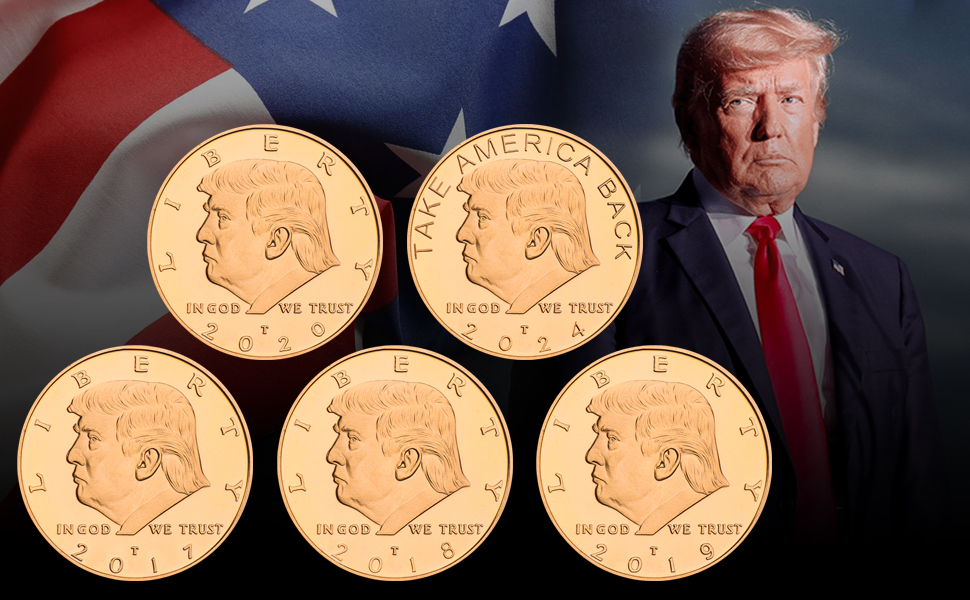
By the time the U.S. Mint strikes the first 24-karat gold Trump commemorative coin later this year, the great American tradition of keeping living politicians off the nation’s money will have been quietly, but spectacularly, circumvented.
Approved unanimously on March 19, 2026, by the Trump-appointed Commission of Fine Arts, the coin is ostensibly a celebration of the nation’s 250th anniversary. Yet, it serves a secondary, more visceral purpose for its chief architect: projecting executive dominance. The design is unapologetically aggressive. The obverse features President Donald Trump leaning intensely over the Resolute Desk, fists clenched, with the word “LIBERTY” arcing above his head and the dual dates “1776–2026” flanking him. The reverse bears a bald eagle, talons braced, ready to take flight.
Predictably, the political theater has been deafening. Critics have decried the coin as monarchic symbolism, pointing out that since the days of George Washington, the republic has fiercely guarded its currency against the vanity of living rulers. Defenders hail it as a masterstroke of patriotic fundraising and commemorative artistry.
But beneath the partisan noise lies a profound economic irony. In the grand sweep of monetary history, a leader plastering his face on ceremonial gold does not signal absolute control over a nation’s wealth. Quite the opposite. As we look back to the shifting empires of late antiquity, such numismatic pageantry usually reveals the exact opposite: a leader attempting to mask the uncomfortable reality of his limited sovereignty.
To understand the true weight of the 2026 Trump gold coin, one must look not to the halls of the Federal Reserve, but to the 6th-century courts of the Ostrogothic kings of Italy.
The Loophole of Vanity: 31 U.S.C. § 5112
To grasp the limits of the President’s monetary power, one must first look at the legal acrobatics required to mint the coin in the first place.
Federal law strictly forbids the portrait of a living person on circulating U.S. currency—a tradition born from the Founding Fathers’ revulsion for the coinage of King George III. To bypass this, the administration utilized the authorities granted under 31 U.S.C. § 5112, specifically the Treasury’s broad discretion to issue gold bullion and commemorative coins that do not enter general circulation.
While the coin bears a nominal face value of $1, it is a piece of bullion, not a medium of exchange. You cannot buy a coffee with it; it will not alter the M2 money supply; it will not shift the consumer price index.
Herein lies the central paradox of the Trump Semiquincentennial coin:
- The Facade of Power: It utilizes the highest-purity gold and the official imprimatur of the United States Mint to project executive authority.
- The Reality of Policy: The actual levers of the American economy—interest rates, quantitative easing, and the health of the fiat dollar—remain stubbornly out of the Oval Office’s direct control, residing instead with the independent Federal Reserve.
This dynamic—where a ruler uses localized, symbolic coinage to project a sovereignty he does not fully possess over the broader economic system—is not a modern invention. It is a historical hallmark of limited power.
Echoes from Ravenna: The Ostrogothic Parallel
When the Western Roman Empire collapsed in the late 5th century, Italy fell under the dominion of the Ostrogoths. The most famous of their rulers, Theodoric the Great, commanded the peninsula with formidable military might from his capital in Ravenna. He was, for all practical purposes, the king of Italy.
Yet, when you examine Ostrogothic coinage from this era, a fascinating picture of deference and limitation emerges.
Despite his military supremacy, Theodoric understood that the true center of global economic gravity lay to the east, in Constantinople. The Byzantine Emperor controlled the solidus—the gold standard of the Mediterranean world. If Theodoric wanted his kingdom to participate in international trade, he had to play by Byzantine monetary rules.
Consequently, the Ostrogoths minted gold and silver coins that were essentially counterfeits of Byzantine money. They bore the portrait of the reigning Eastern Emperor (such as Anastasius or Justinian), not the Ostrogothic king. Theodoric restricted his own branding to a modest monogram, and later kings, like Theodahad, only dared to place their full portraits on the bronze follis—the low-value base metal used for buying bread in local markets, entirely decoupled from international high finance.
The lesson from the Ostrogoths is clear, and widely recognized in peer-reviewed numismatic scholarship: controlling the territory is not the same as controlling the currency. The Ostrogoths used their local mints to project an image of continuity and authority to their immediate subjects, but they bowed to the monetary hegemony of the true empire.
The Byzantine Emperor of Modern Finance
Today, the “Constantinople” of the global economy is not a rival nation, but the institutional apparatus of the fiat dollar system—chiefly, the Federal Reserve and the global bond market.
President Trump has frequently chafed against this reality. Throughout his political career, he has sought to blur the lines of Fed independence, occasionally demanding lower interest rates or criticizing the Fed Chair with a ferocity normally reserved for political rivals. Yet, the institutional firewalls have largely held. The President cannot unilaterally dictate the cost of capital. He cannot force the world to buy U.S. Treasuries.
Thus, the 24-karat commemorative coin acts as his modern bronze follis.
It is a stunning piece of metal, but it is ultimately a domestic token. It satisfies a base of political supporters and projects an aura of monarchic permanence, just as Theodahad’s portrait did in the markets of Rome. But it does not challenge the underlying hegemony of the independent central banking system. The global markets, the sovereign wealth funds, and the algorithmic trading desks—the modern equivalents of the Byzantine merchants—will ignore the gold coin entirely. They will continue to trade in the invisible, digital fiat dollars over which the President exercises only indirect influence.
The Illusion of Monetary Sovereignty
What, then, does the “Trump coin” tell us about the current state of American executive power?
First, it highlights a growing preference for the aesthetics of power over the mechanics of governance. Minting a gold coin with one’s face on it is a frictionless exercise in executive privilege. Reining in a multi-trillion-dollar deficit, negotiating complex trade pacts, or carefully managing a soft economic landing are laborious, constrained, and often unrewarding tasks.
Second, it reveals the resilience of America’s financial architecture. That the President must resort to a commemorative loophole—utilizing a non-circulating bullion designation to bypass the strictures of circulating fiat—is a testament to the fact that the core of America’s money remains insulated from populist whim.
Consider the implications for dollar hegemony:
- Global Confidence: International investors rely on the U.S. dollar precisely because it is not subject to the immediate, emotional control of the executive branch.
- Institutional Friction: The outcry over the coin, while loud, proves that democratic norms regarding the separation of leader and state apparatus are still fiercely defended in the public square.
- The Paradox of Gold: By choosing gold—the traditional refuge of those who distrust government fiat—the administration inadvertently highlights its own lack of faith in the very paper currency it is sworn to manage.
Conclusion: The Weight of Empty Gold
The Roman historian Cassius Dio once observed that you can judge the health of a republic by the faces on its coins. When the republic falls, the faces of magistrates are replaced by the faces of autocrats.
But history is rarely that simple. The Ostrogothic kings of the 6th century put their faces on bronze because they lacked the power to control the gold. In March 2026, an American president has put his face on gold because he lacks the power to control the fiat.
The Semiquincentennial Trump coin is destined to be a remarkable collector’s item, a flashpoint in the culture wars, and a brilliant piece of political marketing. But when historians look back on the numismatics of the 2020s, they will not see a president who conquered the American monetary system. They will see a leader who, much like the kings of late antiquity, had to settle for a brilliant, golden simulacrum of power, while the true economic empire hummed along, indifferent and out of reach.
FAQ: Understanding the 2026 Commemorative Coin and U.S. Monetary Policy
Is it legal for a living U.S. President to be on a coin? Yes, but only under specific circumstances. By law (31 U.S.C. § 5112), living persons cannot be depicted on circulating currency (like standard pennies, quarters, or paper bills). However, the U.S. Mint has the authority to produce non-circulating bullion and commemorative coins. The 2026 Trump coin exploits this loophole as a non-circulating commemorative piece.
Does the U.S. President control the value of the dollar? No. While presidential policies (like tariffs, taxation, and government spending) affect the broader economy, the direct control of the U.S. money supply and interest rates rests with the Federal Reserve, an independent central bank. The President appoints the Fed Chair, but cannot legally dictate the bank’s day-to-day monetary policy.
What is the historical significance of the Ostrogothic coinage parallel? In the 6th century, Ostrogothic kings in Italy minted gold coins bearing the face of the Byzantine Emperor, while reserving their own portraits for lower-value bronze coins. This demonstrated that while they held local, symbolic power, true economic sovereignty belonged to the Byzantine Empire. The 2026 Trump coin operates similarly: it offers localized symbolic prestige, but the actual “engine” of the U.S. economy remains under the control of the independent Federal Reserve.
Can I spend the 24-karat Trump coin at a store? Technically, the coin has a legal face value of $1. However, because it is minted from 24-karat gold, its intrinsic metal value and numismatic collector value far exceed its $1 face value. It is meant to be collected and held as an asset or piece of memorabilia, not used in daily commercial transactions.
Investing 101
Gaming Giant’s Bold Gamble: Why Investors are Devouring Risky EA Debt Amid Geopolitical Crosscurrents
Investors are aggressively snapping up debt for Electronic Arts’ historic $55bn take-private, signaling resilient credit markets despite geopolitical tensions and AI disruption. Explore the EA LBO’s financial engineering, cost savings, and the appetite for risky video game financing in 2026.
Introduction: The Unyielding Allure of High-Yield
The world of high finance rarely pauses for breath, even as geopolitical headwinds gather and technological disruption reshapes industries. Yet, the recent $55 billion take-private of video game titan Electronic Arts (EA) has delivered a masterclass in market resilience, demonstrating an almost insatiable investor appetite for leveraged debt—even when tied to a complex, globally-infused transaction. Led by Saudi Arabia’s Public Investment Fund (PIF), Silver Lake, and Affinity Partners, this landmark deal, poised to redefine the gaming M&A landscape, has seen its $18-20 billion debt package met with overwhelming demand, proving that the pursuit of yield often eclipses lingering doubts.
This isn’t merely another private equity mega-deal; it’s a bellwether for global credit markets in early 2026. JPMorgan-led bond deals, designed to finance one of the largest leveraged buyouts in history, have drawn over $25 billion in orders, far surpassing their target size. This aggressive investor embrace of what many consider risky debt, particularly given the backdrop of Middle East tensions and concerns over AI’s impact on software, underscores a fascinating dichotomy: a cautious macroeconomic outlook juxtaposed with an audacious hunt for returns in stable, cash-generative assets. The question isn’t just how this was financed, but why investors dove in with such conviction, and what it signals for the year ahead.
The Anatomy of a Mega-Buyout: EA’s Financial Engineering
At an enterprise value of approximately $55 billion, the Electronic Arts take-private deal stands as the largest leveraged buyout on record, eclipsing the 2007 TXU Energy privatization. The financing structure is a finely tuned orchestration of equity and debt, designed to maximize returns for the acquiring consortium while appealing to a broad spectrum of debt investors.
Equity & Debt Breakdown
The EA $55bn LBO is funded through a combination of substantial equity and a significant debt tranche:
- Equity Component: Approximately $36 billion, largely comprising cash contributions from the consortium partners, including the rollover of PIF’s existing 9.9% stake in EA. PIF is set to own a substantial majority, approximately 93.4%, with Silver Lake holding 5.5% and Affinity Partners 1.1%.
- Debt Package: A substantial $18-20 billion debt package, fully committed by a JPMorgan-led syndicate of banks. This makes it the largest LBO debt financing post-Global Financial Crisis.
Unpacking the Debt Tranches: Demand & Pricing
The sheer scale of demand for this EA acquisition financing has been striking. The initial $18 billion debt offering, which included both secured and unsecured tranches, quickly swelled to over $25 billion in investor orders. This oversubscription highlights a strong market appetite for gaming-backed paper.
Key components of the debt include:
- Leveraged Loans: A cross-border loan deal totaling $5.75 billion launched on March 16, 2026, comprising a $4 billion U.S. dollar loan and a €1.531 billion ($1.75 billion) euro tranche.
- Pricing: Term Loan Bs (TLBs) were guided at 350-375 basis points over SOFR/Euribor, with a 0% floor and a 98.5 Original Issue Discount (OID). This discounted pricing suggests lenders were baking in some risk, yet the demand remained robust.
- Secured & Unsecured Bonds: The financing also features an upsized $3.25 billion term loan A, an additional $6.5 billion of other dollar and euro secured debt, and $2.5 billion of unsecured debt. While specific high-yield bond pricing hasn’t been detailed, market intelligence suggests secured debt at approximately 6.25-7.25% and unsecured north of 8.75%, reflective of the leverage profile.
The Deleveraging Path: Justifying a 6x+ Debt/EBITDA
Moody’s projects that EA’s gross debt will increase twelve-fold from $1.5 billion, pushing pro forma leverage (total debt to EBITDA) to around eight times at closing. Such high leverage ratios typically raise red flags, but the consortium’s pitch centers on EA’s robust cash flows and significant projected cost savings.
Three Pillars Justifying the Leverage
- Stable Cash Flows from Core Franchises: EA boasts an enviable portfolio of consistently profitable franchises, including FIFA (now EA Sports FC), Madden NFL, Apex Legends, and The Sims. These titles generate predictable, recurring revenue streams, particularly through live service models and annual updates, which underpin the company’s financial stability—a critical factor for debt investors.
- Strategic Cost Savings & Operational Efficiencies: The new owners have outlined an aggressive plan for $700 million in projected annual cost savings. This includes:
- R&D Optimization: $263 million from reclassifying R&D expenses for major titles like Battlefield 6 and Skate as one-time costs, now that they are live and generating revenue.
- Portfolio Review: $100 million from a strategic review of the game portfolio.
- AI Tool Integration: $100 million from leveraging AI tools for development and operations.
- Organizational Streamlining: $170 million from broader organizational efficiencies.
- Public Company Cost Removal: $30 million saved by no longer incurring costs associated with being a public entity.
These add-backs significantly bolster adjusted EBITDA figures, making the debt package appear more manageable to prospective lenders. Moody’s expects leverage to decrease to five times by 2029.
- Untapped Growth Potential in Private Ownership: Freed from quarterly earnings pressure, EA’s management can pursue longer-term strategic initiatives and R&D without the immediate scrutiny of public markets. This is particularly appealing for a company operating in an industry prone to rapid innovation and large, multi-year development cycles. The consortium’s diverse networks across gaming, entertainment, and sports are expected to create opportunities to “blend physical and digital experiences, enhance fan engagement, and drive growth on a global stage”.
Geopolitical Currents and the Appetite for Risky Debt
The influx of capital into the Electronic Arts bond deals is particularly noteworthy given the complex geopolitical backdrop of early 2026. Global markets are navigating sustained tensions in the Middle East, the specter of trade tariffs, and the disruptive force of artificial intelligence. Yet, these factors have not deterred investors from snapping up debt to finance Electronic Arts’ $55bn take-private.
The Saudi PIF Factor: Geopolitical Implications
The prominent role of Saudi Arabia’s Public Investment Fund (PIF) as the lead equity investor introduces a significant geopolitical dimension. The PIF, managing over $925 billion in assets, views this acquisition as a strategic move to establish Saudi Arabia as a global hub for games and sports, aligning with its “Vision 2030” diversification efforts. PIF’s deep pockets and long-term investment horizon offer stability often attractive to private equity deals.
However, the involvement of a sovereign wealth fund, particularly one with ties to Jared Kushner’s Affinity Partners, has not been without scrutiny. Concerns about national security risks, foreign access to consumer data, and control over American technology (including AI) have been voiced by organizations like the Communications Workers of America (CWA), who urged federal regulators to scrutinize the deal. Despite these geopolitical and regulatory considerations, the debt market demonstrated a remarkable willingness to participate. This indicates that the perceived financial stability and growth prospects of EA outweighed concerns tied to the source of equity capital.
AI Disruption and Market Confidence
The gaming industry, like many sectors, faces potential disruption from AI. Yet, EA itself projects $100 million in cost savings from AI tools, signaling a strategic embrace rather than fear of the technology. This forward-looking approach to AI, coupled with the inherent stability of established gaming franchises, likely contributed to investor confidence. In a volatile environment, proven entertainment IP acts as a relatively safe harbor.
The successful placement of this jumbo financing also suggests that while some sectors (like software) have seen “broader risk-off sentiment” due to AI uncertainty, the market distinguishes between general software and robust, content-driven interactive entertainment.
Broader Implications for Gaming M&A and Private Equity
The EA LBO is more than an isolated transaction; it’s a powerful signal for the broader M&A landscape and the future of private equity.
A Return to Mega-LBOs?
After a period where massive leveraged buyouts fell out of favor post-Global Financial Crisis, the EA deal marks a definitive comeback. It “waves the green flag on sponsors resuming mega-deal transactions,” indicating that easing borrowing costs and renewed boardroom confidence are aligning to facilitate large-cap M&A. The success of this deal, especially the oversubscription of its debt tranches, could embolden other private equity firms to pursue similar-sized targets in industries with reliable cash flows. This is crucial for private-equity debt appetite in 2026.
Creative Independence Post-Delisting
While private ownership offers freedom from public market pressures, it also introduces questions about creative independence. Historically, private equity has been associated with aggressive cost-cutting and a focus on short-term profits. For a creative industry like gaming, this can be a double-edged sword. While the stated goal is to “accelerate innovation and growth”, some within EA have expressed concern about potential workforce reductions and increased monetization post-acquisition. The challenge for the new owners will be to balance financial optimization with the nurturing of creative talent and IP development crucial for long-term success.
What it Means for 2027: Scenarios and Ripple Effects
As the EA $55bn take-private moves towards its expected close in Q1 FY27 (June 2026), its ripple effects will be closely watched by analysts and investors alike.
- Post-Deal EA Strategy: Under private ownership, expect EA to double down on its most successful franchises and potentially explore new growth vectors less scrutinized by quarterly reports. Strategic investments in areas like mobile gaming, esports, and potentially new IP development could accelerate. The projected cost savings will likely be reinvested to fuel growth or rapidly deleverage.
- Valuation Multiples: The deal itself sets a new benchmark for valuations in the gaming sector, particularly for companies with strong IP and predictable revenue streams. This could influence future M&A activities involving peers like Activision Blizzard (though now part of Microsoft) or Take-Two Interactive, raising their perceived floor valuations.
- Credit Market Confidence: The overwhelming investor demand for EA’s debt signals a powerful confidence in the leveraged finance markets, particularly for well-understood, resilient businesses. If EA successfully executes its deleveraging and growth strategy post-buyout, it will further validate the market’s willingness to finance large, complex LBOs, even amidst global uncertainty. This could pave the way for more “risky debt” deals tied to stable, high-quality assets.
- Geopolitical Influence in Tech: The PIF’s leading role solidifies the trend of sovereign wealth funds actively participating in global technology and entertainment sectors. This influence will continue to shape discussions around regulatory oversight, national interests, and the evolving landscape of global capital flows.
The investors snapping up debt to finance Electronic Arts’ $55bn take-private aren’t just betting on a video game company; they’re wagering on the enduring power of stable cash flows, strategic cost management, and a robust credit market willing to absorb risk for attractive yields. In a world grappling with uncertainty, the virtual battlefields of EA’s franchises offer a surprisingly solid ground for real-world financial gains.
Analysis
US-Iran Conflict: The Hidden $2 Trillion Threat to Markets — And the Only Peaceful Exit Strategy That Works
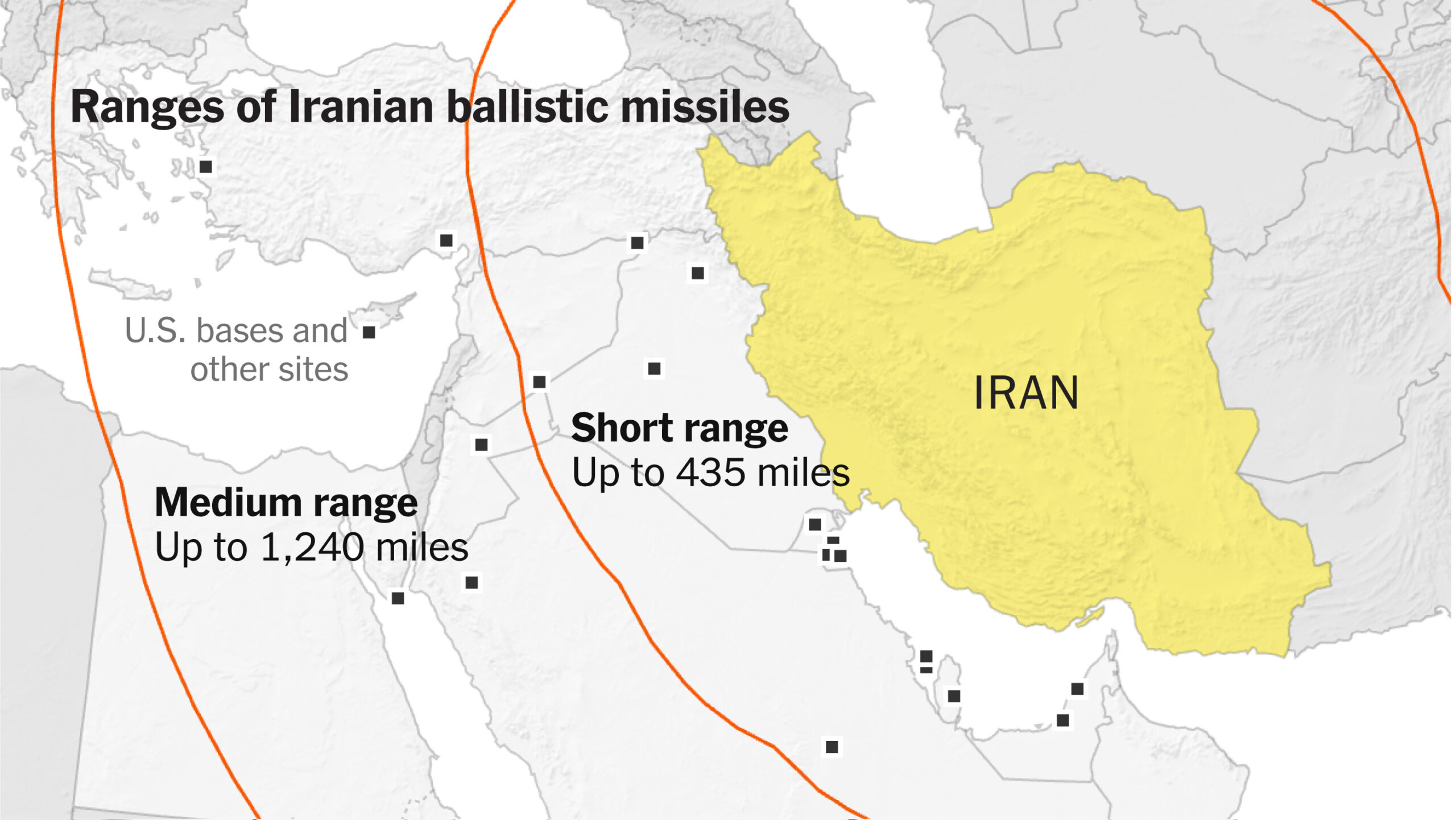
At 2:30 a.m. Eastern time on February 28, 2026, President Donald Trump appeared on Truth Social to tell the world that Operation Epic Fury had begun. Within hours, US and Israeli airstrikes had killed Supreme Leader Ali Khamenei, targeted Iran’s nuclear and missile infrastructure, and triggered an Iranian counter-barrage that struck US military installations across the Gulf from Kuwait to Qatar. The Strait of Hormuz — the narrow channel through which one-fifth of the world’s seaborne oil flows daily — effectively ceased to function as a global trade corridor. What followed was not merely a military confrontation. It was, instantly and simultaneously, a financial one.
The US-Iran conflict financial markets impact is now being measured in trillions, not billions. The S&P 500 has shed all of its 2026 gains in four trading days. Gold has broken historic highs. Oil is being repriced as a weapon, not a commodity. And central banks from Frankfurt to Tokyo have abruptly paused rate-cut deliberations they had spent months preparing. Understanding the full economic anatomy of this crisis — and the narrow but navigable diplomatic corridor that still exists — is no longer optional for any serious investor, policymaker, or business leader.
1: The Flashpoints and the Immediate Market Shock
The escalation was not unforeseeable. From late January 2026 onward, the United States had amassed air and naval assets in the region at a scale not seen since the 2003 invasion of Iraq. Wikipedia Markets were already on edge before the first bomb fell. When they did fall, the reaction was swift and severe.
The Cboe Volatility Index surged 18% in early Monday trading, while spot gold prices accelerated more than 2% to approach $5,400 an ounce. CNBC By March 3, the S&P 500 had slid more than 2% shortly after the opening bell to trade near 6,715, erasing all year-to-date gains and hitting a three-month low, with nearly 90% of S&P 500 stocks in the red and decliners outnumbering advancers 17-to-1 at the NYSE. Coinpaper
The energy market moved even harder. US crude oil rose 8.4% to $72.74 per barrel on the first Monday of the conflict, while global benchmark Brent jumped 9% to $79.45 — closing at their highest levels since the US and Israel bombed Iran’s nuclear facilities in June 2025. CNBC By Wednesday, Brent extended its gains to $82.76 a barrel, hovering near the highest level since January 2025, with WTI rising for a third day to $75.48 — and Brent now 36% higher year-to-date according to LSEG data. CNBC
The bond market defied its usual wartime script. Rather than rallying as a safe haven, Treasuries sold off as inflation fears dominated. The 10-year Treasury yield, which influences borrowing costs across the economy, fell as low as 3.96% before reversing course and rising to 4.04%. CNN By Day 4, with Brent above $82 and no ceasefire in sight, the 10-year was pressing toward 4.10% — precisely the wrong direction for a Federal Reserve that had spent most of early 2026 signaling rate cuts.
2: Sector-by-Sector Damage — A Stress Test for Wall Street
The US-Iran tensions stock market crash dynamic is not uniform. It is a story of violent rotation — capital moving decisively from growth to defense, from global to domestic, from risk to refuge.
Energy: The clear winner, perversely. Global oil majors traded higher, with Exxon Mobil up 4.1% in pre-market trading, Chevron up 3.9%, France’s TotalEnergies 3.6% higher, and Shell advancing 2.2%. CNBC Refiners with US-centric supply chains have additional insulation from the Hormuz disruption.
Airlines: The clearest victim. More than 1 million people were caught in travel chaos as another 1,900 flights were canceled in and out of the Middle East on Day 4, including from major hubs like Dubai. CNBC United, American, and Delta have seen shares drop 4–8%. Higher jet fuel costs compound the problem: approximately 30% of Europe’s jet fuel supply originates from or transits through the Strait of Hormuz. Al Jazeera
Defense contractors: Lockheed Martin, Northrop Grumman, and RTX gained 2–3% as military operations intensified. INDmoney These gains are likely to persist for weeks regardless of diplomatic outcome, as allied nations across Europe and the Gulf accelerate procurement.
Technology and semiconductors: The damage is more subtle but may prove more durable. Taiwan and South Korea — two of Asia’s most critical semiconductor manufacturing hubs — import the majority of their crude through the Strait of Hormuz. A sustained supply shock raises input costs, forces energy rationing decisions, and injects planning uncertainty into capital expenditure cycles. The impact of the Iran-Israel war on global economy in the semiconductor sector may only become visible in Q2 earnings guidance.
Shipping and insurance: Supertanker rates have hit all-time highs. Insurance withdrawal is doing the work that a physical blockade has not — the outcome for cargo flow is largely the same, with tanker traffic dropping approximately 70% and over 150 ships anchoring outside the strait to avoid risks. Kpler Goldman Sachs noted in a client memo that even without further physical disruptions, “precautionary restocking and redirection can raise already elevated freight rates further.” Those costs will transmit to consumers across petrochemical, plastics, and agricultural supply chains within weeks.
The aggregate market capitalization loss across US and European equities over four trading days exceeds $2 trillion — a figure that encompasses not just direct sector damage but the systemic repricing of risk across growth assets globally.
3: The Global Ripple Effects — Europe, Asia, and Gulf Sovereign Funds
No geography escapes the oil prices US-Iran conflict 2026 arithmetic. But the damage is not equally distributed.
Europe faces a particularly acute energy vulnerability. The continent, still structurally scarred by the 2022 Russian gas crisis, had stabilized its LNG supply chains through Qatari and Emirati routes — both of which now transit through a contested Strait. Bank of America warned that a prolonged disruption in the Strait could push European natural gas prices above €60 per megawatt hour. CNBC European benchmark Dutch TTF futures saw prices nearly double over 48 hours before easing on diplomatic headlines. The pan-European Stoxx 600 fell 2.7% on Day 4, with bank shares down 3.8%, insurance stocks down 4.2%, and mining stocks down 3.9%. CNBC
Asia carries the highest structural exposure. The majority of crude oil shipped through the Strait of Hormuz flows to China, India, Japan, and South Korea, accounting for nearly 70% of total shipments according to the US Energy Information Administration. Al Jazeera Goldman Sachs modeled that under a six-week Strait closure with oil rising from $70 to $85 per barrel, regional inflation in Asia could rise by approximately 0.7 percentage points, with the Philippines and Thailand most vulnerable and China facing a more modest increase. CNBC
Gulf sovereign wealth funds face a paradox that would be almost elegant if not for the human cost. Higher oil revenues theoretically boost fund inflows; but Iranian missile strikes on UAE, Qatari, Kuwaiti, and Saudi infrastructure create operational disruption and direct asset damage. Dubai International Airport — one of the world’s busiest aviation hubs — was struck. The UAE’s financial identity as a stable, neutral commercial center is being stress-tested in real time.
Central banks globally find themselves trapped between the inflation imperative and the growth shock. Nomura’s economists stated that “the ongoing Iran conflict solidifies the case for many central banks to hold rates steady for now,” leaving policymakers to juggle a delicate task of balancing inflationary risk against slowing growth. CNBC For the Federal Reserve, which had been building toward two rate cuts in 2026’s first half, the conflict could push that timetable to the fourth quarter at earliest — or eliminate it entirely.
4: The Only Viable Peaceful Exit Strategy — And Why It Can Still Work
This is where most analysis stops and where this piece begins in earnest. The diplomatic wreckage left by Operation Epic Fury is substantial. But it is not irreparable — and the economic pressure building on all sides is, paradoxically, the most powerful argument for a negotiated settlement.
Why a deal is structurally possible:
Trump told The Atlantic magazine on Day 2 that Iran’s new leadership wanted to resume negotiations and that he had agreed to talk to them: “They want to talk, and I have agreed to talk, so I will be talking to them.” CNBC Iran’s provisional leadership — a council comprising President Masoud Pezeshkian and senior officials — is navigating an existential moment without Khamenei’s ideological authority. That creates both fragility and, crucially, flexibility. Importantly, just before the strikes began, Oman’s Foreign Minister said a “breakthrough” had been reached and Iran had agreed both to never stockpile enriched uranium and to full verification by the IAEA. House of Commons Library The architecture of a deal already existed. It was not lack of diplomatic progress that triggered the war — it was the decision to strike before that progress could be formalized.
A realistic peaceful exit strategy for US-Iran requires four sequential steps:
Step 1 — Ceasefire and maritime corridor restoration (Days 1–7). The immediate priority is humanitarian and commercial. Trump has already offered US Development Finance Corporation insurance for tankers transiting Hormuz and pledged naval escorts. Oil prices eased significantly after Trump’s announcement, with Brent up 3% rather than the 10%+ of earlier sessions. CNBC This signals that markets will respond immediately to credible de-escalation signals. Oman, which hosted the February Muscat talks and whose Foreign Minister declared progress “within reach,” is the natural first-mover for a ceasefire framework. Qatar and Turkey — both of which have maintained functional working relationships with Tehran — can serve as parallel channels.
Step 2 — UN Security Council monitoring framework (Days 7–21). Historical precedent is instructive. The 1981 Algiers Accords, brokered by Algeria after Iran held 52 Americans hostage for 444 days, succeeded precisely because a credible neutral third party structured the terms and each side could claim a form of victory. A UN-monitored ceasefire framework — with the IAEA resuming real-time access to Iranian nuclear sites — addresses Washington’s core stated objective while giving Iran’s provisional government a face-saving mechanism to halt counter-strikes.
Step 3 — Phased sanctions rollback tied to verifiable nuclear benchmarks (Weeks 3–8). Iran’s economy was already in crisis before the first airstrike. Iran’s GDP per capita had fallen from over $8,000 in 2012 to around $5,000 by 2024. Wikipedia The incoming provisional leadership will face acute pressure from a population that was already staging the largest protests since the 1979 revolution. Economic relief — even partial and phased — is the most powerful leverage a negotiating framework can offer. The pre-existing Geneva blueprint, imperfect as it was, provides a workable skeleton.
Step 4 — A Gulf security architecture with multilateral guarantees (Months 2–6). The enduring lesson of every prior US-Iran de-escalation cycle is that bilateral deals without regional buy-in collapse under the weight of proxy conflicts and domestic political pressure. Saudi Arabia, the UAE, Qatar, and Turkey need to be co-signatories or formal witnesses to any sustainable settlement — not merely passive observers. Saudi Crown Prince Mohammed bin Salman’s reported calls to Trump before the strikes demonstrate that Gulf states are not passive in this conflict. Their inclusion in a permanent security framework is the difference between a ceasefire and a durable peace.
The economic logic is unambiguous: every week the Hormuz disruption persists, global GDP loses an estimated $25–30 billion in foregone trade flows, supply chain disruption, and elevated energy costs. A month of full disruption — Goldman Sachs’s $100-per-barrel scenario — would represent one of the largest deflationary shocks to global growth since the 2008 financial crisis. That shared economic pain is, historically, what finally moves adversaries from battlefield to negotiating table.
5: The Investor Playbook — What to Buy, Hedge, or Avoid Right Now
The safe haven assets during US-Iran crisis playbook is partially conventional, partially counterintuitive in this specific conflict.
Strong conviction positions:
- Gold: J.P. Morgan raised its gold price target to $6,300 per ounce by the end of 2026, reflecting sustained geopolitical risk as a structural driver. CNBC At $5,300–$5,410 currently, the upside thesis remains intact.
- US energy majors: Exxon, Chevron, and their European equivalents remain direct beneficiaries of elevated Brent until Hormuz normalizes.
- Defense contractors: Northrop Grumman, RTX, and L3Harris benefit from both the current operational tempo and the inevitable allied defense spending acceleration that follows every regional escalation.
- US dollar and short-duration Treasuries: The dollar index has erased its 2026 losses. Short-duration bills offer inflation-adjusted protection without the duration risk of 10-year bonds in an inflationary environment.
Positions to hedge or reduce:
- Airlines: Avoid until Hormuz reopens and jet fuel normalizes. The dual pressure of higher fuel costs and collapsed Middle East route revenue is a structural problem, not a temporary one.
- Emerging market equities, particularly Asian importers: The Philippines, Thailand, and South Korea face the most acute oil-import cost exposure.
- European utility companies: Natural gas price volatility creates margin compression that takes quarters to appear fully in earnings.
- Tech and growth equities with elevated multiples: Not because of direct exposure to the conflict, but because sustained higher oil prices reinforce the “higher for longer” rate narrative that compresses price-to-earnings multiples in high-duration assets.
The contrarian opportunity: Inverse VIX instruments and long equity positions become interesting only when a ceasefire signal appears credible. History is clear on this: geopolitical shocks that are followed by negotiated settlements produce sharp equity rebounds. Trump’s own statement that Iran wants to talk is the first credible signal since Operation Epic Fury began.
Conclusion: The Clock Is Expensive
Every day the Strait of Hormuz remains effectively closed, the hidden economic meter runs. The $2 trillion figure in this piece’s headline is not a speculative construct — it is a conservative aggregation of market capitalization losses, disrupted trade value, inflation uplift, and foregone GDP that is already being booked into the global economy’s ledgers.
The exit, however, exists. It requires Trump to convert his Atlantic interview signal into a formal back-channel offer, Oman to reconvene the Muscat framework under UN auspices, and Iran’s provisional government to recognize that economic survival and a negotiated nuclear settlement are not separate imperatives but the same one. European natural gas futures dropped as much as 12% in a single session on reports that Iranian operatives had reached out to discuss terms for ending the conflict Euronews — a reminder of just how swiftly markets reward even the whisper of diplomacy.
The conflict is four days old. The diplomatic infrastructure that nearly prevented it is, remarkably, still partially intact. Whether the economic shock of the Hormuz crisis finally proves more persuasive than the ideology that created it remains the defining geopolitical and financial question of 2026.

KSE-100 Plunges Amid Geopolitical Firestorm — But Islamabad Holds the World’s Attention

The Trump Coin and Lessons from the Ostrogoths: How a Gold Offering Reveals the Limits of Presidential Power Over America’s Money

Gaming Giant’s Bold Gamble: Why Investors are Devouring Risky EA Debt Amid Geopolitical Crosscurrents

Top 15 Stocks for Investment in 2026 in PSX: Your Complete Guide to Pakistan’s Best Investment Opportunities
Top 15 Stocks for Investment in 2026 in PSX: Your Complete Guide to Pakistan’s Best Investment Opportunities

Debunking IMF Program Myths: Reconfiguring Engagement for True National Ownership in a Volatile World
-
 Markets & Finance3 months ago
Top 15 Stocks for Investment in 2026 in PSX: Your Complete Guide to Pakistan’s Best Investment Opportunities
-
Markets & Finance3 months ago
Top 15 Stocks for Investment in 2026 in PSX: Your Complete Guide to Pakistan’s Best Investment Opportunities
-
 Analysis2 months ago
Debunking IMF Program Myths: Reconfiguring Engagement for True National Ownership in a Volatile World
-

 Global Economy3 months ago
What the U.S. Attack on Venezuela Could Mean for Oil and Canadian Crude Exports: The Economic Impact
-

 Investment3 months ago
Top 10 Mutual Fund Managers in Pakistan for Investment in 2026: A Comprehensive Guide for Optimal Returns
-

 Asia3 months ago
China’s 50% Domestic Equipment Rule: The Semiconductor Mandate Reshaping Global Tech
-

 AI3 months ago
15 Most Lucrative Sectors for Investment in Pakistan: A 2025 Data-Driven Analysis
-

 Exports3 months ago
Pakistan’s Export Goldmine: 10 Game-Changing Markets Where Pakistani Businesses Are Winning Big in 2025