
Markets & Finance
UK Economy Defies Expectations: How Industrial Production Powered November’s Surprising 0.3% Growth

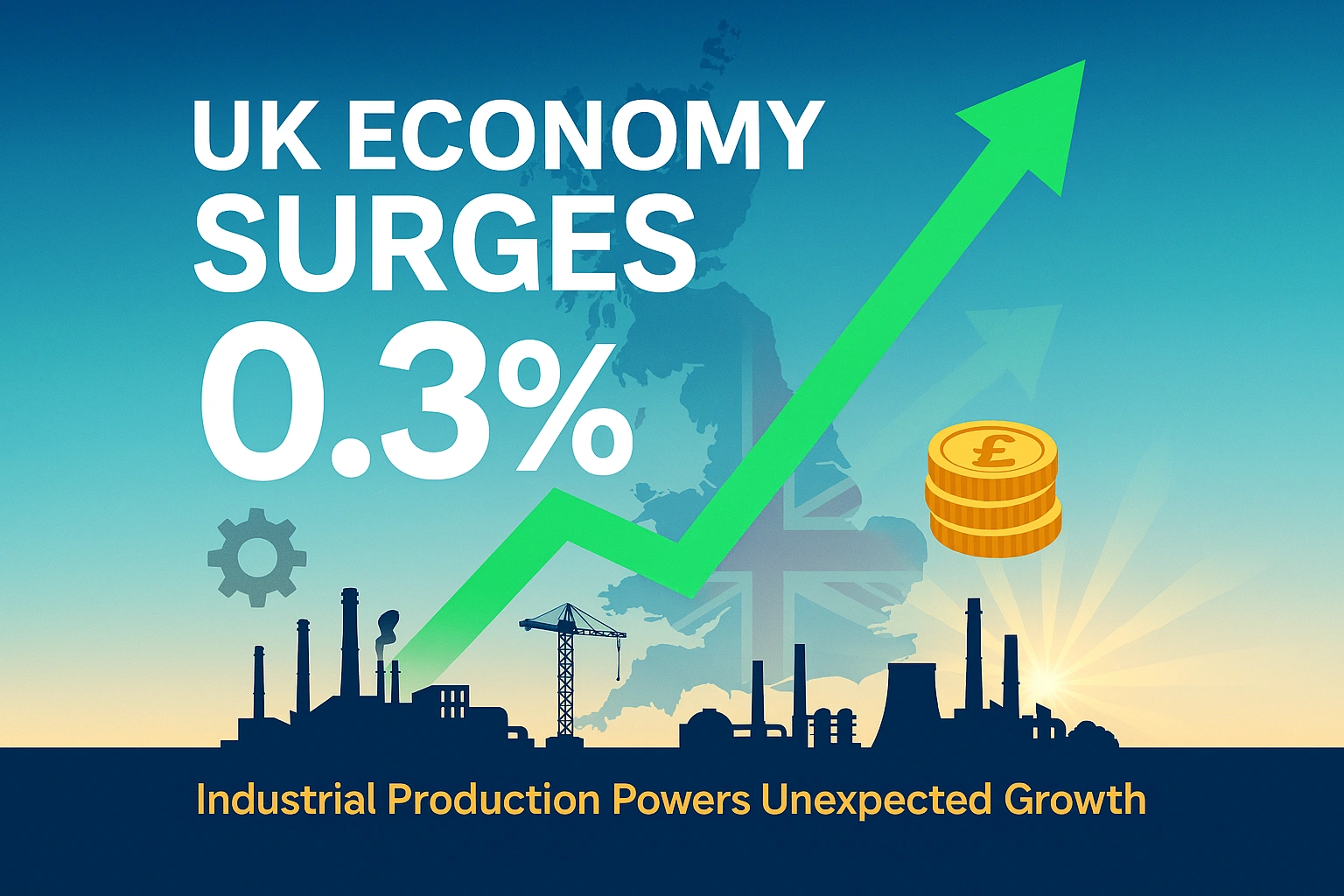
UK economy grows 0.3% in November 2024, beating forecasts as industrial production surges. Expert analysis reveals what this means for 2026 growth, Bank of England policy, and your financial future.
UK Economy Growth November 2024
Key Highlights:
- Economic growth: 0.3% in November (tripled 0.1% forecast)
- Primary driver: Industrial production surge of 1.1%, led by manufacturing recovery
- Manufacturing rebound: 25.5% increase in motor vehicle output following JLR cyberattack recovery
- Services growth: Solid 0.3% expansion, particularly in hospitality sector
- Significance: Five-month high suggesting economic resilience heading into 2026
- Outlook: Economists increasingly optimistic despite persistent challenges
Here’s something that doesn’t happen often in British economic data: genuine surprise. On a grey January morning, the Office for National Statistics dropped numbers that made economists do a double-take. The UK economy expanded by 0.3% in November 2024—triple what the forecasting consensus had predicted.
But what makes this figure particularly fascinating isn’t just that it beat expectations. It’s how it did so, and what that tells us about the underlying structural dynamics of Britain’s economic engine as we navigate through 2026.
The Numbers Behind the Surprise: More Than Just a Statistical Blip
Let’s cut through the noise. When economic data exceeds forecasts by 200%, skepticism is warranted. Yet the November figures tell a coherent story that aligns with recent on-the-ground developments across British industry.
According to official ONS data, production output surged by 1.1% month-on-month—a remarkable reversal after three consecutive months of decline. This wasn’t statistical noise or creative accounting. It represented real factories producing real goods, shipping real products to real customers.
The standout performer? Manufacturing output jumped 2.1%, with the transport equipment sector leading the charge with a staggering 10.7% increase. To put that in perspective, motor vehicle manufacturing alone posted a 25.5% monthly gain. That’s the kind of number you might see during a post-recession boom, not in the middle of uncertain economic times.
Jane Foley, head of FX Strategy at Rabobank, told CNBC the data represented a “big relief” following October’s unexpected contraction. But relief implies we were merely avoiding disaster. These numbers suggest something more interesting might be happening beneath the surface.
Industrial Production: The Unsung Hero of Britain’s Economic Story
For years, the narrative around British economic growth has centered on services—financial services, professional services, the knowledge economy. Manufacturing? That’s supposedly a declining sector, a relic of Britain’s industrial past.
November’s data challenges that assumption head-on.
The surge in industrial output wasn’t just about one sector having a good month. It reflected genuine operational capacity coming back online across multiple manufacturing subsectors. Yes, the recovery at Jaguar Land Rover’s facilities following the devastating September cyberattack—which cost the UK economy an estimated £1.9 billion—played a significant role. But that’s precisely the point.
When a single manufacturer can move the national GDP needle by getting back to work, it demonstrates how vital our industrial base remains. According to recent analysis, manufacturing still accounts for 9.4% of the UK economy, down from 17% in 1990 but still representing billions in economic output and hundreds of thousands of jobs.
The JLR recovery exemplifies modern manufacturing’s complexity and interconnectedness. The cyberattack didn’t just shut down JLR’s factories; it paralyzed over 5,000 organizations in the supply chain, from small component suppliers to logistics firms. When production resumed in early October, the economic ripple effects were substantial and immediate.
But here’s what the headline numbers don’t capture: manufacturing’s return isn’t about nostalgia for Britain’s industrial past. It’s about high-value, technologically sophisticated production in sectors like aerospace, pharmaceuticals, and luxury automotive—areas where the UK maintains genuine competitive advantages in global markets.
What This Means for the Average Briton: Beyond the Statistical Abstract
Economic growth figures can feel abstract, disconnected from daily reality. So let’s translate the 0.3% into something tangible.
First, employment. Manufacturing directly supports over 2.6 million jobs in the UK, but the multiplier effects extend far beyond factory floors. Every manufacturing job typically supports 2-3 additional positions in the supply chain, from logistics to business services. The industrial recovery signaled by November’s data suggests these jobs are becoming more secure, not less.
Regional implications matter enormously. The North West of England remains Britain’s manufacturing powerhouse with £29.5 billion in annual output. When manufacturing rebounds, these regions—often overlooked in London-centric economic narratives—benefit disproportionately.
For consumers, the picture is nuanced. Services output grew 0.3%, with accommodation and food service activities posting particularly strong gains of 2.0% after October’s decline. Translation? Hospitality is bouncing back, restaurants are filling seats, and consumer confidence appears to be stabilizing after months of anxiety around the Autumn Budget.
Yet challenges persist. Real household disposable income per capita remains barely 2% higher than pre-pandemic levels—a sobering reminder that while the economy might be growing, living standards are still under pressure.
The Political Economy Lens: Winners, Losers, and the Budget’s Shadow
Economics and politics are inseparable in 2026’s Britain, and November’s growth figures arrive at a politically charged moment.
Chancellor Rachel Reeves’ Autumn Budget 2025 announced £26 billion in tax increases—the third-largest tax-raising budget in post-war British history. The political gamble was explicit: short-term fiscal pain for medium-term economic stability and growth.
November’s data provides the first real test of that strategy. The Institute for Fiscal Studies noted that Reeves faced a smaller fiscal repair job than anticipated, with forecast downgrades partially offset by higher-than-expected inflation and wage growth. That created fiscal space for the Chancellor to increase her headroom to £22 billion—a prudent buffer against economic turbulence.
But here’s the political calculus: borrowing will be higher in each of the next three years under Reeves’ plans. Only after 2029-30 will borrowing decrease, enabled by back-loaded tax rises and spending restraint promises that conveniently come just before the next election. As the IFS tactfully noted, “one could be forgiven for treating that with a healthy dose of skepticism.”
November’s growth surge gives Reeves breathing room. It demonstrates economic resilience despite uncertainty around her fiscal changes. Manufacturing’s recovery, in particular, validates her emphasis on industrial strategy—supporting sectors where Britain has competitive advantages rather than spreading resources thinly across the entire economy.
Yet opposition voices remain vocal. Shadow Chancellor Mel Stride described growth as “still flatlining,” arguing that the government’s approach of raising taxes rather than controlling benefit expenditure weighs heavily on business confidence and economic dynamism.
The truth, as usual, sits somewhere in the middle. One month’s strong data doesn’t establish a trend. But neither does it represent a statistical fluke. It suggests the UK economy possesses more underlying resilience than recent pessimistic commentary acknowledged.
Storm Clouds on the Horizon: Why Optimism Must Be Qualified
Let’s inject some necessary realism. One good month doesn’t make a robust recovery, and significant headwinds remain clearly visible.
Inflation Remains Stubborn: Despite falling from its October 2025 peak of 3.6%, inflation sits at 3.2%—well above the Bank of England’s 2% target. The Bank of England has emphasized that underlying inflationary pressures, particularly in services, remain concerning.
Interest Rate Uncertainty: The Bank of England cut rates to 3.75% in December 2025, the fourth reduction of the year. But future cuts remain uncertain. Market signals suggest investors are less confident about the pace of easing in 2026 than economists’ forecasts would justify.
As Morningstar analysts noted, “Stubborn wage growth will constrain how far the Bank can cut.” Private sector regular pay growth remains around 4.9%—substantially higher than what’s compatible with sustained 2% inflation. Until wage pressures moderate convincingly, the Monetary Policy Committee will remain cautious about aggressive rate cutting.
Labor Market Weakness: Unemployment rose to 5.1% in August-October 2025—the highest since 2021. Youth unemployment hit 16.0%, the worst level since early 2015. These aren’t abstract statistics; they represent hundreds of thousands of people struggling to find work in an economy that’s supposedly growing.
Global Headwinds: The OECD warns of persistent global uncertainties, from trade policy volatility to geopolitical tensions. UK-weighted world GDP growth is projected below historical averages, limiting export opportunities for British manufacturers and service providers.
Productivity Puzzle: Perhaps most troubling, the OBR downgraded its medium-term productivity forecast from 1.3% annually to 1.0%—closer to the dismal post-2008 trend. Without productivity improvements, sustainable wage growth becomes impossible, and living standards stagnate.
Productivity remains Britain’s fundamental economic challenge. November’s industrial surge is welcome, but unless it translates into sustained productivity gains—doing more with less, innovating processes, adopting new technologies—it won’t fundamentally alter Britain’s economic trajectory.
Expert Forecast: Navigating 2026’s Economic Landscape
So where do we go from here? Let’s avoid the false precision of exact numerical forecasts and instead focus on scenarios and probabilities.
The Baseline Scenario (60% probability): Modest, uneven growth continues through 2026. Quarterly GDP growth oscillates between 0.1% and 0.3%, averaging around 1.2-1.5% annually. The Bank of England continues gradual rate cuts, bringing Bank Rate down to 3.0-3.25% by year-end. Inflation slowly converges toward target, reaching approximately 2.2% by Q4 2026.
Manufacturing maintains momentum as supply chains fully normalize post-JLR recovery, but services growth remains subdued amid fiscal tightening and cautious consumer behavior. Real wage growth turns positive but remains modest. Unemployment stabilizes around 5.0%.
This scenario aligns with current OBR projections and represents neither triumph nor disaster—just gradual, grinding progress.
The Optimistic Scenario (25% probability): Something clicks. Business confidence improves significantly as Budget uncertainty fades and clarity around taxation emerges. The industrial strategy gains traction, driving increased capital investment in high-productivity sectors. Planning reforms accelerate housing and infrastructure development.
Consumer confidence rebounds more strongly than anticipated as real wages rise and mortgage rates fall. Export growth surprises to the upside as UK competitiveness improves relative to struggling European peers. GDP growth reaches 1.8-2.0% in 2026, with unemployment falling back toward 4.5%.
In this scenario, November’s data marked an inflection point—the moment when Britain’s economic engine found its rhythm again.
The Pessimistic Scenario (15% probability): Global shocks derail fragile recovery. Escalating trade tensions, geopolitical instability, or financial market turbulence trigger renewed economic anxiety. Consumer and business confidence crater. The productivity downgrade proves prescient as structural weaknesses reassert themselves.
The Bank of England faces an impossible choice between cutting rates to support growth and holding firm to combat persistent inflation. Growth stalls, potentially turning negative in one or more quarters. Unemployment rises above 5.5%. Political stability fractures as the fiscal consolidation strategy collapses.
This isn’t prediction—it’s acknowledging tail risks that could rapidly materialize in our interconnected, fragile global economy.
For Investors and Business Leaders: The prudent approach is planning for the baseline while hedging against downside risks and positioning to capitalize on potential upside. That means:
- Maintaining liquidity to navigate potential turbulence
- Focusing on productivity improvements rather than relying on demand-side tailwinds
- Exploring opportunities in advanced manufacturing, where Britain maintains competitive advantages
- Watching inflation and wage data closely—these will determine the Bank of England’s policy trajectory
- Diversifying geographically to reduce dependence on UK-specific risks
For households, the advice is similar: maintain emergency savings, lock in mortgage rates if you can afford to, and don’t count on rapid improvements in living standards. But also don’t succumb to excessive pessimism. Britain’s economy has repeatedly demonstrated more resilience than commentators anticipated.
The Bigger Picture: Britain’s Economic Identity in Transition
Step back from the monthly data and a larger pattern emerges. Britain’s economy is undergoing a quiet but significant transition.
The service-sector dominance that defined Britain’s economy for three decades is giving way to something more balanced. Not a return to mid-20th-century manufacturing dominance—that ship sailed long ago—but recognition that high-value manufacturing and services are complementary, not competitive.
November’s data captures this transition mid-stream. Manufacturing’s strong performance wasn’t despite Britain’s service-oriented economy but because of it. Modern advanced manufacturing depends on sophisticated business services, logistics networks, financial infrastructure, and professional expertise.
The cyberattack that paralyzed JLR and the subsequent recovery both demonstrate this reality. Britain’s manufacturing sector survives and thrives not through mass production but through specialization, quality, and integration with global value chains. That model proved vulnerable to digital disruption but also capable of rapid recovery when systems came back online.
This is Britain’s economic reality in 2026: neither industrial powerhouse nor pure service economy, but something hybrid and evolving. Success requires embracing that complexity rather than retreating into simplified narratives about what “type” of economy Britain should be.
Final Analysis: Cautious Optimism with Eyes Wide Open
November’s 0.3% growth isn’t cause for celebration or complacency. It’s evidence of resilience—the kind that emerges from businesses adapting, workers persevering, and industrial capacity proving more robust than pessimists believed.
The industrial production surge matters not because manufacturing will save Britain’s economy single-handedly but because it demonstrates that multiple growth engines can fire simultaneously. Services, manufacturing, and construction can all contribute when conditions align favorably.
Yet fundamental challenges persist. Productivity remains stubbornly low. Living standards barely exceed pre-pandemic levels. Public debt continues rising. Inflation sits well above target. Global conditions remain uncertain. Political tensions around fiscal policy show no signs of abating.
The path forward requires acknowledging both progress and problems. November’s data suggests Britain’s economy possesses underlying strength that recent gloomy forecasts underestimated. That’s genuinely good news. But converting one month’s strong performance into sustained, inclusive, productivity-driven growth remains the challenge.
As we navigate deeper into 2026, the question isn’t whether November marked a turning point—monthly data rarely does. The question is whether policymakers, business leaders, and society more broadly can build on this resilience to create the conditions for sustainable prosperity.
The answer to that question won’t be found in GDP reports. It will be written in investment decisions, productivity improvements, policy choices, and the daily efforts of millions of Britons working to build a more prosperous future.
One thing is certain: those who dismissed Britain’s economic prospects based on a few months of weak data should reconsider. And those celebrating November’s figures as vindicating current policies should remember that economic performance isn’t determined by individual data points but by sustained trends, structural fundamentals, and the ability to navigate uncertainty with wisdom and adaptability.
November 2024’s surprise growth reminds us that economies—like people—are more resilient, complex, and unpredictable than our models suggest. That’s simultaneously humbling and encouraging. The path ahead remains uncertain, but it’s far from predetermined.
Sources: All data sourced from official UK government statistics, Bank of England publications, and analysis from premium economic research institutions including the OECD, IFS, and Institute for Government.


Markets & Finance
KSE-100 Plunges Amid Geopolitical Firestorm — But Islamabad Holds the World’s Attention
Trump’s Kharg Island threat, oil at $116, and the Strait of Hormuz crisis send PSX into freefall — even as Pakistan’s capital quietly attempts to rewrite the region’s fate
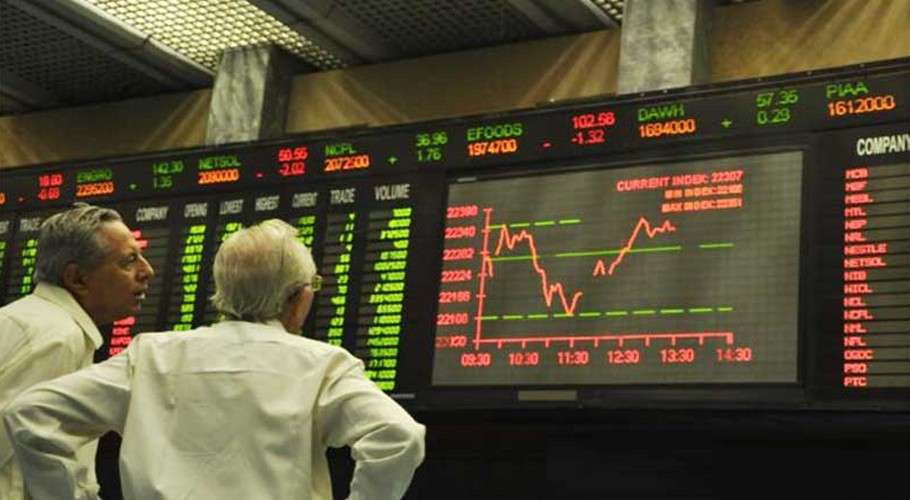
The trading floor in Karachi looked, in the first minutes of Monday’s session, like a room in which all the oxygen had been removed. From the opening bell, the Pakistan Stock Exchange’s benchmark KSE-100 index plummeted over 3,700 points — a drop of nearly 2.5% in less than an hour — as investors absorbed a weekend of extraordinary geopolitical turbulence: oil prices breaching $116 a barrel, a US president musing publicly about seizing Iran’s most critical export hub, and Yemen’s Houthis entering the conflict with fresh missile salvos against Israel. By 9:40am, the KSE-100 had fallen to 147,950.31 points from a previous close of 151,707.51, touching the lowest intraday reading in the index’s 52-week history. Every major sector bled red.
The KSE-100 drops over 3% — and this episode is not occurring in isolation. It is the latest chapter in a five-week global energy crisis that has repriced risk from Houston to Hong Kong, and which now casts a particularly long shadow over Pakistan: a major oil-importing economy whose current account, currency, and inflation trajectory hang in direct tension with every dollar added to the price of Brent crude. What makes today’s session historically distinctive is not simply the severity of the sell-off, but its simultaneous backdrop: even as Karachi’s market bled, barely 1,500 kilometres away in Islamabad, Pakistan’s diplomatic corps was hosting the world’s most consequential attempt yet to end the war that is causing it.
A Market Under Siege: What Happened and Why
Intense selling pressure gripped the Pakistan Stock Exchange on Monday as the KSE-100 index dropped over 3,700 points in early trading, driven by escalating tensions in the Middle East and fears of a prolonged conflict. Bloom Pakistan The rout was broad and unsparing. Selling pressure was particularly concentrated in the automotive, cement, banking, oil and gas, power, and refinery sectors, with shares of major companies including ARL, HUBCO, MARI, OGDC, PPL, HBL, MEBL, MCB, and NBP trading in the negative zone. Bloom Pakistan
The immediate macroeconomic trigger is unmistakable. Brent crude, the global oil benchmark, crossed $116.5 a barrel on Monday before paring to around $114.6 — still 1.8% up on the day — while WTI, the US benchmark, climbed 1% to around $101 a barrel. CNN That price tag carries existential weight for Pakistan, which imports virtually all of its petroleum needs and where energy subsidies already strain a budget operating under the watchful eye of the International Monetary Fund. Crude oil prices have surged more than 50% so far in March following the US-Israeli war against Iran, with Brent having traded around $73 a barrel before the United States and Israel attacked Iran on February 28, prompting Tehran to choke off the Strait of Hormuz. CNN
The rupee, notably, held steady. The USD/PKR exchange rate was around 279.09 on March 30, marginally lower from the previous session, TRADING ECONOMICS suggesting institutional confidence in the State Bank’s management of external reserves — for now. Bond yields, too, showed no alarm. This divergence between equity panic and macro stability is itself revealing: the sell-off is primarily a sentiment shock rather than a deterioration in Pakistan’s fundamentals. That distinction, however cold a comfort to investors nursing heavy losses, matters enormously for the medium-term outlook.
Trump’s Kharg Island Gambit — and the $116 Oil Question
If one man can be credited with Monday’s carnage, his name requires no introduction. Trump told the Financial Times in an interview published Sunday that he wants to “take the oil in Iran” and could seize Kharg Island, which handles about 90% of the country’s oil exports, comparing the potential move to US operations in Venezuela. CNN He then escalated further in the early hours of Monday. The president warned on Truth Social that the US would “completely obliterate” Iran’s electric generating plants, oil wells and Kharg Island if the strategically vital Strait of Hormuz was not “immediately” reopened and a peace deal not reached “shortly.” CNBC
The market implications of such rhetoric are immediately quantifiable. Goldman Sachs estimates a $14–18 per barrel geopolitical risk premium baked into current oil prices, TECHi® while Macquarie Group warned last week that Brent crude could reach $200 a barrel if the war continues until the end of June, equating to a US gasoline price of $7 per gallon. CNN For Pakistan, every $10 rise in sustained crude prices adds approximately $2–2.5 billion to the annual import bill — a structural pressure that threatens to widen the current account deficit, erode foreign reserves, and potentially force the State Bank to revise its monetary easing trajectory.
Michael Haigh, global head of fixed income and commodities research at Société Générale, warned that the potential for further disruption through the Bab el-Mandeb Strait — linking the Gulf of Aden to the Red Sea — could push prices even higher, noting that “four to five million barrels per day” transit the waterway. CNBC In a scenario where both chokepoints are disrupted simultaneously, the oil shock hitting Asia’s emerging markets would be unprecedented in the post-2008 era.
Today’s Damage: Sector-by-Sector Breakdown
| Sector | Impact | Notable Names |
|---|---|---|
| Oil & Gas | Heavy selling | OGDC, PPL, MARI |
| Commercial Banks | Largest negative index contribution | HBL, MCB, NBP, MEBL |
| Cement | Broad-based losses | LUCK |
| Power / IPPs | Negative zone | HUBCO |
| Automotive | Under pressure | ARL |
| Refineries | Sharp declines | ARL |
| Volume Leaders (Overall) | High retail activity | KEL, FNEL, WTL |
Sources: PSX Data Portal, Bloom Pakistan, DayNews.tv — March 30, 2026
Islamabad: The Diplomatic Counterweight
Here is where the story acquires its most remarkable dimension. While Karachi’s brokers scrambled to offload positions, diplomats in Islamabad were doing the opposite — attempting to arrest the very geopolitical spiral that was causing the panic. Two-day consultations of foreign ministers of Türkiye, Saudi Arabia, Egypt and Pakistan started in Islamabad on Sunday as the capital turned into the centre of a rapidly forming diplomatic track — described by officials as the most coordinated regional effort yet to push the United States and Iran towards direct talks. Al Jazeera
The outcome was more concrete than many had anticipated. Pakistan achieved a significant diplomatic success as Saudi Arabia, Türkiye and Egypt endorsed Islamabad’s growing role as a mediator for peace, backing Pakistan’s initiative to promote de-escalation and potentially host talks between the United States and Iran. The Nation Foreign Minister Ishaq Dar announced: “Pakistan is very happy that both Iran and the US have expressed their confidence in Pakistan to facilitate their talks. Pakistan will be honored to host and facilitate meaningful talks between the two sides in coming days for a comprehensive settlement of the ongoing conflict.” Bloomberg
That language carries weight well beyond the ceremonial. Diplomats say that if current contacts hold, talks between US Secretary of State Marco Rubio and Iran’s Foreign Minister Abbas Araghchi could take place within days, potentially in Pakistan. Al Jazeera Germany’s Foreign Minister Johann Wadephul had already telegraphed optimism, saying he expected a direct US-Iran meeting in Pakistan “very soon.” Al Arabiya
The institutional infrastructure is also being built. The four foreign ministers agreed to establish a committee of senior officials tasked with developing modalities for sustained coordination among Pakistan, Saudi Arabia, Türkiye and Egypt The Nation — a formalised mechanism that gives this diplomatic initiative permanence beyond the current crisis.
Crucially, Pakistan’s leverage derives not from military power but from its unique geographic and diplomatic positioning. Islamabad has longstanding links with Tehran and close contacts in the Gulf, while Prime Minister Shehbaz Sharif and Army Chief Field Marshal Asim Munir have struck up a personal rapport with US President Donald Trump. Tehran has refused to admit to holding official talks with Washington but has passed a response to Trump’s 15-point plan to end the war via Islamabad. Bangladesh Sangbad Sangstha
The Strait of Hormuz: Pakistan’s Lifeline and Geopolitical Card
No development more elegantly illustrates Pakistan’s pivotal position than what happened over the weekend. Pakistan announced that Iran would allow 20 of its flagged ships to pass through the Strait of Hormuz — two ships daily — with Foreign Minister Dar calling it “a welcome and constructive gesture by Iran.” CNN Trump himself acknowledged the development, with the US president telling reporters that Iran had “allowed 20 boats laden with oil to go through the Strait of Hormuz, out of a sign of respect.” CNN
This seemingly modest concession — 20 vessels in a waterway that once carried 17.8 million barrels per day — is diplomatically seismic. It signals that Tehran views Islamabad as a credible channel, granting Pakistan a degree of real-time influence over one of the world’s most consequential shipping lanes. For Pakistan’s economy, the reciprocal benefit is potentially substantial: reduced energy costs, greater foreign exchange stability, and a positioning premium as a peace-broker that could attract diplomatic investment and economic goodwill from Gulf partners.
The Strait has been effectively closed to commercial traffic since March 2, with approximately 17.8 million barrels per day of oil flows disrupted. Iran has been operating a yuan-based toll system at the Strait, allowing select Chinese, Russian, and allied vessels to transit while collecting fees in Chinese yuan. TECHi® More ships are passing through the Strait of Hormuz according to shipping data, but still far fewer than before the Middle East conflict erupted. CNN
Global Ripple Effects: Asia First, Then the World
Pakistan is not alone in feeling the tremors. Asia is the first continent to feel the effects of depleting oil stocks, since oil shipments typically reach there first from the Middle East, with Africa and Europe likely to be more impacted by April, a JPMorgan report warned. CNN Tokyo’s equity markets have already registered sharp declines, and the yen is under pressure. In Japan, alarm is sounding over the declining value of the yen, with Vice Finance Minister Atsushi Mimura telling reporters: “We will respond on all fronts.” ITV News
For emerging markets with oil import dependencies — Bangladesh, Sri Lanka, Indonesia, Egypt — the macro arithmetic is equally punishing. Higher oil prices feed directly into inflation, compress central bank policy space, widen current account gaps, and invite currency depreciation. Pakistan, having only recently stabilised after a near-sovereign-debt crisis and IMF bailout, is particularly exposed to this feedback loop. The KSE-100 drops over 3% today are in part a market pricing exercise on exactly this vulnerability.
Brent crude, the international benchmark, has jumped more than 50% since the start of March, surpassing the previous record of 46% during Saddam Hussein’s 1990 invasion of Kuwait. NPR That statistical comparison should sharpen the mind of anyone inclined to treat this as temporary noise.
The Analyst View: Overreaction or Justified Panic?
Seasoned observers of the KSE-100 have been here before — and their verdict is nuanced. The index has now endured a series of geopolitical shocks in rapid succession. On March 2, in the session that followed the initial US-Israeli strikes on Iran, the KSE-100 recorded a plunge of 16,089 points, or 9.57%, its largest single-day fall in the bourse’s history, prompting an automatic market halt after the KSE-30 dropped 5% within the first seven minutes of trading. The Express Tribune
In that session, Topline Securities CEO Mohammed Sohail counselled restraint. “High leverage and overbought positions triggered panic selling,” he observed, adding that the rupee and bond yields remained stable, indicating limited macro impact. “With the market trading at a price-to-earnings ratio of nearly 7x, valuations appear compelling, offering attractive entry points to medium- and long-term investors. If macroeconomic stability persists, the recent sell-off could ultimately prove to be an overreaction,” Sohail said. The Express Tribune
AKD Securities remarked that the KSE-100 overreacted to the Middle East military conflict and expected the index to “stage a recovery as the direct economic impact on Pakistan appears manageable and the country is not a direct party to the conflict.” The Express Tribune
Today’s session carries a similar profile — heightened fear rather than fundamental economic deterioration. The key distinction from March 2’s bloodbath is that this time, Pakistan’s diplomatic positioning has materially improved. The four-nation Islamabad framework, the Hormuz passage concession, and the potential for hosting US-Iran talks all represent real — if fragile — de-escalation optionality that simply did not exist a month ago.
The Outlook: What the Islamabad Diplomatic Track Means for the KSE-100
The PSX’s near-term direction will be determined by two variables operating on very different timescales: oil prices, which respond in real time to rhetoric and battlefield developments; and the diplomatic track, which moves at the pace of sovereign ego and geopolitical calculation.
On the first front, the risk remains decisively to the upside for oil prices. David Roche, strategist at Quantum Strategy, warned that markets are increasingly pricing in the possibility of “boots on the ground” and a move to seize Iran’s key export hub at Kharg Island — a step that would effectively choke off Iran’s dollar revenues but risk triggering full-scale escalation, with Tehran likely to retaliate. CNBC
On the second front, the Islamabad meeting represents the clearest evidence yet that a negotiated off-ramp exists. The four-nation mechanism is not designed to produce a ceasefire itself — its purpose is to align regional positions and prepare the ground for a possible direct US-Iran engagement. If successful, it could provide the political cover both Washington and Tehran need to enter talks without appearing to concede. Al Jazeera
The decisive weeks ahead will test whether Pakistan’s diplomatic capital can be converted into tangible de-escalation — and whether that de-escalation arrives in time to prevent the oil shock from becoming structurally embedded in Pakistan’s economic trajectory. For investors watching the KSE-100, the index is no longer simply a barometer of corporate Pakistan’s health. It has become a live readout of the world’s most consequential diplomatic gamble — one in which Islamabad, improbably, holds a central hand.
The market closed today not in despair, but in watchful, expensive uncertainty. And for an economy that has lived on the edge of crisis for most of the past three years, that is the most honest description of where Pakistan stands: poised, precarious, and pivotal — all at once.
Analysis
The Trump Coin and Lessons from the Ostrogoths: How a Gold Offering Reveals the Limits of Presidential Power Over America’s Money
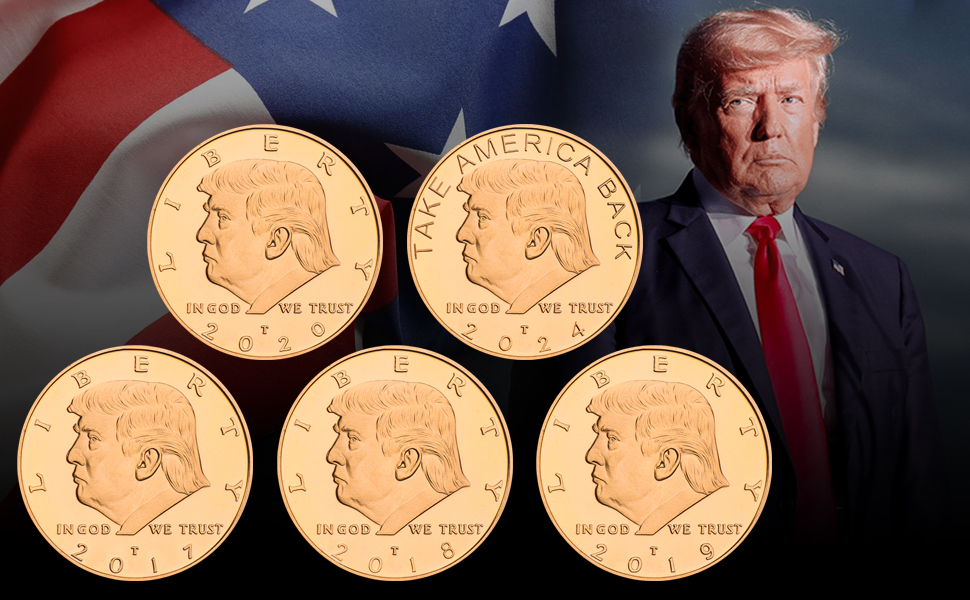
By the time the U.S. Mint strikes the first 24-karat gold Trump commemorative coin later this year, the great American tradition of keeping living politicians off the nation’s money will have been quietly, but spectacularly, circumvented.
Approved unanimously on March 19, 2026, by the Trump-appointed Commission of Fine Arts, the coin is ostensibly a celebration of the nation’s 250th anniversary. Yet, it serves a secondary, more visceral purpose for its chief architect: projecting executive dominance. The design is unapologetically aggressive. The obverse features President Donald Trump leaning intensely over the Resolute Desk, fists clenched, with the word “LIBERTY” arcing above his head and the dual dates “1776–2026” flanking him. The reverse bears a bald eagle, talons braced, ready to take flight.
Predictably, the political theater has been deafening. Critics have decried the coin as monarchic symbolism, pointing out that since the days of George Washington, the republic has fiercely guarded its currency against the vanity of living rulers. Defenders hail it as a masterstroke of patriotic fundraising and commemorative artistry.
But beneath the partisan noise lies a profound economic irony. In the grand sweep of monetary history, a leader plastering his face on ceremonial gold does not signal absolute control over a nation’s wealth. Quite the opposite. As we look back to the shifting empires of late antiquity, such numismatic pageantry usually reveals the exact opposite: a leader attempting to mask the uncomfortable reality of his limited sovereignty.
To understand the true weight of the 2026 Trump gold coin, one must look not to the halls of the Federal Reserve, but to the 6th-century courts of the Ostrogothic kings of Italy.
The Loophole of Vanity: 31 U.S.C. § 5112
To grasp the limits of the President’s monetary power, one must first look at the legal acrobatics required to mint the coin in the first place.
Federal law strictly forbids the portrait of a living person on circulating U.S. currency—a tradition born from the Founding Fathers’ revulsion for the coinage of King George III. To bypass this, the administration utilized the authorities granted under 31 U.S.C. § 5112, specifically the Treasury’s broad discretion to issue gold bullion and commemorative coins that do not enter general circulation.
While the coin bears a nominal face value of $1, it is a piece of bullion, not a medium of exchange. You cannot buy a coffee with it; it will not alter the M2 money supply; it will not shift the consumer price index.
Herein lies the central paradox of the Trump Semiquincentennial coin:
- The Facade of Power: It utilizes the highest-purity gold and the official imprimatur of the United States Mint to project executive authority.
- The Reality of Policy: The actual levers of the American economy—interest rates, quantitative easing, and the health of the fiat dollar—remain stubbornly out of the Oval Office’s direct control, residing instead with the independent Federal Reserve.
This dynamic—where a ruler uses localized, symbolic coinage to project a sovereignty he does not fully possess over the broader economic system—is not a modern invention. It is a historical hallmark of limited power.
Echoes from Ravenna: The Ostrogothic Parallel
When the Western Roman Empire collapsed in the late 5th century, Italy fell under the dominion of the Ostrogoths. The most famous of their rulers, Theodoric the Great, commanded the peninsula with formidable military might from his capital in Ravenna. He was, for all practical purposes, the king of Italy.
Yet, when you examine Ostrogothic coinage from this era, a fascinating picture of deference and limitation emerges.
Despite his military supremacy, Theodoric understood that the true center of global economic gravity lay to the east, in Constantinople. The Byzantine Emperor controlled the solidus—the gold standard of the Mediterranean world. If Theodoric wanted his kingdom to participate in international trade, he had to play by Byzantine monetary rules.
Consequently, the Ostrogoths minted gold and silver coins that were essentially counterfeits of Byzantine money. They bore the portrait of the reigning Eastern Emperor (such as Anastasius or Justinian), not the Ostrogothic king. Theodoric restricted his own branding to a modest monogram, and later kings, like Theodahad, only dared to place their full portraits on the bronze follis—the low-value base metal used for buying bread in local markets, entirely decoupled from international high finance.
The lesson from the Ostrogoths is clear, and widely recognized in peer-reviewed numismatic scholarship: controlling the territory is not the same as controlling the currency. The Ostrogoths used their local mints to project an image of continuity and authority to their immediate subjects, but they bowed to the monetary hegemony of the true empire.
The Byzantine Emperor of Modern Finance
Today, the “Constantinople” of the global economy is not a rival nation, but the institutional apparatus of the fiat dollar system—chiefly, the Federal Reserve and the global bond market.
President Trump has frequently chafed against this reality. Throughout his political career, he has sought to blur the lines of Fed independence, occasionally demanding lower interest rates or criticizing the Fed Chair with a ferocity normally reserved for political rivals. Yet, the institutional firewalls have largely held. The President cannot unilaterally dictate the cost of capital. He cannot force the world to buy U.S. Treasuries.
Thus, the 24-karat commemorative coin acts as his modern bronze follis.
It is a stunning piece of metal, but it is ultimately a domestic token. It satisfies a base of political supporters and projects an aura of monarchic permanence, just as Theodahad’s portrait did in the markets of Rome. But it does not challenge the underlying hegemony of the independent central banking system. The global markets, the sovereign wealth funds, and the algorithmic trading desks—the modern equivalents of the Byzantine merchants—will ignore the gold coin entirely. They will continue to trade in the invisible, digital fiat dollars over which the President exercises only indirect influence.
The Illusion of Monetary Sovereignty
What, then, does the “Trump coin” tell us about the current state of American executive power?
First, it highlights a growing preference for the aesthetics of power over the mechanics of governance. Minting a gold coin with one’s face on it is a frictionless exercise in executive privilege. Reining in a multi-trillion-dollar deficit, negotiating complex trade pacts, or carefully managing a soft economic landing are laborious, constrained, and often unrewarding tasks.
Second, it reveals the resilience of America’s financial architecture. That the President must resort to a commemorative loophole—utilizing a non-circulating bullion designation to bypass the strictures of circulating fiat—is a testament to the fact that the core of America’s money remains insulated from populist whim.
Consider the implications for dollar hegemony:
- Global Confidence: International investors rely on the U.S. dollar precisely because it is not subject to the immediate, emotional control of the executive branch.
- Institutional Friction: The outcry over the coin, while loud, proves that democratic norms regarding the separation of leader and state apparatus are still fiercely defended in the public square.
- The Paradox of Gold: By choosing gold—the traditional refuge of those who distrust government fiat—the administration inadvertently highlights its own lack of faith in the very paper currency it is sworn to manage.
Conclusion: The Weight of Empty Gold
The Roman historian Cassius Dio once observed that you can judge the health of a republic by the faces on its coins. When the republic falls, the faces of magistrates are replaced by the faces of autocrats.
But history is rarely that simple. The Ostrogothic kings of the 6th century put their faces on bronze because they lacked the power to control the gold. In March 2026, an American president has put his face on gold because he lacks the power to control the fiat.
The Semiquincentennial Trump coin is destined to be a remarkable collector’s item, a flashpoint in the culture wars, and a brilliant piece of political marketing. But when historians look back on the numismatics of the 2020s, they will not see a president who conquered the American monetary system. They will see a leader who, much like the kings of late antiquity, had to settle for a brilliant, golden simulacrum of power, while the true economic empire hummed along, indifferent and out of reach.
FAQ: Understanding the 2026 Commemorative Coin and U.S. Monetary Policy
Is it legal for a living U.S. President to be on a coin? Yes, but only under specific circumstances. By law (31 U.S.C. § 5112), living persons cannot be depicted on circulating currency (like standard pennies, quarters, or paper bills). However, the U.S. Mint has the authority to produce non-circulating bullion and commemorative coins. The 2026 Trump coin exploits this loophole as a non-circulating commemorative piece.
Does the U.S. President control the value of the dollar? No. While presidential policies (like tariffs, taxation, and government spending) affect the broader economy, the direct control of the U.S. money supply and interest rates rests with the Federal Reserve, an independent central bank. The President appoints the Fed Chair, but cannot legally dictate the bank’s day-to-day monetary policy.
What is the historical significance of the Ostrogothic coinage parallel? In the 6th century, Ostrogothic kings in Italy minted gold coins bearing the face of the Byzantine Emperor, while reserving their own portraits for lower-value bronze coins. This demonstrated that while they held local, symbolic power, true economic sovereignty belonged to the Byzantine Empire. The 2026 Trump coin operates similarly: it offers localized symbolic prestige, but the actual “engine” of the U.S. economy remains under the control of the independent Federal Reserve.
Can I spend the 24-karat Trump coin at a store? Technically, the coin has a legal face value of $1. However, because it is minted from 24-karat gold, its intrinsic metal value and numismatic collector value far exceed its $1 face value. It is meant to be collected and held as an asset or piece of memorabilia, not used in daily commercial transactions.
Acquisitions
The Saigol Pivot: Inside Maple Leaf Cement’s Strategic Incursion into Pakistan’s Banking Sector
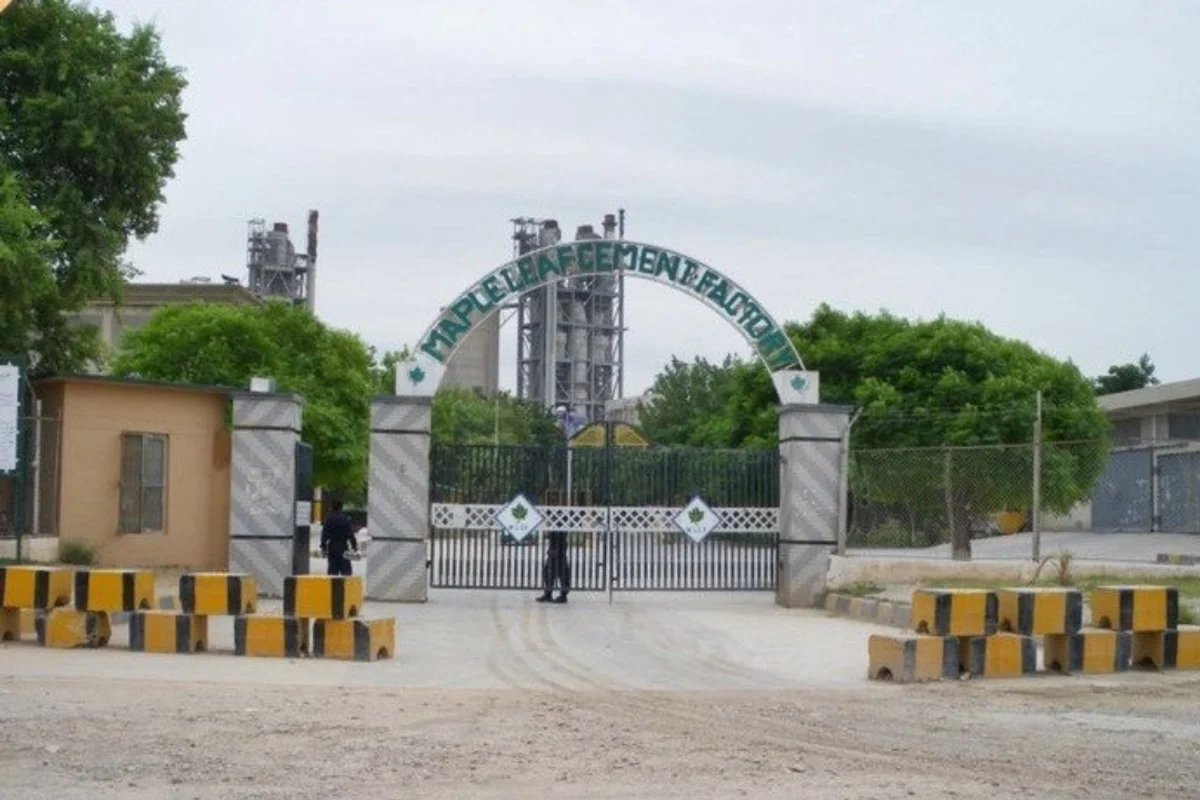
It is a move that initially appears as a study in industrial asymmetry: a northern cement giant, whose fortunes are tied to construction gypsum and clinker, systematically acquiring a stake in one of the country’s mid-tier Islamic banks. But beneath the surface of the Competition Commission of Pakistan’s (CCP) recent authorization lies a narrative far more sophisticated than a simple portfolio shuffle. This is the Saigol family’s Kohinoor Maple Leaf Group (KMLG) executing a deliberate financial pivot, threading the needle between regulatory scrutiny and the volatile realities of the 2026 Pakistan Stock Exchange (PSX) .
The CCP’s green light for Maple Leaf Cement Factory Limited (MLCF) to acquire shares in Faysal Bank Limited (FABL)—including a rare ex post facto approval for purchases made during 2025—offers a window into the evolving strategy of Pakistan’s old industrial guard .
The “Grey Area”: A Regulatory Slap on the Wrist?
In the sterile language of antitrust law, the transaction raised no red flags. The CCP’s Phase I assessment correctly noted the “entirely distinct” nature of cement manufacturing and commercial banking, concluding there was no horizontal or vertical overlap that could stifle competition .
However, the procedural backstory is where the texture lies. The Commission acknowledged reviewing a batch of open-market transactions on the PSX that were “already completed prior to obtaining the Commission’s approval” .
While the CCP granted ex-post facto authorization under Section 31(1)(d)(i) of the Competition Act 2010, it simultaneously issued a pointed directive: MLCF must ensure strict compliance with pre-merger approval requirements for any future transactions . It is a reminder that in Pakistan’s current financial climate, where liquidity is king and speed is of the essence, even blue-chip conglomerates can find themselves navigating the grey areas between investment opportunity and regulatory process. The directive serves as a subtle but firm warning to the market that the CCP is watching the methods of stake-building as closely as the ultimate concentration of ownership .
Strategic Rationale: Beyond Horizontal Logic
To understand the “why,” one must look beyond the cement kilns of Daudkhel and toward the balance sheets of the group. The Kohinoor Maple Leaf Group, born from the trifurcation of the Saigol empire, has long been a bastion of textiles and cement . But 2026 presents a different economic calculus.
Conglomerate diversification is the name of the game. With the PSX experiencing the volatile convulsions of a pre-election year—oscillating between geopolitical panic and IMF-induced stability—banking stocks have emerged as a high-yield, defensive hedge . Unlike the cyclical nature of cement, which is hostage to construction schedules and government infrastructure spending, the banking sector offers exposure to interest rate spreads and consumer financing.
For MLCF, a stake in Faysal Bank is not about vertical integration; it is about earnings stability. Faysal Bank, with its significant presence in Islamic finance (a sector rapidly gaining traction in Pakistan), offers a counter-cyclical buffer to the group’s industrial holdings. As one analyst put it, “They are swapping kiln dust for deposit multiplier.”
The Real-Time Context: PSX Volatility and the Hunt for Yield (March 2026)
The timing of the final authorization is critical. March 2026 finds the Pakistani equity market in a state of calculated anxiety. The KSE-100 has recently weathered a 16.9% correction from its January peaks, triggered by Middle East tensions and fears over the Strait of Hormuz . While energy stocks swing wildly with every oil price fluctuation, banking giants like Faysal Bank offer a rare port in the storm.
According to Arif Habib Limited’s latest strategy notes, the banking sector is currently trading at a price-to-book discount, with institutions like National Bank of Pakistan offering dividend yields as high as 13.3% . While Faysal Bank’s yields are more modest than NBP’s, its shareholding structure—dominated by Bahrain’s Ithmaar Holding (66.78%)—makes it an attractive target for local industrial groups seeking influence without the burden of outright control .
By accumulating shares incrementally through the PSX, KMLG is effectively renting exposure to the financialization of the Pakistani economy. It is a low-profile, high-liquidity entry into a sector that the State Bank of Pakistan projects will remain resilient despite import pressures and currency fluctuations .

Faysal Bank: The Prize Within
Why Faysal Bank specifically? The lender has carved a niche in the Islamic banking corridor, an area the government is keen to expand. With total institutional investors holding over 72% of the bank’s shares, it represents a tightly held, professionally managed asset .
Maple Leaf’s creeping acquisition suggests a desire to secure a seat at the table of Pakistan’s financial future. While the CCP authorization allows for an increased shareholding, it stops short of a full-blown merger. For now, this remains an “incursion”—a strategic toehold in the world of high finance, managed by the same family stewardship that Tariq Saigol has applied to transforming KMLG’s manufacturing base through sustainability and innovation .
The Verdict
The Maple Leaf Cement–Faysal Bank transaction is a harbinger of things to come in the 2026 Pakistani market. As the lines between industrial capital and financial capital blur, we will likely see more of these “conglomerate” acquisitions.
The CCP’s involvement, complete with its ex-post facto review and compliance directive, has set a precedent. It tells the market that while the commission is willing to facilitate investments that support “capital formation,” it will not tolerate a laissez-faire approach to merger control .
For the Saigol family, this is not just an investment; it is a hedge against the future. In an economy where cement demand can cool overnight but banking remains the lifeblood of commerce, owning a piece of the pipeline is the ultimate strategic pivot.

KSE-100 Plunges Amid Geopolitical Firestorm — But Islamabad Holds the World’s Attention

The Trump Coin and Lessons from the Ostrogoths: How a Gold Offering Reveals the Limits of Presidential Power Over America’s Money

Gaming Giant’s Bold Gamble: Why Investors are Devouring Risky EA Debt Amid Geopolitical Crosscurrents

Top 15 Stocks for Investment in 2026 in PSX: Your Complete Guide to Pakistan’s Best Investment Opportunities
Top 15 Stocks for Investment in 2026 in PSX: Your Complete Guide to Pakistan’s Best Investment Opportunities

Debunking IMF Program Myths: Reconfiguring Engagement for True National Ownership in a Volatile World
-
 Markets & Finance3 months ago
Top 15 Stocks for Investment in 2026 in PSX: Your Complete Guide to Pakistan’s Best Investment Opportunities
-
Markets & Finance3 months ago
Top 15 Stocks for Investment in 2026 in PSX: Your Complete Guide to Pakistan’s Best Investment Opportunities
-
 Analysis2 months ago
Debunking IMF Program Myths: Reconfiguring Engagement for True National Ownership in a Volatile World
-

 Global Economy3 months ago
What the U.S. Attack on Venezuela Could Mean for Oil and Canadian Crude Exports: The Economic Impact
-

 Investment3 months ago
Top 10 Mutual Fund Managers in Pakistan for Investment in 2026: A Comprehensive Guide for Optimal Returns
-

 Asia3 months ago
China’s 50% Domestic Equipment Rule: The Semiconductor Mandate Reshaping Global Tech
-

 AI3 months ago
15 Most Lucrative Sectors for Investment in Pakistan: A 2025 Data-Driven Analysis
-

 Exports3 months ago
Pakistan’s Export Goldmine: 10 Game-Changing Markets Where Pakistani Businesses Are Winning Big in 2025