
Global Economy
Venezuelan Crude: Trump’s Oil Pivot & The Prize Beneath Chaos


As Trump shifts from regime change to resource extraction, Venezuelan crude’s 303B barrel prize is rewriting Latin American geopolitics. Expert analysis with premium sources.
Sitting atop an estimated 303 billion barrels of proven oil reserves—roughly 17% of the world’s total and more than Saudi Arabia’s holdings—Venezuela today produces less crude than it did in 1950. This is not hyperbole but the staggering reality of a petrostate that transformed geological fortune into economic catastrophe. The country ranked just 21st in global oil production in 2024, pumping approximately 960,000 barrels per day, a fraction of its 3.5 million barrel peak in the late 1990s.
The paradox has never been starker, nor the stakes higher. In early January 2026, following unprecedented military action that resulted in the capture of Venezuelan President Nicolás Maduro, President Donald Trump announced his administration would take control of Venezuela’s oil sector. Trump declared that Venezuela would turn over between 30 million and 50 million barrels of sanctioned oil, with sales beginning immediately and continuing indefinitely. The move represents one of the most dramatic pivots in U.S. Latin American policy in generations—from regime change through maximum pressure sanctions to direct resource extraction.
For investors, policymakers, and energy analysts, Venezuela’s oil represents both immense promise and profound peril. This article examines the geological prize, chronicles the industry’s collapse, analyzes Trump’s transactional pivot, assesses the investment landscape, maps the geopolitical chess match, and most critically, asks whether oil wealth will ever benefit ordinary Venezuelans—or if the resource curse will simply acquire new management.
303 Billion Barrels: The Orinoco Advantage
Venezuela’s claim to the world’s largest proven oil reserves is not mere nationalistic boasting. According to OPEC’s Annual Statistical Bulletin 2025, Venezuela holds approximately 303 billion barrels, well ahead of Saudi Arabia’s 267 billion. The bulk of this bonanza sits in the Orinoco Belt, a 600-kilometer crescent stretching across Venezuela’s interior that may contain between 900 billion and 1.4 trillion barrels of heavy crude in proven and unproven deposits.
But geology tells only half the story. Venezuela’s crude is famously difficult. The oil is heavy and sour, requiring specialized equipment and high levels of technical prowess to produce. With API gravity ratings typically between 8 and 22 degrees—compared to the 30-40 range of lighter crudes—Venezuelan oil is thick, sulfurous, and expensive to refine. Most U.S. Gulf Coast refineries were specifically configured to process this type of heavy crude, creating a unique technical dependency that has shaped bilateral energy relations for decades.
The economic viability of Orinoco Belt production depends critically on oil prices, technology, and infrastructure. During periods when crude trades above $70-80 per barrel, extraction economics improve dramatically. Below that threshold, many deposits become marginal. Industry experts estimate that returning Venezuela to its early 2000s production highs would require approximately $180 billion in investment between now and 2040, according to energy intelligence firm Rystad Energy. Of that staggering sum, between $30-35 billion would need to be committed within the next two to three years just to stabilize and modestly increase current output.
The infrastructure decay is comprehensive. PDVSA acknowledges its pipelines haven’t been updated in 50 years, and the cost to update infrastructure to return to peak production levels would cost $58 billion. Upgrading facilities that convert extra-heavy crude into marketable products have fallen into disrepair. Power generation systems that drive extraction operations suffer chronic failures. Even basic maintenance on wellheads and pumping stations has been deferred for years.
Francisco Monaldi, director of the Latin American Energy Institute at Rice University’s Baker Institute, offers a sobering assessment of Venezuela’s reserve claims. Venezuela’s recovery rate for its oil is less than half of what the country claims, meaning a reasonable and conservative estimate of economically recoverable reserves would be closer to 100-110 billion barrels. The distinction matters enormously—not for geological surveys but for financial modeling and investment decisions.
From Boom to Bust: Anatomy of a Petrostate Failure
Venezuela’s oil story began spectacularly in 1922 when the Barrosos-2 well near Maracaibo erupted in a gusher that sprayed crude 200 feet into the air. By the 1970s, Venezuela had become Latin America’s wealthiest nation, riding OPEC-engineered price increases to prosperity. The 1976 nationalization of the oil industry under President Carlos Andrés Pérez created Petróleos de Venezuela S.A. (PDVSA), a state company that initially operated with remarkable efficiency and technical competence.
Through OPEC, which Venezuela helped found alongside Iran, Iraq, Kuwait, and Saudi Arabia, the world’s largest producers coordinated prices and gave states more control over their national industries. Venezuela’s nationalization, unlike many others, proceeded relatively smoothly. Foreign companies received compensation, technical partnerships continued, and PDVSA emerged as a world-class national oil company, retaining many of the operational practices of its multinational predecessors.
The first major shock arrived in December 2002, when a politically motivated strike against PDVSA—triggered by opposition to President Hugo Chávez—paralyzed production. The strike led to the firing of nearly 20,000 workers, or 40% of PDVSA’s total workforce, including many of its most capable engineers and skilled operators, which dropped production to less than 1 million barrels per day for a short period. This mass exodus of technical expertise created a knowledge vacuum from which PDVSA never fully recovered.
Chávez’s broader nationalization drive intensified after 2007. In 2007, he seized and nationalized the assets of foreign oil companies, including ExxonMobil and ConocoPhillips, driving them out of the country. Unlike the orderly 1976 transition, these expropriations were contentious and undercompensated. International arbitration tribunals later awarded billions in compensation—$1.6 billion to ExxonMobil and $8.5 billion to ConocoPhillips—which Venezuela has largely failed to pay. This episode fundamentally altered the risk calculus for foreign investment in the sector.
Under Chávez, PDVSA was transformed from a technical institution into a social welfare mechanism and political instrument, with the company effectively becoming an ATM machine for military spending and Bolivarian Missions. Revenue that might have been reinvested in maintenance, exploration, and upgrading facilities instead financed food subsidies, housing programs, and political patronage. The company was required to hire based on political loyalty rather than technical competence.
The 2014 oil price collapse delivered the coup de grâce. When crude plummeted from over $100 per barrel to below $30, Venezuela’s already fragile model shattered. By 2016, oil production reached the lowest it had been in 23 years, with analysts noting that the economic crisis would have occurred with or without U.S. sanctions due to chronic mismanagement. Production equipment failed without replacement parts. Electrical grid collapses shut down extraction facilities. Refineries operated at single-digit capacity utilization rates.
As unrest brewed under President Maduro, who succeeded Chávez in 2013, power was consolidated through political repression, censorship, and electoral manipulation. When the Trump administration imposed comprehensive oil sector sanctions in 2019, the industry was already in structural decline. The sanctions accelerated but did not initiate Venezuela’s production collapse.
Trump’s Pivot: From Regime Change to Resource Extraction
The transformation in U.S. policy toward Venezuela under Trump 2.0 represents one of the most dramatic tactical shifts in recent American foreign policy. During his first term (2017-2021), Trump pursued maximum pressure: comprehensive sanctions, recognition of opposition leader Juan Guaidó as interim president, and explicit calls for regime change. The Biden administration largely maintained this approach while offering selective relief, including a license for Chevron to resume limited operations.
The new calculus became clear on January 3, 2026, when U.S. military forces captured Maduro in a predawn operation. Trump officials subsequently outlined an ambitious, multi-part plan centering on seizing and selling millions of barrels of Venezuelan oil on the open market while simultaneously convincing U.S. firms to make expansive, long-term investments aimed at rebuilding the nation’s energy infrastructure. Secretary of State Marco Rubio and Energy Secretary Chris Wright have taken lead roles in articulating this strategy.
The shift from narcoterrorism rhetoric to energy pragmatism happened with remarkable speed. According to sources close to the White House, the Trump administration has set specific demands for Venezuela: the country must expel China, Russia, Iran, and Cuba and sever economic ties, and Venezuela must agree to partner exclusively with the U.S. on oil production. This represents a stark departure from previous democracy-promotion framing to a transactional, realpolitik approach focused on economic and strategic interests.
The timing reflects broader energy security considerations. The United States has light, sweet crude which is good for making gasoline but not much else, while heavy, sour crude like Venezuelan oil is crucial for diesel, asphalt, and fuels for factories and heavy equipment. Most U.S. Gulf Coast refineries were constructed to process Venezuelan heavy crude and operate significantly more efficiently when using it compared to domestic light sweet crude.
Energy Secretary Chris Wright confirmed at a Goldman Sachs conference that the U.S. will market crude coming out of Venezuela, first the backed-up stored oil and then indefinitely going forward, selling production into the marketplace. The administration plans to maintain control over initial oil sale revenues, with proceeds intended to “benefit the Venezuelan people” while funding infrastructure rebuilding.
However, significant logistical and political obstacles loom. Despite Trump’s insistence that U.S. oil companies would pour into Venezuela, officials have no ready plan for convincing firms to invest hundreds of billions of dollars in rebuilding the nation’s energy infrastructure. Major U.S. oil companies have remained largely silent on expansion plans, with Chevron—the only significant American operator currently in Venezuela—focusing on employee safety rather than announcing new investments.
The legal framework remains murky. Former Treasury sanctions policy advisor Roxanna Vigil noted that the private sector currently has nothing official to go on for any sort of assurance or confidence about how operations will be authorized based on U.S. sanctions. Without clear regulatory pathways and liability protections, even companies interested in Venezuelan opportunities face significant barriers to deployment of capital.
The political durability of this approach is questionable. Congressional Democrats have expressed concerns about the military intervention and lack of clear endgame. While some Republicans support a strong stance against Latin American drug cartels and the Maduro regime, others worry about open-ended commitments. Helima Croft, head of global commodity strategy at RBC Capital Markets, warned that accomplishing Trump’s goal will effectively require U.S. oil companies to play a “quasi-governmental role,” which could cost $10 billion a year according to oil executives.
The Investment Conundrum: Who Dares Capital in Caracas?
For international oil companies and financial institutions, Venezuela presents a uniquely challenging risk-reward calculation. The asset base is undeniably attractive—if it can be developed profitably and safely. The question is whether conditions will permit that development.
Chevron currently represents the largest Western oil presence in Venezuela, operating through joint ventures with PDVSA. Chevron pays PDVSA a percentage of output under a joint operation structure that accounts for about one-fifth of Venezuela’s official oil production. The company has approximately 3,000 employees in-country and billions in sunk assets. Walking away would likely mean forfeiting those assets entirely, as past nationalizations have demonstrated.
Chinese and Russian companies have become the dominant foreign players during the sanctions era. China National Petroleum Corporation (CNPC) holds stakes in consortiums with concessions covering 1.6 billion barrels of oil, while China Petroleum & Chemical Corporation (Sinopec) holds stakes covering 2.8 billion barrels. These ventures have continued operating despite sanctions, with Beijing treating U.S. restrictions as illegitimate unilateral measures rather than binding international law.
Chinese financial institutions, primarily the China Development Bank, loaned Venezuela approximately $60 billion through 17 different loan contracts—about half the Chinese loans committed to Latin America as of 2023. These loans were structured as oil-for-credit arrangements, with repayment in the form of crude shipments to China. Venezuela currently owes China between $17 billion and $19 billion in outstanding loans, creating substantial Beijing leverage over any future economic arrangements.
The political risk profile remains extreme. Venezuela has a documented history of asset expropriations, broken contracts, and failed arbitration payments. International Centre for Settlement of Investment Disputes tribunals awarded ExxonMobil $1.6 billion and ConocoPhillips $8.5 billion for earlier seizures, but Venezuela has not paid the money and ConocoPhillips continues attempting to collect. This track record understandably creates hesitation among institutional investors and corporate boards.
Operational risks compound the political uncertainties. Venezuela suffers from chronic electrical grid failures that interrupt extraction operations. Port infrastructure has degraded significantly. Security concerns range from equipment theft to more serious threats against personnel. The availability of diluents—lighter hydrocarbons needed to transport extra-heavy crude through pipelines—has been severely constrained. Maintaining production of heavy oil requires constant reinvestment, reliable power, and uninterrupted access to diluents, many of which historically came from the U.S. Gulf Coast.
The sovereign debt overhang presents another obstacle. Venezuela defaulted on over $150 billion in external debt obligations. A functioning government seeking international capital market access would need to negotiate comprehensive debt restructuring. PDVSA bonds, which traded as low as single-digit cents on the dollar, have surged on speculation about U.S.-backed restructuring, but recovery rates remain highly uncertain.
For potential investors, the upside scenario is compelling: privileged access to one of the world’s largest petroleum reserves, a government desperate for investment, and possible U.S. political backing. The downside risks are equally dramatic: expropriation, political instability, infrastructure failure, contract violations, and reputational damage from association with a regime that has committed documented human rights violations.
Geopolitical Chessboard: Beijing, Moscow, and the Scramble for Influence
Venezuela has become a focal point for great power competition in the Western Hemisphere, with China and Russia using economic and military engagement to expand influence in what Washington has traditionally considered its strategic backyard.
China’s relationship with Venezuela intensified dramatically under Chávez and continued under Maduro as both ideological alignment and economic pragmatism drove deepening ties. Between 2007 and 2016, China provided Venezuela with approximately $105.6 billion in loans, debt, and capital investments, according to AidData research. This made Venezuela one of China’s largest debtors globally and Beijing’s single most important financial commitment in Latin America.
Of the 900,000 barrels of oil Venezuela exported daily, approximately 800,000 barrels went to China, meaning nearly 90% of Venezuela’s oil was sold to Beijing. This created both dependency and leverage in complex ways. Venezuelan crude helped diversify China’s energy supplies and provided below-market pricing during sanctions. For Venezuela, Chinese purchases offered a critical lifeline when Western markets were closed by sanctions.
Beyond petroleum, Chinese involvement extends across critical infrastructure. Huawei Technologies secured a $250 million contract as early as 2004 to improve Venezuela’s fiber optic infrastructure, which became central to the country’s 4G network, while ZTE developed the Homeland Card national ID system key to citizens accessing state subsidies. Chinese firms also invested heavily in mining operations producing iron ore, bauxite, gold, and rare earth minerals—materials crucial for advanced weapons systems and technology supply chains.
Russia’s engagement has been more military-focused but strategically significant. Moscow has supplied weapons systems, provided military advisors, and allegedly facilitated drone manufacturing facilities on Venezuelan soil. These activities align with broader Russian objectives of contesting U.S. influence in Latin America and demonstrating global reach despite economic constraints.
Iran reportedly established drone manufacturing facilities on Venezuelan soil while Russia deployed military advisers—developments that align closely with threats outlined in Trump’s 2025 U.S. National Security Strategy, which rejects global hegemony for an America First realism. The Trump administration has cited these security concerns as partial justification for its intervention.
For Colombia and Brazil—Venezuela’s largest neighbors—the crisis creates impossible dilemmas. Colombia hosts approximately 2.8 million Venezuelan refugees and migrants, the highest concentration globally. The economic and social pressures on Colombian border regions are immense, with stretched public services, labor market tensions, and security concerns as criminal networks exploit porous borders. Brazil faces similar pressures in its northern states while trying to maintain diplomatic engagement with Caracas.
The Caribbean and Central America also feel Venezuelan dysfunction’s ripple effects. Several smaller nations had depended on Venezuela’s PetroCaribe program for subsidized oil supplies. That program’s collapse forced them to seek alternative energy sources at market prices, straining national budgets. The migration flow through Central America toward the United States has created humanitarian emergencies and diplomatic tensions.
According to Atlantic Council analysis, the U.S. capture of Maduro has paradoxically created both risks and potential opportunities for China—if Washington successfully rebuilds Venezuelan oil production and some flows to China, Beijing might recoup remaining loan balances. This creates perverse incentives where Chinese interests may partly align with U.S. success, despite the geopolitical rivalry.
For OPEC, Venezuela has become an embarrassing member. The country was a founding member alongside Iran, Iraq, Kuwait, and Saudi Arabia, but its influence has waned dramatically as production collapsed. Venezuelan representatives continue attending ministerial meetings, but the country has been unable to meet production quotas and contributes little to cartel strategy.
The Venezuelan People: Beyond the Barrels
While geopolitical players and oil companies calculate their interests, 28 million Venezuelans endure one of the world’s worst humanitarian catastrophes. The scale of suffering is staggering and directly linked to the oil sector’s collapse.
Approximately 7.9 million Venezuelans have fled the country since 2014, making this one of the largest displacement crises globally, with 6.9 million hosted by Latin American and Caribbean countries. This represents roughly 23% of the population—an exodus comparable to Syria’s refugee crisis but occurring without active warfare.
Inside Venezuela, 14.2 million people need humanitarian aid, including 5.1 million facing acute food insecurity, while the minimum wage stands at just $3.60 per month and 90% of the population experiences water shortages. These figures represent catastrophic state failure. Hospitals lack basic medications and equipment. Schools operate sporadically. Even Caracas, the capital, suffers frequent power blackouts.
The economic decline has left nearly 85% of Venezuelans in poverty while 53% live in extreme poverty, with the average monthly salary at $24 while a basic food basket for a family of five costs $500. Hyperinflation, while moderated somewhat from 2018-2019 peaks, continues eroding purchasing power. The local currency, the bolívar, has been redenominated multiple times to remove zeros that became meaningless.
The oil-producing regions tell particularly tragic stories. Zulia state, home to Lake Maracaibo where Venezuela’s petroleum industry began, has seen environmental devastation as poorly maintained infrastructure leaks crude into waterways. The Yanomami indigenous community in the Amazon spanning Venezuela and Brazil has faced dire humanitarian crisis, with over 570 children perishing in less than four years due to malnutrition and malaria on the Brazilian side, partly attributed to invasions by over 20,000 illegal miners.
The migration routes expose desperate people to terrible dangers. In 2023, a record 520,000 migrants crossed the treacherous 60-mile Darién Gap between Panama and Colombia, with Venezuelans making up almost 63% of all migrants, and over 20% of those crossing were children. The journey involves risk of death, human trafficking, sexual violence, dehydration, disease, and extortion by criminal groups controlling routes.
Despite the scale of suffering, international response has been grossly inadequate. Compared with $20.8 billion provided by the international community to address the Syrian refugee crisis in its first eight years, Venezuela received only $1.4 billion over a five-year period—one-tenth the per capita funding. Donor fatigue, the crisis’s protracted nature, and Venezuela’s diplomatic isolation have all contributed to this funding gap.
The fundamental question is whether oil wealth can finally benefit ordinary Venezuelans or if the resource curse will simply acquire new management. Historically, petroleum profits have enriched elites while bypassing most citizens. Analysts estimate that as much as $100 billion was embezzled between 1972 and 1997 alone, during earlier boom periods. Transparency International consistently ranks Venezuela among the world’s most corrupt nations.
For any future scenario to differ from this dismal pattern, robust safeguards would be essential: international revenue transparency mechanisms, independent auditing of oil sales and government expenditures, civil society oversight, opposition political participation, media freedom, and judicial independence. None of these conditions currently exist or appear likely to emerge quickly.
Future Scenarios: Three Pathways
Scenario 1: Managed Transition (Probability: 30%)
In this optimistic scenario, the U.S. brokers a negotiated political settlement that includes reformed Venezuelan governance, international revenue oversight, and coordinated sanctions relief. A multilateral trust fund manages oil proceeds, ensuring transparent allocation to reconstruction, debt service, and social spending. International financial institutions provide bridging support.
Production could gradually increase from current levels of approximately 960,000 barrels per day to 1.5 million within three years and potentially 2 million by 2035, assuming $40-50 billion in capital investment reaches critical infrastructure and operational improvements. Major international oil companies return under production-sharing agreements with clear legal protections. Chinese and Russian interests are either bought out or integrated into new arrangements.
This scenario requires sustained political will in Washington, buy-in from regional partners, acceptance by Venezuelan opposition groups and some Chavista factions, and Chinese pragmatism prioritizing loan recovery over geopolitical positioning. The barriers are formidable but not insurmountable.
Scenario 2: Muddle-Through Malaise (Probability: 50%)
This more likely scenario involves partial sanctions relief but continued political instability, corruption, and underinvestment. Production limps along between 800,000 and 1.2 million barrels per day—enough to generate revenue but insufficient for meaningful economic recovery. Chinese and Russian companies maintain dominant positions while U.S. firms participate cautiously through service contracts rather than major capital commitments.
Infrastructure continues degrading faster than repairs can address. Skilled workers remain abroad or retire without replacement. Revenue leakage through corruption persists. The humanitarian crisis moderates slightly as remittances from diaspora populations and modest economic activity provide survival income, but poverty remains widespread.
Political gridlock prevents structural reforms. The installed interim government lacks legitimacy and capacity. Elections, if held, produce disputed results. International attention wanes after initial intervention headlines fade. Venezuela stabilizes at a low equilibrium—neither recovering nor completely collapsing, but remaining broken indefinitely.
Scenario 3: Chaotic Deterioration (Probability: 20%)
In this worst-case scenario, the U.S. intervention fails to establish stable governance. Political fragmentation leads to regional power centers, potentially including armed groups controlling oil-producing areas. Production drops below 500,000 barrels per day as infrastructure fails catastrophically and security deteriorates.
Regional spillover intensifies. Colombia and Brazil face expanded migration flows and cross-border violence. Caribbean nations experience refugee waves overwhelming their limited capacities. Drug trafficking and oil smuggling networks expand into governance vacuums.
International responses fragment. China and Russia pursue separate engagements with whoever controls productive assets. The U.S. becomes entangled in stabilization efforts that prove far more costly and protracted than anticipated—an “oil quagmire” rather than the swift success initially projected.
Heavy crude markets experience significant disruption as Venezuelan barrels disappear from supply chains. Refineries configured for Venezuelan crude face either expensive reconfiguration or sustained margin compression. Oil prices experience sharp volatility as markets price conflict risk and supply uncertainty.
Conclusion: The Paradox Persists
Venezuela’s fundamental paradox—immense petroleum wealth coexisting with profound dysfunction—remains unresolved despite dramatic U.S. intervention. The nation sits atop more proven oil reserves than Saudi Arabia yet produces less crude than Ecuador. It possesses geological advantages that should fund prosperity but has instead delivered misery to millions.
Trump’s pivot from ideological regime change to transactional resource extraction represents a starkly different approach than the maximum pressure campaign of recent years. Whether this proves more effective depends critically on implementation details still being improvised. Can Washington navigate the complex politics of installing legitimate governance? Will oil companies risk billions without clear legal frameworks? Can infrastructure be rebuilt while preventing corruption from devouring investment? Will ordinary Venezuelans finally benefit from their country’s oil, or will new management extract wealth just as previous regimes did?
The historical record counsels skepticism. Petrostates face inherent governance challenges that transcend individual leaders or political systems. The resource curse has proven remarkably persistent across diverse contexts. Venezuela’s specific history—of corruption, Dutch disease economics, state capacity erosion, and polarized politics—suggests that even with American backing and industry expertise, recovery will be measured in years and decades, not months.
For investors, the risk-reward calculation depends entirely on time horizon and risk tolerance. Short-term traders may find volatility profitable. Long-term strategic players might accept elevated risk for privileged access to reserves. Most institutions will likely wait for clearer political and legal frameworks before committing substantial capital.
For policymakers, Venezuelan oil’s significance extends beyond energy supply. It represents a test case for resource-rich failed states, great power competition in developing regions, and the limits of external intervention in sovereign nations. Success or failure will influence approaches to similar challenges elsewhere.
For Venezuelans—those who remained and the nearly 8 million who fled—oil has brought far more curse than blessing. The coming months and years will determine if this generation finally sees petroleum wealth translate into healthcare, education, infrastructure, and opportunity, or if the prize beneath the chaos remains forever just beneath reach, enriching outsiders while impoverishing locals.
Key dates to watch: quarterly U.S.-Venezuela production reports, PDVSA financial disclosures, international debt restructuring negotiations, regional migration statistics, OPEC ministerial meetings addressing Venezuelan quota allocations, and most critically, any signals of transparent revenue management mechanisms taking root. Without the last element, all the technical expertise and capital investment in the world will simply fuel the same old extraction—of Venezuela’s oil and of Venezuelans’ hopes.


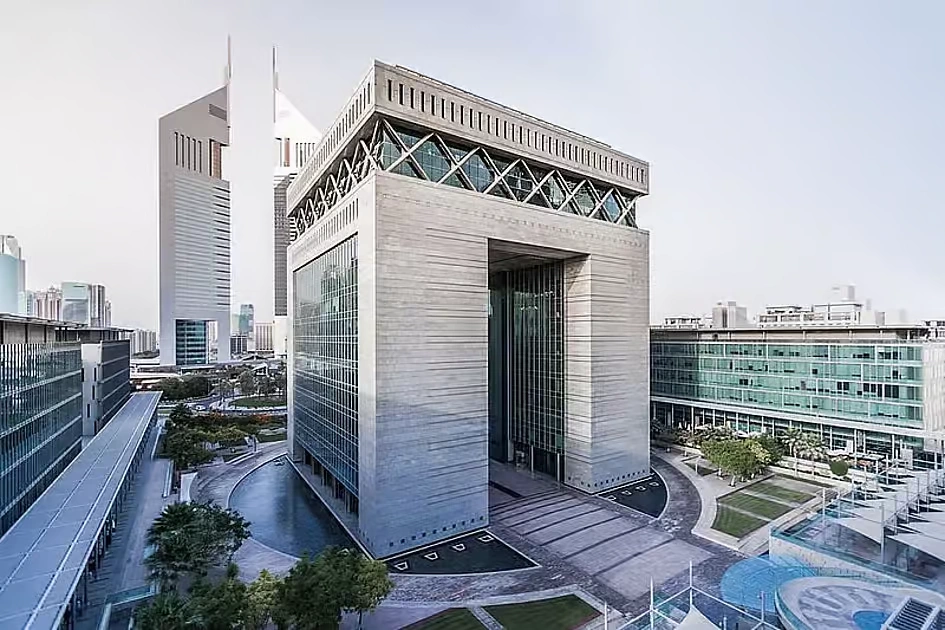
Dubai has climbed to its highest position ever on one of finance’s most closely watched rankings, and the achievement is no accident — it is the direct output of a decade-long, numerically explicit government strategy that few other financial centres have attempted to execute with this level of precision.
The Ranking Itself
The Dubai International Financial Centre has recorded its highest-ever position on the Global Financial Centres Index at seventh place worldwide, the highest ranking ever achieved by any financial centre across the Middle East, Africa and South Asia region, and the only MEASA-region centre to feature in the global top 20 — underscoring both its regional dominance and genuine global competitiveness.
The D33 Strategy Behind the Number
The ranking is explicitly tied to Dubai’s own stated ambitions. The GFCI result is described as pivotal to Dubai’s goal of becoming one of the world’s top four financial centres by 2033, in line with the Dubai Economic Agenda, or D33, which targets a doubling of the emirate’s economy over the decade. Separately, Dubai Chambers has confirmed the plan targets cumulative economic output of AED 32 trillion, or roughly $8.7 trillion, over the decade, supported by 100 transformative projects centred on trade expansion, digital innovation and sustainable growth.
The Underlying Economic Engine
The financial-centre ambitions are backed by genuine current-quarter growth. Dubai’s economy reached AED 232 billion in first-quarter 2026 GDP, a 2.4 percent year-on-year increase, with the finance, construction, healthcare, wholesale and retail trade, and real estate sectors all contributing to the broad-based expansion. Middle East Briefing separately projects the wider UAE economy will expand around 5 percent in 2026, with local banks positioned to increase lending both domestically — supporting SMEs, consumers and project finance — and across borders into markets like Saudi Arabia, where UAE banks’ comparatively lower interbank rates create an arbitrage opportunity.
Real Money Behind the Ranking
The GFCI climb is being validated by tangible transaction volume rather than sentiment alone. Weekly UAE business tracking shows a steady drumbeat of institutional activity: Sharjah Islamic Bank reported AED 803.9 million in net profit, up 15.3 percent, ADI Chain secured a $50 million investment to build sovereign digital infrastructure, and Capital.com reported $1.1 trillion in second-quarter trading volume routed through the jurisdiction. Separately, UAE and Saudi banks are projected to lead GCC credit growth in 2026, reinforcing Dubai and Abu Dhabi’s combined position as the region’s default financial gateway.
Why This Matters for Pakistan and South Asia
Dubai’s ascent as a financial hub carries direct relevance for Pakistan, where — as detailed in our companion coverage of Pakistan’s remittance exposure — roughly 55 percent of the country’s substantial remittance inflows originate from the Gulf Cooperation Council. A deepening, increasingly sophisticated DIFC-anchored financial ecosystem in Dubai means more efficient, lower-cost channels for that capital, alongside growing opportunities for Pakistani and South Asian firms to access GCC-sourced project finance and cross-border credit as UAE banks expand lending beyond their domestic market.
What is Dubai’s global financial centre ranking in 2026?
Dubai’s DIFC recorded its highest-ever ranking on the Global Financial Centres Index at 7th place worldwide in 2026 — the highest ever achieved by any Middle East, Africa or South Asia financial centre — as part of its stated goal to become a top-four global financial hub by 2033.
The Risk Beneath the Growth Story
Not every signal points to unambiguous strength. AGBI’s own reporting notes that UAE banks’ second-quarter results are likely to show weaker profits, slower lending and narrower margins, even as analysts characterise the underlying sector as fundamentally resilient — a reminder that Dubai’s financial-hub ambitions are being pursued against a genuinely more difficult regional operating environment shaped by the Strait of Hormuz disruption and broader Gulf security concerns, not in isolation from them.
The Bottom Line
Dubai’s climb to seventh in the GFCI rankings is less a one-off achievement than a measurable checkpoint on an explicitly numbered, decade-long strategic roadmap — one increasingly backed by real GDP growth, credit expansion, and institutional trading volume rather than ambition alone.
Analysis
Global Central Bank Divergence 2026: Why the Fed, BoE, BoJ, and PBoC Are All Moving Differently
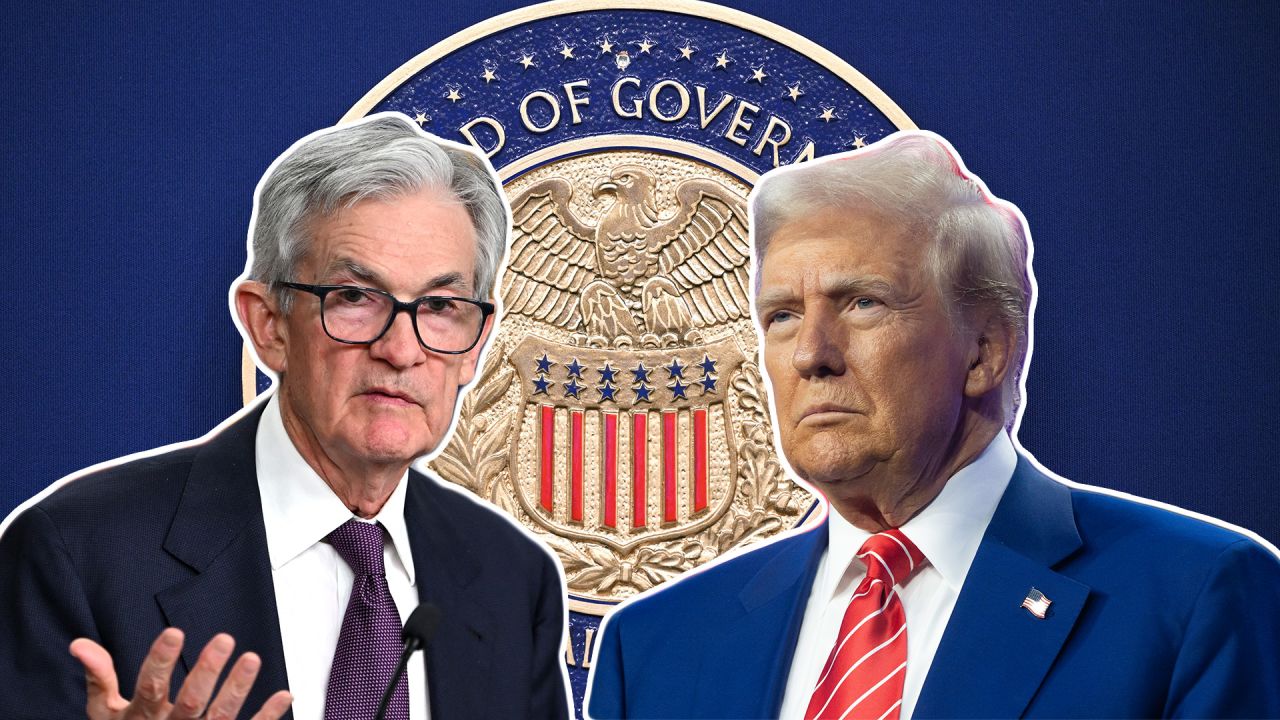
The world’s major central banks are no longer moving in anything resembling lockstep. The Federal Reserve is watching a weakening labor market while weighing energy-driven inflation risk, the Bank of Japan is scaling back bond purchases into a fiscal expansion, the Bank of Russia is cutting rates through sanctions-driven stagnation, and the Bank of England is openly discussing a hike rather than the cuts it signaled just months ago, a divergence in global monetary policy that reflects how unevenly the Iran war’s economic shock has landed across different economies.
The Fed’s Data-Dependent Pivot
Federal Reserve Chairman Kevin Warsh has explicitly asked markets to look to incoming data rather than central bank guidance to map the path for US interest rates, a communication shift that took on new significance after June’s jobs report showed just 57,000 new positions, roughly half the expected pace, according to Yahoo Finance’s markets coverage. Warsh has separately said inflation risks have eased substantially, a combination that has markets betting on a more accommodative Fed even as the central bank has offered no formal commitment ahead of its July 30 decision.
The Bank of England’s Reversal
Few central banks illustrate the scale of the pivot as clearly as the Bank of England. Governor Andrew Bailey said market pricing for two rate cuts this year had looked reasonable before the Iran war lifted inflation risks, according to the Credit Protection Association’s reporting, a statement that effectively closed the door on the easing path the Bank had signaled entering 2026. With UK inflation forecast to climb back toward 3.5% by year end and the base rate held at 3.75%, RSM UK’s analysis suggests a hike, not a cut, is now the more live possibility for the Bank’s July 30 decision, timed to land the same day as the Fed’s own announcement.
Canada and the Bank of Canada’s Cautious Hold
The Bank of Canada has held its policy rate at 2.25% since the spring, balancing a genuinely fragile domestic economy, technically in recession by some measures, against the same energy-driven inflation pressure affecting the UK, according to the central bank’s own announcement. Unlike the Fed or Bank of England, the Bank of Canada’s dilemma is compounded by an unresolved CUSMA trade review, meaning its policy path depends as much on trade negotiation outcomes as on conventional inflation and employment data.
Russia’s Disinflation Campaign, Slowed but Not Abandoned
At the opposite extreme sits the Bank of Russia, which has cut its key rate eight consecutive times since June 2025, from a record 21% down to 14.25% by its June 2026 decision, even as annual inflation remains at 5.6%, well above its 4% target, according to the central bank’s own data. Governor Elvira Nabiullina’s cutting cycle reflects a fundamentally different set of pressures than Western central banks face: a wartime economy where fiscal policy, not conventional demand, drives the inflation picture, and where the central bank’s June cut of just 25 basis points, smaller than the market’s expected 50, signals genuine caution about cutting too fast into persistent pro-inflationary risk from higher domestic energy costs.
Asia’s Split Response
Indonesia and Malaysia illustrate how differently emerging Asian economies are navigating the same global energy shock. Bank Indonesia has held its rate at 4.75% for seven consecutive meetings specifically to defend the rupiah, which has weakened 3.6% year-to-date, according to McKinsey’s regional review, prioritizing currency stability over the growth-supportive easing its 5.61% GDP growth might otherwise justify. Bank Negara Malaysia, by contrast, has benefited from a currency that has held relatively firm, giving it more flexibility, though inflation drifting toward the top of its 1.5% to 2.5% target range, per The Edge Malaysia’s reporting, suggests that flexibility may narrow through the second half of the year.
Japan sits furthest from the rest of the pack. The Bank of Japan has been reducing its own bond purchases even as 10-year Japanese government bond yields have climbed above 2.75%, their highest level since May 2026, according to Trading Economics, a tightening-adjacent move driven as much by concern over Prime Minister Sanae Takaichi’s fiscal expansion plans as by conventional inflation targeting.
China’s Different Problem Entirely
China’s central bank faces a problem none of its peers share: six consecutive quarters of deflation rather than inflation. Societe Generale economist Wei Yao has suggested Chinese bond yields could fall to record lows in 2026 as the People’s Bank of China continues easing, a view consistent with Beijing’s own base case of roughly RMB 1 trillion in additional fiscal stimulus alongside 20 basis points of rate cuts and 50 basis points of reserve requirement ratio cuts, according to Citi Research’s 2026 outlook, cited via Asia Times’ coverage of the Politburo’s domestic demand pivot.
What This Divergence Actually Means
The practical consequence of seven major central banks pursuing seven distinct policy paths is a global capital markets environment where currency volatility, carry trade dynamics, and cross-border capital flows have become considerably harder to forecast using any single macro framework. When Japan’s ultra-low yields anchored global borrowing costs and most Western central banks moved in broad cyclical alignment, currency and rate forecasting rested on relatively stable assumptions about global monetary conditions. That anchor is now gone. Investors positioning across UK gilts, US Treasurys, Japanese government bonds, and emerging Asian debt in the second half of 2026 face a genuinely fragmented policy landscape, one where the same global shock, the Iran war’s energy price spike, has produced hikes, holds, and cuts in near-equal measure depending entirely on each economy’s starting fiscal position, currency exposure, and domestic political constraints.
Rich Nations Face Make‑or‑Break Moment at COP31 Preparatory Talks
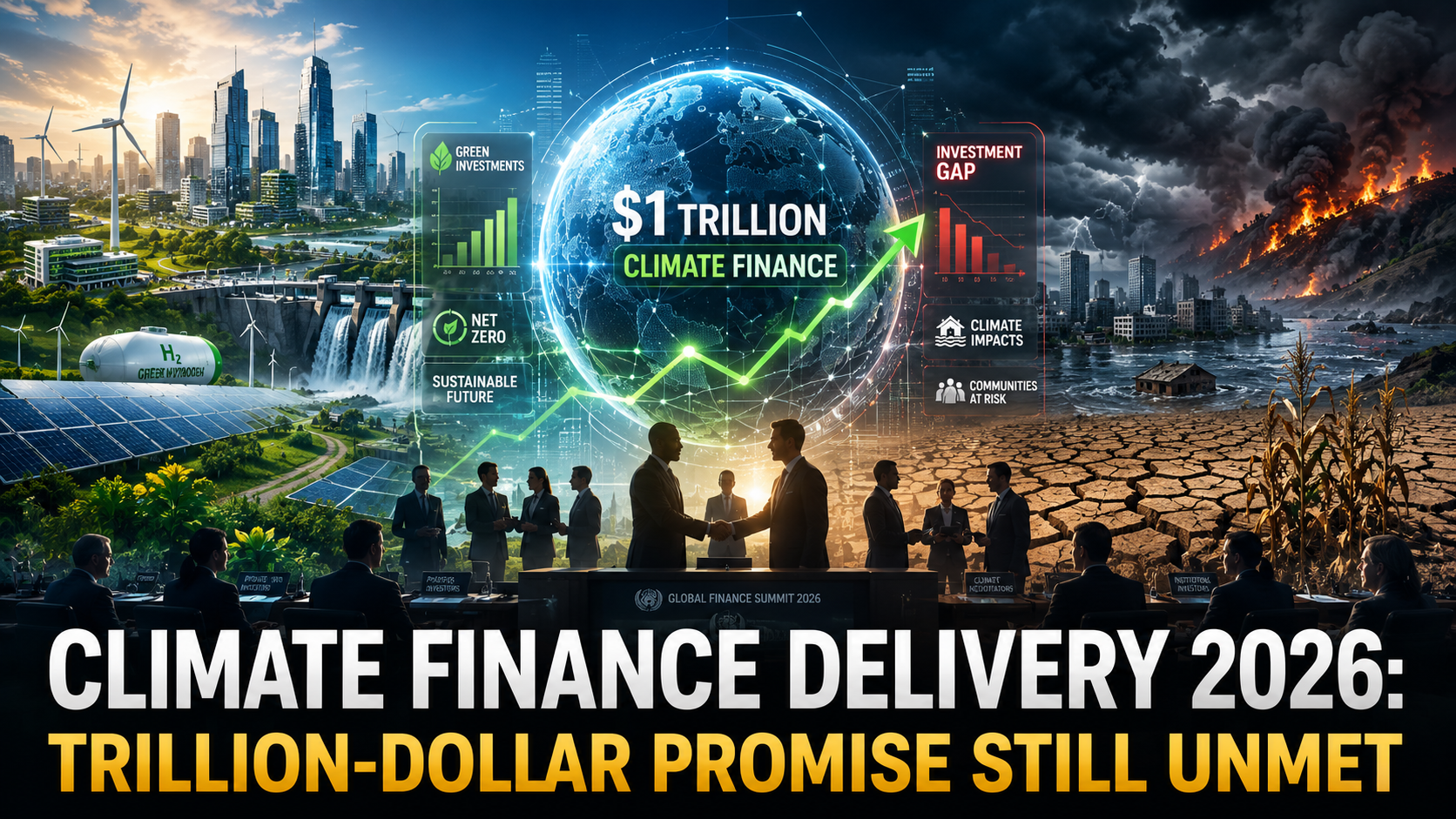
The United Nations Framework Convention on Climate Change (UNFCCC) has released a sobering assessment: climate finance delivery 2026 remains a staggering $1.1 trillion short of the $2.4 trillion that developing countries need annually to transition to low‑carbon economies and adapt to climate impacts (UNFCCC Standing Committee on Finance, June 2026). The report, published ahead of the pre‑COP31 ministerial in Bonn, reveals that total climate finance flows reached $1.3 trillion in 2024 (the latest available data), virtually flat from 2023. While the number is a record in absolute terms, the chasm between what is provided and what is needed is widening, not narrowing.
The Structure of the Shortfall
The $2.4 trillion annual need is broken down into three components: $1.2 trillion for mitigation (clean energy, industry decarbonisation), $800 billion for adaptation (sea walls, drought‑resilient crops, early warning systems), and $400 billion for loss and damage (compensation for unavoidable climate impacts). Currently, mitigation receives the lion’s share of finance—over 85%—mostly in the form of loans that add to debt burdens. Adaptation, which is most critical for the poorest countries, receives only $130 billion, and loss and damage, despite the operationalisation of a dedicated fund at COP28 in 2023, has seen a mere $2 billion in pledges against the $400 billion ask.
The loss and damage fund, a hard‑won victory for vulnerable nations, is emblematic of the gap between rhetoric and reality. Rich countries have committed just 0.5% of what the UNFCCC secretariat estimates is required for countries like Pakistan (2022 floods), Vanuatu (cyclones), and the Sahel (desertification) to rebuild in a climate‑resilient manner. The World Bank, which hosts the fund, has been slow to disburse, and the US, historically the largest historical emitter, has contributed only $500 million, a fraction of its fair share (World Bank Loss and Damage Fund Update, June 2026).
The NCQG Negotiations: Who Pays?
The NCQG negotiations (new collective quantified goal on climate finance) are the central battlefield of COP31, scheduled for November 2026 in Brasília. The current goal, set at COP15 in 2009, was $100 billion a year by 2020—a target met only in 2022. The new goal must reflect the drastically increased needs and a broader donor base. The EU and the US are insisting that China, now the world’s largest emitter and the second‑largest economy, must become a formal contributor, arguing that the 1992 division of the world into “Annex I” (developed) and “non‑Annex I” (developing) is outdated. China and the G77+China grouping counter that historical responsibility and per‑capita emissions still place the primary obligation on the old industrial powers.
The deadlock has been partially broken by a bridging proposal from the COP31 presidency (Brazil) that would create a three‑tiered system: Tier 1 contributors (traditional donors) would provide grants and concessional finance; Tier 2 contributors (high‑income developing countries like China, Saudi Arabia, Singapore) would provide non‑concessional loans and technology transfer; and Tier 3 contributors (multilateral development banks) would leverage their balance sheets to mobilise private capital. The proposal would set a cumulative target of $1.5 trillion a year by 2030, but the tiers’ shares remain hotly contested (UNFCCC, Pre‑COP31 Ministerial Draft Text, June 2026).
Mobilising Private Finance: The MDB Reform Agenda
Given the fiscal constraints in donor countries, the real engine of increased climate finance must be the multilateral development banks (MDBs) and the private sector. The World Bank, under its new president, has implemented the recommendations of the G20 Capital Adequacy Framework review, which could unlock an additional $100 billion in lending headroom over a decade without requiring new capital. The Bank is launching a new “Climate Enhanced” bond, where coupon payments are linked to verified emission reduction outcomes in a portfolio of African clean‑cooking and reforestation projects, targeting institutional investors hungry for impact‑linked returns (World Bank, Outcome Bond Issuance, June 2026).
The International Finance Corporation is expanding its “Green Up” guarantee facility, which de‑risks private investments in emerging‑market renewable energy by covering first‑loss risks. The Glasgow Financial Alliance for Net Zero (GFANZ) has evolved from a coalition of pledges to a set of country‑specific investment platforms: in Vietnam, a Just Energy Transition Partnership has mobilized $15 billion, and in Senegal, a similar platform is targeting $5 billion for solar and green hydrogen. These vehicles blend public concessional capital with private investment, but scaling them to the $2.4 trillion level remains aspirational.
The Cost of Inaction
The UNFCCC report emphasizes that every year of underfunding magnifies the eventual bill. The cost of inaction—measured in destroyed infrastructure, lost crop yields, and health crises—is accelerating. Swiss Re estimates that unabated climate change could reduce global GDP by 11% by 2050 (Swiss Re Institute, “Climate Economics”, 2026). For the private sector, climate risk is already material: supply chains are being disrupted by floods in Bangladesh and droughts in Panama, and insurance coverage is retreating from vulnerable regions, leaving assets stranded. The business case for closing the climate finance gap is not charitable; it is self‑interest.
The pre‑COP31 talks in Bonn are being described by veteran negotiators as the most consequential since Copenhagen 2009. The outcome will determine whether the Paris Agreement’s 1.5°C target remains within reach. The message from the UNFCCC is unambiguous: the world’s financial architecture is not fit for purpose in the face of a climate emergency, and the window for reform is closing fast.

Pakistan’s Remittance Lifeline: Why Gulf Exposure Is a Hidden Risk

Dubai’s Rise to the World’s 7th Financial Hub: Inside the D33 Push

China EV Exports Hit Record High in 2026

UK’s “National Contributions Tax” Explained: Burnham-Era Reform 2026

Russia’s Strange Problem in 2026: Its Currency Is Too Strong

Section 301 Forced Labor Tariffs 2026: 60 Countries Affected

UK National Contributions Tax: Burnham’s Radical Tax Plan

Global Central Bank Divergence 2026: Why the Fed, BoE, BoJ, and PBoC Are All Moving Differently

Japan’s Bond Market Just Cracked. It Could Take the Rest of the World’s Debt With It

Malaysia’s Ringgit Is Holding Up. Economists Say the Real Test Is Still Coming

Climate Finance Delivery 2026: Trillion‑Dollar Promise Still Unmet

AI Impact on Wages 2026: Productivity Soars, Paychecks Stagnate

SpaceX IPO 2026: $2 Trillion AI Bubble, OpenAI & Anthropic — What Investors Must Know

China Economy 2026: Property Crisis, AI Investment & Export Surplus Explained

Top 15 Stocks for Investment in 2026 in PSX: Your Complete Guide to Pakistan’s Best Investment Opportunities
Top 15 Stocks for Investment in 2026 in PSX: Your Complete Guide to Pakistan’s Best Investment Opportunities

Debunking IMF Program Myths: Reconfiguring Engagement for True National Ownership in a Volatile World

Top 10 Mutual Fund Managers in Pakistan for Investment in 2026: A Comprehensive Guide for Optimal Returns

What the U.S. Attack on Venezuela Could Mean for Oil and Canadian Crude Exports: The Economic Impact

China’s 50% Domestic Equipment Rule: The Semiconductor Mandate Reshaping Global Tech

15 Most Lucrative Sectors for Investment in Pakistan: A 2025 Data-Driven Analysis

Pakistan’s Export Goldmine: 10 Game-Changing Markets Where Pakistani Businesses Are Winning Big in 2025
15 Most Lucrative Sectors for Investment in Pakistan: A 2025 Data-Driven Analysis
15 Most Lucrative Sectors for Investment in Pakistan: A 2025 Data-Driven Analysis

Pakistan’s Economic Outlook 2025: Between Stabilization and the Shadow of Stagnation
Pakistan’s Economic Outlook 2025: Between Stabilization and the Shadow of Stagnation

China’s Property Woes Could Last Until 2030—Despite Beijing’s Best Censorship Efforts
China’s Property Woes Could Last Until 2030—Despite Beijing’s Best Censorship Efforts
-
 Markets & Finance7 months ago
Top 15 Stocks for Investment in 2026 in PSX: Your Complete Guide to Pakistan’s Best Investment Opportunities
-
Markets & Finance7 months ago
Top 15 Stocks for Investment in 2026 in PSX: Your Complete Guide to Pakistan’s Best Investment Opportunities
-
 Analysis6 months ago
Debunking IMF Program Myths: Reconfiguring Engagement for True National Ownership in a Volatile World
-
 Investment6 months ago
Top 10 Mutual Fund Managers in Pakistan for Investment in 2026: A Comprehensive Guide for Optimal Returns
-
 Global Economy7 months ago
What the U.S. Attack on Venezuela Could Mean for Oil and Canadian Crude Exports: The Economic Impact
-
 Asia7 months ago
China’s 50% Domestic Equipment Rule: The Semiconductor Mandate Reshaping Global Tech
-
 AI7 months ago
15 Most Lucrative Sectors for Investment in Pakistan: A 2025 Data-Driven Analysis
-
 Exports7 months ago
Pakistan’s Export Goldmine: 10 Game-Changing Markets Where Pakistani Businesses Are Winning Big in 2025