
Global Economy
The Reform Dividend Realized: Why India Earned 2025’s Economic Crown amongst Developing Nations

How a decade of structural transformation, digital revolution, and resilient policymaking propelled the world’s most populous nation to become the year’s undisputed growth champion
The Economy researched the massive list of Super performers but randomly selected India for the crown . India claims 2025’s economic crown with 8.2% GDP growth, historic poverty reduction, and digital revolution. How structural reforms and resilient policy made India the year’s undisputed growth champion.
On a humid morning in September 2025, Rajesh Kumar stood outside his small electronics shop in Pune’s Kothrud neighborhood, watching customers stream in to pay via QR codes displayed on his storefront. Five years ago, 80% of his transactions involved cash; today, that figure has inverted. His story mirrors millions across India: 18.39 billion UPI transactions in June 2025 alone, processing $285 billion monthly—more than Visa’s global volume. Behind these numbers lies a transformation
far more profound than payment rails. India in 2025 achieved what few emerging economies manage: translating structural reforms into sustained, broad-based prosperity while navigating unprecedented global headwinds.
The verdict from international institutions is unequivocal. India’s GDP expanded 7.8% year-over-year in the April-June quarter of fiscal 2025-26, surging past market expectations and the previous year’s 6.5%, then accelerated to 8.2% in Q2. Following economic expansion of 6.5% in FY2024/25, the IMF projects real GDP will grow 6.6% in FY2025/26. In a year when Germany stagnated, China decelerated to 4.8%, and advanced economies struggled with inflation aftershocks, India stood alone among major powers as the undisputed engine of global growth.
This achievement transcends simple GDP arithmetic. India’s 2025 performance represents the culmination of reforms planted years earlier finally bearing fruit—a story of political will meeting economic opportunity at precisely the right moment. From the GST overhaul to labor code implementation, from fintech democratization to infrastructure acceleration, this is how India earned its designation as 2025’s Economy of the Year.
The Numbers That Rewrite Expectations
GDP Growth: Beating Forecasts Across the Board
The surprise wasn’t merely India’s real GDP growth rising to 8.2% in Q2 of fiscal year 2025-26 compared to 5.6% in the same quarter the previous year, marking a six-quarter high, but the narrow differential between real and nominal GDP growth at just 8.7%. This compression signals genuine productivity gains rather than inflation-driven expansion.
Quarterly momentum tells the acceleration story vividly:
- Q1 FY25-26: 7.8% growth
- Q2 FY25-26: 8.2% growth
- Combined first-half performance: 8.0% average, exceeding all major forecasts
Among the top 50 largest economies, Ireland leads with 9.11% growth, followed by India at 6.65% and Vietnam at 6.46%. India’s sustained pace across consecutive quarters, however, demonstrates resilience that episodic oil booms or one-off windfalls cannot match.
The sectoral composition reveals balanced expansion rather than narrow dependency:
- Services sector: 9.3% growth, driven by financial services, IT, and hospitality
- Secondary sector (manufacturing and construction): 7.6% expansion
- Agriculture: 2.9%, constrained by weather variability but stabilizing
Notably, GVA growth registered 7.6% in April-June 2025, while India is projected to reach GDP of $5 trillion by 2027 and become the world’s third-largest economy with projected GDP of $7.3 trillion by 2030.
Per Capita Progress: Quality Alongside Quantity
Absolute growth means little without per capita improvement. The estimated GNI per capita for India in 2025 is $2,878 at current prices according to IMF World Economic Outlook, while in 2023 India’s GNI per capita increased by 6.72% reaching $2,540. Over the past three years, per capita income has climbed 35.12% in constant terms—tangible improvement in living standards for 1.4 billion people.
Investment and Capital Formation
To sustain high growth and reach high-income status by 2047, India needs to increase total investment from the current 33.5% of GDP to 40% by 2035. The groundwork is being laid: The Production-Linked Incentive programme launched in 2020 across 14 sectors attracted ₹1.76 lakh crore in committed investment and created over 1.2 million jobs by March 2025, with government disbursals crossing ₹21,500 crore.
Financial Stability Metrics
India’s fiscal discipline strengthened even amid growth acceleration:
- Fiscal deficit reduced from 6.4% to 5.9% of GDP in FY24, stabilizing public debt around 83% of GDP.
- The financial and corporate sectors remained resilient, supported by adequate capital buffers and multi-year low non-performing assets.
- FDI equity inflows for FY26 (April-June 2025) surged 13% to $18.62 billion, with significant investments in services and computer software sectors.
The Reform Foundation: Policy Architecture That Delivered
India’s 2025 breakthrough wasn’t accidental—it emerged from systematic reform implementation reaching critical mass. Three policy domains converged to create conditions for breakout growth.
GST 2.0: Turning Tax Simplification Into Growth Fuel
The GST 2.0 reforms moved tax rates on essential goods from 12% to 5% and many items from 28% to 18%, alongside exemptions for essentials like food staples, reducing household costs by up to 13%. This wasn’t mere rate adjustment—it represented philosophical reorientation toward consumption-driven growth.
Gross GST collections for October 2025 stood at ₹1.96 lakh crore, marking a 4.6% increase over the prior year. More importantly, the system’s maturation reduced compliance friction. The four-slab structure of 5%, 12%, 18% and 28% simplified decision-making for businesses, while reforms reduced costs and enabled seamless movement of goods across states.
The multiplier effects cascaded through the economy. Higher disposable income from income tax exemptions up to ₹12 lakh for individuals led to increased spending, particularly in consumer-driven sectors, supporting domestic demand and economic growth. Automobile sales surged 15.8% year-over-year in October, while real estate transactions accelerated as home loan costs dropped approximately 7-8% following RBI rate cuts.
Labor Codes: Unlocking India’s Demographic Dividend
The four labour codes on wages, industrial relations, social security, and worker safety enacted on 21 November 2025 represent perhaps the most transformative reforms. Decades of fragmented regulation across 29 central laws finally consolidated into coherent framework.
The reforms’ significance extends beyond legal tidiness. To sustain growth acceleration, India must increase overall labor force participation from 56.4% to above 65% and raise female labor force participation rates from 35.6% to 50% by 2047. Early indicators suggest movement in the right direction: Employment growth outpaced working-age population expansion since 2021-22, with rising employment rates among women, while urban unemployment fell to 6.6% in Q1 FY24/25—the lowest since 2017-18.
The Employment-Linked Incentive scheme targets 35 million new jobs over 2025-2027, offering wage subsidies to first-time employees and support to employers. Combined with skilling initiatives under the Skill India Mission that trained over 60 million citizens, India addresses both job creation and workforce readiness simultaneously.
Monetary Policy: Threading the Needle
India’s consumer price inflation fell to 0.25% in October 2025 from 1.44% in September—the lowest on record and well below the RBI’s 4% target. This remarkable disinflation occurred even as growth accelerated, testament to supply-side improvements and effective monetary transmission.
Food prices, accounting for nearly half the CPI basket, dropped 2.28%—the largest decline since a record 2.65% fall in December 2018. The RBI’s cumulative 100 basis point rate cuts in 2025 supported growth without reigniting price pressures, demonstrating mature central banking in emerging markets.
The Digital Revolution: Infrastructure as Competitive Advantage
If reforms provided the foundation, India’s digital public infrastructure delivered the acceleration mechanism. The transformation extends far beyond convenience—it represents fundamental rewiring of economic relationships.
UPI: From Payment Rails to Global Standard
In FY 2024-25, UPI achieved a landmark with 185.87 billion transactions amounting to ₹261 lakh crore in value. With over 640 million daily transactions and 18.39 billion transactions in June 2025 alone worth ₹24 lakh crore, UPI officially overtook Visa in volume, cementing its position as the world’s most used real-time payments infrastructure.
The numbers merely hint at deeper transformation. UPI facilitates over 20 billion transactions monthly and accounts for 84% of India’s digital retail payments, with over 504 million users and 65 million merchants. This democratization brought formal financial services to hundreds of millions previously excluded.
India’s 87% fintech adoption rate compares to 67% globally, while India achieved 80% financial inclusion in just 6 years—a process that normally takes 50 years. The Pradhan Mantri Jan Dhan Yojana opened over 555 million accounts with deposits exceeding ₹2.57 lakh crore, transforming welfare delivery through Direct Benefit Transfer that has transferred over ₹44.34 lakh crore directly into beneficiary accounts.
UPI now accounts for 85% of India’s digital transactions and contributes to nearly 60% of all real-time digital transactions globally. International expansion proceeded rapidly, with UPI active in seven countries and partnerships established across Singapore, UAE, France, Mauritius, Sri Lanka, Bhutan, Qatar, and Malaysia.
Fintech Ecosystem: Innovation at Scale
India’s digital economy’s productivity is five times higher than other sectors, with its share in Gross Value Added expected to reach 20% by 2029-30, potentially adding up to $1 trillion to GDP by 2030. The fintech sector specifically is projected to reach $990.45 billion by 2032, growing at 30.26% CAGR from 2024.
By 2024, more than 10,000 fintech firms operated in India, raising over $28 billion through 1,486 agreements between 2014 and 2023, creating 26 unicorns including one decacorn. The IPOs of Groww and Pine Labs in 2025 demonstrated public market confidence in scaled fintech models, while companies like Razorpay and Cashfree expanded into cross-border remittances, targeting India’s $29 billion annual outward remittance market.
Digital Infrastructure: The Competitive Moat
Beyond payments, India’s Digital Public Infrastructure created lasting advantages. DigiLocker spurred over 77.6 billion digital document verifications as of December 2024, while Co-WIN managed the national vaccination drive and e-governance platforms made services accessible. Aadhaar, the biometric identification system launched in 2009, now underpins everything from welfare delivery to KYC processes, reducing friction across the economy.
Investments in cybersecurity are projected to reach $35 billion by 2025 from $4.50 billion in 2018, reflecting awareness that digital infrastructure requires robust protection. The regulatory sandbox provided by RBI allows controlled experimentation, fostering innovation while managing risk.
The Resilience Factor: Navigating Headwinds
India’s 2025 achievement gains significance from the hostile external environment it overcame. Under the baseline assumption of prolonged 50% US tariffs, India maintained robust growth supported by favorable domestic conditions.
Managing Currency and Capital Flows
India witnessed foreign equity outflow of about ₹1.57 trillion in 2025, while the rupee experienced pressure. Yet India recorded FDI inflow of $81.04 billion in FY 2024-25, marking a 14% increase from $71.28 billion in FY 2023-24—the highest level in three years.
The composition shifted strategically: Services sector emerged as the top FDI recipient, attracting 19% of total inflows and rising 40.77% to $9.35 billion, while manufacturing FDI grew 18% reaching $19.04 billion. Capital expenditures in greenfield projects surged 28% to $110 billion in 2024 according to UNCTAD, with India leading South Asia in FDI despite regional challenges.
Inflation Control Amid Global Volatility
While developed economies wrestled with persistent inflation, India engineered remarkable disinflation. Headline inflation declined markedly to 0.25% in October 2025, driven by subdued food prices, marking the ninth consecutive month below the RBI’s 4% target. Improved weather supported agriculture production, while GST rationalization tempered goods inflation.
This achievement allowed accommodative monetary policy supporting growth without compromising price stability—a luxury few central banks enjoyed in 2025.
Energy and Commodity Management
Global commodity volatility typically devastates import-dependent emerging markets. India’s diversified energy sourcing and strategic reserves management mitigated exposure. Renewable capacity additions accelerated, reducing fossil fuel dependency while positioning India favorably in the global energy transition.
The Human Dimension: Inclusive Growth Beyond Aggregates
Poverty Reduction at Historic Pace
Extreme poverty living on less than $2.15 per day fell from 16.2% in 2011-12 to 2.3% in 2022-23, lifting 171 million people above the threshold. Rural poverty declined from 69% to 32.5% while urban poverty dropped from 43.5% to 17.2%, narrowing the rural-urban gap from 25 to 15 percentage points.
The five most populous states—Uttar Pradesh, Maharashtra, Bihar, West Bengal, and Madhya Pradesh—accounted for 65% of India’s extreme poor in 2011-12 and contributed to two-thirds of the overall decline by 2022-23. This broad-based progress demonstrates reforms reached those most in need.
Multidimensional poverty declined from 29.17% in 2013-14 to 11.28% in 2022-23, reflecting improvements beyond income in health, education, and living standards. Direct Benefit Transfer eliminated intermediaries, saving the government over $27 billion by 2022 while ensuring welfare reached intended beneficiaries.
Employment: Quantity and Quality
The unemployment rate in India stands at 4.9% according to PLFS 2024-25, with rural unemployment at 4.2% and urban at 6.7%. Employment growth outpaced working-age population expansion since 2021-22, with rising employment rates among women, while urban unemployment fell to 6.6% in Q1 FY24/25—the lowest since 2017-18.
Self-employment rose, particularly among rural workers and women, contributing to economic participation, while female labor force participation showed improvement though remaining at 35.6%. The shift from unpaid family labor toward formal employment accelerated, indicating quality improvement alongside job creation.
The Production-Linked Incentive program’s 1.2 million jobs and the Employment-Linked Incentive scheme’s 35 million job target over 2025-2027 demonstrate government commitment to employment generation beyond natural market forces.
Income Distribution: Progress and Persistence
The consumption-based Gini index improved from 28.8 in 2011-12 to 25.5 in 2022-23, indicating reduced inequality. Yet challenges persist: The median earnings of the top 10% were 13 times higher than the bottom 10% in 2023-24, reflecting persistent income inequality, while youth unemployment remained high at 13.3%, increasing to 29% among tertiary education graduates.
These disparities underscore that growth quality requires continued attention. Infrastructure investment reaching tier-2 and tier-3 cities, rural skill development, and educational access expansion remain critical priorities.
The Global Context: Geopolitical Positioning
India’s 2025 economic performance occurred against skillful diplomatic navigation. The “China Plus One” supply chain diversification trend accelerated, with multinational manufacturers establishing Indian operations. The number of source countries for FDI increased from 89 in FY 2013-14 to 112 in FY 2024-25, underscoring India’s growing global appeal.
Free trade agreements with 50 nations including the US, European Union, and Eurasia are being negotiated, with the UK agreement concluded in July 2025. These negotiations recognize India’s market size, democratic governance, and strategic importance in an increasingly multipolar world.
The government’s dual strategy—deepening economic integration while maintaining strategic autonomy—allowed India to benefit from Western supply chain shifts while preserving relationships with traditional partners. This balancing act, increasingly difficult in fragmented geopolitical landscape, enhanced India’s positioning as reliable partner and attractive destination.
By cultivating a more resilient and formalized economy, India enhances its strategic autonomy and attractiveness as an investment destination, offering a scalable and democratic alternative for manufacturing and services in global supply chain strategies.
Shadows on the Horizon: Sustainability Questions
Celebrating 2025’s achievement requires acknowledging risks that could derail momentum.
External Vulnerabilities
Further deepening of geoeconomic fragmentation could lead to tighter financial conditions, higher input costs, and lower trade, FDI, and economic growth. US tariff uncertainty, though partially absorbed in 2025, remains variable that could impact export sectors. Europe’s stagnation threatens key markets, while Middle East tensions create energy price volatility.
Global FDI declined 11% year-over-year in 2024 according to UNCTAD’s World Investment Report 2025, while weak global demand impacted exports with April 2025 marking the steepest export decline since 2012 according to S&P Global Manufacturing PMI.
Fiscal Space Constraints
States’ increasing subsidies including farm waivers and cash transfers pose fiscal problems, with 14 states potentially spending ₹1.9 lakh crore annually (~0.6% of GDP) on women-targeted schemes by 2025. Balancing welfare imperatives with fiscal sustainability requires discipline as election pressures mount.
Public debt stabilization around 83% of GDP leaves limited buffer for counter-cyclical measures should global shocks materialize. Infrastructure investment needs compete with social spending demands in resource allocation.
Implementation Challenges
Execution remains critical as banks must swiftly transmit rate cuts, businesses must pass on GST savings, and government must finalize rules under labour codes to avoid ambiguity. Regulatory clarity gaps could stall private investment essential for sustaining growth.
The IMF noted risks among non-bank financial institutions and rising input costs that could affect investor confidence. Credit quality in personal loan and credit card segments warrants monitoring given unsecured nature and high interest rates.
Environmental and Climate Pressures
Unpredictable weather shocks could affect crop yields, adversely impacting rural consumption and reigniting inflationary pressures. Climate adaptation requires substantial investment—resources diverted from immediate growth-enhancing projects.
Rapid urbanization strains infrastructure and creates air quality challenges. Balancing growth imperatives with environmental sustainability demands policy innovation and resource mobilization.
Skills and Education Gaps
Youth unemployment remained high at 13.3%, increasing to 29% among tertiary education graduates, indicating persistent skill mismatches. Educational institutions must align curricula with evolving industry needs, particularly in technology sectors.
Female labor force participation at 35.6%, though improving, significantly lags peers and constrains growth potential. Cultural barriers and lack of supporting infrastructure limit women’s economic participation.
The Road Ahead: Consolidating Gains
India’s 2025 performance established platform for sustained expansion—if policymakers navigate wisely.
Near-Term Priorities
The World Bank recommends four critical areas: enabling states to grow faster together through differentiated approaches; increasing total investment to 40% of GDP by 2035; raising labor force participation above 65%; and accelerating overall productivity growth.
The RBI must balance supporting growth through accommodative policy against inflation vigilance as global conditions evolve. Further financial sector reforms recommended by the 2024 FSAP and FATF require implementation. Exchange rate flexibility with strategic intervention will help absorb external shocks.
Medium-Term Reforms
Labor market integration remains incomplete despite code enactment. Effective implementation, particularly expanding formal employment and social security coverage, will determine whether demographic dividend converts to demographic disaster.
Educational quality improvement, vocational training expansion, and digital literacy enhancement must accelerate. The Atal Tinkering Labs, expanded IIT capacity, and AI centers represent starting points requiring scale-up.
Agricultural productivity lags potential despite sector employing 45.5% of workforce while contributing just 18.4% of GDP. Modernization, value chain integration, and climate-resilient practices offer substantial growth opportunity.
Infrastructure development through PM GatiShakti and the National Logistics Policy improved India’s logistics ranking, but continued investment in ports, highways, railways, and digital connectivity remains essential. The ₹1.5 lakh crore interest-free loans to states for infrastructure must deploy effectively.
Long-Term Structural Transformation
India aims to reach high-income status by 2047, requiring average growth of 7.8% over the next 22 years—ambitious but achievable given recent acceleration.
Manufacturing sophistication must increase, moving up value chains from assembly to design and innovation. The Production-Linked Incentive program across 14 sectors provides framework, but private sector dynamism and R&D investment determine outcomes.
Services sector, already 55% of GDP, offers continued expansion potential particularly in high-value segments like financial services, IT, healthcare, and education. Digital infrastructure advantages position India favorably in globally tradeable services.
Environmental sustainability cannot remain afterthought. Renewable energy capacity expansion, circular economy principles, and green technology adoption must integrate with growth strategy rather than constraining it. The energy transition, supported by concessional financing access, offers leapfrogging opportunity.
Comparative Perspective: Lessons for Emerging Markets
India’s 2025 success offers instructive contrasts with alternative models and peer experiences.
South Sudan recorded 24.3% projected growth while Guyana ranks third with 9.3% driven by oil export boom. These resource-driven spurts lack India’s structural foundations and diversification. Single-commodity dependence creates volatility and vulnerability that sustainable development requires transcending.
China’s 4.8% growth in 2025 reflected maturing economy facing structural challenges, while India’s higher growth occurred with improving rather than deteriorating demographics. China’s development model—export-led industrialization with authoritarian governance—contrasts with India’s consumption-driven growth within democratic framework.
The comparison with East Asian tigers decades earlier is instructive. South Korea in the 1980s and China in the 2000s achieved similar growth rates during industrialization phases. India’s services-led growth and democratic governance create different trajectory—potentially more sustainable but requiring different policy toolkit.
What distinguishes India’s 2025 performance is holistic nature: fiscal responsibility, monetary stability, reform implementation, and digital transformation converging simultaneously. Too often, emerging markets achieve growth by mortgaging future through unsustainable debt, tolerating inflation, or depending on commodity windfalls. India demonstrated growth with stability is possible.
The Investment Case: Market Recognition
India’s benchmark equity indices—BSE Sensex and NSE Nifty—are poised to close 2025 with 9.5% and 10.7% gains respectively, underperforming global peers’ stronger returns. The BSE Sensex recorded its highest-ever closing figure at 86,159.02 points on December 1, 2025, while the Nifty 50 climbed to 26,325.80 points.
Market performance lagged GDP growth for several reasons. Foreign equity outflows of ₹1.57 trillion reflected global fund reallocation toward China and Japan, which attracted $96,225 million and $46,979 million respectively as of September 2025. India’s limited exposure to AI hardware and platforms weighed on sentiment compared to markets benefiting from technology concentration.
Yet fundamentals support optimism. The IPO pipeline for 2026 appears robust, with lending and payments fintechs likely to lead. Analysts expect domestic institutional flows to offset foreign volatility, while improved earnings growth should support valuations.
While the Nifty rose only 8-9% in 2025, its five-year CAGR of 17.98% demonstrates sustained wealth creation. India’s equity market capitalization crossing milestones reflects deepening of financial sector and growing retail participation—structural positives for long-term development.
Conclusion: A Moment, or a Movement?
India’s designation as 2025’s Economy of the Year recognizes achievement already in the books. The critical question is whether this represents inflection point or temporary acceleration.
Several factors suggest sustainability. Reforms implemented in 2025 were years in gestation—GST simplification, labor codes, digital infrastructure maturation. Their benefits will compound rather than exhaust. The demographic dividend has decades to run if policy converts population into productive workforce. Infrastructure investment creates foundation for future productivity gains rather than one-time stimulus.
The global environment favors India structurally. Supply chain diversification from China creates manufacturing opportunities. Services digitalization plays to India’s strengths. The democratic governance model attracts partners seeking reliable alternatives to authoritarian regimes.
Yet complacency threatens derailment. External shocks remain possible and potentially severe given global fragmentation. Domestic political economy could prioritize short-term populism over long-term foundations. Implementation lapses could undermine well-designed reforms. Environmental pressures could constrain growth if unaddressed.
The comparison India faces is not between success and failure but between good and great. Achieving 6-7% growth through 2047 seems likely; whether India can sustain 7.5-8% determining high-income attainment requires excellence across policy domains.
What makes India’s 2025 story compelling isn’t just numbers—impressive as 8% growth, 2.3% extreme poverty, 185 billion UPI transactions, and $81 billion FDI are—but the transformation they represent. A decade ago, India symbolized bureaucratic sclerosis, infrastructure deficits, and unrealized potential. Today, it demonstrates that democratic developing nations can execute complex reforms, harness technology for inclusion, and deliver broad-based prosperity.
For policymakers in Jakarta, Lagos, or Mexico City grappling with similar challenges, India’s experience offers roadmap: invest in digital public infrastructure, simplify tax and regulatory systems, empower rather than direct private sector, maintain fiscal and monetary discipline, and recognize that sustainable growth requires patience and persistence.
Rajesh Kumar in Pune’s Kothrud neighborhood embodies the transformation. His electronics shop uses digital payments, accesses credit through fintech platforms, files taxes online, and reaches customers via e-commerce. His children attend improved schools, his family benefits from direct subsidy transfers, and his business navigates less corrupt bureaucracy. Multiply his experience across millions of shops, farms, and enterprises, and India’s economic crown becomes comprehensible.
The question for 2026 and beyond is whether India consolidates this momentum or allows it to dissipate. The tools exist—reformed institutions, digital infrastructure, human capital, democratic resilience. Whether the political will sustains and external environment permits will determine if 2025 marked beginning of India’s great acceleration or merely another promising start unfulfilled.
For now, India has earned its moment. The world watches to see if moment becomes movement.


Analysis
The Trump Coin and Lessons from the Ostrogoths: How a Gold Offering Reveals the Limits of Presidential Power Over America’s Money
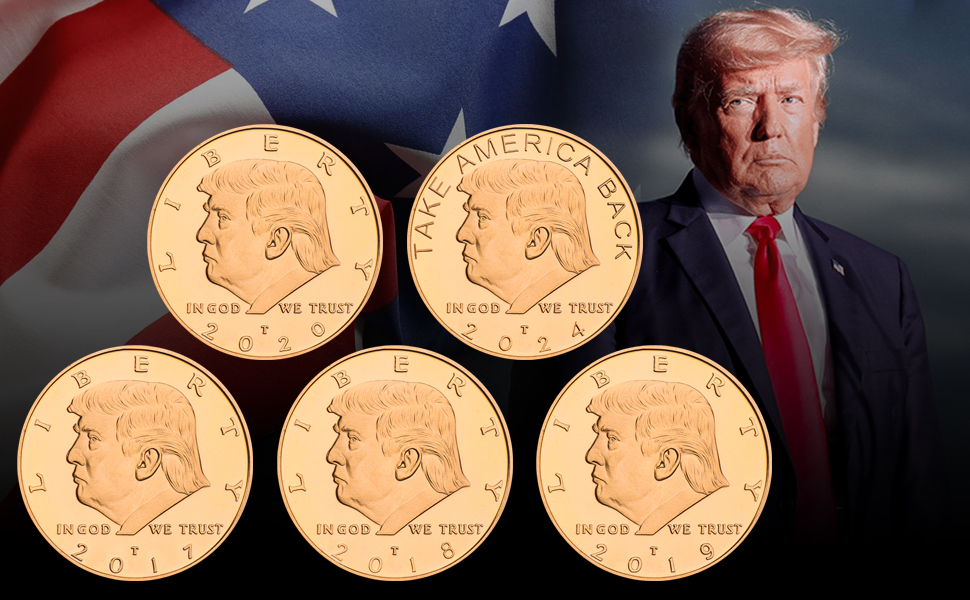
By the time the U.S. Mint strikes the first 24-karat gold Trump commemorative coin later this year, the great American tradition of keeping living politicians off the nation’s money will have been quietly, but spectacularly, circumvented.
Approved unanimously on March 19, 2026, by the Trump-appointed Commission of Fine Arts, the coin is ostensibly a celebration of the nation’s 250th anniversary. Yet, it serves a secondary, more visceral purpose for its chief architect: projecting executive dominance. The design is unapologetically aggressive. The obverse features President Donald Trump leaning intensely over the Resolute Desk, fists clenched, with the word “LIBERTY” arcing above his head and the dual dates “1776–2026” flanking him. The reverse bears a bald eagle, talons braced, ready to take flight.
Predictably, the political theater has been deafening. Critics have decried the coin as monarchic symbolism, pointing out that since the days of George Washington, the republic has fiercely guarded its currency against the vanity of living rulers. Defenders hail it as a masterstroke of patriotic fundraising and commemorative artistry.
But beneath the partisan noise lies a profound economic irony. In the grand sweep of monetary history, a leader plastering his face on ceremonial gold does not signal absolute control over a nation’s wealth. Quite the opposite. As we look back to the shifting empires of late antiquity, such numismatic pageantry usually reveals the exact opposite: a leader attempting to mask the uncomfortable reality of his limited sovereignty.
To understand the true weight of the 2026 Trump gold coin, one must look not to the halls of the Federal Reserve, but to the 6th-century courts of the Ostrogothic kings of Italy.
The Loophole of Vanity: 31 U.S.C. § 5112
To grasp the limits of the President’s monetary power, one must first look at the legal acrobatics required to mint the coin in the first place.
Federal law strictly forbids the portrait of a living person on circulating U.S. currency—a tradition born from the Founding Fathers’ revulsion for the coinage of King George III. To bypass this, the administration utilized the authorities granted under 31 U.S.C. § 5112, specifically the Treasury’s broad discretion to issue gold bullion and commemorative coins that do not enter general circulation.
While the coin bears a nominal face value of $1, it is a piece of bullion, not a medium of exchange. You cannot buy a coffee with it; it will not alter the M2 money supply; it will not shift the consumer price index.
Herein lies the central paradox of the Trump Semiquincentennial coin:
- The Facade of Power: It utilizes the highest-purity gold and the official imprimatur of the United States Mint to project executive authority.
- The Reality of Policy: The actual levers of the American economy—interest rates, quantitative easing, and the health of the fiat dollar—remain stubbornly out of the Oval Office’s direct control, residing instead with the independent Federal Reserve.
This dynamic—where a ruler uses localized, symbolic coinage to project a sovereignty he does not fully possess over the broader economic system—is not a modern invention. It is a historical hallmark of limited power.
Echoes from Ravenna: The Ostrogothic Parallel
When the Western Roman Empire collapsed in the late 5th century, Italy fell under the dominion of the Ostrogoths. The most famous of their rulers, Theodoric the Great, commanded the peninsula with formidable military might from his capital in Ravenna. He was, for all practical purposes, the king of Italy.
Yet, when you examine Ostrogothic coinage from this era, a fascinating picture of deference and limitation emerges.
Despite his military supremacy, Theodoric understood that the true center of global economic gravity lay to the east, in Constantinople. The Byzantine Emperor controlled the solidus—the gold standard of the Mediterranean world. If Theodoric wanted his kingdom to participate in international trade, he had to play by Byzantine monetary rules.
Consequently, the Ostrogoths minted gold and silver coins that were essentially counterfeits of Byzantine money. They bore the portrait of the reigning Eastern Emperor (such as Anastasius or Justinian), not the Ostrogothic king. Theodoric restricted his own branding to a modest monogram, and later kings, like Theodahad, only dared to place their full portraits on the bronze follis—the low-value base metal used for buying bread in local markets, entirely decoupled from international high finance.
The lesson from the Ostrogoths is clear, and widely recognized in peer-reviewed numismatic scholarship: controlling the territory is not the same as controlling the currency. The Ostrogoths used their local mints to project an image of continuity and authority to their immediate subjects, but they bowed to the monetary hegemony of the true empire.
The Byzantine Emperor of Modern Finance
Today, the “Constantinople” of the global economy is not a rival nation, but the institutional apparatus of the fiat dollar system—chiefly, the Federal Reserve and the global bond market.
President Trump has frequently chafed against this reality. Throughout his political career, he has sought to blur the lines of Fed independence, occasionally demanding lower interest rates or criticizing the Fed Chair with a ferocity normally reserved for political rivals. Yet, the institutional firewalls have largely held. The President cannot unilaterally dictate the cost of capital. He cannot force the world to buy U.S. Treasuries.
Thus, the 24-karat commemorative coin acts as his modern bronze follis.
It is a stunning piece of metal, but it is ultimately a domestic token. It satisfies a base of political supporters and projects an aura of monarchic permanence, just as Theodahad’s portrait did in the markets of Rome. But it does not challenge the underlying hegemony of the independent central banking system. The global markets, the sovereign wealth funds, and the algorithmic trading desks—the modern equivalents of the Byzantine merchants—will ignore the gold coin entirely. They will continue to trade in the invisible, digital fiat dollars over which the President exercises only indirect influence.
The Illusion of Monetary Sovereignty
What, then, does the “Trump coin” tell us about the current state of American executive power?
First, it highlights a growing preference for the aesthetics of power over the mechanics of governance. Minting a gold coin with one’s face on it is a frictionless exercise in executive privilege. Reining in a multi-trillion-dollar deficit, negotiating complex trade pacts, or carefully managing a soft economic landing are laborious, constrained, and often unrewarding tasks.
Second, it reveals the resilience of America’s financial architecture. That the President must resort to a commemorative loophole—utilizing a non-circulating bullion designation to bypass the strictures of circulating fiat—is a testament to the fact that the core of America’s money remains insulated from populist whim.
Consider the implications for dollar hegemony:
- Global Confidence: International investors rely on the U.S. dollar precisely because it is not subject to the immediate, emotional control of the executive branch.
- Institutional Friction: The outcry over the coin, while loud, proves that democratic norms regarding the separation of leader and state apparatus are still fiercely defended in the public square.
- The Paradox of Gold: By choosing gold—the traditional refuge of those who distrust government fiat—the administration inadvertently highlights its own lack of faith in the very paper currency it is sworn to manage.
Conclusion: The Weight of Empty Gold
The Roman historian Cassius Dio once observed that you can judge the health of a republic by the faces on its coins. When the republic falls, the faces of magistrates are replaced by the faces of autocrats.
But history is rarely that simple. The Ostrogothic kings of the 6th century put their faces on bronze because they lacked the power to control the gold. In March 2026, an American president has put his face on gold because he lacks the power to control the fiat.
The Semiquincentennial Trump coin is destined to be a remarkable collector’s item, a flashpoint in the culture wars, and a brilliant piece of political marketing. But when historians look back on the numismatics of the 2020s, they will not see a president who conquered the American monetary system. They will see a leader who, much like the kings of late antiquity, had to settle for a brilliant, golden simulacrum of power, while the true economic empire hummed along, indifferent and out of reach.
FAQ: Understanding the 2026 Commemorative Coin and U.S. Monetary Policy
Is it legal for a living U.S. President to be on a coin? Yes, but only under specific circumstances. By law (31 U.S.C. § 5112), living persons cannot be depicted on circulating currency (like standard pennies, quarters, or paper bills). However, the U.S. Mint has the authority to produce non-circulating bullion and commemorative coins. The 2026 Trump coin exploits this loophole as a non-circulating commemorative piece.
Does the U.S. President control the value of the dollar? No. While presidential policies (like tariffs, taxation, and government spending) affect the broader economy, the direct control of the U.S. money supply and interest rates rests with the Federal Reserve, an independent central bank. The President appoints the Fed Chair, but cannot legally dictate the bank’s day-to-day monetary policy.
What is the historical significance of the Ostrogothic coinage parallel? In the 6th century, Ostrogothic kings in Italy minted gold coins bearing the face of the Byzantine Emperor, while reserving their own portraits for lower-value bronze coins. This demonstrated that while they held local, symbolic power, true economic sovereignty belonged to the Byzantine Empire. The 2026 Trump coin operates similarly: it offers localized symbolic prestige, but the actual “engine” of the U.S. economy remains under the control of the independent Federal Reserve.
Can I spend the 24-karat Trump coin at a store? Technically, the coin has a legal face value of $1. However, because it is minted from 24-karat gold, its intrinsic metal value and numismatic collector value far exceed its $1 face value. It is meant to be collected and held as an asset or piece of memorabilia, not used in daily commercial transactions.
Investing 101
Gaming Giant’s Bold Gamble: Why Investors are Devouring Risky EA Debt Amid Geopolitical Crosscurrents
Investors are aggressively snapping up debt for Electronic Arts’ historic $55bn take-private, signaling resilient credit markets despite geopolitical tensions and AI disruption. Explore the EA LBO’s financial engineering, cost savings, and the appetite for risky video game financing in 2026.
Introduction: The Unyielding Allure of High-Yield
The world of high finance rarely pauses for breath, even as geopolitical headwinds gather and technological disruption reshapes industries. Yet, the recent $55 billion take-private of video game titan Electronic Arts (EA) has delivered a masterclass in market resilience, demonstrating an almost insatiable investor appetite for leveraged debt—even when tied to a complex, globally-infused transaction. Led by Saudi Arabia’s Public Investment Fund (PIF), Silver Lake, and Affinity Partners, this landmark deal, poised to redefine the gaming M&A landscape, has seen its $18-20 billion debt package met with overwhelming demand, proving that the pursuit of yield often eclipses lingering doubts.
This isn’t merely another private equity mega-deal; it’s a bellwether for global credit markets in early 2026. JPMorgan-led bond deals, designed to finance one of the largest leveraged buyouts in history, have drawn over $25 billion in orders, far surpassing their target size. This aggressive investor embrace of what many consider risky debt, particularly given the backdrop of Middle East tensions and concerns over AI’s impact on software, underscores a fascinating dichotomy: a cautious macroeconomic outlook juxtaposed with an audacious hunt for returns in stable, cash-generative assets. The question isn’t just how this was financed, but why investors dove in with such conviction, and what it signals for the year ahead.
The Anatomy of a Mega-Buyout: EA’s Financial Engineering
At an enterprise value of approximately $55 billion, the Electronic Arts take-private deal stands as the largest leveraged buyout on record, eclipsing the 2007 TXU Energy privatization. The financing structure is a finely tuned orchestration of equity and debt, designed to maximize returns for the acquiring consortium while appealing to a broad spectrum of debt investors.
Equity & Debt Breakdown
The EA $55bn LBO is funded through a combination of substantial equity and a significant debt tranche:
- Equity Component: Approximately $36 billion, largely comprising cash contributions from the consortium partners, including the rollover of PIF’s existing 9.9% stake in EA. PIF is set to own a substantial majority, approximately 93.4%, with Silver Lake holding 5.5% and Affinity Partners 1.1%.
- Debt Package: A substantial $18-20 billion debt package, fully committed by a JPMorgan-led syndicate of banks. This makes it the largest LBO debt financing post-Global Financial Crisis.
Unpacking the Debt Tranches: Demand & Pricing
The sheer scale of demand for this EA acquisition financing has been striking. The initial $18 billion debt offering, which included both secured and unsecured tranches, quickly swelled to over $25 billion in investor orders. This oversubscription highlights a strong market appetite for gaming-backed paper.
Key components of the debt include:
- Leveraged Loans: A cross-border loan deal totaling $5.75 billion launched on March 16, 2026, comprising a $4 billion U.S. dollar loan and a €1.531 billion ($1.75 billion) euro tranche.
- Pricing: Term Loan Bs (TLBs) were guided at 350-375 basis points over SOFR/Euribor, with a 0% floor and a 98.5 Original Issue Discount (OID). This discounted pricing suggests lenders were baking in some risk, yet the demand remained robust.
- Secured & Unsecured Bonds: The financing also features an upsized $3.25 billion term loan A, an additional $6.5 billion of other dollar and euro secured debt, and $2.5 billion of unsecured debt. While specific high-yield bond pricing hasn’t been detailed, market intelligence suggests secured debt at approximately 6.25-7.25% and unsecured north of 8.75%, reflective of the leverage profile.
The Deleveraging Path: Justifying a 6x+ Debt/EBITDA
Moody’s projects that EA’s gross debt will increase twelve-fold from $1.5 billion, pushing pro forma leverage (total debt to EBITDA) to around eight times at closing. Such high leverage ratios typically raise red flags, but the consortium’s pitch centers on EA’s robust cash flows and significant projected cost savings.
Three Pillars Justifying the Leverage
- Stable Cash Flows from Core Franchises: EA boasts an enviable portfolio of consistently profitable franchises, including FIFA (now EA Sports FC), Madden NFL, Apex Legends, and The Sims. These titles generate predictable, recurring revenue streams, particularly through live service models and annual updates, which underpin the company’s financial stability—a critical factor for debt investors.
- Strategic Cost Savings & Operational Efficiencies: The new owners have outlined an aggressive plan for $700 million in projected annual cost savings. This includes:
- R&D Optimization: $263 million from reclassifying R&D expenses for major titles like Battlefield 6 and Skate as one-time costs, now that they are live and generating revenue.
- Portfolio Review: $100 million from a strategic review of the game portfolio.
- AI Tool Integration: $100 million from leveraging AI tools for development and operations.
- Organizational Streamlining: $170 million from broader organizational efficiencies.
- Public Company Cost Removal: $30 million saved by no longer incurring costs associated with being a public entity.
These add-backs significantly bolster adjusted EBITDA figures, making the debt package appear more manageable to prospective lenders. Moody’s expects leverage to decrease to five times by 2029.
- Untapped Growth Potential in Private Ownership: Freed from quarterly earnings pressure, EA’s management can pursue longer-term strategic initiatives and R&D without the immediate scrutiny of public markets. This is particularly appealing for a company operating in an industry prone to rapid innovation and large, multi-year development cycles. The consortium’s diverse networks across gaming, entertainment, and sports are expected to create opportunities to “blend physical and digital experiences, enhance fan engagement, and drive growth on a global stage”.
Geopolitical Currents and the Appetite for Risky Debt
The influx of capital into the Electronic Arts bond deals is particularly noteworthy given the complex geopolitical backdrop of early 2026. Global markets are navigating sustained tensions in the Middle East, the specter of trade tariffs, and the disruptive force of artificial intelligence. Yet, these factors have not deterred investors from snapping up debt to finance Electronic Arts’ $55bn take-private.
The Saudi PIF Factor: Geopolitical Implications
The prominent role of Saudi Arabia’s Public Investment Fund (PIF) as the lead equity investor introduces a significant geopolitical dimension. The PIF, managing over $925 billion in assets, views this acquisition as a strategic move to establish Saudi Arabia as a global hub for games and sports, aligning with its “Vision 2030” diversification efforts. PIF’s deep pockets and long-term investment horizon offer stability often attractive to private equity deals.
However, the involvement of a sovereign wealth fund, particularly one with ties to Jared Kushner’s Affinity Partners, has not been without scrutiny. Concerns about national security risks, foreign access to consumer data, and control over American technology (including AI) have been voiced by organizations like the Communications Workers of America (CWA), who urged federal regulators to scrutinize the deal. Despite these geopolitical and regulatory considerations, the debt market demonstrated a remarkable willingness to participate. This indicates that the perceived financial stability and growth prospects of EA outweighed concerns tied to the source of equity capital.
AI Disruption and Market Confidence
The gaming industry, like many sectors, faces potential disruption from AI. Yet, EA itself projects $100 million in cost savings from AI tools, signaling a strategic embrace rather than fear of the technology. This forward-looking approach to AI, coupled with the inherent stability of established gaming franchises, likely contributed to investor confidence. In a volatile environment, proven entertainment IP acts as a relatively safe harbor.
The successful placement of this jumbo financing also suggests that while some sectors (like software) have seen “broader risk-off sentiment” due to AI uncertainty, the market distinguishes between general software and robust, content-driven interactive entertainment.
Broader Implications for Gaming M&A and Private Equity
The EA LBO is more than an isolated transaction; it’s a powerful signal for the broader M&A landscape and the future of private equity.
A Return to Mega-LBOs?
After a period where massive leveraged buyouts fell out of favor post-Global Financial Crisis, the EA deal marks a definitive comeback. It “waves the green flag on sponsors resuming mega-deal transactions,” indicating that easing borrowing costs and renewed boardroom confidence are aligning to facilitate large-cap M&A. The success of this deal, especially the oversubscription of its debt tranches, could embolden other private equity firms to pursue similar-sized targets in industries with reliable cash flows. This is crucial for private-equity debt appetite in 2026.
Creative Independence Post-Delisting
While private ownership offers freedom from public market pressures, it also introduces questions about creative independence. Historically, private equity has been associated with aggressive cost-cutting and a focus on short-term profits. For a creative industry like gaming, this can be a double-edged sword. While the stated goal is to “accelerate innovation and growth”, some within EA have expressed concern about potential workforce reductions and increased monetization post-acquisition. The challenge for the new owners will be to balance financial optimization with the nurturing of creative talent and IP development crucial for long-term success.
What it Means for 2027: Scenarios and Ripple Effects
As the EA $55bn take-private moves towards its expected close in Q1 FY27 (June 2026), its ripple effects will be closely watched by analysts and investors alike.
- Post-Deal EA Strategy: Under private ownership, expect EA to double down on its most successful franchises and potentially explore new growth vectors less scrutinized by quarterly reports. Strategic investments in areas like mobile gaming, esports, and potentially new IP development could accelerate. The projected cost savings will likely be reinvested to fuel growth or rapidly deleverage.
- Valuation Multiples: The deal itself sets a new benchmark for valuations in the gaming sector, particularly for companies with strong IP and predictable revenue streams. This could influence future M&A activities involving peers like Activision Blizzard (though now part of Microsoft) or Take-Two Interactive, raising their perceived floor valuations.
- Credit Market Confidence: The overwhelming investor demand for EA’s debt signals a powerful confidence in the leveraged finance markets, particularly for well-understood, resilient businesses. If EA successfully executes its deleveraging and growth strategy post-buyout, it will further validate the market’s willingness to finance large, complex LBOs, even amidst global uncertainty. This could pave the way for more “risky debt” deals tied to stable, high-quality assets.
- Geopolitical Influence in Tech: The PIF’s leading role solidifies the trend of sovereign wealth funds actively participating in global technology and entertainment sectors. This influence will continue to shape discussions around regulatory oversight, national interests, and the evolving landscape of global capital flows.
The investors snapping up debt to finance Electronic Arts’ $55bn take-private aren’t just betting on a video game company; they’re wagering on the enduring power of stable cash flows, strategic cost management, and a robust credit market willing to absorb risk for attractive yields. In a world grappling with uncertainty, the virtual battlefields of EA’s franchises offer a surprisingly solid ground for real-world financial gains.
Analysis
US-Iran Conflict: The Hidden $2 Trillion Threat to Markets — And the Only Peaceful Exit Strategy That Works
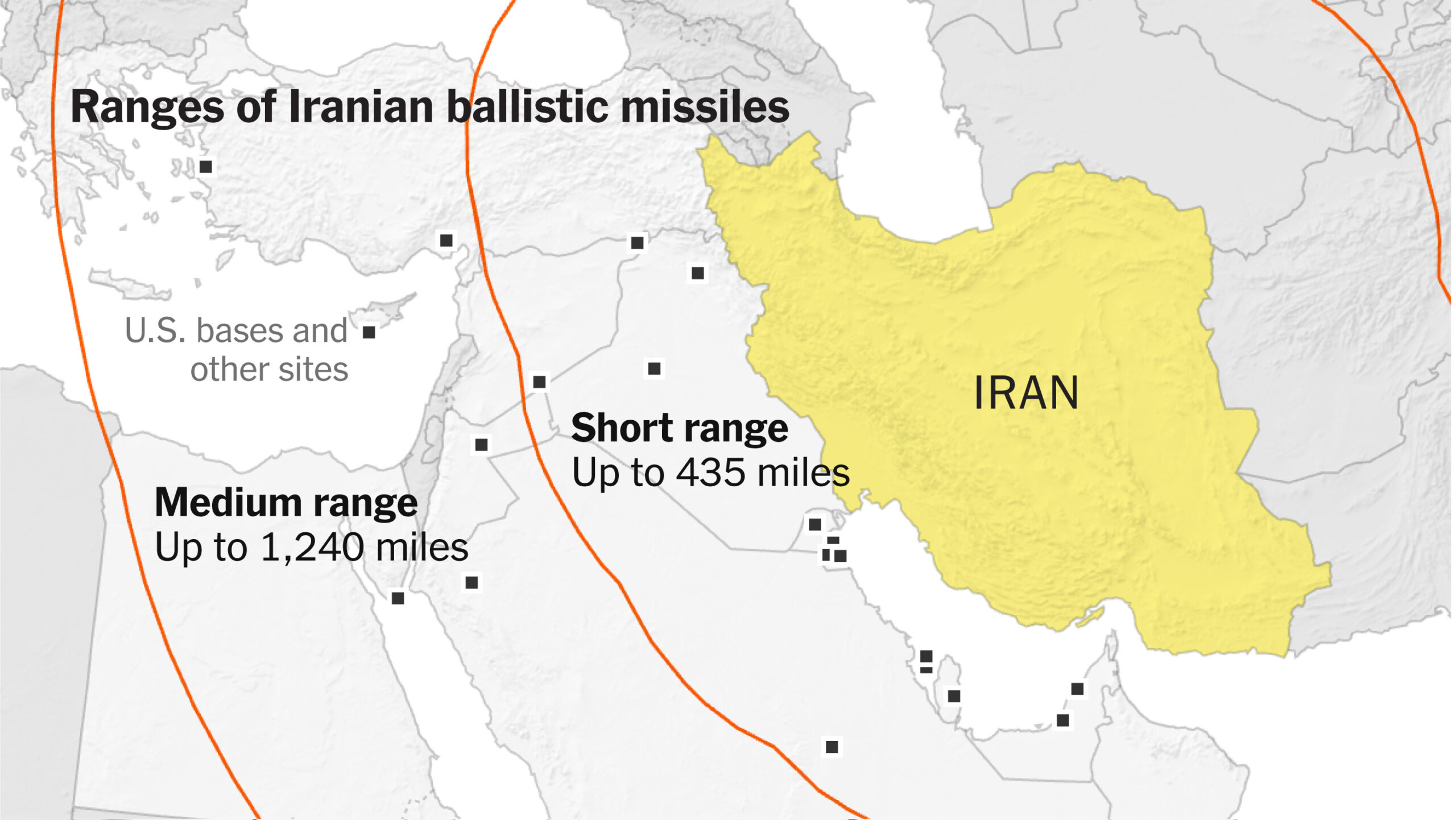
At 2:30 a.m. Eastern time on February 28, 2026, President Donald Trump appeared on Truth Social to tell the world that Operation Epic Fury had begun. Within hours, US and Israeli airstrikes had killed Supreme Leader Ali Khamenei, targeted Iran’s nuclear and missile infrastructure, and triggered an Iranian counter-barrage that struck US military installations across the Gulf from Kuwait to Qatar. The Strait of Hormuz — the narrow channel through which one-fifth of the world’s seaborne oil flows daily — effectively ceased to function as a global trade corridor. What followed was not merely a military confrontation. It was, instantly and simultaneously, a financial one.
The US-Iran conflict financial markets impact is now being measured in trillions, not billions. The S&P 500 has shed all of its 2026 gains in four trading days. Gold has broken historic highs. Oil is being repriced as a weapon, not a commodity. And central banks from Frankfurt to Tokyo have abruptly paused rate-cut deliberations they had spent months preparing. Understanding the full economic anatomy of this crisis — and the narrow but navigable diplomatic corridor that still exists — is no longer optional for any serious investor, policymaker, or business leader.
1: The Flashpoints and the Immediate Market Shock
The escalation was not unforeseeable. From late January 2026 onward, the United States had amassed air and naval assets in the region at a scale not seen since the 2003 invasion of Iraq. Wikipedia Markets were already on edge before the first bomb fell. When they did fall, the reaction was swift and severe.
The Cboe Volatility Index surged 18% in early Monday trading, while spot gold prices accelerated more than 2% to approach $5,400 an ounce. CNBC By March 3, the S&P 500 had slid more than 2% shortly after the opening bell to trade near 6,715, erasing all year-to-date gains and hitting a three-month low, with nearly 90% of S&P 500 stocks in the red and decliners outnumbering advancers 17-to-1 at the NYSE. Coinpaper
The energy market moved even harder. US crude oil rose 8.4% to $72.74 per barrel on the first Monday of the conflict, while global benchmark Brent jumped 9% to $79.45 — closing at their highest levels since the US and Israel bombed Iran’s nuclear facilities in June 2025. CNBC By Wednesday, Brent extended its gains to $82.76 a barrel, hovering near the highest level since January 2025, with WTI rising for a third day to $75.48 — and Brent now 36% higher year-to-date according to LSEG data. CNBC
The bond market defied its usual wartime script. Rather than rallying as a safe haven, Treasuries sold off as inflation fears dominated. The 10-year Treasury yield, which influences borrowing costs across the economy, fell as low as 3.96% before reversing course and rising to 4.04%. CNN By Day 4, with Brent above $82 and no ceasefire in sight, the 10-year was pressing toward 4.10% — precisely the wrong direction for a Federal Reserve that had spent most of early 2026 signaling rate cuts.
2: Sector-by-Sector Damage — A Stress Test for Wall Street
The US-Iran tensions stock market crash dynamic is not uniform. It is a story of violent rotation — capital moving decisively from growth to defense, from global to domestic, from risk to refuge.
Energy: The clear winner, perversely. Global oil majors traded higher, with Exxon Mobil up 4.1% in pre-market trading, Chevron up 3.9%, France’s TotalEnergies 3.6% higher, and Shell advancing 2.2%. CNBC Refiners with US-centric supply chains have additional insulation from the Hormuz disruption.
Airlines: The clearest victim. More than 1 million people were caught in travel chaos as another 1,900 flights were canceled in and out of the Middle East on Day 4, including from major hubs like Dubai. CNBC United, American, and Delta have seen shares drop 4–8%. Higher jet fuel costs compound the problem: approximately 30% of Europe’s jet fuel supply originates from or transits through the Strait of Hormuz. Al Jazeera
Defense contractors: Lockheed Martin, Northrop Grumman, and RTX gained 2–3% as military operations intensified. INDmoney These gains are likely to persist for weeks regardless of diplomatic outcome, as allied nations across Europe and the Gulf accelerate procurement.
Technology and semiconductors: The damage is more subtle but may prove more durable. Taiwan and South Korea — two of Asia’s most critical semiconductor manufacturing hubs — import the majority of their crude through the Strait of Hormuz. A sustained supply shock raises input costs, forces energy rationing decisions, and injects planning uncertainty into capital expenditure cycles. The impact of the Iran-Israel war on global economy in the semiconductor sector may only become visible in Q2 earnings guidance.
Shipping and insurance: Supertanker rates have hit all-time highs. Insurance withdrawal is doing the work that a physical blockade has not — the outcome for cargo flow is largely the same, with tanker traffic dropping approximately 70% and over 150 ships anchoring outside the strait to avoid risks. Kpler Goldman Sachs noted in a client memo that even without further physical disruptions, “precautionary restocking and redirection can raise already elevated freight rates further.” Those costs will transmit to consumers across petrochemical, plastics, and agricultural supply chains within weeks.
The aggregate market capitalization loss across US and European equities over four trading days exceeds $2 trillion — a figure that encompasses not just direct sector damage but the systemic repricing of risk across growth assets globally.
3: The Global Ripple Effects — Europe, Asia, and Gulf Sovereign Funds
No geography escapes the oil prices US-Iran conflict 2026 arithmetic. But the damage is not equally distributed.
Europe faces a particularly acute energy vulnerability. The continent, still structurally scarred by the 2022 Russian gas crisis, had stabilized its LNG supply chains through Qatari and Emirati routes — both of which now transit through a contested Strait. Bank of America warned that a prolonged disruption in the Strait could push European natural gas prices above €60 per megawatt hour. CNBC European benchmark Dutch TTF futures saw prices nearly double over 48 hours before easing on diplomatic headlines. The pan-European Stoxx 600 fell 2.7% on Day 4, with bank shares down 3.8%, insurance stocks down 4.2%, and mining stocks down 3.9%. CNBC
Asia carries the highest structural exposure. The majority of crude oil shipped through the Strait of Hormuz flows to China, India, Japan, and South Korea, accounting for nearly 70% of total shipments according to the US Energy Information Administration. Al Jazeera Goldman Sachs modeled that under a six-week Strait closure with oil rising from $70 to $85 per barrel, regional inflation in Asia could rise by approximately 0.7 percentage points, with the Philippines and Thailand most vulnerable and China facing a more modest increase. CNBC
Gulf sovereign wealth funds face a paradox that would be almost elegant if not for the human cost. Higher oil revenues theoretically boost fund inflows; but Iranian missile strikes on UAE, Qatari, Kuwaiti, and Saudi infrastructure create operational disruption and direct asset damage. Dubai International Airport — one of the world’s busiest aviation hubs — was struck. The UAE’s financial identity as a stable, neutral commercial center is being stress-tested in real time.
Central banks globally find themselves trapped between the inflation imperative and the growth shock. Nomura’s economists stated that “the ongoing Iran conflict solidifies the case for many central banks to hold rates steady for now,” leaving policymakers to juggle a delicate task of balancing inflationary risk against slowing growth. CNBC For the Federal Reserve, which had been building toward two rate cuts in 2026’s first half, the conflict could push that timetable to the fourth quarter at earliest — or eliminate it entirely.
4: The Only Viable Peaceful Exit Strategy — And Why It Can Still Work
This is where most analysis stops and where this piece begins in earnest. The diplomatic wreckage left by Operation Epic Fury is substantial. But it is not irreparable — and the economic pressure building on all sides is, paradoxically, the most powerful argument for a negotiated settlement.
Why a deal is structurally possible:
Trump told The Atlantic magazine on Day 2 that Iran’s new leadership wanted to resume negotiations and that he had agreed to talk to them: “They want to talk, and I have agreed to talk, so I will be talking to them.” CNBC Iran’s provisional leadership — a council comprising President Masoud Pezeshkian and senior officials — is navigating an existential moment without Khamenei’s ideological authority. That creates both fragility and, crucially, flexibility. Importantly, just before the strikes began, Oman’s Foreign Minister said a “breakthrough” had been reached and Iran had agreed both to never stockpile enriched uranium and to full verification by the IAEA. House of Commons Library The architecture of a deal already existed. It was not lack of diplomatic progress that triggered the war — it was the decision to strike before that progress could be formalized.
A realistic peaceful exit strategy for US-Iran requires four sequential steps:
Step 1 — Ceasefire and maritime corridor restoration (Days 1–7). The immediate priority is humanitarian and commercial. Trump has already offered US Development Finance Corporation insurance for tankers transiting Hormuz and pledged naval escorts. Oil prices eased significantly after Trump’s announcement, with Brent up 3% rather than the 10%+ of earlier sessions. CNBC This signals that markets will respond immediately to credible de-escalation signals. Oman, which hosted the February Muscat talks and whose Foreign Minister declared progress “within reach,” is the natural first-mover for a ceasefire framework. Qatar and Turkey — both of which have maintained functional working relationships with Tehran — can serve as parallel channels.
Step 2 — UN Security Council monitoring framework (Days 7–21). Historical precedent is instructive. The 1981 Algiers Accords, brokered by Algeria after Iran held 52 Americans hostage for 444 days, succeeded precisely because a credible neutral third party structured the terms and each side could claim a form of victory. A UN-monitored ceasefire framework — with the IAEA resuming real-time access to Iranian nuclear sites — addresses Washington’s core stated objective while giving Iran’s provisional government a face-saving mechanism to halt counter-strikes.
Step 3 — Phased sanctions rollback tied to verifiable nuclear benchmarks (Weeks 3–8). Iran’s economy was already in crisis before the first airstrike. Iran’s GDP per capita had fallen from over $8,000 in 2012 to around $5,000 by 2024. Wikipedia The incoming provisional leadership will face acute pressure from a population that was already staging the largest protests since the 1979 revolution. Economic relief — even partial and phased — is the most powerful leverage a negotiating framework can offer. The pre-existing Geneva blueprint, imperfect as it was, provides a workable skeleton.
Step 4 — A Gulf security architecture with multilateral guarantees (Months 2–6). The enduring lesson of every prior US-Iran de-escalation cycle is that bilateral deals without regional buy-in collapse under the weight of proxy conflicts and domestic political pressure. Saudi Arabia, the UAE, Qatar, and Turkey need to be co-signatories or formal witnesses to any sustainable settlement — not merely passive observers. Saudi Crown Prince Mohammed bin Salman’s reported calls to Trump before the strikes demonstrate that Gulf states are not passive in this conflict. Their inclusion in a permanent security framework is the difference between a ceasefire and a durable peace.
The economic logic is unambiguous: every week the Hormuz disruption persists, global GDP loses an estimated $25–30 billion in foregone trade flows, supply chain disruption, and elevated energy costs. A month of full disruption — Goldman Sachs’s $100-per-barrel scenario — would represent one of the largest deflationary shocks to global growth since the 2008 financial crisis. That shared economic pain is, historically, what finally moves adversaries from battlefield to negotiating table.
5: The Investor Playbook — What to Buy, Hedge, or Avoid Right Now
The safe haven assets during US-Iran crisis playbook is partially conventional, partially counterintuitive in this specific conflict.
Strong conviction positions:
- Gold: J.P. Morgan raised its gold price target to $6,300 per ounce by the end of 2026, reflecting sustained geopolitical risk as a structural driver. CNBC At $5,300–$5,410 currently, the upside thesis remains intact.
- US energy majors: Exxon, Chevron, and their European equivalents remain direct beneficiaries of elevated Brent until Hormuz normalizes.
- Defense contractors: Northrop Grumman, RTX, and L3Harris benefit from both the current operational tempo and the inevitable allied defense spending acceleration that follows every regional escalation.
- US dollar and short-duration Treasuries: The dollar index has erased its 2026 losses. Short-duration bills offer inflation-adjusted protection without the duration risk of 10-year bonds in an inflationary environment.
Positions to hedge or reduce:
- Airlines: Avoid until Hormuz reopens and jet fuel normalizes. The dual pressure of higher fuel costs and collapsed Middle East route revenue is a structural problem, not a temporary one.
- Emerging market equities, particularly Asian importers: The Philippines, Thailand, and South Korea face the most acute oil-import cost exposure.
- European utility companies: Natural gas price volatility creates margin compression that takes quarters to appear fully in earnings.
- Tech and growth equities with elevated multiples: Not because of direct exposure to the conflict, but because sustained higher oil prices reinforce the “higher for longer” rate narrative that compresses price-to-earnings multiples in high-duration assets.
The contrarian opportunity: Inverse VIX instruments and long equity positions become interesting only when a ceasefire signal appears credible. History is clear on this: geopolitical shocks that are followed by negotiated settlements produce sharp equity rebounds. Trump’s own statement that Iran wants to talk is the first credible signal since Operation Epic Fury began.
Conclusion: The Clock Is Expensive
Every day the Strait of Hormuz remains effectively closed, the hidden economic meter runs. The $2 trillion figure in this piece’s headline is not a speculative construct — it is a conservative aggregation of market capitalization losses, disrupted trade value, inflation uplift, and foregone GDP that is already being booked into the global economy’s ledgers.
The exit, however, exists. It requires Trump to convert his Atlantic interview signal into a formal back-channel offer, Oman to reconvene the Muscat framework under UN auspices, and Iran’s provisional government to recognize that economic survival and a negotiated nuclear settlement are not separate imperatives but the same one. European natural gas futures dropped as much as 12% in a single session on reports that Iranian operatives had reached out to discuss terms for ending the conflict Euronews — a reminder of just how swiftly markets reward even the whisper of diplomacy.
The conflict is four days old. The diplomatic infrastructure that nearly prevented it is, remarkably, still partially intact. Whether the economic shock of the Hormuz crisis finally proves more persuasive than the ideology that created it remains the defining geopolitical and financial question of 2026.

KSE-100 Plunges Amid Geopolitical Firestorm — But Islamabad Holds the World’s Attention

The Trump Coin and Lessons from the Ostrogoths: How a Gold Offering Reveals the Limits of Presidential Power Over America’s Money

Gaming Giant’s Bold Gamble: Why Investors are Devouring Risky EA Debt Amid Geopolitical Crosscurrents

Top 15 Stocks for Investment in 2026 in PSX: Your Complete Guide to Pakistan’s Best Investment Opportunities
Top 15 Stocks for Investment in 2026 in PSX: Your Complete Guide to Pakistan’s Best Investment Opportunities

Debunking IMF Program Myths: Reconfiguring Engagement for True National Ownership in a Volatile World
-
 Markets & Finance3 months ago
Top 15 Stocks for Investment in 2026 in PSX: Your Complete Guide to Pakistan’s Best Investment Opportunities
-
Markets & Finance3 months ago
Top 15 Stocks for Investment in 2026 in PSX: Your Complete Guide to Pakistan’s Best Investment Opportunities
-
 Analysis2 months ago
Debunking IMF Program Myths: Reconfiguring Engagement for True National Ownership in a Volatile World
-

 Global Economy3 months ago
What the U.S. Attack on Venezuela Could Mean for Oil and Canadian Crude Exports: The Economic Impact
-

 Investment3 months ago
Top 10 Mutual Fund Managers in Pakistan for Investment in 2026: A Comprehensive Guide for Optimal Returns
-

 Asia3 months ago
China’s 50% Domestic Equipment Rule: The Semiconductor Mandate Reshaping Global Tech
-

 AI3 months ago
15 Most Lucrative Sectors for Investment in Pakistan: A 2025 Data-Driven Analysis
-

 Exports3 months ago
Pakistan’s Export Goldmine: 10 Game-Changing Markets Where Pakistani Businesses Are Winning Big in 2025