
Analysis
Singapore Tightens Training Subsidies as Economic Pressures Mount


SkillsFuture funding reforms signal a strategic pivot toward industry-led upskilling—but at what cost to smaller providers and self-funded learners?
On a humid afternoon in December, Melissa Tan sat in her Jurong West training center watching enrollment numbers tick downward on her computer screen. After fourteen years running a mid-sized vocational training provider, she had weathered economic downturns, policy shifts, and the digitization of Singapore’s workforce. But the new SkillsFuture funding guidelines announced by SkillsFuture Singapore (SSG) in late January felt different. “We’ve built our reputation on serving individuals who want to pivot careers on their own initiative,” she explained over coffee. “Now we need forty percent of our students to be employer-sponsored. That’s a complete business model transformation.”
Tan’s predicament illustrates the complex trade-offs embedded in Singapore’s latest recalibration of its decade-old SkillsFuture initiative. Effective December 31, 2025, SSG has imposed substantially tighter funding criteria on approximately 9,500 training courses across 500 providers—requirements that privilege employer-driven training over individual initiative, data-validated skills over experimental offerings, and quantifiable outcomes over pedagogical innovation. The reforms arrive at a moment when Singapore’s small, open economy faces mounting pressure from technological disruption, an aging workforce, and intensifying regional competition for talent and capital.
The policy shift represents more than administrative housekeeping. It embodies a fundamental question confronting advanced economies worldwide: How do governments balance the democratization of lifelong learning with the imperative to channel scarce public resources toward demonstrable economic returns?
The Mechanics of Tightening
The new guidelines affect what SSG terms “Tier 2” courses—those developing currently demanded skills for workers’ existing roles or professions. (They explicitly exclude SkillsFuture Series courses focused on emerging skills, or career transition programs like Institute of Higher Learning qualifications.) The changes impose three primary gatekeeping mechanisms:
Course approval: Prospective courses must now demonstrate alignment with either (1) skills appearing on SSG’s newly released Course Approval Skills List, derived from data science analysis of job market trends, or (2) documented evidence of industry demand through endorsement from designated government agencies or professional bodies. This represents a marked departure from the previous approach, which permitted a broader range of training offerings to access public subsidies.
Funding renewal threshold: From December 31, 2025 onward, courses seeking to renew their two-year funding cycle must demonstrate that at least 40 percent of enrollments came from employer-sponsored participants. This metric directly measures whether training aligns with enterprise workforce development priorities rather than individual hobbyist pursuits.
Quality survey compliance: Beginning June 1, 2026, courses must achieve a minimum 75 percent response rate on post-training quality surveys, with ratings above the lower quartile. This mechanism aims to eliminate providers who deliver mediocre experiences while gaming enrollment numbers.
A transitional framework softens the immediate impact. Between December 31, 2025 and June 30, 2027, selected course types—including standalone offerings from institutes of higher learning, courses leading to Workforce Skills Qualification Statements of Attainment, and certain other categories—receive a one-year grace period if they fail the 40 percent employer-sponsorship threshold. But the reprieve is temporary; from July 1, 2027, all Tier 2 courses must meet the full criteria.
The Economic Logic: Aligning Supply with Demand
The rationale behind these reforms emerges clearly when viewed against Singapore’s macroeconomic imperatives and recent labor market data. According to SSG’s 2025 Skills Trends analysis, demand for AI-related competencies has surged across industries, with skills like “Generative AI Principles and Applications” experiencing the fastest growth in job postings data. Simultaneously, green economy skills—sustainability management, carbon footprint assessment—and care economy capabilities have gained prominence as Singapore pursues its Green Plan 2030 and grapples with demographic aging.
Yet training providers, responding to consumer demand rather than labor market signals, have often proliferated courses in saturated or declining sectors. The mismatch represents a classic market failure: individual learners, lacking perfect information about employment prospects, gravitate toward familiar or fashionable topics rather than areas of genuine skills shortage. Training providers, incentivized to maximize enrollment volumes, oblige. Public subsidies then inadvertently subsidize this misalignment.
The 40 percent employer-sponsorship requirement cleverly leverages employers’ superior information about workforce needs. Companies investing real money in their employees’ training create a demand-side filter that SSG believes will naturally favor courses addressing actual productivity gaps. “Employers vote with their wallets,” one SSG official noted at the January 27 Training and Adult Education Conference announcing the changes. “If a course can’t attract employer sponsorship, we need to ask whether it’s truly addressing labor market needs.”
From a public finance perspective, the logic is straightforward. Singapore, despite its fiscal strength, operates under self-imposed constraints: a balanced budget requirement, limited borrowing for current spending, and a cultural aversion to expansive welfare states. SkillsFuture expenditures have grown substantially since the program’s 2015 launch—Singaporeans aged 25 and above have collectively claimed over S$1 billion in SkillsFuture Credits, with enhanced subsidies for mid-career workers (aged 40-plus) adding further fiscal pressure. Ensuring these outlays generate measurable employment and productivity outcomes becomes imperative as the government contemplates longer-term structural challenges: an aging society requiring expanded healthcare spending, investments in digital infrastructure and green transition, and resilience measures against external economic shocks.
Global Context: Singapore’s Experiment in Comparative Relief
To appreciate the boldness of Singapore’s approach, consider its divergence from other advanced economies’ lifelong learning models. Denmark’s flexicurity system combines generous unemployment benefits with extensive active labor market policies, including subsidized adult education. But Denmark can afford this largesse through high taxation (total government revenue exceeds 46 percent of GDP, versus Singapore’s 20 percent) and a homogeneous, highly unionized workforce. South Korea’s K-Digital Training initiative, launched in 2020, channels subsidies toward digital skills bootcamps—but targets primarily youth and unemployed workers, not the broader workforce Singapore aims to reach.
France’s Compte Personnel de Formation (CPF) offers perhaps the closest parallel: a portable training account funded through payroll levies, giving workers autonomy over skill development. Yet France’s system has faced criticism for fraud, low-quality providers gaming the system, and inadequate alignment with labor market needs—precisely the pathologies Singapore’s reforms seek to preempt. A 2021 report in The Economist examining retraining programs across OECD countries found that success correlated strongly with employer involvement and labor market relevance, rather than mere accessibility.
Singapore’s model occupies a distinctive middle ground: universal entitlements (every citizen aged 25-plus receives credits), but channeled through market mechanisms and employer validation. The SkillsFuture reforms effectively tighten the alignment mechanism without abandoning the universalist principle—a pragmatic compromise characteristic of Singapore’s technocratic governance style.
The Squeeze on Training Providers: Winners and Losers
The employer-sponsorship threshold creates clear winners and losers among training providers. Large, established players with existing corporate relationships—polytechnics, ITE, private training centers serving multinational corporations—possess natural advantages. They can leverage long-standing contracts, industry advisory boards, and placement track records to attract employer-sponsored enrollments.
Smaller providers face steeper challenges. Many built their businesses serving self-funded mid-career professionals seeking new skills or side ventures—precisely the demographic segment the reforms indirectly penalize. “We’ve invested heavily in emerging areas like blockchain development and sustainability consulting,” explained one boutique training center director who requested anonymity. “These are forward-looking skills, but companies aren’t yet sponsoring at scale because the roles barely exist in their organizations. Under the new rules, we’re essentially being told to wait until the demand becomes mainstream—by which point the opportunity has passed.”
The enrolment cap mechanism, while intended to prevent gaming, compounds the squeeze. Courses reaching their enrollment limit before the funding renewal check (six months prior to the end of the two-year validity period) must pass quality checks before accepting additional students. High-demand courses thus face bureaucratic friction at the worst possible moment—when they’ve demonstrated market appeal. Lower-demand courses, by contrast, may never hit enrollment thresholds requiring scrutiny, creating a perverse incentive structure.
Training providers serving niche industries face particular vulnerability. Specialized sectors like maritime law, conservation biology, or heritage preservation generate modest enrollment volumes and limited employer-sponsorship rates (small firms in these fields often lack formal training budgets). Yet these represent precisely the differentiated capabilities that sustain Singapore’s position as a diversified, knowledge-intensive economy beyond the big four sectors (finance, logistics, technology, manufacturing).
Access and Equity: The Self-Funded Learner’s Dilemma
The employer-sponsorship emphasis raises important equity questions. Not all workers enjoy employer-sponsored training opportunities equally. Research by Singapore’s Ministry of Manpower shows that company-sponsored training tends to concentrate among degree-holders, professionals, and employees of large firms. Rank-and-file workers in SMEs, gig economy participants, and those in precarious employment—precisely the groups most vulnerable to technological displacement—face significant barriers.
Consider Raj Kumar, a 47-year-old logistics coordinator whose employer, a small freight forwarding company, lacks a formal training budget. Kumar has used SkillsFuture credits to complete courses in data analytics and digital supply chain management, hoping to transition into a more technology-oriented role. Under the new guidelines, his preferred courses may lose funding eligibility if they fail to attract sufficient employer sponsorship—forcing him to either pay full cost or choose less relevant but better-subsidized alternatives.
Women reentering the workforce after caregiving breaks present another equity concern. These mid-career returners often invest in self-funded retraining to compensate for skills atrophy or career pivots. Employer-sponsorship requirements create a catch-22: they need training to become employable, but courses require employer interest to remain subsidized.
SSG officials argue that alternative pathways remain available—SkillsFuture Career Transition Programs explicitly serve career switchers, and mid-career enhanced subsidies (covering up to 90 percent of course fees for Singaporeans aged 40-plus) continue supporting self-funded learning. But the distinction between “career transition” and “skills upgrading” proves blurry in practice. Many mid-career workers pursue incremental skill acquisition that doesn’t constitute wholesale career change yet enables internal mobility or role evolution. The new framework may inadvertently penalize this gray zone of professional development.
Data-Driven Skill Identification: Promise and Pitfalls
The Course Approval Skills List represents one of SSG’s more innovative elements. Using natural language processing and machine learning algorithms, SSG analyzes job posting data, wage trends, and hiring patterns to identify skills experiencing demand growth. The 2025 Skills Trends report reveals that 71 skills—spanning agile software development, sustainability management, and client communication—demonstrated consistently high demand and transferability across 2022-2024, with trends expected to continue into 2025.
This data-driven approach offers significant advantages over traditional expert panels or industry surveys. It’s faster, more comprehensive, and less subject to lobbying by incumbent industry players. The methodology also permits granular analysis—SSG now tracks not just skill categories but specific applications and tools (Python libraries, ERP systems, design software) required in job roles.
However, data-driven skill identification harbors limitations. Job postings reflect current employer preferences, not future needs. Emerging disciplines—quantum computing applications, circular economy frameworks, AI ethics—may barely register in job posting data until they’ve already achieved critical mass. By then, first-mover advantages have vanished. If training providers can only offer courses on SSG’s approved list, Singapore risks systematically underinvesting in forward-looking capabilities.
The methodology also privileges skills easily described in job postings. Tacit knowledge, soft skills, and creative competencies prove harder to quantify through algorithmic analysis. Yet these capabilities—judgment, cross-cultural communication, ethical reasoning—often determine long-term career success and organizational adaptability. A training ecosystem optimized for algorithmically identifiable skills may inadvertently neglect the human qualities most resistant to automation.
The Broader Stakes: Singapore’s Competitiveness Calculus
The SkillsFuture reforms must be understood within Singapore’s broader economic development strategy. The city-state has staked its future on becoming a hub for advanced manufacturing, digital services, sustainability innovation, and high-value professional services—sectors requiring a workforce that continuously upgrades capabilities. With neighboring countries investing heavily in technical education (Vietnam’s IT workforce, Thailand’s Eastern Economic Corridor initiative) and established hubs like Hong Kong and Seoul competing for similar industries, Singapore cannot afford complacency.
Yet the tightening carries risks. If Singapore’s training ecosystem becomes too employer-driven and algorithmically determined, it may sacrifice the experimental, entrepreneurial energy that has historically fueled its adaptive capacity. Many of Singapore’s successful industry pivots—from petrochemicals to biotech, from port logistics to digital banking—emerged from individuals and organizations pursuing capabilities ahead of obvious market demand.
The reforms also reflect broader tensions in Singapore’s governance model. The technocratic state excels at efficiency, optimization, and resource allocation toward measurable objectives. These strengths propelled Singapore from third-world poverty to first-world prosperity in two generations. But efficiency-maximizing systems can become brittle when confronted with uncertainty and ambiguity. Training that produces clear, quantifiable outcomes in stable domains may underperform when facing discontinuous change or nonlinear technological shifts.
Forward-Looking Implications: What Comes Next
The January 2026 announcement likely represents the opening salvo in a longer recalibration of Singapore’s lifelong learning architecture. Several trends warrant attention:
Increased emphasis on outcomes-based funding: Expect SSG to develop more sophisticated metrics beyond employer sponsorship—wage progression, job placement rates, productivity enhancements. The agency has already signaled interest in tracking post-training employment outcomes. Future iterations may adjust subsidy levels based on demonstrated impact.
Evolution of the Skills List methodology: As SSG refines its algorithmic approaches, the Course Approval Skills List will likely become more dynamic—updated quarterly rather than annually, incorporating leading indicators beyond job postings, and potentially using predictive modeling to anticipate emerging needs.
Differentiated treatment by sector: SSG may recognize that employer-sponsorship patterns differ across industries. Creative sectors, startups, and SME-dominated fields may receive adjusted thresholds or alternative validation mechanisms.
Greater integration with immigration and talent policy: The skills identified through SkillsFuture’s data infrastructure will increasingly inform Singapore’s employment pass criteria, tech.pass requirements, and sectoral talent initiatives. Training subsidies and immigration policy will converge into a unified human capital strategy.
Experimentation with training innovation zones: To preserve space for experimental offerings, Singapore may designate sandbox environments where providers can test new course concepts with lighter regulatory oversight before scaling.
The Danish Comparison: Lessons from Flexicurity
It’s instructive to contrast Singapore’s approach with Denmark’s vaunted flexicurity model, often cited as a gold standard for lifelong learning. Denmark spends approximately 2.5 percent of GDP on active labor market policies, including extensive adult education subsidies. Workers displaced by technological change or trade shocks can access generous retraining programs with income support.
But Denmark’s system operates in a fundamentally different institutional context. High trust between labor unions, employers, and government enables coordinated approaches to workforce adjustment. Collective bargaining determines training priorities. Social insurance funds (financed through high payroll taxes) cushion income shocks during reskilling. Cultural norms around equality and solidarity legitimize substantial transfers to support individual skill development.
Singapore lacks these institutional preconditions. Its tripartite labor relations model (government-union-employer cooperation) provides some coordination, but stops short of Nordic-style corporatism. The country’s fiscal conservatism precludes Danish-level spending. And Singapore’s multicultural, immigrant-heavy society (40 percent of the population are foreign workers or residents) complicates solidarity-based social insurance.
The SkillsFuture reforms implicitly recognize these constraints. Rather than expand public spending, they aim to spend existing resources more strategically. Rather than rely on trust-based coordination, they deploy data analytics and market mechanisms. This represents neither a superior nor inferior model, but an adapted solution to Singapore’s particular constraints.
The Economist’s Verdict: Calculated Risk or Overreach?
From a pure economic efficiency standpoint, the reforms possess clear merits. Channeling training subsidies toward employer-validated, data-confirmed skills should improve returns on public investment. The employer-sponsorship threshold creates skin-in-the-game dynamics that filter out marginal or dubious training offerings. And the quality survey requirements introduce accountability mechanisms previously absent.
Yet efficiency gains come with potential costs. By privileging current labor market demand over forward-looking capability building, Singapore may diminish its adaptive capacity. The employer-sponsorship threshold, while logical, risks excluding individuals in precarious employment or career transition phases. And the centralization of skill identification—however data-driven—concentrates epistemic power in a single agency that, like all institutions, harbors blind spots.
The optimal balance remains elusive. Singapore’s technocratic governance has historically navigated such trade-offs adeptly, adjusting policies as evidence accumulates. The transitional provisions built into the reforms suggest policymakers recognize implementation risks. Whether these safeguards prove sufficient will emerge over the next eighteen months as providers, employers, and individual learners respond to the new incentives.
What This Means for Stakeholders
For employers: The reforms create opportunities to influence training supply by directing sponsorship toward strategically valuable skills. Forward-thinking HR departments should inventory critical competencies, identify skill gaps, and proactively engage training providers to develop relevant curricula. SMEs, often lacking structured training budgets, may face disadvantages unless industry associations or government intermediaries help aggregate demand.
For training providers: Survival requires pivoting toward corporate partnerships and employer-sponsored enrollments. This means investing in business development capabilities, building industry advisory boards, and potentially consolidating to achieve scale. Providers serving niche or emerging fields face particularly acute pressures—they must either find creative ways to demonstrate industry demand or accept exit from the subsidized market.
For individual learners: Self-funded skill development becomes costlier and riskier. Prudent strategies include leveraging Career Transition Programs when making significant pivots, prioritizing employer-sponsored opportunities where available, and focusing SkillsFuture credits on courses appearing on SSG’s approved skills list. Mid-career workers should proactively discuss training needs with employers to access sponsorship.
For policymakers elsewhere: Singapore’s experiment offers lessons beyond its borders. The employer-sponsorship threshold provides a demand-side filter without abandoning universal access—a model potentially applicable in other advanced economies facing similar efficiency-equity trade-offs. The data-driven skills identification methodology, while imperfect, represents an improvement over purely expert-driven approaches. And the transitional framework demonstrates how aggressive policy reforms can incorporate adjustment periods to mitigate disruption.
The Bigger Picture: Singapore’s Perpetual Adaptation
Step back from the technical details, and the SkillsFuture reforms embody a deeper pattern: Singapore’s continuous recalibration in response to shifting circumstances. The 2015 SkillsFuture launch represented an initial bet on individual empowerment and lifelong learning. A decade’s experience has revealed implementation challenges—misaligned incentives, quality concerns, sustainability questions. The 2025-26 reforms adjust the model based on this learning.
This adaptive approach—launching initiatives, monitoring outcomes, adjusting parameters—characterizes Singapore’s developmental trajectory. The country pivoted from entrepôt trade to manufacturing to services to knowledge economy not through prescient master plans, but through iterative experimentation and course correction. The SkillsFuture reforms continue this tradition.
Yet adaptation has limits. Each course correction narrows future options. Path dependencies emerge. The shift toward employer-driven training may prove difficult to reverse if individual-initiative learning atrophies. Data-driven skill identification, once institutionalized, creates constituencies defending existing methodologies. Singapore’s policymakers must balance the need for optimization with preserving optionality.
Conclusion: The Test Ahead
The SkillsFuture funding tightening represents a calculated bet: that aligning training subsidies with employer demand and labor market data will enhance returns on human capital investment without unduly compromising access or innovation. It’s a quintessentially Singaporean solution—technocratic, efficiency-oriented, data-driven, yet wrapped in rhetoric of lifelong learning and social mobility.
Whether the bet pays off depends on execution and adaptation. Will the employer-sponsorship threshold effectively filter quality while preserving access for vulnerable workers? Will the Skills List methodology prove sufficiently forward-looking, or will it systematically underweight emerging capabilities? Will training providers adapt successfully, or will the sector consolidate in ways that reduce diversity and experimentation?
The answers will emerge gradually as the reforms take effect. Melissa Tan, the training provider director pondering her center’s future that humid December afternoon, exemplifies the stakes. Her ability to navigate the new landscape—finding corporate partners, aligning offerings with approved skills, maintaining quality—will determine not just her business survival but the aggregate health of Singapore’s training ecosystem.
For a small, open economy in a volatile world, the quality of that ecosystem matters immensely. Singapore’s prosperity rests not on natural resources or scale, but on its people’s capabilities. As artificial intelligence reshapes work, climate imperatives transform industries, and geopolitical tensions fragment global markets, continuous skill upgrading becomes not a policy choice but an existential imperative.
The SkillsFuture reforms, whatever their shortcomings, recognize this reality. They represent not the final word on lifelong learning policy, but another iteration in Singapore’s ongoing experiment in sustaining adaptability at the national scale. The city-state’s track record suggests it will continue adjusting, learning, and recalibrating as conditions evolve.
That flexibility—the institutional capacity to course-correct without abandoning core commitments—may prove Singapore’s most valuable skill of all.
Sources:
- SkillsFuture Singapore Official Announcement, January 27, 2026
- Skills Demand for the Future Economy Report 2025
- TPGateway SSG Funding Guidelines
- The Economist, “Retraining Low-Skilled Workers,” Special Report, January 2017


Markets & Finance
KSE-100 Plunges Amid Geopolitical Firestorm — But Islamabad Holds the World’s Attention
Trump’s Kharg Island threat, oil at $116, and the Strait of Hormuz crisis send PSX into freefall — even as Pakistan’s capital quietly attempts to rewrite the region’s fate
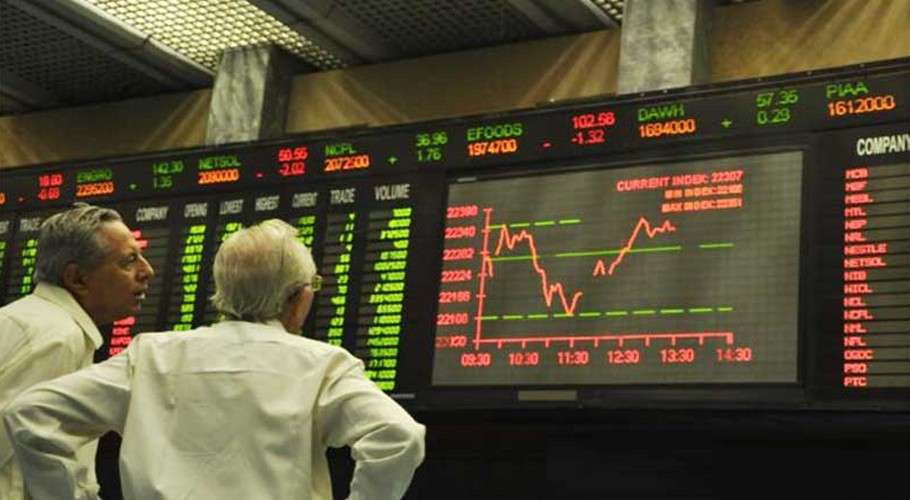
The trading floor in Karachi looked, in the first minutes of Monday’s session, like a room in which all the oxygen had been removed. From the opening bell, the Pakistan Stock Exchange’s benchmark KSE-100 index plummeted over 3,700 points — a drop of nearly 2.5% in less than an hour — as investors absorbed a weekend of extraordinary geopolitical turbulence: oil prices breaching $116 a barrel, a US president musing publicly about seizing Iran’s most critical export hub, and Yemen’s Houthis entering the conflict with fresh missile salvos against Israel. By 9:40am, the KSE-100 had fallen to 147,950.31 points from a previous close of 151,707.51, touching the lowest intraday reading in the index’s 52-week history. Every major sector bled red.
The KSE-100 drops over 3% — and this episode is not occurring in isolation. It is the latest chapter in a five-week global energy crisis that has repriced risk from Houston to Hong Kong, and which now casts a particularly long shadow over Pakistan: a major oil-importing economy whose current account, currency, and inflation trajectory hang in direct tension with every dollar added to the price of Brent crude. What makes today’s session historically distinctive is not simply the severity of the sell-off, but its simultaneous backdrop: even as Karachi’s market bled, barely 1,500 kilometres away in Islamabad, Pakistan’s diplomatic corps was hosting the world’s most consequential attempt yet to end the war that is causing it.
A Market Under Siege: What Happened and Why
Intense selling pressure gripped the Pakistan Stock Exchange on Monday as the KSE-100 index dropped over 3,700 points in early trading, driven by escalating tensions in the Middle East and fears of a prolonged conflict. Bloom Pakistan The rout was broad and unsparing. Selling pressure was particularly concentrated in the automotive, cement, banking, oil and gas, power, and refinery sectors, with shares of major companies including ARL, HUBCO, MARI, OGDC, PPL, HBL, MEBL, MCB, and NBP trading in the negative zone. Bloom Pakistan
The immediate macroeconomic trigger is unmistakable. Brent crude, the global oil benchmark, crossed $116.5 a barrel on Monday before paring to around $114.6 — still 1.8% up on the day — while WTI, the US benchmark, climbed 1% to around $101 a barrel. CNN That price tag carries existential weight for Pakistan, which imports virtually all of its petroleum needs and where energy subsidies already strain a budget operating under the watchful eye of the International Monetary Fund. Crude oil prices have surged more than 50% so far in March following the US-Israeli war against Iran, with Brent having traded around $73 a barrel before the United States and Israel attacked Iran on February 28, prompting Tehran to choke off the Strait of Hormuz. CNN
The rupee, notably, held steady. The USD/PKR exchange rate was around 279.09 on March 30, marginally lower from the previous session, TRADING ECONOMICS suggesting institutional confidence in the State Bank’s management of external reserves — for now. Bond yields, too, showed no alarm. This divergence between equity panic and macro stability is itself revealing: the sell-off is primarily a sentiment shock rather than a deterioration in Pakistan’s fundamentals. That distinction, however cold a comfort to investors nursing heavy losses, matters enormously for the medium-term outlook.
Trump’s Kharg Island Gambit — and the $116 Oil Question
If one man can be credited with Monday’s carnage, his name requires no introduction. Trump told the Financial Times in an interview published Sunday that he wants to “take the oil in Iran” and could seize Kharg Island, which handles about 90% of the country’s oil exports, comparing the potential move to US operations in Venezuela. CNN He then escalated further in the early hours of Monday. The president warned on Truth Social that the US would “completely obliterate” Iran’s electric generating plants, oil wells and Kharg Island if the strategically vital Strait of Hormuz was not “immediately” reopened and a peace deal not reached “shortly.” CNBC
The market implications of such rhetoric are immediately quantifiable. Goldman Sachs estimates a $14–18 per barrel geopolitical risk premium baked into current oil prices, TECHi® while Macquarie Group warned last week that Brent crude could reach $200 a barrel if the war continues until the end of June, equating to a US gasoline price of $7 per gallon. CNN For Pakistan, every $10 rise in sustained crude prices adds approximately $2–2.5 billion to the annual import bill — a structural pressure that threatens to widen the current account deficit, erode foreign reserves, and potentially force the State Bank to revise its monetary easing trajectory.
Michael Haigh, global head of fixed income and commodities research at Société Générale, warned that the potential for further disruption through the Bab el-Mandeb Strait — linking the Gulf of Aden to the Red Sea — could push prices even higher, noting that “four to five million barrels per day” transit the waterway. CNBC In a scenario where both chokepoints are disrupted simultaneously, the oil shock hitting Asia’s emerging markets would be unprecedented in the post-2008 era.
Today’s Damage: Sector-by-Sector Breakdown
| Sector | Impact | Notable Names |
|---|---|---|
| Oil & Gas | Heavy selling | OGDC, PPL, MARI |
| Commercial Banks | Largest negative index contribution | HBL, MCB, NBP, MEBL |
| Cement | Broad-based losses | LUCK |
| Power / IPPs | Negative zone | HUBCO |
| Automotive | Under pressure | ARL |
| Refineries | Sharp declines | ARL |
| Volume Leaders (Overall) | High retail activity | KEL, FNEL, WTL |
Sources: PSX Data Portal, Bloom Pakistan, DayNews.tv — March 30, 2026
Islamabad: The Diplomatic Counterweight
Here is where the story acquires its most remarkable dimension. While Karachi’s brokers scrambled to offload positions, diplomats in Islamabad were doing the opposite — attempting to arrest the very geopolitical spiral that was causing the panic. Two-day consultations of foreign ministers of Türkiye, Saudi Arabia, Egypt and Pakistan started in Islamabad on Sunday as the capital turned into the centre of a rapidly forming diplomatic track — described by officials as the most coordinated regional effort yet to push the United States and Iran towards direct talks. Al Jazeera
The outcome was more concrete than many had anticipated. Pakistan achieved a significant diplomatic success as Saudi Arabia, Türkiye and Egypt endorsed Islamabad’s growing role as a mediator for peace, backing Pakistan’s initiative to promote de-escalation and potentially host talks between the United States and Iran. The Nation Foreign Minister Ishaq Dar announced: “Pakistan is very happy that both Iran and the US have expressed their confidence in Pakistan to facilitate their talks. Pakistan will be honored to host and facilitate meaningful talks between the two sides in coming days for a comprehensive settlement of the ongoing conflict.” Bloomberg
That language carries weight well beyond the ceremonial. Diplomats say that if current contacts hold, talks between US Secretary of State Marco Rubio and Iran’s Foreign Minister Abbas Araghchi could take place within days, potentially in Pakistan. Al Jazeera Germany’s Foreign Minister Johann Wadephul had already telegraphed optimism, saying he expected a direct US-Iran meeting in Pakistan “very soon.” Al Arabiya
The institutional infrastructure is also being built. The four foreign ministers agreed to establish a committee of senior officials tasked with developing modalities for sustained coordination among Pakistan, Saudi Arabia, Türkiye and Egypt The Nation — a formalised mechanism that gives this diplomatic initiative permanence beyond the current crisis.
Crucially, Pakistan’s leverage derives not from military power but from its unique geographic and diplomatic positioning. Islamabad has longstanding links with Tehran and close contacts in the Gulf, while Prime Minister Shehbaz Sharif and Army Chief Field Marshal Asim Munir have struck up a personal rapport with US President Donald Trump. Tehran has refused to admit to holding official talks with Washington but has passed a response to Trump’s 15-point plan to end the war via Islamabad. Bangladesh Sangbad Sangstha
The Strait of Hormuz: Pakistan’s Lifeline and Geopolitical Card
No development more elegantly illustrates Pakistan’s pivotal position than what happened over the weekend. Pakistan announced that Iran would allow 20 of its flagged ships to pass through the Strait of Hormuz — two ships daily — with Foreign Minister Dar calling it “a welcome and constructive gesture by Iran.” CNN Trump himself acknowledged the development, with the US president telling reporters that Iran had “allowed 20 boats laden with oil to go through the Strait of Hormuz, out of a sign of respect.” CNN
This seemingly modest concession — 20 vessels in a waterway that once carried 17.8 million barrels per day — is diplomatically seismic. It signals that Tehran views Islamabad as a credible channel, granting Pakistan a degree of real-time influence over one of the world’s most consequential shipping lanes. For Pakistan’s economy, the reciprocal benefit is potentially substantial: reduced energy costs, greater foreign exchange stability, and a positioning premium as a peace-broker that could attract diplomatic investment and economic goodwill from Gulf partners.
The Strait has been effectively closed to commercial traffic since March 2, with approximately 17.8 million barrels per day of oil flows disrupted. Iran has been operating a yuan-based toll system at the Strait, allowing select Chinese, Russian, and allied vessels to transit while collecting fees in Chinese yuan. TECHi® More ships are passing through the Strait of Hormuz according to shipping data, but still far fewer than before the Middle East conflict erupted. CNN
Global Ripple Effects: Asia First, Then the World
Pakistan is not alone in feeling the tremors. Asia is the first continent to feel the effects of depleting oil stocks, since oil shipments typically reach there first from the Middle East, with Africa and Europe likely to be more impacted by April, a JPMorgan report warned. CNN Tokyo’s equity markets have already registered sharp declines, and the yen is under pressure. In Japan, alarm is sounding over the declining value of the yen, with Vice Finance Minister Atsushi Mimura telling reporters: “We will respond on all fronts.” ITV News
For emerging markets with oil import dependencies — Bangladesh, Sri Lanka, Indonesia, Egypt — the macro arithmetic is equally punishing. Higher oil prices feed directly into inflation, compress central bank policy space, widen current account gaps, and invite currency depreciation. Pakistan, having only recently stabilised after a near-sovereign-debt crisis and IMF bailout, is particularly exposed to this feedback loop. The KSE-100 drops over 3% today are in part a market pricing exercise on exactly this vulnerability.
Brent crude, the international benchmark, has jumped more than 50% since the start of March, surpassing the previous record of 46% during Saddam Hussein’s 1990 invasion of Kuwait. NPR That statistical comparison should sharpen the mind of anyone inclined to treat this as temporary noise.
The Analyst View: Overreaction or Justified Panic?
Seasoned observers of the KSE-100 have been here before — and their verdict is nuanced. The index has now endured a series of geopolitical shocks in rapid succession. On March 2, in the session that followed the initial US-Israeli strikes on Iran, the KSE-100 recorded a plunge of 16,089 points, or 9.57%, its largest single-day fall in the bourse’s history, prompting an automatic market halt after the KSE-30 dropped 5% within the first seven minutes of trading. The Express Tribune
In that session, Topline Securities CEO Mohammed Sohail counselled restraint. “High leverage and overbought positions triggered panic selling,” he observed, adding that the rupee and bond yields remained stable, indicating limited macro impact. “With the market trading at a price-to-earnings ratio of nearly 7x, valuations appear compelling, offering attractive entry points to medium- and long-term investors. If macroeconomic stability persists, the recent sell-off could ultimately prove to be an overreaction,” Sohail said. The Express Tribune
AKD Securities remarked that the KSE-100 overreacted to the Middle East military conflict and expected the index to “stage a recovery as the direct economic impact on Pakistan appears manageable and the country is not a direct party to the conflict.” The Express Tribune
Today’s session carries a similar profile — heightened fear rather than fundamental economic deterioration. The key distinction from March 2’s bloodbath is that this time, Pakistan’s diplomatic positioning has materially improved. The four-nation Islamabad framework, the Hormuz passage concession, and the potential for hosting US-Iran talks all represent real — if fragile — de-escalation optionality that simply did not exist a month ago.
The Outlook: What the Islamabad Diplomatic Track Means for the KSE-100
The PSX’s near-term direction will be determined by two variables operating on very different timescales: oil prices, which respond in real time to rhetoric and battlefield developments; and the diplomatic track, which moves at the pace of sovereign ego and geopolitical calculation.
On the first front, the risk remains decisively to the upside for oil prices. David Roche, strategist at Quantum Strategy, warned that markets are increasingly pricing in the possibility of “boots on the ground” and a move to seize Iran’s key export hub at Kharg Island — a step that would effectively choke off Iran’s dollar revenues but risk triggering full-scale escalation, with Tehran likely to retaliate. CNBC
On the second front, the Islamabad meeting represents the clearest evidence yet that a negotiated off-ramp exists. The four-nation mechanism is not designed to produce a ceasefire itself — its purpose is to align regional positions and prepare the ground for a possible direct US-Iran engagement. If successful, it could provide the political cover both Washington and Tehran need to enter talks without appearing to concede. Al Jazeera
The decisive weeks ahead will test whether Pakistan’s diplomatic capital can be converted into tangible de-escalation — and whether that de-escalation arrives in time to prevent the oil shock from becoming structurally embedded in Pakistan’s economic trajectory. For investors watching the KSE-100, the index is no longer simply a barometer of corporate Pakistan’s health. It has become a live readout of the world’s most consequential diplomatic gamble — one in which Islamabad, improbably, holds a central hand.
The market closed today not in despair, but in watchful, expensive uncertainty. And for an economy that has lived on the edge of crisis for most of the past three years, that is the most honest description of where Pakistan stands: poised, precarious, and pivotal — all at once.
Analysis
The Trump Coin and Lessons from the Ostrogoths: How a Gold Offering Reveals the Limits of Presidential Power Over America’s Money

By the time the U.S. Mint strikes the first 24-karat gold Trump commemorative coin later this year, the great American tradition of keeping living politicians off the nation’s money will have been quietly, but spectacularly, circumvented.
Approved unanimously on March 19, 2026, by the Trump-appointed Commission of Fine Arts, the coin is ostensibly a celebration of the nation’s 250th anniversary. Yet, it serves a secondary, more visceral purpose for its chief architect: projecting executive dominance. The design is unapologetically aggressive. The obverse features President Donald Trump leaning intensely over the Resolute Desk, fists clenched, with the word “LIBERTY” arcing above his head and the dual dates “1776–2026” flanking him. The reverse bears a bald eagle, talons braced, ready to take flight.
Predictably, the political theater has been deafening. Critics have decried the coin as monarchic symbolism, pointing out that since the days of George Washington, the republic has fiercely guarded its currency against the vanity of living rulers. Defenders hail it as a masterstroke of patriotic fundraising and commemorative artistry.
But beneath the partisan noise lies a profound economic irony. In the grand sweep of monetary history, a leader plastering his face on ceremonial gold does not signal absolute control over a nation’s wealth. Quite the opposite. As we look back to the shifting empires of late antiquity, such numismatic pageantry usually reveals the exact opposite: a leader attempting to mask the uncomfortable reality of his limited sovereignty.
To understand the true weight of the 2026 Trump gold coin, one must look not to the halls of the Federal Reserve, but to the 6th-century courts of the Ostrogothic kings of Italy.
The Loophole of Vanity: 31 U.S.C. § 5112
To grasp the limits of the President’s monetary power, one must first look at the legal acrobatics required to mint the coin in the first place.
Federal law strictly forbids the portrait of a living person on circulating U.S. currency—a tradition born from the Founding Fathers’ revulsion for the coinage of King George III. To bypass this, the administration utilized the authorities granted under 31 U.S.C. § 5112, specifically the Treasury’s broad discretion to issue gold bullion and commemorative coins that do not enter general circulation.
While the coin bears a nominal face value of $1, it is a piece of bullion, not a medium of exchange. You cannot buy a coffee with it; it will not alter the M2 money supply; it will not shift the consumer price index.
Herein lies the central paradox of the Trump Semiquincentennial coin:
- The Facade of Power: It utilizes the highest-purity gold and the official imprimatur of the United States Mint to project executive authority.
- The Reality of Policy: The actual levers of the American economy—interest rates, quantitative easing, and the health of the fiat dollar—remain stubbornly out of the Oval Office’s direct control, residing instead with the independent Federal Reserve.
This dynamic—where a ruler uses localized, symbolic coinage to project a sovereignty he does not fully possess over the broader economic system—is not a modern invention. It is a historical hallmark of limited power.
Echoes from Ravenna: The Ostrogothic Parallel
When the Western Roman Empire collapsed in the late 5th century, Italy fell under the dominion of the Ostrogoths. The most famous of their rulers, Theodoric the Great, commanded the peninsula with formidable military might from his capital in Ravenna. He was, for all practical purposes, the king of Italy.
Yet, when you examine Ostrogothic coinage from this era, a fascinating picture of deference and limitation emerges.
Despite his military supremacy, Theodoric understood that the true center of global economic gravity lay to the east, in Constantinople. The Byzantine Emperor controlled the solidus—the gold standard of the Mediterranean world. If Theodoric wanted his kingdom to participate in international trade, he had to play by Byzantine monetary rules.
Consequently, the Ostrogoths minted gold and silver coins that were essentially counterfeits of Byzantine money. They bore the portrait of the reigning Eastern Emperor (such as Anastasius or Justinian), not the Ostrogothic king. Theodoric restricted his own branding to a modest monogram, and later kings, like Theodahad, only dared to place their full portraits on the bronze follis—the low-value base metal used for buying bread in local markets, entirely decoupled from international high finance.
The lesson from the Ostrogoths is clear, and widely recognized in peer-reviewed numismatic scholarship: controlling the territory is not the same as controlling the currency. The Ostrogoths used their local mints to project an image of continuity and authority to their immediate subjects, but they bowed to the monetary hegemony of the true empire.
The Byzantine Emperor of Modern Finance
Today, the “Constantinople” of the global economy is not a rival nation, but the institutional apparatus of the fiat dollar system—chiefly, the Federal Reserve and the global bond market.
President Trump has frequently chafed against this reality. Throughout his political career, he has sought to blur the lines of Fed independence, occasionally demanding lower interest rates or criticizing the Fed Chair with a ferocity normally reserved for political rivals. Yet, the institutional firewalls have largely held. The President cannot unilaterally dictate the cost of capital. He cannot force the world to buy U.S. Treasuries.
Thus, the 24-karat commemorative coin acts as his modern bronze follis.
It is a stunning piece of metal, but it is ultimately a domestic token. It satisfies a base of political supporters and projects an aura of monarchic permanence, just as Theodahad’s portrait did in the markets of Rome. But it does not challenge the underlying hegemony of the independent central banking system. The global markets, the sovereign wealth funds, and the algorithmic trading desks—the modern equivalents of the Byzantine merchants—will ignore the gold coin entirely. They will continue to trade in the invisible, digital fiat dollars over which the President exercises only indirect influence.
The Illusion of Monetary Sovereignty
What, then, does the “Trump coin” tell us about the current state of American executive power?
First, it highlights a growing preference for the aesthetics of power over the mechanics of governance. Minting a gold coin with one’s face on it is a frictionless exercise in executive privilege. Reining in a multi-trillion-dollar deficit, negotiating complex trade pacts, or carefully managing a soft economic landing are laborious, constrained, and often unrewarding tasks.
Second, it reveals the resilience of America’s financial architecture. That the President must resort to a commemorative loophole—utilizing a non-circulating bullion designation to bypass the strictures of circulating fiat—is a testament to the fact that the core of America’s money remains insulated from populist whim.
Consider the implications for dollar hegemony:
- Global Confidence: International investors rely on the U.S. dollar precisely because it is not subject to the immediate, emotional control of the executive branch.
- Institutional Friction: The outcry over the coin, while loud, proves that democratic norms regarding the separation of leader and state apparatus are still fiercely defended in the public square.
- The Paradox of Gold: By choosing gold—the traditional refuge of those who distrust government fiat—the administration inadvertently highlights its own lack of faith in the very paper currency it is sworn to manage.
Conclusion: The Weight of Empty Gold
The Roman historian Cassius Dio once observed that you can judge the health of a republic by the faces on its coins. When the republic falls, the faces of magistrates are replaced by the faces of autocrats.
But history is rarely that simple. The Ostrogothic kings of the 6th century put their faces on bronze because they lacked the power to control the gold. In March 2026, an American president has put his face on gold because he lacks the power to control the fiat.
The Semiquincentennial Trump coin is destined to be a remarkable collector’s item, a flashpoint in the culture wars, and a brilliant piece of political marketing. But when historians look back on the numismatics of the 2020s, they will not see a president who conquered the American monetary system. They will see a leader who, much like the kings of late antiquity, had to settle for a brilliant, golden simulacrum of power, while the true economic empire hummed along, indifferent and out of reach.
FAQ: Understanding the 2026 Commemorative Coin and U.S. Monetary Policy
Is it legal for a living U.S. President to be on a coin? Yes, but only under specific circumstances. By law (31 U.S.C. § 5112), living persons cannot be depicted on circulating currency (like standard pennies, quarters, or paper bills). However, the U.S. Mint has the authority to produce non-circulating bullion and commemorative coins. The 2026 Trump coin exploits this loophole as a non-circulating commemorative piece.
Does the U.S. President control the value of the dollar? No. While presidential policies (like tariffs, taxation, and government spending) affect the broader economy, the direct control of the U.S. money supply and interest rates rests with the Federal Reserve, an independent central bank. The President appoints the Fed Chair, but cannot legally dictate the bank’s day-to-day monetary policy.
What is the historical significance of the Ostrogothic coinage parallel? In the 6th century, Ostrogothic kings in Italy minted gold coins bearing the face of the Byzantine Emperor, while reserving their own portraits for lower-value bronze coins. This demonstrated that while they held local, symbolic power, true economic sovereignty belonged to the Byzantine Empire. The 2026 Trump coin operates similarly: it offers localized symbolic prestige, but the actual “engine” of the U.S. economy remains under the control of the independent Federal Reserve.
Can I spend the 24-karat Trump coin at a store? Technically, the coin has a legal face value of $1. However, because it is minted from 24-karat gold, its intrinsic metal value and numismatic collector value far exceed its $1 face value. It is meant to be collected and held as an asset or piece of memorabilia, not used in daily commercial transactions.
Investing 101
Gaming Giant’s Bold Gamble: Why Investors are Devouring Risky EA Debt Amid Geopolitical Crosscurrents
Investors are aggressively snapping up debt for Electronic Arts’ historic $55bn take-private, signaling resilient credit markets despite geopolitical tensions and AI disruption. Explore the EA LBO’s financial engineering, cost savings, and the appetite for risky video game financing in 2026.
Introduction: The Unyielding Allure of High-Yield
The world of high finance rarely pauses for breath, even as geopolitical headwinds gather and technological disruption reshapes industries. Yet, the recent $55 billion take-private of video game titan Electronic Arts (EA) has delivered a masterclass in market resilience, demonstrating an almost insatiable investor appetite for leveraged debt—even when tied to a complex, globally-infused transaction. Led by Saudi Arabia’s Public Investment Fund (PIF), Silver Lake, and Affinity Partners, this landmark deal, poised to redefine the gaming M&A landscape, has seen its $18-20 billion debt package met with overwhelming demand, proving that the pursuit of yield often eclipses lingering doubts.
This isn’t merely another private equity mega-deal; it’s a bellwether for global credit markets in early 2026. JPMorgan-led bond deals, designed to finance one of the largest leveraged buyouts in history, have drawn over $25 billion in orders, far surpassing their target size. This aggressive investor embrace of what many consider risky debt, particularly given the backdrop of Middle East tensions and concerns over AI’s impact on software, underscores a fascinating dichotomy: a cautious macroeconomic outlook juxtaposed with an audacious hunt for returns in stable, cash-generative assets. The question isn’t just how this was financed, but why investors dove in with such conviction, and what it signals for the year ahead.
The Anatomy of a Mega-Buyout: EA’s Financial Engineering
At an enterprise value of approximately $55 billion, the Electronic Arts take-private deal stands as the largest leveraged buyout on record, eclipsing the 2007 TXU Energy privatization. The financing structure is a finely tuned orchestration of equity and debt, designed to maximize returns for the acquiring consortium while appealing to a broad spectrum of debt investors.
Equity & Debt Breakdown
The EA $55bn LBO is funded through a combination of substantial equity and a significant debt tranche:
- Equity Component: Approximately $36 billion, largely comprising cash contributions from the consortium partners, including the rollover of PIF’s existing 9.9% stake in EA. PIF is set to own a substantial majority, approximately 93.4%, with Silver Lake holding 5.5% and Affinity Partners 1.1%.
- Debt Package: A substantial $18-20 billion debt package, fully committed by a JPMorgan-led syndicate of banks. This makes it the largest LBO debt financing post-Global Financial Crisis.
Unpacking the Debt Tranches: Demand & Pricing
The sheer scale of demand for this EA acquisition financing has been striking. The initial $18 billion debt offering, which included both secured and unsecured tranches, quickly swelled to over $25 billion in investor orders. This oversubscription highlights a strong market appetite for gaming-backed paper.
Key components of the debt include:
- Leveraged Loans: A cross-border loan deal totaling $5.75 billion launched on March 16, 2026, comprising a $4 billion U.S. dollar loan and a €1.531 billion ($1.75 billion) euro tranche.
- Pricing: Term Loan Bs (TLBs) were guided at 350-375 basis points over SOFR/Euribor, with a 0% floor and a 98.5 Original Issue Discount (OID). This discounted pricing suggests lenders were baking in some risk, yet the demand remained robust.
- Secured & Unsecured Bonds: The financing also features an upsized $3.25 billion term loan A, an additional $6.5 billion of other dollar and euro secured debt, and $2.5 billion of unsecured debt. While specific high-yield bond pricing hasn’t been detailed, market intelligence suggests secured debt at approximately 6.25-7.25% and unsecured north of 8.75%, reflective of the leverage profile.
The Deleveraging Path: Justifying a 6x+ Debt/EBITDA
Moody’s projects that EA’s gross debt will increase twelve-fold from $1.5 billion, pushing pro forma leverage (total debt to EBITDA) to around eight times at closing. Such high leverage ratios typically raise red flags, but the consortium’s pitch centers on EA’s robust cash flows and significant projected cost savings.
Three Pillars Justifying the Leverage
- Stable Cash Flows from Core Franchises: EA boasts an enviable portfolio of consistently profitable franchises, including FIFA (now EA Sports FC), Madden NFL, Apex Legends, and The Sims. These titles generate predictable, recurring revenue streams, particularly through live service models and annual updates, which underpin the company’s financial stability—a critical factor for debt investors.
- Strategic Cost Savings & Operational Efficiencies: The new owners have outlined an aggressive plan for $700 million in projected annual cost savings. This includes:
- R&D Optimization: $263 million from reclassifying R&D expenses for major titles like Battlefield 6 and Skate as one-time costs, now that they are live and generating revenue.
- Portfolio Review: $100 million from a strategic review of the game portfolio.
- AI Tool Integration: $100 million from leveraging AI tools for development and operations.
- Organizational Streamlining: $170 million from broader organizational efficiencies.
- Public Company Cost Removal: $30 million saved by no longer incurring costs associated with being a public entity.
These add-backs significantly bolster adjusted EBITDA figures, making the debt package appear more manageable to prospective lenders. Moody’s expects leverage to decrease to five times by 2029.
- Untapped Growth Potential in Private Ownership: Freed from quarterly earnings pressure, EA’s management can pursue longer-term strategic initiatives and R&D without the immediate scrutiny of public markets. This is particularly appealing for a company operating in an industry prone to rapid innovation and large, multi-year development cycles. The consortium’s diverse networks across gaming, entertainment, and sports are expected to create opportunities to “blend physical and digital experiences, enhance fan engagement, and drive growth on a global stage”.
Geopolitical Currents and the Appetite for Risky Debt
The influx of capital into the Electronic Arts bond deals is particularly noteworthy given the complex geopolitical backdrop of early 2026. Global markets are navigating sustained tensions in the Middle East, the specter of trade tariffs, and the disruptive force of artificial intelligence. Yet, these factors have not deterred investors from snapping up debt to finance Electronic Arts’ $55bn take-private.
The Saudi PIF Factor: Geopolitical Implications
The prominent role of Saudi Arabia’s Public Investment Fund (PIF) as the lead equity investor introduces a significant geopolitical dimension. The PIF, managing over $925 billion in assets, views this acquisition as a strategic move to establish Saudi Arabia as a global hub for games and sports, aligning with its “Vision 2030” diversification efforts. PIF’s deep pockets and long-term investment horizon offer stability often attractive to private equity deals.
However, the involvement of a sovereign wealth fund, particularly one with ties to Jared Kushner’s Affinity Partners, has not been without scrutiny. Concerns about national security risks, foreign access to consumer data, and control over American technology (including AI) have been voiced by organizations like the Communications Workers of America (CWA), who urged federal regulators to scrutinize the deal. Despite these geopolitical and regulatory considerations, the debt market demonstrated a remarkable willingness to participate. This indicates that the perceived financial stability and growth prospects of EA outweighed concerns tied to the source of equity capital.
AI Disruption and Market Confidence
The gaming industry, like many sectors, faces potential disruption from AI. Yet, EA itself projects $100 million in cost savings from AI tools, signaling a strategic embrace rather than fear of the technology. This forward-looking approach to AI, coupled with the inherent stability of established gaming franchises, likely contributed to investor confidence. In a volatile environment, proven entertainment IP acts as a relatively safe harbor.
The successful placement of this jumbo financing also suggests that while some sectors (like software) have seen “broader risk-off sentiment” due to AI uncertainty, the market distinguishes between general software and robust, content-driven interactive entertainment.
Broader Implications for Gaming M&A and Private Equity
The EA LBO is more than an isolated transaction; it’s a powerful signal for the broader M&A landscape and the future of private equity.
A Return to Mega-LBOs?
After a period where massive leveraged buyouts fell out of favor post-Global Financial Crisis, the EA deal marks a definitive comeback. It “waves the green flag on sponsors resuming mega-deal transactions,” indicating that easing borrowing costs and renewed boardroom confidence are aligning to facilitate large-cap M&A. The success of this deal, especially the oversubscription of its debt tranches, could embolden other private equity firms to pursue similar-sized targets in industries with reliable cash flows. This is crucial for private-equity debt appetite in 2026.
Creative Independence Post-Delisting
While private ownership offers freedom from public market pressures, it also introduces questions about creative independence. Historically, private equity has been associated with aggressive cost-cutting and a focus on short-term profits. For a creative industry like gaming, this can be a double-edged sword. While the stated goal is to “accelerate innovation and growth”, some within EA have expressed concern about potential workforce reductions and increased monetization post-acquisition. The challenge for the new owners will be to balance financial optimization with the nurturing of creative talent and IP development crucial for long-term success.
What it Means for 2027: Scenarios and Ripple Effects
As the EA $55bn take-private moves towards its expected close in Q1 FY27 (June 2026), its ripple effects will be closely watched by analysts and investors alike.
- Post-Deal EA Strategy: Under private ownership, expect EA to double down on its most successful franchises and potentially explore new growth vectors less scrutinized by quarterly reports. Strategic investments in areas like mobile gaming, esports, and potentially new IP development could accelerate. The projected cost savings will likely be reinvested to fuel growth or rapidly deleverage.
- Valuation Multiples: The deal itself sets a new benchmark for valuations in the gaming sector, particularly for companies with strong IP and predictable revenue streams. This could influence future M&A activities involving peers like Activision Blizzard (though now part of Microsoft) or Take-Two Interactive, raising their perceived floor valuations.
- Credit Market Confidence: The overwhelming investor demand for EA’s debt signals a powerful confidence in the leveraged finance markets, particularly for well-understood, resilient businesses. If EA successfully executes its deleveraging and growth strategy post-buyout, it will further validate the market’s willingness to finance large, complex LBOs, even amidst global uncertainty. This could pave the way for more “risky debt” deals tied to stable, high-quality assets.
- Geopolitical Influence in Tech: The PIF’s leading role solidifies the trend of sovereign wealth funds actively participating in global technology and entertainment sectors. This influence will continue to shape discussions around regulatory oversight, national interests, and the evolving landscape of global capital flows.
The investors snapping up debt to finance Electronic Arts’ $55bn take-private aren’t just betting on a video game company; they’re wagering on the enduring power of stable cash flows, strategic cost management, and a robust credit market willing to absorb risk for attractive yields. In a world grappling with uncertainty, the virtual battlefields of EA’s franchises offer a surprisingly solid ground for real-world financial gains.

KSE-100 Plunges Amid Geopolitical Firestorm — But Islamabad Holds the World’s Attention

The Trump Coin and Lessons from the Ostrogoths: How a Gold Offering Reveals the Limits of Presidential Power Over America’s Money

Gaming Giant’s Bold Gamble: Why Investors are Devouring Risky EA Debt Amid Geopolitical Crosscurrents

Top 15 Stocks for Investment in 2026 in PSX: Your Complete Guide to Pakistan’s Best Investment Opportunities
Top 15 Stocks for Investment in 2026 in PSX: Your Complete Guide to Pakistan’s Best Investment Opportunities

Debunking IMF Program Myths: Reconfiguring Engagement for True National Ownership in a Volatile World
-
 Markets & Finance3 months ago
Top 15 Stocks for Investment in 2026 in PSX: Your Complete Guide to Pakistan’s Best Investment Opportunities
-
Markets & Finance3 months ago
Top 15 Stocks for Investment in 2026 in PSX: Your Complete Guide to Pakistan’s Best Investment Opportunities
-
 Analysis2 months ago
Debunking IMF Program Myths: Reconfiguring Engagement for True National Ownership in a Volatile World
-

 Global Economy3 months ago
What the U.S. Attack on Venezuela Could Mean for Oil and Canadian Crude Exports: The Economic Impact
-

 Investment3 months ago
Top 10 Mutual Fund Managers in Pakistan for Investment in 2026: A Comprehensive Guide for Optimal Returns
-

 Asia3 months ago
China’s 50% Domestic Equipment Rule: The Semiconductor Mandate Reshaping Global Tech
-

 AI3 months ago
15 Most Lucrative Sectors for Investment in Pakistan: A 2025 Data-Driven Analysis
-

 Exports3 months ago
Pakistan’s Export Goldmine: 10 Game-Changing Markets Where Pakistani Businesses Are Winning Big in 2025