
China Economy
The World’s 50 Largest Economies: A 25-Year Growth Trajectory Analysis (2000-2025)


How GDP Expansion and Export Dynamics Reshaped Global Economic Power
The dawn of the 21st century marked a watershed moment in economic history. In 2000, the global economy stood at approximately $33 trillion in nominal GDP. Today, that figure exceeds $105 trillion. But beneath these aggregate numbers lies a far more compelling story: a dramatic reshuffling of economic power that would have seemed fantastical to observers at the turn of the millennium.
China’s economy has expanded fourteenfold. India’s has grown nearly eightfold. Meanwhile, traditional economic powers have seen their relative positions shift in ways that challenge decades of assumptions about development, growth, and global economic hierarchy. This analysis examines all 50 of the world’s largest economies, tracking their GDP trajectories and export performance across 25 years of globalization, crisis, and transformation.
For investors allocating capital across borders, policymakers navigating geopolitical competition, and citizens seeking to understand their place in the global economy, these patterns reveal which strategies succeeded, which models faltered, and what the next quarter-century might hold.
Methodology and Data Framework
This analysis draws primarily on datasets from the International Monetary Fund’s World Economic Outlook Database, supplemented by World Bank national accounts data and OECD statistics for member countries. Export data comes from the World Trade Organization’s statistical database and national statistical agencies.
GDP Measurement Approach
Two methodologies dominate international comparisons. Nominal GDP measures economic output in current U.S. dollars using market exchange rates. This approach captures the actual dollar value of economies in international transactions but can be distorted by currency fluctuations. Purchasing Power Parity (PPP) adjusts for price level differences between countries, providing a better measure of domestic living standards and real output.
This analysis primarily uses nominal GDP for rankings and international comparisons, as it reflects actual economic power in global markets, trade negotiations, and geopolitical influence. PPP figures are referenced where relevant for understanding domestic economic conditions and real growth rates.
Time Period and Baseline
The year 2000 serves as an ideal baseline for several reasons. It represents the post-Cold War economic order before China’s 2001 WTO accession, captures the dot-com bubble peak, and provides a pre-9/11, pre-financial crisis reference point. The 25-year span encompasses multiple economic cycles, technological revolutions, and structural transformations.
Data Limitations
All international economic comparisons face inherent challenges. GDP calculations vary by national statistical methodology. Currency fluctuations can dramatically shift nominal rankings. Some economies (particularly China) face ongoing debates about data accuracy. Export statistics may not fully capture services trade or digital transactions. These limitations warrant acknowledgment without undermining the broader patterns revealed.
The Top 10 Economic Titans: Dominance and Disruption
United States: Sustained Primacy ($28.8 Trillion)
The United States began the millennium with a GDP of approximately $10.3 trillion and has grown to roughly $28.8 trillion in 2025, according to Bureau of Economic Analysis estimates. This represents 180% growth over 25 years, or a compound annual growth rate of about 4.2% in nominal terms.
What’s remarkable isn’t just absolute growth but sustained leadership through multiple crises. The U.S. economy absorbed the dot-com crash, the 2008 financial crisis, and the COVID-19 pandemic while maintaining its position as the world’s largest economy and primary reserve currency issuer. The dollar’s role in global trade and finance, combined with technological leadership in software, biotechnology, and artificial intelligence, has preserved American economic dominance even as relative share declined.
U.S. exports expanded from $1.1 trillion in 2000 to approximately $3.0 trillion in 2024, driven by services (particularly digital and financial), agricultural products, and advanced manufacturing. The trade deficit widened substantially, reflecting consumption patterns and the dollar’s reserve status enabling persistent current account imbalances.
China: The Most Dramatic Rise in Economic History ($18.5 Trillion)
No economic transformation in human history compares to China’s 25-year ascent. From a GDP of approximately $1.2 trillion in 2000, China’s economy expanded to roughly $18.5 trillion by 2025—a staggering 1,440% increase. The compound annual growth rate exceeded 11% for much of this period, moderating to 5-6% in recent years as the economy matured.
China’s 2001 accession to the World Trade Organization catalyzed this transformation. The country became the “world’s factory,” with exports surging from $249 billion in 2000 to over $3.5 trillion by 2024. China now exports more than any other nation, with manufactured goods comprising the bulk of shipments.
This growth trajectory lifted 800 million people out of poverty, created the world’s largest middle class, and shifted global supply chains. China surpassed Japan as the world’s second-largest economy in 2010, a symbolic moment marking Asia’s return to historical prominence. The economy’s sheer scale now influences commodity prices, manufacturing trends, and technological development globally.
The Chinese model combined state-directed capitalism, export-led growth, massive infrastructure investment, and financial repression to channel savings into productive capacity. Whether this model remains sustainable as demographics worsen and debt accumulates represents one of the key questions for global economics through 2050.
Japan: Stagnation, Resilience, and Recent Revival ($4.1 Trillion)
Japan’s economic story offers a counterpoint to China’s rise. The world’s second-largest economy in 2000 with GDP of $4.9 trillion, Japan grew to only $4.1 trillion by 2025 in nominal terms—a decline of 16%. However, this masks a more complex reality.
In PPP terms, Japan’s economy expanded modestly. Deflation, an aging population, and yen depreciation compressed nominal figures. Yet Japanese corporations remained technological leaders, the country maintained high living standards, and exports of automobiles, electronics, and machinery remained substantial at approximately $900 billion annually.
The “lost decades” narrative oversimplifies. Japan’s unemployment remained remarkably low, social cohesion high, and per capita income among the world’s highest. Recent economic reforms under various administrations have targeted corporate governance, labor market flexibility, and monetary stimulus with mixed results.
Germany: Europe’s Export Champion ($4.7 Trillion)
Germany’s economy expanded from $1.9 trillion in 2000 to approximately $4.7 trillion in 2025, representing 145% growth. This performance stands out in a European context marked by crisis and stagnation.
The German model centered on export-oriented manufacturing excellence, particularly automobiles, machinery, and chemicals. Exports reached $1.9 trillion in 2024, making Germany one of the world’s leading exporters relative to economic size. The trade surplus consistently exceeded 5% of GDP, reflecting competitiveness but also structural imbalances within the eurozone.
Eurozone membership provided Germany with an undervalued currency relative to its productivity, advantaging exporters. However, this came at the cost of regional imbalances, as southern European economies struggled with the same currency that propelled German growth.
India: The Emerging Giant ($4.0 Trillion)
India’s trajectory represents the other great Asian success story. GDP expanded from approximately $470 billion in 2000 to $4.0 trillion in 2025—growth of 750%. While less dramatic than China’s rise in percentage terms, India’s expansion occurred in a democracy with different structural constraints.
Services-led growth distinguished India’s model. Information technology, business process outsourcing, and financial services drove development rather than manufacturing. Exports grew from $43 billion in 2000 to approximately $775 billion in 2024, with services comprising a larger share than typical for developing economies.
India’s 1.4 billion people and favorable demographics position the country as potentially the world’s third-largest economy by 2030. However, challenges around infrastructure, education quality, and institutional capacity temper projections.
United Kingdom: Brexit and Beyond ($3.5 Trillion)
The UK economy grew from $1.6 trillion in 2000 to approximately $3.5 trillion in 2025, representing 120% expansion. Financial services dominance in the City of London, combined with pharmaceuticals, aerospace, and creative industries, sustained growth despite manufacturing decline.
The 2016 Brexit referendum and subsequent departure from the European Union introduced new uncertainties. Trade patterns shifted, with services exports facing new friction and goods trade requiring customs procedures. The long-term impact remains contested, with research from institutions like the Centre for Economic Performance suggesting modest negative effects on trade and investment.
France: Social Model Under Pressure ($3.1 Trillion)
France expanded from $1.4 trillion in 2000 to roughly $3.1 trillion in 2025, growth of 125%. The French model balanced strong social protections, significant state involvement in strategic sectors, and export competitiveness in aerospace, luxury goods, and agriculture.
High taxation, rigid labor markets, and pension obligations created fiscal pressures throughout the period. Yet French multinationals competed globally, productivity remained high, and quality of life indicators consistently ranked among the world’s best.
Italy: Sclerotic Growth and Structural Challenges ($2.3 Trillion)
Italy represents the developed world’s most disappointing performer. GDP grew from $1.1 trillion in 2000 to only $2.3 trillion in 2025, barely doubling over 25 years. Structural problems including low productivity growth, political instability, banking sector weakness, and demographic decline constrained expansion.
Northern Italy’s industrial districts maintained export competitiveness in machinery and luxury goods, but southern underdevelopment, rigid labor markets, and high public debt limited potential. Italy’s experience illustrates how institutional quality and structural reforms matter as much as initial conditions.
Canada: Resource-Rich Stability ($2.2 Trillion)
Canada’s economy expanded from $740 billion in 2000 to approximately $2.2 trillion in 2025, representing nearly 200% growth. Natural resources (oil, natural gas, minerals, timber) provided substantial export revenues, while proximity to the United States ensured market access.
The Canadian model balanced resource extraction with services growth, immigration-driven population expansion, and prudent financial regulation. Canadian banks survived the 2008 crisis largely unscathed, reflecting stronger regulatory oversight than American counterparts.
South Korea: From Developing to Developed ($1.9 Trillion)
South Korea’s rise from $562 billion in 2000 to $1.9 trillion in 2025 represents successful development strategy execution. The country transitioned from middle-income to advanced economy status, with globally competitive firms like Samsung, Hyundai, and LG driving export growth.
Electronics, automobiles, and shipbuilding propelled exports from $172 billion in 2000 to over $750 billion in 2024. Heavy investment in education, R&D spending exceeding 4% of GDP, and strategic industrial policy yielded technological leadership in semiconductors and displays.
Positions 11-30: The Global Middle Class
This tier encompasses economies ranging from $700 billion to $1.8 trillion, representing diverse development models and regional dynamics.
Russia ($1.8 Trillion): Expanded from $260 billion in 2000 to peak at $2.3 trillion before sanctions and oil price volatility reduced GDP to approximately $1.8 trillion. Commodity dependence, particularly energy exports, has driven boom-bust cycles. Geopolitical tensions following the 2014 Ukraine annexation and 2022 invasion drastically reshaped economic relationships.
Brazil ($2.3 Trillion): Grew from $655 billion to roughly $2.3 trillion, with commodity cycles dominating. Agricultural exports (soybeans, beef, sugar) and mineral resources drove growth, but political instability, infrastructure deficits, and education gaps constrained potential. Brazil illustrates the “middle-income trap” where initial development success stalls before reaching advanced status.
Australia ($1.7 Trillion): Expanded from $415 billion to $1.7 trillion, benefiting enormously from Chinese demand for iron ore, coal, and natural gas. The commodity boom of 2003-2011 drove exceptional growth, with Australia avoiding recession for nearly three decades—a remarkable run enabled by flexible monetary policy, immigration, and resource wealth.
Spain ($1.6 Trillion): Grew from $580 billion to $1.6 trillion despite a devastating 2008-2013 crisis. Construction and real estate collapse, banking sector distress, and unemployment exceeding 25% created severe pain. Recovery came through labor market reforms, tourism growth, and European Central Bank support, demonstrating eurozone integration benefits and constraints.
Mexico ($1.8 Trillion): Expanded from $680 billion to $1.8 trillion, benefiting from NAFTA/USMCA market access and manufacturing nearshoring. Automobile production, electronics assembly, and agriculture linked Mexican growth tightly to U.S. economic cycles. Violence, corruption, and institutional weakness limited potential despite favorable geography.
Indonesia ($1.4 Trillion): Grew from $165 billion to $1.4 trillion, Southeast Asia’s largest economy demonstrating commodity wealth and demographic dividend. Palm oil, coal, and mineral exports drove growth, while domestic consumption from 275 million people provided resilience. Infrastructure development remains critical for sustaining momentum.
Netherlands ($1.1 Trillion): Expanded from $415 billion to $1.1 trillion, maintaining status as a trading hub and logistics gateway. Rotterdam’s port, favorable tax treatment for multinationals, and export-oriented agriculture (flowers, vegetables) sustained prosperity despite small geographic size.
Saudi Arabia ($1.1 Trillion): Oil wealth drove expansion from $190 billion to $1.1 trillion, with volatility reflecting crude prices. Vision 2030 diversification efforts aim to reduce petroleum dependence, but progress remains limited. The kingdom’s position as swing producer in OPEC gives it outsized influence over global energy markets.
Turkey ($1.1 Trillion): Grew from $270 billion to $1.1 trillion, bridging Europe and Asia geographically and economically. Manufacturing exports, tourism, and construction drove growth, but political uncertainty, inflation, and unconventional monetary policy created volatility. Currency crises in 2018 and 2021 highlighted vulnerabilities.
Switzerland ($940 Billion): Expanded from $265 billion to $940 billion, maintaining its status as a financial center and precision manufacturing hub. Pharmaceuticals, watches, machinery, and banking services generated trade surpluses despite high costs. Political neutrality, institutional quality, and innovation sustained exceptional per capita prosperity.
Poland ($845 Billion): Perhaps Europe’s greatest success story, expanding from $171 billion to $845 billion. EU accession in 2004 catalyzed transformation, with structural funds, market access, and institutional reforms driving convergence. Manufacturing exports, particularly automobiles and electronics, integrated Poland into German supply chains.
Argentina ($640 Billion): Illustrates development disappointment, growing from $284 billion to only $640 billion. Chronic inflation, debt defaults (2001, 2020), currency crises, and policy instability prevented potential realization. Agricultural wealth (beef, soybeans, wheat) couldn’t overcome institutional dysfunction.
Belgium ($630 Billion): Grew from $230 billion to $630 billion, benefiting from EU headquarters location, port of Antwerp, and chemicals/pharmaceuticals exports. Political fragmentation between Flemish and Francophone regions created governance challenges without preventing prosperity.
Ireland ($630 Billion): Extraordinary expansion from $100 billion to $630 billion, though figures are distorted by multinational tax strategies. Genuine growth in pharmaceuticals, technology services, and financial operations was amplified by corporate profit shifting. The “leprechaun economics” phenomenon saw GDP surge 26% in 2015 largely from accounting changes.
Thailand ($540 Billion): Expanded from $126 billion to $540 billion, maintaining position as Southeast Asian manufacturing hub. Automobile production, electronics assembly, and tourism sustained growth despite political instability. Integration into regional supply chains, particularly for Japanese manufacturers, proved durable.
Austria ($530 Billion): Grew from $195 billion to $530 billion, leveraging location between Western and Eastern Europe. Manufacturing excellence, tourism, and banking services for Central Europe maintained high living standards.
United Arab Emirates ($510 Billion): Oil wealth and diversification drove expansion from $104 billion to $510 billion. Dubai’s transformation into a trading, tourism, and financial hub demonstrated how resource wealth can fund structural transformation. Aviation, real estate, and logistics complemented hydrocarbon revenues.
Nigeria ($500 Billion): Africa’s largest economy expanded from $67 billion to $500 billion, driven by oil exports and population growth. However, per capita income gains remained modest as 220 million people diluted aggregate growth. Infrastructure gaps, corruption, and security challenges constrained development despite resource wealth.
Israel ($530 Billion): Grew from $130 billion to $530 billion, earning its “startup nation” moniker. High-tech exports (software, cybersecurity, semiconductors) and defense industries drove development. R&D intensity exceeding 5% of GDP and mandatory military service creating technical skills sustained innovation.
Singapore ($525 Billion): Expanded from $96 billion to $525 billion, maintaining status as Southeast Asian financial center and trading hub. Despite tiny geography, strategic location, rule of law, and openness to global commerce created exceptional prosperity. Per capita income ranks among the world’s highest.
Positions 31-50: Rising Stars and Resilient Performers
The lower half of the top 50 reveals diverse economies at various development stages, from African emerging markets to smaller European nations.
Malaysia ($445 Billion): Electronics manufacturing, palm oil, and petroleum drove growth from $90 billion to $445 billion. Integration into East Asian supply chains sustained development, though middle-income challenges emerged as low-cost advantages eroded.
Philippines ($470 Billion): Grew from $81 billion to $470 billion, with remittances from overseas workers, business process outsourcing, and domestic consumption driving expansion. The country’s 115 million people and English proficiency created services export opportunities.
Bangladesh ($460 Billion): Remarkable transformation from $53 billion to $460 billion, propelled by ready-made garment exports. The country became the world’s second-largest clothing exporter after China, demonstrating how labor-intensive manufacturing can drive initial development.
Vietnam ($430 Billion): Stunning growth from $31 billion to $430 billion represented successful transition from command to market economy. Manufacturing exports, particularly electronics and textiles, attracted investment fleeing Chinese costs. Vietnam increasingly serves as “China plus one” diversification destination.
Egypt ($400 Billion): Expanded from $100 billion to $400 billion, though population growth to 110 million meant modest per capita gains. Suez Canal revenues, tourism, natural gas, and agriculture sustained the economy, but political instability and food security concerns created challenges.
Denmark ($410 Billion): Grew from $165 billion to $410 billion, maintaining Nordic social model with high taxation, strong welfare state, and export competitiveness in pharmaceuticals, renewable energy, and maritime services. Consistently ranks among world’s happiest and most prosperous nations.
Colombia ($390 Billion): Expanded from $100 billion to $390 billion, with oil, coal, coffee, and flowers driving exports. Security improvements after decades of conflict attracted investment, though inequality and political polarization persisted.
Pakistan ($380 Billion): Grew from $74 billion to $380 billion, but population expansion to 240 million meant per capita income remained low. Textiles exports, agriculture, and remittances sustained the economy, though political instability, debt burdens, and energy shortages constrained growth.
Chile ($360 Billion): Expanded from $78 billion to $360 billion, with copper mining dominating exports. Market-oriented policies since the 1980s created Latin America’s highest per capita income, though inequality sparked social unrest in 2019.
Finland ($305 Billion): Grew from $125 billion to $305 billion despite Nokia’s mobile phone business collapse. Adaptation to technology sector changes, forestry exports, and strong education system maintained prosperity.
Romania ($330 Billion): EU membership catalyzed growth from $37 billion to $330 billion. Manufacturing exports, particularly automobiles, and IT services drove convergence with Western European living standards, though institutional challenges remained.
Czech Republic ($330 Billion): Expanded from $61 billion to $330 billion, becoming a manufacturing hub for German automotive industry. Škoda Auto’s integration into Volkswagen Group symbolized broader economic integration.
Portugal ($285 Billion): Grew from $120 billion to $285 billion despite 2010-2014 eurozone crisis requiring bailout. Tourism, exports to Spain and France, and reforms restored growth.
Iraq ($270 Billion): Oil wealth rebuilt economy from wartime devastation, expanding from $32 billion to $270 billion. However, political instability, sectarian violence, and petroleum dependence left development fragile.
Peru ($270 Billion): Grew from $53 billion to $270 billion, with copper, gold, and fishmeal exports driving expansion. Market reforms in 1990s created Latin America’s fastest-growing major economy for two decades.
New Zealand ($270 Billion): Expanded from $54 billion to $270 billion, leveraging agricultural exports (dairy, meat, wine) and tourism. Small population and geographic isolation didn’t prevent high living standards.
Greece ($240 Billion): Cautionary tale of boom and bust, growing from $130 billion to peak at $355 billion before eurozone crisis collapsed GDP to $240 billion. Debt crisis, austerity, and depression demonstrated risks of unsustainable fiscal policy within monetary union.
Qatar ($235 Billion): Natural gas wealth drove expansion from $30 billion to $235 billion. World’s highest per capita income reflects tiny population and massive hydrocarbon reserves. 2022 World Cup hosting demonstrated global ambitions.
Hungary ($215 Billion): Grew from $47 billion to $215 billion after EU accession. Automotive manufacturing for German brands and electronics assembly attracted investment, though democratic backsliding created tensions with Brussels.
Kazakhstan ($220 Billion): Oil wealth expanded economy from $18 billion to $220 billion. Resource dependence and authoritarian governance characterized development model, with diversification efforts showing limited progress.
Growth Champions: Who Grew Fastest?
While absolute size matters, growth velocity reveals which economies executed successful development strategies.
Highest Absolute GDP Growth (2000-2025):
- China: +$17.3 trillion
- United States: +$18.5 trillion
- India: +$3.5 trillion
- Germany: +$2.8 trillion
- Indonesia: +$1.2 trillion
Highest Percentage Growth (2000-2025):
- China: +1,440%
- Vietnam: +1,290%
- Bangladesh: +770%
- India: +750%
- Ethiopia: +680%
- Indonesia: +745%
- Poland: +395%
- Ireland: +530%
- Philippines: +480%
- Turkey: +307%
These rankings reveal that developing economies with large populations, favorable demographics, and successful integration into global trade achieved the fastest expansion. Manufacturing-oriented models (China, Vietnam, Bangladesh) outperformed commodity exporters, though natural resources provided growth where institutional quality allowed investment in productive capacity.
Export Growth Leaders:
Countries that dramatically expanded export volumes demonstrated competitiveness gains:
- China: $249 billion (2000) → $3,500 billion (2024) = +1,305%
- Vietnam: $14 billion → $385 billion = +2,650%
- India: $43 billion → $775 billion = +1,700%
- Poland: $32 billion → $395 billion = +1,134%
- Mexico: $166 billion → $620 billion = +273%
GDP Per Capita Improvements:
Several economies achieved dramatic per capita income gains, reflecting successful development:
- China: $960 → $13,100 (+1,265%)
- Poland: $4,450 → $22,000 (+395%)
- South Korea: $11,900 → $38,000 (+220%)
- Ireland: $25,600 → $98,000 (+283%, distorted by corporate accounting)
- Singapore: $23,800 → $88,000 (+270%)
Disappointments and Stagnation:
Some economies failed to realize potential or regressed:
- Japan: Nominal GDP declined despite stable living standards
- Italy: Barely doubled in 25 years, chronic stagnation
- Argentina: Chronic instability prevented resource wealth translation to broad prosperity
- Greece: Boom-bust cycle erased years of gains
- Venezuela: Collapsed from $117 billion to $70 billion, representing catastrophic policy failure
Structural Patterns and Insights
Several patterns emerge from 25 years of economic data:
Export-Led vs. Domestic Consumption Models
The most successful developing economies pursued export-oriented growth. China, Vietnam, Bangladesh, and Poland integrated into global supply chains, using external demand to drive industrialization and employment. Export manufacturing provided hard currency, technology transfer, and productivity improvements.
In contrast, economies relying primarily on domestic consumption or commodity exports faced greater volatility. Brazil, Russia, and Saudi Arabia experienced boom-bust cycles tied to resource prices, while protected domestic markets in Argentina and Venezuela bred inefficiency without external competitive pressure.
Resource Curse and Blessing
Natural resource wealth produced divergent outcomes based on institutional quality. Norway, Australia, and Canada translated resource abundance into broad prosperity through strong governance, transparent management, and economic diversification. Russia, Venezuela, and Nigeria experienced corruption, dutch disease, and volatility, demonstrating that institutions matter more than endowments.
The resource curse isn’t inevitable but requires deliberate policy to avoid. Sovereign wealth funds, transparent revenue management, and investment in education and infrastructure distinguished successful resource exporters.
Technology Adoption and Productivity
Economies that invested heavily in education, R&D, and digital infrastructure achieved sustained productivity gains. South Korea’s transformation from middle-income to advanced economy status reflected R&D spending exceeding 4% of GDP and technical education emphasis. Estonia’s digital transformation and Finland’s recovery from Nokia’s collapse demonstrated how human capital investment enables adaptation.
Countries that underinvested in education and allowed technological gaps to widen faced stagnation. Italy’s productivity growth essentially flatlined, while Greece’s education system failed to match labor market needs.
Demographics and Growth
Population structure powerfully influenced growth trajectories. India, Indonesia, and Philippines benefited from working-age population expansion, while Japan, Germany, and Italy struggled with aging and shrinking workforces. China’s demographic dividend is now reversing, with working-age population declining and dependency ratios rising.
The demographic transition from high birth rates and young populations through working-age expansion to aging and decline follows predictable patterns. Successful economies maximized growth during demographic dividend periods while building institutions and capital for aging. Japan’s challenges forewarn China’s future.
Institutional Quality Impact
Perhaps most fundamentally, institutional quality—rule of law, property rights protection, corruption control, regulatory quality—distinguished successful from failed development. Poland’s EU membership forced institutional reforms that unleashed growth. Argentina’s institutional dysfunction perpetuated crisis despite resource wealth and human capital.
Research from institutions like the World Bank’s Worldwide Governance Indicators consistently shows institutional quality correlating with growth, investment, and development outcomes. While causality is complex, the pattern holds across regions and time periods.
The 2000-2025 Economic Narrative: Crisis and Transformation
The 25-year period wasn’t smooth expansion but rather featured multiple shocks that reshaped economies:
Dot-Com Bust (2000-2002): Technology stock collapse triggered recession in advanced economies but barely affected most developing countries, illustrating financial integration levels.
China’s WTO Accession (2001): Perhaps the single most consequential economic event, integrating 1.3 billion people into global trading system and triggering manufacturing shifts worldwide.
Commodity Supercycle (2003-2008): Chinese demand drove unprecedented increases in oil, metals, and agricultural prices, enriching resource exporters and catalyzing infrastructure investment.
Global Financial Crisis (2008-2009): The worst economic crisis since the Great Depression exposed financial system vulnerabilities, triggered sovereign debt concerns, and prompted massive monetary stimulus. Advanced economies bore the brunt while emerging markets recovered faster.
Eurozone Crisis (2010-2012): Sovereign debt problems in Greece, Ireland, Portugal, Spain, and Italy threatened monetary union’s survival. ECB intervention and fiscal austerity created divergent outcomes across member states.
Emerging Market Slowdown (2013-2015): Chinese growth deceleration, commodity price collapses, and Fed tightening expectations triggered outflows and currency crises in vulnerable economies.
U.S.-China Trade Tensions (2018-2019): Tariff escalation, technology restrictions, and supply chain concerns marked shift from cooperation to strategic competition, with effects rippling through integrated global economy.
COVID-19 Economic Shock (2020-2021): Pandemic lockdowns triggered sharpest global contraction since World War II, followed by rapid recovery driven by unprecedented fiscal and monetary stimulus. Supply chain disruptions and inflation accelerated.
Post-Pandemic Inflation Surge (2022-2025): Stimulus-fueled demand colliding with supply constraints produced highest inflation in four decades. Central bank tightening raised recession risks while reshaping investment patterns toward domestic production and resilience over efficiency.
Each crisis tested economic models and policy frameworks. Countries with fiscal space, flexible institutions, and diversified economies generally recovered faster than those with rigidities, debt burdens, and concentrated exposures.
Future Implications: The Economic Landscape Through 2050
Several trends will likely shape the next quarter-century:
Demographic Dividend Shifts: India, Indonesia, Philippines, and African economies enter prime demographic periods while China, Europe, and eventually East Asia age rapidly. Working-age population shifts will drive growth location.
Technology Revolution Impact: Artificial intelligence, automation, and digital platforms will reshape productivity and employment. Countries that invest in digital infrastructure and technical education will capture disproportionate gains.
Climate Transition Economics: Decarbonization will require trillions in investment, creating winners in renewable energy and losers in fossil fuels. Early movers in clean technology may capture first-mover advantages while climate-vulnerable economies face adaptation costs.
Deglobalization vs. Regionalization: U.S.-China decoupling and supply chain reshoring may fragment the global economy, but regional integration (Africa Continental Free Trade Area, RCEP in Asia) could create new growth poles. Mexico and Southeast Asia may benefit from nearshoring trends.
BRICS+ Expansion: Efforts to create alternatives to dollar-dominated financial system and Western-led institutions reflect multipolar ambitions. Success remains uncertain but reflects broader power shifts.
Debt Sustainability Challenges: Many economies carry high debt burdens accumulated through crisis responses. Rising interest rates test sustainability, particularly for developing countries facing hard currency obligations.
Inequality and Social Stability: Within-country inequality grew alongside between-country convergence. Political polarization and social unrest may constrain growth-friendly policies, while automation and AI could accelerate labor market disruption.
Projections suggest China may reach or exceed U.S. GDP in nominal terms by 2035-2040, though per capita income will lag for decades. India will likely become the world’s third-largest economy before 2030. Indonesia, Vietnam, Bangladesh, and Philippines could all rank among the world’s 20 largest economies by mid-century.
However, these projections assume continuity in policies and institutions. As the past 25 years demonstrated, shocks, crises, and policy choices produce unexpected outcomes. Argentina’s decline from the world’s tenth-largest economy in 1900 to barely top-30 today warns against determinism.
Conclusion: The New Multipolar Economic Order
The 25-year period from 2000 to 2025 witnessed the most dramatic reshuffling of economic power in modern history. China’s rise, India’s emergence, and developing Asia’s transformation challenged Western economic dominance that characterized the post-World War II era.
Yet nuance matters more than headlines. The United States maintained absolute leadership while adapting to relative decline. Europe weathered existential crises to preserve integration. Japan’s stagnation coexisted with high living standards. Commodity exporters experienced booms and busts reflecting both resource wealth and institutional quality.
For investors, the patterns suggest several implications: Demographic dividends drive long-run growth. Export competitiveness, particularly in manufactured goods, proves more durable than commodity dependence. Institutional quality matters more than initial conditions. Crisis resilience requires fiscal space and flexible institutions.
For policymakers, the lessons emphasize: Trade integration, properly managed, accelerates development. Education and R&D investment compound over decades. Financial stability and prudent debt management prevent crisis vulnerabilities. Demographic transitions require foresight and adaptation.
The next 25 years will differ from the last. China’s demographic cliff, climate imperatives, technological disruption, and geopolitical fragmentation create new challenges. But fundamental principles endure: Investment in human capital, institutional quality, openness to trade and ideas, and sound macroeconomic management distinguish successful from failed development.
The global economic hierarchy that seemed immutable in 2000 proved anything but. The hierarchy emerging today will likewise transform by 2050. Understanding which forces drive change—and which countries position themselves to capitalize—remains the central challenge for anyone seeking to navigate the 21st century’s economic landscape.
Data Note: This analysis relies on data available as of January 2026, drawing primarily from IMF World Economic Outlook Database (October 2024), World Bank World Development Indicators, and OECD statistics. GDP figures for 2025 represent estimates subject to revision. Exchange rate fluctuations significantly impact nominal rankings. Readers should consult original sources for the most current



When silver prices cratered by a historic 27% on January 30, 2026—wiping out $150 billion in market value within hours—most traders scrambled to stanch the bleeding. Yet one firm turned catastrophe into windfall. Zhongcai Futures, the proprietary trading house controlled by reclusive Chinese entrepreneur Bian Ximing, banked over $500 million by betting against the very rally that entranced global speculators, according to reports from the Financial Times and market observers.
The profit haul marks another stunning victory for the 61-year-old plastics magnate turned commodities oracle, whose contrarian instincts have repeatedly outmaneuvered Wall Street’s conventional wisdom. After pocketing $1.5 billion from prescient gold futures trades between 2022 and 2024, Bian’s Shanghai-based brokerage executed short positions on silver just as the white metal approached its dizzying peak above $121 per ounce in late January—a record that would prove ephemeral.
The Silver Supercycle That Wasn’t
Silver’s ascent in late 2025 and early 2026 resembled nothing witnessed since the Hunt Brothers’ infamous squeeze four decades prior. Fueled by a confluence of factors—Chinese retail speculation, artificial intelligence’s voracious appetite for the metal’s thermal properties, and mounting concerns over currency debasement—prices rocketed from approximately $32 per ounce in early 2025 to an intraday high near $121 by late January 2026, representing a staggering 276% surge.
The narrative captivating markets was compelling: silver’s unrivaled electrical and thermal conductivity had become indispensable for next-generation AI chip manufacturing. Data center construction exploded as Large Language Models demanded increasingly sophisticated cooling systems, with silver-sintered thermal pastes emerging as the industry standard. Industrial demand appeared insatiable.
Yet beneath the euphoria lurked structural fragilities. As Bloomberg chronicled, speculative fever gripped Shanghai trading floors, where individual investors and equity funds venturing into commodities drove prices divorced from supply-demand fundamentals. Trend-following commodity trading advisers amplified the momentum, creating what analysts later termed a “speculative bubble” rather than a durable industrial squeeze.
By mid-January, the iShares Silver Trust (SLV) recorded unprecedented call option volumes exceeding those of the Nasdaq 100 ETF—a harbinger of the volatility to come. When silver futures surged past $110 per ounce, the CME Group implemented emergency measures, transitioning to percentage-based margin requirements that hiked maintenance margins to 15% for standard positions. The Shanghai Futures Exchange followed suit with multiple rounds of restrictions throughout January.
These administrative interventions would prove decisive. As reported across financial media, the margin hikes forced leveraged speculators who had controlled 5,000-ounce contracts with minimal collateral into a “margin trap,” triggering cascading liquidations that accelerated the selloff.
Zhongcai’s Contrarian Gambit
While retail investors queued for hours outside European bullion dealers and Chinese traders posted thousand-percent gains on social media, Bian Ximing’s team pursued a different calculus. Operating from Gibraltar—where Bian conducts business largely via video calls, maintaining his characteristic distance from Shanghai’s trading floors—Zhongcai Futures established short positions on the Shanghai Futures Exchange as silver approached its zenith.
The timing proved exquisite. On January 30, silver commenced its historic plunge around 10:30 AM Eastern Time, declining to $119 before President Trump’s announcement of Kevin Warsh as Federal Reserve chair nominee at 1:45 PM—a development widely cited as the crash catalyst, though the selloff had already eliminated 27% of silver’s value by that point. By session’s end, spot silver settled near $84 per ounce, representing a $37 per ounce drop in under 20 hours.
The mechanics behind Zhongcai’s profits illuminate Bian’s investment philosophy. Rather than chasing parabolic moves, he focuses on identifying structural imbalances and positioning for mean reversion. His sporadic blog posts—parsed religiously by Chinese traders seeking to emulate his hedge fund-style approach—emphasize “letting go of ego,” choosing targets based on trends, and maintaining discipline on costs. “Investment is essentially a game of survival capability,” Bian wrote in a January reflection, weeks before silver’s collapse.
Market observers note that Zhongcai’s short positions likely concentrated on Shanghai contracts rather than COMEX, providing natural hedges as Chinese markets remained closed during Lunar New Year holidays that shielded domestic traders from the worst intraday volatility when global prices briefly tumbled. The firm’s $500 million gain reflects not merely directional conviction but sophisticated execution across timing, venue selection, and risk management.
Anatomy of the Rout: Why Silver Crashed
The January 30 selloff represented multiple failures converging simultaneously. First, the paper silver market—ETFs and futures trading many multiples of physical metal volume—had disconnected dangerously from underlying supply. The 28% single-day drop in SLV, its worst session since inception, exposed how financialized commodity instruments can gap violently when speculation reaches fever pitch.
Second, exchange-mandated margin increases forced deleveraging precisely when positions were most extended. With silver at $120, a standard 5,000-ounce contract carried $600,000 in notional exposure; CME’s 15% maintenance requirement meant traders suddenly needed $90,000 versus previous minimums around $25,000. Those unable to meet calls faced automatic liquidation, creating self-reinforcing downward pressure.
Third, high-frequency trading dynamics amplified the cascade. Chinese authorities’ early-2026 moves to remove servers from exchange data centers and halt subscriptions in certain commodity fund products—including the UBS SDIC Silver Futures Fund—mechanically reduced marginal demand just as volatility peaked. When algorithms detected price deterioration, automated selling intensified the rout.
Current silver prices hovering around $90 per ounce as of February 4, 2026, reflect partial recovery from the lows but remain dramatically below late January peaks. The metal has stabilized approximately 176% above year-ago levels, though technical analysts identify the $75-$80 range as critical support—the consolidation zone before silver’s final parabolic surge.
Bian Ximing: The Invisible King of Futures
Born in 1963 in Zhuji, Zhejiang Province, during China’s tumultuous Cultural Revolution, Bian Ximing’s trajectory from vocational school graduate to billionaire commodities trader embodies calculated risk-taking married to macroeconomic foresight. After founding a high-end plastic tubes factory in 1995, he diversified into real estate, finance, and media, acquiring the brokerage that became Zhongcai Futures in 2003.
His reputation crystallized through his 2022-2024 gold play. Anticipating global efforts to reduce dollar reliance amid inflation fears, Bian established long positions at gold’s mid-2022 lows and scaled holdings through 2023, ultimately exiting near bullion’s 2024 peaks with an estimated $1.5 billion profit. The success earned him comparisons to Warren Buffett for his patient, fundamentals-driven approach—a rarity among China’s more speculative trading culture.
Yet Bian’s latest copper bet demonstrates his agility. As of May 2025 reports, Zhongcai held the largest net long copper position on the Shanghai Futures Exchange—nearly 90,000 tons worth approximately $1 billion—wagering on the metal’s centrality to electrification and China’s high-tech industrial transition. That position has generated roughly $200 million in profits to date, per Bloomberg calculations.
The silver short, however, marks a tactical pivot. While maintaining copper longs, Zhongcai recognized silver’s speculative excess and positioned accordingly—illustrating Bian’s capacity to hold seemingly contradictory views on related assets when fundamentals diverge. His lieutenants occasionally post “reflections” on the company site, offering glimpses into a trading operation that blends Western institutional discipline with shrewd navigation of China’s distinct market structure.
Market Implications: What Comes Next for Precious Metals
The silver crash holds sobering lessons for commodity markets increasingly dominated by momentum strategies and retail speculation. First, even genuine industrial demand stories—silver’s role in AI infrastructure is legitimate—can be overwhelmed by speculative excess. When paper markets far exceed physical volumes, financialization creates vulnerabilities to sharp corrections.
Second, regulatory interventions matter. Exchange margin adjustments, while prudent for systemic stability, can trigger violent moves when implemented amid extended positioning. Traders operating with maximum leverage learned painfully that exchanges prioritize clearinghouse solvency over individual P&L.
Third, the episode underscores China’s growing influence on global commodity prices. Chinese retail and institutional flows drove silver’s rally and contributed to its collapse, with domestic regulatory actions—HFT crackdowns, fund redemption halts—rippling across international markets. As geopolitical tensions persist, understanding China’s market structure becomes essential for commodity investors worldwide.
Looking ahead, analysts divide on silver’s trajectory. Citigroup analysts maintain $150 targets, citing structural supply deficits and AI-driven demand as justifying a new $65-$70 floor even after the correction. Bears counter that January’s crash revealed demand isn’t as inelastic as bulls assumed; at $100-plus per ounce, industrial substitution and demand destruction become economic imperatives.
Gold faces similar crosscurrents, having plunged 12% on January 30 to below $5,000 per ounce after touching $5,602 earlier that week. While central bank purchases and geopolitical risk support longer-term bullion strength, the correction demonstrates that even traditional safe havens aren’t immune to sentiment reversals when positioning grows extreme.
For copper, Bian’s continued conviction through recent trade-war volatility signals confidence in China’s economic resilience and secular electrification trends. Major players like Mercuria forecast $12,000-$13,000 per ton, well above current $9,500 levels, if supply constraints and infrastructure demand materialize as expected.
The Broader Lessons
Zhongcai’s silver windfall exemplifies timeless trading principles that transcend specific asset classes. Bian Ximing’s success stems from identifying crowded trades, maintaining discipline when markets grow euphoric, and executing with precision when others capitulate. His ability to profit from both gold’s rise (2022-2024) and silver’s fall (January 2026) reflects not market timing alone but understanding market structure, sentiment extremes, and the mechanics of leveraged speculation.
For institutional investors, the episode reinforces why derivatives exposure requires rigorous risk management. The 99% long liquidation rate during silver’s crash—$70.52 million wiped out in four hours according to data compiled by ChainCatcher News and HyperInsight—illustrates how one-directional positioning leaves little room for error when volatility strikes.
Retail traders, meanwhile, confront uncomfortable truths about information asymmetries. While Zhongcai operated with deep liquidity and sophisticated infrastructure, individual investors often lacked real-time data on margin adjustments and exchange positioning. The “invisible king of futures” capitalizes partly on seeing what others miss—or seeing it faster.
As markets digest January’s tumult, silver’s recovery to $90 per ounce suggests the correction hasn’t destroyed all investor appetite. Physical demand remains robust; Shanghai Gold Exchange premiums over London quotes exceeded $13 per ounce in early February, incentivizing new bullion imports. Mining supply constraints persist, with Fresnillo cutting 2026 guidance and Hecla projecting output below 2025 levels.
Yet the psychological scars will linger. January 2026 joins 1980’s Hunt Brothers collapse and 2011’s post-financial crisis peak as cautionary tales of silver’s volatility. Those betting on precious metals’ inflation-hedge properties must now contend with the reality that speculative fervor can override fundamentals for extended periods—in both directions.
Conclusion: Discipline Triumphs Over Euphoria
In an era when retail traders armed with Reddit forums and leveraged derivatives amplify market moves, Zhongcai’s $500 million silver profit stands as a reminder that disciplined capital allocation still matters. Bian Ximing’s reluctance to chase parabolic rallies, his focus on structural imbalances rather than momentum, and his willingness to position contrarily when consensus grows overwhelming—these attributes explain why his track record sparkles while so many speculators suffer.
As silver stabilizes and investors reassess precious metals allocations, the January crash offers a masterclass in market dynamics. Leverage cuts both ways. Exchange rules trump individual conviction. And occasionally, the trader watching from Gibraltar sees more clearly than the crowd queuing outside Budapest bullion shops.
For those navigating commodity markets in 2026 and beyond, Zhongcai’s success suggests a path forward: respect fundamentals, fear euphoria, and remember that in investing as in life, survival matters more than spectacular gains. The invisible king of futures has spoken—not through interviews or appearances, but through profits earned when others panicked or grew reckless. In that sense, Bian Ximing’s greatest lesson may be the one he’s lived rather than written: that true edge comes not from outsmarting the market, but from outlasting it.
Asia
BYD’s Ambitious 24% Export Growth Target for 2026: Can New Models and Global Showrooms Defy a Slowing China EV Market?

BYD’s auditorium at Shenzhen headquarters that crystallizes the strategic pivot of the world’s largest electric vehicle maker: 1.3 million. This is BYD’s target for overseas sales in 2026, a 24.3% jump from the previous year, as announced by branding chief Li Yunfei in a January media briefing. This figure is more than a goal; it is a declaration. With China’s domestic EV market showing unmistakable signs of saturation and ferocious price wars eroding margins, BYD’s relentless growth engine now depends on its ability to replicate its monumental domestic success on foreign shores. The question echoing through global automotive boardrooms is whether its expanded lineup—including the premium Denza brand—and a rapidly unfurling network of international showrooms can overcome rising geopolitical headwinds and entrenched competition.
The Meteoric Ascent: How BYD Built a Colossus
To understand the magnitude of the 2026 export target, one must first appreciate the velocity of BYD’s ascent. The company, which began as a battery manufacturer, has executed one of the most stunning industrial transformations of the 21st century. In 2025, BYD sold approximately 4.6 million New Energy Vehicles (NEVs), cementing its position as the undisputed volume leader. Crucially, within that figure lay a milestone that shifted the global order: ~2.26 million Battery Electric Vehicles (BEVs), officially surpassing Tesla’s global deliveries and seizing the BEV crown Reuters.
The foundation of this dominance is vertical integration. BYD controls its own battery supply (the acclaimed Blade Battery), semiconductors, and even mines key raw materials. This mastery over the supply chain provided a critical buffer during global disruptions and allows for aggressive cost control. However, the domestic market that fueled this rise is changing. After years of hyper-growth, supported by generous government subsidies, China’s EV adoption curve is maturing. The result is an intensely competitive landscape where over 100 brands are locked in a profit-eroding price war Bloomberg.
BYD’s 2026 Export Blueprint: From 1.05 Million to 1.3 Million
BYD’s overseas strategy is not a tentative experiment but a full-scale offensive, backed by precise tactical moves. The 2025 export base of approximately 1.04-1.05 million vehicles—representing a staggering 145-200% year-on-year surge—provides a formidable launchpad. The 2026 plan, aiming for 1.3 million units, is built on two articulated pillars: product diversification and network densification.
1. New Models and the Premium Denza Push: Li Yunfei explicitly stated the launch of “more new models in some lucrative markets,” which will include Denza-branded vehicles. Denza, BYD’s joint venture with Mercedes-Benz, represents its attack on the premium segment. Launching models like the Denza N9 SUV in Europe and other high-margin markets is a direct challenge to German OEMs and Tesla’s Model X. This move upmarket is essential for improving brand perception and profitability beyond the volume-oriented Seal and Atto 3 (known as Yuan Plus in China) Financial Times.
2. Dealer Network Expansion: The brute-force expansion of physical presence is key. BYD is moving beyond reliance on importers to establishing dedicated dealerships and partnerships with large, reputable auto retail groups in key regions. This provides localized customer service, builds brand trust, and significantly increases touchpoints for consumers. In 2025 alone, BYD expanded its European dealer network by over 40% CNBC.
The Domestic Imperative: Why Overseas Growth is Non-Negotiable
BYD’s export push is as much about necessity as ambition. The Chinese market, while still the world’s largest, is entering a new phase.
- Market Saturation in Major Cities: First-tier cities are approaching saturation points for NEV penetration, pushing growth into lower-tier cities and rural areas where consumer appetite and charging infrastructure are less developed.
- The Relentless Price War: With legacy automakers like Volkswagen and GM fighting for share and nimble startups like Nio and Xpeng launching competitive models, discounting has become endemic. This pressures margins for all players, even the cost-leading BYD The Wall Street Journal.
- Plateauing Growth Rates: After years of doubling, NEV sales growth in China is expected to slow to the 20-30% range in 2026, a dramatic deceleration from the breakneck pace of the early 2020s.
Consequently, overseas markets—with their higher average selling prices and less crowded competition—represent the most viable path for maintaining BYD’s growth trajectory and satisfying investor expectations.
The Global Chessboard: BYD vs. Tesla and the Chinese Cohort
BYD’s international expansion does not occur in a vacuum. It faces a multi-front competitive battle.
vs. Tesla: The rivalry is now global. While BYD surpassed Tesla in BEV volumes in 2025, Tesla retains significant advantages in brand cachet, software (FSD), and supercharging network density in critical markets like North America and Europe. Tesla’s response, including its own cheaper next-generation model, will test BYD’s value proposition abroad The Economist.
vs. Chinese Export Rivals: BYD is not the only Chinese automaker looking overseas. A look at 2025 export volumes reveals a cohort in hot pursuit:
- SAIC Motor (MG): The historic leader in Chinese EV exports, leveraging the MG brand’s European heritage.
- Chery: Aggressive in Russia, Latin America, and emerging markets.
- Geely (Zeekr, Polestar, Volvo): A sophisticated multi-brand approach targeting premium segments globally.
While BYD currently leads in total NEV exports, its rivals are carving out strong regional niches, making global growth a contested space Reuters.
Geopolitical Speed Bumps and Localization as the Antidote
The single greatest risk to BYD’s 2026 export target is not competition, but politics. Tariffs have become the primary tool for Western governments seeking to shield their auto industries.
- European Union: Provisional tariffs on Chinese EVs, varying by manufacturer based on cooperation with the EU’s investigation, add significant cost. BYD’s rate, while lower than some rivals, still impacts pricing.
- United States: The 100% tariff on Chinese EVs effectively locks BYD out of the world’s second-largest car market for the foreseeable future.
BYD’s counter-strategy is localization. By building vehicles where they are sold, it can circumvent tariffs, create local jobs, and soften its political image. Its global factory footprint is expanding rapidly:
- Thailand: A new plant operational in 2024, making it a hub for ASEAN right-hand-drive markets.
- Hungary: A strategically chosen factory within the EU, set to come online in 2025-2026, to supply the European market tariff-free.
- Brazil: A major complex announced, targeting Latin America and leveraging regional trade agreements.
This “build locally” strategy requires massive capital expenditure but is essential for sustainable long-term growth in protected markets Bloomberg.
Risks and the Road Ahead: Brand, Quality, and Culture
Beyond tariffs, BYD faces subtler challenges. Brand perception in mature markets remains a work in progress; shifting from being seen as a “cheap Chinese import” to a trusted, desirable marque takes time and consistent quality. While its cars score well on initial quality surveys, long-term reliability and durability data in diverse climates is still being accumulated.
Furthermore, managing a truly global workforce, supply chain, and product portfolio tailored to regional tastes (e.g., European preferences for stiffer suspension and different infotainment systems) is a complex operational leap from being a predominantly domestic champion.
Conclusion: A Calculated Gamble on a Global Stage
BYD’s 24% export growth target for 2026 is ambitious yet calculated. It is underpinned by a formidable cost structure, a rapidly diversifying product portfolio, and a pragmatic shift to local production. The slowing domestic market leaves it little choice but to pursue this path aggressively.
The coming year will be a critical test of whether its engineering prowess and operational efficiency can translate into brand strength and customer loyalty across cultures. Success is not guaranteed—geopolitical friction is increasing, and competitors are not standing still. However, BYD has repeatedly defied expectations. Its 2026 export campaign is more than a sales target; it is the next chapter in the most consequential story in the global automotive industry this decade—the determined rise of Chinese automakers from domestic leaders to dominant global players. The world’s roads are about to become the proving ground.
AIIB
Defying Global Headwinds: How the AIIB’s New Leadership is Mobilizing Critical Infrastructure Investment Across Asia
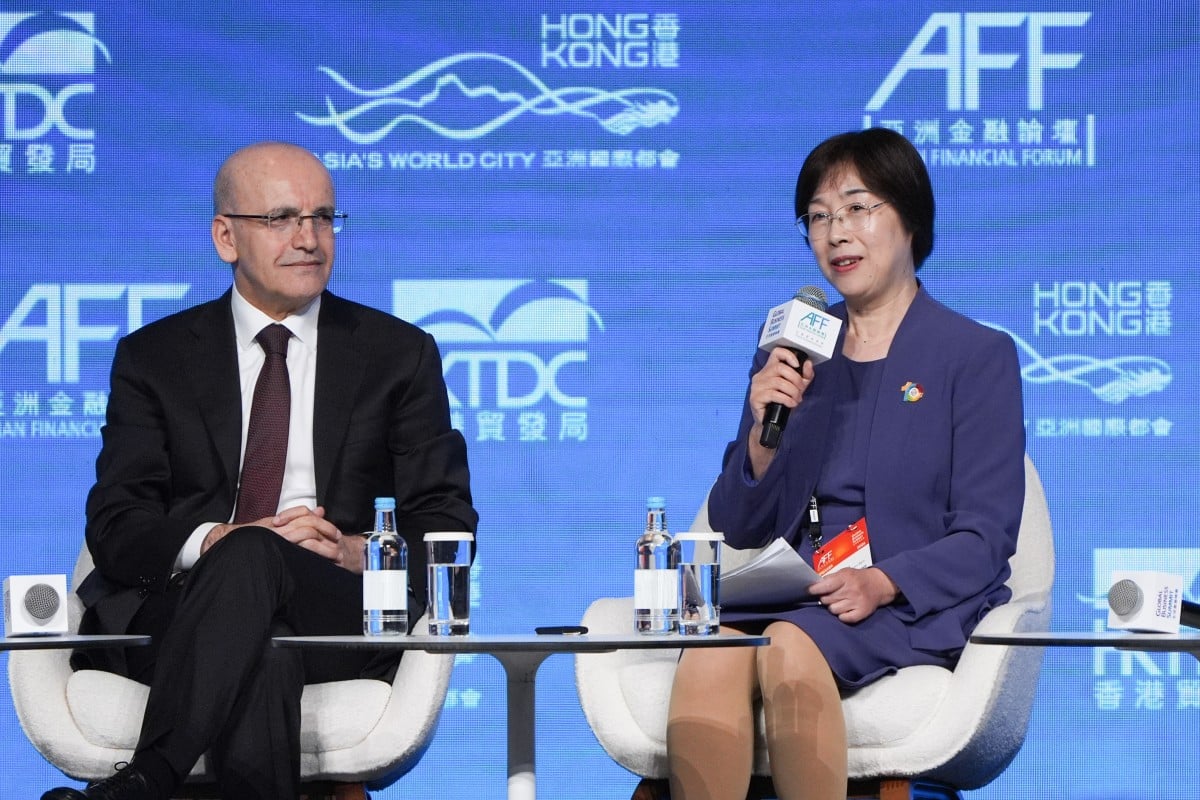
Ten days into her presidency, Zou Jiayi chose Hong Kong’s Asian Financial Forum as the venue for a message that was simultaneously reassuring and urgent. Speaking on January 26 to an audience of financial heavyweights and policymakers, the new president of the Asian Infrastructure Investment Bank emphasized that multilateral cooperation has become “an economic imperative” for sustaining long-term investment amid rising global economic uncertainty aiib. Her debut overseas speech signaled both continuity with her predecessor’s vision and a sharpened focus on the formidable challenges that lie ahead.
The timing was deliberate. As geopolitical fractures deepen, borrowing costs rise, and concessional finance dwindles, Zou noted that countries across Asia and beyond continue to require “reliable energy, resilient infrastructure, digital connectivity, effective climate mitigation and adaptation” aiib—needs that grow more pressing even as fiscal space tightens. For the AIIB, which has grown from 57 founding members to 111 approved members with USD100 billion in capitalization, the question is no longer whether multilateral development banks matter. It is whether they can mobilize capital at sufficient scale to bridge Asia’s infrastructure chasm—and whether China’s most prominent multilateral initiative can navigate an increasingly polarized global landscape.
A Decade in the Making: The AIIB’s Unlikely Journey
The AIIB’s establishment in 2016 represented something rare in contemporary geopolitics: a Chinese-led initiative that Western powers, with the notable exceptions of the United States and Japan, chose to join rather than oppose. The bank emerged from China’s frustration with what it perceived as inadequate representation in the post-war Bretton Woods institutions. Despite China’s economic ascent, its voting share in the Asian Development Bank remained disproportionately small—just 5.47 percent compared to the 26 percent combined voting power held by Japan and the United States—while governance reforms moved at glacial pace.
Yet the AIIB was designed, perhaps strategically, to avoid direct confrontation with the existing order. Its governance frameworks deliberately mirror those of the World Bank and ADB, incorporating international best practices on environmental and social safeguards, procurement transparency, and project evaluation. More than half of the bank’s approved projects have involved co-financing with established multilateral institutions. The institution maintains AAA credit ratings from all major rating agencies—a testament to its financial discipline and multilateral governance structure, where developing countries hold approximately 70 percent of shares.
This hybrid identity—simultaneously embedded within and distinct from Western-led development architecture—has allowed the AIIB to endure even as US-China strategic competition has intensified. But it also creates tensions. Western observers continue to scrutinize whether Beijing wields excessive influence through its 30.5 percent shareholding, which gives China effective veto power over major decisions. Meanwhile, China itself walks a tightrope, managing the AIIB as a genuinely multilateral institution while also pursuing its more opaque Belt and Road Initiative through state-owned banks.
Zou’s Inheritance: Scale, Ambition, and Sobering Constraints
Zou Jiayi assumed the AIIB presidency on January 16, the bank’s tenth anniversary, inheriting an institution that has approved nearly USD70 billion across 361 projects in 40 member economies. Her predecessor, Jin Liqun, spent a decade building credibility, expanding membership, and establishing operational systems. The accomplishments are tangible: over 51,000 kilometers of transportation infrastructure supported, 71 million people gaining access to safe drinking water, and 410 million beneficiaries of improved transport connectivity.
Yet measured against Asia’s infrastructure needs, these achievements remain a drop in a very deep bucket. The Asian Development Bank estimates that developing Asia requires USD1.7 trillion annually through 2030 simply to maintain growth momentum, address poverty, and respond to climate change. That figure balloons to USD1.8 trillion when climate adaptation and mitigation measures are fully incorporated. Against this backdrop, the AIIB’s USD8.4 billion in 2024 project approvals across 51 projects—impressive by institutional growth metrics—captures less than 0.5 percent of annual regional needs.
The bank’s updated corporate strategy acknowledges this reality with aggressive targets: doubling annual financing to USD17 billion by 2030, deploying at least USD75 billion over the strategy period, and ensuring over 50 percent goes toward climate-related investments. These are ambitious goals. They are also, quite clearly, insufficient to close the infrastructure gap without massive private capital mobilization—which brings us to the central challenge Zou articulated in Hong Kong.
The Private Capital Conundrum
Zou was unequivocal in Hong Kong: public resources “alone will not be sufficient” scmp. Private capital mobilization, alongside support from peer development banks, would be crucial. This recognition reflects a fundamental tension in development finance: traditional multilateral lending, even at unprecedented scale, cannot come close to meeting infrastructure needs. The private sector must be induced to invest in projects that carry political risks, long payback periods, regulatory uncertainties, and—increasingly—climate vulnerabilities.
Yet coaxing private investors into emerging market infrastructure has proven maddeningly difficult. Risk-return profiles often don’t align with institutional investor requirements. Currency mismatches create vulnerabilities. Weak regulatory frameworks and corruption concerns add further friction. Development banks have experimented with various mechanisms to address these challenges: partial credit guarantees, first-loss tranches, blended finance structures, and on-lending facilities through local financial institutions.
The AIIB has embraced this “finance-plus” approach, exemplified by three projects Zou highlighted in her speech: initiatives in Türkiye, Indonesia, and Kazakhstan that demonstrate how multilateral cooperation enables sustainable investment across diverse country contexts aiib. The Türkiye project involves sustainable bond investments channeled through private developers. Indonesia’s multifunctional satellite project operates as a public-private partnership bringing digital connectivity to remote areas. Kazakhstan’s Zhanatas wind power plant demonstrated how multilateral backing can catalyze commercial financing for renewable energy in frontier markets.
These successes, however, remain exceptions rather than the rule. The AIIB’s nonsovereign (private sector) portfolio remains modest compared to sovereign lending. Scaling private capital mobilization requires not just financial innovation but also patient institution-building: strengthening regulatory frameworks, improving project preparation, enhancing local capital markets, and building pipelines of bankable projects. It’s intricate, time-consuming work that doesn’t lend itself to dramatic announcements or swift results.
Climate Imperatives Meet Geopolitical Realities
Climate financing represents both the AIIB’s greatest opportunity and its most complex challenge. In 2024, 67 percent of the bank’s approved financing contributed to climate mitigation or adaptation—surpassing its 50 percent target for the third consecutive year. Nearly every approved project (50 of 51) aligned with Sustainable Development Goal 13 on climate action. The bank introduced Climate Policy-Based Financing instruments to support members’ reform programs, issued digitally native bonds through Euroclear, and raised nearly USD10 billion in sustainable development bonds.
These achievements matter enormously. Infrastructure decisions made today will lock in emissions patterns for decades. Asia accounts for the majority of global infrastructure investment and a disproportionate share of future emissions growth. Getting infrastructure right—prioritizing renewable energy over coal, building climate-resilient transport networks, investing in water management systems that can withstand extreme weather—is arguably the most important contribution development banks can make to global climate stability.
Yet climate finance also illuminates geopolitical fault lines. While the AIIB has officially aligned its operations with the Paris Agreement and maintains rigorous environmental standards, China—the bank’s largest shareholder and second-largest borrower—continues to finance coal projects through bilateral mechanisms. This creates uncomfortable contradictions. Western members value the AIIB’s climate commitments; they simultaneously worry about whether Chinese influence might soften environmental standards or prioritize projects that serve Beijing’s strategic interests.
The answer, to date, appears to be no. The AIIB’s multilateral governance structure, AAA credit rating, and co-financing relationships create powerful incentives for maintaining high standards. The bank’s environmental and social framework, while sometimes criticized for placing too much monitoring responsibility on clients, aligns with international best practices. Projects undergo independent evaluation. A public debarment list includes dozens of Chinese entities excluded from bidding on AIIB contracts.
Still, perception matters. In an era of intensifying US-China competition, economic “de-risking,” and fractured value chains, even genuinely multilateral institutions face scrutiny based on their leadership’s nationality. The AIIB must continuously demonstrate that it operates according to professional merit rather than geopolitical calculation—a burden that Western-led institutions, whatever their flaws, rarely face.
Navigating Treacherous Waters: The “De-Risking” Dilemma
Zou acknowledged in Hong Kong that the global economy faces “a convergence of challenges, including a weakening of traditional drivers of global growth such as strong investment and integrated value chains” aiib. This was diplomatic language for a more stark reality: the post-Cold War consensus on economic integration has fractured, perhaps irreparably. Supply chains are being reconfigured along geopolitical lines. Export controls proliferate. “Friend-shoring” replaces globalization as the operative principle in advanced economies.
For multilateral development banks, this environment presents what Zou called “geopolitical tensions,” “fragmentation of global value chains,” and “declining concessional resources” scmp. Infrastructure connectivity—long viewed as an unalloyed good—now triggers security concerns. Digital infrastructure projects face scrutiny over data governance and technological dependencies. Energy projects must navigate not just climate considerations but also great power competition over supply chains for batteries, solar panels, and rare earth minerals.
The AIIB finds itself in a particularly delicate position. Its mission of enhancing regional connectivity can be read as complementary to—or in competition with—various initiatives: the US-led Indo-Pacific Economic Framework, the European Union’s Global Gateway, Japan’s Partnership for Quality Infrastructure, and of course China’s Belt and Road Initiative. Zou must articulate a value proposition that transcends these competing visions while avoiding entanglement in their conflicts.
Her emphasis on multilateral cooperation as an economic imperative, rather than a geopolitical strategy, suggests one approach: positioning the AIIB as a pragmatic problem-solver focused on tangible development outcomes rather than ideological alignment. The bank’s co-financing relationships with the World Bank, ADB, and European development banks provide concrete evidence of this positioning. These partnerships reduce duplication, leverage expertise, share risks, and signal commitment to international standards.
Yet cooperation has its limits. Research examining AIIB project patterns finds that co-financing with the World Bank occurs less frequently in countries with strong Belt and Road Initiative ties to China, suggesting that geopolitical considerations do influence project selection, even if indirectly. The AIIB’s role as host institution for the China-led Multilateral Cooperation Center for Development Finance—whose relationship to the BRI remains deliberately opaque—further complicates claims of pure multilateralism.
The Road to 2030: Realistic Ambitions or Inevitable Disappointment?
As Zou settles into her five-year term, the central question is whether the AIIB can meaningfully contribute to closing Asia’s infrastructure gap or whether it will remain, despite growth, a marginal player relative to the scale of needs. The bank’s goal of reaching USD17 billion in annual approvals by 2030 would represent impressive institutional expansion. It would still capture less than one percent of annual regional infrastructure requirements.
This gap between ambition and reality suggests three possible futures. The first is transformative success: the AIIB becomes a genuine catalyst for private capital mobilization, leveraging its balance sheet to unlock multiples of private investment, pioneering innovative financial instruments, and demonstrating that multilateral cooperation can transcend geopolitical divisions. In this scenario, the bank’s impact is measured not in its direct lending but in its role as orchestrator, de-risker, and standard-setter.
The second possibility is respectable incrementalism: the AIIB continues growing steadily, maintains its AAA rating, delivers solid development outcomes in member countries, and co-finances projects with peer institutions. It becomes a useful but not transformative addition to the development finance architecture—valuable primarily for providing borrower countries with an additional funding source and slightly more voice in governance compared to Western-dominated institutions.
The third scenario is slow decline into irrelevance or, worse, becoming a vehicle for Chinese strategic interests that alienates Western members and undermines the bank’s multilateral character. This seems unlikely given the institution’s governance structures and Jin Liqun’s decade of credibility-building, but geopolitical pressures could push in this direction if not carefully managed.
Zou’s Hong Kong speech positioned her firmly in pursuit of the first scenario. Her emphasis on cooperation, private capital, and shared development priorities reflects understanding that the AIIB’s influence will be determined not by its balance sheet alone but by its ability to convene actors, mobilize resources, and demonstrate that multilateral solutions can deliver results in an age of nationalism and competition.
The Verdict: Indispensable but Insufficient
The infrastructure gap facing developing Asia represents both a development crisis and an opportunity. Inadequate infrastructure constrains economic growth, perpetuates poverty, limits access to education and healthcare, and increases vulnerability to climate shocks. Yet infrastructure investment, done well, can be transformative: connecting markets, enabling industrialization, providing clean energy access, and building climate resilience.
Zou characterized infrastructure investment as a “duty” for development banks to support industrialization and help countries provide goods and services to the global market scmp. This framing is telling. It positions the AIIB not as a charity but as a catalyst for economic transformation—aligning with the bank’s focus on sustainable returns, economic viability, and productive infrastructure rather than pure poverty alleviation.
The AIIB’s first decade demonstrated that a Chinese-led multilateral institution could operate according to international standards, attract broad membership, and deliver substantive development outcomes. Zou’s challenge is to scale this success while navigating increasingly treacherous geopolitical waters. Her insistence on multilateral cooperation as an economic imperative—not just a diplomatic nicety—suggests recognition that fragmentation serves no one’s interests when infrastructure needs are so vast.
Yet realism demands acknowledging that even a successful AIIB operating at peak efficiency cannot, alone or with peer institutions, close Asia’s infrastructure gap. The private sector must be decisively engaged. Domestic resource mobilization must be strengthened. Project preparation must improve. Regulatory frameworks must evolve. These changes require patient, painstaking work that extends far beyond any single institution’s mandate.
The AIIB under Zou’s leadership will likely prove indispensable but insufficient—a useful, professionally managed multilateral development bank that makes meaningful contributions to Asian infrastructure while remaining orders of magnitude too small relative to needs. That’s not a failure of vision or execution. It’s a reflection of the enormous scale of challenges facing developing Asia and the structural limits of multilateral development finance in an era of constrained public resources and hesitant private capital.
Whether the bank can transcend these limits—whether it can truly become the catalyst and mobilizer Zou envisions—will depend not just on Beijing’s commitment or Western engagement, but on whether Asia’s developing economies can create the enabling conditions that make infrastructure projects genuinely bankable. That transformation, ultimately, is one that development banks can support but not substitute for. And it’s a challenge that will extend well beyond Zou’s five-year term, or indeed the AIIB’s second decade. The question is whether, in a world of deepening divisions, multilateral institutions retain the credibility and capacity to help nations build the future—together.

KSE-100 Plunges Amid Geopolitical Firestorm — But Islamabad Holds the World’s Attention

The Trump Coin and Lessons from the Ostrogoths: How a Gold Offering Reveals the Limits of Presidential Power Over America’s Money

Gaming Giant’s Bold Gamble: Why Investors are Devouring Risky EA Debt Amid Geopolitical Crosscurrents

Top 15 Stocks for Investment in 2026 in PSX: Your Complete Guide to Pakistan’s Best Investment Opportunities
Top 15 Stocks for Investment in 2026 in PSX: Your Complete Guide to Pakistan’s Best Investment Opportunities

Debunking IMF Program Myths: Reconfiguring Engagement for True National Ownership in a Volatile World
-
 Markets & Finance3 months ago
Top 15 Stocks for Investment in 2026 in PSX: Your Complete Guide to Pakistan’s Best Investment Opportunities
-
Markets & Finance3 months ago
Top 15 Stocks for Investment in 2026 in PSX: Your Complete Guide to Pakistan’s Best Investment Opportunities
-
 Analysis2 months ago
Debunking IMF Program Myths: Reconfiguring Engagement for True National Ownership in a Volatile World
-

 Global Economy3 months ago
What the U.S. Attack on Venezuela Could Mean for Oil and Canadian Crude Exports: The Economic Impact
-

 Investment3 months ago
Top 10 Mutual Fund Managers in Pakistan for Investment in 2026: A Comprehensive Guide for Optimal Returns
-

 Asia3 months ago
China’s 50% Domestic Equipment Rule: The Semiconductor Mandate Reshaping Global Tech
-

 AI3 months ago
15 Most Lucrative Sectors for Investment in Pakistan: A 2025 Data-Driven Analysis
-

 Exports3 months ago
Pakistan’s Export Goldmine: 10 Game-Changing Markets Where Pakistani Businesses Are Winning Big in 2025
China Economy
The World’s 50 Largest Economies: A 25-Year Growth Trajectory Analysis (2000-2025)
How GDP Expansion and Export Dynamics Reshaped Global Economic Power
The dawn of the 21st century marked a watershed moment in economic history. In 2000, the global economy stood at approximately $33 trillion in nominal GDP. Today, that figure exceeds $105 trillion. But beneath these aggregate numbers lies a far more compelling story: a dramatic reshuffling of economic power that would have seemed fantastical to observers at the turn of the millennium.
China’s economy has expanded fourteenfold. India’s has grown nearly eightfold. Meanwhile, traditional economic powers have seen their relative positions shift in ways that challenge decades of assumptions about development, growth, and global economic hierarchy. This analysis examines all 50 of the world’s largest economies, tracking their GDP trajectories and export performance across 25 years of globalization, crisis, and transformation.
For investors allocating capital across borders, policymakers navigating geopolitical competition, and citizens seeking to understand their place in the global economy, these patterns reveal which strategies succeeded, which models faltered, and what the next quarter-century might hold.
Methodology and Data Framework
This analysis draws primarily on datasets from the International Monetary Fund’s World Economic Outlook Database, supplemented by World Bank national accounts data and OECD statistics for member countries. Export data comes from the World Trade Organization’s statistical database and national statistical agencies.
GDP Measurement Approach
Two methodologies dominate international comparisons. Nominal GDP measures economic output in current U.S. dollars using market exchange rates. This approach captures the actual dollar value of economies in international transactions but can be distorted by currency fluctuations. Purchasing Power Parity (PPP) adjusts for price level differences between countries, providing a better measure of domestic living standards and real output.
This analysis primarily uses nominal GDP for rankings and international comparisons, as it reflects actual economic power in global markets, trade negotiations, and geopolitical influence. PPP figures are referenced where relevant for understanding domestic economic conditions and real growth rates.
Time Period and Baseline
The year 2000 serves as an ideal baseline for several reasons. It represents the post-Cold War economic order before China’s 2001 WTO accession, captures the dot-com bubble peak, and provides a pre-9/11, pre-financial crisis reference point. The 25-year span encompasses multiple economic cycles, technological revolutions, and structural transformations.
Data Limitations
All international economic comparisons face inherent challenges. GDP calculations vary by national statistical methodology. Currency fluctuations can dramatically shift nominal rankings. Some economies (particularly China) face ongoing debates about data accuracy. Export statistics may not fully capture services trade or digital transactions. These limitations warrant acknowledgment without undermining the broader patterns revealed.
The Top 10 Economic Titans: Dominance and Disruption
United States: Sustained Primacy ($28.8 Trillion)
The United States began the millennium with a GDP of approximately $10.3 trillion and has grown to roughly $28.8 trillion in 2025, according to Bureau of Economic Analysis estimates. This represents 180% growth over 25 years, or a compound annual growth rate of about 4.2% in nominal terms.
What’s remarkable isn’t just absolute growth but sustained leadership through multiple crises. The U.S. economy absorbed the dot-com crash, the 2008 financial crisis, and the COVID-19 pandemic while maintaining its position as the world’s largest economy and primary reserve currency issuer. The dollar’s role in global trade and finance, combined with technological leadership in software, biotechnology, and artificial intelligence, has preserved American economic dominance even as relative share declined.
U.S. exports expanded from $1.1 trillion in 2000 to approximately $3.0 trillion in 2024, driven by services (particularly digital and financial), agricultural products, and advanced manufacturing. The trade deficit widened substantially, reflecting consumption patterns and the dollar’s reserve status enabling persistent current account imbalances.
China: The Most Dramatic Rise in Economic History ($18.5 Trillion)
No economic transformation in human history compares to China’s 25-year ascent. From a GDP of approximately $1.2 trillion in 2000, China’s economy expanded to roughly $18.5 trillion by 2025—a staggering 1,440% increase. The compound annual growth rate exceeded 11% for much of this period, moderating to 5-6% in recent years as the economy matured.
China’s 2001 accession to the World Trade Organization catalyzed this transformation. The country became the “world’s factory,” with exports surging from $249 billion in 2000 to over $3.5 trillion by 2024. China now exports more than any other nation, with manufactured goods comprising the bulk of shipments.
This growth trajectory lifted 800 million people out of poverty, created the world’s largest middle class, and shifted global supply chains. China surpassed Japan as the world’s second-largest economy in 2010, a symbolic moment marking Asia’s return to historical prominence. The economy’s sheer scale now influences commodity prices, manufacturing trends, and technological development globally.
The Chinese model combined state-directed capitalism, export-led growth, massive infrastructure investment, and financial repression to channel savings into productive capacity. Whether this model remains sustainable as demographics worsen and debt accumulates represents one of the key questions for global economics through 2050.
Japan: Stagnation, Resilience, and Recent Revival ($4.1 Trillion)
Japan’s economic story offers a counterpoint to China’s rise. The world’s second-largest economy in 2000 with GDP of $4.9 trillion, Japan grew to only $4.1 trillion by 2025 in nominal terms—a decline of 16%. However, this masks a more complex reality.
In PPP terms, Japan’s economy expanded modestly. Deflation, an aging population, and yen depreciation compressed nominal figures. Yet Japanese corporations remained technological leaders, the country maintained high living standards, and exports of automobiles, electronics, and machinery remained substantial at approximately $900 billion annually.
The “lost decades” narrative oversimplifies. Japan’s unemployment remained remarkably low, social cohesion high, and per capita income among the world’s highest. Recent economic reforms under various administrations have targeted corporate governance, labor market flexibility, and monetary stimulus with mixed results.
Germany: Europe’s Export Champion ($4.7 Trillion)
Germany’s economy expanded from $1.9 trillion in 2000 to approximately $4.7 trillion in 2025, representing 145% growth. This performance stands out in a European context marked by crisis and stagnation.
The German model centered on export-oriented manufacturing excellence, particularly automobiles, machinery, and chemicals. Exports reached $1.9 trillion in 2024, making Germany one of the world’s leading exporters relative to economic size. The trade surplus consistently exceeded 5% of GDP, reflecting competitiveness but also structural imbalances within the eurozone.
Eurozone membership provided Germany with an undervalued currency relative to its productivity, advantaging exporters. However, this came at the cost of regional imbalances, as southern European economies struggled with the same currency that propelled German growth.
India: The Emerging Giant ($4.0 Trillion)
India’s trajectory represents the other great Asian success story. GDP expanded from approximately $470 billion in 2000 to $4.0 trillion in 2025—growth of 750%. While less dramatic than China’s rise in percentage terms, India’s expansion occurred in a democracy with different structural constraints.
Services-led growth distinguished India’s model. Information technology, business process outsourcing, and financial services drove development rather than manufacturing. Exports grew from $43 billion in 2000 to approximately $775 billion in 2024, with services comprising a larger share than typical for developing economies.
India’s 1.4 billion people and favorable demographics position the country as potentially the world’s third-largest economy by 2030. However, challenges around infrastructure, education quality, and institutional capacity temper projections.
United Kingdom: Brexit and Beyond ($3.5 Trillion)
The UK economy grew from $1.6 trillion in 2000 to approximately $3.5 trillion in 2025, representing 120% expansion. Financial services dominance in the City of London, combined with pharmaceuticals, aerospace, and creative industries, sustained growth despite manufacturing decline.
The 2016 Brexit referendum and subsequent departure from the European Union introduced new uncertainties. Trade patterns shifted, with services exports facing new friction and goods trade requiring customs procedures. The long-term impact remains contested, with research from institutions like the Centre for Economic Performance suggesting modest negative effects on trade and investment.
France: Social Model Under Pressure ($3.1 Trillion)
France expanded from $1.4 trillion in 2000 to roughly $3.1 trillion in 2025, growth of 125%. The French model balanced strong social protections, significant state involvement in strategic sectors, and export competitiveness in aerospace, luxury goods, and agriculture.
High taxation, rigid labor markets, and pension obligations created fiscal pressures throughout the period. Yet French multinationals competed globally, productivity remained high, and quality of life indicators consistently ranked among the world’s best.
Italy: Sclerotic Growth and Structural Challenges ($2.3 Trillion)
Italy represents the developed world’s most disappointing performer. GDP grew from $1.1 trillion in 2000 to only $2.3 trillion in 2025, barely doubling over 25 years. Structural problems including low productivity growth, political instability, banking sector weakness, and demographic decline constrained expansion.
Northern Italy’s industrial districts maintained export competitiveness in machinery and luxury goods, but southern underdevelopment, rigid labor markets, and high public debt limited potential. Italy’s experience illustrates how institutional quality and structural reforms matter as much as initial conditions.
Canada: Resource-Rich Stability ($2.2 Trillion)
Canada’s economy expanded from $740 billion in 2000 to approximately $2.2 trillion in 2025, representing nearly 200% growth. Natural resources (oil, natural gas, minerals, timber) provided substantial export revenues, while proximity to the United States ensured market access.
The Canadian model balanced resource extraction with services growth, immigration-driven population expansion, and prudent financial regulation. Canadian banks survived the 2008 crisis largely unscathed, reflecting stronger regulatory oversight than American counterparts.
South Korea: From Developing to Developed ($1.9 Trillion)
South Korea’s rise from $562 billion in 2000 to $1.9 trillion in 2025 represents successful development strategy execution. The country transitioned from middle-income to advanced economy status, with globally competitive firms like Samsung, Hyundai, and LG driving export growth.
Electronics, automobiles, and shipbuilding propelled exports from $172 billion in 2000 to over $750 billion in 2024. Heavy investment in education, R&D spending exceeding 4% of GDP, and strategic industrial policy yielded technological leadership in semiconductors and displays.
Positions 11-30: The Global Middle Class
This tier encompasses economies ranging from $700 billion to $1.8 trillion, representing diverse development models and regional dynamics.
Russia ($1.8 Trillion): Expanded from $260 billion in 2000 to peak at $2.3 trillion before sanctions and oil price volatility reduced GDP to approximately $1.8 trillion. Commodity dependence, particularly energy exports, has driven boom-bust cycles. Geopolitical tensions following the 2014 Ukraine annexation and 2022 invasion drastically reshaped economic relationships.
Brazil ($2.3 Trillion): Grew from $655 billion to roughly $2.3 trillion, with commodity cycles dominating. Agricultural exports (soybeans, beef, sugar) and mineral resources drove growth, but political instability, infrastructure deficits, and education gaps constrained potential. Brazil illustrates the “middle-income trap” where initial development success stalls before reaching advanced status.
Australia ($1.7 Trillion): Expanded from $415 billion to $1.7 trillion, benefiting enormously from Chinese demand for iron ore, coal, and natural gas. The commodity boom of 2003-2011 drove exceptional growth, with Australia avoiding recession for nearly three decades—a remarkable run enabled by flexible monetary policy, immigration, and resource wealth.
Spain ($1.6 Trillion): Grew from $580 billion to $1.6 trillion despite a devastating 2008-2013 crisis. Construction and real estate collapse, banking sector distress, and unemployment exceeding 25% created severe pain. Recovery came through labor market reforms, tourism growth, and European Central Bank support, demonstrating eurozone integration benefits and constraints.
Mexico ($1.8 Trillion): Expanded from $680 billion to $1.8 trillion, benefiting from NAFTA/USMCA market access and manufacturing nearshoring. Automobile production, electronics assembly, and agriculture linked Mexican growth tightly to U.S. economic cycles. Violence, corruption, and institutional weakness limited potential despite favorable geography.
Indonesia ($1.4 Trillion): Grew from $165 billion to $1.4 trillion, Southeast Asia’s largest economy demonstrating commodity wealth and demographic dividend. Palm oil, coal, and mineral exports drove growth, while domestic consumption from 275 million people provided resilience. Infrastructure development remains critical for sustaining momentum.
Netherlands ($1.1 Trillion): Expanded from $415 billion to $1.1 trillion, maintaining status as a trading hub and logistics gateway. Rotterdam’s port, favorable tax treatment for multinationals, and export-oriented agriculture (flowers, vegetables) sustained prosperity despite small geographic size.
Saudi Arabia ($1.1 Trillion): Oil wealth drove expansion from $190 billion to $1.1 trillion, with volatility reflecting crude prices. Vision 2030 diversification efforts aim to reduce petroleum dependence, but progress remains limited. The kingdom’s position as swing producer in OPEC gives it outsized influence over global energy markets.
Turkey ($1.1 Trillion): Grew from $270 billion to $1.1 trillion, bridging Europe and Asia geographically and economically. Manufacturing exports, tourism, and construction drove growth, but political uncertainty, inflation, and unconventional monetary policy created volatility. Currency crises in 2018 and 2021 highlighted vulnerabilities.
Switzerland ($940 Billion): Expanded from $265 billion to $940 billion, maintaining its status as a financial center and precision manufacturing hub. Pharmaceuticals, watches, machinery, and banking services generated trade surpluses despite high costs. Political neutrality, institutional quality, and innovation sustained exceptional per capita prosperity.
Poland ($845 Billion): Perhaps Europe’s greatest success story, expanding from $171 billion to $845 billion. EU accession in 2004 catalyzed transformation, with structural funds, market access, and institutional reforms driving convergence. Manufacturing exports, particularly automobiles and electronics, integrated Poland into German supply chains.
Argentina ($640 Billion): Illustrates development disappointment, growing from $284 billion to only $640 billion. Chronic inflation, debt defaults (2001, 2020), currency crises, and policy instability prevented potential realization. Agricultural wealth (beef, soybeans, wheat) couldn’t overcome institutional dysfunction.
Belgium ($630 Billion): Grew from $230 billion to $630 billion, benefiting from EU headquarters location, port of Antwerp, and chemicals/pharmaceuticals exports. Political fragmentation between Flemish and Francophone regions created governance challenges without preventing prosperity.
Ireland ($630 Billion): Extraordinary expansion from $100 billion to $630 billion, though figures are distorted by multinational tax strategies. Genuine growth in pharmaceuticals, technology services, and financial operations was amplified by corporate profit shifting. The “leprechaun economics” phenomenon saw GDP surge 26% in 2015 largely from accounting changes.
Thailand ($540 Billion): Expanded from $126 billion to $540 billion, maintaining position as Southeast Asian manufacturing hub. Automobile production, electronics assembly, and tourism sustained growth despite political instability. Integration into regional supply chains, particularly for Japanese manufacturers, proved durable.
Austria ($530 Billion): Grew from $195 billion to $530 billion, leveraging location between Western and Eastern Europe. Manufacturing excellence, tourism, and banking services for Central Europe maintained high living standards.
United Arab Emirates ($510 Billion): Oil wealth and diversification drove expansion from $104 billion to $510 billion. Dubai’s transformation into a trading, tourism, and financial hub demonstrated how resource wealth can fund structural transformation. Aviation, real estate, and logistics complemented hydrocarbon revenues.
Nigeria ($500 Billion): Africa’s largest economy expanded from $67 billion to $500 billion, driven by oil exports and population growth. However, per capita income gains remained modest as 220 million people diluted aggregate growth. Infrastructure gaps, corruption, and security challenges constrained development despite resource wealth.
Israel ($530 Billion): Grew from $130 billion to $530 billion, earning its “startup nation” moniker. High-tech exports (software, cybersecurity, semiconductors) and defense industries drove development. R&D intensity exceeding 5% of GDP and mandatory military service creating technical skills sustained innovation.
Singapore ($525 Billion): Expanded from $96 billion to $525 billion, maintaining status as Southeast Asian financial center and trading hub. Despite tiny geography, strategic location, rule of law, and openness to global commerce created exceptional prosperity. Per capita income ranks among the world’s highest.
Positions 31-50: Rising Stars and Resilient Performers
The lower half of the top 50 reveals diverse economies at various development stages, from African emerging markets to smaller European nations.
Malaysia ($445 Billion): Electronics manufacturing, palm oil, and petroleum drove growth from $90 billion to $445 billion. Integration into East Asian supply chains sustained development, though middle-income challenges emerged as low-cost advantages eroded.
Philippines ($470 Billion): Grew from $81 billion to $470 billion, with remittances from overseas workers, business process outsourcing, and domestic consumption driving expansion. The country’s 115 million people and English proficiency created services export opportunities.
Bangladesh ($460 Billion): Remarkable transformation from $53 billion to $460 billion, propelled by ready-made garment exports. The country became the world’s second-largest clothing exporter after China, demonstrating how labor-intensive manufacturing can drive initial development.
Vietnam ($430 Billion): Stunning growth from $31 billion to $430 billion represented successful transition from command to market economy. Manufacturing exports, particularly electronics and textiles, attracted investment fleeing Chinese costs. Vietnam increasingly serves as “China plus one” diversification destination.
Egypt ($400 Billion): Expanded from $100 billion to $400 billion, though population growth to 110 million meant modest per capita gains. Suez Canal revenues, tourism, natural gas, and agriculture sustained the economy, but political instability and food security concerns created challenges.
Denmark ($410 Billion): Grew from $165 billion to $410 billion, maintaining Nordic social model with high taxation, strong welfare state, and export competitiveness in pharmaceuticals, renewable energy, and maritime services. Consistently ranks among world’s happiest and most prosperous nations.
Colombia ($390 Billion): Expanded from $100 billion to $390 billion, with oil, coal, coffee, and flowers driving exports. Security improvements after decades of conflict attracted investment, though inequality and political polarization persisted.
Pakistan ($380 Billion): Grew from $74 billion to $380 billion, but population expansion to 240 million meant per capita income remained low. Textiles exports, agriculture, and remittances sustained the economy, though political instability, debt burdens, and energy shortages constrained growth.
Chile ($360 Billion): Expanded from $78 billion to $360 billion, with copper mining dominating exports. Market-oriented policies since the 1980s created Latin America’s highest per capita income, though inequality sparked social unrest in 2019.
Finland ($305 Billion): Grew from $125 billion to $305 billion despite Nokia’s mobile phone business collapse. Adaptation to technology sector changes, forestry exports, and strong education system maintained prosperity.
Romania ($330 Billion): EU membership catalyzed growth from $37 billion to $330 billion. Manufacturing exports, particularly automobiles, and IT services drove convergence with Western European living standards, though institutional challenges remained.
Czech Republic ($330 Billion): Expanded from $61 billion to $330 billion, becoming a manufacturing hub for German automotive industry. Škoda Auto’s integration into Volkswagen Group symbolized broader economic integration.
Portugal ($285 Billion): Grew from $120 billion to $285 billion despite 2010-2014 eurozone crisis requiring bailout. Tourism, exports to Spain and France, and reforms restored growth.
Iraq ($270 Billion): Oil wealth rebuilt economy from wartime devastation, expanding from $32 billion to $270 billion. However, political instability, sectarian violence, and petroleum dependence left development fragile.
Peru ($270 Billion): Grew from $53 billion to $270 billion, with copper, gold, and fishmeal exports driving expansion. Market reforms in 1990s created Latin America’s fastest-growing major economy for two decades.
New Zealand ($270 Billion): Expanded from $54 billion to $270 billion, leveraging agricultural exports (dairy, meat, wine) and tourism. Small population and geographic isolation didn’t prevent high living standards.
Greece ($240 Billion): Cautionary tale of boom and bust, growing from $130 billion to peak at $355 billion before eurozone crisis collapsed GDP to $240 billion. Debt crisis, austerity, and depression demonstrated risks of unsustainable fiscal policy within monetary union.
Qatar ($235 Billion): Natural gas wealth drove expansion from $30 billion to $235 billion. World’s highest per capita income reflects tiny population and massive hydrocarbon reserves. 2022 World Cup hosting demonstrated global ambitions.
Hungary ($215 Billion): Grew from $47 billion to $215 billion after EU accession. Automotive manufacturing for German brands and electronics assembly attracted investment, though democratic backsliding created tensions with Brussels.
Kazakhstan ($220 Billion): Oil wealth expanded economy from $18 billion to $220 billion. Resource dependence and authoritarian governance characterized development model, with diversification efforts showing limited progress.
Growth Champions: Who Grew Fastest?
While absolute size matters, growth velocity reveals which economies executed successful development strategies.
Highest Absolute GDP Growth (2000-2025):
- China: +$17.3 trillion
- United States: +$18.5 trillion
- India: +$3.5 trillion
- Germany: +$2.8 trillion
- Indonesia: +$1.2 trillion
Highest Percentage Growth (2000-2025):
- China: +1,440%
- Vietnam: +1,290%
- Bangladesh: +770%
- India: +750%
- Ethiopia: +680%
- Indonesia: +745%
- Poland: +395%
- Ireland: +530%
- Philippines: +480%
- Turkey: +307%
These rankings reveal that developing economies with large populations, favorable demographics, and successful integration into global trade achieved the fastest expansion. Manufacturing-oriented models (China, Vietnam, Bangladesh) outperformed commodity exporters, though natural resources provided growth where institutional quality allowed investment in productive capacity.
Export Growth Leaders:
Countries that dramatically expanded export volumes demonstrated competitiveness gains:
- China: $249 billion (2000) → $3,500 billion (2024) = +1,305%
- Vietnam: $14 billion → $385 billion = +2,650%
- India: $43 billion → $775 billion = +1,700%
- Poland: $32 billion → $395 billion = +1,134%
- Mexico: $166 billion → $620 billion = +273%
GDP Per Capita Improvements:
Several economies achieved dramatic per capita income gains, reflecting successful development:
- China: $960 → $13,100 (+1,265%)
- Poland: $4,450 → $22,000 (+395%)
- South Korea: $11,900 → $38,000 (+220%)
- Ireland: $25,600 → $98,000 (+283%, distorted by corporate accounting)
- Singapore: $23,800 → $88,000 (+270%)
Disappointments and Stagnation:
Some economies failed to realize potential or regressed:
- Japan: Nominal GDP declined despite stable living standards
- Italy: Barely doubled in 25 years, chronic stagnation
- Argentina: Chronic instability prevented resource wealth translation to broad prosperity
- Greece: Boom-bust cycle erased years of gains
- Venezuela: Collapsed from $117 billion to $70 billion, representing catastrophic policy failure
Structural Patterns and Insights
Several patterns emerge from 25 years of economic data:
Export-Led vs. Domestic Consumption Models
The most successful developing economies pursued export-oriented growth. China, Vietnam, Bangladesh, and Poland integrated into global supply chains, using external demand to drive industrialization and employment. Export manufacturing provided hard currency, technology transfer, and productivity improvements.
In contrast, economies relying primarily on domestic consumption or commodity exports faced greater volatility. Brazil, Russia, and Saudi Arabia experienced boom-bust cycles tied to resource prices, while protected domestic markets in Argentina and Venezuela bred inefficiency without external competitive pressure.
Resource Curse and Blessing
Natural resource wealth produced divergent outcomes based on institutional quality. Norway, Australia, and Canada translated resource abundance into broad prosperity through strong governance, transparent management, and economic diversification. Russia, Venezuela, and Nigeria experienced corruption, dutch disease, and volatility, demonstrating that institutions matter more than endowments.
The resource curse isn’t inevitable but requires deliberate policy to avoid. Sovereign wealth funds, transparent revenue management, and investment in education and infrastructure distinguished successful resource exporters.
Technology Adoption and Productivity
Economies that invested heavily in education, R&D, and digital infrastructure achieved sustained productivity gains. South Korea’s transformation from middle-income to advanced economy status reflected R&D spending exceeding 4% of GDP and technical education emphasis. Estonia’s digital transformation and Finland’s recovery from Nokia’s collapse demonstrated how human capital investment enables adaptation.
Countries that underinvested in education and allowed technological gaps to widen faced stagnation. Italy’s productivity growth essentially flatlined, while Greece’s education system failed to match labor market needs.
Demographics and Growth
Population structure powerfully influenced growth trajectories. India, Indonesia, and Philippines benefited from working-age population expansion, while Japan, Germany, and Italy struggled with aging and shrinking workforces. China’s demographic dividend is now reversing, with working-age population declining and dependency ratios rising.
The demographic transition from high birth rates and young populations through working-age expansion to aging and decline follows predictable patterns. Successful economies maximized growth during demographic dividend periods while building institutions and capital for aging. Japan’s challenges forewarn China’s future.
Institutional Quality Impact
Perhaps most fundamentally, institutional quality—rule of law, property rights protection, corruption control, regulatory quality—distinguished successful from failed development. Poland’s EU membership forced institutional reforms that unleashed growth. Argentina’s institutional dysfunction perpetuated crisis despite resource wealth and human capital.
Research from institutions like the World Bank’s Worldwide Governance Indicators consistently shows institutional quality correlating with growth, investment, and development outcomes. While causality is complex, the pattern holds across regions and time periods.
The 2000-2025 Economic Narrative: Crisis and Transformation
The 25-year period wasn’t smooth expansion but rather featured multiple shocks that reshaped economies:
Dot-Com Bust (2000-2002): Technology stock collapse triggered recession in advanced economies but barely affected most developing countries, illustrating financial integration levels.
China’s WTO Accession (2001): Perhaps the single most consequential economic event, integrating 1.3 billion people into global trading system and triggering manufacturing shifts worldwide.
Commodity Supercycle (2003-2008): Chinese demand drove unprecedented increases in oil, metals, and agricultural prices, enriching resource exporters and catalyzing infrastructure investment.
Global Financial Crisis (2008-2009): The worst economic crisis since the Great Depression exposed financial system vulnerabilities, triggered sovereign debt concerns, and prompted massive monetary stimulus. Advanced economies bore the brunt while emerging markets recovered faster.
Eurozone Crisis (2010-2012): Sovereign debt problems in Greece, Ireland, Portugal, Spain, and Italy threatened monetary union’s survival. ECB intervention and fiscal austerity created divergent outcomes across member states.
Emerging Market Slowdown (2013-2015): Chinese growth deceleration, commodity price collapses, and Fed tightening expectations triggered outflows and currency crises in vulnerable economies.
U.S.-China Trade Tensions (2018-2019): Tariff escalation, technology restrictions, and supply chain concerns marked shift from cooperation to strategic competition, with effects rippling through integrated global economy.
COVID-19 Economic Shock (2020-2021): Pandemic lockdowns triggered sharpest global contraction since World War II, followed by rapid recovery driven by unprecedented fiscal and monetary stimulus. Supply chain disruptions and inflation accelerated.
Post-Pandemic Inflation Surge (2022-2025): Stimulus-fueled demand colliding with supply constraints produced highest inflation in four decades. Central bank tightening raised recession risks while reshaping investment patterns toward domestic production and resilience over efficiency.
Each crisis tested economic models and policy frameworks. Countries with fiscal space, flexible institutions, and diversified economies generally recovered faster than those with rigidities, debt burdens, and concentrated exposures.
Future Implications: The Economic Landscape Through 2050
Several trends will likely shape the next quarter-century:
Demographic Dividend Shifts: India, Indonesia, Philippines, and African economies enter prime demographic periods while China, Europe, and eventually East Asia age rapidly. Working-age population shifts will drive growth location.
Technology Revolution Impact: Artificial intelligence, automation, and digital platforms will reshape productivity and employment. Countries that invest in digital infrastructure and technical education will capture disproportionate gains.
Climate Transition Economics: Decarbonization will require trillions in investment, creating winners in renewable energy and losers in fossil fuels. Early movers in clean technology may capture first-mover advantages while climate-vulnerable economies face adaptation costs.
Deglobalization vs. Regionalization: U.S.-China decoupling and supply chain reshoring may fragment the global economy, but regional integration (Africa Continental Free Trade Area, RCEP in Asia) could create new growth poles. Mexico and Southeast Asia may benefit from nearshoring trends.
BRICS+ Expansion: Efforts to create alternatives to dollar-dominated financial system and Western-led institutions reflect multipolar ambitions. Success remains uncertain but reflects broader power shifts.
Debt Sustainability Challenges: Many economies carry high debt burdens accumulated through crisis responses. Rising interest rates test sustainability, particularly for developing countries facing hard currency obligations.
Inequality and Social Stability: Within-country inequality grew alongside between-country convergence. Political polarization and social unrest may constrain growth-friendly policies, while automation and AI could accelerate labor market disruption.
Projections suggest China may reach or exceed U.S. GDP in nominal terms by 2035-2040, though per capita income will lag for decades. India will likely become the world’s third-largest economy before 2030. Indonesia, Vietnam, Bangladesh, and Philippines could all rank among the world’s 20 largest economies by mid-century.
However, these projections assume continuity in policies and institutions. As the past 25 years demonstrated, shocks, crises, and policy choices produce unexpected outcomes. Argentina’s decline from the world’s tenth-largest economy in 1900 to barely top-30 today warns against determinism.
Conclusion: The New Multipolar Economic Order
The 25-year period from 2000 to 2025 witnessed the most dramatic reshuffling of economic power in modern history. China’s rise, India’s emergence, and developing Asia’s transformation challenged Western economic dominance that characterized the post-World War II era.
Yet nuance matters more than headlines. The United States maintained absolute leadership while adapting to relative decline. Europe weathered existential crises to preserve integration. Japan’s stagnation coexisted with high living standards. Commodity exporters experienced booms and busts reflecting both resource wealth and institutional quality.
For investors, the patterns suggest several implications: Demographic dividends drive long-run growth. Export competitiveness, particularly in manufactured goods, proves more durable than commodity dependence. Institutional quality matters more than initial conditions. Crisis resilience requires fiscal space and flexible institutions.
For policymakers, the lessons emphasize: Trade integration, properly managed, accelerates development. Education and R&D investment compound over decades. Financial stability and prudent debt management prevent crisis vulnerabilities. Demographic transitions require foresight and adaptation.
The next 25 years will differ from the last. China’s demographic cliff, climate imperatives, technological disruption, and geopolitical fragmentation create new challenges. But fundamental principles endure: Investment in human capital, institutional quality, openness to trade and ideas, and sound macroeconomic management distinguish successful from failed development.
The global economic hierarchy that seemed immutable in 2000 proved anything but. The hierarchy emerging today will likewise transform by 2050. Understanding which forces drive change—and which countries position themselves to capitalize—remains the central challenge for anyone seeking to navigate the 21st century’s economic landscape.
Data Note: This analysis relies on data available as of January 2026, drawing primarily from IMF World Economic Outlook Database (October 2024), World Bank World Development Indicators, and OECD statistics. GDP figures for 2025 represent estimates subject to revision. Exchange rate fluctuations significantly impact nominal rankings. Readers should consult original sources for the most current
When silver prices cratered by a historic 27% on January 30, 2026—wiping out $150 billion in market value within hours—most traders scrambled to stanch the bleeding. Yet one firm turned catastrophe into windfall. Zhongcai Futures, the proprietary trading house controlled by reclusive Chinese entrepreneur Bian Ximing, banked over $500 million by betting against the very rally that entranced global speculators, according to reports from the Financial Times and market observers.
The profit haul marks another stunning victory for the 61-year-old plastics magnate turned commodities oracle, whose contrarian instincts have repeatedly outmaneuvered Wall Street’s conventional wisdom. After pocketing $1.5 billion from prescient gold futures trades between 2022 and 2024, Bian’s Shanghai-based brokerage executed short positions on silver just as the white metal approached its dizzying peak above $121 per ounce in late January—a record that would prove ephemeral.
The Silver Supercycle That Wasn’t
Silver’s ascent in late 2025 and early 2026 resembled nothing witnessed since the Hunt Brothers’ infamous squeeze four decades prior. Fueled by a confluence of factors—Chinese retail speculation, artificial intelligence’s voracious appetite for the metal’s thermal properties, and mounting concerns over currency debasement—prices rocketed from approximately $32 per ounce in early 2025 to an intraday high near $121 by late January 2026, representing a staggering 276% surge.
The narrative captivating markets was compelling: silver’s unrivaled electrical and thermal conductivity had become indispensable for next-generation AI chip manufacturing. Data center construction exploded as Large Language Models demanded increasingly sophisticated cooling systems, with silver-sintered thermal pastes emerging as the industry standard. Industrial demand appeared insatiable.
Yet beneath the euphoria lurked structural fragilities. As Bloomberg chronicled, speculative fever gripped Shanghai trading floors, where individual investors and equity funds venturing into commodities drove prices divorced from supply-demand fundamentals. Trend-following commodity trading advisers amplified the momentum, creating what analysts later termed a “speculative bubble” rather than a durable industrial squeeze.
By mid-January, the iShares Silver Trust (SLV) recorded unprecedented call option volumes exceeding those of the Nasdaq 100 ETF—a harbinger of the volatility to come. When silver futures surged past $110 per ounce, the CME Group implemented emergency measures, transitioning to percentage-based margin requirements that hiked maintenance margins to 15% for standard positions. The Shanghai Futures Exchange followed suit with multiple rounds of restrictions throughout January.
These administrative interventions would prove decisive. As reported across financial media, the margin hikes forced leveraged speculators who had controlled 5,000-ounce contracts with minimal collateral into a “margin trap,” triggering cascading liquidations that accelerated the selloff.
Zhongcai’s Contrarian Gambit
While retail investors queued for hours outside European bullion dealers and Chinese traders posted thousand-percent gains on social media, Bian Ximing’s team pursued a different calculus. Operating from Gibraltar—where Bian conducts business largely via video calls, maintaining his characteristic distance from Shanghai’s trading floors—Zhongcai Futures established short positions on the Shanghai Futures Exchange as silver approached its zenith.
The timing proved exquisite. On January 30, silver commenced its historic plunge around 10:30 AM Eastern Time, declining to $119 before President Trump’s announcement of Kevin Warsh as Federal Reserve chair nominee at 1:45 PM—a development widely cited as the crash catalyst, though the selloff had already eliminated 27% of silver’s value by that point. By session’s end, spot silver settled near $84 per ounce, representing a $37 per ounce drop in under 20 hours.
The mechanics behind Zhongcai’s profits illuminate Bian’s investment philosophy. Rather than chasing parabolic moves, he focuses on identifying structural imbalances and positioning for mean reversion. His sporadic blog posts—parsed religiously by Chinese traders seeking to emulate his hedge fund-style approach—emphasize “letting go of ego,” choosing targets based on trends, and maintaining discipline on costs. “Investment is essentially a game of survival capability,” Bian wrote in a January reflection, weeks before silver’s collapse.
Market observers note that Zhongcai’s short positions likely concentrated on Shanghai contracts rather than COMEX, providing natural hedges as Chinese markets remained closed during Lunar New Year holidays that shielded domestic traders from the worst intraday volatility when global prices briefly tumbled. The firm’s $500 million gain reflects not merely directional conviction but sophisticated execution across timing, venue selection, and risk management.
Anatomy of the Rout: Why Silver Crashed
The January 30 selloff represented multiple failures converging simultaneously. First, the paper silver market—ETFs and futures trading many multiples of physical metal volume—had disconnected dangerously from underlying supply. The 28% single-day drop in SLV, its worst session since inception, exposed how financialized commodity instruments can gap violently when speculation reaches fever pitch.
Second, exchange-mandated margin increases forced deleveraging precisely when positions were most extended. With silver at $120, a standard 5,000-ounce contract carried $600,000 in notional exposure; CME’s 15% maintenance requirement meant traders suddenly needed $90,000 versus previous minimums around $25,000. Those unable to meet calls faced automatic liquidation, creating self-reinforcing downward pressure.
Third, high-frequency trading dynamics amplified the cascade. Chinese authorities’ early-2026 moves to remove servers from exchange data centers and halt subscriptions in certain commodity fund products—including the UBS SDIC Silver Futures Fund—mechanically reduced marginal demand just as volatility peaked. When algorithms detected price deterioration, automated selling intensified the rout.
Current silver prices hovering around $90 per ounce as of February 4, 2026, reflect partial recovery from the lows but remain dramatically below late January peaks. The metal has stabilized approximately 176% above year-ago levels, though technical analysts identify the $75-$80 range as critical support—the consolidation zone before silver’s final parabolic surge.
Bian Ximing: The Invisible King of Futures
Born in 1963 in Zhuji, Zhejiang Province, during China’s tumultuous Cultural Revolution, Bian Ximing’s trajectory from vocational school graduate to billionaire commodities trader embodies calculated risk-taking married to macroeconomic foresight. After founding a high-end plastic tubes factory in 1995, he diversified into real estate, finance, and media, acquiring the brokerage that became Zhongcai Futures in 2003.
His reputation crystallized through his 2022-2024 gold play. Anticipating global efforts to reduce dollar reliance amid inflation fears, Bian established long positions at gold’s mid-2022 lows and scaled holdings through 2023, ultimately exiting near bullion’s 2024 peaks with an estimated $1.5 billion profit. The success earned him comparisons to Warren Buffett for his patient, fundamentals-driven approach—a rarity among China’s more speculative trading culture.
Yet Bian’s latest copper bet demonstrates his agility. As of May 2025 reports, Zhongcai held the largest net long copper position on the Shanghai Futures Exchange—nearly 90,000 tons worth approximately $1 billion—wagering on the metal’s centrality to electrification and China’s high-tech industrial transition. That position has generated roughly $200 million in profits to date, per Bloomberg calculations.
The silver short, however, marks a tactical pivot. While maintaining copper longs, Zhongcai recognized silver’s speculative excess and positioned accordingly—illustrating Bian’s capacity to hold seemingly contradictory views on related assets when fundamentals diverge. His lieutenants occasionally post “reflections” on the company site, offering glimpses into a trading operation that blends Western institutional discipline with shrewd navigation of China’s distinct market structure.
Market Implications: What Comes Next for Precious Metals
The silver crash holds sobering lessons for commodity markets increasingly dominated by momentum strategies and retail speculation. First, even genuine industrial demand stories—silver’s role in AI infrastructure is legitimate—can be overwhelmed by speculative excess. When paper markets far exceed physical volumes, financialization creates vulnerabilities to sharp corrections.
Second, regulatory interventions matter. Exchange margin adjustments, while prudent for systemic stability, can trigger violent moves when implemented amid extended positioning. Traders operating with maximum leverage learned painfully that exchanges prioritize clearinghouse solvency over individual P&L.
Third, the episode underscores China’s growing influence on global commodity prices. Chinese retail and institutional flows drove silver’s rally and contributed to its collapse, with domestic regulatory actions—HFT crackdowns, fund redemption halts—rippling across international markets. As geopolitical tensions persist, understanding China’s market structure becomes essential for commodity investors worldwide.
Looking ahead, analysts divide on silver’s trajectory. Citigroup analysts maintain $150 targets, citing structural supply deficits and AI-driven demand as justifying a new $65-$70 floor even after the correction. Bears counter that January’s crash revealed demand isn’t as inelastic as bulls assumed; at $100-plus per ounce, industrial substitution and demand destruction become economic imperatives.
Gold faces similar crosscurrents, having plunged 12% on January 30 to below $5,000 per ounce after touching $5,602 earlier that week. While central bank purchases and geopolitical risk support longer-term bullion strength, the correction demonstrates that even traditional safe havens aren’t immune to sentiment reversals when positioning grows extreme.
For copper, Bian’s continued conviction through recent trade-war volatility signals confidence in China’s economic resilience and secular electrification trends. Major players like Mercuria forecast $12,000-$13,000 per ton, well above current $9,500 levels, if supply constraints and infrastructure demand materialize as expected.
The Broader Lessons
Zhongcai’s silver windfall exemplifies timeless trading principles that transcend specific asset classes. Bian Ximing’s success stems from identifying crowded trades, maintaining discipline when markets grow euphoric, and executing with precision when others capitulate. His ability to profit from both gold’s rise (2022-2024) and silver’s fall (January 2026) reflects not market timing alone but understanding market structure, sentiment extremes, and the mechanics of leveraged speculation.
For institutional investors, the episode reinforces why derivatives exposure requires rigorous risk management. The 99% long liquidation rate during silver’s crash—$70.52 million wiped out in four hours according to data compiled by ChainCatcher News and HyperInsight—illustrates how one-directional positioning leaves little room for error when volatility strikes.
Retail traders, meanwhile, confront uncomfortable truths about information asymmetries. While Zhongcai operated with deep liquidity and sophisticated infrastructure, individual investors often lacked real-time data on margin adjustments and exchange positioning. The “invisible king of futures” capitalizes partly on seeing what others miss—or seeing it faster.
As markets digest January’s tumult, silver’s recovery to $90 per ounce suggests the correction hasn’t destroyed all investor appetite. Physical demand remains robust; Shanghai Gold Exchange premiums over London quotes exceeded $13 per ounce in early February, incentivizing new bullion imports. Mining supply constraints persist, with Fresnillo cutting 2026 guidance and Hecla projecting output below 2025 levels.
Yet the psychological scars will linger. January 2026 joins 1980’s Hunt Brothers collapse and 2011’s post-financial crisis peak as cautionary tales of silver’s volatility. Those betting on precious metals’ inflation-hedge properties must now contend with the reality that speculative fervor can override fundamentals for extended periods—in both directions.
Conclusion: Discipline Triumphs Over Euphoria
In an era when retail traders armed with Reddit forums and leveraged derivatives amplify market moves, Zhongcai’s $500 million silver profit stands as a reminder that disciplined capital allocation still matters. Bian Ximing’s reluctance to chase parabolic rallies, his focus on structural imbalances rather than momentum, and his willingness to position contrarily when consensus grows overwhelming—these attributes explain why his track record sparkles while so many speculators suffer.
As silver stabilizes and investors reassess precious metals allocations, the January crash offers a masterclass in market dynamics. Leverage cuts both ways. Exchange rules trump individual conviction. And occasionally, the trader watching from Gibraltar sees more clearly than the crowd queuing outside Budapest bullion shops.
For those navigating commodity markets in 2026 and beyond, Zhongcai’s success suggests a path forward: respect fundamentals, fear euphoria, and remember that in investing as in life, survival matters more than spectacular gains. The invisible king of futures has spoken—not through interviews or appearances, but through profits earned when others panicked or grew reckless. In that sense, Bian Ximing’s greatest lesson may be the one he’s lived rather than written: that true edge comes not from outsmarting the market, but from outlasting it.
Asia
BYD’s Ambitious 24% Export Growth Target for 2026: Can New Models and Global Showrooms Defy a Slowing China EV Market?
BYD’s auditorium at Shenzhen headquarters that crystallizes the strategic pivot of the world’s largest electric vehicle maker: 1.3 million. This is BYD’s target for overseas sales in 2026, a 24.3% jump from the previous year, as announced by branding chief Li Yunfei in a January media briefing. This figure is more than a goal; it is a declaration. With China’s domestic EV market showing unmistakable signs of saturation and ferocious price wars eroding margins, BYD’s relentless growth engine now depends on its ability to replicate its monumental domestic success on foreign shores. The question echoing through global automotive boardrooms is whether its expanded lineup—including the premium Denza brand—and a rapidly unfurling network of international showrooms can overcome rising geopolitical headwinds and entrenched competition.
The Meteoric Ascent: How BYD Built a Colossus
To understand the magnitude of the 2026 export target, one must first appreciate the velocity of BYD’s ascent. The company, which began as a battery manufacturer, has executed one of the most stunning industrial transformations of the 21st century. In 2025, BYD sold approximately 4.6 million New Energy Vehicles (NEVs), cementing its position as the undisputed volume leader. Crucially, within that figure lay a milestone that shifted the global order: ~2.26 million Battery Electric Vehicles (BEVs), officially surpassing Tesla’s global deliveries and seizing the BEV crown Reuters.
The foundation of this dominance is vertical integration. BYD controls its own battery supply (the acclaimed Blade Battery), semiconductors, and even mines key raw materials. This mastery over the supply chain provided a critical buffer during global disruptions and allows for aggressive cost control. However, the domestic market that fueled this rise is changing. After years of hyper-growth, supported by generous government subsidies, China’s EV adoption curve is maturing. The result is an intensely competitive landscape where over 100 brands are locked in a profit-eroding price war Bloomberg.
BYD’s 2026 Export Blueprint: From 1.05 Million to 1.3 Million
BYD’s overseas strategy is not a tentative experiment but a full-scale offensive, backed by precise tactical moves. The 2025 export base of approximately 1.04-1.05 million vehicles—representing a staggering 145-200% year-on-year surge—provides a formidable launchpad. The 2026 plan, aiming for 1.3 million units, is built on two articulated pillars: product diversification and network densification.
1. New Models and the Premium Denza Push: Li Yunfei explicitly stated the launch of “more new models in some lucrative markets,” which will include Denza-branded vehicles. Denza, BYD’s joint venture with Mercedes-Benz, represents its attack on the premium segment. Launching models like the Denza N9 SUV in Europe and other high-margin markets is a direct challenge to German OEMs and Tesla’s Model X. This move upmarket is essential for improving brand perception and profitability beyond the volume-oriented Seal and Atto 3 (known as Yuan Plus in China) Financial Times.
2. Dealer Network Expansion: The brute-force expansion of physical presence is key. BYD is moving beyond reliance on importers to establishing dedicated dealerships and partnerships with large, reputable auto retail groups in key regions. This provides localized customer service, builds brand trust, and significantly increases touchpoints for consumers. In 2025 alone, BYD expanded its European dealer network by over 40% CNBC.
The Domestic Imperative: Why Overseas Growth is Non-Negotiable
BYD’s export push is as much about necessity as ambition. The Chinese market, while still the world’s largest, is entering a new phase.
- Market Saturation in Major Cities: First-tier cities are approaching saturation points for NEV penetration, pushing growth into lower-tier cities and rural areas where consumer appetite and charging infrastructure are less developed.
- The Relentless Price War: With legacy automakers like Volkswagen and GM fighting for share and nimble startups like Nio and Xpeng launching competitive models, discounting has become endemic. This pressures margins for all players, even the cost-leading BYD The Wall Street Journal.
- Plateauing Growth Rates: After years of doubling, NEV sales growth in China is expected to slow to the 20-30% range in 2026, a dramatic deceleration from the breakneck pace of the early 2020s.
Consequently, overseas markets—with their higher average selling prices and less crowded competition—represent the most viable path for maintaining BYD’s growth trajectory and satisfying investor expectations.
The Global Chessboard: BYD vs. Tesla and the Chinese Cohort
BYD’s international expansion does not occur in a vacuum. It faces a multi-front competitive battle.
vs. Tesla: The rivalry is now global. While BYD surpassed Tesla in BEV volumes in 2025, Tesla retains significant advantages in brand cachet, software (FSD), and supercharging network density in critical markets like North America and Europe. Tesla’s response, including its own cheaper next-generation model, will test BYD’s value proposition abroad The Economist.
vs. Chinese Export Rivals: BYD is not the only Chinese automaker looking overseas. A look at 2025 export volumes reveals a cohort in hot pursuit:
- SAIC Motor (MG): The historic leader in Chinese EV exports, leveraging the MG brand’s European heritage.
- Chery: Aggressive in Russia, Latin America, and emerging markets.
- Geely (Zeekr, Polestar, Volvo): A sophisticated multi-brand approach targeting premium segments globally.
While BYD currently leads in total NEV exports, its rivals are carving out strong regional niches, making global growth a contested space Reuters.
Geopolitical Speed Bumps and Localization as the Antidote
The single greatest risk to BYD’s 2026 export target is not competition, but politics. Tariffs have become the primary tool for Western governments seeking to shield their auto industries.
- European Union: Provisional tariffs on Chinese EVs, varying by manufacturer based on cooperation with the EU’s investigation, add significant cost. BYD’s rate, while lower than some rivals, still impacts pricing.
- United States: The 100% tariff on Chinese EVs effectively locks BYD out of the world’s second-largest car market for the foreseeable future.
BYD’s counter-strategy is localization. By building vehicles where they are sold, it can circumvent tariffs, create local jobs, and soften its political image. Its global factory footprint is expanding rapidly:
- Thailand: A new plant operational in 2024, making it a hub for ASEAN right-hand-drive markets.
- Hungary: A strategically chosen factory within the EU, set to come online in 2025-2026, to supply the European market tariff-free.
- Brazil: A major complex announced, targeting Latin America and leveraging regional trade agreements.
This “build locally” strategy requires massive capital expenditure but is essential for sustainable long-term growth in protected markets Bloomberg.
Risks and the Road Ahead: Brand, Quality, and Culture
Beyond tariffs, BYD faces subtler challenges. Brand perception in mature markets remains a work in progress; shifting from being seen as a “cheap Chinese import” to a trusted, desirable marque takes time and consistent quality. While its cars score well on initial quality surveys, long-term reliability and durability data in diverse climates is still being accumulated.
Furthermore, managing a truly global workforce, supply chain, and product portfolio tailored to regional tastes (e.g., European preferences for stiffer suspension and different infotainment systems) is a complex operational leap from being a predominantly domestic champion.
Conclusion: A Calculated Gamble on a Global Stage
BYD’s 24% export growth target for 2026 is ambitious yet calculated. It is underpinned by a formidable cost structure, a rapidly diversifying product portfolio, and a pragmatic shift to local production. The slowing domestic market leaves it little choice but to pursue this path aggressively.
The coming year will be a critical test of whether its engineering prowess and operational efficiency can translate into brand strength and customer loyalty across cultures. Success is not guaranteed—geopolitical friction is increasing, and competitors are not standing still. However, BYD has repeatedly defied expectations. Its 2026 export campaign is more than a sales target; it is the next chapter in the most consequential story in the global automotive industry this decade—the determined rise of Chinese automakers from domestic leaders to dominant global players. The world’s roads are about to become the proving ground.
AIIB
Defying Global Headwinds: How the AIIB’s New Leadership is Mobilizing Critical Infrastructure Investment Across Asia
Ten days into her presidency, Zou Jiayi chose Hong Kong’s Asian Financial Forum as the venue for a message that was simultaneously reassuring and urgent. Speaking on January 26 to an audience of financial heavyweights and policymakers, the new president of the Asian Infrastructure Investment Bank emphasized that multilateral cooperation has become “an economic imperative” for sustaining long-term investment amid rising global economic uncertainty aiib. Her debut overseas speech signaled both continuity with her predecessor’s vision and a sharpened focus on the formidable challenges that lie ahead.
The timing was deliberate. As geopolitical fractures deepen, borrowing costs rise, and concessional finance dwindles, Zou noted that countries across Asia and beyond continue to require “reliable energy, resilient infrastructure, digital connectivity, effective climate mitigation and adaptation” aiib—needs that grow more pressing even as fiscal space tightens. For the AIIB, which has grown from 57 founding members to 111 approved members with USD100 billion in capitalization, the question is no longer whether multilateral development banks matter. It is whether they can mobilize capital at sufficient scale to bridge Asia’s infrastructure chasm—and whether China’s most prominent multilateral initiative can navigate an increasingly polarized global landscape.
A Decade in the Making: The AIIB’s Unlikely Journey
The AIIB’s establishment in 2016 represented something rare in contemporary geopolitics: a Chinese-led initiative that Western powers, with the notable exceptions of the United States and Japan, chose to join rather than oppose. The bank emerged from China’s frustration with what it perceived as inadequate representation in the post-war Bretton Woods institutions. Despite China’s economic ascent, its voting share in the Asian Development Bank remained disproportionately small—just 5.47 percent compared to the 26 percent combined voting power held by Japan and the United States—while governance reforms moved at glacial pace.
Yet the AIIB was designed, perhaps strategically, to avoid direct confrontation with the existing order. Its governance frameworks deliberately mirror those of the World Bank and ADB, incorporating international best practices on environmental and social safeguards, procurement transparency, and project evaluation. More than half of the bank’s approved projects have involved co-financing with established multilateral institutions. The institution maintains AAA credit ratings from all major rating agencies—a testament to its financial discipline and multilateral governance structure, where developing countries hold approximately 70 percent of shares.
This hybrid identity—simultaneously embedded within and distinct from Western-led development architecture—has allowed the AIIB to endure even as US-China strategic competition has intensified. But it also creates tensions. Western observers continue to scrutinize whether Beijing wields excessive influence through its 30.5 percent shareholding, which gives China effective veto power over major decisions. Meanwhile, China itself walks a tightrope, managing the AIIB as a genuinely multilateral institution while also pursuing its more opaque Belt and Road Initiative through state-owned banks.
Zou’s Inheritance: Scale, Ambition, and Sobering Constraints
Zou Jiayi assumed the AIIB presidency on January 16, the bank’s tenth anniversary, inheriting an institution that has approved nearly USD70 billion across 361 projects in 40 member economies. Her predecessor, Jin Liqun, spent a decade building credibility, expanding membership, and establishing operational systems. The accomplishments are tangible: over 51,000 kilometers of transportation infrastructure supported, 71 million people gaining access to safe drinking water, and 410 million beneficiaries of improved transport connectivity.
Yet measured against Asia’s infrastructure needs, these achievements remain a drop in a very deep bucket. The Asian Development Bank estimates that developing Asia requires USD1.7 trillion annually through 2030 simply to maintain growth momentum, address poverty, and respond to climate change. That figure balloons to USD1.8 trillion when climate adaptation and mitigation measures are fully incorporated. Against this backdrop, the AIIB’s USD8.4 billion in 2024 project approvals across 51 projects—impressive by institutional growth metrics—captures less than 0.5 percent of annual regional needs.
The bank’s updated corporate strategy acknowledges this reality with aggressive targets: doubling annual financing to USD17 billion by 2030, deploying at least USD75 billion over the strategy period, and ensuring over 50 percent goes toward climate-related investments. These are ambitious goals. They are also, quite clearly, insufficient to close the infrastructure gap without massive private capital mobilization—which brings us to the central challenge Zou articulated in Hong Kong.
The Private Capital Conundrum
Zou was unequivocal in Hong Kong: public resources “alone will not be sufficient” scmp. Private capital mobilization, alongside support from peer development banks, would be crucial. This recognition reflects a fundamental tension in development finance: traditional multilateral lending, even at unprecedented scale, cannot come close to meeting infrastructure needs. The private sector must be induced to invest in projects that carry political risks, long payback periods, regulatory uncertainties, and—increasingly—climate vulnerabilities.
Yet coaxing private investors into emerging market infrastructure has proven maddeningly difficult. Risk-return profiles often don’t align with institutional investor requirements. Currency mismatches create vulnerabilities. Weak regulatory frameworks and corruption concerns add further friction. Development banks have experimented with various mechanisms to address these challenges: partial credit guarantees, first-loss tranches, blended finance structures, and on-lending facilities through local financial institutions.
The AIIB has embraced this “finance-plus” approach, exemplified by three projects Zou highlighted in her speech: initiatives in Türkiye, Indonesia, and Kazakhstan that demonstrate how multilateral cooperation enables sustainable investment across diverse country contexts aiib. The Türkiye project involves sustainable bond investments channeled through private developers. Indonesia’s multifunctional satellite project operates as a public-private partnership bringing digital connectivity to remote areas. Kazakhstan’s Zhanatas wind power plant demonstrated how multilateral backing can catalyze commercial financing for renewable energy in frontier markets.
These successes, however, remain exceptions rather than the rule. The AIIB’s nonsovereign (private sector) portfolio remains modest compared to sovereign lending. Scaling private capital mobilization requires not just financial innovation but also patient institution-building: strengthening regulatory frameworks, improving project preparation, enhancing local capital markets, and building pipelines of bankable projects. It’s intricate, time-consuming work that doesn’t lend itself to dramatic announcements or swift results.
Climate Imperatives Meet Geopolitical Realities
Climate financing represents both the AIIB’s greatest opportunity and its most complex challenge. In 2024, 67 percent of the bank’s approved financing contributed to climate mitigation or adaptation—surpassing its 50 percent target for the third consecutive year. Nearly every approved project (50 of 51) aligned with Sustainable Development Goal 13 on climate action. The bank introduced Climate Policy-Based Financing instruments to support members’ reform programs, issued digitally native bonds through Euroclear, and raised nearly USD10 billion in sustainable development bonds.
These achievements matter enormously. Infrastructure decisions made today will lock in emissions patterns for decades. Asia accounts for the majority of global infrastructure investment and a disproportionate share of future emissions growth. Getting infrastructure right—prioritizing renewable energy over coal, building climate-resilient transport networks, investing in water management systems that can withstand extreme weather—is arguably the most important contribution development banks can make to global climate stability.
Yet climate finance also illuminates geopolitical fault lines. While the AIIB has officially aligned its operations with the Paris Agreement and maintains rigorous environmental standards, China—the bank’s largest shareholder and second-largest borrower—continues to finance coal projects through bilateral mechanisms. This creates uncomfortable contradictions. Western members value the AIIB’s climate commitments; they simultaneously worry about whether Chinese influence might soften environmental standards or prioritize projects that serve Beijing’s strategic interests.
The answer, to date, appears to be no. The AIIB’s multilateral governance structure, AAA credit rating, and co-financing relationships create powerful incentives for maintaining high standards. The bank’s environmental and social framework, while sometimes criticized for placing too much monitoring responsibility on clients, aligns with international best practices. Projects undergo independent evaluation. A public debarment list includes dozens of Chinese entities excluded from bidding on AIIB contracts.
Still, perception matters. In an era of intensifying US-China competition, economic “de-risking,” and fractured value chains, even genuinely multilateral institutions face scrutiny based on their leadership’s nationality. The AIIB must continuously demonstrate that it operates according to professional merit rather than geopolitical calculation—a burden that Western-led institutions, whatever their flaws, rarely face.
Navigating Treacherous Waters: The “De-Risking” Dilemma
Zou acknowledged in Hong Kong that the global economy faces “a convergence of challenges, including a weakening of traditional drivers of global growth such as strong investment and integrated value chains” aiib. This was diplomatic language for a more stark reality: the post-Cold War consensus on economic integration has fractured, perhaps irreparably. Supply chains are being reconfigured along geopolitical lines. Export controls proliferate. “Friend-shoring” replaces globalization as the operative principle in advanced economies.
For multilateral development banks, this environment presents what Zou called “geopolitical tensions,” “fragmentation of global value chains,” and “declining concessional resources” scmp. Infrastructure connectivity—long viewed as an unalloyed good—now triggers security concerns. Digital infrastructure projects face scrutiny over data governance and technological dependencies. Energy projects must navigate not just climate considerations but also great power competition over supply chains for batteries, solar panels, and rare earth minerals.
The AIIB finds itself in a particularly delicate position. Its mission of enhancing regional connectivity can be read as complementary to—or in competition with—various initiatives: the US-led Indo-Pacific Economic Framework, the European Union’s Global Gateway, Japan’s Partnership for Quality Infrastructure, and of course China’s Belt and Road Initiative. Zou must articulate a value proposition that transcends these competing visions while avoiding entanglement in their conflicts.
Her emphasis on multilateral cooperation as an economic imperative, rather than a geopolitical strategy, suggests one approach: positioning the AIIB as a pragmatic problem-solver focused on tangible development outcomes rather than ideological alignment. The bank’s co-financing relationships with the World Bank, ADB, and European development banks provide concrete evidence of this positioning. These partnerships reduce duplication, leverage expertise, share risks, and signal commitment to international standards.
Yet cooperation has its limits. Research examining AIIB project patterns finds that co-financing with the World Bank occurs less frequently in countries with strong Belt and Road Initiative ties to China, suggesting that geopolitical considerations do influence project selection, even if indirectly. The AIIB’s role as host institution for the China-led Multilateral Cooperation Center for Development Finance—whose relationship to the BRI remains deliberately opaque—further complicates claims of pure multilateralism.
The Road to 2030: Realistic Ambitions or Inevitable Disappointment?
As Zou settles into her five-year term, the central question is whether the AIIB can meaningfully contribute to closing Asia’s infrastructure gap or whether it will remain, despite growth, a marginal player relative to the scale of needs. The bank’s goal of reaching USD17 billion in annual approvals by 2030 would represent impressive institutional expansion. It would still capture less than one percent of annual regional infrastructure requirements.
This gap between ambition and reality suggests three possible futures. The first is transformative success: the AIIB becomes a genuine catalyst for private capital mobilization, leveraging its balance sheet to unlock multiples of private investment, pioneering innovative financial instruments, and demonstrating that multilateral cooperation can transcend geopolitical divisions. In this scenario, the bank’s impact is measured not in its direct lending but in its role as orchestrator, de-risker, and standard-setter.
The second possibility is respectable incrementalism: the AIIB continues growing steadily, maintains its AAA rating, delivers solid development outcomes in member countries, and co-finances projects with peer institutions. It becomes a useful but not transformative addition to the development finance architecture—valuable primarily for providing borrower countries with an additional funding source and slightly more voice in governance compared to Western-dominated institutions.
The third scenario is slow decline into irrelevance or, worse, becoming a vehicle for Chinese strategic interests that alienates Western members and undermines the bank’s multilateral character. This seems unlikely given the institution’s governance structures and Jin Liqun’s decade of credibility-building, but geopolitical pressures could push in this direction if not carefully managed.
Zou’s Hong Kong speech positioned her firmly in pursuit of the first scenario. Her emphasis on cooperation, private capital, and shared development priorities reflects understanding that the AIIB’s influence will be determined not by its balance sheet alone but by its ability to convene actors, mobilize resources, and demonstrate that multilateral solutions can deliver results in an age of nationalism and competition.
The Verdict: Indispensable but Insufficient
The infrastructure gap facing developing Asia represents both a development crisis and an opportunity. Inadequate infrastructure constrains economic growth, perpetuates poverty, limits access to education and healthcare, and increases vulnerability to climate shocks. Yet infrastructure investment, done well, can be transformative: connecting markets, enabling industrialization, providing clean energy access, and building climate resilience.
Zou characterized infrastructure investment as a “duty” for development banks to support industrialization and help countries provide goods and services to the global market scmp. This framing is telling. It positions the AIIB not as a charity but as a catalyst for economic transformation—aligning with the bank’s focus on sustainable returns, economic viability, and productive infrastructure rather than pure poverty alleviation.
The AIIB’s first decade demonstrated that a Chinese-led multilateral institution could operate according to international standards, attract broad membership, and deliver substantive development outcomes. Zou’s challenge is to scale this success while navigating increasingly treacherous geopolitical waters. Her insistence on multilateral cooperation as an economic imperative—not just a diplomatic nicety—suggests recognition that fragmentation serves no one’s interests when infrastructure needs are so vast.
Yet realism demands acknowledging that even a successful AIIB operating at peak efficiency cannot, alone or with peer institutions, close Asia’s infrastructure gap. The private sector must be decisively engaged. Domestic resource mobilization must be strengthened. Project preparation must improve. Regulatory frameworks must evolve. These changes require patient, painstaking work that extends far beyond any single institution’s mandate.
The AIIB under Zou’s leadership will likely prove indispensable but insufficient—a useful, professionally managed multilateral development bank that makes meaningful contributions to Asian infrastructure while remaining orders of magnitude too small relative to needs. That’s not a failure of vision or execution. It’s a reflection of the enormous scale of challenges facing developing Asia and the structural limits of multilateral development finance in an era of constrained public resources and hesitant private capital.
Whether the bank can transcend these limits—whether it can truly become the catalyst and mobilizer Zou envisions—will depend not just on Beijing’s commitment or Western engagement, but on whether Asia’s developing economies can create the enabling conditions that make infrastructure projects genuinely bankable. That transformation, ultimately, is one that development banks can support but not substitute for. And it’s a challenge that will extend well beyond Zou’s five-year term, or indeed the AIIB’s second decade. The question is whether, in a world of deepening divisions, multilateral institutions retain the credibility and capacity to help nations build the future—together.
-
Markets & Finance3 months ago
Top 15 Stocks for Investment in 2026 in PSX: Your Complete Guide to Pakistan’s Best Investment Opportunities
-
Markets & Finance3 months ago
Top 15 Stocks for Investment in 2026 in PSX: Your Complete Guide to Pakistan’s Best Investment Opportunities
-
Analysis2 months ago
Debunking IMF Program Myths: Reconfiguring Engagement for True National Ownership in a Volatile World
-
Global Economy3 months ago
What the U.S. Attack on Venezuela Could Mean for Oil and Canadian Crude Exports: The Economic Impact
-
Investment3 months ago
Top 10 Mutual Fund Managers in Pakistan for Investment in 2026: A Comprehensive Guide for Optimal Returns
-
Asia3 months ago
China’s 50% Domestic Equipment Rule: The Semiconductor Mandate Reshaping Global Tech
-
AI3 months ago
15 Most Lucrative Sectors for Investment in Pakistan: A 2025 Data-Driven Analysis
-
Exports3 months ago
Pakistan’s Export Goldmine: 10 Game-Changing Markets Where Pakistani Businesses Are Winning Big in 2025
Leave a Reply